Posts

2025 Study Architecture Student Showcase - Part IX
Today’s installment of the 2025 Study Architecture Student Showcases includes exceptional capstone and thesis projects centered on public spaces. Part IX features a variety of public spaces, including marketplaces, museums, mixed-use buildings, music venues, recreation centers, and more. Each design creates an opportunity for connection and growth by promoting inclusivity, accessibility, and sustainable practices. Read more about these outstanding projects below!

Sprouting Market by Ryn Blackburn, B.S. in Architecture ’25
University of Illinois at Urbana-Champaign | Advisor: Wei Zhao

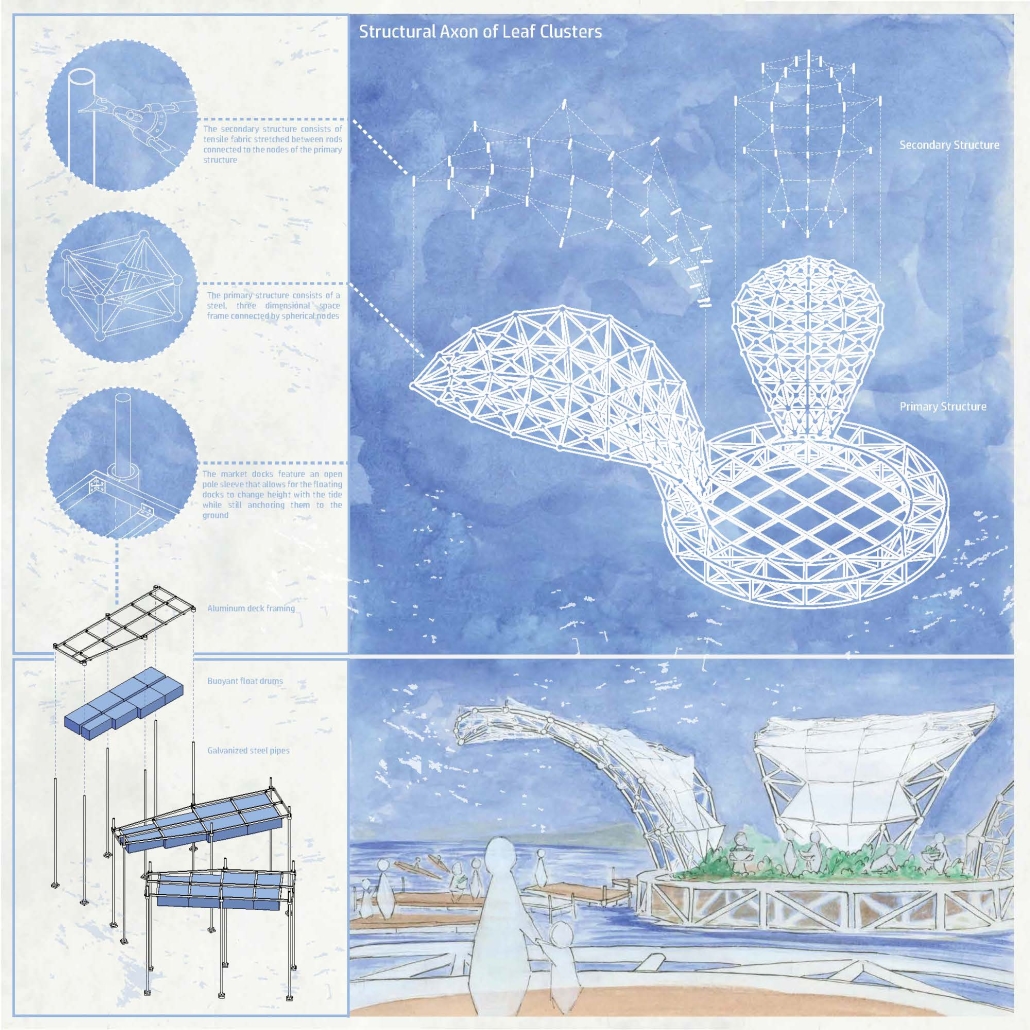
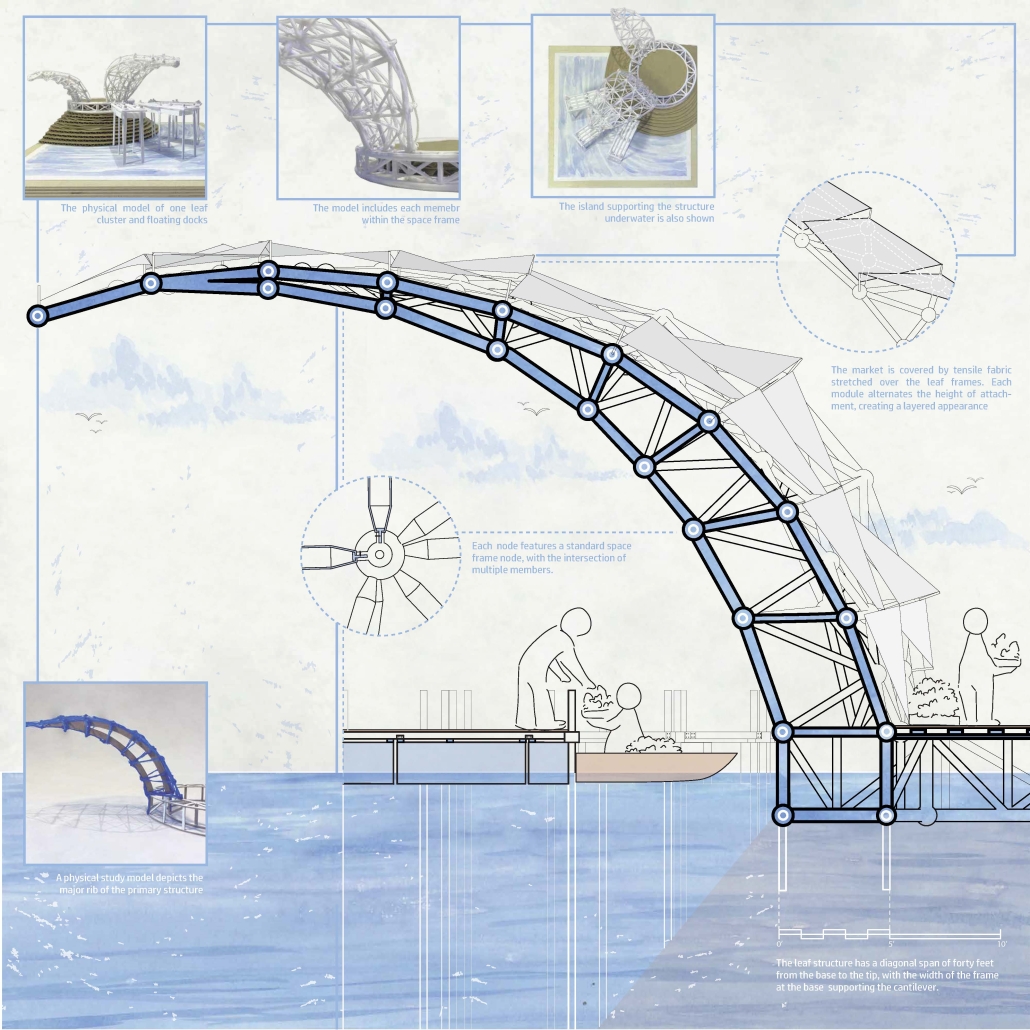
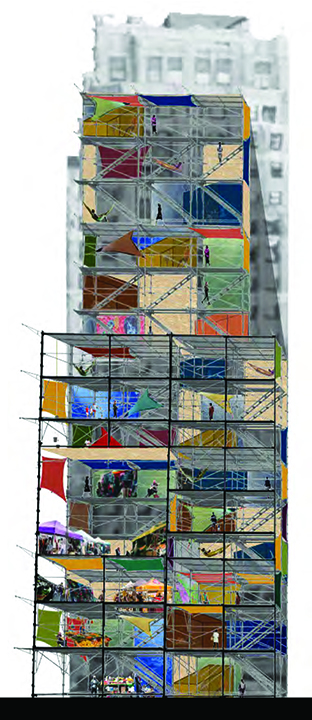
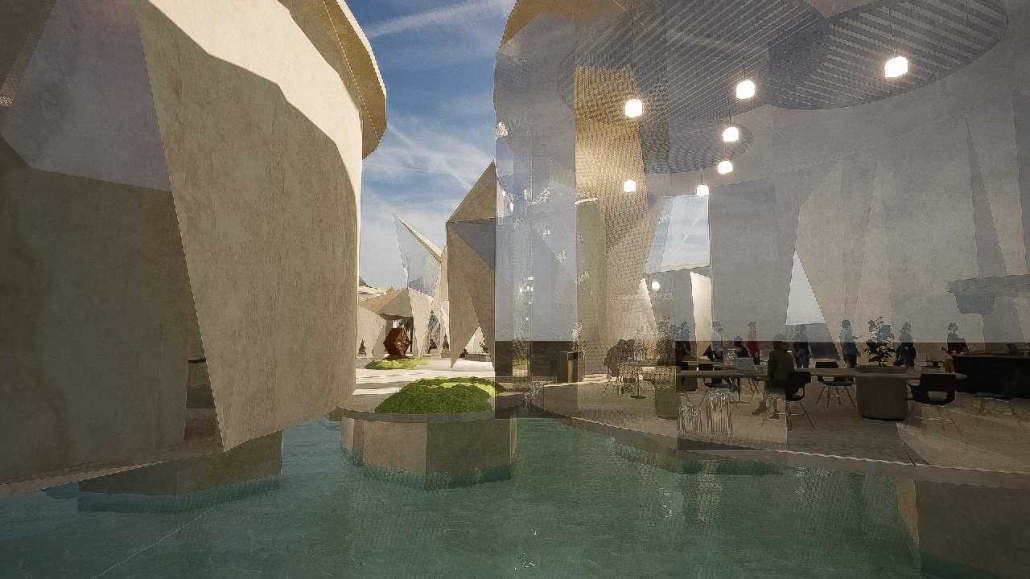
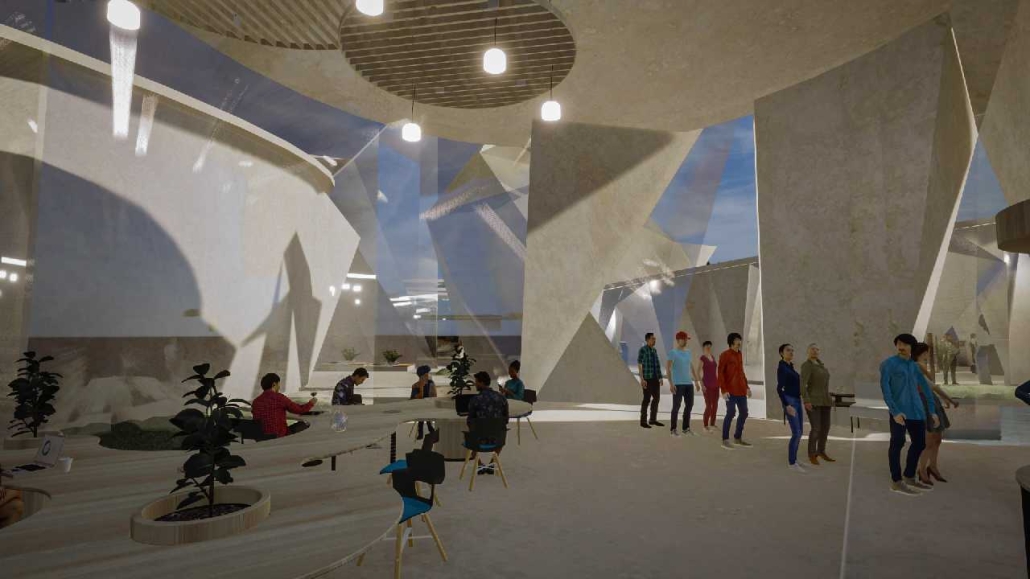
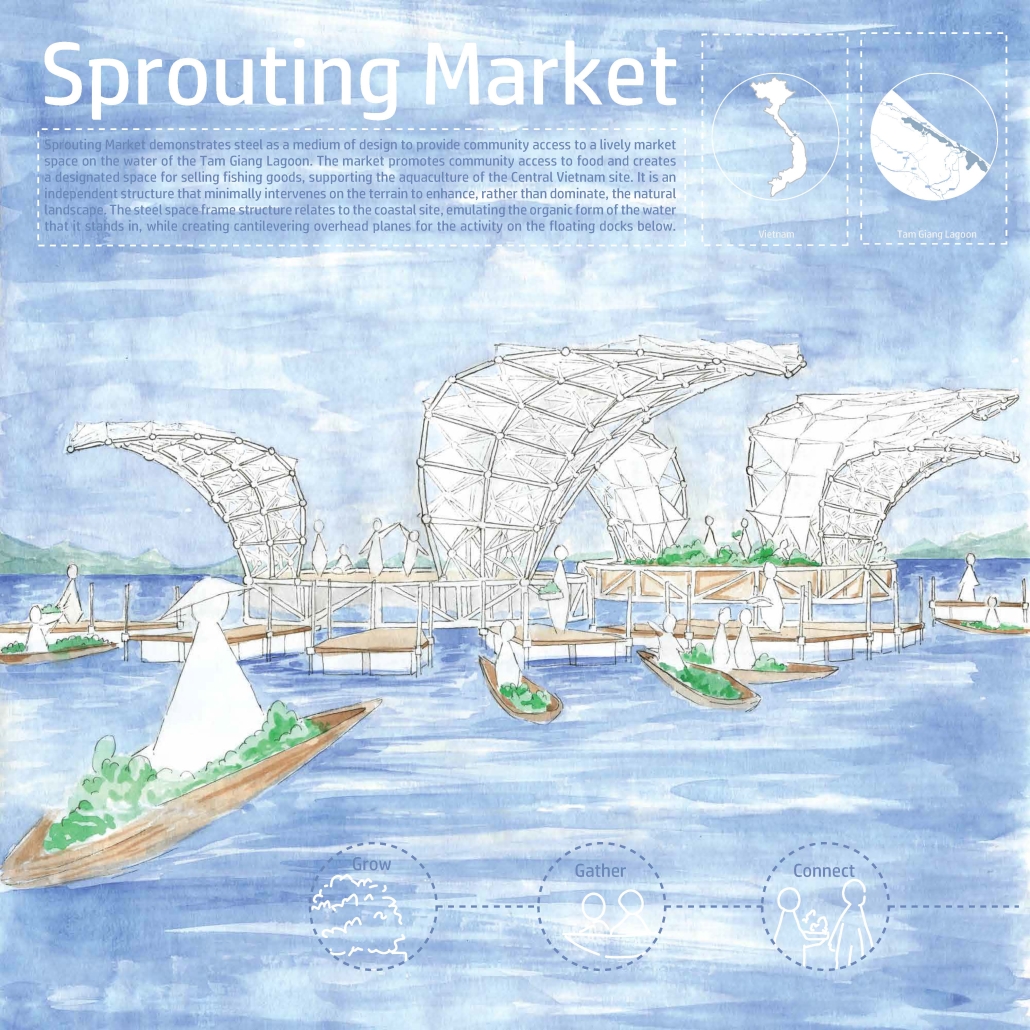
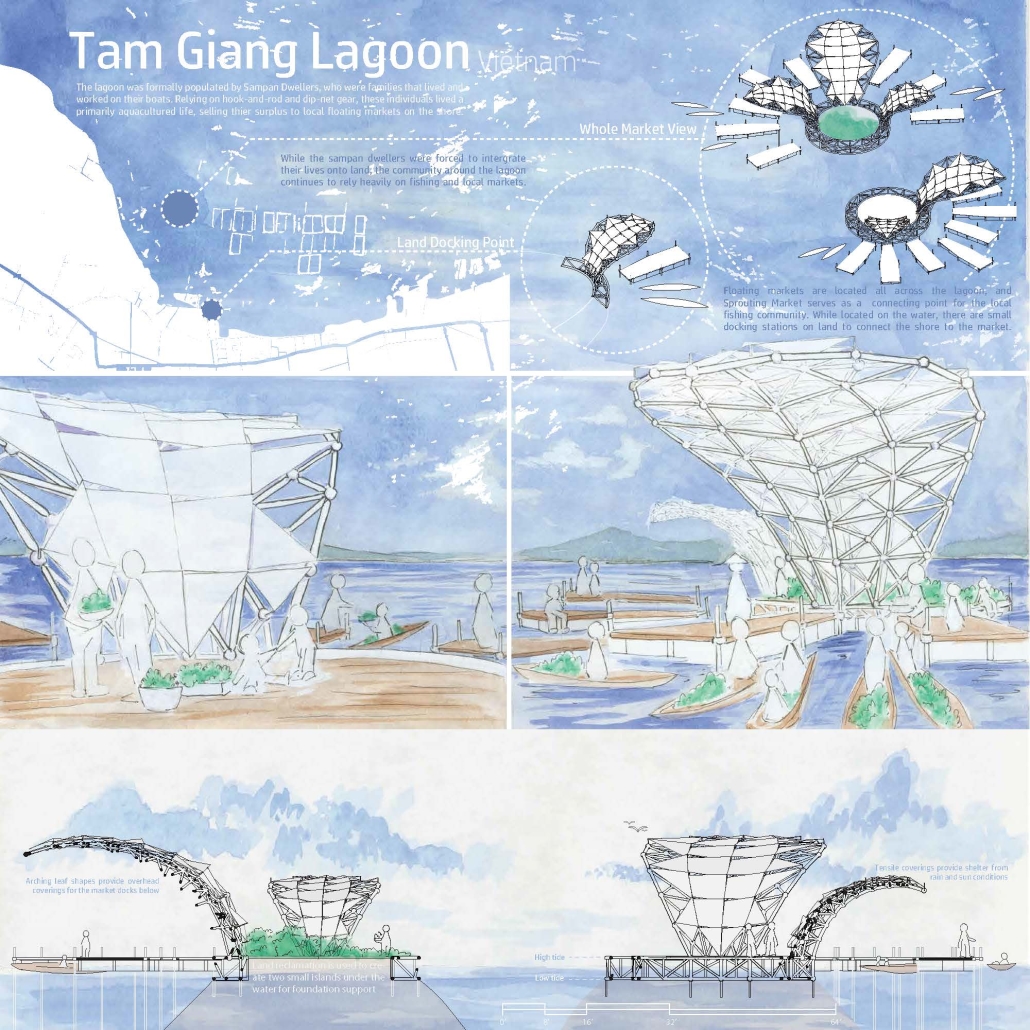
“Sprouting Market” offers the local community access to a vibrant market space set on the waters of the Tam Giang Lagoon, where many residents live on boats. Utilizing a steel space-frame structure with tensile fabric for shading, the design minimizes contact with the terrain to preserve the region’s delicate aquaculture. Fully open to its surroundings, the market allows boats and people to pass through freely or gather beneath an organically shaped roof where commercial activities and social exchanges unfold. Inspired by the traditional floating markets of the lagoon’s coast, the design reinterprets this tradition while introducing programmed and programmable spaces for both locals and visitors. 

At the heart of one leaf-like cluster is a community garden that supports food security; the opposing cluster accommodates flexible spaces for social gatherings and cultural performances. A smaller canopy structure marks the dock along the shoreline, creating both a visual and functional link between the new market and the existing onshore one. The structure is thoughtfully designed to accommodate the lagoon’s fluctuating water levels throughout the day. While portions of the central circular platform may be partially submerged, the docks are built to float, adapting seamlessly to the changing tides. More than just a marketplace, Sprouting Market is a place of connection, community, and collective growth.
The Museum of Water and Sustainability in Querétaro by Fabricio Guerra Hernández, B.Arch ‘25
Universidad Anáhuac Querétaro | Advisors: Guillermo Márquez, Patricia Cutiño & Jorge Javier

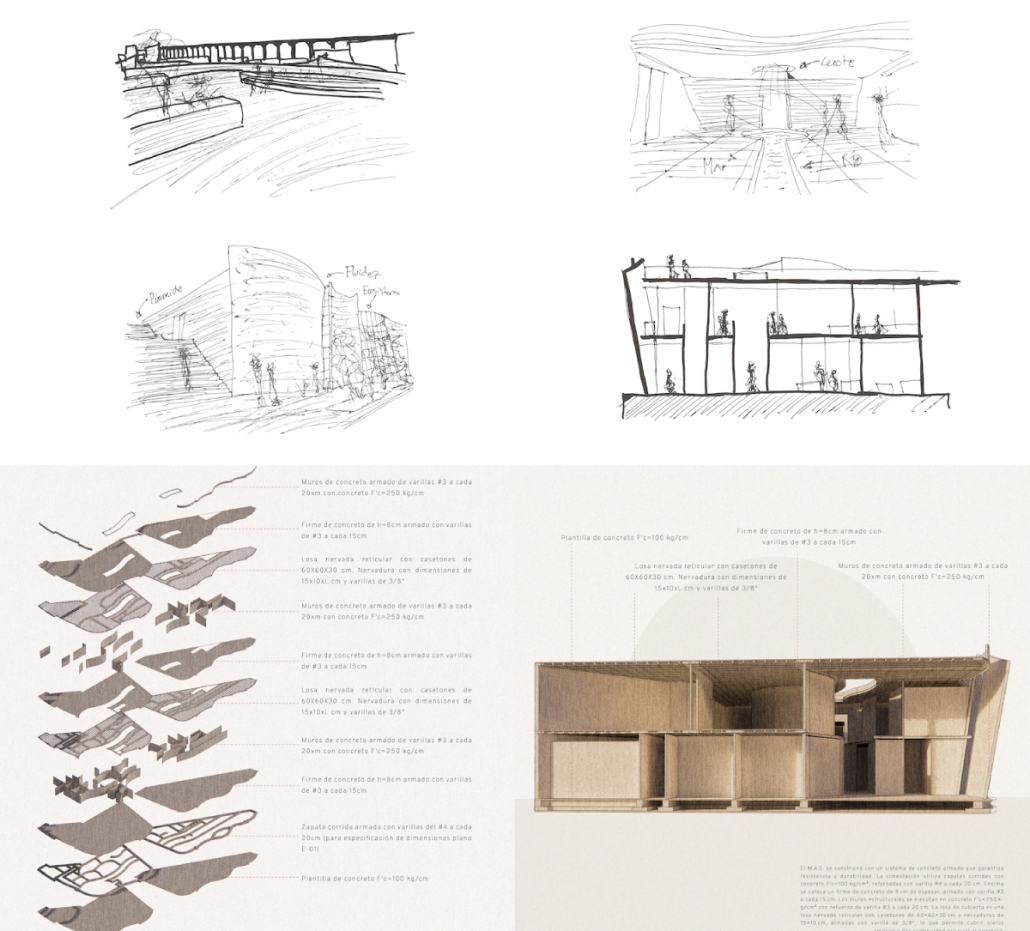
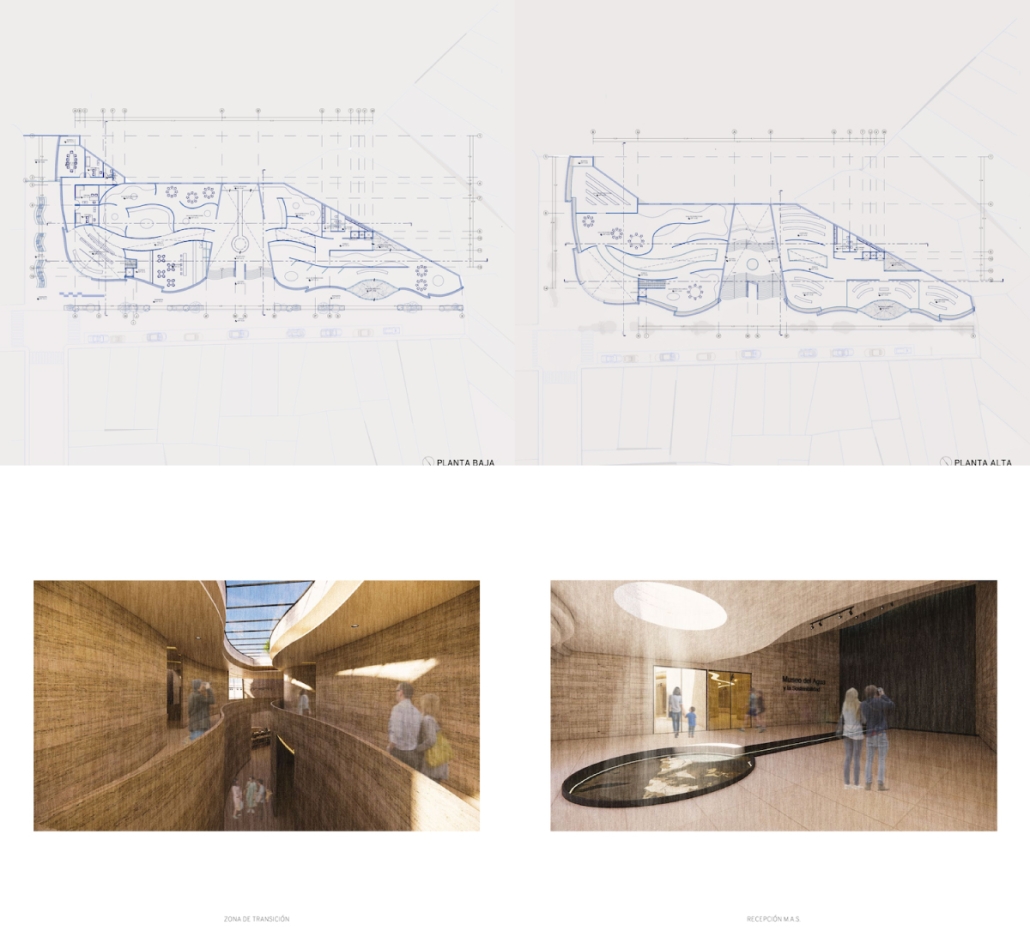
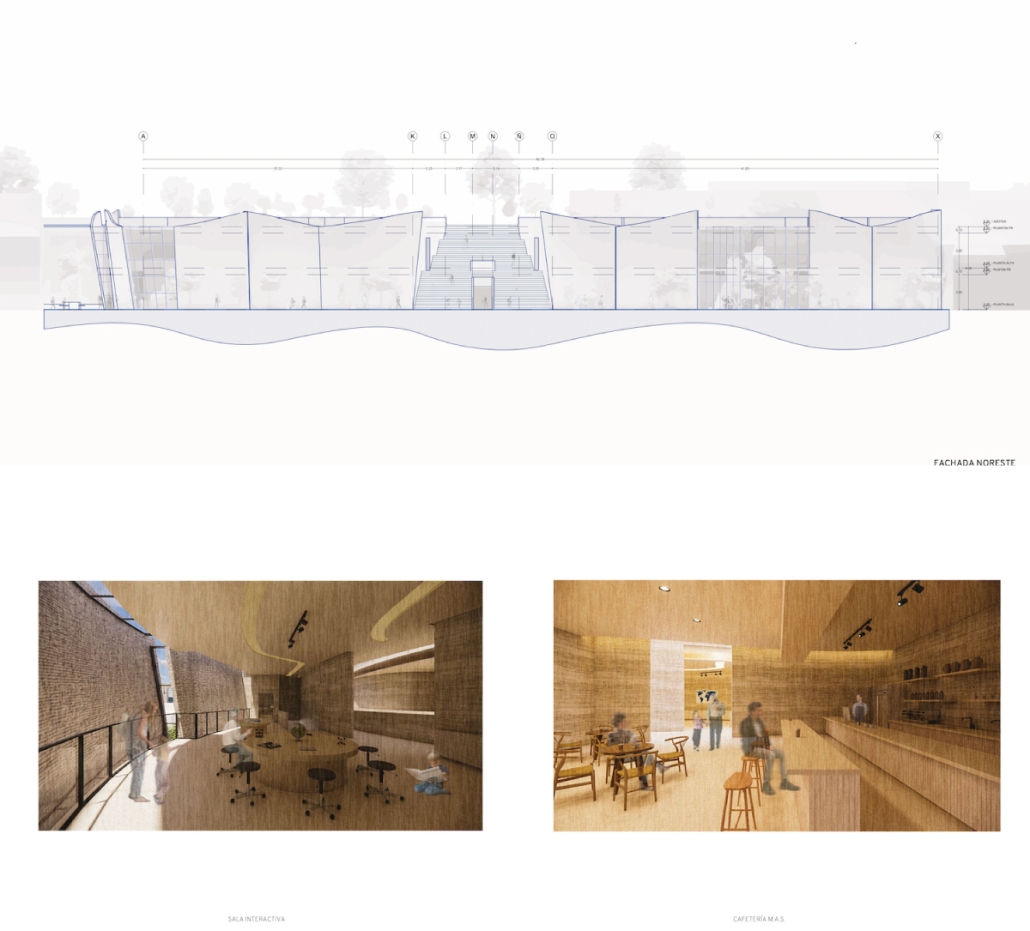
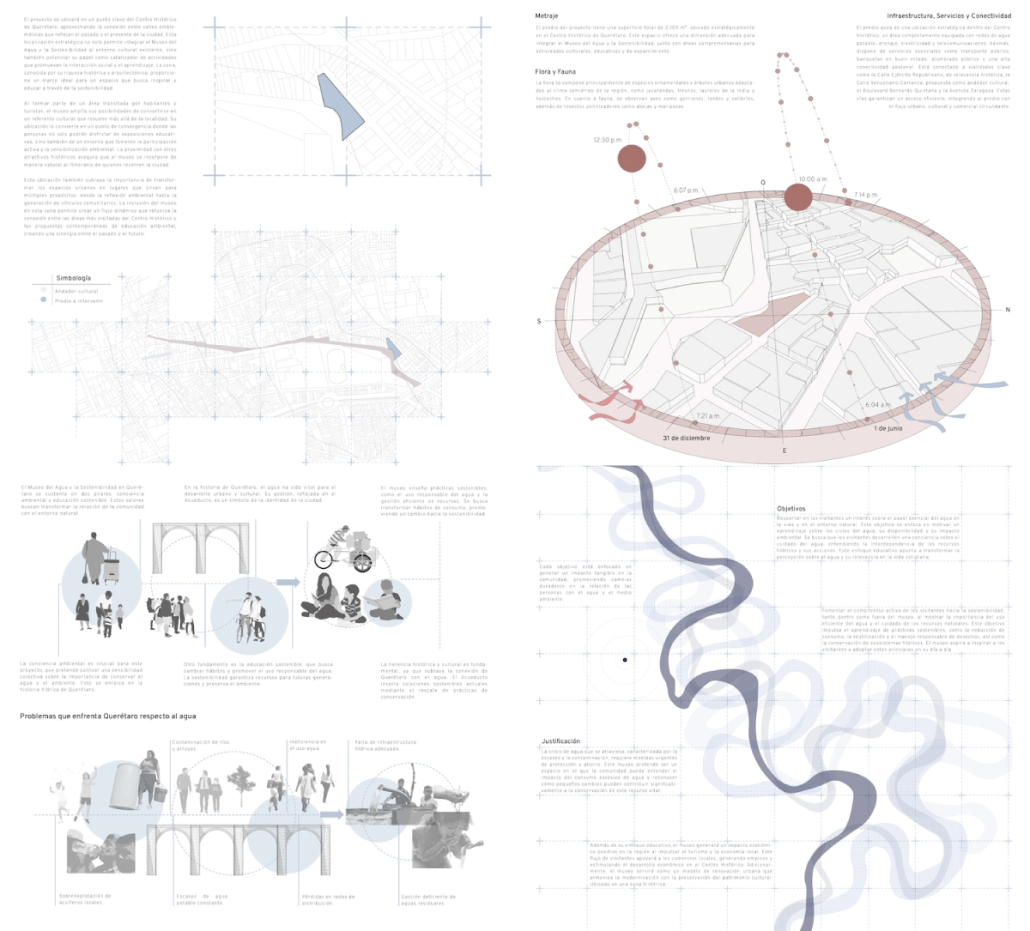
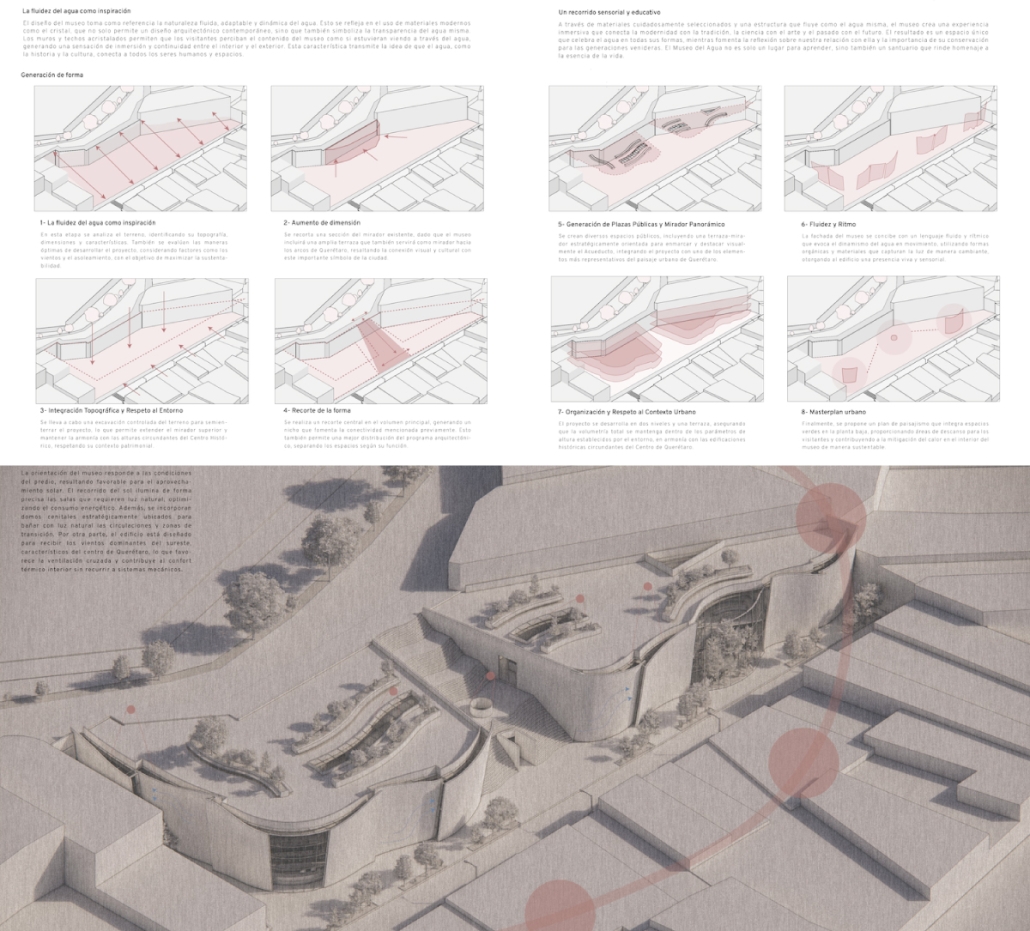
The museum is an educational and cultural initiative aimed at raising awareness about the importance of water and sustainable practices in a region increasingly impacted by water scarcity. Located in the Historic Center of Querétaro, the museum serves as a dynamic space where community members can engage with environmental issues through interactive exhibits, educational programs, and sustainable architectural design.

The mission of the museum is to promote knowledge, reflection, and active participation in water conservation and sustainable living. It integrates the historical narrative of water management in Querétaro with current global and local strategies for sustainability, creating a powerful bridge between past practices and future solutions. Through immersive experiences, the museum seeks to foster a culture of environmental responsibility, particularly among younger generations.

The design of the museum emphasizes green building principles, using renewable energy systems, rainwater harvesting, and eco-efficient materials, positioning it as a model of sustainable urban regeneration. It also functions as a research and innovation center for water-related issues, collaborating with local institutions, scientists, and environmentalists.

By addressing the complex challenges of water management and climate change, the Museum of Water and Sustainability aims to become a reference point for other regions facing similar issues. It offers not only an informative journey but also a call to action—highlighting the urgent need for collective awareness and efforts toward environmental stewardship. Ultimately, the museum stands as a beacon of hope, education, and community empowerment, contributing to the long-term resilience and sustainability of Querétaro and beyond.

Instagram: @fabriciog17, @arquitectura_anahuac, @arqwave
Folding Seoul: Reframing the Capital’s Central Station by Jungbin Sheen, B.Arch ’25
Myongji University | Advisor: Junsuk Lee

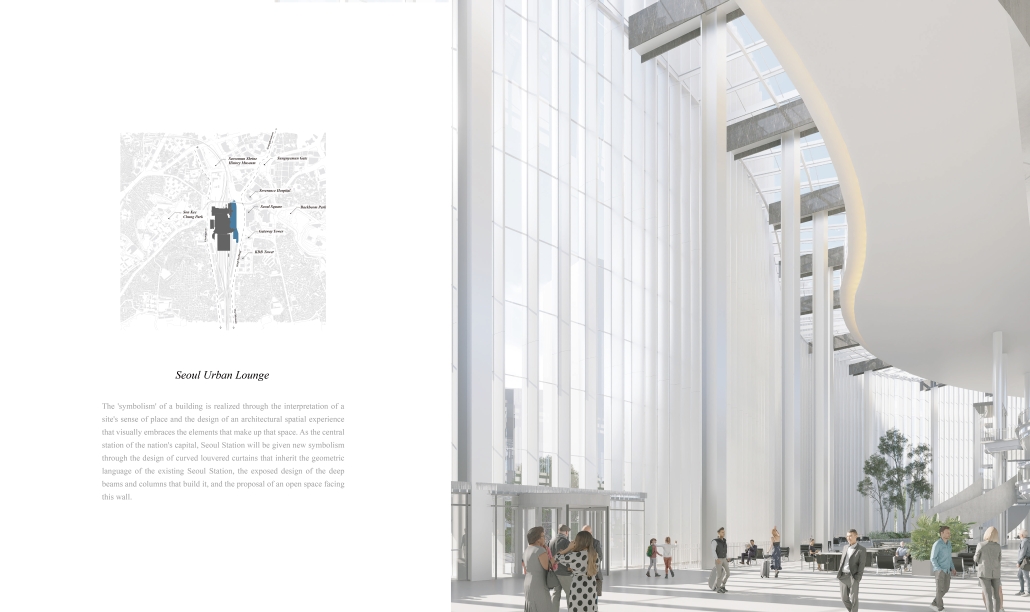
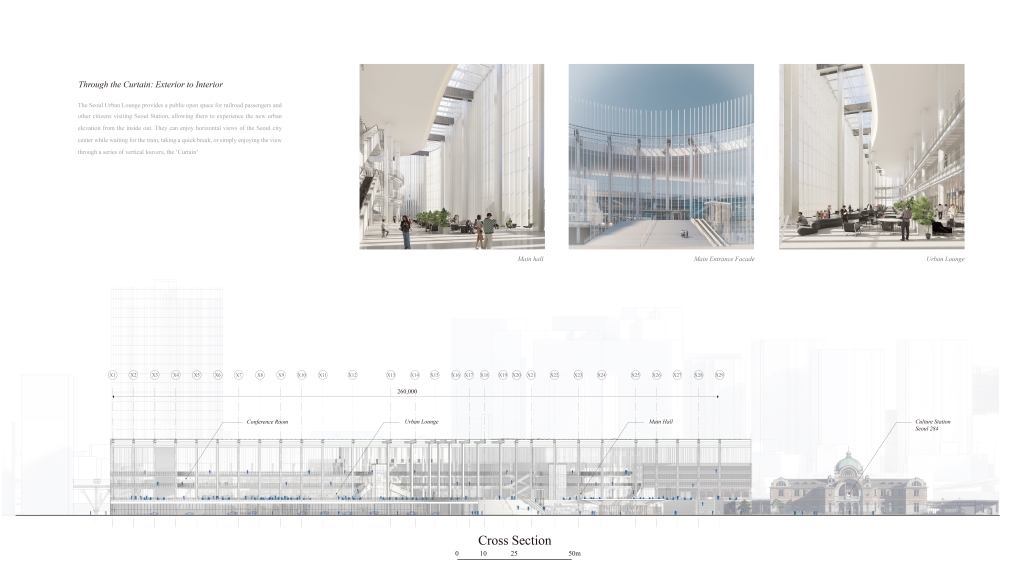
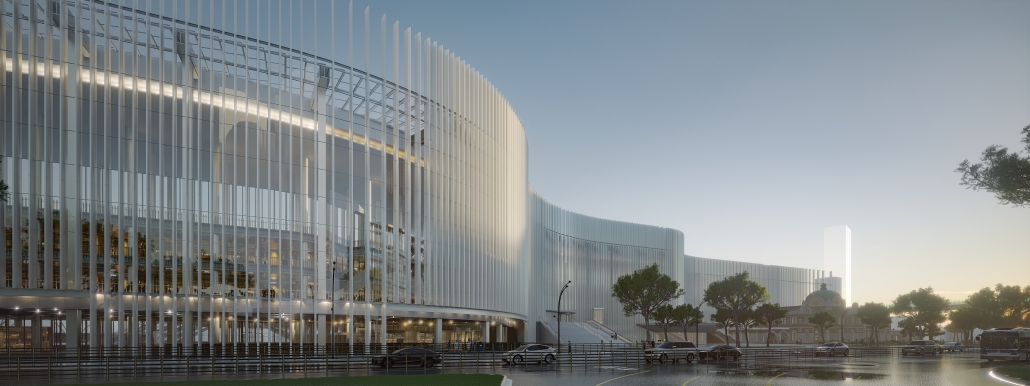
The Seoul Station is the central station of the national capital, including public buildings and plazas that are essential urban elements, and is close to several national symbols such as Sungnyemun Gate and Seoul Plaza in the former Hanyang Fortress, and serves as a node that is easily accessible from various directions using various transportation systems such as taxis, buses, and pedestrian traffic. The integrated history of Seoul Station has not fulfilled its status as the central station of the national capital, with large commercial facilities occupying most of the area, a pedestrian plaza narrowed by the horizontal expansion of the transportation system, and a lack of frontality due to the logic of civilian development. The spatial experience of the existing Seoul Station, and its circulation system, provides a sense of passing through large commercial facilities or wandering through the corridor space of the exterior staircase plaza, which we considered as a lack of symbolism in the experience of the capital’s central station. What kind of symbolism could represent ‘Seoul Station’?

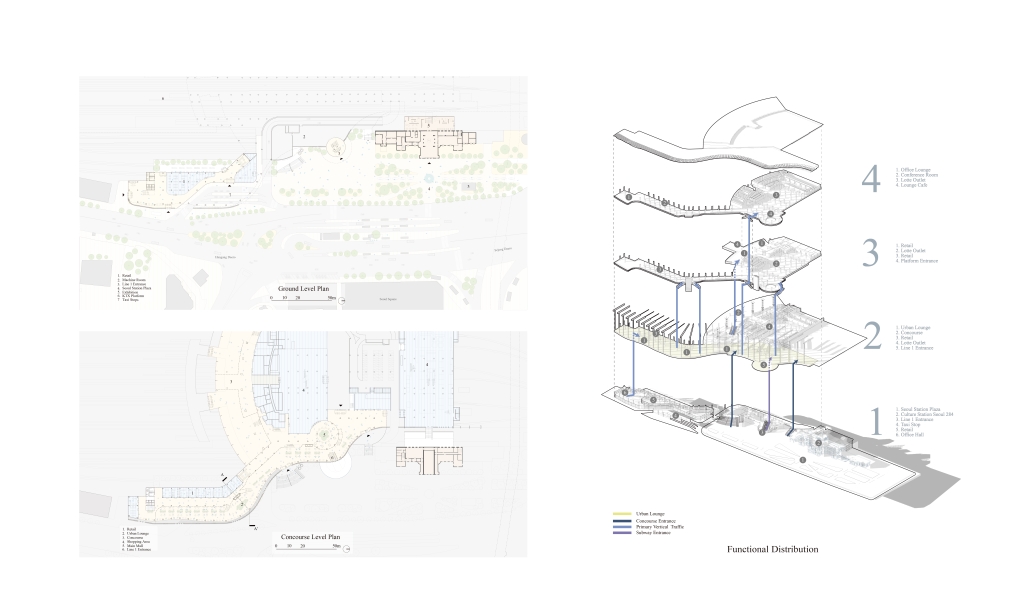
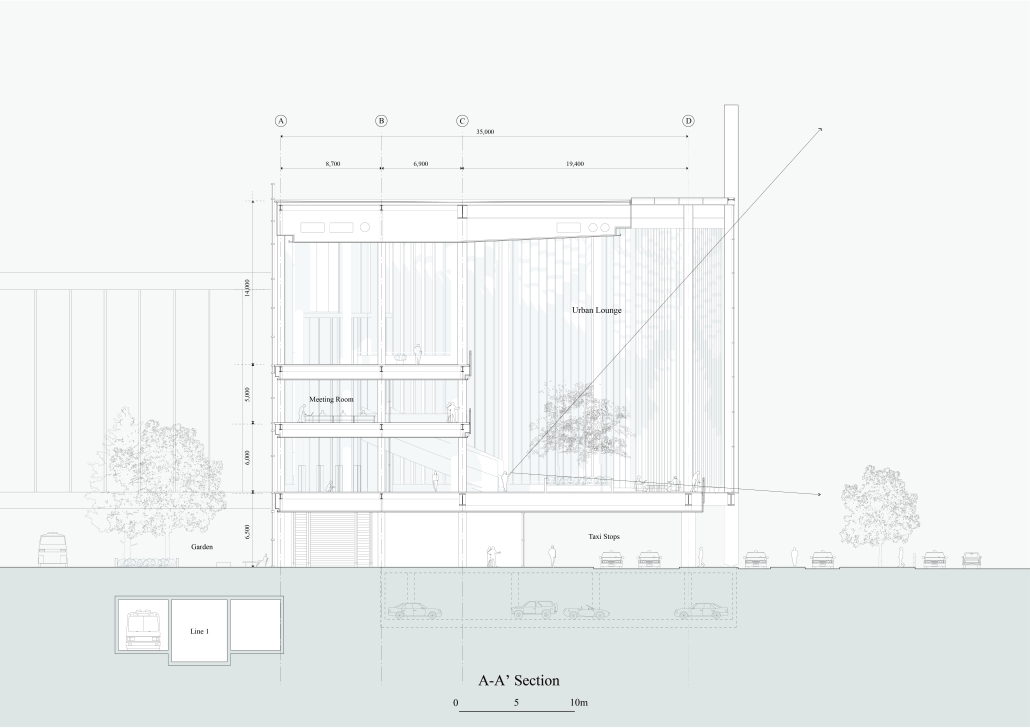
The project begins with the discovery of a linear piece of land on the southeast side of Seoul Station with an odd shape. The site is privately owned and is lined with a narrow row of dilapidated neighborhood facilities, making it a place with dull development potential and a challenge in securing the symbolism and frontage of Seoul Station. Recognizing the development potential of the site, the project considers the place of ‘Seoul Station’ as a central station and proposes symbolic exterior materials and structures that encompass the spatial experience of rail passengers in the space of Seoul Station. [It also considers] the need for an urban open space where citizens who do not come to Seoul Station for the purpose of using the railroad can come and rest and spend time, through a method of expansion that demolishes only a small part of the existing structure. The Seoul Station pedestrian plaza, which was expanded by the relocation of the taxi stand, and the urban lounge, which is open to anyone regardless of their purpose of use, are separated by a curved louvered curtain derived from the form of the existing Seoul Station. It presents a white backdrop that juxtaposes the existing marginalized cultural station, Seoul 284, and the behavior of rail passengers using the interior space becomes transparent through the thin vertical structure. Depending on the inflection point of the curve and the position of the visitor, the frontality of the plaza and Seoul Station is received by the viewer as a coexistence of the white folding screen with the exterior reflection of the urban lounge.

Click here to learn more. 

Instagram: @bin__cong, @myongji_univ
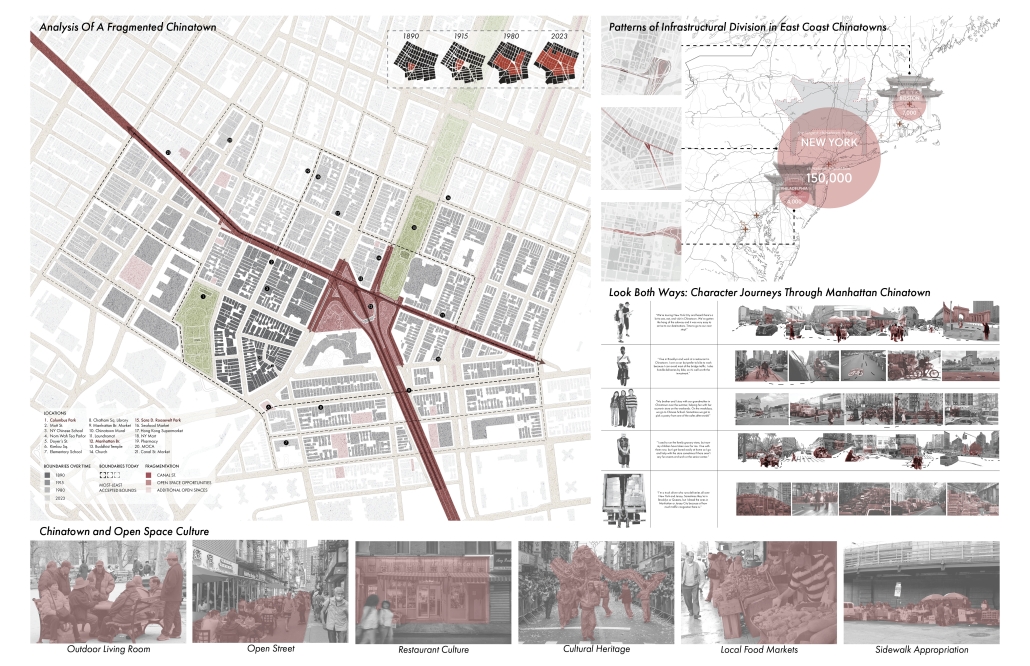
Place-Reclaiming Chinatown: Repairing the Urban Landscape of Manhattan Chinatown by Katherine Shi, B.S. in Architecture ’25
University of Virginia | Advisor: Mona El Khafif

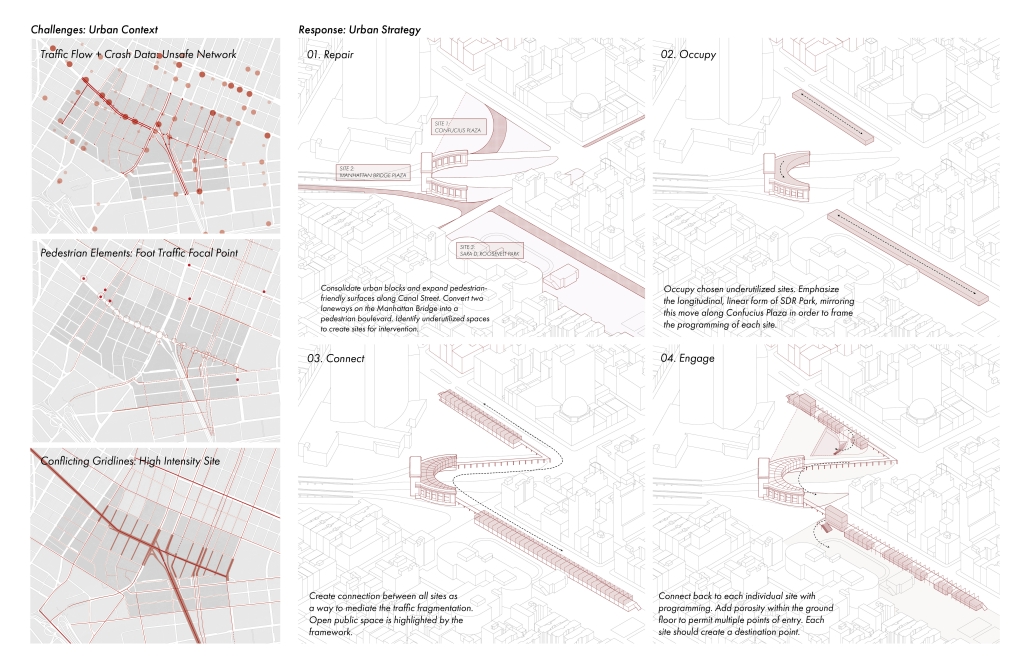
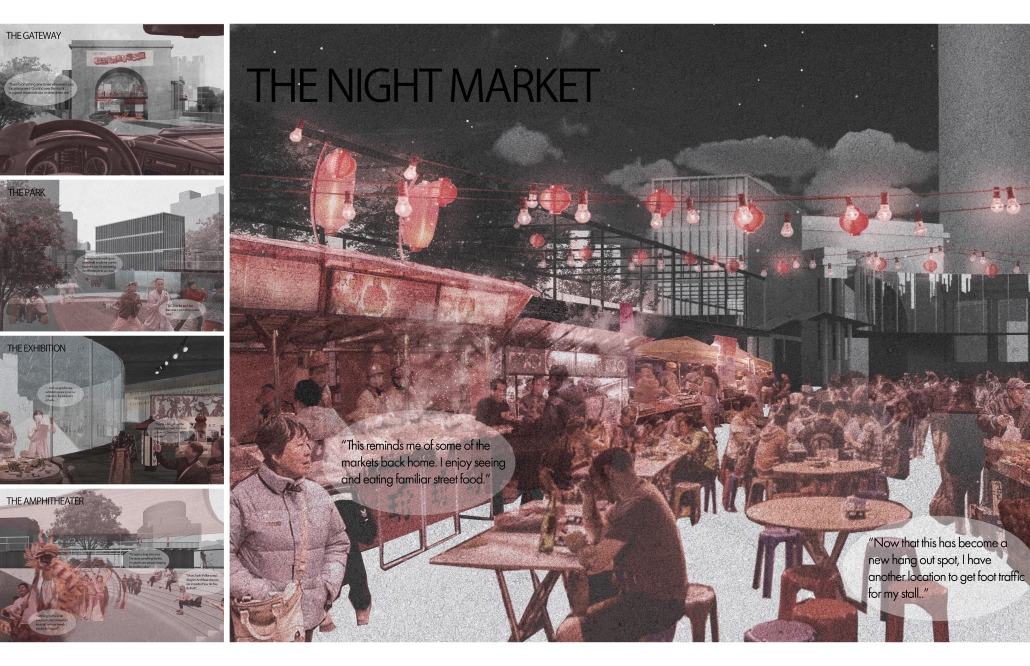
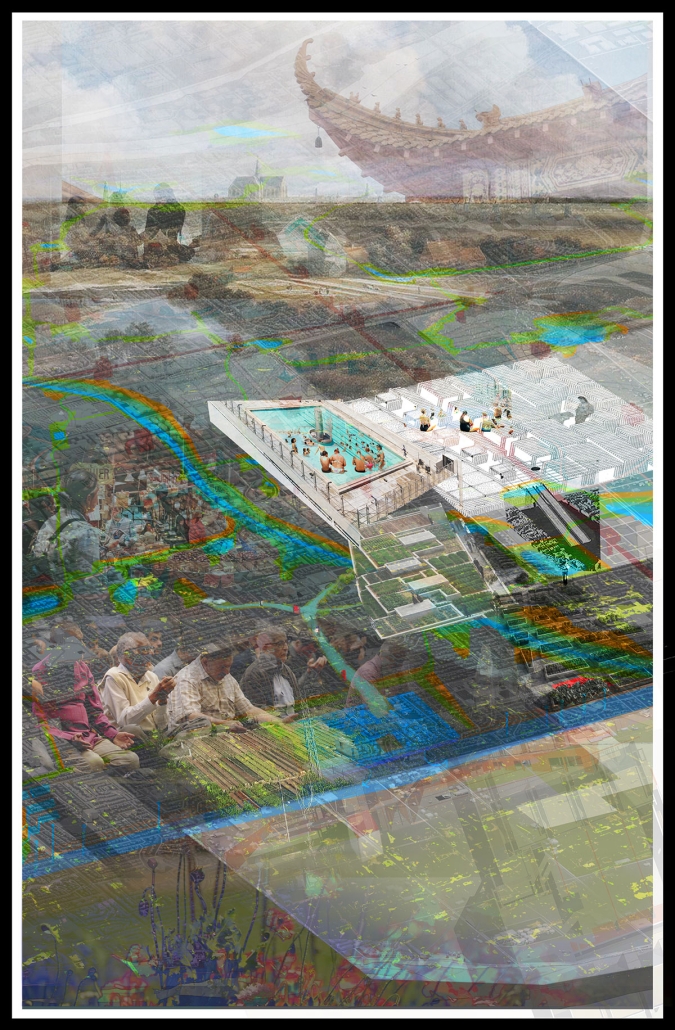
Chinatowns exist worldwide, and in nearly every major American city. Historically formed as ethnic enclaves of Chinese immigrants facing persecution from legislation such as the Chinese Exclusion Act, they have evolved into important socio-economic centers of activity and community hubs within their respective cities. New York City is home to nine Chinatowns, making it the largest center of Chinese Americans in the Western Hemisphere. However, many Chinatowns are shrinking due to urban development and gentrification, and Manhattan’s Chinatown, one of the first Chinatowns established in the US, is no exception. Asian residents and local businesses have been pushed out, resulting in closed storefronts, land loss, and displaced community members, especially following COVID-19. More significantly, there is the risk of cultural erasure as a result of these changes.

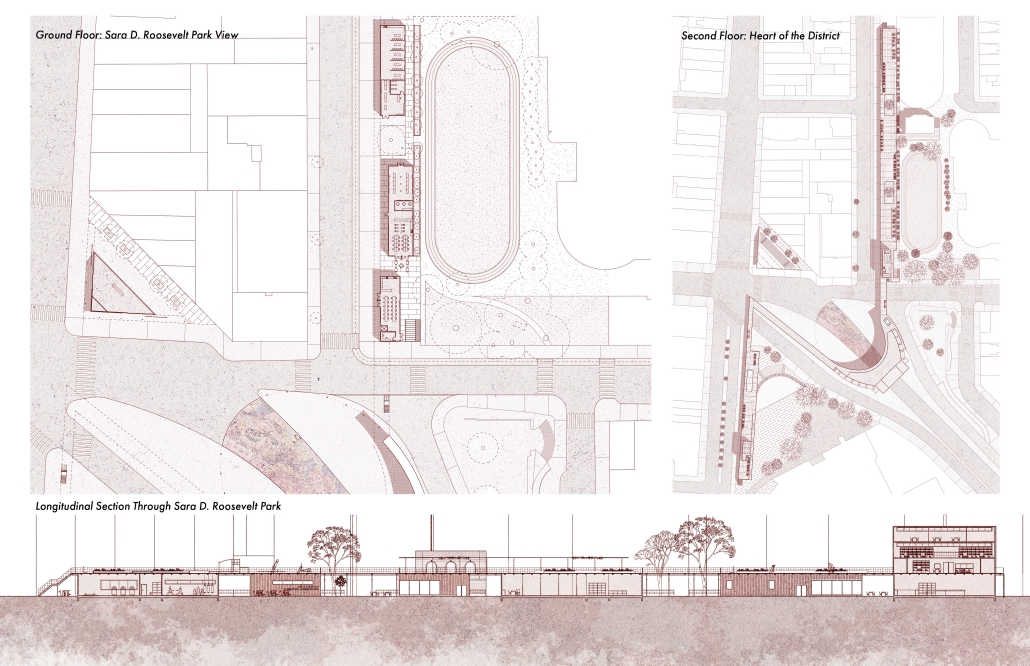
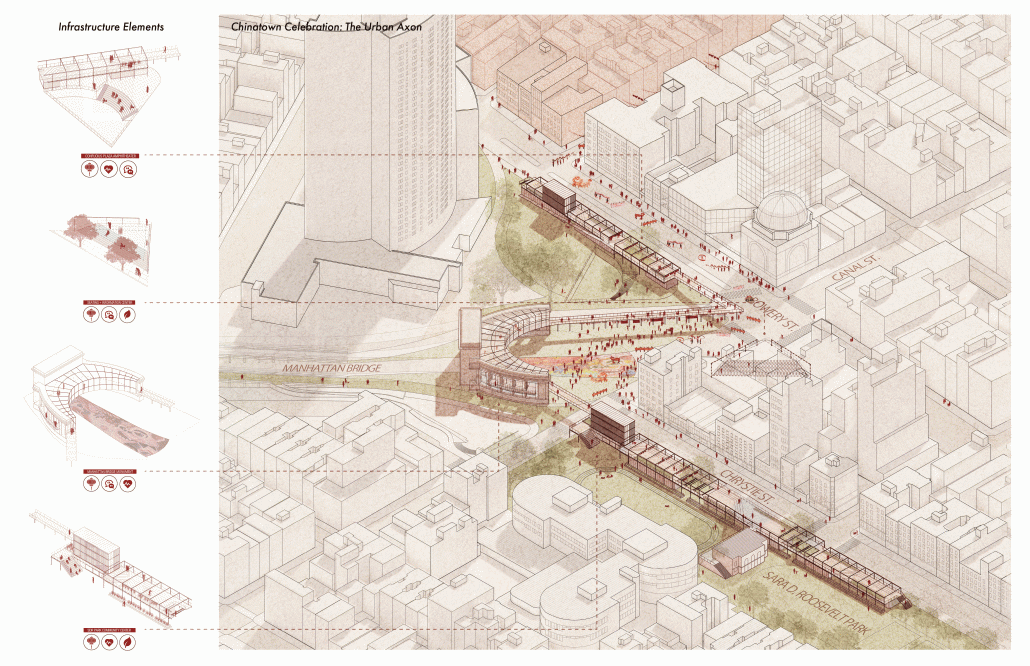
An important part of local identity, for example, is Chinatown’s distinctive use of public space, as seen in its culture of street vending and sidewalk appropriation. Columbus Park and Sara D. Roosevelt Park are some of the most important public spaces in the district. This is where residents socialize, play mahjong, exercise, and greet each other in their native tongue. However, large roadway infrastructure creates a significant and dangerous disconnect at the heart of Chinatown.

This thesis, therefore, proposes an urban design approach for Manhattan Chinatown that seeks to reconnect green spaces in a traffic-torn cultural district, provide needed social infrastructure support, and reclaim the identity of the Manhattan Bridge Plaza as a Chinatown gateway. The intention is to bring vibrancy to underutilized sites at the heart of the community, not only by preserving and celebrating Chinatown culture and history, but also by supporting residents’ way of life within a transforming district. 

Instagram: @pro_kat_stinator, @monaelkhafif
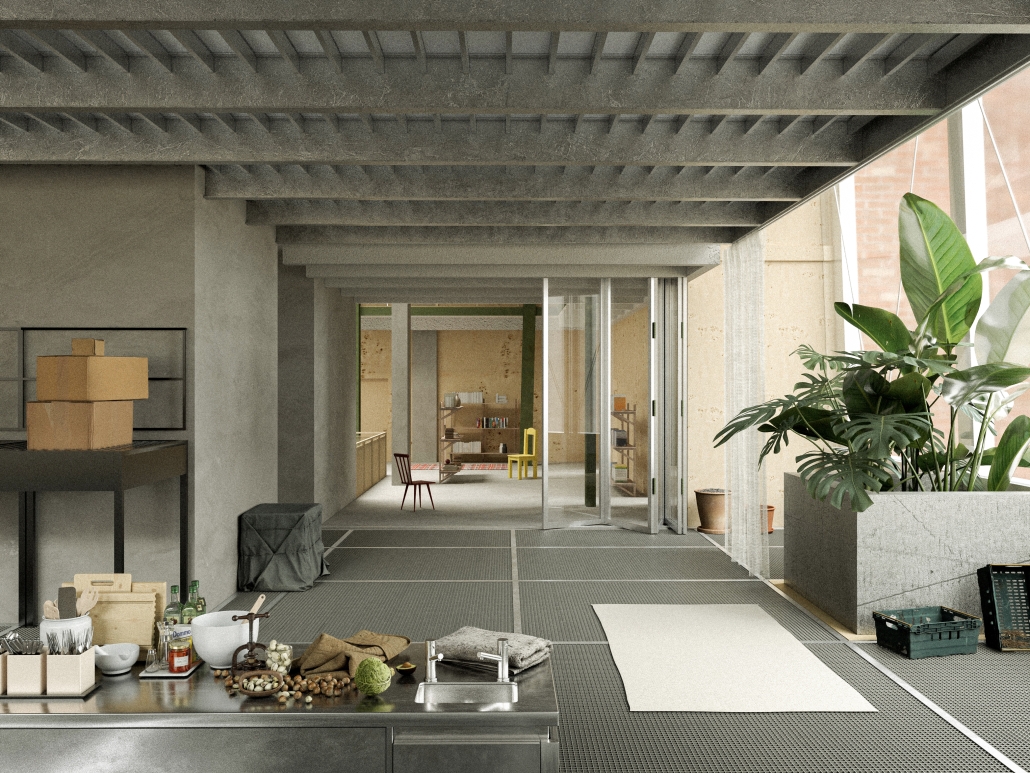
2-in-1, CULINARY CENTER AND RESEARCH HOSTEL by Julius Lin, M.Arch ’25
University of California, Berkeley | Advisor: Rene Davids

Madrid’s Plaza de España, where a culinary center and residential hostel are planned, reveals a confluence of “dry” and “wet” areas; the former is associated with buildings, while the latter is linked to a network of green spaces that connect several key areas including the Sabatini Gardens and Plaza de Oriente to the south, Casa de Campo, Campo del Moro, and Madrid Río to the west, as well as Parque del Oeste to the north. As a result, Plaza de España can be envisioned as a green gateway to a transversal network that extends from the Manzanares River into the heart of the city.

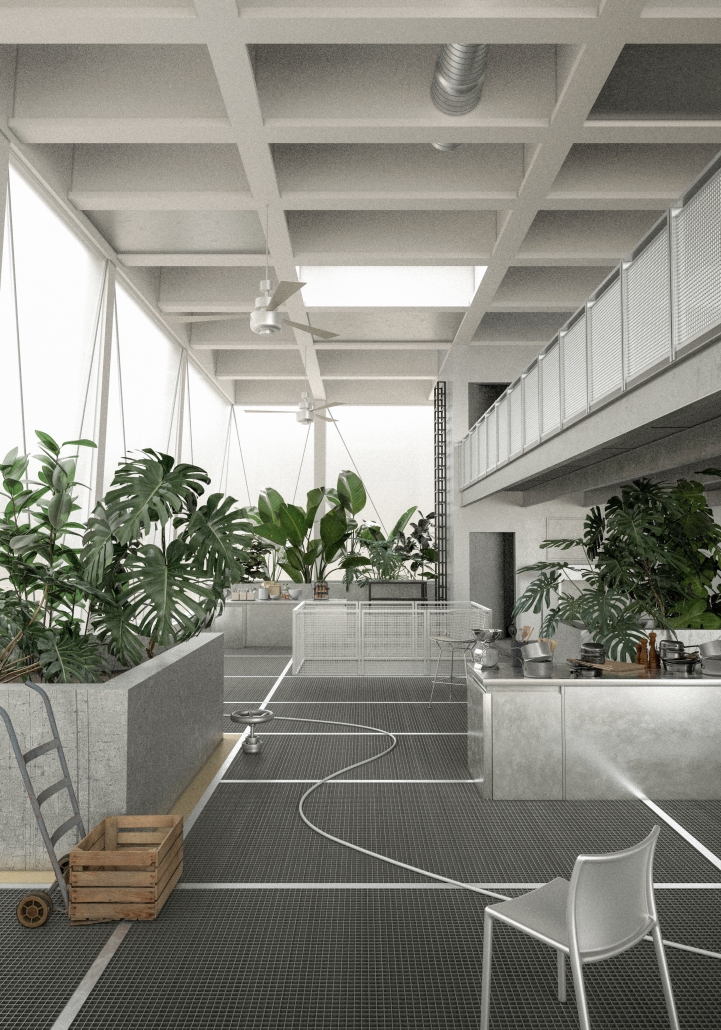
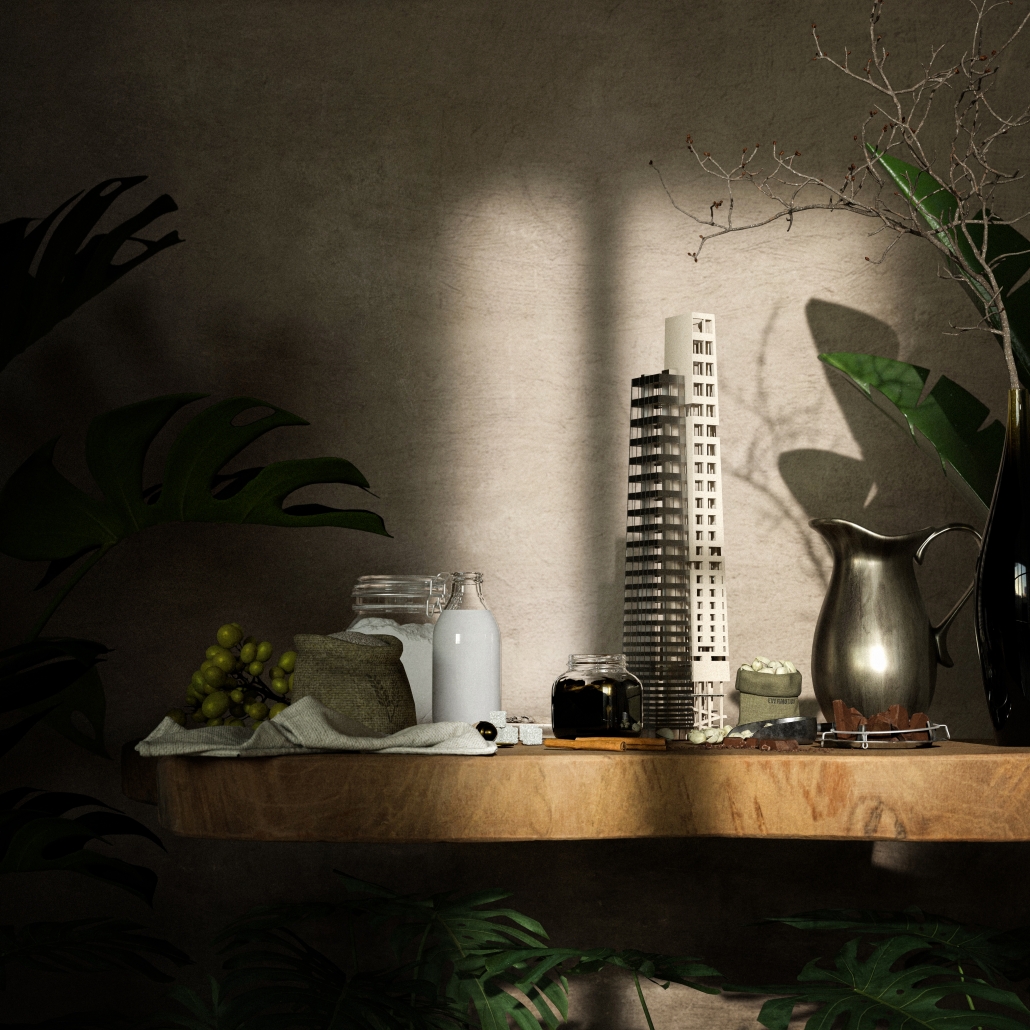
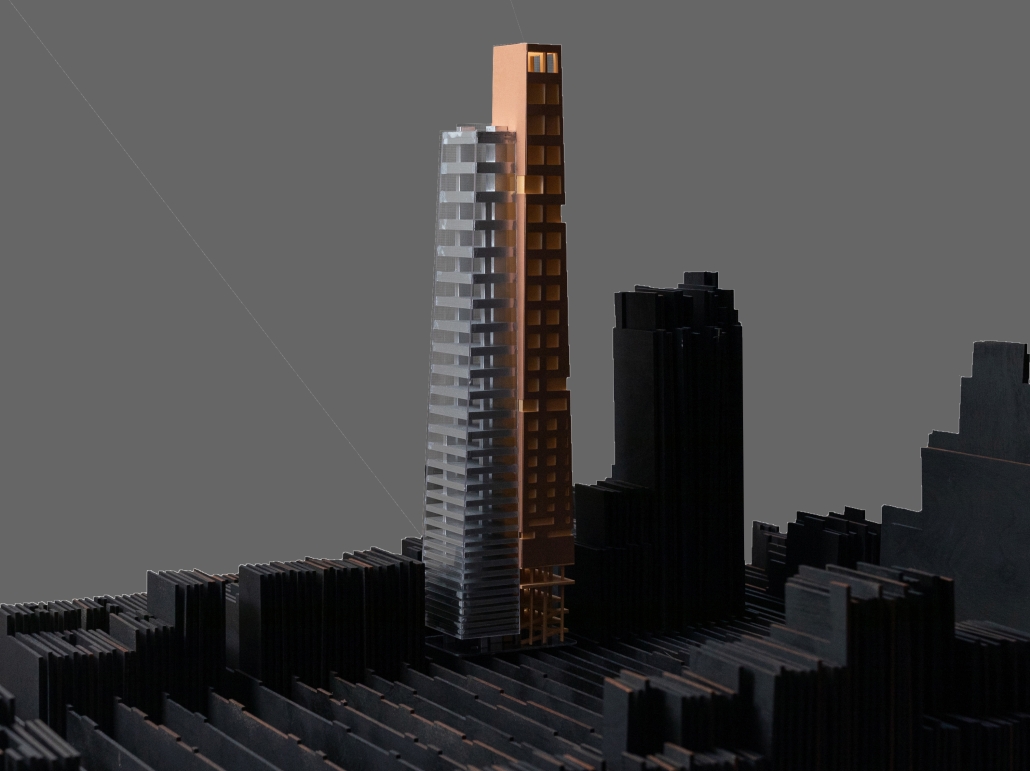
The project translated these observations into an architectural form consisting of twin towers: one transparent (wet) and the other solid (dry). The transparent building was designed for growing food and hosting public programs. In contrast, the more opaque and solid tower was intended to house a more private and enclosed hostel.

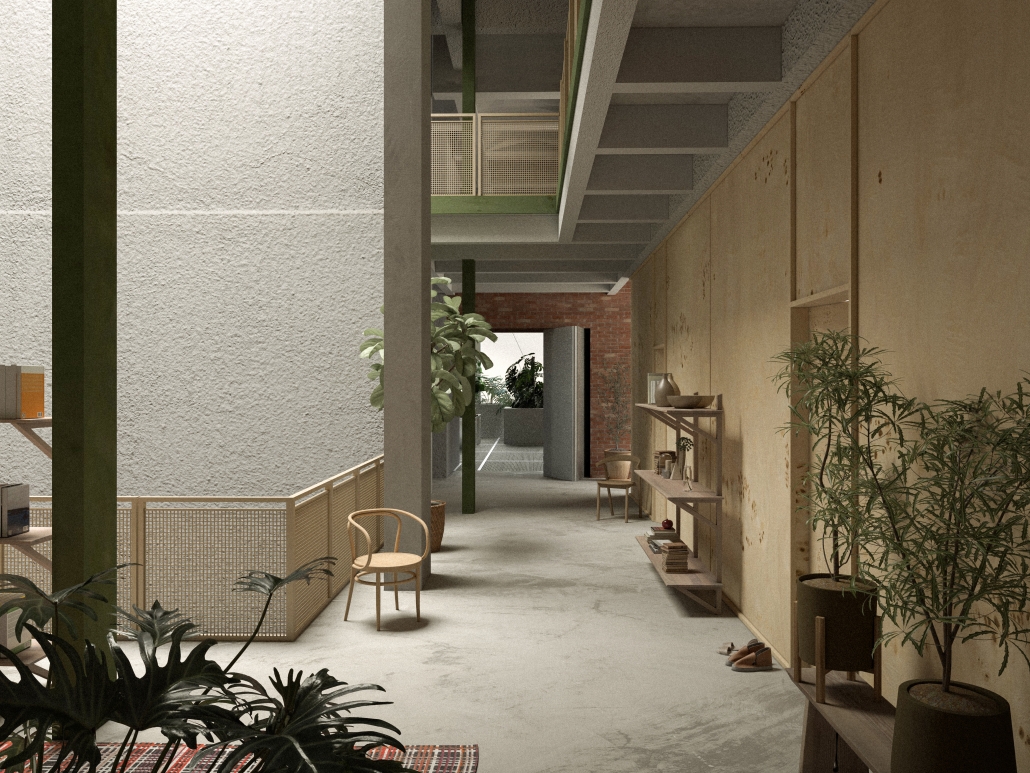
Each tower features a unique structural system. The transparent tower employs a core-based structure that maximizes openness, utilizing lightweight materials such as metal grating for the floors and an exposed I-beam grid to enhance transparency. Planters are integrated into the grid system, allowing users to harvest ingredients for educational or culinary purposes. When looking up, the ceiling reveals that these plants extend to the upper floors. Inspired by the subtle flavor of rice pudding, one of Spain’s favorite desserts —a dish with a subtle profile that features layers of flavor —the façade of the transparent tower evolved into a delicate glass curtain wall with a gradual gradient rhythm, influenced by the varying root depth that houses the rich, sensuous interior.  The opaque tower, by contrast, utilizes a regular column grid with a secondary system inspired by tree trunks that organizes the space inside, combining concrete structure, wooden partitions, and a brick façade to create a grounded and inviting atmosphere.

The pair of renderings illustrates the visual connections between the two towers. Despite their differing materials and structures, there is an intentional ambiguity at the threshold, providing glimpses, overlaps, and shared experiences between the two. 

This project was a finalist for the UC Berkeley Design Excellence Awards. 

Instagram: @julius___007, @r.davids
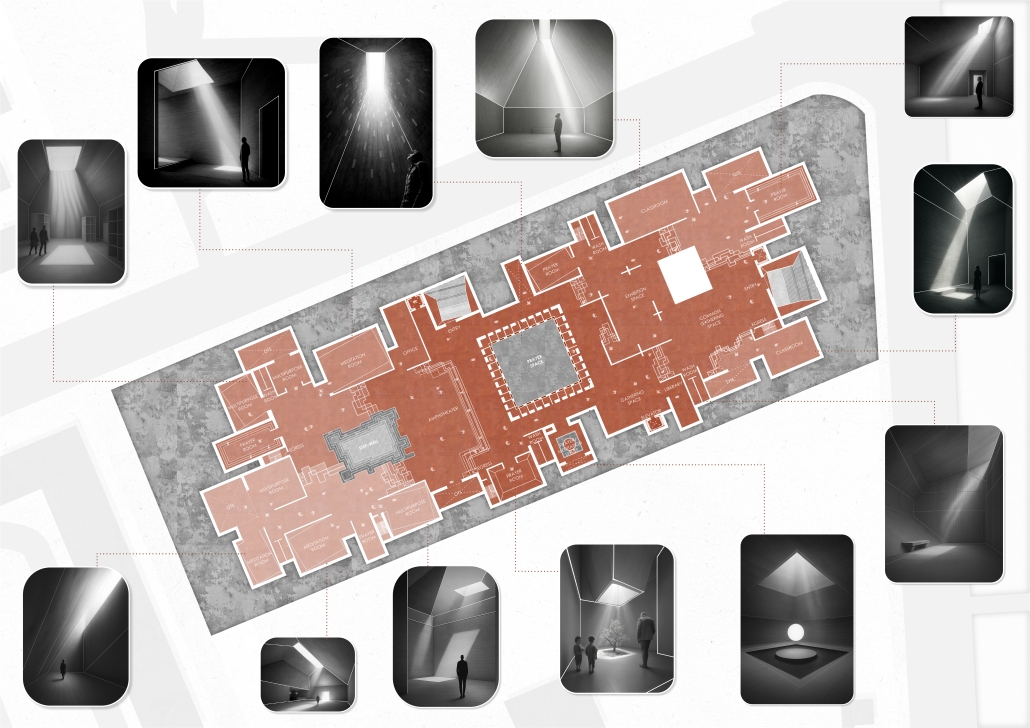
Vessel of Light: A Spiritual Descent into Earth by Aarsh Dipak Nandani, M.Arch ’25
New York Institute of Technology | Advisors: Marcella Del Signore & Evan Shieh

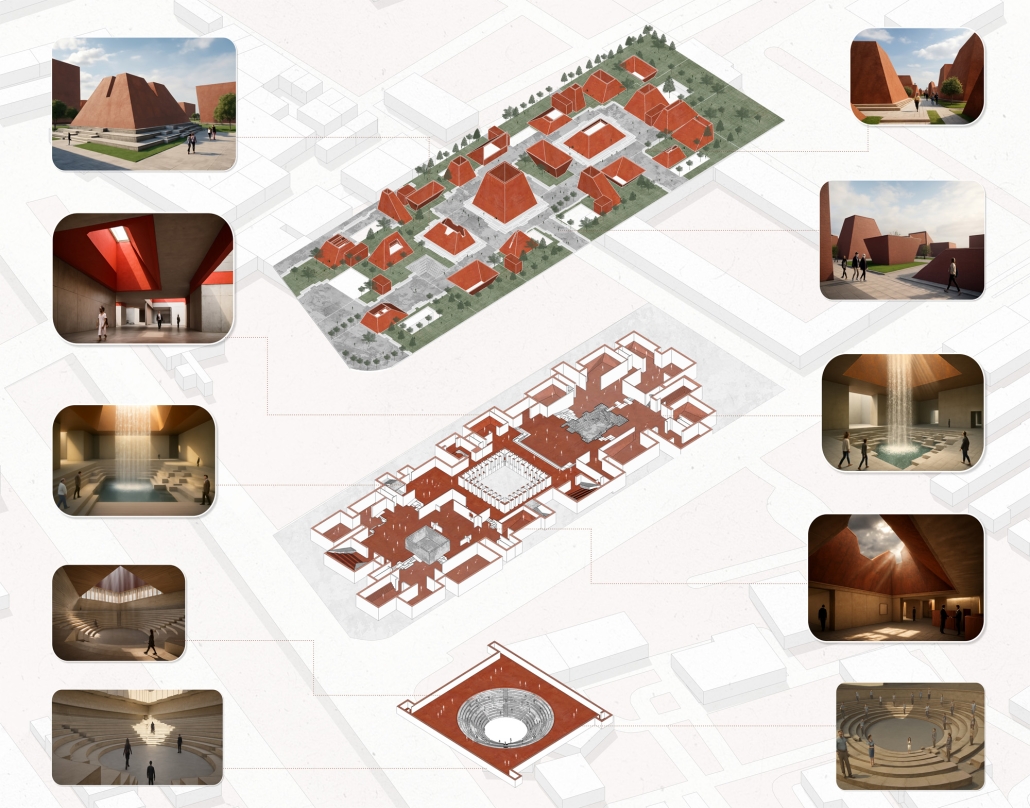
Located in São Cristóvão, a culturally diverse neighborhood in Rio de Janeiro, “Vessel of Light” is a thesis project that reimagines sacred space as an inclusive, contemplative landscape rooted in the elemental and experiential. The proposal responds to the city’s layered history of religion, culture, and infrastructure, revealed through analytical mappings of population density, cultural institutions, open spaces, public services, and mobility networks.

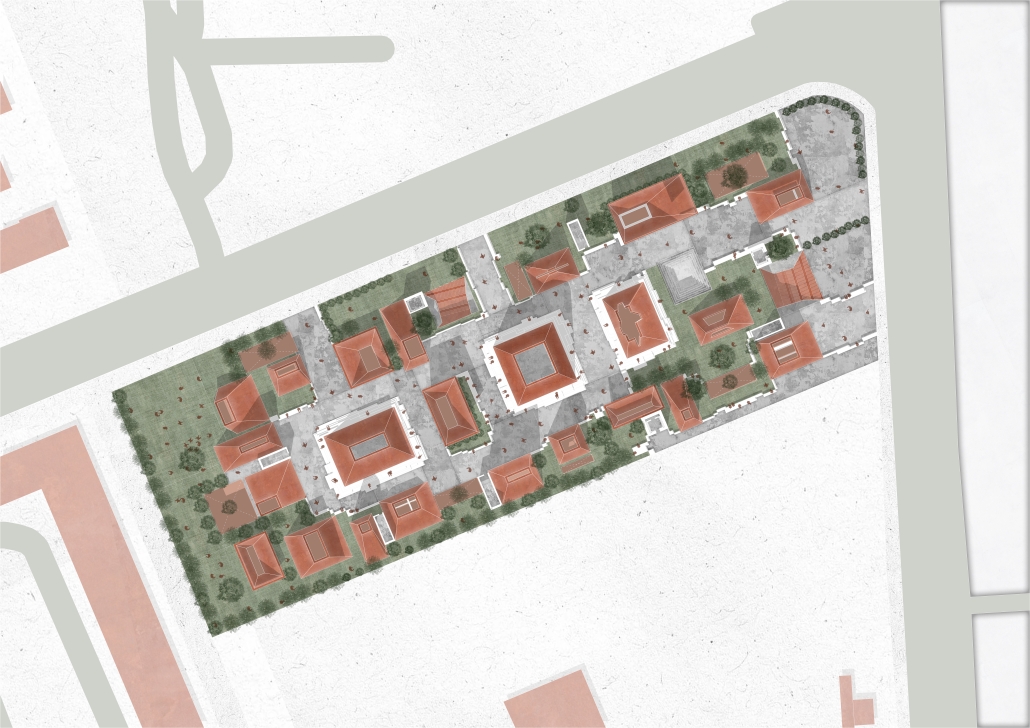
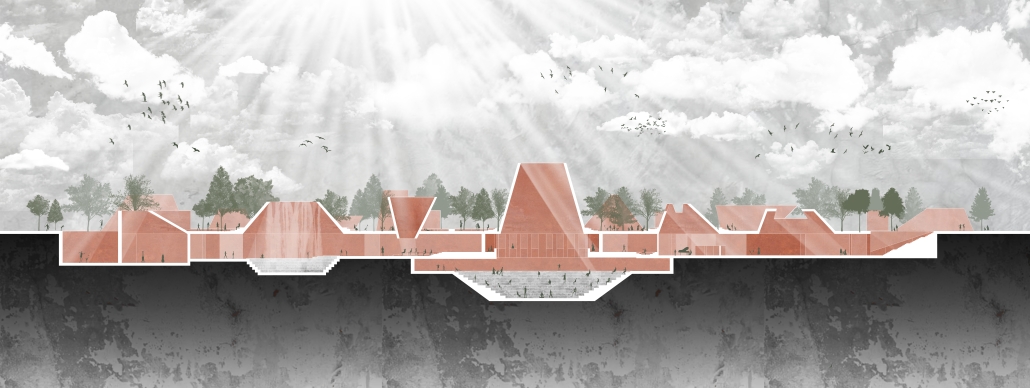
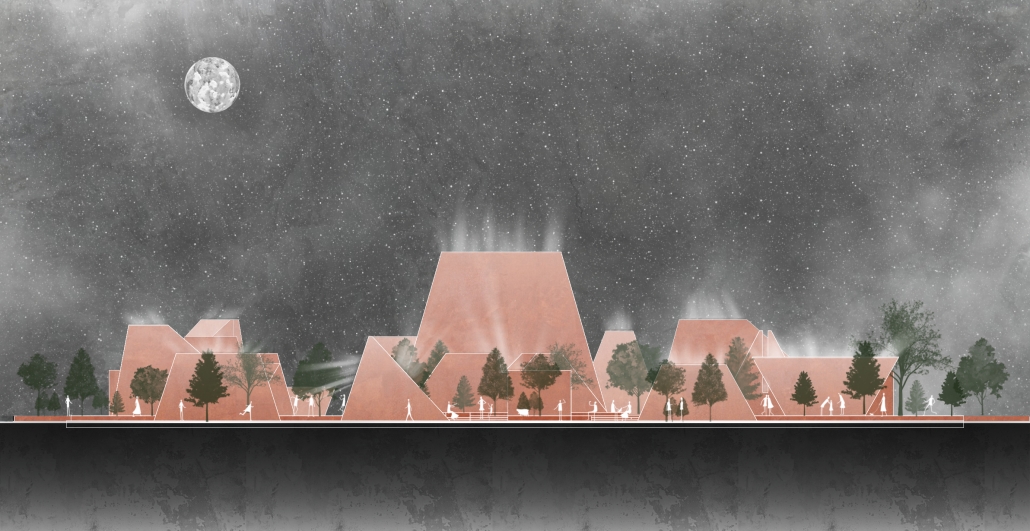
The design expresses spirituality not through religious symbolism, but through sensory experience, shaped by the four fundamental elements: earth, air, water, and light. The entire building is embedded below ground, allowing the site’s surface to function as a fully public park, accessible to all regardless of intent to enter the space. Above ground, only skylight turrets punctuate the landscape, sculptural forms that channel daylight and natural ventilation into the interior, while symbolizing moments of vertical spiritual connection.

The single-floor subterranean structure includes spaces for prayer, meditation, ritual ceremonies, and collective gatherings. A cultural zone features classrooms, a library, workshops, an exhibition gallery, and an amphitheater, programs that serve both children and adults throughout the day. The spatial arrangement varies in scale, lighting quality, and degree of openness, allowing the building to support both individual reflection and collective activity.

The sequencing of spaces is informed by principles of centrality, progression, and spatial hierarchy, guiding visitors from more public, active areas toward increasingly quiet, inward, and sacred spaces. A matrix of geometric explorations, rooted in historical forms associated with spirituality, led to a language of hybridized shapes generated through addition and subtraction.

Materiality reinforces the elemental narrative: terracotta surfaces evoke earth; open skylights bring air and light into the heart of the structure; and two stepwells, one publicly accessible in the park, and one interior, honor water as both sacred and shared.

“Vessel of Light: A Spiritual Descent into Earth” offers a space of reflection, communion, and return, embedding sacred experience directly into the everyday life of the city.

Instagram: @aarsh_nandani, @marcelladelsi, @ev07
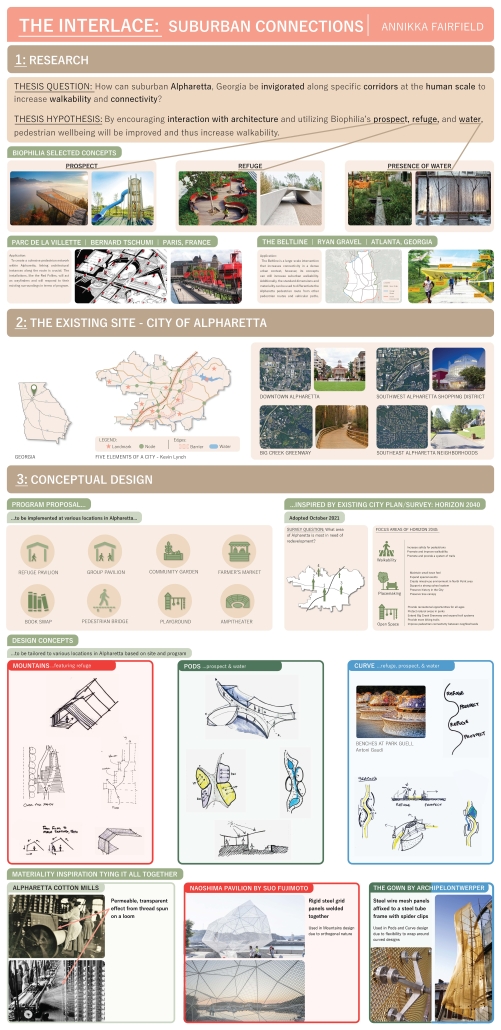
THE INTERLACE: CREATING SUBURBAN CONNECTIONS by Annikka Fairfield, B.Arch ’25
Kennesaw State University | Advisor: Robin Puttock

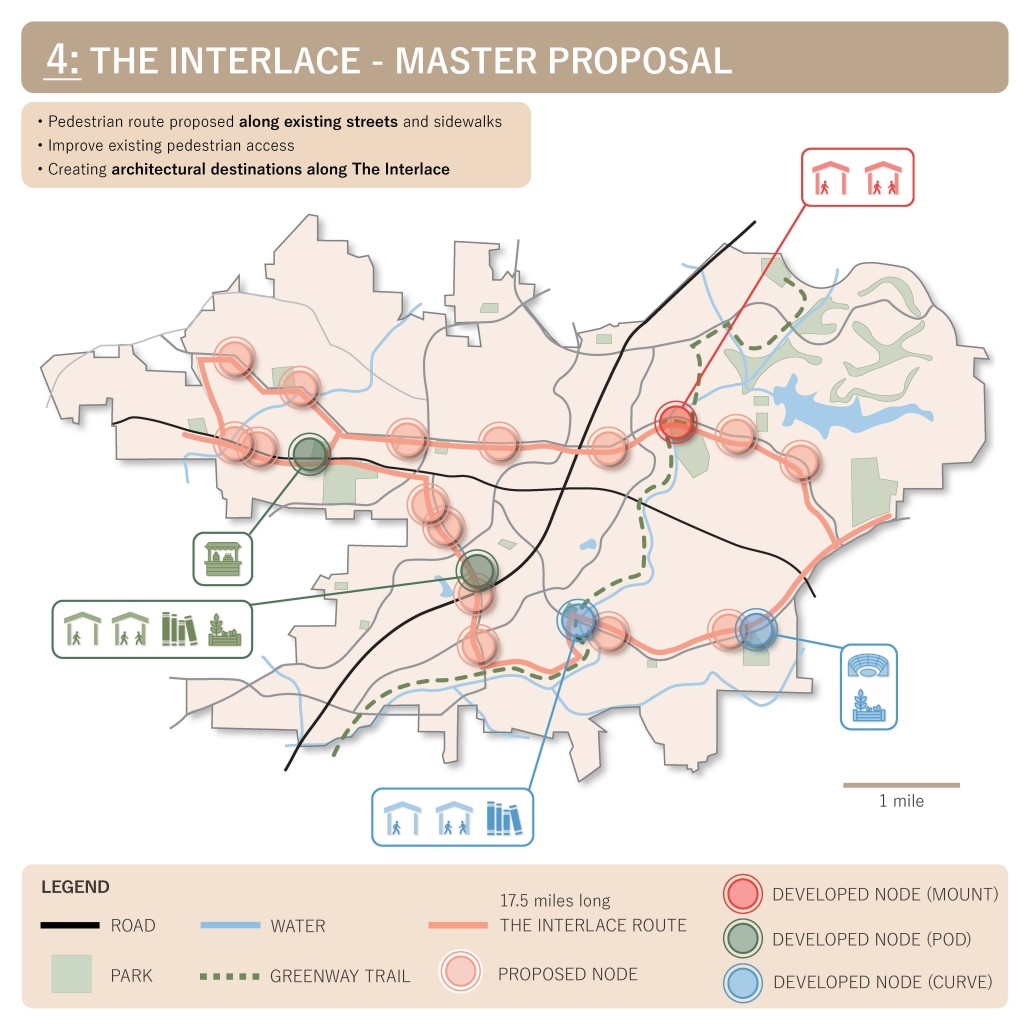
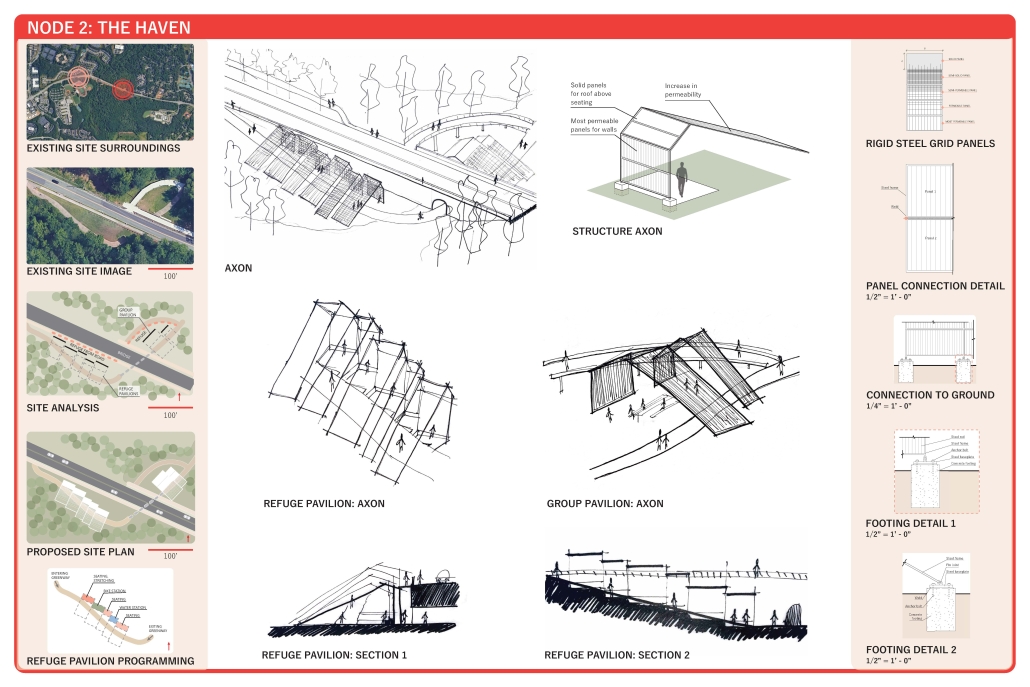
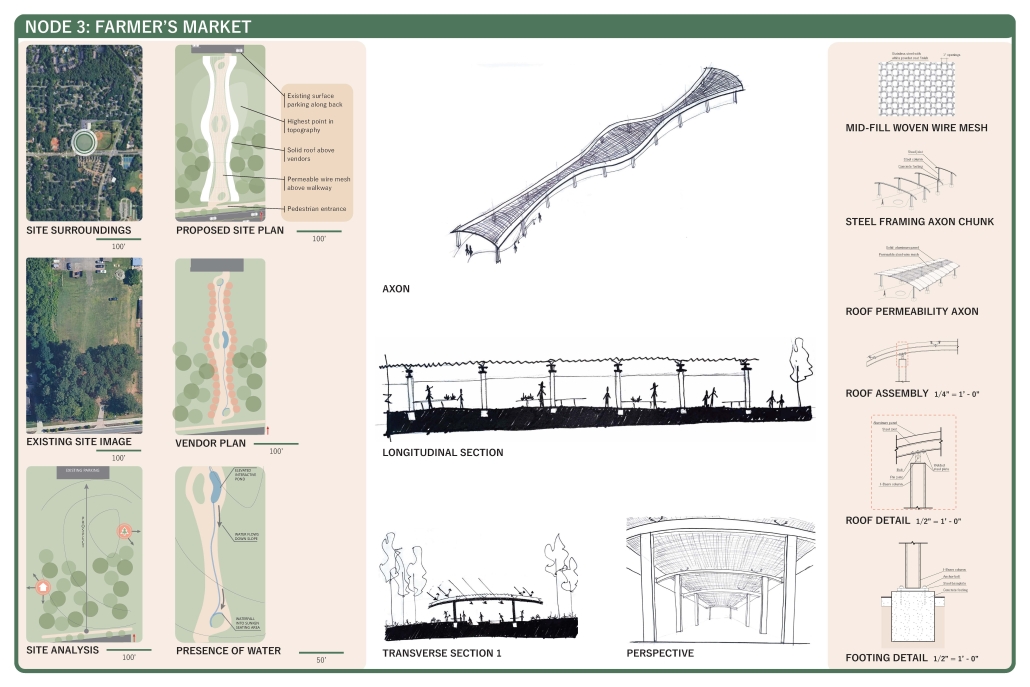
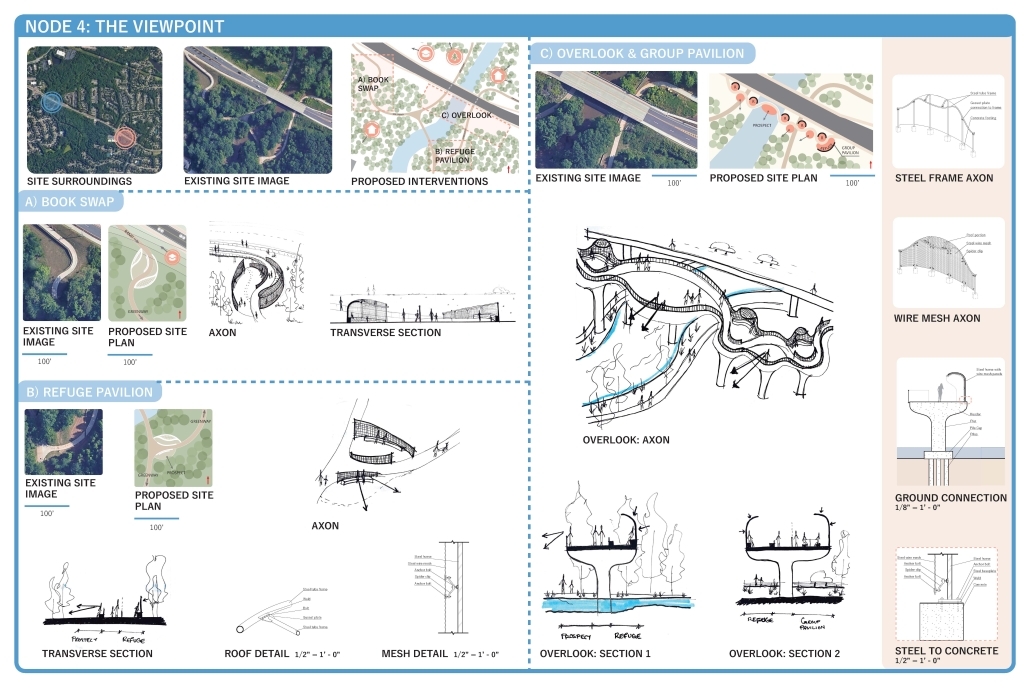
Many cities in the United States are designed based on suburban sprawl, which contributes to excessive automobile-dependency and unwelcoming streets for pedestrians, and metro Atlanta is no exception. Alpharetta, Georgia, is a growing city with the potential to become a more walkable suburban city. Alpharetta can be invigorated along specific corridors at the human scale to increase both walkability and connectivity by focusing on pedestrian wellbeing. Research shows that Biophilia’s various facets have the power to improve human wellbeing. Prospect, refuge, and presence of water were selected to guide the thesis design. Urban-scale precedents like the Beltline in Atlanta, Georgia, and the Emerald Necklace in Boston, Massachusetts, inspired The Interlace, a 17.5-mile pedestrian loop that expands upon the existing Greenway Trail and connects multiple nodes across the city. 

“The Interlace” is designed along specific corridors to significantly improve pedestrian access along roads that are currently car-oriented. Research suggested that improved pedestrian access alone will not increase walkability; destinations must also be created to encourage walking. Inspired by the Parc de la Villette in Paris, France, twenty different proposed architectural installations, also called nodes, are strategically designed along The Interlace to create destinations. Different combinations of programs are implemented in each node to support each surrounding community. The nodes are all designed with a similar materiality, inspired by Alpharetta’s history, which ties the architecture together and facilitates placemaking by creating a new identity. Five of the twenty nodes are more fully developed, featuring how prospect, refuge, and presence of water can be implemented at the architectural scale to improve pedestrian wellbeing and thus increase walkability and connectivity at the broader urban scale.

Click here to learn more.

This project was a finalist for the ​​ARCC King Student Medal.

Instagram: @annikkafairfield, @robinzputtock 
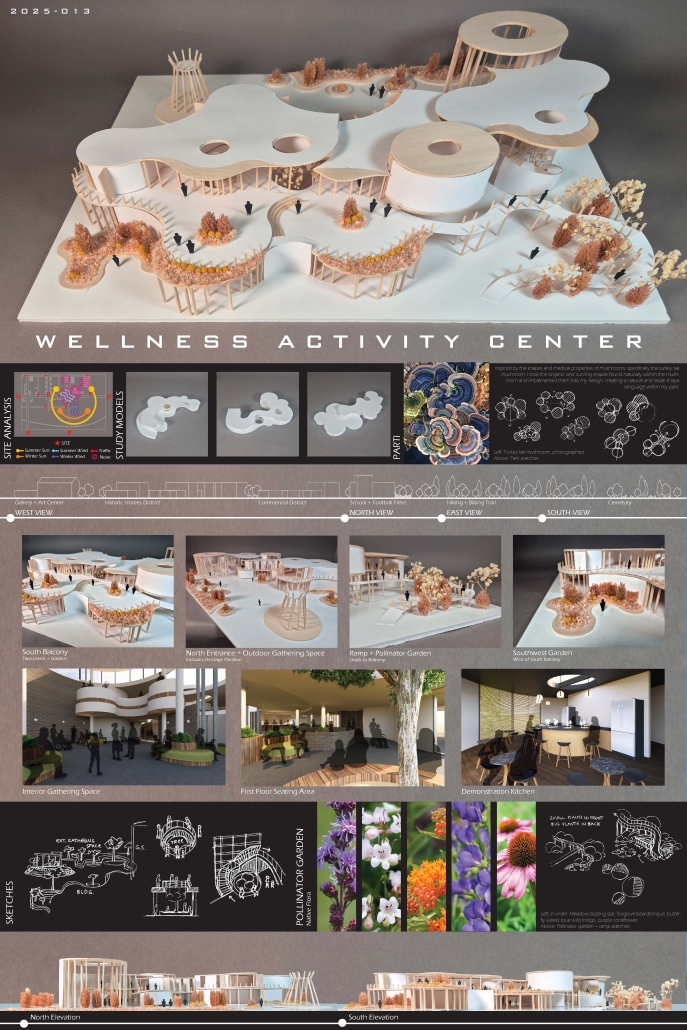
Wellness Activity Center by Angel Niemczyk, AA in Architecture ’25
Community College of Philadelphia | Advisor: Elizabeth Master

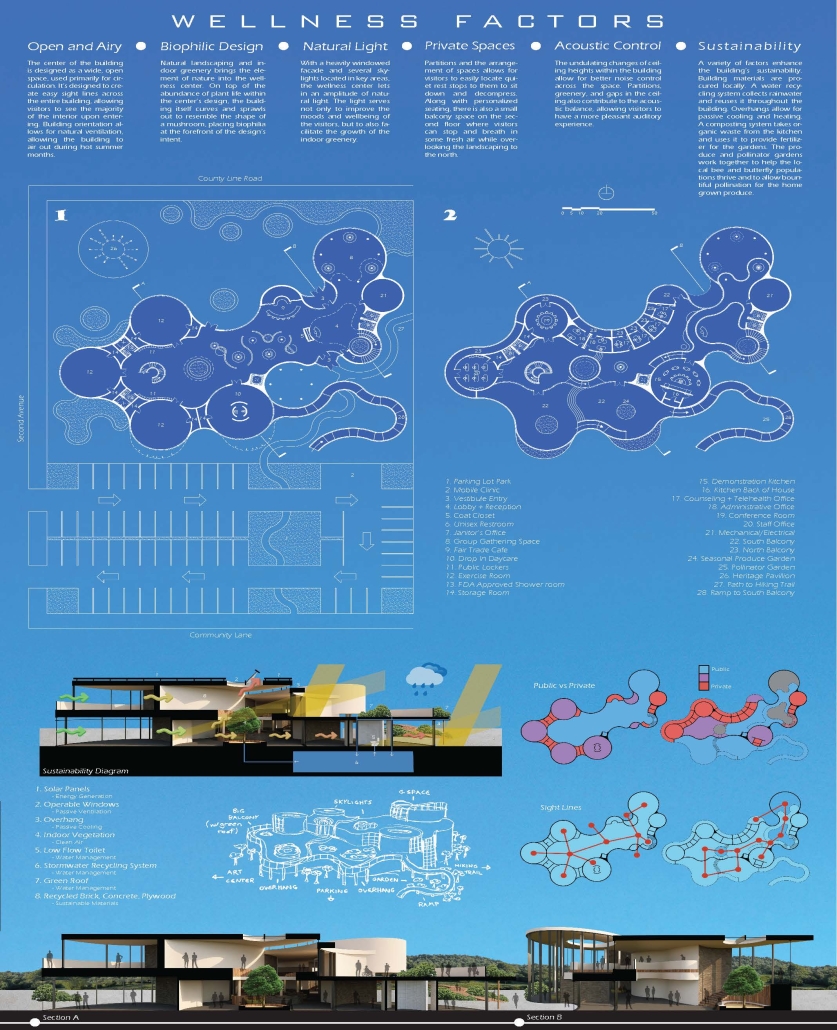
The project site was selected in central Oregon, at 45°N latitude, and within the 6a climate zone, which influences key factors such as wind directions and local flora.

The design draws inspiration from the turkey tail mushroom, featuring organic, curving shapes that promote a calming atmosphere. This architecture integrates ample natural light through large windows and skylights, enhancing well-being and reducing energy costs.

To foster a strong connection with nature, the design incorporates mushroom-inspired forms and features abundant live vegetation throughout the building and in the surrounding gardens. A park has been added to the adjacent parking lot, featuring a pathway that leads to a nearby forested trail.

Other enhancements include:

– A café with fair trade coffee and healthy snacks.

– Separate mechanical and electrical rooms on each floor for improved energy management.

– Four additional restrooms for increased capacity.

– A fire escape near the north entrance.

– A “Heritage Pavilion” inspired by Native American architecture.

– An organic produce garden and a pollinator garden to support biodiversity and collaborate with the kitchen.

The pollinator garden attracts bees and butterflies, enriching the local environment and enhancing visitors’ experiences, while the produce garden fosters growth through natural cycles, utilizing kitchen waste as fertilizer.

This project won the second-place CCCAP 2025 Student Award. 

Instagram: @ADC_CCP 
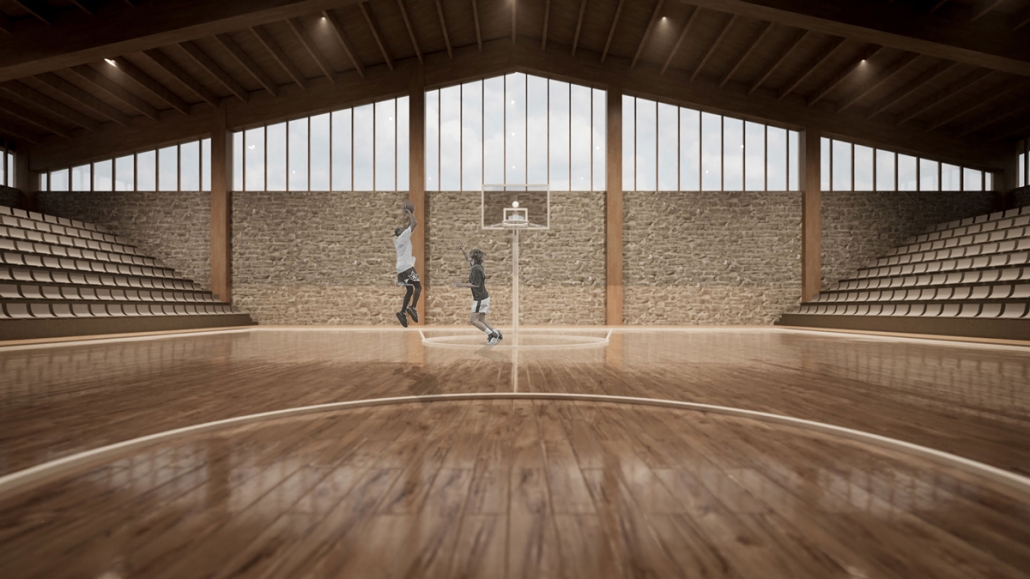
Valley Sports Complex: Sports, Recreation, and Fitness Opportunities for Every Season by Blake Douglas, M.Arch ’25
Academy of Art University | Advisor: Aurgho Jyoti

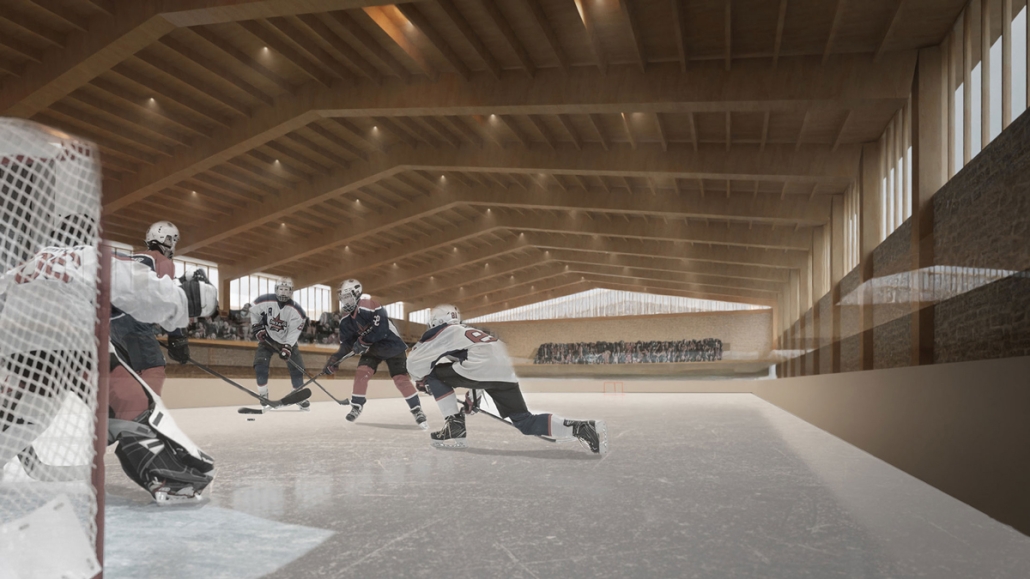
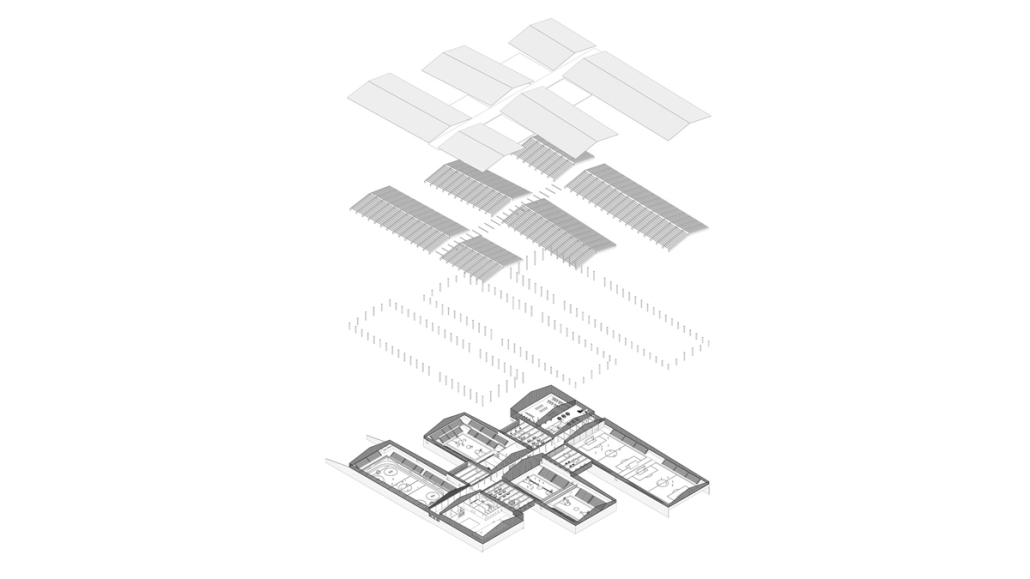
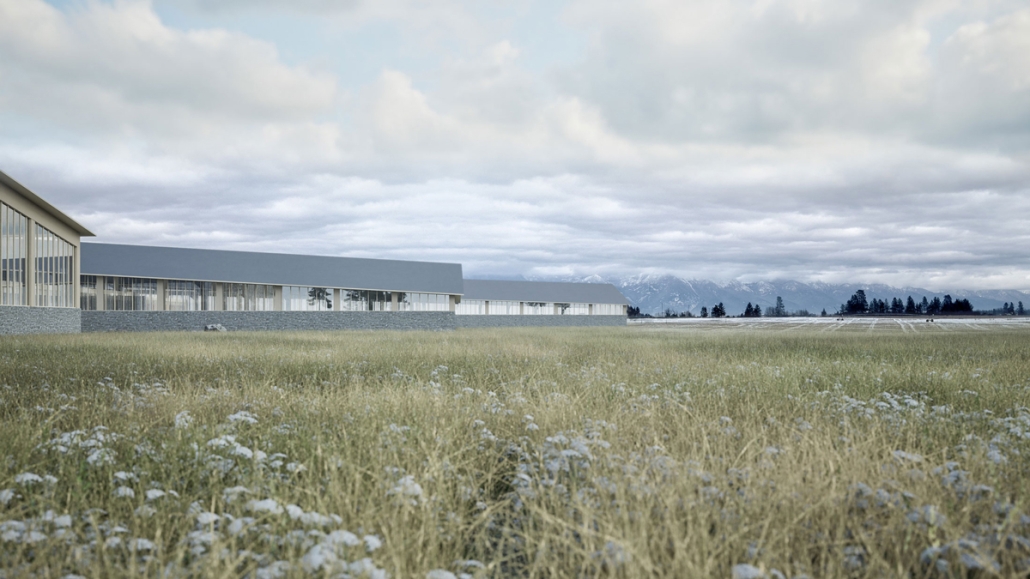
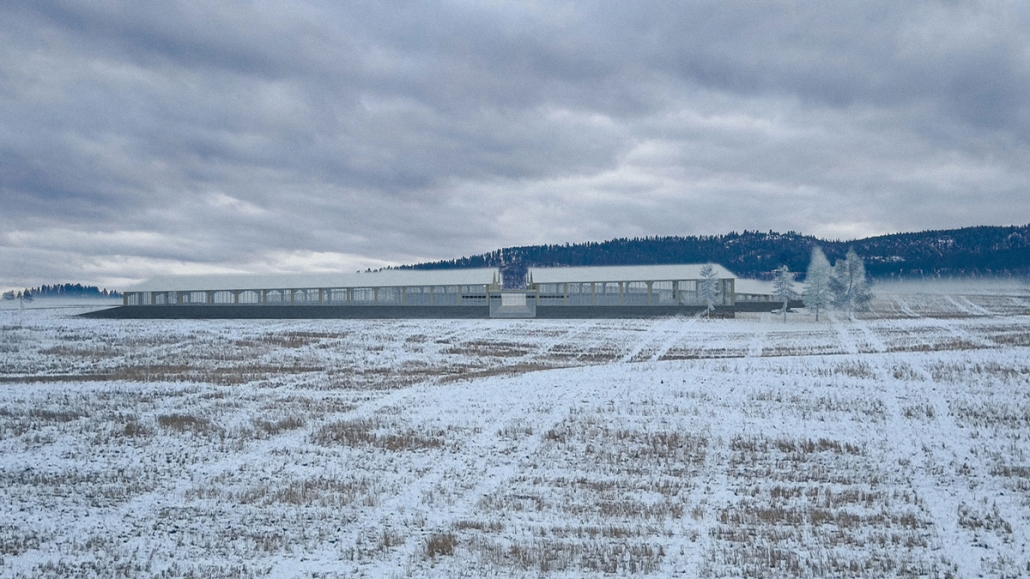
The community of Flathead County, Montana, requires an indoor recreation space. Long winters with short daylight hours significantly impact the community’s ability to be active and recreate through winter months and shoulder seasons. Snow is on the ground for up to eight months of the year, limiting available outdoor recreation opportunities. The winter climate also has an impact on mental wellness, as seasonal depression due to a lack of sunlight is common. Combined with a lack of recreation opportunities, the community would be well served to have a place to commune and interact throughout the winter season. Montana is known for its rugged and beautiful landscape; the built environment should respect and respond to that. The structure of the building will be locally sourced mass timber, and the overall form will be respectful to the context in which it sits. A sports center that will respect the landscape, enhance a sense of community, and provide recreation.

This project received the M.Arch Thesis Award. 

Click here to learn more.

Instagram: @b_doug_arch, @aur.architecture
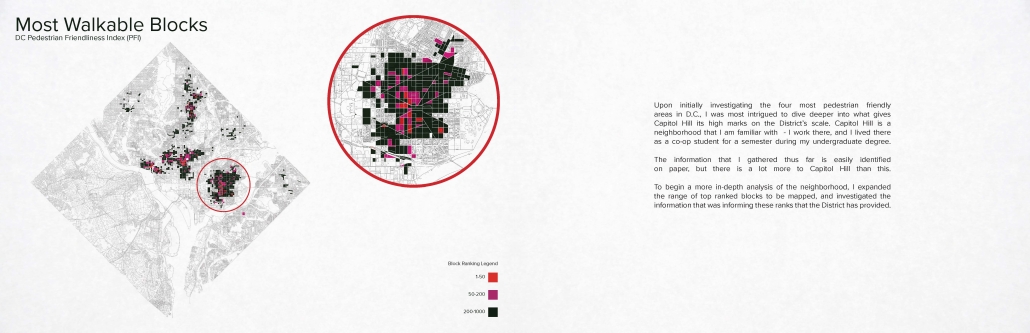
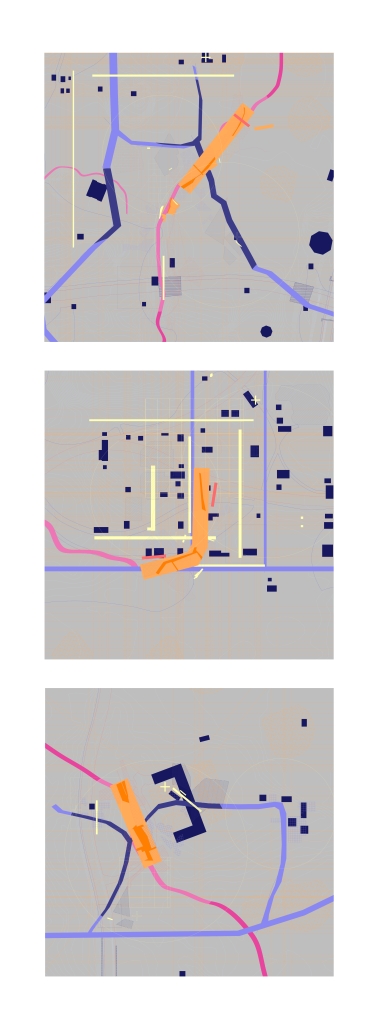
The Capitol Collective: A Community Centered Creator’s Hub that Enhances the Pedestrian Experience by Ashley Miller, M.Arch ’25
Virginia Tech | Advisors: Andrew Linn, Susan Piedmont-Palladino, Paul Kelsch

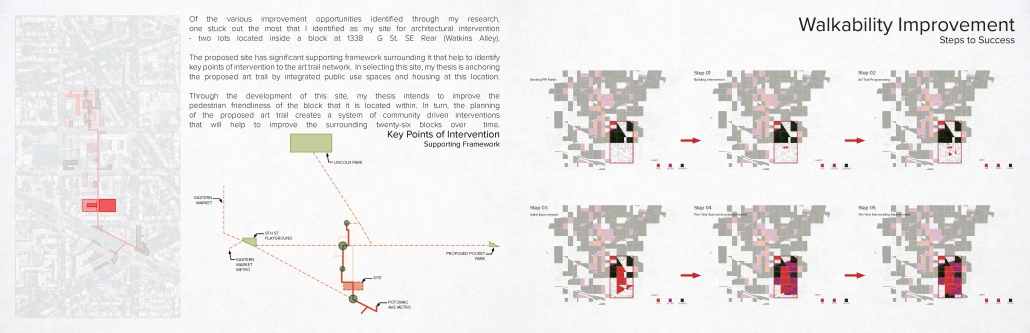
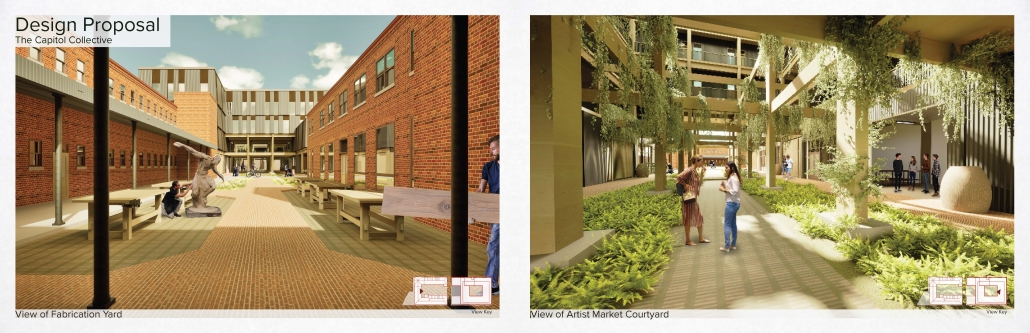
“The Capitol Collective” is a community-centered creator’s hub that anchors the proposed Capitol Hill Art Trail – an alley network programmed to enhance local beauty and promote community pride. Located in one of the most walkable cities in the United States, Washington, D.C., this thesis explores pedestrian environments that are deemed ‘the best’ according to the District’s Pedestrian Friendliness Index (PFI), with a focus on the Capitol Hill neighborhood. While dozens of blocks in the area are ranked within the top 1,000 of the District, several others are deemed less desirable. This begs the question: what constitutes an ideal pedestrian environment, and how can we as designers contribute to creating architecture that thoughtfully integrates with, and improves upon, the pedestrian experience? 

Observing and documenting street conditions of both higher and lower-ranked blocks demonstrated that blocks with higher rankings embraced the walker’s experience by incorporating programs such as sidewalk cafes and restaurants, inviting transit plazas, playgrounds, outdoor markets, and more. Through this initial research, a scope of roughly twenty-seven blocks was identified as an area that could be improved upon. The existing area has the foundation for a flourishing, walkable hub for the community, but it currently lacks the inviting qualities that its neighboring blocks have. This thesis proposes to fill these gaps through the built environment by creating a programmed art trail that is anchored through a community workshop and residence. 

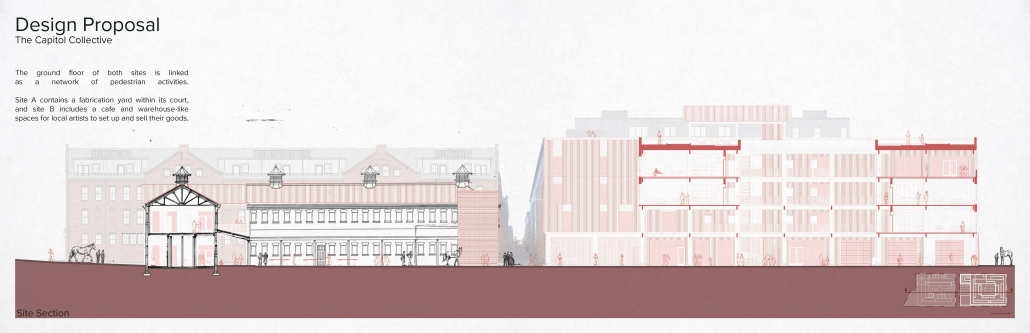
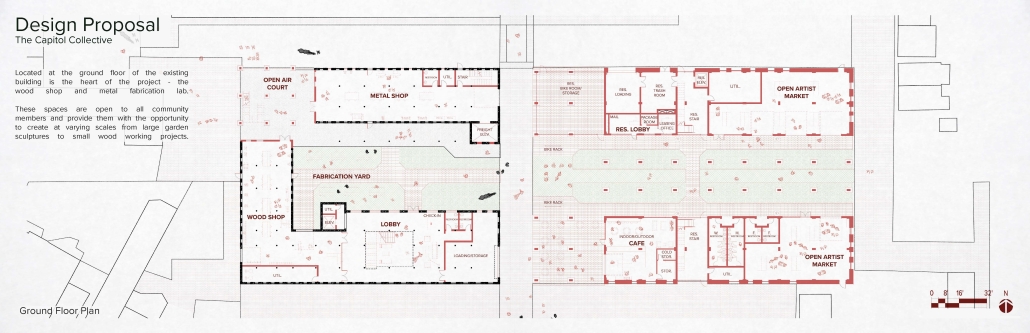
The Capitol Collective’s mission is to build community through creation. At the heart of the project are the wood shop and metal fabrication lab, which are open to all community members. There are also classrooms where individuals can learn from one another, a tool library where locals can rent out items, and studio spaces for local recurring artists. The ground floor of the newly constructed building also boasts a cafe and warehouse-like spaces for local artists to set up and sell their goods. Levels two through three of the new construction building are programmed with affordable housing that prioritizes individuals who are committed to improving and supporting the local community.

This project received the WAAC Thesis Award. 

Click here to learn more.

Instagram: @ashley.miller15, @VT_WAAC
The Voids of the Forgotten: Stories Layered in Unmaking by Sophie Hutton, BFA in Architecture’25
James Madison University | Advisor: Dylan Krueger

This thesis begins not with the act of making, but with the act of unmaking—a journey into the forgotten, the overlooked, and the lost.

Architecture is often thought of as something permanent—something that stands tall against time. But what if the first gesture in design was not to assert, but to dissolve? What if architecture could listen, rather than impose? What if the act of unmaking could be the beginning of creation?

Unmaking is a meditation on impermanence. It is about architecture that dissolves instead of dominates, about creating spaces that listen to the land rather than claim it. To unmake is not destruction. It is revelation. It is peeling back the layers of time to expose what has been buried. To make visible the hidden histories, the suppressed memories, and the erasures that still resonate beneath the soil. Architecture, in this sense, is not a monument to permanence but a vessel for memory, decay, and regeneration.

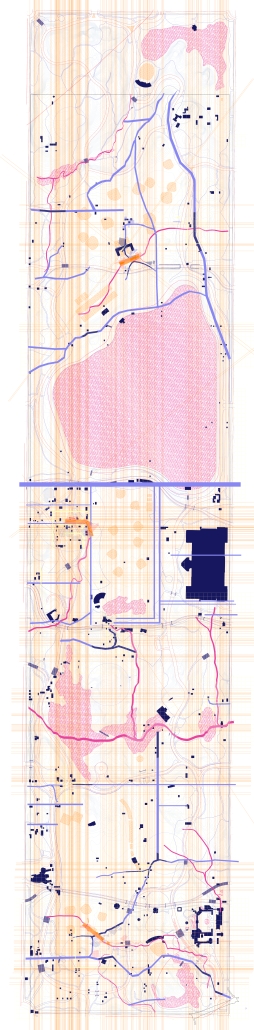
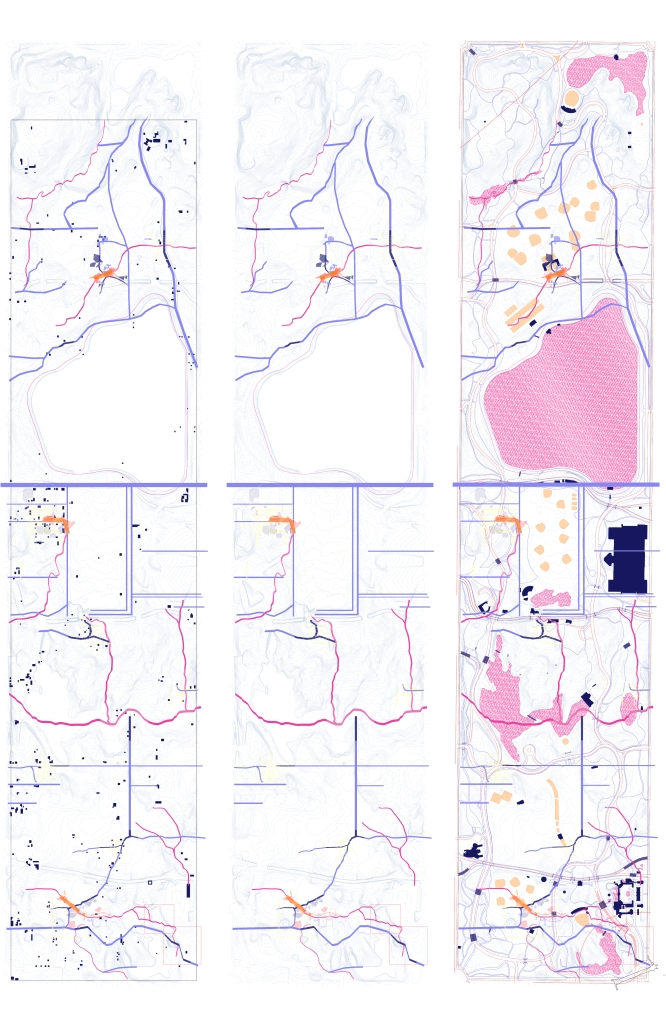
This exploration centers on a forgotten history, one hidden beneath the surface of Central Park, New York, where Seneca Village once stood—a thriving minority community in the 19th century, full of life, resilience, and faith. But it was erased, displaced under the guise of progress. Beneath the park’s manicured lawns lies a history that has yet to be remembered.

The design is centered around three areas in the park, each a meditation on memory, erasure, and reclamation. These speculative site plans visualize futures shaped by absence: nature overtaking roads, forgotten street grids returning, memory lines resisting imposed order. Each is an act of unmaking—a gesture toward revealing what has been hidden and allowing the land to speak again.

Unmaking is not failure, but resistance and revelation. It asks us to design with the rhythm of life. To unmake is to remember.

This project won the James Madison University Thesis Prize.  

Instagram: @sopharcd, @dylan.things
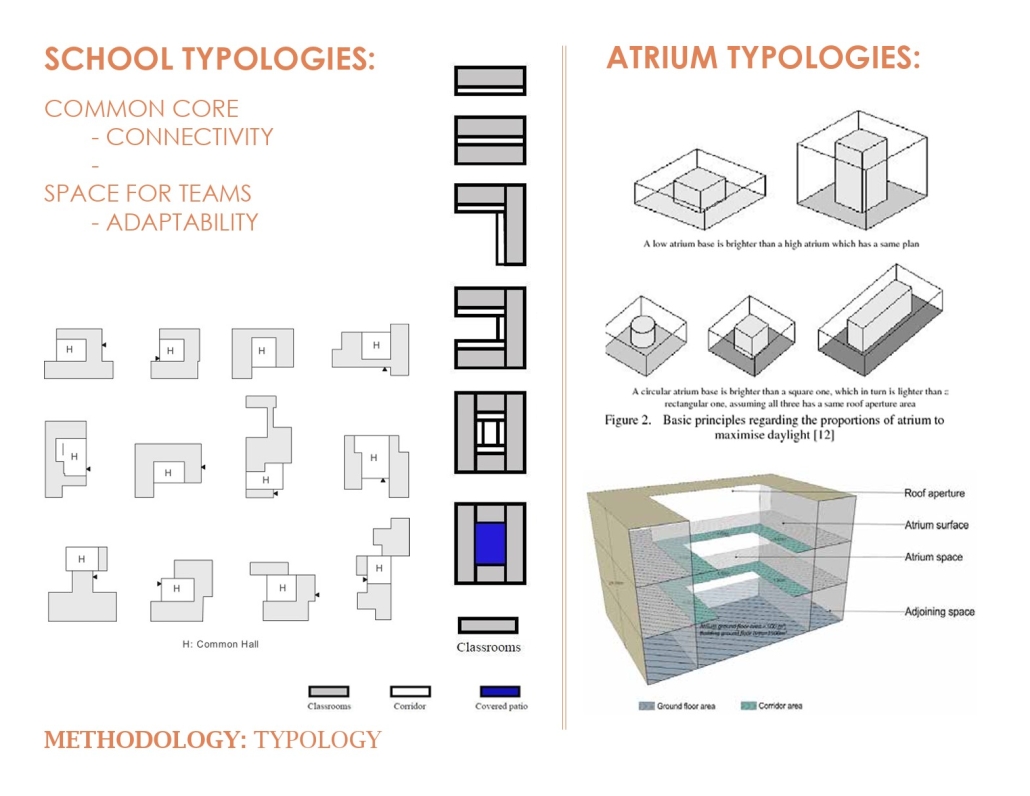
DESIGNING FOR THE SENSES: HARNESSING LIGHT, TRANSPARENCY, AND VISUAL CONNECTIVITY TO CREATE RESPONSIVE ARCHITECTURE FOR THE DEAF COMMUNITY by Jennifer Pennington, M.Arch ’25
Florida A&M University | Advisors: George Epolito, Andrew Chin

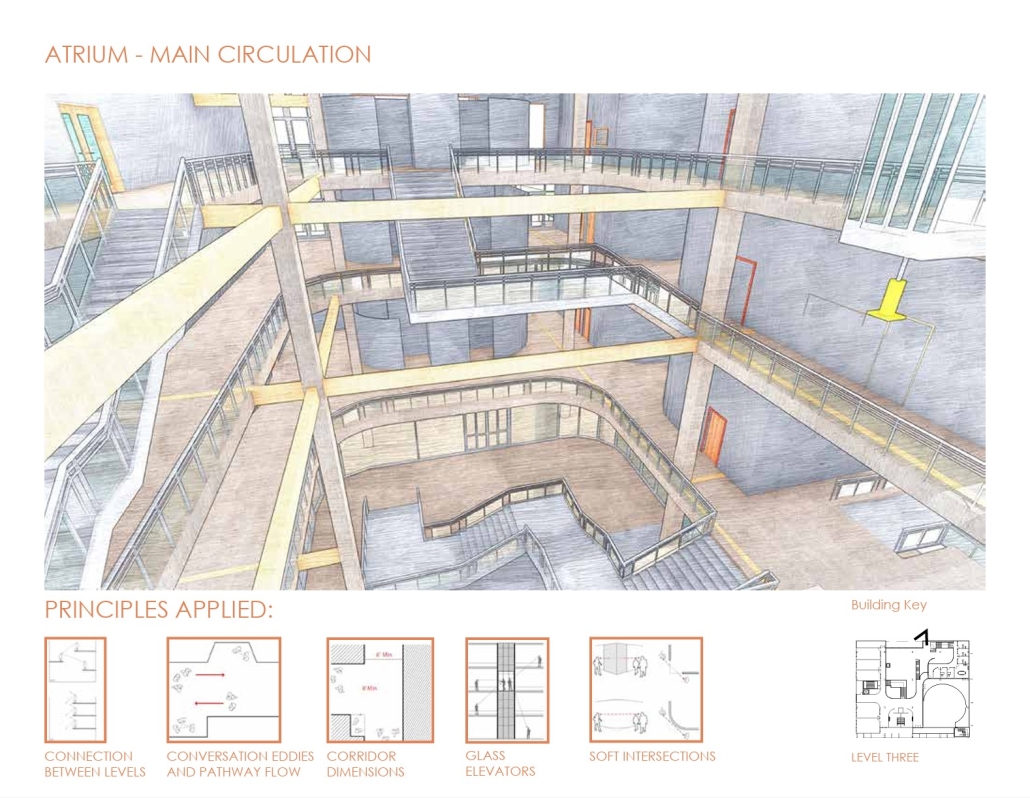
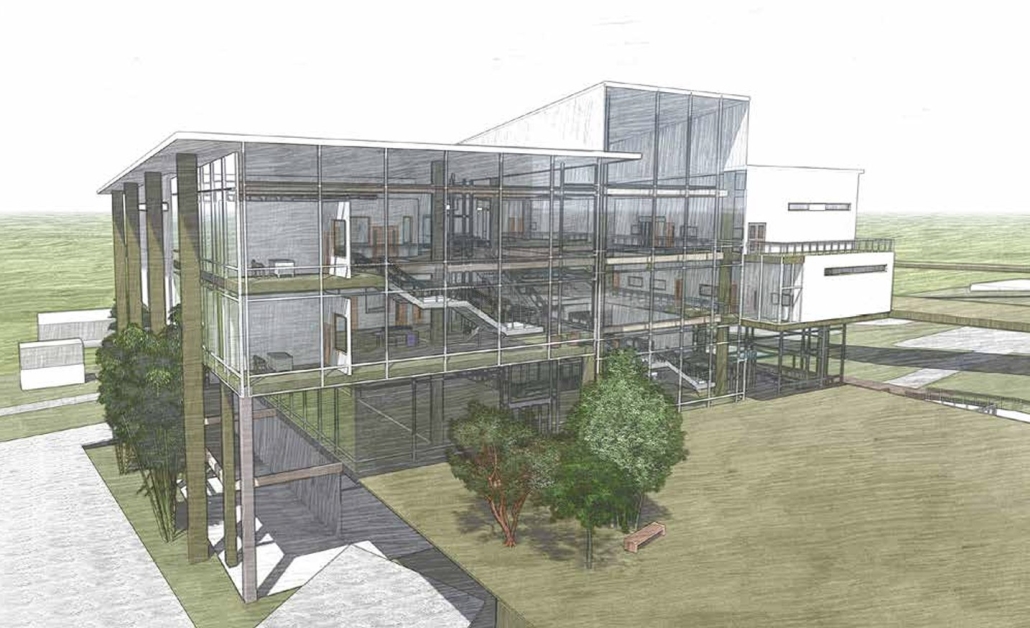
This thesis explores how architectural design can be thoughtfully informed by Deaf space principles to create environments that enhance navigation, communication, and inclusivity for the Deaf community. Centered on the strategic application of light, transparency, and visual porosity, the project seeks to dismantle spatial and sensory barriers that often leave Deaf individuals navigating spaces that fail to support their lived experiences.

The research focuses on designing a community hub in Tallahassee, Florida—an inclusive space that promotes visibility, intuitive movement, and social connection. Current architectural practices frequently neglect Deaf users, resulting in spaces that are visually fragmented or lack necessary cues for spatial awareness. This study responds by investigating design strategies that prioritize visual access, clear sightlines, and unobstructed circulation.

Using Deaf space design theory as a foundation, the project integrates spatial transparency and natural light to support non-verbal communication, while employing visual rhythm and layered spatial relationships to guide users organically through the environment. Through case studies, spatial analysis, and architectural modeling, the research establishes a set of principles for creating spaces that do not merely accommodate but actively empower Deaf individuals.

The resulting design envisions a community hub that is both functionally accessible and emotionally enriching—encouraging interaction within the Deaf community while also inviting greater engagement with the broader public. In doing so, the thesis advocates for a more holistic and humane architectural practice, one that values sensory diversity as a driver for innovation and social equity.

 Instagram: @famu_masterofarch, @famusaet
The Last Lookout by Keaton Bruce, M.Arch ’25
Temple University | Advisors: Sally Harrison, Jeffrey Nesbit & Kate Wingert-Playdon

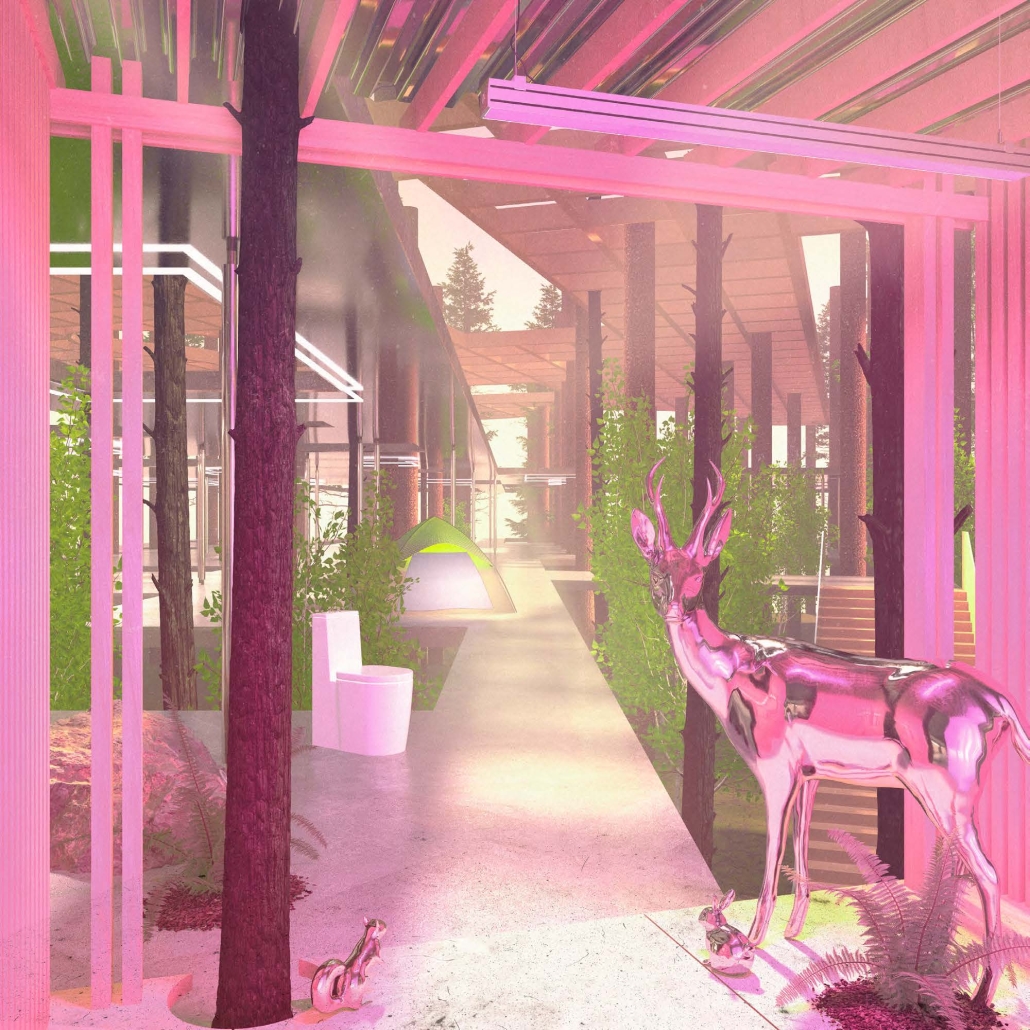
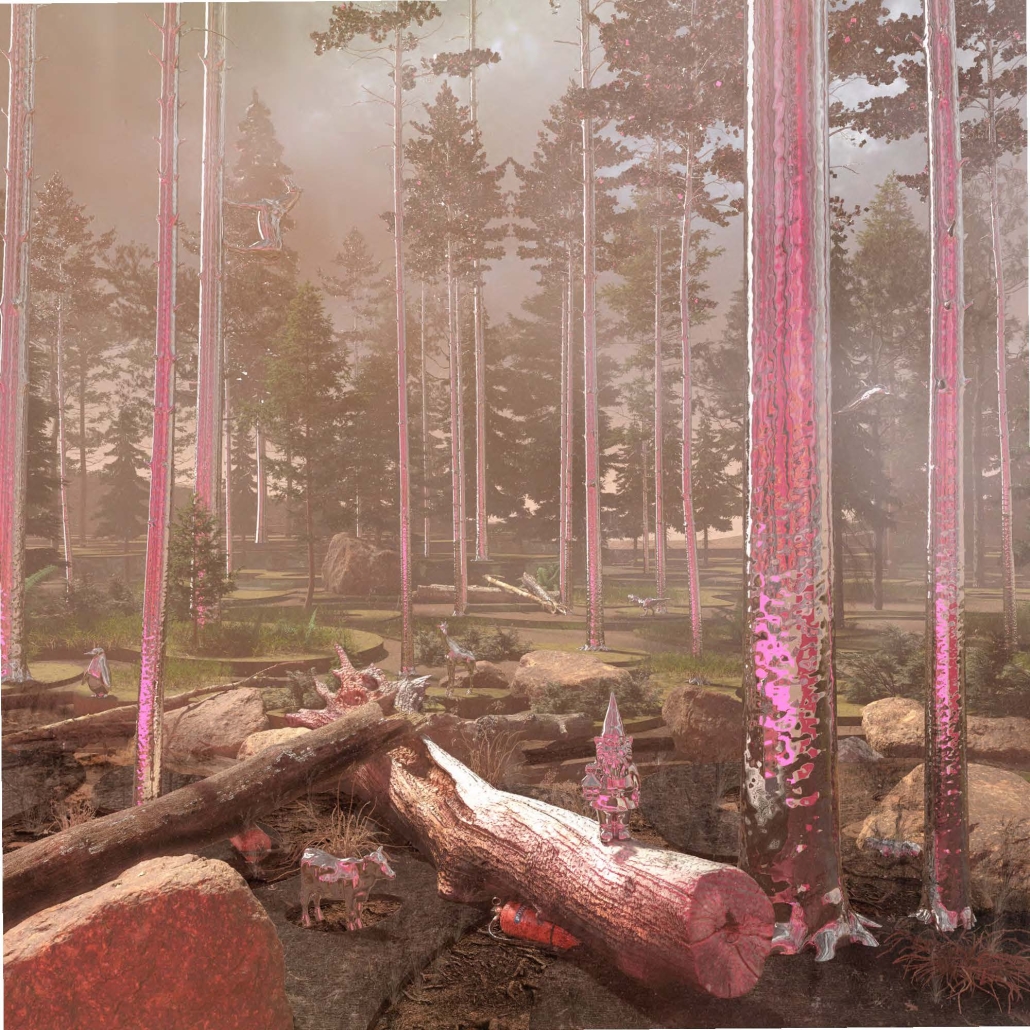
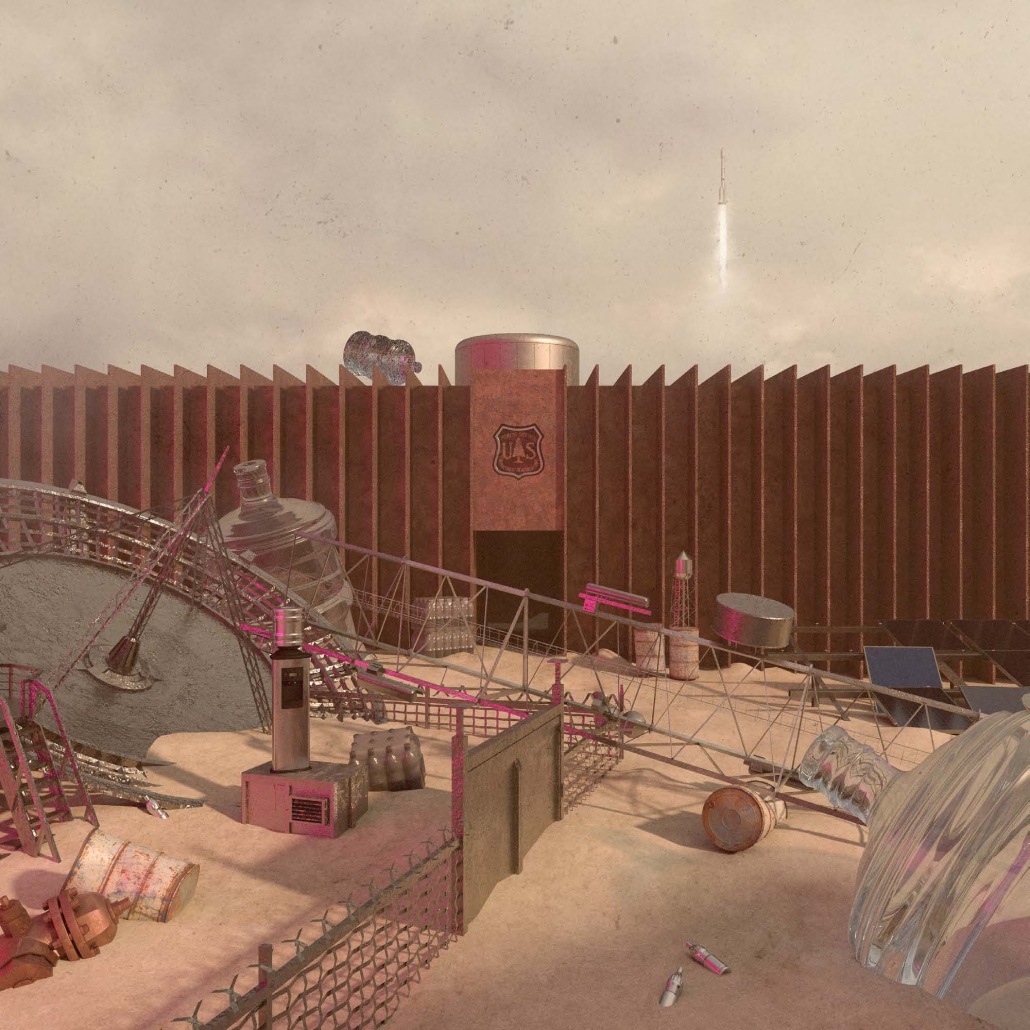
Our forest has been completely designed.

The production of artificial boundaries, unassuming objects, and pervasive cultural imaginaries, the United States Forest Service constructs American forests in the image of a naturalized occupying state. Contemporary architecture, in its reliance on this manufactured forest, sustains violent neoliberal fantasies of displacements disguised as world-saving visions of productivity and progress.

So how might we imagine the future of architecture, of our forest, of resistance? If the National Forest Service is a tool of an occupying state, a new vision of the forest is delayed until the current system of commodification and nationalization is dismantled. The project speculates on a final form – the last lookout – and asks how this end can be just as valuable as a beginning in realizing a new future – an architecture after the Forest Service.

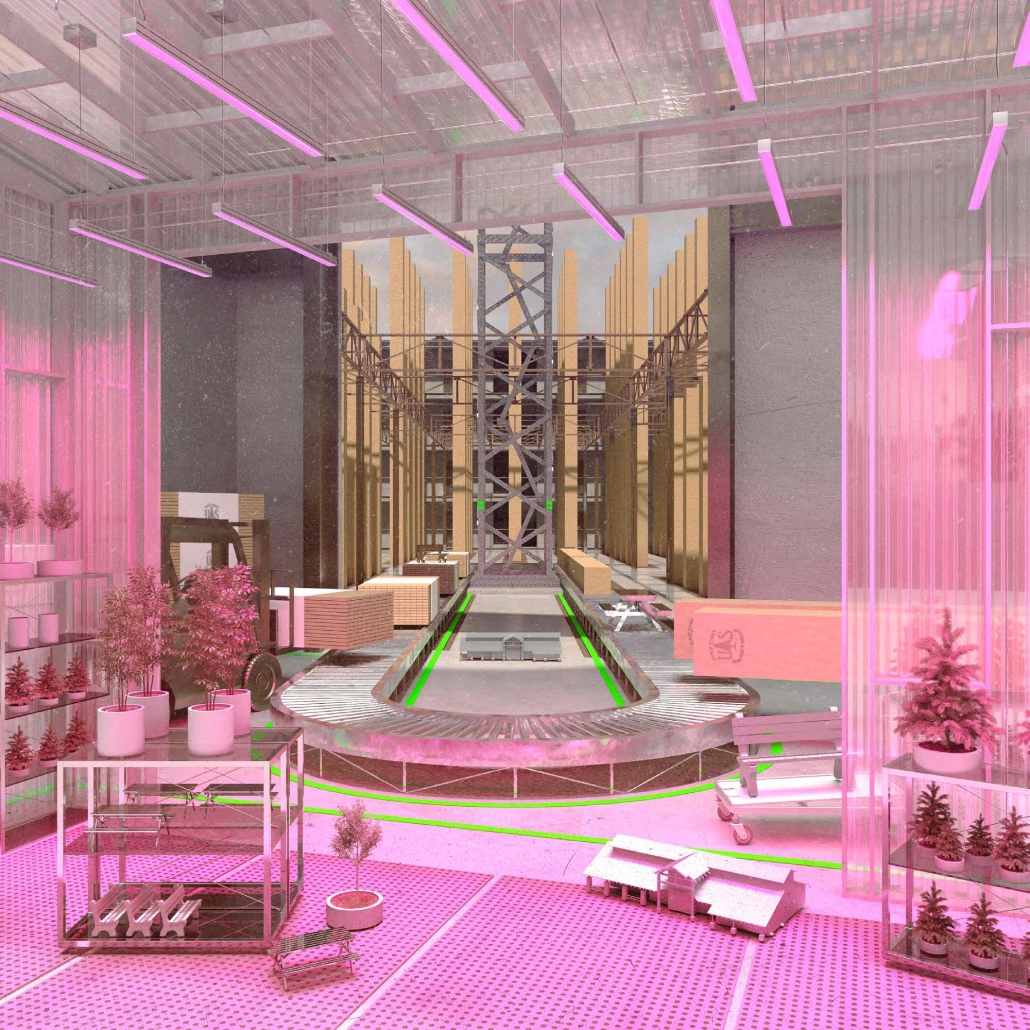
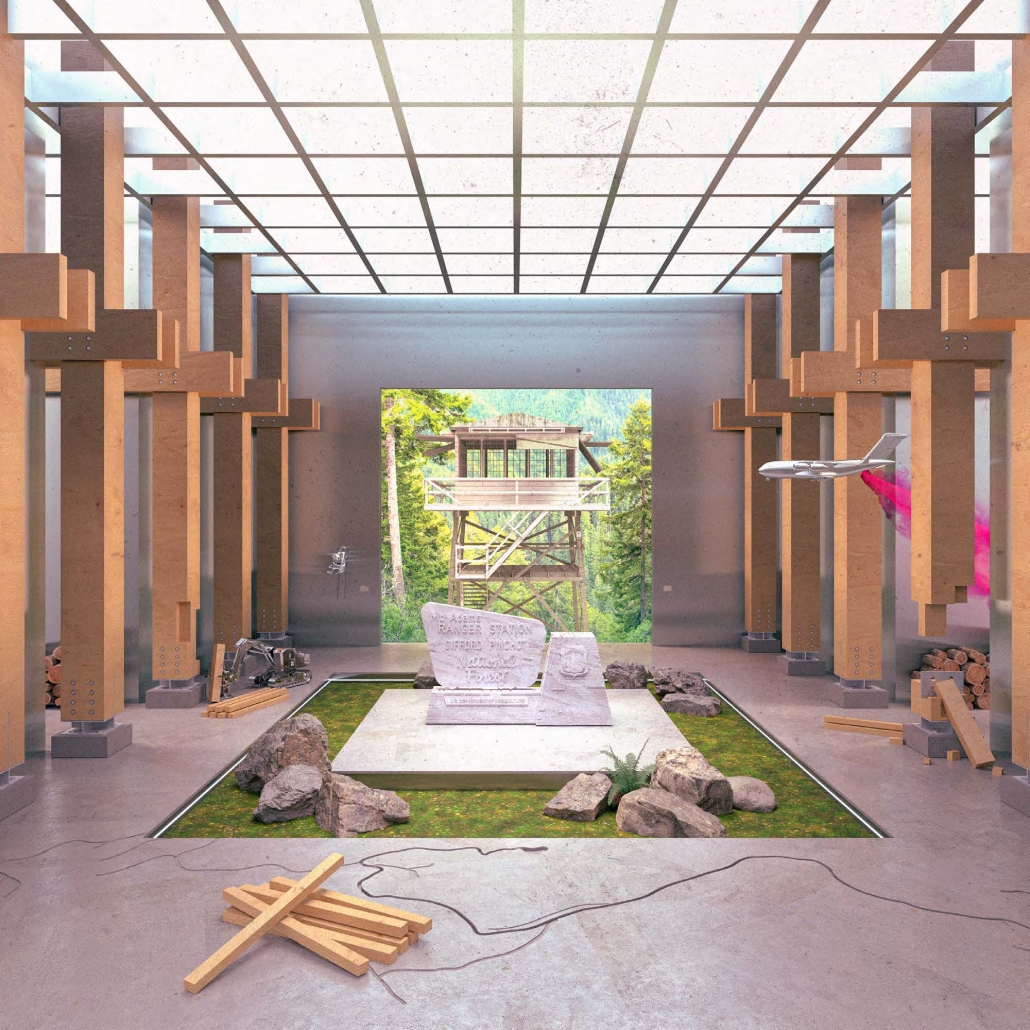
Based on the Multi-Use Sustained-Yield Act of 1960, which set forth five productivity mandates for USFS-managed lands (watershed, logging, recreation, range, and wildlife), the project satirizes five architectural endings of the forest: the MAUSOLEUM, the PENITENTARY, the MUSEUM, the COMMONS, and the AFTERLIFE. Each forest rendered in plan, perspective, and physical model investigates the symbiotic relationship between forest imaginary, architectural vessel, urban form, and political agency in an acontextual superimposition on the Oregon State Capitol Complex.

The forest we inherit need not be the forest we leave behind, but the forest we ultimately construct must be the forest we imagine.
Concourse on 5th by Maverick Santos & Luke Slay, M.Arch ’25
University of Texas at Austin | Advisor: Matt Fajkus

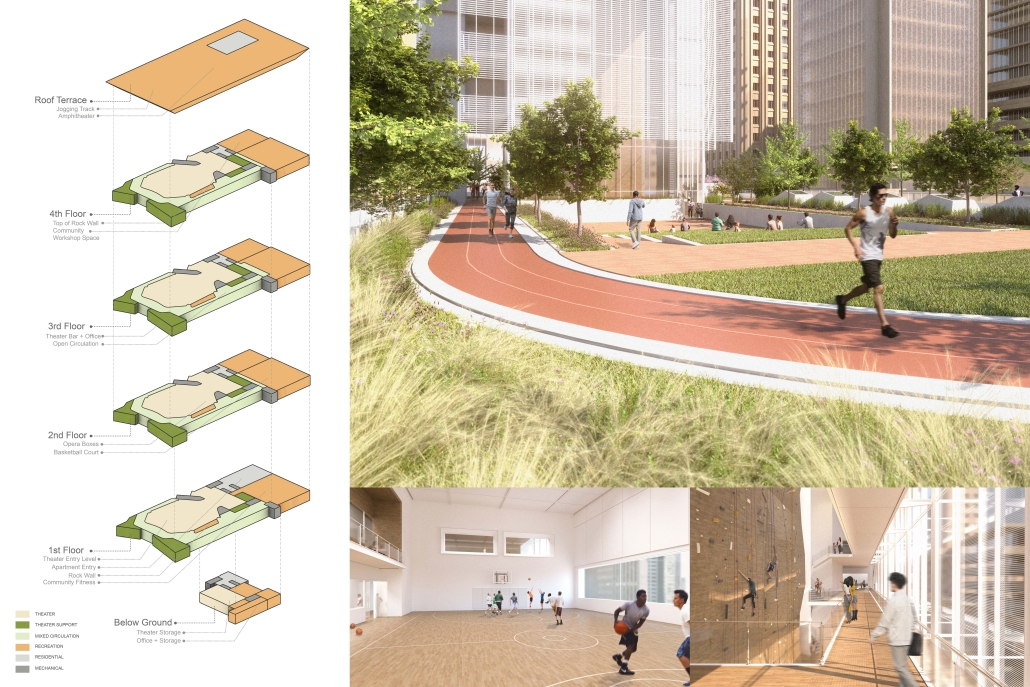
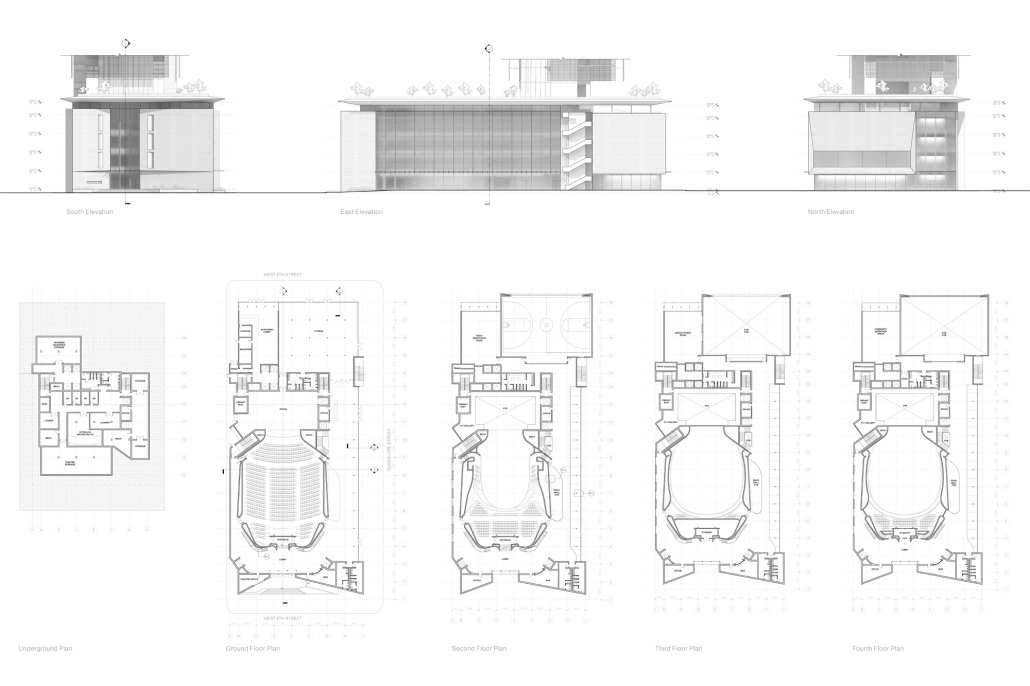
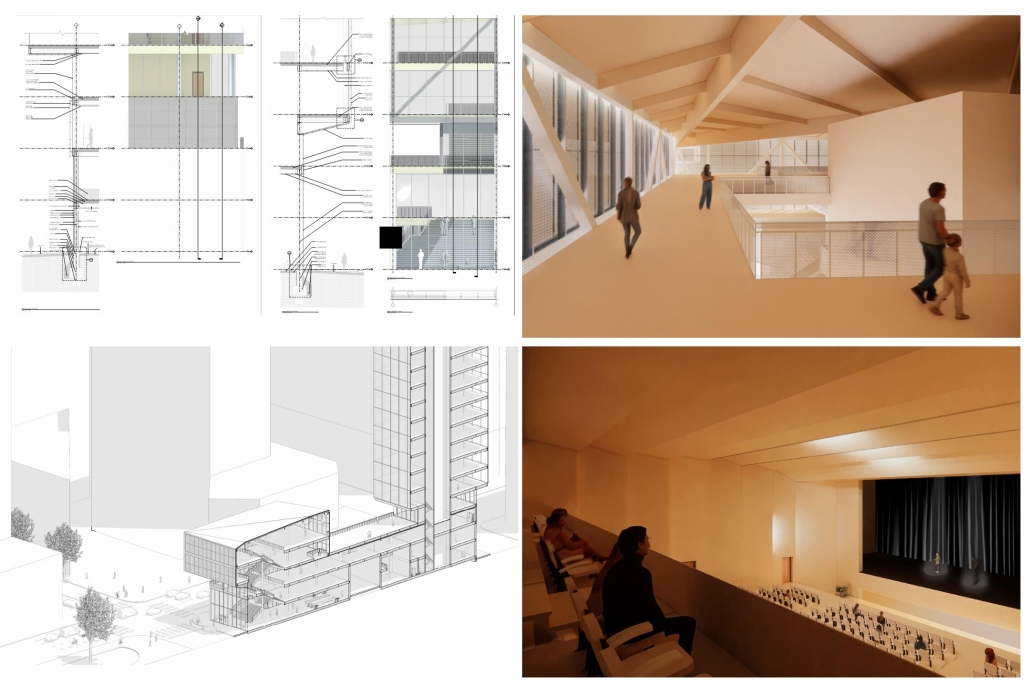
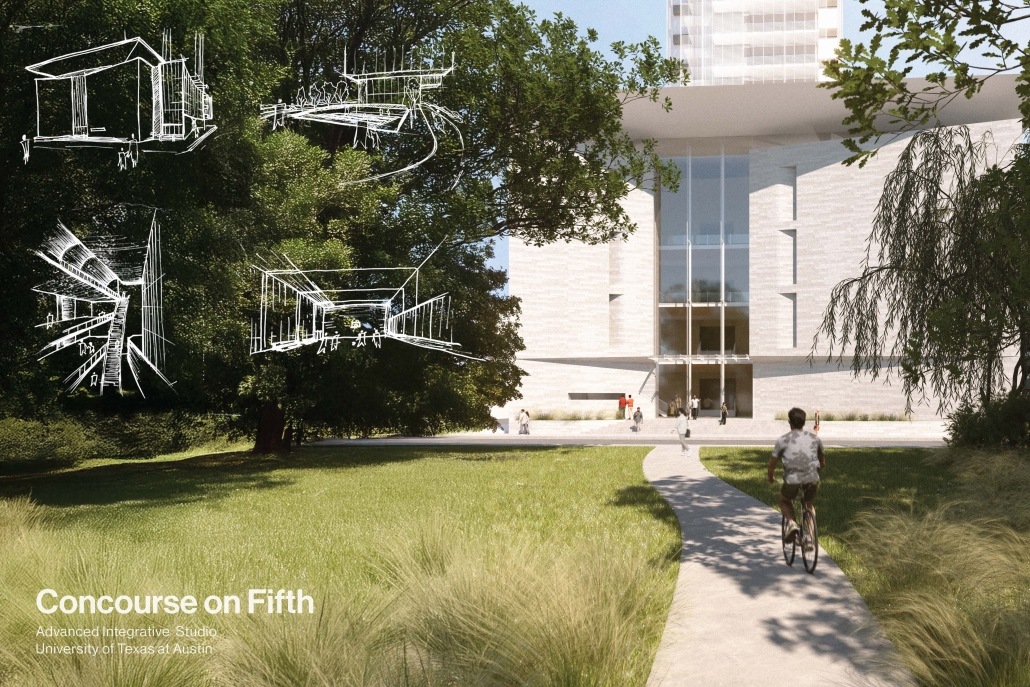
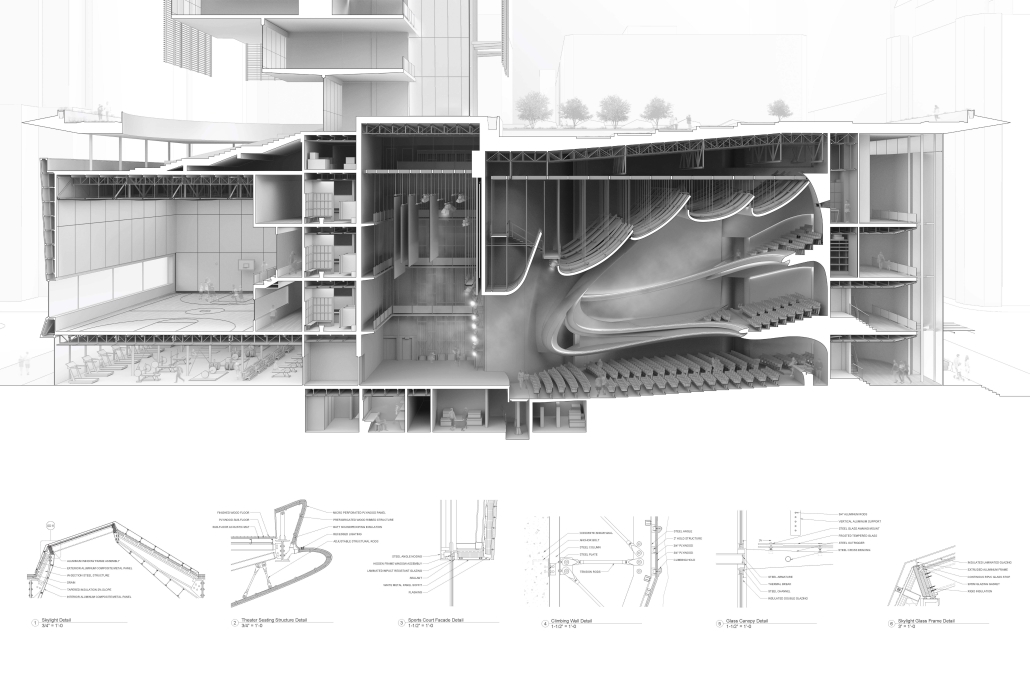
“Concourse on 5th” is a bold reimagining of downtown Austin’s civic landscape, designed to facilitate the city’s cultural vibrancy and active urban lifestyle. Strategically placed at the intersection of 5th Street and Guadalupe, the project redefines the role of circulation by transforming it into an “activated concourse” — a connective public platform that links a performance theater, community recreation spaces, and residences within a single cohesive building. By layering programs that operate on varied cycles, the building sustains continuous activity, becoming a dynamic place that serves diverse users throughout the day and night.

Located adjacent to Republic Square, the site capitalizes on its proximity to green space to prioritize the pedestrian experience. The theater’s monumental entry sequence, directly facing the park, establishes a strong civic presence and a sense of arrival. Along Guadalupe Street, the entrance to the community center is activated by an exterior stair that ascends to the elevated podium, where a running track and green spaces extend the square, promoting public engagement and visual transparency. The lightly articulated facade along this edge offers curated glimpses into the building’s interior, where warm wood finishes and the vertical ascent of a rock-climbing wall become visible markers of internal activity. On the 6th Street edge, the residential tower entrance is discreetly integrated alongside a highly visible sports court, reinforcing the project’s active interface with the city.

Internally, the theater is defined by sweeping, sculptural wood forms that foster a close and immersive relationship between audience and performance. The contrast between the refined urban exterior and the expressive, tactile interior enhances the experience within the project. The recreation program complements the performance spaces through its strategic integration, featuring moments where the climbing wall ascends along the theater’s edge, connecting multiple floors and drawing visual continuity between arts and athletics. 

The project challenges conventional typologies of event venues, which often remain unoccupied outside of peak hours. Instead, Concourse on 5th activates its circulation zones as multifunctional social spaces. Vertical and horizontal circulation paths double as areas for spontaneous interaction, bridging programs and communities. In the atrium, patrons exiting a performance might encounter climbers in motion or glimpse a yoga class underway; a choreography of simultaneous experience. This overlap fosters moments of connection and shared occupation, elevating the concourse from mere infrastructure to an essential part of the building’s public life.

Ultimately, Concourse on 5th functions as a hybrid space, serving as a platform for art, recreation, and everyday life. It reclaims space in downtown Austin for collective use through a design rooted in transparency, spatial porosity, and programmatic overlap. The project reimagines how architecture can enable continuous activation, creating a vibrant and inclusive environment that adapts to the city it serves.

This project was a finalist for the UT Design Excellence Award.

Instagram: @mikhail.maverick, @luke_slay01, @mf.architecture
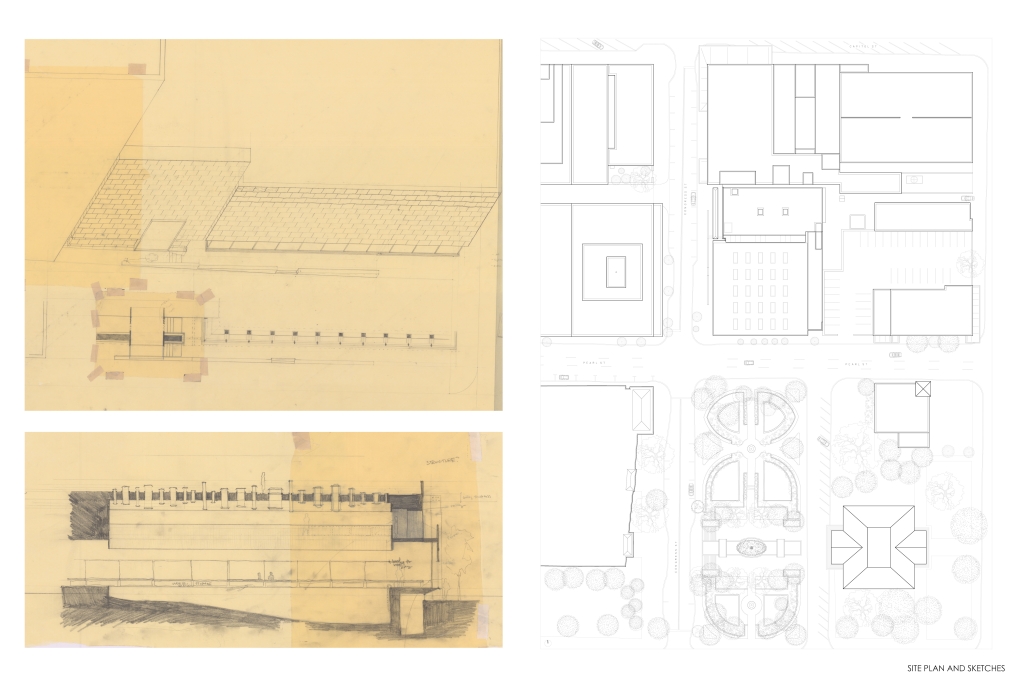
The Natatorium and the Wall by Grace Kotomi Owens, B.Arch ’25
Mississippi State University | Advisors: Jassen Callender, David Buege, Mark Vaughan, Aaron White & David Perkes

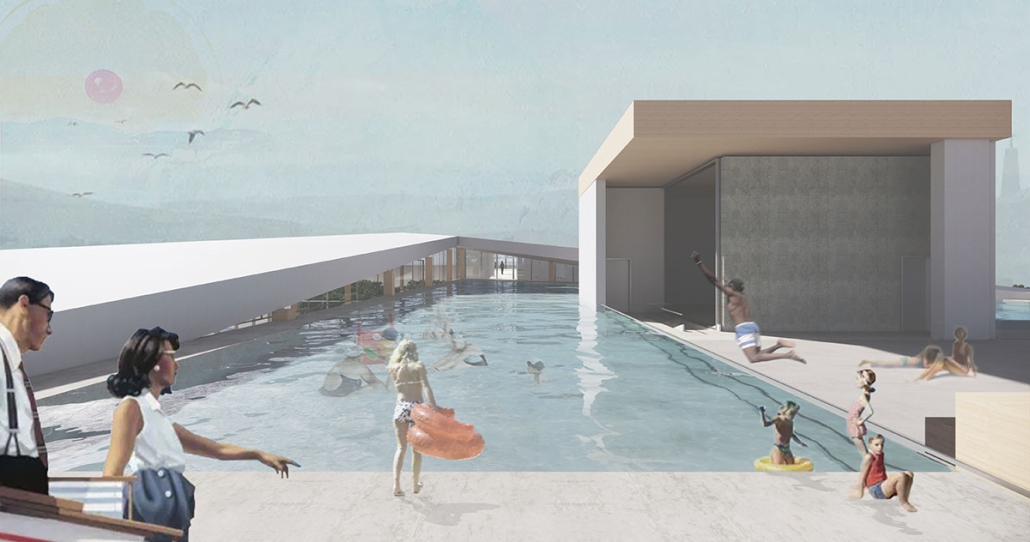
Pools are about floating and swimming; they are about feeling the water, feeling its temperature, its resistance to our movements, its weight, and our weightlessness. They are undoubtedly experiential destinations. In our increasingly digital world, I began this project hoping a natatorium in downtown Jackson, MS, would simultaneously bring people together and provide a place for people to be present, a place of focus and sanctuary. 

As the semester progressed, my project became about many things.  

My initial explorations were about void space. I find it insufficient to say that architecture creates space — it instead divides and thereby gives identity to and further defines the “empty” space that is already there.  

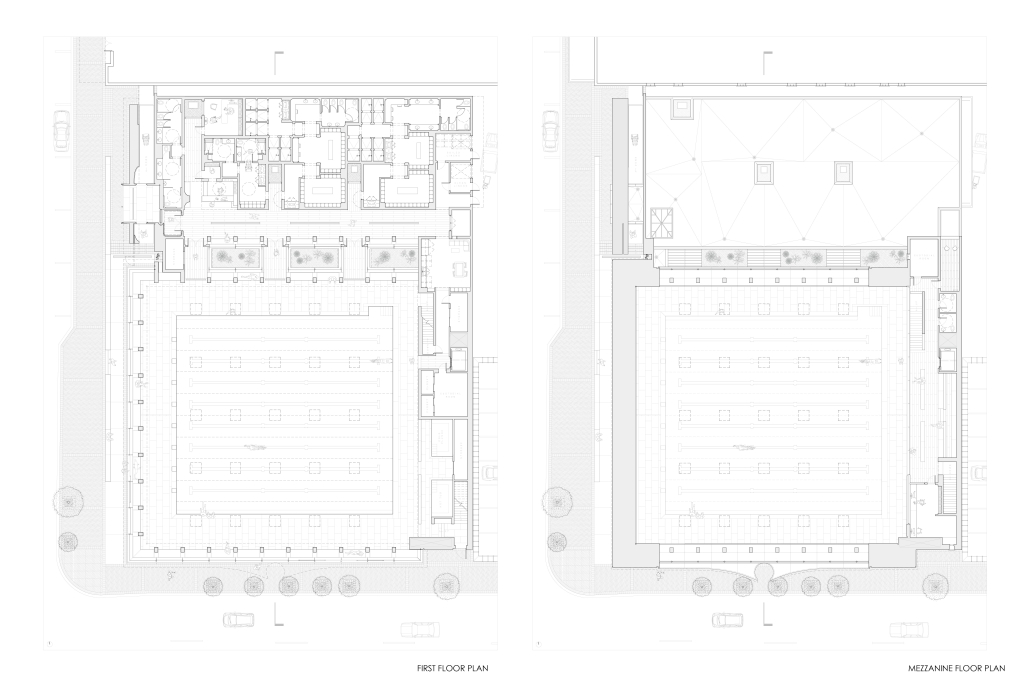
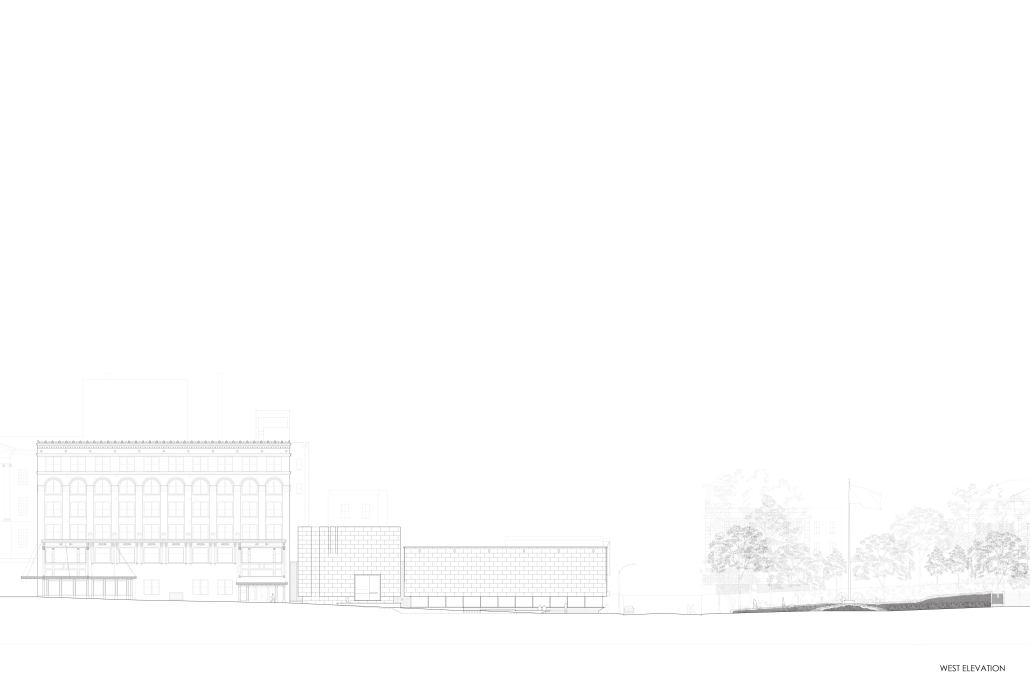
There was one question that I consistently asked myself in designing the natatorium: how close do two surfaces have to be for people to feel the space between them?  Voids became a bit of an obsession: the implied void of ribbon of windows wrapping the west and south facades, the unusual entry sequence in the void of the west elevation, the void behind the square window, the unoccupiable spaces of light wells and sculpture pockets seen in plan, the conical void of the south elevation, and of course, the void of the pool… negative space – present tangibly and intangibly throughout.  

This project also led me to explore architecture’s contribution to the city.  Designing a natatorium – a fairly suburban building in its standard form – for an urban context… This became an incredible challenge.  

My desire to meaningfully contribute to the city manifested itself in the design of “The Wall,” which can be seen in my West elevation. The Wall is almost totally detached from the rest of the natatorium, joined only by the cuboidal space protruding from the wall as a square window.  The Wall serves to acknowledge the suburban scale of the program it conceals: locker rooms, restrooms, and small offices.  Without such an acknowledgement, the natatorium would be dwarfed by the surrounding context.

In the end, I designed the natatorium and its wall as a monument to the city of Jackson. 

This project was chosen for display in the McNeel Architecture Gallery. 

Instagram: @grace.kotomi, @jassencallender
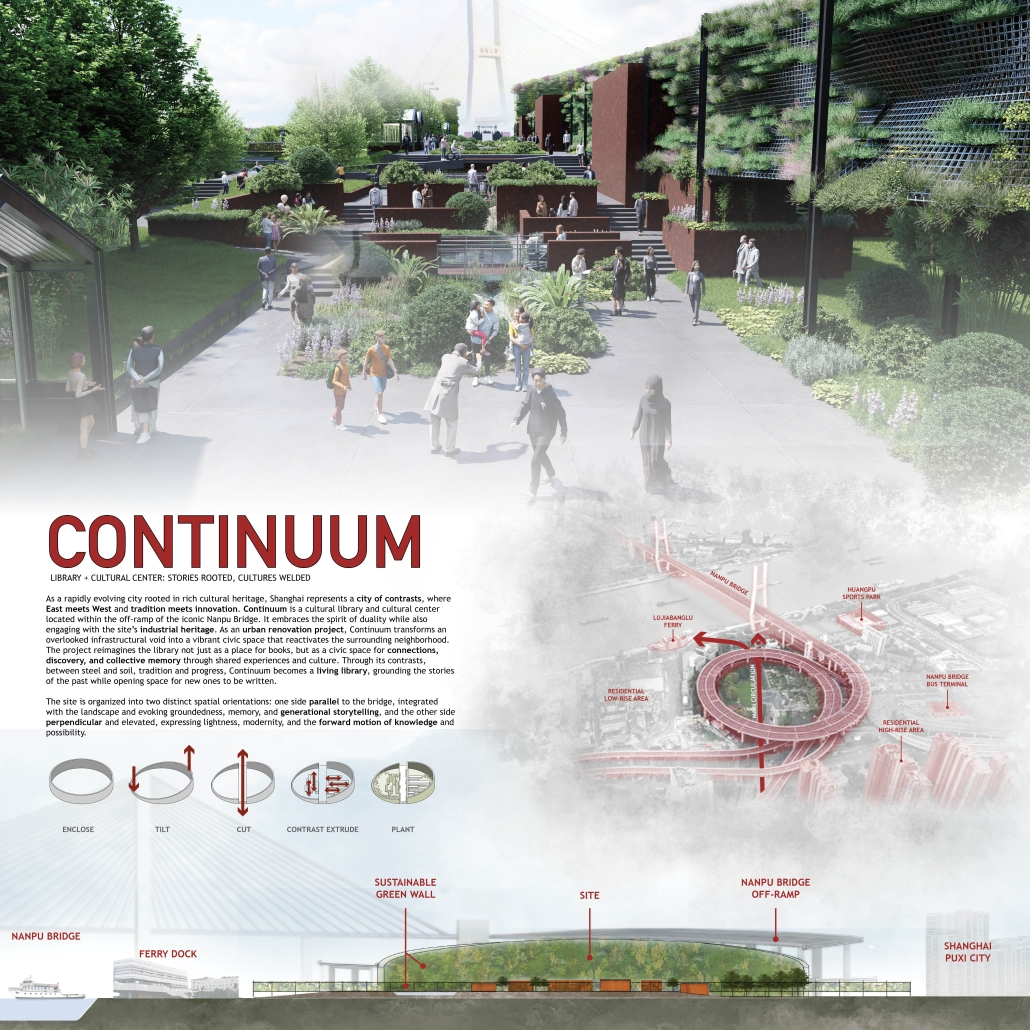
Continuum Library by Joyce Lin, Ronny Nowland, Ashlyn Okazaki, Natalie Ou & Ran Shen, D.Arch ’25
University of Hawaiʻi at Mānoa | Advisors: Clark Llewellyn & Ferdinand Johns

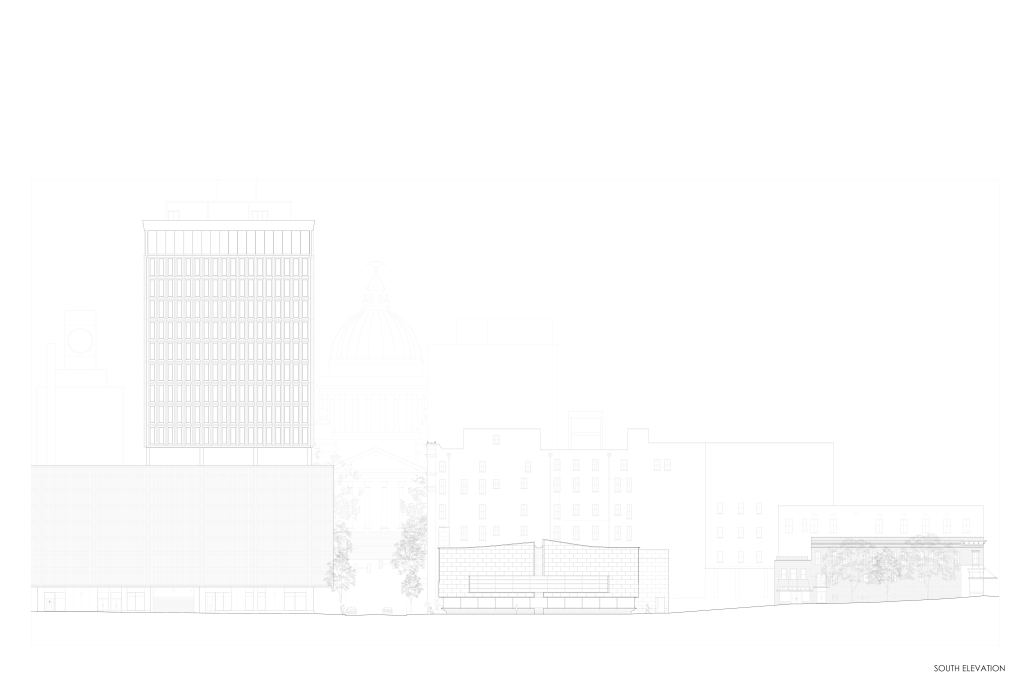
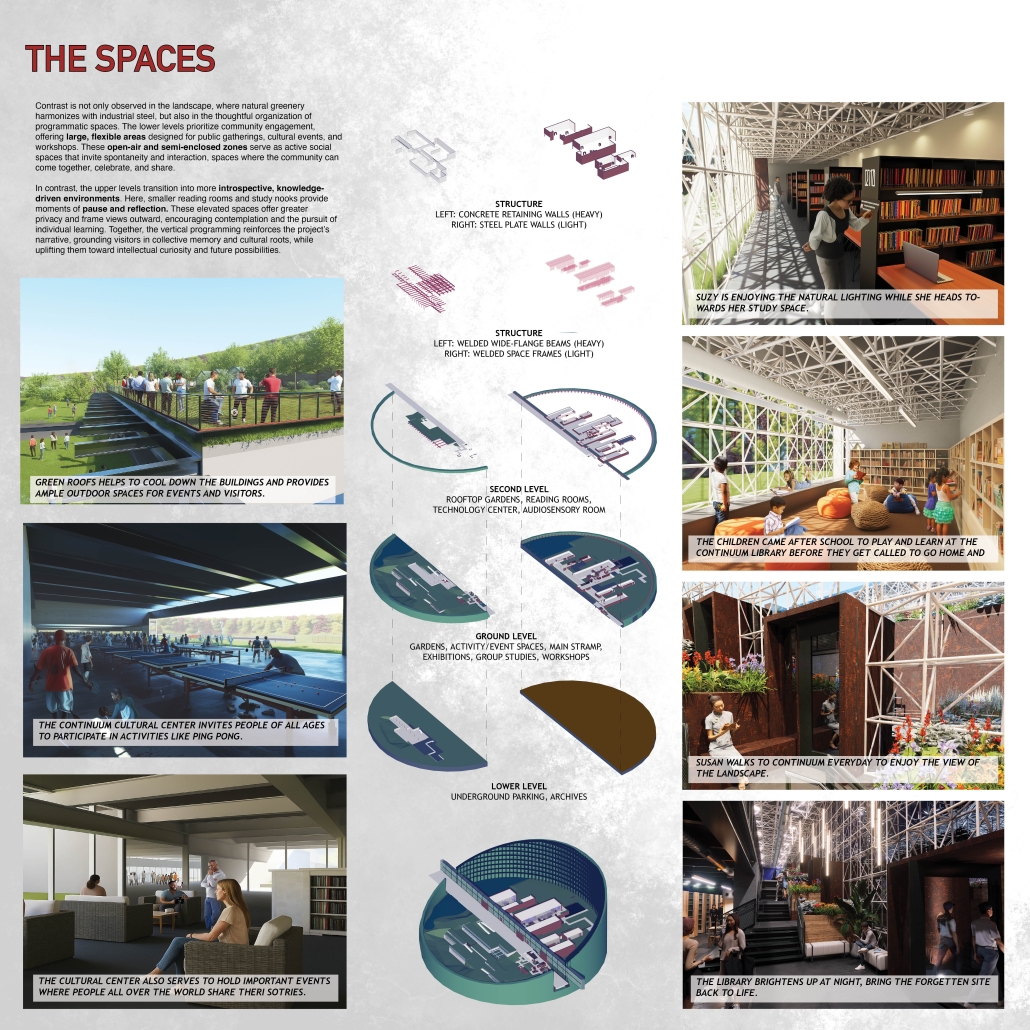
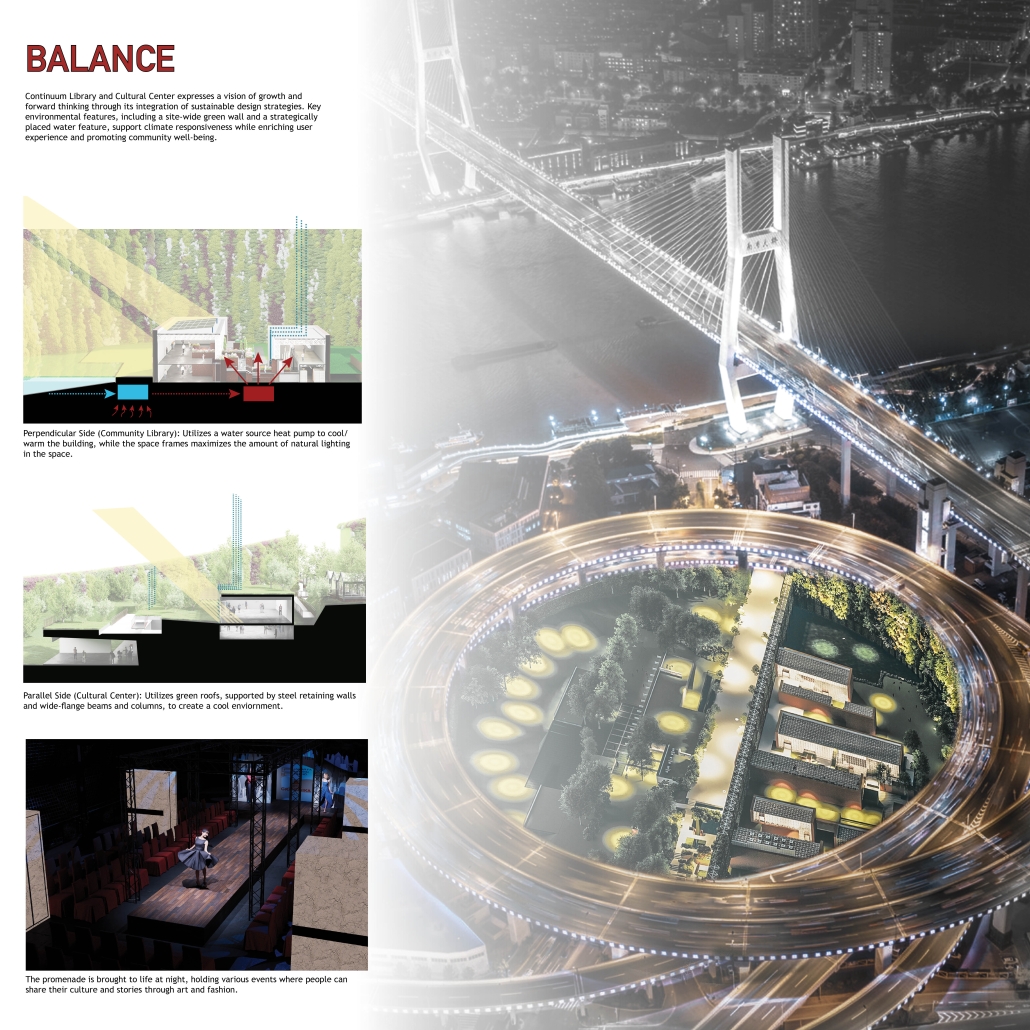
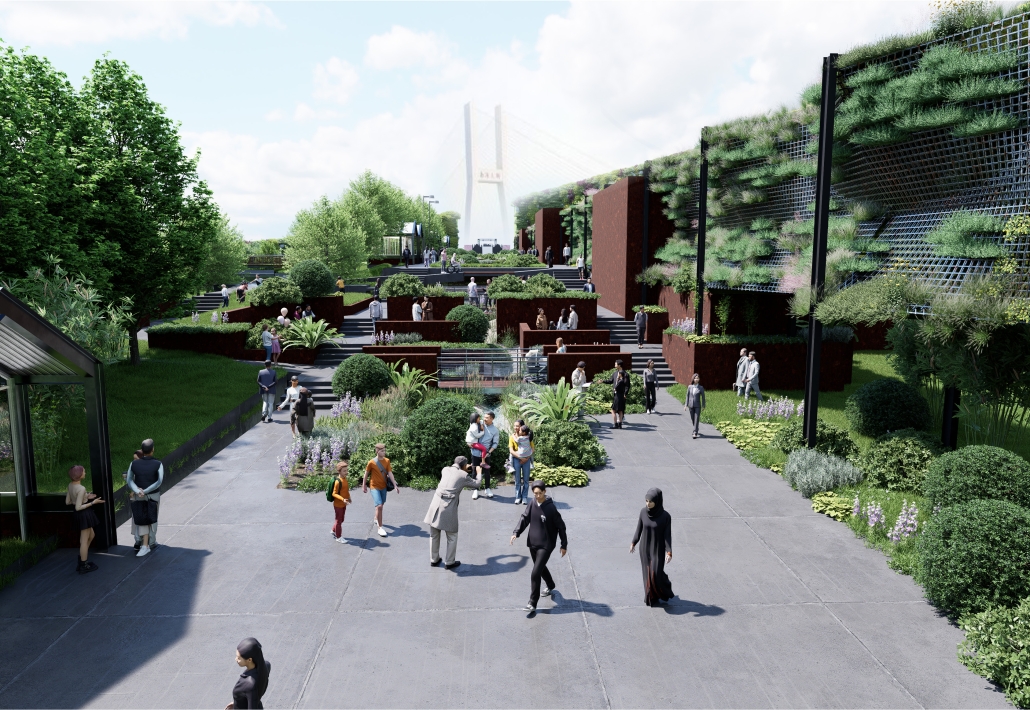
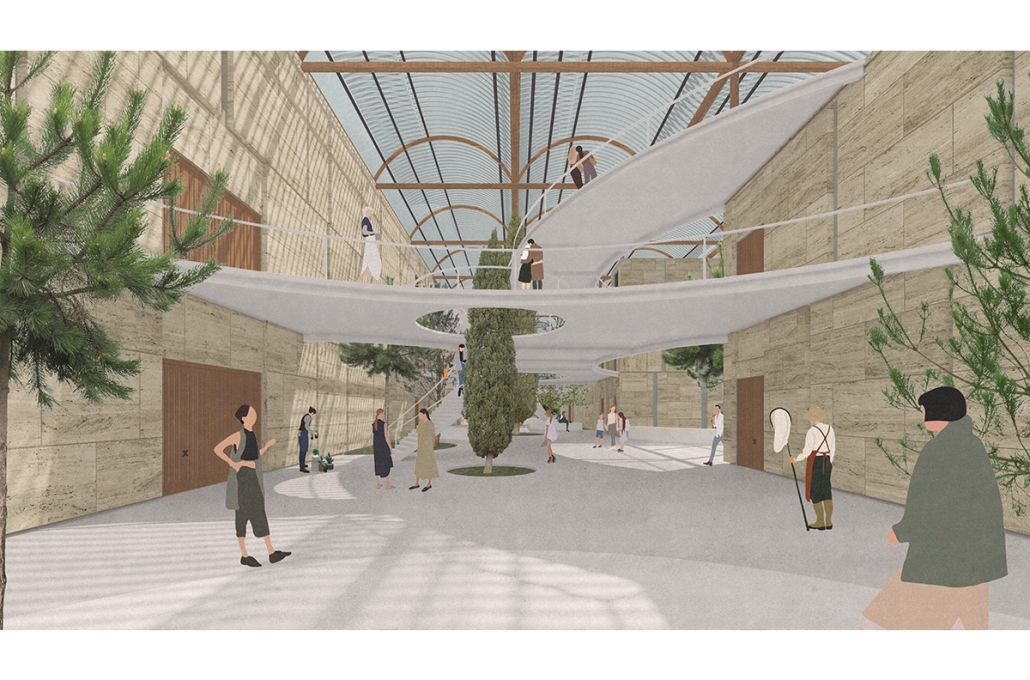
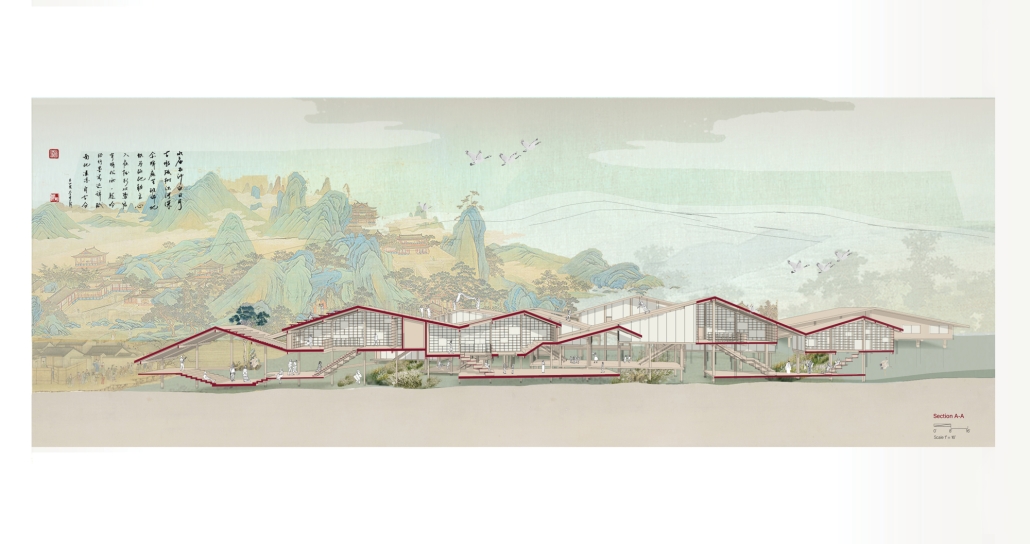
In the bustling Chinese city of Shanghai, “Continuum” reimagines a forgotten infrastructural void beneath the historic Nanpu Bridge’s spiraling access ramps as a dynamic art and fashion-focused library and cultural center. Rooted in the city’s identity as a place of contrasts, where historic tradition interweaves with global innovation, Continuum explores the concept of duality through architecture, program, and materiality.

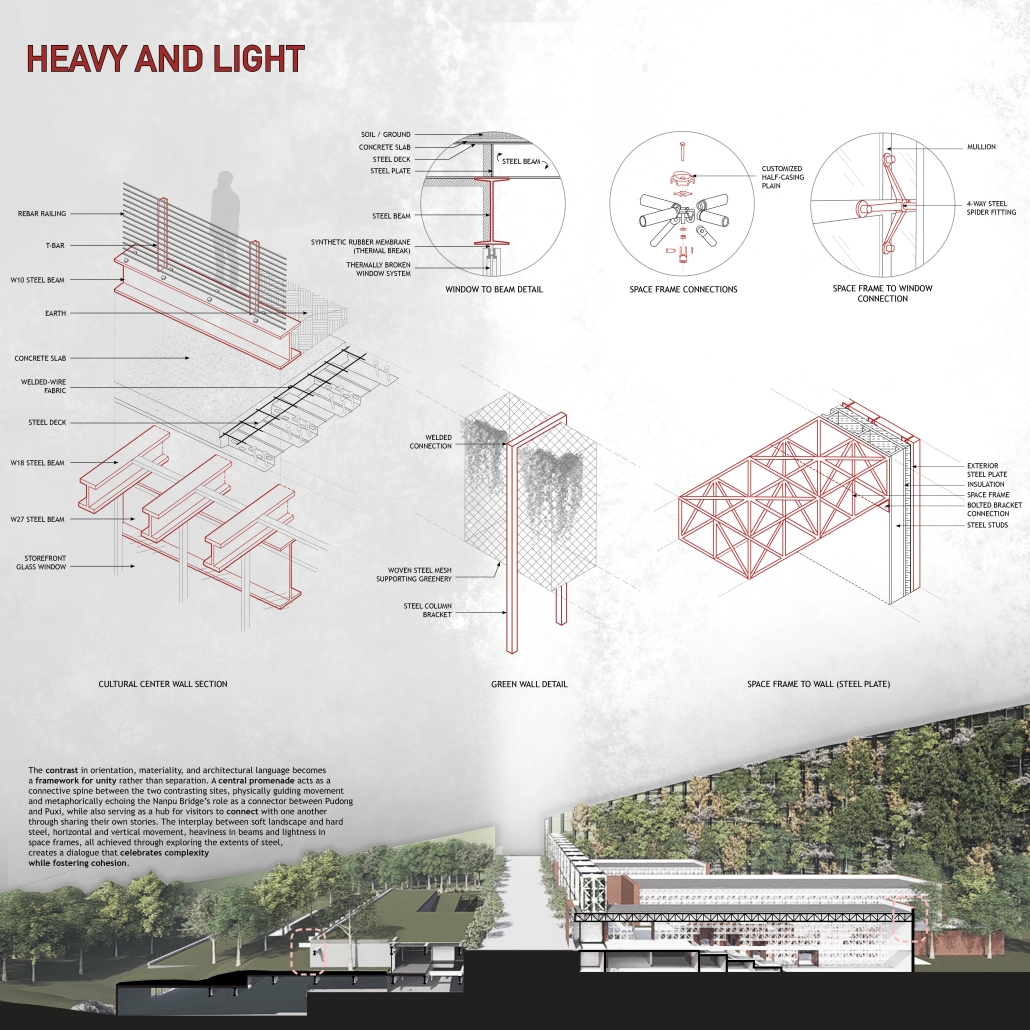
The design embraces Shanghai’s industrial heritage by preserving and exposing the structural steel elements of the site while layering contemporary interventions that reflect the city’s evolving creative identity. A long-span steel canopy nestled under the undulating descending slope of the site’s green park bridges the old and new, creating an iconic gesture that anchors the site and provides shelter for public gatherings, exhibitions, and performances.

Continuum’s program is split between traditional library services and a “+” space dedicated to fashion archives, design workshops, maker labs, and rotating gallery exhibitions. This not only supports education and creative exchange but also activates local industries and emerging designers. Public spaces flow seamlessly from interior to exterior, with open reading terraces, pop-up markets, and interactive art installations drawing pedestrians and cyclists into the space.

The project’s strategy of adaptive reuse reduces environmental impact while celebrating the poetic tension between heavy infrastructure and light cultural use. By stitching together circulation paths, layered programming, and expressive steel structure, Continuum becomes a new node in Shanghai’s civic network, a platform for exchange, creativity, and community resilience.

In a city of constant flux, Continuum offers a space for pause, reflection, and cultural production, anchored in history, yet always looking forward.

Instagram: @as.h_l.and, @joyce.lyx, @artravelersr, @natalie.xy.ou, @archawaii, @global_track_architecture
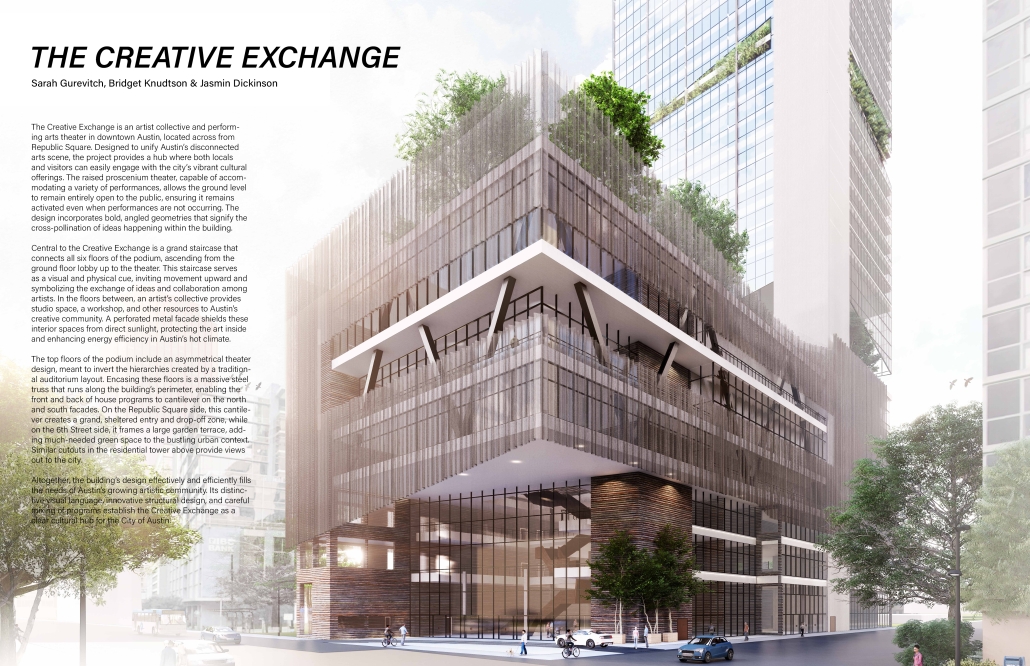
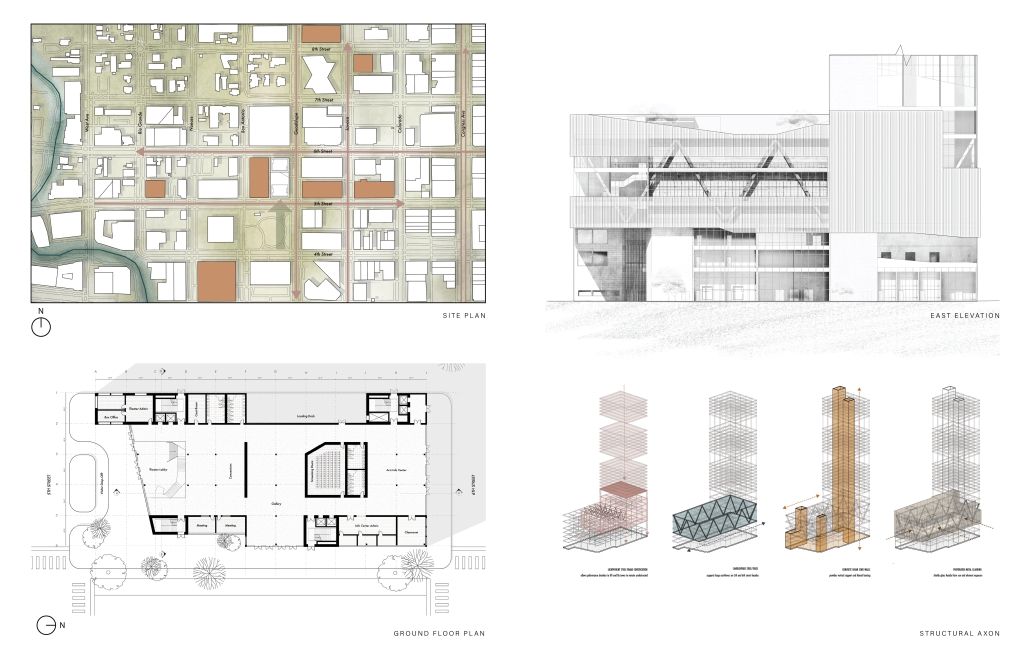
The Creative Exchange by Bridget Knudtson, Sarah Gurevitch & Jasmin Dickinson, M.Arch ’25
University of Texas at Austin | Advisor: Matt Fajkus

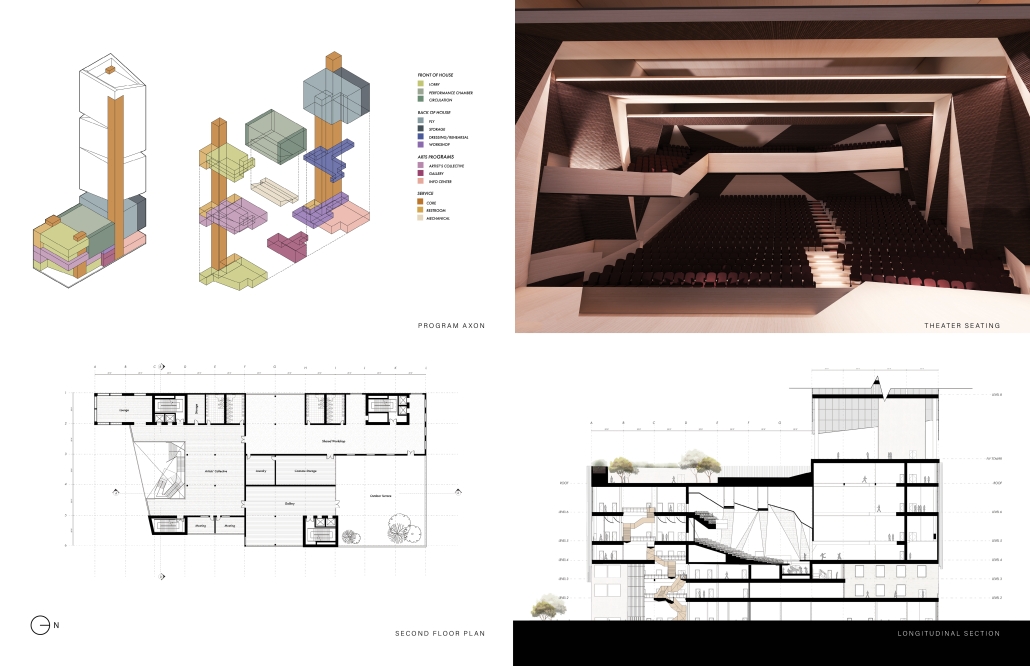
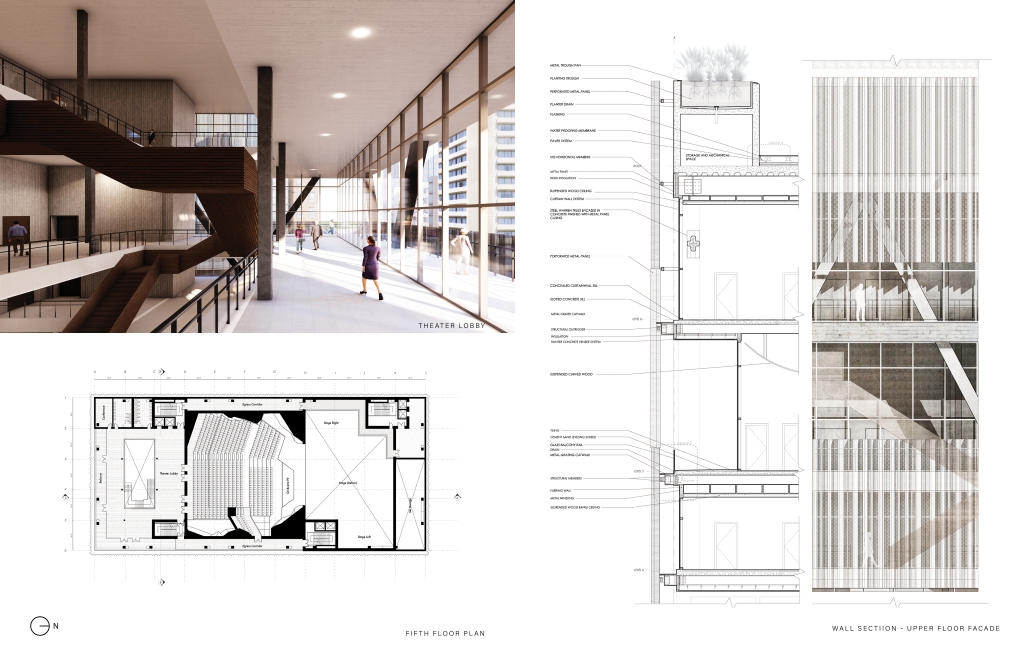
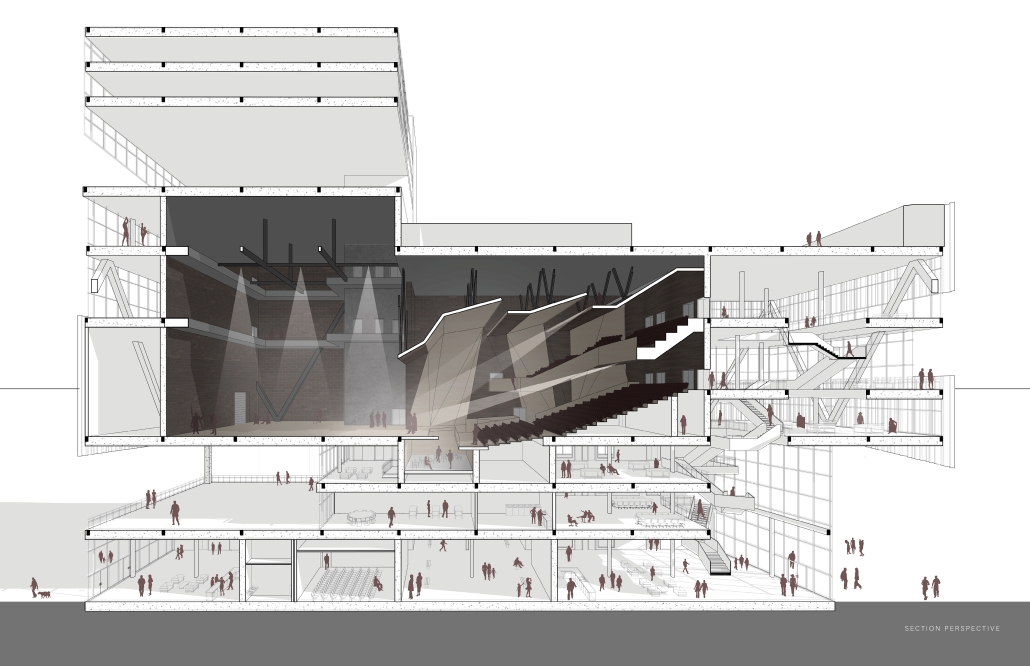
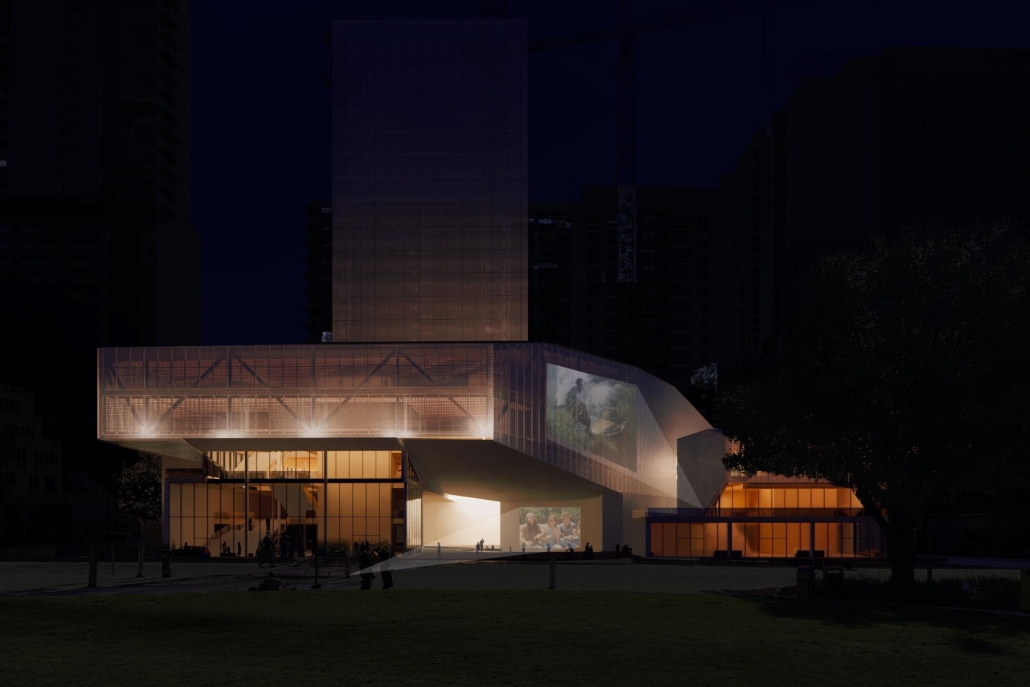
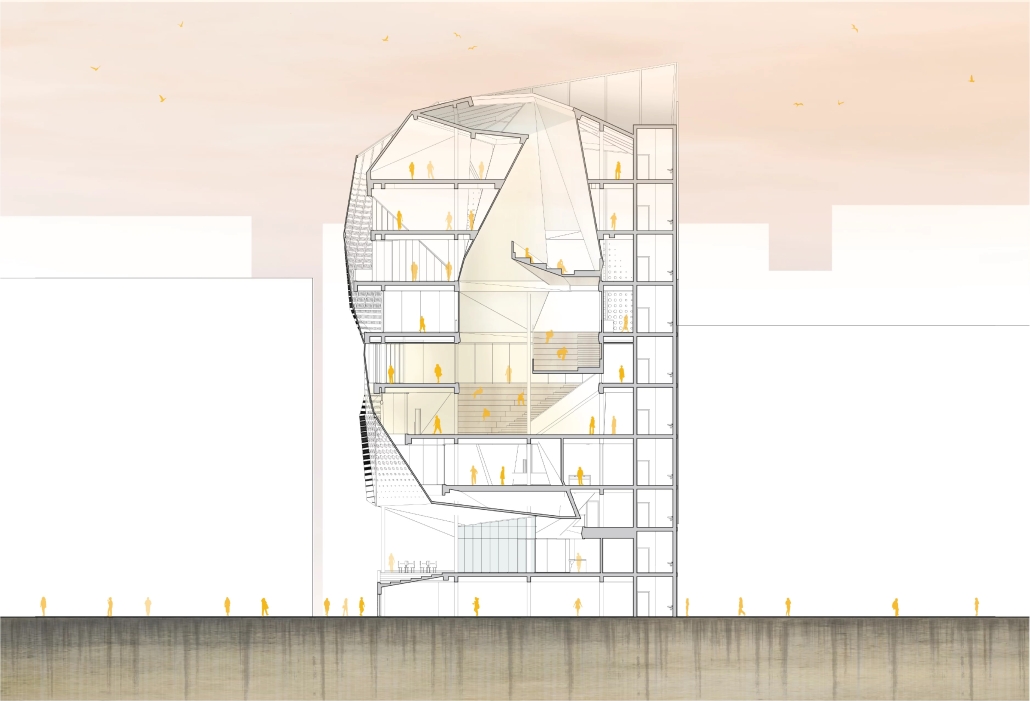
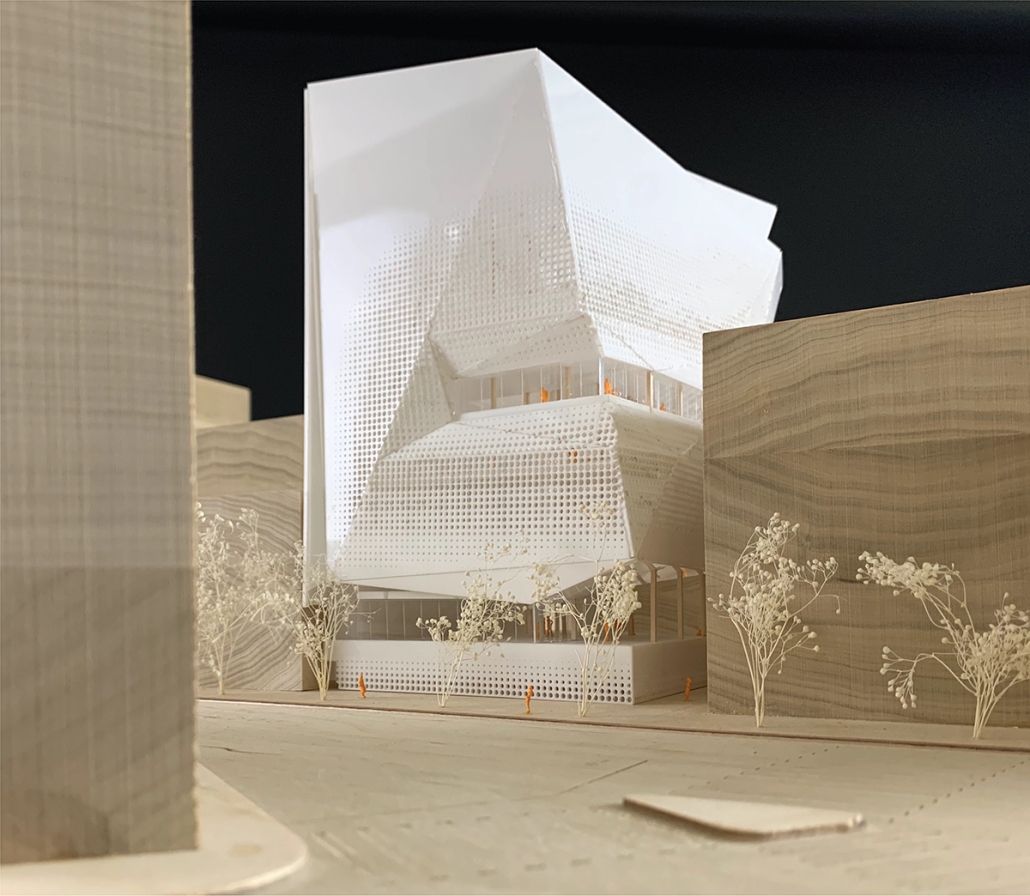
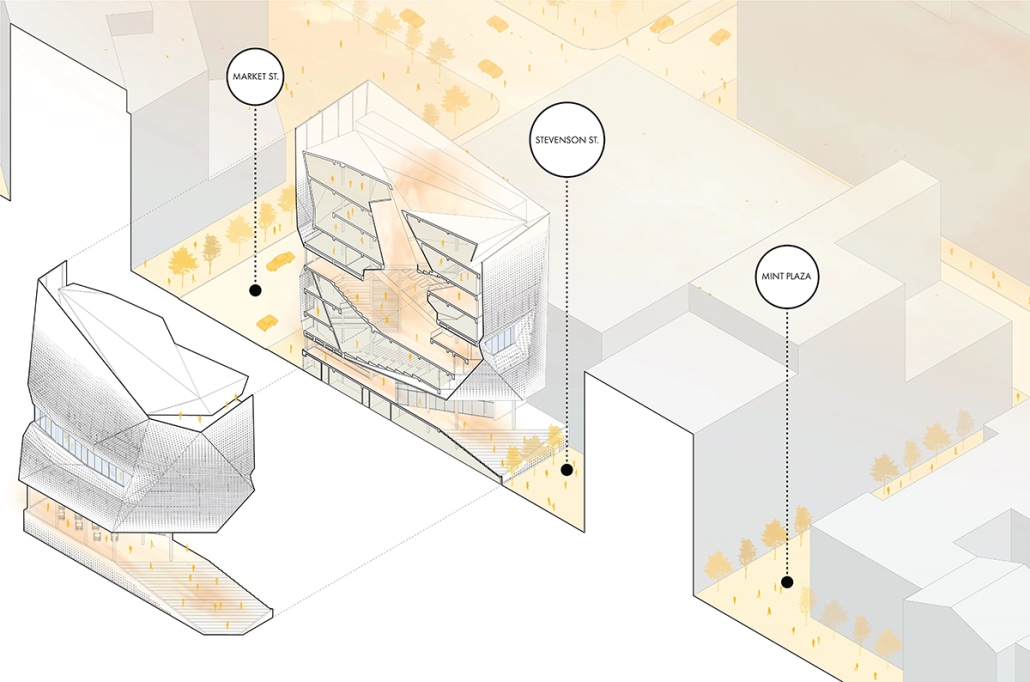
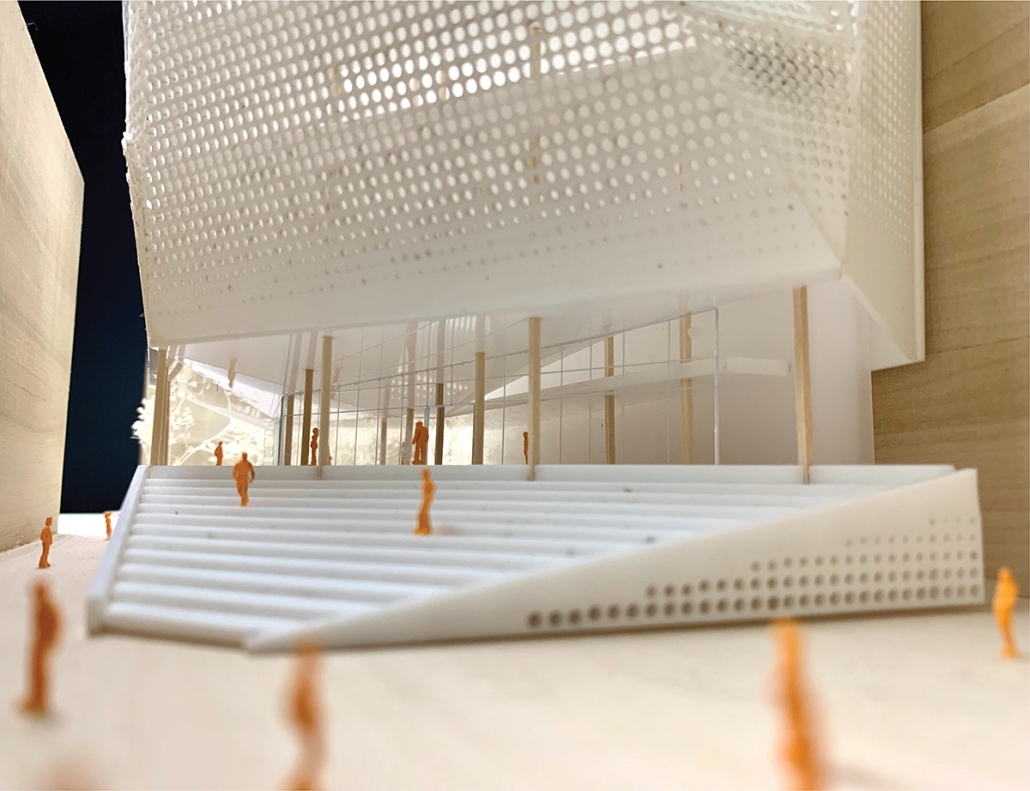
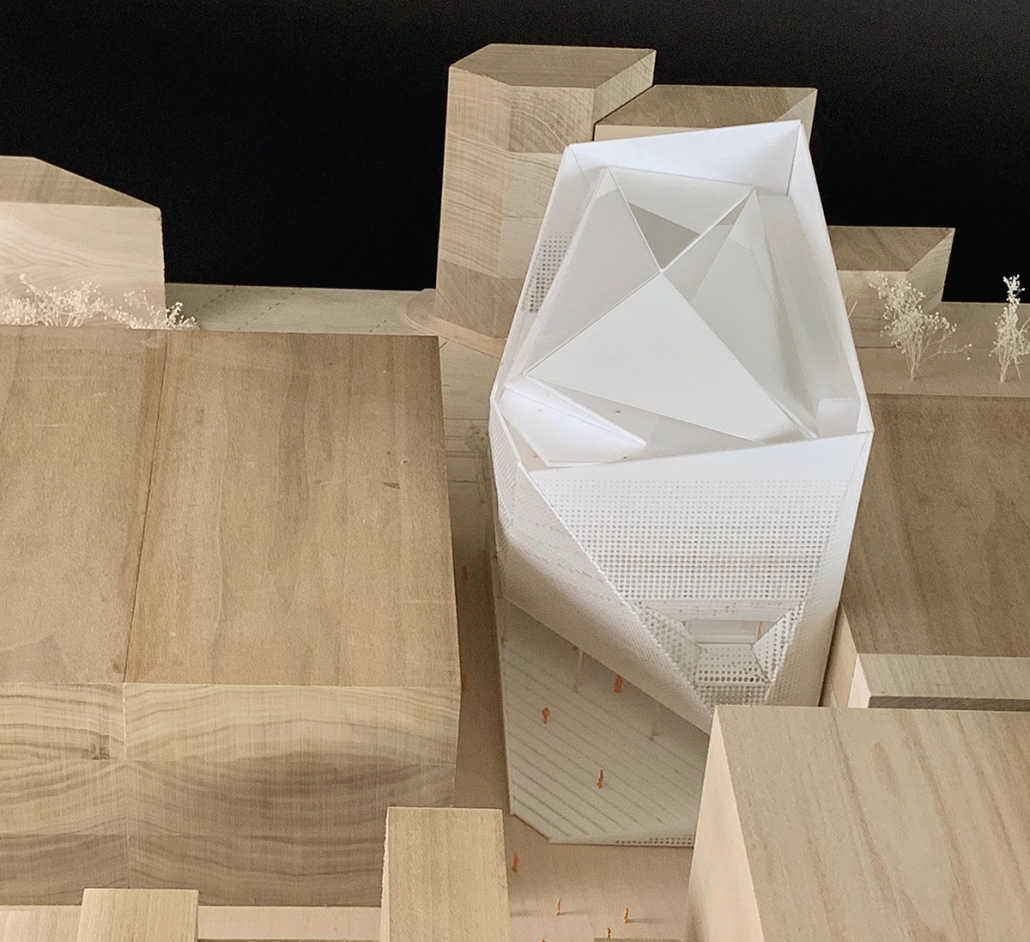
“The Creative Exchange” is an artist collective and performing arts theater in downtown Austin, located across from Republic Square. Designed to unify Austin’s disconnected arts scene, the project provides a hub where both locals and visitors can easily engage with the city’s vibrant cultural offerings. The raised proscenium theater, capable of accommodating a variety of performances, allows the ground level to remain entirely open to the public, ensuring it remains activated even when performances are not occurring. The design incorporates bold, angled geometries that signify the cross-pollination of ideas happening within the building. 

Central to the Creative Exchange is a grand staircase that connects all six floors of the podium, ascending from the ground floor lobby up to the theater. This staircase serves as a visual and physical cue, inviting movement upward and symbolizing the exchange of ideas and collaboration among artists. In the floors between, an artist’s collective provides studio space, a workshop, and other resources to Austin’s creative community. A perforated metal facade shields these interior spaces from direct sunlight, protecting the art inside and enhancing energy efficiency in Austin’s hot climate. 

The top floors of the podium include an asymmetrical theater design, meant to invert the hierarchies created by a traditional auditorium layout. Encasing these floors is a massive steel truss that runs along the building’s perimeter, enabling the front and back of house programs to cantilever on the north and south facades. On the Republic Square side, this cantilever creates a grand, sheltered entry and drop-off zone, while on the 6th Street side, it frames a large garden terrace, adding much-needed green space to the bustling urban context. Similar cutouts in the residential tower above provide views out to the city. 

Altogether, the building’s design effectively and efficiently fills the needs of Austin’s growing artistic community. Its distinctive visual language, innovative structural design, and careful mixing of programs establish the Creative Exchange as a clear cultural hub for the City of Austin. 

This project was nominated for a Design Excellence Award at the UT School of Architecture and was a finalist among award selections.

Instagram: @bridgetthetwin, @sarah_gurevitch, @jazzy_colors, @mf.architecture

(IN) ORDINATIO by Luis Leonardo Flores Hernández, B.Arch ’25
Tecnológico de Monterrey | Advisors: Guillermo Nieto Ross & Jorge Santos Quiroz

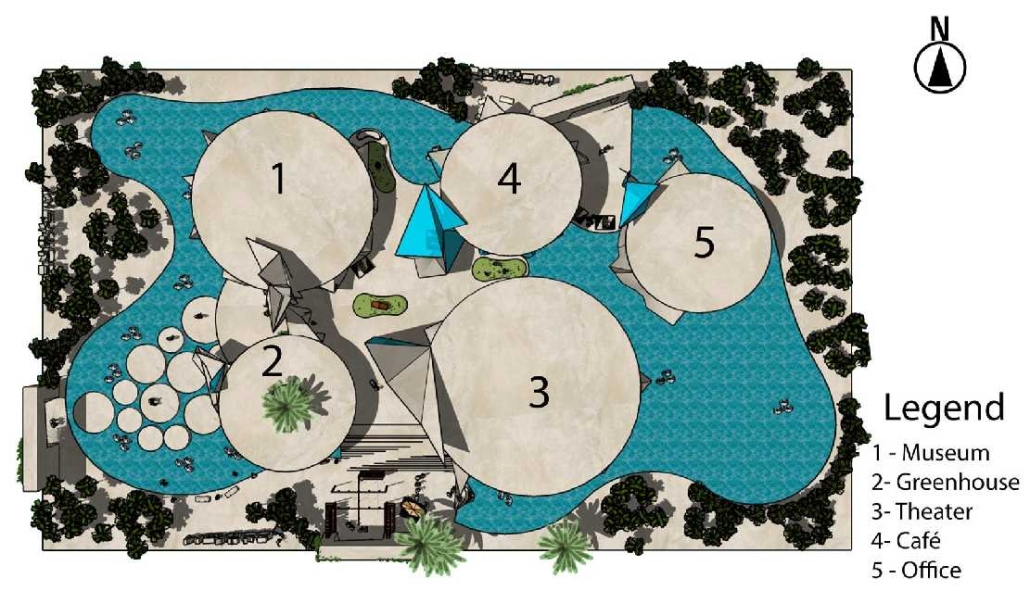
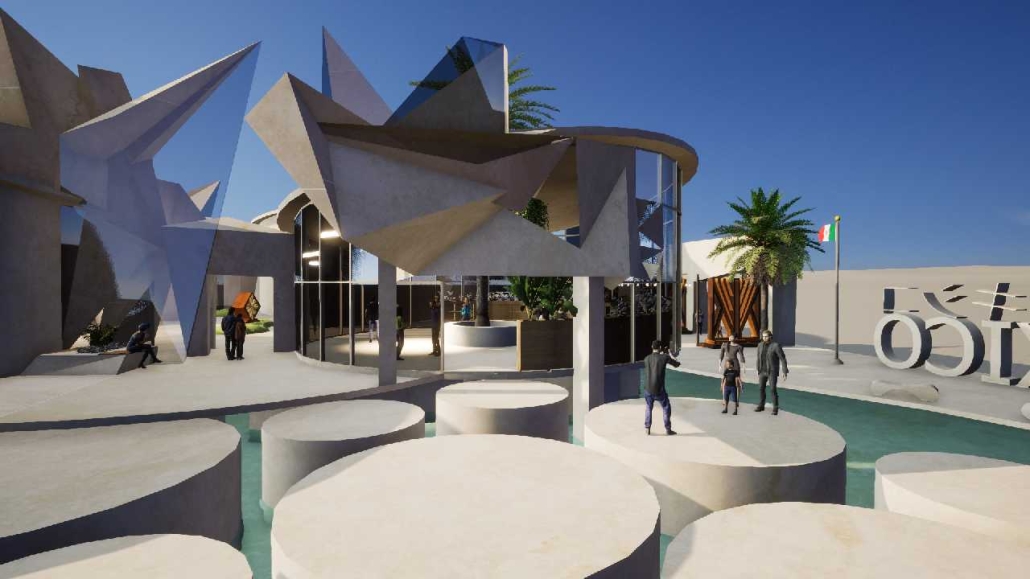
“Ordinatio” is an innovative architectural and urban masterplan strategically designed to transform the community of Ocoyucan in Puebla, México, by directly addressing socio-spatial segregation and fostering inclusive community integration. Positioned at the intersection of diverse socio-economic contexts, the project elegantly blends traditional urban patterns from Santa Clara Ocoyucan with the contemporary residential fabric of Lomas de Angelópolis, creating dynamic spaces for equitable interaction and communal growth.

The project’s central feature is a vibrant marketplace comprising agricultural and culinary sectors, complemented by advanced aeroponic greenhouses, significantly reducing resource consumption while directly benefiting approximately 65% of local families dependent on small-scale farming. This strategic economic and cultural hub acts as a catalyst for communal exchange, revitalizing the local economy and nurturing social cohesion.

Architecturally, Ordinatio reinterprets traditional forms through contemporary lenses, utilizing locally sourced materials and visible structural elements to promote a sense of identity and ownership among residents. The community plaza and ephemeral market spaces—framed by elegantly detailed corridors—create essential social nodes that encourage diverse community interactions and cultural activities, reactivating collective memories and traditions.

Integral to the project’s vision is the thoughtful inclusion of a multimodal mobility node, which connects public transport and cycling routes, ensuring everyday urban mobility becomes an enriching communal experience. Additionally, environmental sustainability is woven into the design through ecological restoration along the adjacent Atoyac River, creating essential green corridors and public parks that enhance biodiversity and offer restorative communal spaces.

Ordinatio exemplifies architecture’s potential as a regenerative tool, mitigating socio-economic disparities, avoiding social resentment, and promoting harmonious urban coexistence. This holistic approach not only revitalizes the urban landscape but positions Ocoyucan as a compelling model of equitable, sustainable, and community-driven urban development.

Click here for a closer look.

This project was exhibited at ITESM University’s national architecture festival, “How Space Can?” It was also selected to be presented at EXPO EAAD.

Instagram: @luish_137, @arq.pue.tec
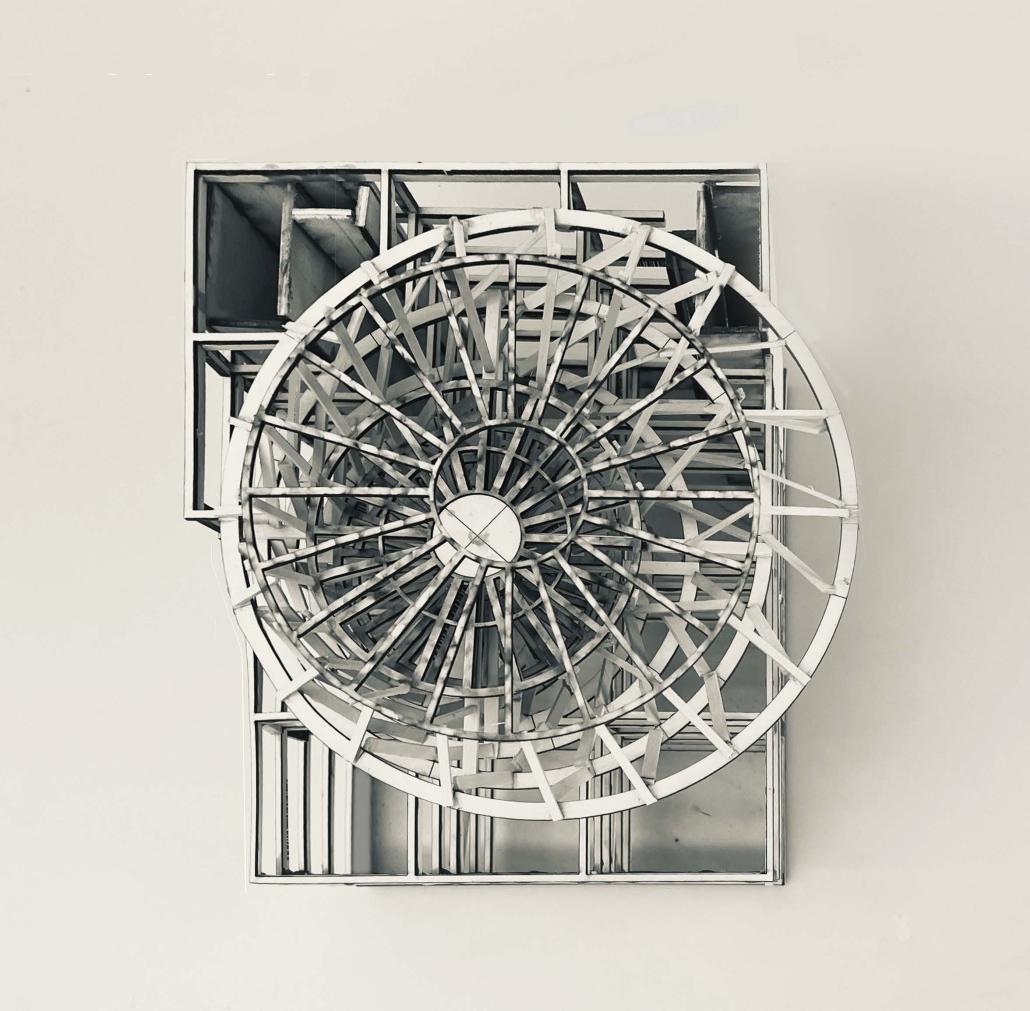
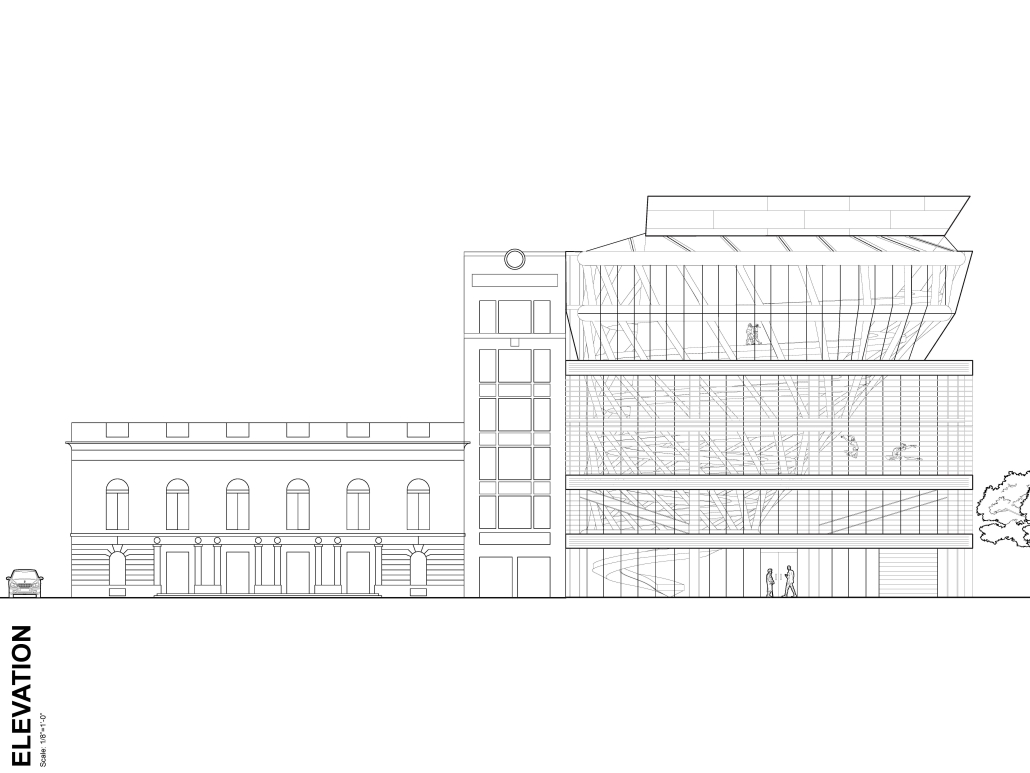
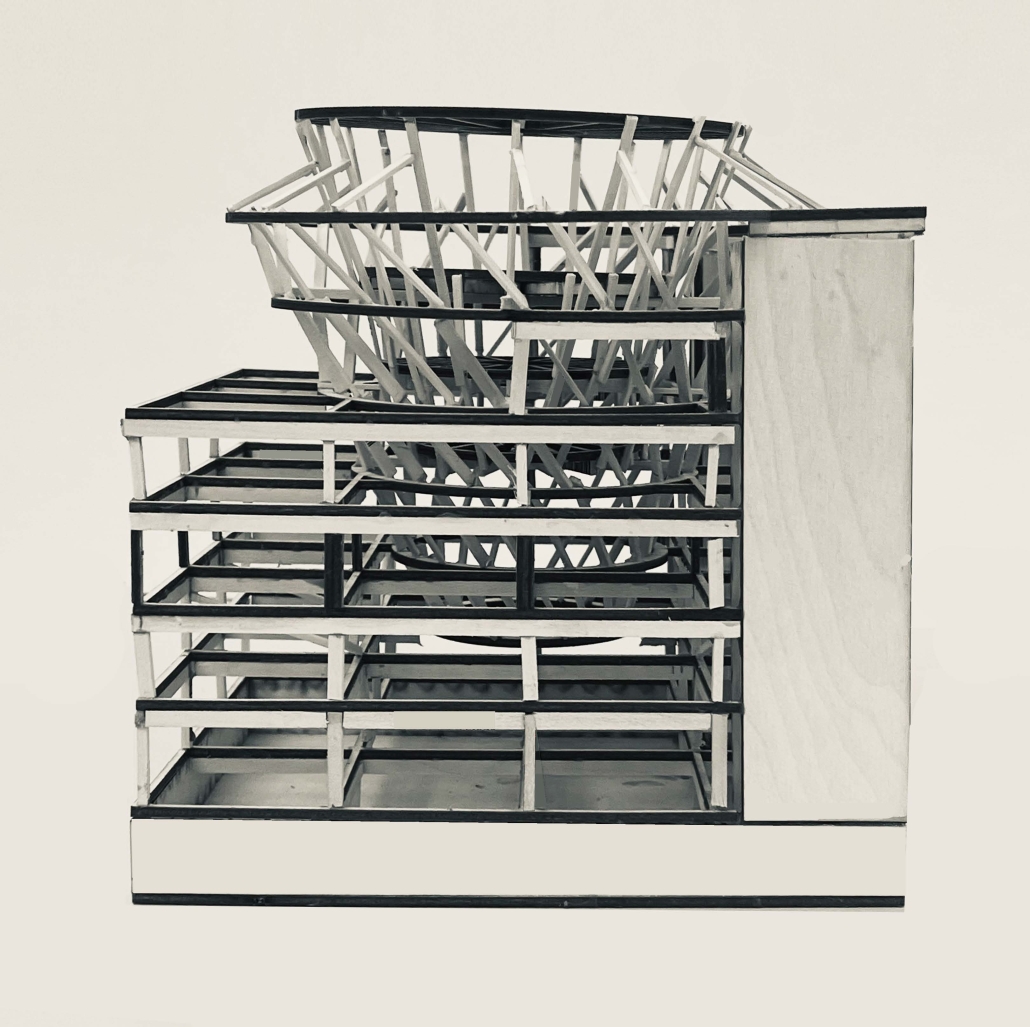
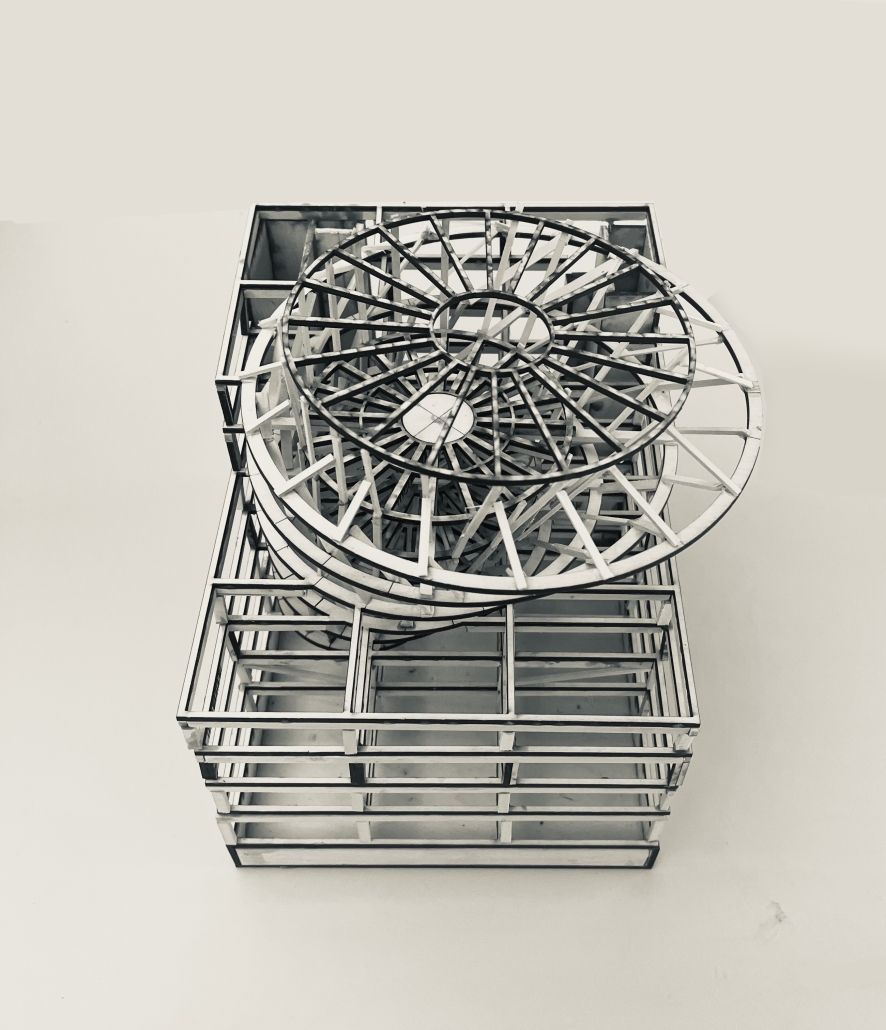
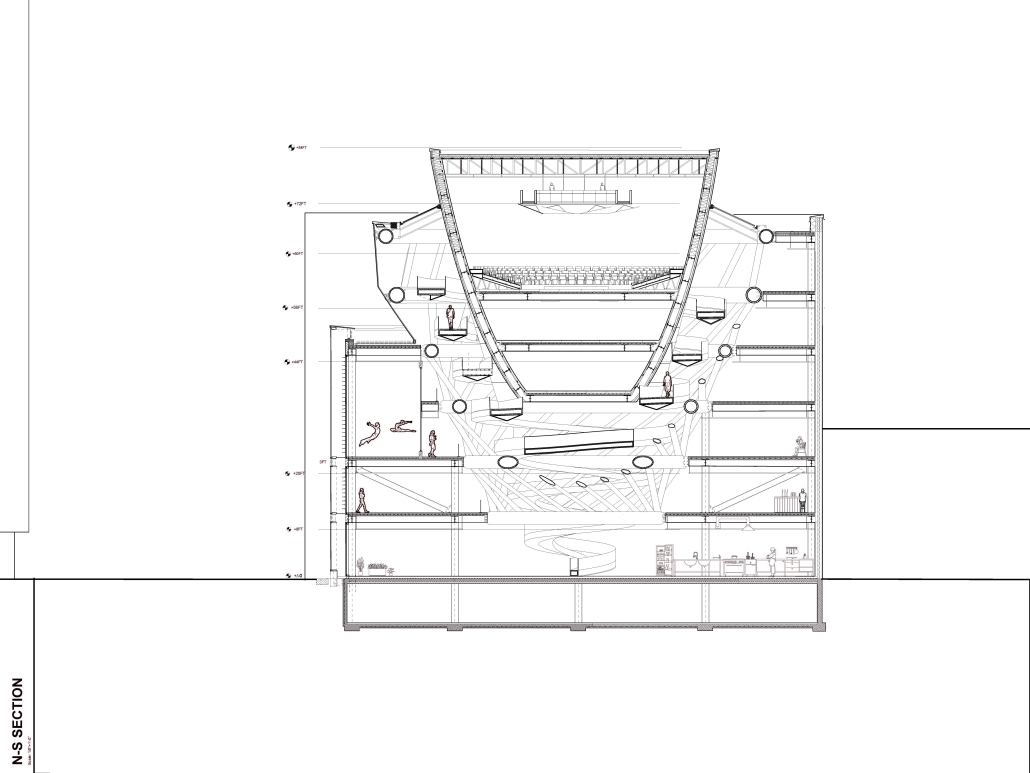
Vortex Theater by Joshua Jolly, M.Arch ’25
Pennsylvania State University | Advisor: Ute Poerschke

The project task was to design a theatre in-the-round as an addition to the Walnut Street Theatre in Philadelphia.

“Vortex Theater” — This design places the theatre as the eye of the storm, a tornado’s core. The central ramp becomes the force around which people, spaces, and artifacts spiral. Its continuous motion reinforces the vertical energy, pulling people into the experiences that the theater has to offer. The surrounding spaces (lobbies, rehearsal halls) act as the rotating winds, positioned in a way that reacts to the ramp’s motion. Due to the ramp’s centrality, each level has a visual sight between programs, enhancing the sense of being caught in a swirling motion and thrown out of the winds. The concept is amplified through the structure and surrounding programs. The ramp isn’t just a means of circulation; it’s the driving force of the architectural experience, pulling everything and everyone into its swirling grasp.

This project won the Design Excellence Award. 

 Instagram: @_jollyj

Stay tuned for Part X!
2024 Study Architecture Student Showcase - Part XIII

Public spaces take the spotlight in Part XIII of the 2024 Study Architecture Student Showcase. The featured projects include recreation centers, parks, memorials, performance spaces, multi-faith facilities, city centers, and more!
Each student’s design was crafted with community needs at the top of mind. They utilize strategies ranging from reducing height in response to residential locations and combatting hostile architecture. They are also intentional about the use of materials with mediums such as wood, steel, and glass playing a role in curating the visitor experience. Each project aims to promote equity, education, belonging, socialization, and connectedness within their communities.

Scroll down to view these inclusive, accessible, and vibrant public spaces!
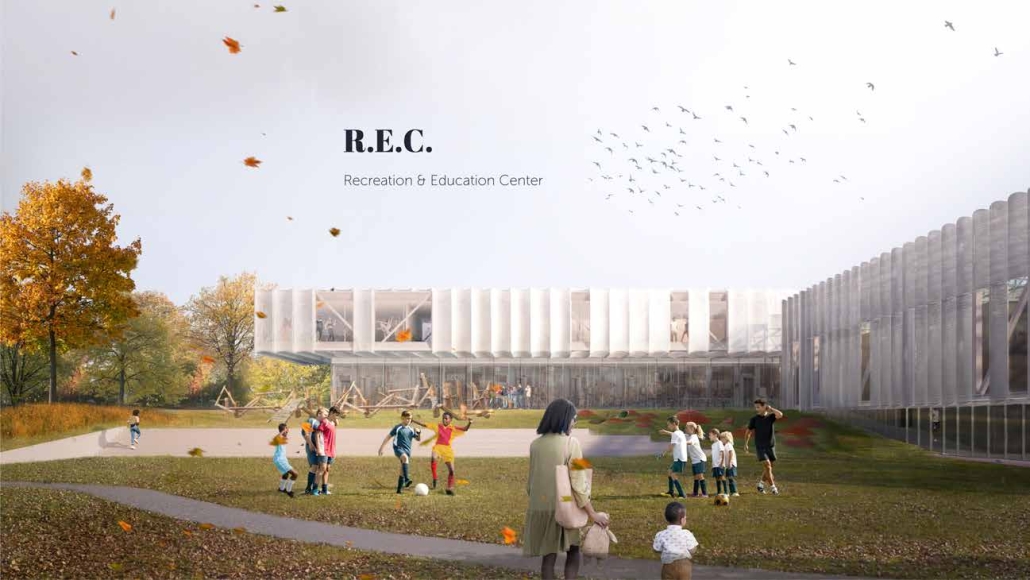
Tarboro Road Recreation Education Center by Lucas Stott, B. Arch ‘24
North Carolina State University | Advisor: Marshall Purnell

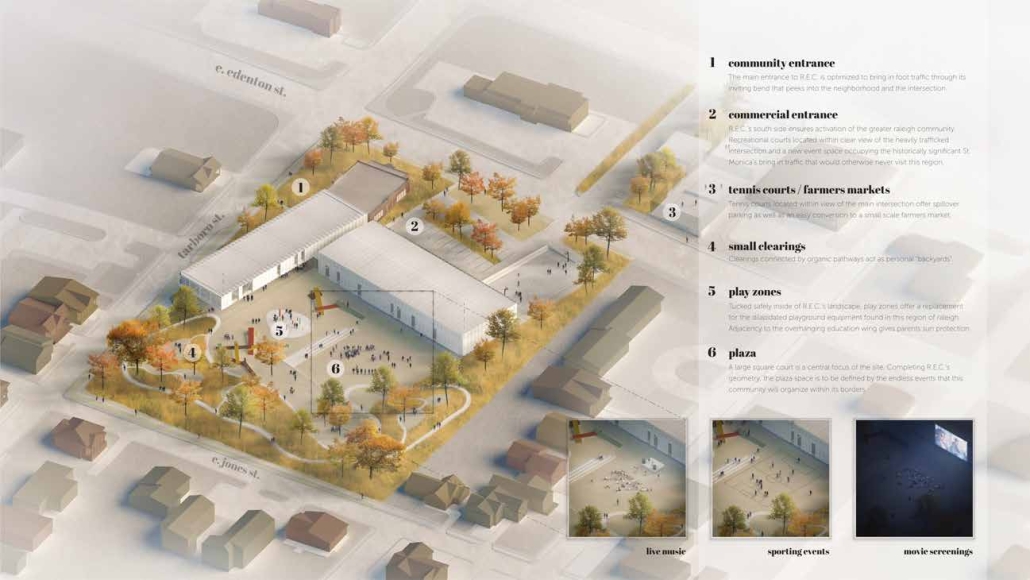
Compelled to provide vital community forums, recreation, and green spaces to East Raleigh, the 30,000-square-foot Recreation Education Center (R.E.C.) has created a gathering location for residents while linking local neighborhoods to Raleigh on a broader scale.

E. Edenton St. and New Bern Avenue have become defining features of East Raleigh, bringing in a surge of traffic from Downtown Raleigh. This results in a corridor of commercial properties and roadways that divide low-income neighborhoods. R.E.C. uses its visibility of these high-traffic roads to revitalize the region.

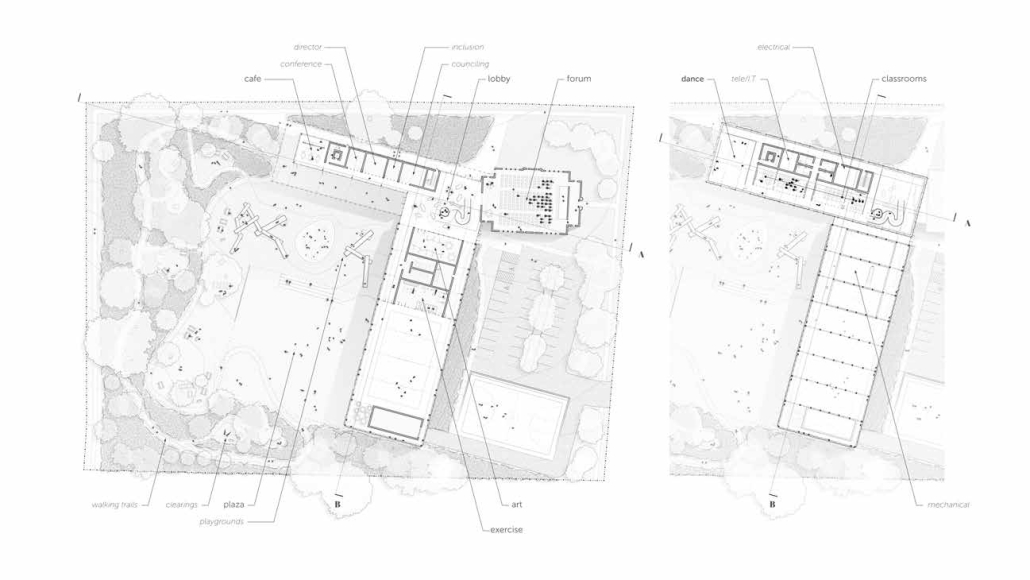
R.E.C.’s L-shape shields the neighborhood, opening towards the local community and protecting it from the intruding larger-scale city. Two diaphanous frames visible from the intersection attract new visitors intriguing fresh faces that would otherwise never visit the region. The existing historical educational building, converted into a 200-seat event hall, encourages public forums and community-building, breaking down barriers that traditionally separated East Raleigh from the rest of the city. 

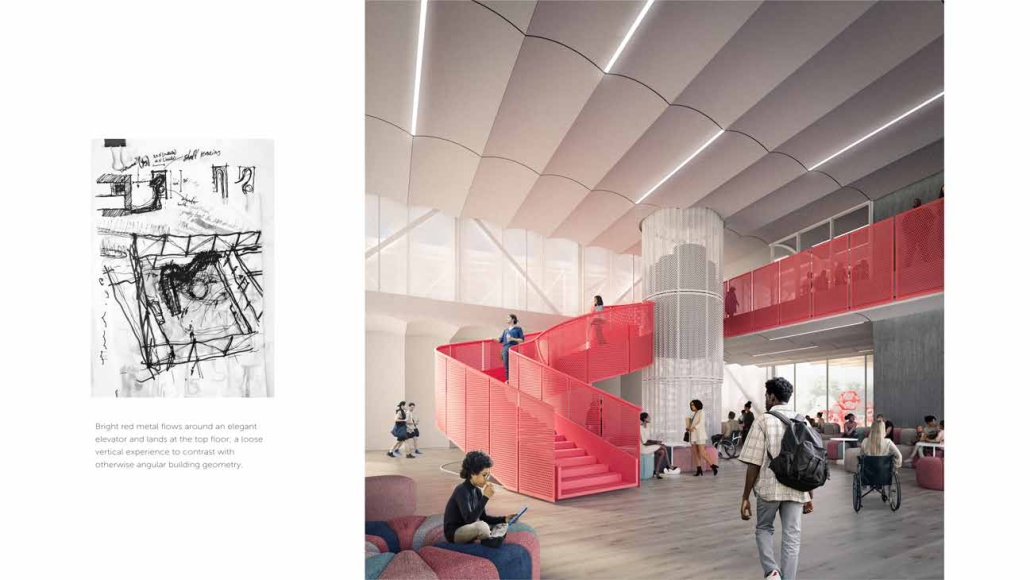
Commercial spaces and community resources are organized separately into two elevated frames, with an atrium acting as the convergence point and entry. The first frame, a 24-foot deep truss, suspends across the landscape, revealing the commercial gymnasium and activity spaces it protects. Ramps down to the gym address difficult topography to reduce the R.E.C.’s height in response to its residential context. The second frame floating over the atrium provides vital educational resources to the underprivileged community, fostering skill development to improve employment chances in a rapidly transforming economic landscape. Curved aluminum panels coating the floating frames are perforated with a pattern that interacts with light and shadow, creating a unique experience. 

The north end of the site is grafted into the neighborhood’s skin. The form tilts open to reveal an outdoor space optimized to bring in local pedestrian traffic, encouraging residents to treat it as their backyard. Enclosed between the building and forested paths on the north side, a large open court becomes an important anchor on the site, freely defined by community-organized events and activities.

This project won a 2024 AIA Triangle Student Design Award.

A Hostile City, Inequitable Privatization of Public Spaces by Bailey Berdan, M. Arch ’24
Lawrence Technological University | Advisor: Scott Shall

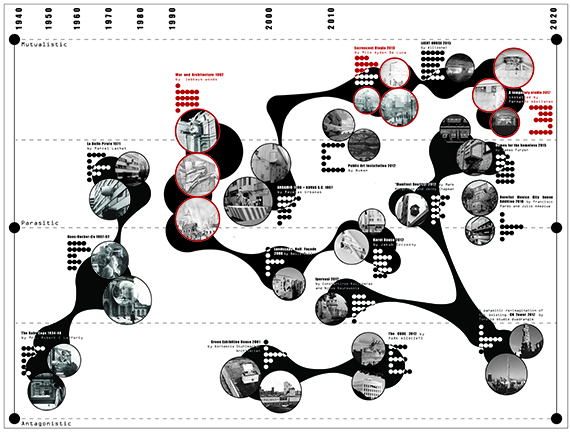
Hostile architecture is a term used to describe design strategies that are intended to deter certain groups of people or behaviors in public spaces. While bench dividers and ground spikes are widely recognized examples of hostile architecture, their impact goes beyond these small-scale designs. Hostile architecture is pervasive in areas such as policy, law, and privatization, and it can have serious negative consequences on a community’s economy, walkability, and overall environment. 

To address this issue, one potential solution is parasitic architecture, which is a practice that is not commonly used but is often employed as a response to dysfunctional conditions. Parasitic architecture involves the creation of structures that are attached to or embedded within existing buildings or infrastructure, utilizing underutilized or overlooked spaces. This approach has the potential to combat hostile architecture and empower communities to reclaim their right to public spaces. 

By repurposing underused spaces, parasitic architecture has the potential to increase the availability of public spaces, reduce the costs of new construction, and foster a sense of community ownership and engagement. Additionally, these structures can be designed to be flexible and adaptable, allowing them to evolve and respond to changing community needs over time. Overall, parasitic architecture represents a promising approach to combat hostile architecture and create more inclusive, accessible, and vibrant public spaces. By empowering communities to collaborate and take ownership of their public spaces, parasitic architecture has the potential to create more livable, sustainable, and equitable cities.

This project was a finalist for the ARCC King Student Medal Award.

Instagram: @__b.berdan__, @scott_shall

Counter [con]text by Zeina Medlej, B. Arch ‘24
American University of Beirut | Advisors: Rana Haddad & Dr. Howayda Al-Harithy

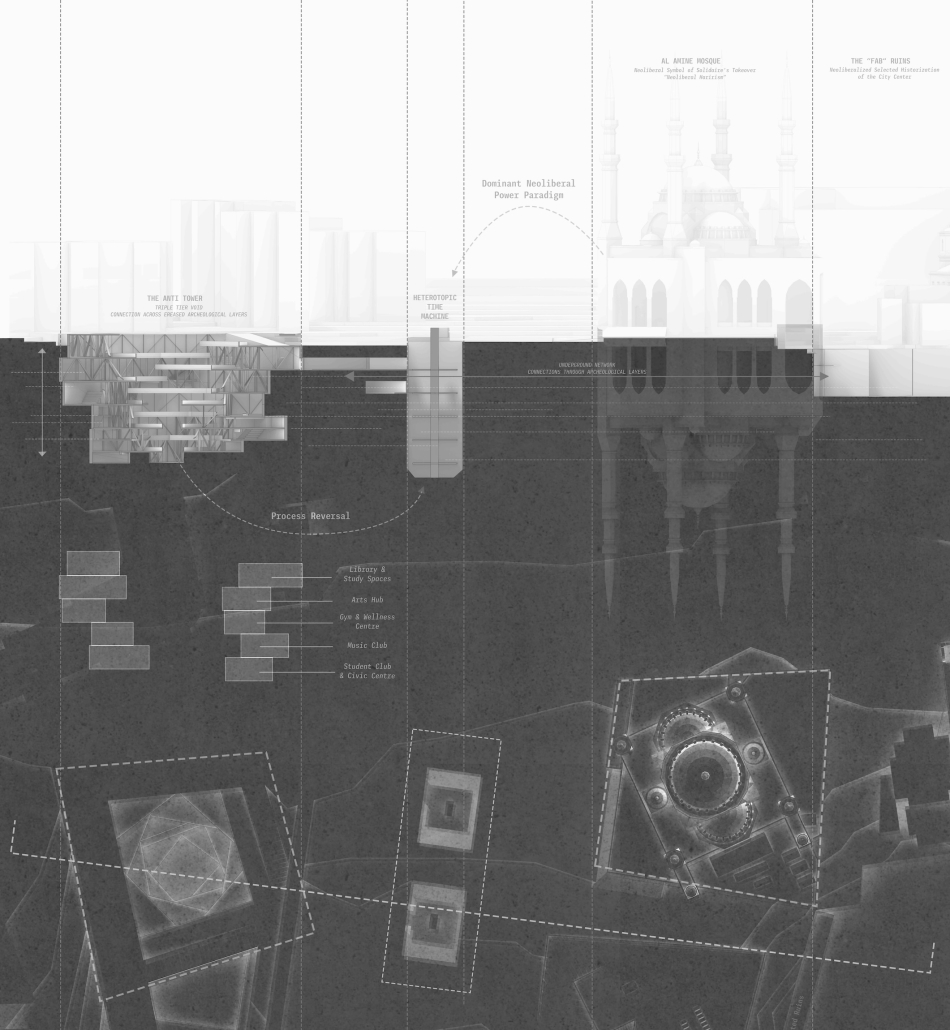
This thesis investigates how tactical public space interventions within Beirut’s neoliberal landscape can create heterotopic spaces that counteract dominant urban narratives. The study is grounded in the theoretical frameworks of Michel de Certeau, David Harvey, Henri Lefebvre, and Michel Foucault, focusing on how architectural constructs can reflect and engage with diverse social narratives beyond the homogenized, capitalist-driven designs.

The central question guiding this research is: How can tactical public space interventions within Beirut’s neoliberal landscape create heterotopic spaces that counteract dominant urban narratives?

The research is structured into two phases:

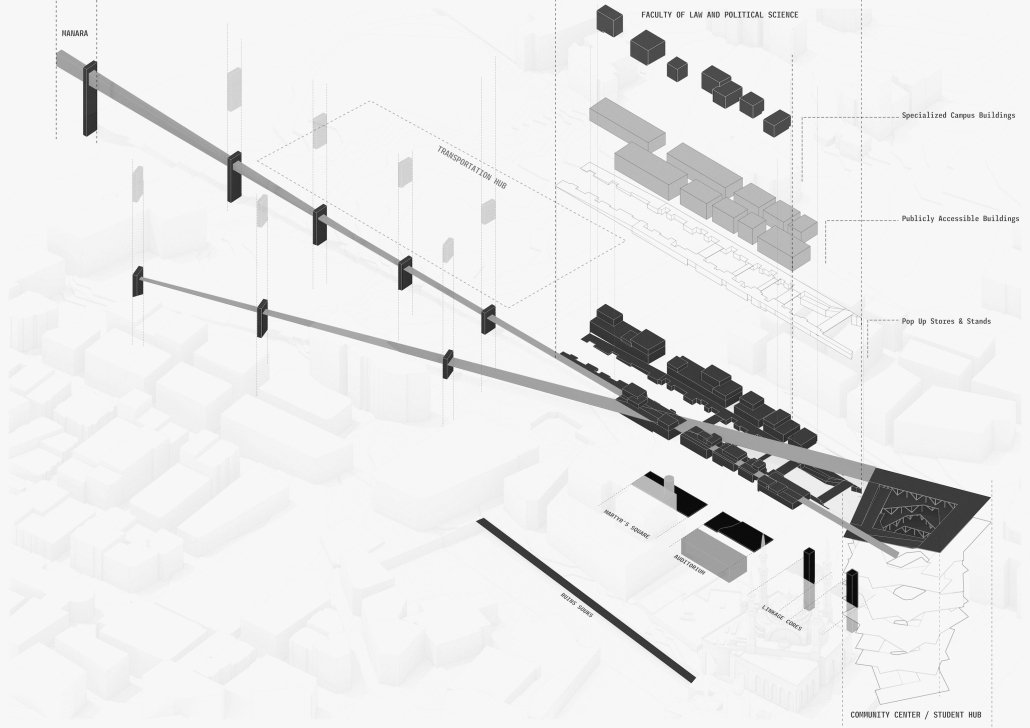
Phase 1: Initial disruption through punctual tactics. This phase involves programmatic interventions at 18 strategically chosen sites around Beirut. Each site is selected to reflect and challenge various neoliberal rationalities, aiming to create a series of small-scale disruptions that collectively unsettle the status quo and open up possibilities for transformation.

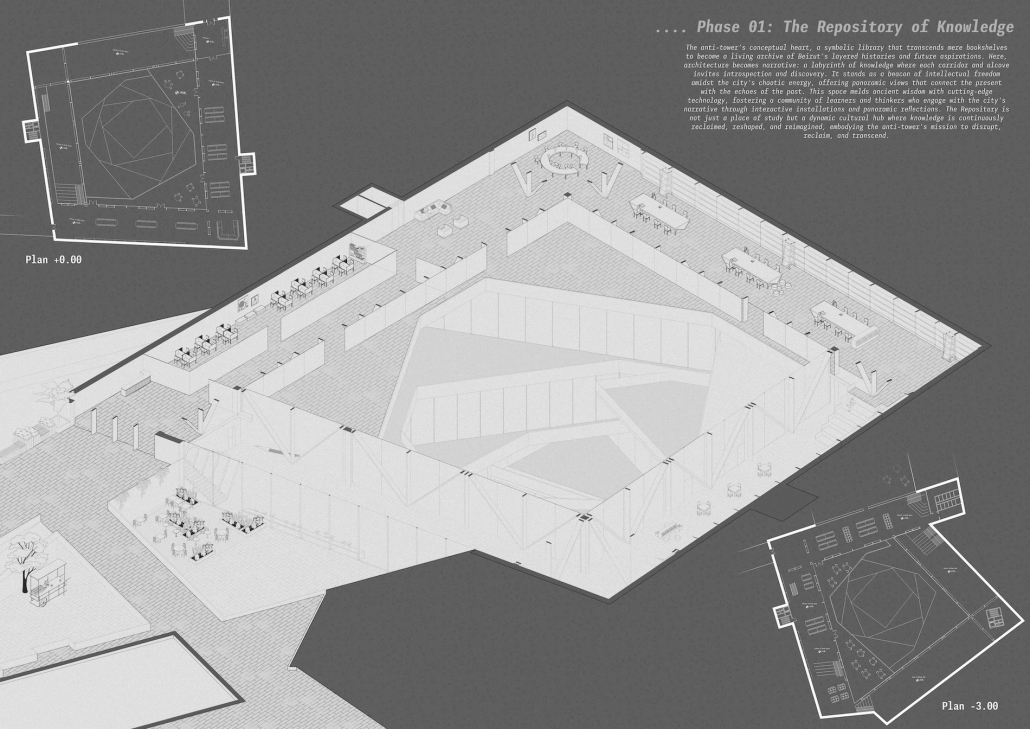
Phase 2: Tactical integration for large-scale disruption. This phase focuses on a single, impactful site—Martyrs’ Square—to implement a significant tactical intervention. The intervention transforms Martyrs’ Square into a multifunctional, dynamic urban space that serves as a cultural hub and community center. By integrating historical, cultural, and social elements, this transformation challenges and redefines the socio-spatial narratives of Beirut. The thesis proposes a heterotopic constellation of spaces that operate outside conventional time-space frameworks, fostering inclusivity, resilience, and public engagement. By opposing the dominant urban narrative, these tactical interventions aim to contribute to the creation of a more diverse and inclusive urban environment in Beirut.

Through this research, the thesis aims to demonstrate how tactical interventions can serve as powerful tools for social critique and urban transformation, ultimately fostering spaces that are not only physically distinctive but also socially transformative.

Instagram: @ard_aub

Urban Legacy –  Preserving Cultural Continuity in Land Scarce Singapore by Denzyl Zhang, M. Arch ’24
Savannah College of Art and Design (SCAD) | Advisors: Andrea Bertassi, Aaron Wilner & David Gobel

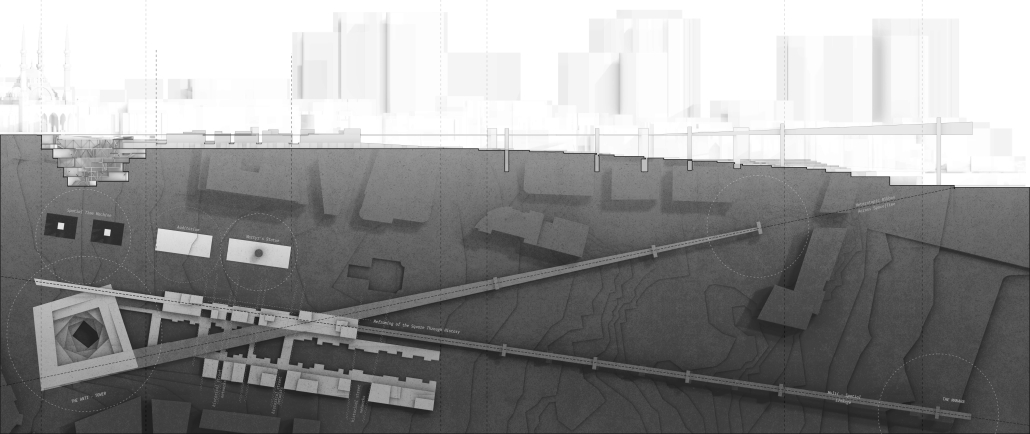
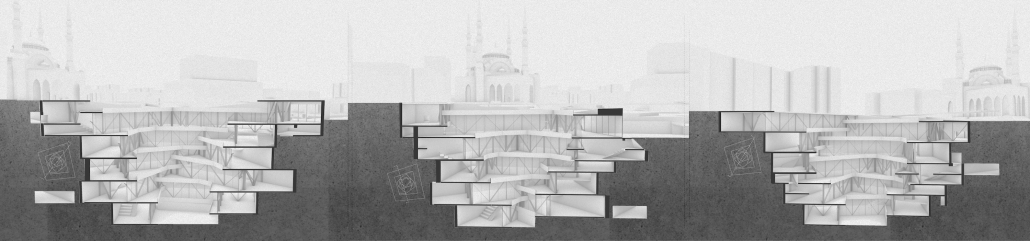
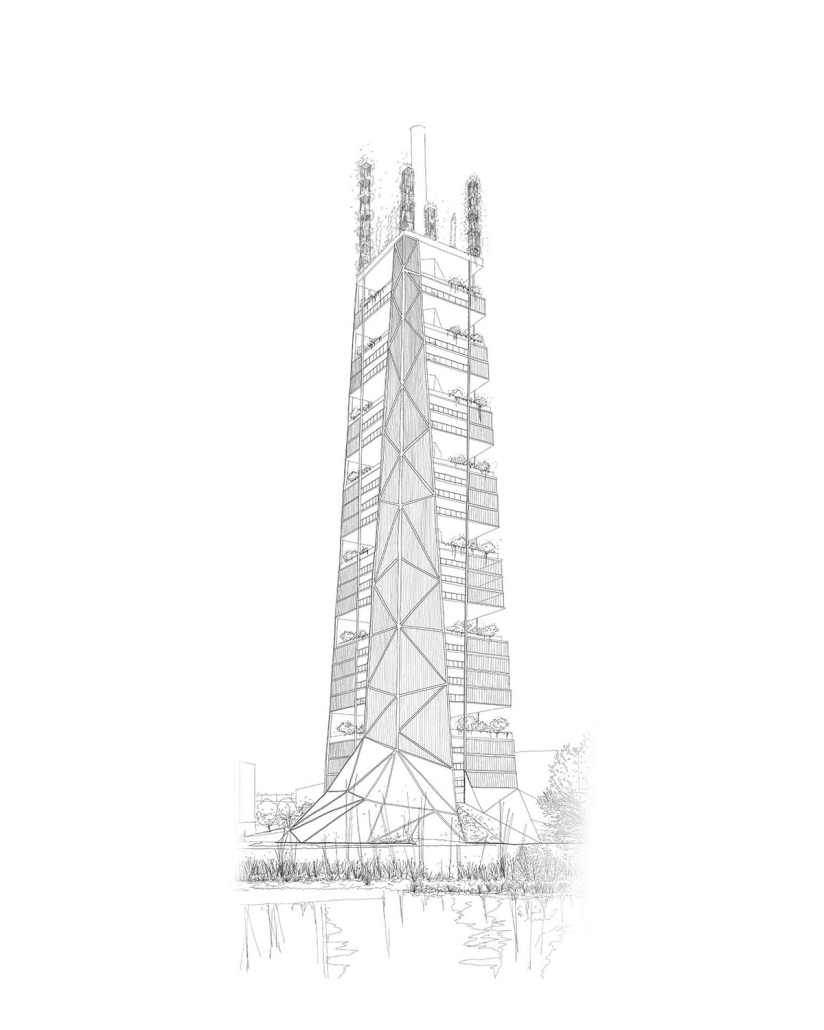
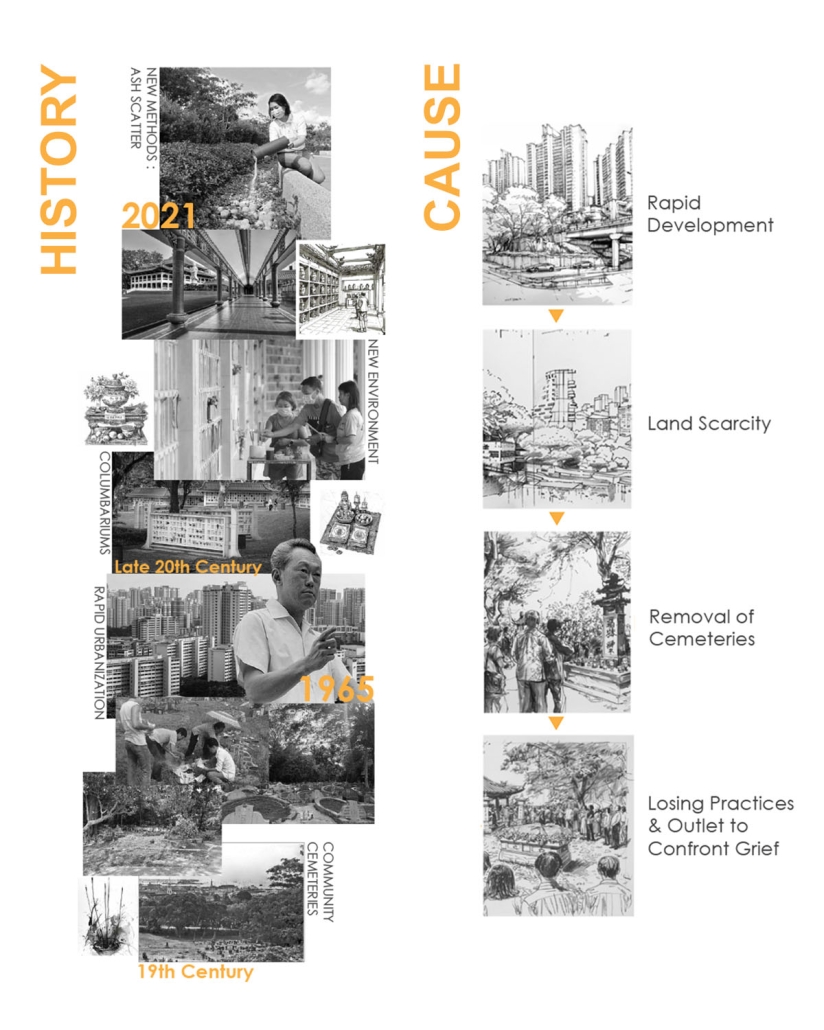
This thesis looks at how memorial spaces might be integrated into urban parks, with an emphasis on the Sanctuary of Passage, a prototype for ecological and culturally sensitive memorial architecture in Singapore’s Ang Mo Kio-Bishan Park. The design tackles the issues of urban congestion and the displacement of customary burial grounds caused by the urgent requirement for living space in increasingly urbanizing regions. The thesis suggests a paradigm in which memorial spaces coexist alongside recreational places while also improving the ecological and social fabric of urban surroundings. The Sanctuary of Passage is based on the idea of a journey through sorrow, expressed by a series of ascending spaces that represent the phases of bereavement. 

Each level of the construction provides a unique experience with nature and architecture, allowing for a gradual shift from grieving to recollection and healing. The proposal draws on the natural dichotomies of visibility and obscurity, enclosure and exposure, and nature and architecture to create a dynamic place that respects and reacts to Singapore’s unique cultural traditions around death. 

The thesis concludes with a design that reimagines the function of memorial spaces in urban environments, arguing that they may be effortlessly incorporated into the city’s landscape, acting as crucial public places that provide consolation and connectedness. By doing so, it establishes a precedent for future developments across the globe, implying that combining urban growth with memorialization techniques may produce places that commemorate the past while also benefitting the present and future.

This project won the AIA Savannah Thesis Honor Award.

Instagram: @denzyl.zhang, @andre_bertassi

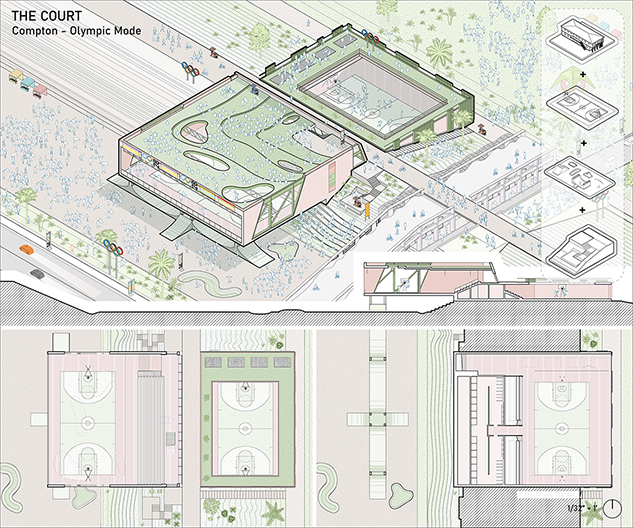
The Intragames: Shaping the Olympics for Local Publics by Weilin Berkey & Valentine Batteur, B. Arch ’24
Pratt Institute | Advisors: Evan Tribus, Cathryn Dwyre & Alex-Pierre de Looz

The nonprofit known as the International Olympic Committee can influence real-world social conditions through its corporate and financial power, thus making the [Olympic] Games a potential catalyst for new participatory publics. However, historically, the Olympic Games have struggled to benefit the host city beyond economics. Based on our research of previous Olympic Villages in recent years, they fail to acknowledge and engage with local programs and architecture, which we identify as the vernacular of the host city. 

Ironically, the goal of the Olympic Games is to embrace different cultures and to promote collectivity. Our research shows that, in fact, it produces negative effects on the host city by standardizing the way it deploys new venues and temporary housing. World-scale events like the Olympics often ignore local communities for profit. How might distributed hybrid vernacular venues amend the relationship between corporate goals and local needs to create new participatory publics within resident neighborhoods?

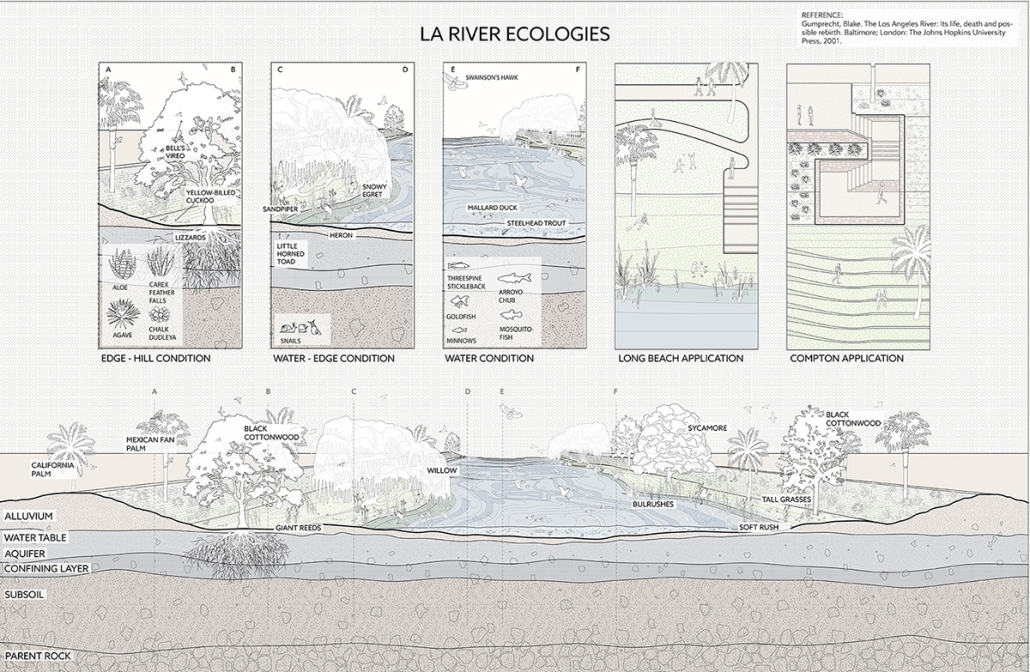
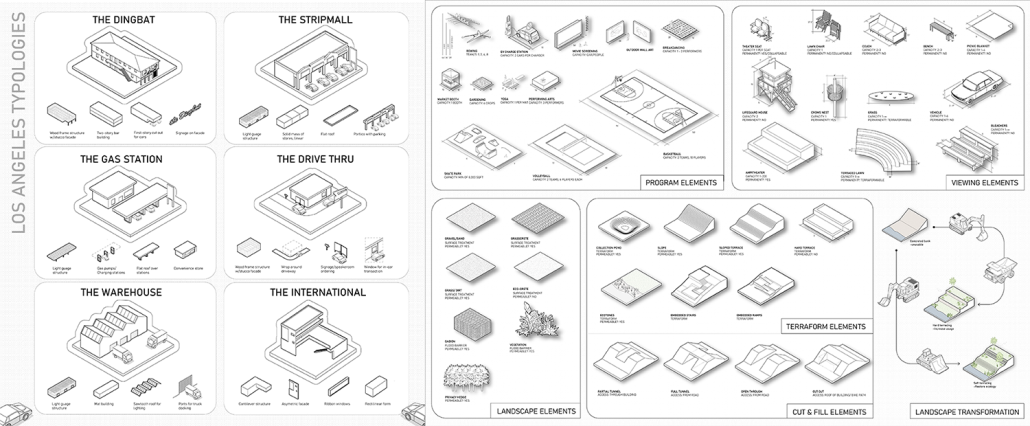
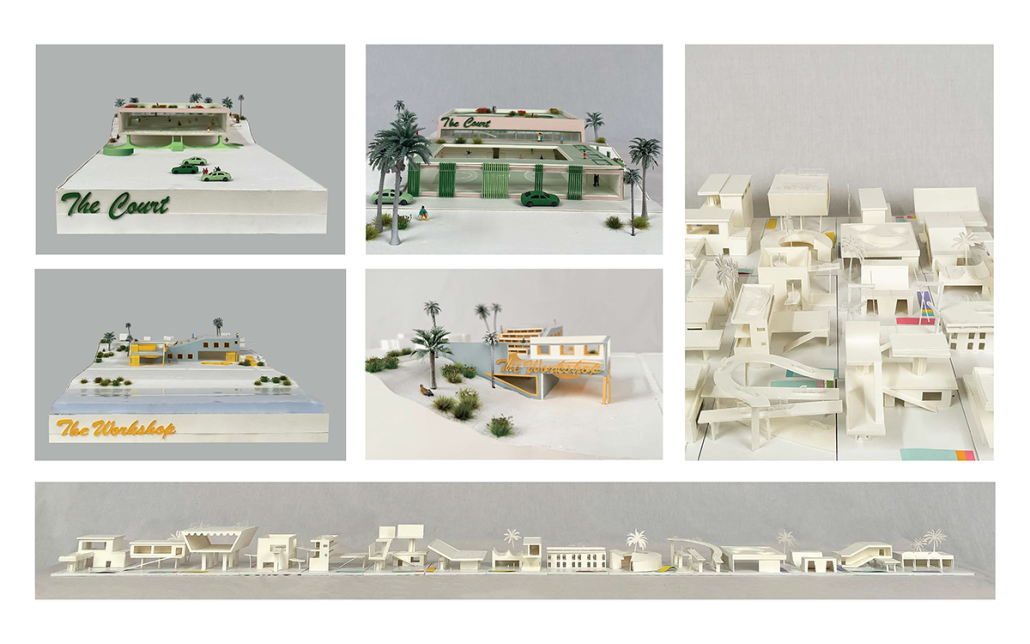
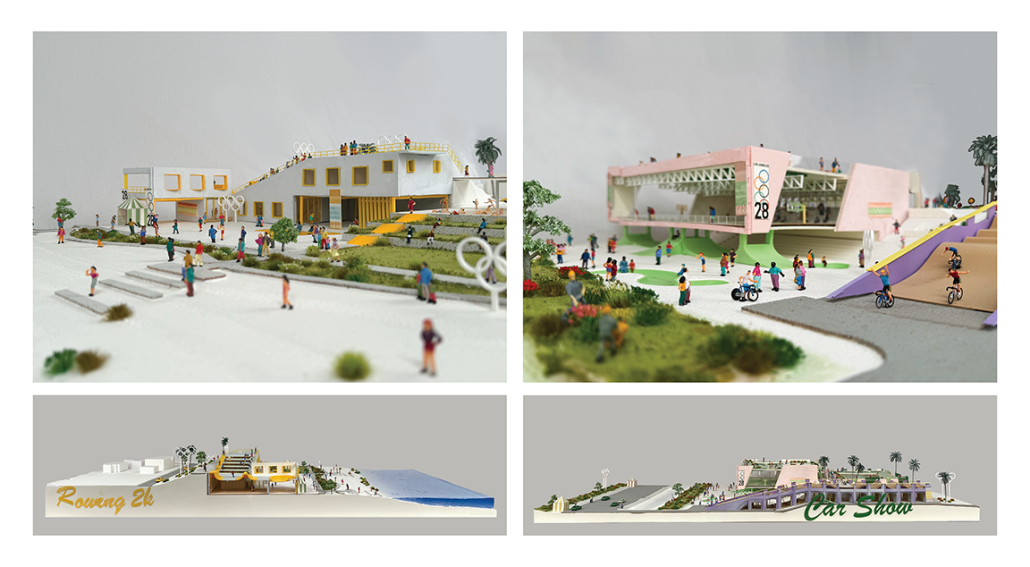
The Intragames hypothesizes that the use of vernacular typologies in combination with public spaces, will encourage locals to participate in collectivity sponsored by the Olympics. Currently, the upcoming Los Angeles 2028 Olympic plan focuses on improving existing infrastructure but neglects the potential connectivity among/between distributed venues. Layered with the existing competitive events, we want to incorporate new recreational and leisure Olympic events that the local fans can participate in along the LA River. Experimenting with combinations of vernacular typologies and Olympic programs is critical to our distributed venues’ longevity and future use. Additionally, having a deep understanding of the vernacular landscape will allow us to revitalize the forgotten concrete banks of the LA River and its connection to the city. 

This formula for designing new public venues will allow local spaces to be integral to urban-scale events. These additional programs will surpass the short timeframe of the Olympics, leaving new integrated publics along the river and changing the lasting impact of the games.

This project won The Best Degree Project of 2024, Undergraduate Architecture at Pratt Institute. 

Instagram: @wberkarch, @v.b._design, @pressg5, @pneumacat, @delicatemunch

The Spaces In-Between: The Making of an Urban Network by Dana Kanaan, B. Arch ’24
American University of Beirut | Advisor: Dr. Howayda Al Harithy

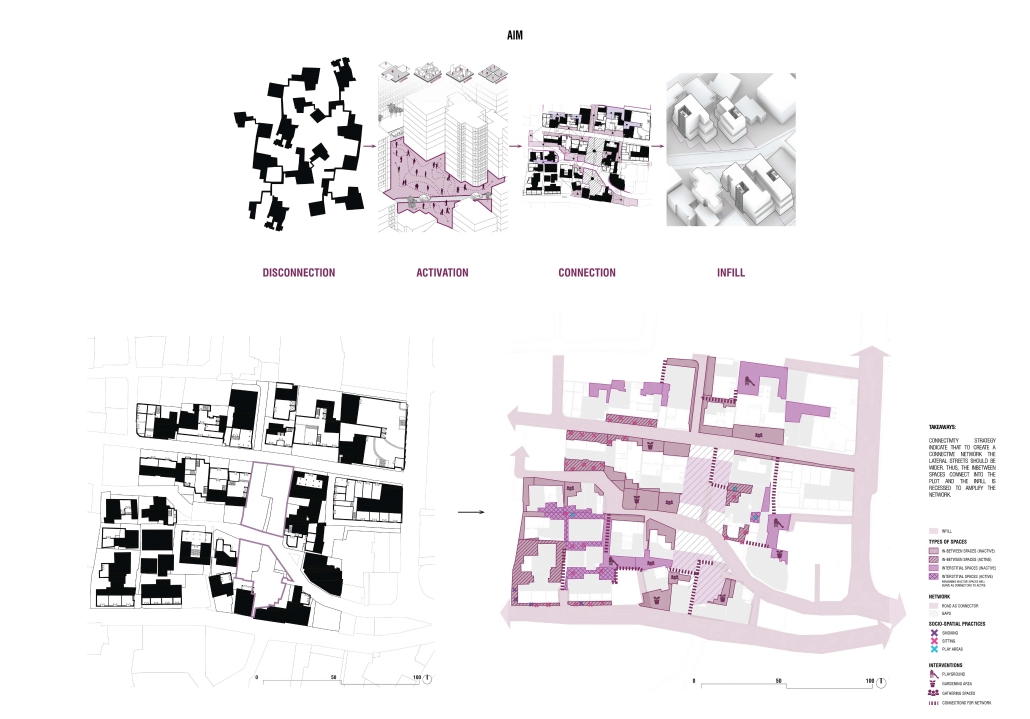
In Beirut’s urban environment, the absence of and the treatment of public spaces has led to the weakening of community ties, fragmentation of communities, and urban isolation. This is exacerbated by rigid boundaries that separate districts and hinder social interaction, as public spaces are crucial for community cohesion. Moreover, there is an abundance of interstitial and in-between spaces that are underutilized and leftover. The rigid boundaries that separate districts and neighborhoods, whether physical or mental, combined with the neglect of these leftover spaces contribute to the fragmentation of urban communities and hinder social interaction. This is because social interaction occurs in the public realm. Thus, this fragmentation in the public sphere exacerbates the weakening of community ties and urban isolation.

Interstitial spaces in between buildings, especially those that act as ruptures in the urban fabric, can be activated and used as an opportunity for a network of connectivity. These interstitial areas can be activated through methods such as layering, dissolution, dissociation, and blurring. The objective of creating a blurred space is to foster social interaction, which emerges during periods of liminality and ambiguity. Therefore, a network of private spaces is created in the absence of public spaces utilizing interstitial and in-between spaces. 

This project was nominated for the Areen Projects Award for Excellence in Architecture

Instagram: @ard_aub

Urban Projections by Tessa Laplante & Julia Nahley, M. Arch ’24
The University of Texas at Austin | Advisor: Matt Fajkus

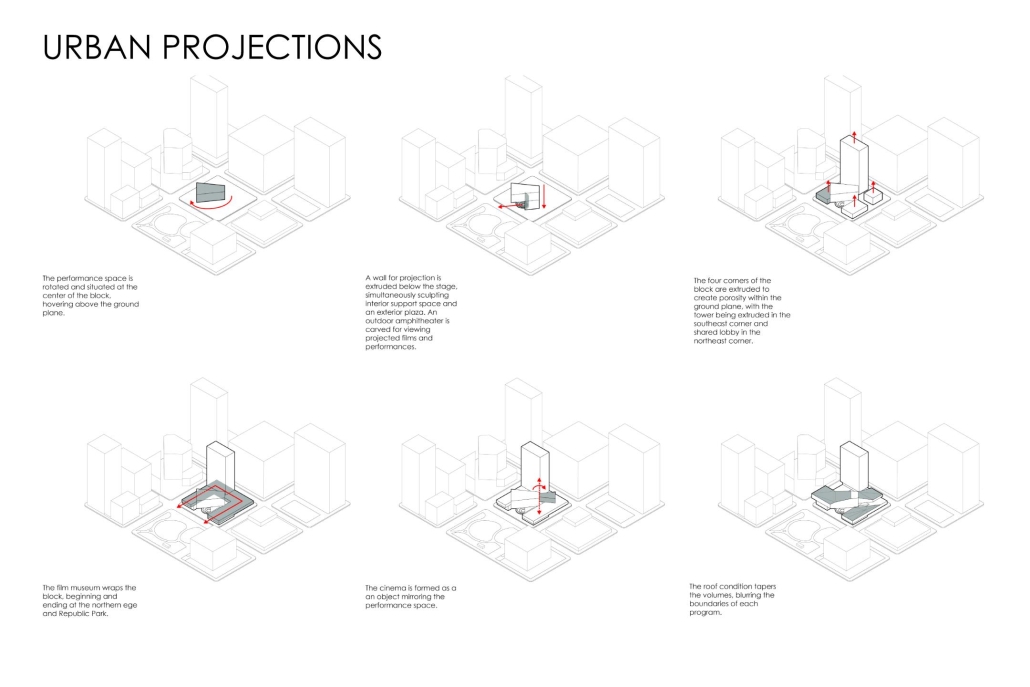
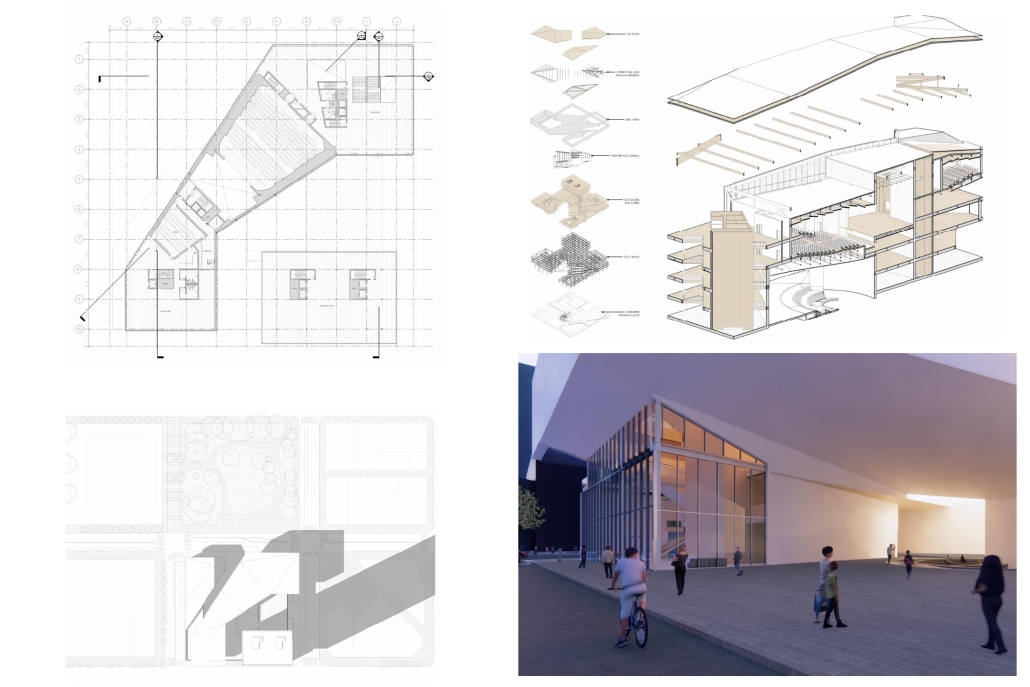
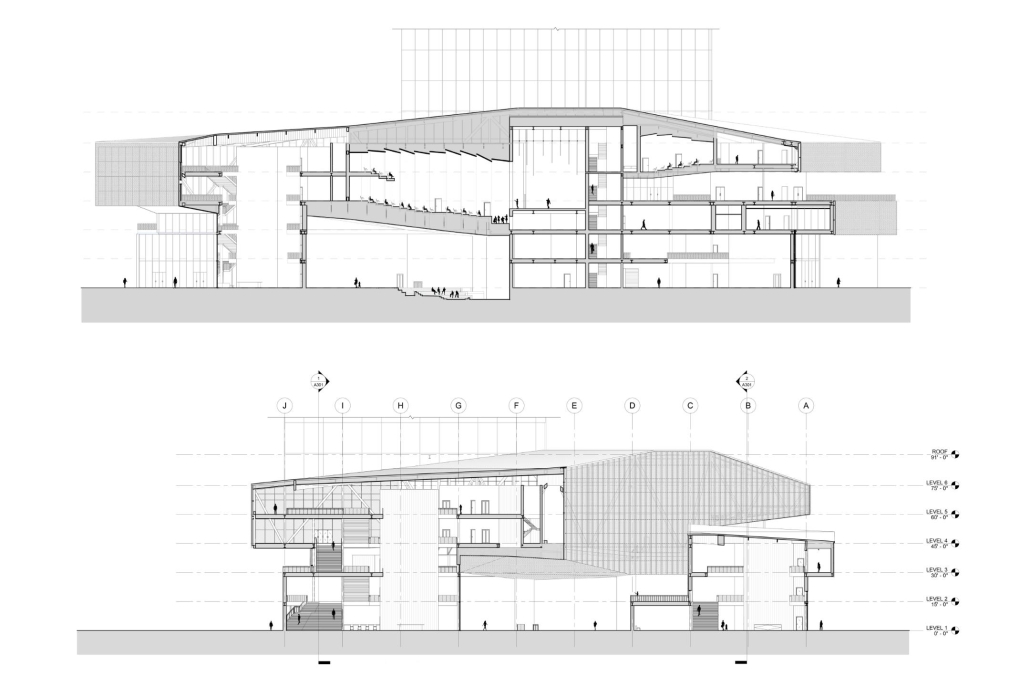
“Urban Projections” addresses the notion of a cultural landmark in the context of an evolving city. With the massive amount of development happening at such a rapid pace in Austin, it raises the question of how the city will maintain and continue to define its own cultural identity. In order to maintain it, [this] design includes a film museum, while live performance spaces continue to define the city’s culture. A key intention for the site is to encourage circulation through the urban block towards nearby greenspaces including Republic Park and Shoal Creek. The heart of the block is defined by an elevated and rotated performance space, which sculpts the public plaza beneath. A film museum wraps around the block at the third level, serving as a plinth that begins and ends at Republic Park. Liminal spaces are emphasized in the project, with vertical circulation and intermission spaces celebrated and shared between programs.

The notion of projection is repeated at all scales of the project, reflected in the projection of the building’s structure onto the exterior facades. A steel mesh acts as a surface for the projection, as well as a thermal barrier to filter light and movement between interior and exterior spaces. A steel frame with CLT cores and floors is utilized as a replacement for concrete in conjunction with steel trusses that support the cantilevered theater spaces and wrap the upper levels. As visitors process from the main lobby into the more private spaces, they experience a sequence of atmospheres generated by different relationships between wood and steel. Specifically, in spaces where the program is flexible, the relationship between materials is clear, with transparent glass exposing the building’s primary steel members and CLT floors. In contrast, the interiors of the theaters are entirely wood to encourage concentration for the experience. 

This gradient of privacy through materiality reflects the project’s overarching intention to blur the boundaries between programs without compromising the essence and needs of the programs themselves. In an effort to establish a cultural landmark, liminal spaces are celebrated to encourage new relationships within the site, rendering them just as important as the more defined programs. These shared moments exist as a stage for the city to maintain and continue to define its cultural identity.

Instagram: @tessamarie108, @julia_nahley, @mf.architecture

Expo 2025 by Trever Bellew, B.Sc in Architecture ’24
University of District of Columbia | Advisor: Golnar Ahmadi

For the spring semester of 2023, students were required to design a pavilion for the 2025 World Expo that will take place in Osaka, Japan. The World Expo is a global event that showcases the best in technology, sustainability, and architectural design. With the theme “Designing Future Society for Our Lives,” the Expo aims to present innovative solutions and ideas that positively impact human lives. It focuses on sub-themes such as saving lives, connecting lives, and empowering lives, highlighting the Expo’s commitment to addressing global challenges and creating a better future.

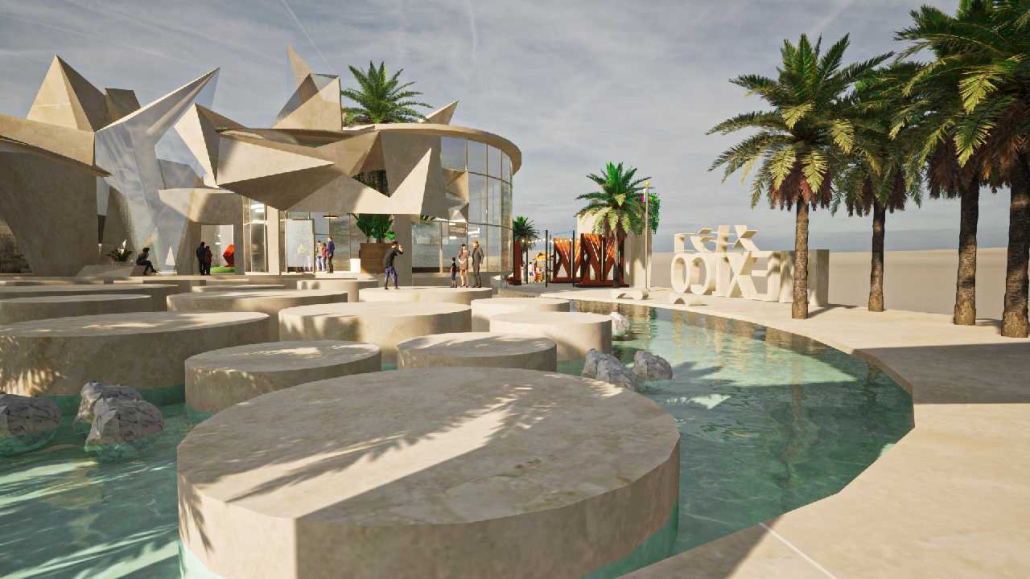
Being originally from Brazil, I challenged myself to create the Brazilian pavilion. [This design drew] inspiration from Burle Marx, a plastic artist, and architect who designed the most iconic boardwalk located in Copacabana, Rio de Janeiro, Brazil. I crafted an organic shell that encompasses the entire pavilion program. The project’s aim was to create an immersive experience that transports visitors to a jungle-like setting while educating them on various topics related to mental and physical health through the exhibit rooms. 

Instagram: @Golnarahmadi

Shopping Shells to City Cells by Ruyue Qi, B. Arch ’24
Rhode Island School of Design | Advisors: Junko Yamamoto & Leeland McPhail

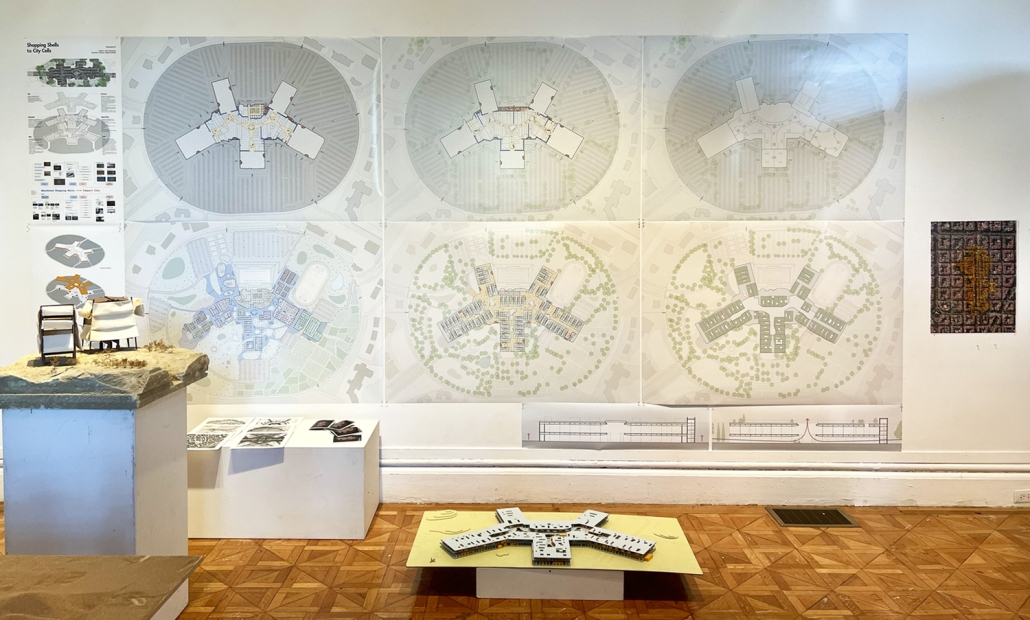
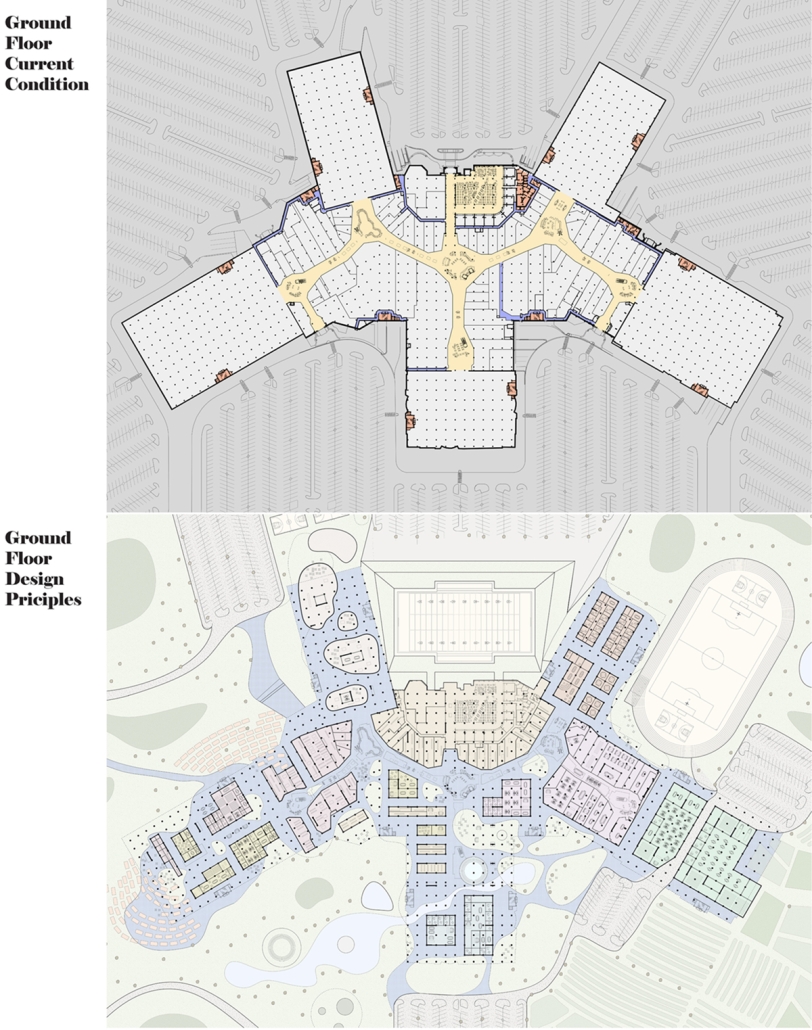
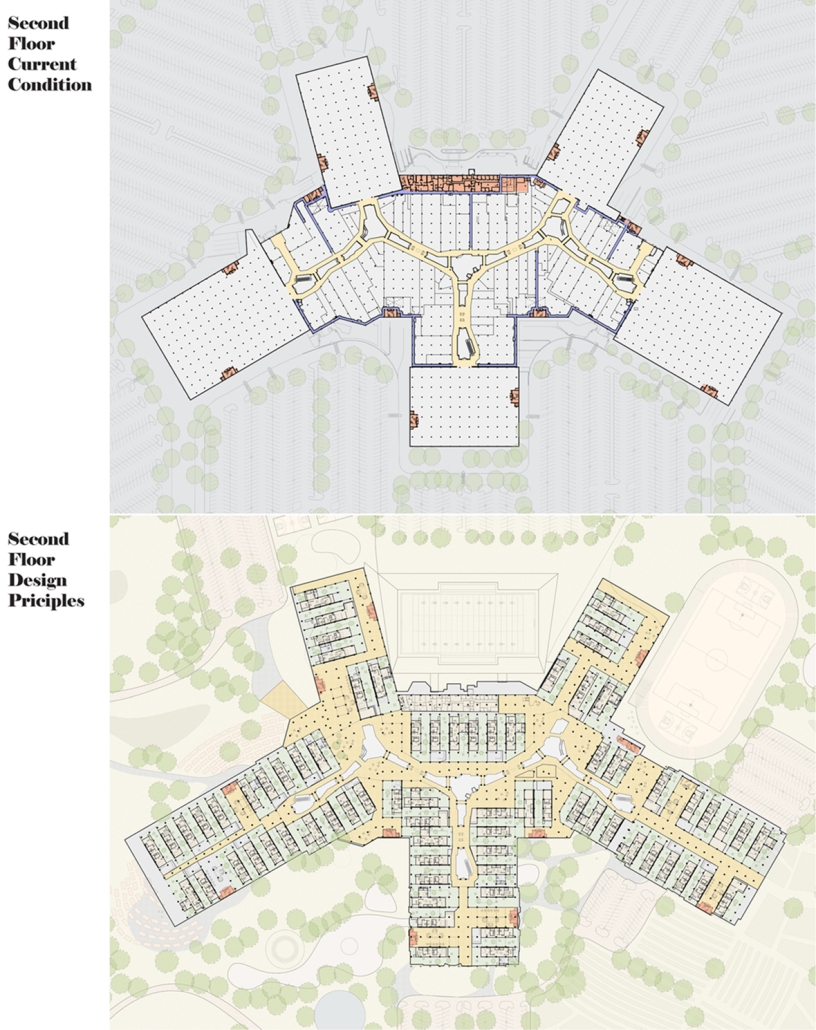
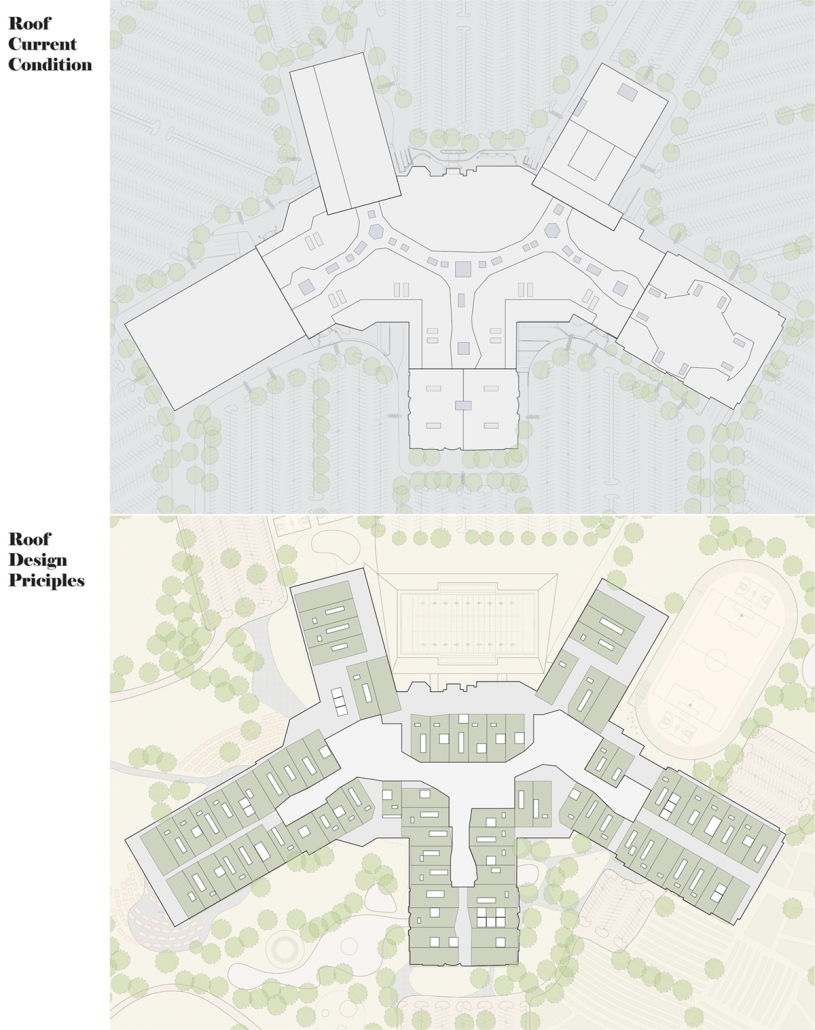
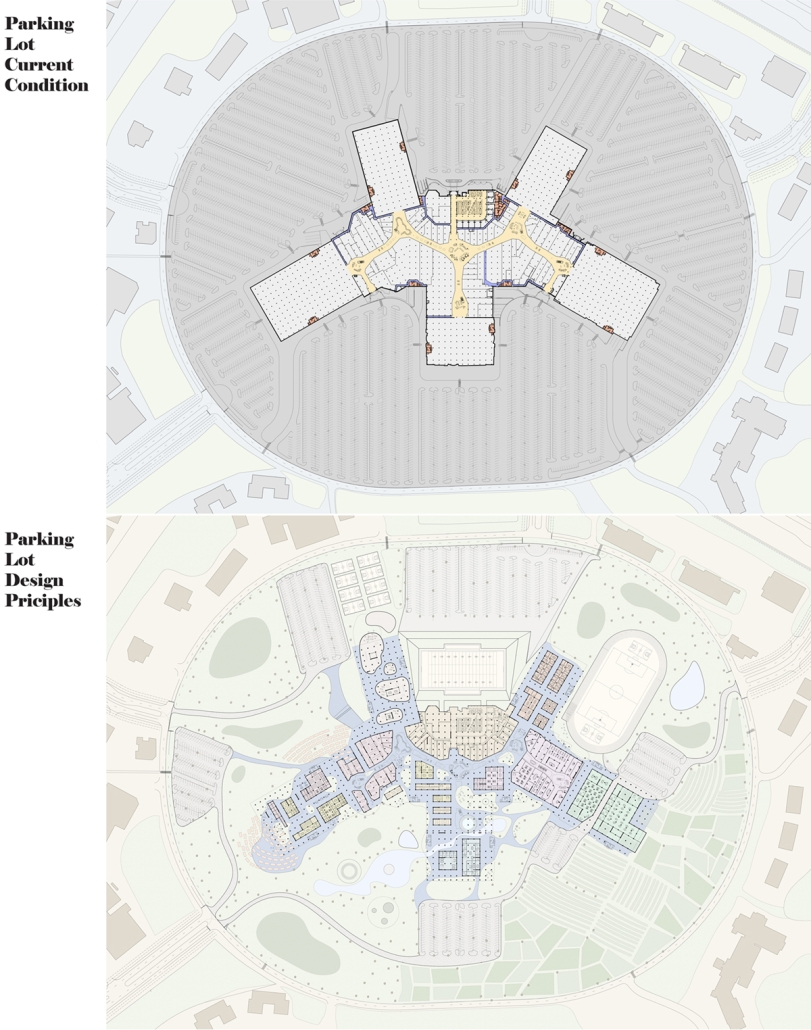
Shopping malls, spanning an area equivalent to 33+ Manhattans, are key symbols of consumerism. Built for short-term savings, these malls often become abandoned due to high maintenance costs and the rise of e-commerce. In the United States, out of an estimated 1,150 malls, it is forecasted that only about 150 may remain operational by 2032. Despite numerous closures, new mall construction continues as developers aim to attract shoppers with the Next Big Thing. Abandoned shopping malls (large size, connected layout, huge parking, enclosed structure, and strategic positioning) have the potential to be transformed into compact cities to nurture a future that is both eco-efficient and interconnected. 

Large abandoned shopping malls are large enough to become diverse and mixed-used neighborhoods. They can provide housing units with fixed infrastructure cores and flexible layouts, depending on the climate and needs. Additionally, abandoned malls could evolve into walkable neighborhoods connected by escalators and platforms. Existing escalators can create a unique urban environment where residents can easily navigate between different areas. Transforming vast parking lots into parks, gardens, and farms could enhance connectivity to nature and mitigate the urban heat island effect. Enclosed shopping malls depend solely on mechanical systems to provide a controlled climate inside, introducing natural ventilation could significantly lower their carbon footprint. By strategically repurposing abandoned shopping malls, we can revitalize neighboring areas by enhancing community involvement, boosting the local economy, and creating new communal spaces and facilities.

This project was a Thesis Award Nominee. 

Instagram: @julyqi_, @junkoyamamoto_

Beating Heart: A Joe Biden Presidential Center by Nick Biser, Aidan Knupsky & Kaiden Estep, B. Arch ’24
Marywood University | Advisors: Jodi La Coe & James Eckler

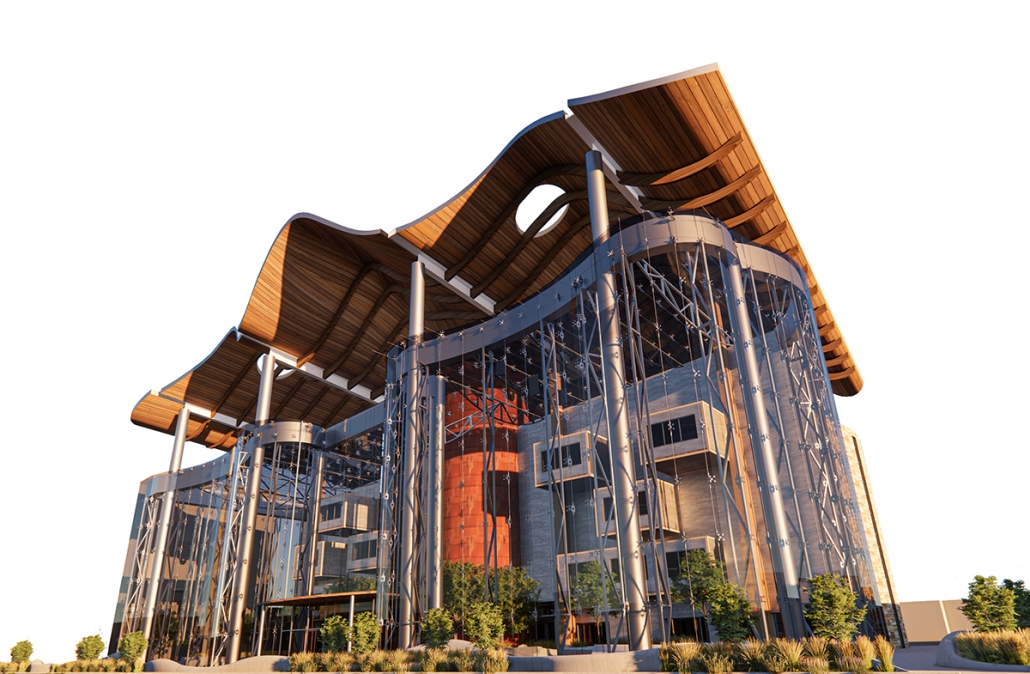
Located in the heart of Scranton, Pennsylvania, Beating Heart is a Presidential Center for Joe Biden housing his presidential archives, a museum, and a new gathering space for the community. Taking a symbolic approach to the design, the building is split between a massive tension cable glass facade and a tall stone building. These two different approaches are brought together by an all-encompassing canopy. This symbolic design follows President Biden’s aim to unite individuals, no matter how different they may seem on the outside. The organic shape of both the canopy and facade represents the changing nature of the American spirit and people. Instead of a traditional Presidential Library, Beating Heart conveys more of Biden’s wishes and beliefs. 

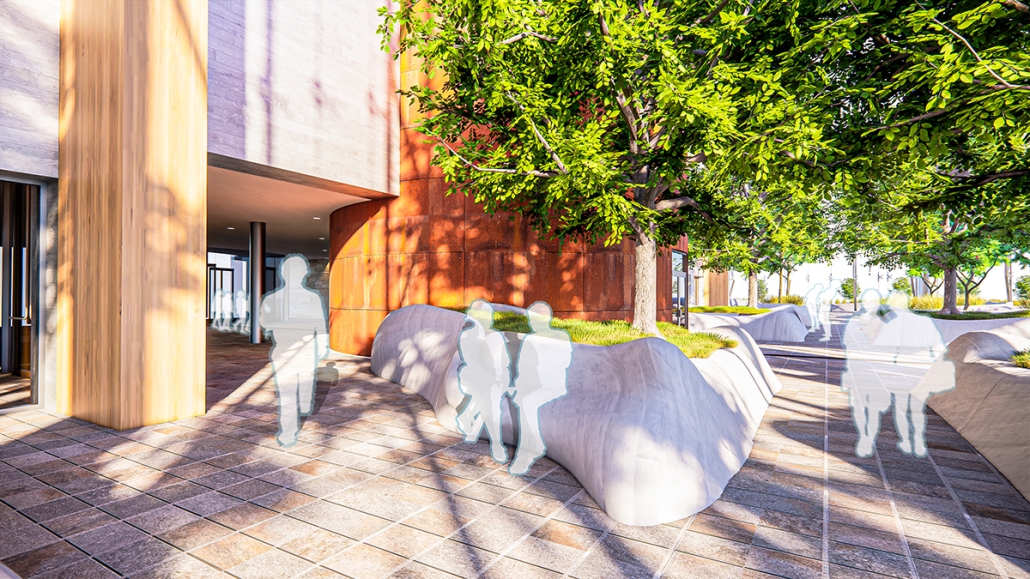
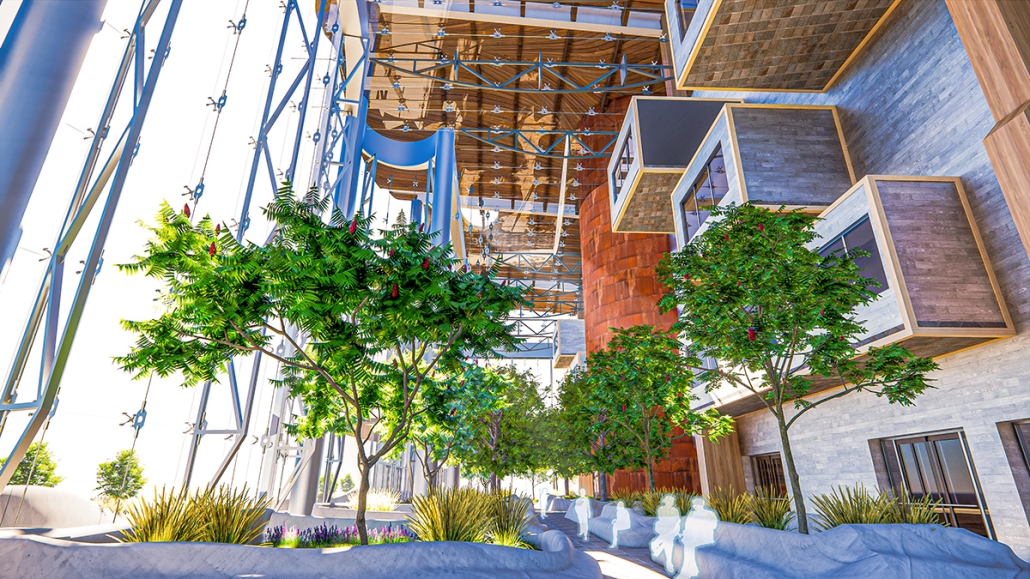
At the center of the building is a massive cylindrical Heart of America – a brilliant spiral stair clad in Cor-ten steel that stands in contrast to the rest of the building. The Heart extends over 120’ high, going past the roof for all of Scranton to see. The entirety of the first floor diverts from the typical museum program of a Presidential Library. The front half is surrounded by seemingly endlessly tall glass that surrounds the occupant in an indoor/outdoor space. This winter garden preserves native vegetation and reclaims what was once a desolate parking lot into a reborn green space. The glass facade supported by thin tension cables creates a visually seamless transition between the reworked streetscape and the interior. 

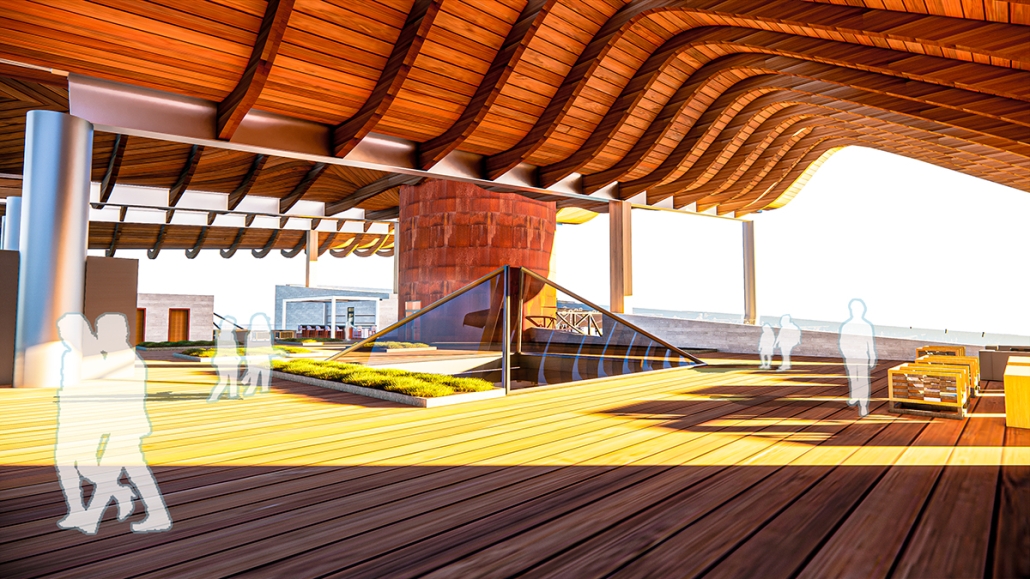
In coordination with the winter garden is a Living Learning Lab serving as a space for the Scranton Community to learn more about the vegetation in the winter garden as well as ecological conservation techniques. Lastly, the first floor hosts a large, double-height Community Room, which features a large learning stair for the community to gather and discuss current events and issues. The museum section occupies the upper stories having the occupant flow in and out of the central Heart. The exhibits rotate around two symmetrical interior atriums allowing clear visibility and transparency throughout the museum. The active rooftop provides a space to fully view the Electric City of Scranton. 

This project won a 2024 MUSOA Studio Award.

Instagram: @nick_biser, @biser_architecture_and_designs, @aidanknup07, @kaiden_estep, @jodilacoe

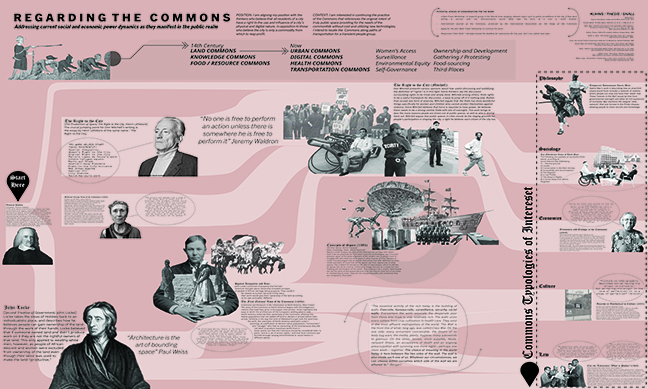
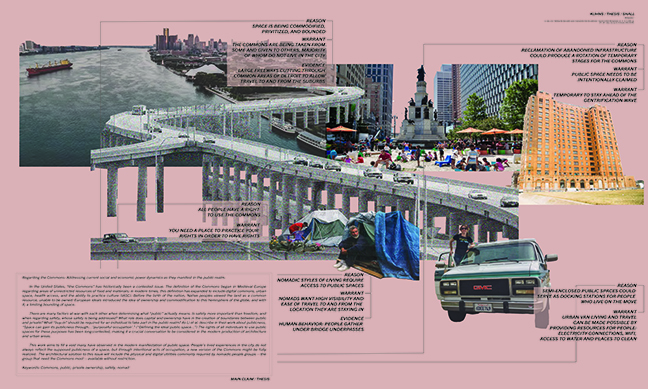
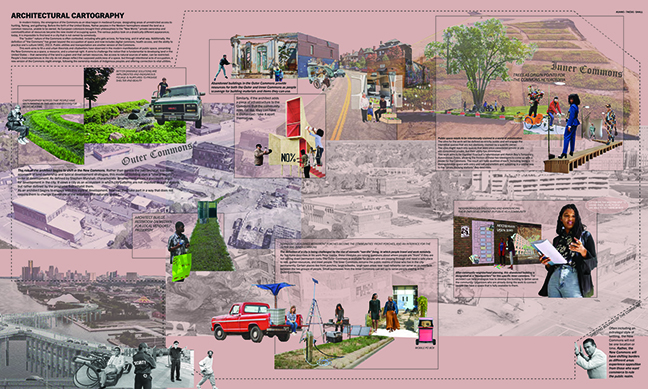
Regarding the Commons: Addressing the current social and economic power dynamics as they manifest in the public realm by Magdaline Kuhns, M. Arch ’24
Lawrence Technological University | Advisor: Scott Shall

In the United States, “the Commons” has historically been a contested issue. The definition of the Commons began in Medieval Europe regarding areas of unrestricted resources of food and materials; in modern times, this definition has expanded to include digital commons, urban space, health access, and the ability to practice culture (IASC, 2023). Before the birth of the Nation, Native peoples viewed the land as a common resource, unable to be owned. European ideals introduced the idea of ownership and commodification to this hemisphere of the globe, and with it, a limiting bounding of space.

There are many factors at war with each other when determining what “public” actually means. Is safety more important than freedom, and when regarding safety, whose safety is being addressed? What role do capital and ownership have in the creation of boundaries between public and private? What “buy-in” should be required for an individual to take part in the public realm? As Li et al. describe in their work about publicness, “Space can gain its publicness through…’ purposeful occupation’.” (“Defining the ideal public space…”) The rights of all individuals to use public spaces for these purposes have been long-contested, making it a crucial conversation to be considered in the modern production of architecture and urban areas.

This work aims to fill a void many have observed in the modern manifestation of public space. People’s lived experiences in the city do not always reflect the supposed publicness of the space, but through intentional acts of occupation, a new version of the Commons might be fully realized. The architectural solution to this issue will include the physical and digital utilities commonly required by nomadic people groups – the group that needs the Commons most – available without restriction.

Instagram: @ace_kuhns, @scott_shall

Manus Mouvere by Dillon Alexander Brown, M. Arch ’24
Pennsylvania State University | Advisor: DK Osseo-Asare

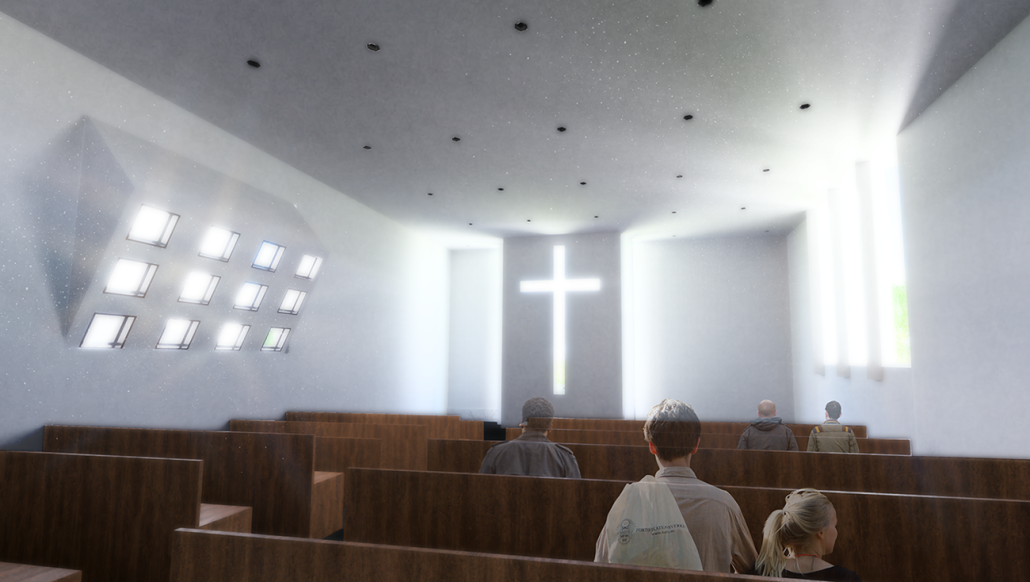
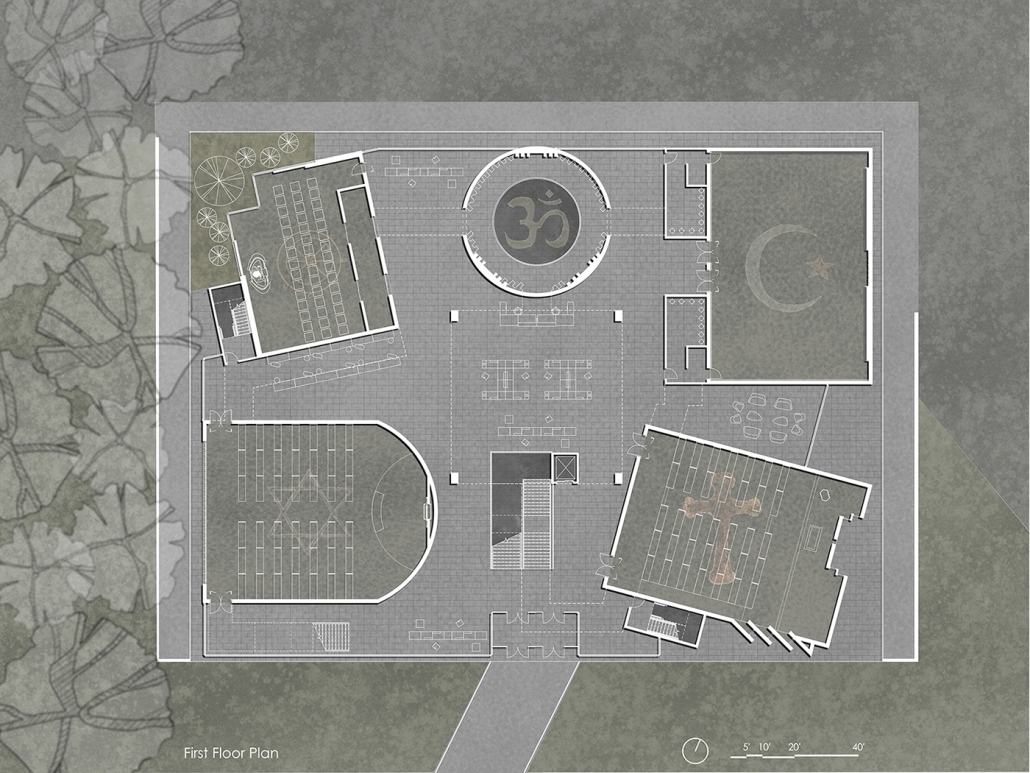
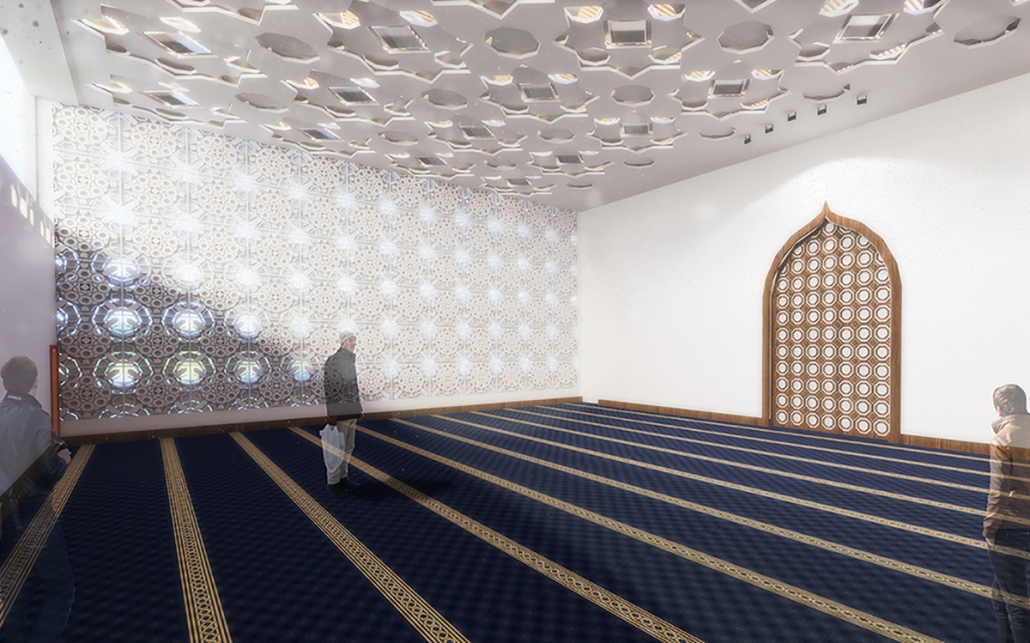
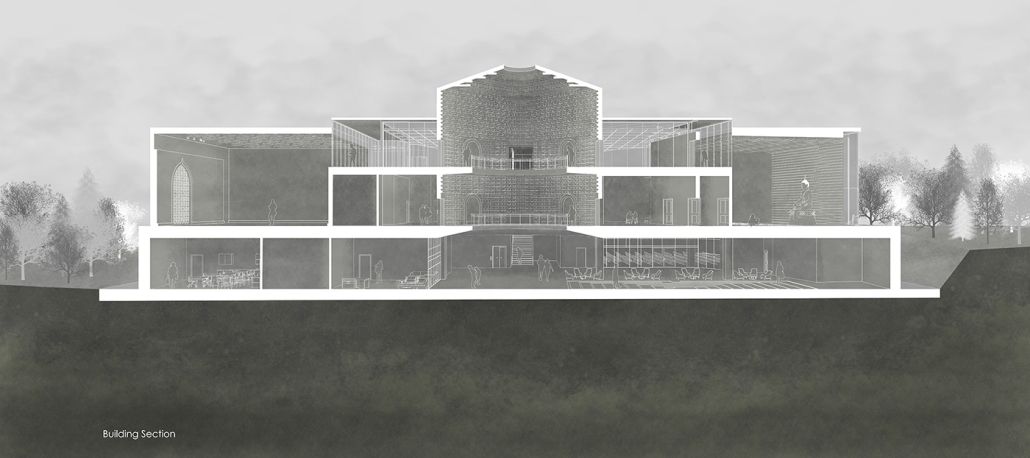
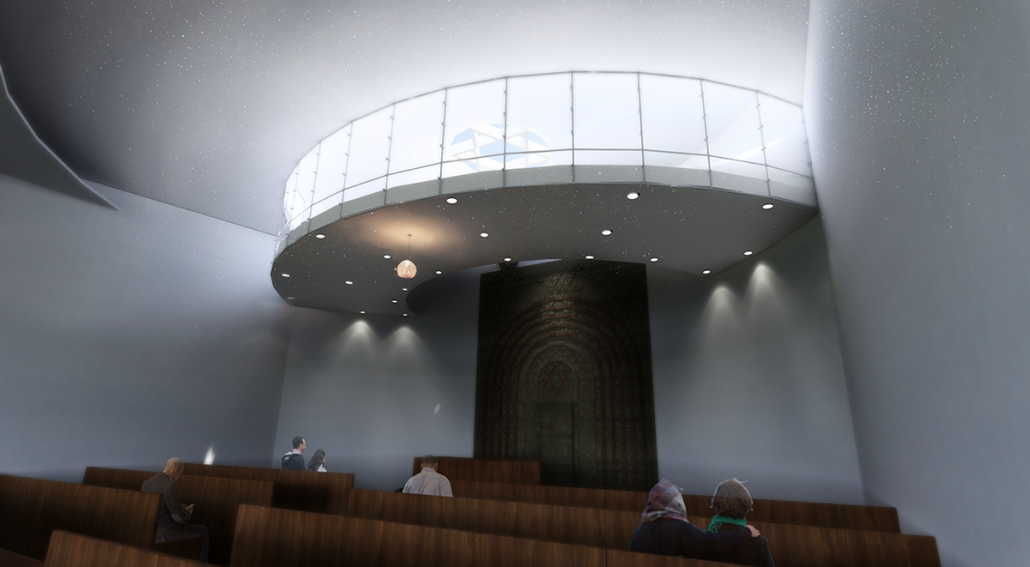
This project seeks to explore ineffable ideas in a physical space: designing a multi-faith facility in a multi-faith society. Based in Central Park, New York City, this building facilitates five distinct religions: Christianity, Judaism, Islam, Buddhism, and Hinduism. These five were selected from the census data of New York City. 

In preparation for the design, interviews were conducted at a temple with a religious leader for each religion, coinciding with a tour. Additional interviews with fellow students occurred to gain a more rounded understanding of each faith, their temple needs, and what could possibly lie for the future of the religion. With this information, five temples were designed within a single building and connected by a neutral secular space. 

Additionally, to explore the form of space the use of watercolor and pigment theory was used to see how different colors blended, or didn’t blend. This was done to explore how the culture of one faith may physically reside with another faith. The intuition gained from this exercise granted knowledge of how an idea may become overwhelmed and how much contrast is physically needed to keep a faith true to its own idea.

The exterior of the temples are angled to face their respective religious customary directions, but also act as geometry that encourages visitors to sit and face each other, a gesture to encourage dialogue. The building is designed to cross-pollinate understanding and promote tolerance between its visitors. It is representative of the existing religious landscape of New York City, and America as a whole.

This project won the ​​2024 Jawaid Haider Award.

Stay tuned for Part XIV!

2023 Study Architecture Student Showcase - Part XXXIII

Welcome to the final edition of the 2023 Study Architecture Student Showcase! In Part XXXIII, we highlight student work that centers on public spaces. The showcased designs include public parks, meeting spaces, community centers, commercial retail spaces, parking structures, pools, and more.

Re-encontrarse (Re-united) by Sophie Esther Zurhaar Ortiz, B.Arch ‘23
Universidad Anáhuac Querétaro | Advisors: Jorge Javier & Francisco Paille

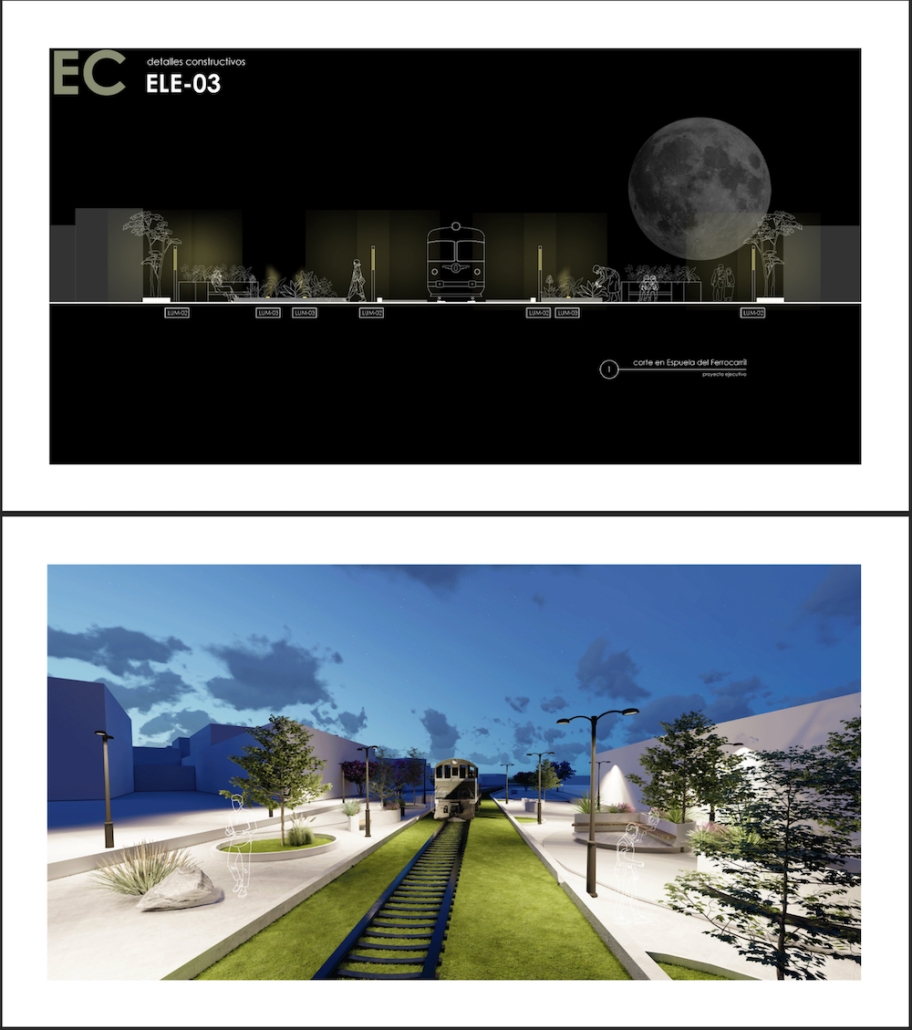
This project seeks to generate an urban design proposal for the recovery of public space in Felipe Carrillo Puerto. Aiming to propose meeting spaces where all kinds of activities can be carried out, recover the railroad tracks to stop being a physical barrier, and defragment the urban fabric, offering cohesive, healthy, and functional meeting spaces that together can regenerate the social fabric.

Instagram: @sophiezurhaar, @arqwave

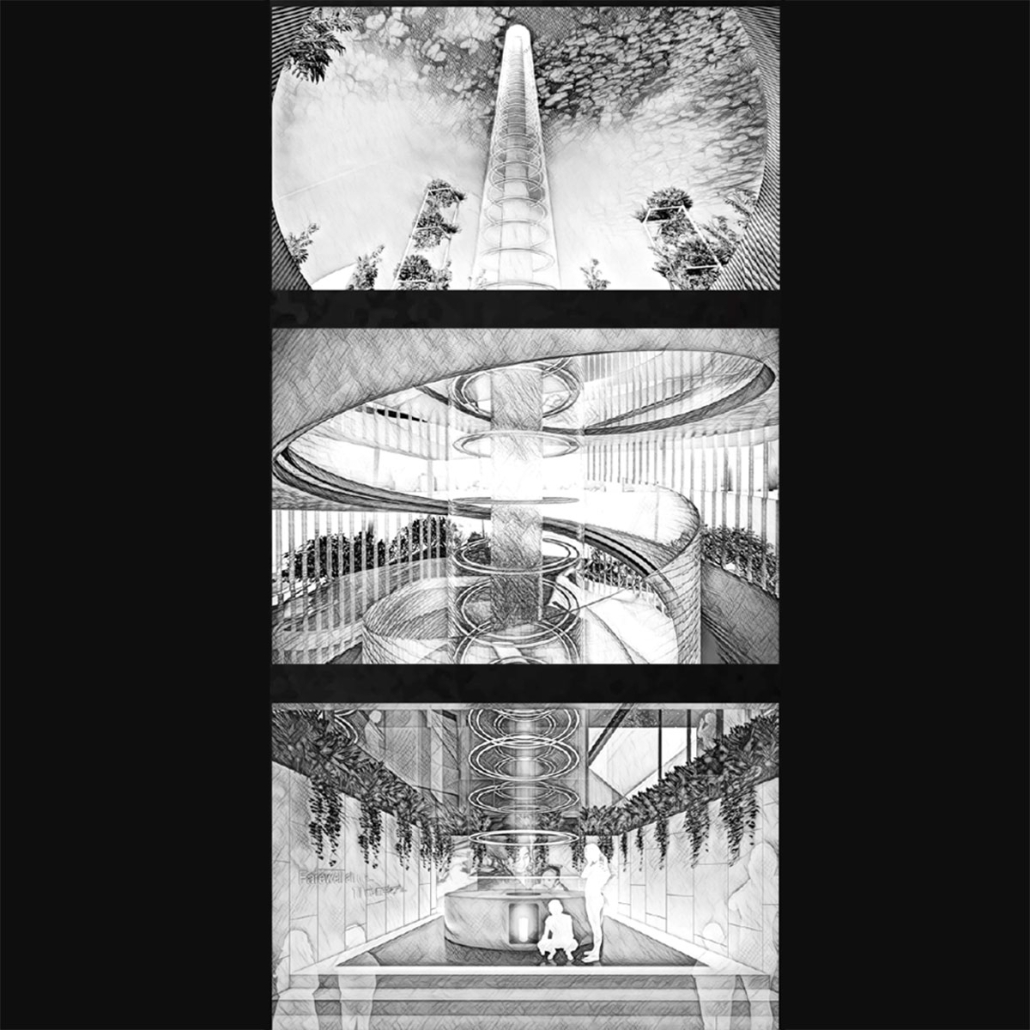
PROSPECT NEW ORLEANS by Olivia Georgakopoulos, B.Arch ‘23
Tulane University | Advisor: Ruben Garcia-Rubio

This project proposes to open the building to the city, creating a place that adds to its rich urban fabric. The site is a parking lot at the corner between the Contemporary Arts Center and the WWII Museum. While there are many voids in the surrounding context, like this site, they are not habitable. This project provides a much-needed public space for the many visitors to the surrounding museums. Taking inspiration from the L-shaped building typology in New Orleans, the building opens to the city, creating a public plaza. 

The building functions as an open-public platform connecting Camp Street and Andrew Higgins Blvd. The glass-enclosed first floor is fluid and can be completely opened, allowing for space not to be defined by interior or exterior. Rather, programs can spill out and interact between the interior and the plaza. The ground floor then becomes animated by human activity. The public programs, gallery, cafe, lobby, and lounge are housed on the first floor, and spaces to support the art center are above. 

Transparency of the building is achieved through the aluminum louvered facade, which acts as a theatrical scrim. This veiled facade reveals the animation on the inside of the building. This transparency is also experienced from the inside looking out: the interior programs interact with filtered and framed views of the city. 

A chain of internal double-height spaces forms a visual cascade through the building, providing internal transparency and animation with continuous views from the bottom floor to the top floor and the sky. The overall design provides continuity between the interior, the plaza, the street level, and the city.

Instagram: @rubgarrub

Los Angeles Media Library by Charlotte J. Love, B.Arch ‘23
Tulane University | Advisor: Ruben Garcia-Rubio

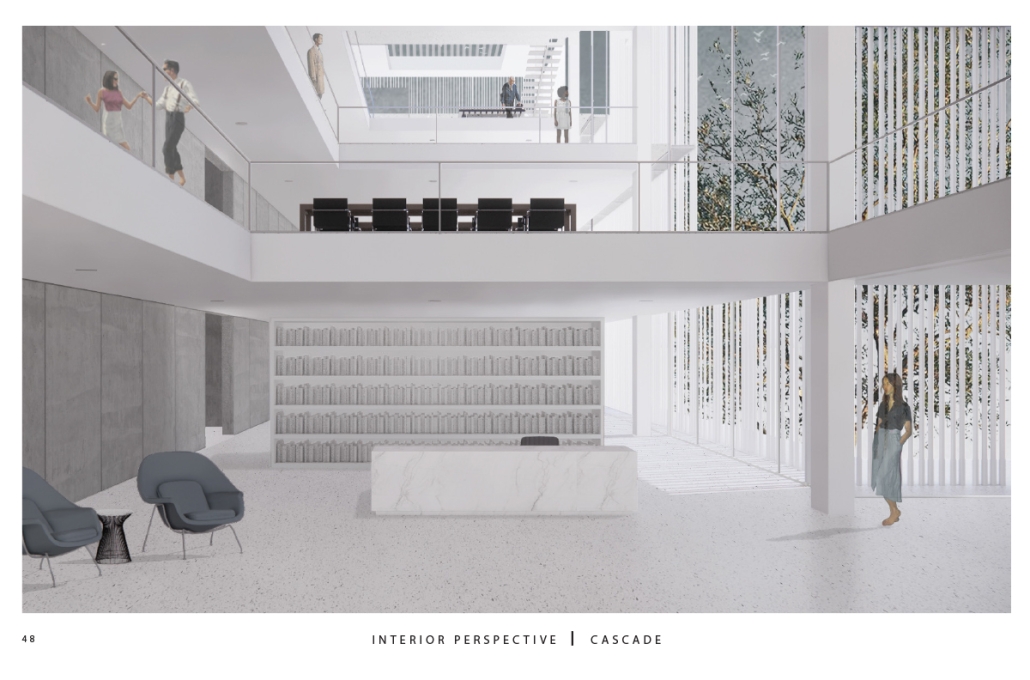
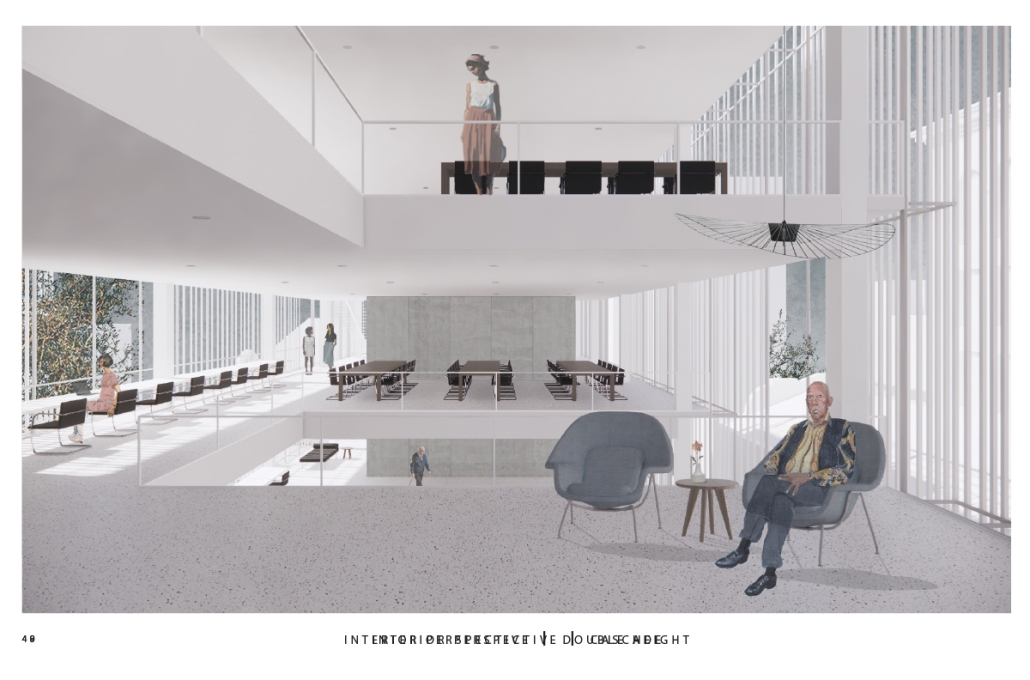
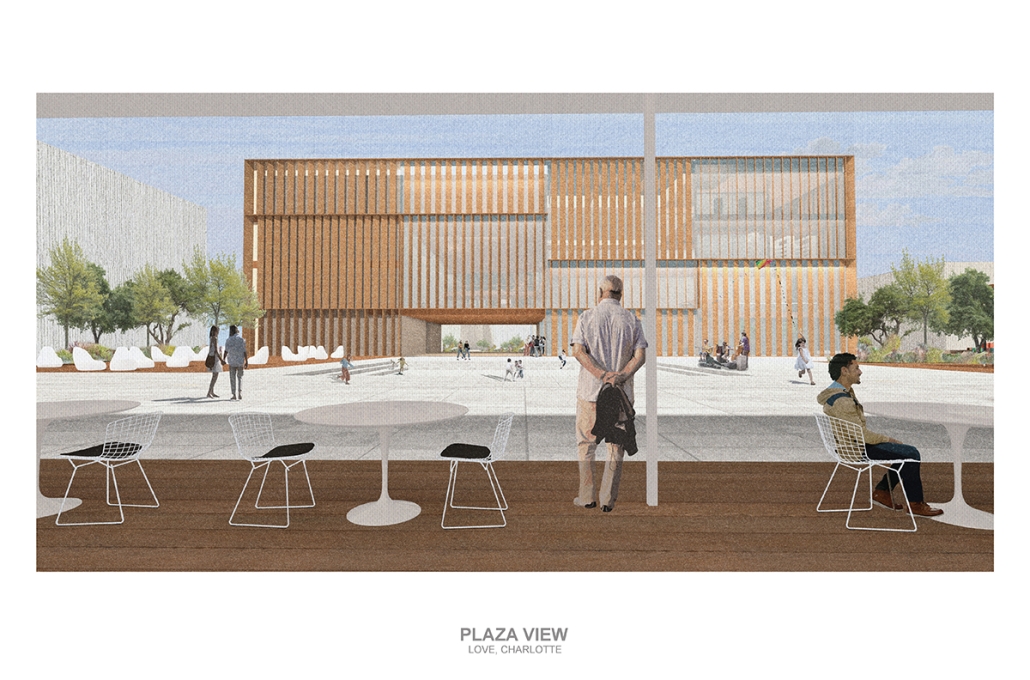
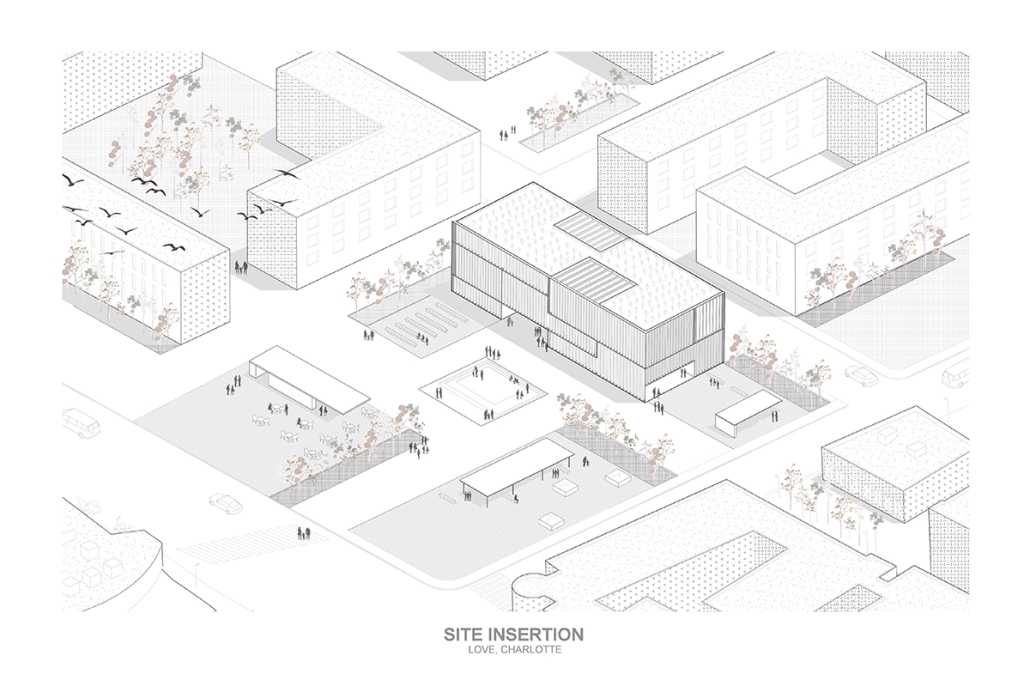
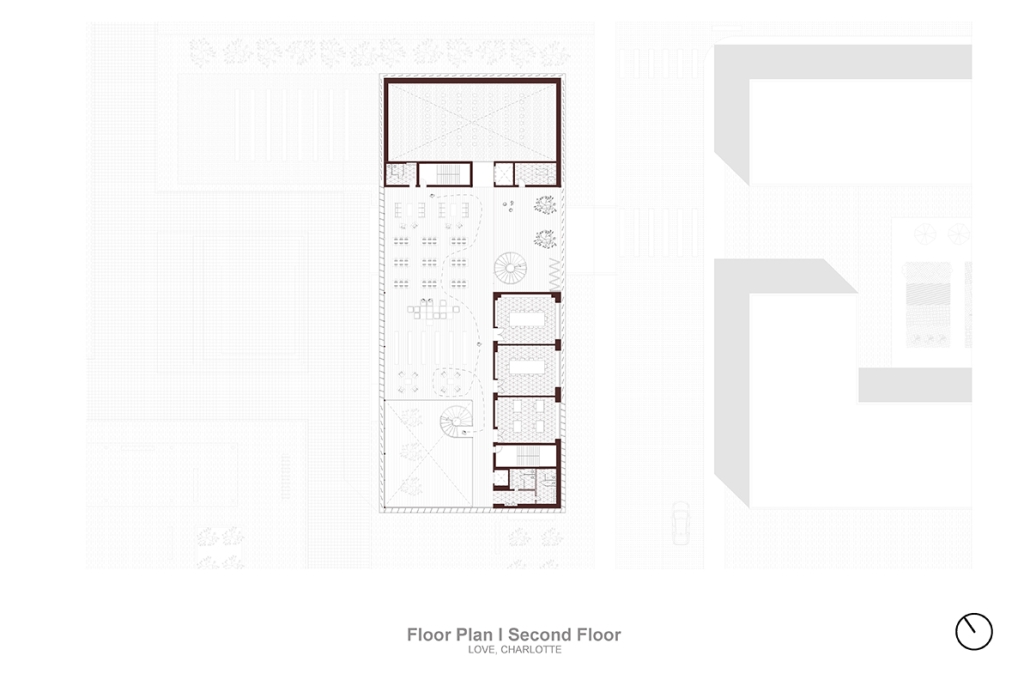
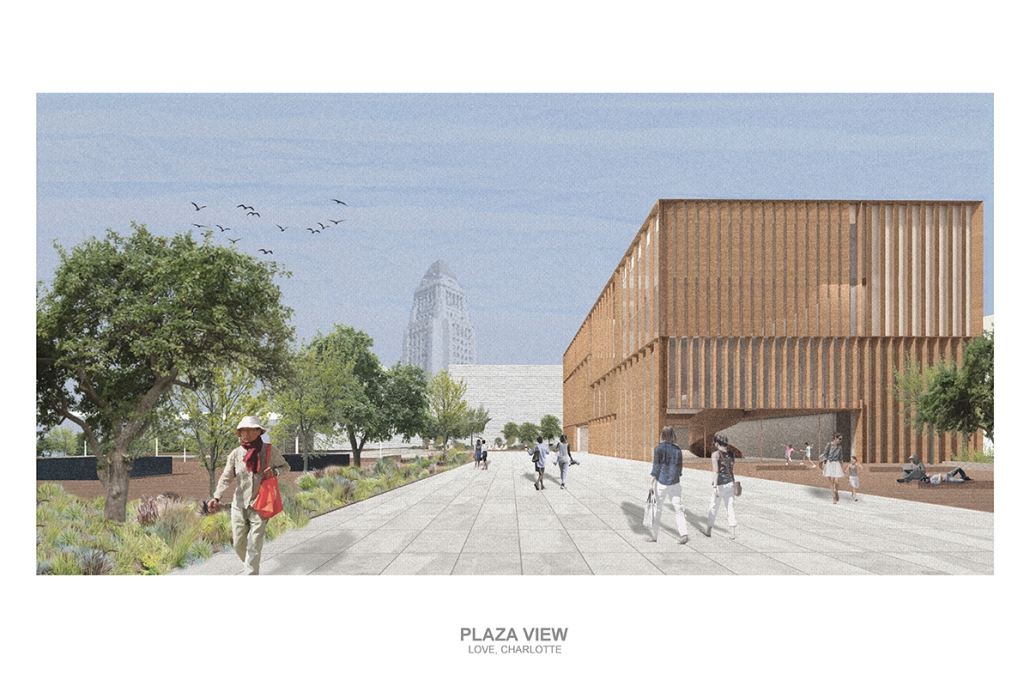
The Los Angeles Media Library began by building upon the urban design. The building began with the broken urban block typology found throughout the site, this promoted a continued focus on mobility within the project. The urban block shape was altered to accommodate one large building wrapped in louvers and two smaller pavilions hosting different program focuses on a plaza. This iteration of the broken urban block creates an inviting place for a public plaza. This plaza being at the literal intersection of the business and arts district makes it a perfect spot to hold a media center and library. This is relevant for both the site and the Greater Los Angeles.

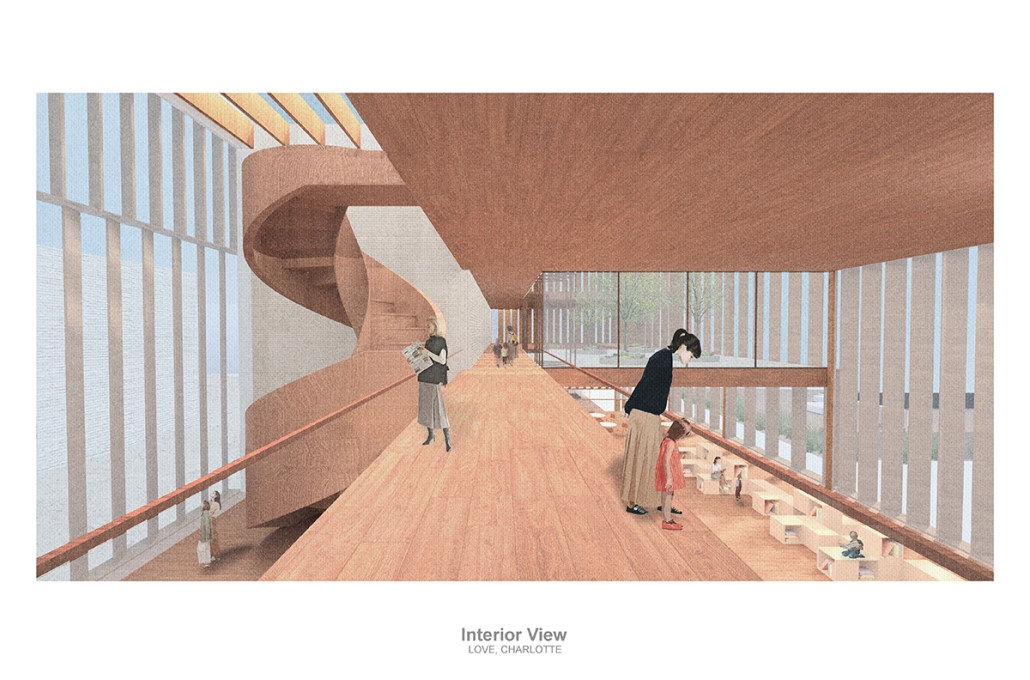
The plaza has a number of public transportation stops and is located across the street from two museums making the plaza equally important to the design. The open space has a café, reading area, pavilion, and an outdoor theater. The buildings and walkways align with the surrounding roads and buildings leading to a central sunken space at the center of the plaza. Held within the building are two zones with thickened walls holding private programs such as classrooms, dark rooms, offices, etc. This allows the rest of the building to be much more open with a number of double heights as well as spaces with an indoor-outdoor feeling. This allows the building to be fluid and connected to the plaza, blurring the line between public and private spaces.

Instagram: @rubgarrub

HALLOWED GROUND by Ramona Reinhart, M.Arch ‘23
University of North Carolina at Charlotte | Advisor: Chris Jarrett

In “Taoka Reiun and Environmental Thoughts in the Early 1900s,” Ronald Loftus addresses Reiun’s cultural critique of Western modernization and the devastating forms of pollution that followed during Japan’s Meijin state beginning in 1880. As an early environmentalist and anti-modernist, Reiun argues that these natural disasters are ultimately a result of humanity’s disconnection from the natural and spiritual world. 

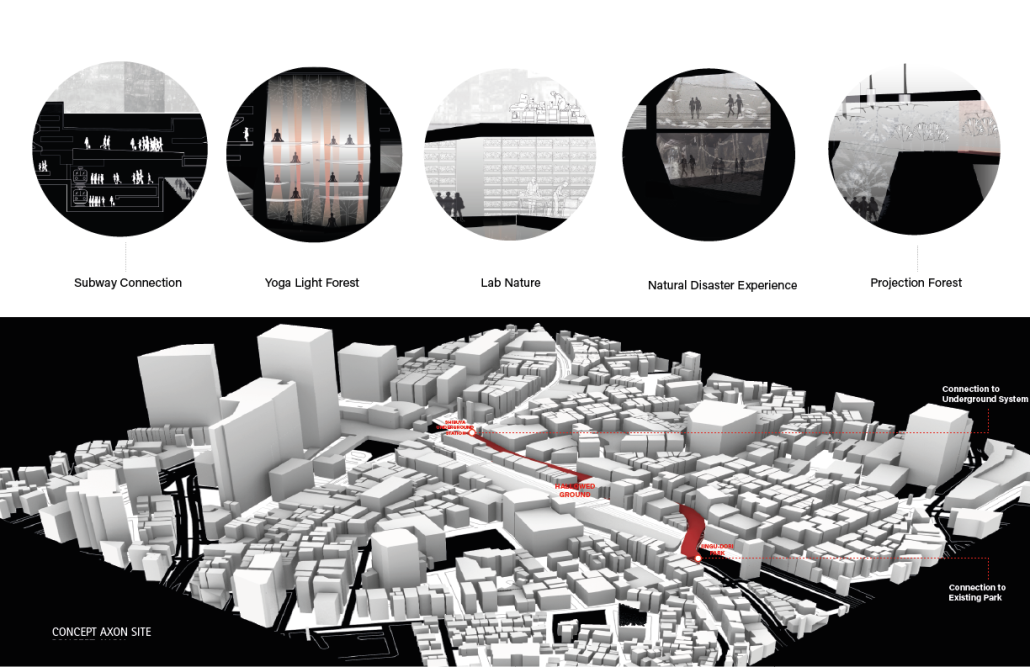
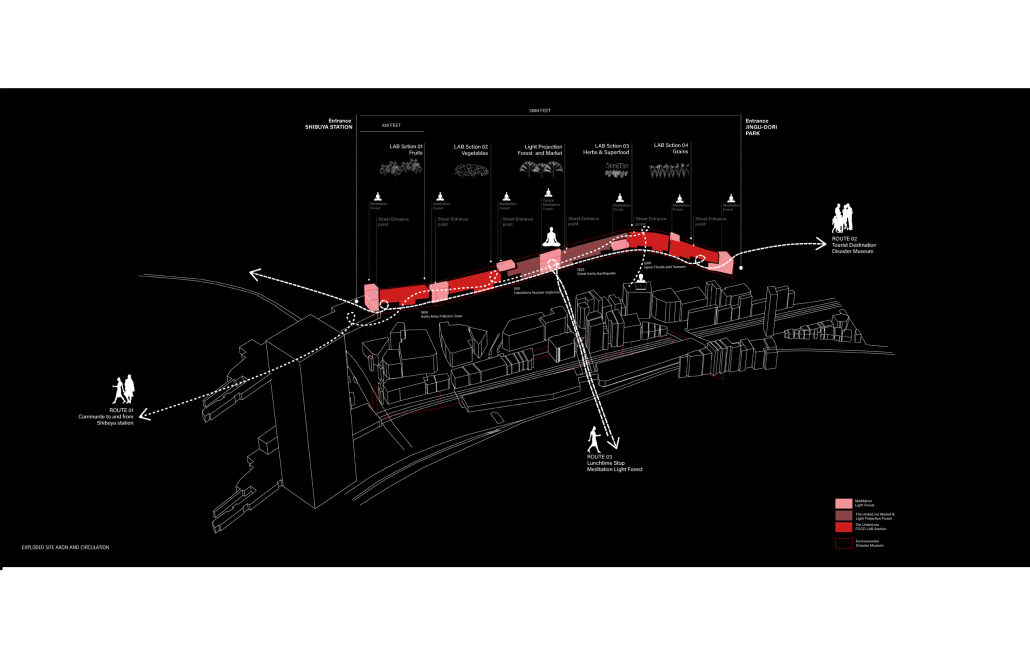
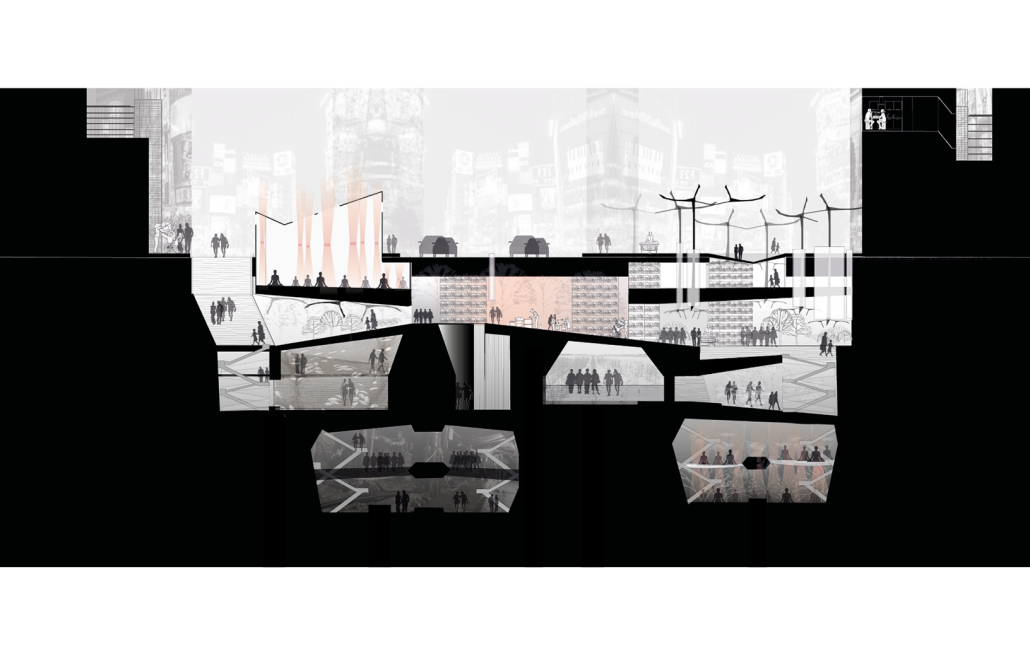
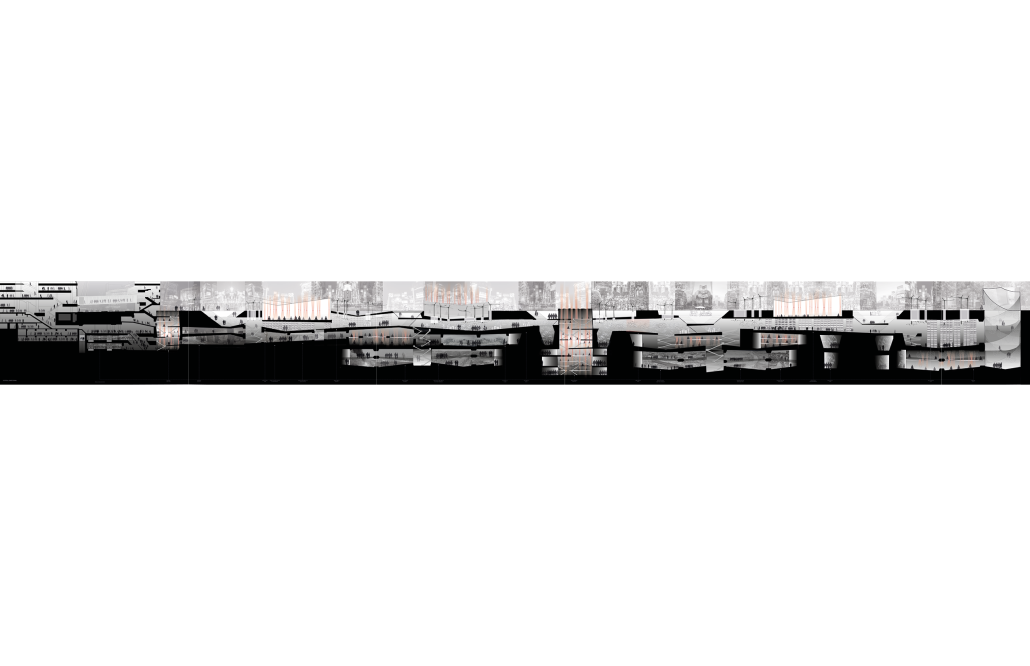
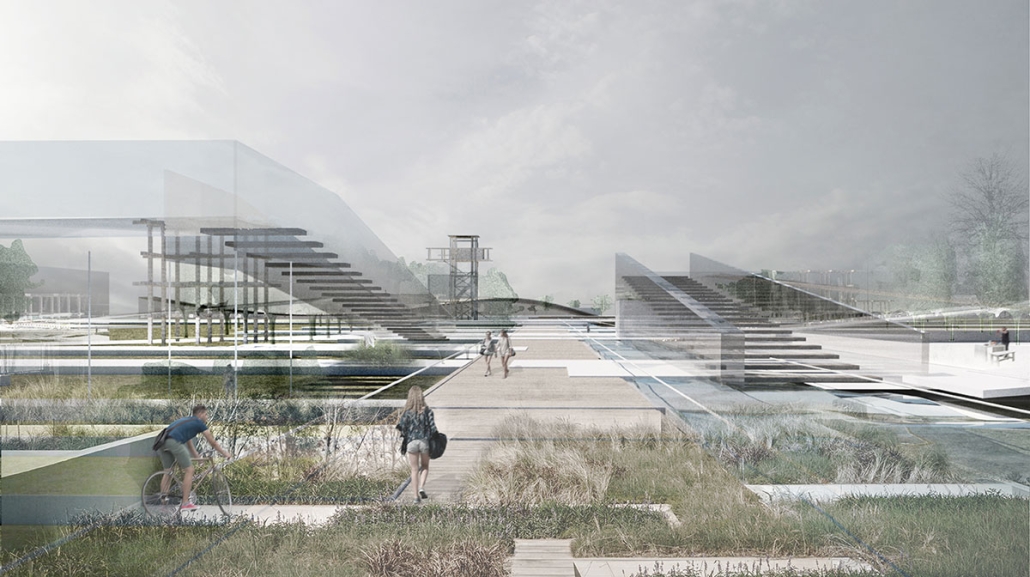
Located in Shibuya, Hallowed Ground proposes “The Under Line,” a linear futuristic public park, lab farm and market, integrated urban meditation spaces, and a museum for environmental disasters as a response to Tokyo’s culture of hyper-consumerism and capital development that “buried” many of Japan’s spiritual traditions and natural ecologies. The constant strive for economic growth resulted in large areas of impervious surfaces in the city. Surfaces that are now being hollowed out.

This project won the 2023 Best Architectural Diploma Project. As well as 2023 Excellence in Architectural Representation.

Instagram: @_ramonareinhartg

Little Megastructure by Yiman Yiman, M.Arch ‘23
UCLA Architecture and Urban Design | Advisor: Greg Lynn

“Little Megastructure” configures an inclusive community of aggregated spatial prototypes that celebrates social connection and belonging while supporting individuality. The prototypical forms can be combined and composed in a variety of ways to create a wide range of spaces. Clusters of parks, plazas, courtyards, and atriums in between modules throughout the megastructure foster a sense of community and belonging. With a clear hierarchy of spaces that are designed for different purposes and activities, having all the components of a city creates a sense of urbanism.

Park! Park! by Motomi Matsubara ‘23
UCLA Architecture and Urban Design | Advisor: Greg Lynn

“Park! Park!” offers a set of housing towers, their shapes, and scales informed by the interplay between the behavior of residents inside and automobile traffic outside. One of the towers is taller and leaner; another more lateral and rectangular. Here, fillets perform not only as an intimate icon, each interacting softly with adjacent housing towers, but also as mediators of the different scales of motions between two different physical bodies–people and cars.

Instagram: @m2c_works

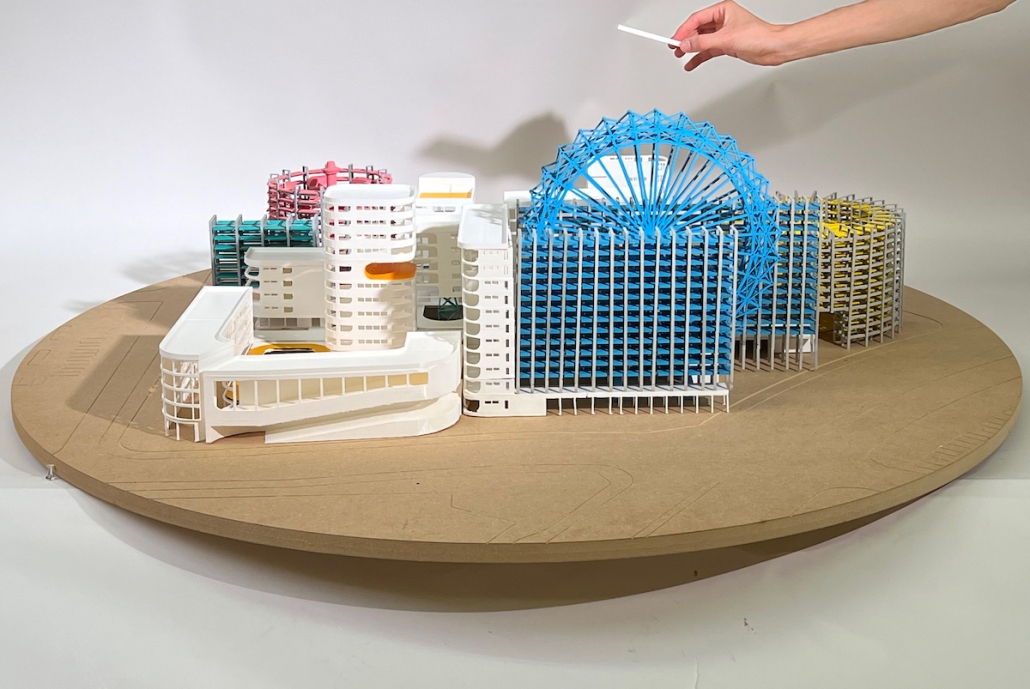
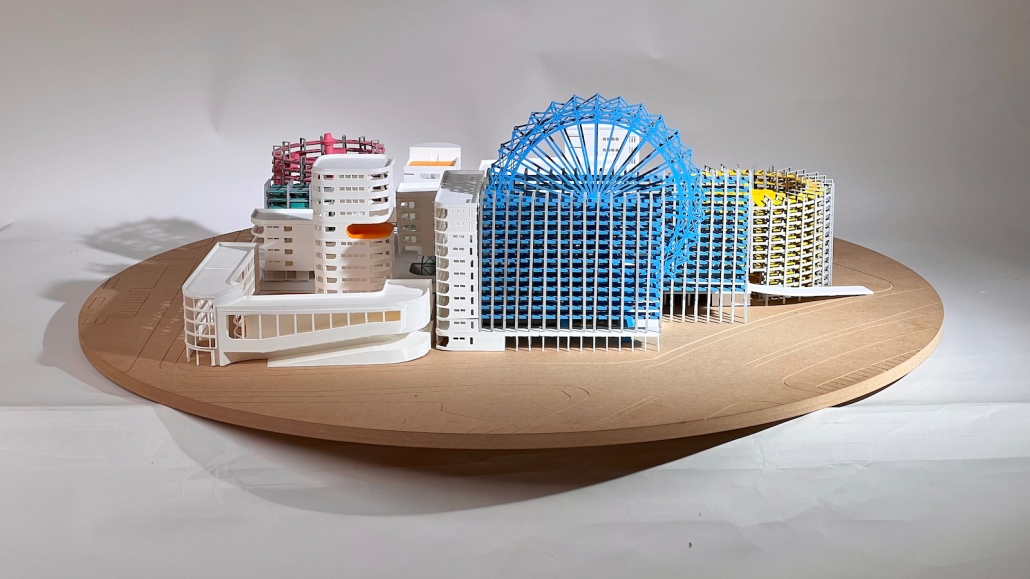
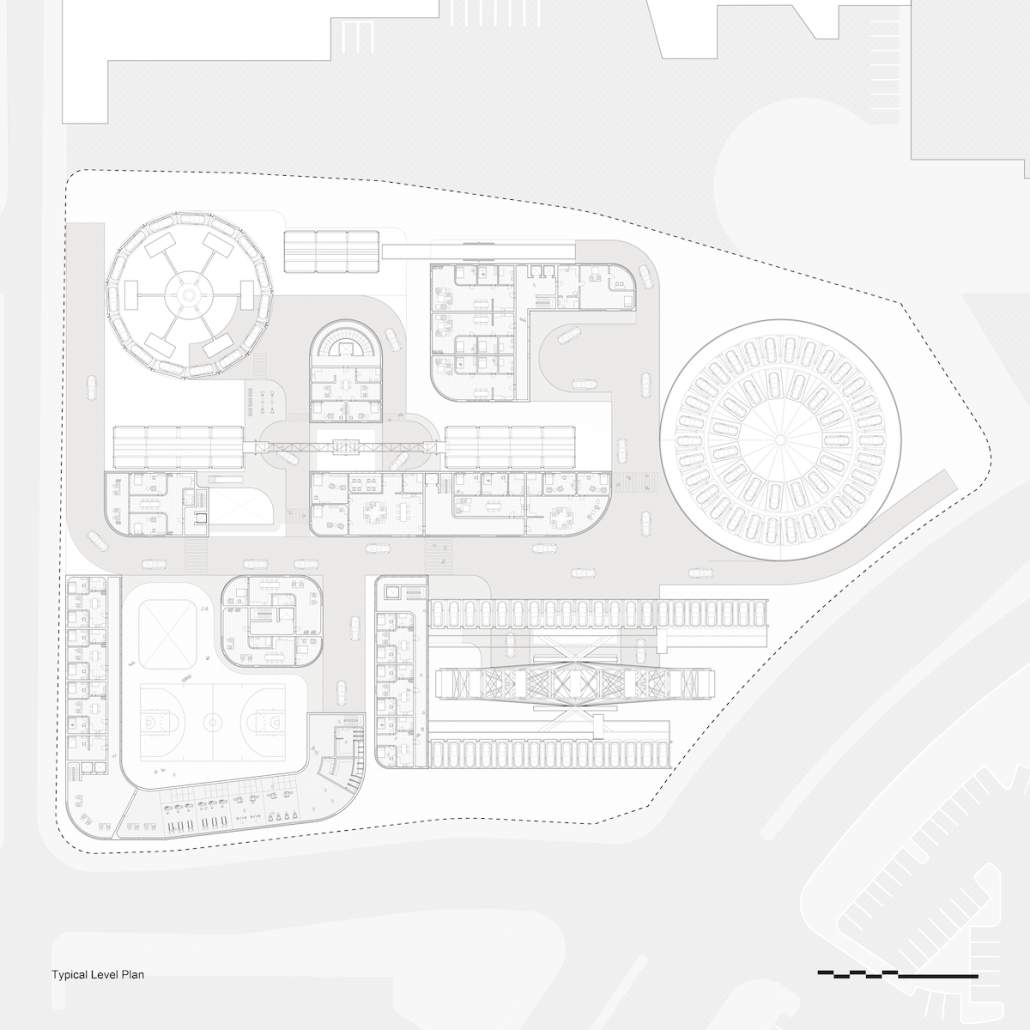
Undefined Parking by Katie Yuan, M.Arch ‘23
University of Southern California | Advisor: Yaohua Wang

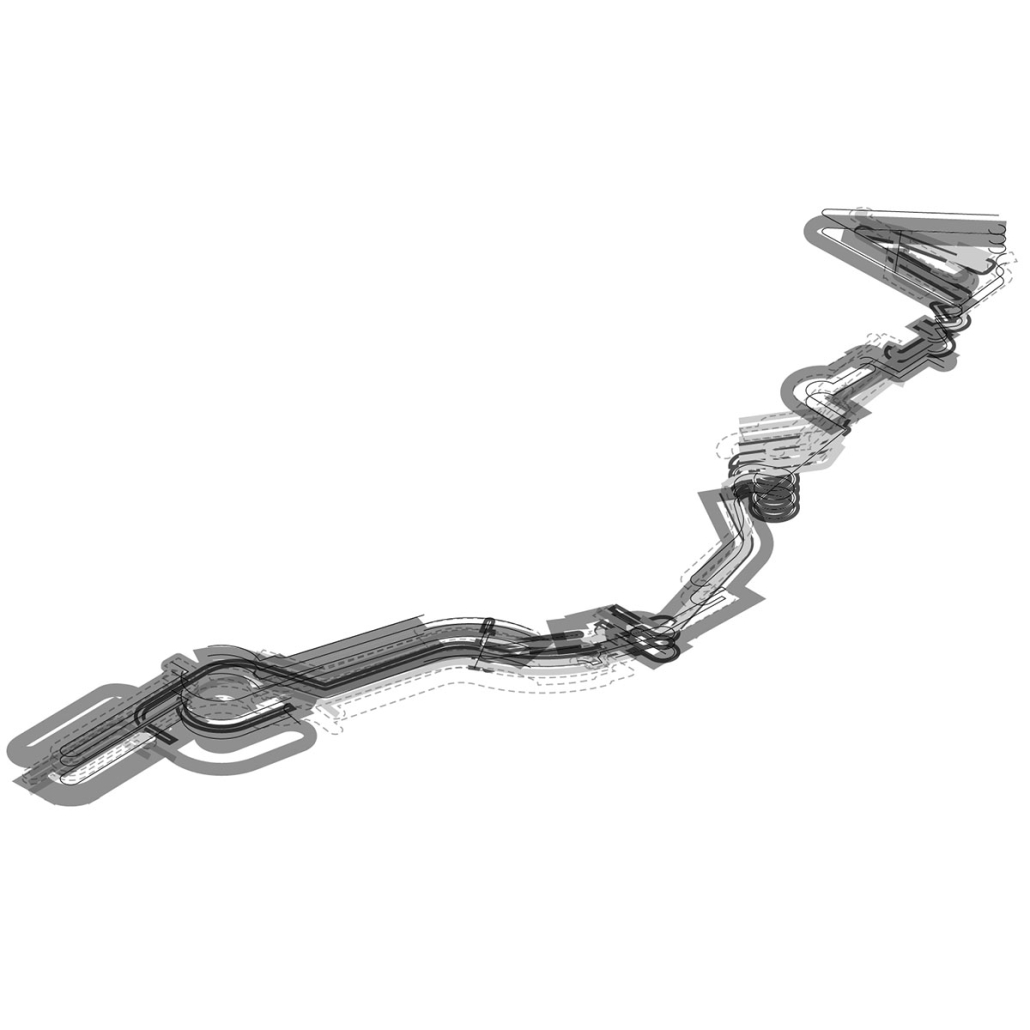
The lines drawn on maps to define the borders of countries and territories may appear solid and definitive at a glance. However, when magnified and viewed at a larger scale, these lines are composed of segments, curves, and dashes that intersect, connect, and overlap. Lines are one-dimensional, but when given 3-dimensional qualities, they become less concrete and defined. In other words, when lines are given different widths and heights, they are no longer elements that separate or confine objects, but rather they embody multiple conditions that can become spaces, tectonics, connections, and circulations.  

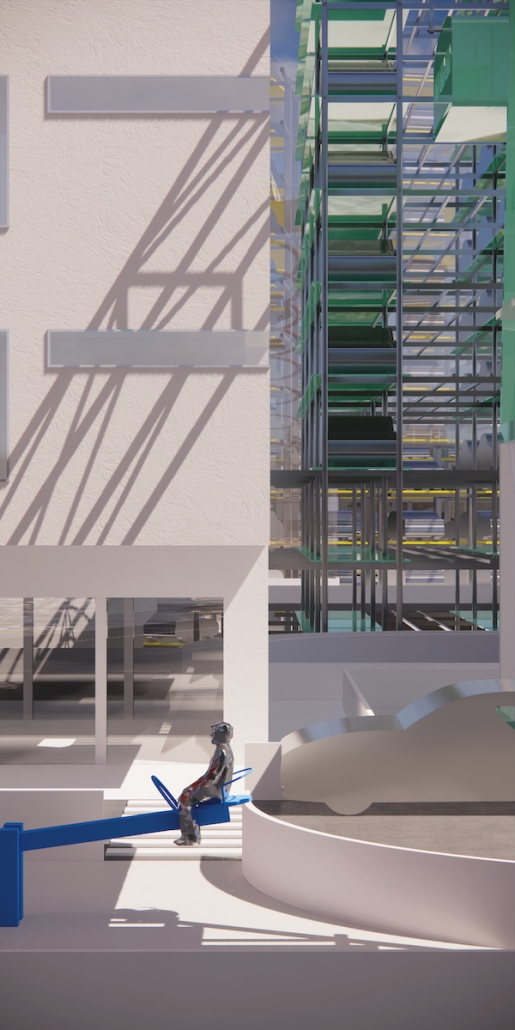
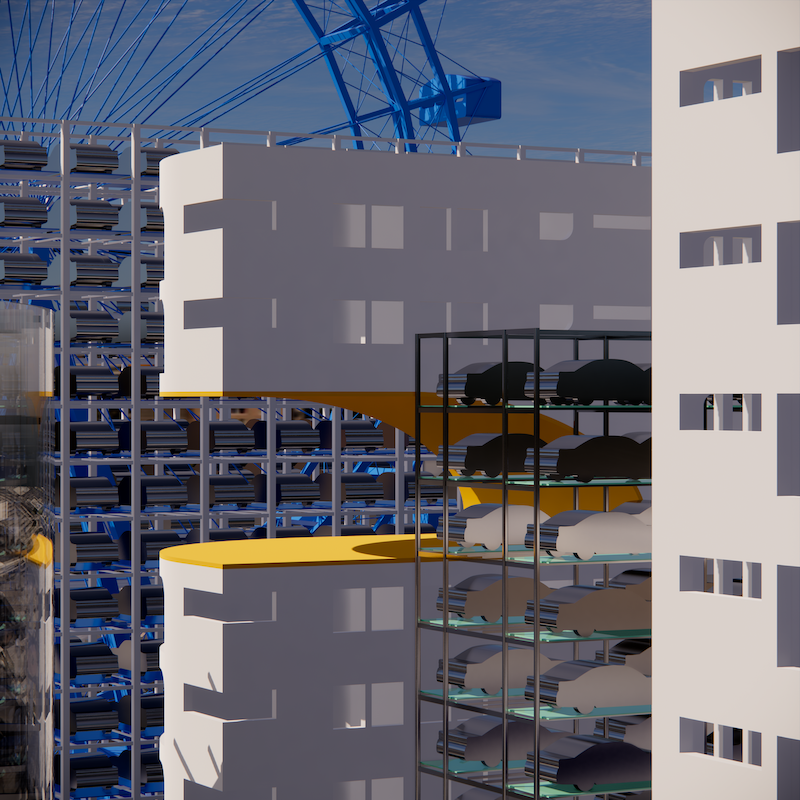
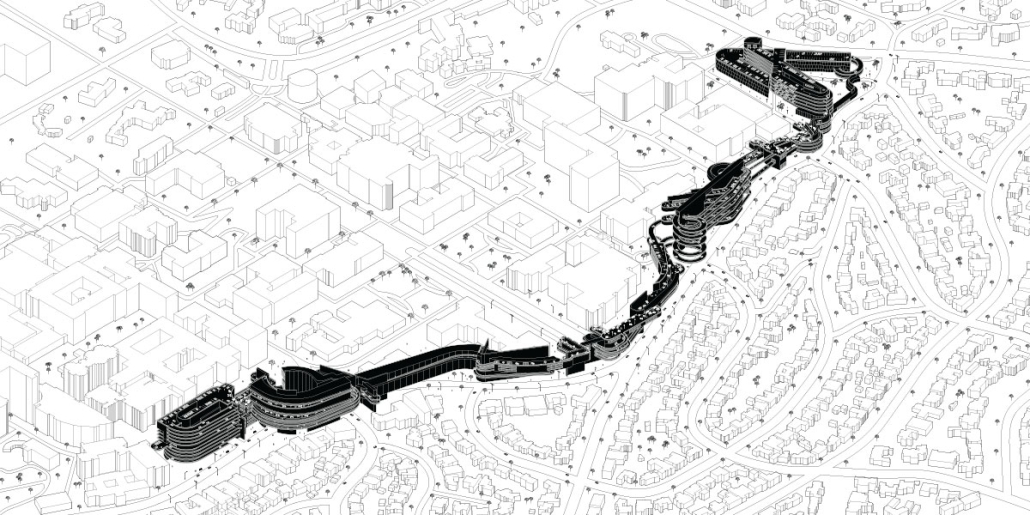
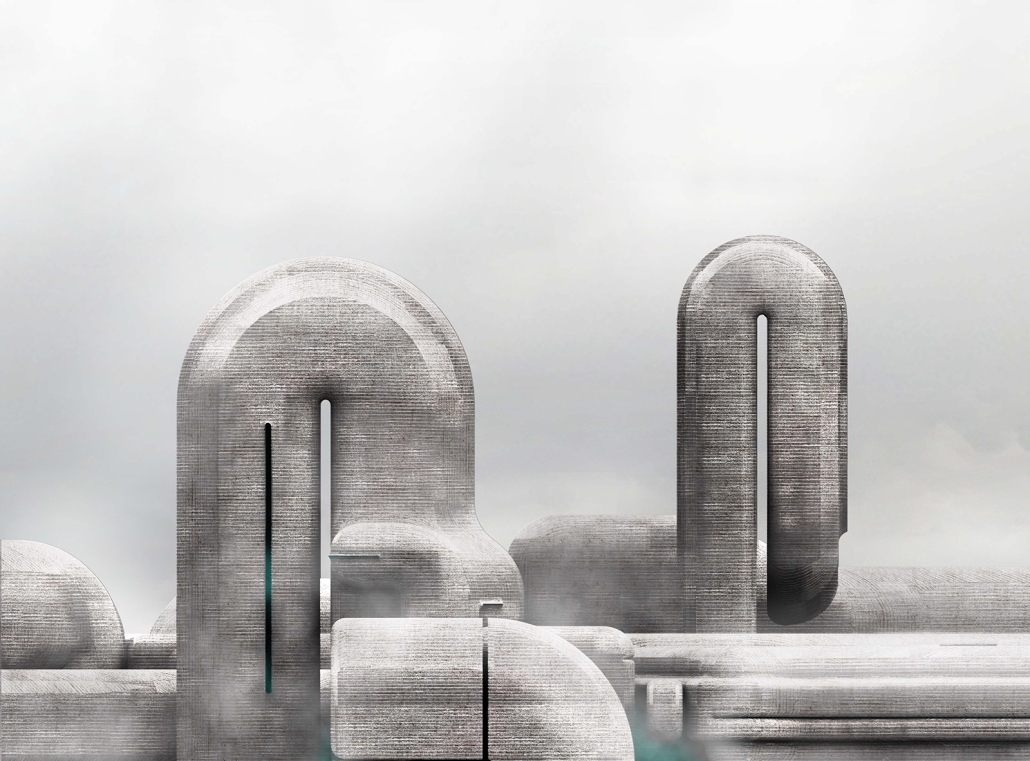
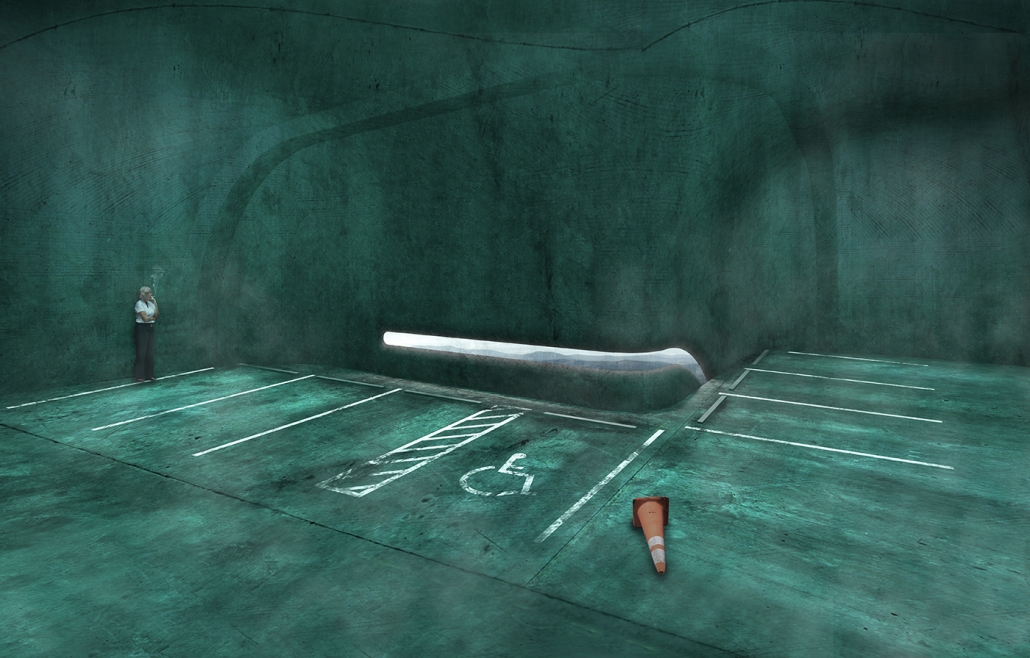
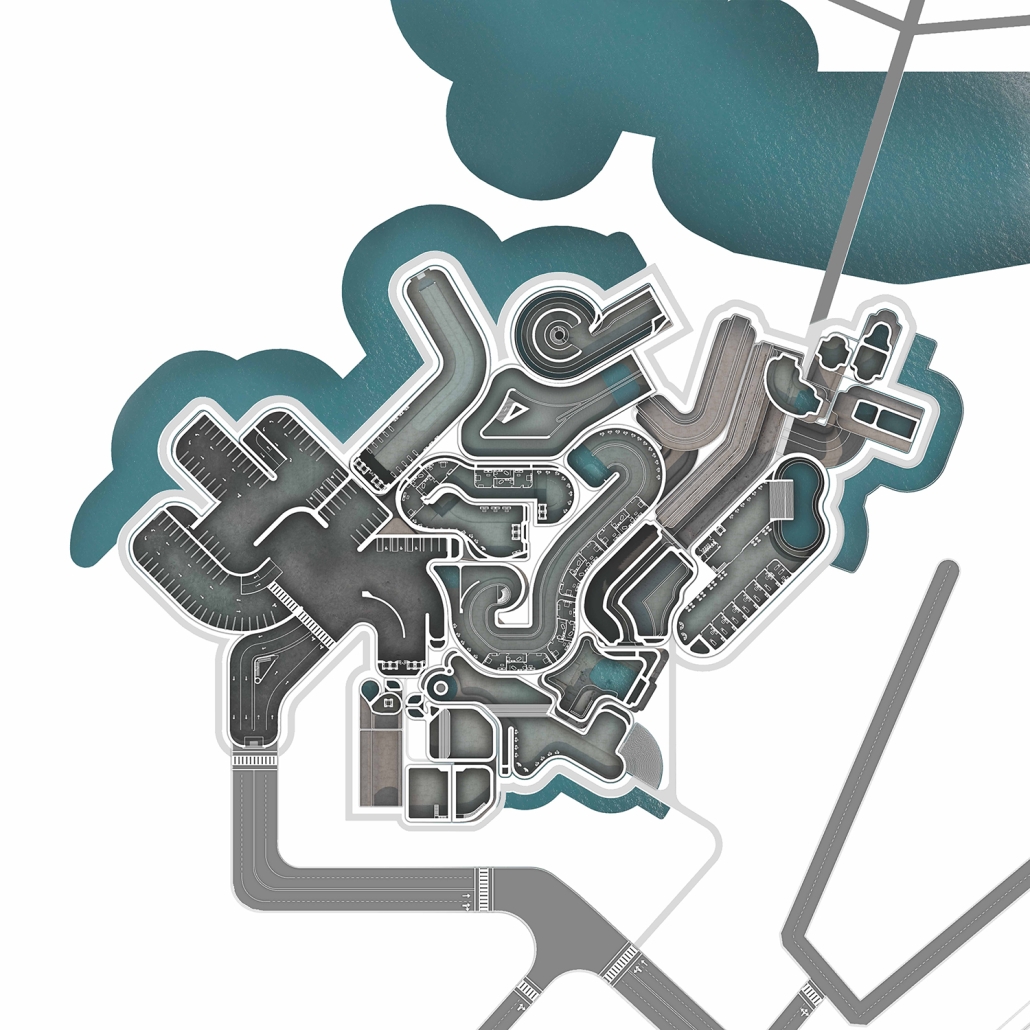
Formed through a series of intersecting, shifting, and offsetting lines, Undefined Parking appears as an urban boundary that separates the UCLA campus and residential area at an urban scale. In this condition, the boundary becomes a partition wall. At an architectural scale, the parking structure becomes the destination for both entering and exiting the site. Yet simultaneously, the structure’s various programs (offices, classrooms, green space, etc.) blur the distinction between the university campus and the urban site. In this condition, the boundary becomes a destination. At a model scale, the volumes, ramps, walls, and planes are interlocked and joined together through the distinct tectonic elements of each individual piece. In this condition, the boundary becomes a connection. 

Perhaps, lines or boundaries exist in multiple conditions and cannot be defined…

This project was awarded the USC Master of Architecture Distinction in Directed Design Research.

Instagram: @katie0712yl, @yaohua_wwww

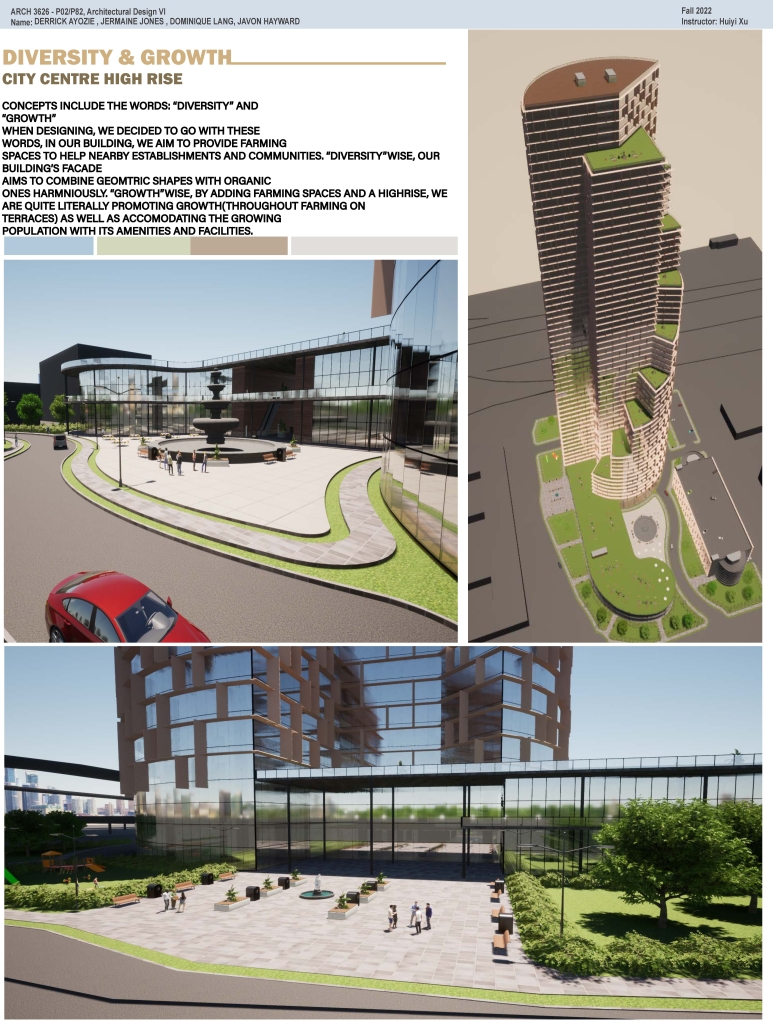
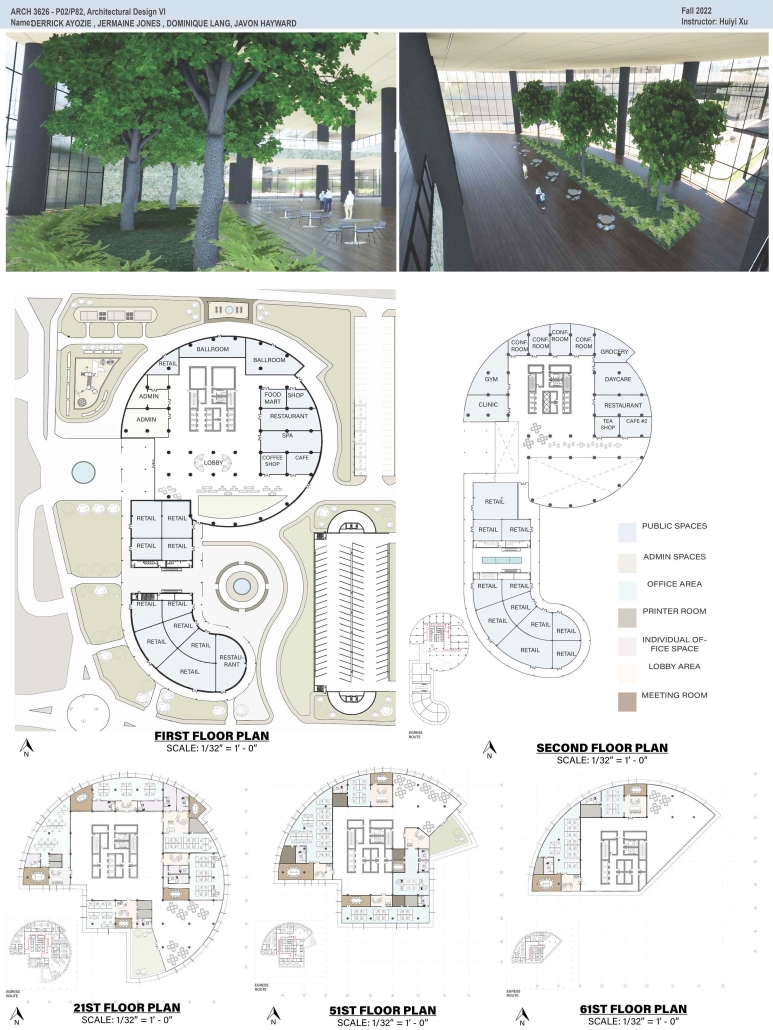
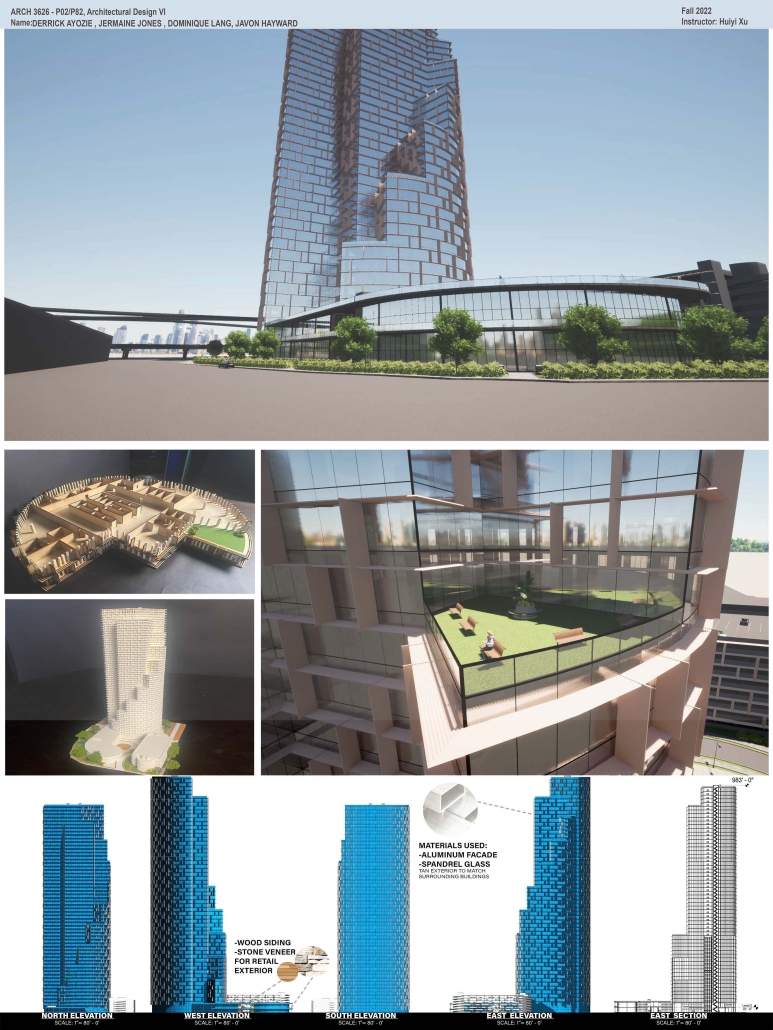
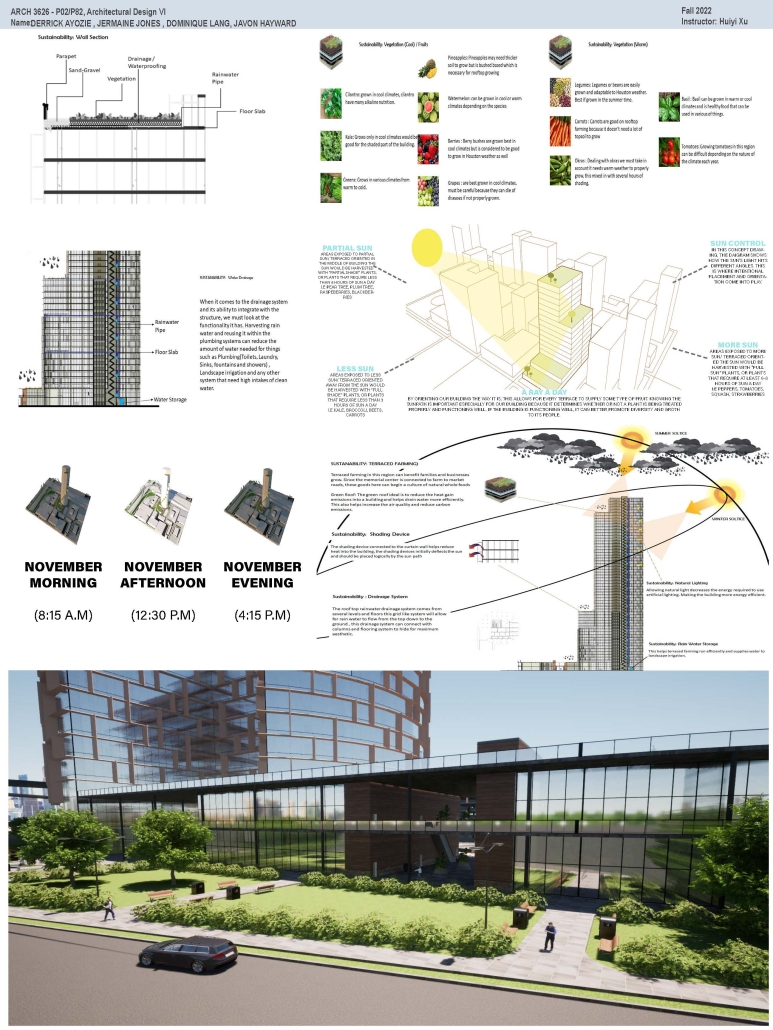
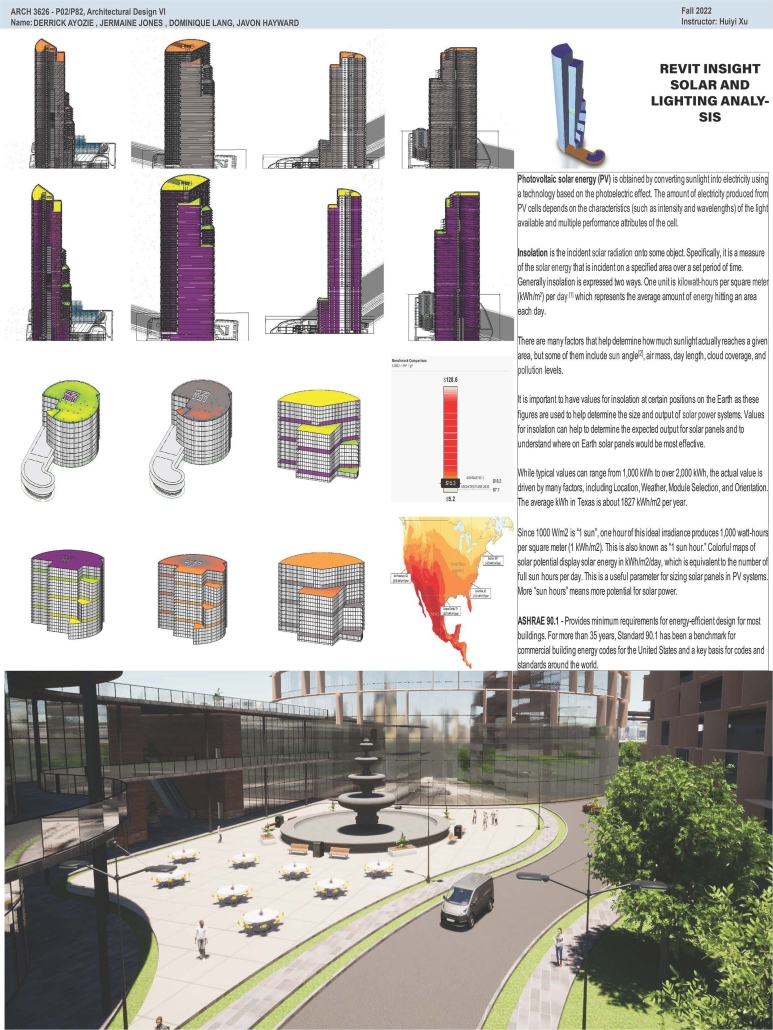
High-Rise Building by Jermaine Jones, Dominique Lang, Javon Hayward & Derrick Ayozie, B.Arch ‘23
Prairie View A&M University | Advisor: Huiyi Xu

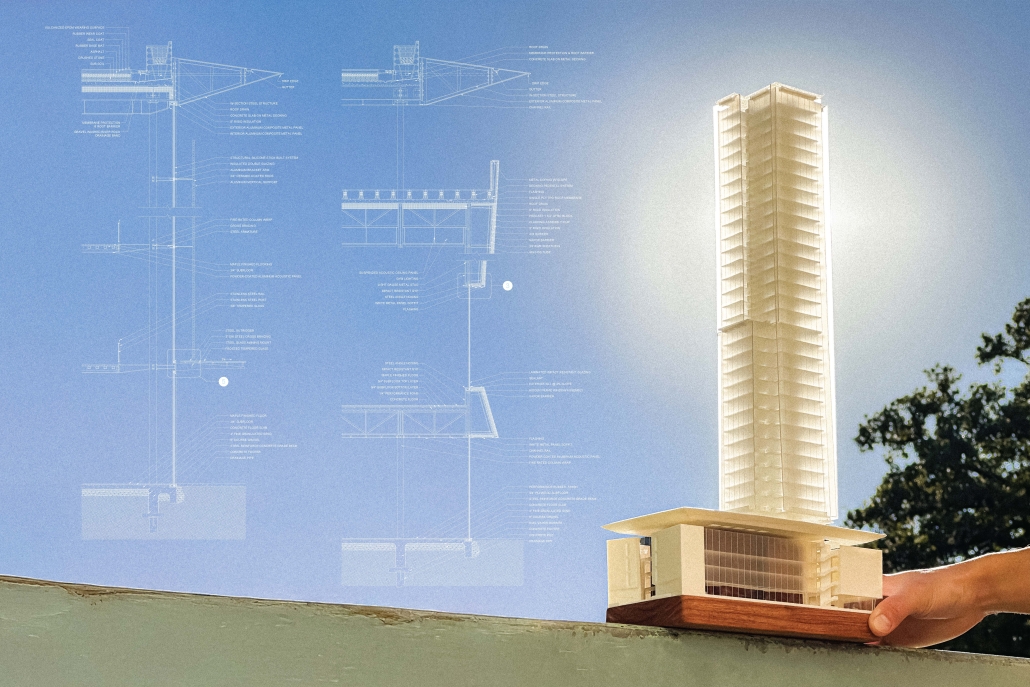
According to the U.S. Census Bureau’s population estimates from 2021, there were 69,094 new residents added to the Greater Houston area. Some developers have purchased land in the Houston City Centre area, on the corner of I-10 Hwy and Beltway 8 in the City Centre, and plan to build an iconic high-rise building. This project is a mixed-use office building. The location of the project is in the Memorial City district of Houston, Texas. City Centre is a 50-acre development with 2.1 million square feet of gross floor space, including 400,000 square feet of retail, restaurants, and entertainment, a 149,000 square foot fitness facility, 425,000 square feet of office space, a variety of rental, and non-rental residential developments: a Microsoft office, Memorial Hermann Hospital, Memorial City Mall, Houston of City College, and diversified restaurants such as Taste of Texas, Pappadeaux Seafood Kitchen, and other retailers are all around it. 

This project will bring more people to this area to contribute to the local business and land value. The potential tenants of the high-end office building with commercial spaces and a parking garage will be the headquarters offices, banks, medical offices, high education offices, etc.

DIGNITY by Macinnis Kraus, M.Arch ‘23
The University of Texas at Austin | Advisor: Nichole Wiedemann

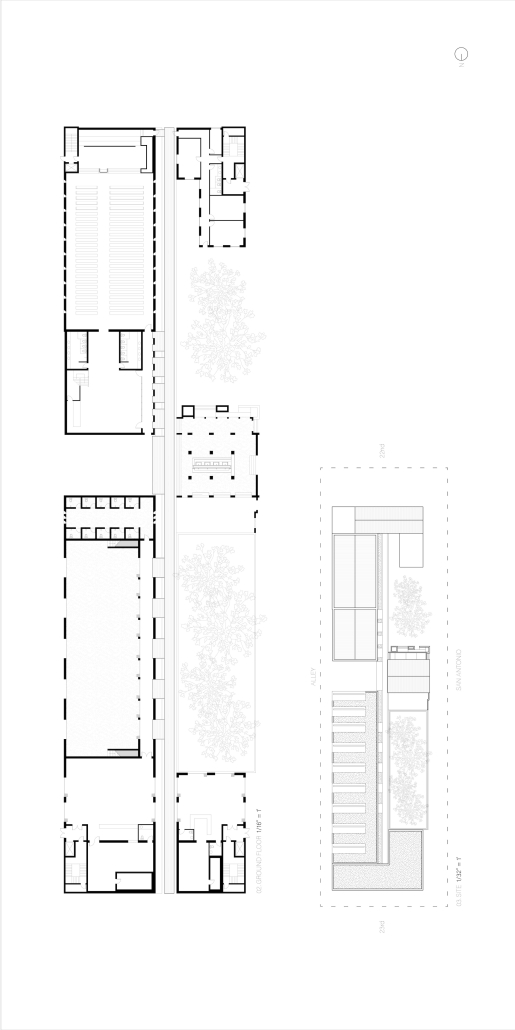
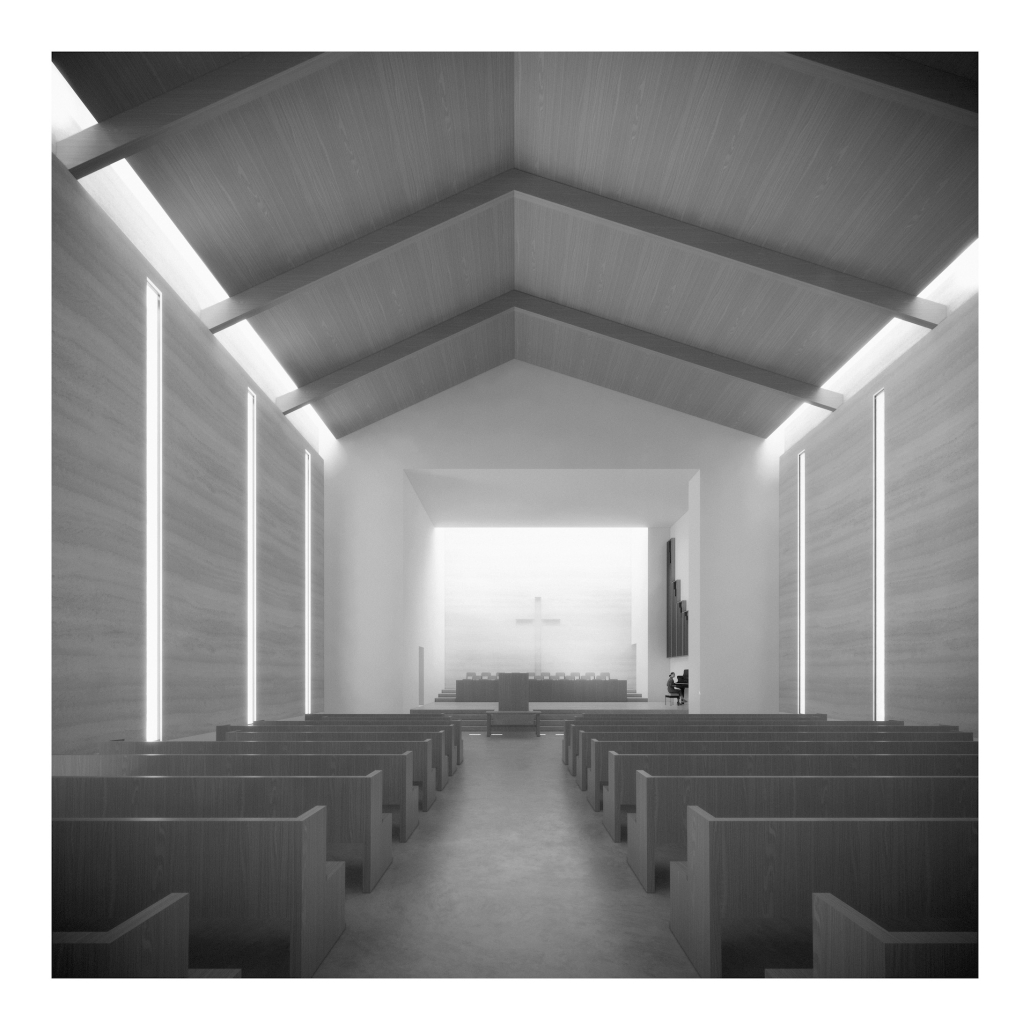
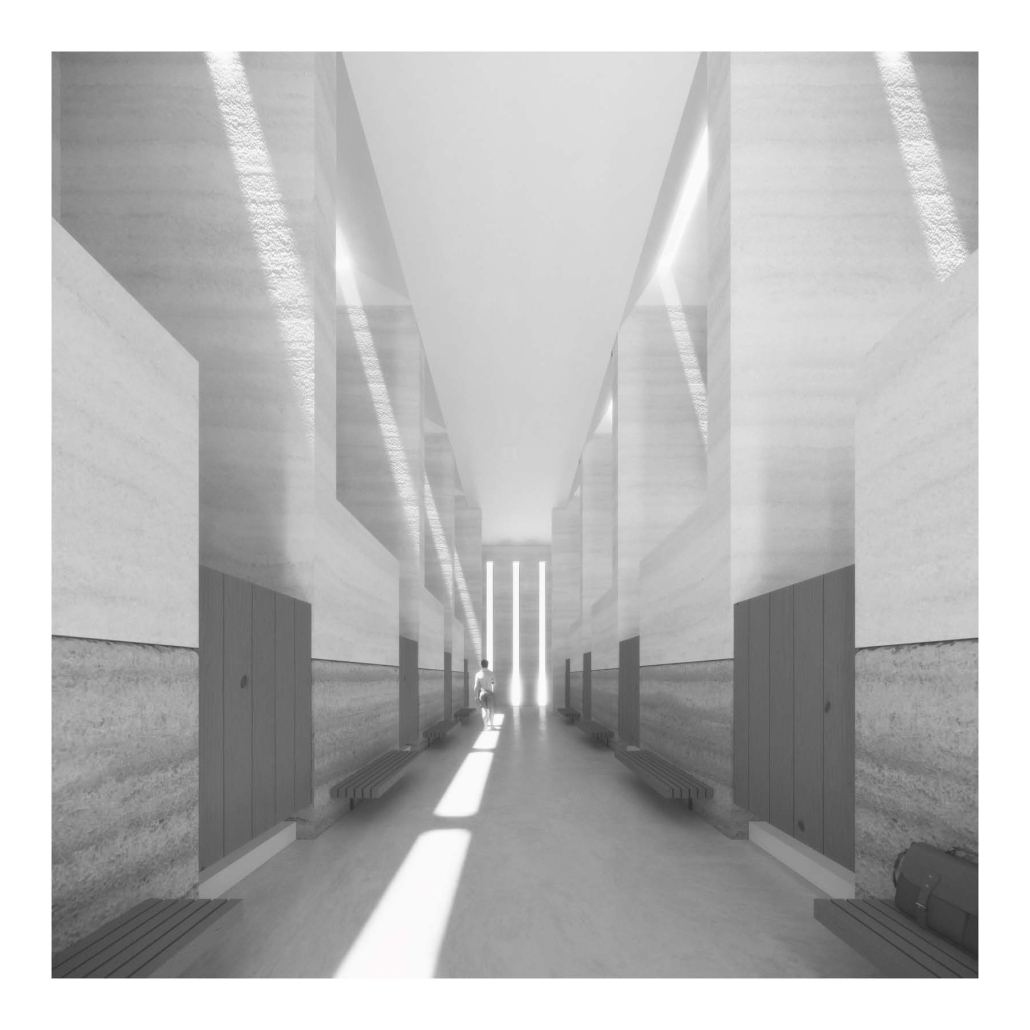
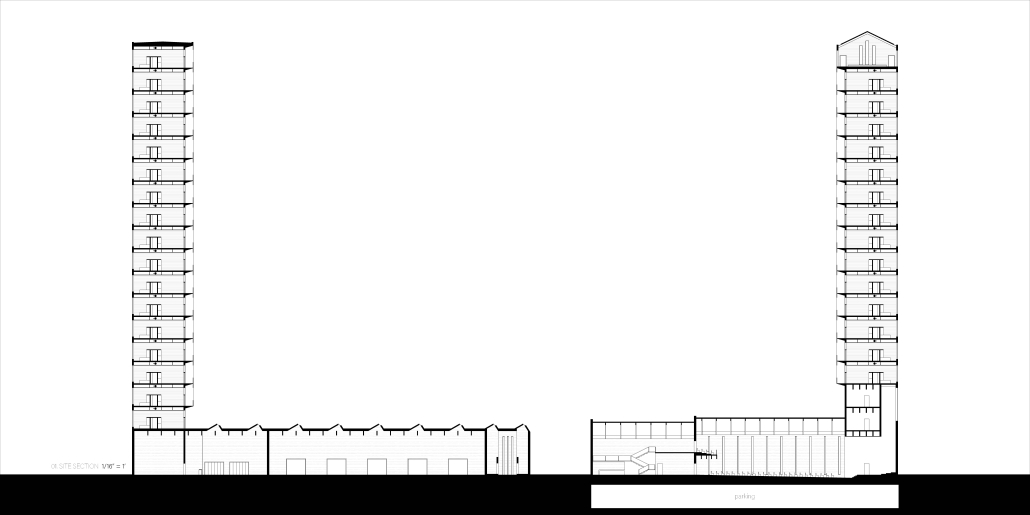
Working with a local church in West Campus and inspired by the student interest in “serving” over “services,” the design is for a re-combination of worship, living, and service. Two transitional housing towers provide residences for formerly itinerate populations and create bookends to the public landscape. The individuals may work here –apprenticing in the artisan maker space or running the restaurant– providing some financial stability for the immediate and the future. In addition, public showers, laundry, and bathroom facilities support the broader community. Embracing the pragmatic and poetic potential of water, light, and body (human-scale moments), the project seeks to provide dignity for all user groups.

This project was nominated for Design Excellence at the UT School of Architecture.

Instagram: @nicholewiedemann

Intertwining blocks in Los Angeles by Joey A. Tomshe, B.Arch ‘23
Tulane University | Advisor: Ruben Garcia-Rubio

Intertwining blocks is proposed to act as an agricultural information and research center for the previously designed master plan, and, in the future, there would be more of these spread out around LA which are connected. It will feature many new innovations in the agriculture field with the goal of informing the public about the advanced research being performed in LA today.

The initial concept for this project was to intertwine four blocks, creating an indoor street that acts as a social condensing space, relating to the distinct street types created in the master plan, with the social condensing space containing lighter elements than the heavier blocks. The project features six types of farms, a mediateque, and research stations for botanists. The form of the social condenser space comes from trees in plan view, then those same circles are introduced in sections to influence the roof. To combat the heat from glass roofs, the proposal will be installed with an automated computer system that processes and manages a database to optimize comfort and energy efficiency. Along the face of the roof structure is a series of operable louvers that can open and close, which allows for natural ventilation as well as sun deflection. Similarly, on the roof the northern faces of the arches can pivot open, allowing for full circulation. Furthermore, the roof allows for rain collection with built-in gutters and features solar panels on the north two blocks. Due to the repetition of louvers on the roof, a facade of varying size stone panels is introduced to disrupt this rhythm and add variation. Some panels were removed for windows and others, on the south facade, were turned into farming panels that interact with the farm in front.

Instagram: @rubgarrub

2023 Study Architecture Student Showcase - Part XIII

Welcome to the latest installment of the Study Architecture Student Showcase! In Part XIII, we look at student work that explores identity as a central theme in their designs. From using mapping and tracing to respond to the disconnection within diverse identities in urban cities to using local architectural structures to create a sense of belonging, these projects intentionally address connecting communities and cultures.

Constructing New Narratives to Reveal Diverse Identities in Richmond, BC by Rita Wang, MArch ‘23
Dalhousie University, School of Architecture | Advisors: Aaron Gensler and Erin Wright

With the capitalist expansion of urban cities today, different physical and social forces exist, collaborate, and challenge each other on the land we call home. In Richmond, British Columbia, Canada, where multi-ideologies and diverse ethnicities live, work, play, and grow together, different layers of physical and social landscape encapsulate the disjuncture of people and land, shifting identity through time. Using mapping and tracing as lenses to reveal the city’s diverse layers and living experiences, this thesis aims to uncover the landscape, urban form, individual identity, and collective identity layers embedded in the city’s formality and provide architectural interventions to respond to the disconnection between them. The design proposal implements landscape and architecture as a mediator to reconnect the dispersed landscape and identity in Richmond and construct new narratives to respond to the current identity and spirit of the people and the land.

Multiple forces exist and collaborate in modern cities. These forces can make cities decentralized and scattered, causing social-political disconnection problems such as rural-urban separation and a shift in people’s identities. The land’s topography and morphology control cities in a structural, formation, top-down, and powerful way. In comparison, social forces like identity and collective form the city in a bottom-up experiential method. Richmond is a city where multiple forces are visible and reciprocal. Diverse forces complicate the city when the connections between each layer deviate through time. Using mapping and layering, this research finds the connections between layers of Richmond. It prepares for the unfolding of architectural interventions and activities by revealing, spreading, and responding to the formality and informality of the city. By analyzing the historical formation and the current physical and social separation of the city’s fabric, this thesis develops a method to activate the city. It constructs a new narrative that imposes the essence of the old, brings back the nature of the land, and acknowledges the diverse and inclusive collectives. By applying interventional structures, the design cultivates an urban landscape and architecture to enhance the collective memory, creating placeness in urban and rural areas. It also acts as a test field to extend the definition of community.

This project was awarded the Royal Architectural Institute of Canada Medal.

Acquainted Horizon by Brianda Valerio, B.Arch ‘23
Rensselaer Polytechnic Institute School of Architecture | Advisors: Ryosuke Imaeda, Faculty Advisor and Rhett Russo, Final Project Assessment Committee member.

“Why do we only understand horizons as a limit?” In landscape, horizons are treated as a datum that separates the sky and ground. Architecturally, likewise, horizons tend to be a flat surface, whether a slab or wall, that separates a mass into rooms. This project explores alternative horizons as a generator of new spatial qualities.

The project is encompassed by three ideological horizons. One of them is “Phenomenological Horizon”, which Husserl describes as an experience that one can only anticipate when changing perspectives; therefore, it is not real. “Horizon of Self” by Robert Corrington is that which is created unintendedly; hence, mirroring one’s identity.
The last one, developed after studying Gregory Crewdson’s work, is “Acquainted Horizon”. It intentionally forms unclear relationships between participants, as if they are sharing a bench with a stranger. The first horizon questions whether the objects we perceive are real or not, while the second one doubts our existence. The last one grasps the real by implementing irresolvable relationships. In other words, do objects exist? Do we exist? We can only know we all exist by finding strange moments. The program ‘spa’ offers such moments to recognize ourselves.

“I sit by the water, starting to feel that I came to the wrong place. But somehow it feels fine to stay here.”
“The water seems calm and clear, reflections everywhere. This pool is uncertainly deep.”
“People see me from the water, I know they do. The water here is lukewarm”
“I walk between the buildings. They are so close that I can feel their temperatures.”
“I see outside through the slits, just sometimes. Maybe, guiding me to somewhere important.”
“I am hidden in the mist. No one can see me now. I see myself clearly.”
“Diving into the water. I see the sky next to me. The landscape is upside down.”

The project is not to offer mere representations of the theories, but to explore the events that occur between them, allowing us to remain calm, alone, and unknown. In the setting, the feeling of being ‘acquainted’ quietly enfolds us and slowly lets us fade into space.

This project won the Harriet R. Peck Prize Winner, RPI SoA, (the best solution in a Thesis Project in Architecture Design).

Instagram: @briandagissell, @ryoimaeda

A Musical Venue Composing a Symphony of Arts in Architecture by Lucciana Dib, M. Arch ‘23
Holy Spirit University of Kaslik | Advisor: Dr. Victor Takchi

The conception of music is based on cross-cultural beliefs providing an opportunity for people from all social and cultural backgrounds to express themselves through expressive art.

The site‘s characteristics, located in Ras Beirut, are based on five main focal points: the American University of Beirut (educational node), the Riviera Hotel (an iconic and historic/touristic node), Corniche Beirut (Beirut’s thriving linear public space – communal/ social node), and Bliss and Makhoul streets, reflecting the community’s motion and creative spirit while conveying musical significance through its vibrant nightlife.

Thus, the site encounters a dynamic and vibrant context incorporating significant historical landmarks, cultural and educational establishments, as well as socially active commercial spaces reflecting the city’s culture, its identity, and its motion.

Hence, the chosen site represents a musical and cultural node lying between two poles of attraction; a significant educational pole and a golden, historical, and touristic gem.

The general concept is based on reflecting the community’s cultural identity and its creative spirit through a project that conveys musical potential, aiming at accentuating the relationship between the city, the community, and the Mediterranean Sea.

The concept is based on the creation of a musical continuity from Beirut’s cultural and musical street, through a pedestrian axis directed towards Corniche Beirut; the creation of an urban corridor.
The incorporation of an urban corridor causes a significant “plot split” into two entities; one of which is oriented toward the American University of Beirut, the first pole of attraction, whereas the other is oriented towards the Riviera Hotel, the second pole of attraction. Moreover, the installation of an elevated platform at the ground floor level in connection with Corniche Beirut creates an open public plaza with musical potential, enhancing cultural and communal engagement.

The theater’s sloped platform is designed and intended to actively engage urban dwellers, elevating them out of the city on an unprecedented civic platform (connection cityscape – community – sea), whereas the opposing rooftop serves as a mere therapeutic sightseeing area oriented towards the city on one extremity and to the Riviera Hotel and the Mediterranean Sea on its opposing extremity.

Instagram:  @luccianadib, @usekschoolofarchitecture

Unveiling Lost Identities by Qiyang Xu, B.Arch ‘23
Academy of Art University | Advisors: Philip Ra, AIA, Ethen Wood, and Mini Chu

During China’s rapid urbanization, millions of rural villagers migrated into cities while leaving their children behind in the villages. The separation from parents causes many left-behind children to display characteristics that include loneliness, misconduct, and no confidence.

In Zhaoxing village, with the development of tourism, local inhabitants have returned to work in their hometowns. Although the number of left-behind children has declined in recent years, the village is faced with the lack and indifference of traditional cultural education. The sense of identity and belonging of the ethnic group has gradually declined, and the inheritance of unique ethnic culture is also fractured.

The problem of left-behind children is a policy issue, but the underlying reason is the impact of modern civilization on traditional culture, which leads to the local identities being rejected. The design aims to provide children with a warm place, help them regain their lost identities, and give them a sense of belonging to the culture through a new expression of the local architectural structure.

This project won the B.Arch Design Excellence Award.

Instagram: @aauschoolofarchitecture

Infilling the Void Blurring Defined Perceptions to Create Spaces for Undocumented Residents in Transition by Kenta Oye, B. Arch ‘23
Academy of Art University | Advisors: Philip Ra, AIA and Mini Chu

Urban planning in San Francisco has confined ethnic neighborhoods into inhuman urban spaces. Being fourth-generation Japanese-Americans, my ancestors used to inhabit and thrive in the urban environment. But, over the course of several generations, the Japanese community has been displaced and pushed out into the rural areas along the West Coast, mostly farming as a main source of income. San Francisco was the first city the Japanese community migrated to, and at that time, there was a small portion of neighborhoods that allowed this community to find their place in a new country. From the late 1800s to the mid-1900s, Chinatown, South Park, and South of Market were the pockets of the city fabric that allowed the Japanese community to call home. But, after the devastating 1906 Earthquake, Chinatown and South Park have managed to maintain their identity as a thriving neighborhood leaving the South of Market site to become Terrain Vague.

Encompassed between 5th, Market, 7th, and Mission streets is where the first Japan town took root in 1900. This 22-acre site consists of two SOMA blocks that were occupied by Irish, Japanese, and Scandinavian immigrant workers and their families. Most of the Japanese-owned buildings populated the alleys which became the vehicle for navigating through the areas of this neighborhood. It became very clear this community was confined within the fabric of the site hidden from the public realm of Market Street. Today, the use of the alleys in this area has been converted to back-of-house accommodations continuing to conceal the identity of what this neighborhood represented and how it contributed to San Francisco. The design agenda aims to re-purpose the intimate streetscapes to reveal the lost layers of the site by activating the fabric of the alleys.

The project site occupies the footprint of an old community center that spans between Market St and Stevenson St. The design opportunity points to a new urban corridor to bridge Market St. and the existing Mint Plaza, activating the fabric of Stevenson St. The building will be a cultural center that borrows characteristics of a museum and immigration center. The programmatic strategy will pair a series of ceramic, wood, and sewing galleries with adjacent workshops intended to blur cultural boundaries by providing spaces to congregate, exchange ideas, and share experiences through the process of making. The gallery component is inspired by the book, The Art of Gaman, which documents a collection of artifacts produced by those forced into the Japanese Internment Camps. This book not only has a deep connection to my and many other Japanese families today, but it also represents the resiliency of a minority community that endured the unbearable with patience and dignity. The act of making was the catharsis that allowed this community to cope with their harsh situation.

This project won the B.Arch Thesis Design Excellence Award.

Identity of the Forgotten: An Urban Park Revitalization That Creates Spaces to Heal, Connect, and Transition to a More Integrated Community by Rocio Duarte, M. Arch ‘23
Catholic University of America | Advisor: Jason Montgomery

Social exclusion and social issues are unresolved at the international level, which motivates studies and alternative solutions to eliminate the accumulated deficit, especially from the most vulnerable populations. This thesis aims to investigate how to address the spatial relationships that exclude and affect the identity of the informal settlements of La Chacarita from the formal city of Asuncion. Through urban revitalization that eliminates social boundaries, this project strives to promote growth, urban connectivity, better community interaction, and opportunities for social integration. The recovery of public space as a common good for the entire population is part of an inter-institutional, interdisciplinary, and participatory community work plan.

This project won the Urban Practice Concentration Award and the Thesis Director’s Award.

Instagram:  @007jmontgomery0888

See you next week for the next installment of the Student Showcase!