Posts

2025 Study Architecture Student Showcase - Part III

Today’s installment of the 2025 Study Architecture Student Showcase highlights innovation in technology and artificial intelligence (AI). In Part III, we look at senior projects that reimagine how technology can transform architectural practices, human experiences, sustainability, and design workflows. You may find yourself asking: What happens when AI is used as a co-designer? 

From smart cities in Puerto Rico to augmented reality, each project will broaden your perspective on the capabilities of technology in design. 

Browse the projects below!
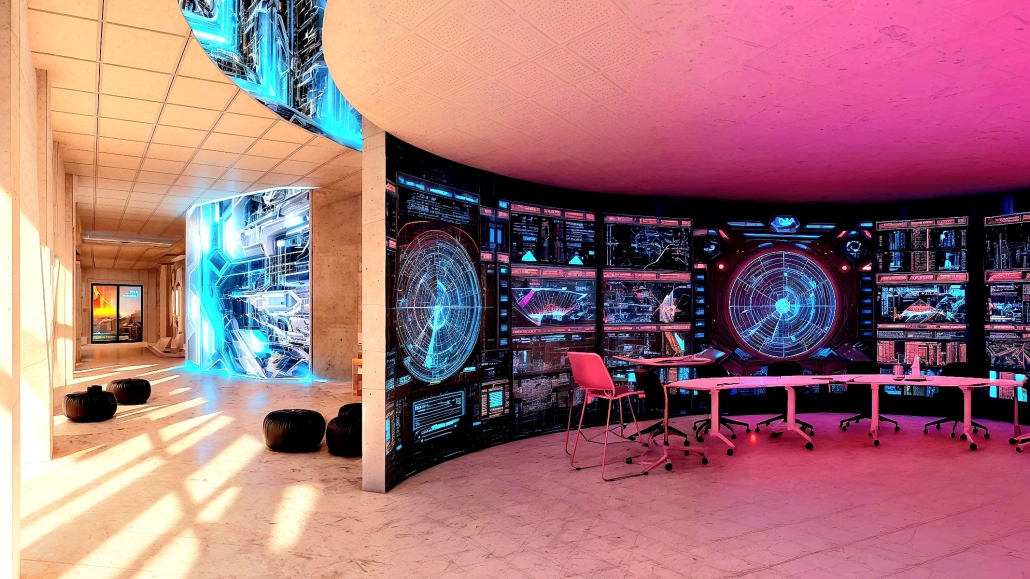
Urban Metamorphosis: Smart Cities Resignifying Spaces by Ramón L. Meléndez-García, B.Arch ‘25
Pontifical Catholic University of Puerto Rico | Advisors: Pedro A. Rosario-Torres & Juan C. Santiago-Colón

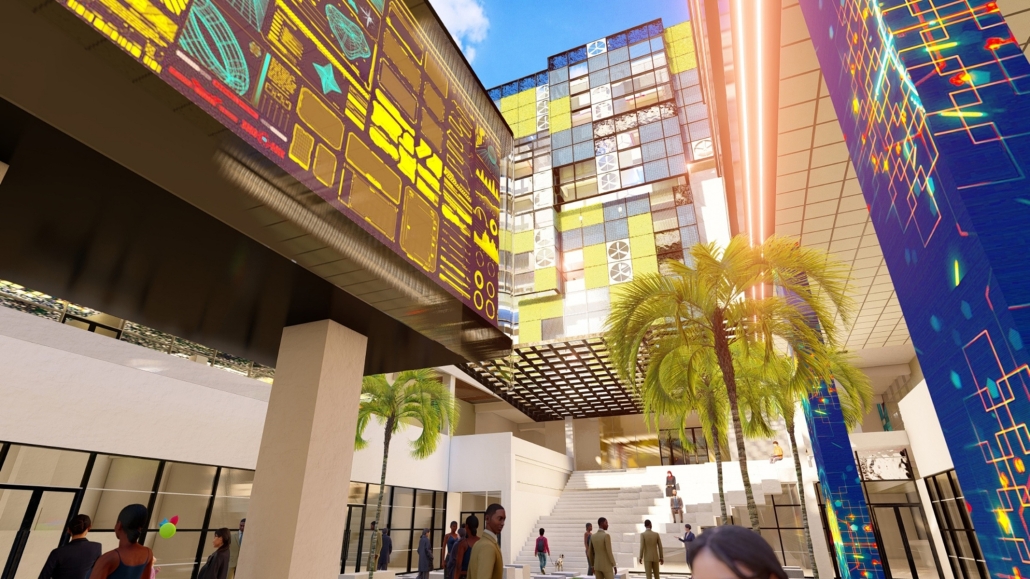
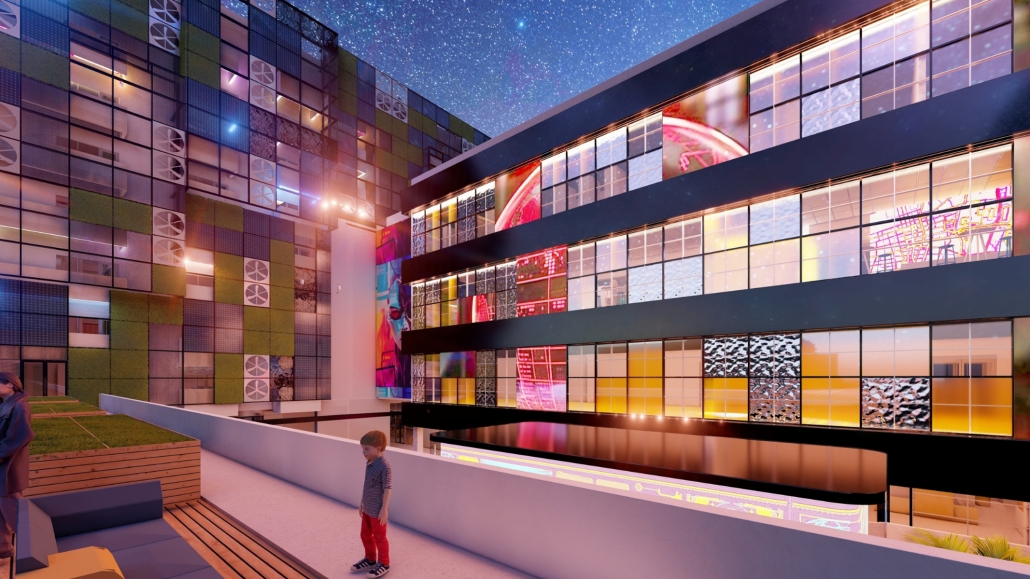
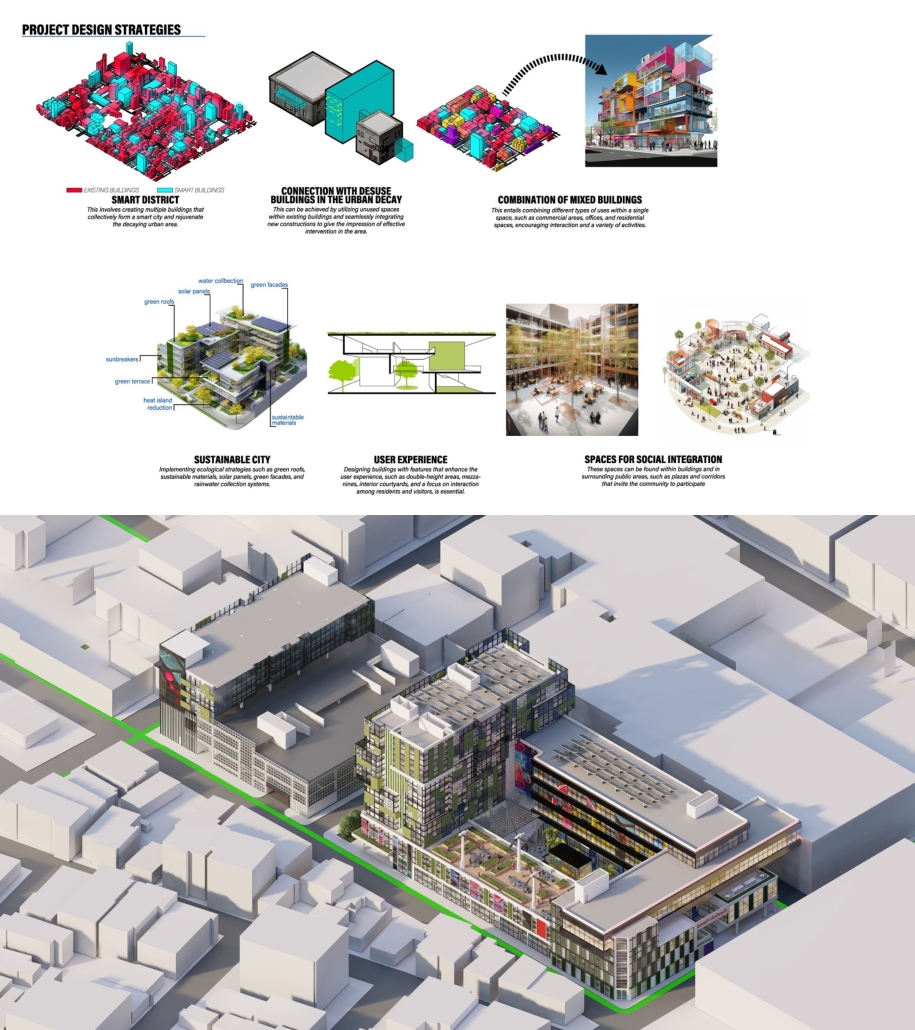
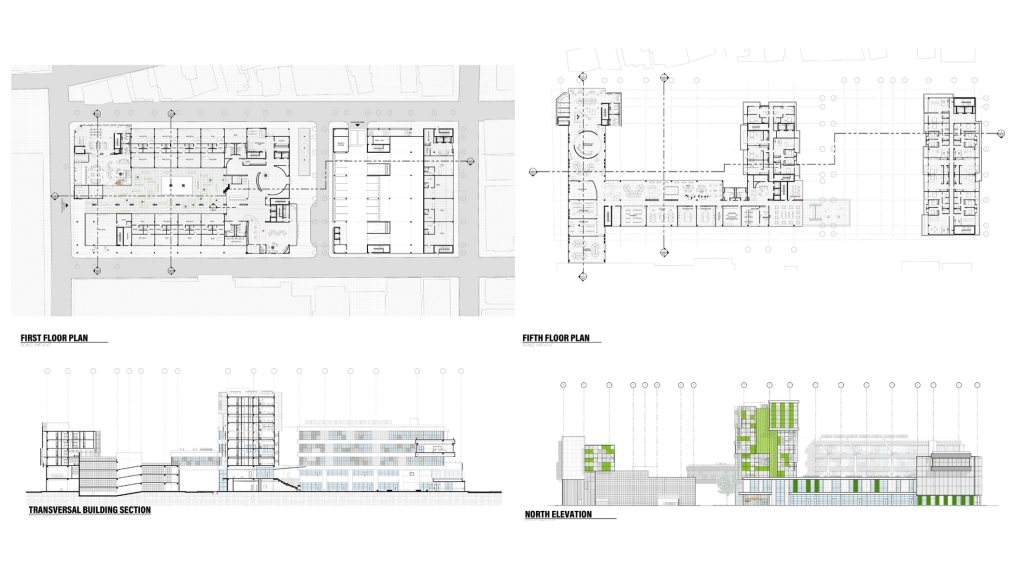
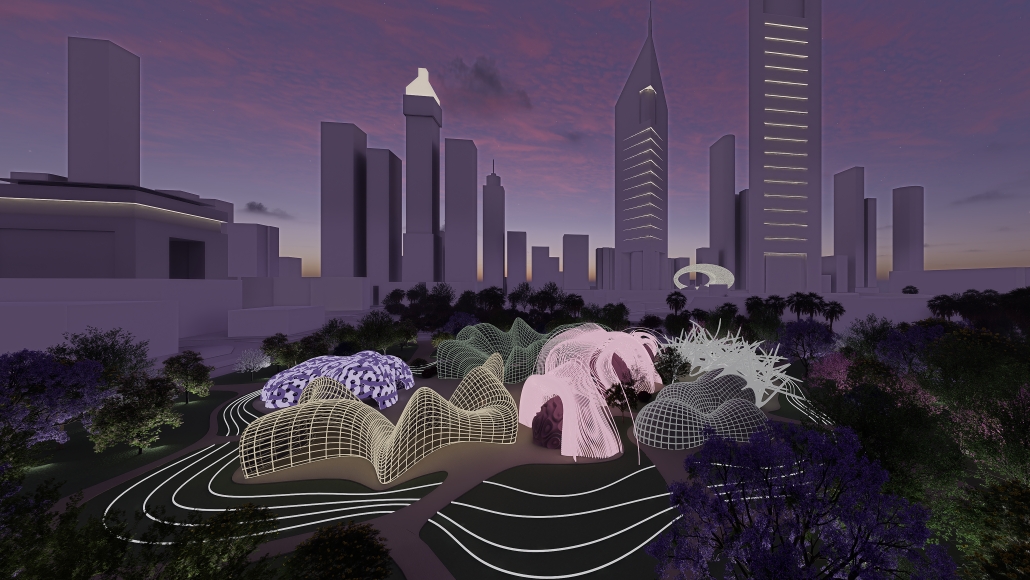
This research investigates the urban regeneration of Río Piedras, Puerto Rico, through the strategic implementation of smart city principles adapted to local needs. In response to widespread physical, social, and economic decay—evident in abandoned lots, deteriorated infrastructure, and declining public life—the study proposes a multidimensional framework that reimagines the urban fabric through technological innovation, sustainable development, and architectural intervention.

Departing from mainstream smart city models centered solely on digital efficiency, this study develops a localized smart city theory that combines cultural identity, community participation, and advanced technologies. The proposal includes the integration of smart housing, cultural and educational hubs with augmented reality capabilities, green infrastructure, efficient public transportation, and urban data nodes to improve services and connectivity. Core technologies such as the Internet of Things (IoT), Artificial Intelligence (AI), and Big Data are utilized to inform urban planning decisions, support sustainability, and foster civic engagement.

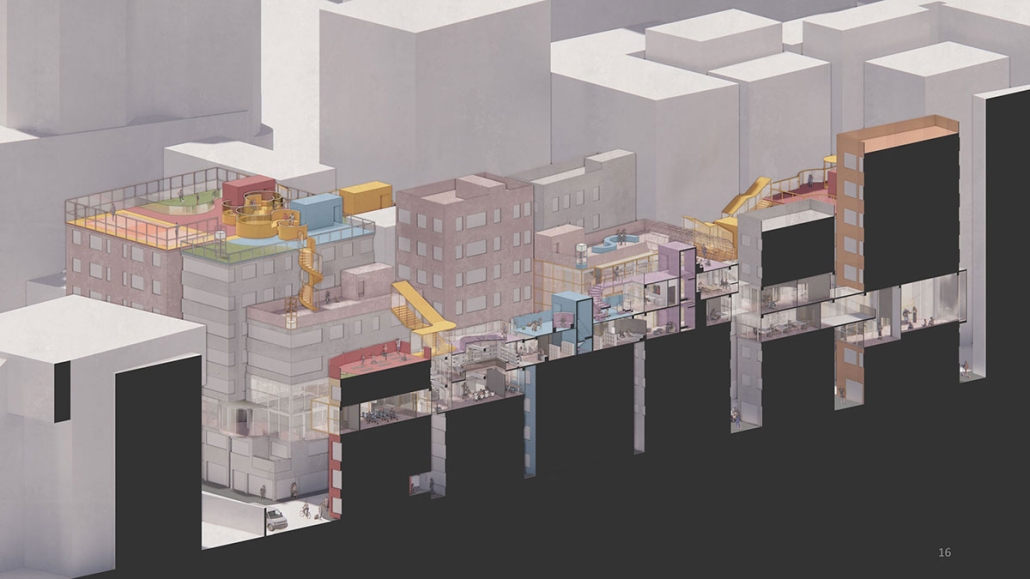
Río Piedras is positioned as a prototype for urban acupuncture, where vacant and underused parcels are reactivated as strategic anchors for community life, innovation, and economic growth. The intervention emphasizes not only technological transformation but also the importance of contextual design—bridging the gap between historic architecture and contemporary urban needs.

By transforming obsolete spaces into adaptive smart infrastructures, the project demonstrates how urban regeneration can be achieved through a balance of innovation and local identity. This research presents a replicable smart city model for Latin American contexts, focused on equitable access to services, environmental responsibility, and inclusive urban development.

Ultimately, the study reframes smart cities as people-centered ecosystems, where technology, space, and society coalesce to create resilient, livable, and forward-looking urban environments.
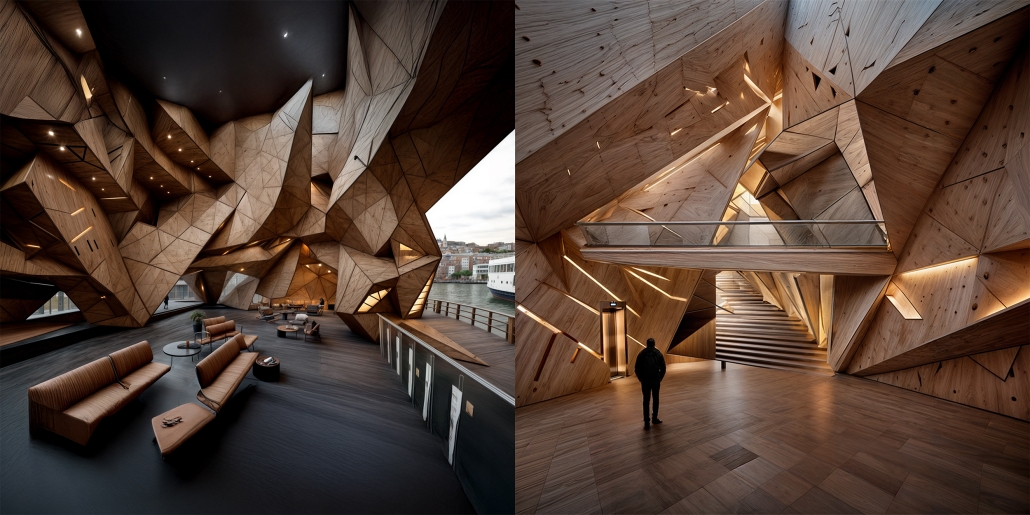
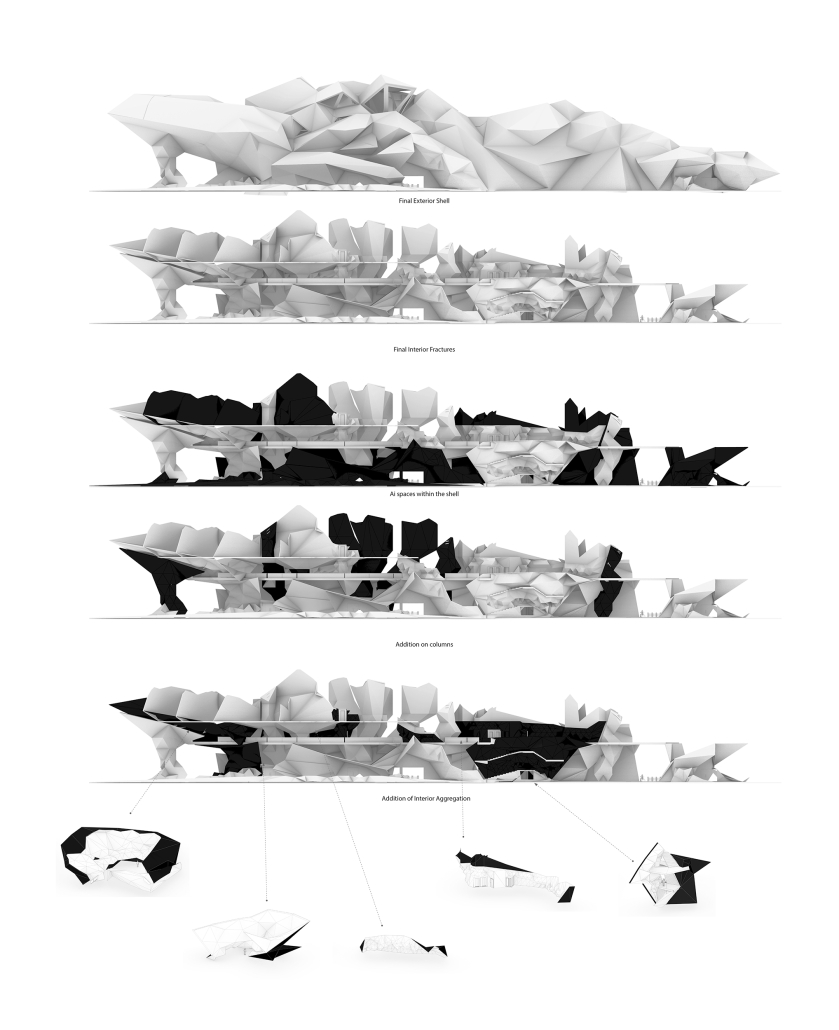
Fold Me a Path: An Experience of Fractured Flow by Farah Swilam, M.ArchD ’25
Oxford Brookes University | Advisors: Adam Holloway, Elliot Krause & Deniz Topcuoglu

Distortion:

This project explores how fractured geometry and pattern-based aggregation can be reimagined through artificial intelligence to generate new kinds of human experiences in architecture. At its core is the idea of distortion—reshaping familiar systems like Islamic pattern growth and crystallographic expansion through AI to produce forms that feel intuitive yet unfamiliar.

Crystallization:

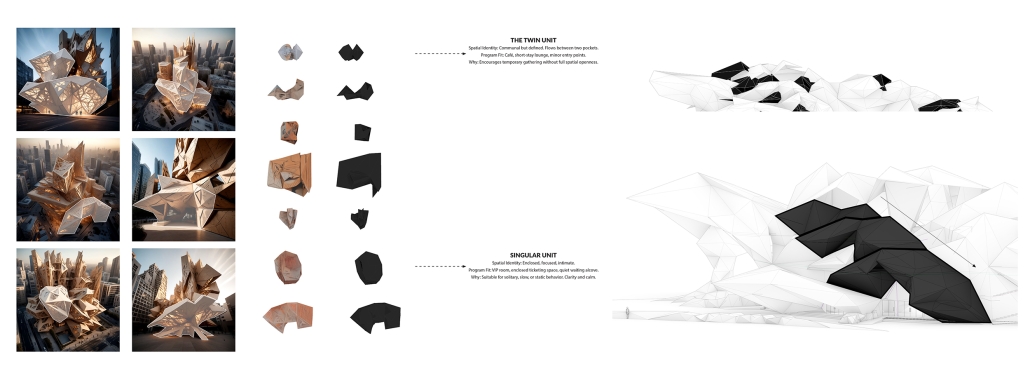
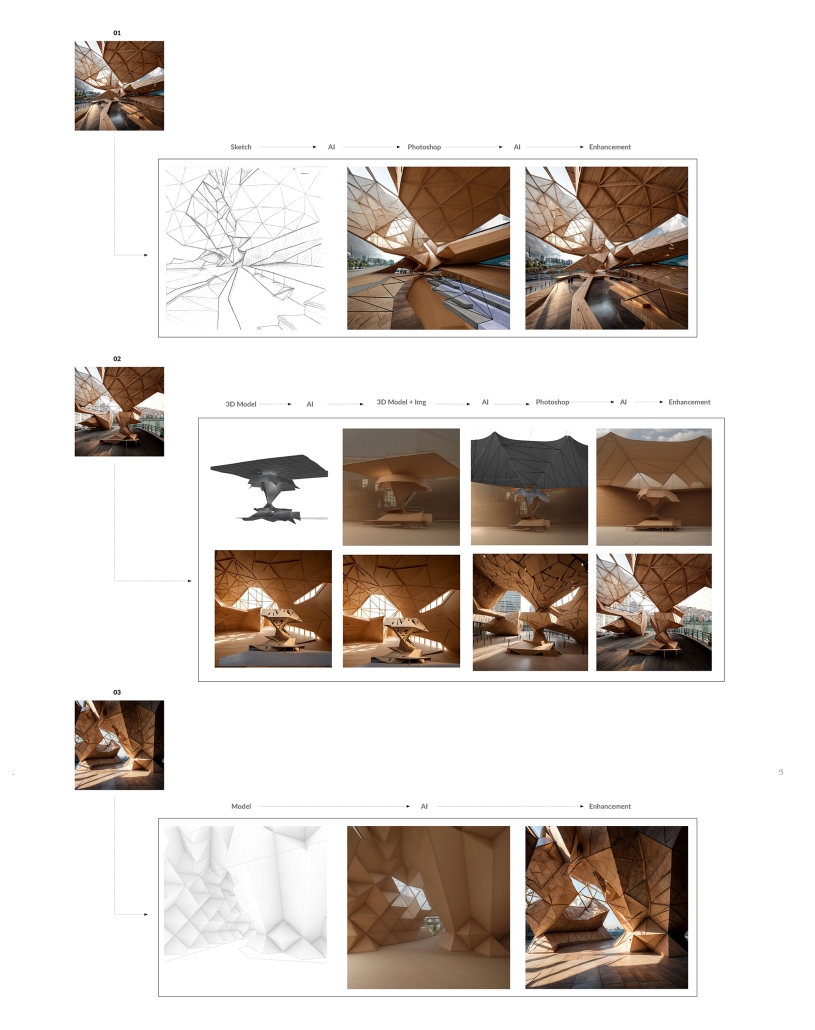
Inspired by how crystals grow—from a single point to complex geometries—the architecture builds on repetition, branching, and fracture. These logics were first tested physically and digitally, then handed over to AI as a co-designer. Trained on sketches, models, and prompts around fragmented patterns and public infrastructure, the AI generated outputs that became provocations, not solutions.

Narrative:

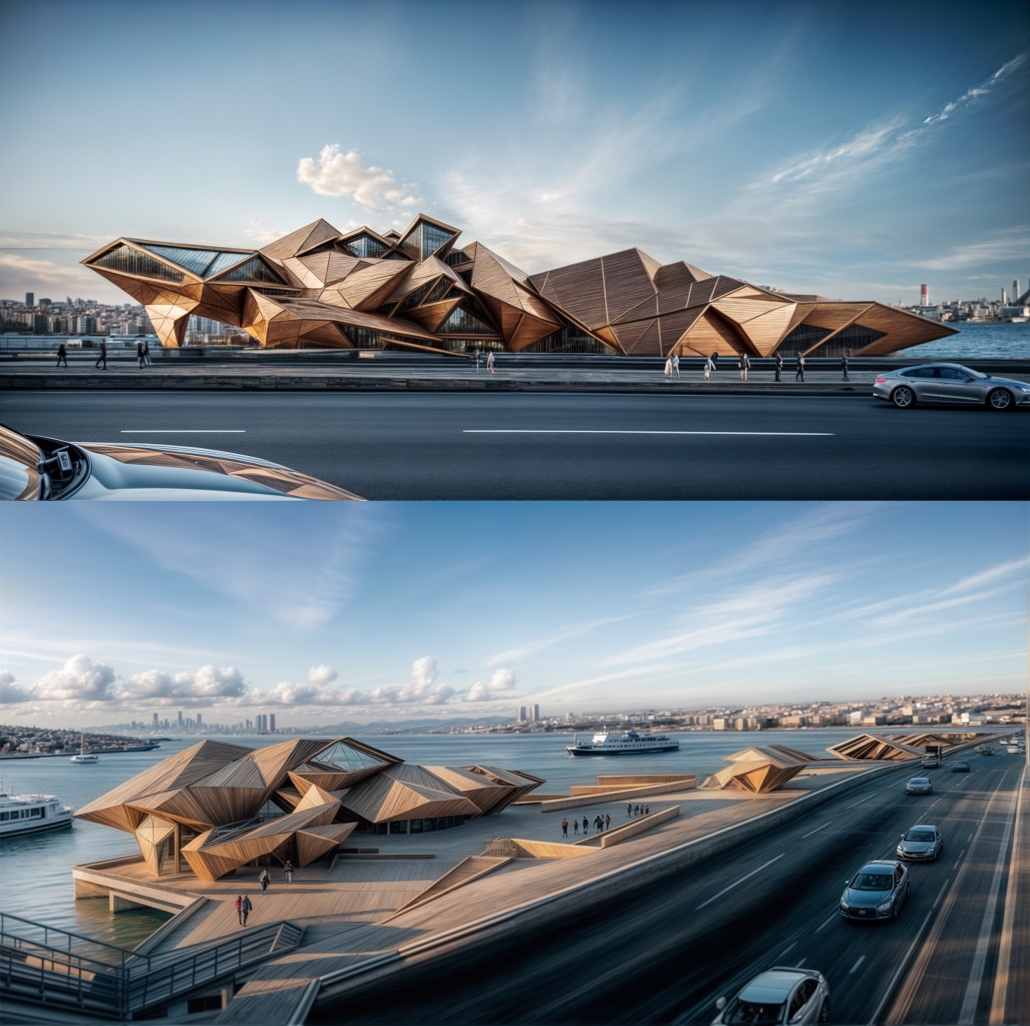
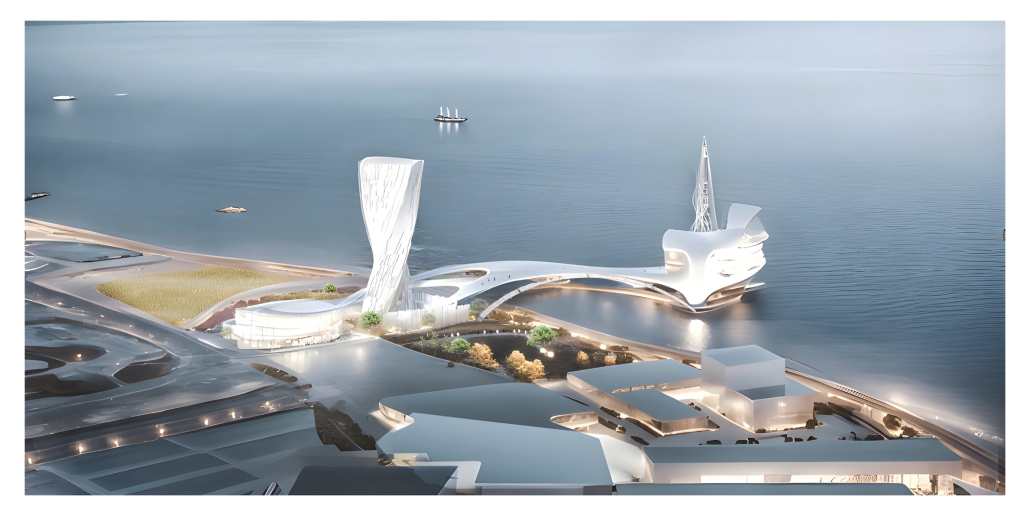
The result is a prefabricated ferry terminal on Istanbul’s Golden Horn waterfront—where infrastructure becomes a spatial narrative. Modular units cluster and grow across a path, shifting in orientation and size to guide a fractured journey from land to water, compression to openness.

Behavior:

AI simulations shaped the plan by mapping how curiosity, comfort, and pressure influence movement. These behavioral zones structured flows for tourists and commuters, varying path widths and densities to create both fast transitions and moments of pause.

Shell:

Externally, the terminal’s form draws from a library of AI-generated crystal geometries—clustered, mirrored, and oriented to respond to light, program, and views. The fragmented skin filters shadow and light, echoing Istanbul’s energy while remaining grounded in geometric order.

Assembly:

Constructed from prefabricated timber shells and CNC-milled panels, the structure sits lightly on steel piers over water. Brass cladding reflects the city’s historic palette. Passive strategies like cross-ventilation and rainwater harvesting are integrated into the system, and prefabrication minimizes urban disruption.

Resonance:

Ultimately, “Fold Me a Path” is a proposal for architecture that listens—guided by AI, rooted in culture, and attuned to human experience.

Instagram: @acciofxra7_, @holloway_arch
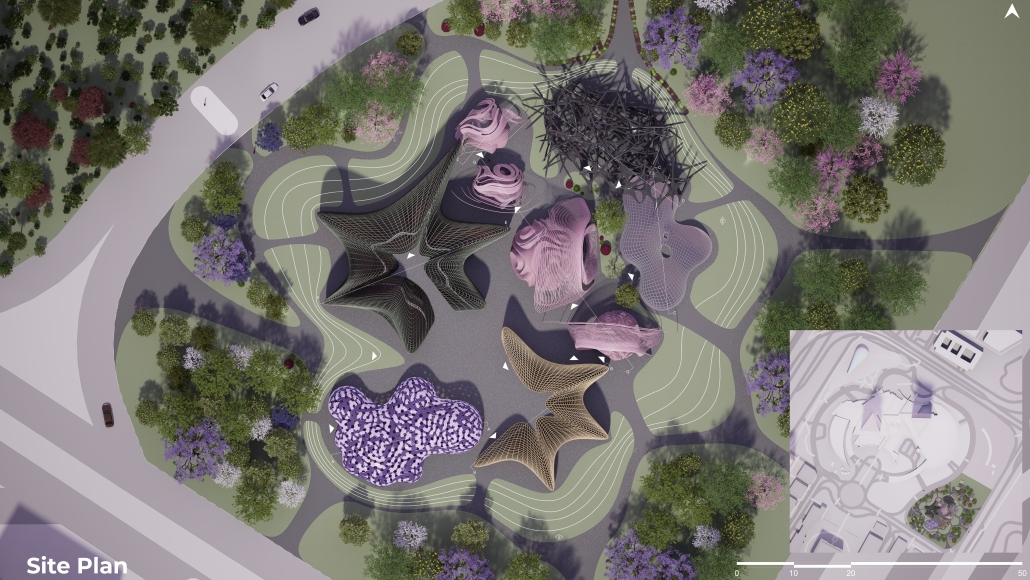
Gastro-Genesis by Dana Otoom, B.Arch ’25
American University in Dubai | Advisor: José Antonio Carrillo

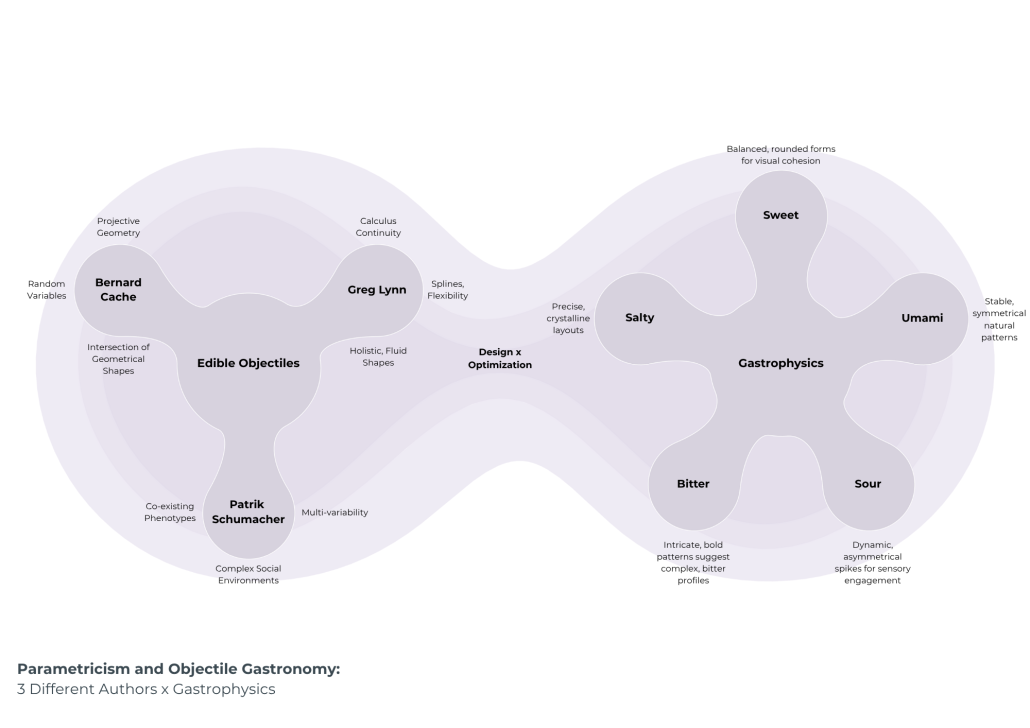
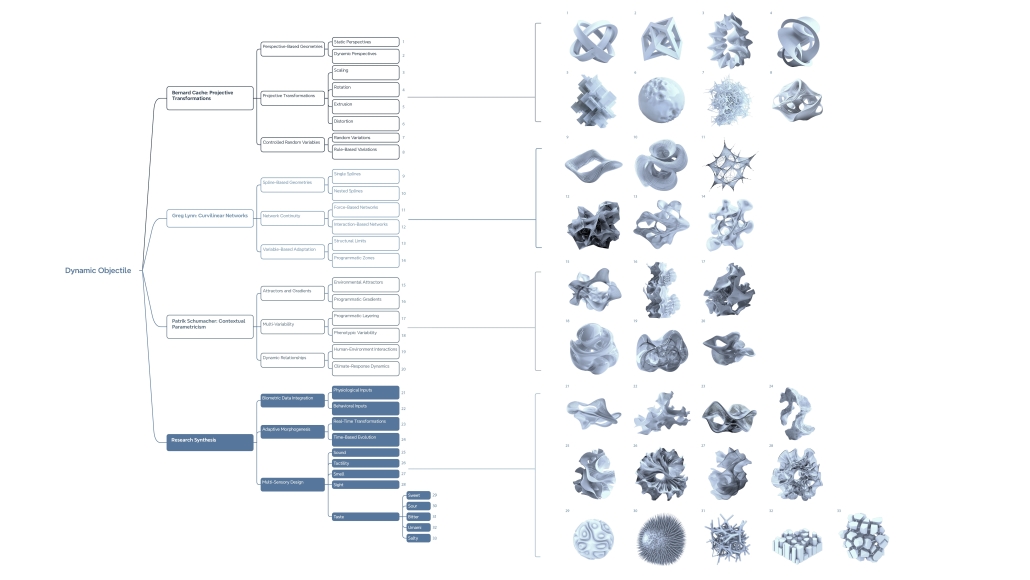
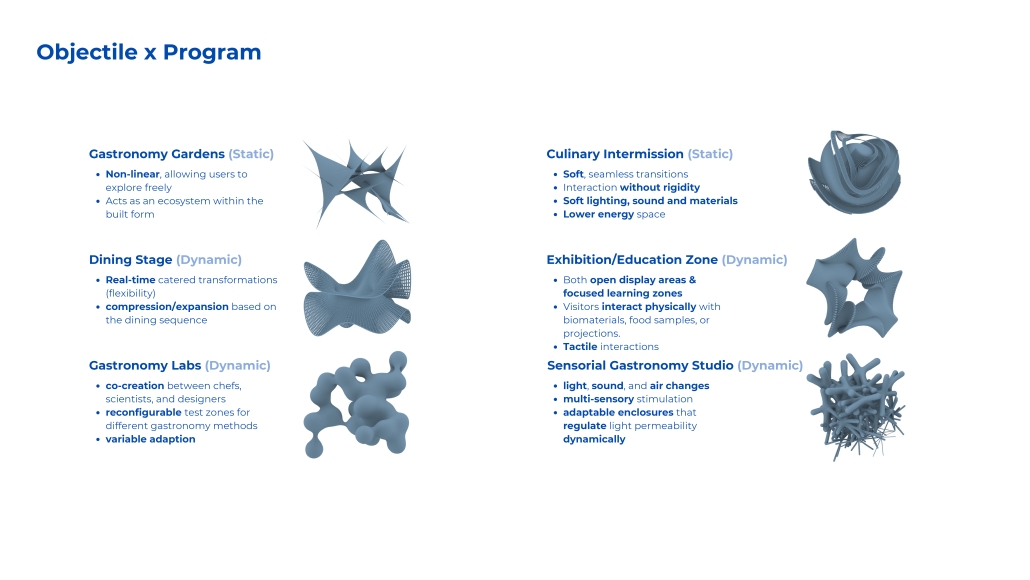
Exploring the intersection of architecture, gastronomy, and parametric design through the creation of edible objectiles-geometrically-driven food forms that act as catalysts for designing an entire multisensory dining experience. Drawing from the theories of Bernard Cache, Greg Lynn, and Patrik Schumacher, the project translates infinite variability into spatial and experiential diversity. Each objectile is generated through a parametric algorithm based on flavor perception, sensory attributes, and contextual cues such as temperature, aroma, and emotional response. The edible forms define not only the food but also influence the design of cutlery, furniture, spatial layout, and user journey within a dining environment. Set in the UAE, the project culminates in a metabolically inspired spatial sequence that mirrors digestion, transitioning from urban farming to sensory labs, with the buffer zone acting as a sensory terrain of sweet, rounded objectiles to ease entry and exit.

Click here for a closer look.

Instagram: @danaaotoom, @d.otoom, @j.carrilloandrada
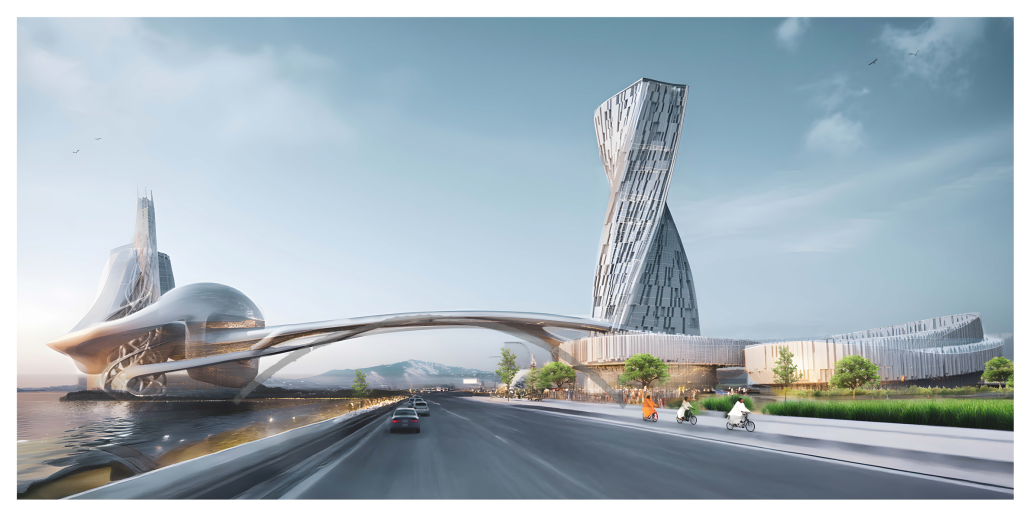
Biosphere by Shrilaxmi Nair, Sharanya Mathrudev & Parth Solanki, M.Arch ’25
University of Illinois Urbana-Champaign | Advisor: Yun Kyu Yi

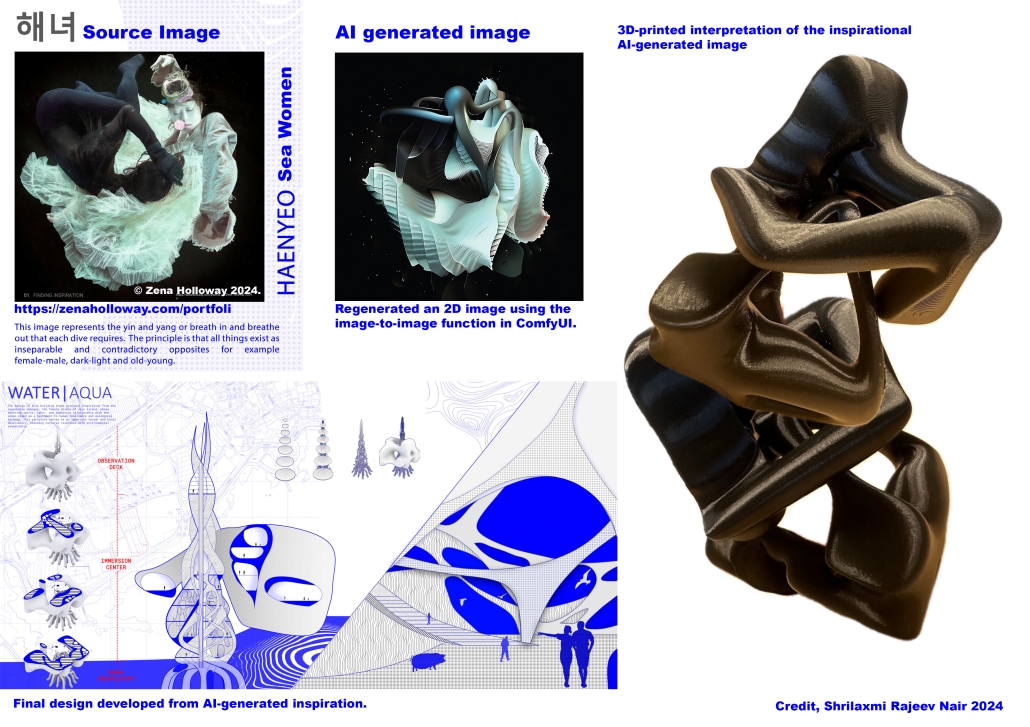
The landscape of architectural design is rapidly evolving with advances in 3D modeling, rendering software, and, more recently, artificial intelligence (AI). While tools like Stable Diffusion, DALL·E, and Midjourney have transformed illustration by allowing users to generate images from text prompts, architecture is now seeing its own set of AI tools tailored for design professionals. These tools can assist in generating building forms, interior styles, façade systems, and code-compliant floor plans, while also supporting layout optimization. As these tools become more powerful and accessible, they are beginning to reshape how architects approach the design process.

This shift is prompting reflection within architectural practice: Should traditional skills like manual representation and code literacy remain central, or should designers explore how to engage critically and creatively with AI? Rather than replacing the designer, AI has the potential to enhance creativity and support more thoughtful, design-driven decision-making.

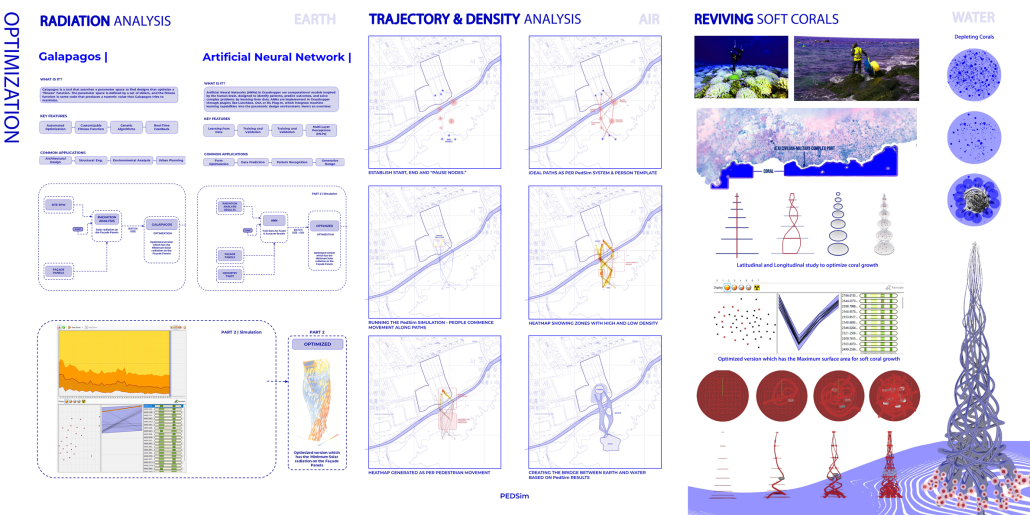
This project explored the role of AI not simply as a visualization tool, but as an active collaborator in the design process. The work focused on three key phases where AI tools were integrated into schematic design: Concept Development, Concept Actualization, and Objective-Based Form Finding. Through this exploration, the project aimed to understand how AI can shape design workflows, support ideation, and open new directions for architectural thinking and practice.

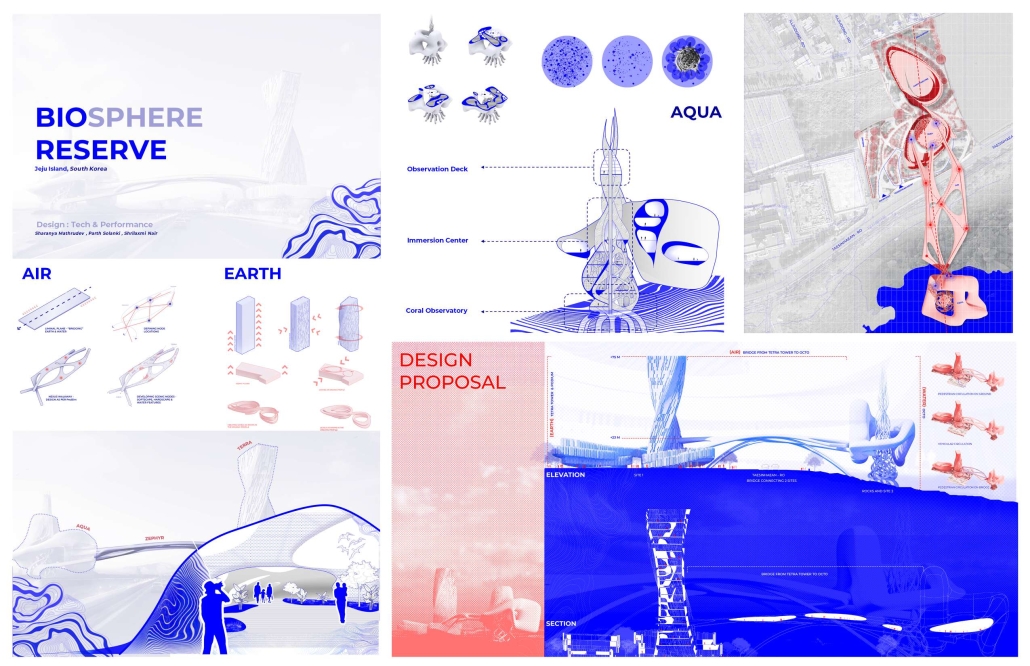
This project is inspired by Jeju Island, a UNESCO Biosphere Reserve. The design celebrates Earth, Air, and Water through architecture that blends with nature. Earth|Terra, the tower, reflects the volcanic rock found in Jeju and represents it through biomimicry and sustainability. Air|Zephyr, the bridge, flows seamlessly between land and water, evoking balance and calm. Water|Octo, inspired by Jeju’s Haenyo divers, serves as a cultural immersion center and coral observatory, honoring resilience and ecological harmony.

Instagram: @shrilaxmi_nair, @sharanya__2000, @iamparthsolanki, @ral_isoa
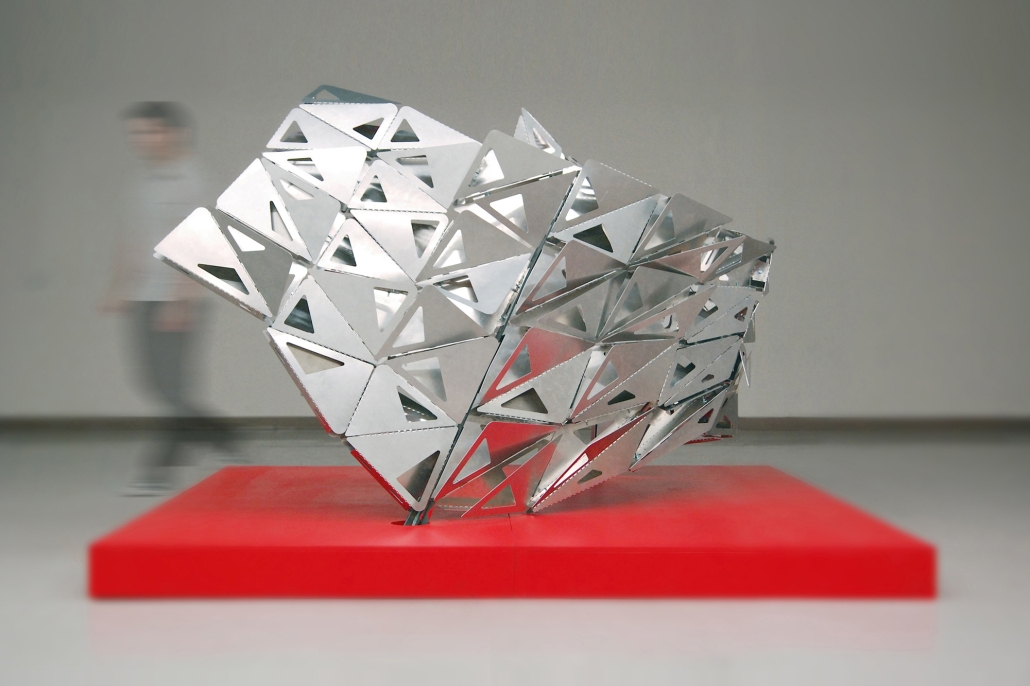
Embrace – Performative Connections by  Alejandro Arizpe, Stephanie Balbin, Javier Fano, Emily Guerrero, Erica Herrera, Kevin Linton, Raul Montalvo, Danny Murray, Ricardo Reyes, Sarah Staten, Gustavo Tirado, Jennifer Villarreal & John Zerda, B.Arch ’25
University of Texas at San Antonio | Advisor: Armando Araiza

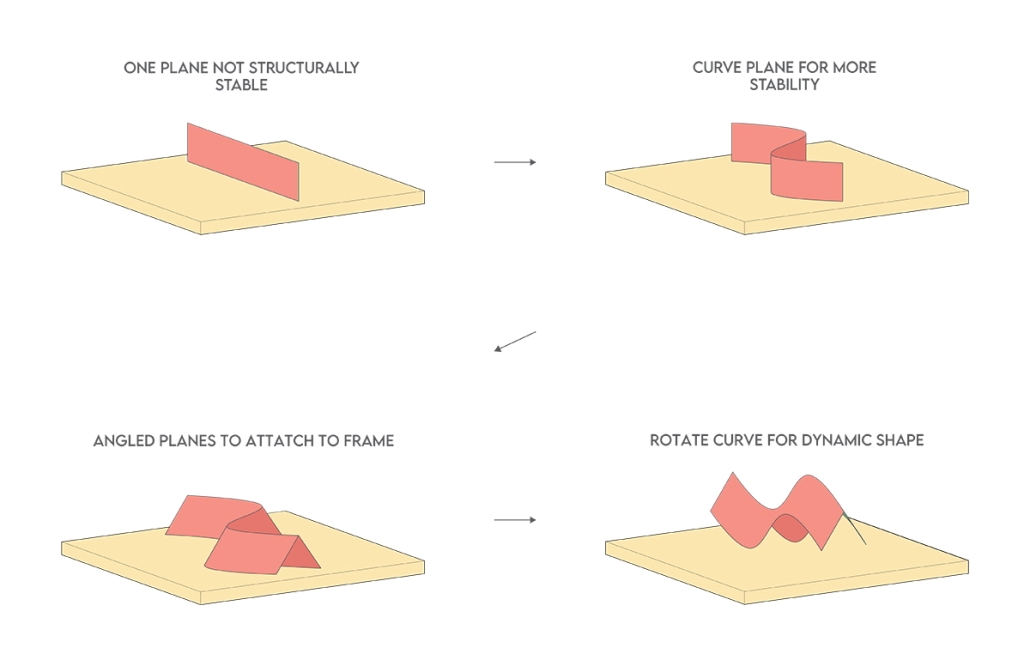
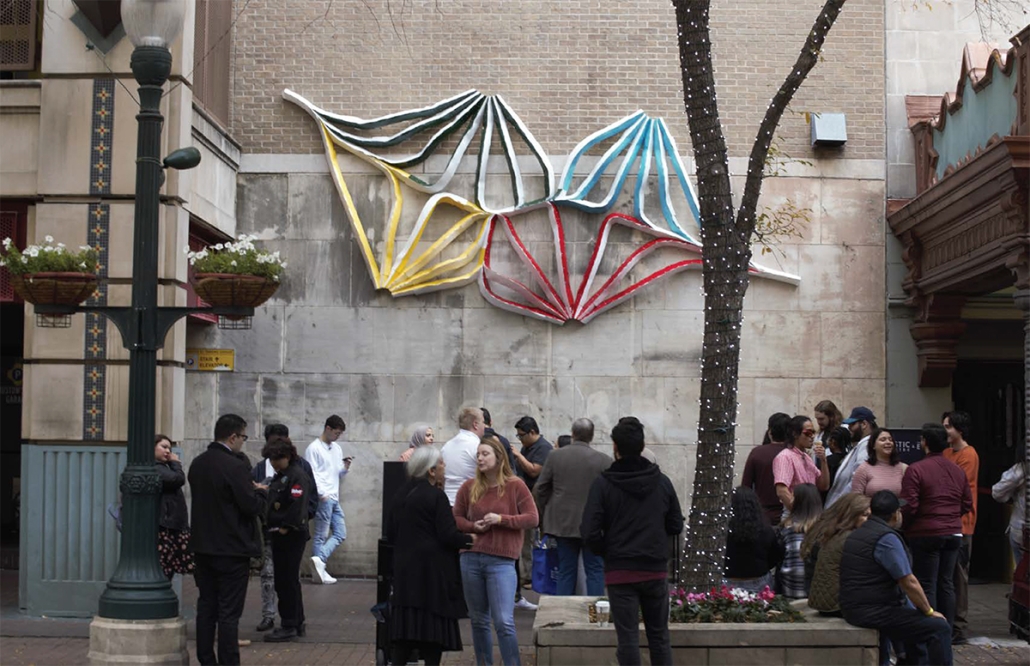
At its core, architecture is a choreography of connections. In this advanced research studio, students explored assembly not as an afterthought, but as the generative principle for design. Through a semester-long investigation, they studied how different elements, digital, material, and structural, come together to form performative wholes.

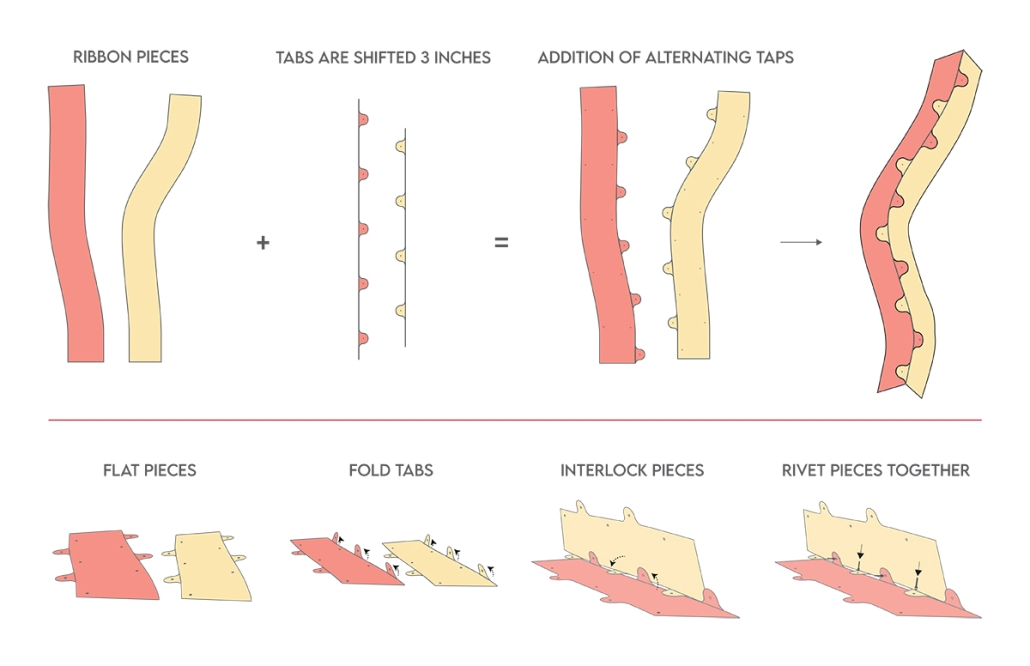
The studio began with an in-depth analysis of joints and bonding methods across disciplines and histories, treating the connection itself as both an aesthetic and structural act. From laser-cut prototypes to iterative digital models, each student developed a speculative connection system, refined through hands-on experimentation.

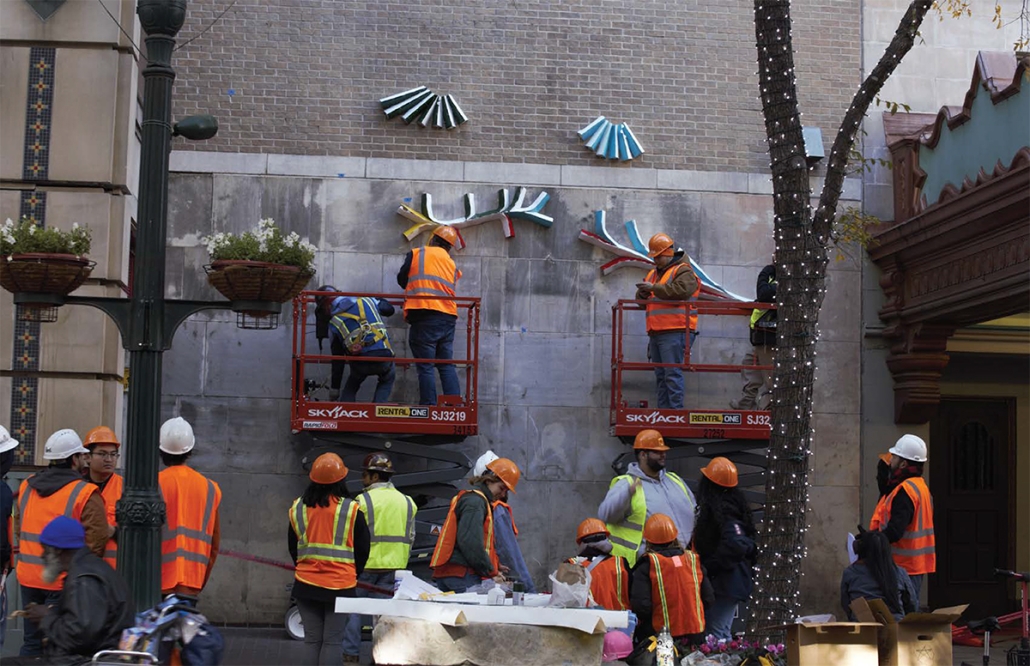
These efforts converged in the fabrication of a full-scale, inhabitable prototype. Built collaboratively and rapidly deployed, the final installation tested how a single connection logic could drive formal, spatial, and assembly decisions. With no hierarchy between part and whole, the project revealed how connection is not just a means of construction, it’s a way of thinking, making, and inhabiting space.

Instagram: @armando_araiza
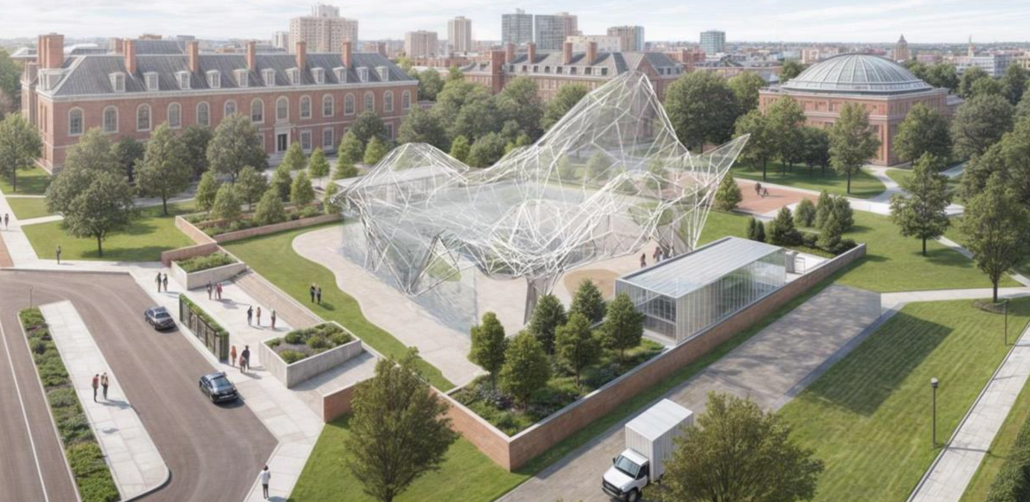
The Waterscape: UNDERGRADUATE LIBRARY by  Kay Hau, Yogitha Reddi & Taylor Solomon, M.Arch ’25
University of Illinois Urbana-Champaign | Advisor: Yun Kyu Yi

Architectural design is undergoing a major transformation with advancements in 3D modeling, rendering software, and, more recently, artificial intelligence (AI). Tools like Stable Diffusion, DALL·E, and Midjourney have revolutionized illustration by enabling users to generate visuals from text prompts. Now, architecture is seeing the emergence of AI tools specifically developed for design professionals. These tools assist in generating building forms, interior designs, façade systems, and code-compliant floor plans, while also optimizing layouts. As they become increasingly powerful and accessible, AI technologies are redefining how architects approach the design process.

This evolution is sparking important questions within architectural practice: Should traditional skills like hand drawing and code literacy still hold central importance, or should designers embrace new ways to engage critically and creatively with AI? Rather than replacing the designer, AI has the potential to amplify creativity and encourage more thoughtful, design-driven decisions.

This project investigated the role of AI not just as a tool for visualization, but as a true collaborator in the design process. It focused on three key stages where AI was incorporated into schematic design: Concept Development, Concept Actualization, and Objective-Based Form Finding. The goal was to explore how AI can influence design workflows, spark new ideas, and open up innovative directions for architectural thought and practice.

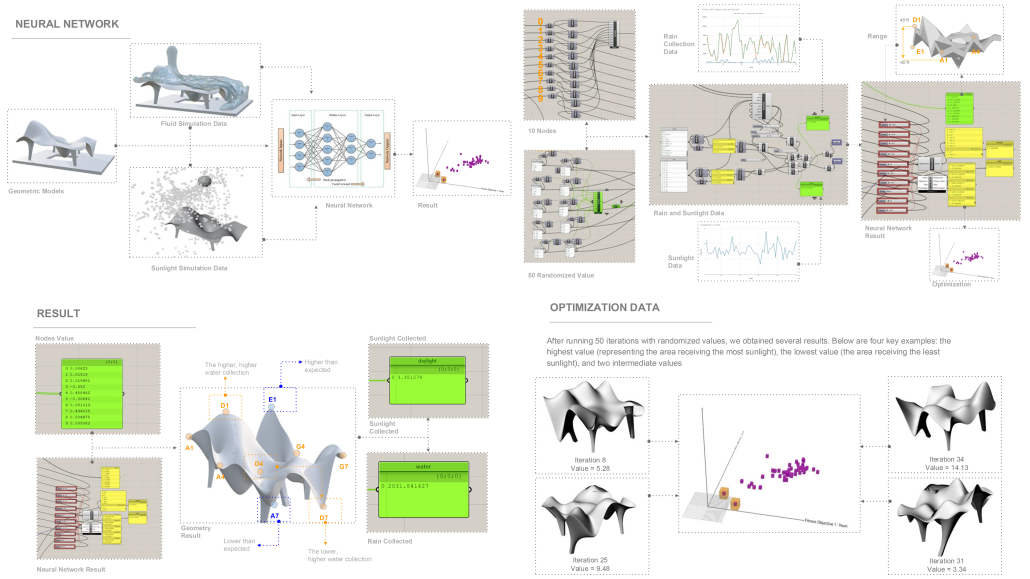
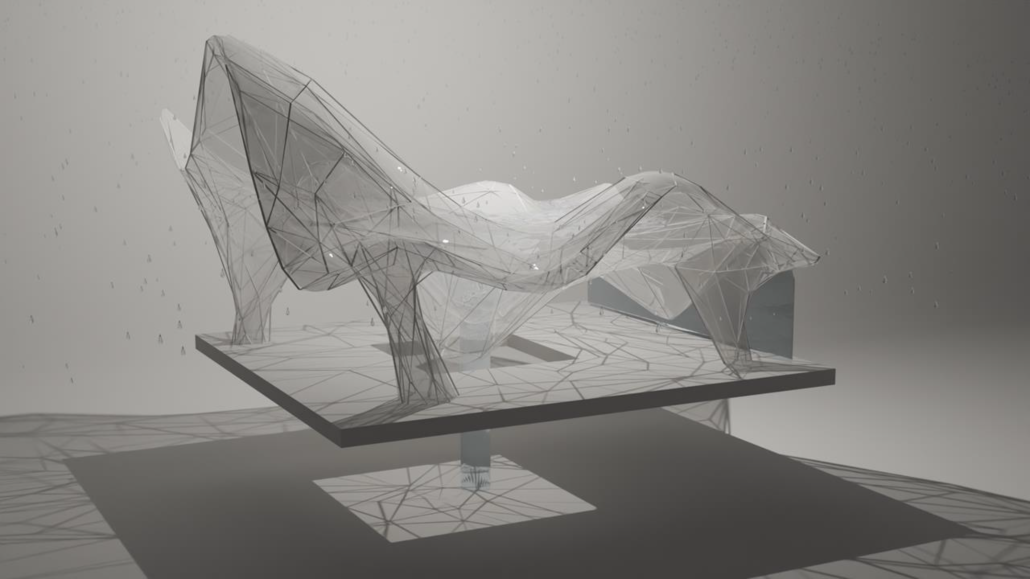
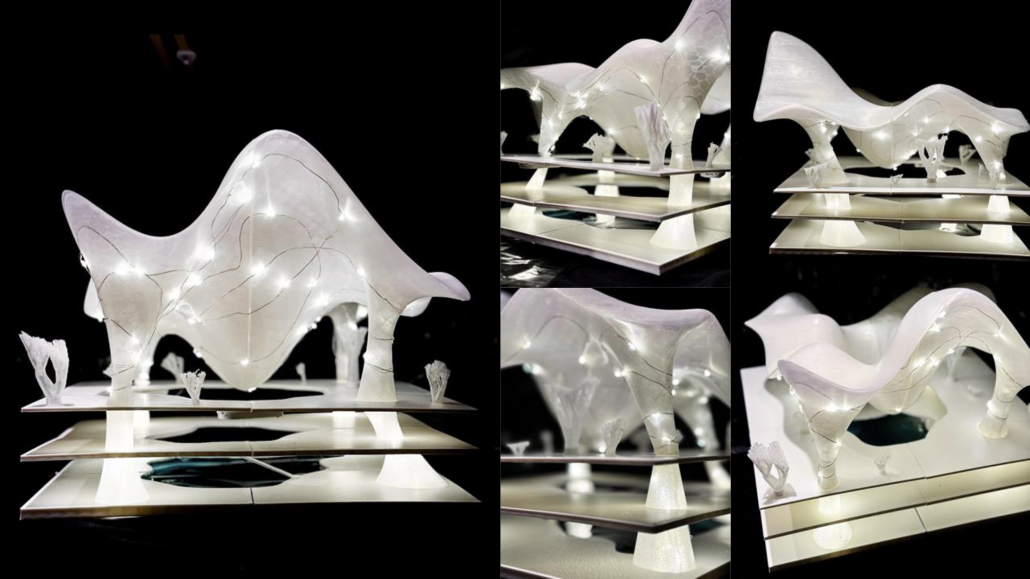
“The Waterscape” reimagines the UIUC Undergraduate Library site through three central ideas: Nexus, Senses, and Encapsulation. Drawing inspiration from the library’s legacy as a communal space, the design emphasizes sensory experiences—sight, sound, and touch—while maintaining the site’s natural environment and uncovering its hidden subterranean layers. Using AI tools such as ComfyUI, Neural Network, and DeepGaze, the design team explored form-making approaches that maximize daylight and collect water efficiently. The result is a passive cooling system that activates and unifies the three-tiered space.

This project received an Honorable Mention for the Ratio Prize, Spring 2025.
Instagram: @kaylhau, @ral_isoa

Sculpted Time by Layla Danelle Neira, B.Arch ’25
New Jersey Institute of Technology | Advisor: Andrzej Zarzycki

Project Description:

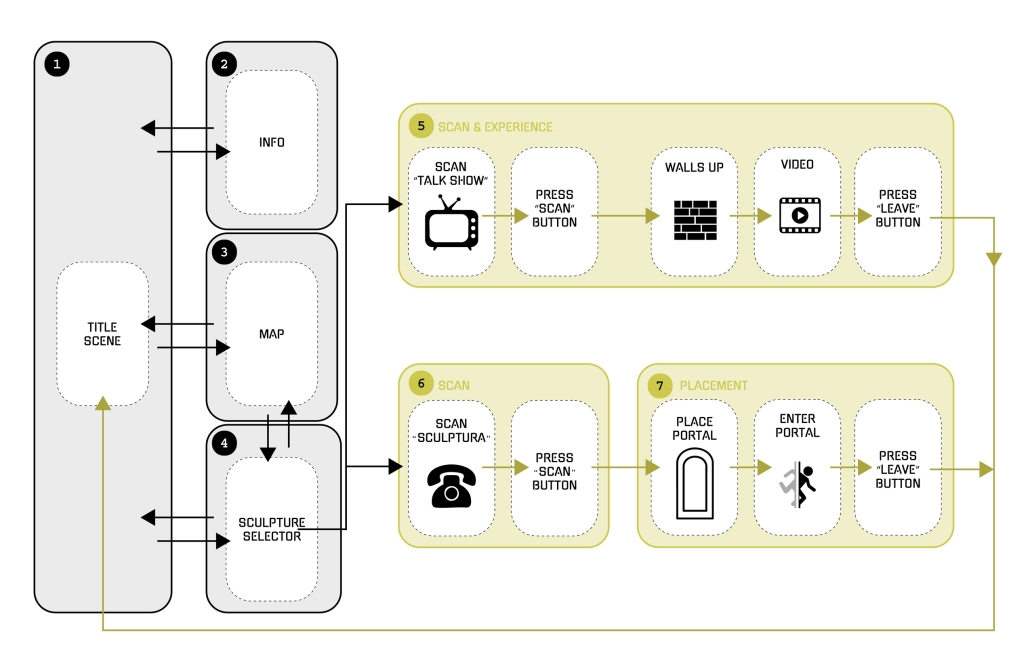
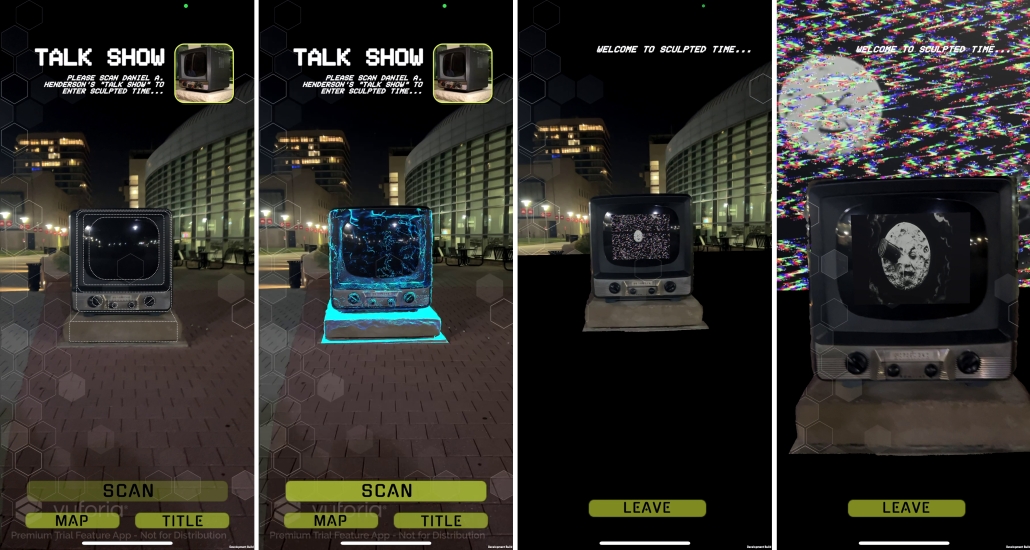
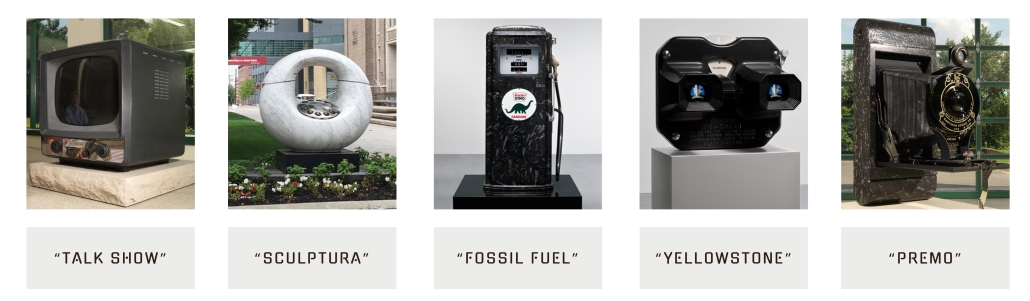
“Sculpted Time” is an augmented reality (AR) project designed to deepen community engagement with the large stone sculptures on NJIT’s campus. Despite their scale and presence, I noticed many students and visitors pass by them without knowing their significance. I wanted to create an experience that reintroduces these sculptures in a more dynamic and relatable way—inviting people to reflect on the tension between the permanence of stone and the fleeting nature of the technology these sculptures represent.

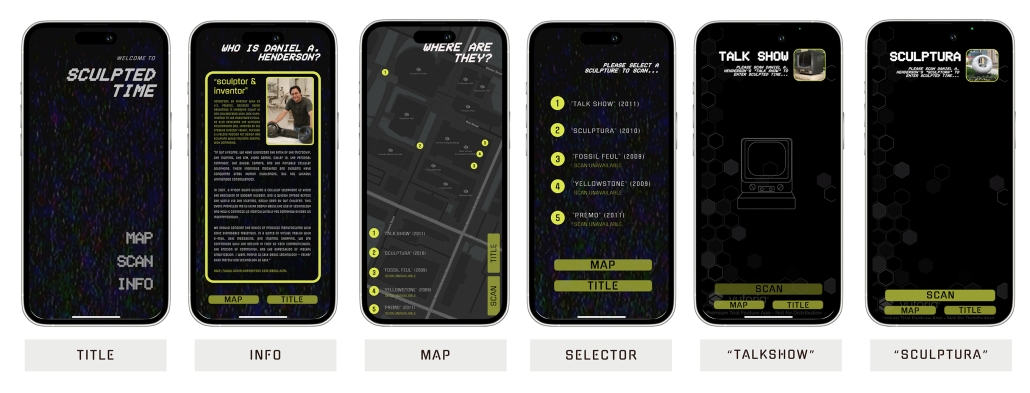
The project is ultimately an application where users can scan a sculpture and have immersive AR experiences that engage multiple senses. Through context-aware environments and storytelling, “Sculpted Time” aims to transform how we engage with public art on campus and rethink our role in an age of rapid technological change—especially within the context of NJIT, where many of us are preparing for careers in tech-driven fields.

Methodology:

This was my first time working with AR technology beyond social media filters, so much of the early stages were marked by experimentation and guidance from my studio professor, Andrzej Zarzycki. I developed the project using tools such as Unity for building the immersive AR environments, Kiri Engine for photogrammetry and 3D modeling, and Vuforia for marker-based AR tracking.

Since the final outcome was a functioning app prototype, I also had to learn and apply UI/UX design principles to ensure the experience was both user-friendly and intuitive. Designing the interface and user interactions became just as important as developing the AR content itself. This part of the process felt more familiar to me since my background in architecture helped me approach spatial planning, visual hierarchy, and user flow with confidence.

Click here for a closer look.

This project was recognized at NJIT’s Dana Knox Research Showcase, 2025.

Instagram: @laylan981, @andrzejzarzycki
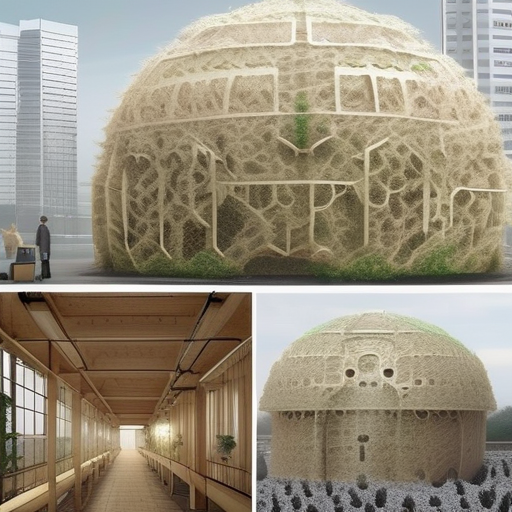
Tame Your Mushroom by Tova Gold, M.Arch ’25
New York Institute of Technology | Advisor: Sandra Manninger

“How To Train Your Mushroom- Fungal Computation, Toward Sustainable Biocomputing in Architecture”

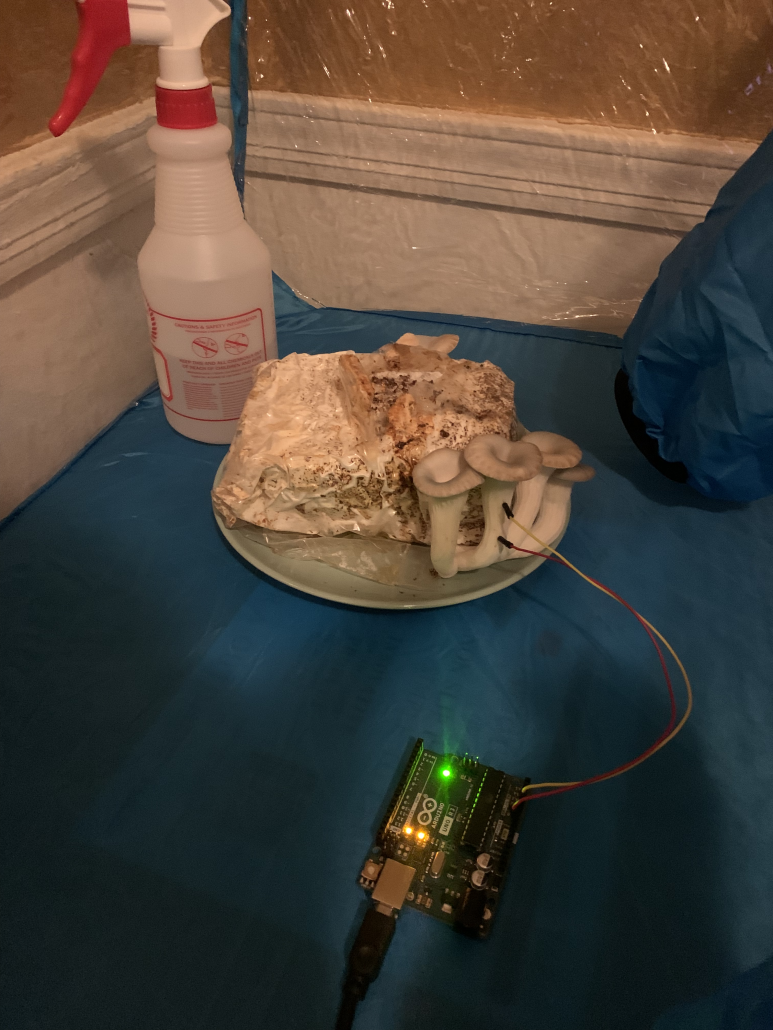
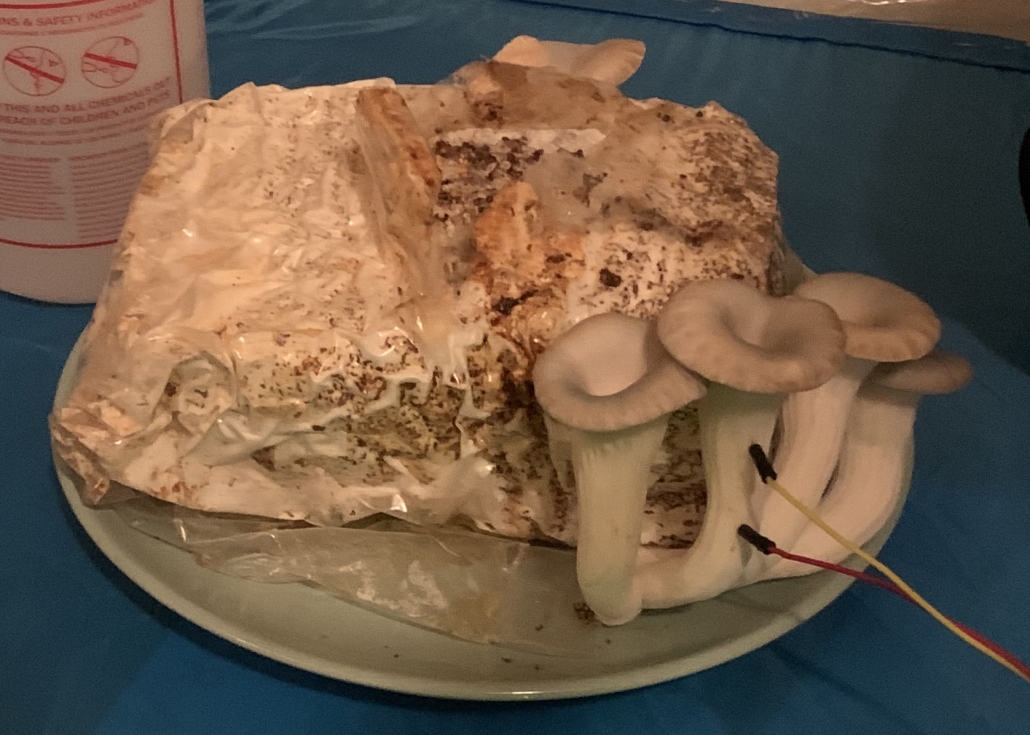
This research explores fungal bioelectricity as a foundation for sustainable, living computational systems with potential applications in architecture. Pleurotus ostreatus (oyster mushrooms) exhibit stimulus-responsive electrical activity analogous to neural computation. While traditionally studied for ecological roles, fungal mycelium demonstrates capacities for memory, adaptive behavior, and environmental sensing, positioning it as a viable substrate for biologically embedded computation within architectural systems.

Controlled experiments involved embedding electrodes into living fungal colonies to record voltage fluctuations under mechanical pressure, light exposure, and thermal stimuli. Time-series features from these electrical signals were processed and analyzed using convolutional neural networks to classify stimulus types. Preliminary results indicate distinct waveform patterns associated with different environmental inputs, suggesting that fungal networks encode information through structured bioelectrical signaling.

These findings highlight the potential of mycelium as a living sensor network capable of integration into architectural assemblies. Responsive to light, heat, mechanical stress, or air quality, fungal materials offer a pathway to architectural systems that adapt in real time to their environment. Unlike conventional computing systems, fungal substrates require minimal energy input, operate at ambient temperatures, and are biodegradable—aligning with goals of ecological design and regenerative material practices.

In architecture, fungal biocomputing implies a shift from inert, passive materials toward active, sensing infrastructures. Mycelium may serve not only as a sustainable building component but also as a medium for distributed computation, enabling novel forms of environmental interactivity and feedback. Moreover, fungal information processing—distributed, embodied, and chemically mediated—resonates with emerging paradigms in architecture that reject centralized control in favor of non-linear, rhizomatic systems.

By combining fungal electrophysiology, machine learning, and computational design, this research redefines the role of material intelligence in architecture and proposes a future in which built environments are both materially and computationally alive.

Instagram: @sandramanninger_studio

Stay tuned for Part III!
2024 Study Architecture Student Showcase - Part I

Welcome to the 2024 Study Architecture Student Showcase!

Over the summer, we called on architecture school faculty from across the globe to nominate graduating students whose work exemplifies excellence in architectural education. The submitted work reflects the various skills and concepts taught in architecture schools while inspiring future architecture students. With the Fall semester in full swing, we are excited to share these outstanding projects with you over the next few months.

These projects will focus on topics ranging from climate change and revitalization to public health and housing. Tune in every Tuesday and Thursday for a new installment focused on a specific topic.

Today’s showcase features projects that are centered around technology. As the world continues to make technological advances, architecture must adapt. Technology can benefit architecture in many ways, as demonstrated by the projects below. From AI and VR to robotics and other digital tools, these projects highlight opportunities to utilize technology as an avenue for innovation and construction.

Nexus by Angela Hanna, M. Arch ’24
Holy Spirit University of Kaslik (USEK) | Advisor: Louis Hachem

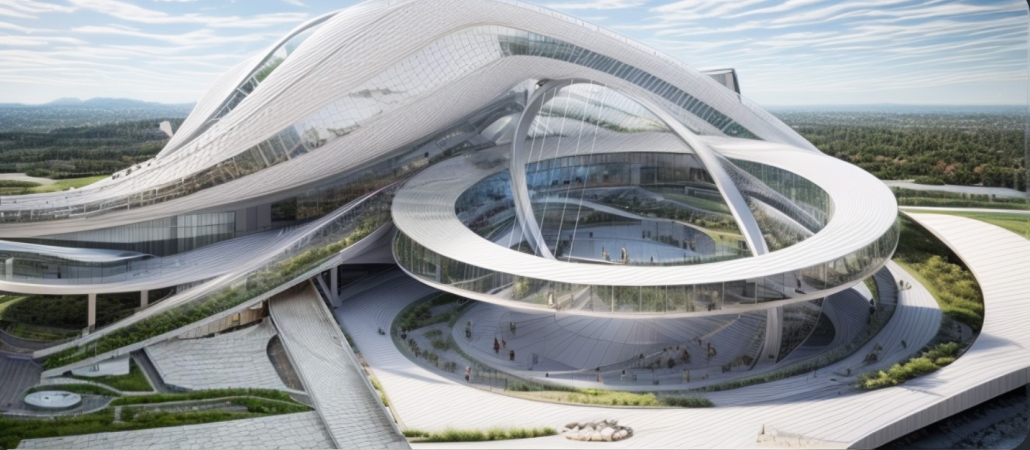
In the dynamic landscape of modern education, “NEXUS” underscores USEK’s unwavering commitment to excellence in education, envisioning a state-of-the-art, smart headquarters that serves as a global hub of interconnected learning.

The Faculty of Robotics and AI represents technological advancements. The iconic dome houses the main auditorium for global educational events, and the surrounding ring encapsulates research laboratories. Innovative features such as dynamic partitions and a revolving stage enhance flexibility, while holographic technology dissolves physical boundaries, fostering a network of knowledge exchange. Sustainability is a cornerstone of the Nexus, employing passive and active methods to reduce energy consumption. Welcome to Nexus, where Architecture, AI and Nature align.

Instagram: @angela.h_, @usekschoolofarchitecture

Architronics: Utilizing Virtual Reality in Architectural Pedagogy by Dean Lambros, B. Arch ’24
Kennesaw State University | Advisor: Robin Puttock

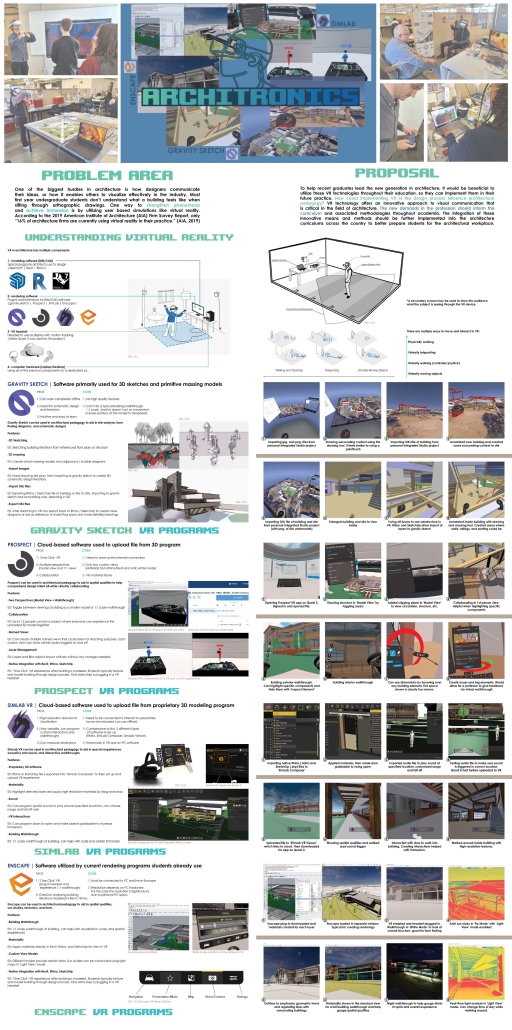
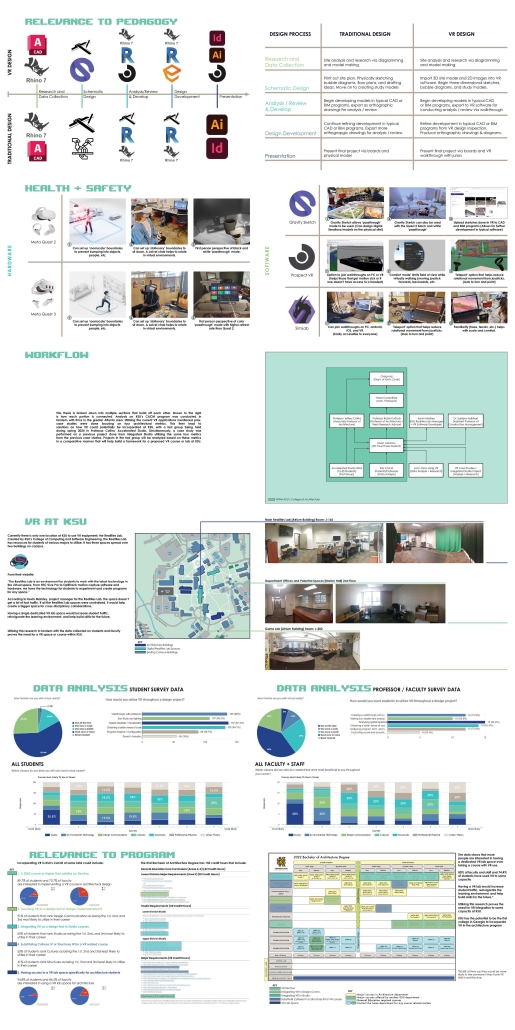
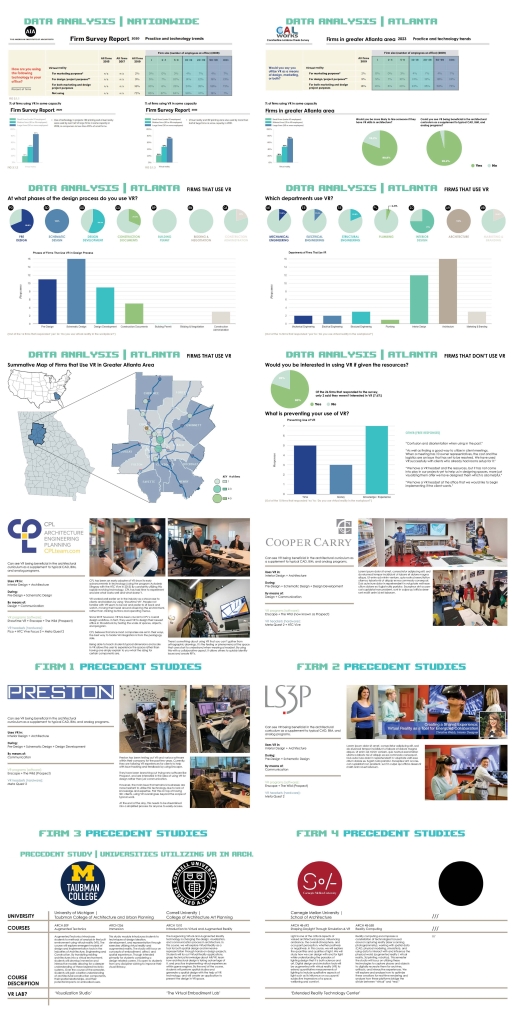
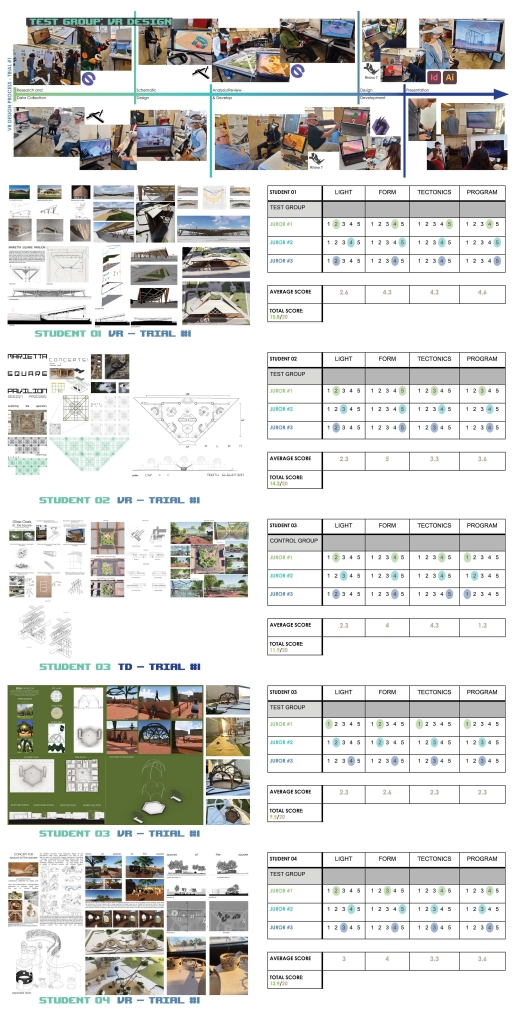
This research is about integrating the recent advancements in VR technology as a way to ‘playtest’ and design in architectural pedagogy. To better gauge the interest in VR and prove the need for VR integration, surveys were conducted among students and faculty within KSU’s College of Architecture and Construction Management (CACM).

A ‘site analysis’ was then conducted within surrounding firms in the greater Atlanta area, leading to precedent studies of local firms that use VR in their practice. By utilizing the firms’ advancements, this shed new light on how VR could be implemented into architectural pedagogy, and why it hasn’t been incorporated into the curriculum yet.

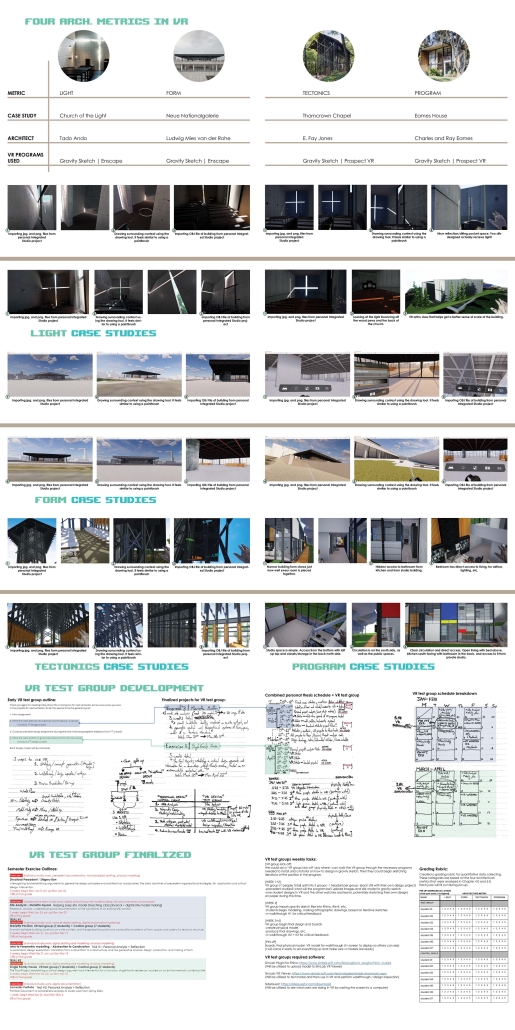
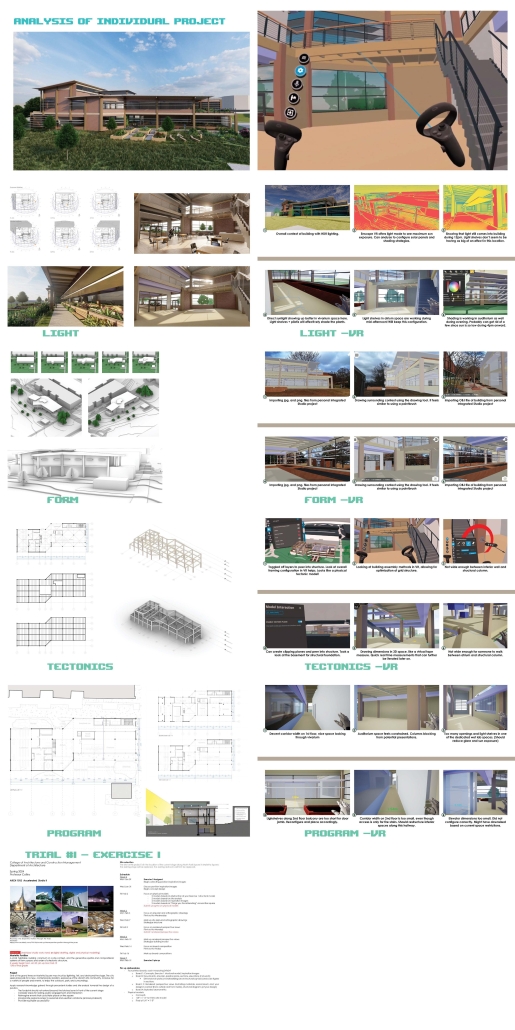
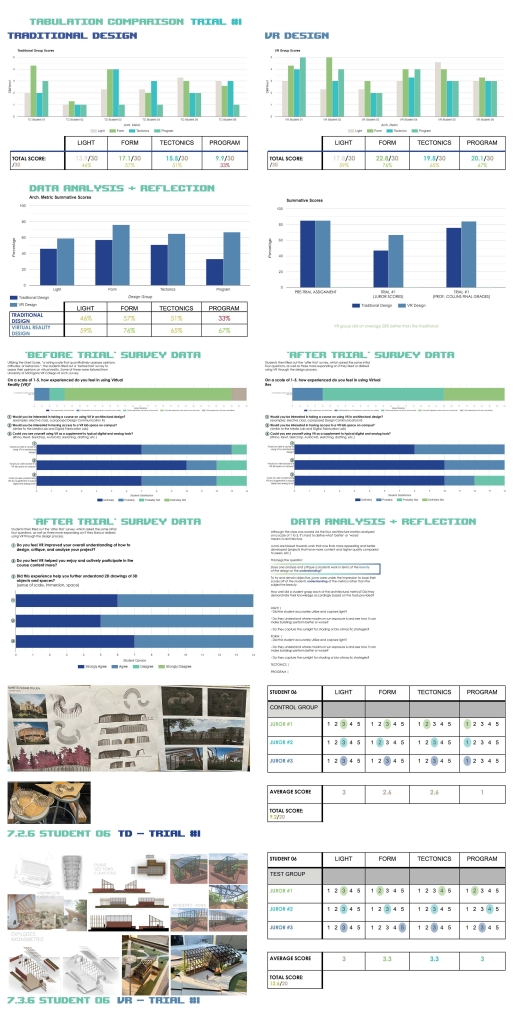
This then led to an analysis of four architectural metrics: light, form, tectonics, and program. Each of these metrics were analyzed in VR through case studies that best exemplify their features. Doing so allowed for a more immersive and concise design approach, which explored new ways to collaborate and critique, and help obtain a better sense of scale within each space.

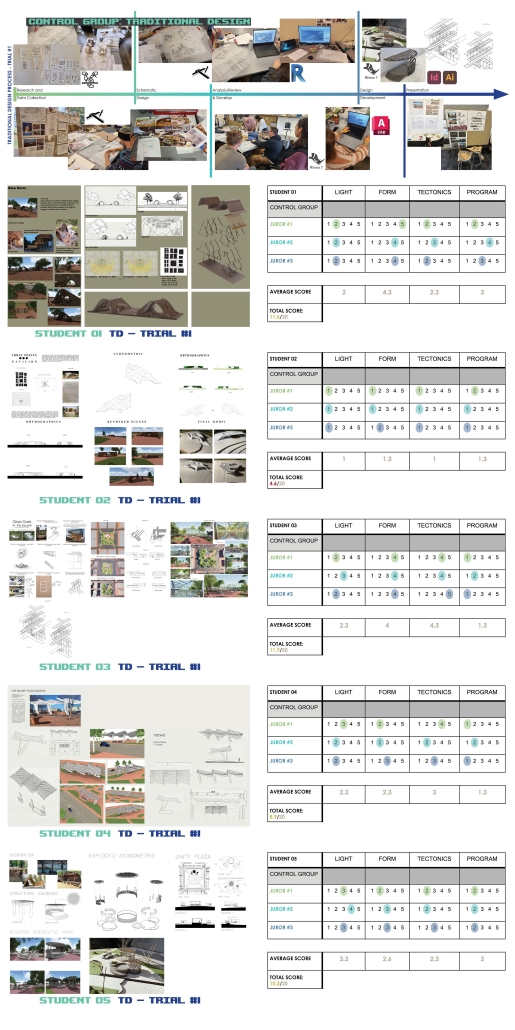
To compare the architectural design process between traditional pedagogy and VR-tailored pedagogy, a research study was performed on a test group of 14 first-year students implemented in the spring semester 2024 accelerated program. They performed a small-scale design project where half utilized VR-centric design and the other half utilized traditional design. The students were critiqued based on the four metrics previously analyzed by qualified jurors, which revealed that the VR design group outperformed the traditional group by 20%, as well as getting twice as high of a score in the ‘program’ metric.

This research, performed within KSU’s College of Architecture and Construction Management, was utilized to propose a 2nd-year Studio course centered around these findings. This comparative analysis on VR pedagogy versus traditional design justifies the need to move towards a more immersive construction industry.

This project was recognized as a Thesis Competition Finalist.

Instagram: @robinzputtock,

Building Trust: Maintenance and Care for Autonomous Vehicles by Dear Liu, James Vadasz & Catherine Yu, BS (Bachelor of Science in Architecture) ‘24
Washington University in St. Louis | Advisor: Constance Vale

This multi-modal transit hub proposes a new AV transportation and maintenance center for people to learn about and experience the latest technology. To further publicize the use of AV, our building deliberately displays the acts of maintenance through material choices, apertures, and curated spatial sequences. As a result, we imagine the building welcoming anyone passing by as a place of efficiency, comfort, and wonder. 

Our design focuses on aperture and pushes it to the extreme. What if the ground floor was a multitude of portals that led one to their desired stops and lifted the building up? How can the mere use of a singular element not only segment spaces both above and below but also provide the necessary structural support for the building? 

This project was collected for the Washington University in St. Louis Student Work Publication, Approach.

Instagram: @dearliuweihang, @de_architects_, @jamesvadasz2, @catherineyu.qh, @constancevale, @washu.architecture

CITY IN POCKET, Level up TODAY! by Rachana Charate, M. Arch (Urban Design) ’24
R V College of Architecture | Advisors: Anup Naik & U. S. Maiya

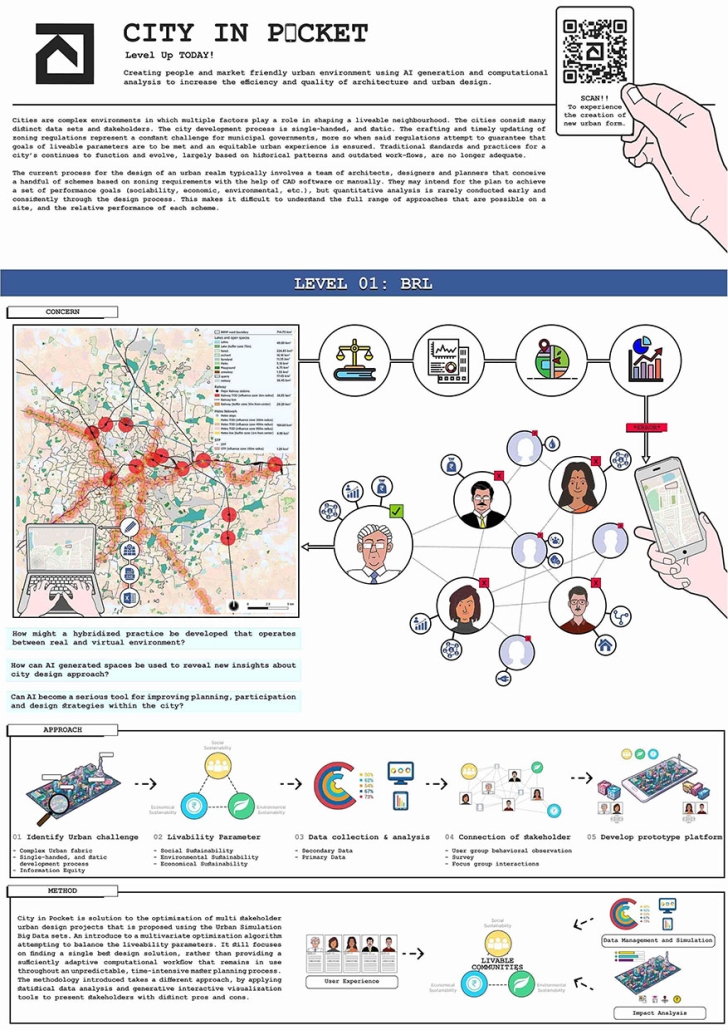
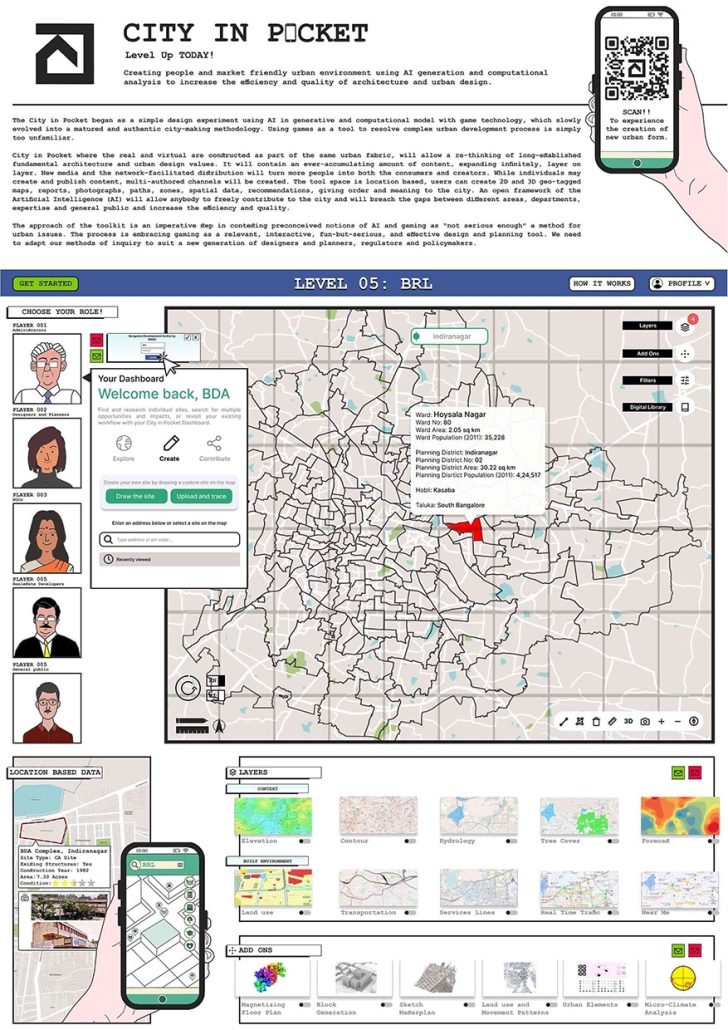
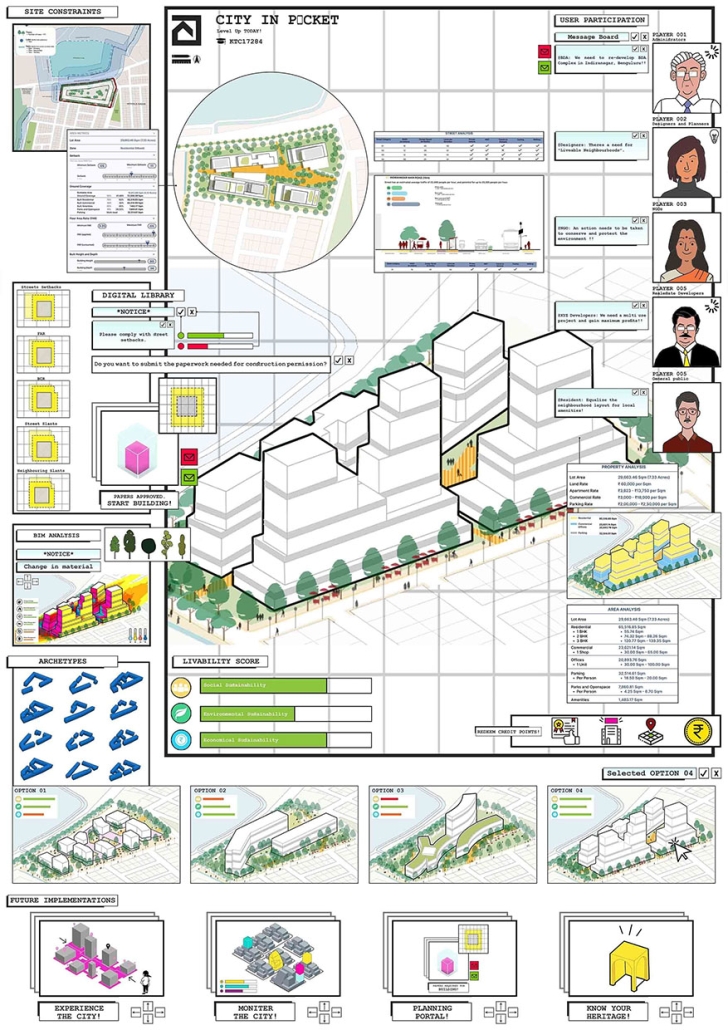
This exploratory thesis looks at creating a people- and market-friendly urban environment by synthesizing AI computational analysis and generation to increase the efficiency and quality of architecture and urban design.

Cities are complex environments in which multiple factors play a role in shaping a liveable neighbourhood. The cities consist of many distinct data sets and stakeholders. The city development process is single-handed and static. The crafting and timely updating of zoning regulations represent a constant challenge for municipal governments, more so when said regulations attempt to guarantee that goals of liveable parameters are met and an equitable urban experience is ensured. Traditional standards and practices for a city continue to function and evolve, largely based on historical patterns and outdated workflows and are no longer adequate.

The current process for the design of an urban realm typically involves a team of architects, designers and planners that conceive a handful of schemes based on zoning requirements manually or with the help of CAD software. They may intend for the plan to achieve a set of performance goals (sociability, economic, environmental, etc.), but quantitative analysis is rarely conducted early and consistently through the design process. This makes it difficult to understand the full range of approaches that are possible on a site and the relative performance of each scheme. In order to best accommodate rapid urbanization while making cities more liveable, and equitable, designers must utilize quantitative tools to make informed decisions about their designs. Computational analysis and generative design techniques have been successfully used at the building scale to test numerous designs and quantify their performance, but are challenging to apply at the urban scale due to increased computational expense, difficulty in limiting inputs, and more stakeholders involved in the process. The purpose of this project is to introduce a methodology for AI generative models, capable of evaluating performance goals based on the information available at each step of the development and communicating the impacts on those goals of any decisions regarding land use, density and form, etc.

The City in Pocket proposes AI computational and generation, where the real and virtual are constructed as part of the same urban fabric, which will allow a re-thinking of long-established fundamental architecture and urban design values. It will contain an ever-accumulating amount of content, expanding infinitely, layer on layer. New media and the network-facilitated distribution will turn more people into both consumers and creators. While individuals may create and publish content, multi-authored channels will be created. The tool space is location-based, users can create 2D and 3D geo-tagged maps, reports, photographs, paths, zones, spatial data and recommendations, giving order and meaning to the city. An open framework of AI will allow anybody to freely contribute to the city and will breach the gaps between different areas, departments, expertise, and the general public and increase efficiency and quality.

Instagram: @_charate_, @usmaiya.design

Bespoke Moon by Austin White, B. Arch ’24
Kennesaw State University | Advisor: Jeffrey Collins

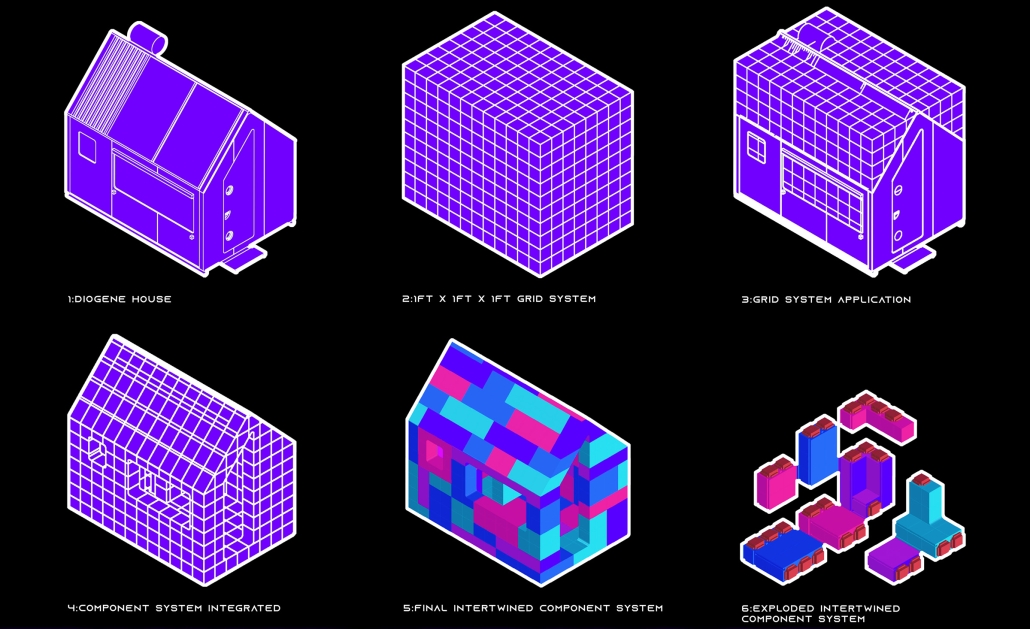
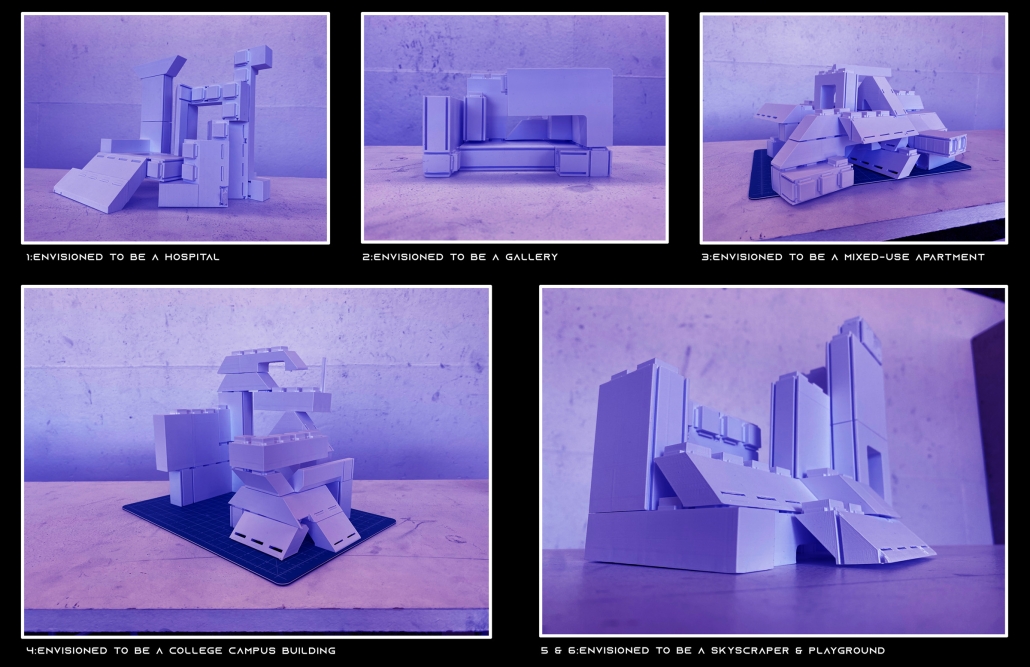
Welcome to Bespoke Moon, the next high-tech, component-based system that allows architects and designers to fully immerse themselves in design once again.

Designers grow up nurturing a passion for design, then eventually attend school to hone their skills. However, bringing these designs to life in the built environment involves a lot of tedious work and time to ensure safety, structural integrity, and compliance with codes. With that in mind, I aim to transform our traditional processes.

Bespoke Moon’s component-based system utilizes 3D-printed, prefabricated steel components that lock, seal, stack, and interlock in a unique way, allowing them to connect with one another and incorporate structure. These connections enable the components to withstand all weather and climate conditions in the future, potentially an extraterrestrial environment, reflecting an industrial outer-space aesthetic.

This high-tech component system is powered by Bespoke Moon’s new AI, which assists in generating these components, allowing architects and designers to focus solely on design. Moreover, the components generated from other designs provide an opportunity to create a library of Bespoke Moon components. This enables reuse in various ways in new designs across a variety of scales. The ultimate goal of this high-tech, component-based system is to allow architects and designers to dive back into design, as they were taught and born to do, by integrating artificial intelligence to revolutionize conventional construction and design processes in modern architecture.

This project was awarded third place in the KSU Architecture Thesis Competition 2024.

Operative Approaches: Potential in Limits in Design Process by Chantal Shahmooradian, M. Arch ’24
Toronto Metropolitan University | Advisors: Carlo Parente (Supervisor), Kate Myers (Second Reader) & John Cirka (Program Representative)

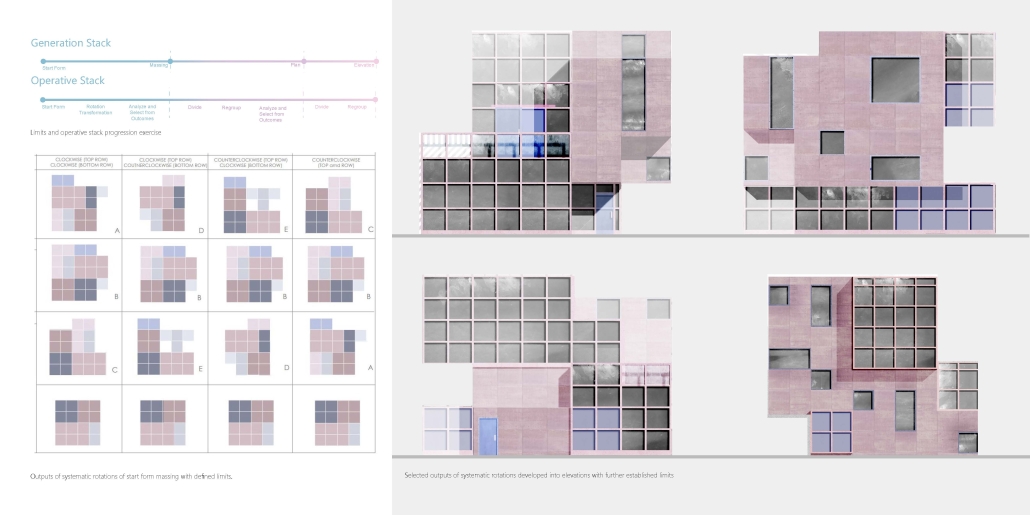
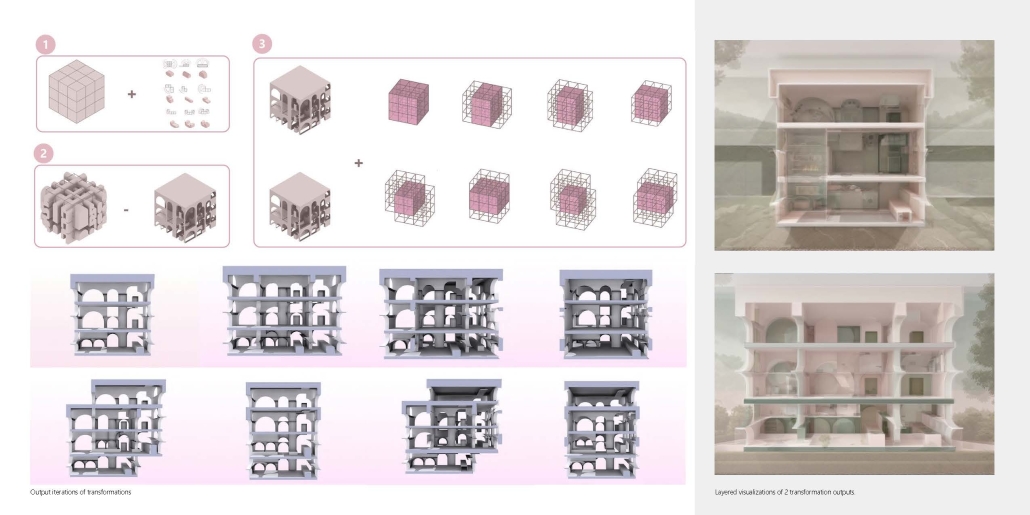
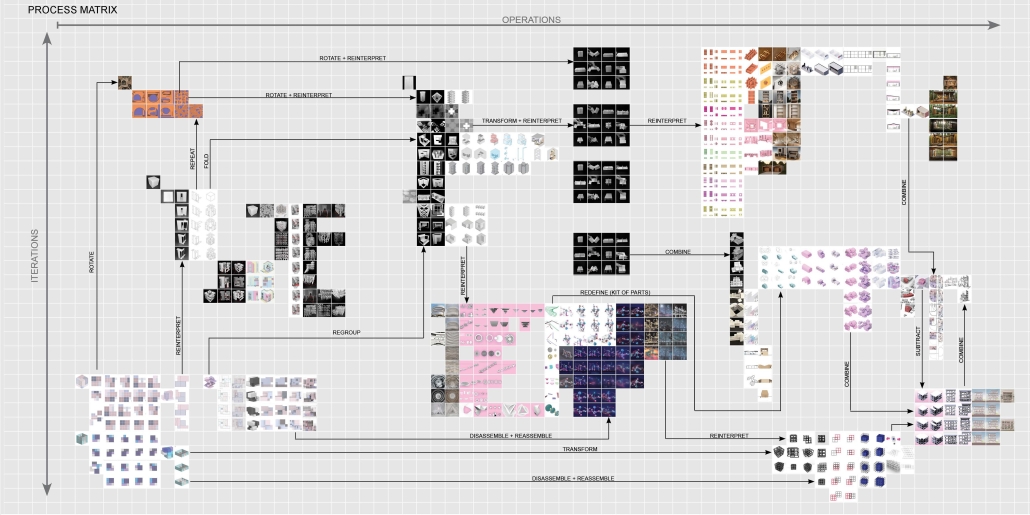
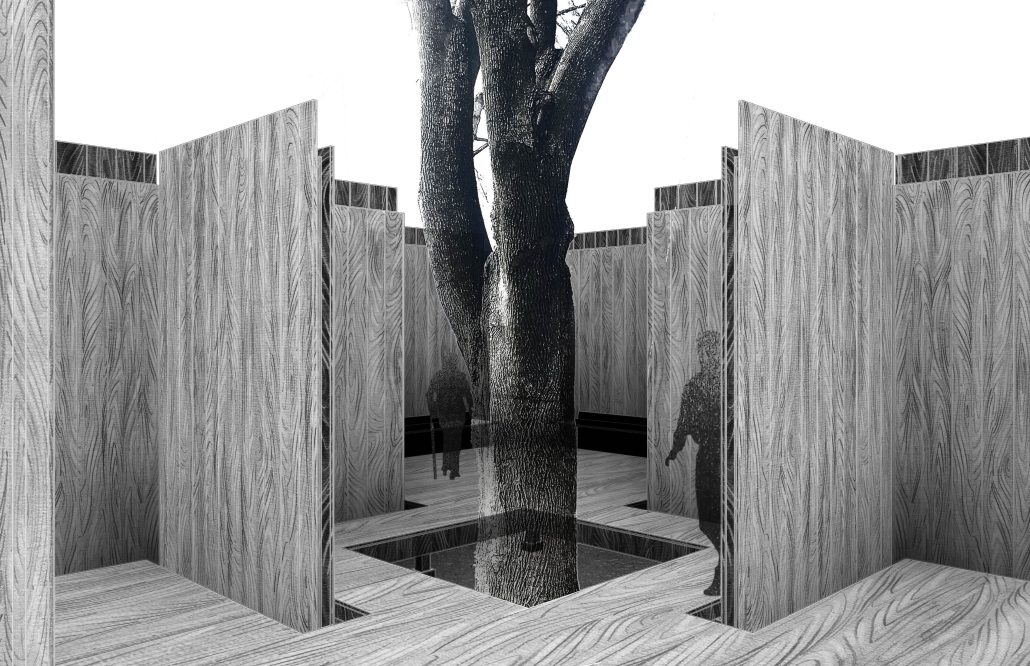
In the realm of architecture, limits are often perceived as obstacles, however, this research reimagines them as powerful catalysts for creativity. By embracing constraints and leveraging operative approaches– with structured systems revealing a comprehensive array of possibilities within project limitations– architects can unlock new depths of innovation within the design process. This research explores the transformative potential of working within limits, through the use of a variety of tools such as drawing, digital media, AI, and physical models to illustrate how constraints can inspire inventive solutions.

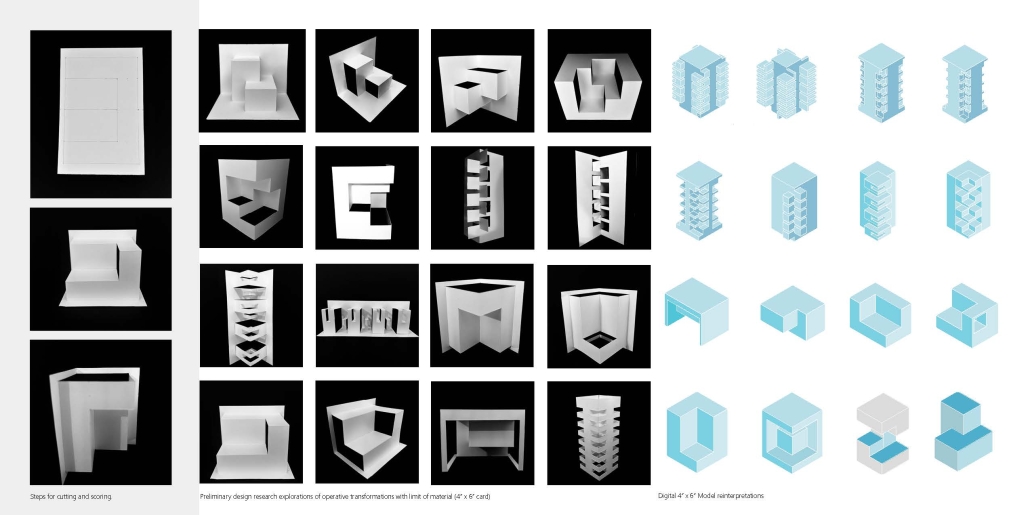
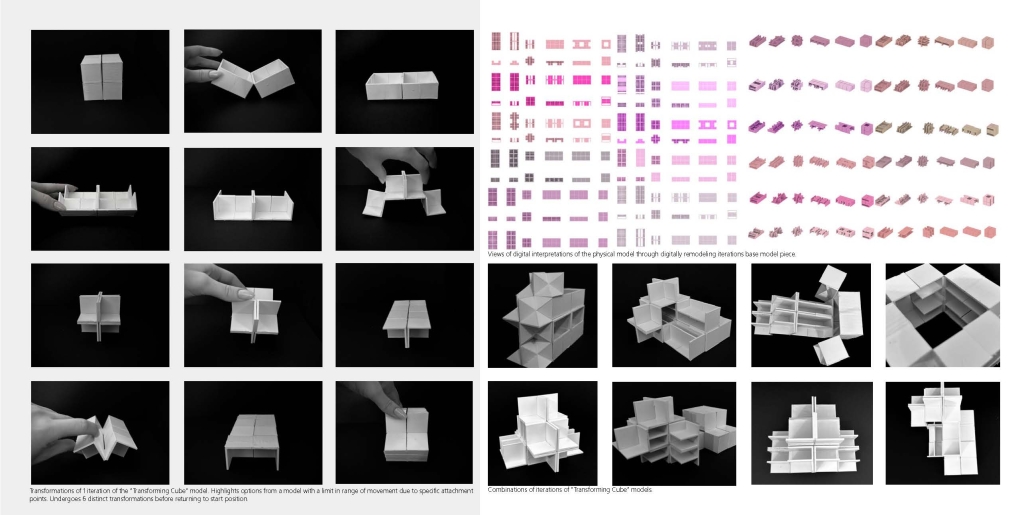
The thesis advocates for a holistic view of design tools, not merely as means of production but as active agents in the creative process. It demonstrates how models and drawing techniques can shape design outcomes from the earliest stages, fostering a dynamic and iterative approach. Through the use of exercises that implement transforming physical models, with chosen limits, the study underscores the critical role of limits in defining problem spaces and guiding the creative journey.

A key focus is the distinction between given constraints and those chosen by designers, showcasing the architect’s skill in navigating these boundaries. The research highlights heuristic reasoning’s impact on design decisions, balancing the benefits of guided problem-solving with an awareness of cognitive biases. Visual explorations with the use of dynamic physical models with limits demonstrate the potential of these approaches as key pedagogical tools which can enhance the way designers and architects approach design problems, fostering innovative design thinking strategies.

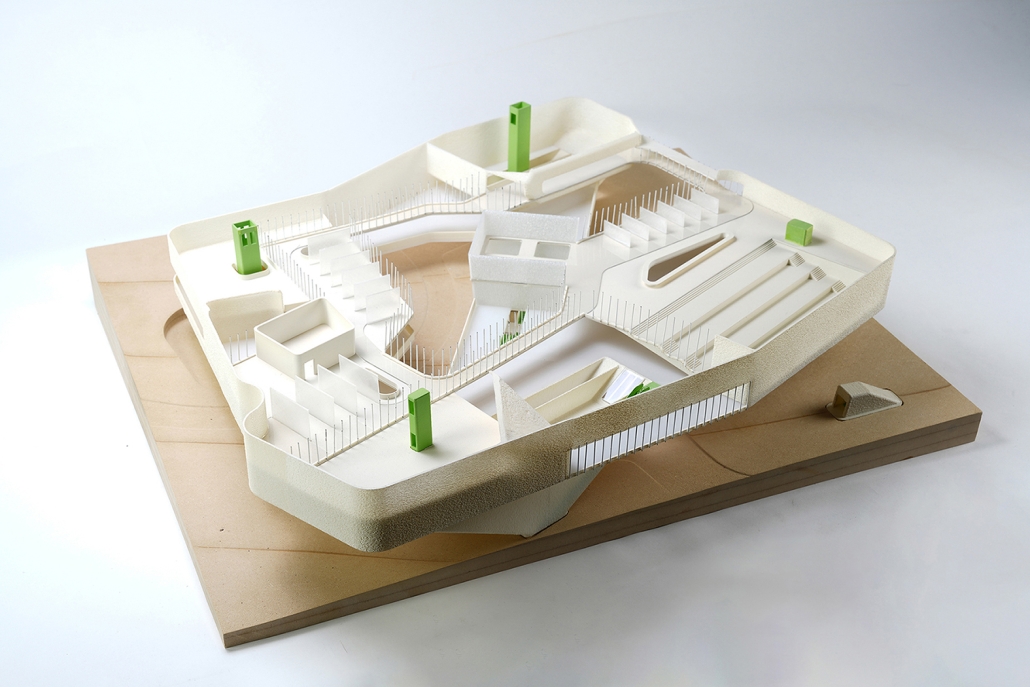
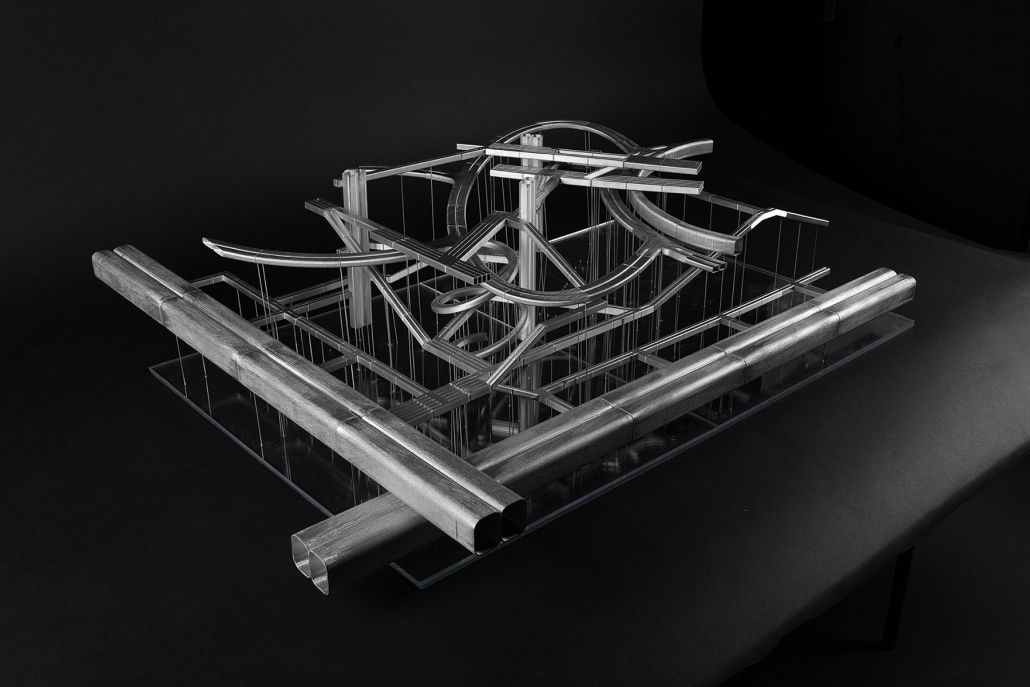
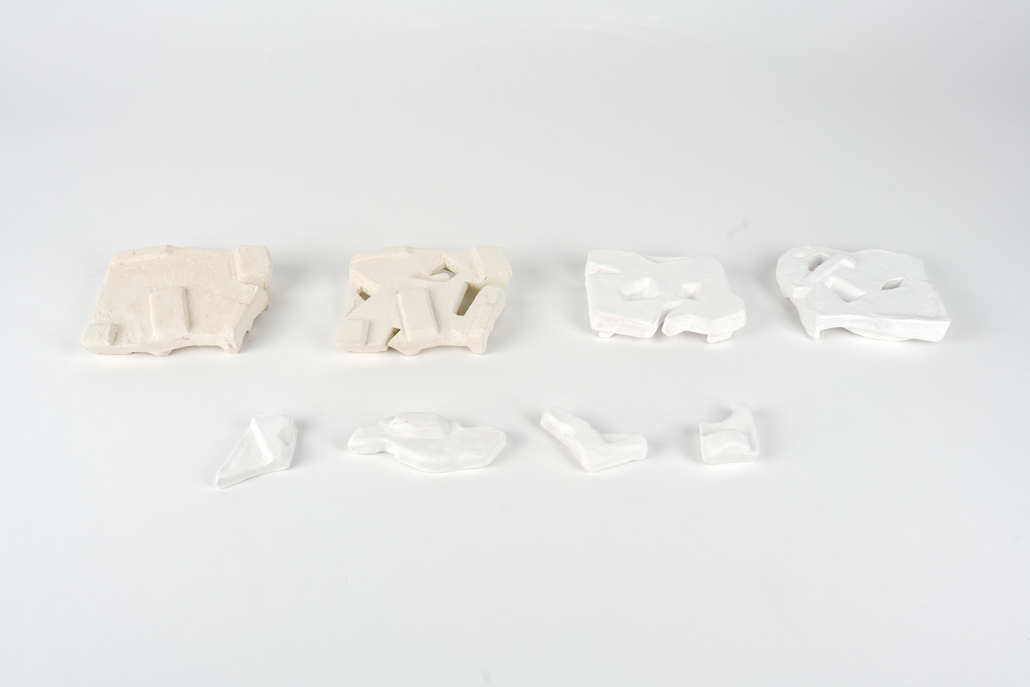
Operative approaches are explored through physical models inspired by 3D puzzles, which serve as inspiration for problem-solving methodologies within defined limits in the design research. These models reveal the rich spatial possibilities that emerge within set constraints, offering new avenues for creative exploration that exist within the limits.

By showcasing a series of innovative design solutions derived from these explorations, the thesis illustrates how constraints can be harnessed as opportunities rather than hindrances. This approach not only enhances architectural creativity but also provides meaningful insights and outcomes, demonstrating the profound potential of limits in the design process.

Instagram: @chantal_shah, @dastorontomet, @tmu_archgrad

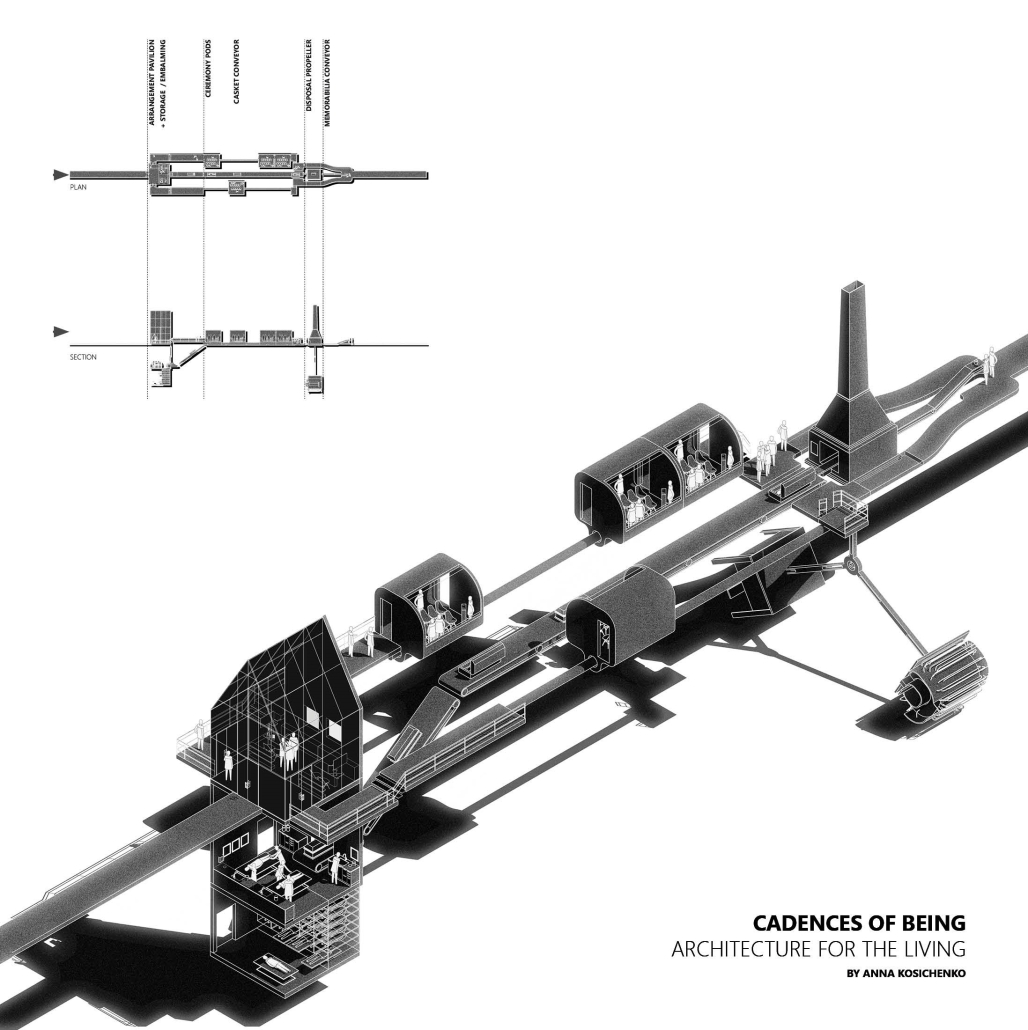
Cadences of Being: Architecture for the Living by Anna Kosichenko, M. Arch ’24
Toronto Metropolitan University (formerly Ryerson University)| Advisors: Paul Floerke (Supervisor) | Stanislav Jurcovic (Second Reader) | Carlo Parente (Program Rep)

Architecture is an artifact frozen in time, a physical ‘time stamp’ – an object that reflects its environment and values. While such physical ‘time stamps’ define our relationship with mortality, it begs the question: “What is the future role of burial architecture in the realm of living?”

‘Funeral Machine’ is a conceptual representation of current outdated, mechanized and costly burial practices are centred on the efficiency of the process rather than the experience of users, facilitating further physical and metaphysical disconnect between life and death.

New technologies for sustainable dying provide an opportunity to reform the ritual of mourning and use the built form to redefine culture’s relationship with mortality and grief. The proposal provides a space for grieving in a city, crafting architecture that values human-centred experience and shines a light on death as part of life.

Instagram: @enot_sosna5, @tmu_archgrad

The Architecture Factory by Steven Fallon, M. Arch ’24
Boston Architectural College | Advisor: Sam Landay, AIA

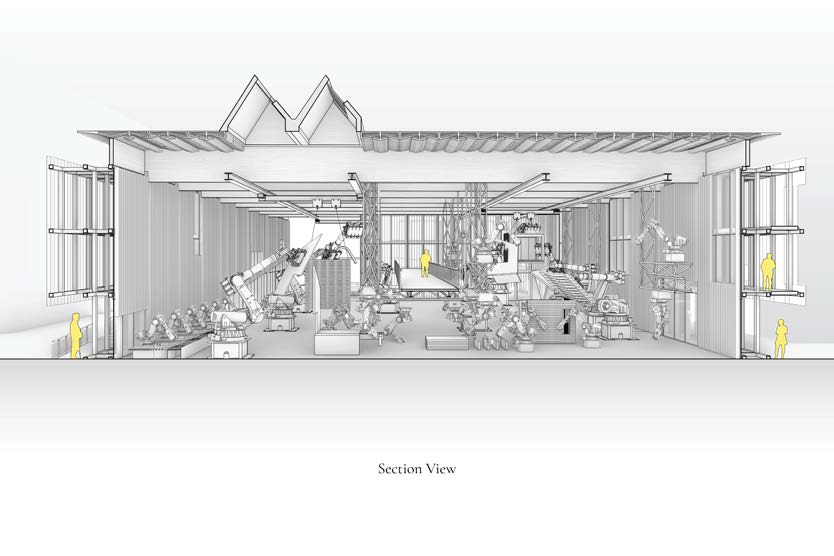
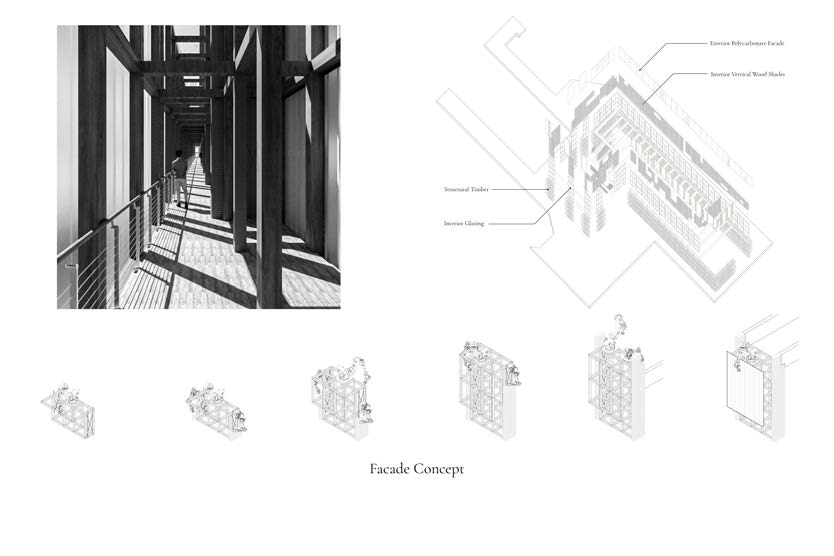
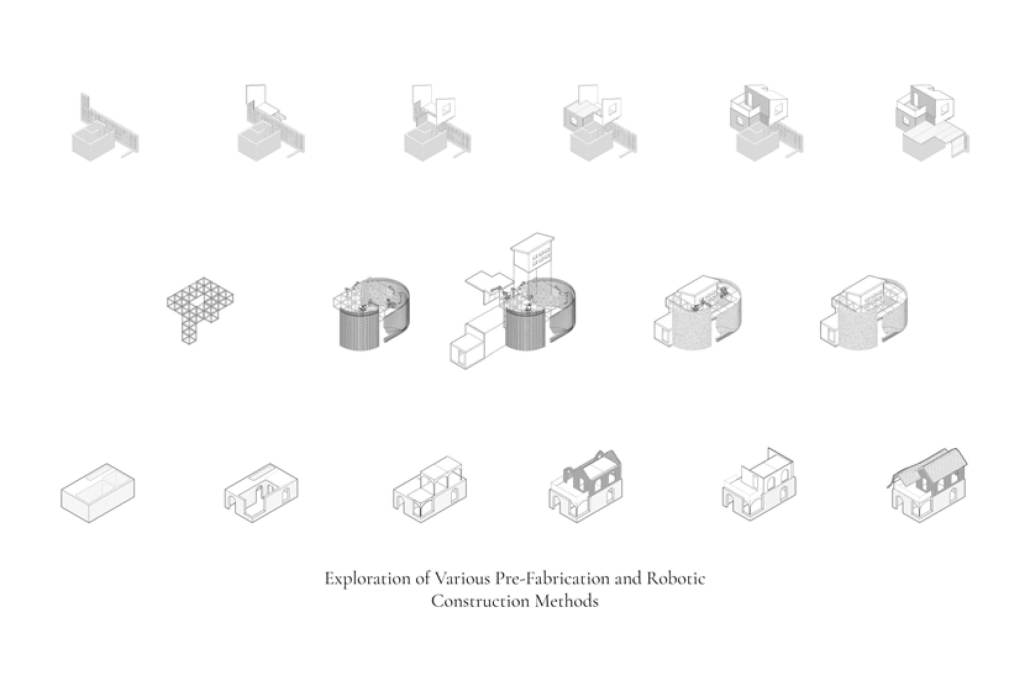
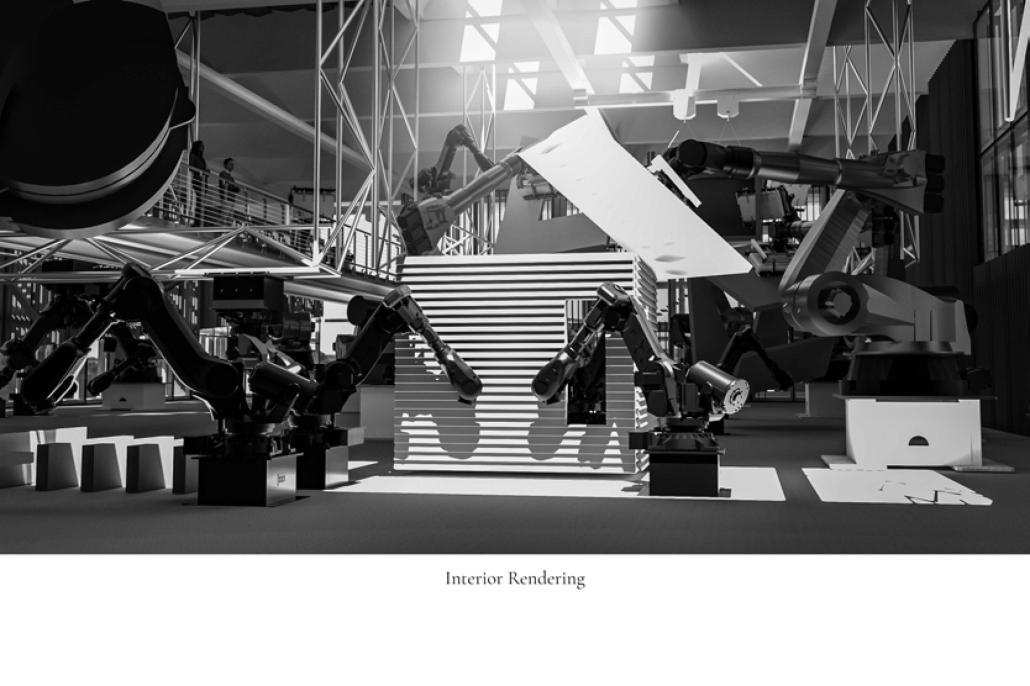
The Architecture Factory contemplates craftsmanship in the context of contemporary architecture and re-imagines the role of the Architect in a new age of digital design and construction. Standing amidst the global housing and climate crises, the project asks how we can utilize robotics to not only advance construction and design efficiency but also enter a new age of design that is built upon excellence in the craft of building.  

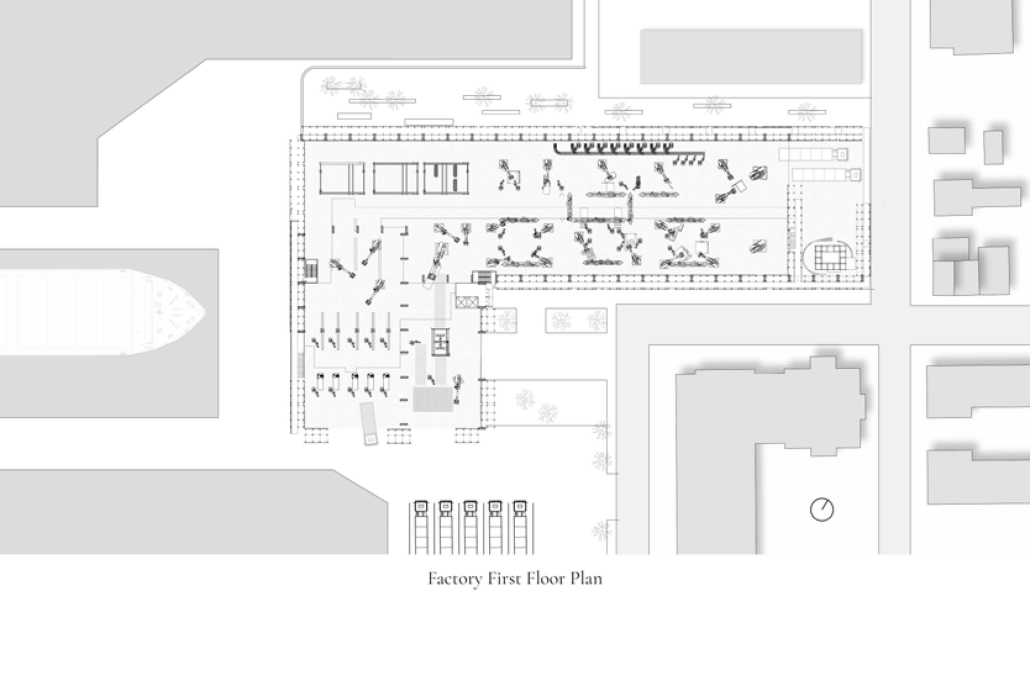
The ideas of this thesis are represented through the design of a factory on the site of a previous machine shop on the waterfront of East Boston, Massachusetts. Inside, a new studio space takes hold, where architecture comes to life in the form of physical construction, a craft that is taught and learned, experimented with, and refined. No longer would architecture be represented just by drawings, but by physical and material representations of the designer’s imagination, built directly in the studio. Wielding the powers of the robot and computer to their advantage, here, the robot becomes a prosthetic arm and extension of the architect, while the architecture transcends from concepts and representations into physical, tangible creations.

The project first delves into the fabrication and construction methods of our future homes. It then examines the design and construction of the factory itself, considering the human interaction with the building process and asking how we can bring light to the processes that build the world around us. Robots construct their own factory and provide humans the space to observe the performance of construction from a distance. Architects serve as maestros of a robotic symphony, guiding these machines and orchestrating a performance of precision and efficiency-driven construction, resulting in an architecture that is founded in the fundamental elements of architecture – material, craft, and construction.

This project was awarded Commendations: Master of Theis Excellence – Architecture. 

Instagram: @stevenfallon7

Stay tuned for Part II!
2023 Study Architecture Student Showcase - Part XVI

Welcome to Part XVI of the Study Architecture Student Showcase! Today, we explore the narrative of “othering” as it relates to architecture. The highlighted student work revisits norms by applying computational methodologies to the design process, positioning a tent city in an industrial zone, reimagining modernization without demanding the complete erasure of urban communities, and more. Read on for more information.
Alleviating Othering Spaces, AI Analysis, and Form in Negril, Jamaica by Caelyn Ford, Bachelor of Science in Architecture ‘23
Boston Architectural College | Advisor: Robert C. Anderson

Nothing will change until we acknowledge two truths about ourselves and the built environment; that architecture reflects, reaffirms, and legitimizes narratives of a society that ‘others’ and defines an individual’s role in society, begetting ‘othering spaces.’

That which can be physically confirmed is often prioritized over its cognitive counterpart. Design solely for the corporeal, neglecting the cognitive, is a lie of pretended humanism within the architecture profession. The thesis aims to develop a tool that expands the

capabilities of inclusive design to transform perceptual understandings of the self and ‘other’ by analyzing architecture through a neuro-phenomenological lens. This endeavor is two-fold: design for the mind and design for the other.

The thesis project investigates means of alleviating ‘spatial othering’ by quantitatively studying the building’s behavioral and emotional effect on its users to equalize the cognitive experience. Cognitive-Informed Design in architecture presents an opportunity to create paradigm shifts by applying computational methodologies to the design process. Recognizing the need for a system to connect with the end users efficiently during the design process, the potential of web-based VR, AI-generated eye tracking, brain mapping software, and biosensors was explored in this thesis to develop the design criteria.

This project was selected as the Best of Bachelor of Science degree project.

Urban Refuge: Assisting in the Development of Tent Communities Through Modular and Trauma Sensitive Design by Peter Hope, M. Arch ‘23
Academy of Art University School of Architecture | Advisor: Eric Reeder

Homelessness in the United States is a problem that disproportionately affects California. According to the World Population Review, the homeless population in California is 161.5 thousand; that is 16x more homeless people than the national average of 11.4 thousand. It is suffice to say that the issue of homelessness is not going away any time soon. Of all the cities in the United States, three of the cities with the highest homeless population exist in the Bay Area. San Jose, Oakland, and San Francisco account for 10% of the homeless population of the entire state.

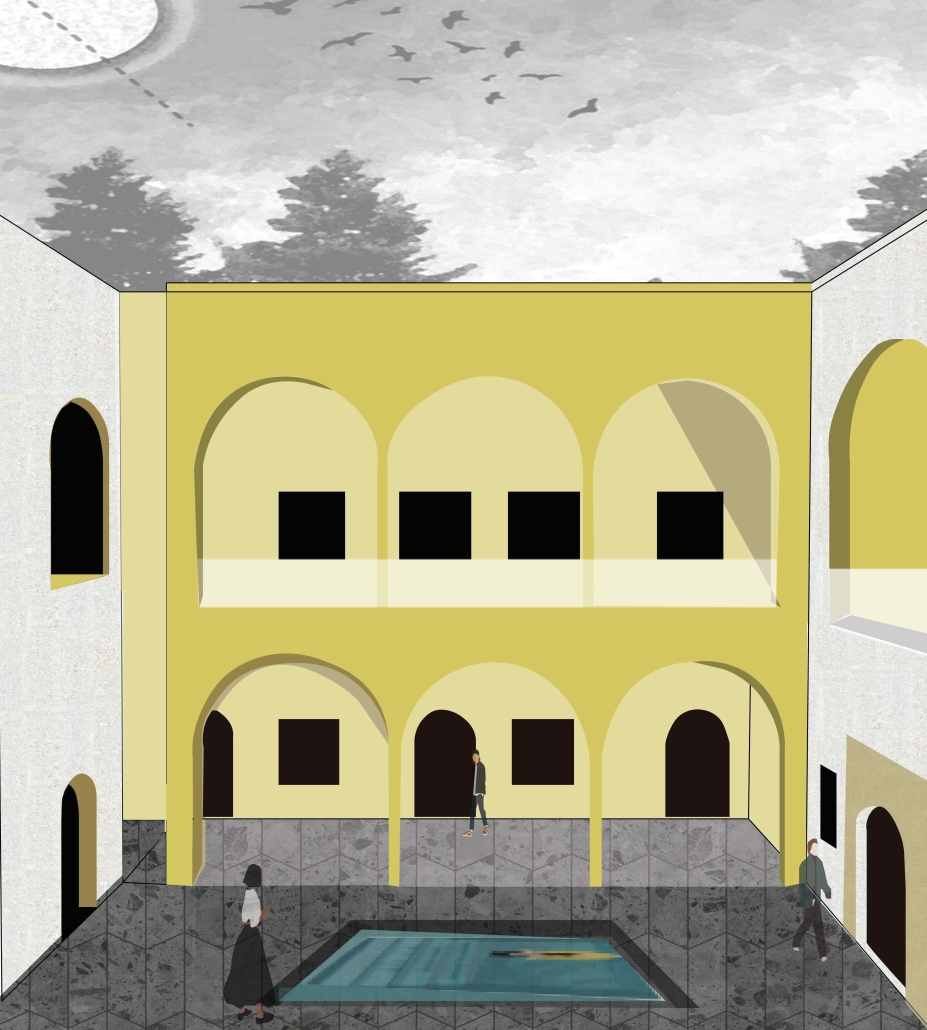
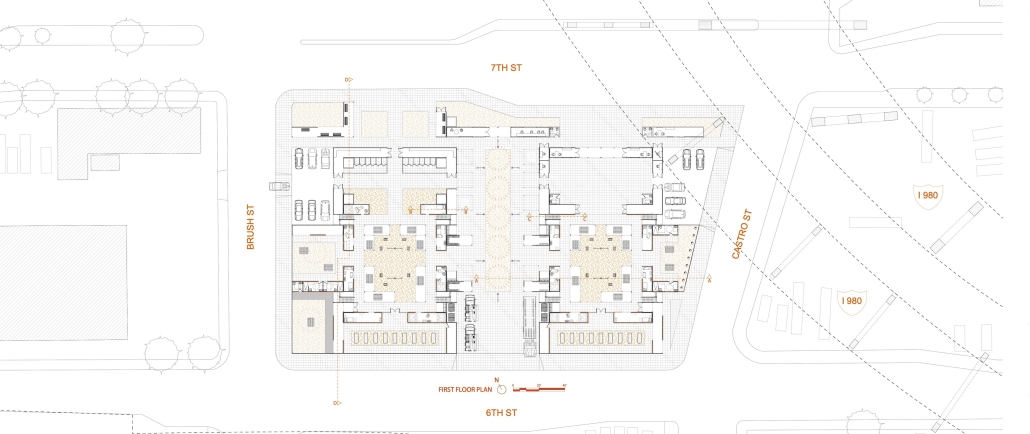
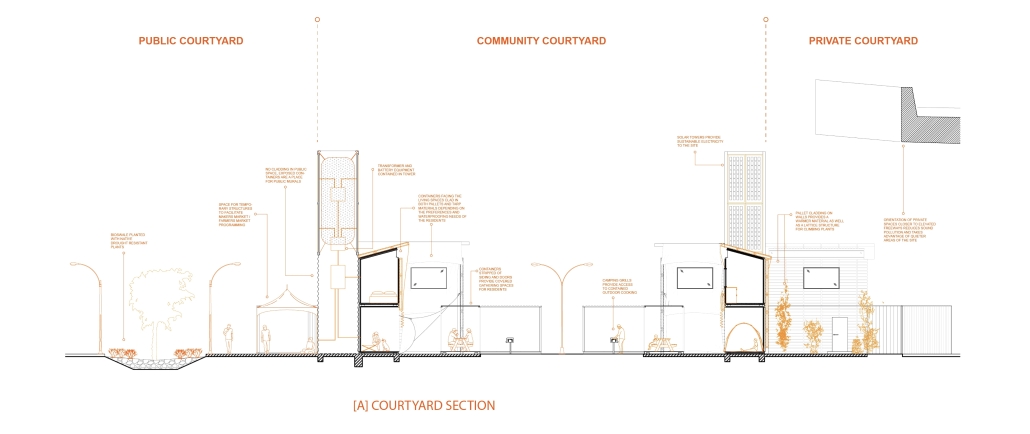
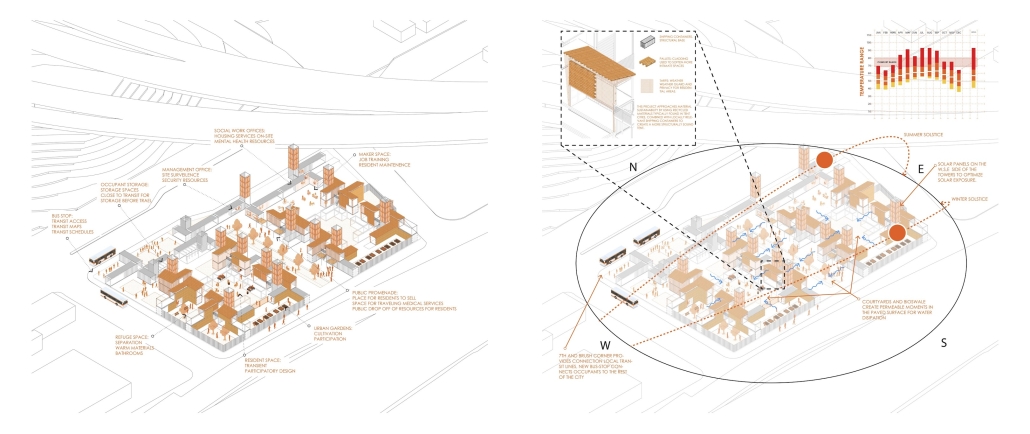
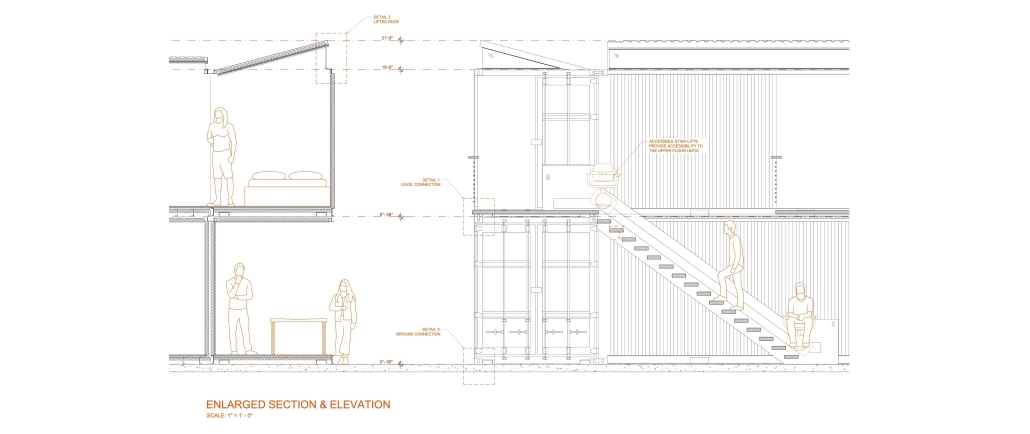
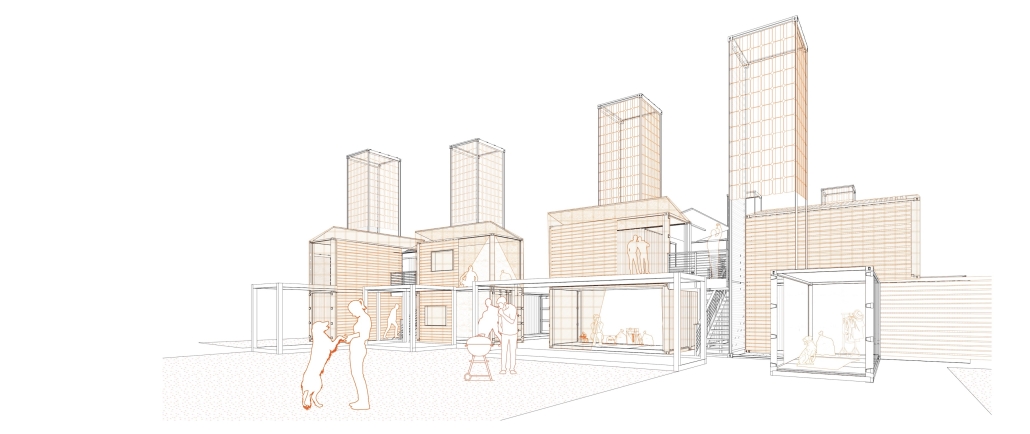
The objective of this thesis is to find ways to create better spaces of refuge for the unhoused residents of Oakland, who currently call tent cities home. Tent cities are one way that the unhoused communities organize themselves. Tent cities can pop up anywhere, from highway medians to the side of the road. The selected site for this project is inhabited by a fledgling tent city that has not quite found an organizational rhythm as others in Oakland have. It is also positioned in an industrial zone which presents opportunities for city sanctioning, should the project be successful.

Instagram: @ericreeder.architect, @_peterhope

Kalunitas by Alex Jauregui, Alex Lopez, Armando Torres, Ayah Milbes, Bailey Campbell, Chris Rosenbaum, Francisco Ramos, Hannah Gonzalez, Huda Shahid, Joshua Arriaga, Josue Garay, Justin Mai, Kavi Patel, Lucio Castro, Macey Mendoza, Sarah Trevino, Sophia Cruz, Valentin Torres, and Xavier Zamora, B.Arch ‘23
University of Texas at San Antonio | Advisor: Armando Araiza

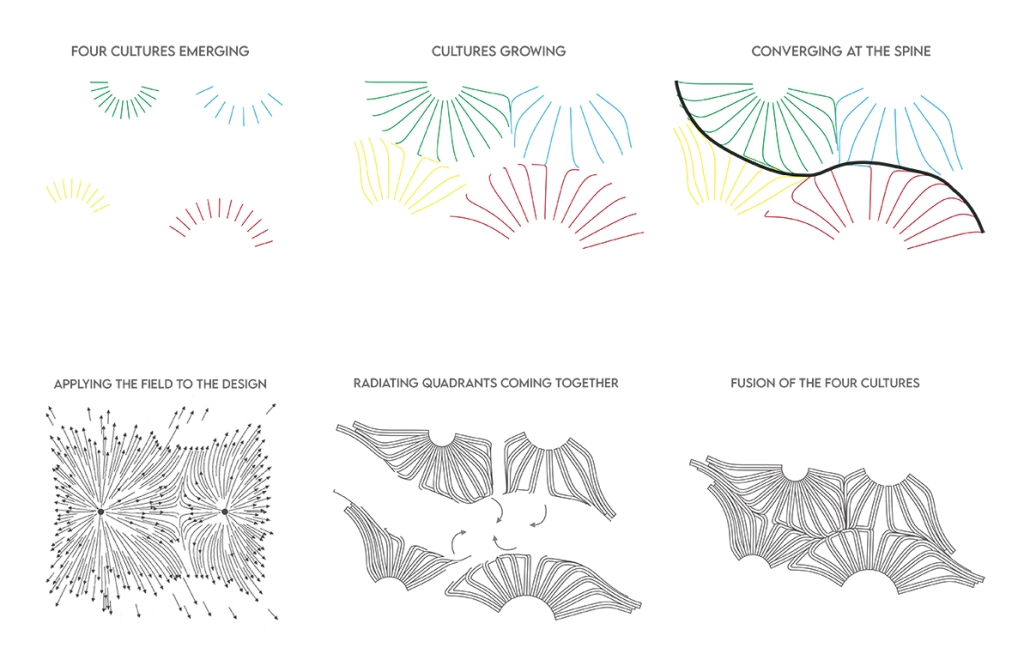
An installation that illustrates the movement of people to San Antonio throughout the past 300 years and beyond. The word “kal” derives from the indigenous language of the Coahuiltecans meaning “come together” and “unitas” being the Latin word for “unity.” Kalunitas expresses the convergence between four of the founding cultures that have made the San Antonio region one of the most diverse in the United States.

Instagram: @conetic_studio

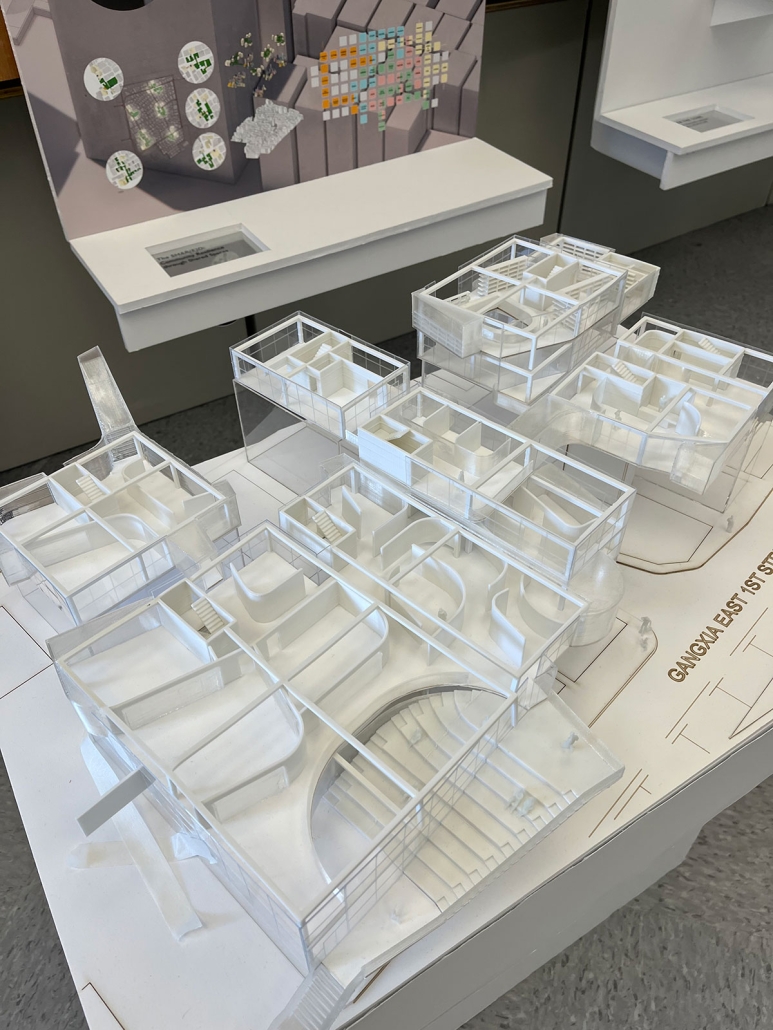
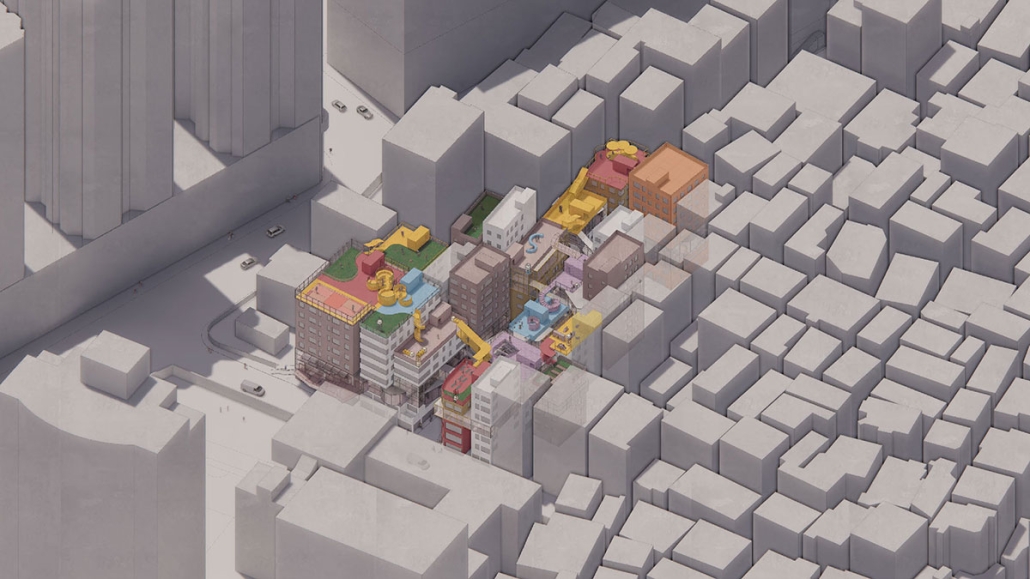
The Shar(e)d: Community Resilience Through Shared Spaces by Yiting Chen, M.Arch ‘23
University of Southern California | Advisor: Amy Murphy

Cities’ growth and evolution can pressure existing communities by changing the urban landscape, as seen in the Shard in London, where the construction of a glass skyscraper risks displacing the economically poor and working class. Such development doesn’t necessarily bring true social progress to the neighborhoods. A large area of glass introduced in the neighborhood almost put a death sentence on the community. This trend can be observed in many communities near central business districts.

Is there another way towards modernization without demanding complete erasure?

How can the elements of the Shard be recombined into the urban landscape in a more sensitive gesture?

How can the use of glass be more about the place and the people?

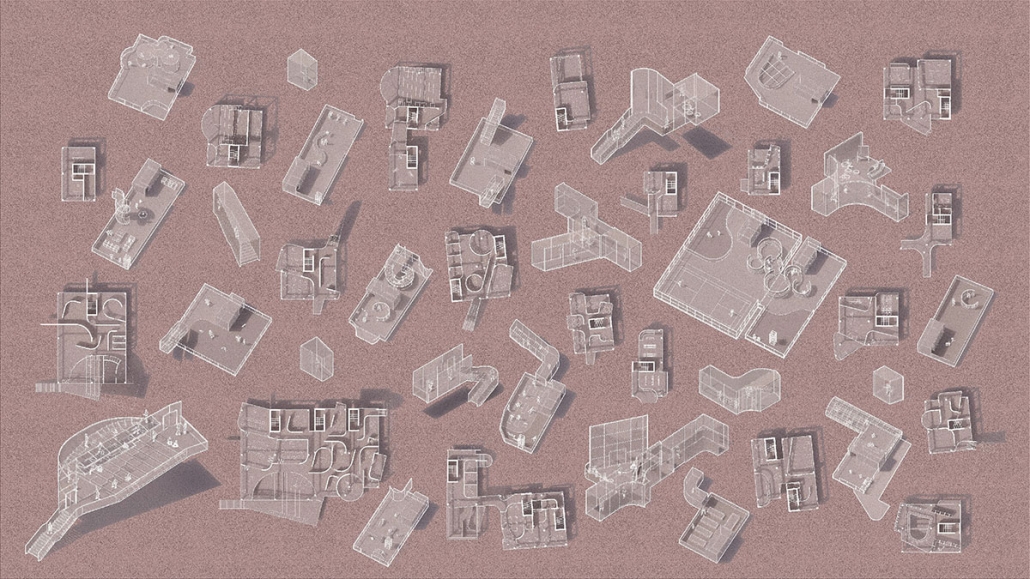
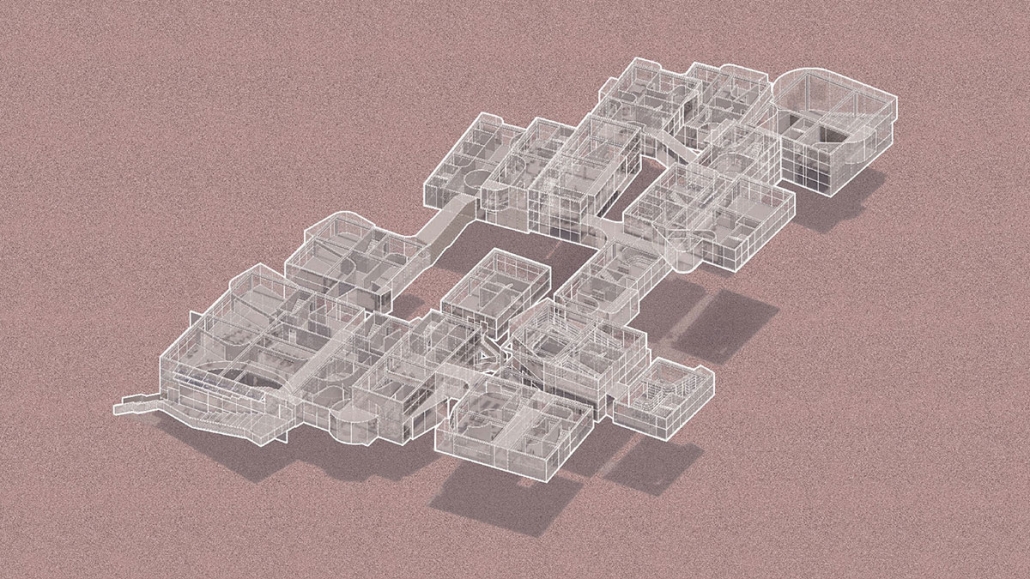
This project focuses on the development of public and shared spaces in GangxiaVillage. The synergy of public spaces can be infused into this super-dense neighborhood to ensure that the benefits of progress and development are shared fairly.

The glass will bring active changes and connections while preserving the special urban fabrics and characters of the neighborhood. A network and system of resources will be introduced to serve the residents, and this network is expected to expand and evolve when future needs arise.

This project received the USC Master of Architecture Distinction in Directed Design Research.

Instagram: @sallychenyt, @amy_murphy143

See you next week for the next installment of the Student Showcase!

2023 Study Architecture Student Showcase - Part V

Welcome back to another installment of the Study Architecture Showcase. In week 5 we focus on student architecture projects that discuss the innovative ways in which software can redefine traditional approaches and contribute to the creative process.

Color Space: From Image to Object by Aileen Zaldana, B.Arch ’23
Woodbury University | Advisor: Mark Ericson

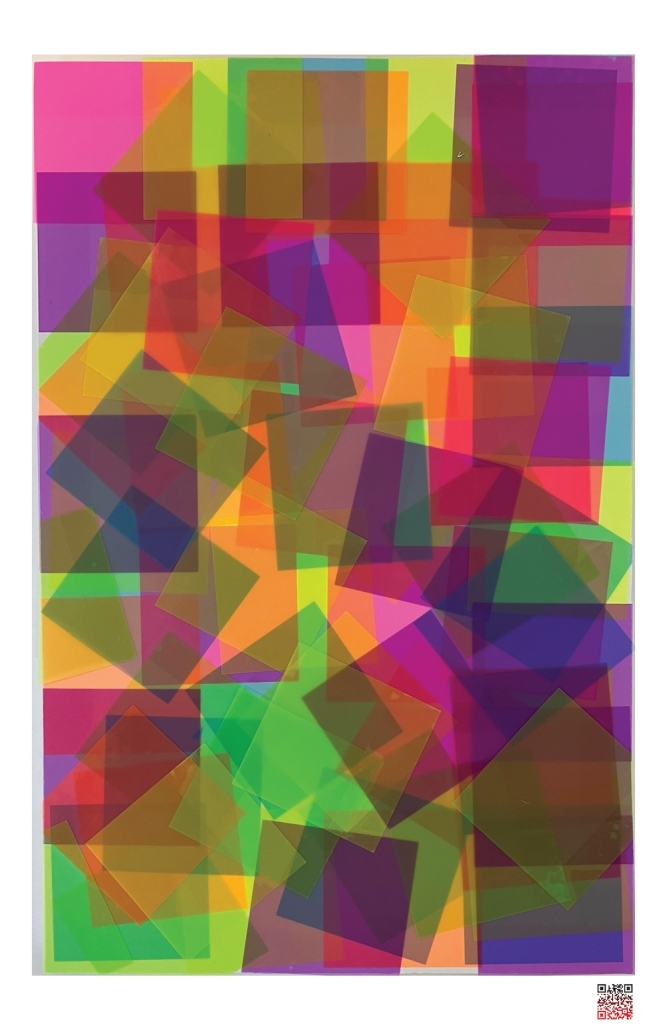
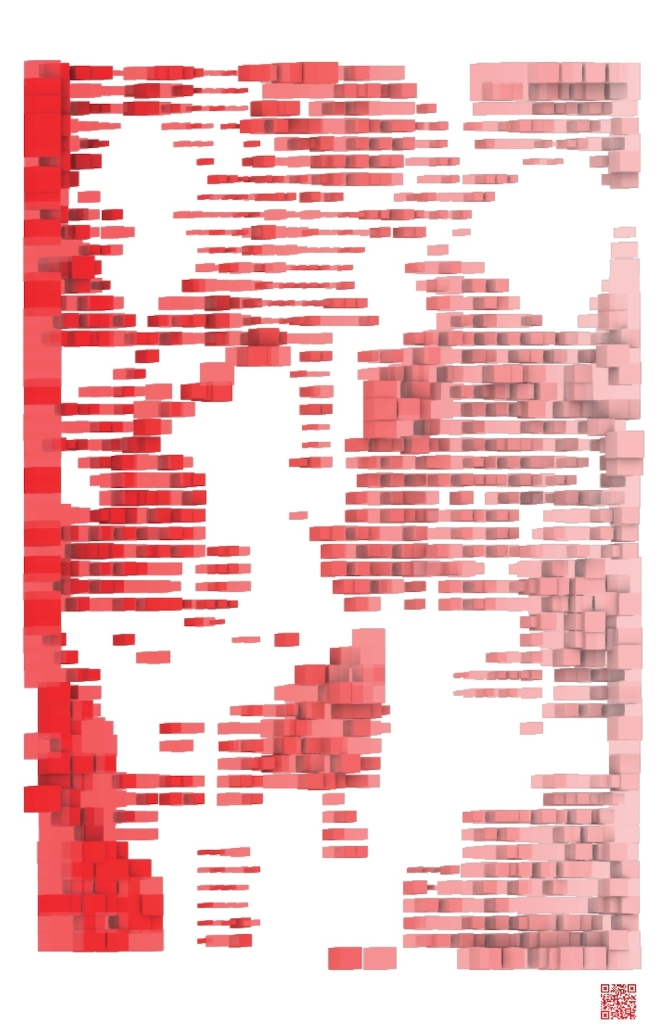
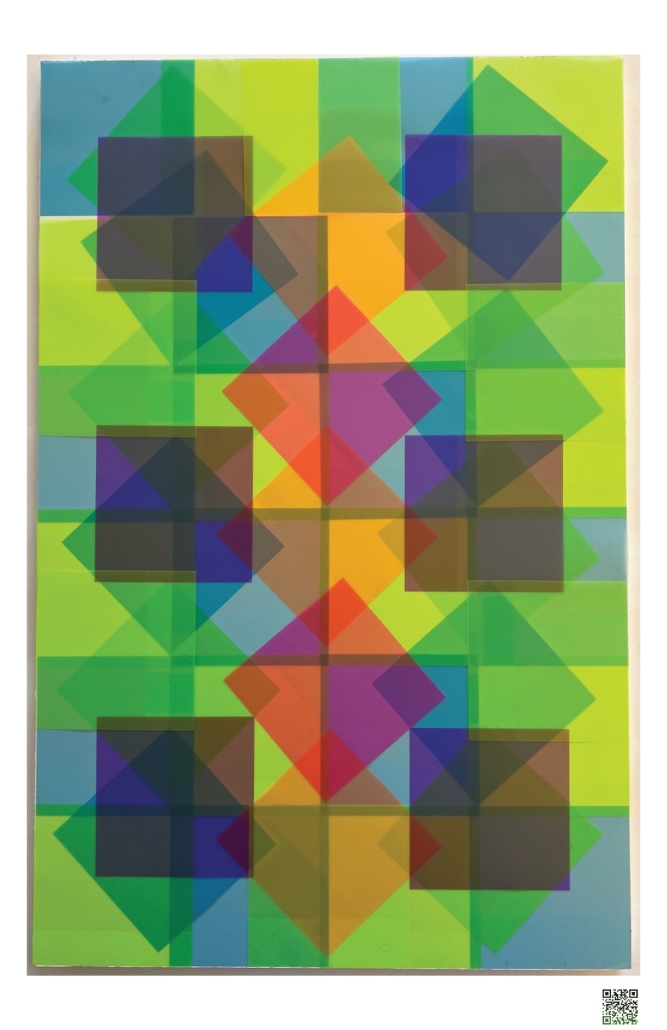
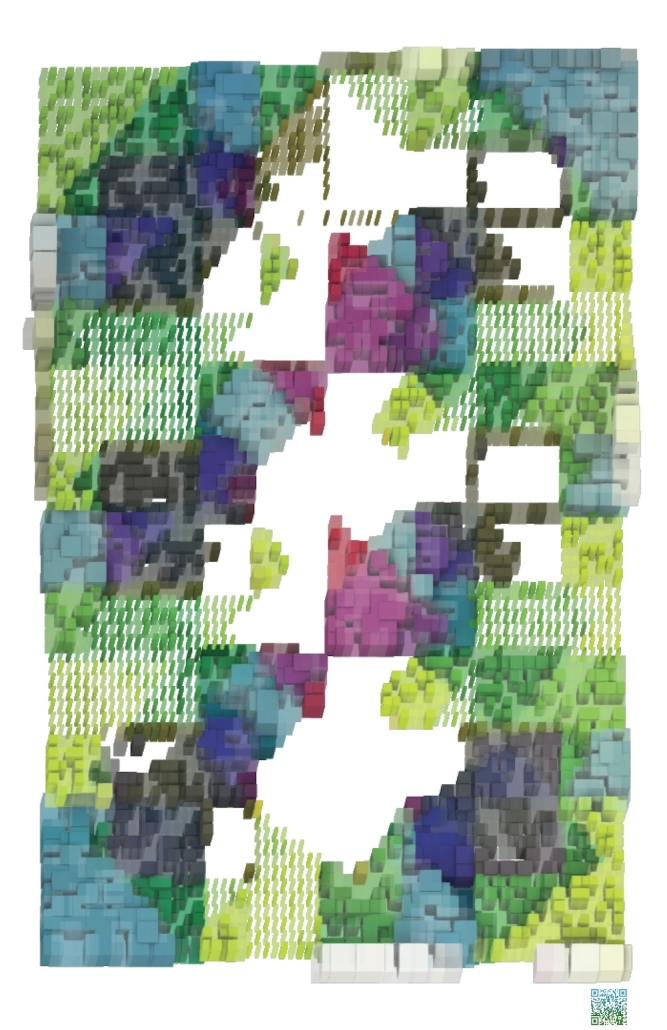
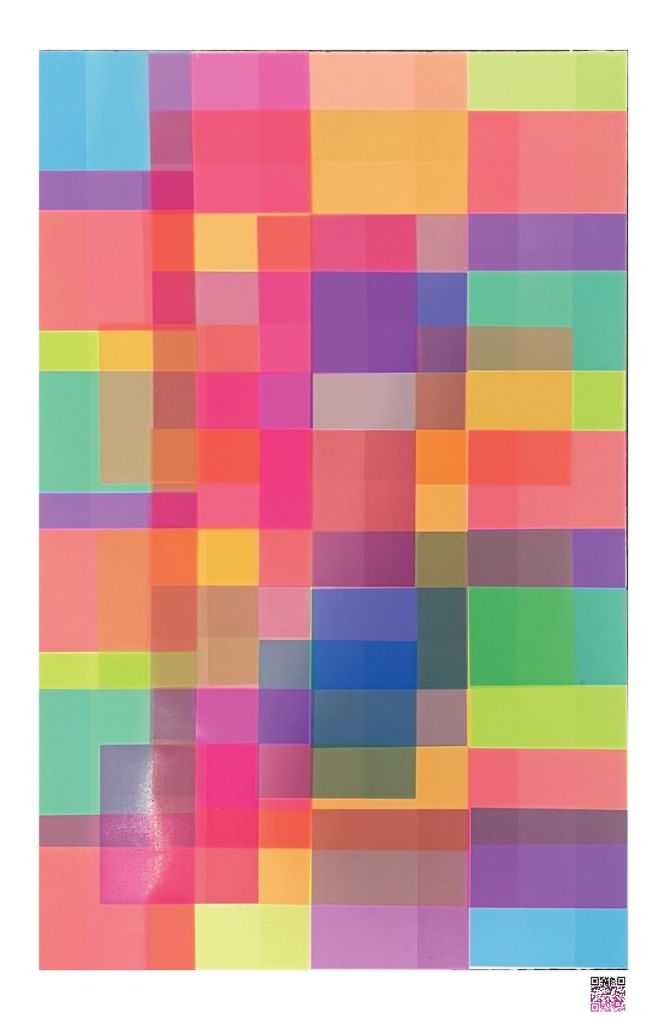
Color Space: From Image to Object is a project that examines the role of images in Architectural production. It began with a careful study of Josef Alber’s Interaction of Color and translated its methods into a software plugin Rhinoceros 3D™ written in the programming language of Python. The project challenges the dominance of architectural drawing by developing software for producing three-dimensional objects from two-dimensional images. The software uses the properties of color associated with each pixel in an image and user inputs to generate a three-dimensional object. While Architecture continues to prioritize the drawing over all other media, this project proposes the image viable medium for the production of architectural form and space. Furthermore, by centering the work in the production of a software tool to be used by others, the project offers a model for distributed authorship in lieu of the more common model of single authored thesis projects. The software is the thesis project and the images and objects are products of other students, friends and family use of the software tool. Color Space is a collaborative tool for the production of architecture from images. If offers not only an alternative mode production—from image to object—but also an alternative form of authorship.

This project was selected for inclusion in Woodbury’s End of Year exhibition entitle MADE.

Instagram: @_z.a.e.z_, @m_cericson

Digital Endemicity: Localized Characteristics for Architectural Fabrication by Gabriel Garofalo, M.Arch ‘23
Toronto Metropolitan University | Advisor: Prof Vincent Hui and Jason Ramelson

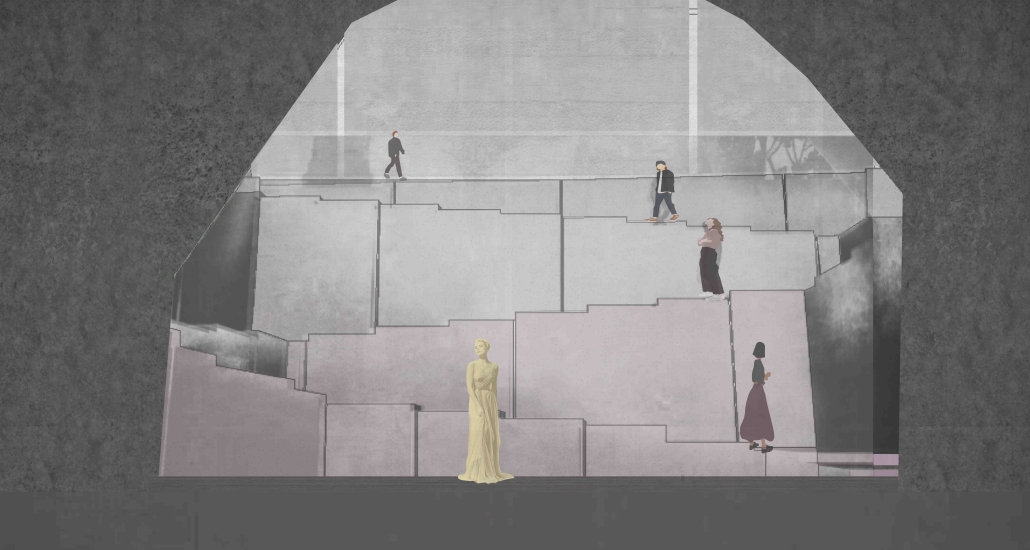
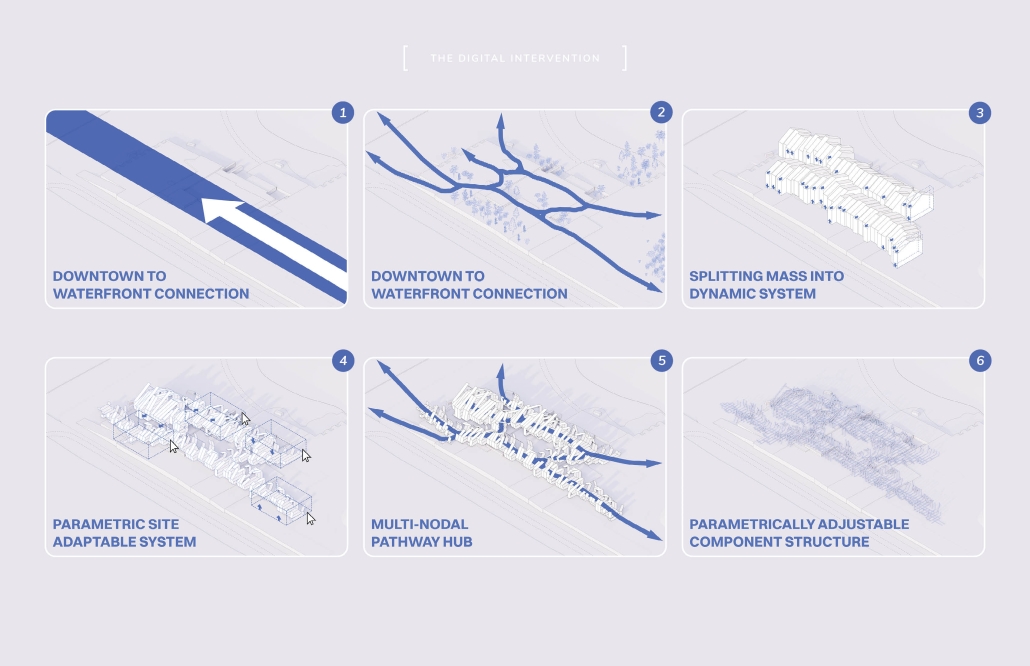
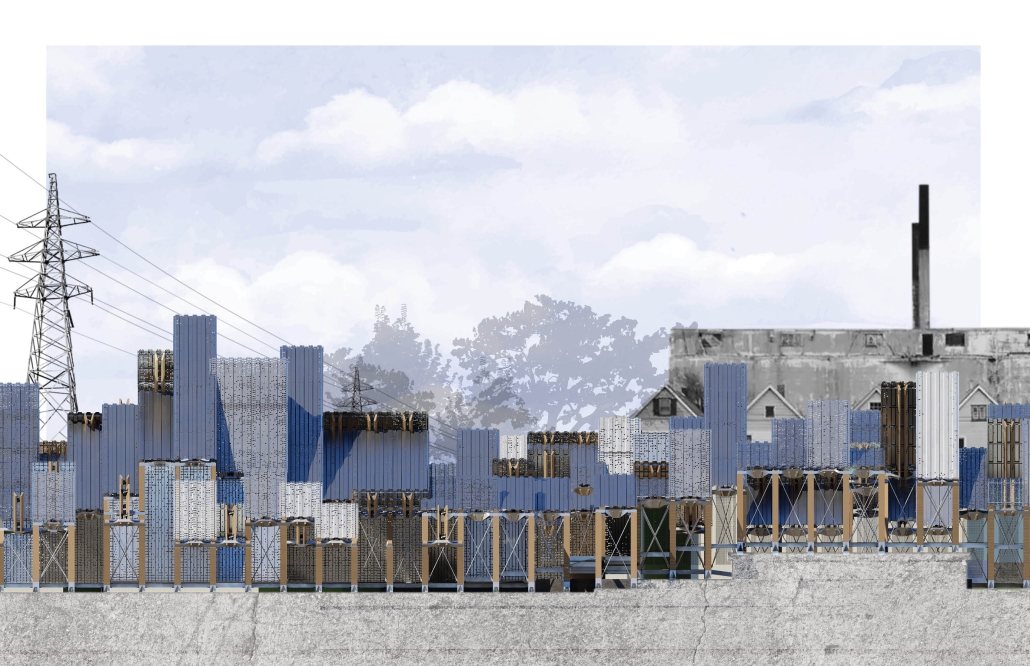
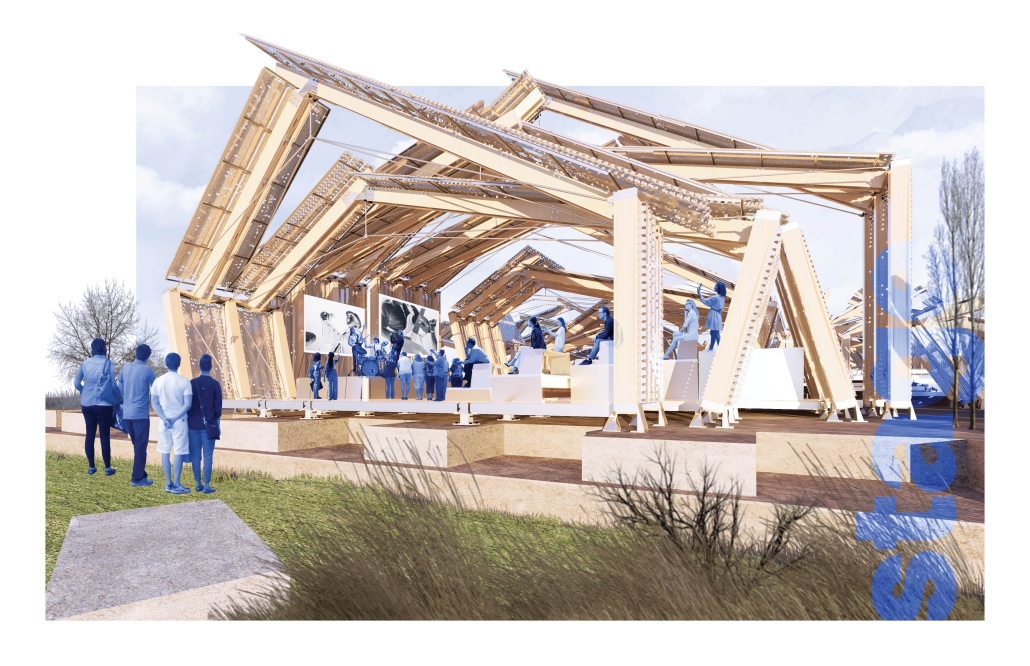
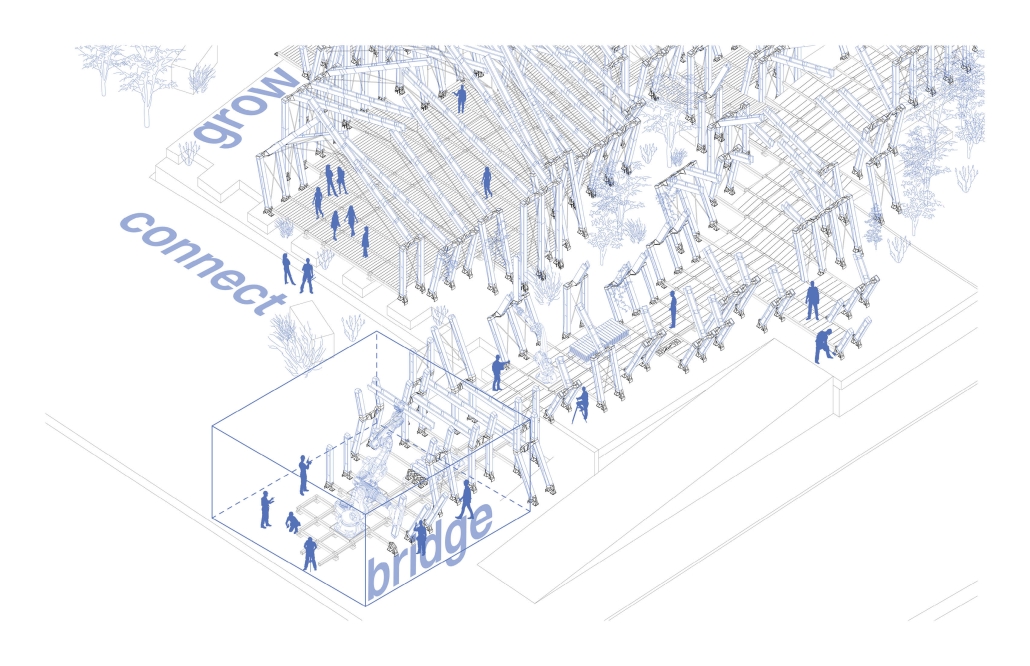
The architectural industry and academia have standardized the use of digital tools. From the drawing of a line, to the fabrication of a wall, all architectural processes are intertwined with digital interpretations. Technology merged with contextual knowledge has the ability to inform future advancements in digital fabrication. As digital tools encompass the architectural industry the direction of implementation is crucial to the future built context and its relationship to its physical environment. The current disconnections between object and place is evident in contemporary digital architecture and parametric design. Endemicity, in this context, refers to specifically localized elements within an environment. This thesis project highlights how future digital technologies and existing endemic elements can be blended into a system of fabricating architecture. Through extensive reflection of meaningful definitions of localized materiality, tools, methods, knowledge and social contexts, conceptual frameworks for extracting, fabricating and assembling have been defined. This in turn results in a digitally endemic process that can be applied to unique environments with differentiating programmatic uses. This process was tested within a brownfield urban site in Hamilton, Ontario. Here data and analysis resulted in the digital design of components and processes for fabricating. The architectural intervention lightly cascades across the uneven terrain and provides an urban connection to the waterfront from the city’s downtown core. Additionally, the digitally fabricated and robotically assembled system is a hub for local creativity, holding performance stages, and creative marketspaces as nodes along the urban pathway. The architectural components and the in-situ construction strive to develop ties with the community and evoke a sense of locality to their built environment. At this turning point in the making of architecture, there exists an ability to guide the use of digital tools to define an architectural character that enhances the built object and the inhabitants relationship to their environment.

Atlas of Memory: Representation of the invisible in architectural drawing through generative coding by Julia Lopez, M.Arch “23
Arizona State University | Advisor: Elena Rocchi

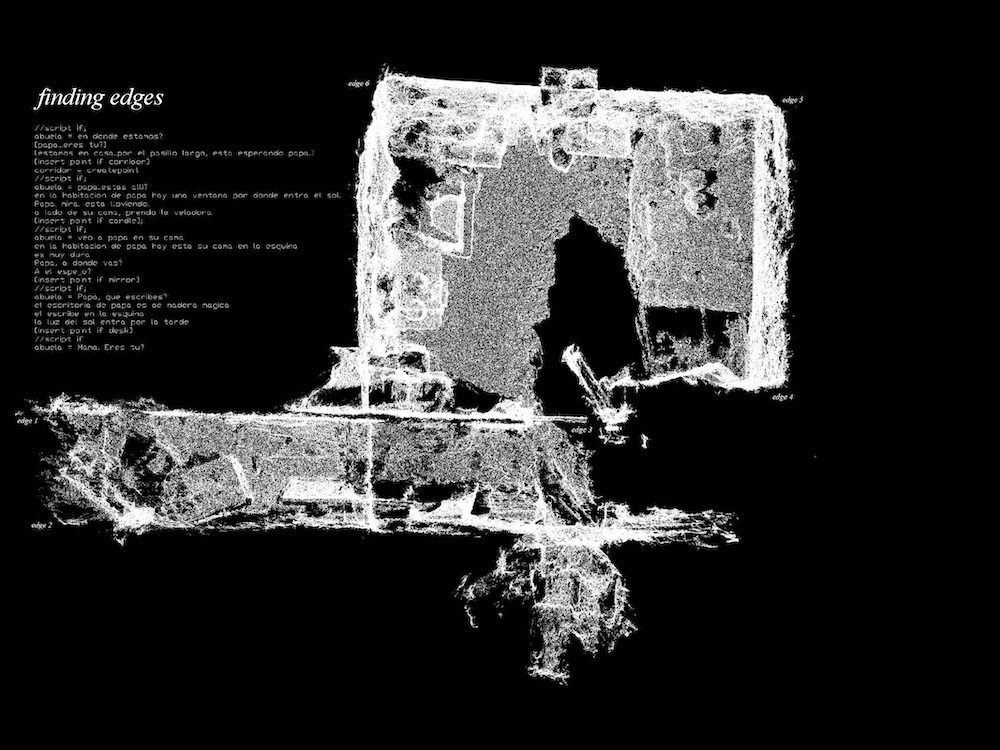
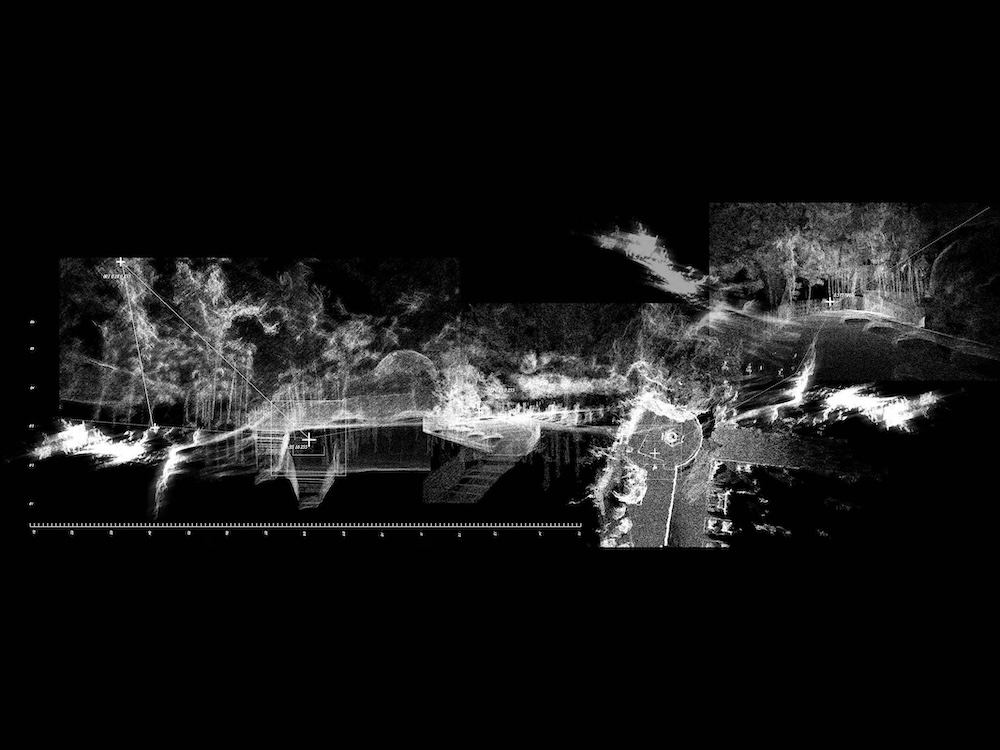
How do we draw the space of the invisible? This thesis starts to question and investigate the use of speculative architectural representation as an allegorical narrative fiction to reawaken faded memories. Through the use of generative coding, fragments of stories can be used to stimulate the imagination and help us to start to represent the invisible. This will ultimately allow multiple voices to be heard together, even when they represent stories from different times. Memory is not just a recall of past events but it is an active process that shapes our perception of the present. Memory is not a linear narrative but a fragmented and subjective experience. Our memory of physical spaces are not just passive recollections, but active constructions that shape and constitute our sense of self and identity. This project starts to and investigate how coding programs like p5js and touch designer enter and support the representation of architectural drawings and the invisibility of memories by means of stories and finds a new methodology in which generative coding provides a perfect mesh between speculative and the tangible; to make the invisible, visible. Throughout the course of this project the representation of the invisible took on a personal approach as the following study observed and recorded my grandmother’s transition of life and her own unconscious and conscious state, which had been in continual flux for 5 months. During her moments of hallucination, she would take it upon herself to draw and through the use of generative coding I have been able to investigate the overlay of her drawings into the coding program one in which the system is able to measure data points that can now be used to process the representation of the space she was inhabiting; the invisible. This ultimately resulted in an atlas of memories. Her memories.

This project was selected for The Design School Design Excellence Award in Spring 2023

Instagram: @julia.a.lopez

THE EMPHATIC ESCAPE by Chawin Wongsrisoontorn, Sree Vandana Bendalam, and Raymond Du, M.Arch ‘23
University of Illinois at Urbana-Champaign  | Advisor: Yun Kyu Yi

Recently, the use of machine learning and artificial intelligence (AI) has been emerging in various artistic fields and professions, including illustration. AI is now not only used for representing designs but also as a generative tool for visual art. OpenAI tools like Stable Diffusion, DALL×E, and Midjourney enable the generation of images without the need for skilled experts. Users can simply input a text that describes the scene or desired characteristics, and the computer generates images that match the description.

These new tools are not only shaking up the visual art domain but also have the potential to impact the future of architecture and architects. The once undeniable domain of creativity for architects no longer exclusively belongs to them. As architects, will we still remain the sole creators of designs? This project is an outcome of research studio that aims to speculate on the future use of AI as design generators and explore the role of architects within this context.

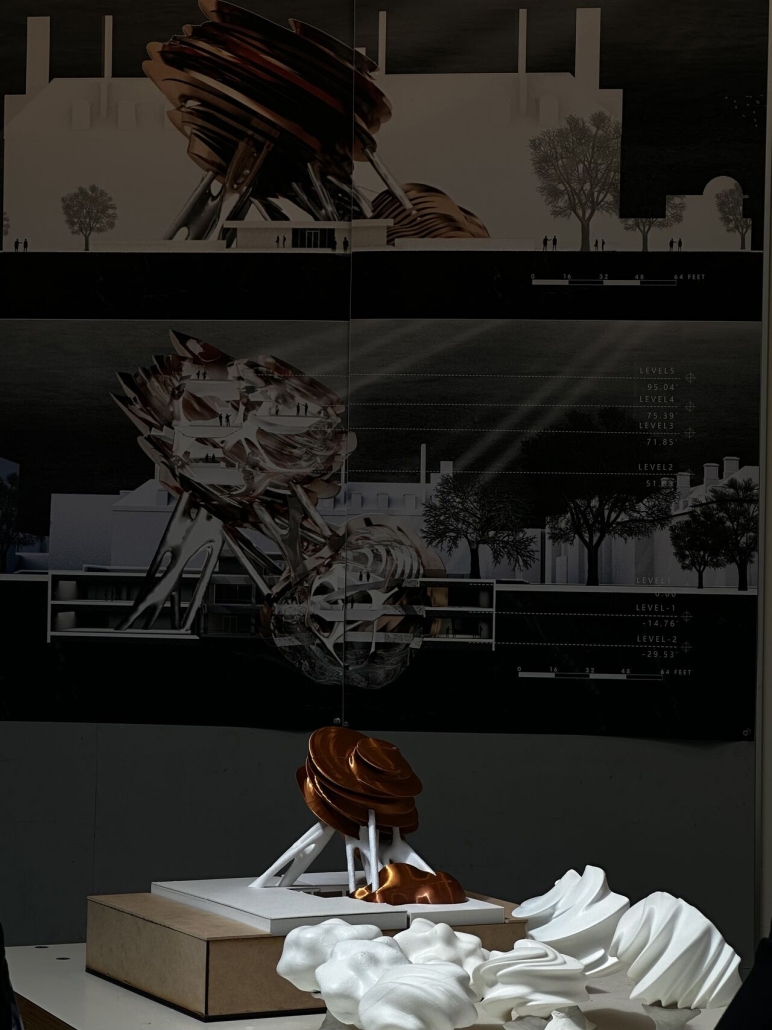
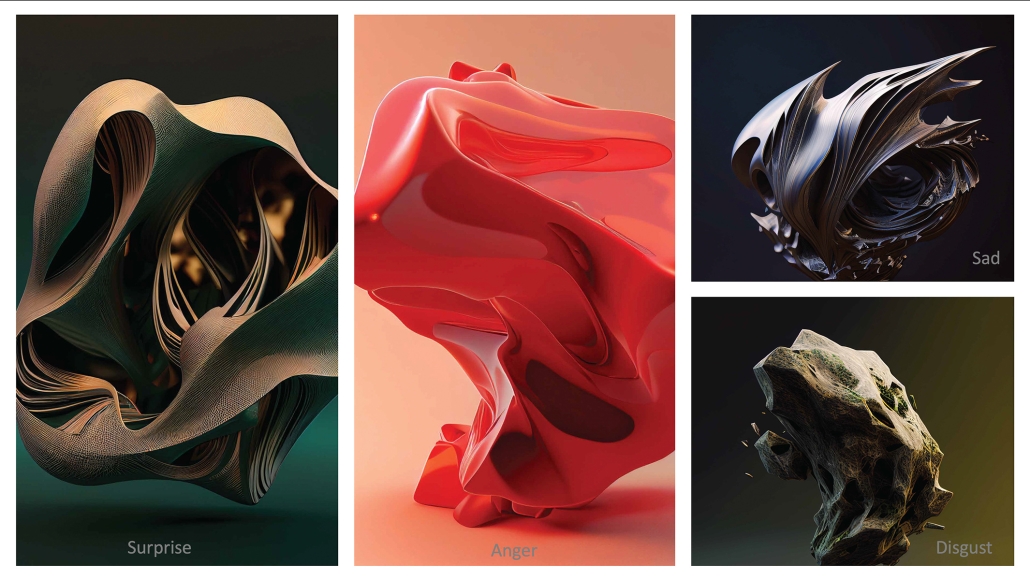
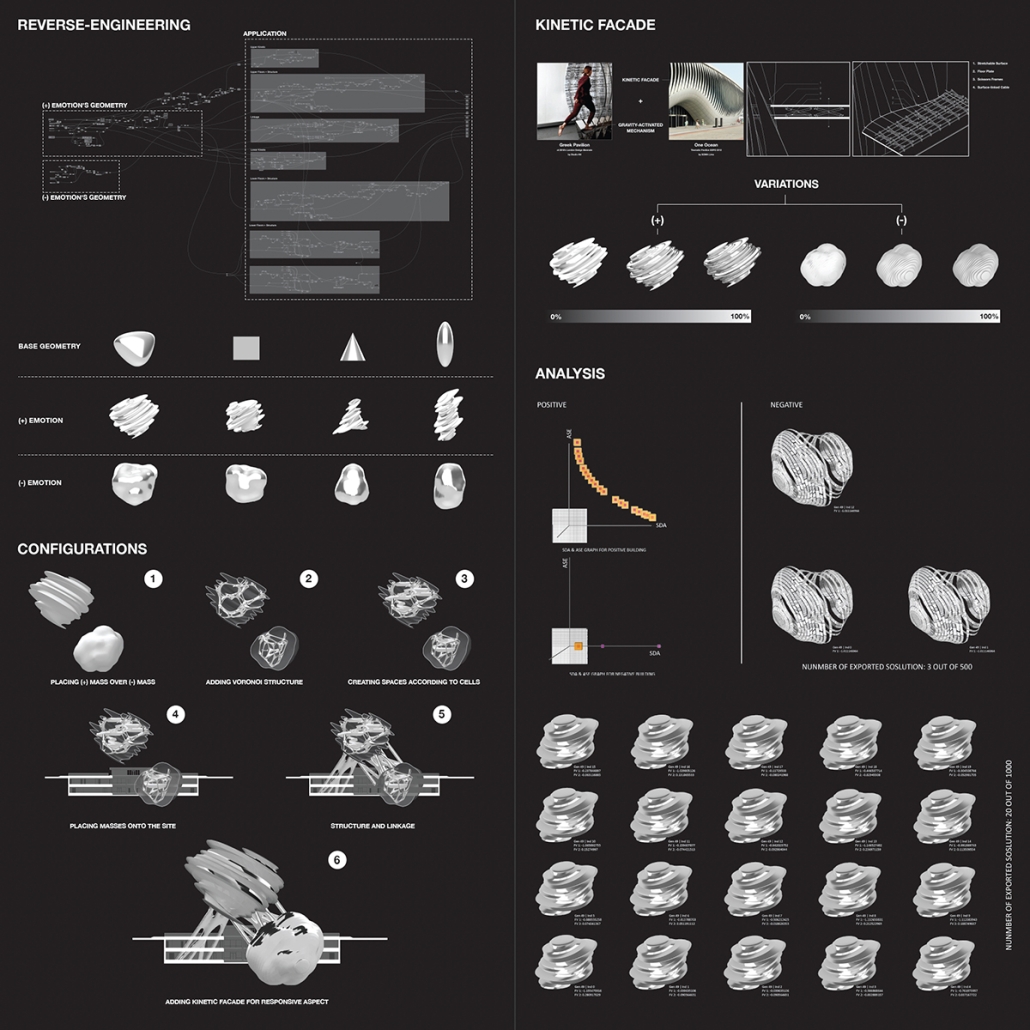
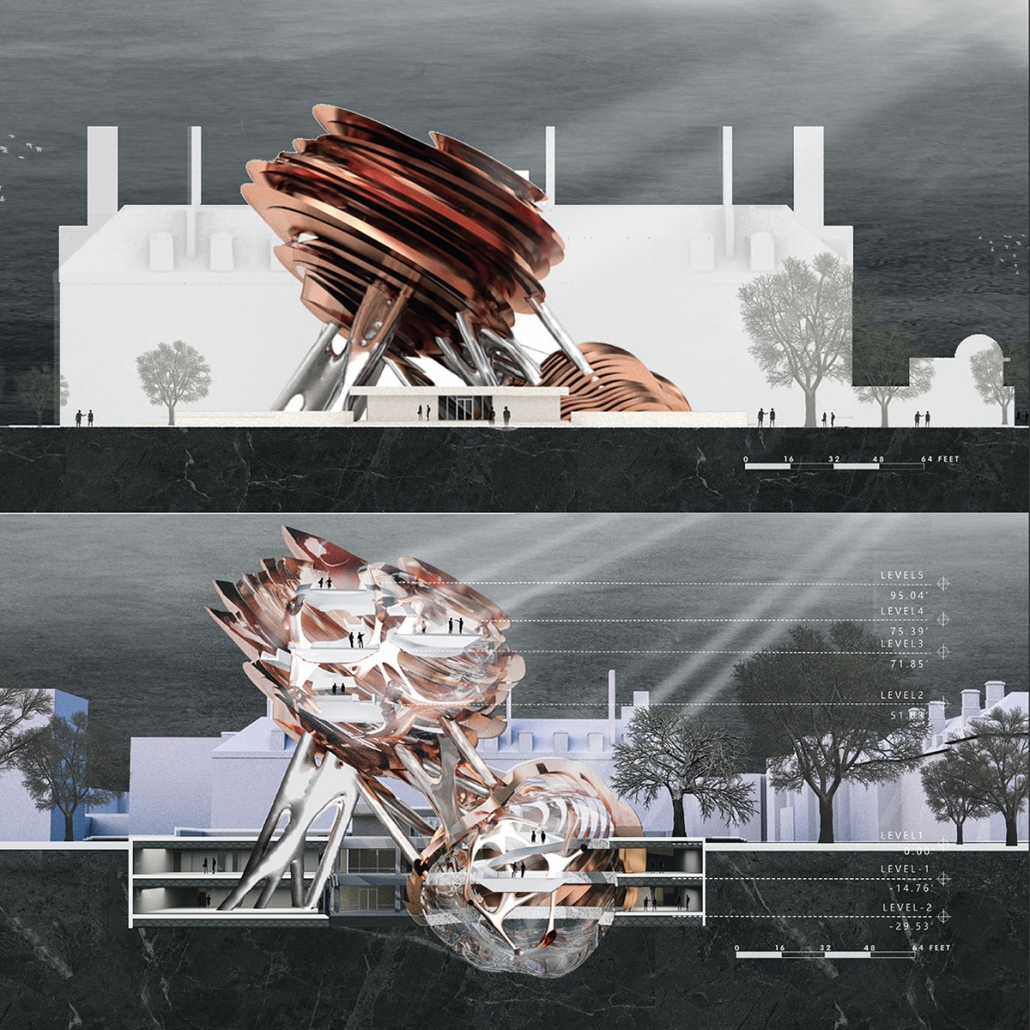
The project utilized Facial Expression Capturing AI to analyze participants’ emotional expressions on morphing geometry and find a form that captures different surveyors’ emotions, which was then used to generate a building form. In order to convey changes in emotions through the building’s facade, the project developed a kinetic facade system that changes its appearance based on the density of occupants in the space. Additionally, a multi-objective optimization method with a machine learning algorithm was employed to determine the size of the kinetic facade system.

This project won second place in the University of Illinois at Urbana Champaign Design Excellence Awards.

Instagram: ral_isoa, redrum_du, chaawin, i.n.f.i.n.i.t.e_loop

See you next week for the next series of the Student Showcase!