Posts

2025 Study Architecture Student Showcase - Part V

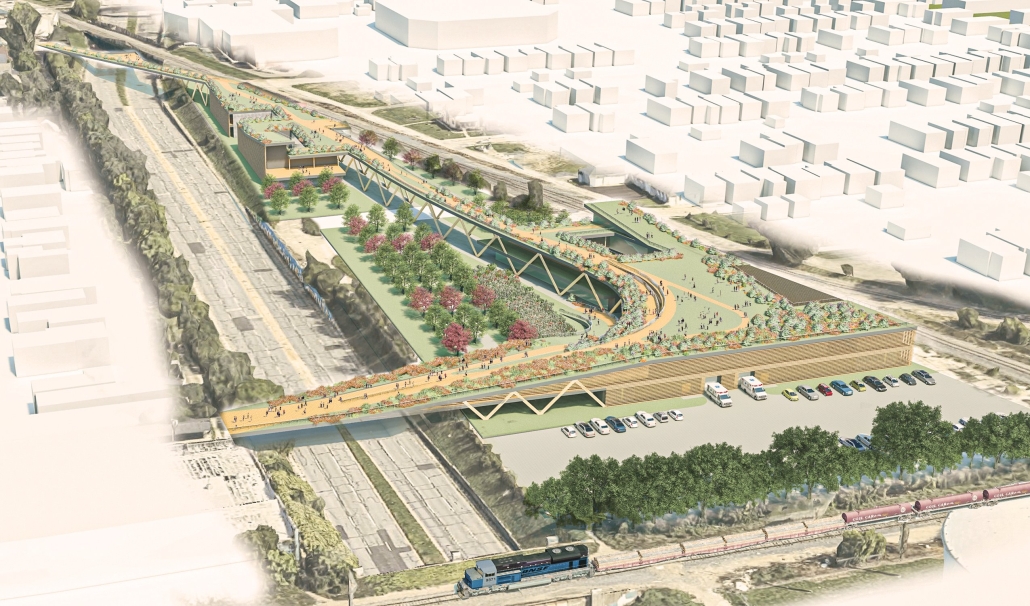
In Part V of the 2025 Study Architecture Student Showcase, we take a look at projects centered on equity. From natural highways to aid centers, the featured student work includes design solutions catered toward migrants, widows, and other historically marginalized groups. By providing culturally sensitive architectural interventions, each project fosters resilience, equity, and empowerment. 

Scroll down to learn more!
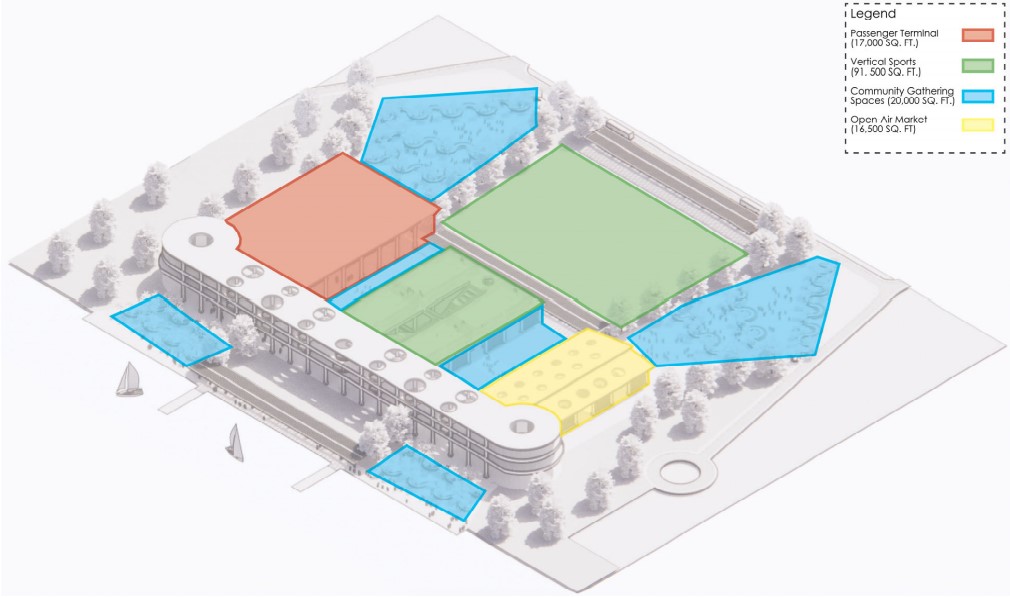
BARRA DA TIJUCA MARITIME TERMINAL by Justyn D. Grant, M.Arch ‘25
Florida A&M University | Advisors: George Epolito, Andrew Chin & Ronald B. Lumpkin

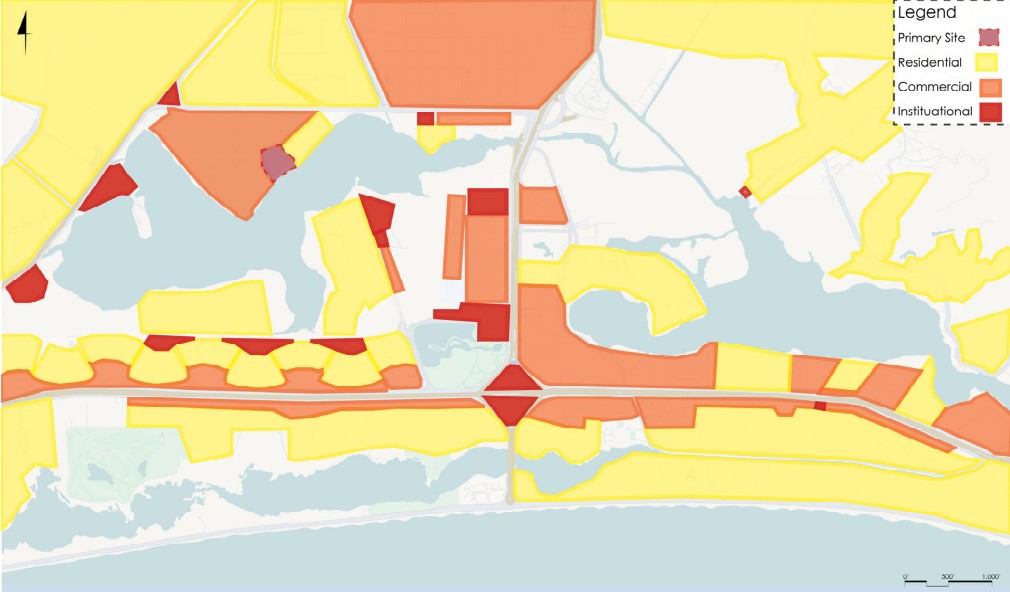
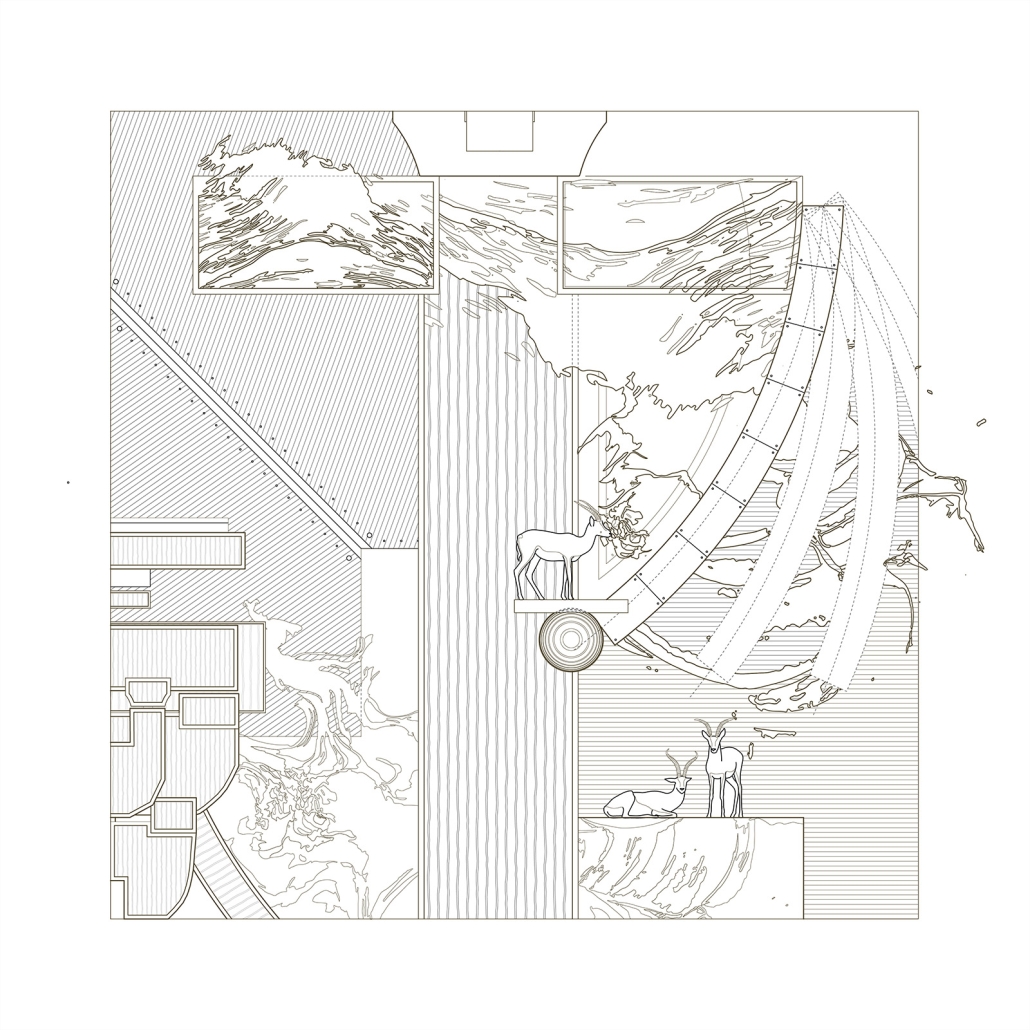
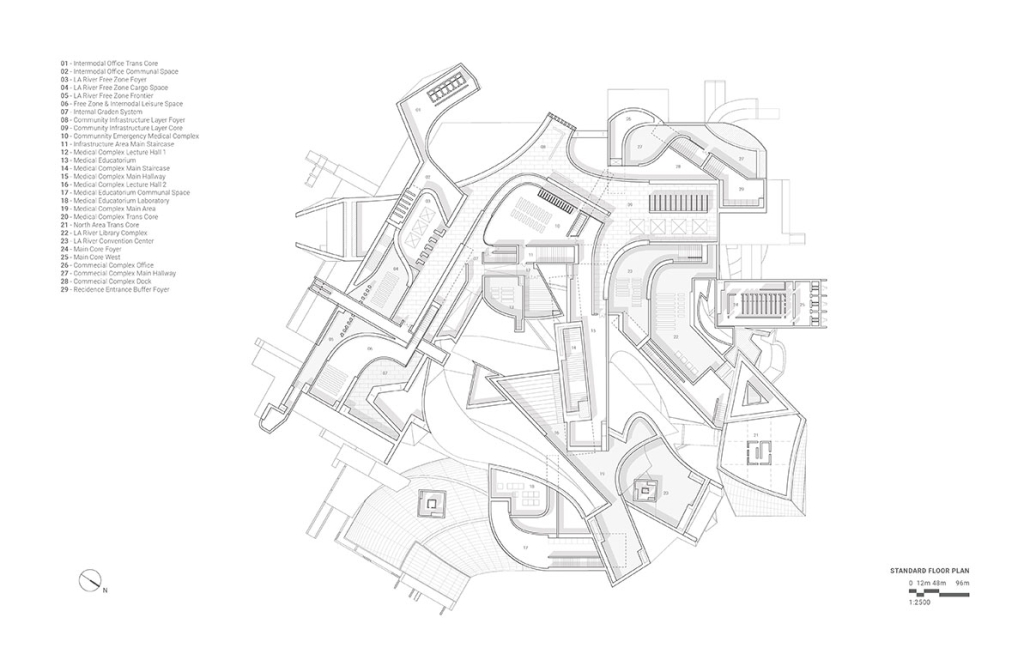
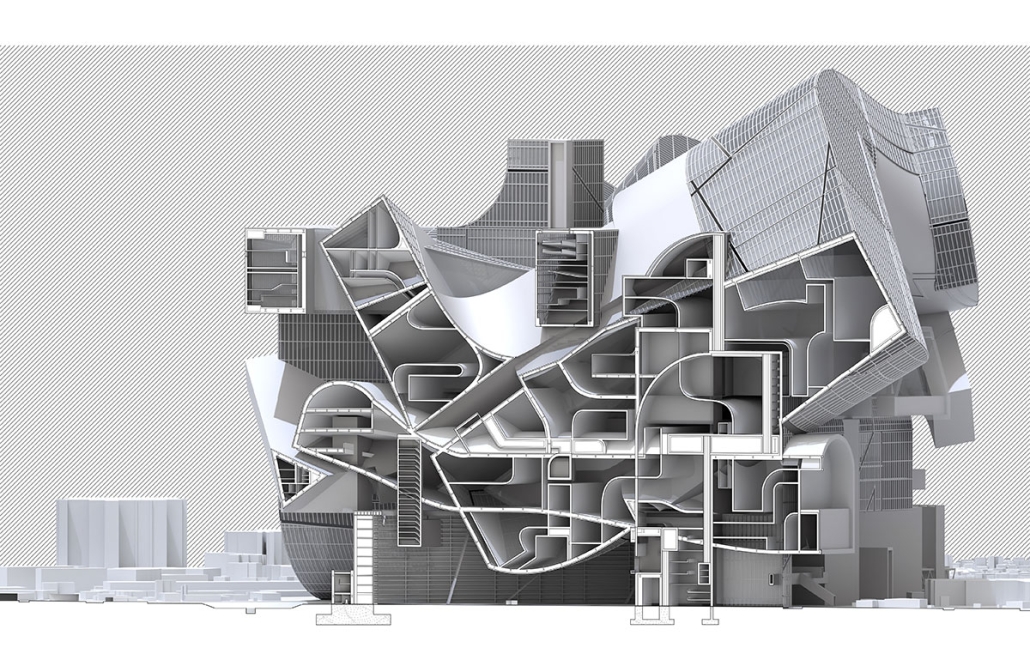
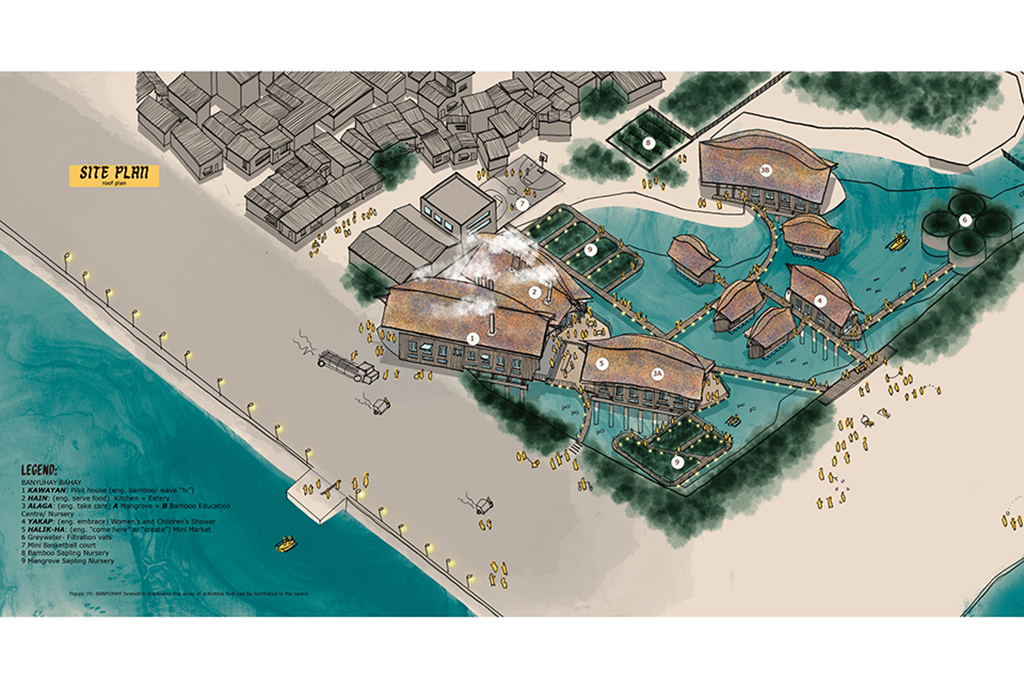
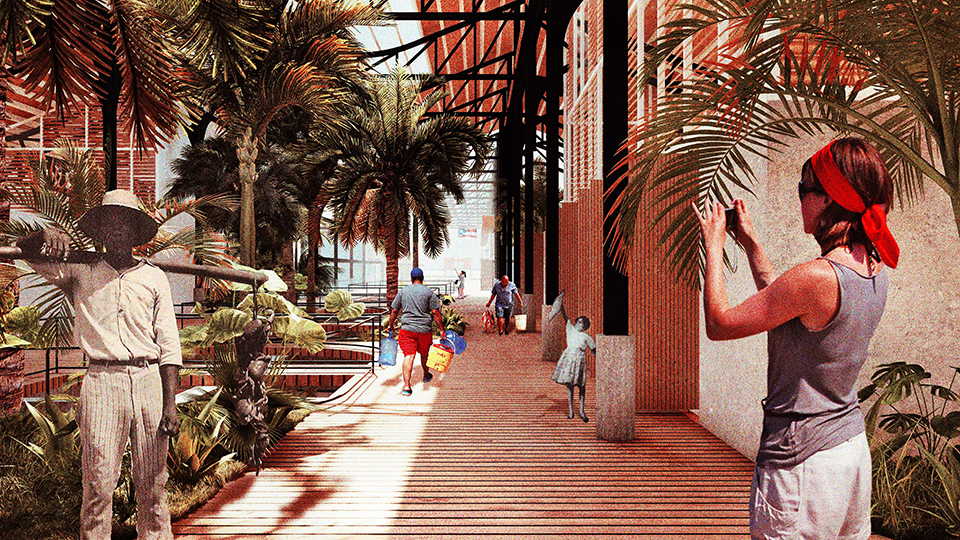
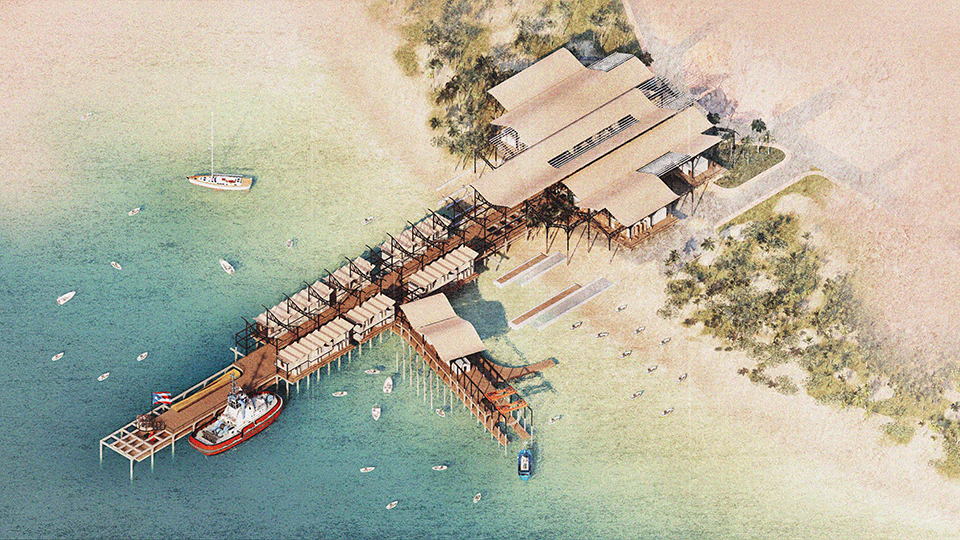
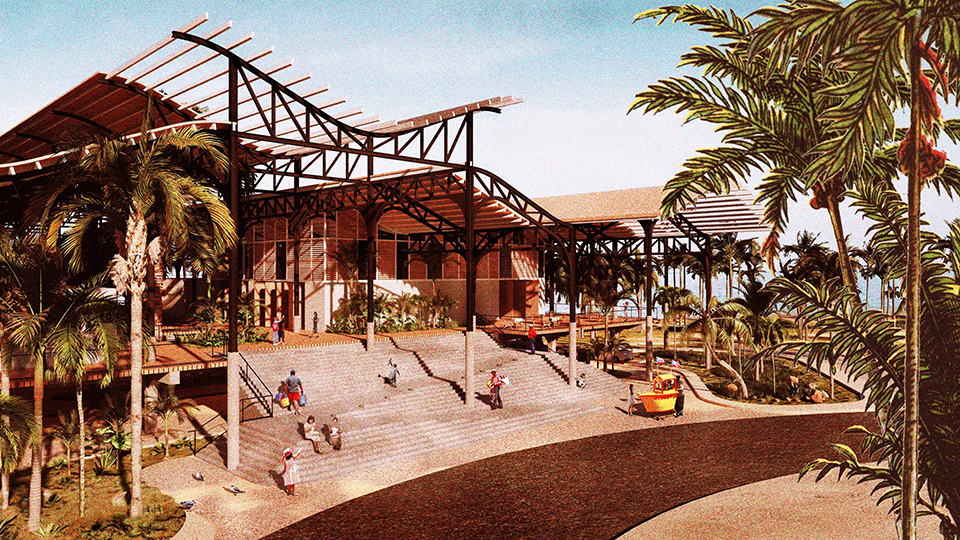
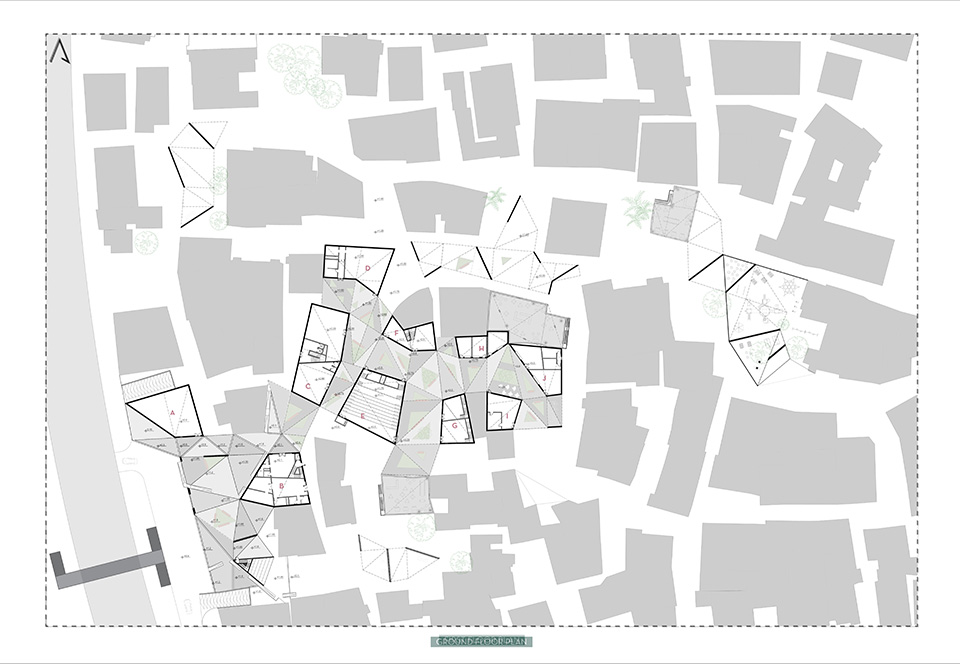
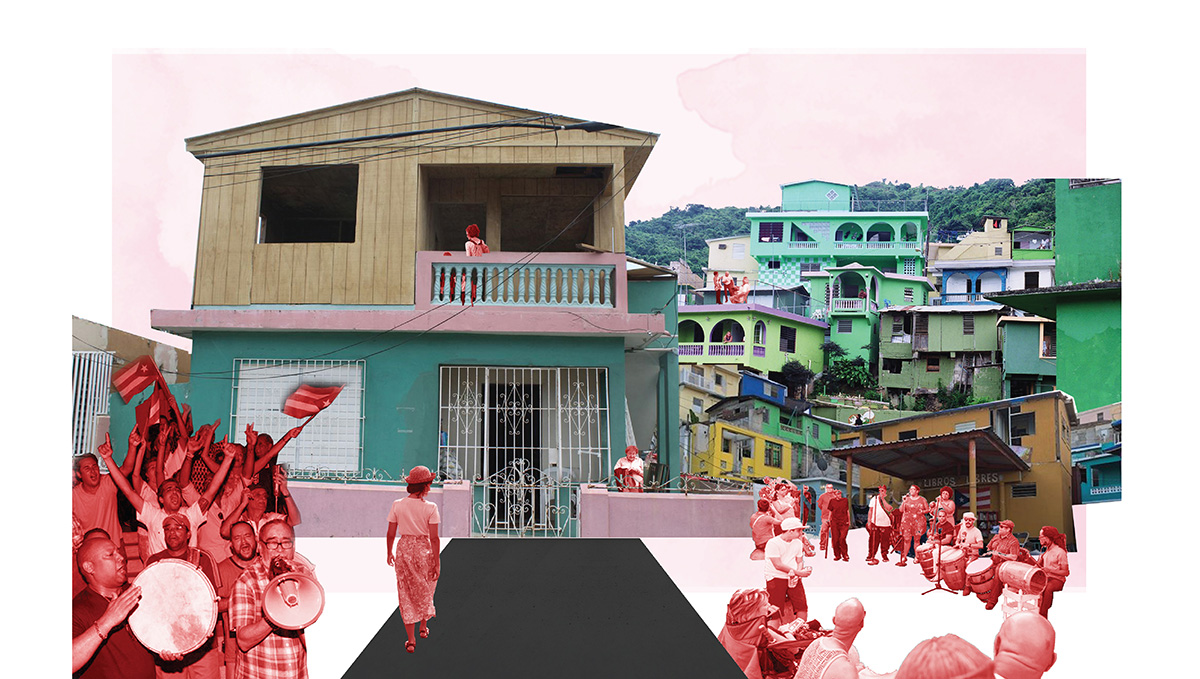
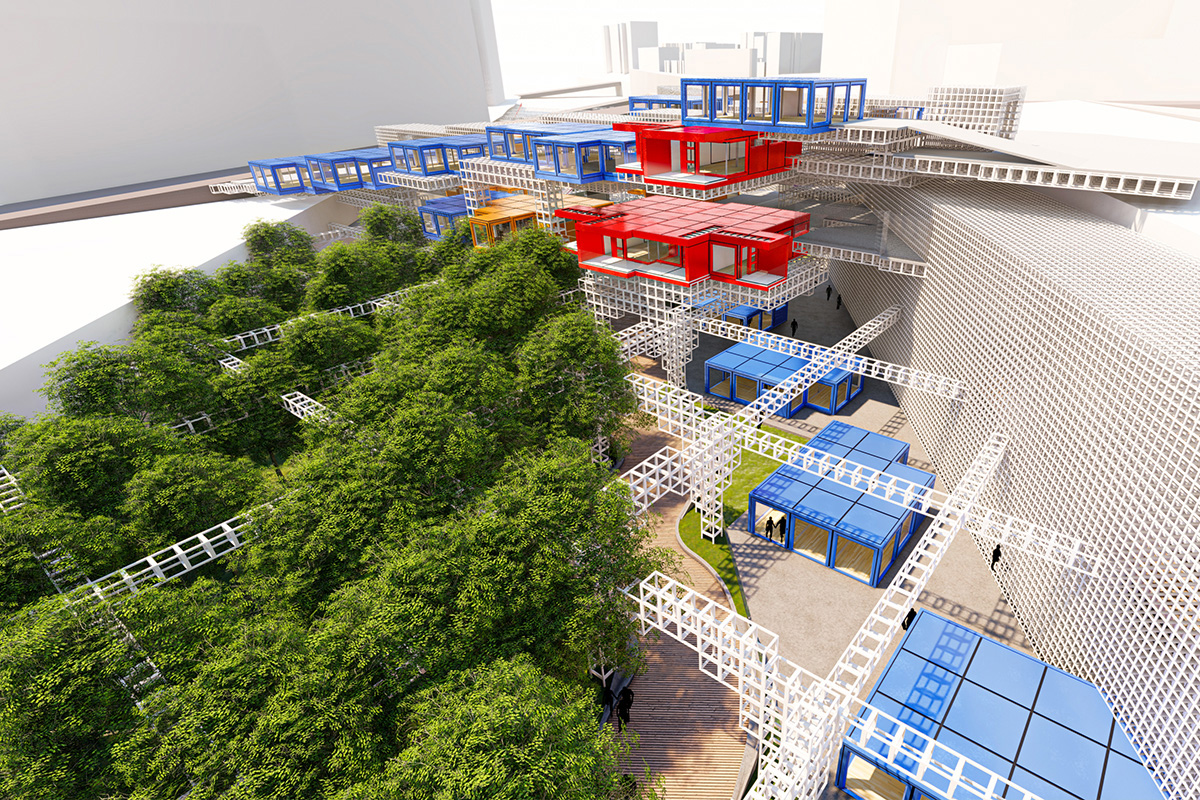
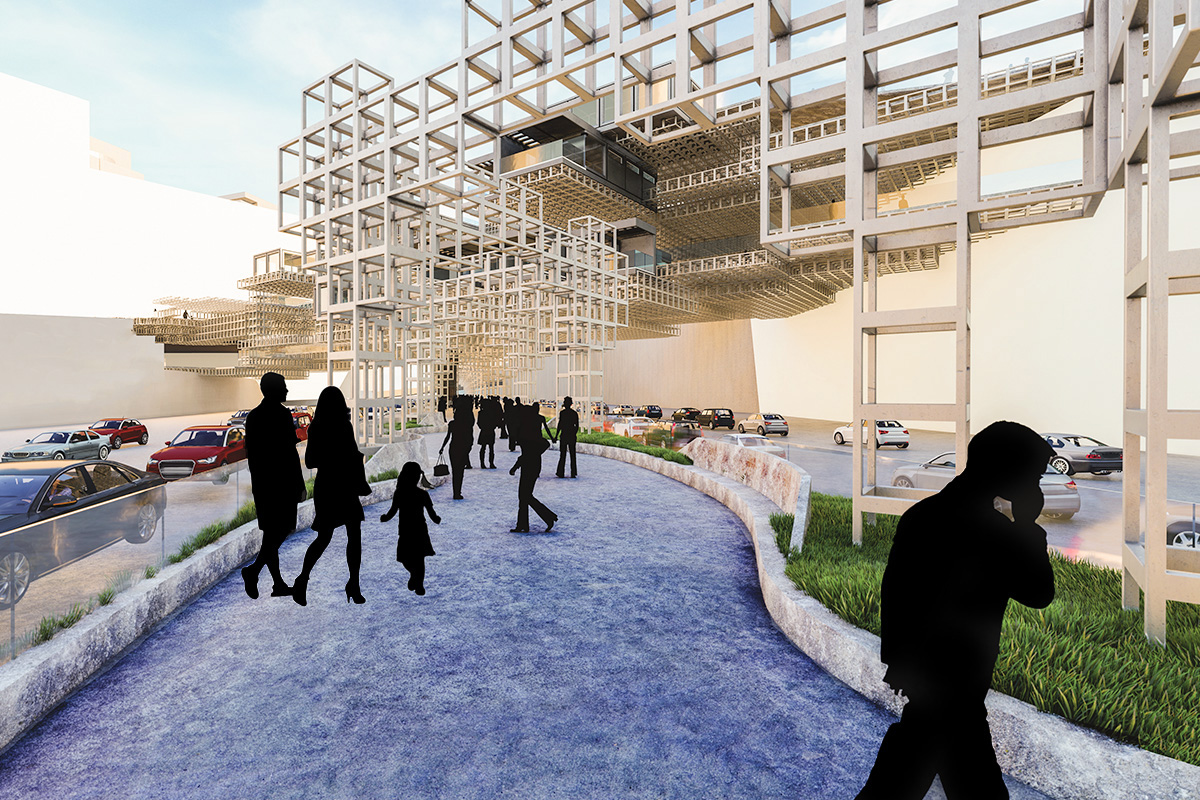
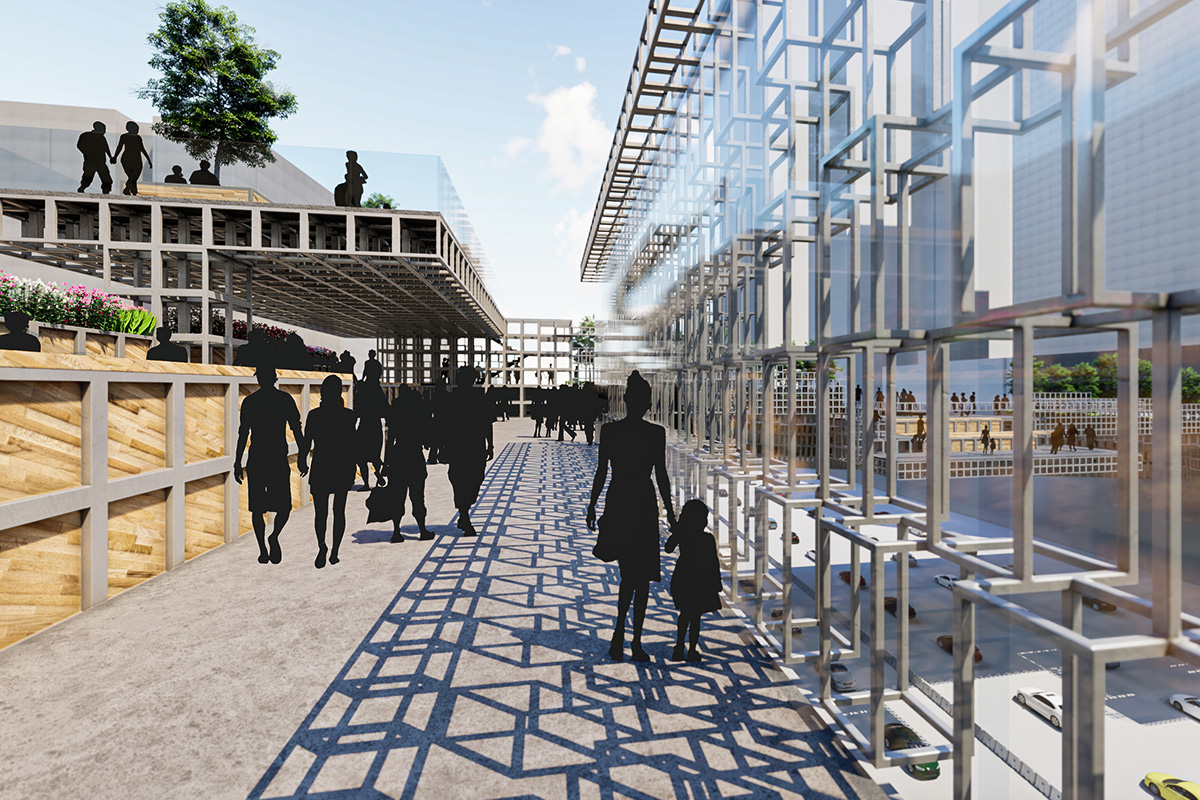
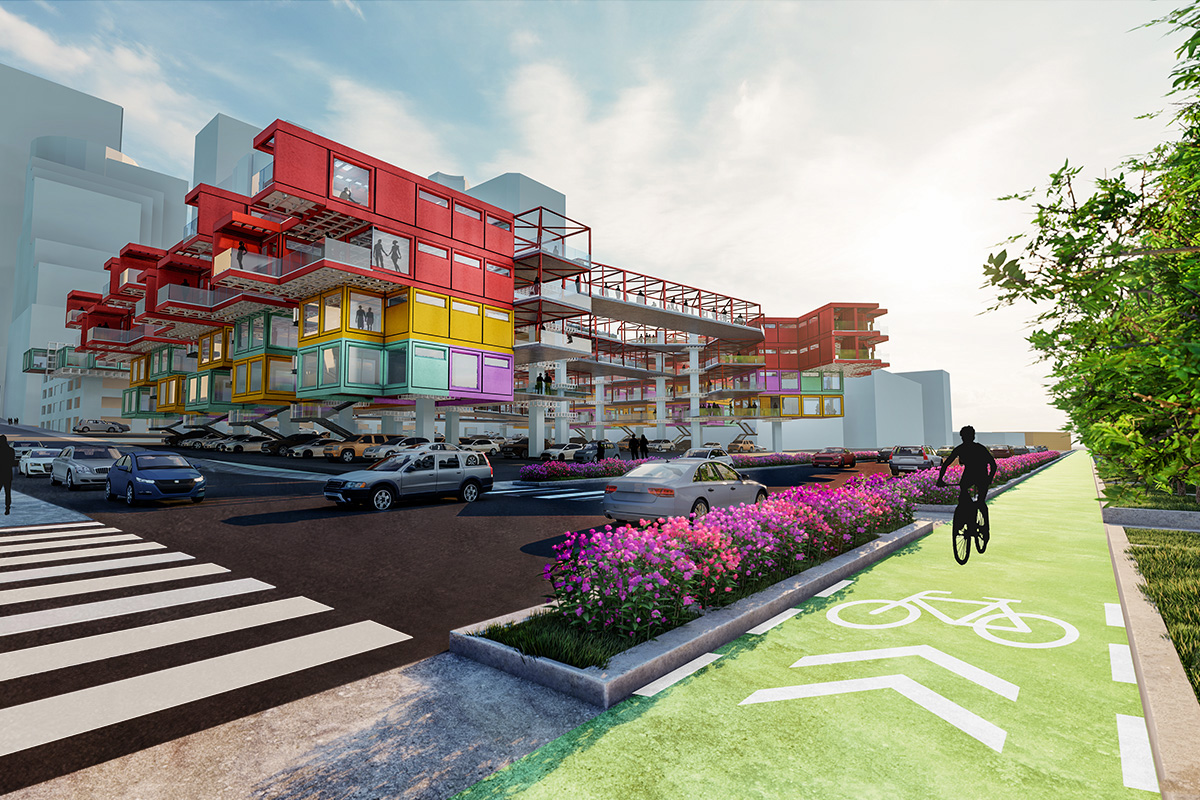
Barra da Tijuca Maritime Highway Terminal responds to a long-standing pattern of neglect toward disenfranchised communities impacted by large-scale global events like the Olympics. This thesis focuses on Rio das Pedras, a self-built favela in Rio de Janeiro, Brazil, that, despite being in proximity to the 2016 Olympic sites, remains disconnected from the infrastructural and economic benefits promised during the event’s planning and execution.

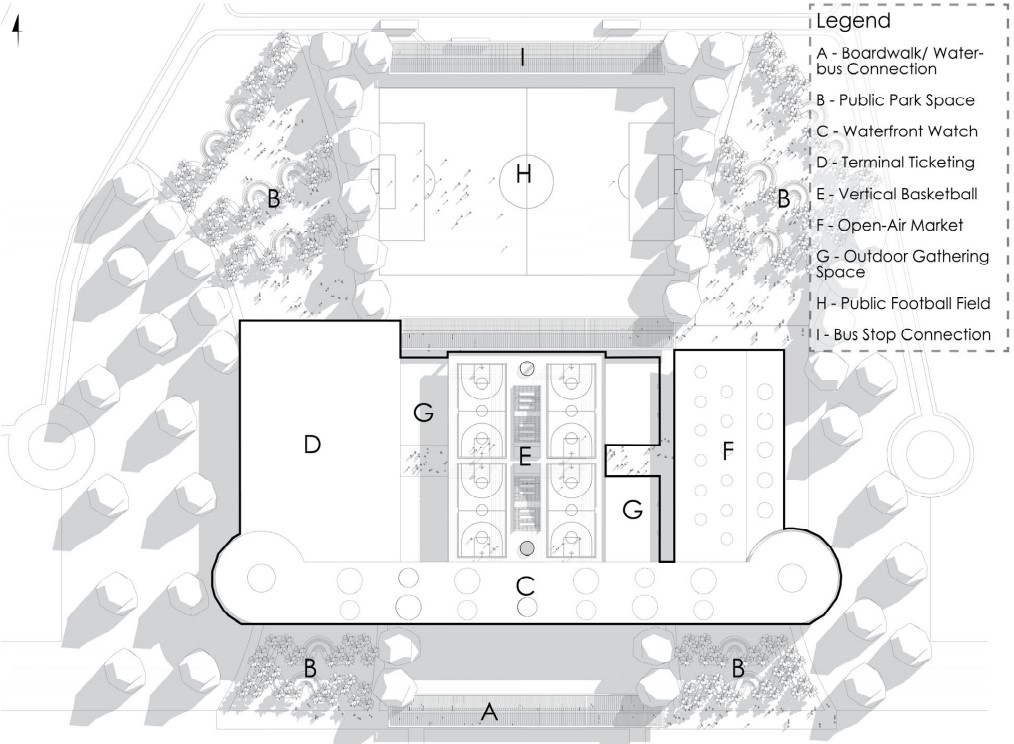
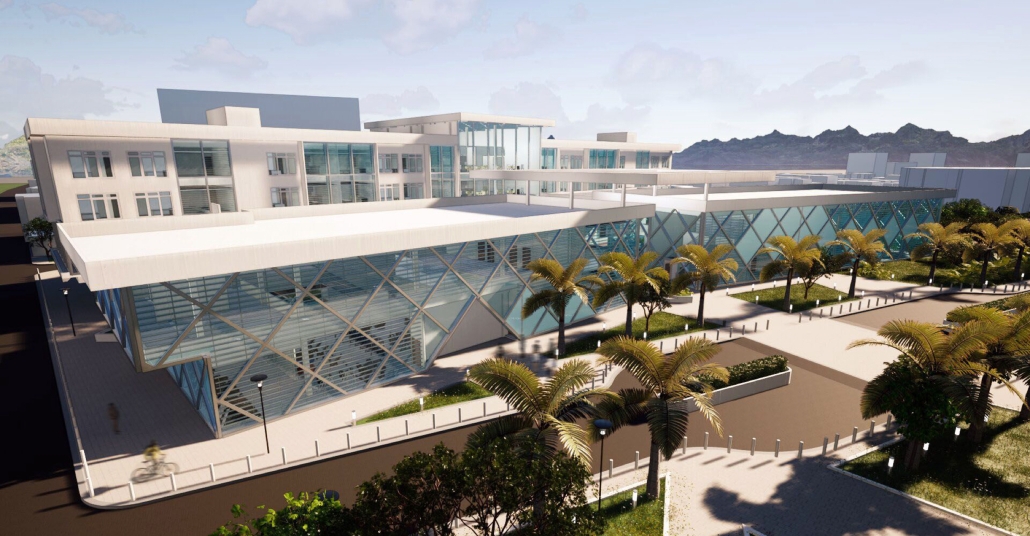
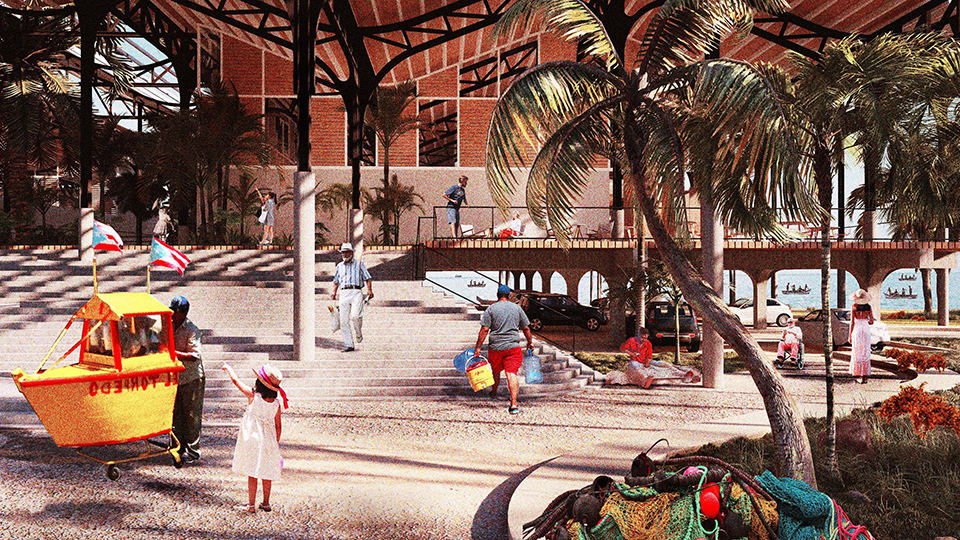
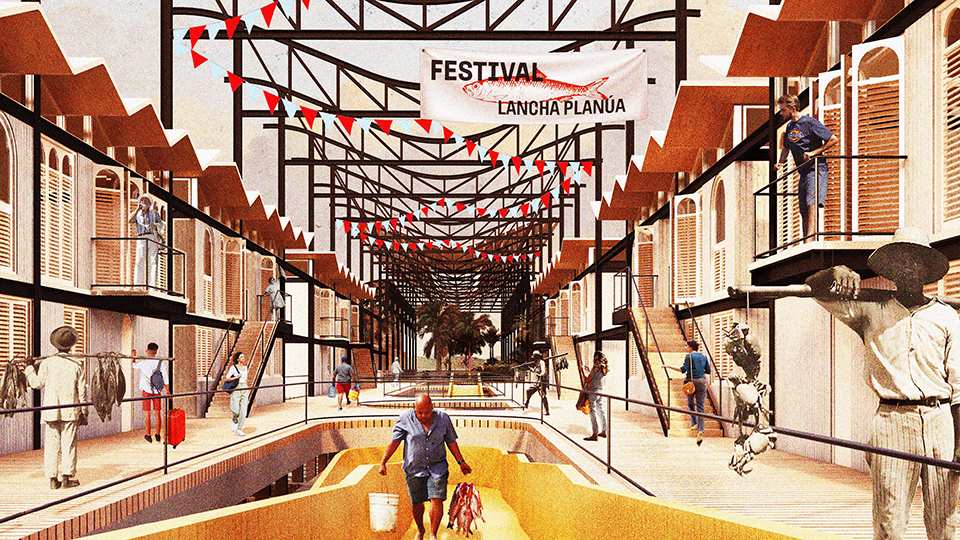
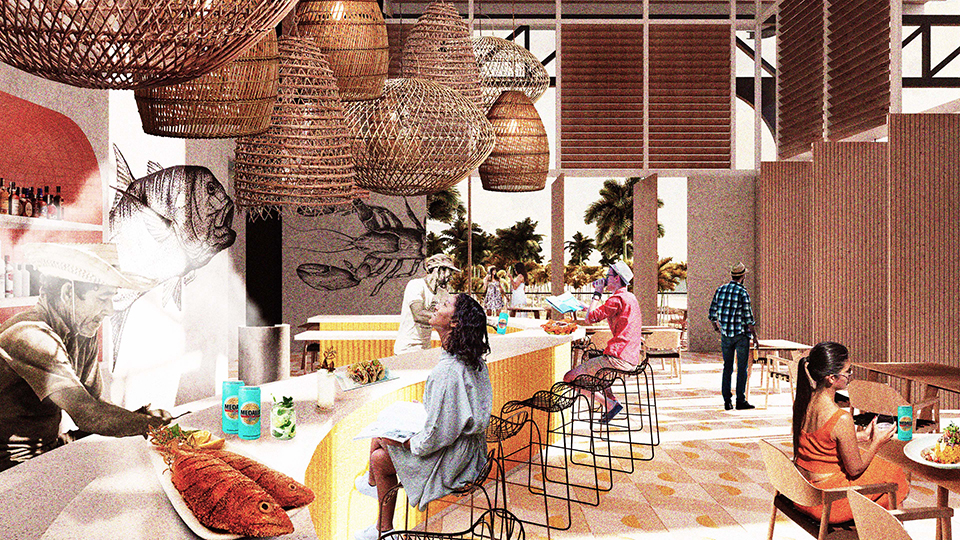
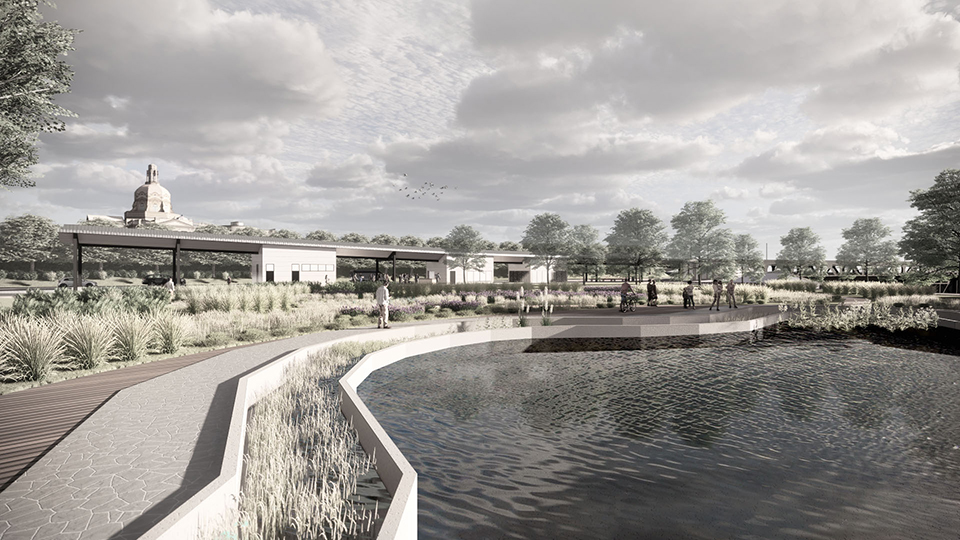
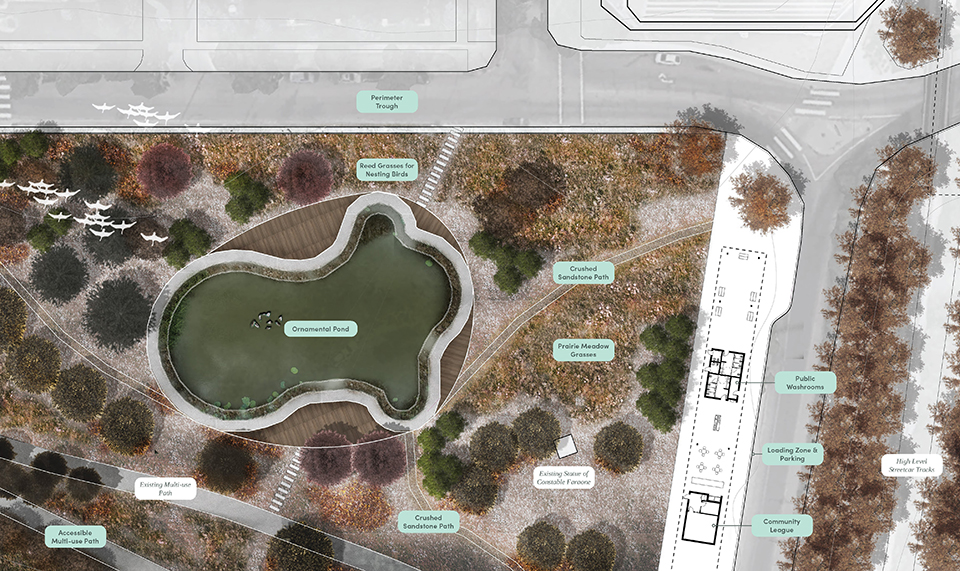
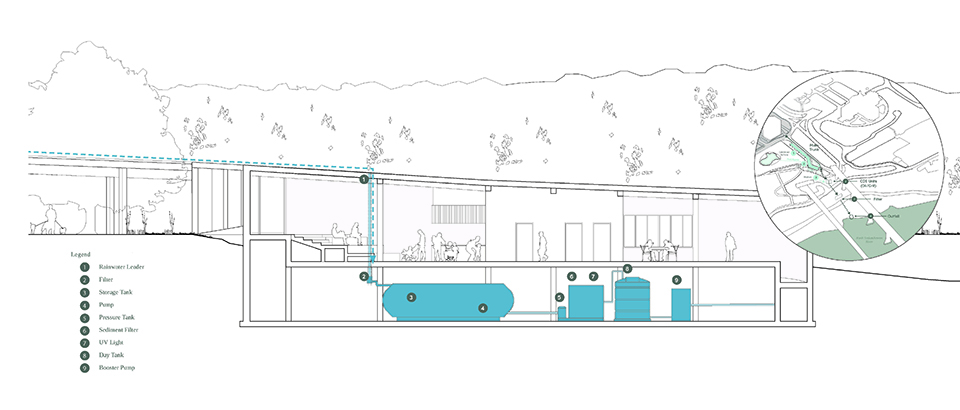
The project proposes a bold intervention: a maritime terminal located at Athlete’s Park that connects Rio das Pedras with the broader Barra da Tijuca area via the lagoon system. This “natural highway” avoids disruption within the favela while offering a culturally sensitive, environmentally harmonious transit solution. The terminal is envisioned as more than a transportation node—it will be a space for economic empowerment, community gathering, and cultural exchange, serving both residents and tourists.

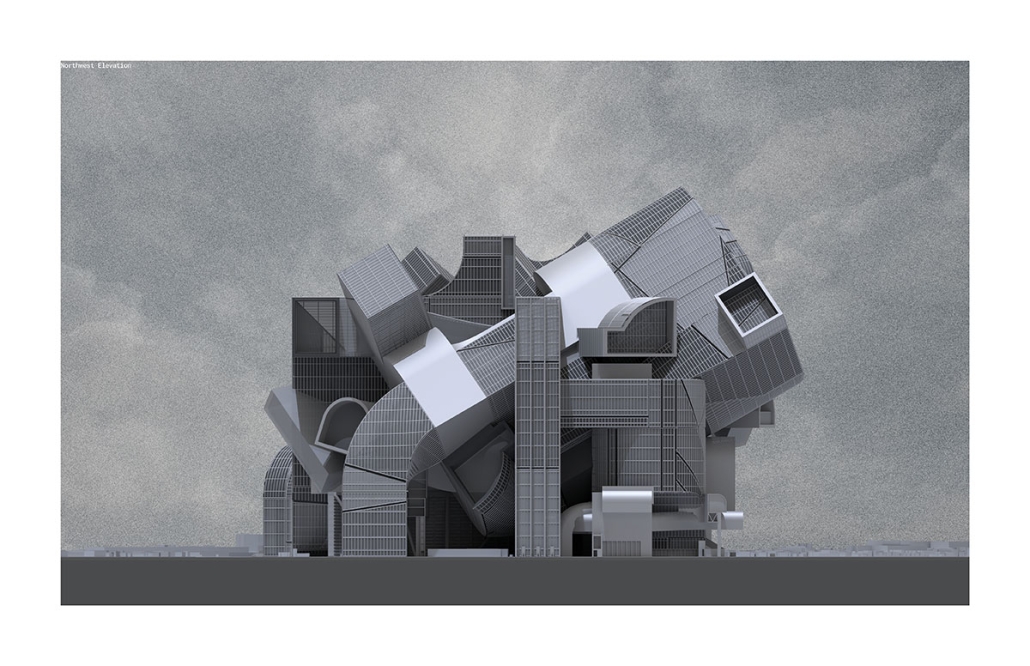
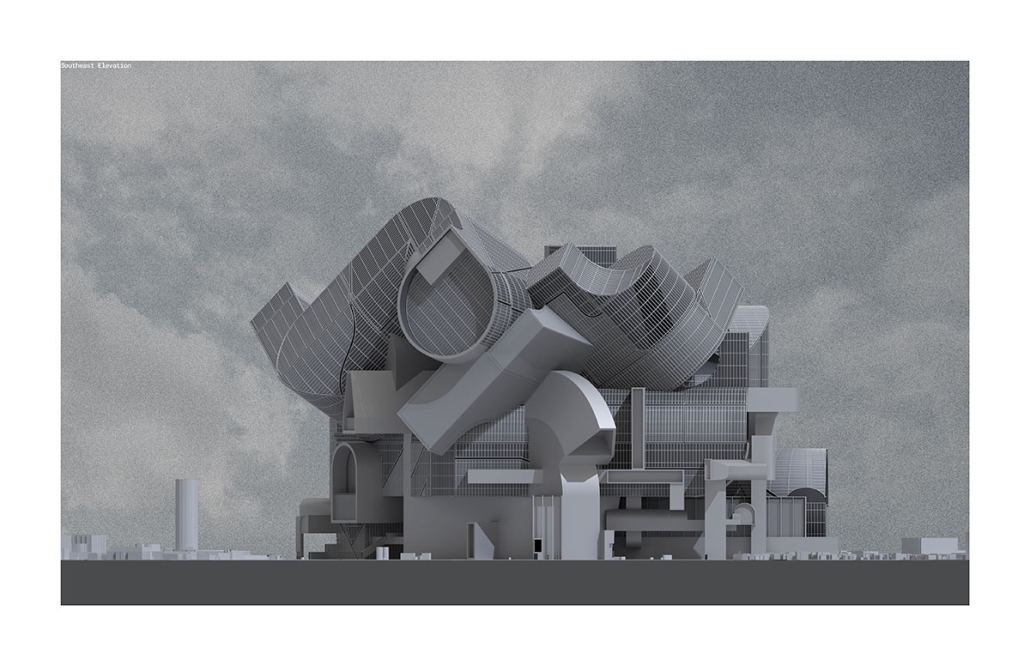
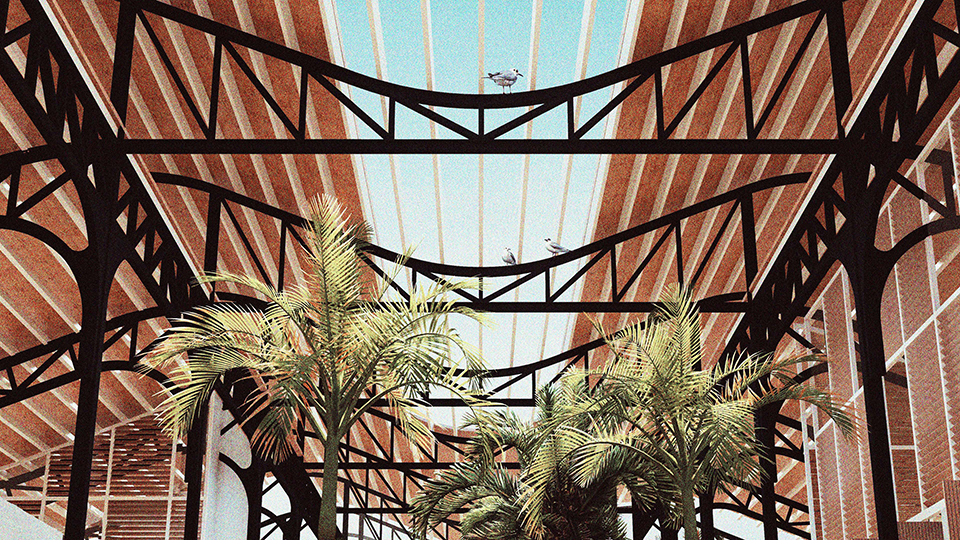
Architecturally, the design draws from the spatial and material logic of Rio das Pedras to promote familiarity, dignity, and inclusivity. By integrating construction practices and vernacular forms found in the favela, the terminal becomes a home away from home—bridging class divides and reshaping perceptions of informal urbanism.

This thesis critiques the post-Olympic urban landscape and interrogates the broken promises of legacy investments. It reframes infrastructure as a tool for equity, proposing design strategies that center the needs and aspirations of historically marginalized communities. In doing so, it advocates for a model of development that honors cultural identity, fosters connection, and plants the seeds for long-term resilience and economic vitality.

Instagram: @famusaet, @famu_masterofarch
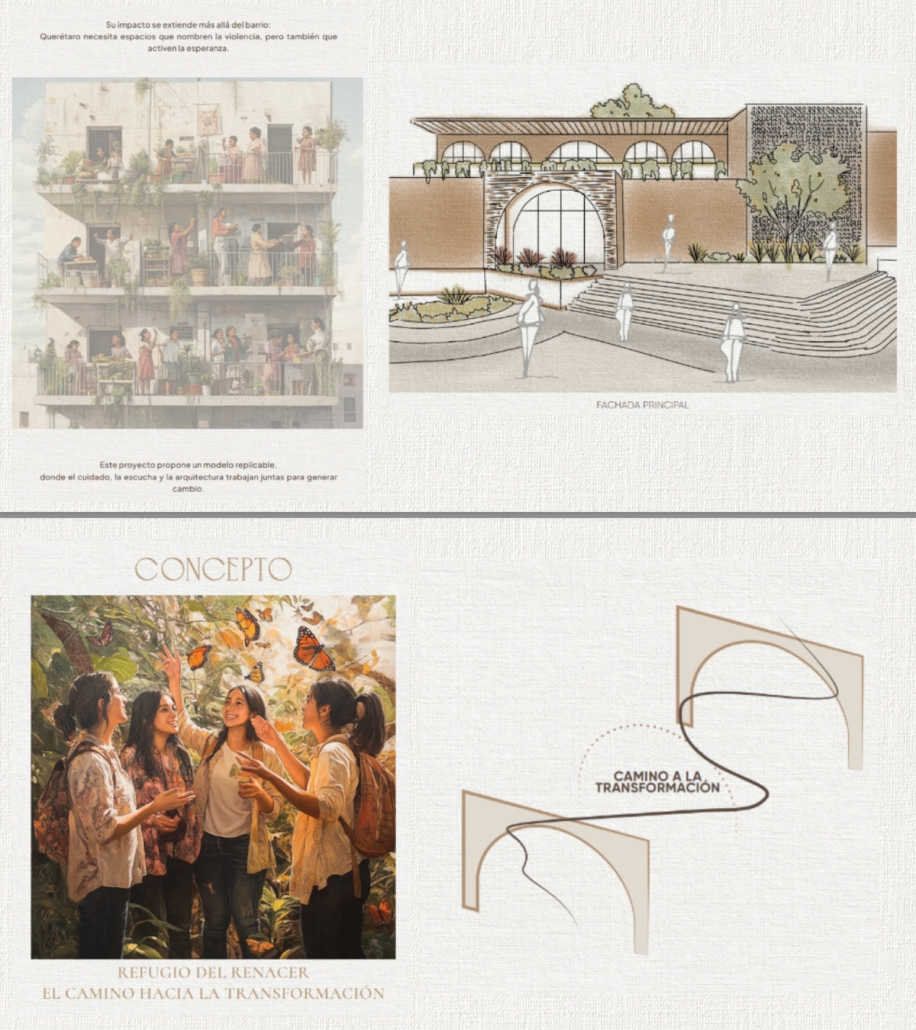
Centro Mariposa: The Refuge of Wings, Women’s Shelter, Querétaro by  Leslie Bocanegra Valdivia, B.Arch ’25
Universidad Anáhuac Querétaro | Advisors: Guillermo Márquez, Patricia Cutiño & Jorge Javier

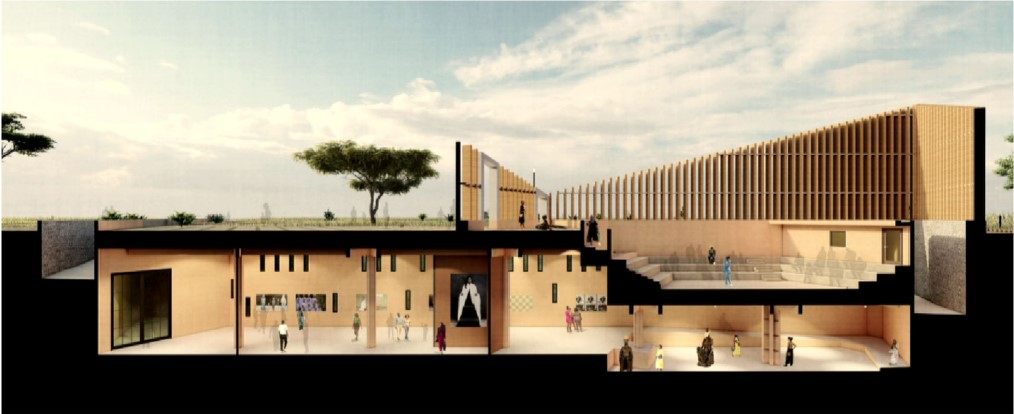
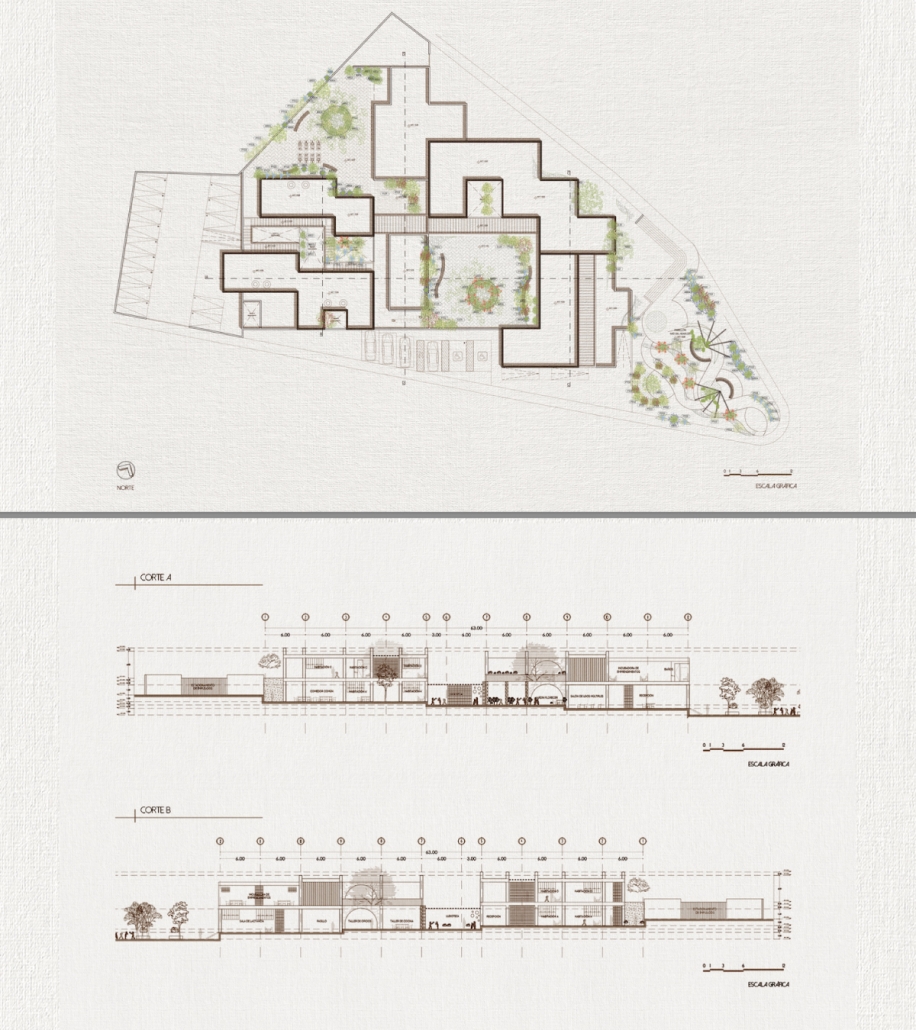
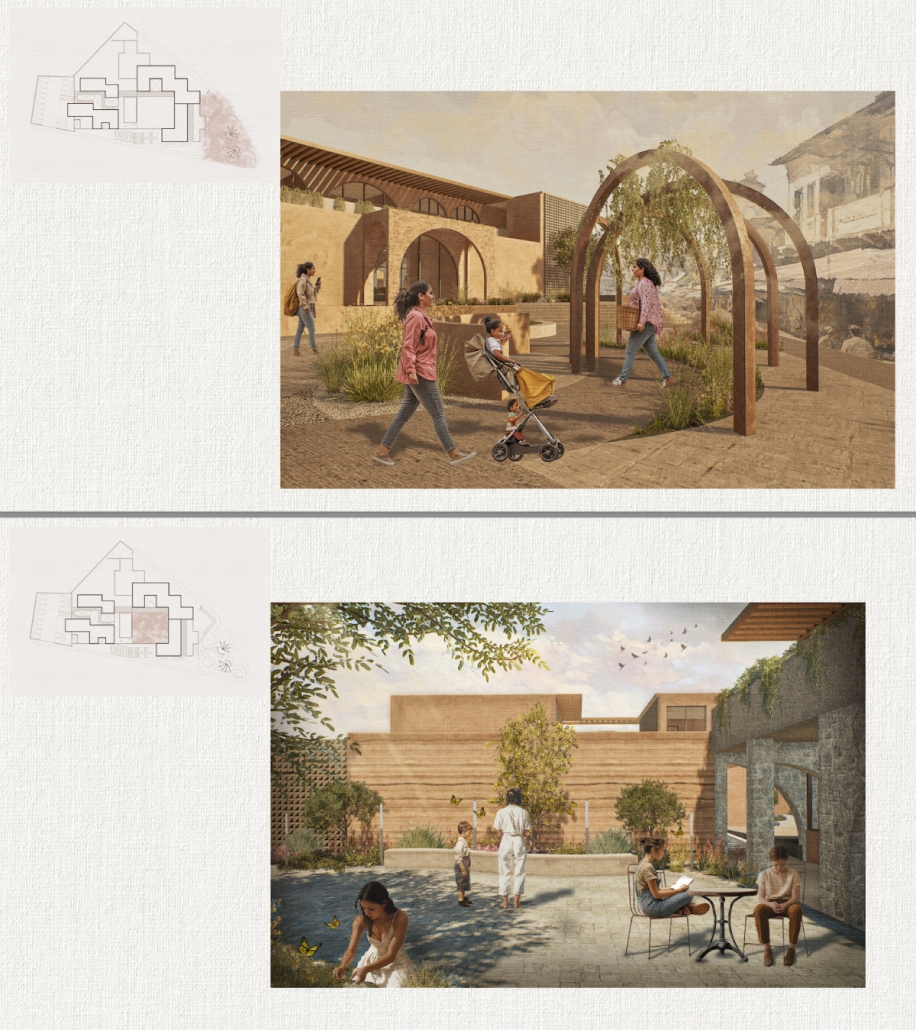
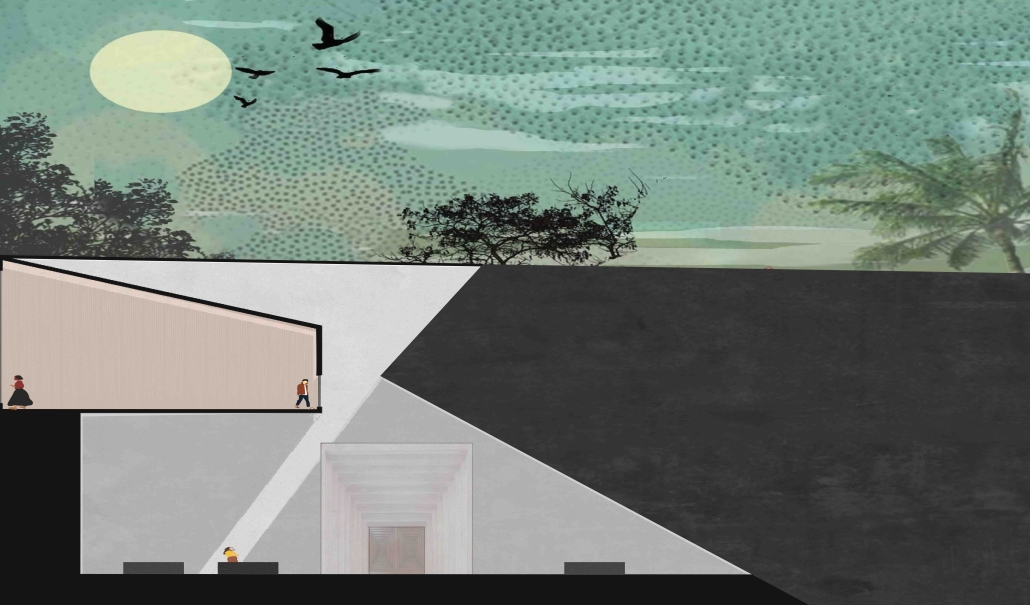
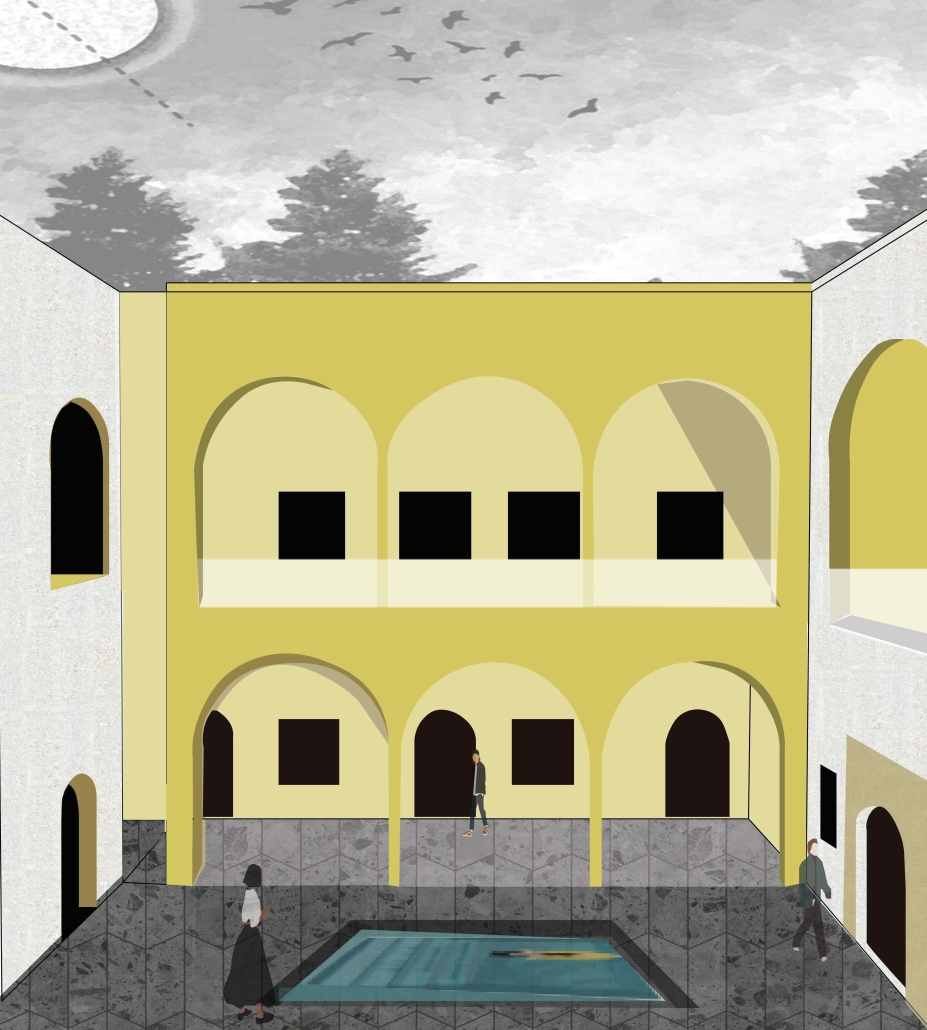
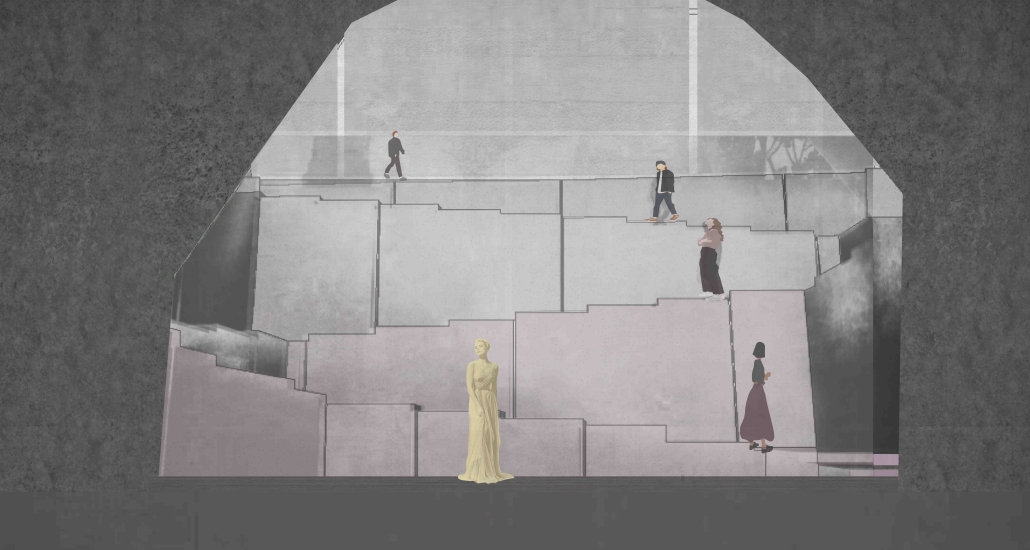
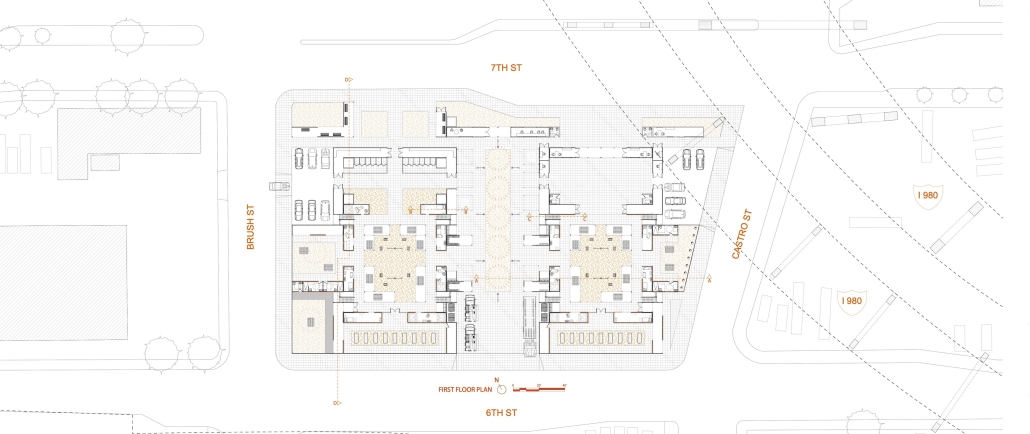
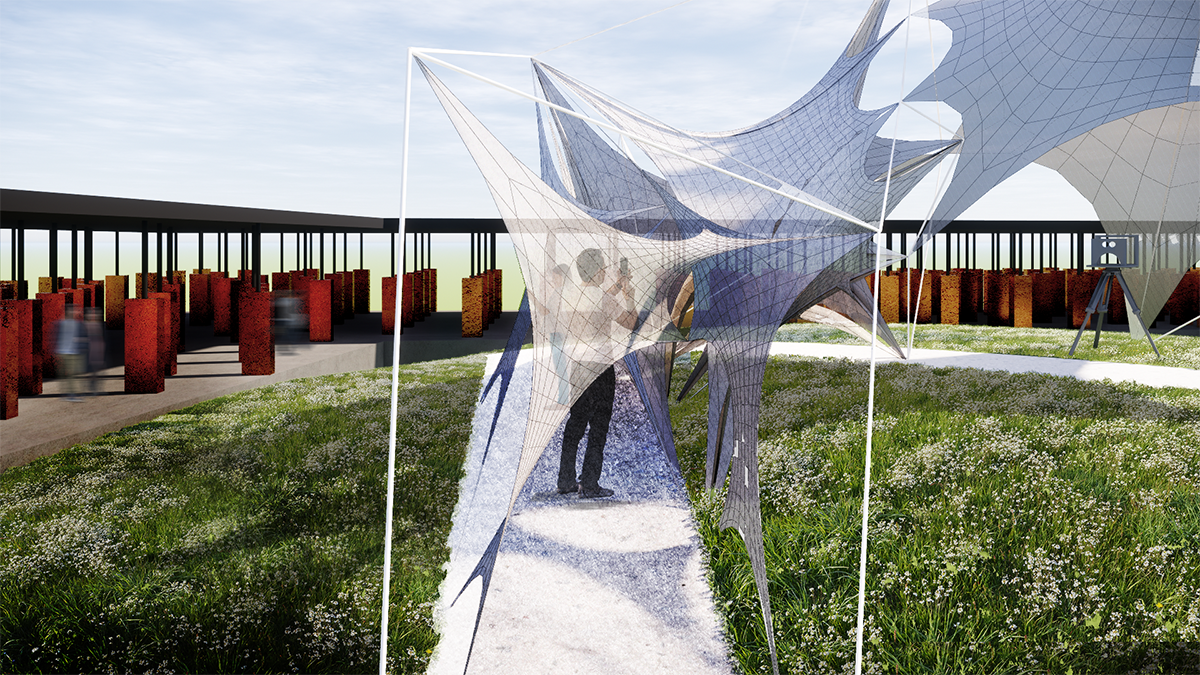
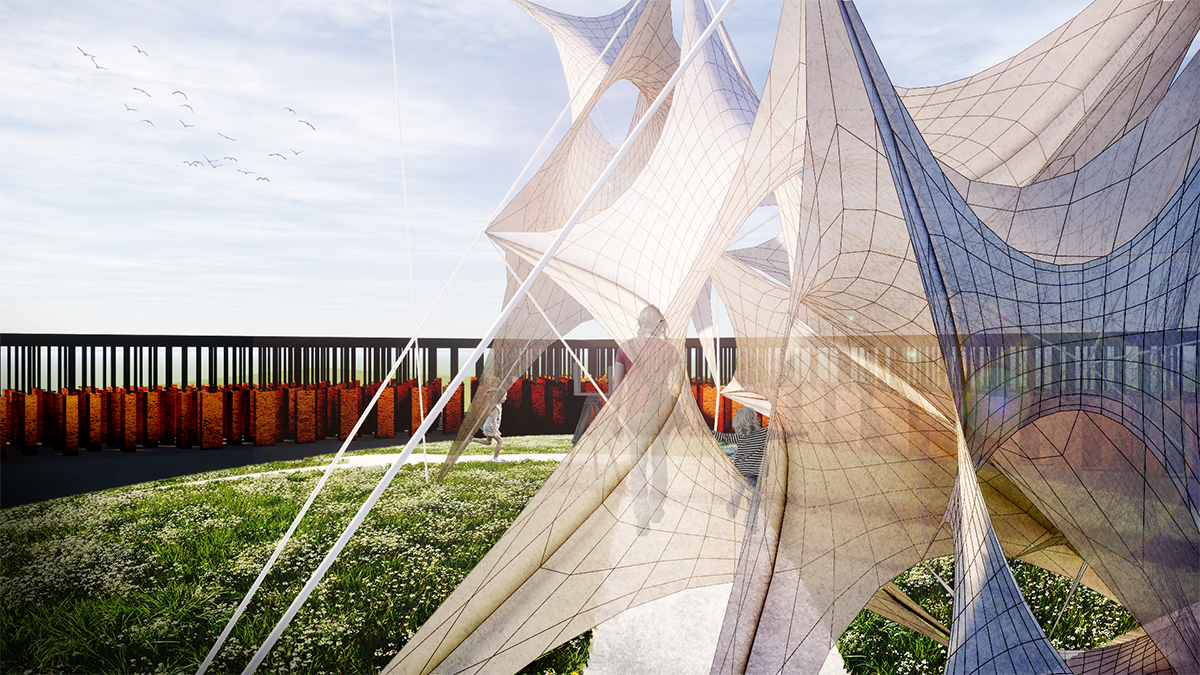
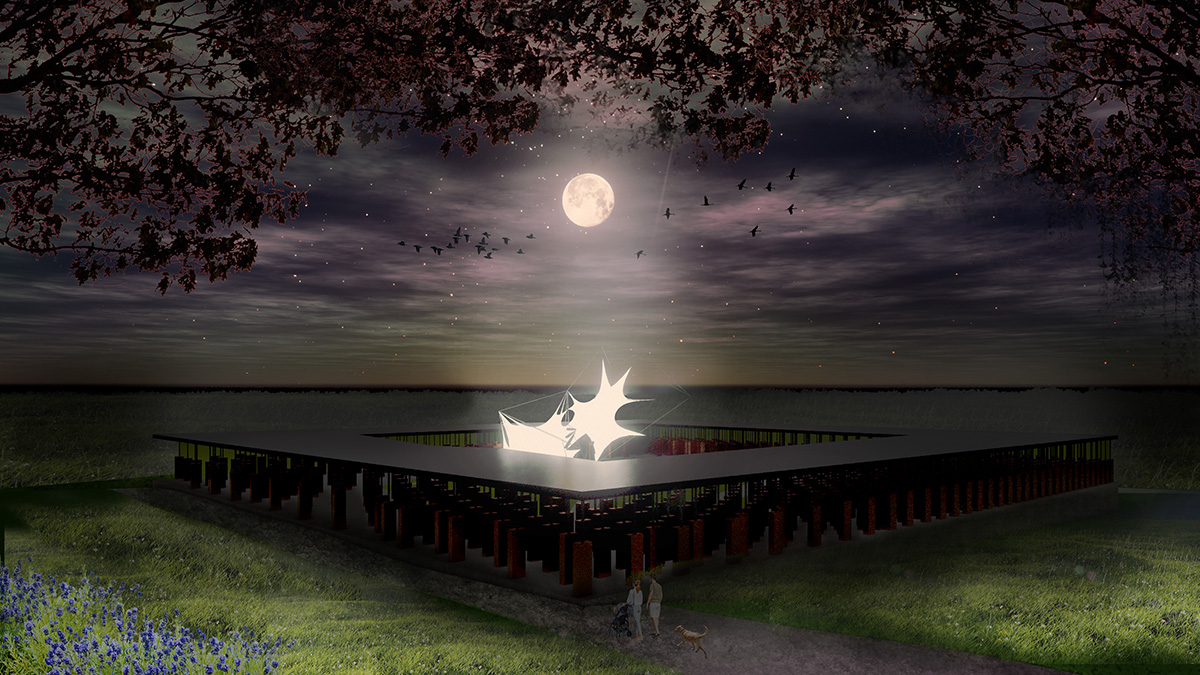
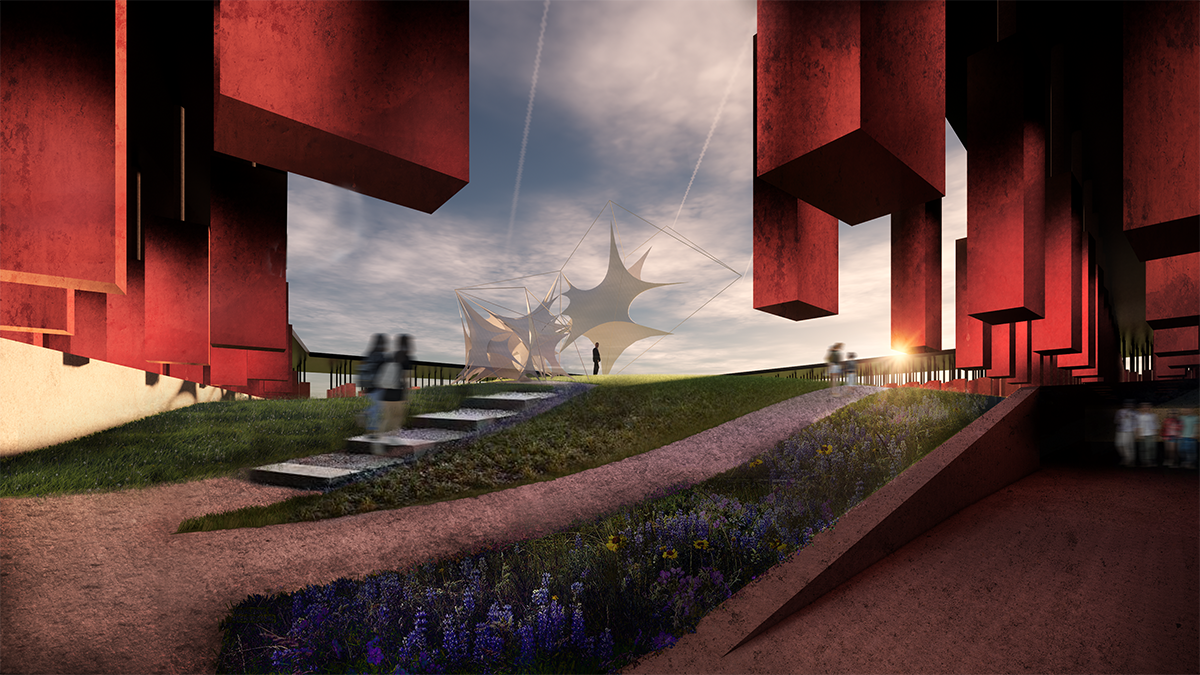
At the heart of the indigenous neighborhood of San Francisquito, Querétaro — a city affected by gender violence and inequality — [is] CENTRO MARIPOSA, inspired by the butterfly’s journey of rebirth, emerges as an architectural space for transformation. In response to the lack of safe spaces for women, the project offers more than refuge; it provides a place to heal, rebuild identity, and begin anew, surrounded by physical, symbolic, and collective protection.

A pavilion marks the entrance — a civic gesture that transforms a neglected corner into a new community anchor. More than a threshold, this space invites gathering and recreation, intervened with messages of resistance. It is here — where the intimate and the public intertwine — that the transition from pain to rebirth begins.

The proposal integrates a network of spaces that respond to women’s needs: medical, legal, psychological, and physical support combine with workshops on crafts, art, recreation, connection, entrepreneurship, and empowerment — all within an atmosphere of mutual care and healing. A temporary shelter area offers safety, professional support, and dignity to those in urgent need, the architecture draws inspiration from metamorphosis: Organic paths, contemplative patios, and warm materials create a nurturing environment. Every architectural gesture is an act of care. The design respects the neighborhood’s heritage and connects with the land and its people.

The impact of CENTRO MARIPOSA extends beyond its walls. It seeks to heal a community, rekindle hope in forgotten spaces, and offer Querétaro a model of architecture grounded in social justice and gender equality.

Like a butterfly, each woman who finds strength here takes flight — lighting the way for others to rise, transform, and soar.

Instagram: @leslie_bocanegra, @bocle.architecture, @arquitectura_anahuac, @arqwave
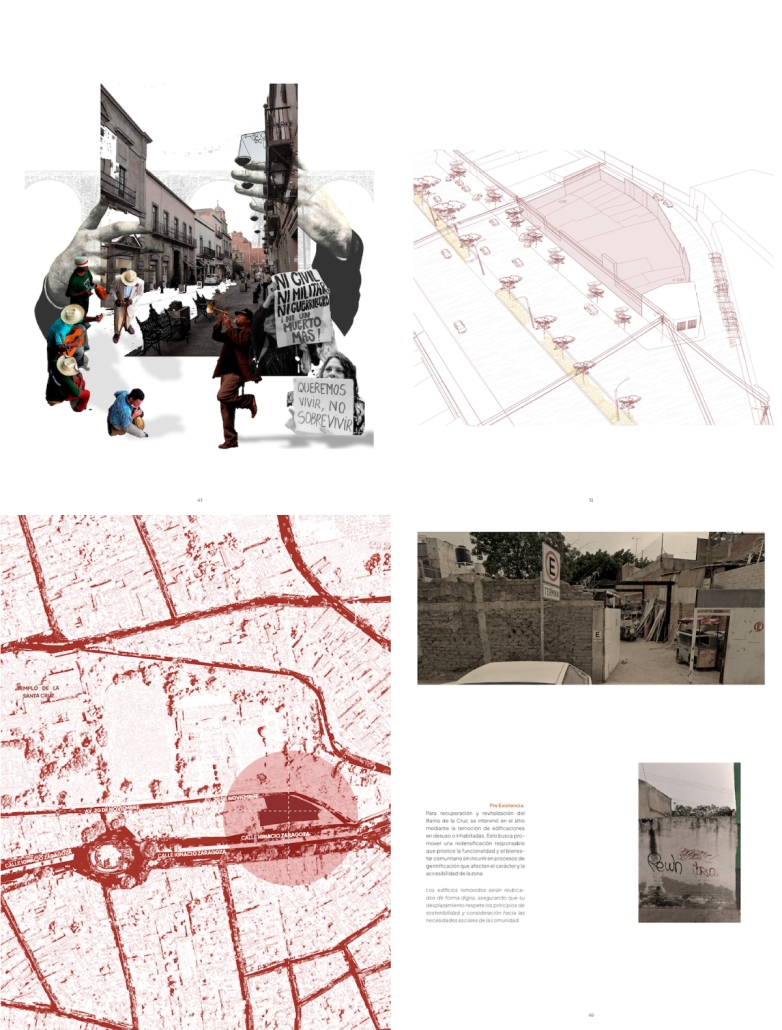
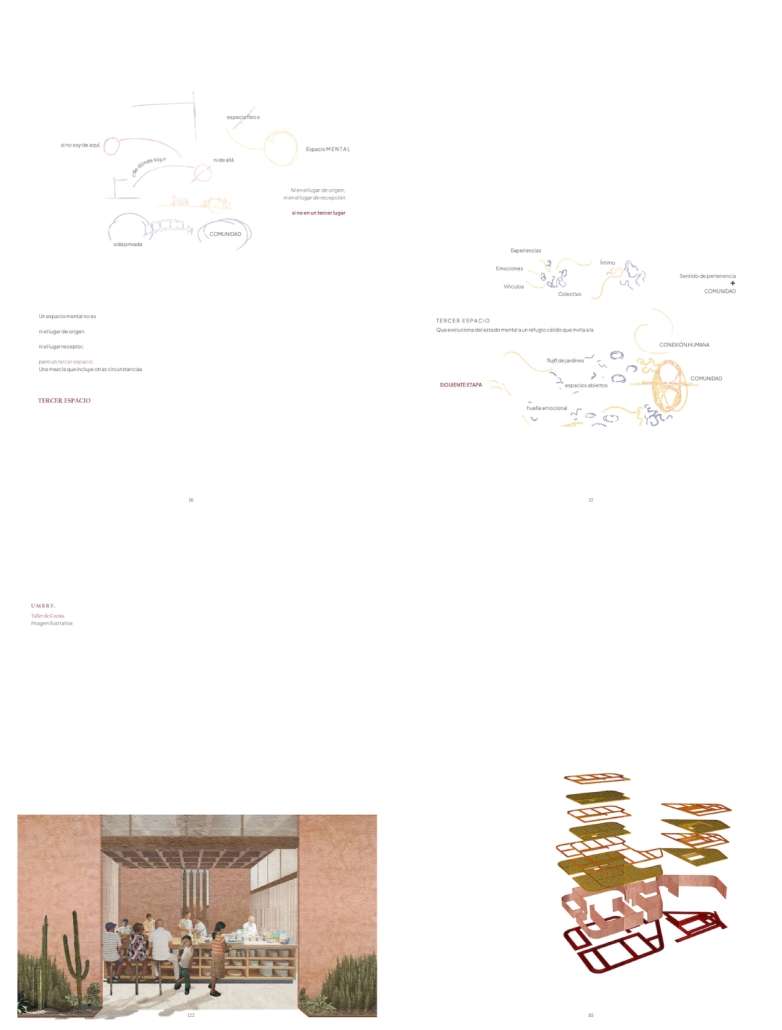
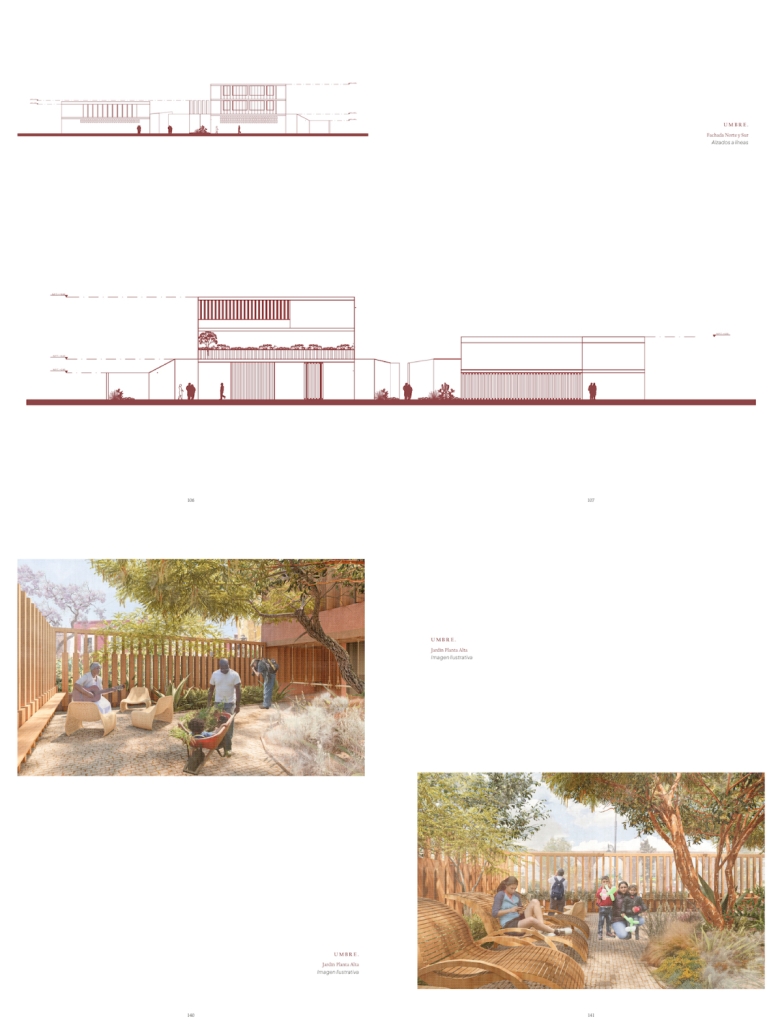
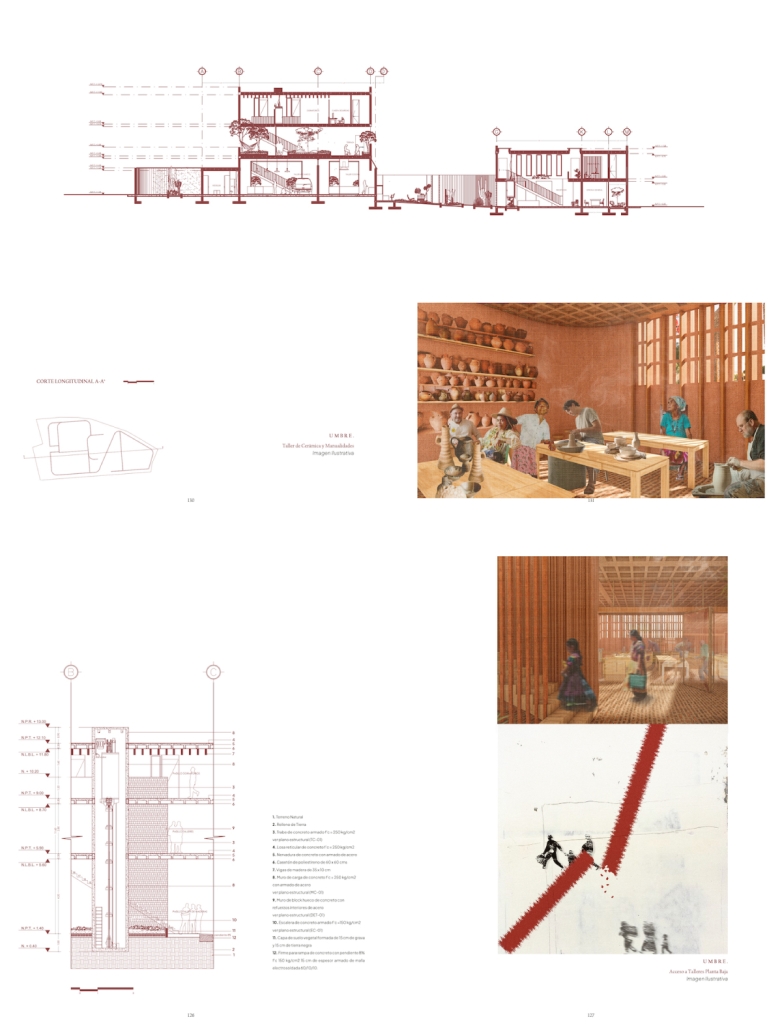
UMBRE Comprehensive Aid Center for Migrants by Natalia Pérez Pereyra, B.Arch ’25
Universidad Anáhuac Querétaro | Advisors: Guillermo Márquez, Patricia Cutiño & Jorge Javier

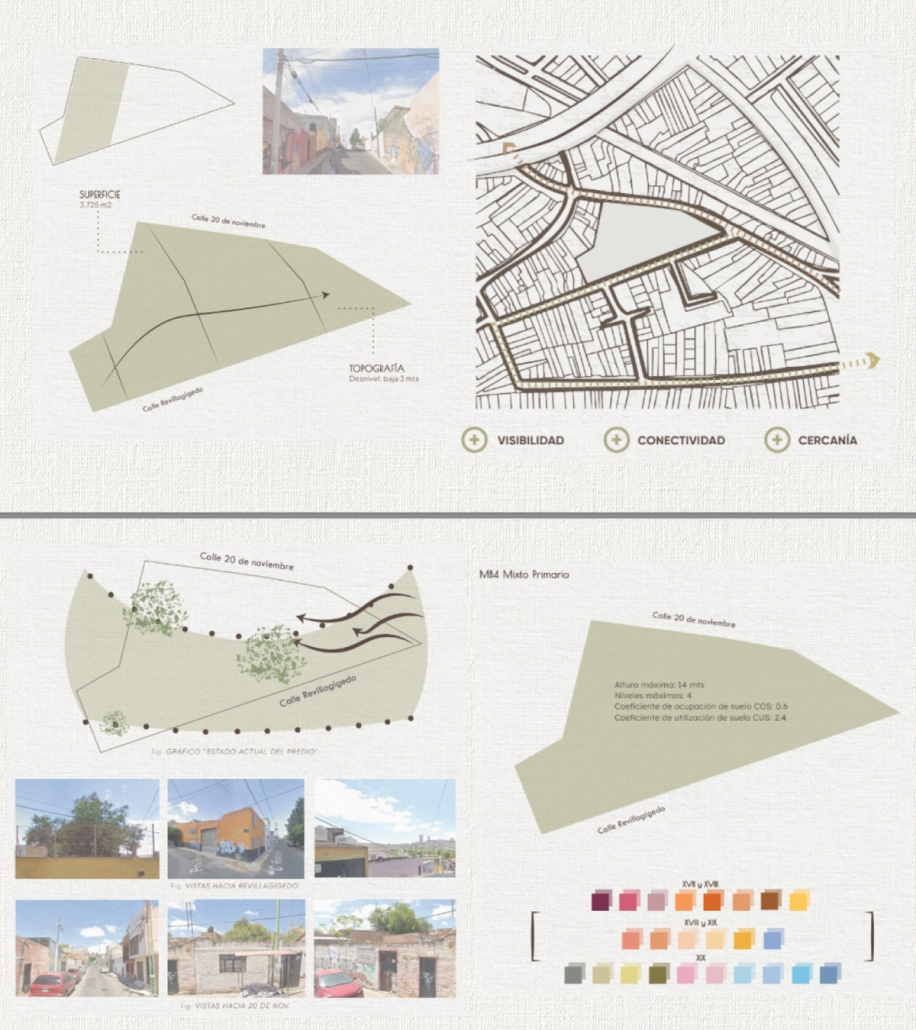
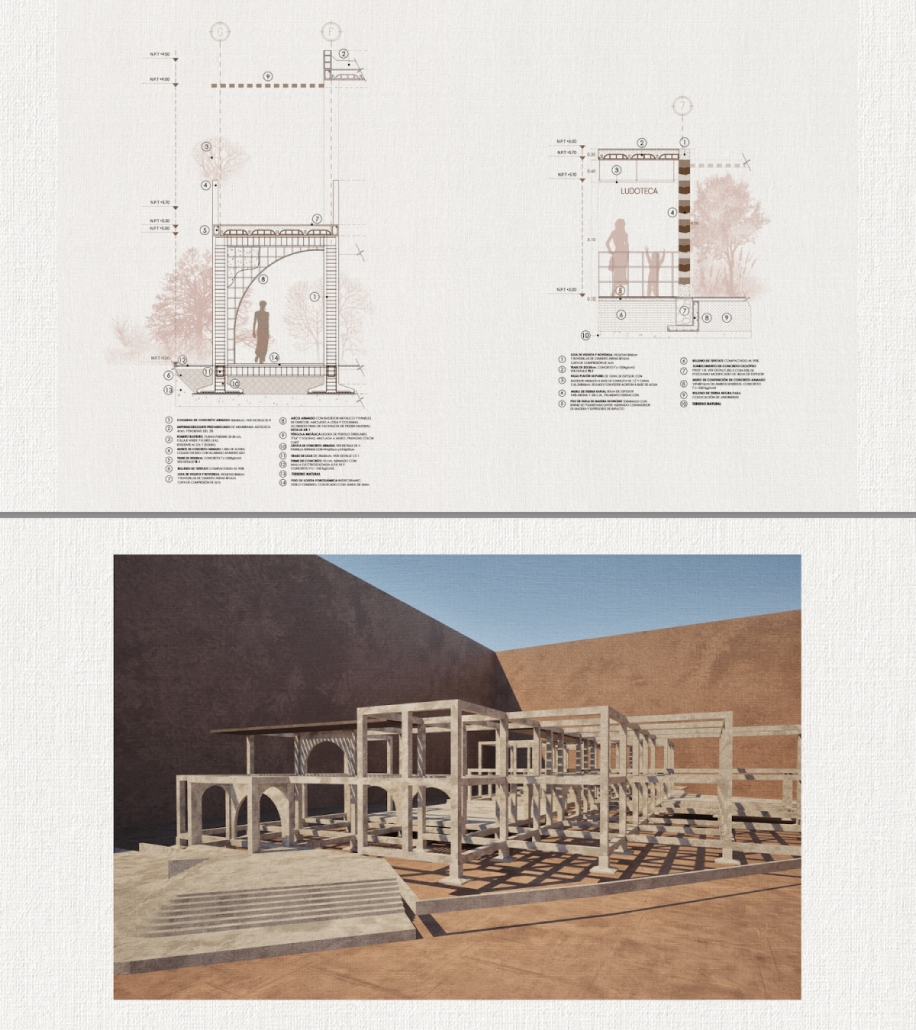
The project offers a temporary stay of up to six months, intended as a preparation and support period so that people on the move can decide their next step: settling in Querétaro or continuing their journey. During this time, workshops, talks, and training sessions are held focused on their labor and social integration. In addition, the center provides outpatient services for those not temporarily housed there. This includes food, sanitation, medical and psychological care, legal assistance and support, training workshops in various sectors, and support in finding employment.

These services do not have a strict time limit, allowing them to be adapted to the migrants’ different trajectories and needs. In coordination with volunteers and specialists, support is also offered in finding housing and managing legal documentation, such as a humanitarian visa, which can be completed in approximately 20 days. The goal is to offer a safe, dignified, and connected environment to the city, strengthening users’ autonomy and integrating them into the social fabric of Querétaro.

Instagram: @nataliaprzp, @perezparch, @arquitectura_anahuac, @arqwave
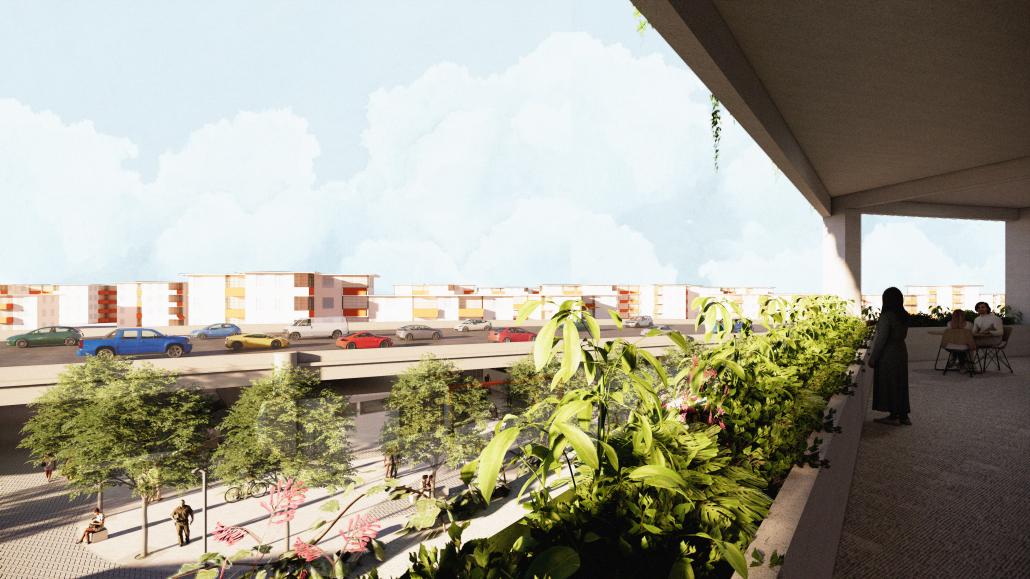
URBAN FRAGMENTATION AND SOCIAL ISOLATION: The Impact of High-Speed Expressways and the Reconnection of the Luis Lloréns Torres Public Housing Complex with Its Surrounding Communities by Lara S. Pérez-Fuentes, M.Arch ’25
University of Puerto Rico | Advisors: Omayra Rivera Crespo, José R. Coleman-Davis & María Helena Luengo

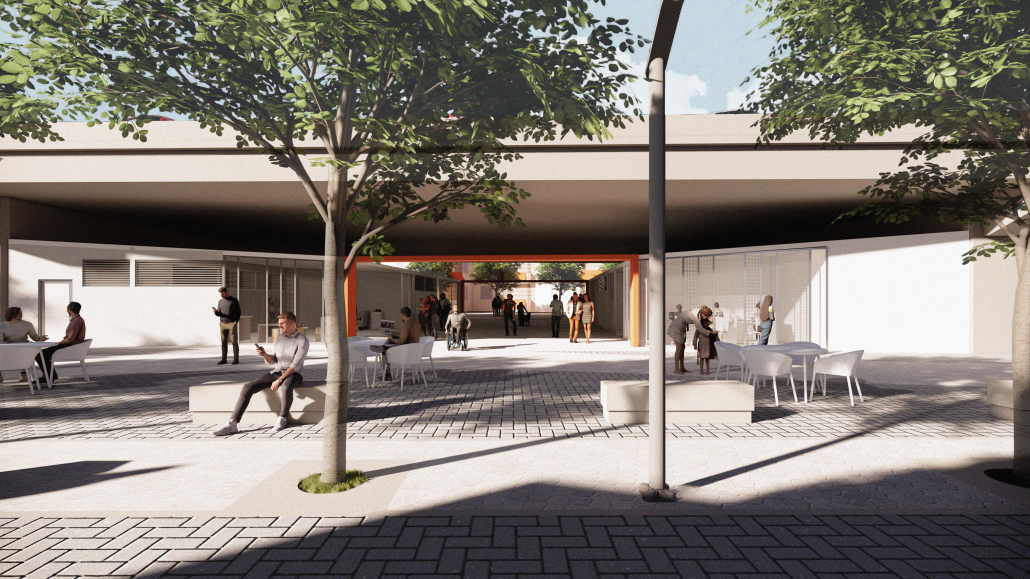
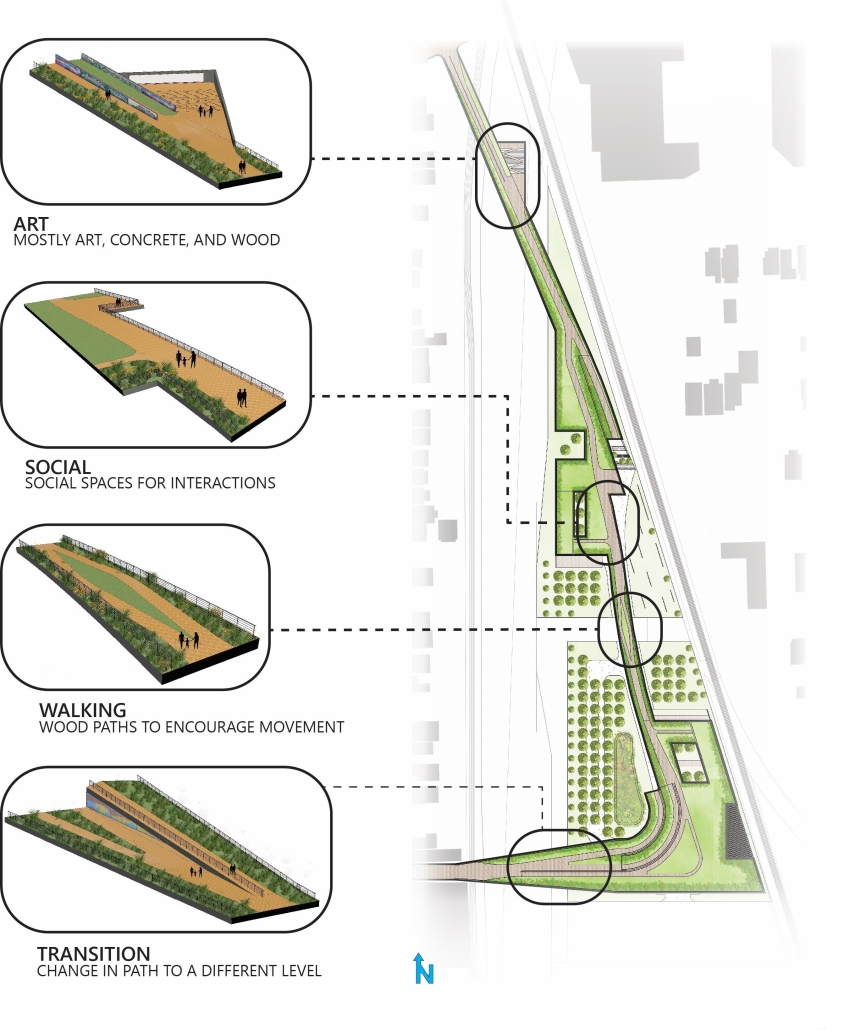
In the Luis Lloréns Torres Public Housing Development and its neighboring communities, such as Shanghai and Villa Palmeras, physical and symbolic barriers, resulting from its architectural design and the Baldorioty de Castro Expressway, have generated urban fragmentation and social isolation. This isolation has limited mobility, access to essential services, and economic opportunities, while perpetuating the social stigma associated with public housing. Based on this context, the study proposes designing an integrative public space as a strategy to mitigate barriers, foster social cohesion, and improve residents’ quality of life.

The research combines qualitative and quantitative approaches, including interviews and surveys, which highlight the challenges of mobility, community disconnection, and lack of adequate infrastructure. Key elements of identity and belonging are also identified, guiding the proposed interventions. The design program includes a pedestrian corridor, a Community Connection Center, and a Cultural Center, along with strategies to revitalize informal commercial spaces and promote social interaction. 

This integrative approach not only responds to the functional needs of accessibility and connectivity, but also seeks to transform the perception of residents and neighboring communities, fostering a sense of unity and active participation. The research underscores the importance of inclusive and collaborative urban planning as a means to overcome exclusion and build resilient, cohesive, and equitable communities.

Click here to learn more.

Instagram: @larita0013, @uprarchitecture
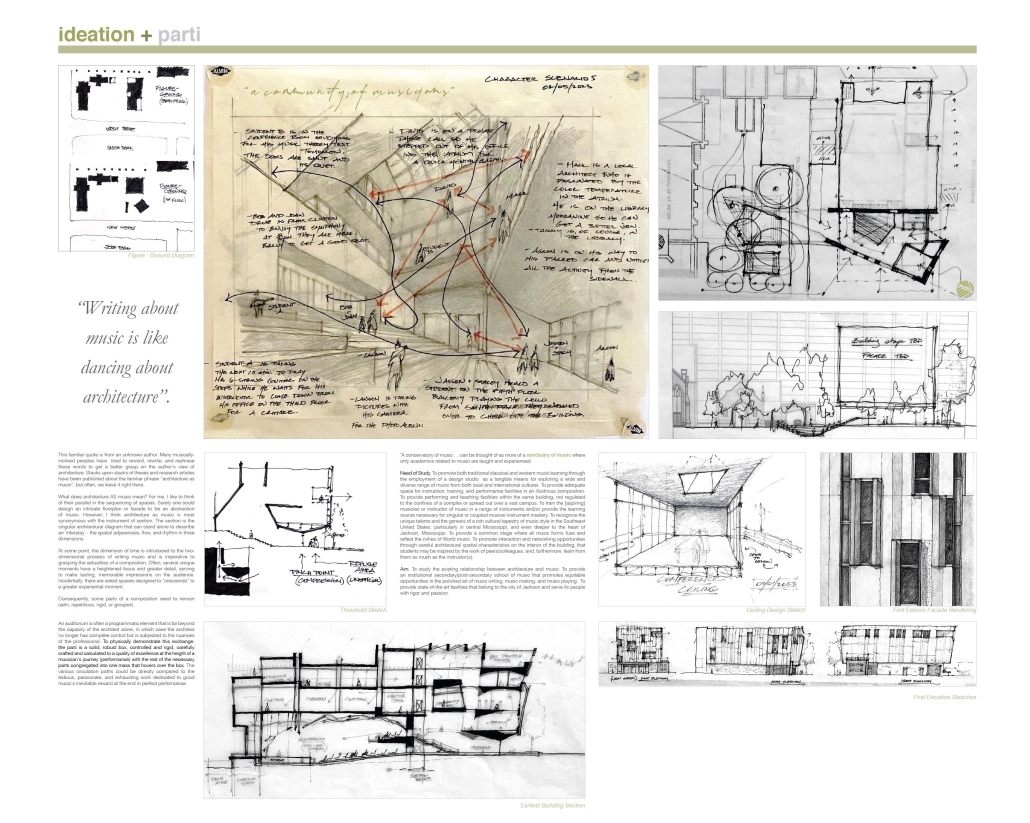
Jackson Center for the Blind and Visually Impaired by Anna Kate Horn, B.Arch ’25
Mississippi State University | Advisors: Jassen Callender, Mark Vaughan, Aaron White, David Perkes & David Buege

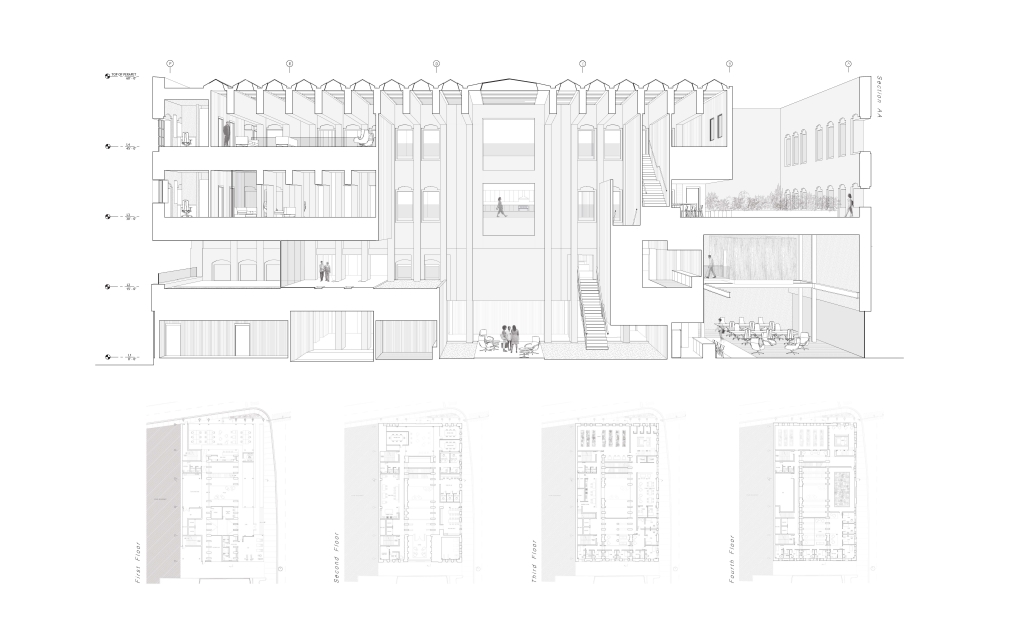
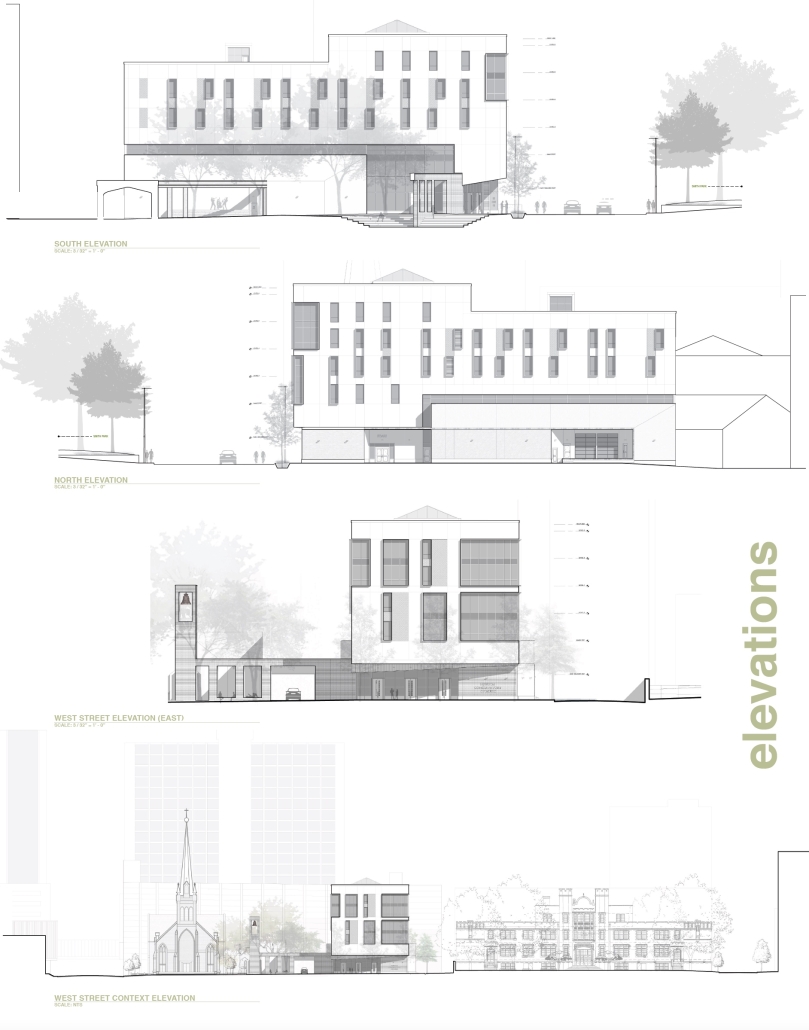
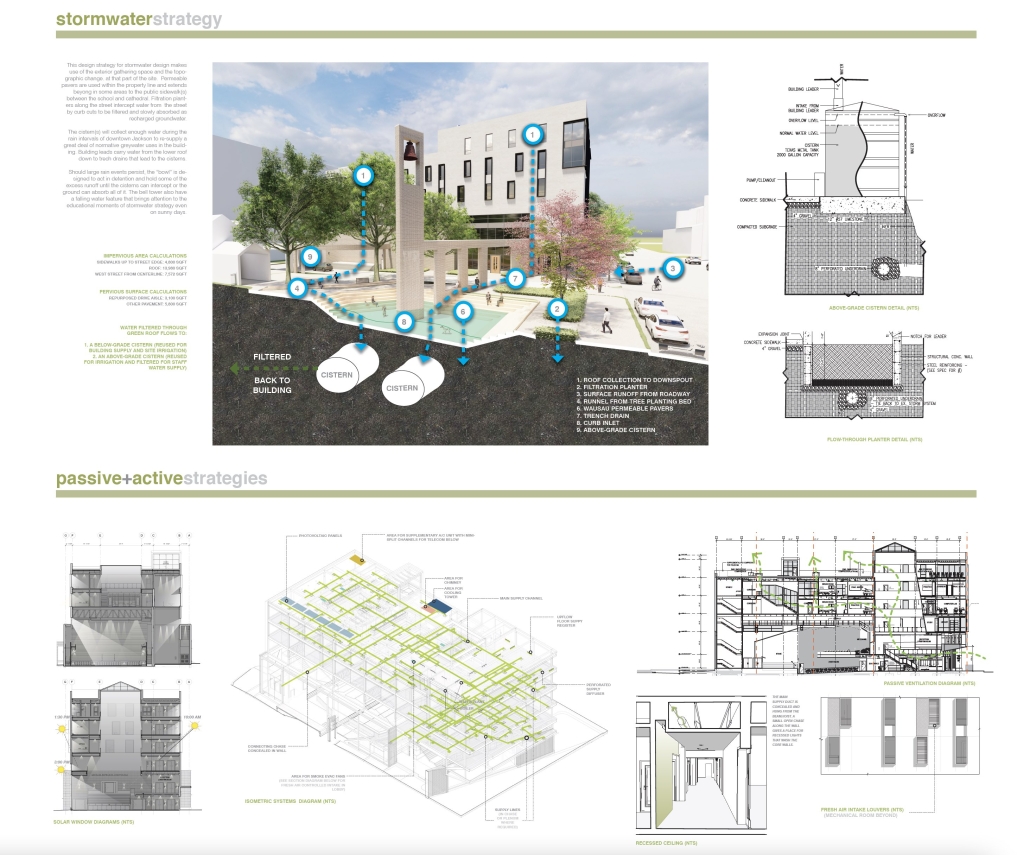
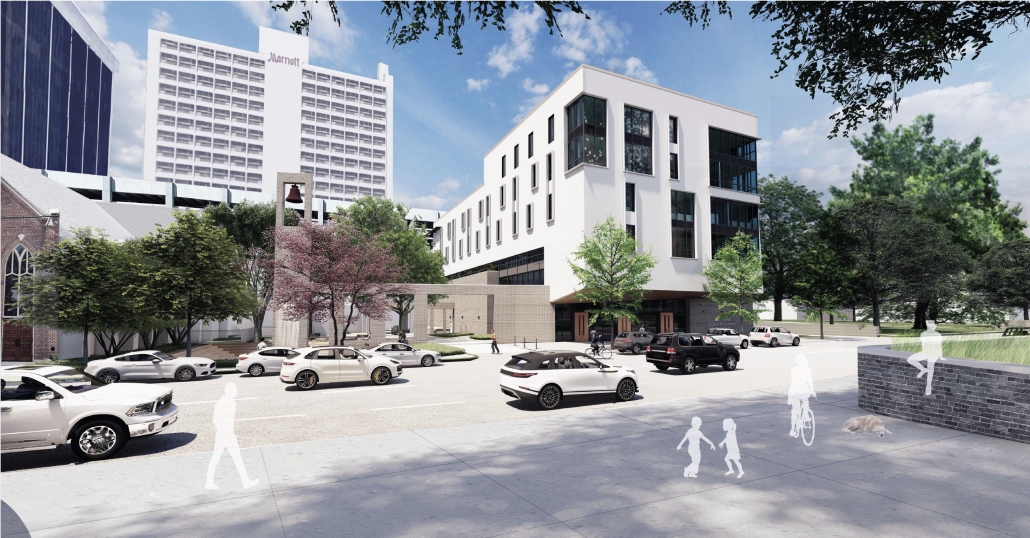
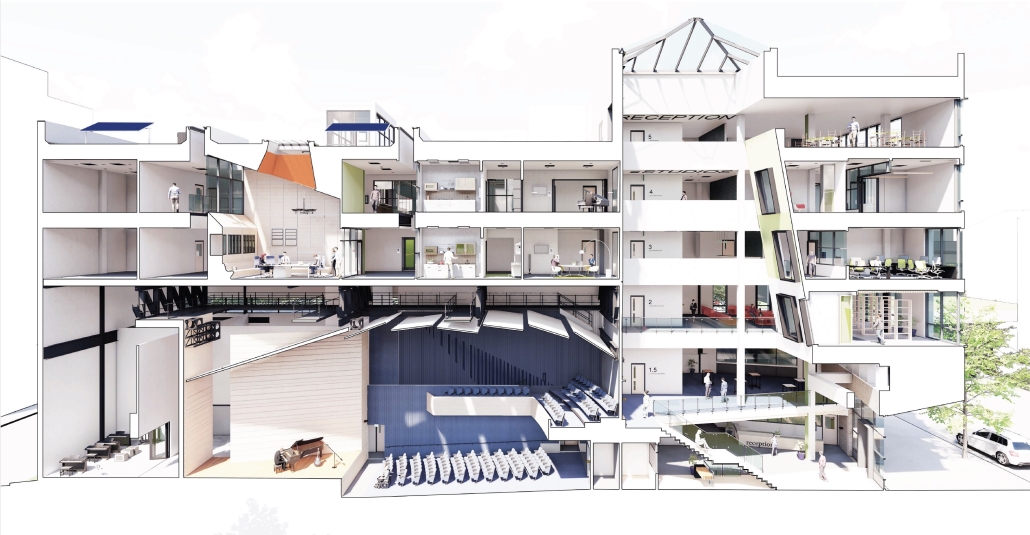
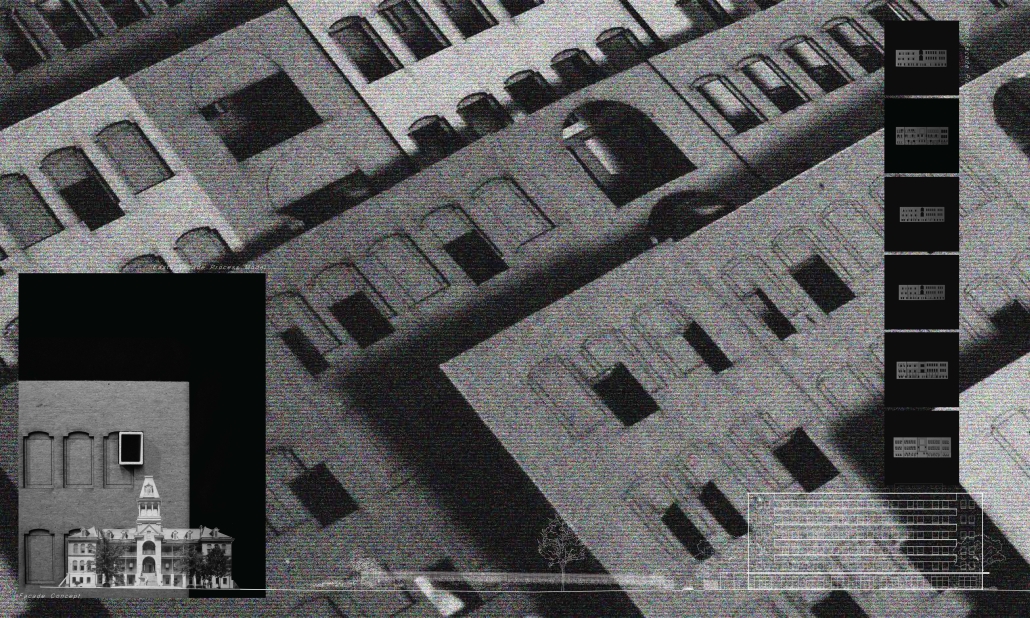
“Jackson’s Center for the Blind and Visually Impaired” is a training facility that empowers individuals with vision loss to gain greater independence. This project explores the understanding that design solutions addressing the needs of the blind and low-vision communities are universally beneficial—enhancing the spatial experience for all users by deepening the sensory richness of the environment. Located at one of the most prominent and sensory-rich intersections in Jackson, Mississippi, the training center creates a space for its user group within the city that celebrates the acceptance of diverse perspectives in urban environments.

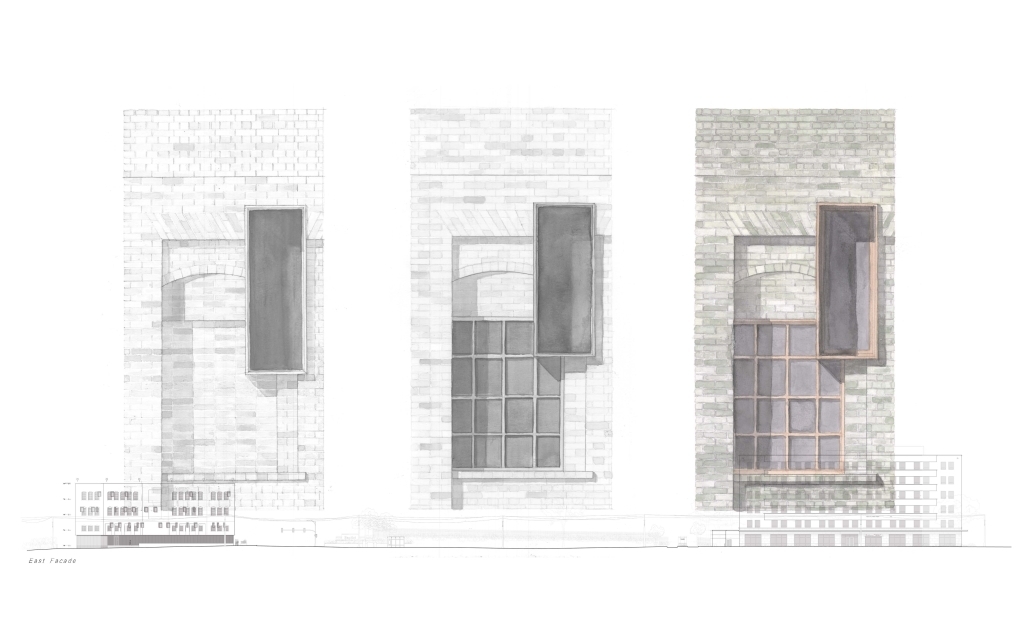
Across the street once stood the first location of the Institute for the Blind in Jackson. The geometry of this original building has become the base of the façade, which is intentionally disrupted with boxed bronze window openings that pierce through the underlying rhythm, contradicting the established grid to create moments of tension. Sculpted from green glazed brick with medium gray mortar, the materiality speaks to the context and historic structure without attempting to replicate the past, while celebrating the primary user group’s history within the community. The green glazed mass levitating above the ground reveals a district condition of light and sound from the street at the entry to indicate arrival.

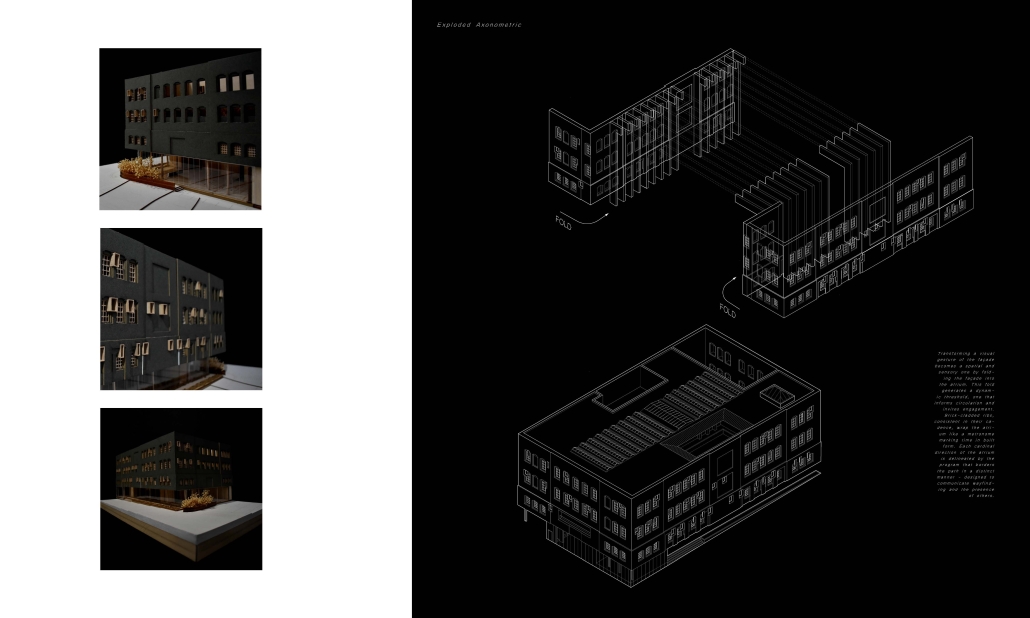
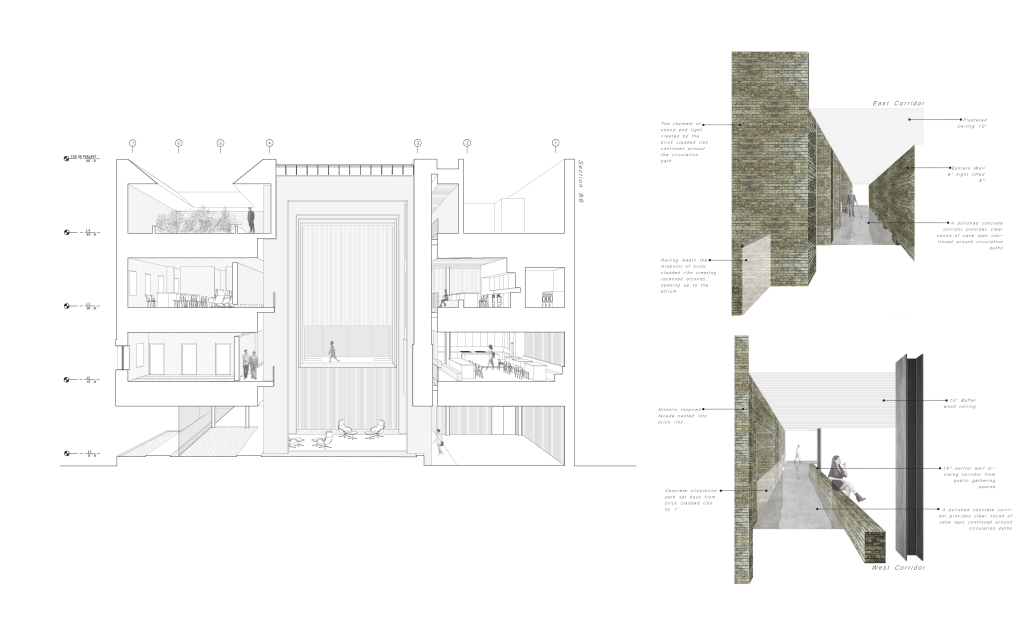
Transforming a visual gesture of the façade becomes a spatial and sensory one by folding the façade into the atrium. This fold generates a dynamic threshold, one that informs circulation and invites engagement. Brick-cladded ribs, consistent in their cadence, wrap the atrium like a metronome marking time in built form. Each cardinal direction of the atrium is delineated by the program that borders the path in a distinct manner – designed to communicate wayfinding and the presence of others.

This project received the CDFL Capstone Studio Travel Award. 

Instagram: @designs_by_akhorn, @jassencallender
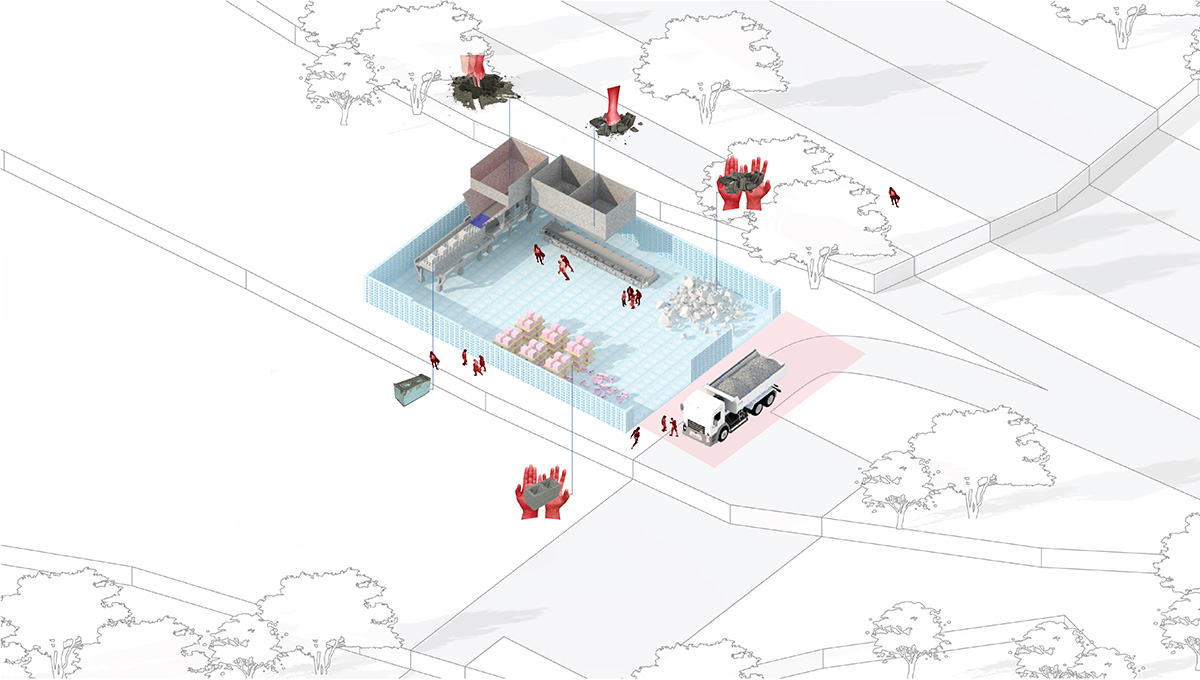
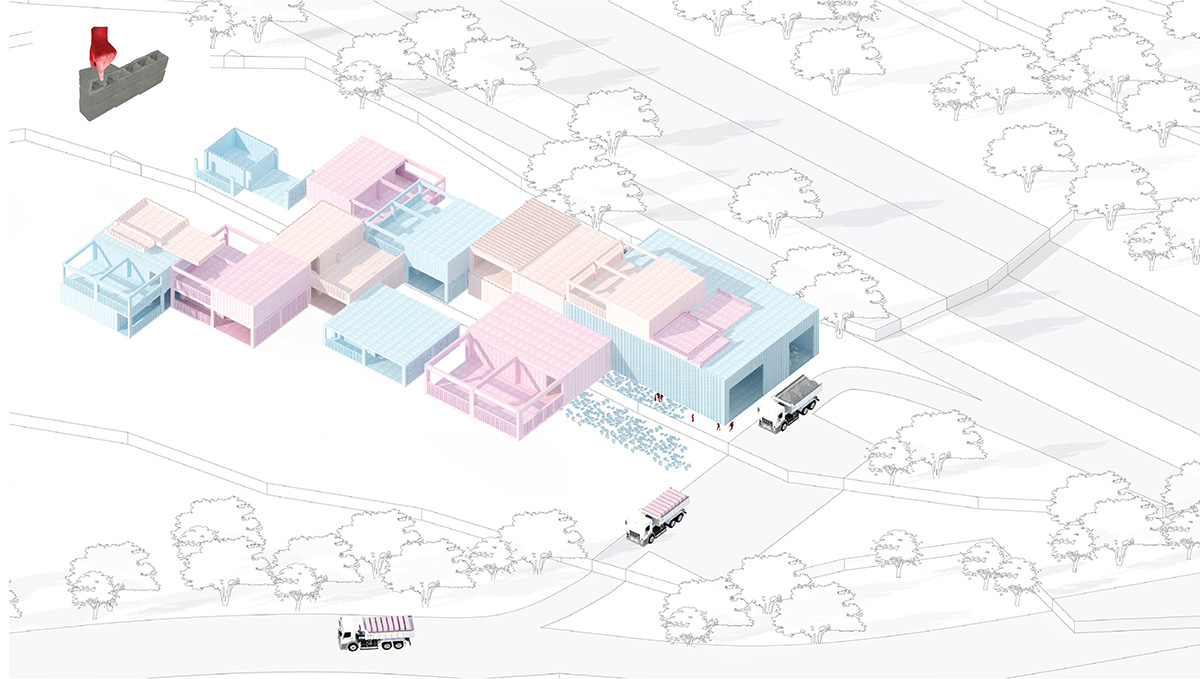
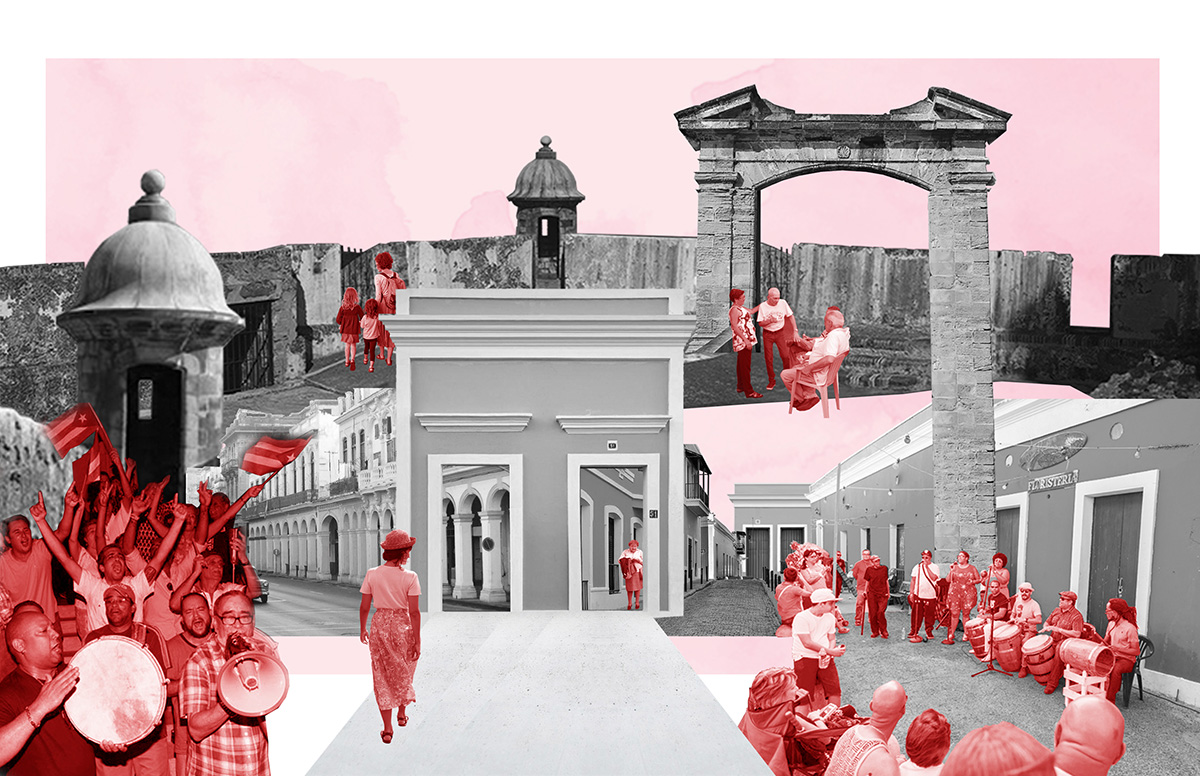
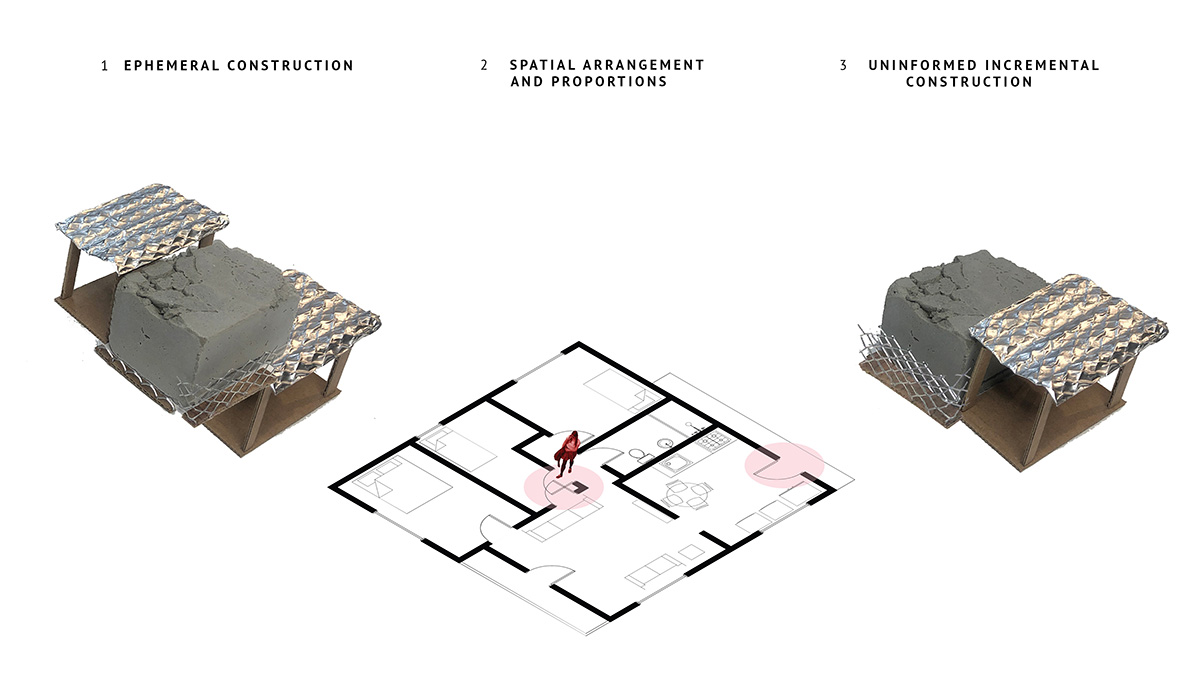
ReOCCUPY Your City – The Co-operative Squatting Society by Nour Kaddoura, M.AARS City Design + Housing (CDH) ’25
University of Southern California | Advisor: Sascha Delz

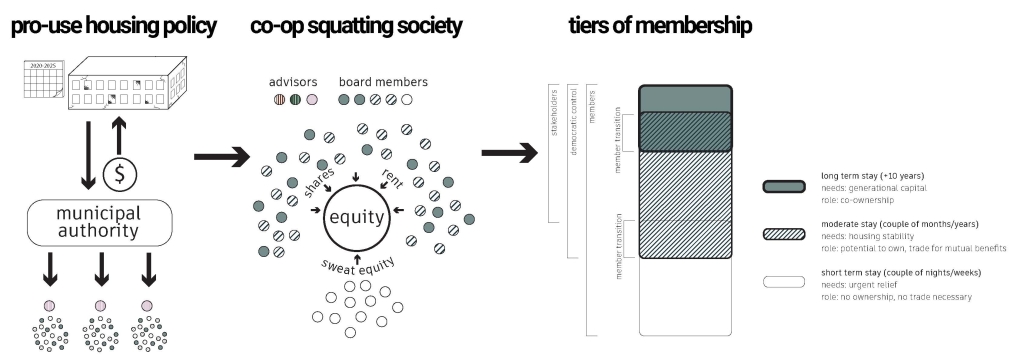
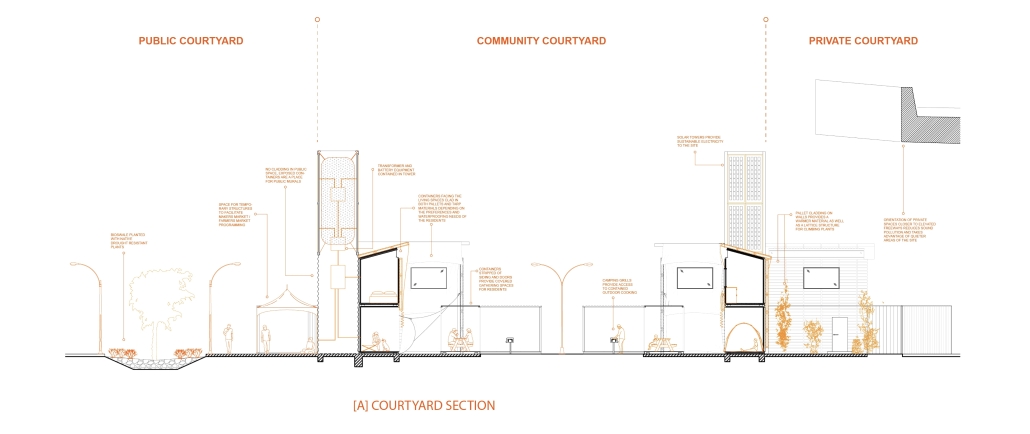
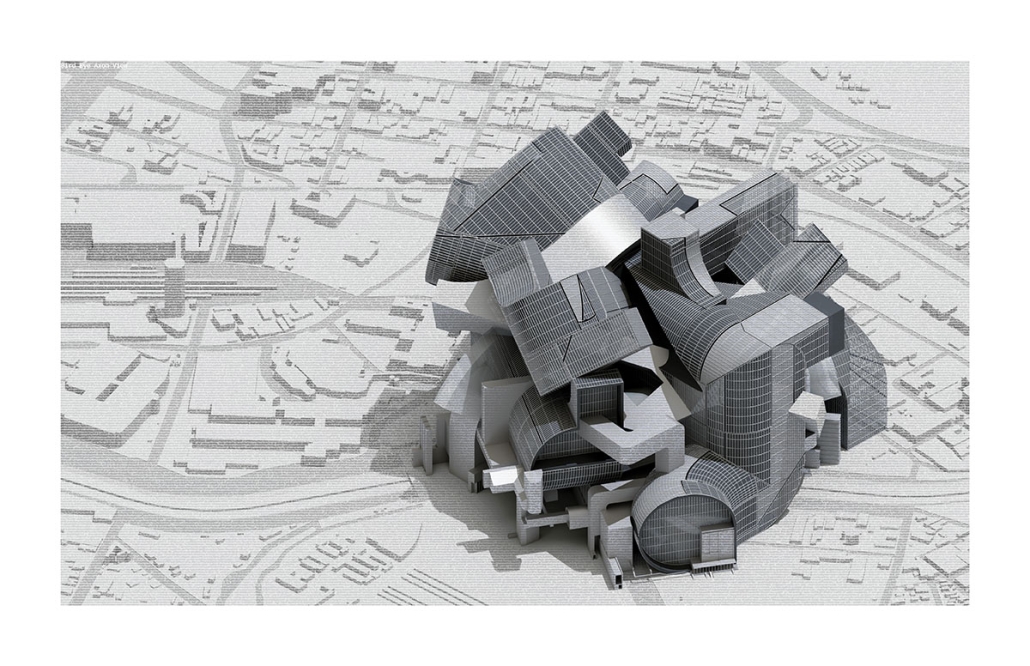
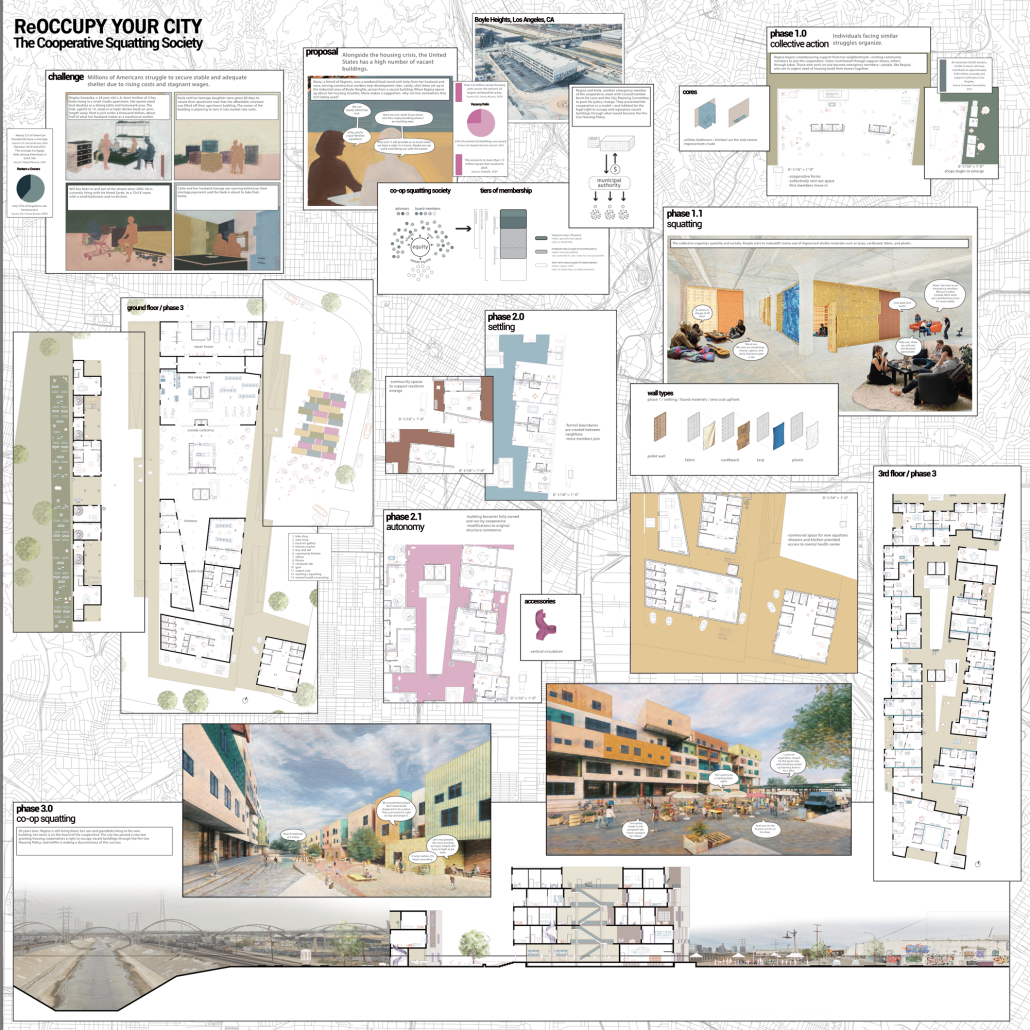
For many marginalized individuals and communities, informal practices are an essential means of gaining access to services and spaces that are otherwise unavailable or unaffordable. This is especially true for shelter and housing, where squatting often serves as a last resort. While property owners have broad legal means to evict squatters, squatters also hold limited rights, leading to often adversarial and protracted legal battles.”ReOCCUPY Your City” offers an alternative approach to squatting. By combining a supportive legal framework, a Pro-use Housing Policy, and formalized Co-operative Squatting Societies, it empowers squatters to take control of vacant industrial properties, transforming them into collaborative spaces that provide affordable housing for Los Angeles. 

Under the Pro-use Housing Policy, a group of dwellers can form a Co-operative Squatting Society, claim collective ownership of an abandoned building, and gradually inhabit and manage it democratically over time. As residents join, their involvement in the co-operative can evolve from emergency occupancy to transitional and ultimately permanent residency. ReOCCUPY Your City thus enables a community-driven, democratic reuse of vacant buildings, empowering squatters to not only claim and improve these structures but also to contribute to the city’s housing stock. The project also allows the city’s housing administration to make underutilized spaces progressively productive, offering affordable, self-governed housing solutions.

Instagram: @coop_urbanism
B.lab Community-Based Design by Lowai Ghaly, Mazen Ghaly, Mohamed Meawad, Andrew Hart, Kim Ebueng, Kenny Soriano, Edgar Castillo, Peter Peritos, Shadi Vakilian, Amanda Estrada, Giewel David, B.Arch ’25
Academy of Art University | Advisor: Sameena Sitabkhan

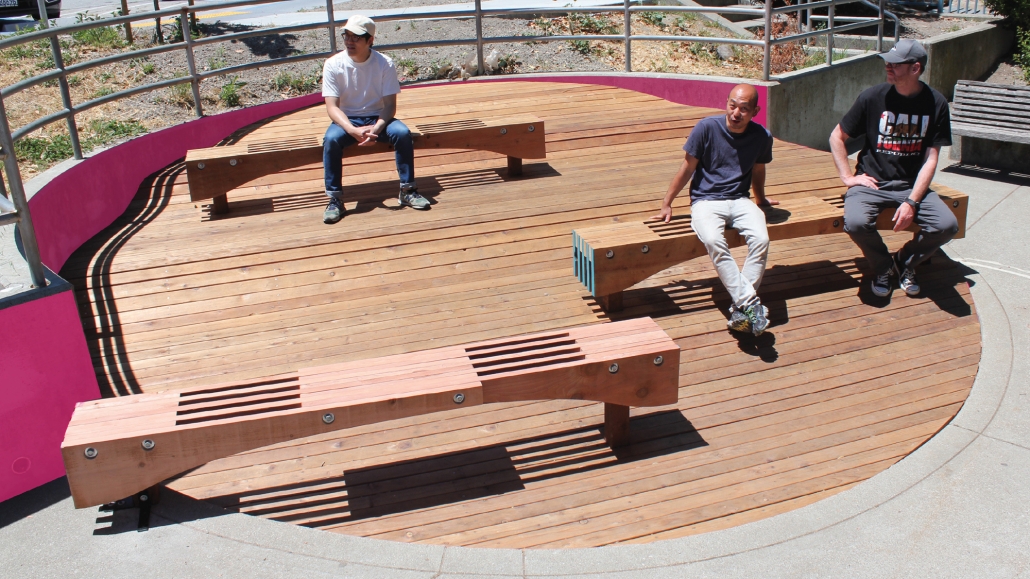
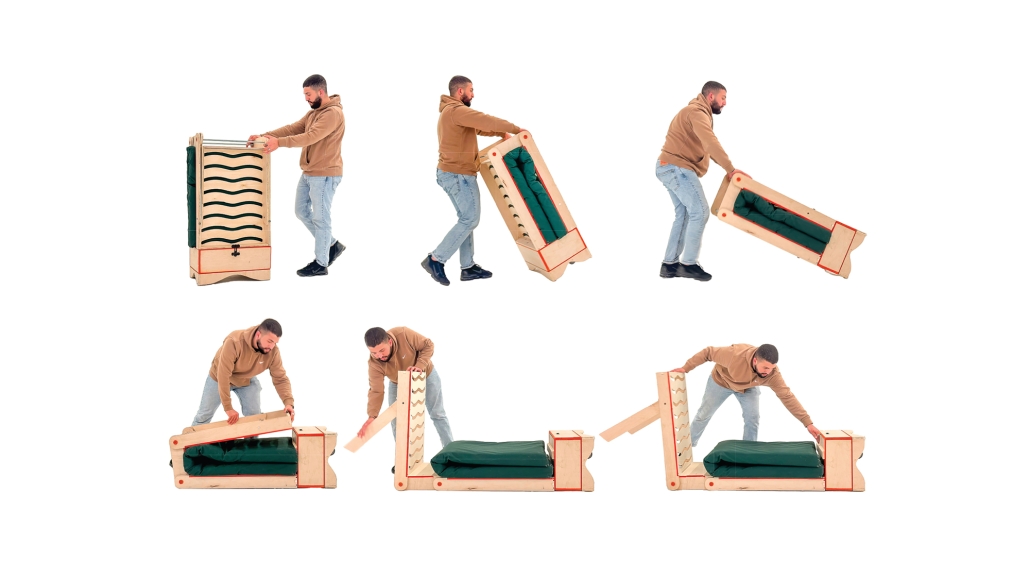
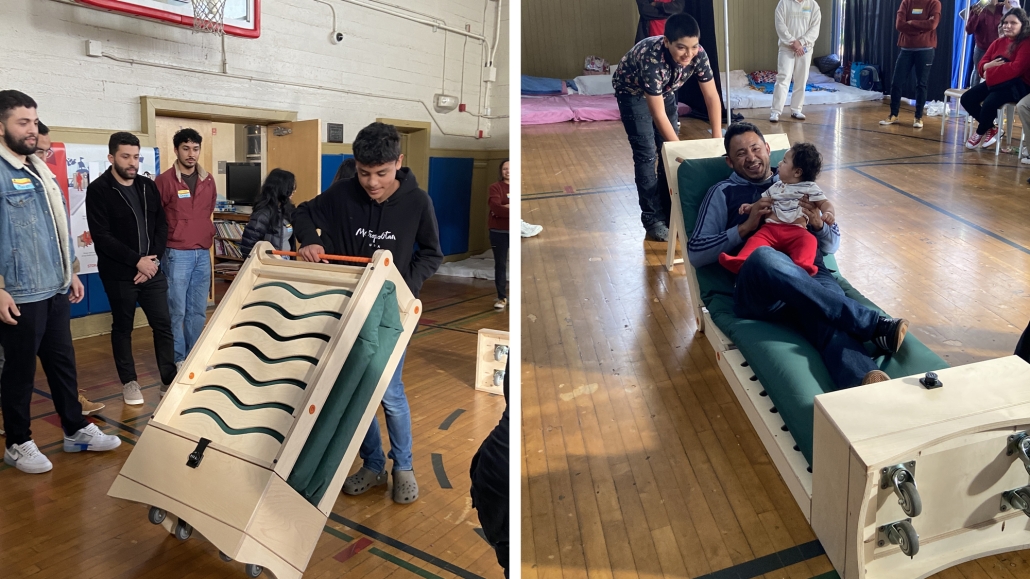
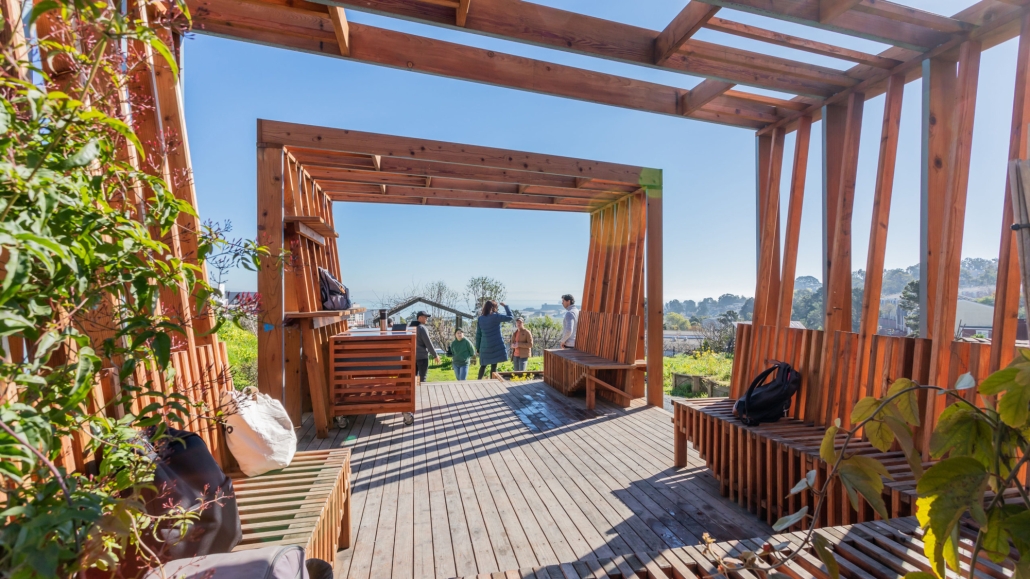
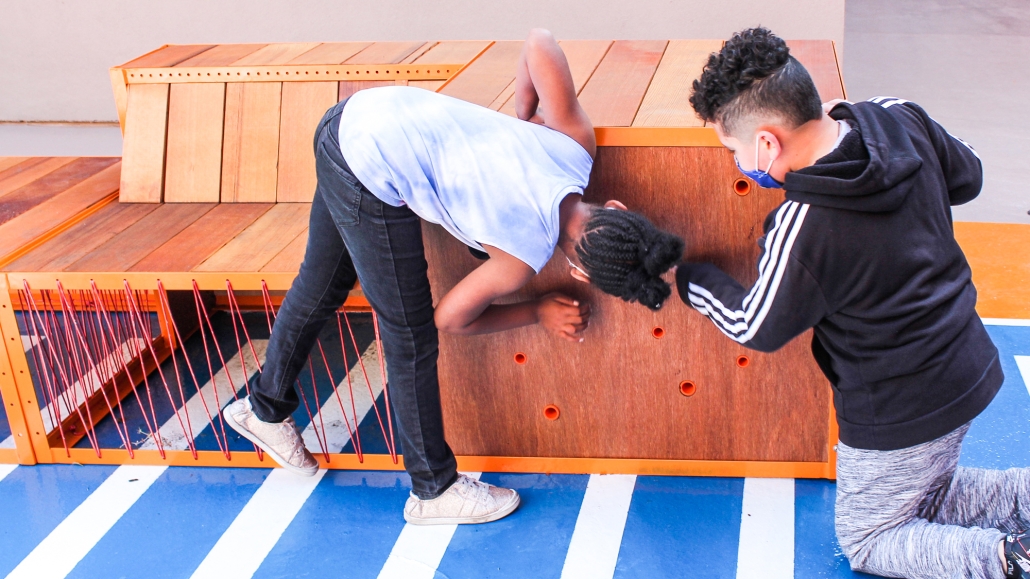
The B.lab program at the Academy of Art University was founded in 2018. Through robust partnerships with our neighbors and local nonprofit organizations, the program has implemented several projects in the Bay Area. At its core, the B.lab program is a community-based design program promoting spatial justice and advocacy for future designers. Through radical listening and co-creation, we empower communities and bring positive change to the built environment.

This project received the B.Arch Community Building Award.

Instagram: @studio.sideproject
Empowerment Center by Devangi Patel, M.Arch ’25
Boston Architectural College | Advisors: Emeline Gaujac, AIA. & Ian F. Taberner, AIA.

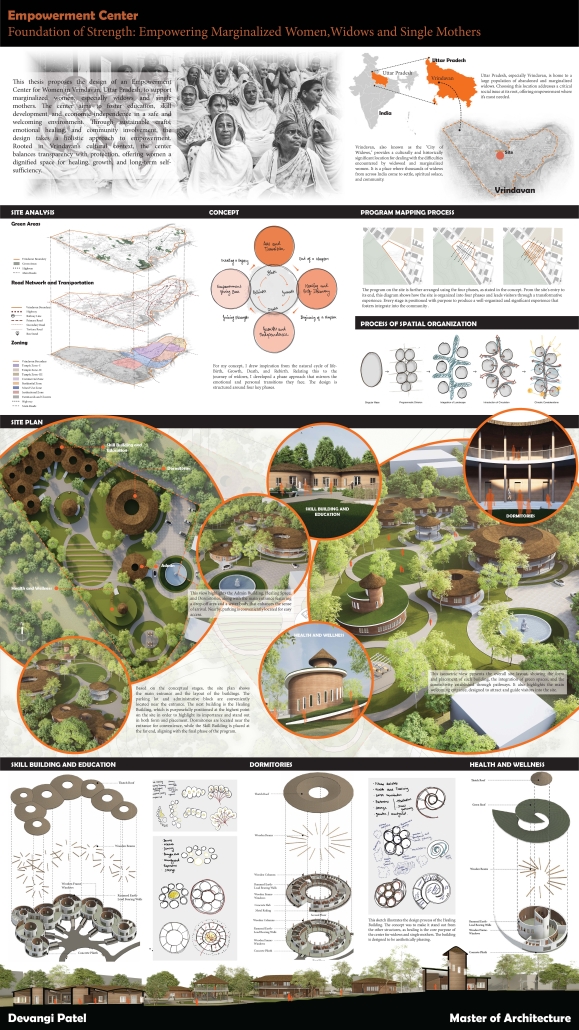
This thesis proposes the design of an Empowerment Center for Women in Vrindavan, Uttar Pradesh, India, as a response to the social, cultural, and economic marginalization of widows and single mothers in the region. Vrindavan, often referred to as the “City of Widows,” is a place of profound spiritual importance. It is home to thousands of women who are abandoned and forced to live in poverty, social isolation, and emotional distress.

The Empowerment Center aims to restore dignity, independence, and resilience to these women by offering a comprehensive, community-based center that integrates education, skill development, emotional healing, and economic empowerment. The architectural vision emphasizes a balance between safety and openness, combining secure, private zones with transparent and inclusive spaces that encourage connection, confidence, and personal growth.

Key features of the design include sustainable green areas such as gardens and courtyards, and also form is Inspired by inspired by local vernacular architecture and supported by research. These spaces foster mindfulness, promote physical and emotional well-being, and create opportunities for community interaction and collective healing. The project incorporates flexible, adaptive spaces for workshops, training, and communal living to support the evolving needs of its users.

Using techniques including demographic analysis, community participation, and contextual site study, this thesis, which is based on collaborative research and cultural sensitivity, informs an inclusive, accessible, and responsive design. The Empowerment Center seeks to establish a standard for gender-sensitive, socially conscious architecture that not only meets immediate needs but also sparks long-term structural change.

In conclusion, this thesis demonstrates how architecture can serve as a cause for social transformation by addressing the needs of marginalized women in Vrindavan. The Empowerment Center offers a dignified, inclusive, and healing environment that fosters education, independence, and community. By integrating cultural sensitivity with sustainable design, the project aims to empower women and inspire broader change toward gender equality and social resilience.

This project received “Commends for Thesis.”
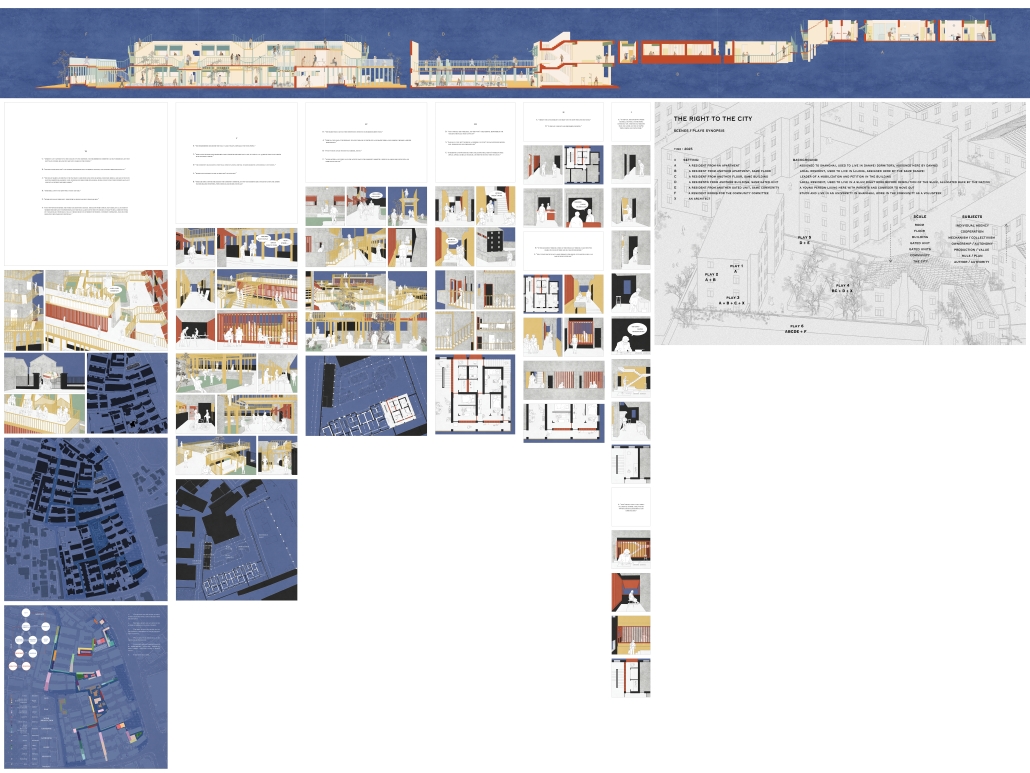
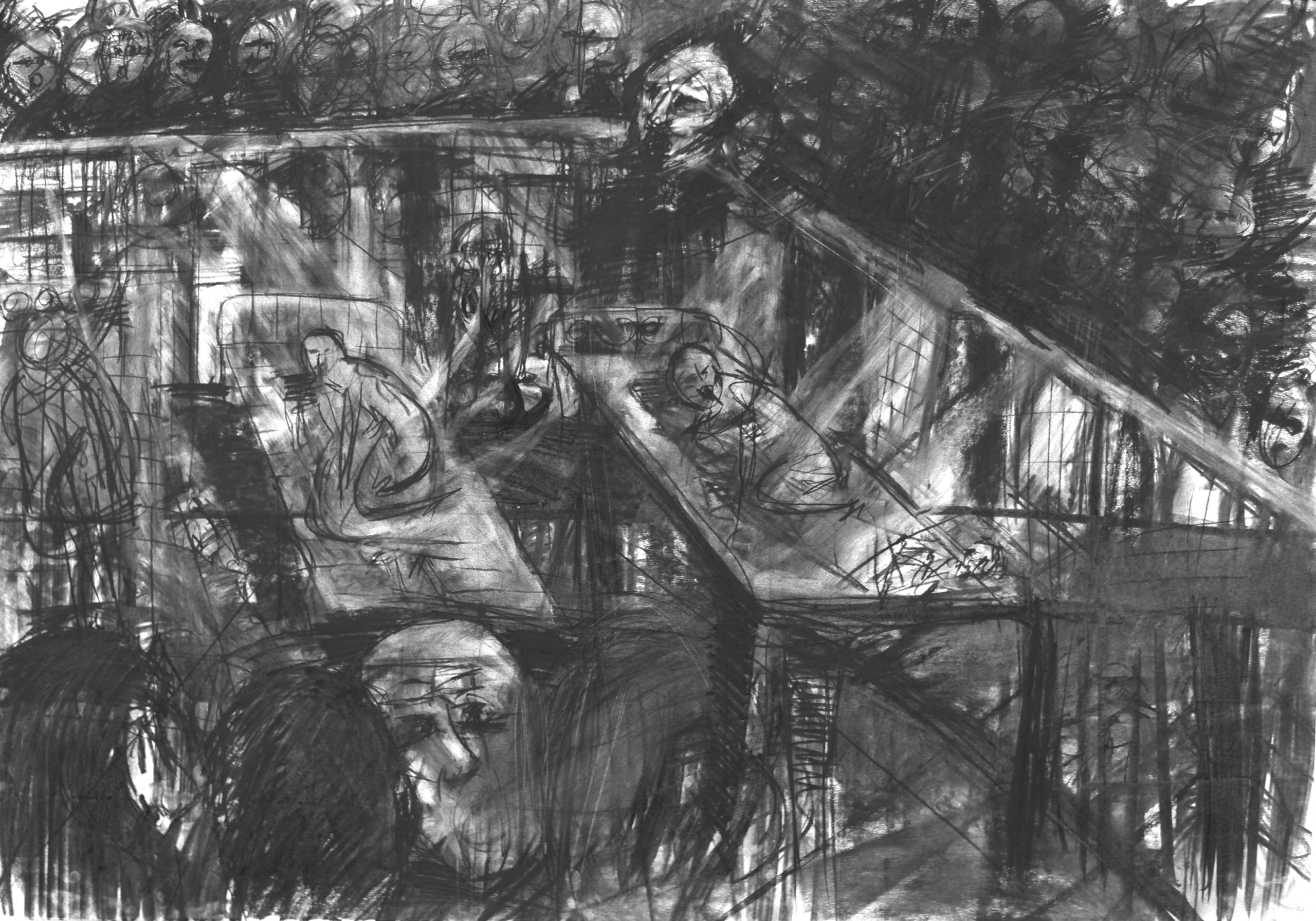
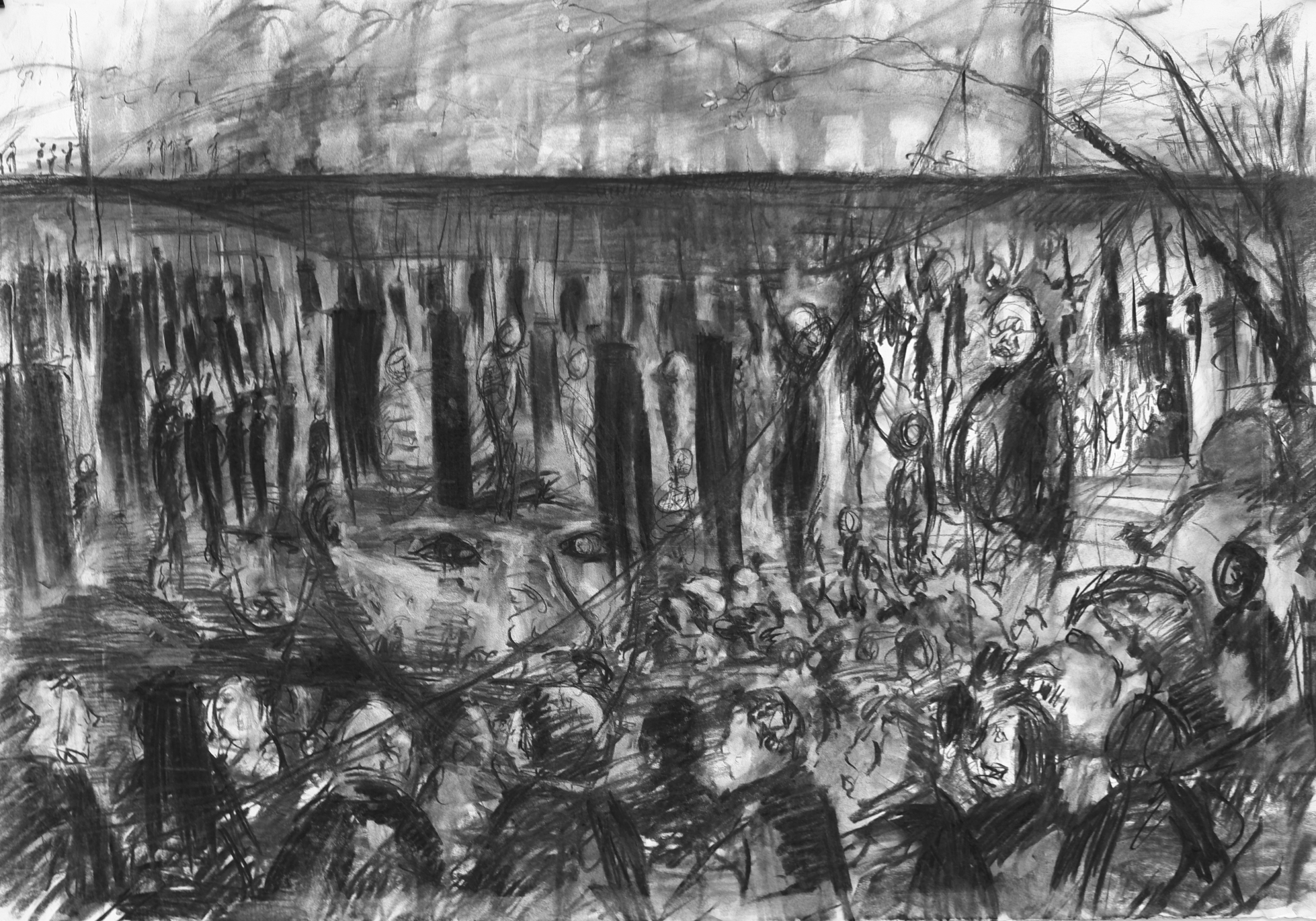
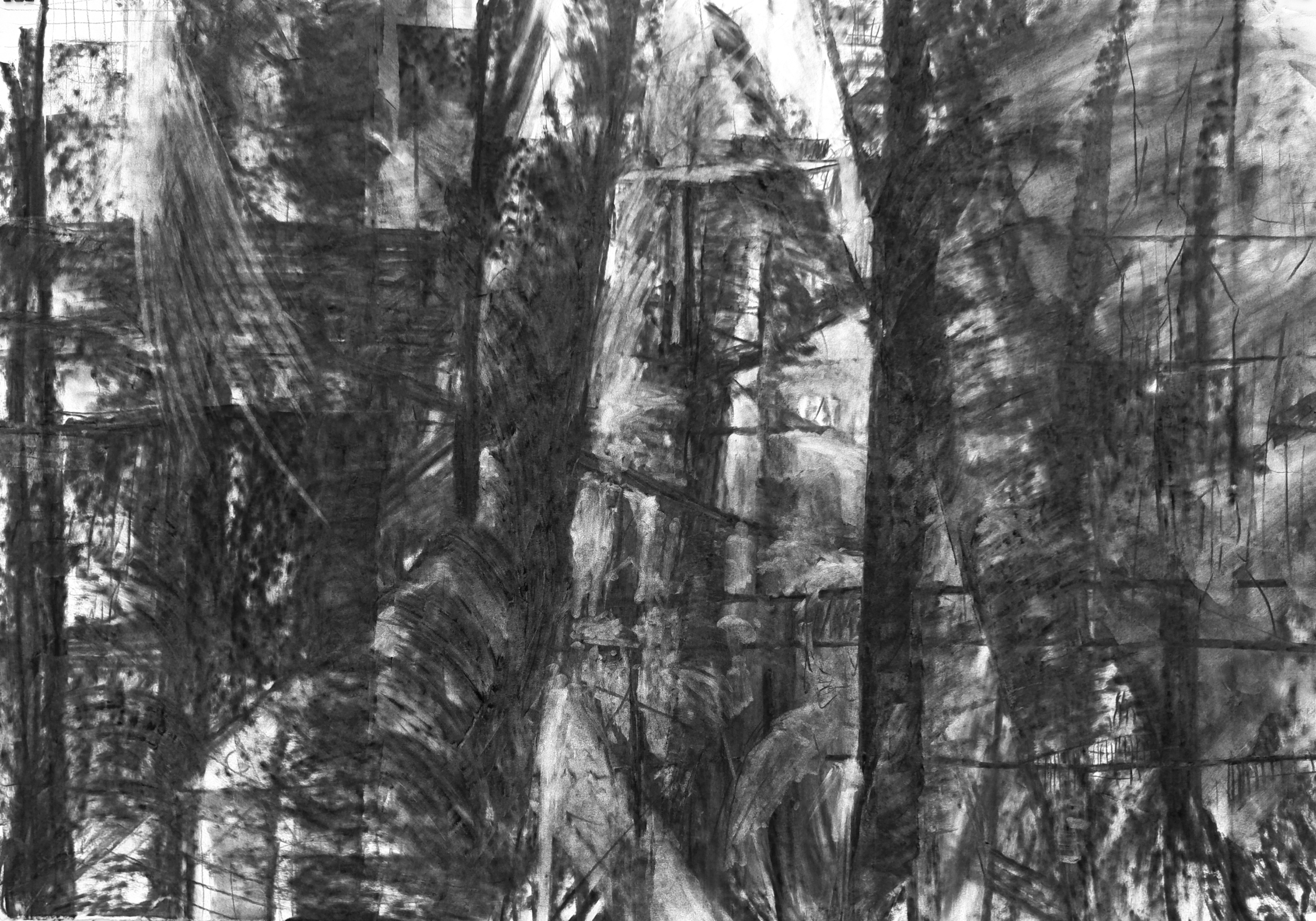
The right to the city by Cindy Caitong Duan, M.Arch II ’25
Yale University | Advisors: Andrei Harwell & Alan Plattus

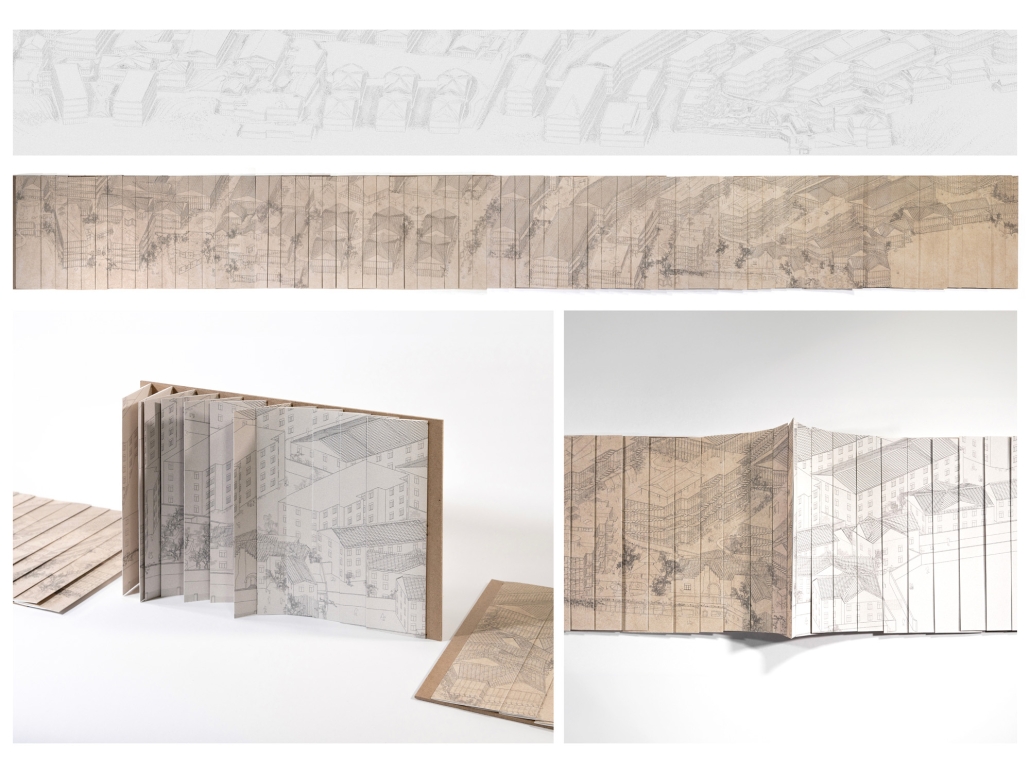
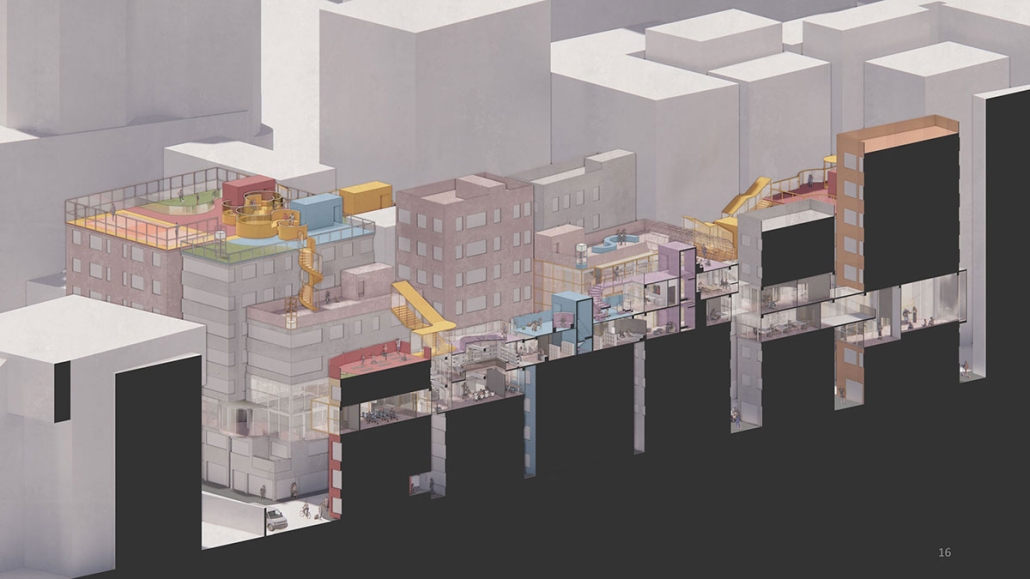
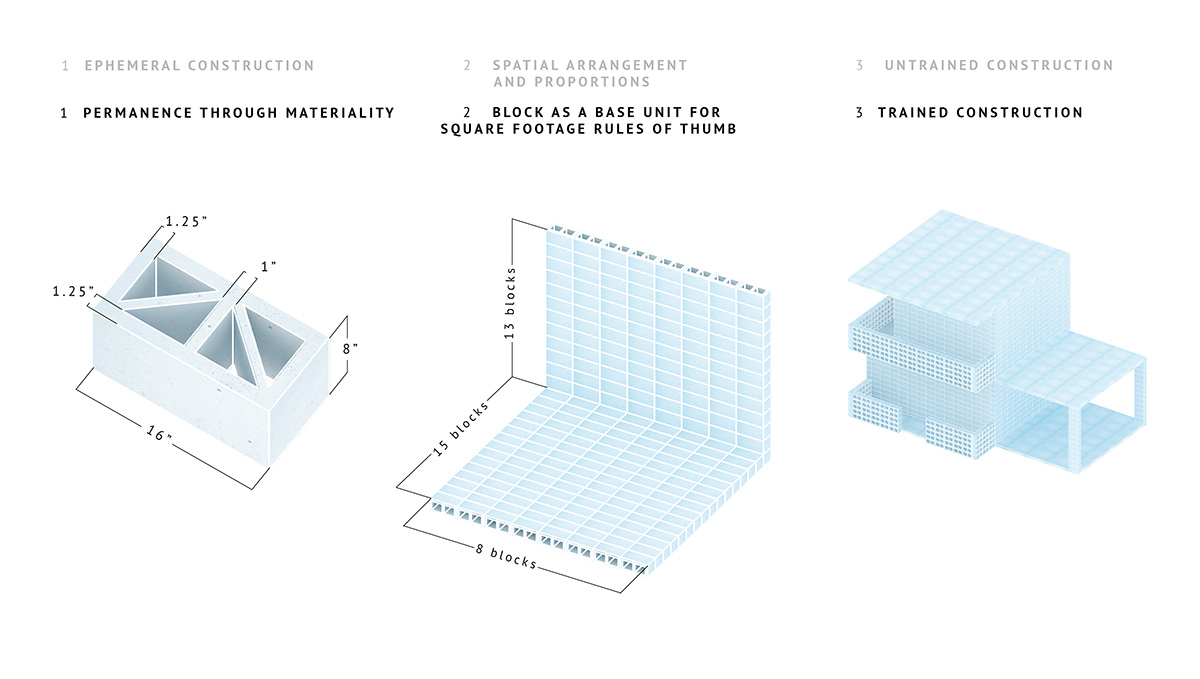
The cities in China have a long tradition of planning based on the gated unit – a collective residential form strictly controlled by entrances, walls, and different levels of thresholds. People live within walls, which define the space of a gated unit; and in the wall that is the building itself. Walls gather us but also limit us, until their imprints are etched into our minds and build obedience and indifference to life. These spaces are both the metaphor and the embodiment of power in Chinese society. 

In this way, I feel it is necessary to ask: What is a city? What should the balance be between governance and defending people’s rights to the city? 

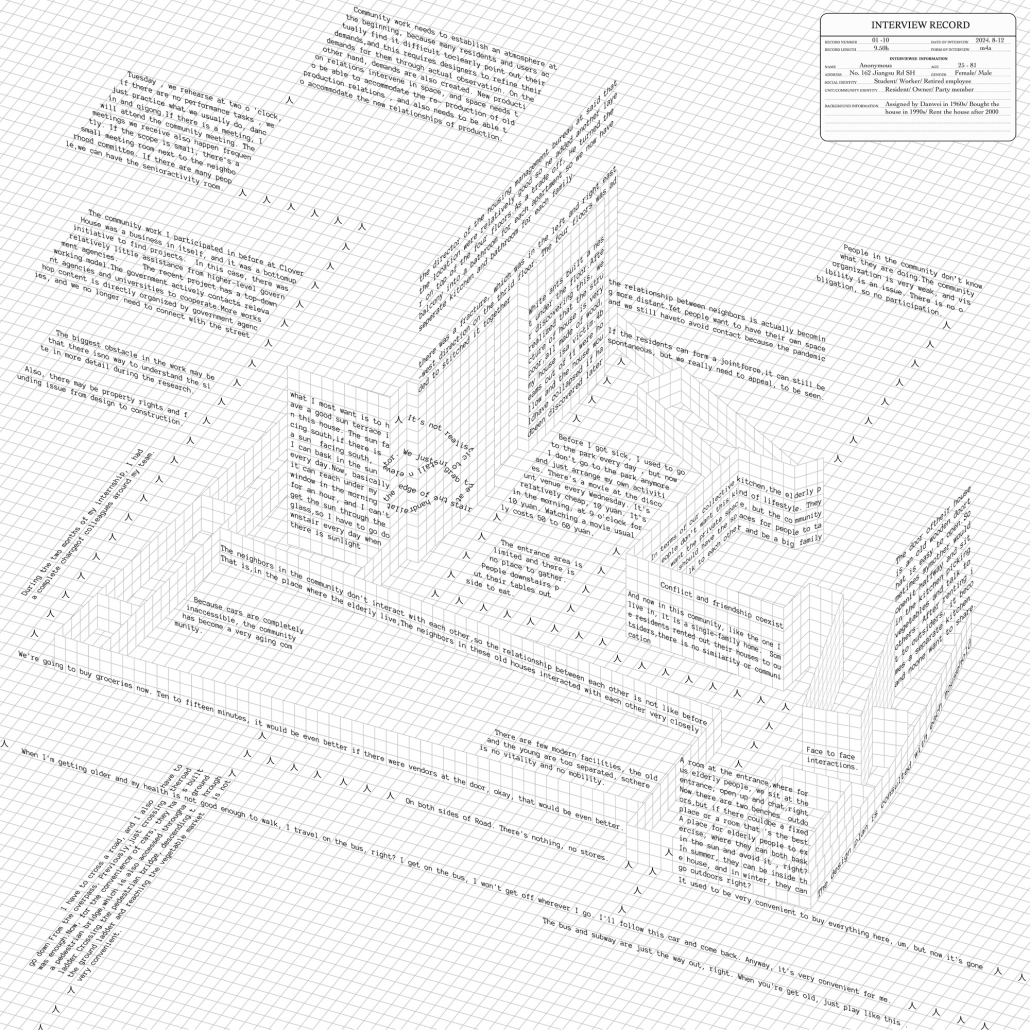
This thesis addresses these questions through a close study of the gated unit where my grandaunt lives in Shanghai, China. The project comprises two parts: first, research analyzing the formation of collectivism and the gated unit; second, a design proposal exploring how gated communities can actively foster local identity and autonomy while mitigating surveillance and urban segmentation. 

The concept of “collectivism” fosters a stronger sense of solidarity but also poses the risk of deindividuation by homogenizing people. As a result, the notion of collective space shifts from being a symbolic space of belonging to a geographically defined common space, diminishing the notion of individual residents’ rights. 

However, I believe a city and its built form should be the second self of the individual, responding to and encouraging open narratives. Gated units and their communities can be transformative, connecting individuals while forming a new entity based on shared agency. More importantly, whenever the collective emerges, it arises from countless “I”s—each independent, each different—reaching a timely commonality through mutual agreement. There is no single form. 

Thus, this project is not the solution but a demonstration of how to regain an individual’s right to the city. It can strike a balance between you and “I”, between us and “I”, and between them and “I”, and the city is its metaphor and site. 

This project received the Yale Drawing Prize.

Instagram: @Cindycaitongd, @andrei__simon

Stay tuned for Part VI!

2025 Study Architecture Student Showcase - Part IV

Part IV of the 2025 Study Architecture Student Showcase spotlights architecture in public health. These student projects feature architectural responses to topics, including amputee rehabilitation, incarceration reform, sober living homes, and maternity care. By incorporating holistic, biophilic elements and utilizing various building typologies, each project fosters a supportive and healing environment based on a wide range of community needs.

Browse the projects below for more details!

Rehabilitation and Empowerment for Amputees by Bryan Feliciano-Torres, B.Arch ‘25
Pontifical Catholic University of Puerto Rico | Advisors: Manuel De Lemos-Zuazaga & Pedro A. Rosario-Torres

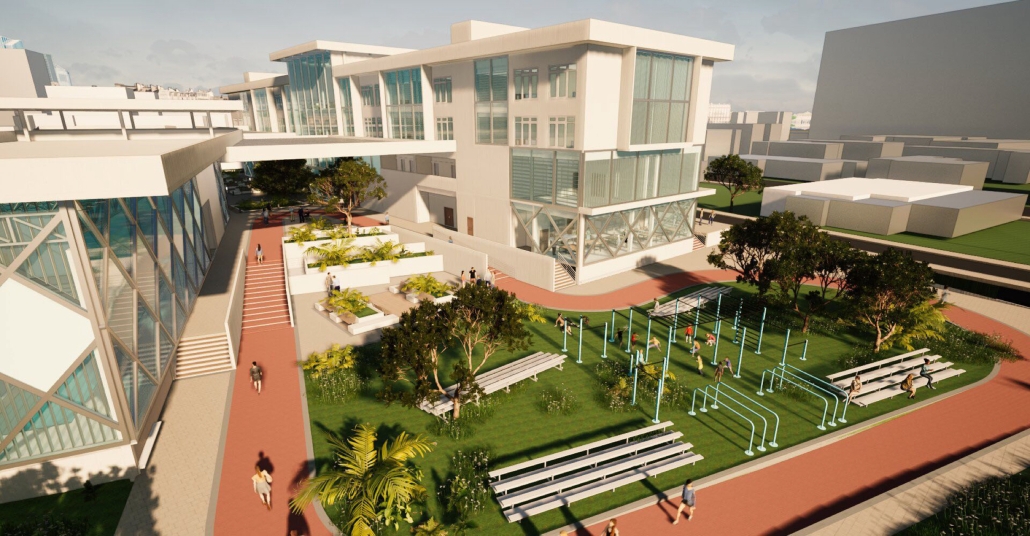
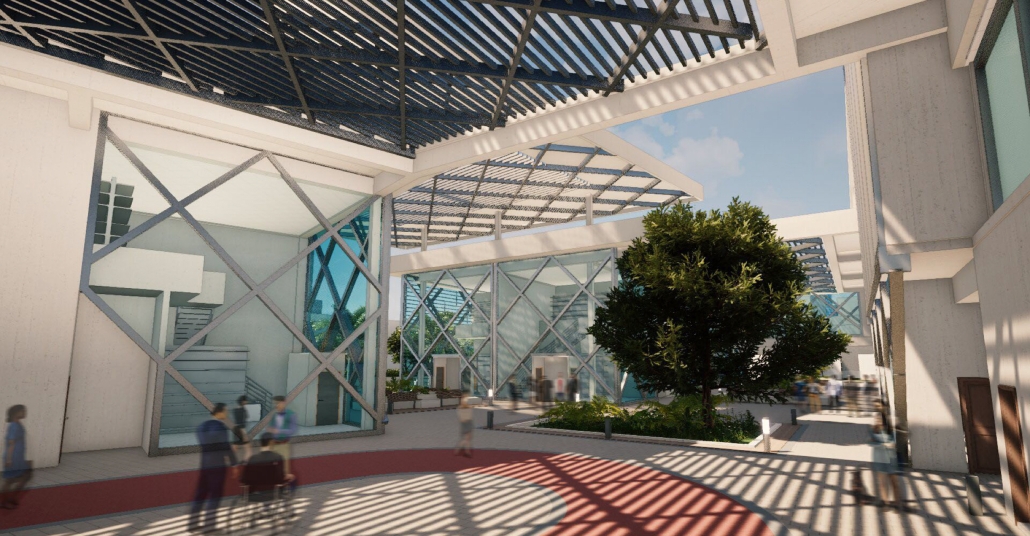
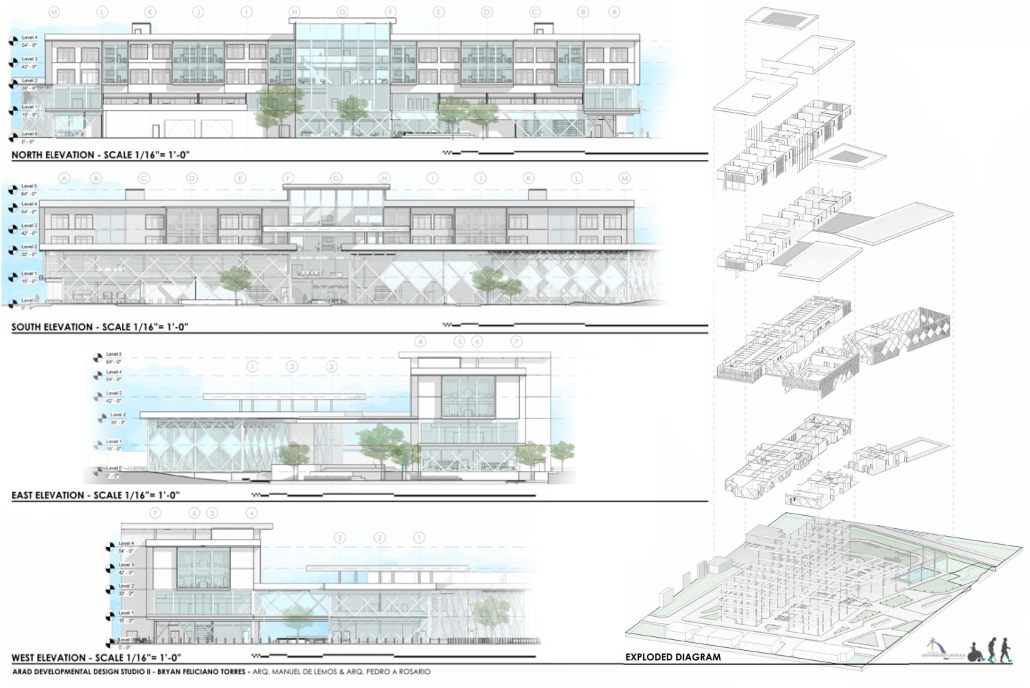
“R.E.F.A.” is about how architecture can help rehabilitate the lives of limbless people for both upper and lower limb amputations. The research aimed to explore better solutions for prosthetic patients’ recovery, from initial physical therapy until a full recovery. The project expanded on the typical prosthetic clinic program, with three main objectives:

– Prosthetic manufacture and physical rehabilitation for patient care

– Prosthetic research and development for scientific innovations

– Lodging program for traveling patients who seek quality care

Prosthetic patients require a series of training in order to achieve full control over their limb, especially for those who have been amputated for a long time. Not only do they have to go through the process of fitting and adjusting sockets, but they also train their muscle strength, resistance, and balance. This average time spans from one week to three weeks, depending on the patient’s capability and physical condition.

Most prosthetic clinics provide limited space with the essential programs: manufacture, socket fitting, and basic gait training. The patient is then encouraged to train outside on their own terms, only to return later to make changes if needed.

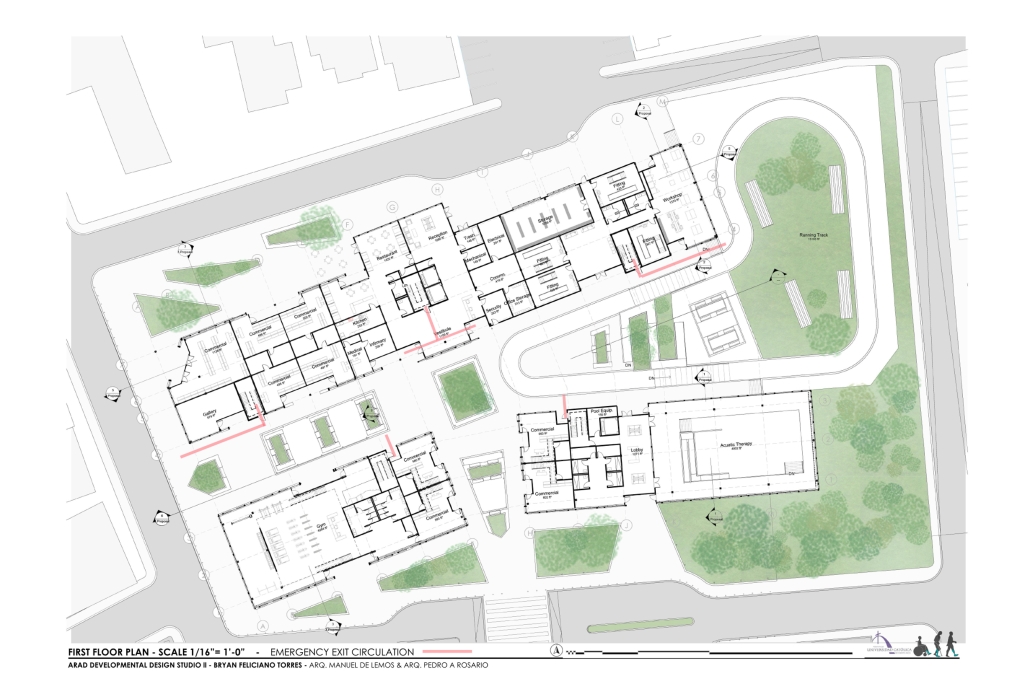
This research sees an opportunity to improve on this by providing all their needs in a single space. These programs are divided into zones:

– Prosthesis: Workshops, storage, and fitting areas

– Physical/Psychological therapy: Aquatic therapy, gym facilities, and therapists’ offices

– Public areas: Gait training, running track, commerce, and restaurant

– Research: Office spaces for rent, laboratories, and conference rooms

– Lodging: Extended stay rooms and lounge

Amputations are becoming more prevalent as time goes on, whether from incidents or diseases. Taking this into account, along with technological improvements, prosthetic clinics have to improve drastically in order to provide everything an amputee needs in order to live independently.

THE TRANSLUCENT FORTRESS by Owen Phillips, B.Arch ’25
Kennesaw State University | Advisor: Robin Puttock

THESIS QUESTION:

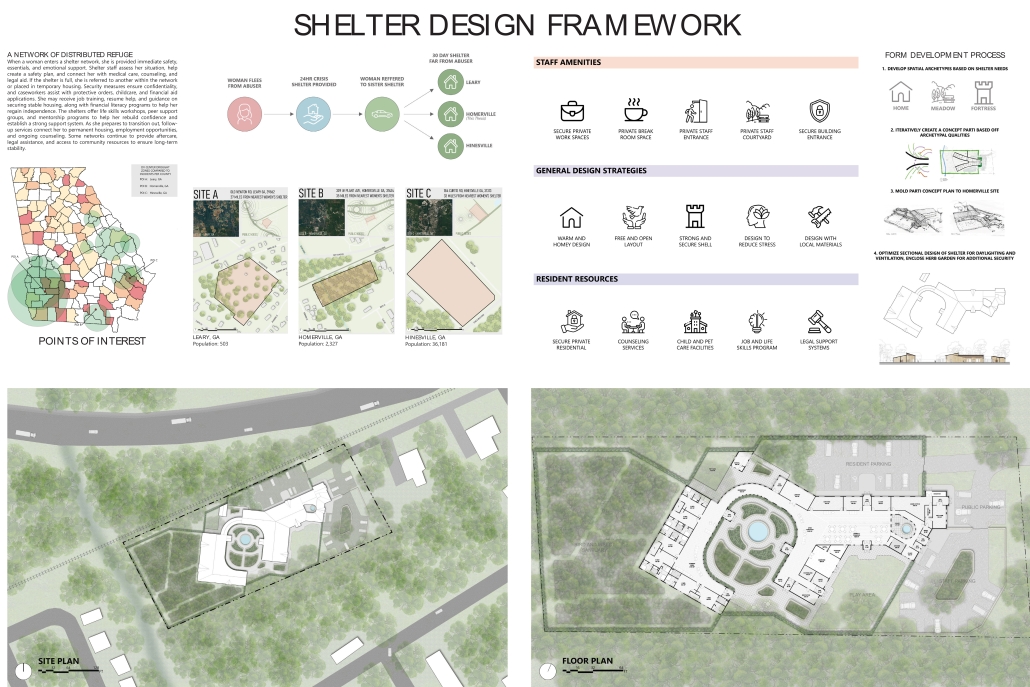
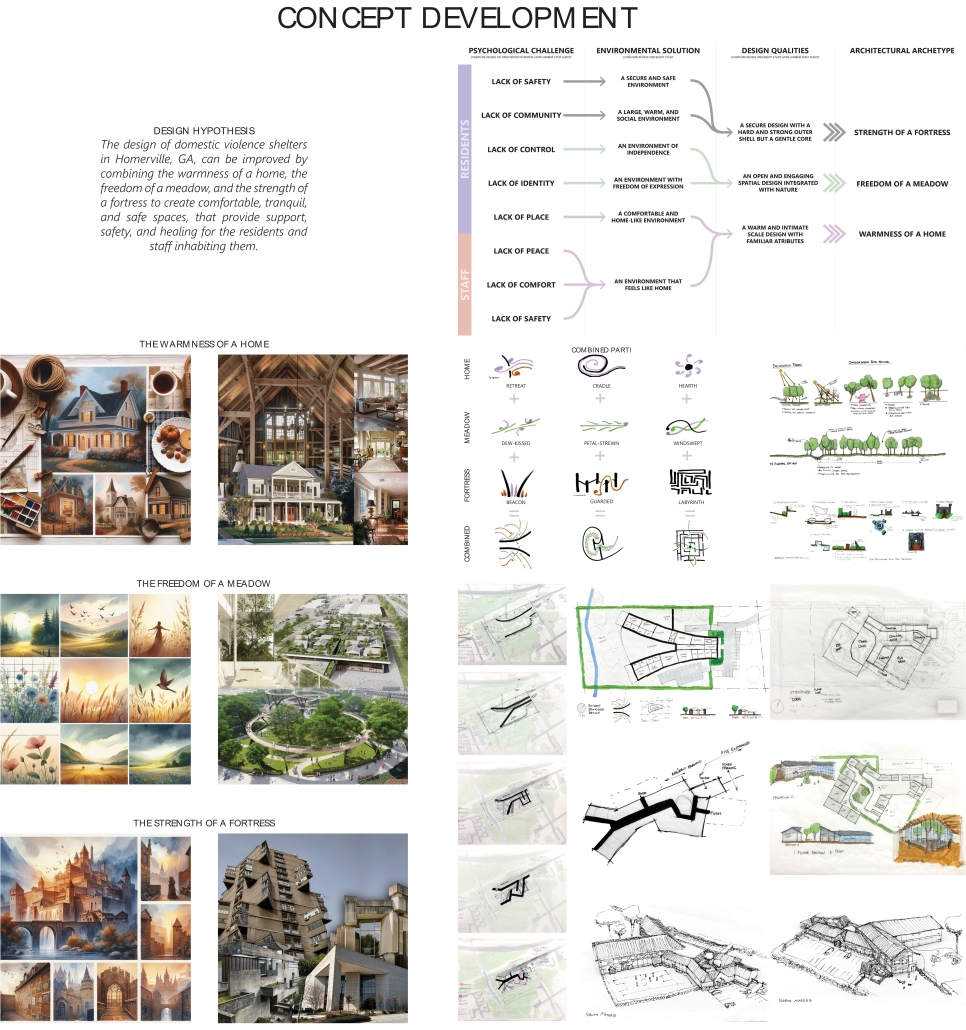
How can the architectural typology of women’s shelters be reimagined to more effectively provide support, safety, and healing for domestic violence victims in rural Homerville, Georgia?

DESIGN HYPOTHESIS:

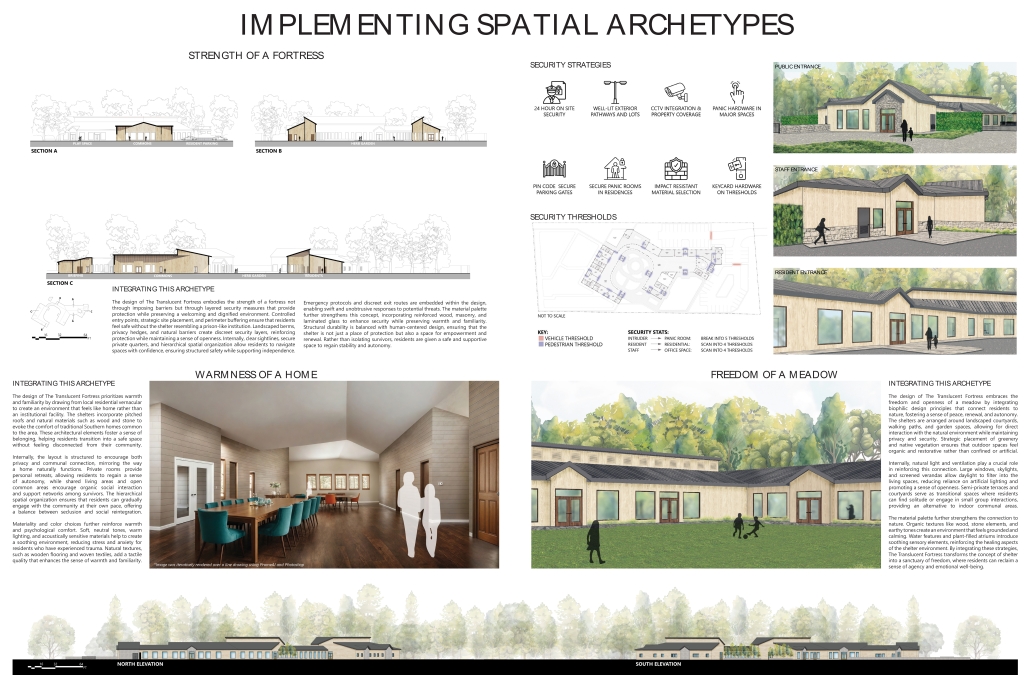
The design of domestic violence shelters in Homerville, GA, can be improved by combining the warmness of a home, the freedom of a meadow, and the strength of a fortress to create comfortable, tranquil, and safe spaces that provide support, safety, and healing for the residents and staff inhabiting them.

SOLUTION:

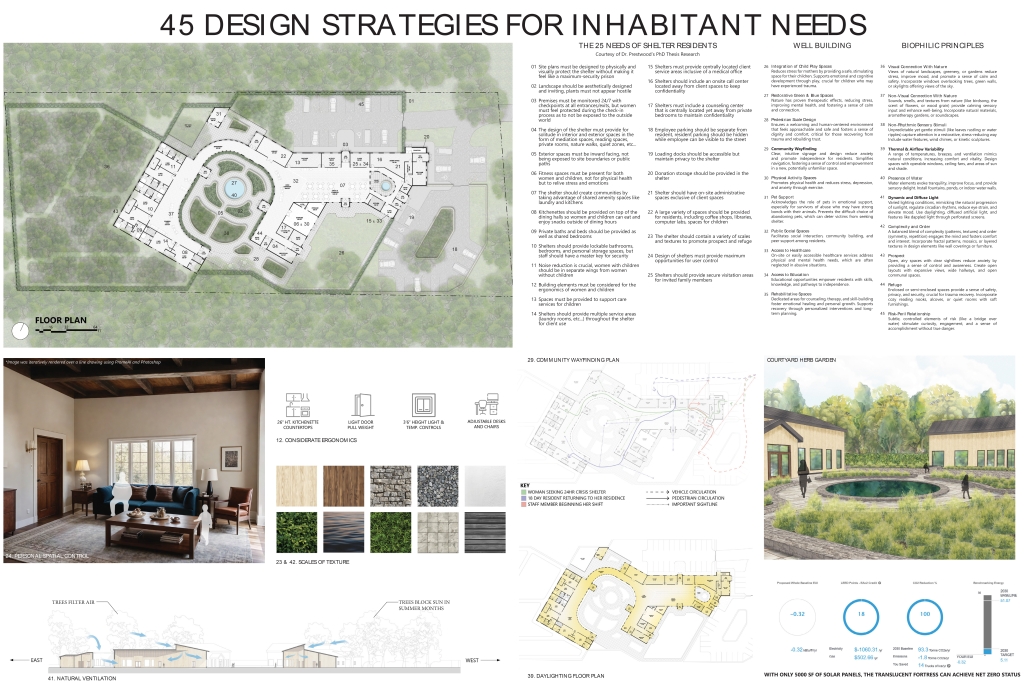
The building typology of a women’s shelter will be reimagined to better apply to a modern stage using qualitative research from an architect-conducted survey that has been compared to similar existing research. This new typology will be tested on a site in Homerville, Georgia, to address the psychological and spatial needs of victims, the most important of these needs include the feeling of being protected (secure architecture), a sense of community (social spaces), access to medical assistance (operating/examination rooms), and appropriate design to accommodate living spaces for both women and/or their children (Eastman et al, 2007). Construction of this project must be efficient and cost-effective as to not diminish the already limited financial resources available to public services, but still secure enough to provide a safe space for rural victims of domestic violence.

METHODOLOGY:

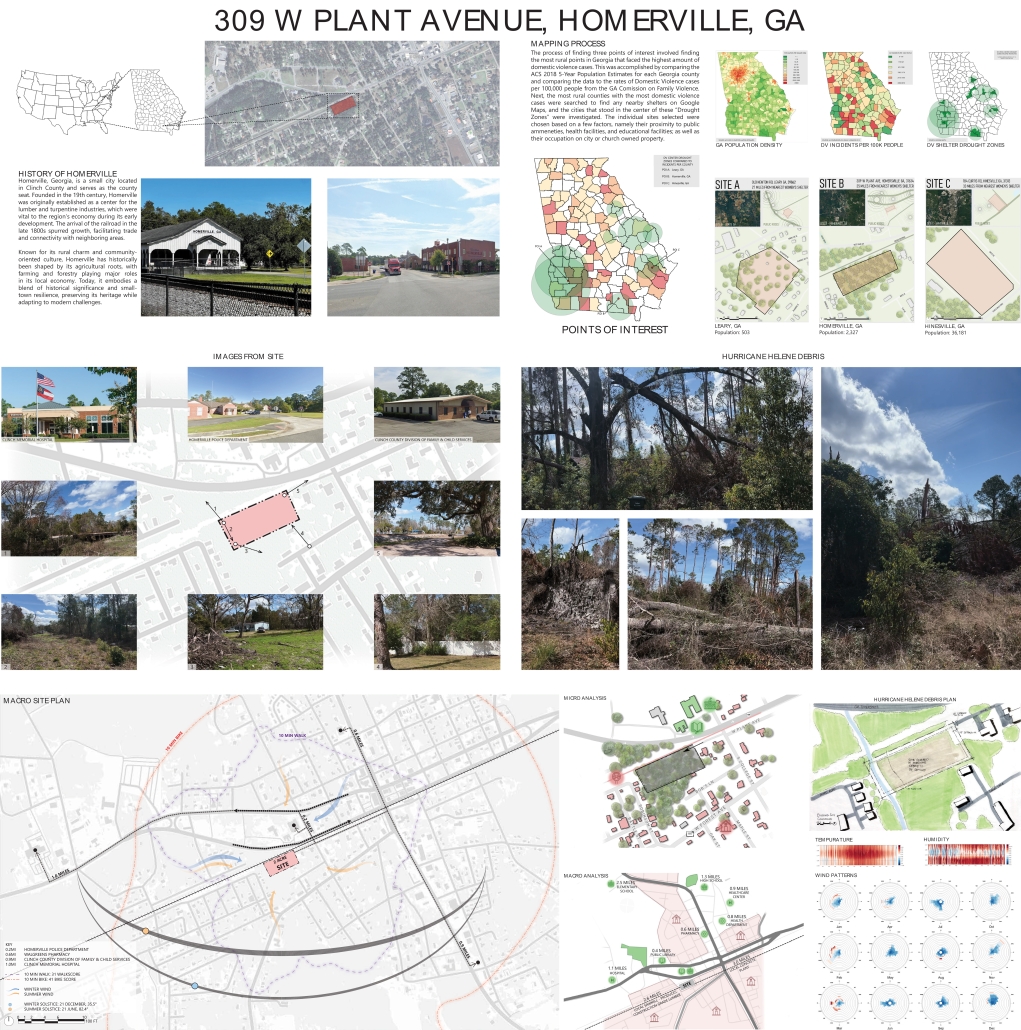
Research for this thesis will be broken up into multiple different sections. To give the architect a better understanding of the victim’s condition and needs, surveys and interviews were conducted during the summer of 2024 at women’s shelters in rural Georgia with both the residents and shelter staff, and literature reviews were done to compare collected data with similar research. This provided an updated set of data to be used and compared with older information (pre-COVID-19). To determine the site for the project, mapping was used to locate a site in Georgia with the least access to domestic violence crisis centers. Finally, construction methods and building design will be studied through precedents that share the scope of being low-cost, remote, secure, and inhabitant-friendly design for the purpose of applying efficient design methods.

Click here to learn more.

This project was a finalist for the ARCC King Student Medal.

Instagram: @owen_p02, @robinzputtock

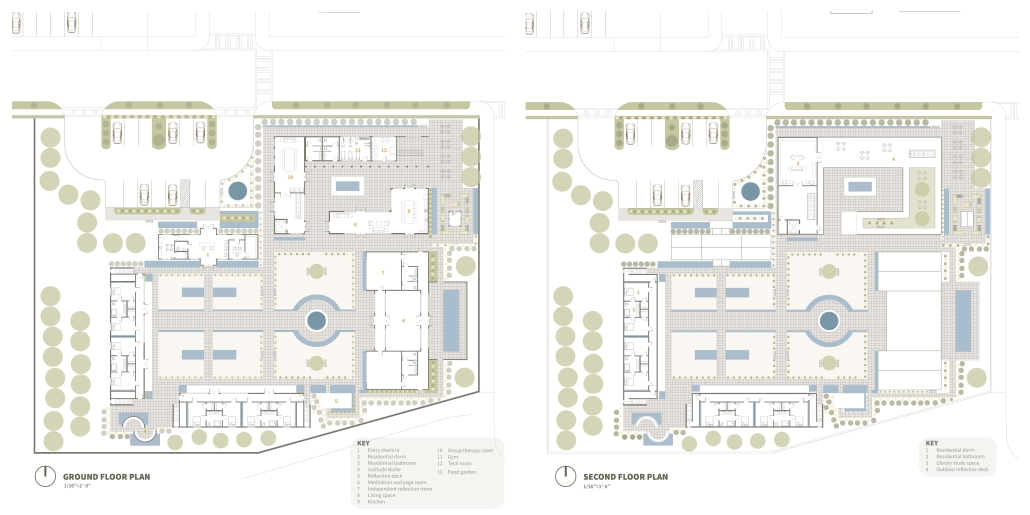
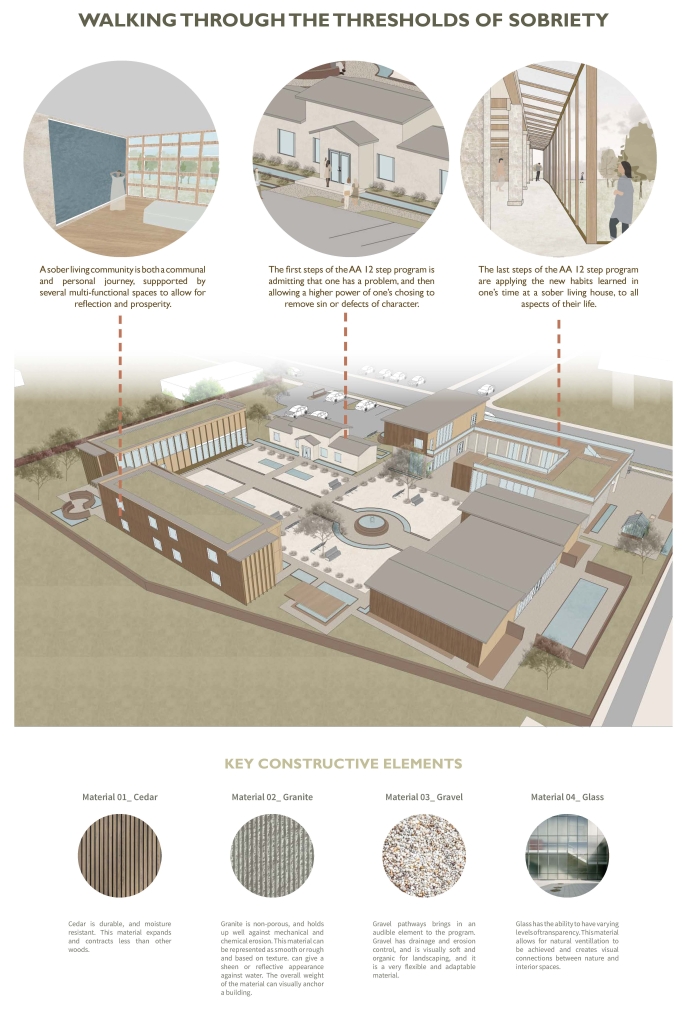
REIMAGINING RECOVERY: The Role of Architecture in Sobriety by Teagan Littleton, B.Arch ’25
Kennesaw State University | Advisor: Robin Puttock

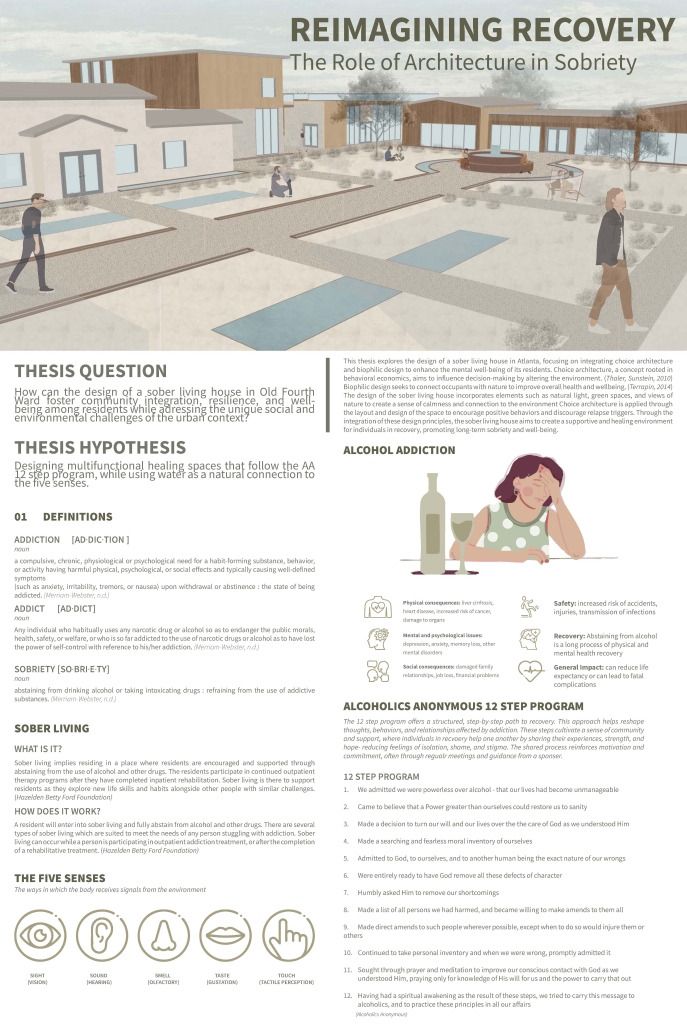
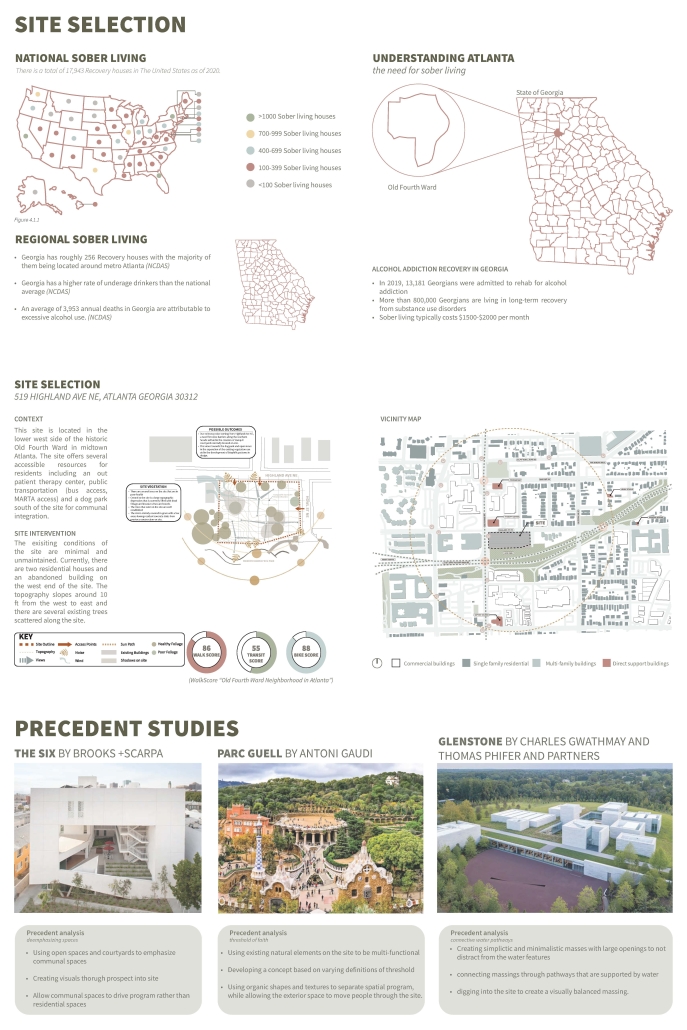
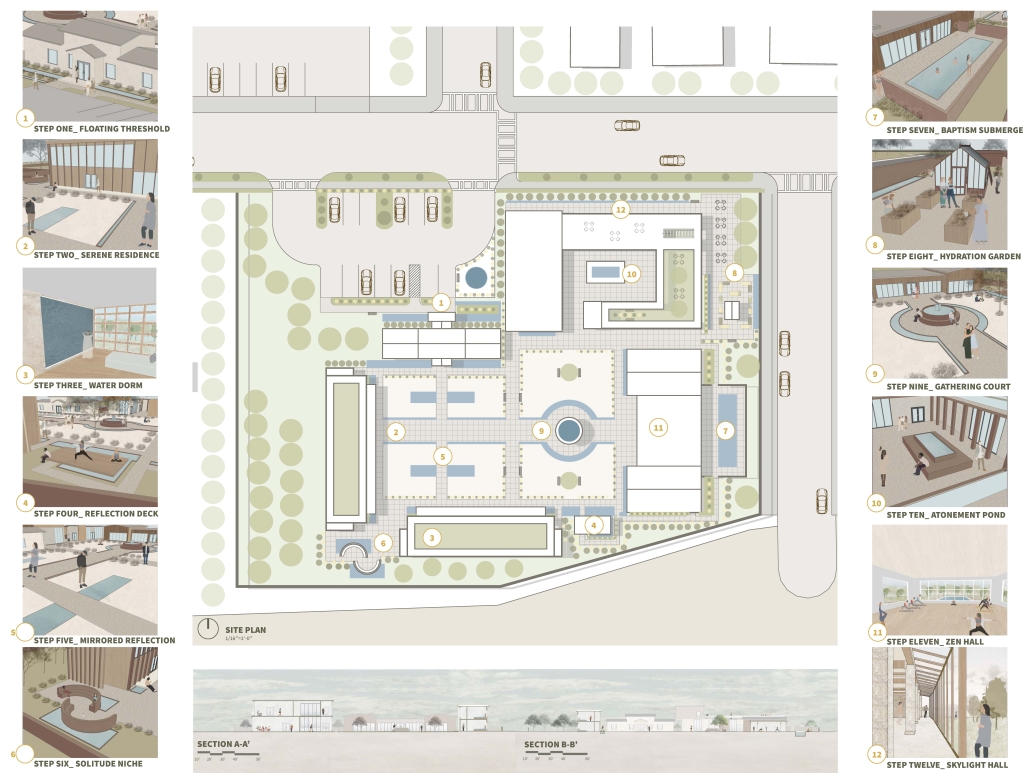
This thesis explores the design of a sober living house in Atlanta, focusing on integrating choice architecture and biophilic design to enhance the mental well-being of its residents. Choice architecture, a concept rooted in behavioral economics, aims to influence decision-making by altering the environment (Thaler & Sunstein, 2010). Biophilic design seeks to connect occupants with nature to improve overall health and well-being (Terrapin, 2014). The design of the sober living house incorporates elements such as natural light, green spaces, and views of nature to create a sense of calmness and connection to the environment. Choice architecture is applied through the layout and design of the space to encourage positive behaviors and discourage relapse triggers. Through the integration of these design principles, the sober living house aims to create a supportive and healing environment for individuals in recovery, promoting long-term sobriety and well-being.

Click here for a closer look.

This project was selected as a Thesis Semi-Finalist (Top 20 of 90+).

Instagram: @teagan.littleton02, @robinzputtock

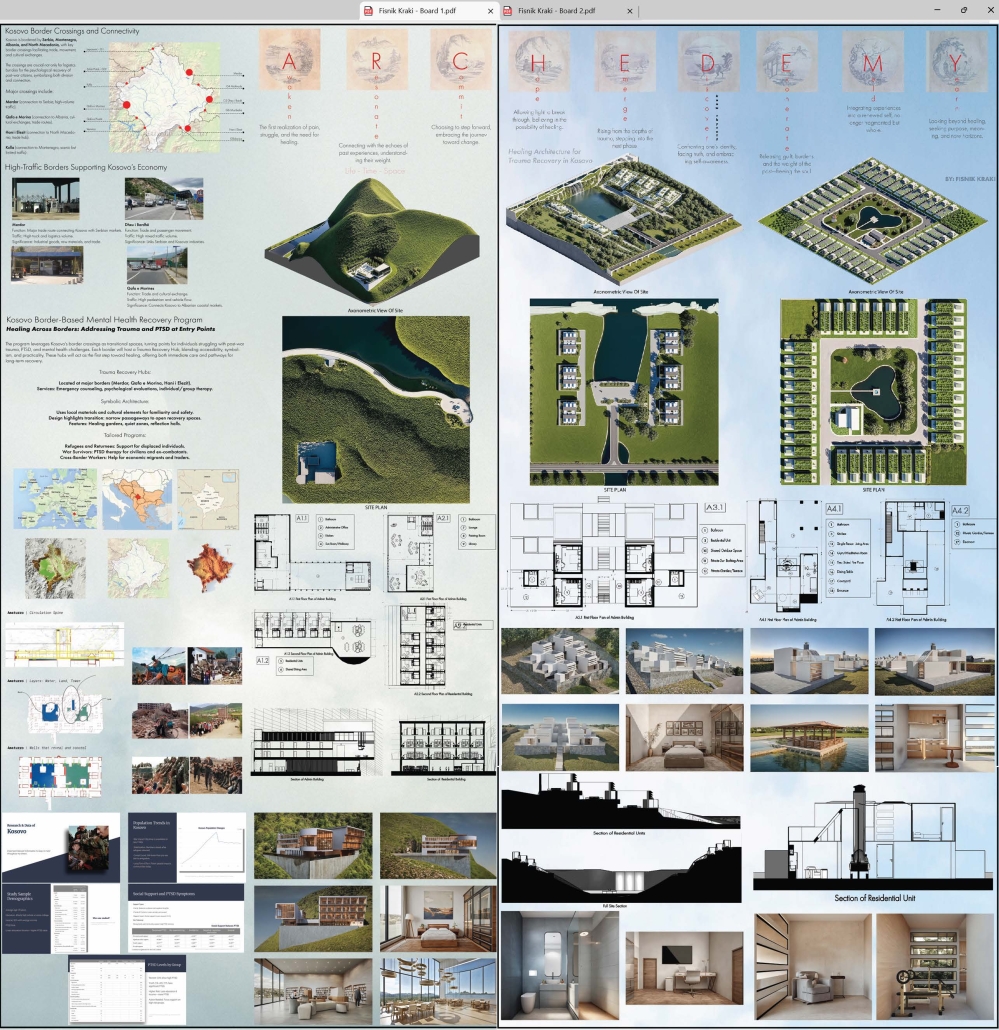
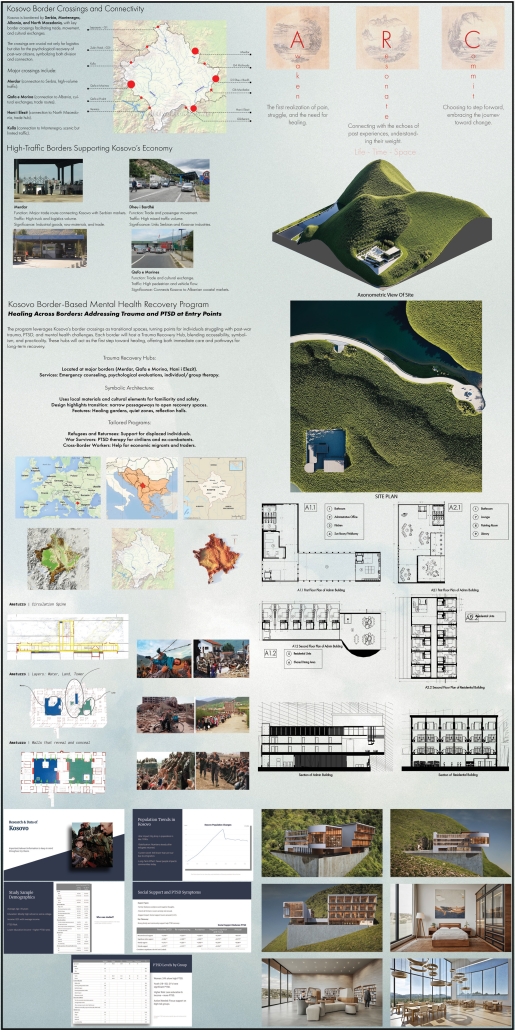
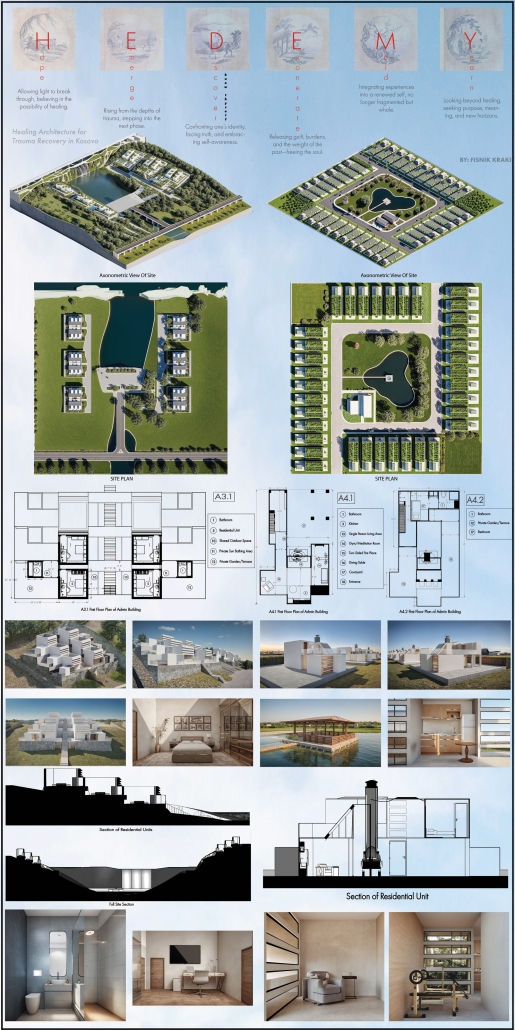
KOSOVO BORDER-BASED MENTAL HEALTH RECOVERY PROGRAM Healing Across Borders: Addressing Trauma and PTSD at Entry Points by Fisnik Kraki, B.Arch ’25
New York Institute of Technology | Advisor: Jonathan Block Friedman

The program leverages landlocked Kosovo’s border crossings as transitional spaces, turning points for individuals struggling with post-war trauma, PTSD, and mental health challenges. Each border will host a Trauma Recovery Hub, blending accessibility, symbolism, and practicality. These hubs will act as the first step toward healing, offering both immediate care and pathways for long-term recovery. Services provided include emergency counseling, psychological evaluations, and individual/group therapy.

The architecture offers a poetic transformation for both individual returnees and the country as a whole. Local materials and cultural elements provide familiarity and safety. A spectrum of enclosures, from narrow passageways to wide open spaces enhance healing gardens, quiet zones, and reflection halls. Tailored programs support displaced individuals, war survivors, PTSD therapy for civilians, and ex-combatants. 

Each mountainous entry portal provides a sequence of three multi-week healing experiences in carefully wrought architectural responses to both the inner needs of the struggling returnees and the power of each succeeding resonant landscape. The progression of section relationships highlights the potential for group and individual personality reintegration.

The new group first finds a shared lodge perched on a cliffside lookout above a rushing mountain stream. Here are paths for private walks, but also shared meals, as well as group therapy sessions.  

Then the group moves to more gently rolling hillsides, where now the cohort breaks into smaller subgroups who share modest “family houses” as they re-learn how to interact together, and with the other “families” in a more dispersed community setting. A spillway and small dam provides a lake for beginning to embrace a return to self-awareness. 

For the third and last month, each person in the group finds their own dwelling for the hard work of private meditation, complete with eating, sleeping, a fireplace, and physical exercise spaces, and a garden for them to contribute to the collective needs for food production. The site is flat, with a small pond of still water at its center as a geographical eco-environmental mirror for the soul as they look beyond healing, seeking purpose, meaning, and new horizons. 

This project received the Chair Design Award, awarded by the department chairs and faculty of the School of Architecture and Design to a graduate who has achieved distinction in architectural design.

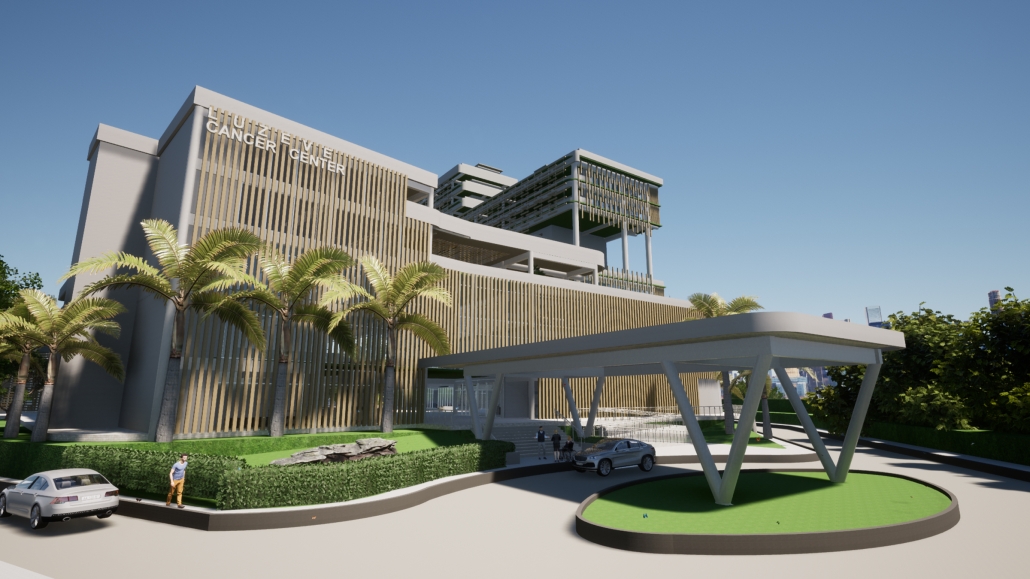
How Can Facilities Contribute to the Mental Health of Cancer Patients and Their Families Within Their Treatment in Architecture? by Nelson L. Quirindongo-Rodríguez, B.Arch ’25
Pontifical Catholic University of Puerto Rico | Advisors: Pedro A. Rosario-Torres & Pilarín Ferrer-Viscasillas

Cancer is one of the main public health crises in Puerto Rico, with more than 303,000 people diagnosed in 2020. This disease not only affects the body, but also profoundly alters the emotional and mental health of patients and their families. Emotions such as fear, anxiety, sadness, and uncertainty constantly accompany the oncological process, and often do not receive the necessary treatment or attention.

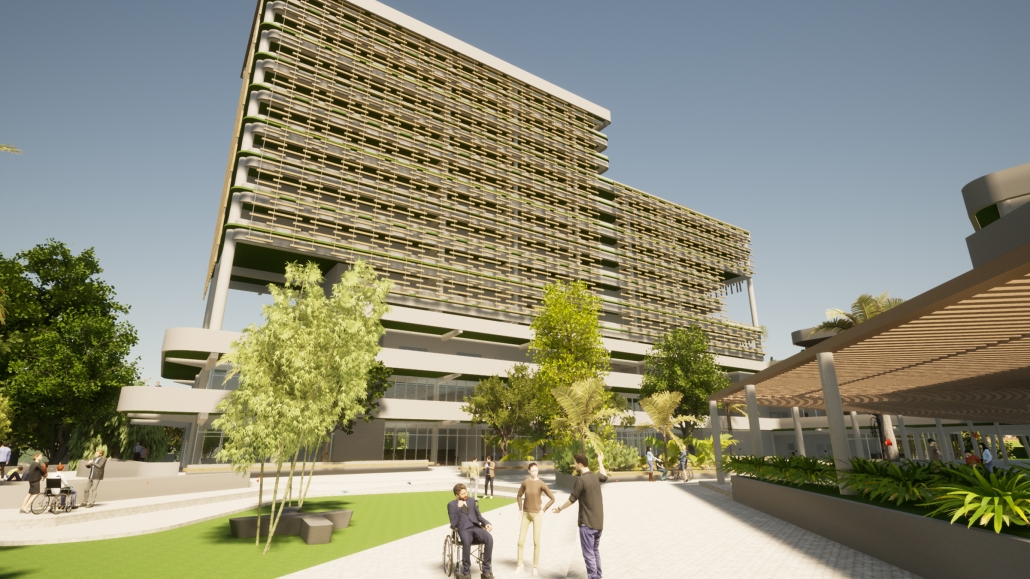
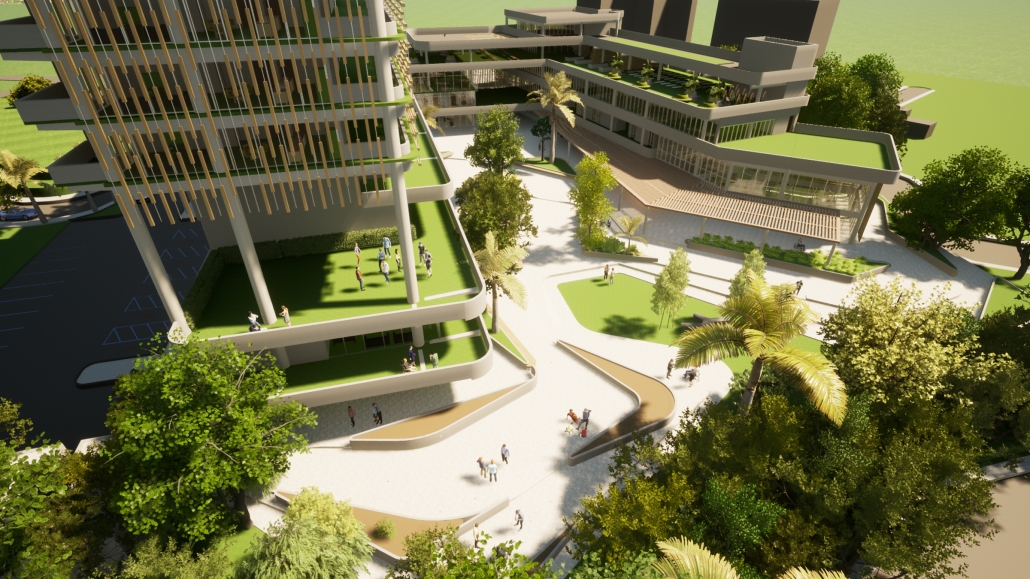
This work proposes a comprehensive and humane approach to cancer, recognizing the importance of mental health at all stages of treatment. The incorporation of interdisciplinary strategies is key, including therapeutic architecture and connection with nature. In particular, it highlights the value of biophilia, a movement that recognizes the innate link between humans and nature.

The design of spaces that integrate natural elements such as gardens, natural light, and cross ventilation can significantly contribute to reducing stress, improving mood, and fostering resilience in patients. This includes views of the sea, for example, which offer a multisensory experience that calms the mind, relieves tension, and promotes introspection and hope.

In addition to treating cancer clinically, it is necessary to address emotional suffering in a conscious and compassionate manner. The physical environment plays an active role in this process, and by including biophilic elements and visual or direct access to nature, a more complete healing environment can be created.

In conclusion, coping with cancer requires a holistic approach that combines medicine, mental health, and design. In this way, not only is the disease combated, but the person is accompanied in a process of deep, dignified, and hopeful healing.

Instagram: @nlqr.arch

Addressing the Shortage of the Veterinarian Profession in Puerto Rico and Its Effect on Animal Care by Alejandra M. Quiñones-Velázquez, B.Arch ’25
Pontifical Catholic University of Puerto Rico | Advisors: Jesús O. García-Beauchamp & Pedro A. Rosario-Torres

Veterinarians play a crucial role in taking care of animal health and welfare, public health, environmental protection, food safety, and medical research. However, a global shortage of veterinarians has emerged, exacerbated by increased pet ownership and insufficient capacity to train professionals. Puerto Rico only has 300 veterinarians, facing a shortage outside the metropolitan area, where the center of the island lacks veterinary services. With over 643,000 households owning pets, this scarcity has tangible consequences for animal welfare and public health.

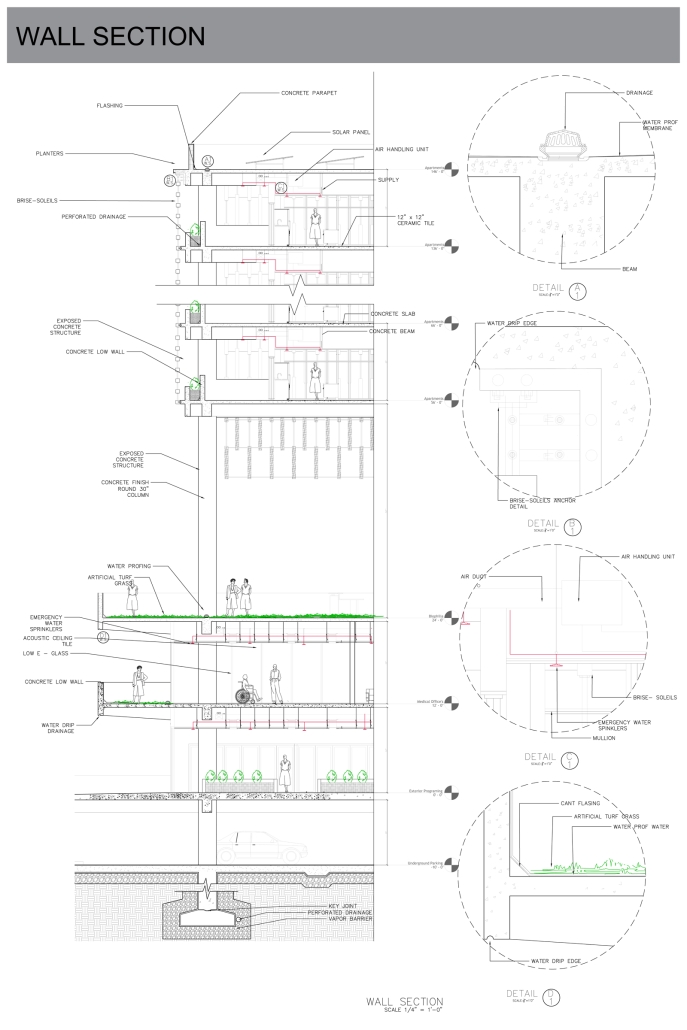
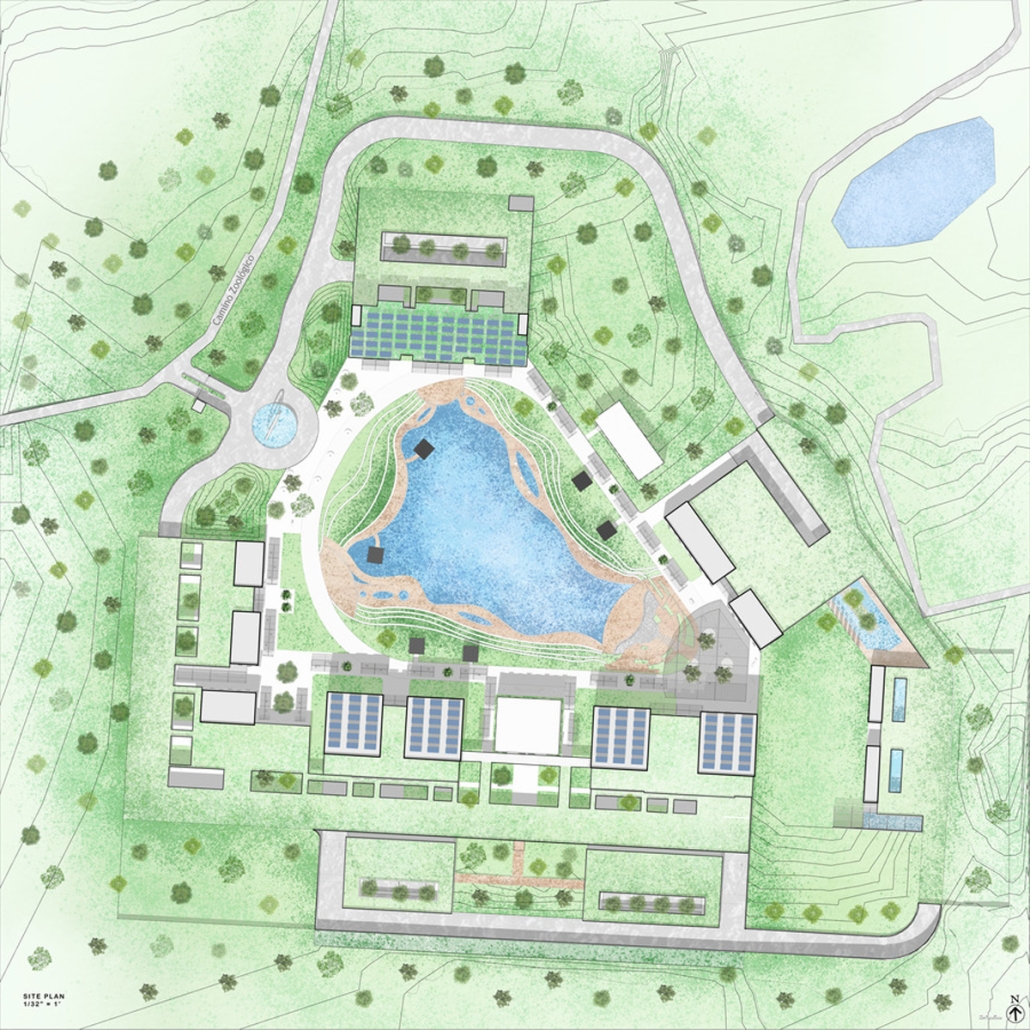
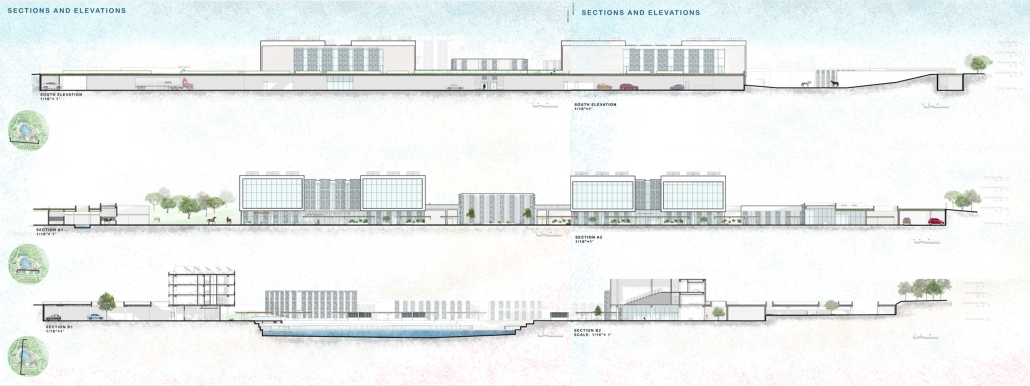
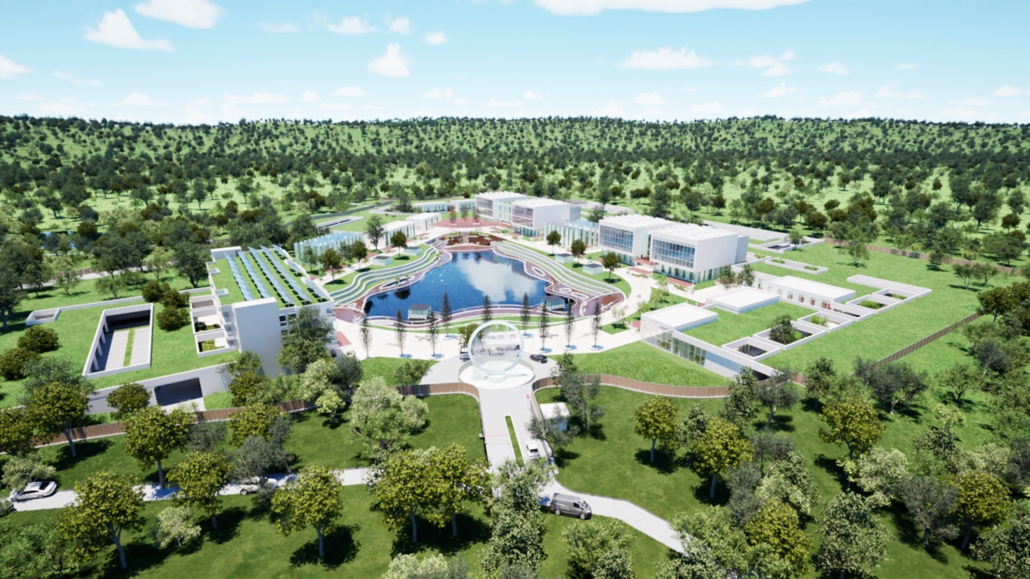
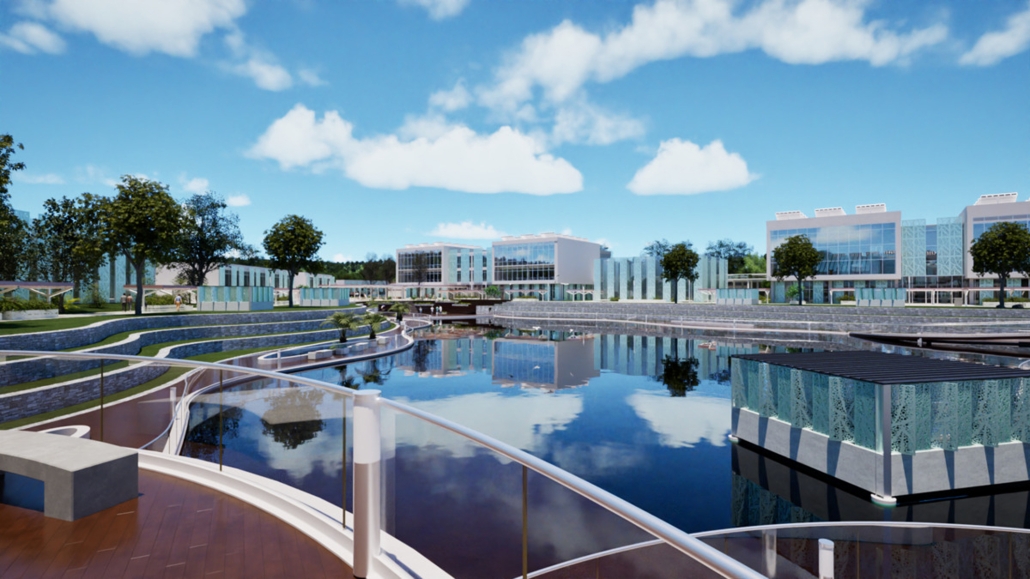
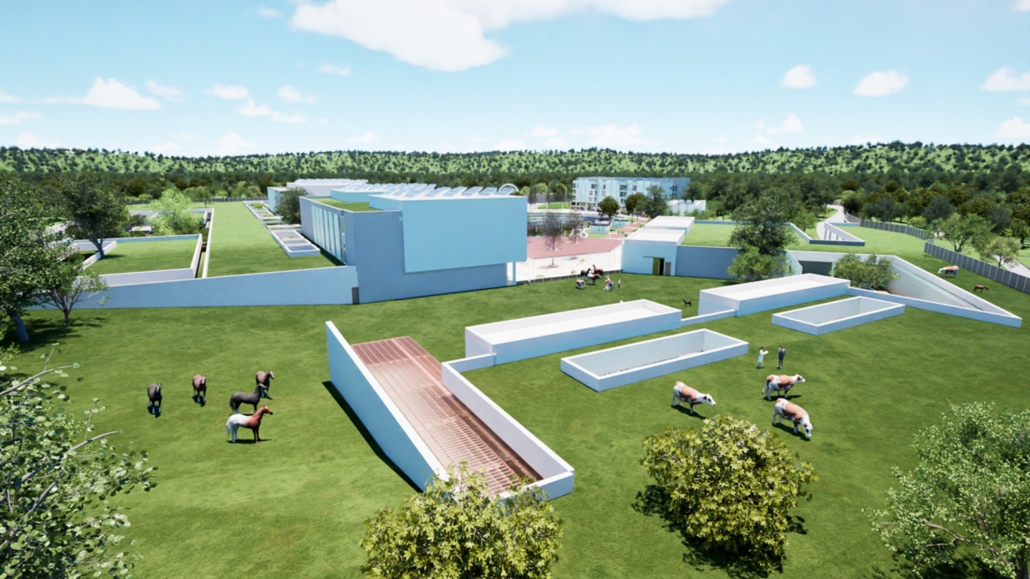
This research proposes an integrated architectural solution: a comprehensive veterinary education and care facility in Mayagüez, strategically located near the former zoo and a natural lake. The site was chosen for its potential for growth, semi-isolated setting, zoning compliance, and opportunity to merge architecture with nature. The proposed facility houses a veterinary school, research laboratories, a clinic for small and large animals, equine stables, and on-site housing for students and faculty. Designed to meet American Veterinary Medical Association accreditation standards, the center will allow students to complete their training locally and expand access to quality veterinary care across Puerto Rico.

Design strategies focus includes segregation of species, articulation of the landscape to foster connection and interaction, connection of spaces with nature, and noise control. Design thinking in the site is organized around a central axis and a lake that forms the heart of the project—creating an articulated space where landscape and built environment interact harmoniously. Outdoor areas will serve as peaceful, shaded environments for interaction and learning, while architectural consistency across buildings ensures a cohesive and professional atmosphere.

By combining education, clinical care, and research in one facility, the veterinarian shortage will be addressed, creating a new generation of professionals and enhancing animal and community well-being in Puerto Rico.

Click here to learn more. 

This project was nominated for the Francisco Luis Porrata-Doria Medal for Excellence in Design.

Instagram: @alemar1347

Building Wellness: Integrating Nature and Design to Prevent Diabetes by Daniela M. Ruiz-Rosado, B.Arch ’25
Pontifical Catholic University of Puerto Rico | Advisors: Pedro A. Rosario-Torres & Pilarín Ferrer-Viscasillas

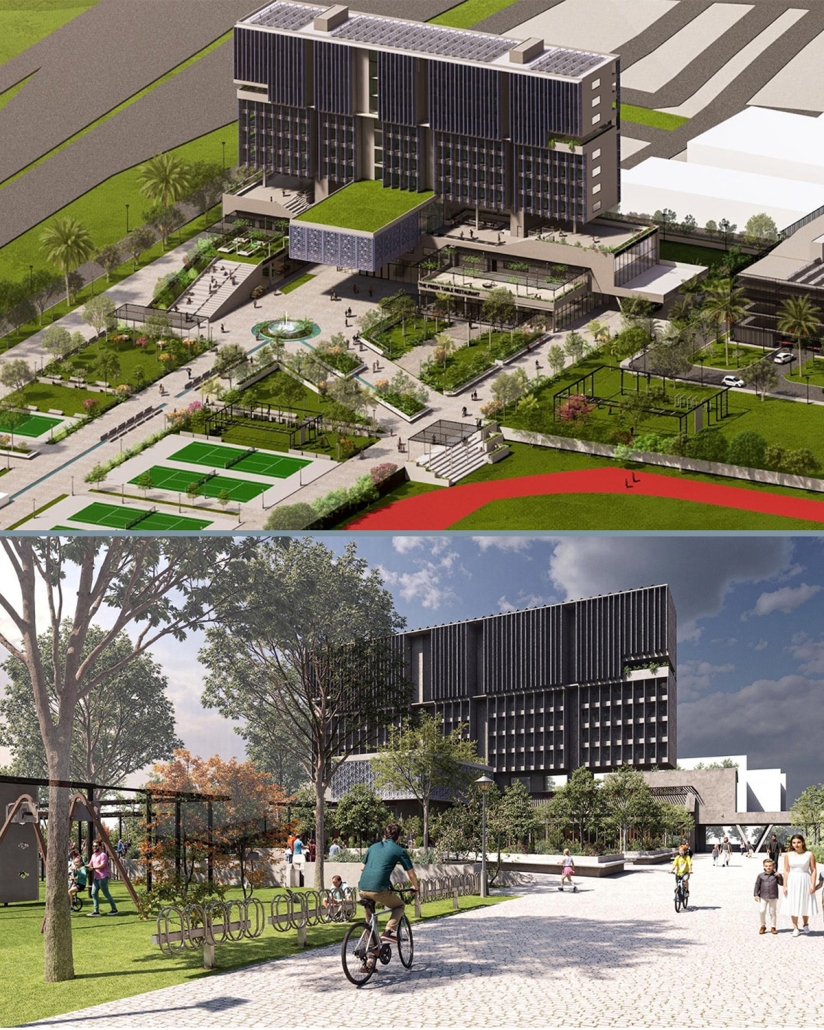
Diabetes is one of the most pressing public health issues in Puerto Rico, where nearly half a million people live with the disease—equivalent to one in every six residents. Type 2 diabetes, in particular, is closely linked to lifestyle factors such as physical inactivity and poor nutrition. This research explores how architecture can become a proactive tool in the prevention of this chronic illness by promoting healthy behaviors in the built environment.

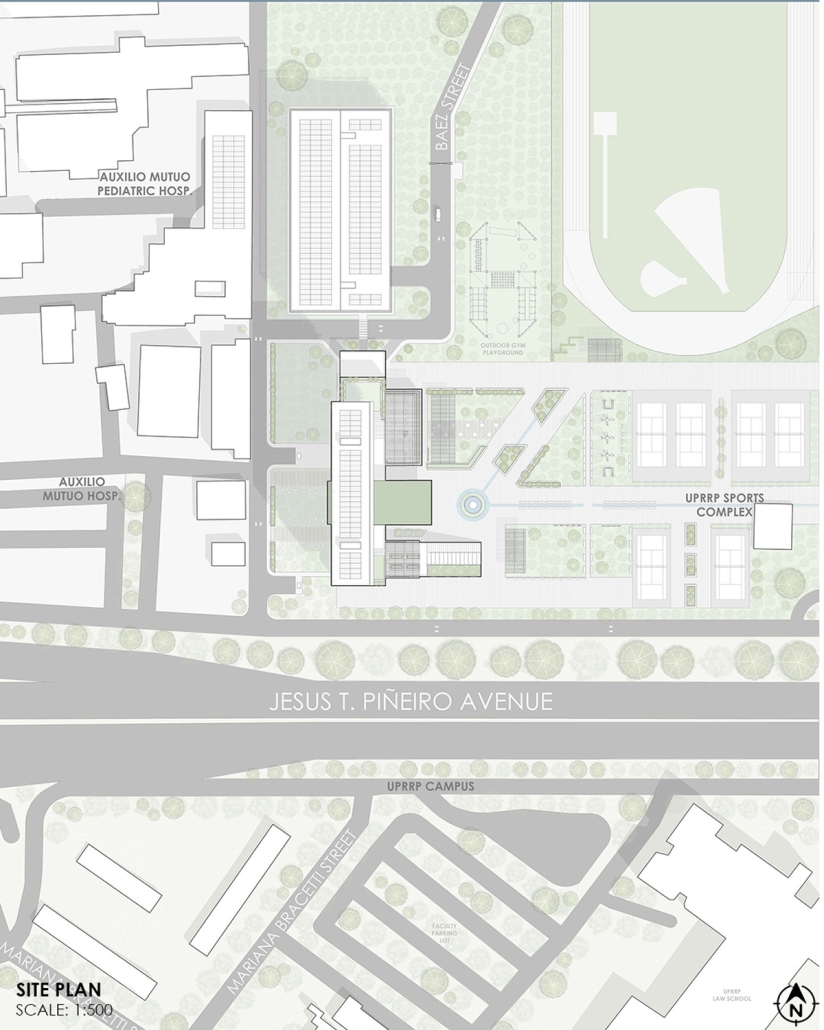
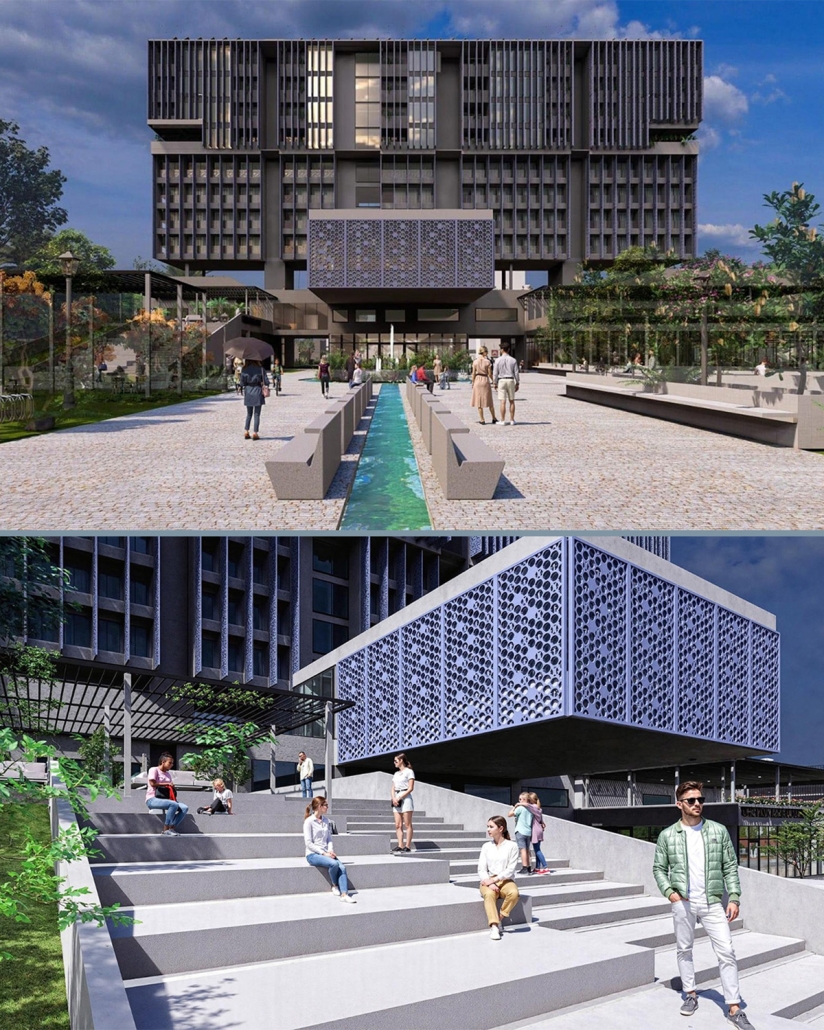
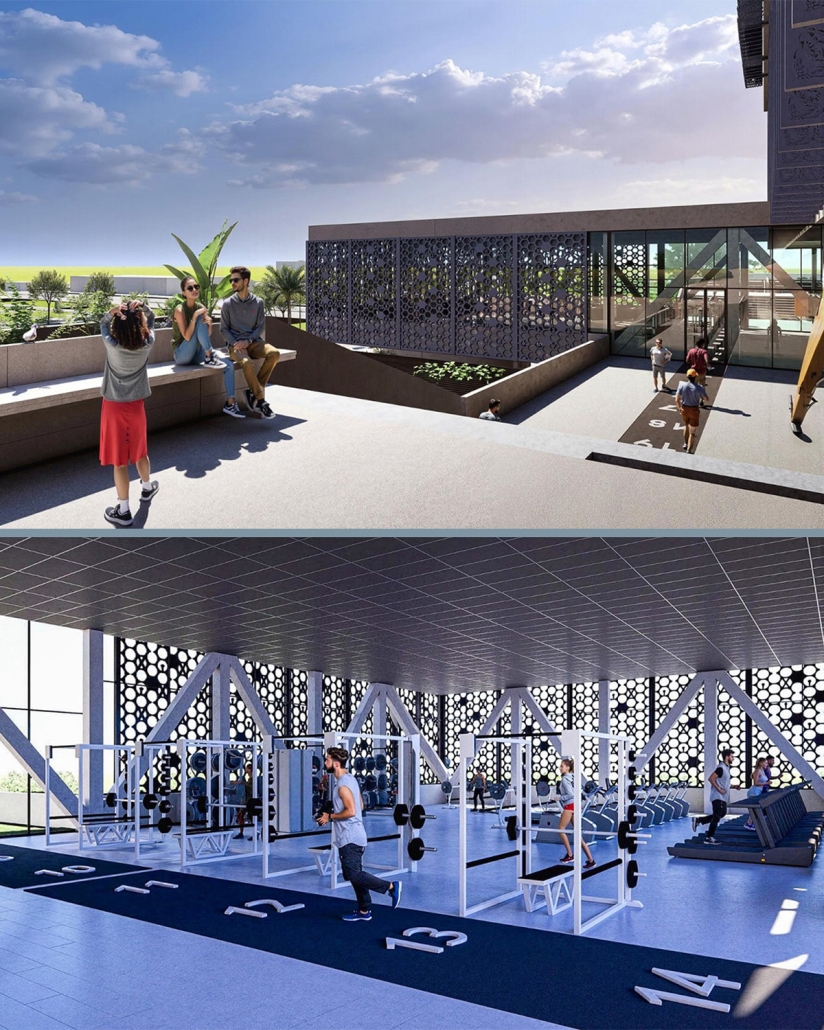
This project proposes the Integral Diabetes Prevention Center, located in Río Piedras, within the grounds of Hospital Auxilio Mutuo and adjacent to the University of Puerto Rico’s Sports Complex. The selected site offers a strategic opportunity to serve two target populations: young adults between the ages of 15 and 28, who are at a key stage for adopting preventative habits, and diabetic patients in need of ongoing care and wellness support.

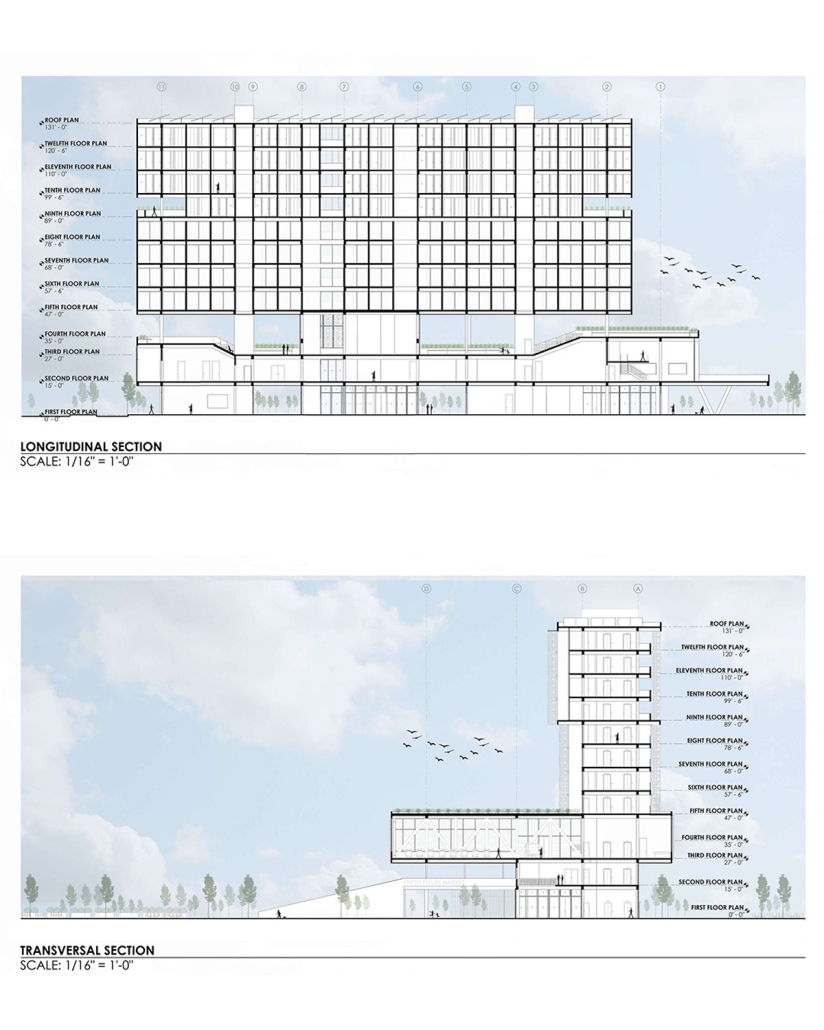
The architectural strategy is rooted in the promotion of an active lifestyle through design. The program includes student residences, extended-stay units for patients, a wellness center with a gym, medical consultation areas, educational spaces, and health-focused commercial areas. A central plaza connects the hospital and the sports complex, acting not only as a circulation node but as a social and interactive public space that fosters movement and community engagement.

The design encourages physical activity through accessible, walkable, and open layouts while also integrating green areas that support mental and physical well-being. By embedding health education, fitness, and healthcare into the spatial experience, the project aims to create an environment that not only treats but actively prevents illness. This research demonstrates how architecture can serve as a catalyst for healthier communities by shaping behaviors and daily routines through intentional, health-centered design.

This project was nominated for the Francisco Luis Porrata-Doria Medal for Excellence in Design

Instagram: @druizrosado00

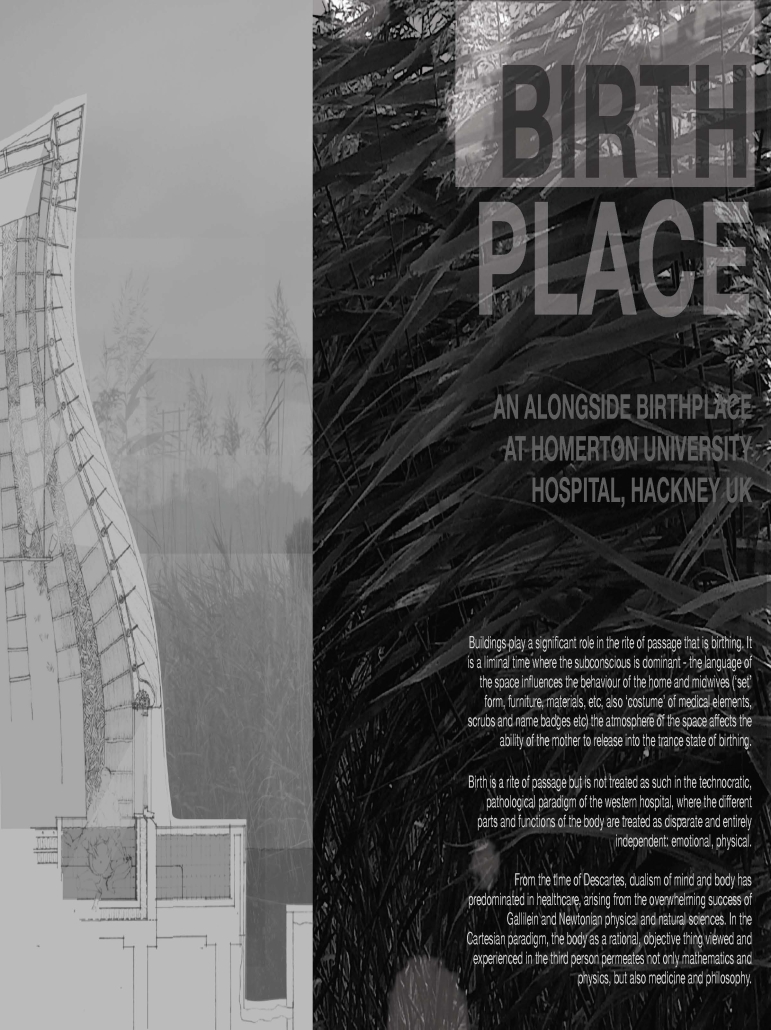
Birthplace – proposal for an alongside birthing place in Hackney, UK by Sophie Martin, M.ArchD ’25
Oxford Brookes University | Advisor: Francesco Proto

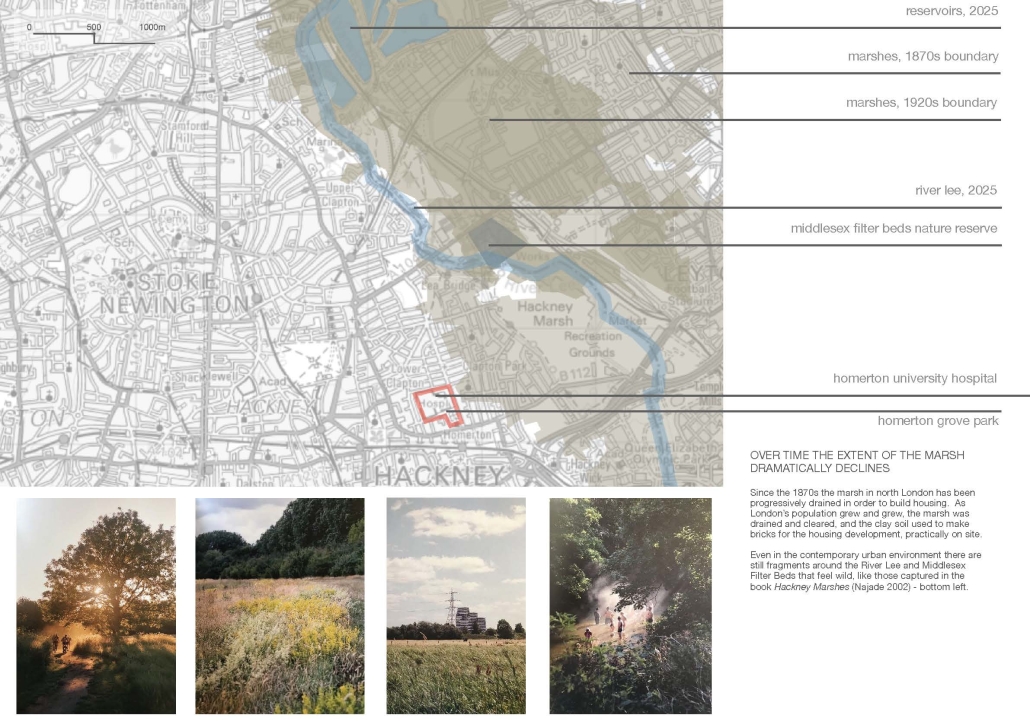
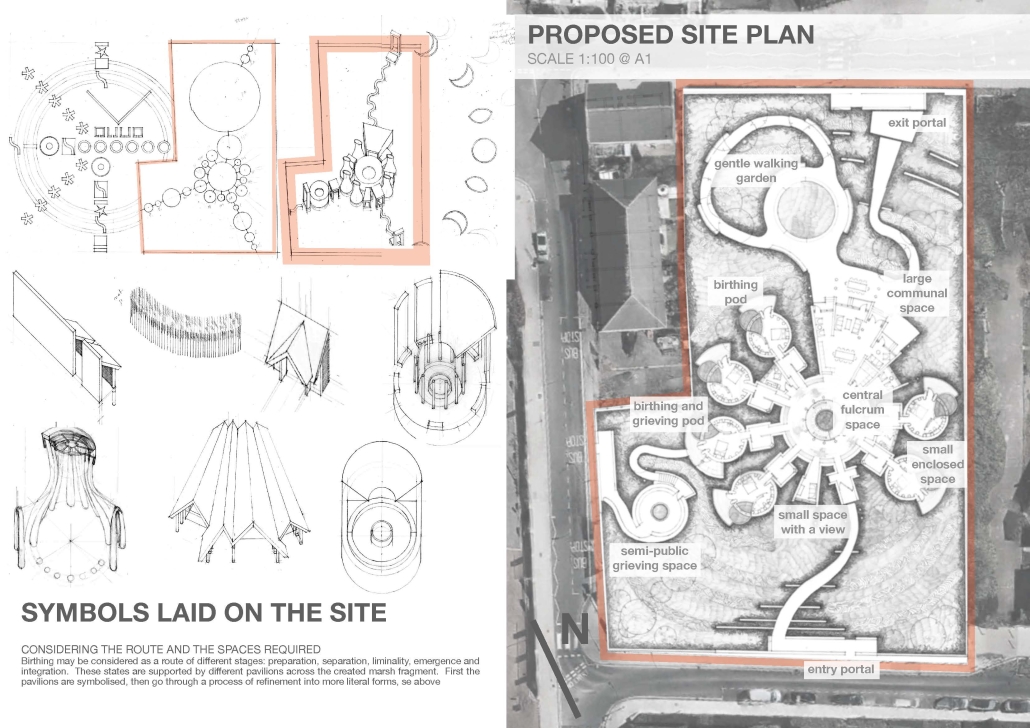
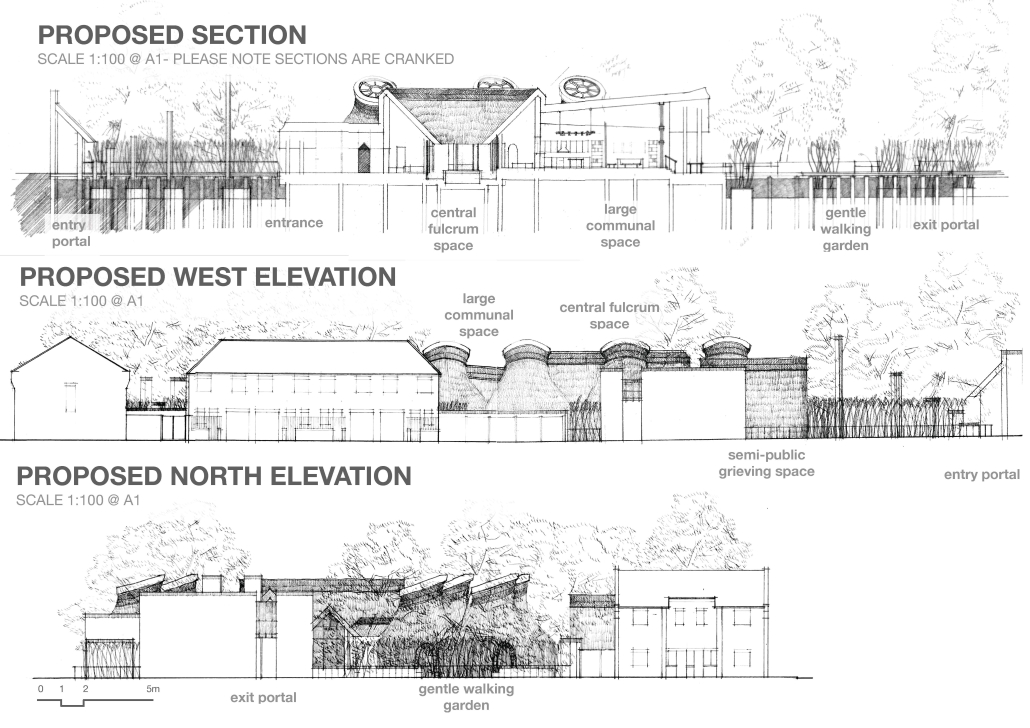
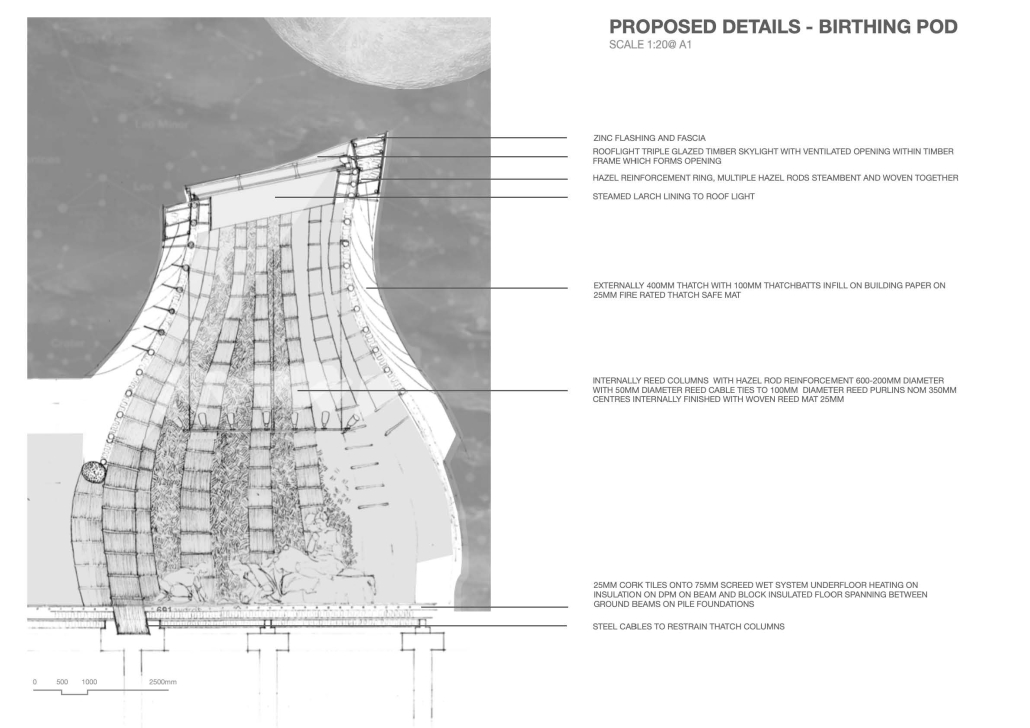
This project seeks to create spaces to support and celebrate birth as a rite of passage, through the development of a new paradigm in maternity care: a worked example of a design for an alongside birthing place for physiological birth in a fragment of natural setting, with views to natural landscapes of water, sky, and moon. Birthing places surrounded by natural/human-scale materials of reed and brick, in urban surroundings close to a hospital.

Focusing on creating an atmosphere to support physiological birth, a route of pavilions to mark each stage in the rite of passage is proposed, using metaphors from popular culture to drive the design. These pavilions will incorporate references to the cycles of the moon to mark the profound transformation of the birthing woman from maiden to mother, and offer a connection between the woman to her place in the cosmos at this liminal time.

The task is a fundamental one: to investigate the effects of form and space on childbirth, families and caregivers. How can the rite that is giving birth once again play a richer central role in communities with a myriad positive outcomes? The incentives to explore this approach would also lead to cost savings – ditch an outdated focus on infection control – pregnancy is not a disease in and of itself. The rates of Cesarean birth and obstetric interventions could drop, and money would be saved if there were a greater proportion of physiological births. (But not through imposing some vaginal birth doctrine from on high, but as a symptom of women and midwives feeling well supported by the place).  

This is not a panacea – wonderful spaces will not impact directly upon staffing levels, maternity budget, political agenda and outdated non evidence based hospital protocol – but begin to give women and midwives a sense of value in their experience, sense of occasion, sense of the gravity of the greatest physiological event for our species, coming as the finale of the greatest feat of human endurance, is an event worth marking. What a fantastic space this would be. 

Instagram: @studio_malmaison, @oxfordschoolofarchitecture

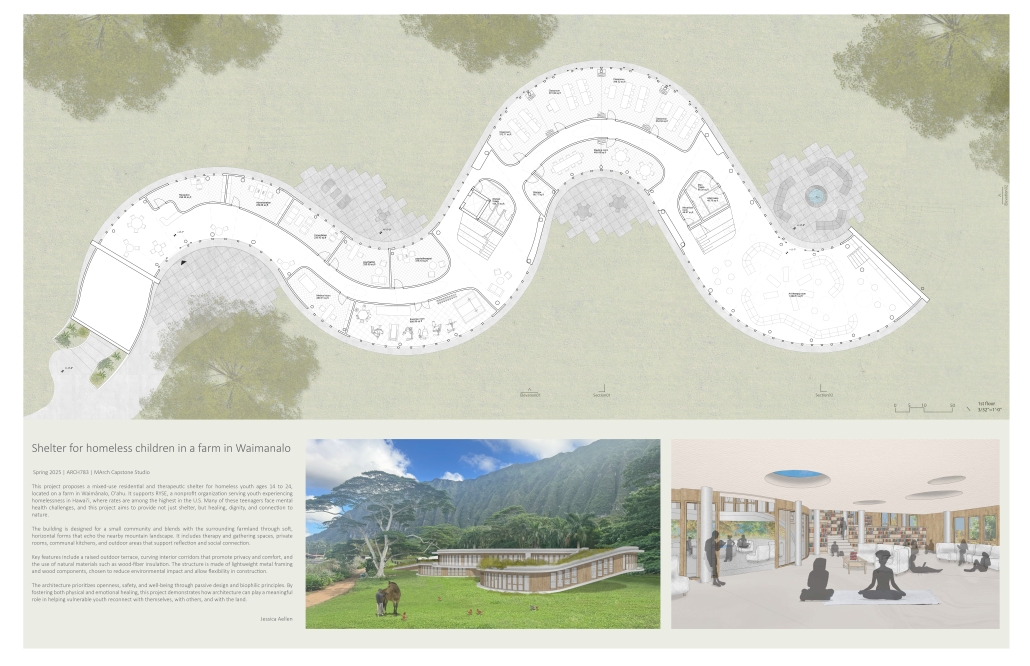
Shelter for Homeless Children in a Farm in Waimānalo by Jessica Aellen, M.Arch ’25
University of Hawaiʻi at Mānoa | Advisor: Yasushi Ishida

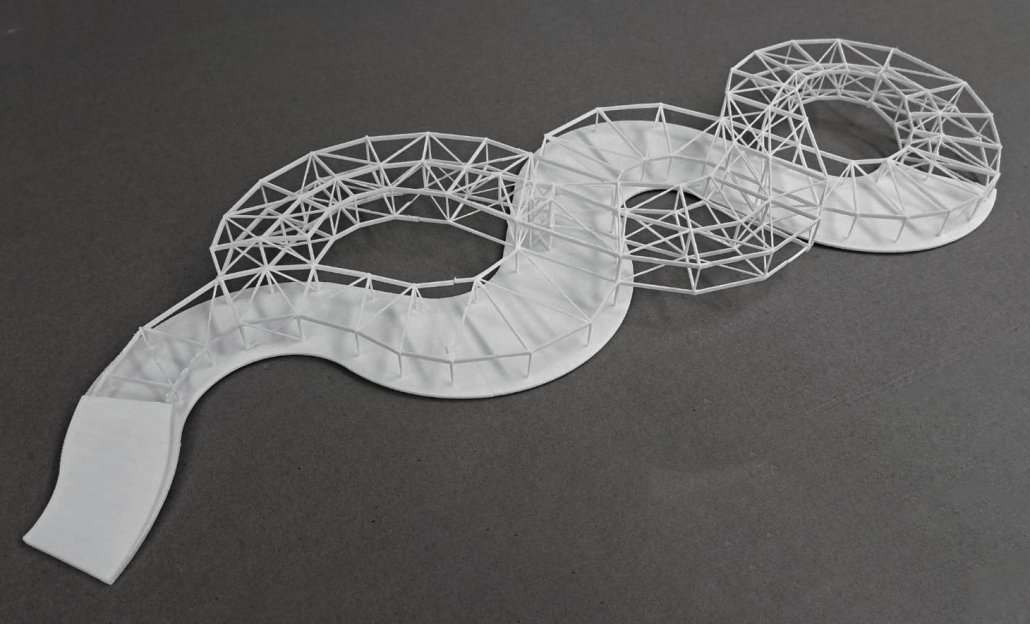
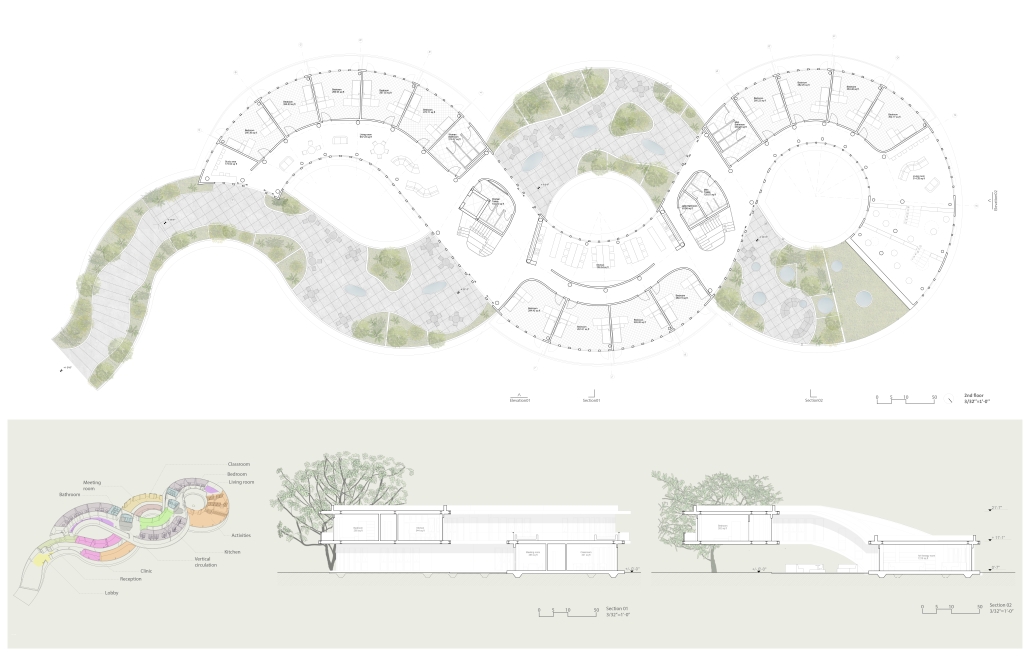
This project proposes a mixed-use residential and therapeutic shelter for homeless youth ages 14 to 24, located on a farm in Waimānalo, Oʻahu. It supports RYSE, a nonprofit organization serving youth experiencing homelessness in Hawaiʻi, where rates are among the highest in the U.S. Many of these teenagers face mental health challenges, and this project aims to provide not just shelter, but healing, dignity, and connection to nature.

The building is designed for a small community and blends with the surrounding farmland through soft, horizontal forms that echo the nearby mountain landscape. It includes therapy and gathering spaces, private rooms, communal kitchens, and outdoor areas that support reflection and social connection.

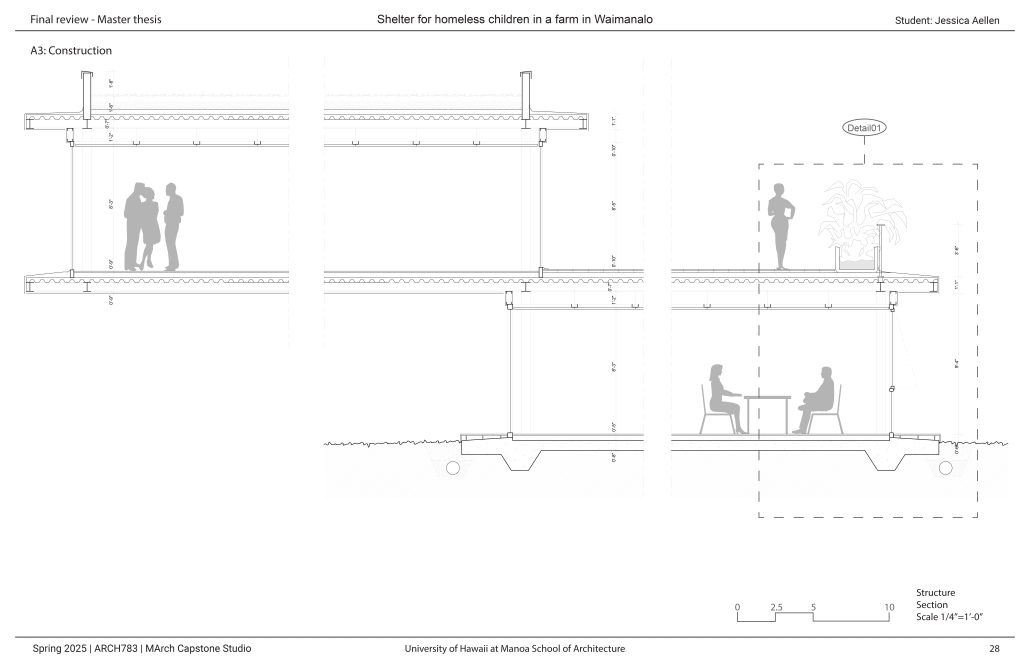
Key features include a raised outdoor terrace, curving interior corridors that promote privacy and comfort, and the use of natural materials such as wood-fiber insulation. The structure is made of lightweight metal framing and wood components, chosen to reduce environmental impact and allow flexibility in construction.

The architecture prioritizes openness, safety, and well-being through passive design and biophilic principles. By fostering both physical and emotional healing, this project demonstrates how architecture can play a meaningful role in helping vulnerable youth reconnect with themselves, with others, and with the land.

This project received recognition at the Hawai‘i Architectural Foundation (HAF) Awards. 

Instagram: @yasushi_ishida_arc

Center of Hope by Arushi Singhal, M.Arch ’25
Boston Architectural College | Advisors: Russel Feldman & Ian F. Taberner

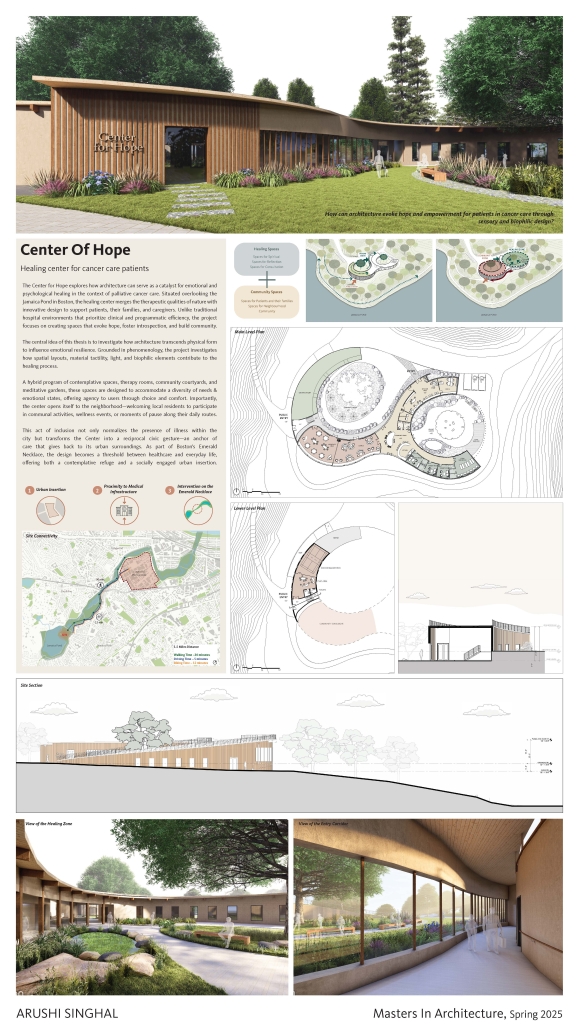
“The Center for Hope” explores how architecture can serve as a catalyst for emotional and psychological healing in the context of palliative cancer care. Situated overlooking the Jamaica Pond in Boston, the healing center merges the therapeutic qualities of nature with innovative design to support patients, their families, and caregivers. Unlike traditional hospital environments that prioritize clinical and programmatic efficiency, the project focuses on creating spaces that evoke hope, foster introspection, and build community. The central idea of this thesis is to investigate how architecture transcends physical form to influence emotional resilience. Grounded in phenomenology, the project investigates how spatial layouts, material tactility, light, and biophilic elements contribute to the healing process.

A hybrid program of contemplative spaces, therapy rooms, community courtyards, and meditative gardens, these spaces are designed to accommodate a diversity of needs and emotional states, offering agency to users through choice and comfort. Importantly, the center opens itself to the neighborhood—welcoming local residents to participate in communal activities, wellness events, or moments of pause along their daily routes. This act of inclusion not only normalizes the presence of illness within the city but transforms the Center into a reciprocal civic gesture—an anchor of care that gives back to its urban surroundings. As part of Boston’s Emerald Necklace, the design becomes a threshold between healthcare and everyday life, offering both a contemplative refuge and a socially engaged urban insertion.

This project received “Commends for Thesis.”
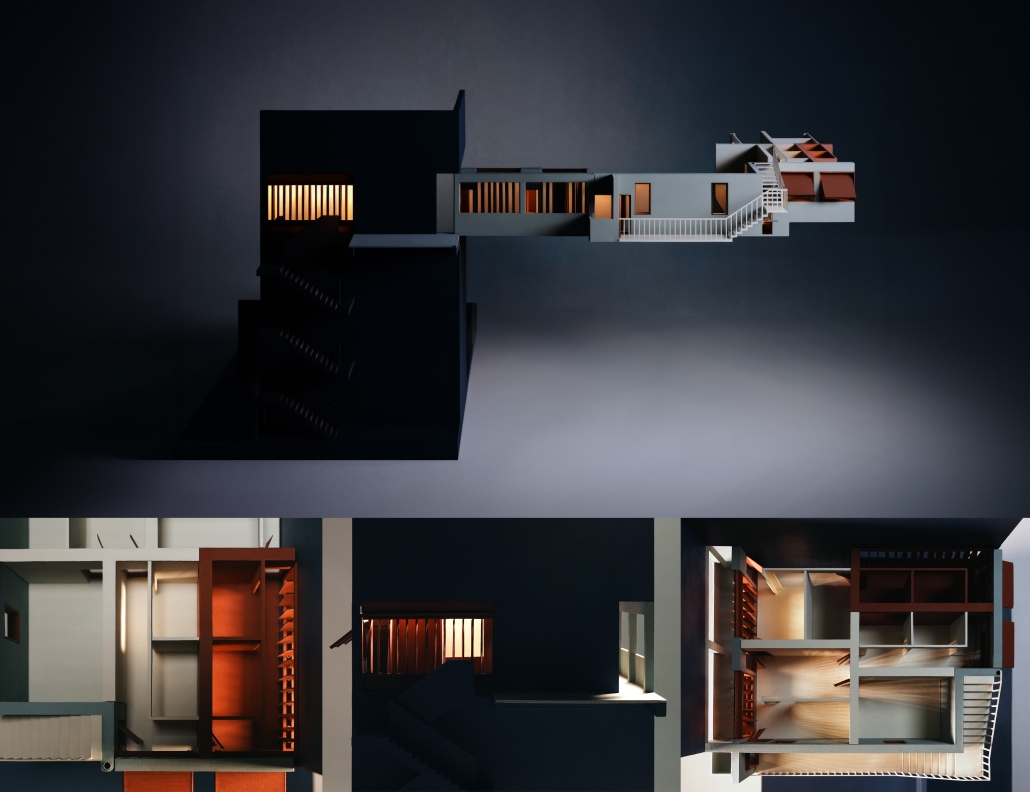
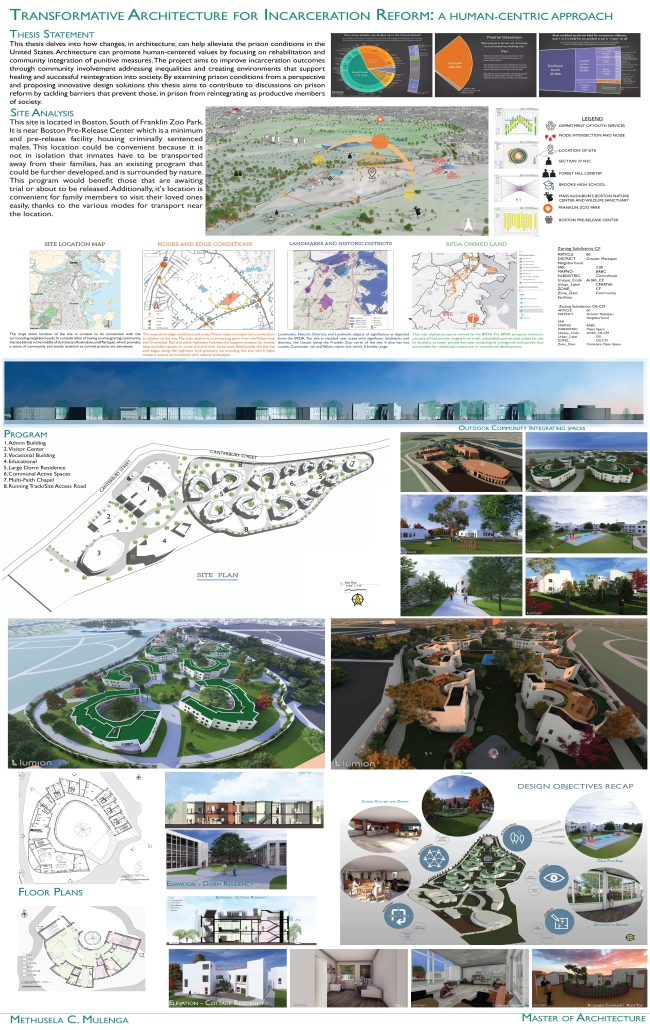
Transformative Architecture for Incarceration Reform by Methusela C. Mulenga, M.Arch ’25
Boston Architectural College | Advisors: Ralph Jackson & Ian F. Taberner

This thesis explores the potential of architecture to facilitate transformative reforms within the incarceration system through human-centric design strategies, specifically focusing on youth demographics. It highlights the pressing need for intervention, as many young individuals are often held for non-criminal offenses or are awaiting trial. By examining the unique challenges faced by these youths, the project envisions architectural spaces that promote hope and healing, allowing for improved mental health and a sense of purpose while they transition back to society. To underpin this exploration, the research begins by analyzing statistics regarding youth incarceration. By identifying this specific population, the thesis emphasizes the importance of integrating appropriate resources and technology within the building typology. It argues that providing detained individuals with educational tools and a supportive environment can significantly enhance their mental well-being and self-improvement opportunities, ultimately aiding their reintegration efforts.

The design approach prioritizes essential elements such as natural light, access to nature, privacy, and educational opportunities that contribute to an environment conducive to healing. The thesis outlines architectural interventions that incorporate calming colors, recreational spaces, and vocational training facilities, proposing that these features can prepare youths for successful reintegration while reducing the risk of homelessness. The goal is to create welcoming and inclusive transition spaces that foster community connection and emotional support. 

Lastly, the thesis investigates global prison systems, defining “transition spaces” as environments that improve the experience of those incarcerated. It emphasizes the significance of architectural design reforms that promote rehabilitation and community connections while addressing safety and well-being for both inmates and staff. By proposing a building typology that is accessible and connected to the community, this research aims to demonstrate how thoughtful architectural considerations can reshape the landscape of incarceration into spaces that offer a renewed sense of belonging and purpose for youth in transition.

This project received “Commends for Thesis.”
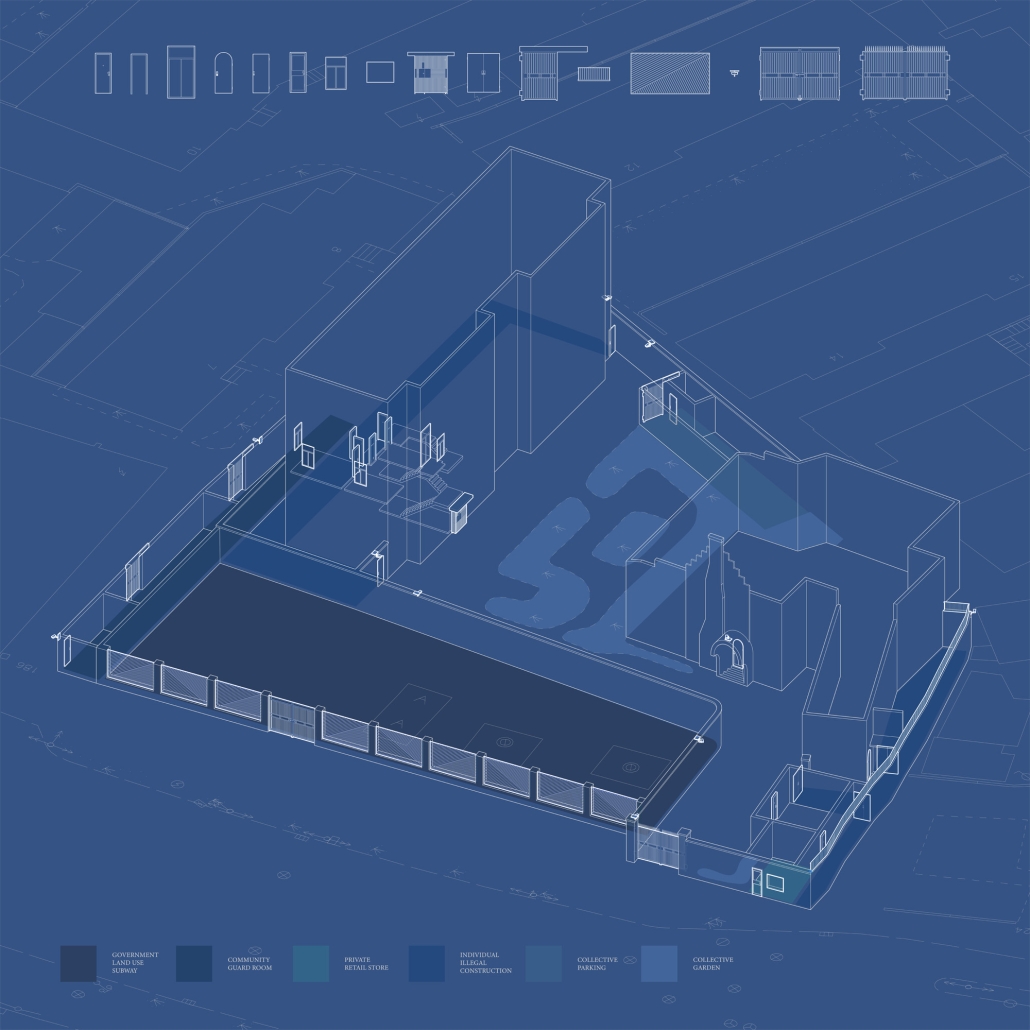
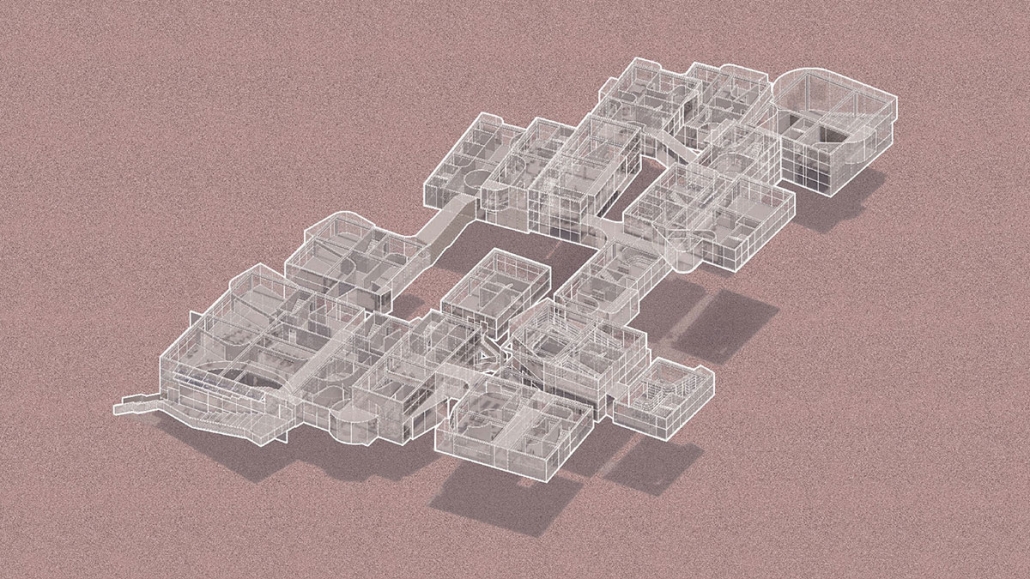
In Between by Polina Korolkova, M.Arch ’25
Washington University in St. Louis | Advisor: Julie Bauer

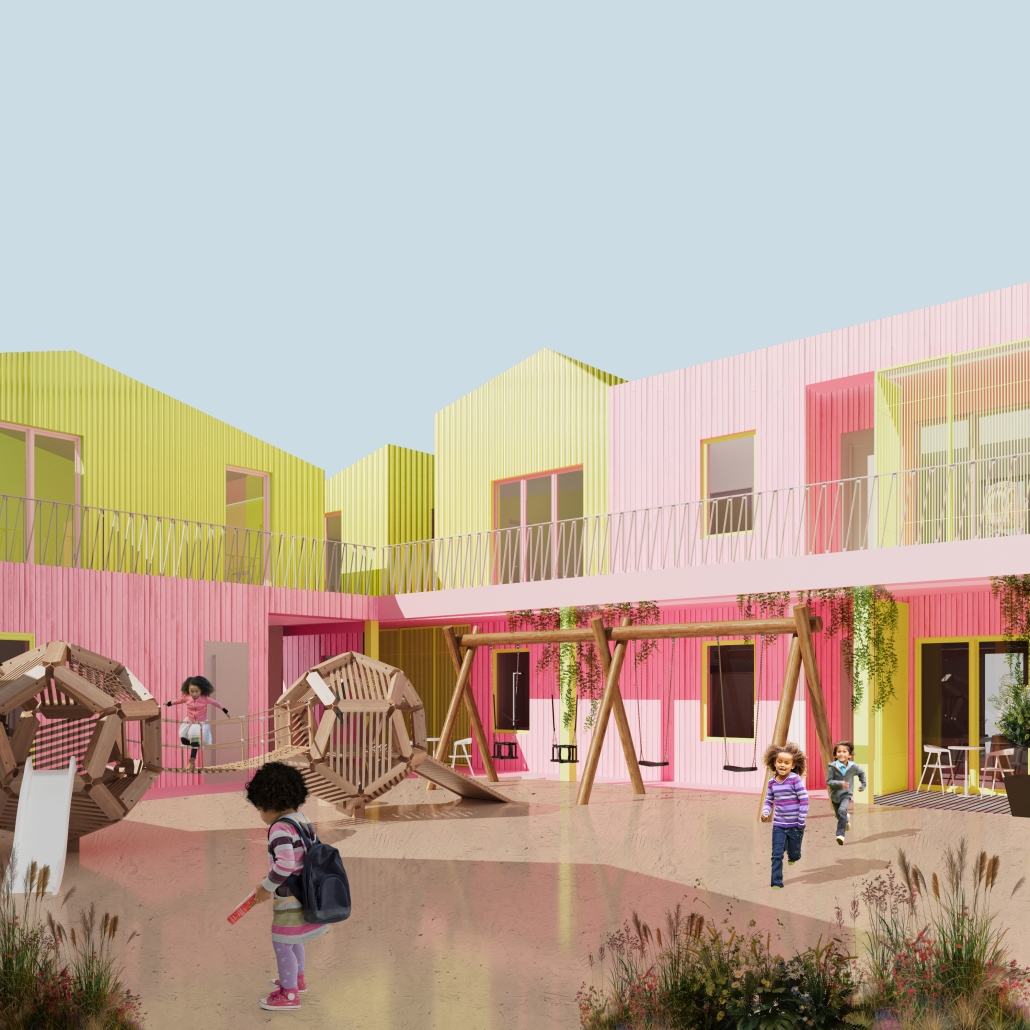
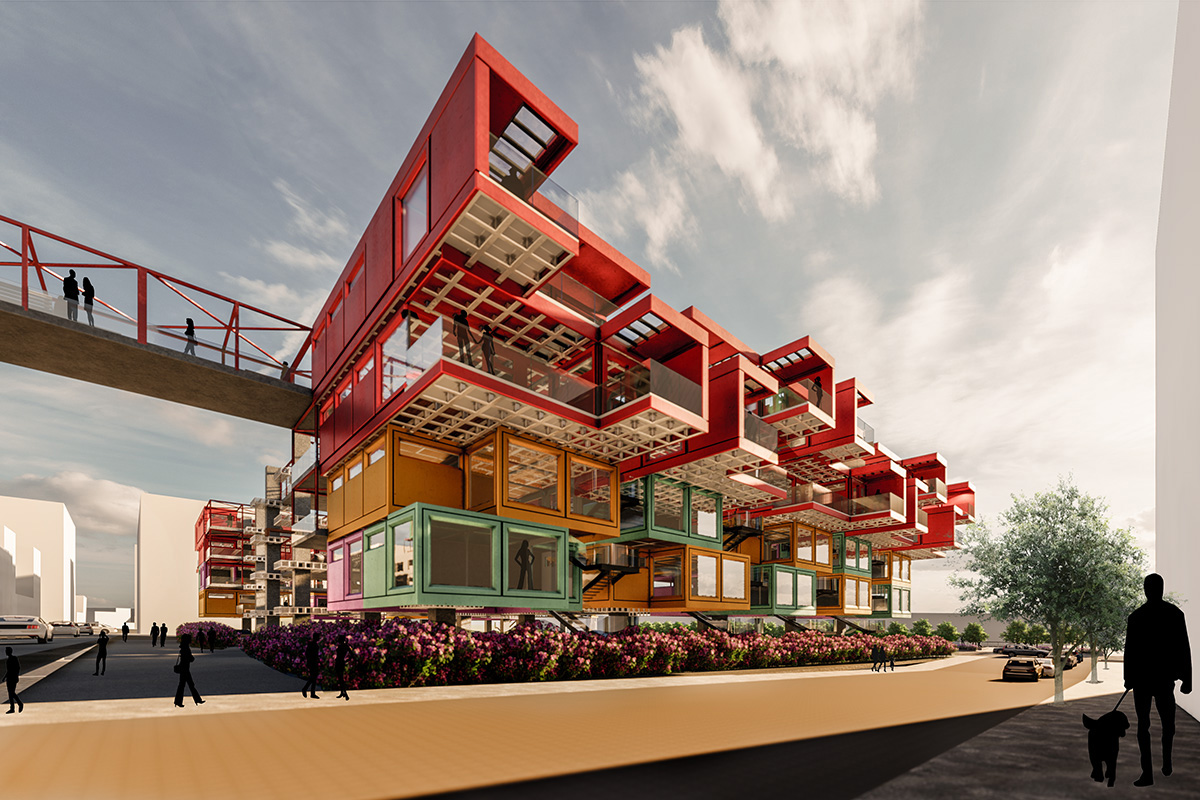
“In Between” is a holistic housing and education project designed specifically for young mothers and pregnant teens navigating a transitional moment in life—in between adolescence and adulthood, dependency and independence, challenge and potential. The project aims to provide not only shelter, but dignity, stability, and opportunity through architecture that nurtures growth and support.

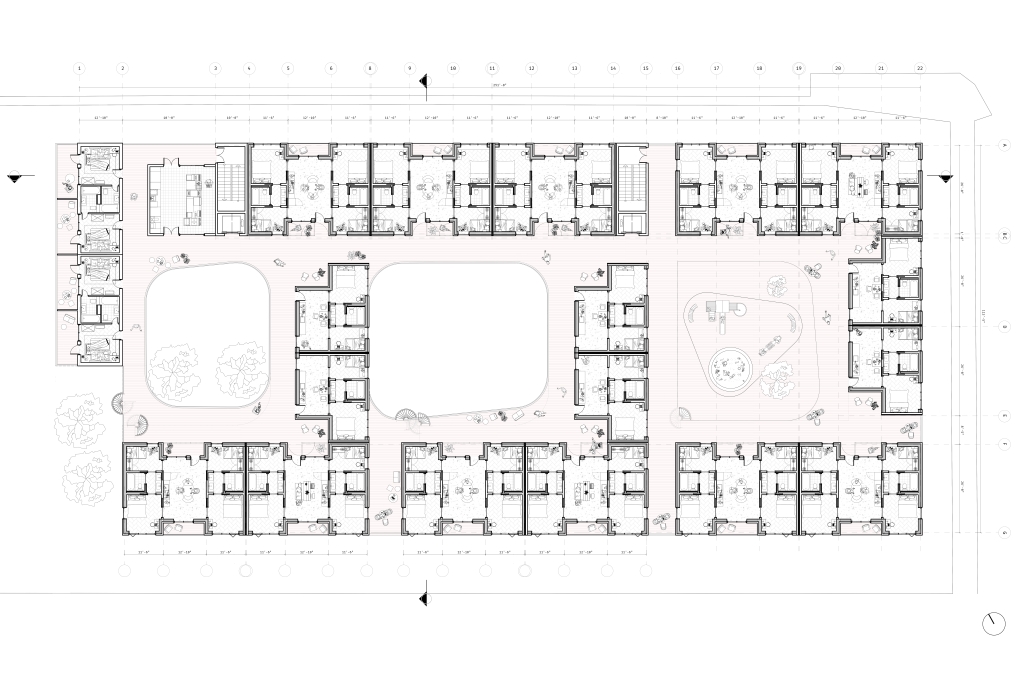
The program integrates residential units with an educational facility and community services, creating a safe and empowering environment. The school component, located on the ground floor, features multiple accessible entrances to accommodate daily routines with strollers, caregivers, and young children. Classrooms, counseling rooms, and communal kitchens are woven into the educational wing, ensuring support extends beyond academics to life skills and wellness.

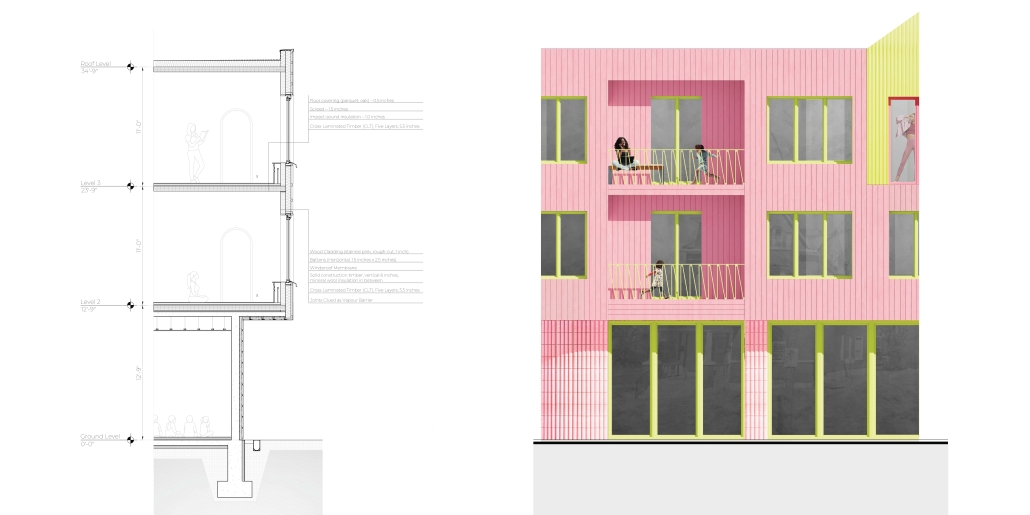
Above, modular housing units made from precast Cross-Laminated Timber (CLT) offer sustainable, warm, and efficient living. Each unit includes a private balcony, natural daylight, and a small courtyard connection—spaces that support healing, reflection, and parenting. Flexibility in the module layout allows for varying family sizes and future adaptability.

Shared gardens, childcare areas, and lounges are dispersed across the site to create a soft rhythm of private and communal life. These in-between spaces encourage informal connections, peer support, and a sense of belonging—turning a temporary stay into a place of pride and transformation.

Structurally, the project employs a hybrid system: the concrete ground floor provides acoustic isolation and structural strength for the learning and gathering areas, while the lightweight CLT units above minimize embodied carbon and construction disruption. The material palette is intentionally soft, natural, and restorative, echoing the project’s core values.

In Between is not just a building—it is a framework for second chances, built with care, strength, and the belief that architecture can be a partner in healing and growth.

This project received the Book Award.

Instagram: @k.poli.na, @julie.e.bauer

Return to Earth, End of Life Care in Northern St. Louis by Hannah Grau, M.Arch ’25
Washington University in St. Louis | Advisor: Julie Bauer

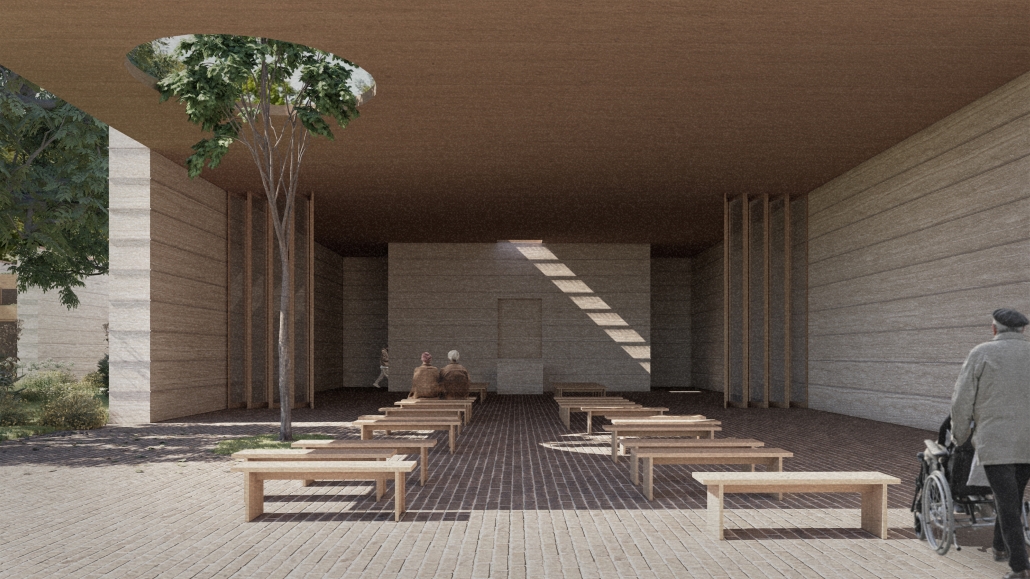
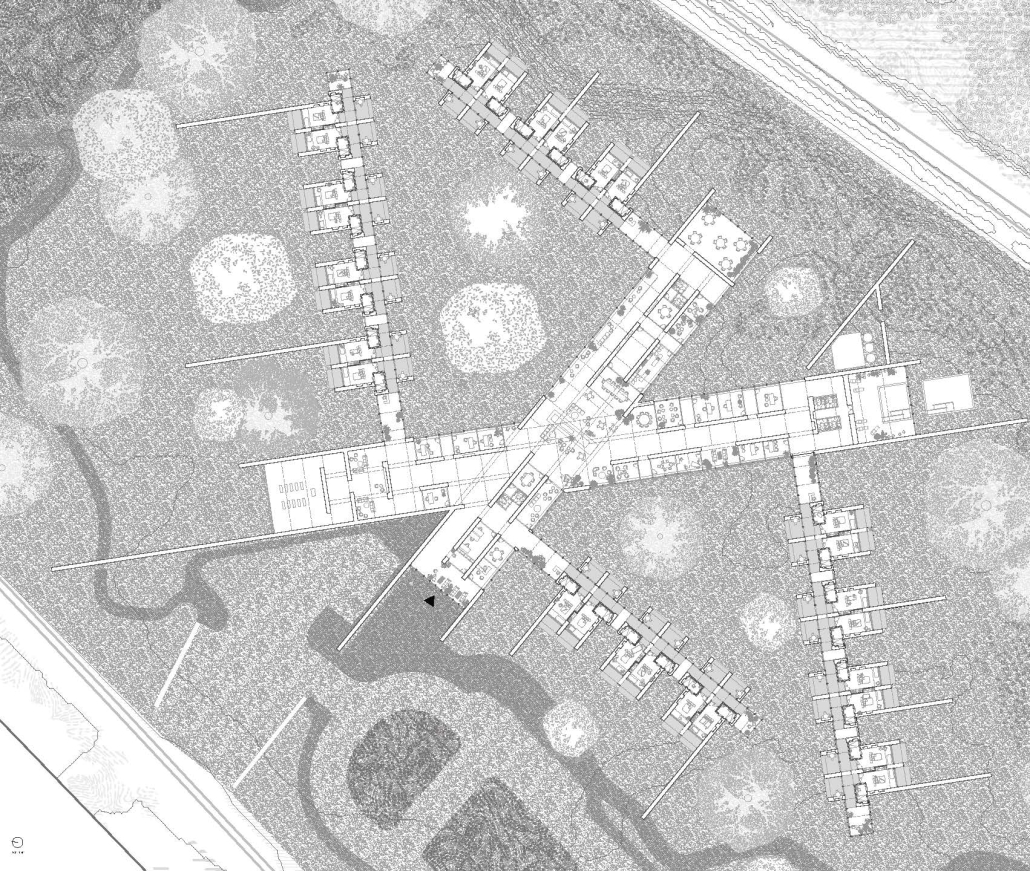
Research in Northern St. Louis reveals a need for palliative and end-of-life care. The project proposes a place [where] those who are at the end stages of life may experience tranquility, celebration, remembrance, spirituality, and a connection with nature. In this program, domestic-scale housing is an active departure from medical room typologies, instead inviting warmth, comfort, rest, respite, and space. Outside of the residential grain of the program, there are spaces to gather, celebrate, commemorate, pray, meditate, nap, bathe, sit in the sun, feel the air, and be surrounded by caregivers and loved ones. The space is accessible, welcoming, and easy to navigate. It is situated along the Mississippi River and looks to bring back communal retreat by creating public garden spaces of memorium, celebration, and gathering. The materiality, textures, nourishment, and outdoor observance will provide connections with nature, connections with memory, and connections with healing. Focusing on the small moments of high-touch, high-interaction, and deep rest, the space will offer permeating peace in both the built and unbuilt environments.

This project received a Book Award.

Instagram: @grauhannah, @julie.e.bauer

RE-ENTRY RE-IMAGINED, Transitional Housing & Support for Previously Incarcerated Young Men by Abigail Fonville, M.Arch ’25
Washington University in St. Louis | Advisor: Julie Bauer

“They said it was a revolving door. But I always asked, did anyone ever take the time to figure out why the door kept revolving?” —Ta’janette Sconyers, Former St. Louis Juvenile Detention Center Employee

A transitional housing proposal designed to support young men, ages 12 to 21, as they transition from juvenile detention toward self-sufficient adulthood. The program spans four buildings and offers a campus-like setting that maximizes the site’s potential, encouraging daily movement and fresh air, luxuries absent in the St. Louis Juvenile Detention facility. At its core, the program focuses on housing. Residents live in minimally furnished units that promote a sense of ownership and autonomy over their space. These units are organized into pods of 2 to 4 individuals, each sharing a communal living space that encourages connection and support. Beyond housing, the campus includes a woodshop and a training kitchen where participants gain hands-on experience and develop practical skills for future employment. Located in the Grand Arts neighborhood, a vibrant mix of cultural, commercial, and residential activity, “Re-entry Reimagined” emphasizes the importance of being a part of the community for a successful reintegration. For young men who have served their time and have nowhere else to go, this is a place to call home.

This project won the Widmann Prize. 

Instagram: @bigail_fonville, @julie.e.bauer

Stay tuned for Part V!
2023 Study Architecture Student Showcase - Part XVI

Welcome to Part XVI of the Study Architecture Student Showcase! Today, we explore the narrative of “othering” as it relates to architecture. The highlighted student work revisits norms by applying computational methodologies to the design process, positioning a tent city in an industrial zone, reimagining modernization without demanding the complete erasure of urban communities, and more. Read on for more information.
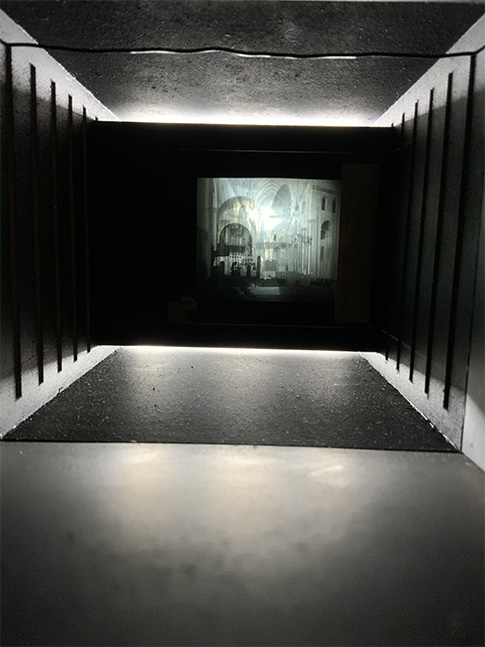
Alleviating Othering Spaces, AI Analysis, and Form in Negril, Jamaica by Caelyn Ford, Bachelor of Science in Architecture ‘23
Boston Architectural College | Advisor: Robert C. Anderson

Nothing will change until we acknowledge two truths about ourselves and the built environment; that architecture reflects, reaffirms, and legitimizes narratives of a society that ‘others’ and defines an individual’s role in society, begetting ‘othering spaces.’

That which can be physically confirmed is often prioritized over its cognitive counterpart. Design solely for the corporeal, neglecting the cognitive, is a lie of pretended humanism within the architecture profession. The thesis aims to develop a tool that expands the

capabilities of inclusive design to transform perceptual understandings of the self and ‘other’ by analyzing architecture through a neuro-phenomenological lens. This endeavor is two-fold: design for the mind and design for the other.

The thesis project investigates means of alleviating ‘spatial othering’ by quantitatively studying the building’s behavioral and emotional effect on its users to equalize the cognitive experience. Cognitive-Informed Design in architecture presents an opportunity to create paradigm shifts by applying computational methodologies to the design process. Recognizing the need for a system to connect with the end users efficiently during the design process, the potential of web-based VR, AI-generated eye tracking, brain mapping software, and biosensors was explored in this thesis to develop the design criteria.

This project was selected as the Best of Bachelor of Science degree project.

Urban Refuge: Assisting in the Development of Tent Communities Through Modular and Trauma Sensitive Design by Peter Hope, M. Arch ‘23
Academy of Art University School of Architecture | Advisor: Eric Reeder

Homelessness in the United States is a problem that disproportionately affects California. According to the World Population Review, the homeless population in California is 161.5 thousand; that is 16x more homeless people than the national average of 11.4 thousand. It is suffice to say that the issue of homelessness is not going away any time soon. Of all the cities in the United States, three of the cities with the highest homeless population exist in the Bay Area. San Jose, Oakland, and San Francisco account for 10% of the homeless population of the entire state.

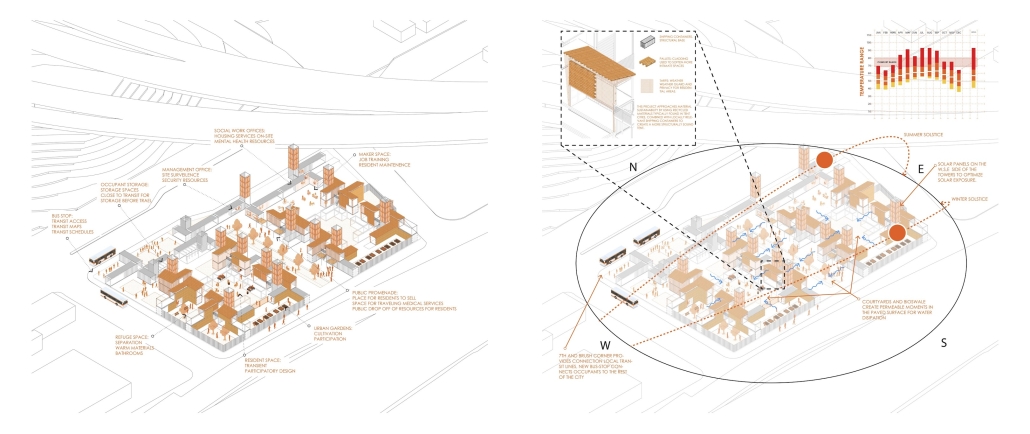
The objective of this thesis is to find ways to create better spaces of refuge for the unhoused residents of Oakland, who currently call tent cities home. Tent cities are one way that the unhoused communities organize themselves. Tent cities can pop up anywhere, from highway medians to the side of the road. The selected site for this project is inhabited by a fledgling tent city that has not quite found an organizational rhythm as others in Oakland have. It is also positioned in an industrial zone which presents opportunities for city sanctioning, should the project be successful.

Instagram: @ericreeder.architect, @_peterhope

Kalunitas by Alex Jauregui, Alex Lopez, Armando Torres, Ayah Milbes, Bailey Campbell, Chris Rosenbaum, Francisco Ramos, Hannah Gonzalez, Huda Shahid, Joshua Arriaga, Josue Garay, Justin Mai, Kavi Patel, Lucio Castro, Macey Mendoza, Sarah Trevino, Sophia Cruz, Valentin Torres, and Xavier Zamora, B.Arch ‘23
University of Texas at San Antonio | Advisor: Armando Araiza

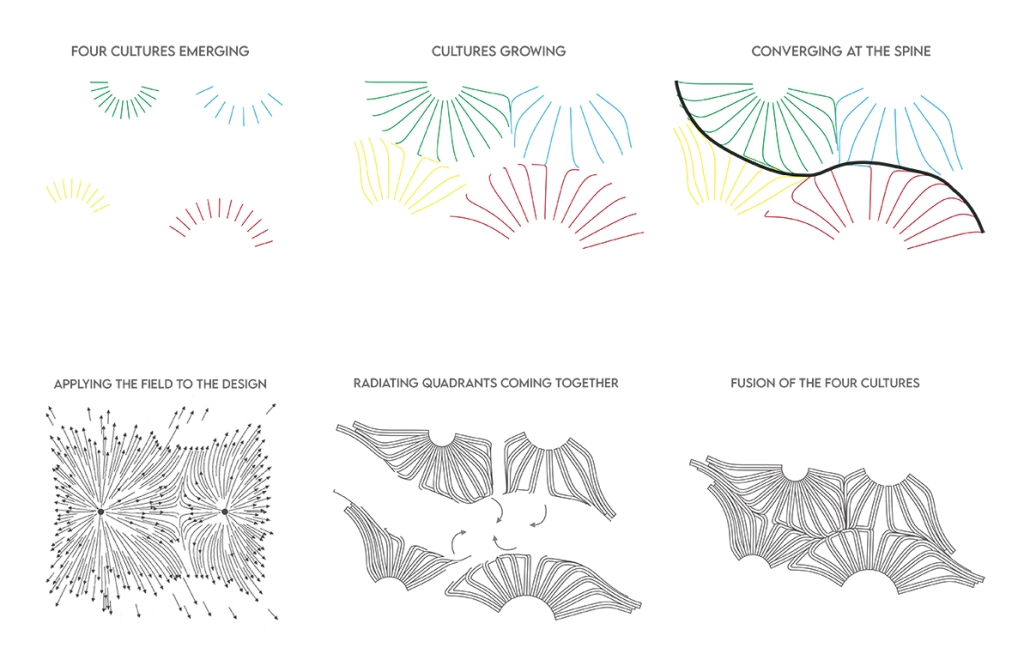
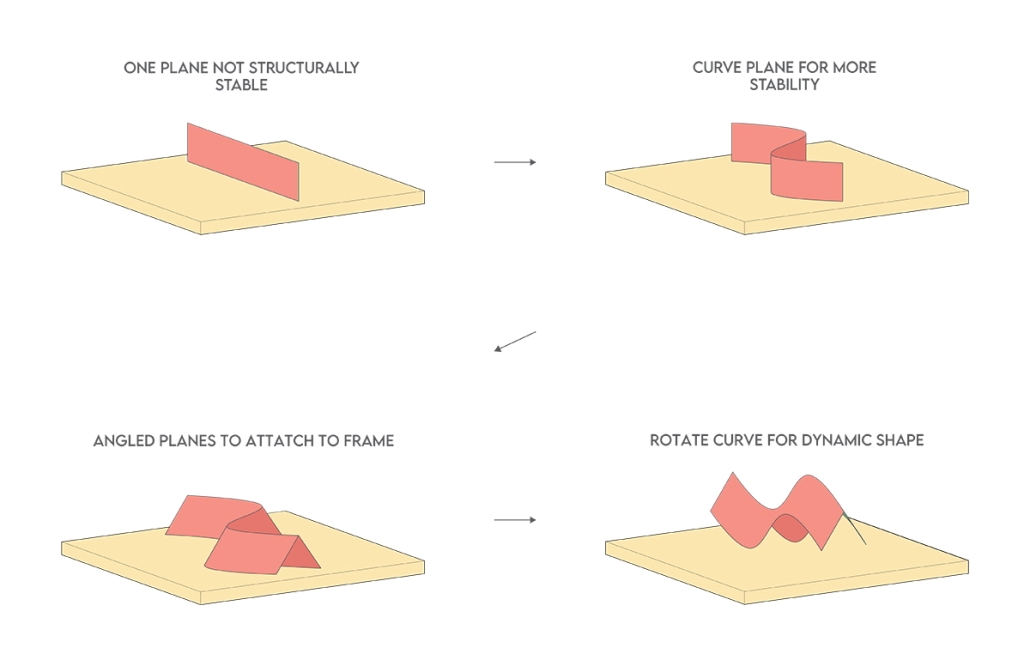
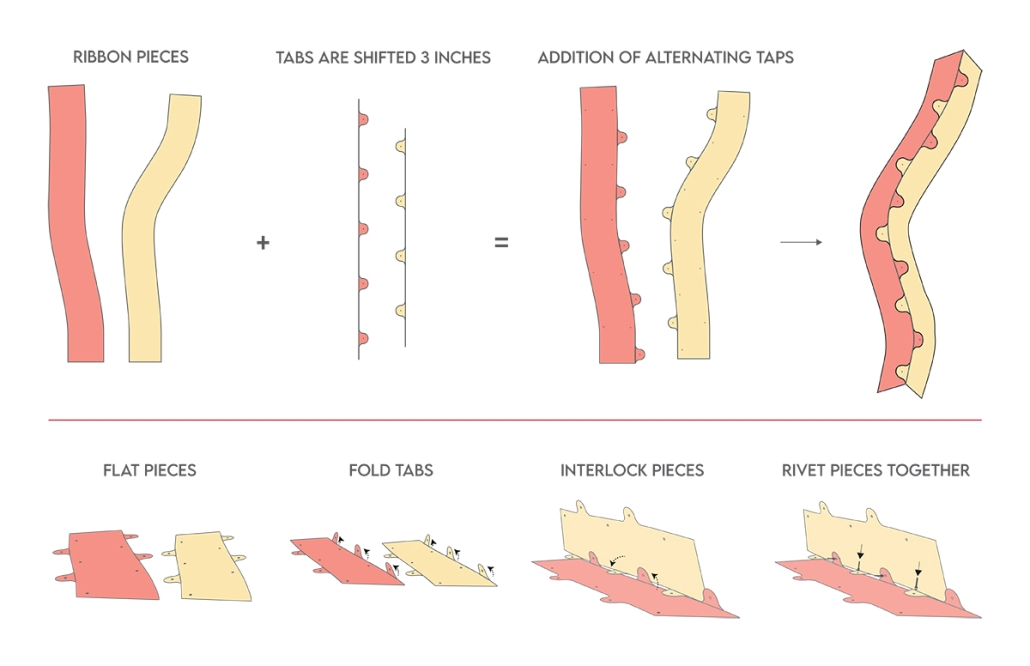
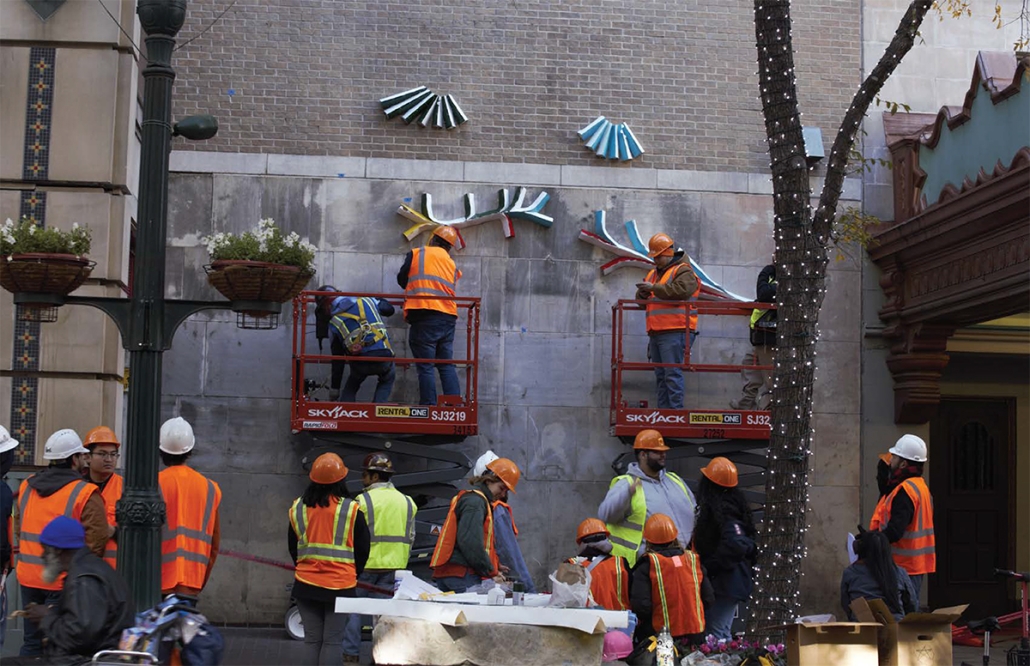
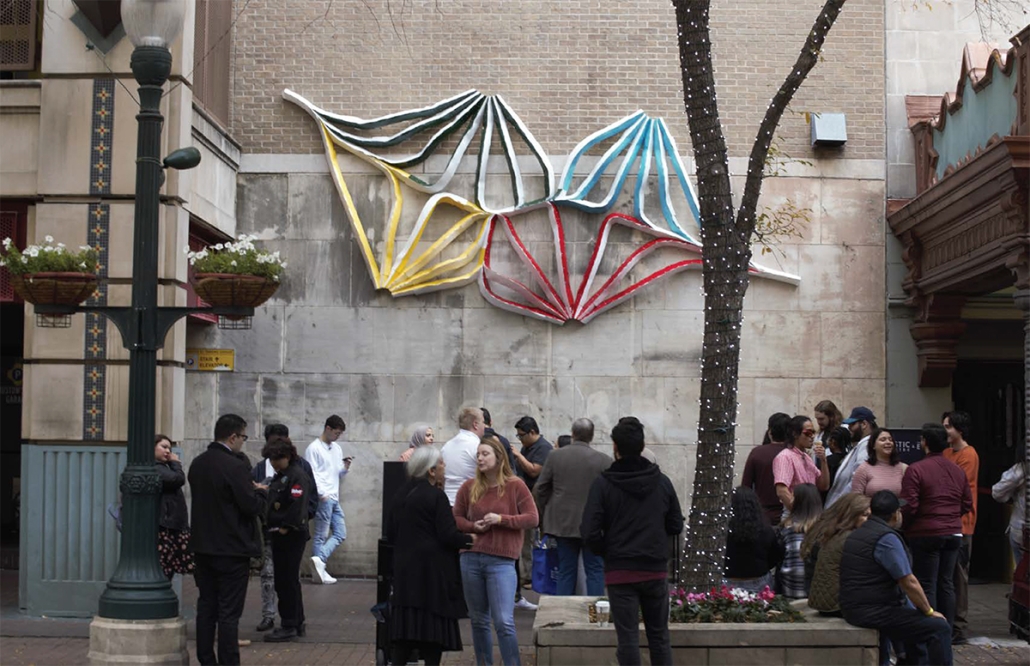
An installation that illustrates the movement of people to San Antonio throughout the past 300 years and beyond. The word “kal” derives from the indigenous language of the Coahuiltecans meaning “come together” and “unitas” being the Latin word for “unity.” Kalunitas expresses the convergence between four of the founding cultures that have made the San Antonio region one of the most diverse in the United States.

Instagram: @conetic_studio

The Shar(e)d: Community Resilience Through Shared Spaces by Yiting Chen, M.Arch ‘23
University of Southern California | Advisor: Amy Murphy

Cities’ growth and evolution can pressure existing communities by changing the urban landscape, as seen in the Shard in London, where the construction of a glass skyscraper risks displacing the economically poor and working class. Such development doesn’t necessarily bring true social progress to the neighborhoods. A large area of glass introduced in the neighborhood almost put a death sentence on the community. This trend can be observed in many communities near central business districts.

Is there another way towards modernization without demanding complete erasure?

How can the elements of the Shard be recombined into the urban landscape in a more sensitive gesture?

How can the use of glass be more about the place and the people?

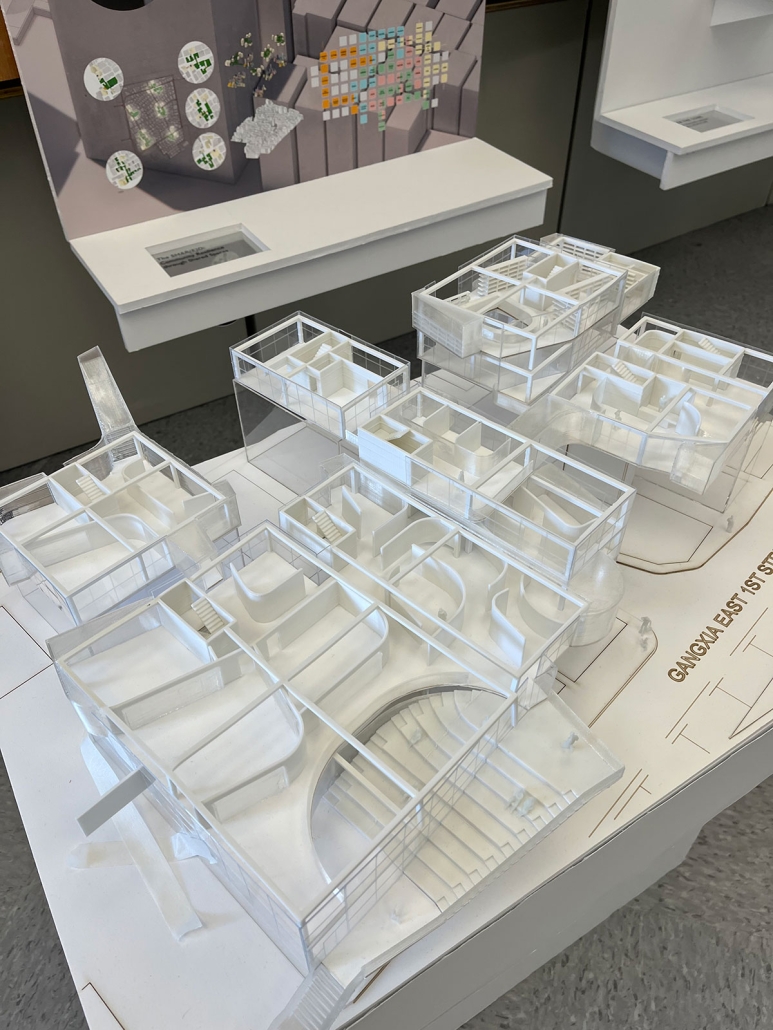
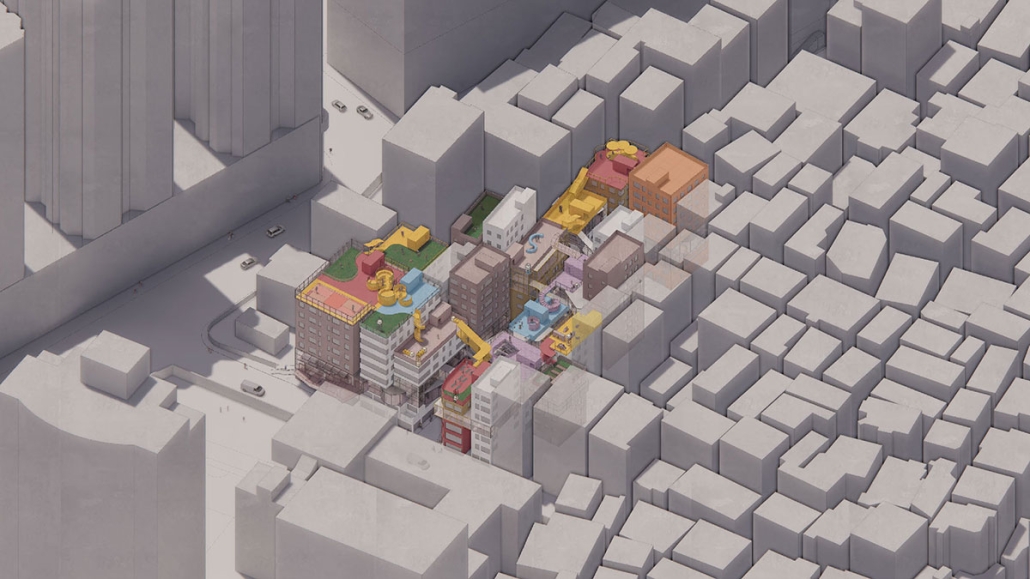
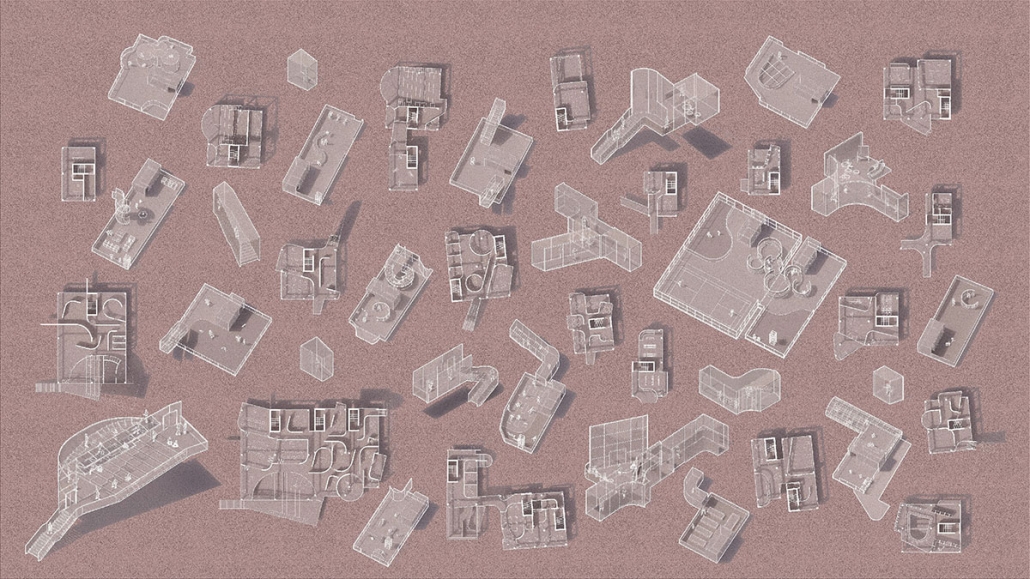
This project focuses on the development of public and shared spaces in GangxiaVillage. The synergy of public spaces can be infused into this super-dense neighborhood to ensure that the benefits of progress and development are shared fairly.

The glass will bring active changes and connections while preserving the special urban fabrics and characters of the neighborhood. A network and system of resources will be introduced to serve the residents, and this network is expected to expand and evolve when future needs arise.

This project received the USC Master of Architecture Distinction in Directed Design Research.

Instagram: @sallychenyt, @amy_murphy143

See you next week for the next installment of the Student Showcase!

2023 Study Architecture Student Showcase - Part XV

Welcome to Part XV of the Study Architecture Student Showcase! Healthcare and Well-Being are the central themes of today’s highlighted student work. The projects below demonstrate how intentionality around design and architecture can support the well-being of society, playing an essential role in everyday life. Today, we dive into pieces that reinforce dwelling through spatial culture and reimagine architecture through the lens of a matriarchal community in rural Uganda. Viewers can explore project plans for a site in Puerto Rice that serves as a creative and cultural therapy center. And a classroom designed with adaptive design elements and sensory-friendly features to support neurodiverse and disabled students. Read on for more details!

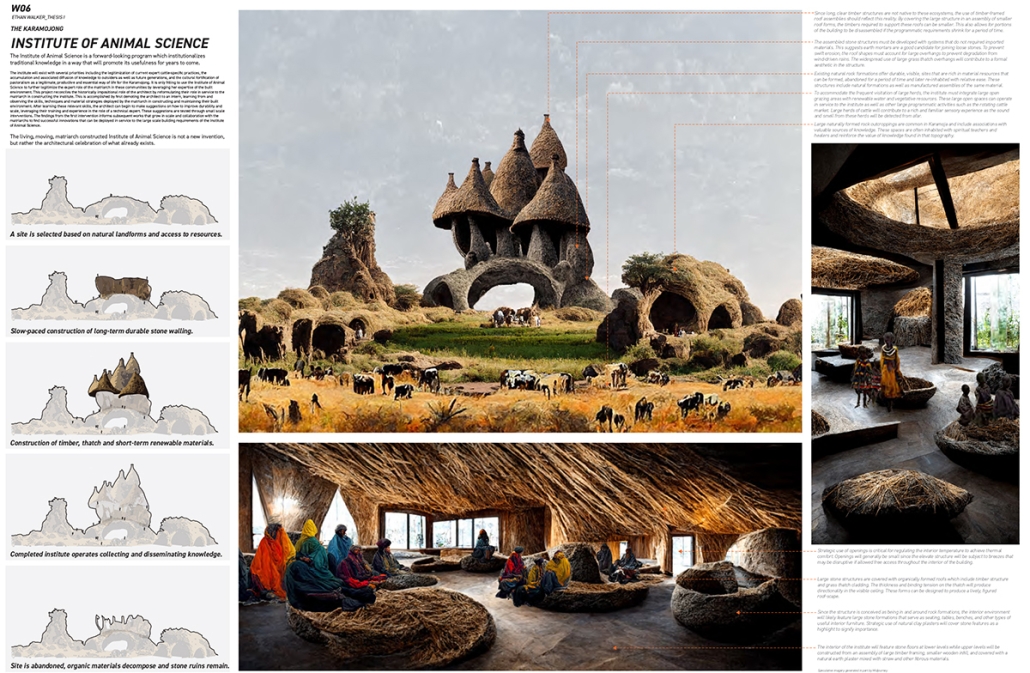
Made with Matriarchs: Crafting Heritage-Oriented Futures with the Karamojong by Ethan Walker, M.Arch ‘23
Lawrence Technological University | Advisors: Scott Shall (Committee Chair), Joonsub Kim (Member), and Edward Orlowski (Member)

In the rural northeast of Uganda, the ethnic Karamojong are experiencing unprecedented pressures to change their ways of life (Knighton, 2017). As semi-nomadic pastoralists, these peoples are dependent on the health of their herds which is contingent on the health of their ancestral lands. Studies show that land health has deteriorated due to climate change, overgrazing and lack of mobility producing a vulnerability context that has attracted international attention. Interventions by foreign actors and the national government have attempted to improve public health while making recurring calls to transform Karamojong culture away from pastoralism towards sedentism and farming (Dbins, 2013). While appropriate in particular cases, the overwhelming call to cultural transformation could be at odds with the capabilities of the land, potentially undermining the pastoral ways of life. These globalizing influences extend beyond policy-making and have fundamentally altered the process of architectural production and construction in the region.

In response, this thesis proposes an iterative, heritage-based approach to design and construction, crafted to mitigate the increasingly harmful effects of globalization upon the traditionally semi-nomadic societies of northern Uganda. In this approach, alternative futures are imagined by reconsidering the role of the architect in relation to the pre-colonial keepers of the built environment; the Matriarchs. When working within this alternative arrangement, architects would work responsively with Matriarchs, lengthening the process of interaction in favor of a responsive design methodology that strengthens the Matriarchs’ power of architectural self-determination. Strategies to equip pastoralist architecture with greater autonomy are imagined, proposed and filtered through a Matriarch-led process to determine what is appropriated, effective and ultimately in the best interest of their desired way of life.

Instagram: @ewalke_ , @scott_shall

This project was selected for the ARCC King Medal and won the LTU Deans Award – Best Project.

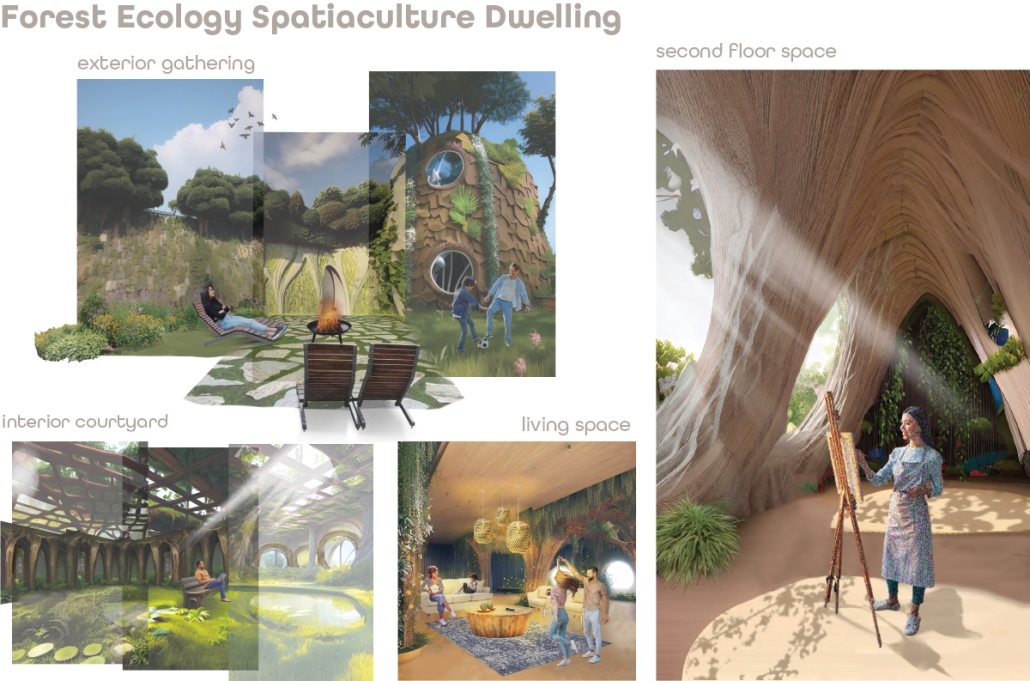
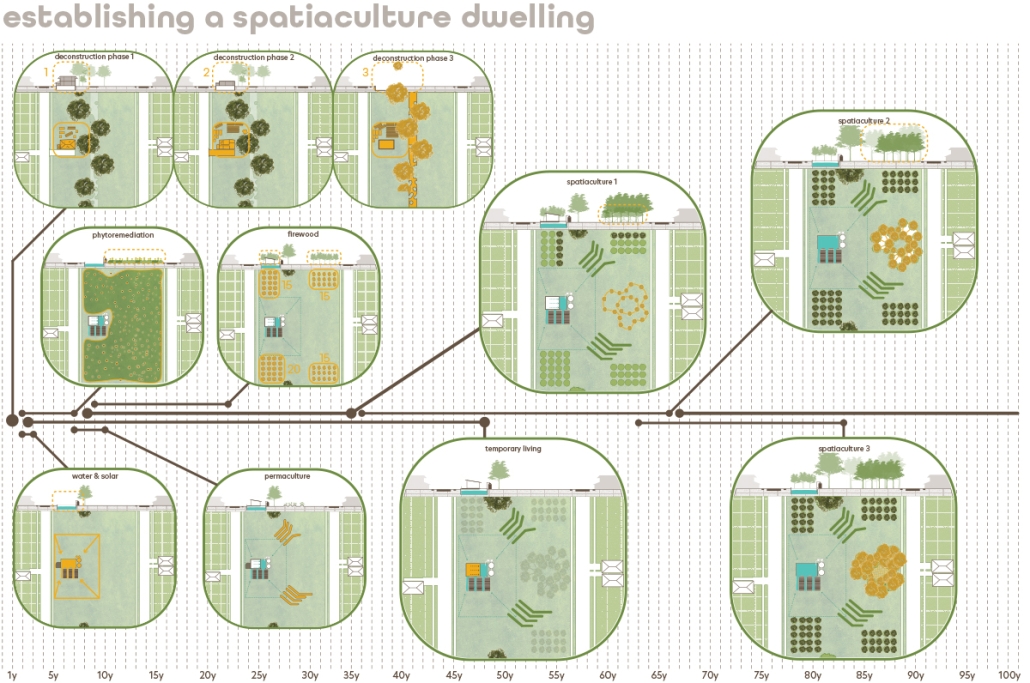
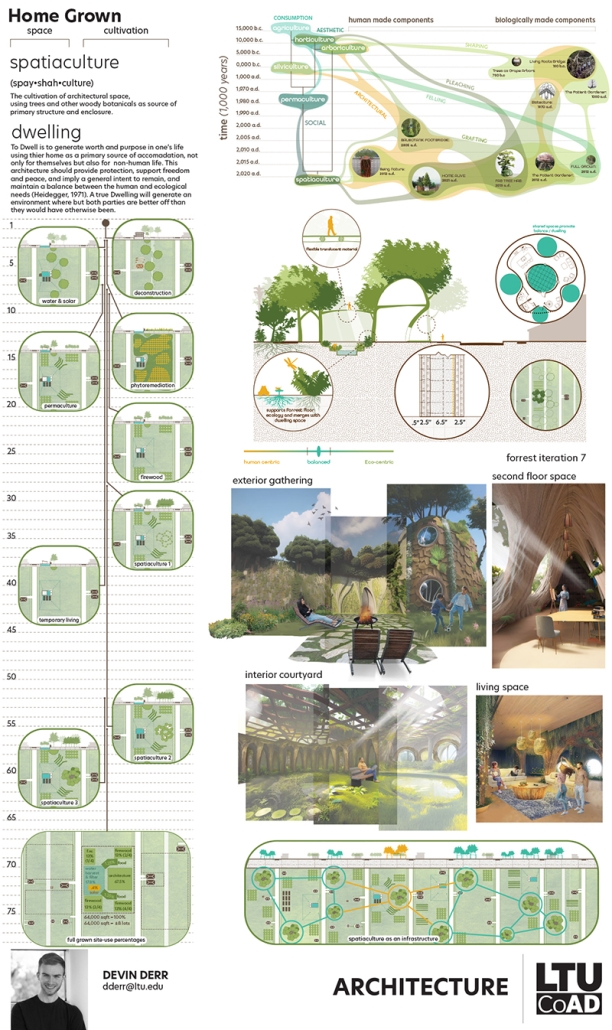
Home Grown: Reimagining Dwelling Through Spatiaculture by Devin Derr, M.Arch ‘23
Lawrence Technological University | Advisors: Scott Shall (Chair), Dan Faoro (Member), and Sara Codarin (Member)

To dwell is to feel at home in a space that: maintains nature (both human and non-human), provides protection, freedom, and peace, and implies a general intent to remain (Heidegger, 1971). To inhabit is to view both house and land as mere assets of monetary value. Without dwelling, people can feel uprooted or disconnected from their homes, and the home itself can disrupt or compromise the ecosystem that hosts it. Unfortunately, home design in the U.S. rarely makes dwelling a priority and often glorifies investment-centric metrics to increase profits and value of the land-stances that encourage inhabitation.

Dwelling not only demands a balance between human-created and naturally occurring environments, but also the simultaneous improvement of both. To achieve dwelling many ancient cultivation practices like permaculture, horticulture, silviculture, and arboriculture are necessary. These practices have a central focus on maintaining and improving natural environments because the benefits they reap directly rely on the natural environment’s well-being. If architecture leverages the 17,000 years of ecological knowledge that these fields have generated, then true protection, freedom, support, peace, and balance may begin to take root (Rasmussen, Wayne D., et al., 2022). Using trees and other living botanicals as a source of structure and enclosure, this thesis aims to trade inhabitation and its associated ailments for an architecture that is quite literally cultivated and alive. There is currently an imbalance of the built and natural environments caused by the commodification of land and architecture, which is best addressed with dwelling reinforced through spatial culture. To investigate this proposition, an extrapolative study of Spatiaculture Dwellings will be applied to several environment and ecosystem types and then analyzed on their performance using the qualifiers that define dwelling.

Instagram: @scott_shall

Newson Conservatory of Music by Jacob Lindley, B.Arch ‘23
Mississippi State University | Advisors: Jassen Callender and Mark Vaughan

I am fascinated with the analytical, poetic, and metaphorical connections between music and architecture. This can only resonate with someone if they understand how to read music. There are so many other connections besides simple scripting, though. Making one of those connections evident to people is important to me: so that more of the world can physically connect something that is so familiar in some genre or another [music] to the way we experience “city,” certainly a city that has a rich history in the blues music. I believe that our world needs more positive influence, particularly in the physical realm. I have and continue to believe that architecture can allow us to aid in the effort to foster positive environments. Architecture should enhance our planet and meet the needs of a society that will make a lasting impression for generations. This is my legacy. In humility, we walk and observe that around us to understand the psyche – that true reflection can be obtained through the simplest of measures.

Architecture should remind you who you are. Architecture is dependent upon the individual and the landscape as its sources of life. It should be a mechanism for empowering, and supportive in its greatest capacity of manifesting life – not only life physically, but life that is generated in the psychological realm too. The rituals of daily life inform the architecture of its role in that support, and, in return, the architecture celebrates the best in life, the individual.

This project was awarded the first place CDFL Capstone Travel Award

Instagram: @jakewlindley, @jassencallender

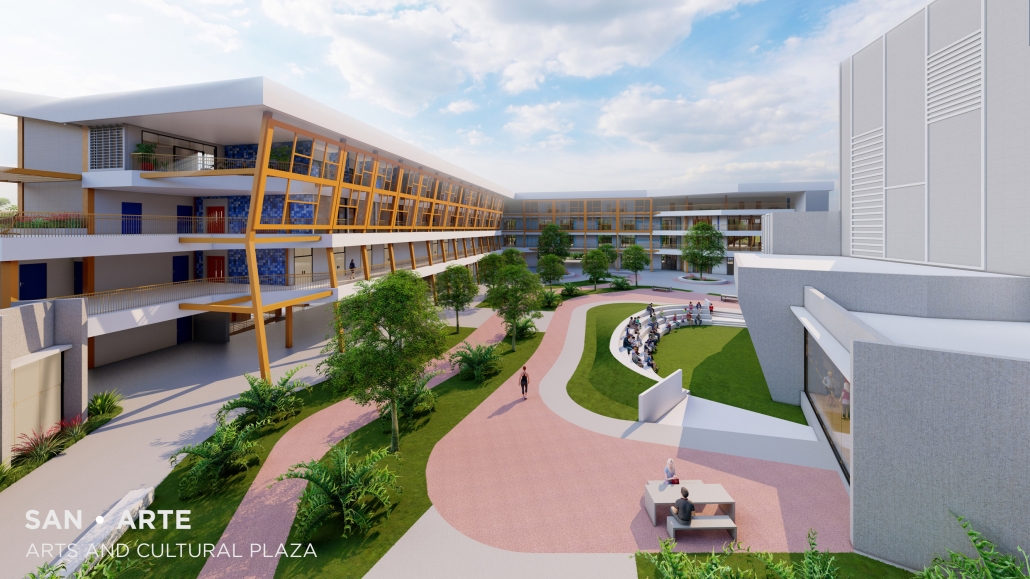
San・Arte: Art as a Healing Tool by Glorivette Correa, B.Arch ‘23
Pontifical Catholic University of Puerto Rico | Advisors: J. Omar García Beauchamp & Pedro A. Rosario-Torres

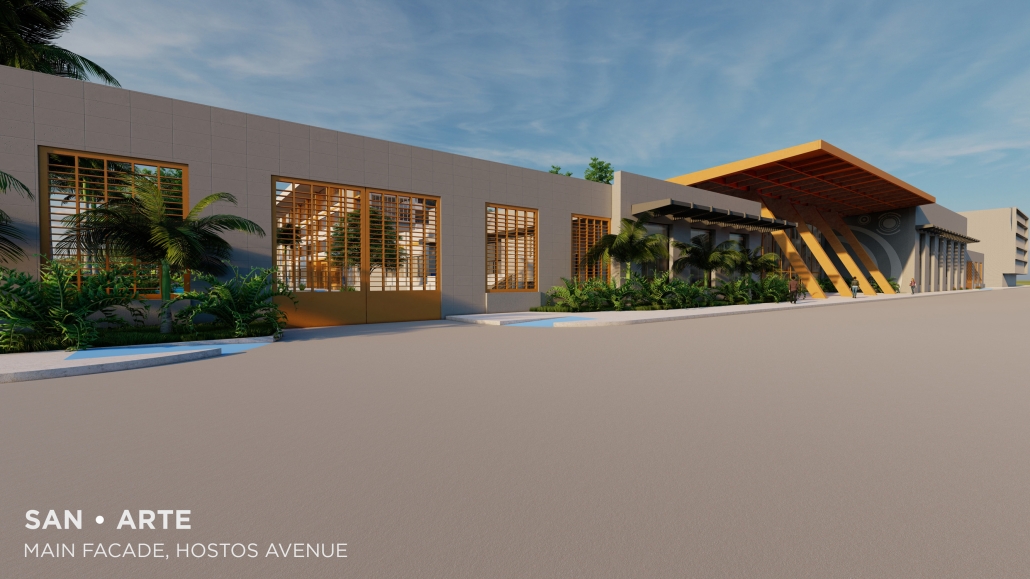
The global mental health system is deteriorating, so much so that a large part of the population suffering from a mental disorder does not receive the necessary treatment or any type of help, due to lack of information, insecurity, fear of discrimination or lack of services. While the population served is limited to a general traditional treatment, which in many cases is not the help they need. For this reason, the objectives of this project are to expand the traditional medicine market, by developing new spaces that focus on providing other treatment alternatives (such as artistic-creative therapies), and explore the architectural capabilities that can be achieved together with art and nature, to meet the appropriate conditions in a space to provide these therapies.

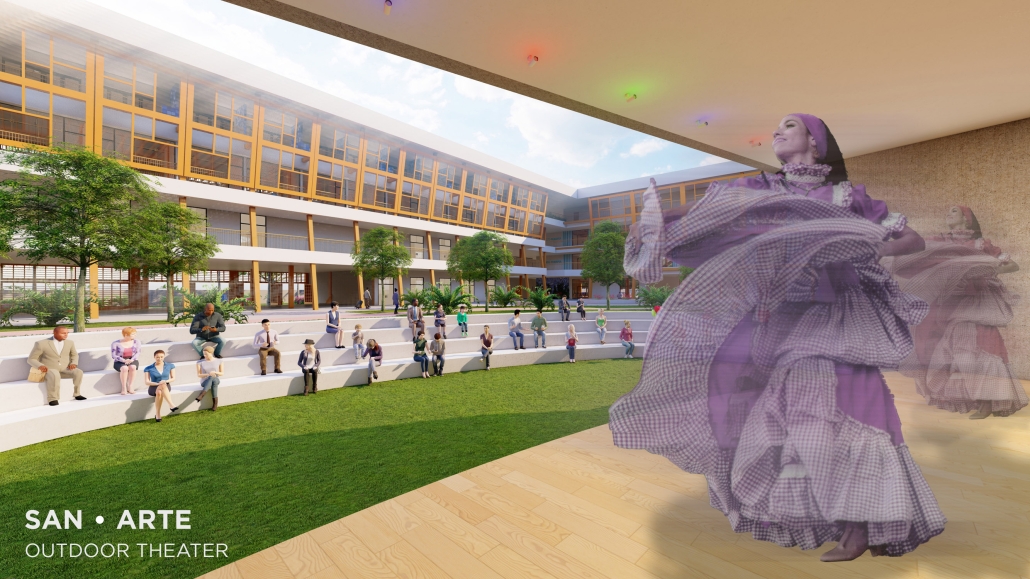
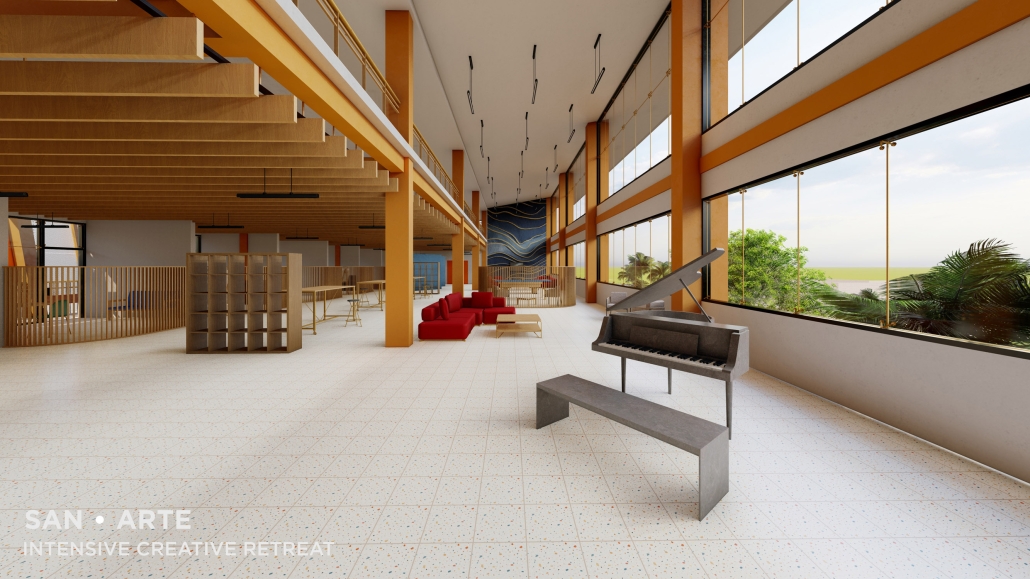
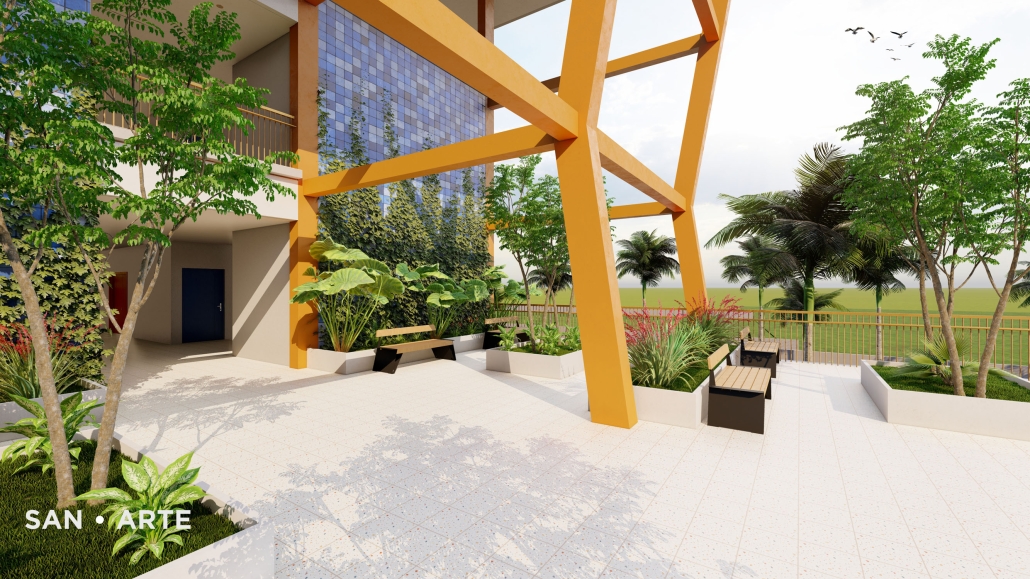
This project focuses on the island of Puerto Rico, specifically in the town of Ponce. San・Arte’s proposal aims to develop a center focused on arts, culture and healing. A Cultural and Artistic Creative Therapy Center is then created to positively serve the community and the people. A place that helps raise awareness and educate people about mental health. The center offers four different therapies: art therapy, dance-movement therapy, music therapy and drama therapy. The center also has spaces for artists, theater (indoor and outdoor), and an intensive creative retreat which serves as a safe space away from everyday life and where professionals or those who attend (not necessarily artists) can once again feel inspired, motivated and creative. The center also has different green areas such as terraces and an aromatherapy garden, thus providing different semi-public and semi-private spaces. The number of people who need psychological assistance continues to grow. The arts are an excellent communication tool that also helps us to connect with other people and that is what this proposal seeks.

Instagram: @glorivette_correa

Designing Outside the Lines for Neurodiverse Children by Monica Higbee, M.Arch ‘23
University of Idaho | Advisor: Hala Barakatu

The number of children with developmental disabilities or that are neurodiverse that live within the United States is a rising number. Children aged 3 through 17 are stripped of equitable opportunities within early learning environments and are often filtered through the education system with little to no accommodations for learning or independence in the built environment.

My aim for this project is to systematically identify adaptive design elements and sensory-friendly features that can improve the average classroom and promote independence for individuals with disabilities or who are neurodiverse in the built environment. In doing this, I also aim to find and develop a learning environment that changes the negative attitudes towards disabilities and teaches others how to better adapt the built environment to everyone regardless of ability or disability.

Instagram: @monicahigbee, @halahb2

Architectural Neural AgilityVisions of Architecture through SensationPerceptionand Self by Skyler Howell, M. Arch ‘23
University of Idaho | Advisor: Hala Barakat

How do we know that our fundamental beliefs of this world are our own? The problem is that the lack of “freedom of will” influences our neurological synaptic pathways; these pathways are strengthened or eliminated passively based of our individual experiences. Frascari was hinting at this notion when he stated, “Just as we think architecture with our bodies, we think our bodies through architecture.” Our vision of reality exists through our nervous systems ability to sense and perceive our environment. Paying attention to perceptions makes way for our nervous system to produce conscious or unconscious thoughts; thoughts can provoke emotions, and exists not only within the present, but memories of the past, and visions of the future. 

This project explores the way our nervous system builds reality through sensations like sight, touch, hearing, and smell while filtering stored object-oriented information known as “schema.” According to Edelman, “Our neural networks are a deeply embodied phenomenon that leads to architectural genesis.”


In order to break free from traditional architectural design-thinking, this project proposes a new vision of architecture by actively stimulating neuroplasticity. We need to evoke our nervous systems’ ability to adapt through deliberate actions allowing architects to break free from our existing paths. Translating the architectural design-thinking process by creating new models of an action-oriented “architectural neural-agility” within architectural-genesis.

Instagram:  @ponyboysky, @halahb2

Communal Healing by Tanner Mote, B.Arch ‘23
Ball State University | Advisors: Robert Koester and Sarah Keogh

Younger generations want to live in cities and yet most neighborhoods are afflicted by limited housing choices, disconnection from food sources and public transportation, and often are also dangerous environments for pedestrians. These problems have made existing neighborhoods undesirable. So, how can neighborhoods be systemically redeveloped to address current concerns so that they don’t become exacerbated in the future?

This project proposes the strategic implementation of infill housing and urban food production in the redevelopment of existing neighborhoods. The McKinley neighborhood in Muncie, Indiana was chosen as the location to test this thesis. Initial designs create additional housing that offers different living opportunities, from single-family dwellings to accessory dwelling units. Each design enables
residents to grow their own food via raised beds or vertical towers in an incorporated greenhouse. The ability to be self-sufficient and the visibility of food production will educate and inspire the community and promote continued progression toward sustainable living. Later phases could provide the neighborhood with varying scales of community spaces such as shared gardens, food markets, and education centers to attract and support community members. These latter phases will also have to address existing patterns of public transportation and correlated pedestrian paths for better connectivity.

See you next week for the next installment of the Student Showcase!

2023 Study Architecture Student Showcase - Part XIV

Welcome to Part XIV of the Study Architecture Student Showcase! Today, we take a look at projects that use architecture as an avenue to convey philosophy and storytelling. Inspiration for these pieces ranges from renowned filmmakers and unfinished architectural projects to the study of fluids and memory as a sense of home.

We hope you enjoy this collection of student work and come back next week for a new installment.

A Machine for Living: Re-Provoking the Slow House in Contemporaneity by Russell Harman, B.Arch ‘23
Syracuse University| Advisors: Iman Fayyad, Kyle Miller, and Edgar Rodriguez

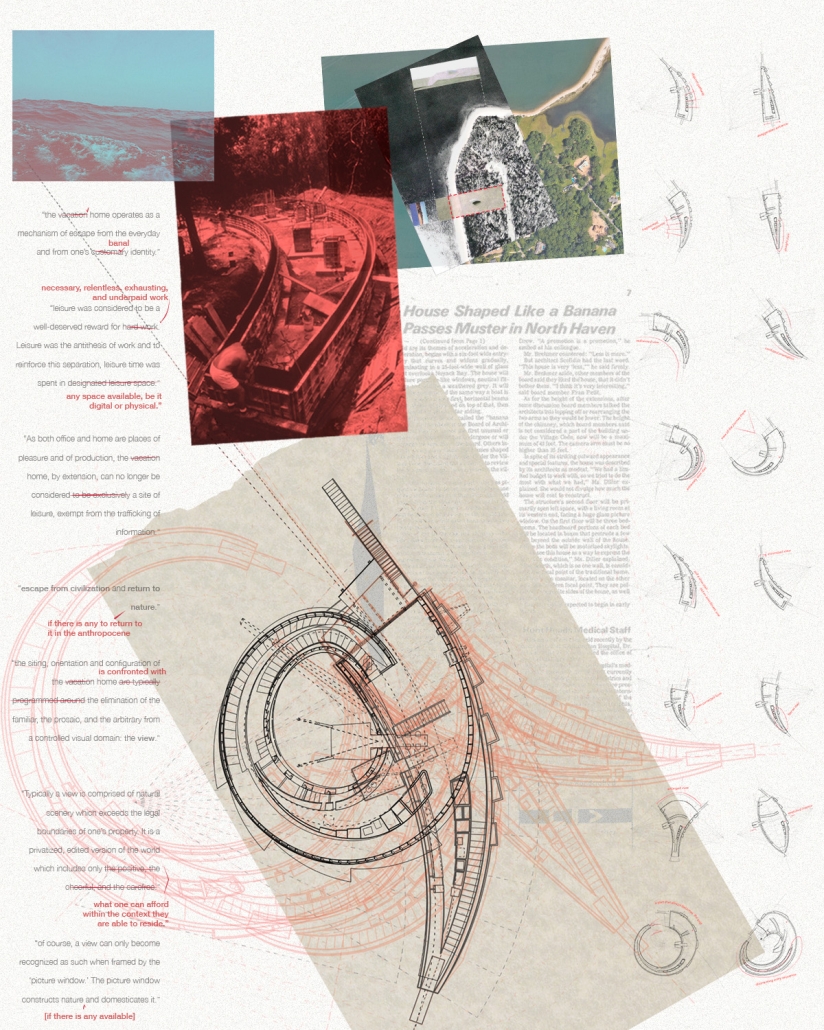
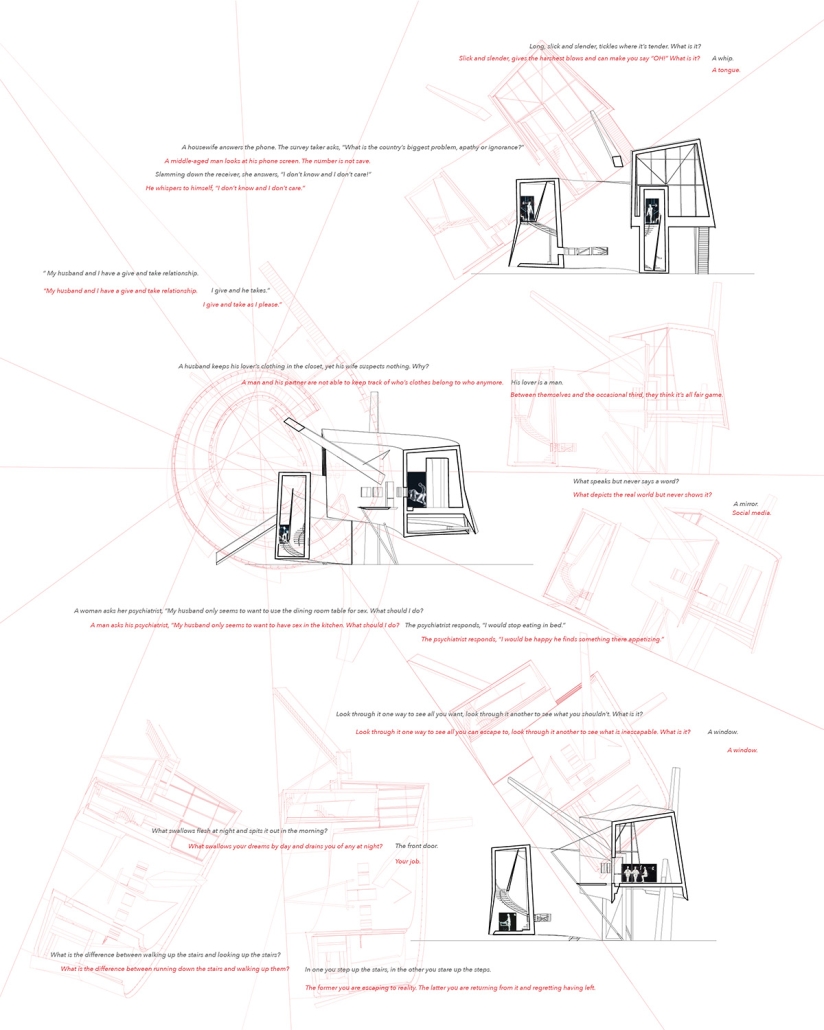
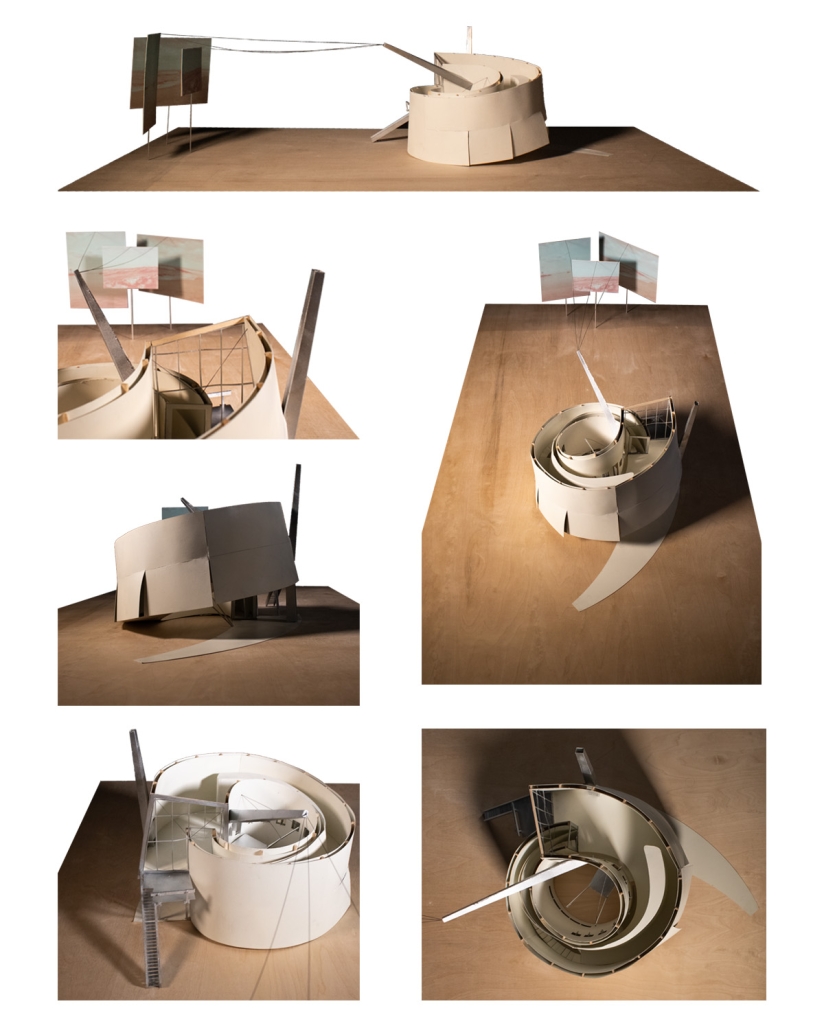
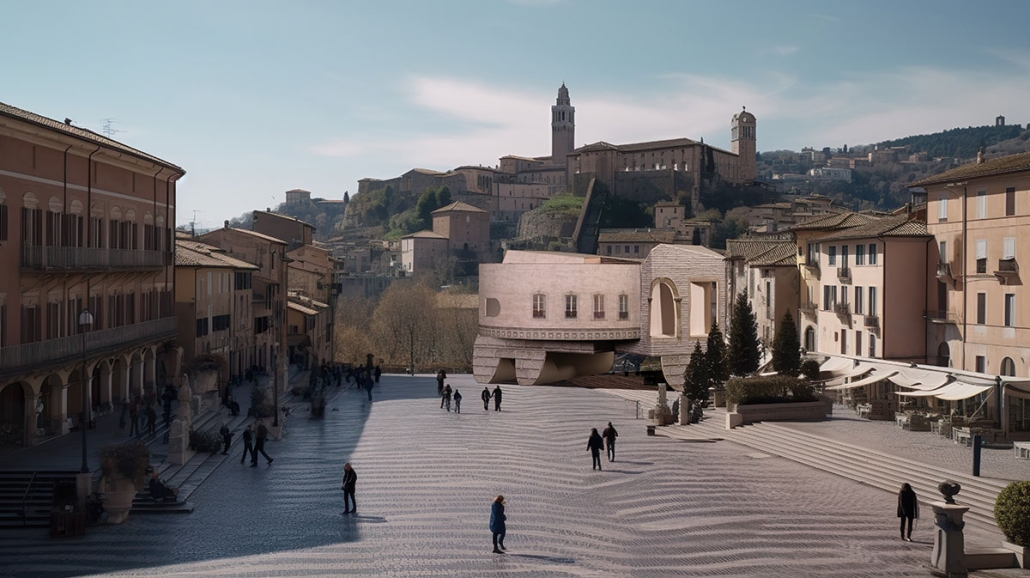
A Machine for Living is a thesis that aims to re-provoke Diller + Scofidio’s “Slow House within Contemporaneity.” 

The project began in 1989, but construction stopped shortly after breaking ground due to the client’s own financial limitations. The project took on a new life through its representation when it later debuted for a lecture at Columbia in 1991, which ultimately led to its success and acclimation. 

The site still remains undeveloped, and for the argument of this thesis, the palimpsest of the original construction still exists on the site, making it readily available for a new provocation of what the home could be. 

Similar to the ways that OMA’s exhibition of “La Casa Palestra” offered new readings of the Barcelona Pavilion, this thesis aims to be a contemporary counterpart to the original Slow House.

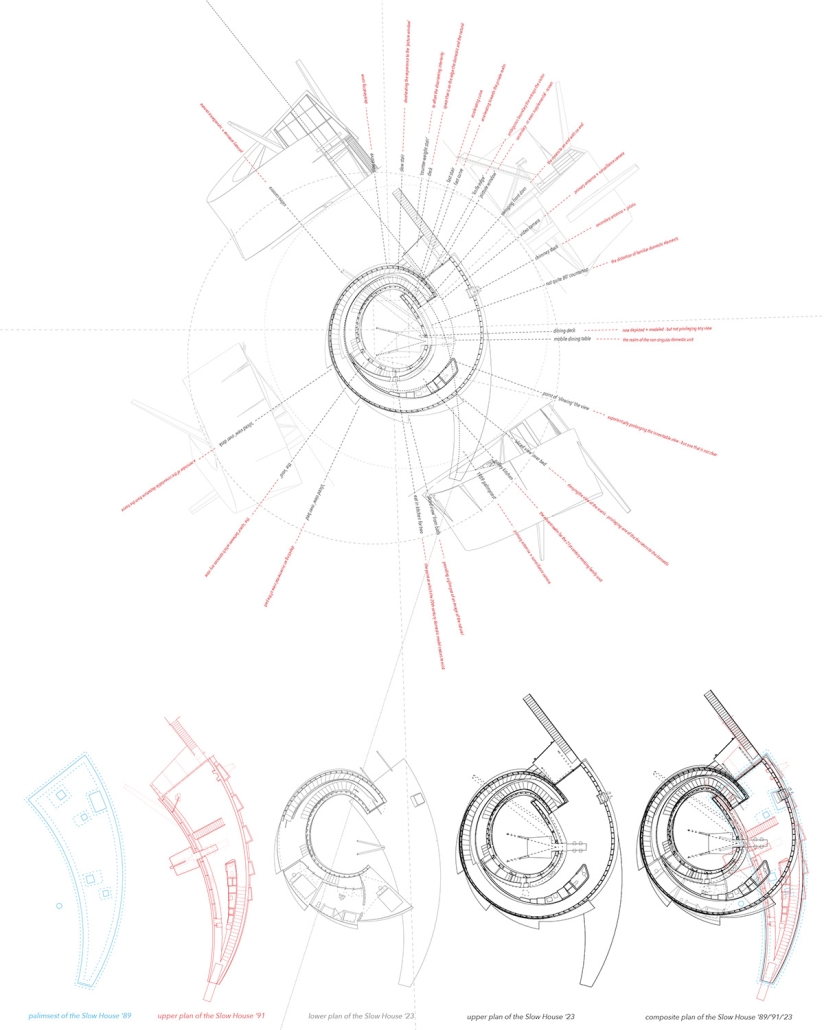
The plan of the Slow House follows two curves and moves the occupant from the automobile to the view as seen in the picture window juxtaposed to the television screen. It is simply “a means to an end.” 

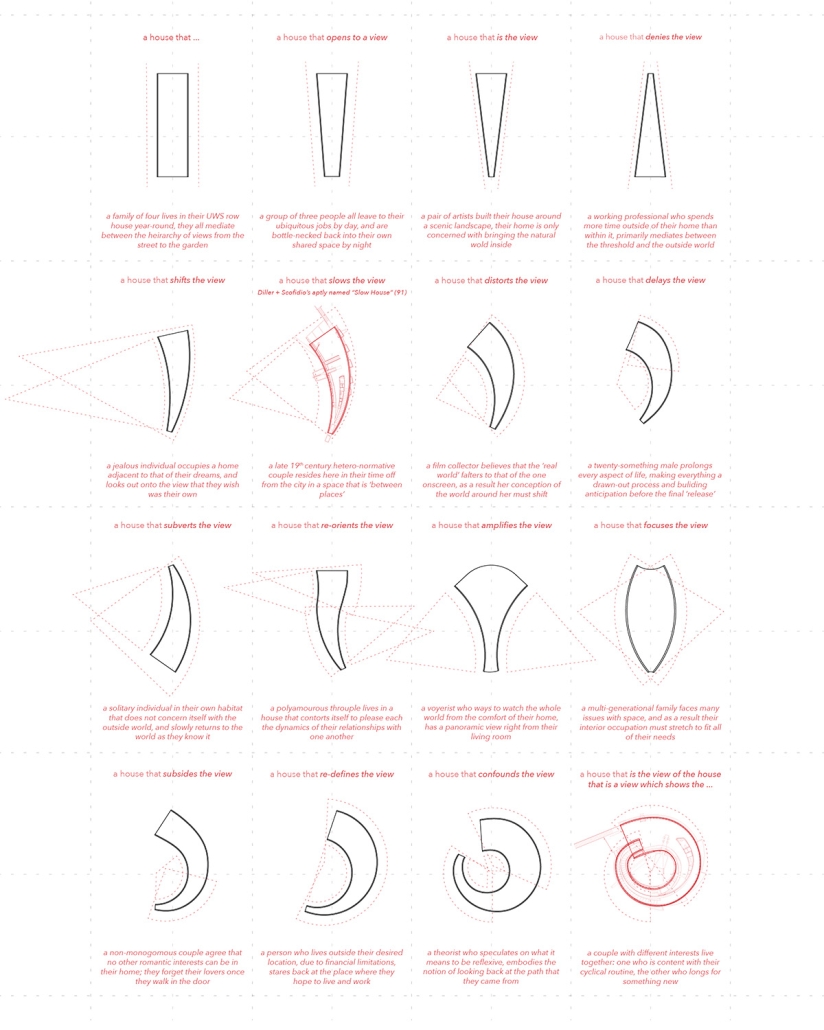
Deforming the original plan changes the relationship between the occupant and the home. 

A number of possible homes and narratives emerge through iterating the parameters of the home, making the design of Diller + Scofidio one of many that could be derived.

The ultimate one (the provocation of this thesis) becomes enveloped in itself so that the occupants are confronted with being trapped in the cycle of their inhabitance, longing for an escape. It becomes “a means with no end,” or “a means to an end that never ends.” 

The home becomes a composite of its history. And the home itself offers the potential for multiplicity in experiences or a non-singular narrative. 

The two homes thus engage in conversation with one another. This provocation of the Slow House in 2023 is in many ways both a commentary and critique of that from 1991. Their engagement with one another becomes amplified in understanding contemporary domesticity. Through their comparison, the two designs re-invigorate the potential for what the home could be on this vacant site, both in the past and in the present. 

This thesis project won the Syracuse University School of Architecture 2023 James A. Britton Memorial Awards Citation for Excellence in Thesis Design.

Instagram: @rjharman_, @i.fayyad, @projectif.space, @kylejamesmiller, @edgararl

Atlas of Memory: The Representation of the Invisible in Architectural Drawings through Generative Coding by Julia A. Lopez, M. Arch ‘23
Arizona State University | Advisor: Elena Rocchi

Architecture serves as a medium through which our worldview and memories find expression, capable of evoking emotions, silence, and discovery. Within architectural spaces, memory acts as a guiding reference, enriching our understanding of spatial awareness. Inspired by Giuliana Bruno’s “Atlas of Emotion,” Julia Lopez embarked on a transformative journey for her capstone project, seeking to discover her own personal narrative and construct an atlas of memories through the exploration of composition and connections. This endeavor aimed to transcend the limitations of language and discover a visual language of emotions and images that could bridge the gap between people and their invisible memories and dreams, ultimately breaking down barriers.

The research question focused on understanding how to represent the invisible realm and manifest hidden memories and dreams using storytelling, sketches, AutoCAD drawings, and generative coding.

The project began with a comprehensive study of Andrei Tarkovsky, a renowned filmmaker fascinated by the representation of the unseen and the intangible, imparting a distinct presence that shaped the poetic and spiritual essence of memories. Through an analysis of Tarkovsky’s work, the student observed his skill in using light and shadow to evoke stillness and hint at dimensions beyond the visible world of memories. She also discovered his ability to bring attention to imperceptible elements, such as the movement of objects, effectively conveying the distortions of dreams. Building upon her architectural perspective, the project unfolded in two phases, with drawing serving as the core methodology.

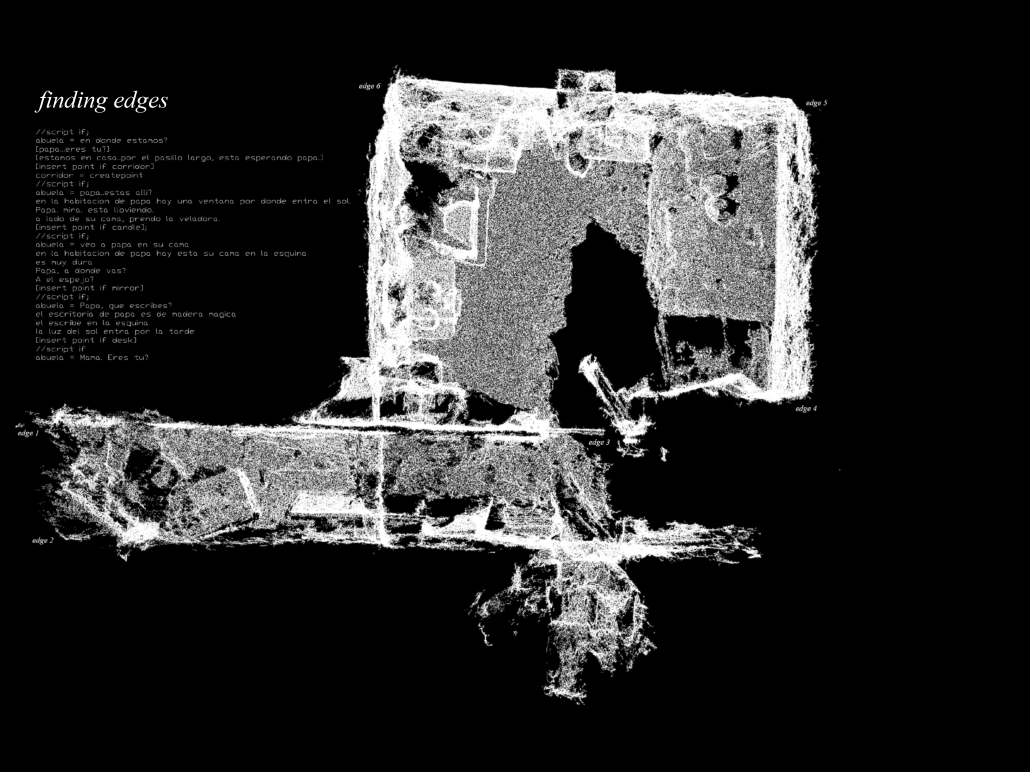
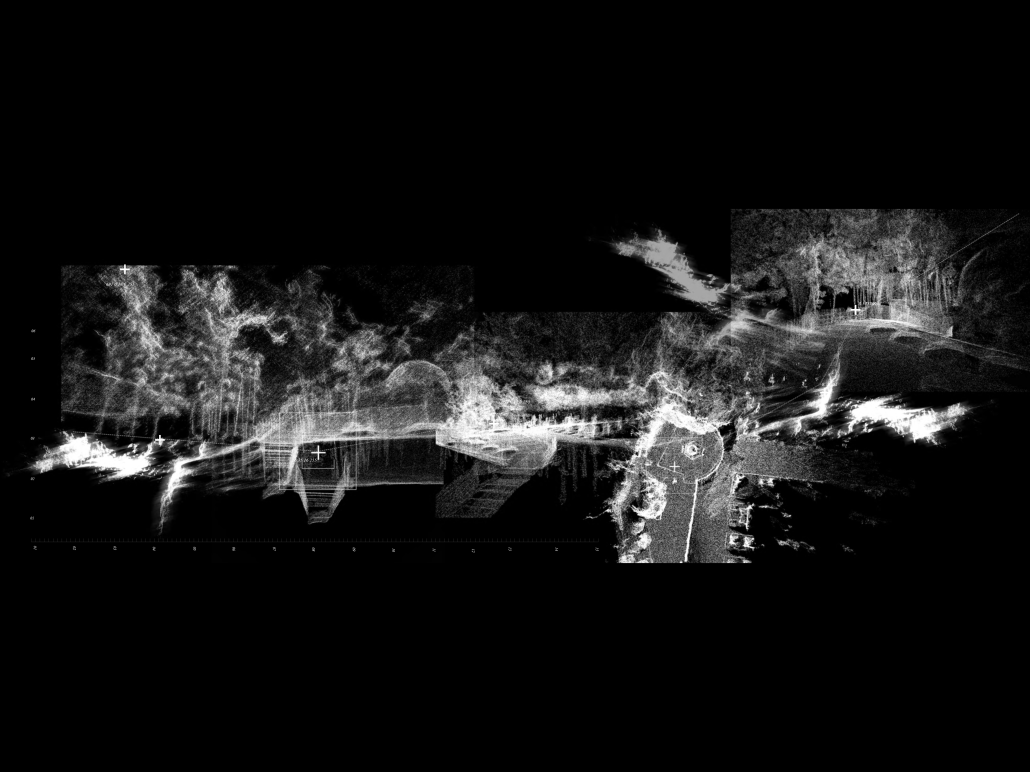
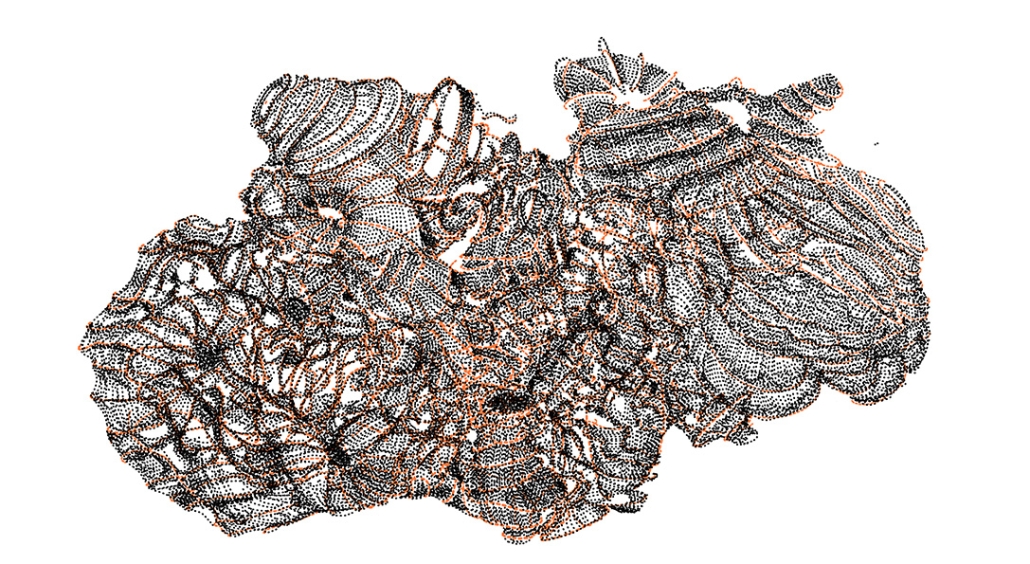
In Phase 1, the student explored how to incorporate architecture and the invisibility of memories through storytelling, aiming to forge a new language within the field. Phase 2 delved into advancing architectural representation through generative coding. Leveraging the p5.js script library and TouchDesigner, she created interactive visuals based on narratives, expanding spatial representation through data points. This innovative approach made the invisible visible, enhancing the representation of memories.

Throughout the process, the capstone project took a personal turn as the student documented her grandmother’s life transition and the various states of consciousness she experienced. Considering this as an authentic experiment, she observed her grandmother’s moments of hallucination and integrated her own drawings into the coding program. This generated data points representing her grandmother’s memories, including those recorded during her unconscious moments. By incorporating these sketches, the student aimed to transform them into tangible forms, capturing invisible memories and bringing them to life through drawings and a 5-minute movie.

This project won the TDS Design Excellence Award.

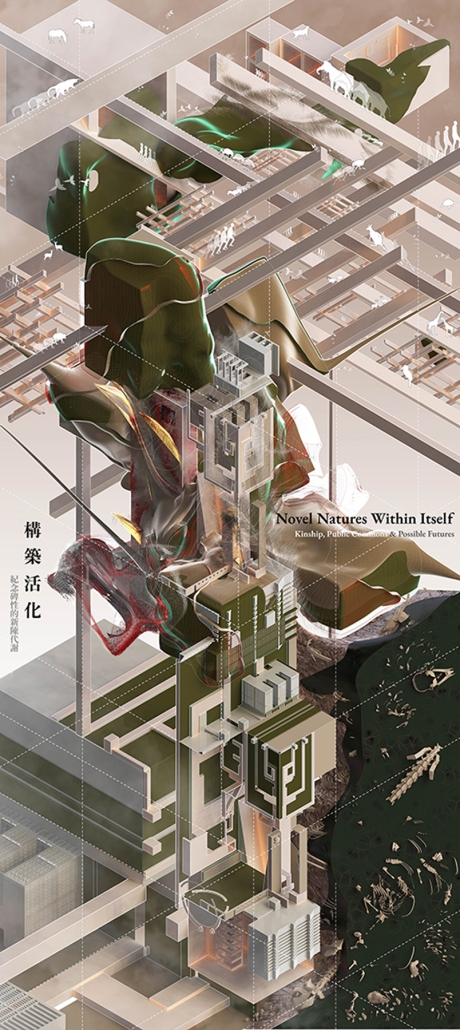
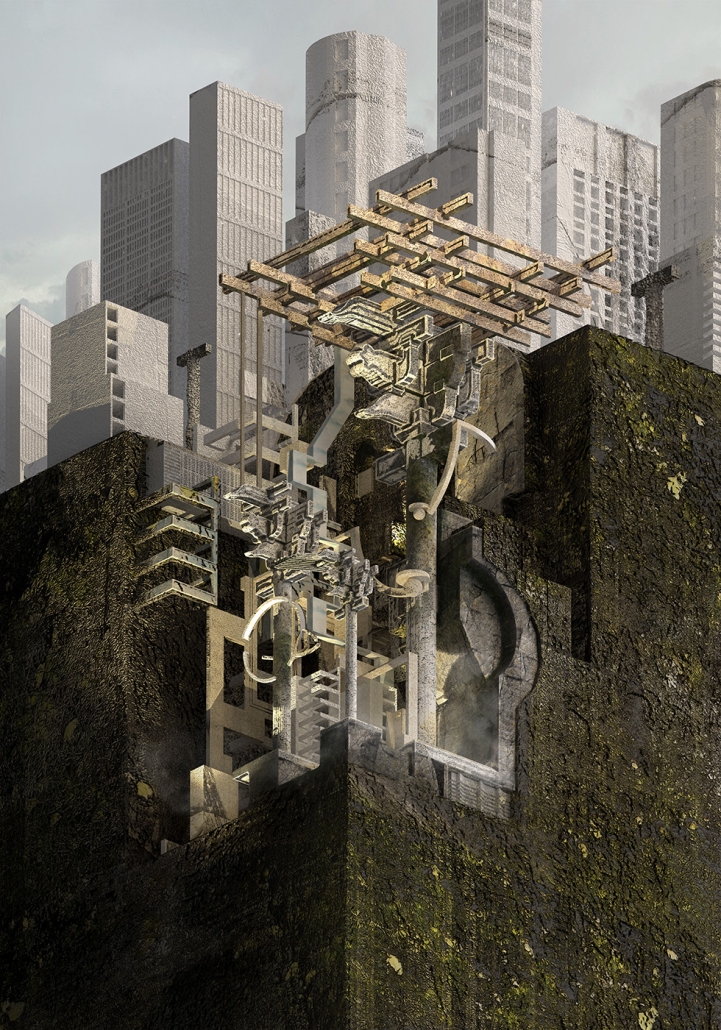
Novel Natures Within Itself  by Cherie Wan and Changzhe Xu, M. Arch ‘23
University of Pennsylvania | Advisor: Simon Kim

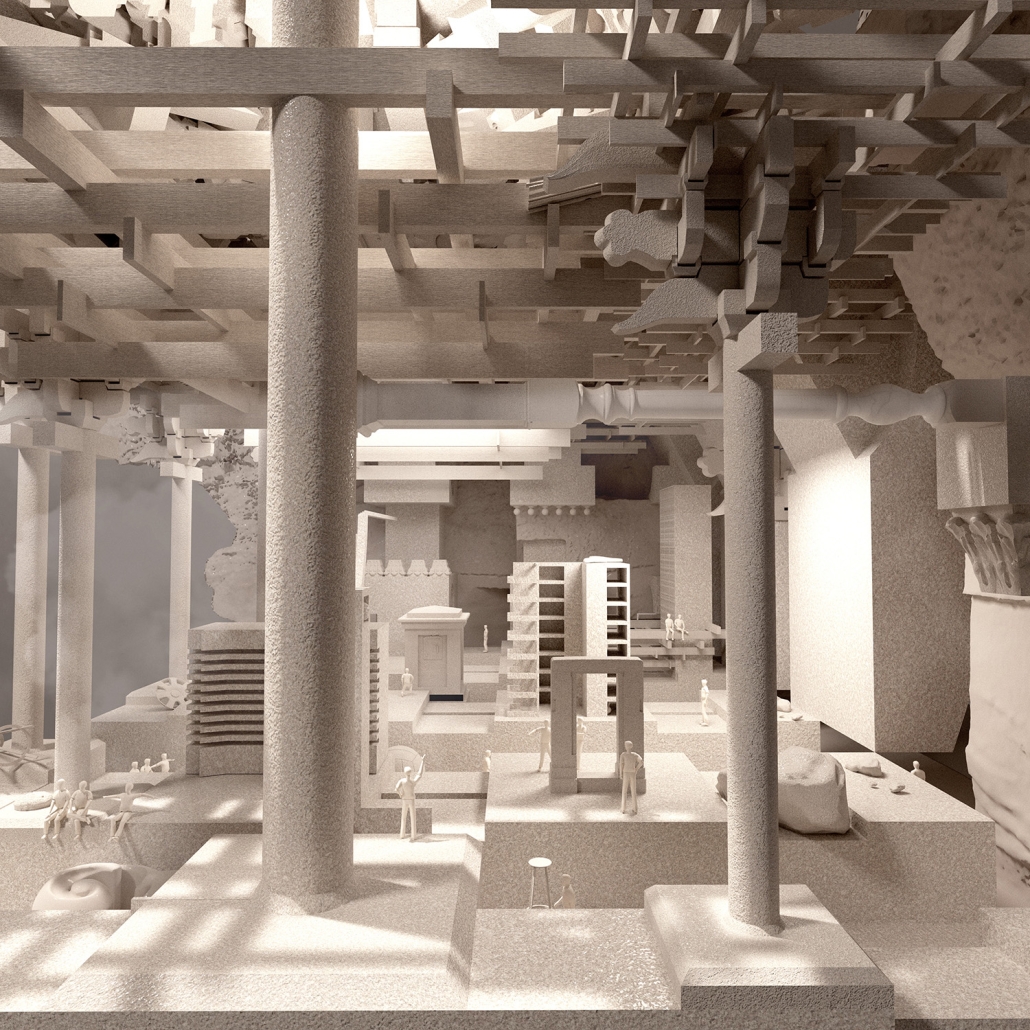
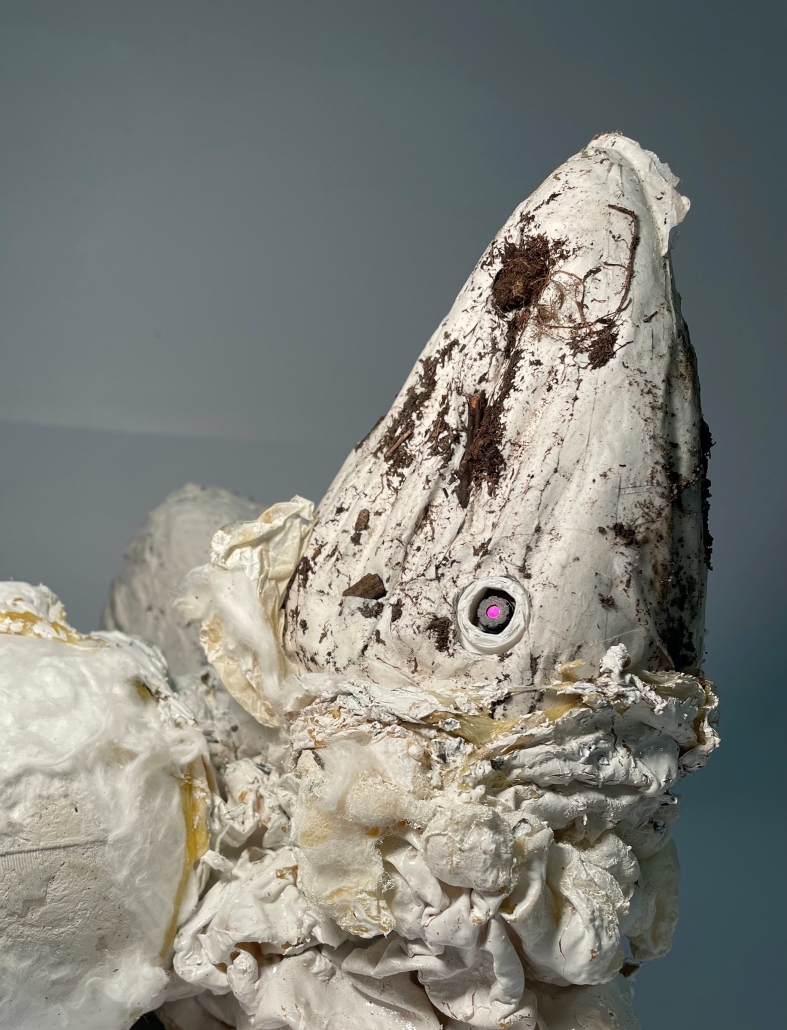
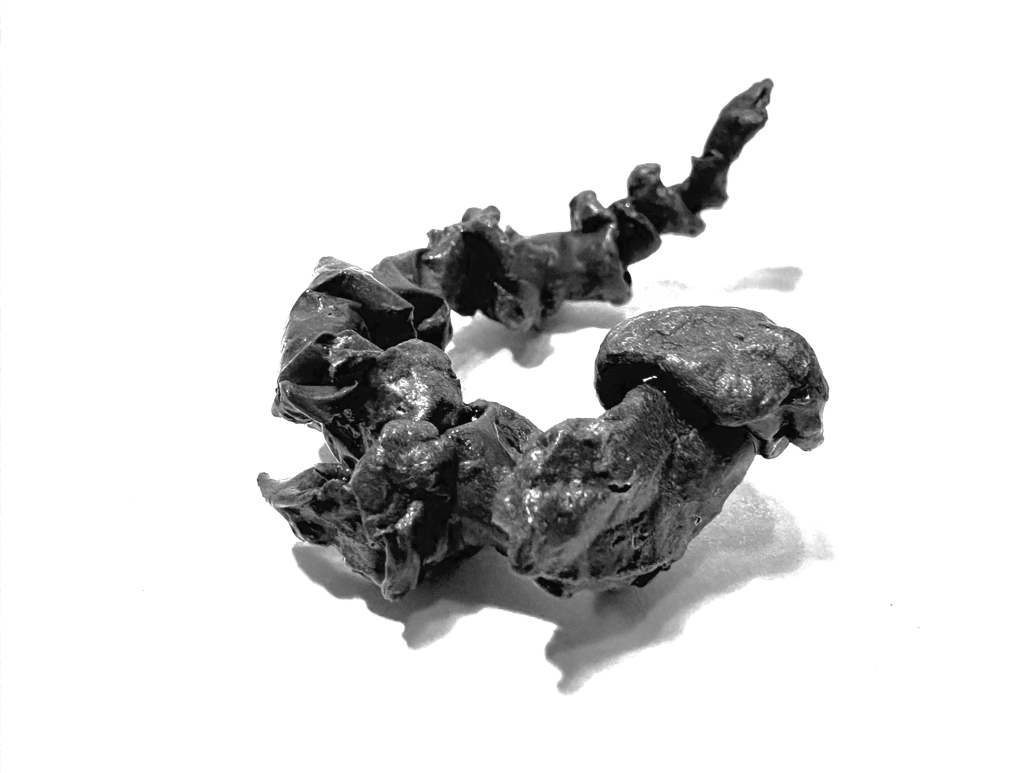
There is an architecture that travels within Los Angeles. The building has two states: it collects and it curates. The homunculus’ emergence in the landscape of Los Angeles’ urban fabric began its role as a collector. As it traverses across disparate environments, it collects human waste materials that make up its own body and functioning system. The body is an incubator for a new world. As it accumulates material, new hybrid environments are created until it no longer has the capacity for it. When it reaches this state of death, it deposits new hybrid environments where novel natures are ultimately curated. This cycle repeats itself for as long as civilization persists. Through the lens of homunculi, we are reminded that we must find new, critical ways to reflect on the architecture and monuments we have inherited and to imagine those we have yet to build.

This project was featured in the Fall 2022 Pressing Matters Publication.

Instagram: @cherie.arch, @changzhexu

Fluid Motives: Experimental Connections by Sterling Jones, M.Arch ‘23
University of Idaho | Advisor: Hala Baraka

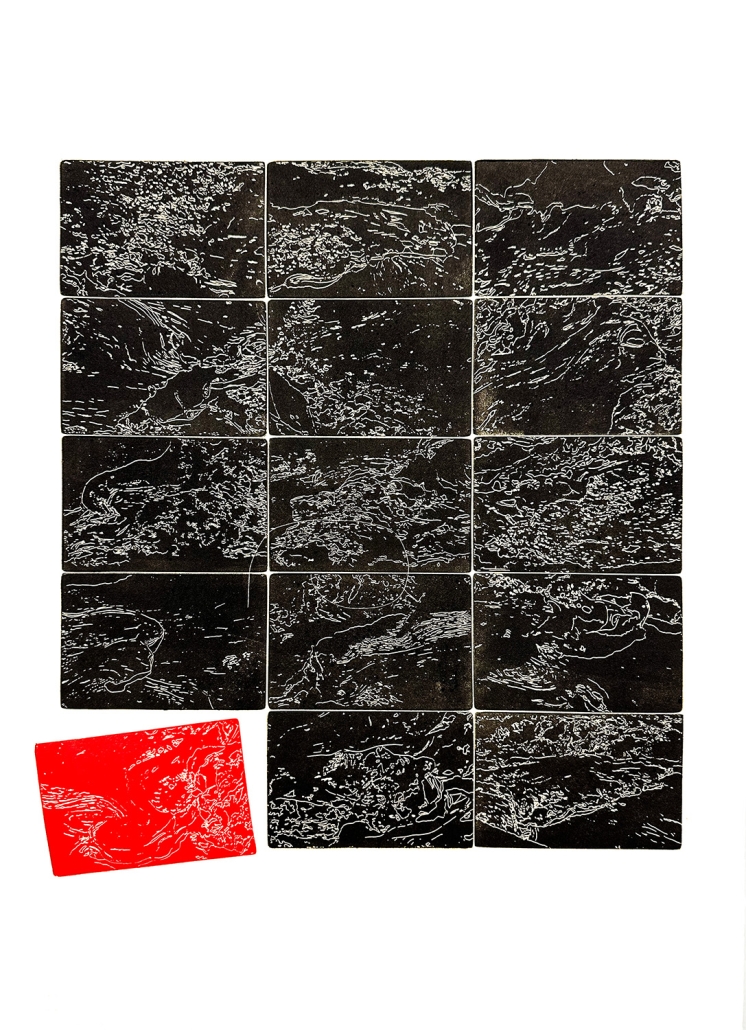
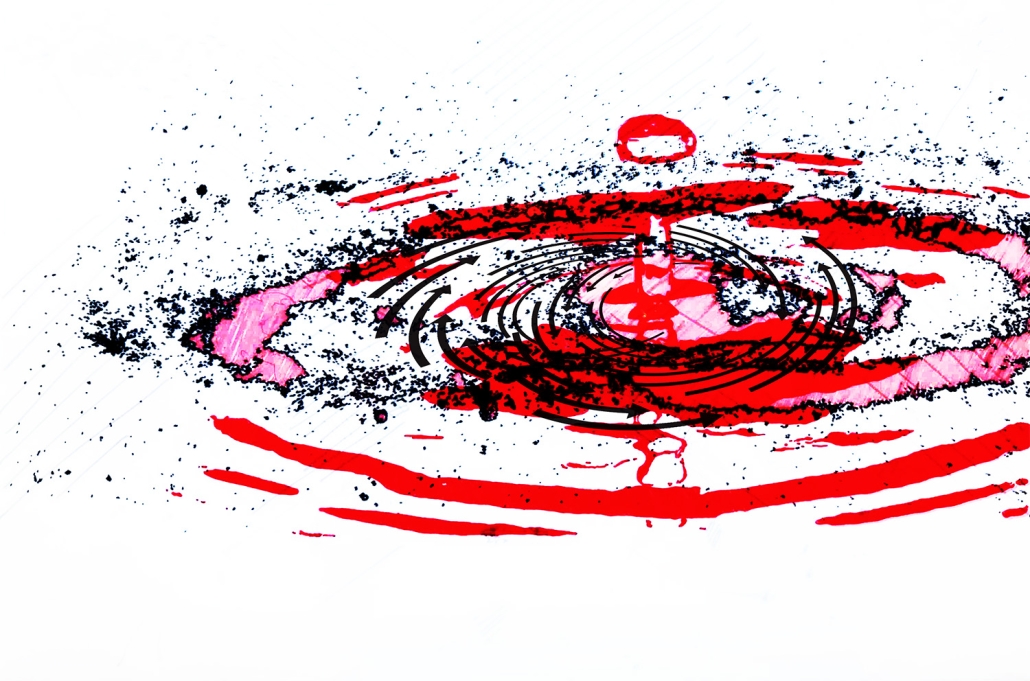
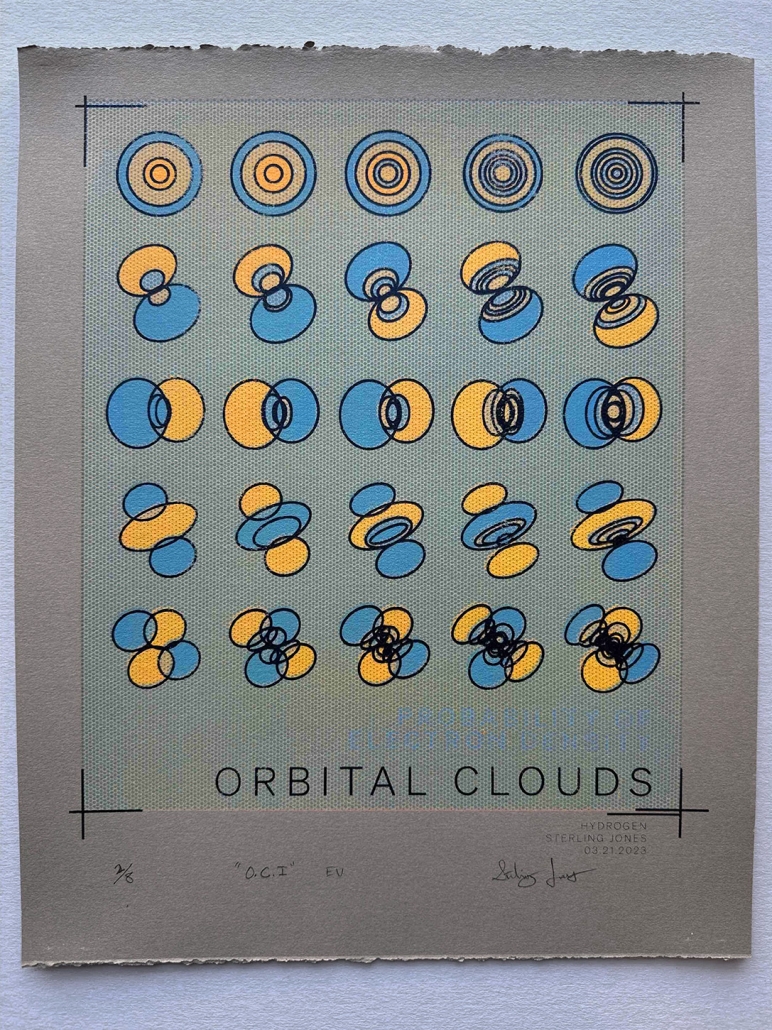
The study of fluids in motion reveals the open-ended process of becoming, ranging in size from astronomical to atomic. The understanding and depiction of fluids has intrigued many artists and scientists, but its pivotal beginnings belong to Leonardo da Vinci, who documented the foundations of many now-accepted theories and principles centuries before their societal realization. Da Vinci’s methods of thinking, experimenting, and drawing embody a dynamic process of work integral to architecture and visual communication, and it may be his study of fluids that aided in his inventions and was responsible for his underlying genius. Fluid’s natural lack of a boundary creates connections between surfaces, disciplines, and thinking, as well as a framework that relies on other components and interfaces for it to be understood. The study of fluids’ influence on architecture is pinnacle and unrealized as architecture deals often with conceiving a whole made up of many constituent parts. 

Architecture is the convergent reality of divergent design explorations and relies on innovation and the radical repurposing of technology, taking the idea, concept, tool, or method from one intended purpose and using it to address another. “The essential nature of matter lies not in objects but in connections,” and fluid not only generates through transformation and reaction, but also destroys through breakdown and decay. Applying a system of understanding to fluids underlines conceptual frameworks for problem-solving and solution-adapting in both design and operation. A number of fluid experiments and graphic mediums are explored to better understand, visualize, and realize fluid studies’ architectural applications.

This project won the King Medal’s Award.

Instagram: @Sterlingstratfordjones, @Halahb

Composing Persona by Francesca Picard, M.Arch ‘23
University of Southern California | Advisor: Ryan Tyler Martinez

In this thesis, architecture is explored through the lens of persona. What if buildings are just as much of characters in the built environment as the people who occupy them?

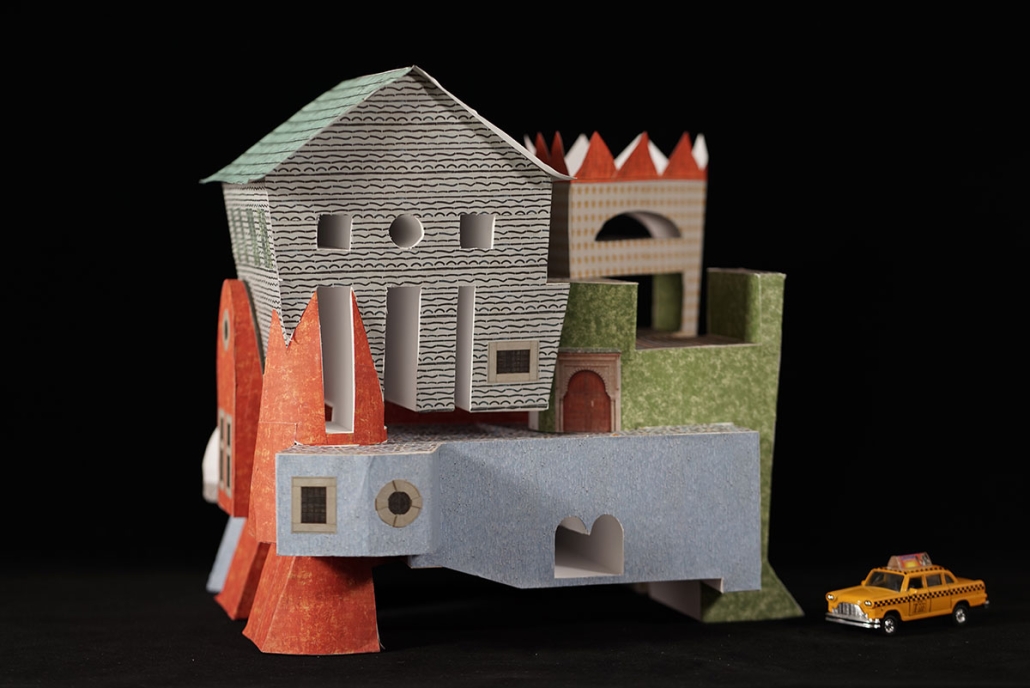
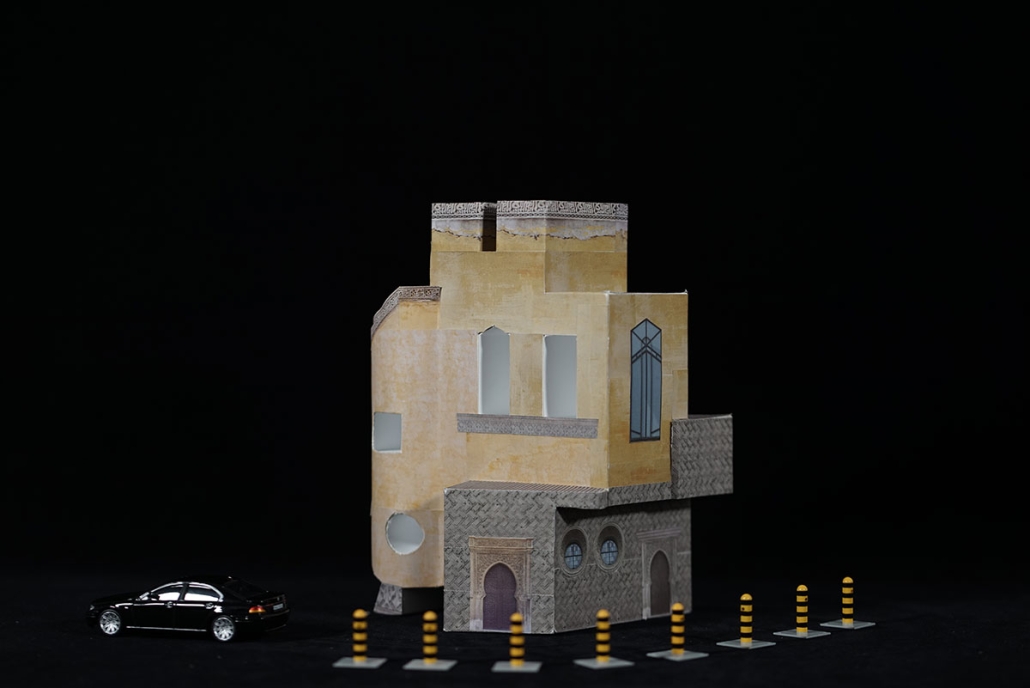
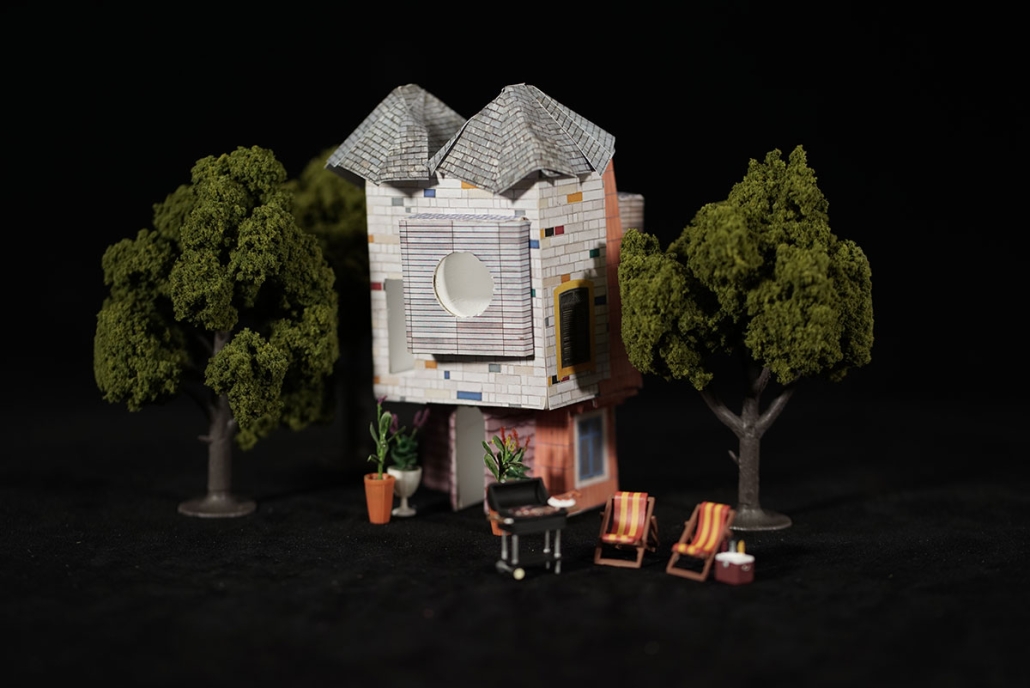
This study will explore two main determinants of a building’s persona; form and materiality. The form is seen as the body of a building; its frame, posture, and overall presence. Just as we define characters by their physique, buildings are characterized by their form. Materiality offers another layer of characterization to buildings, through properties of patterns, colors, and textures. Analogous to a character’s wardrobe, materiality defines persona in architecture through ensemble. Together, form and materiality are the elements that propose the tone and character of buildings, not only to people but to their surrounding environment. What happens when these characters interact? How do their personalities communicate with one another?

Intertextuality refers to the idea that every text is in dialogue with other texts, which provides a dynamic, shifting context of meaning. This study aims to investigate the intertextuality of architecture, with a focus on persona. With collage as a way of working and a nod to the exploration of intertextuality, compositions of both form and materiality will be created. These resulting personas will be asked to interact with each other, just as the buildings architects design are asked to speak to their surrounding contexts. Through this exploration, a dialogue on persona in architecture will develop.

This thesis project won the USC Master of Architecture Disciplinary Advancement in Directed Design Research Award – In recognition of the most outstanding graduate final degree project illustrating a critical position that advances the discourse of the architectural discipline.

Instagram: @francescapicard, @ryantylermartinez

Magic of the Real by Nickolas Witt, B.Arch ‘23
University of Arizona | Advisors: Christopher Domin (studio coordinator), Laura Hollengreen, and Jesus Robles

STUDIO PEDAGOGY

This research cluster seeks to enhance our understanding of light scientifically, technically, and culturally so that we conceive of it as more than that which reveals the “masterly, correct and magnificent play of masses.” It is also something that has physiological, psychological, and affective impacts on us while operating within a dynamic environmental economy of atmospheric and energy conditions. At the same time, the light that accompanies heat can be searing, increasing water evaporation, desertification, urban heat island effects, and other deleterious environmental effects.  The ethical and humanistic dilemmas this causes and the inequitable distribution of impacts across countries and populations are pressing issues to be addressed by designers and policymakers.

THE EXPERIENCE OF ARCHITECTURAL ATMOSPHERE (project narrative)

In architectural design, “atmosphere” refers to the overall sensory and emotional experience created by a building or space. It encompasses a range of factors such as lighting, materiality, color, texture, scale, and sound, which all work together to create a particular mood or ambiance.

Atmosphere is a critical consideration in architectural design, as it can significantly influence how people experience and interact with a space. For example, a space with warm lighting, soft textures, and natural materials may create an inviting atmosphere, while a space with bright lighting, hard surfaces, and artificial materials may feel more sterile and clinical. Architects often employ atmospheric design strategies to create specific emotional responses in people who use or visit a space. This can include using materials and colors that evoke a certain feeling or controlling the amount and quality of light to create a particular mood. Overall, atmosphere is an important element of architectural design, as it can greatly impact how people perceive and interact with a space. By carefully considering the atmospheric qualities of a building or space, architects can create environments that are both functional and emotionally engaging.  As we design for the present, and the future, we must consider the atmospheres of space and architecture’s lasting impact.

This project received the University of Arizona: School of Architecture Capstone Award and the Rick Joy Award: The Generous Mind.

House(s) of Tethered Fragments, a Consideration of Embodied Images for Memories and Daydreams by Ashley Skidmore, M.Arch. ‘23
The University of Texas at Austin | Advisors: Professor Elizabeth Danze and Professor Kevin Alter

This thesis is a phenomenological and poetic exploration of the relationship between memory and place as it relates to a sense of home. My interpretation of this relationship assumes that memory is held by both the human inhabitant and architecture itself. The former is more straightforward and has been well-trodden by phenomenological writers such as Juhani Pallasmaa and Peter Zumthor, and captured in the paintings of Andrew Wyeth. 

This project is derived not only from an interest in exploring the different impetuses for memory but is also a study of the archetypal images of space carried in the collective unconscious, and how those images drive humans to embody and inhabit a place. These archetypal notions – primordial, fundamental, and deep-seeded – imbue spaces with preconceived, self-evident meaning. By incorporating these interpretations into the design of a house, I am emphasizing the role that home has as a character in the story of a life, and a generator of memory. 

From Jung’s “Man and His Symbols and Bachelard’s Poetics of Space,” I have derived nine archetypal spaces or elements embedded in the home: thresholds, doors, passageways, stairs, cellars/attics, hearths, water basins, nests, and niches. These spaces are consequently frameworks through which to consider how people inhabit their homes through the body – musing on what moments, artifacts, and spaces they attach themselves to. This approach is formed through a deep reading and sympathy for the imagined resident. By deriving spatial images from archetypal notions in the stage-set of a home, it will reveal how impulses for inhabitation are simultaneously individual and more collective. Through this lens, my question is: How can a home be designed to augment these interactions, and cultivate memory, daydreams, and meaning? 

My project is an approach to designing a house by creating a series of vignettes that explore and encourage the embodiment of the identified archetypal spaces. These vignettes are tethered together, or ordered, by the application of specific site constraints. The intention is to suggest that the desires of each room, and the relationships therein, precede any contrived diagram or ordering principle.

St. Vitus Reimagined by Izzy Brehm, M.Arch. ‘23
University of Nebraska–Lincoln | Advisor: Zeb Lund

This project reimagines a small, architectural detail as an occupied landscape for small creatures. It is an exploration of process and an attempt to reimagine how we design space. Depicted in this drawing is a species of small creatures, who have evolved to occupy a man-made column and manipulate it to fit their needs. Taking advantage of the column’s verticality, they have evolved to climb rather precarious surfaces, carve space into stone, anchor into flat facades, employ vertical farming, and cohabitate with bugs and insects. The form of the drawing was inspired by a gothic column at St. Vitus’s Cathedral.

Bigness by Fangshuo Zhao, M.Arch. ‘23
University of Southern California | Advisor: Ryan Tyler Martinez

The one ending of Modernism is Heroism. This should be a dead end with no further believers.

Only if the prosperity and miracle of growth are shut by the miserable reality. Based on the background that social democracy/democratic socialism is losing the battle to Populism and Neoliberalism.

And then, the plague, the unrest, the witch hunt, the populism, the Strongman, the totalism, the authoritarianism, the anarchism, ……

This is the history, but also the actuality.

Heroism as a manifesto and a paradigm evolving from modernism, is being consumed and evolved into a new mutation/variation: Post-Heroism. 

My thesis starting point is not the Heroism Architecture in the past, but the relationship between the old and new heroism, and how this changing relationship could lead to a new form. It is a form that accommodates the mix of force and the cluster of programs.

The two points that define post-heroism are “bigness” and “public Thermae model”. I think “bigness” is becoming more important, especially in this virtual and AI period. Inside the bigness, there will be a magnet to make people get closer, and will be possible to contain more programs, activities, and problems physically. More civic, living, leisure, and culture programs will serve as a modern Thermae, a modern public bath. And Post-Heroism will be the formalism index or paradigm of it.

This project received the USC Master of Architecture Excellence in Directed Design Research Award – In recognition of the most overall outstanding graduate final degree project 

Instagram:  @adamzfs, @ryantylermartinez

Monster Generator by Rose Vito, M.Arch. ‘23
Lawrence Technological University | Advisor: Masataka Yoshikawa

This project started off with a few questions to ponder – do you dream about waves? And do you know what meanings embed your nightmares?

This project began with the cabinet of curiosities. Because of the qualitative nature of this interest, rather than put together a cabinet, I collected objects that had the specific geometries that I could use to tell a story, and the “cabinet” almost immediately took the form of a sculptural representation of human emotions impacted by dreams, which then morphed into what I am calling the Monster Generator.

The background research that went into this work came from the fields of psychology, literature, mythology, and seismology. Literary characters such as Dracula, Frankenstein, and Jekyll and Hyde were developed based on the author’s nightmares. 

As you will see soon, The central images generated were inspired both by these literary works as well as some of my own nightmares. How do they make you feel?

The components of the monster generator are the good which represents the adrenaline of the dreamer which powers the generator. The goo powers the machine and turns the propellers that process the ingredients.

The ingredients include structures that represent proteins, vitamins and minerals, cages for animals, and nets that have captured bugs. I thought it was fun to show the bugs escaping and to pose the question – what happens when the bugs escape?

As the person dreams their adrenaline (goo) displaces the parts of the machine. The seismograph-like structure measures the level of adrenaline and translates the memories, experiences, hopes, and desires into the dream catcher.

Dream catchers catch the bad dreams as they are translated through the fins. The machine struggles to keep up with the constant influx of memories and is in a constant state of regeneration as the dream catchers are used and broken down. As the machine regenerates it evolves and the antiquated seismograph system begins to be replaced with the more modern accelerometer system. This evolution is causing inconsistencies in generator functionality. The system malfunctions and the monsters constructed in the Central Images are more than only alive in dreams.

The Central Images are released from the dream catcher. These elements create the emotional center of the dream or, what is called in psychology, the Central Image – is the “best-remembered” and “most powerful” part of the dream. If we are frightened by our memory of the qualities of the Central Image we label it a nightmare. The Central Images are meant to spark your imagination. The scariest monsters are the ones in our own minds.

Instagram:  @ltu_coad

See you next week for the next installment of the Student Showcase!

2022 Study Architecture Student Showcase - Part IV

We are back with week four of the 2022 Student Architecture Student Showcase featuring five more projects from schools around the world. This week’s projects focus on improving the quality of life for marginalized communities ranging from Puerto Rico to Saudi Arabia and beyond. Each project showcases the unique context within the country of the project’s location.

For more student work, please explore Part I, Part II, and Part III.

Hanapbuhay: Remaking Manila by Romilie Calotes, M. Arch, B. EnvD. ’22
University of Manitoba | Advisor: Lisa Landrum

This thesis investigation probes at the matters of identity, dignity, and stability within spaces that the city and surrounding community traditionally perceive as “informal,” this often refers to “non-legal” settlers. Manila City’s collective memory vis a vis identity is being examined with a focus narrowed on a reclaimed land in the coast of its bay; currently known as “BASECO Compound”. Entangled within colonial, political, and religious presence, the site has gradually become the home to Manila’s largest urban poor “barangay” community. The design of pragmatic and incremental, community-inspired eco-hub will line the entire neighborhood, which may be successfully achieved by the barangay themselves, for themselves.

I have always wondered why and how “slums” formed near where I had lived as a child. I would go to school with people who live in homes where their roofs were made of scrap corrugated metals (yiero), thin light-penetrated wood flooring that would screech with every footstep, and walls made of patched thin wood sheets and metal panels showing multi-colored gradation caused mainly by weathering. Yet when we came to school, we all wore the same uniforms, and we as I perceived, were all equals.

Hanapbuhay is a tagalog word, rooting from “hanap” meaning to search and “buhay” meaning life. The two words together, hanapbuhay, means livelihood. Many informal settlers come to the city in search of livelihood, but in exchange they live in unimaginable (to the western society) living conditions, often near creeks, garbage dumps, and dangerous sites.

In hopes of revealing latent memories prompting revelation of the BASECO’s identity, thus creating a space of sanctuary amidst a past that is founded in impermanence. The thesis addresses the rapid densification of cities in Metro Manila, The Philippines’ capital region which was accelerated by a phenomenon exacerbated by the martial law induced by a dictator president: Ferdinand Marcos from 1968-1987 in the Philippines¹. He ruled with an authoritative regime, removing the democratic rights of the Filipinos, and implementing curfews to restrict unwanted movement of people. The “squatter” population grew since the president prioritized economic growth to “improve” the global image of the country—thus meant constant relocation and displacement for people living without land titles, and deep disregard for social and ecologic wealth.

Once Marcos’ rule came to an end, the informal settlements referred to as “slums” began to expand at an unparalleled rate². This has arguably resulted in cruel living conditions, with people remaining in the margins of society and the city, as is typical of many “informal settlements”.

The study focuses on the local scale of Metro Manila, bringing a deeper understanding of the informal-incremental housing strategy, as well as a method of working with existing ecosystems, within a focused site. As Manila is surrounded by the Manila and Laguna Bays, this suggests the inescapable reality of working with water, as a river, ocean, and source of ‘hanapbuhay’.

Augmented by retrospect and latent memories of Manila, the investigation will conclude with addressing a deep-rooted personal curiosity to learn about my home country, inscribing stability through architecture. Learning from these settlements to help regenerate a more resilient future for Manila’s struggling communities. And offering a thought-provoking and careful proposal that will evoke transformation in the unchanging environment of Philippines’ socio-political and environmental landscape.

Instagram: @romiliecalotes, @faumanitoba, @lisalandrum.arch

Mercado Salado by Claudia Crespo, M.Arch ’22
University of Puerto Rico | Advisor: Regner Ramos

“Mercado Salado” by my student Claudia Crespo, is part of her M.Arch dissertation: “Villas Pesqueras: Documenting the Coastal Culture of Puerto Rico Through Architectural Discourse”. Claudia’s committee heralded her work as the best dissertation they’d ever seen, a story-teller that gives voice to a marginalized community, and highlighted how she was able to navigate complex issues with such elegance, maturity, and poise.

“Mercado Salado” inserts traditional Puerto Rican fishing villages in direct confrontation with public policies that exclude locals from access to our coasts, while granting access to the tourism industry. In this way it challenges issues of community displacement, legislation, and the right to our land. The imminent rise of sea levels is here used as the framework to destabilize existing zoning codes to further her agenda: of safeguarding the existence of a local fishing community, while recognizing that eventually Mercado Salado and its site will be lost to the waters.

Instagram: @uprarchitecture, @claudiacrespo6

Embodied Morphologies by Grace Ann Altenbern, B.Arch ’22
University of Tennessee | Advisor: Jennifer Akerman

As our society is a product of the patriarchy, architecture anticipates and produces a scale figure that adheres to the “mythical norm.” This institutes a rigid and unyielding architectural framework, constructing a hostile environment for everyone who lies outside of the presumed scale figure. Therefore, we must deconstruct architectural thought and design prosthetic interventions that defy the residual hardness of the built environment as we know it and expand to create a revolutionary future.

I am exploring the intersection of architecture and fashion through the lens of critical theory to challenge design practices within our patriarchal capitalist system. Through a perspective rooted in gender studies, I have identified architecture as being designed by and for Audre Lorde’s “mythical norm”: a white, thin, male, young, heterosexual, Christian, financially secure patriarchal product. Instead, I aim to study bodies in motion and find diverse scale figures for designing architecture.

Beginning with these revolutionary scale figures, I ask myself: what apparatuses could assist the modern scale figure in dwelling among marginalized spaces? In exploring this question, I have identified the prerequisites that define my prosthetics as tools to redistribute power to those that architecture has otherized. Utilizing this as a new framework to begin designing, I have created body architecture that aims to defy the rigidity of spatial practice. With these prosthetics drafted, I have represented them in environments that traditionally disregard anyone considered other.

Throughout these studies, I have found that design solutions must exist on a spectrum, utilizing bodies outside of the designer’s own privilege in order to create a more inclusive future: an embodied utopia.

Instagram: @graceannaltenbern, @j_akerman

“روح جدة” – Jeddah’s Soul by Baraa Al Ali, B.Arch ’22
American University of Beirut | Advisor: Carla Aramouny

The city of Jeddah in Saudi Arabia has witnessed, since the mid-20th century, urban changes and shifts at a rapid rate with the complete neglect of the city’s historical core. The proposed development strategies, that are part of an unclear plan, claim to seek the development of the area in a manner that enables it to perform its strategic role as a major center for business and housing, with an emphasis on the need to preserve historical, cultural, and architectural value. Yet, the ongoing works in the heritage site present the area as a fragment of the past for tourists to consume, completely disregarding those who are behind the city’s survival over the past decades: the foreign workers.

The research examines the current situation in Al Balad, Jeddah, looks at case studies that have tackled restorations of heritage sites as well as attempts to create a national identity for the locals. The aim is to determine the medium and the methodology through which the soul of the city could be potentially retrieved.

The project is an attempt to follow an alternative unconventional approach that is focused on space rather than buildings, on the soul of the area and the neighborhood; so instead of mummifying the bodies, it opts for the “reincarnation” of the collective soul of the neighborhood.

This can only be done by working on the spaces and the public programs and the human factor who are the residents.

The design stresses on the concept of tissue and fabric because it is problematic to stress the sculptural, free-standing, autonomous entities, at the expense of the fabric & the tissue. Therefore, the method consists of working on the external spaces, stressing the public over the private, the exterior, the open and the leftover, consequently the soul rather than the bodies.

This approach is appropriate because it allows to work with something not traditional or bound to existing buildings, without compromising any of the existing structures or their identity and historical value. The outcome is a social hub that consists of indoor and outdoor functions which serve mainly the current community.

Instagram: @baraaalali, @ard_aub

Architecture As Actant for Protest: Solidarity with Amiskwaciwâskahikan’s (Edmonton) Unhoused Community by Robert Maggay, M.Arch ’22
Laurentian University | Advisor: Aliki Economides

Conditioned by neoliberal imperatives and settler colonial impositions of ‘property’, architecture is complicit in upholding spatial and social inequities. The neologism ‘houselessness’ foregrounds housing as a human right, which must be addressed through the provision of accessible housing, yet this process is slow. Moreover, unhoused individuals are disproportionately affected by pandemics. Their aggravated health risks owe to crowded shelters, comorbidities, and pandemic-related restrictions of supportive services. While COVID-19 has worsened the pre-existing houselessness crisis, some immediate effects may be addressed locally through mutual aid: a form of rapid response and community care that demonstrates both the need for bottom-up solutions and interim approaches to houselessness. This thesis explores how architecture might challenge existing frameworks of power to act in solidarity with houseless neighbours. The series of design interventions proposed for Edmonton, Alberta, focus on socio-spatial relationships – related to water, sanitation, and hygiene – that act in solidarity with houseless people.

This thesis draws from various interviews with local mutual aid volunteers who work to address the immediate needs of houseless neighbours. Based on these interviews, a series of architectural program pairings were established to satisfy two functions: to improve upon existing site uses, and to embed programs and functions that address limited access to water, sanitation, and hygiene facilities for houseless people. The political forces in public space and architecture limit the ways in which houseless neighbours engage with the built environment, such as the enforcement of property, displacement, security and police, and people who are less sympathetic to the experience of houselessness. An understanding of an ontological violence facing houseless neighbours is the primary driver for this research. This thesis explores the design of a public amenity building that co-locates café, bike repair shop and laundromat programming while embedding functions that mitigate harm among houseless neighbours and their limited access to water, sanitation, and hygiene facilities. Through this proposal, access to washrooms, bathing facilities, laundry machines, day use lockers, public phone rooms and places of respite from extreme weather conditions are explored.

Instagram: @robertmyguy, @aliki.economides

Check back next week for Part V of the Study Architecture Student Showcase.

2020 Student Thesis Showcase - Part III

We are back with week three of the 2020 Student Thesis Showcase featuring five more projects from schools across the US and Canada! This week’s projects explore topics including memory and “homeness,” rebuilding vernacular architecture in Puerto Rico, material explorations to tell the history of lynching, violence in architecture, and repurposing space and materials for new activities. Check back on August 14 for the next group of projects. Make sure to check out Part I and Part II of this series!

Ancestral House: Memory Home by Karishma Susan Kurian, M.Arch ’20
University of Minnesota / Advisors: Patrick Lynch and Daniela Sandler
Awarded a 2020 Richard Morrill Final Project Award

A house, as it is now, is a container of memory over time. An ancestral house is no different except that it is a plural typology which exists in parallel realities of time and memory. An ancestral house is an autobiographical container. The narrations collected across three generations in my ancestral house in Kerala, India, revealed not just tangible realities but, more certainly, the validity of intangible realities of memories – spaces over time to uncover the meaning of “homeness” within a house. In my time collecting stories and narrations of my ancestral house, a mere recollection of the events that transpired in the house instigated a conversation of the home and the self from the narrators. The act of recalling memories transformed and reconstituted the self. Across all the narrations what was predominantly evident was the recollection of objects within the narrations and the memories of spaces. Objects are attributed to the memory of home and the people that make it a home. Hence, a list of nine objects was created and each object became a portal to access memories that were once lost. The project discusses the study of architectural memory over time explored through narrative speculation. The result is a “Memory House” that transcends the physical known realities of the world into the memory realm of the ancestral house. A question that led itself to the memory realm was: How does memory lend itself to the physical manifestation of the house?

In this project, we look at the possibility of visualizing the temporal plurality of “home-ness” in the ancestral house and the chance for reconciliation, wherein this list of nine objects is storing memory.

A peek into the narrations lends a unique perspective of the ancestral house that reveals the ideas of memory, home, time, and the self. In that respect, there is an existence of the ancestral house which is beyond the known realm.

Block to Block by Krizia B Medero Padilla, M.Arch ‘20 on Instagram @livenchanted
University of Minnesota / Advisor: Dzenita Hadziomerovic
Awarded a 2020 Richard Morrill Final Project Award

“Block to Block” is interested in rebuilding spaces that represent a decolonized architectural identity in the island of Puerto Rico.

The praise of colonial architecture casts a shadow on other architectural languages including the Puerto Rican vernacular way of building. The physical spaces lost after recent natural disasters were mainly vernacular homes, which are not considered “Capital A Architecture,” yet are the center of many Puerto Rican lives and their cultural identities. Prescribed top-down solutions for rebuilding the lost homes would impose a way of building that would take away from the vernacular origins and the peoples’ agency over the development of their built environment.

This project proposes an affordable methodology for rebuilding homes. The concrete debris left over after the earthquakes will be the primary material to create new construction blocks. These units will then be utilized by those who have lost their homes as the building blocks for the reconstruction of their own spaces; maintaining the agency that inhabitants of rural areas have always had over their built environment.

Transcendence by Phuong ‘Karen’ Tran, Tia Calhoun, Montana Ray, and Morgan Lee, M.Arch ‘20
Georgia Institute of Technology / Advisor: Vernelle A. A. Noel / Studio: Lightweight Textile Pavilions: Shaping Stories and Experience through Architecture and Digital Media 

“Transcendence,” is a lightweight pavilion that explores architecture and digital media as a medium for educating and advocating for social justice. The pavilion utilizes sensory experiences from digital media, and physical experiences from architecture, to help users understand and interact with the history of lynching.

Our team conducted a series of experiments that utilize diverse techniques for lightweight pavilions. The experiments involved wire-bending techniques, textile manipulations, minimal surfaces, tensile surfaces and structures, string sculptures, and machine manipulation. 

For one of the machine experiments, we created frameworks of multiple planar surfaces to manipulate the fabric and spatial structure within. These planar surfaces had holes arranged in a grid-like pattern and were tested at multiple intervals at multiple control points. The second type of machine involves metal frameworks with wire-bending techniques to create an independent structure to which tensile fabrics and strings are attached. Inspired from Frei Otto’s soap work, the third type is composed of planar surfaces made up of contractible rods that stretch and compress the tensile fabric. The fourth type is inspired by Frei Otto’s “Thinking in Models” exhibition, in which we used stakes at multiple control points to pin and suspend the fabric, creating an organic structure. The final construction was most related to the second type, the independent wire-bending framework, in which the textiles created spatial experiences within a metal frame. We chose this machine because of its independent nature and its ability to move to various locations and further inform others of the history of lynching.

From the multiple experiments, we learned about the behaviors of different fabrics in various states and how the fabric, and the formwork, can control the spatial structure within to create an immersive experience. Through the act of learning by doing, we understood the various materials’ behaviors and their given responses to certain stresses and certain manipulations. The studies further informed us of the spatial relationships and technical relationships of textile to textile, textile to structure, structure to structure, textile to the ground, and structure to the ground. The investigations of the multiple, diverse machines helped us understand the various formworks and spatial languages. Ultimately, through our understanding of the materials’ behaviors, their different configurations, and the diverse machines, we were able to generate multiple moments along our pavilion’s promenade to tell a story.

Darkness Encountered in Light by Nicholas Frayne, M.Arch ’20 @nffrayne
University of Waterloo / Advisors: Dereck Revington (primary) and Robert Jan Van Pelt
Also published: http://hdl.handle.net/10012/15466

Today, ideologies of hate and division are having something of a resurgence, despite our common cries of “never again.” We can trace these divisive identities from our archaic sacrificial rituals, through the horror of colonialism, and into the genocides of the modern age – apparently violence is here to stay. While there is generosity, compassion, and empathy that surfaces alongside this destruction, it seems to be swept aside all too readily in favor of division, blame, and separation. It is in this context that I ask what role our presentations of societal violence play in the emergence of such divisive ideologies. 

Drawing on the work of Girard, Kristeva, and Arendt (amongst others), I argue that our presentations of past atrocities should focus on the presence of violence within our familiar, normative realms. As a form of creative expression, architecture can work to actively undermine divisive cultural ideologies that justify atrocity by reframing how we relate to extreme societal violence. Through three global studies of memorial architecture, I show how architecture works to inform our sense of who we are as an experiential continuum, working through existing understandings of the world. My written and crafted analyses explore how stories, and methods of storytelling, can reveal the violence within normalcy, potentially destabilizing our conceptions of our “norm.”

By presenting violence without space for improvisation, architects risk obscuring our ability to see others within ourselves, limiting our understanding of humanity. An embrace of uncertainty carries the potential for a future that affirms life, a future where divisive ideologies are acknowledged as illusory remnants of a more violent past, no longer dominant in our visions of the world we all share. It is my hope that through refocusing how architecture enables violence, we can better guard against the incendiary ideologies that justify it.

PROJECT SCARAB: Smart Walk of Seattle by Kyle Goodyear, M.Arch ’20
University of Idaho / Advisor: Hala Barakat

In ancient Egypt, the scarab beetle was considered a symbol of rebirth and the restoration of life. The scarab takes something of little use, like dung, and repurposes it to serve as sustenance and a mobile incubator for its young and food. For a city, “PROJECT SCARAB” takes parking lots and unused air space and transforms them into areas for recreation, living, and food. 

With the rapid changes taking place within our society “PROJECT SCARAB” is an experiment of what could be done to repurpose old parts of a city towards the agglomeration of people living and working within the city. Creating a system like this could improve walkability by providing new parks and public spaces, while allowing a higher density to form overtime throughout the chosen city. 

The project’s system will take a city and locate areas with either underutilized and/or rapidly changing conditions around the site. Then, the system would respond to existing and planned walking infrastructure and turn these spaces into new nodes connected by said infrastructure. The new nodes would react to mass transit nodes that provide users with an extended range of travel without needing a personal vehicle. The nodes would be reactionary to the needs of certain parts of the city for different kinds of programming from living to food production.

Part I | Part II