Posts

2025 Study Architecture Student Showcase - Part X
Architecture tells a story. The capstones and theses highlighted in Part X of the 2025 Study Architecture Student Showcase use texture, material, and spatial configuration as visual narratives. From short films to renderings, each project uses a unique medium of storytelling. The displayed work ranges from memorials inspired by speculative fiction and design interventions using augmented reality to exhibitions on womanhood and visualizations of poetry.
Scroll down for a closer look!

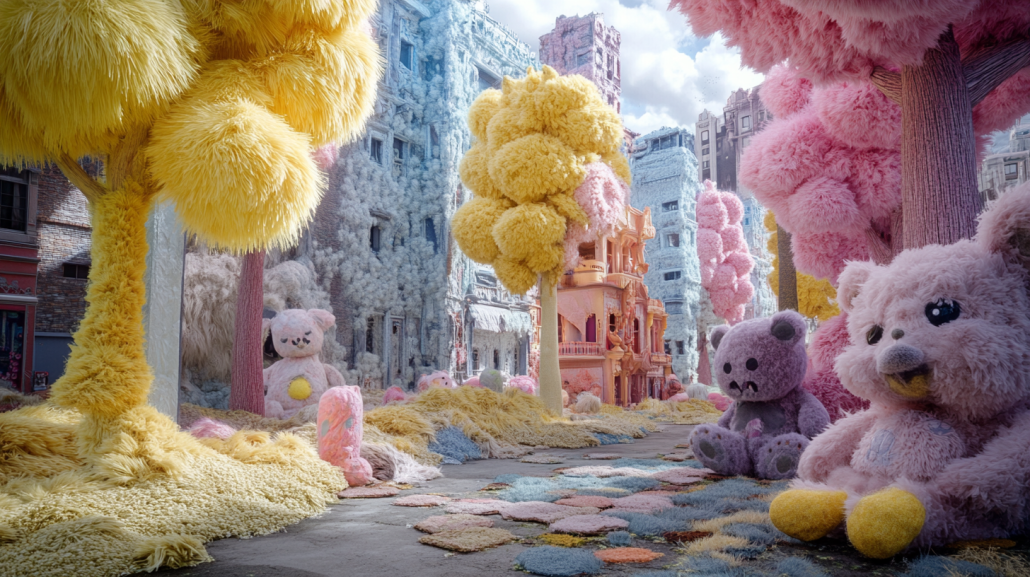
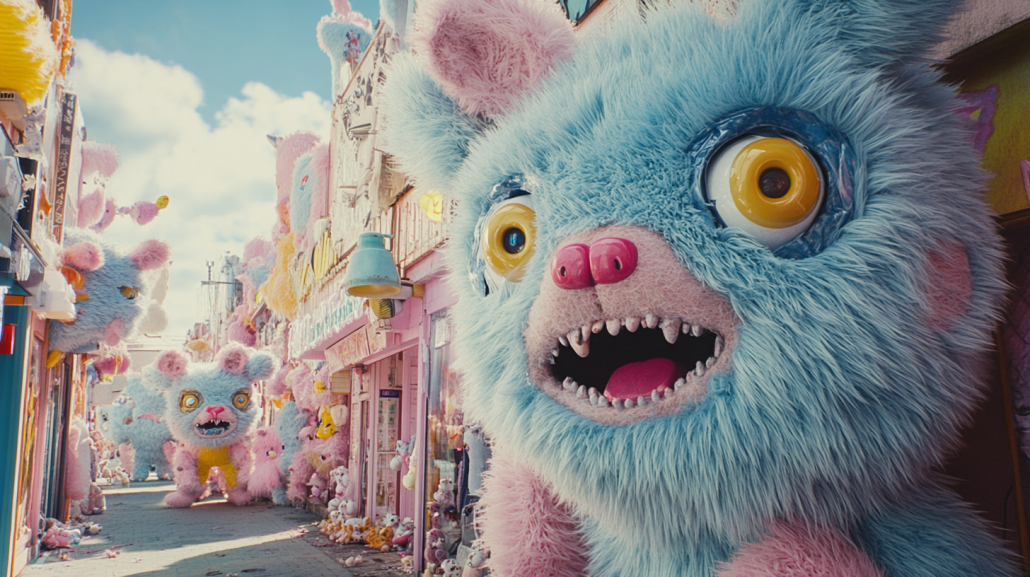
Thread by Thread by Emily Dross, B.Arch ’25
Ball State University | Advisor: James F. Kerestes

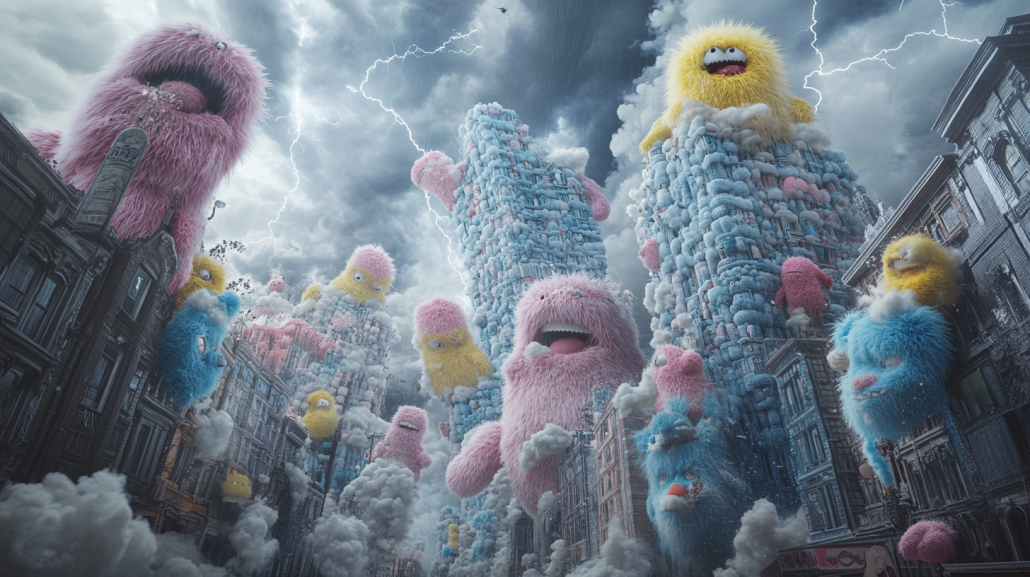
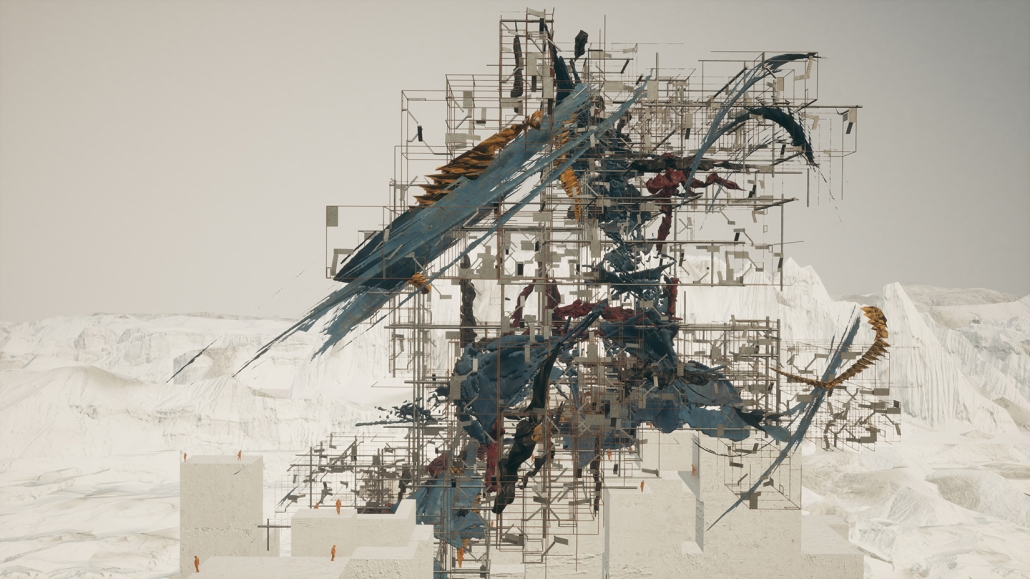
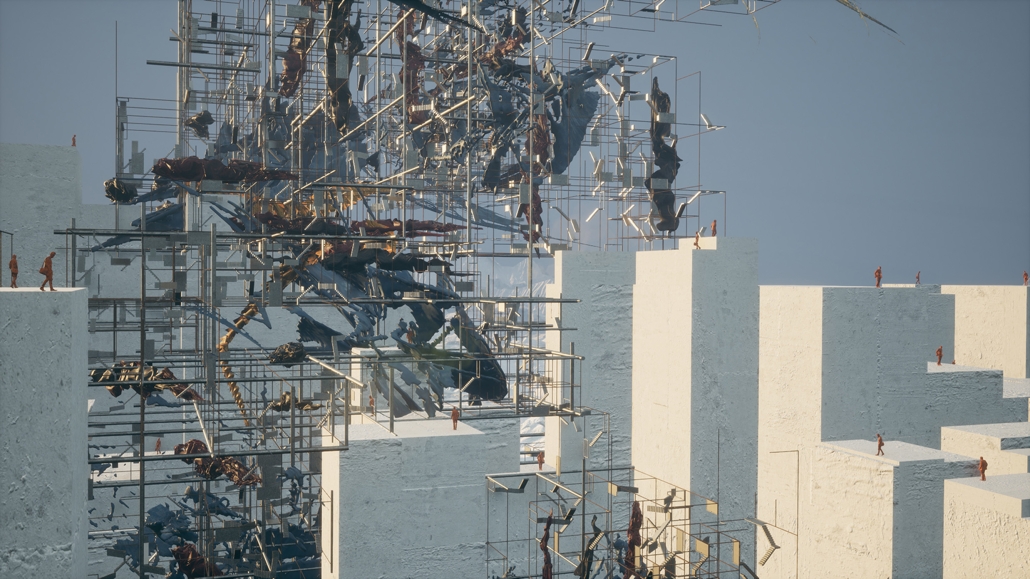
“Thread by Thread” is a short film, created as part of the course Cinematic Environments: Uncanny AI, explores hybridized architectural conditions through a speculative and surreal lens. Set in a richly imagined built environment, the narrative unfolds through the movements and interactions of fluffy, stuffed animal-like creatures—anthropomorphic figures that serve as both inhabitants and interpreters of the space. These soft-bodied protagonists navigate a world that oscillates between the familiar and the uncanny, offering a playful yet critical reflection on contemporary architectural and environmental issues.

The project operates within the “fuzzy space” between realism and speculation, where exaggerated materials, textures, and spatial configurations provoke questions about the future of the built environment. By merging whimsical imagery with architectural inquiry, the film engages themes of technological transformation and post-Anthropocene speculation. The soft, plush inhabitants stand in stark contrast to the often rigid, industrial aesthetic of traditional architectural spaces—suggesting alternative, more empathetic ways of occupying and designing environments.

Through visual storytelling, “Thread by Thread” reflects a critical position on how architecture might respond to pressing global concerns while embracing unconventional narratives and mediums. Ultimately, the film is a provocative gesture—one that reimagines the role of architecture in shaping not only physical space but also cultural and emotional landscapes. It invites viewers to question the boundaries of architectural representation and consider the value of softness, fantasy, and hybridity in the discourse of design.

Instagram: @em.dross, @jameskerestes
Echoes of the Land: A Pilgrimage of Wilderness and Spirit by Andrea Frank, M.Arch ‘25
North Dakota State University | Advisor: Stephen Wischer

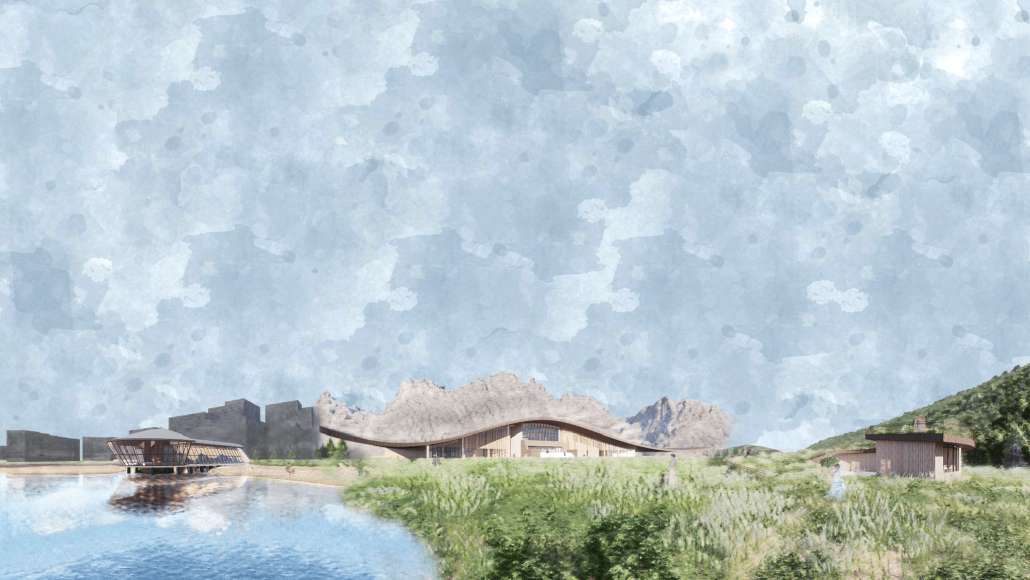
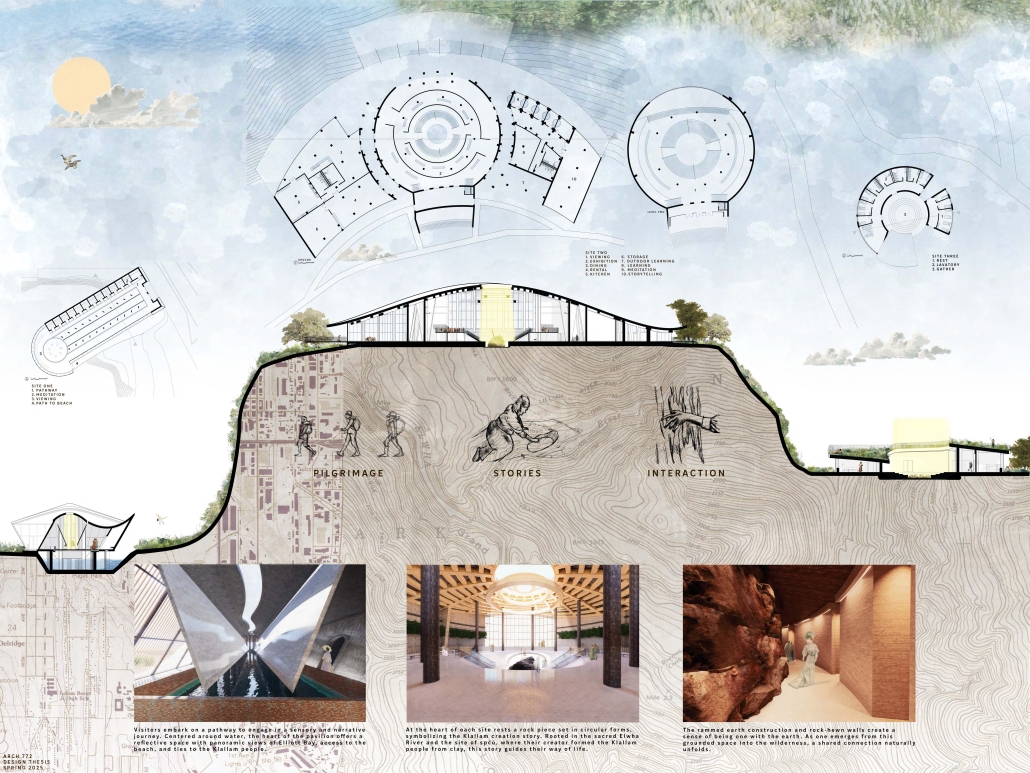
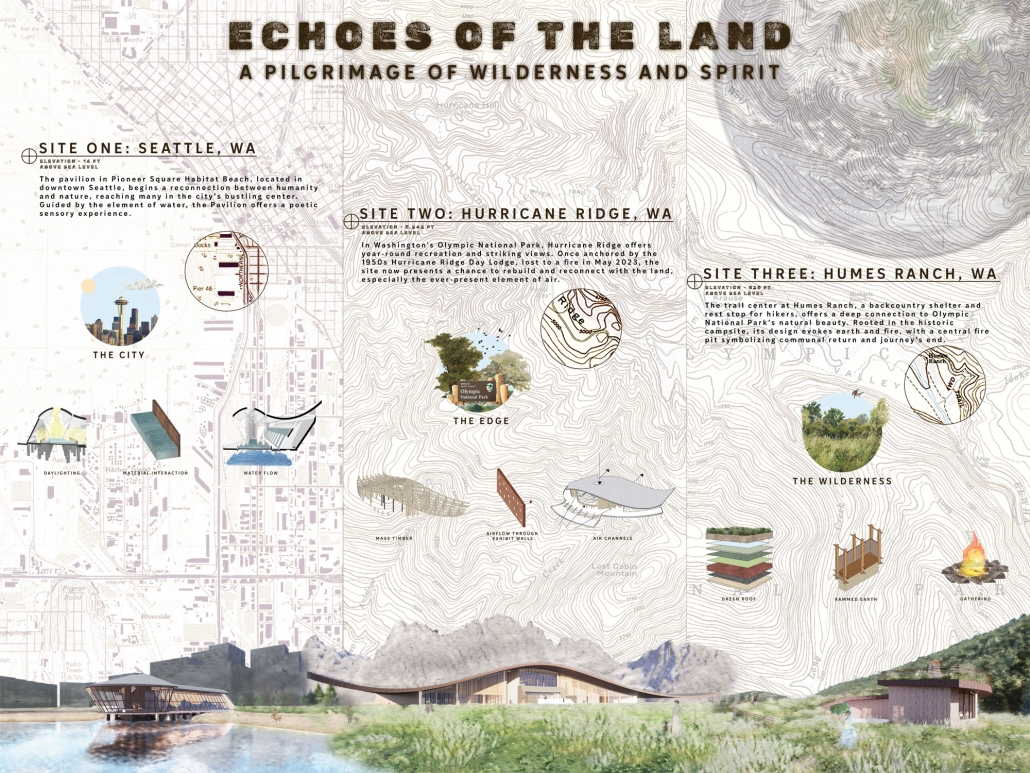
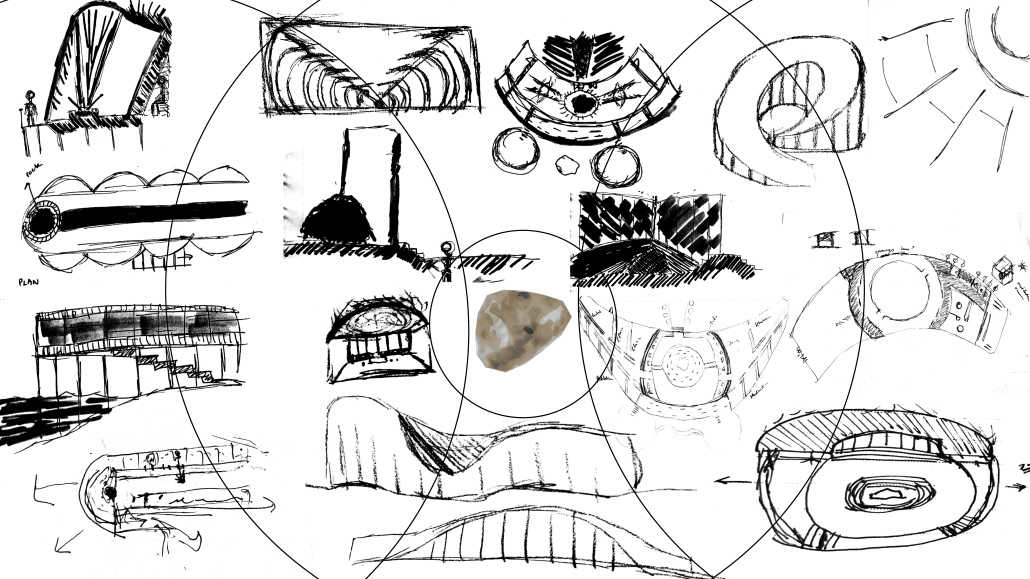
This thesis explores how architecture can bridge humanity and the natural world, restoring a connection eroded by technology, overconsumption, and distraction. While cities offer curated encounters with nature, they cannot replace the deep peace found in wilderness. This connection is essential to humanity’s survival. If humanity fails to understand its relationship with the environment and engage with it responsibly, it jeopardizes the ecological balance of the world and humanity’s own existence.

Architecture, once in dialogue with nature, now often serves function, spectacle, or profit. This work reimagines architecture as a mediator that fosters kinship with the earth through a threefold approach: a pilgrimage across city, edge, and wilderness; poetic uncovering of ancient site stories; and sensory engagement with the four classical elements. In doing so, architecture becomes a vessel for atmosphere, memory, and meaning, guiding individuals to a deeper awareness of themselves and their world.

This project received an AIA Medal for Academic Excellence.

Instagram: @andrea.frank10
A Place for Pilgrimage by Andy Packwood, B.S. in Architecture ’25
University of Virginia | Advisor: Peter Waldman

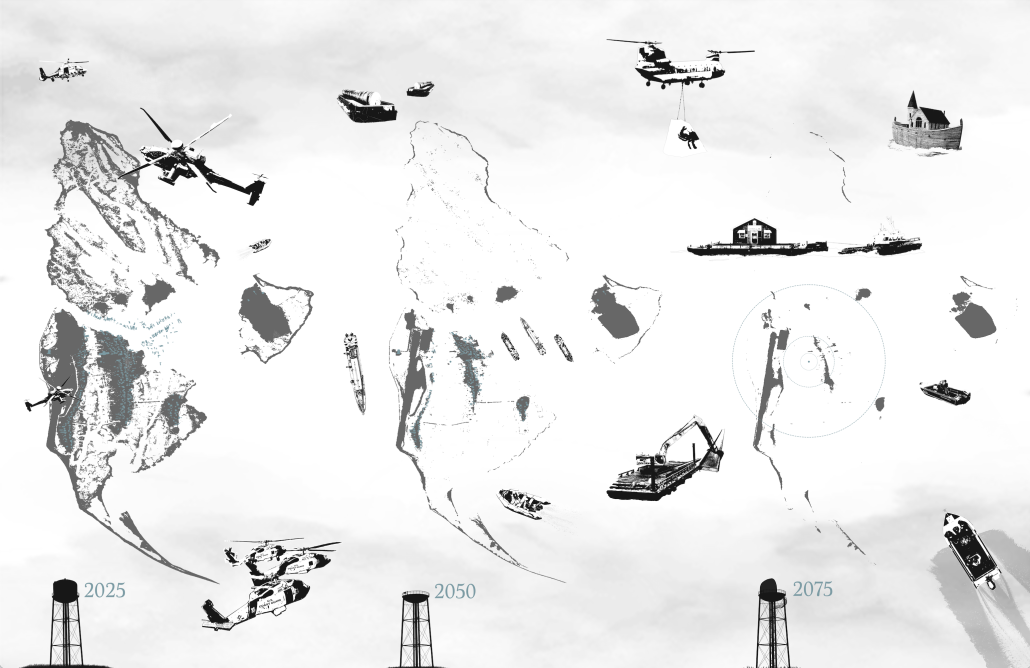
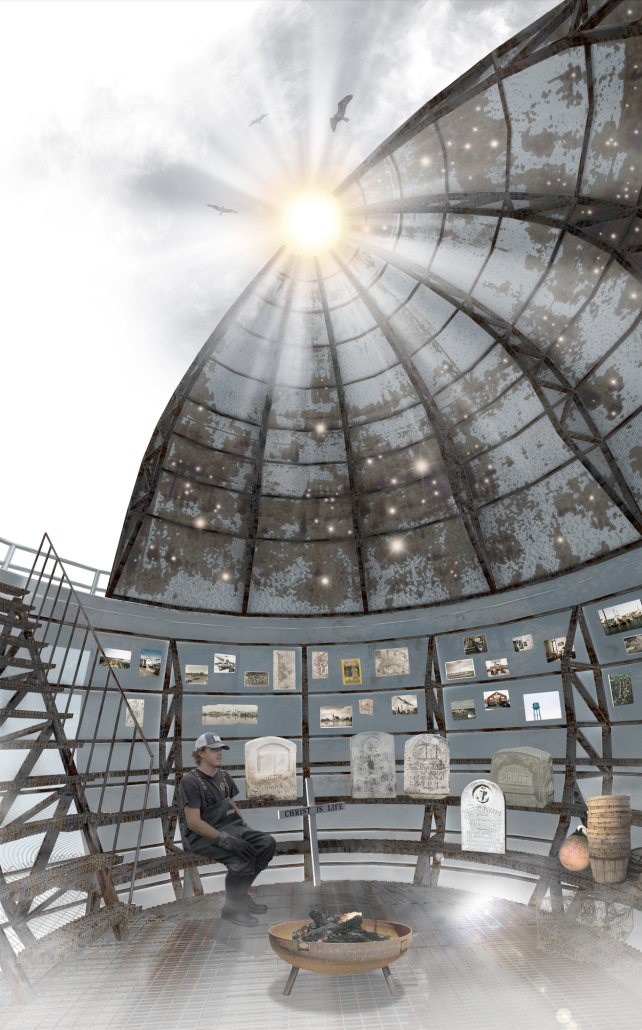
The project synthesizes two years of fascination for and research into the climate-threatened coastal community of Tangier, speculating as to what will ultimately happen to rural, low-income American communities in the wake of inevitable sea level rise. My interest lay not in the proposal of any sort of savior infrastructural solution, not in the proposal of a managed retreat plan, nor in the design of a mainland relocation for displaced refugee residents. I chose to develop a memorialized destination that could still exist on the island long after its ridges have turned to marsh, its homes have been barged away, and normally perceived connotations of inhabitability have all but vanished. I chose to create “A Place for Pilgrimage”, inspired by my own pilgrimage of El Camino de Santiago this past March.

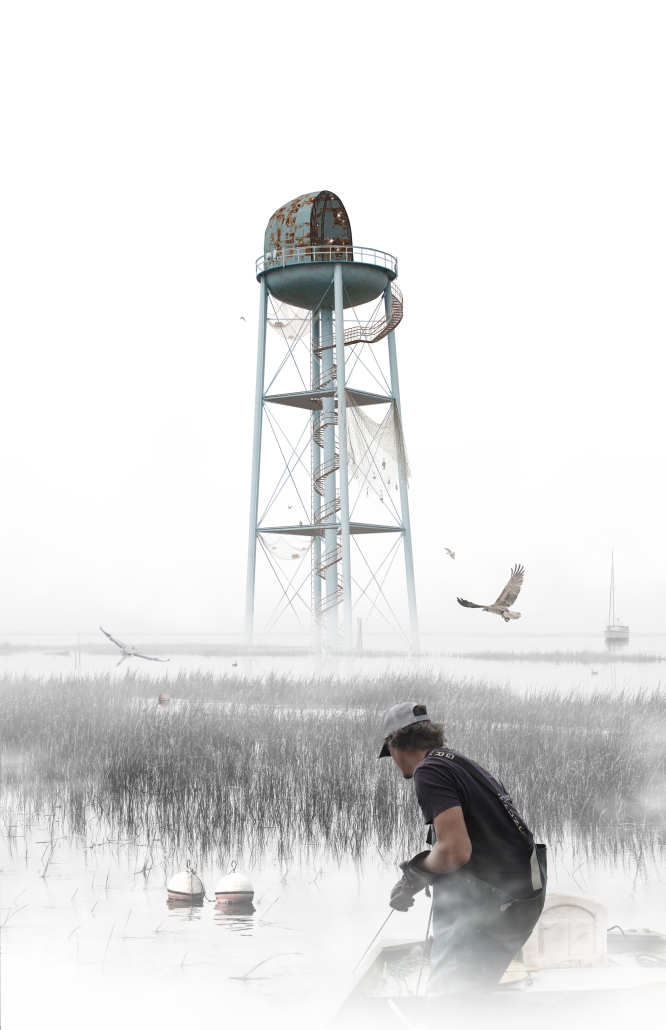
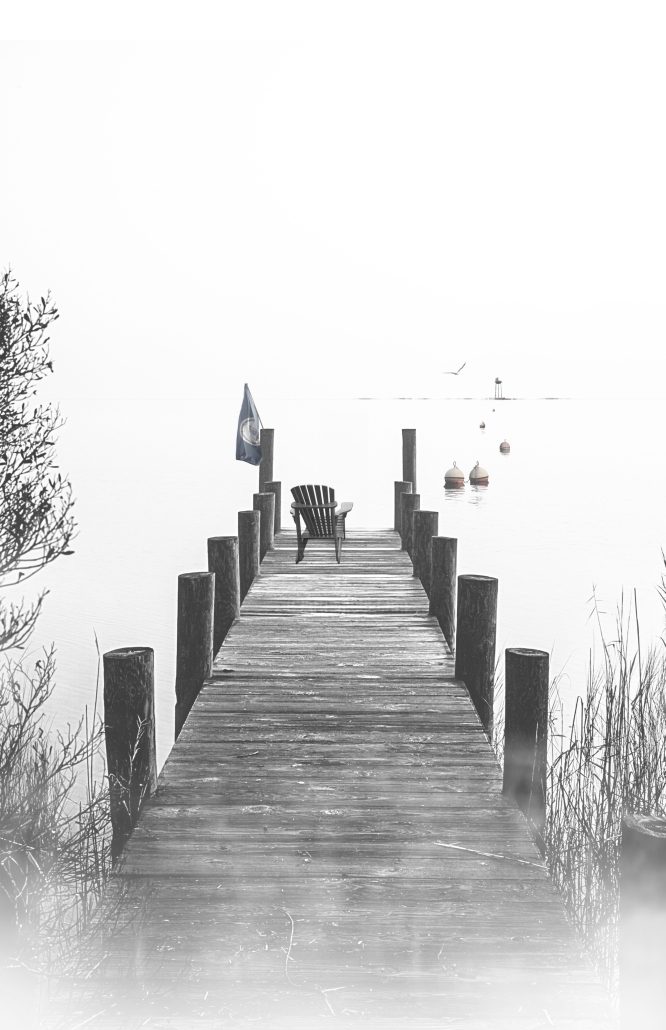
Simply put, the proposal is an adaptive reuse of the tallest structure on Tangier: its water tower. Adding a spiraling staircase and pushing the structure fifty years into the unknown, the design creates a single space in the sky through the removal of half of the tower’s upper dome. The approach is incredibly important; much of the final pin-up focused on rendering this pilgrimage step by step. Starting from the dock of the mainland resettlement, looking out into the Chesapeake Bay, a line of buoys trails towards the horizon. A bird soars toward the tower in the distance, the vestiges of marsh poking out of the water. Cameron Evans, current vice mayor and young watermen of the Island, embarks as this future pilgrim by skiff. He carries with him a gravestone; many cemeteries on the Island are often inundated by tidal flooding, and residents must move these tombs to higher ground, again and again.

What I have proposed is a final resting place, safe from the heights of sea level rise. A place for generations to visit, to bring tokens of remembrance, to occupy overnight, or to even continue their trade as watermen. Up within the dome of the water tower is a cenotaph for the people, memories, culture, history, and beauty of Tangier. We will need one.

This project was awarded High Honors for Thesis.
Ephemeral Spaces — Presence and Absence by Robin Xiao, B.S. in Architecture ’25
University of Virginia | Advisor: Peter Waldman

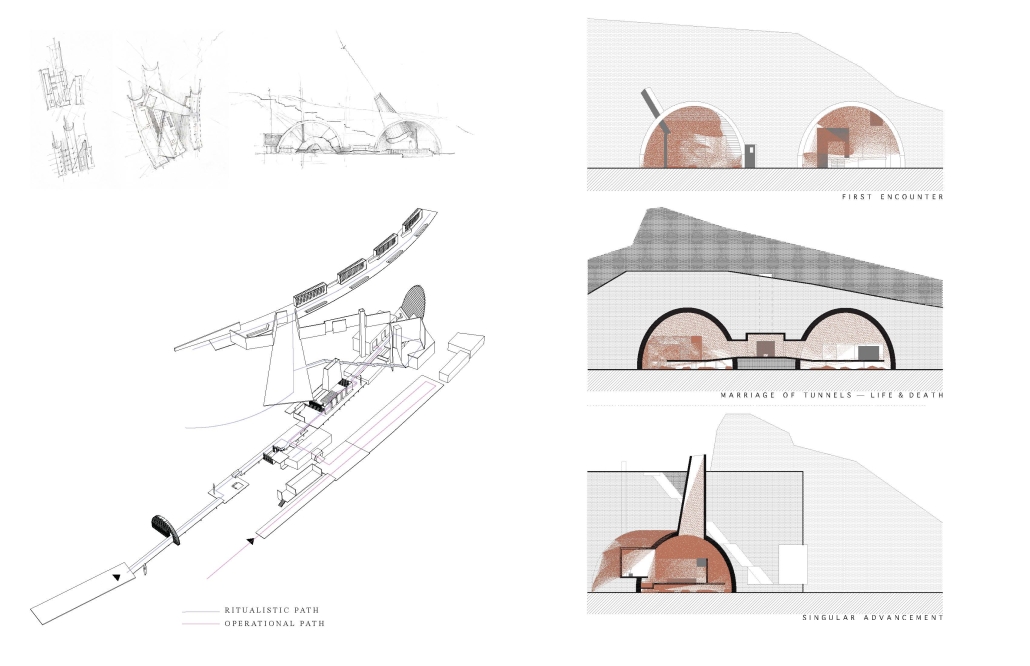
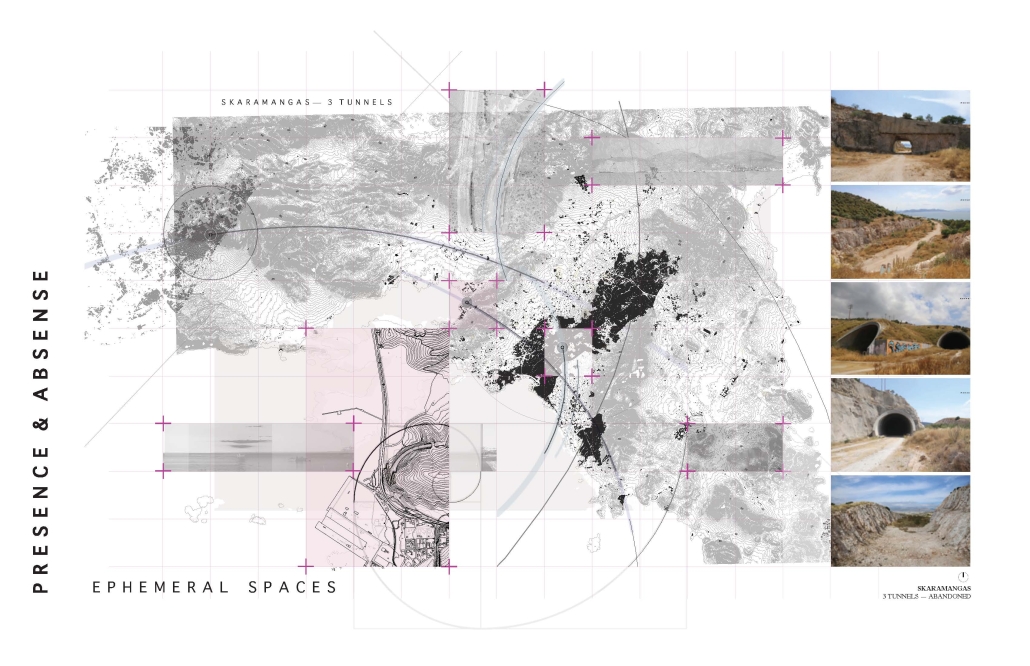
This thesis explores how architecture can emerge from the debris of the everyday to construct a space of ritual and transition—between life and death, presence and absence, memory and forgetting. 

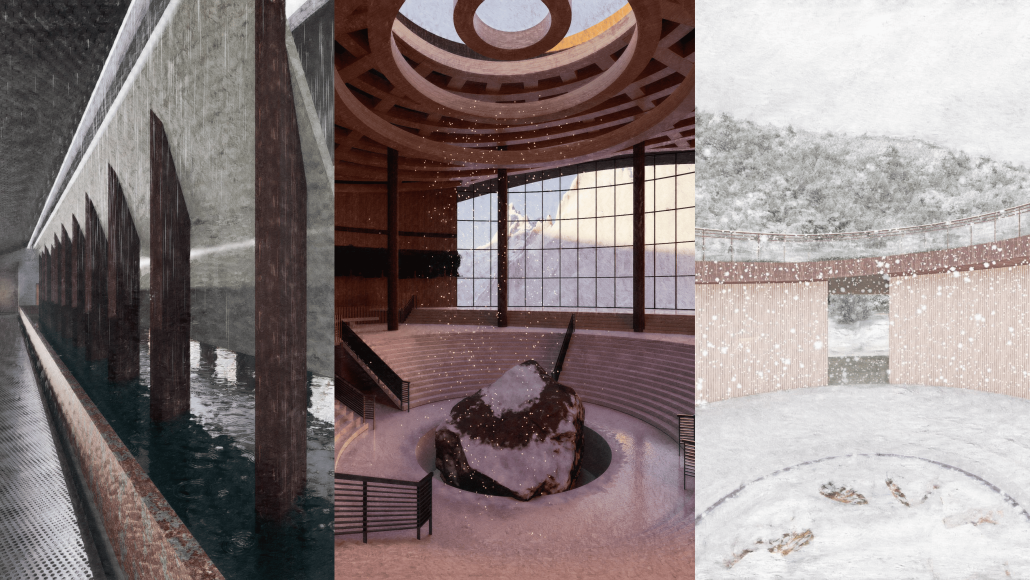
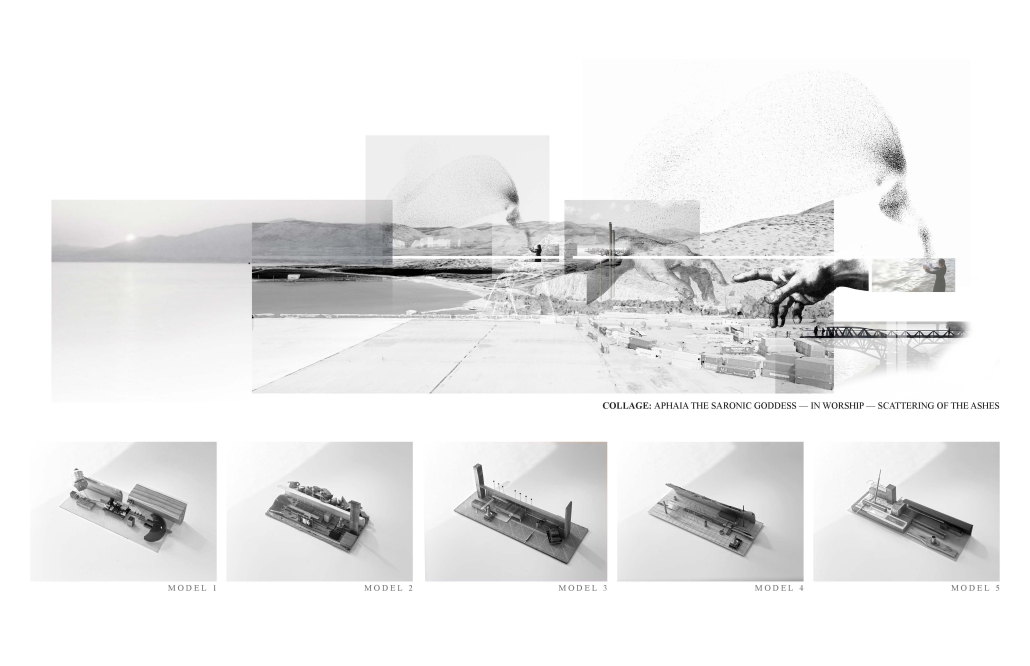
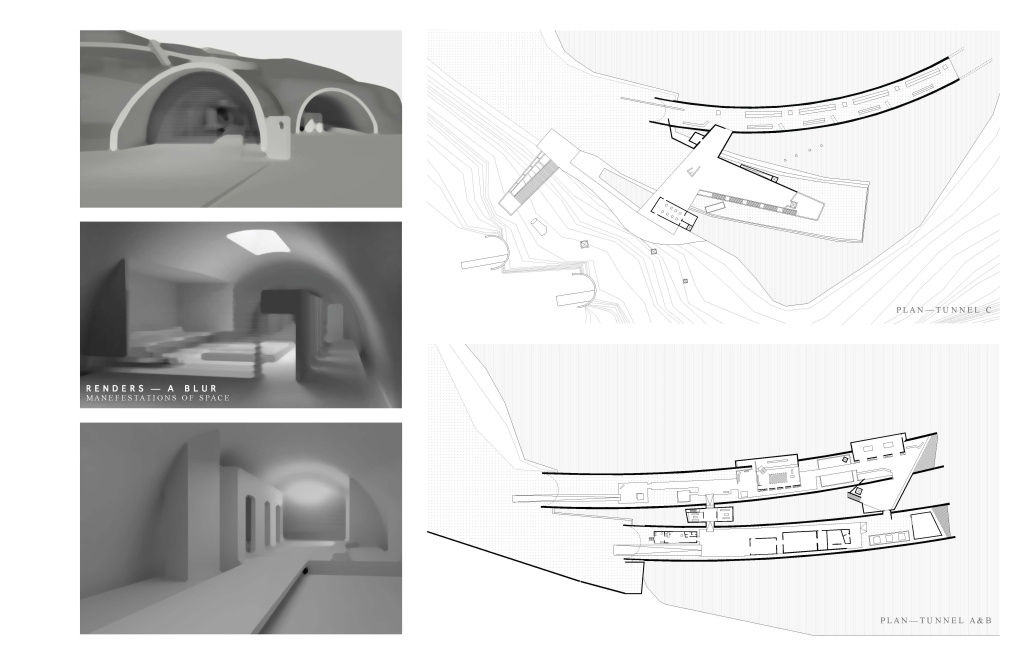
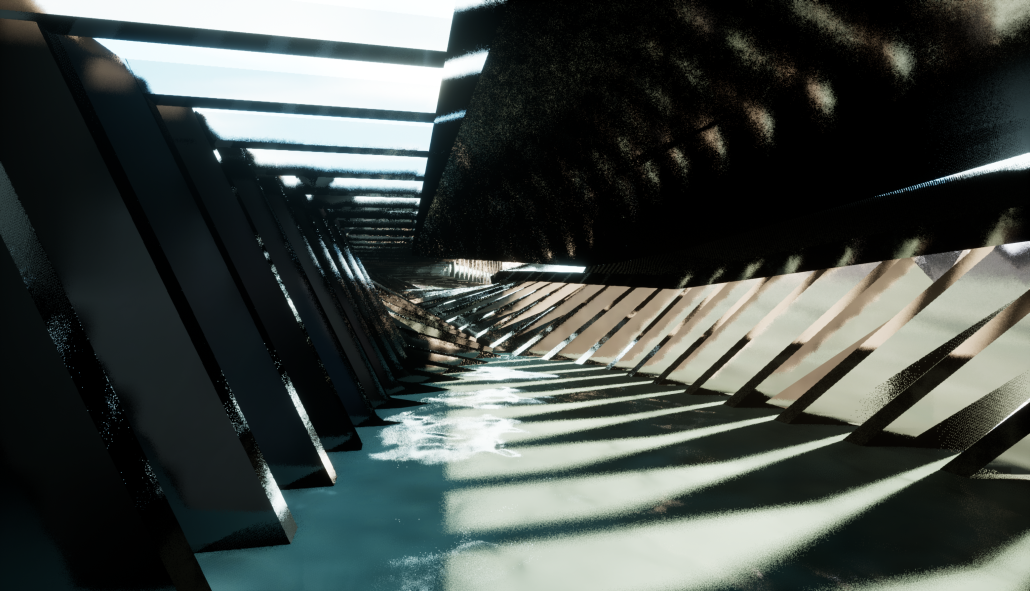
Situated in the post-industrial landscape of Skaramangas, Athens, the project transforms three abandoned military interchange tunnels into a procession of ephemeral architecture: a crematorium, a columbarium, and spaces for reflection, and spaces of pause/entry/exit. 

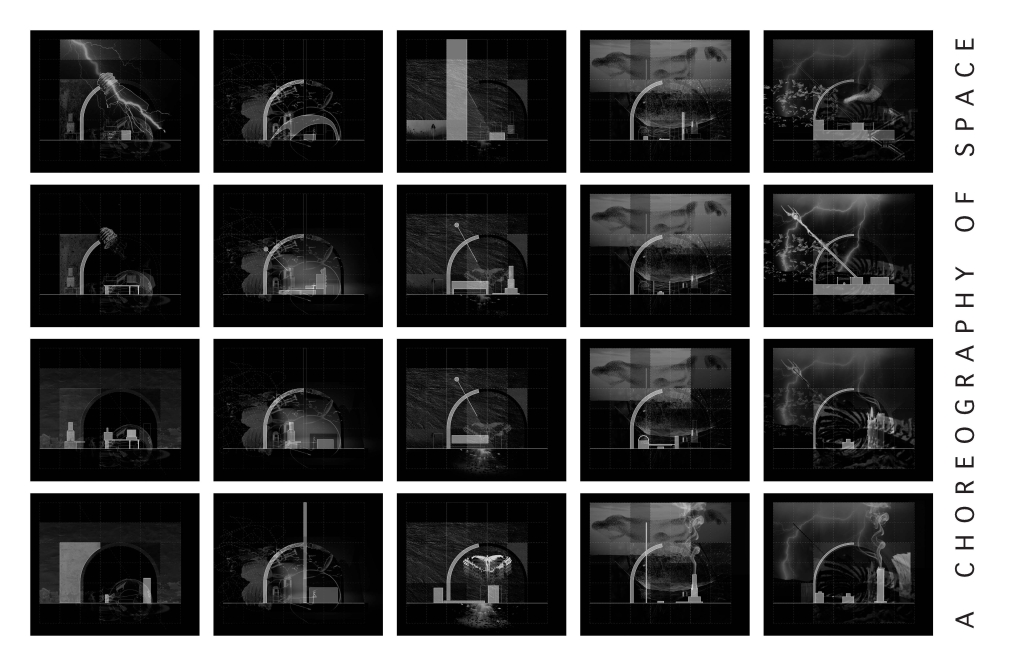
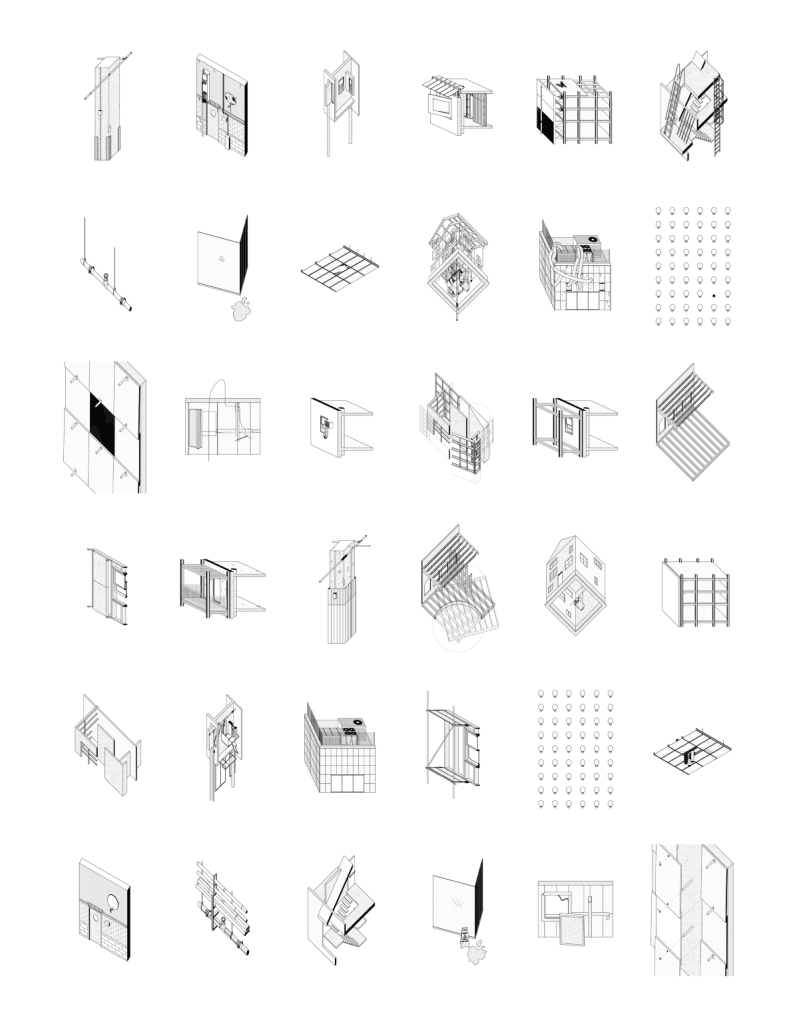
Through a series of five conceptual models, material fragments—broken light bulbs, candles, metal tubing, computer chips, wood scraps—become instruments of spatial inquiry, offering alternative ways to think about temporality, transformation, and the sacred. Each model gives rise to a set of sectional drawings, collaged with elemental forces—earth, fire, air, water—revealing a layered architecture of transition. 

The resulting proposal is not a fixed structure, but a choreography of spaces that invite the living to move with the dead, through tunnels repurposed as thresholds. This work situates ephemerality not as loss, but as an architectural condition of becoming—an act of spatial murmuration shaped by light, material residue, and memory in motion.

This project received High Honors for Undergraduate Thesis.

Instagram: @robinxiaostudio
MOVING FUTURES VERTICAL SCHOOL by Alex Hoover & Zach Izzo, M.Arch ’25
University at Buffalo | Advisor: Jin Young Song

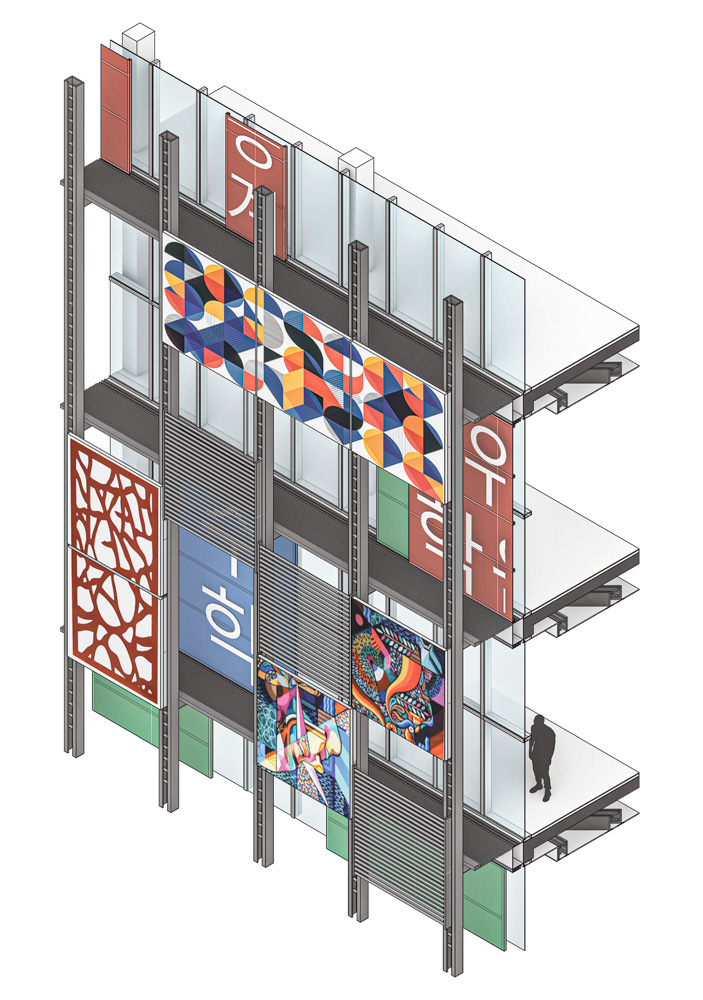
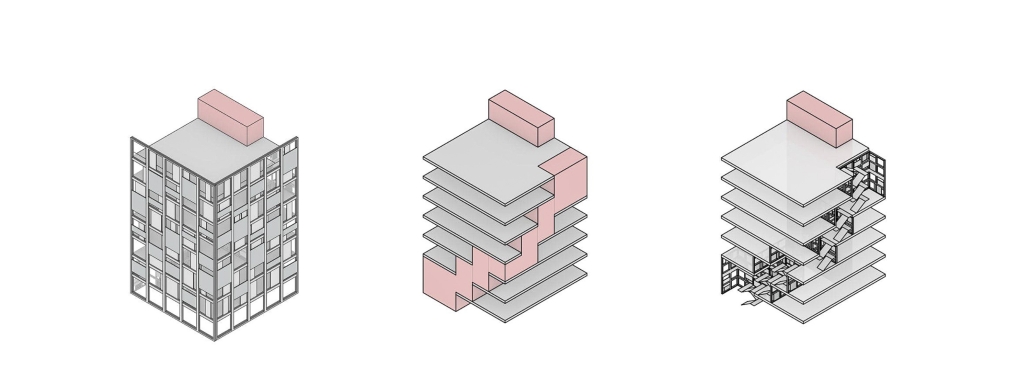
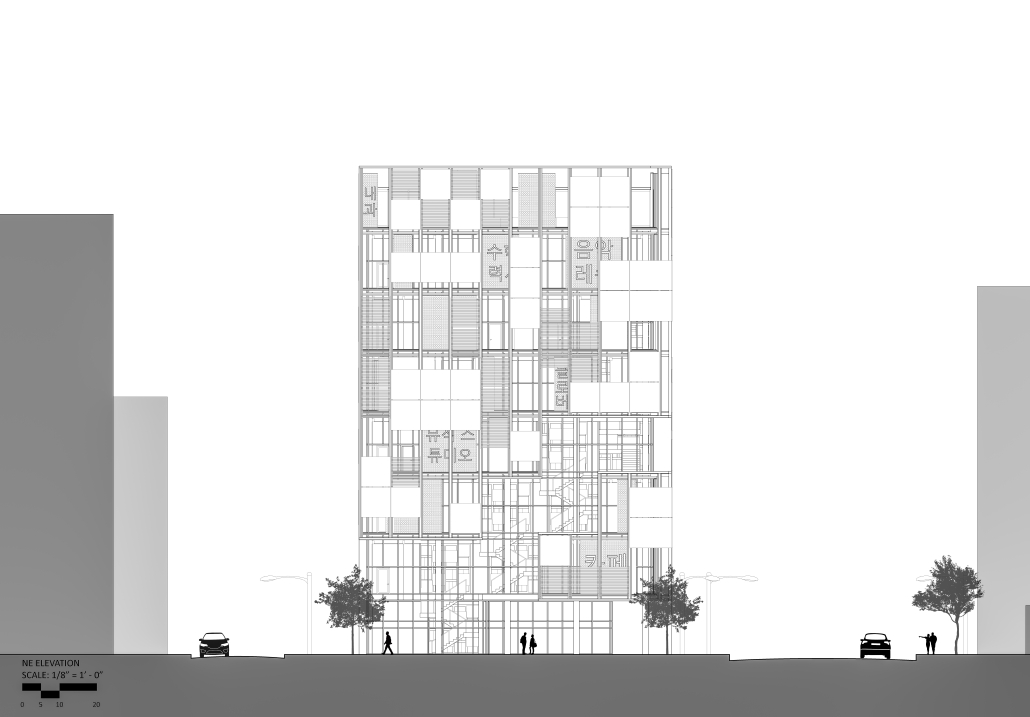
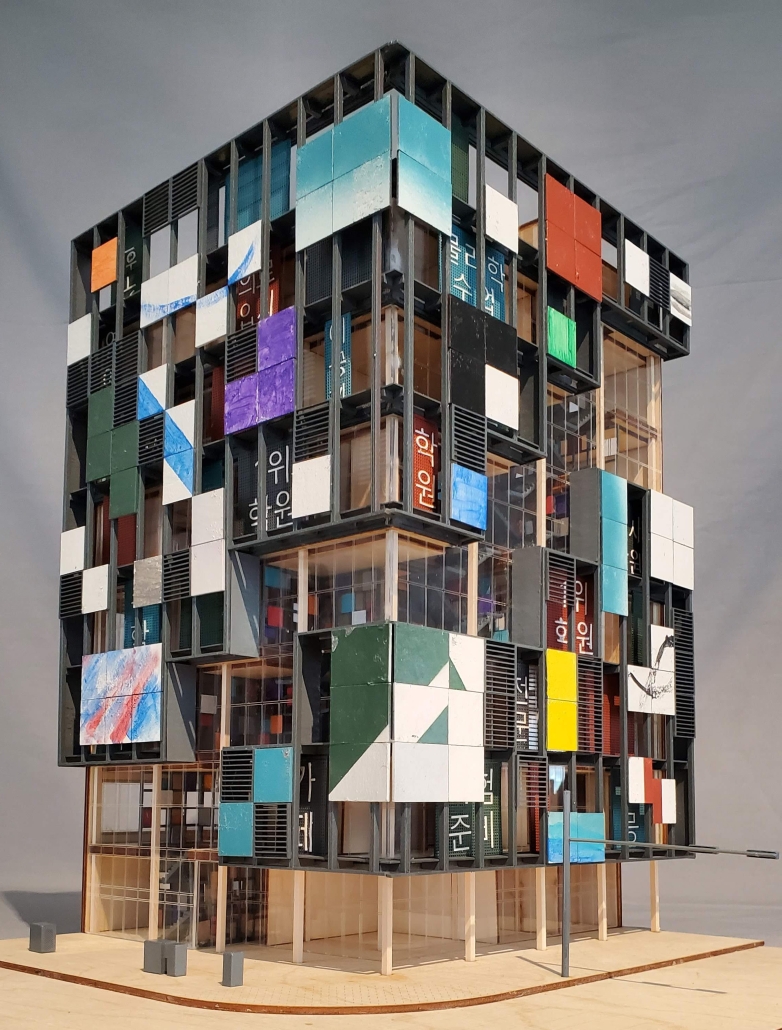
Located in Songdo, Seoul, our project reimagines the typical Korean private educational institutions, known as Hagwon, by prioritizing spatial flexibility and community engagement. Traditional Hagwons often feature cramped, efficiency-driven classrooms. However, research shows that children learn better in environments with diverse spatial qualities—high ceilings, minimal partitions, vibrant colors, and flexible layouts. To address this, we designed a highly adaptable building with movable interior and exterior components. Each main floor features partition walls on ceiling-mounted tracks, allowing spaces to transform easily—from small study rooms to large lecture halls or art galleries. This system ensures both spatial diversity for students and long-term adaptability for future tenants or programs. 

The facade similarly emphasizes flexibility, offering a reinterpretation of Korea’s dense, intrusive urban signage. The three-layer facade system integrates architecture, community identity, and student expression. The outer layer consists of LED media panels and sun-shading devices, configurable to display student artwork or community visuals, establishing the building as a neighborhood landmark. The second layer features sliding perforated metal signage panels, subtly blending information with the architecture rather than overwhelming it. The innermost layer wraps the social stair, visible from both adjacent streets, inviting public interaction and showcasing movement within the building. Smaller panels provide localized signage, such as floor numbers and bulletin boards. Together, the dynamic facade and transformable interior create a learning environment that fosters both community visibility and spatial flexibility, promoting a more engaging, human-centered educational experience.

The project was selected for the Cram Urbanism and Vertical Learning Space International symposium

Instagram: @_alex_hoover, @jinyoung___song  
The Market of Joy by Shefa Quazi, M.ArchD ’25
Oxford Brookes University | Advisors: Toby Smith, Alexandra Lacatusu, Toby Shew, Charles Parrack

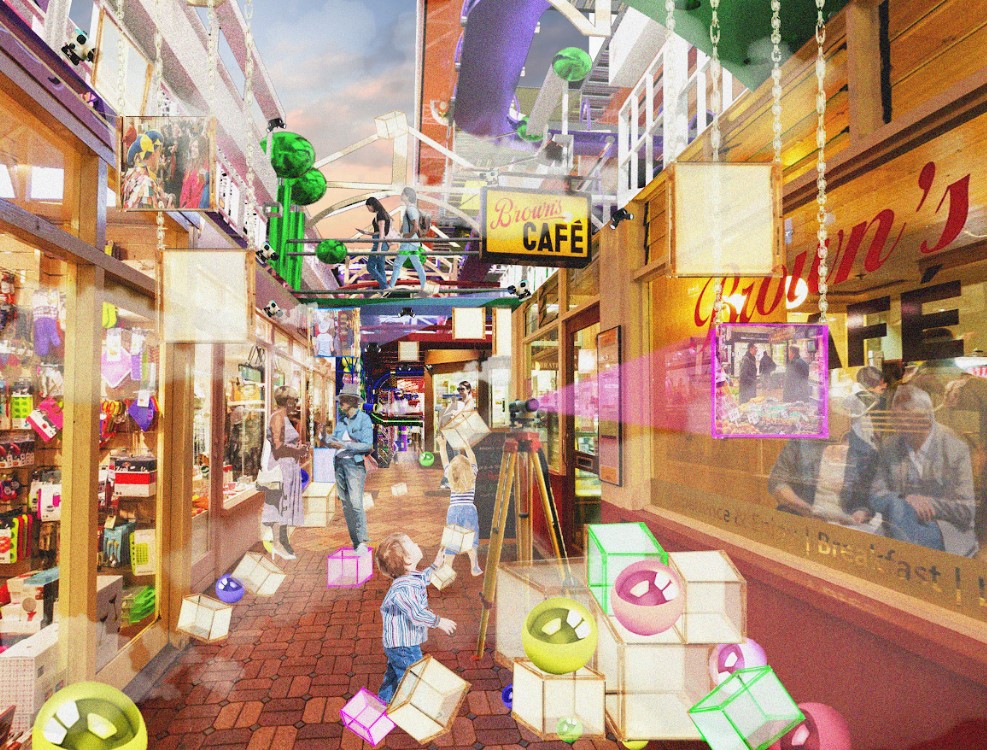
In a world dominated by seamless digital consumption, where screens dictate desires and algorithms predict movement, The Covered Market in Oxford becomes a site of rebellion—a place where reality is glitched, distorted, and reclaimed from commercial control. Instead of a polished, hyper-commercial spectacle designed to guide users into predictable behaviors, the proposed series of interventions hijack the mechanics of digital consumerism and turns them against themselves to exaggerate them into a physical, pseudo-reality. Attempting to readminister the loss currency of joy.

The market transforms into a disruptive, anti-brand arcade—a physical and augmented experience that interrupts, unsettles, and reawakens users to the absurdity of algorithm-driven life. Augmented Reality, typically a tool for corporate control (filters, tracking, gamified shopping), is instead repurposed to create moments of détournement, where the commercial is undermined, and participation leads not to consumption, but to adding weight to reality and human interaction. Overall revaluing the High Street as a whole. 

Instead of guiding users toward consumption, the market becomes a disobedient space, forcing engagement away from passive scrolling and toward critical awareness of spectacle itself. The interactions don’t feed an algorithm—they break it. The market is no longer a relic of pre-digital commerce but a living, evolving site of resistance against digital saturation and corporate control.

This project received the Oxford Brookes University Reginald W. Cave Award.
Instagram: @sheevz_q, @oxarch

The Inner Mechanism by Jared Roberts, M.Arch ’25
Lawrence Technological University | Advisor: Masataka Yoshikawa

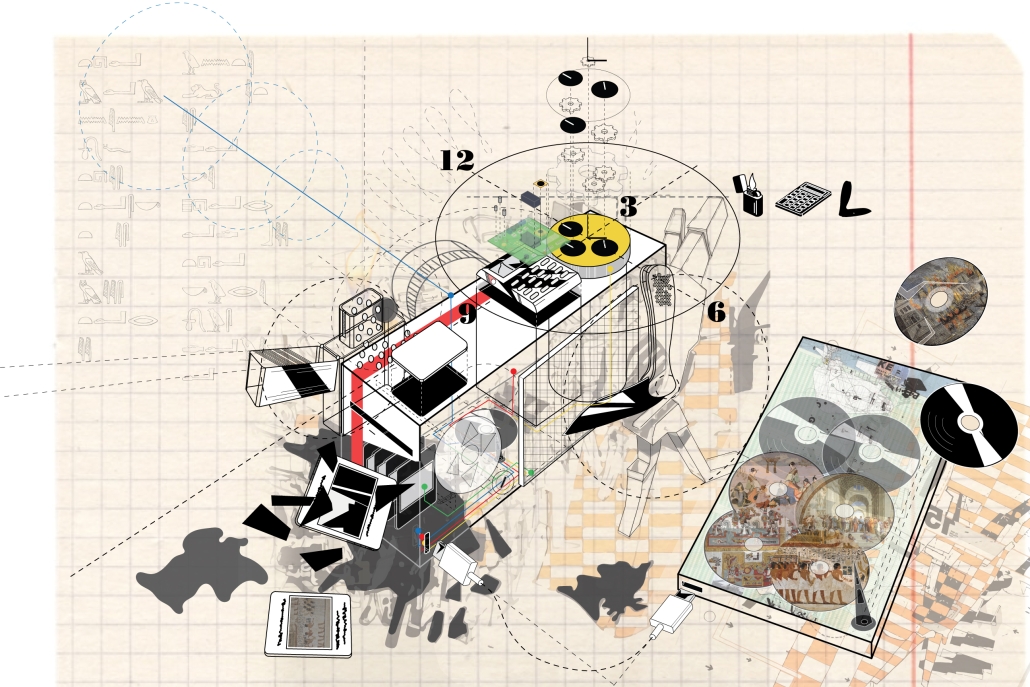
This project sees the physical model and 2D illustration of the hypothetical device abstracted to create architectural forms and spaces. The form derives itself from the concepts dealt with in the inner mechanisms and particularly information storage. The “nested” nature of digital information storage (i.e., nested file folders on a computer) translates to nested architectural forms that sometimes exist within or even overlap other parts of the model. Another concept was that of information’s changes and persistence over time. The form is constructed like a timeline that exists in all three dimensions, inspired by the flow map of Napoleon’s invasion of Russia, which charts various different variables including location, population, time, events and more about Napoleon’s Russian campaign. In the same way, the timeline is a two-dimensional visual representation of information gathered about events in history; this model is a three-dimensional representation of the information gathered and stored by the hypothetical device. 

Instagram: @masataka.yoshikawa
Echoes of Home by Zuha Arab Sabbagh & Rana Abdelhadi, B.Arch ’25
American University of Sharjah | Advisor: Gregory Thomas Spaw

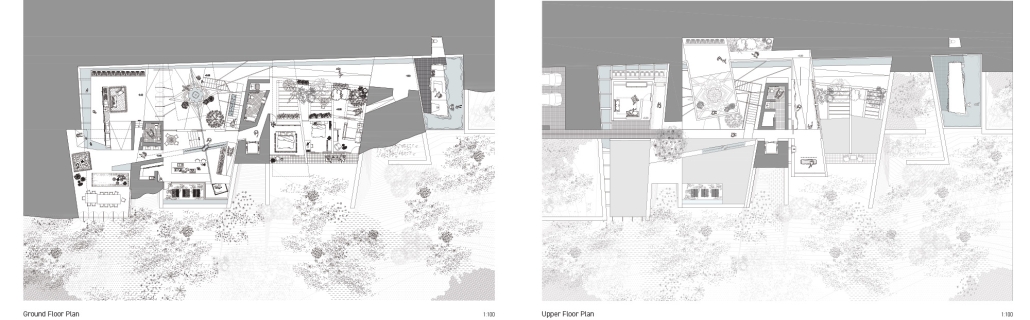
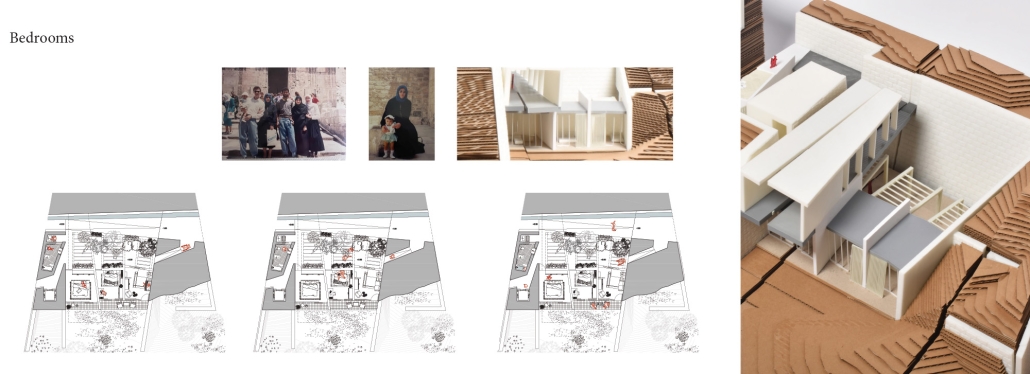
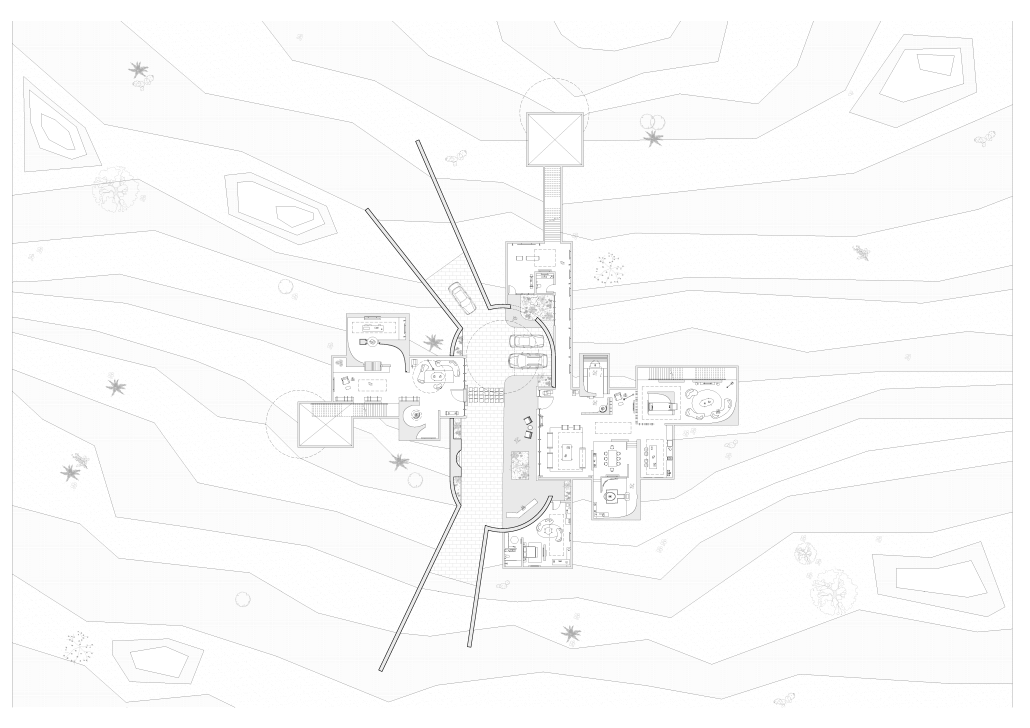
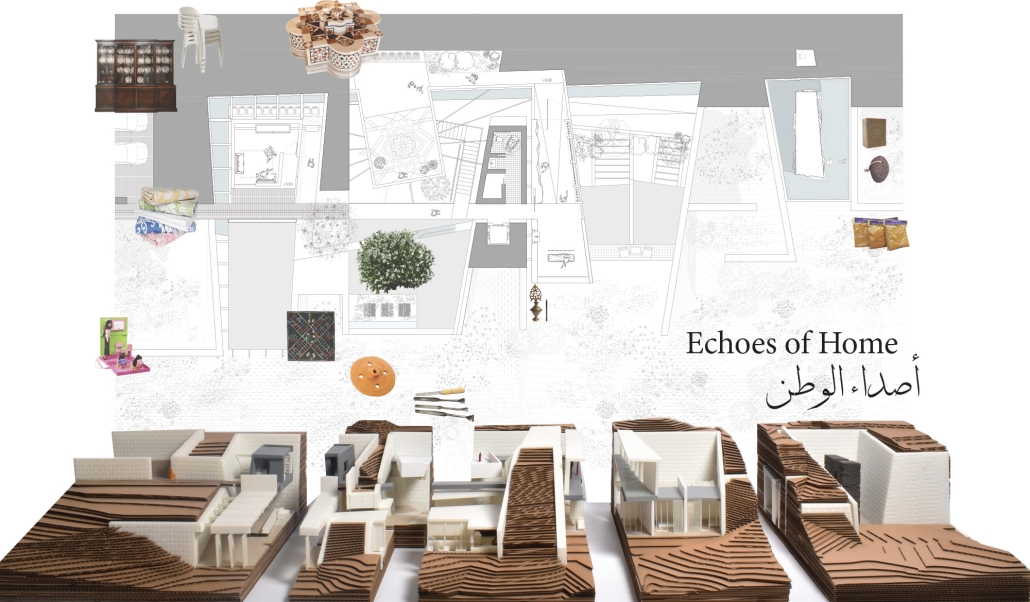
‘Echoes of Home’ responds broadly to displacement in our globalised world. Specifically, on the generational displacement of Syrians. Centralised on the intimate and underappreciated labour of homemaking, the project acts as a recognition and celebration of Womanhood as a discipline. It is designed to mark the story of displacement – building and rebuilding – into an inconstant world. The project tentatively approaches the need to capture the complicated ephemerality in our modern understanding of what ‘home’ is.

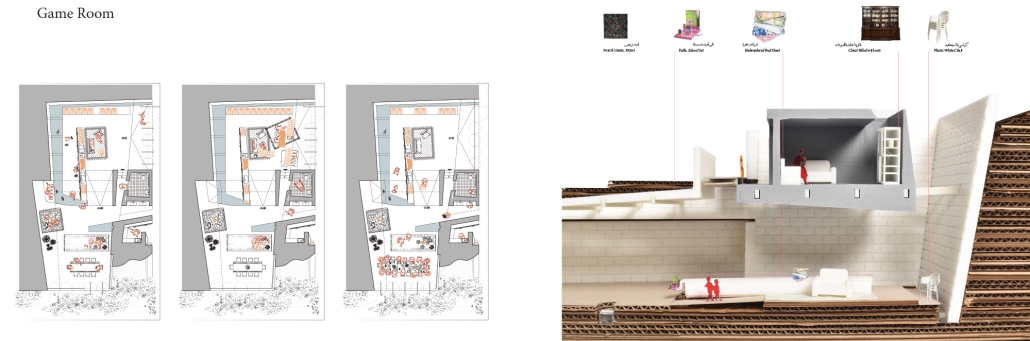
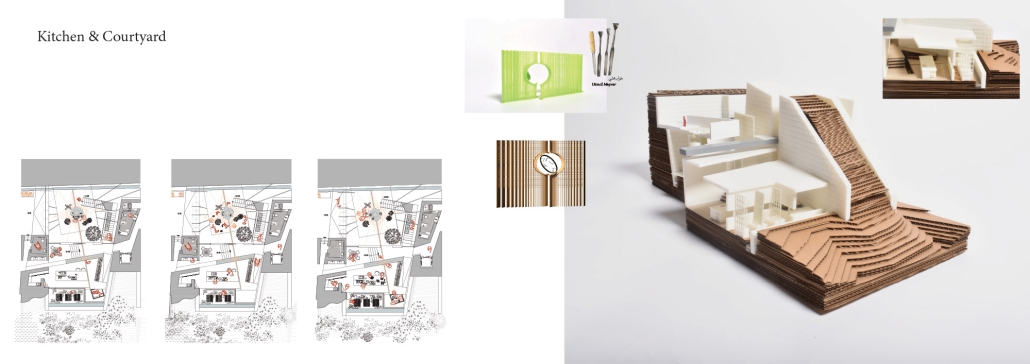
In designing a secondary residence-exhibition, the studio deployed the renaissance phenomenon of the cabinet of curiosities to challenge us to create spatially charged architecture focused on the exhibition of artifacts. We selected fictitious clients, curated a selection of curiosities to display, picked a suitable site, and decided the extent of distinction between the residence and the exhibition.

Designing a residence required an examination of the notion of ‘home’. Historically, ‘home’ has been explored as a vehicle for living and, with the rise of modernism, critiqued as performative. The programs selected recognise the labour of homemaking and extend to capture the performance of hosting and the pleasure of gathering. ‘Home’ has consistently been placed in women’s domain. The practice of homemaking falls under the discipline of Womanhood. The project adheres to the practice and rejects criticism, accommodating for it spatially. The kitchen, game room, bathing space, bedrooms, bathrooms, and guest room all double as exhibition spaces. The integrated spaces create opportunities for gathering and hakawayti (storytelling). Homes tell a story of past, present and future, and the project acts as a natural extension.

Encouraged to design spaces from the inside out, the client and narrative guided design decisions. The Characters: a mother, daughter and grandmother, based on Syrian women in our vicinity, emphasise the generational distinctions in modes of displacement: immigrant, diaspora and refugee. The clients’ stories resemble those of many diasporas. 

Instagram: @gregoryspaw
An Anchor in Time: A Dwelling Reflecting the Interplay of Time and Space by Salma Hani Mubarak Ali, B.Arch ’25
American University of Sharjah | Advisor: Gregory Thomas Spaw

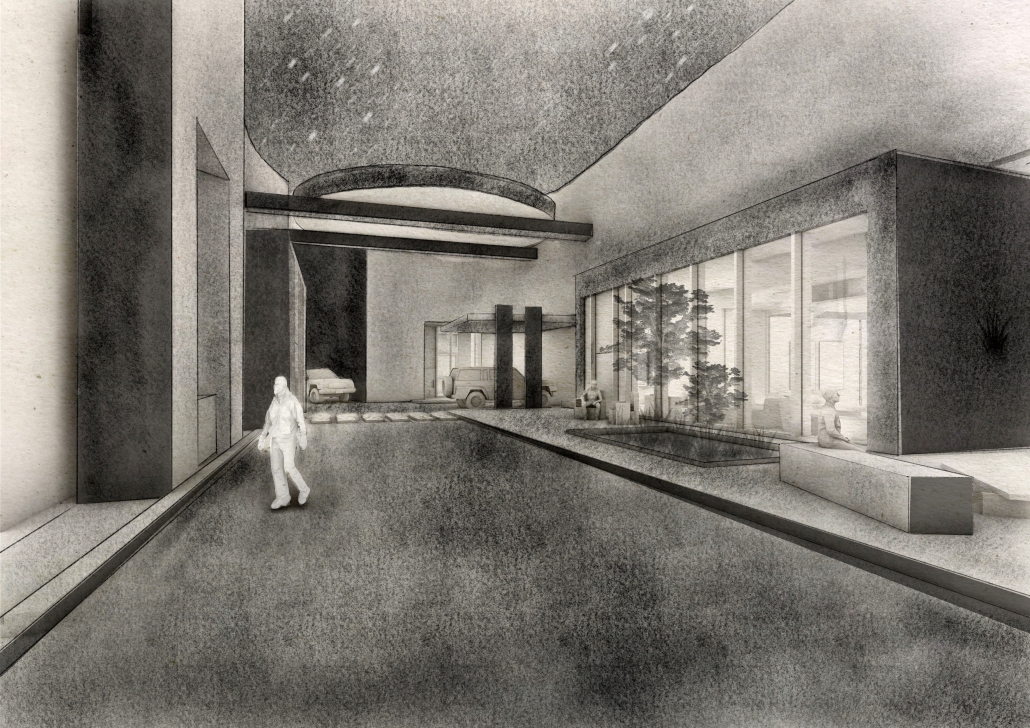
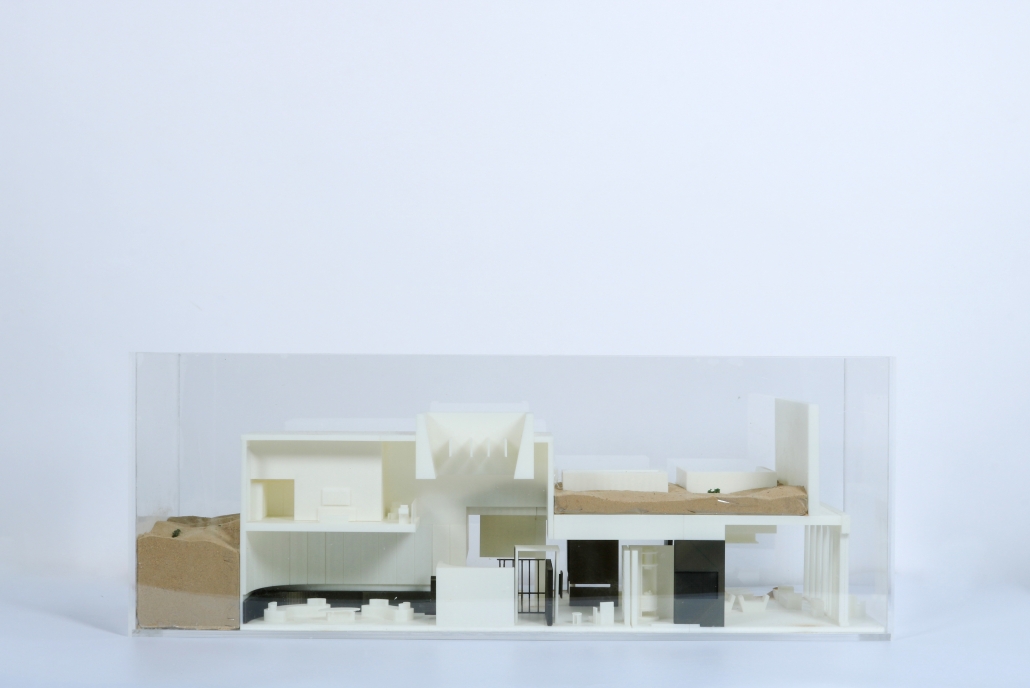
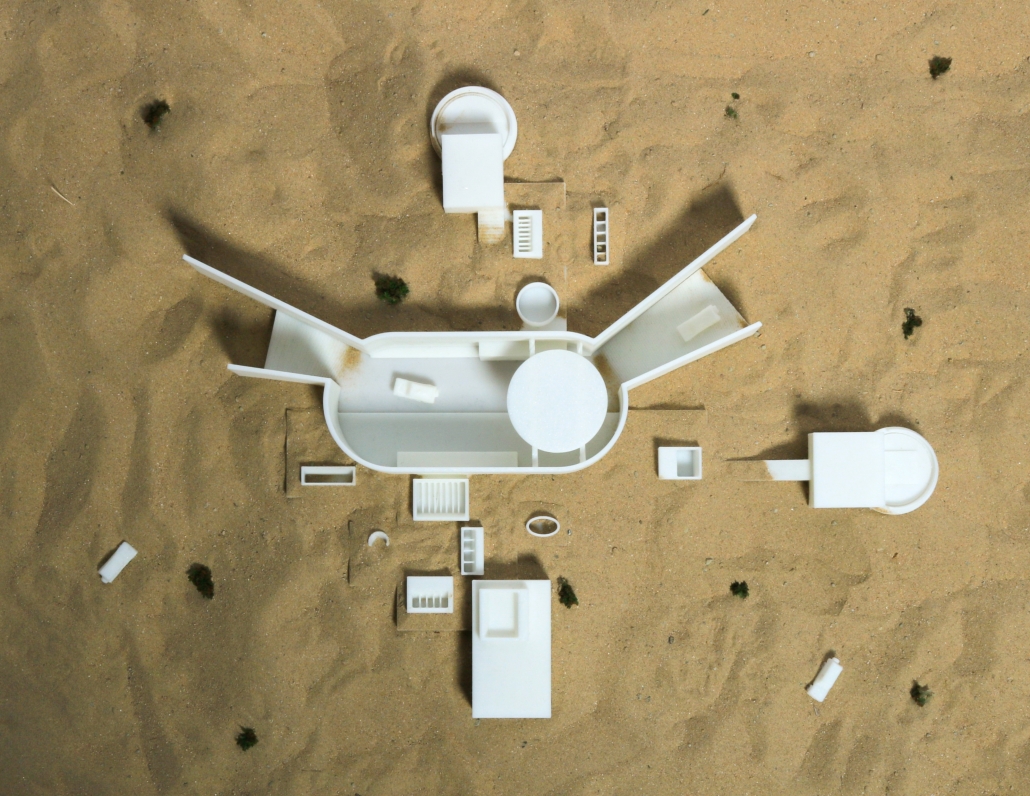
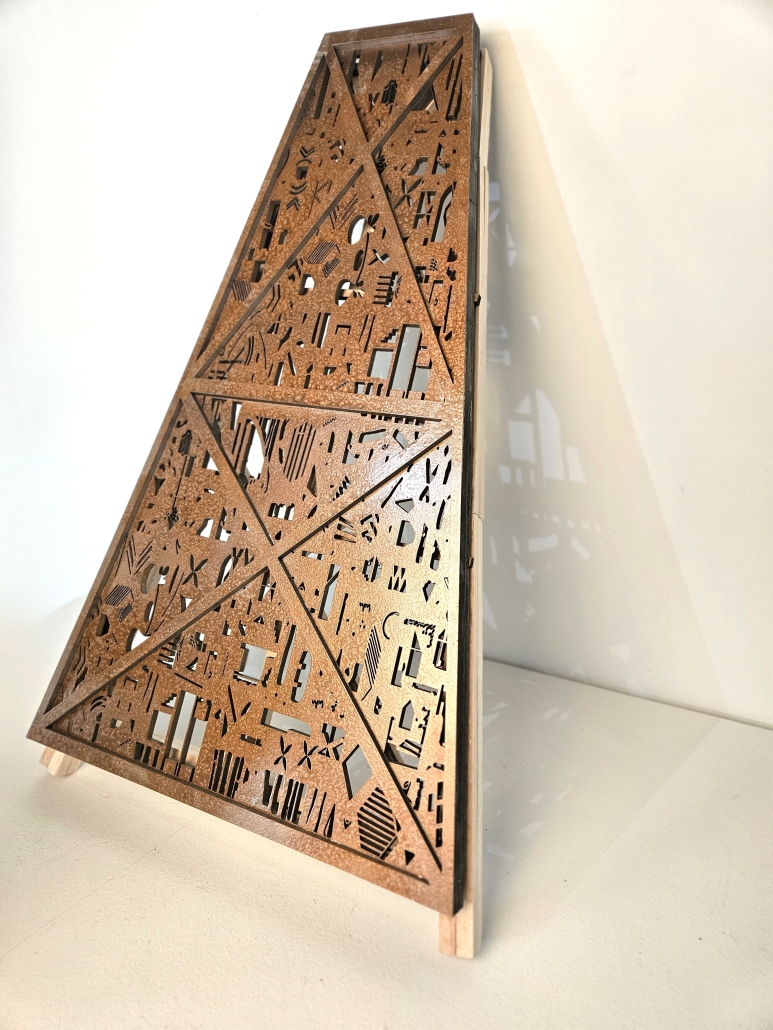
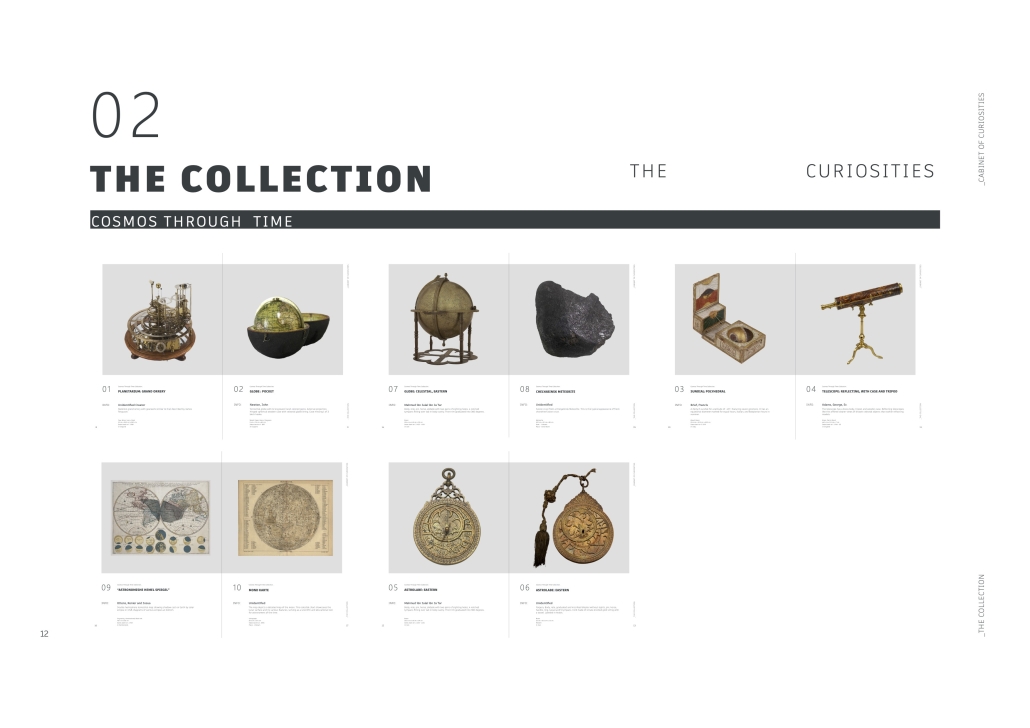
In the vast stillness of the desert, this residence becomes a compass of time—a place where shifting sands echo the dance of the stars, grounding life within the endless drift of the cosmos. The design emerges from the client’s collection of astrological instruments, shaping spatial arrangements that enhance functionality and interaction. Objects inform the layout, with dedicated areas that invite exploration and observation. Strategic openings frame views of the night sky and desert, enriching the experience of celestial observation. This residence serves as both a home and an observatory, fostering a profound connection to the cosmos while celebrating the beauty of time and change. (Text: Salma Hani Mubarak Ali)

Cabinet of Curiosities: Exploring the Ensemble (aka, house of the collector) is an option studio utilizing the 16th-century-18th-century phenomenon of the Cabinet of Curiosities or Wunderkammers (wonder-rooms) as a point of departure to explore the exhibition of ensembles of artifacts with the goal of creating spatially charged architecture.

Working as individuals or in pairs, students had the opportunity to curate their own collection of curiosities and develop a novel architectural language to facilitate the display of the exquisite objects. Associated with the collection was a real or imagined client that served to further drive a generated domestic program. With the scale of the overall proposals being purposely manageable, students had the opportunity to focus on developing architectural assemblies that directly engage with issues of materiality, connections, and details. As such, physical and digital models were heavily employed as tools to study the interplay of elements at a series of scales

This project won the RIBA Gulf: Future Architects 2024 Overall Best Model Award.

Click here to learn more.

 Instagram: @salma.hani.ali, @gregoryspaw
Evermore: A Cemetery For The City by Mo Karnes, B.Arch ’25
Mississippi State University | Advisors: Jassen Callender, David Buege, Aaron White, Mark Vaughan & David Perkes

My uncle died less than two years before I was born. I never met him, but his death is only an obstacle in my ability to know him. Chris was an artist and poet who left behind many things for me to know him by, including a poem entitled Evermore, written during his struggle with AIDS. The meditation is: 

I will walk unlonely,

Holding me up

As I begin to fall,

You Lead the way

And sometimes follow.

Our passage now is

Evermore.

(To be repeated, Unending).

To be ‘unlonely’ is a profound response to the impending, seeming loneliness that is death. Loneliness for those dying and those left behind. Chris’s poem is not just a meditation for himself, but for those struggling with loss. As a dying man, Chris places himself shoulder to shoulder with the reader; their journey is one and the same.

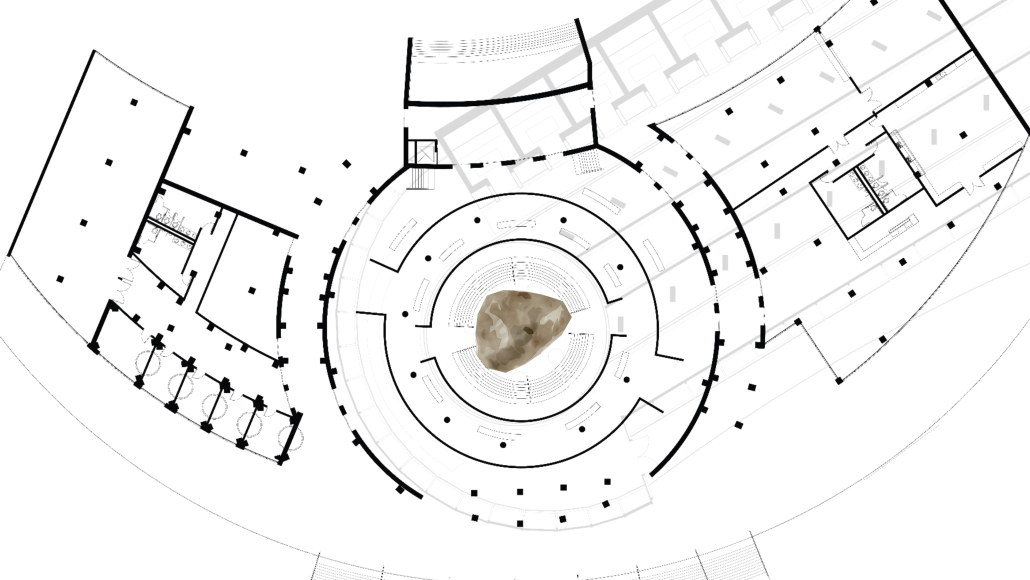
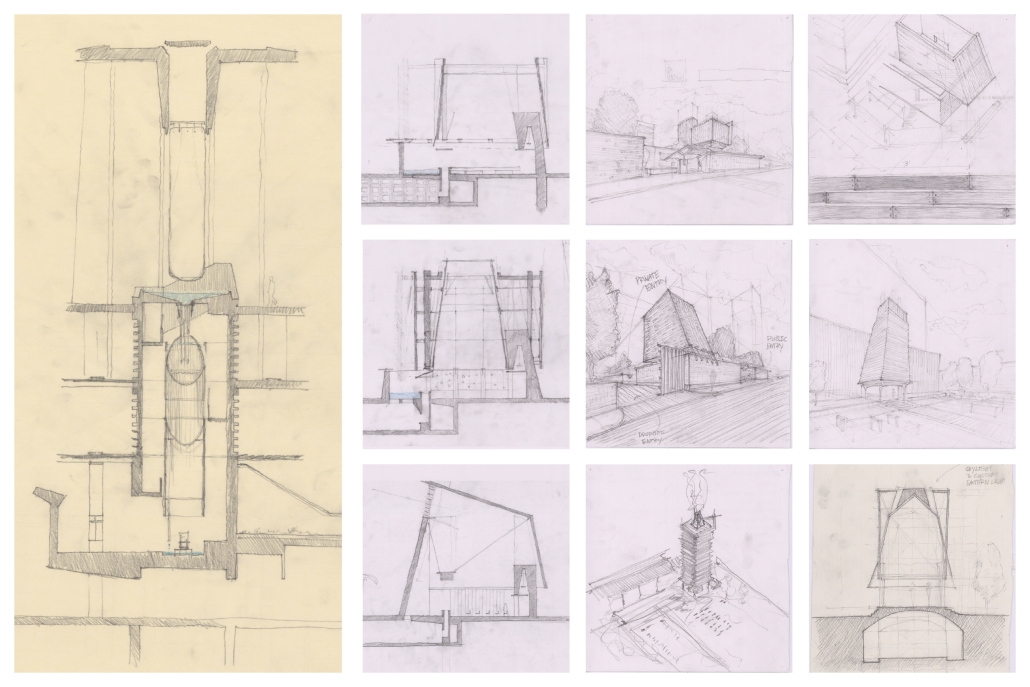
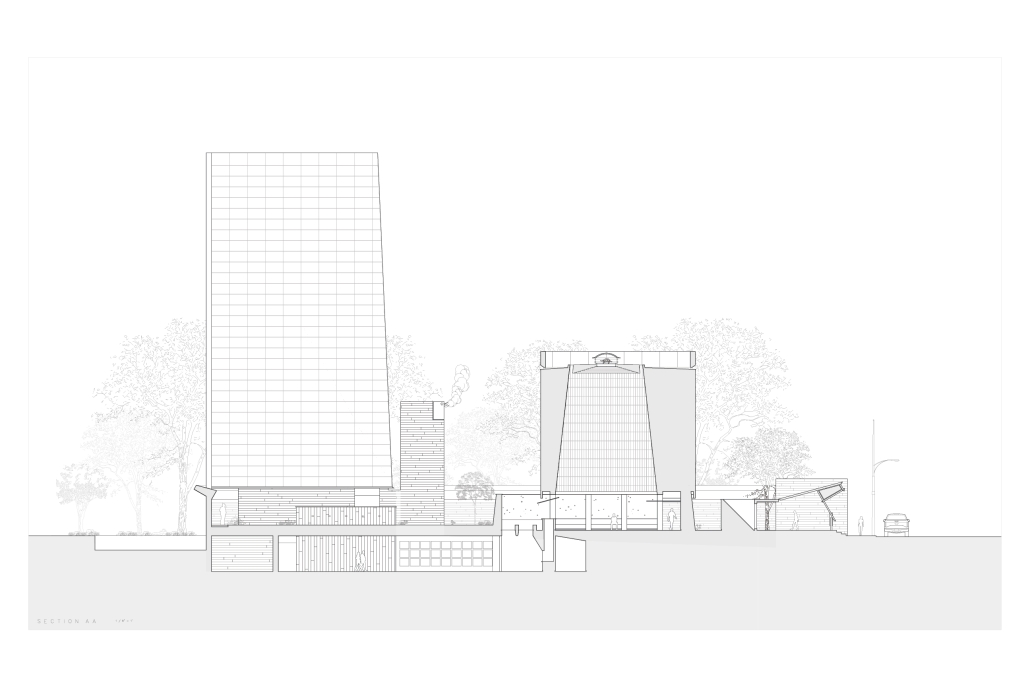
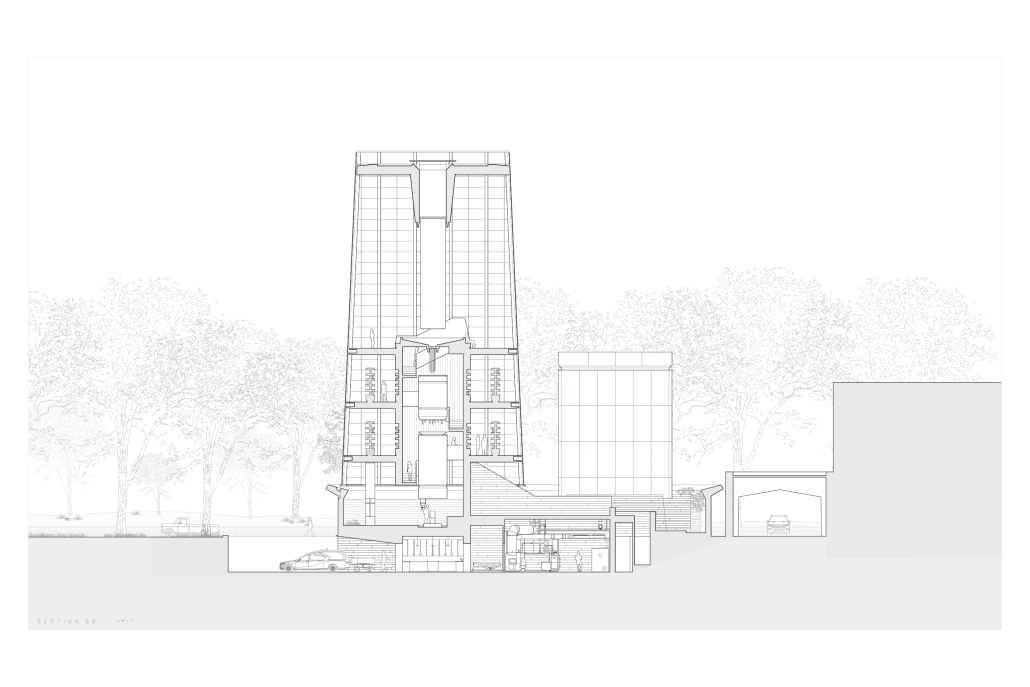
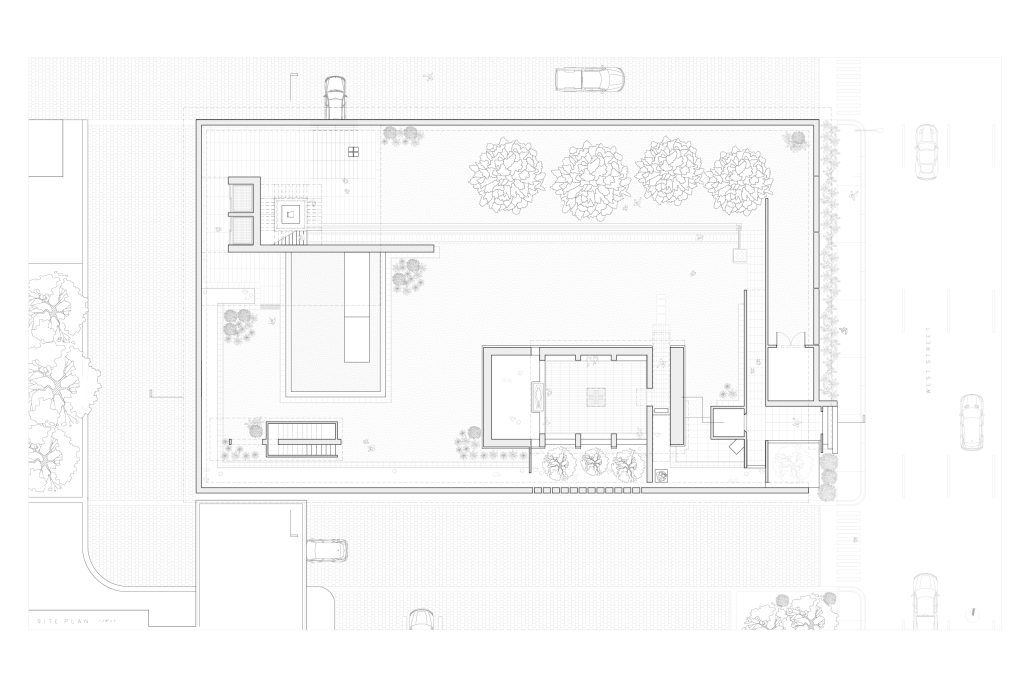
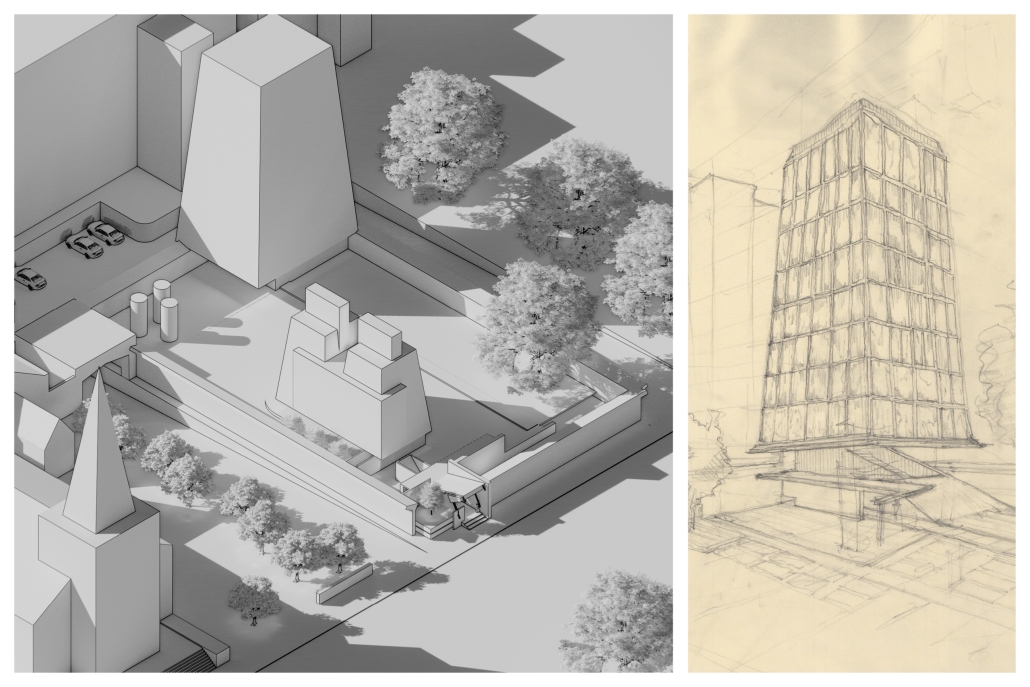
“Evermore: A Cemetery For The City” is a small cemetery complex adjacent to the Cathedral of St. Peter the Apostle in Downtown Jackson, Mississippi. The complex comprises a crematorium, vertical columbarium, and chapel. The site is rectangular, bound on all sides by concrete walls with only one threshold for entry. Two masses seemingly float behind the concrete boundary walls that veil them, the smaller chapel and the larger columbarium. Both stoic in form, they disguise the intricacies hidden in the interiors of their masses.  

The ambition of this project is to integrate the awareness of mortality into the city, while supplying architectural means to confront it. This awareness is not a means of oppression, but an attempt to convey the gift that is life. This cemetery is intended to be a public space where inhabitants can experience the city with citizens who came before them, inducing a relationship with the past, generating an appreciation of those who came before, and propelling the city forward with the intent to befriend and mentor the future.  

This project received the CDFL Capstone Studio Travel Award. 

Instagram: @mo.karnes, @jassencallender
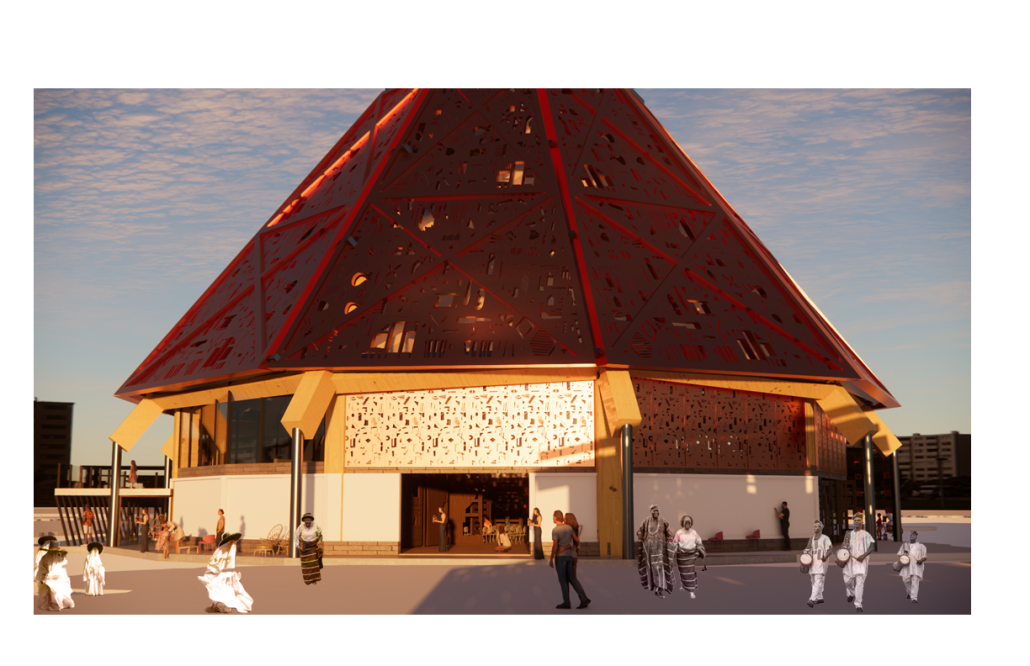
IMAGINATIVE REALITY: INVENTION OF SYNERGISTIC NARRATIVES by Chey Isiguzo, M.Arch ’25
Toronto Metropolitan University | Advisor: Lisa Landrum

Imagination is both an act and a familiar, safe space, evoking nostalgic feelings rooted in our reality. 

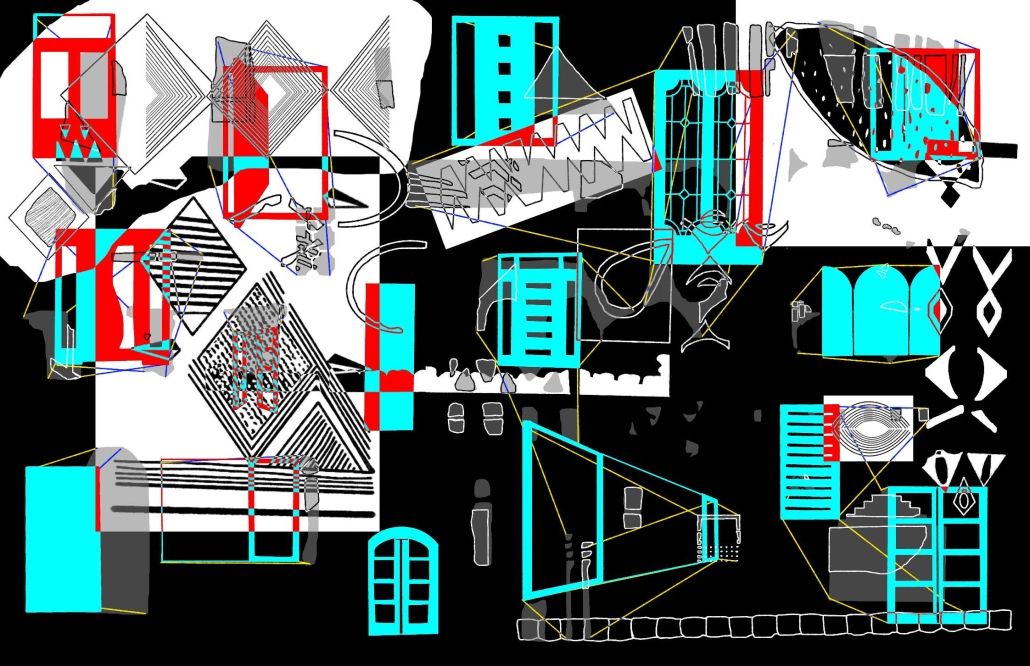
This space can become unfamiliar when cultural expressions changes, leading to multifaceted identities and undeveloped narratives. This dynamic contributes to cultural conflict and highlights the juxtaposition of traditional and contemporary African architectural narratives. As a space, imagination can generate narrative 

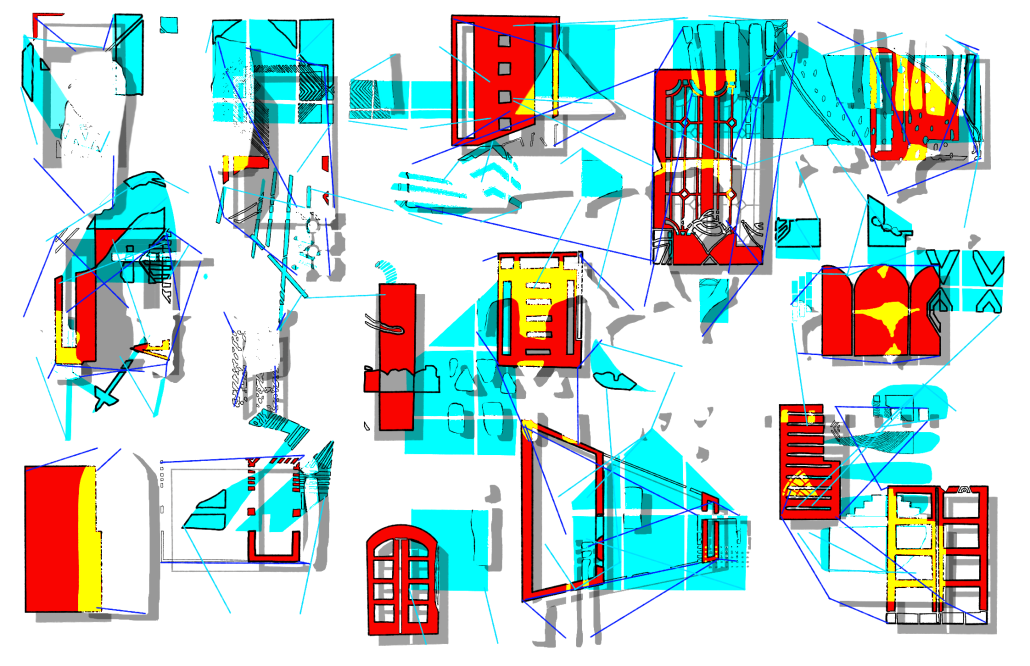
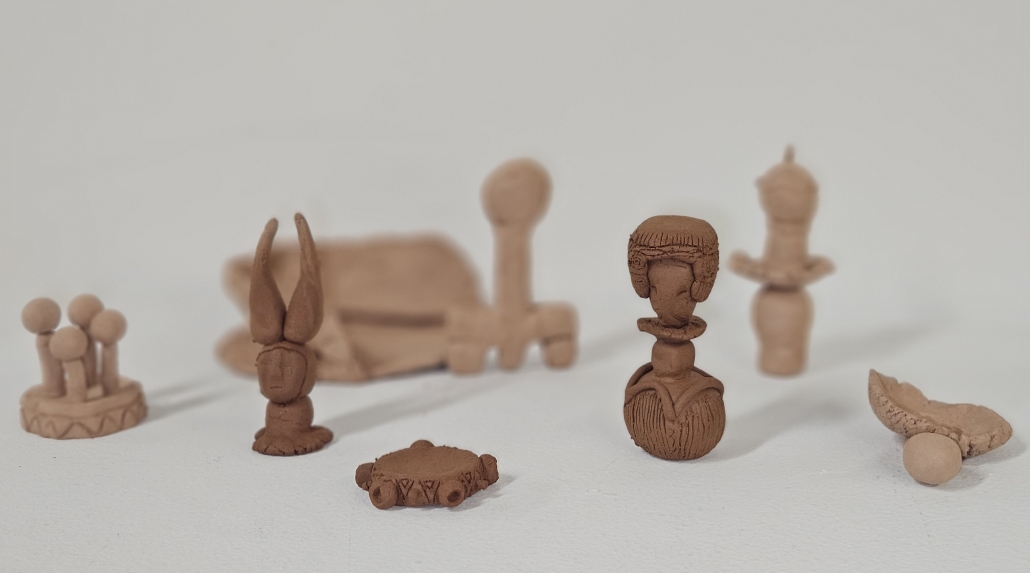
characters and elements by creating synergistic stories that incorporate traditional craftsmanship into contemporary African architecture. The imaginative process consists of three components. Imagining while thinking is an act that uses mental images from memories, dreams, fantasies, or visions to create one’s reality. Imagining while making is the act of craftsmanship used to speculate the distinction between traditional and contemporary architectural narratives through the lens of cultural expressions. Imagining while drawing is an act of translation by utilizing narrative characters—building elements like windows and doors—to dissect fragments of both traditional and contemporary architecture to find new narratives. 

These narrative characters work alongside structural elements, such as walls, roofs, layouts, courtyards, and compounds, to convey new stories that showcase materials and design techniques rooted in Igbo craftsmanship. To develop synergistic narratives, one can explore the evolution of traditional African craftsmanship, particularly within Igbo culture, across ancestral, post-colonial, and contemporary contexts. This exploration reveals how the architectural narratives of traditional and contemporary styles are increasingly distinct. Consequently, this imaginative space becomes a reality that examines the relationship between what is real and what is envisioned through architectural craftsmanship.

Instagram: @sumisi000, @ucisi_studios, @tmu_archgrad
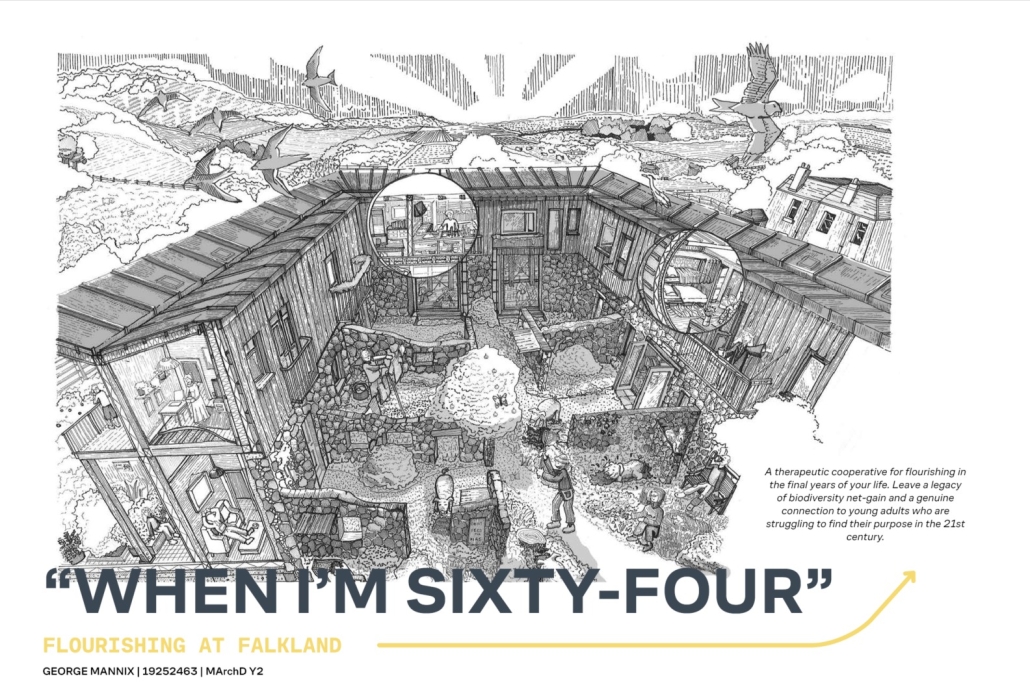
When I’m Sixty-Four: Flourishing at Falkland by George Mannix, M.ArchD ’25
Oxford Brookes School of Architecture | Advisors: Melissa Kinnear & Alex Towler

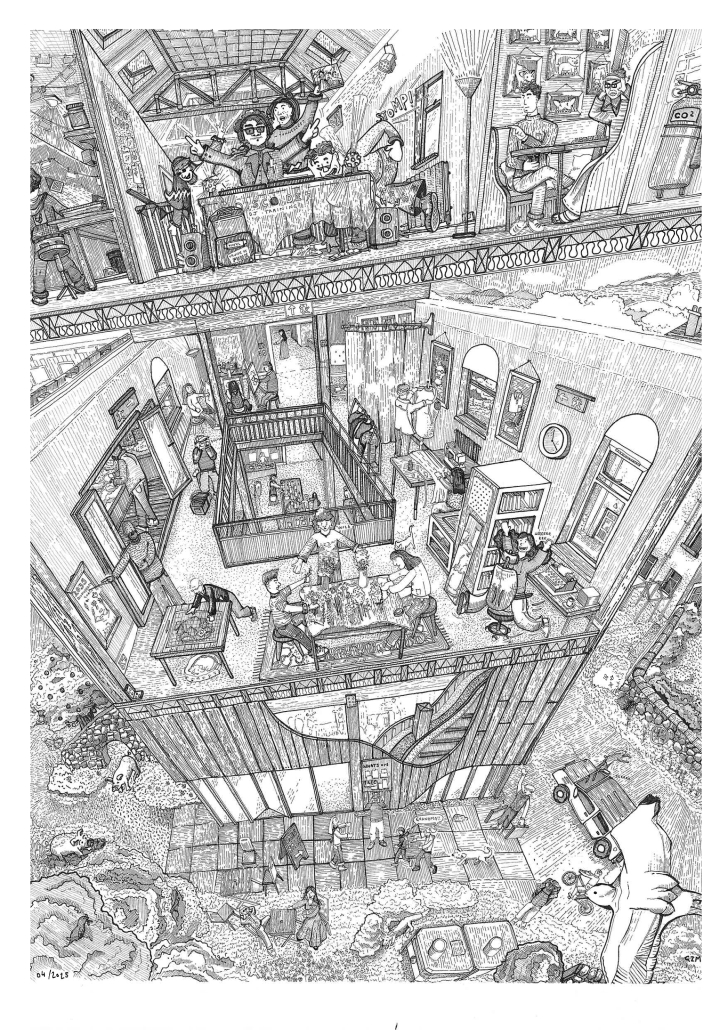
This project proposes a “therapeutic cooperative” that reimagines later life as a time for purpose, legacy, and connection. Designed for people aged 64 and over, the initiative creates a living environment where older adults can flourish by sharing life experiences with younger visitors while contributing to environmental and social regeneration. 

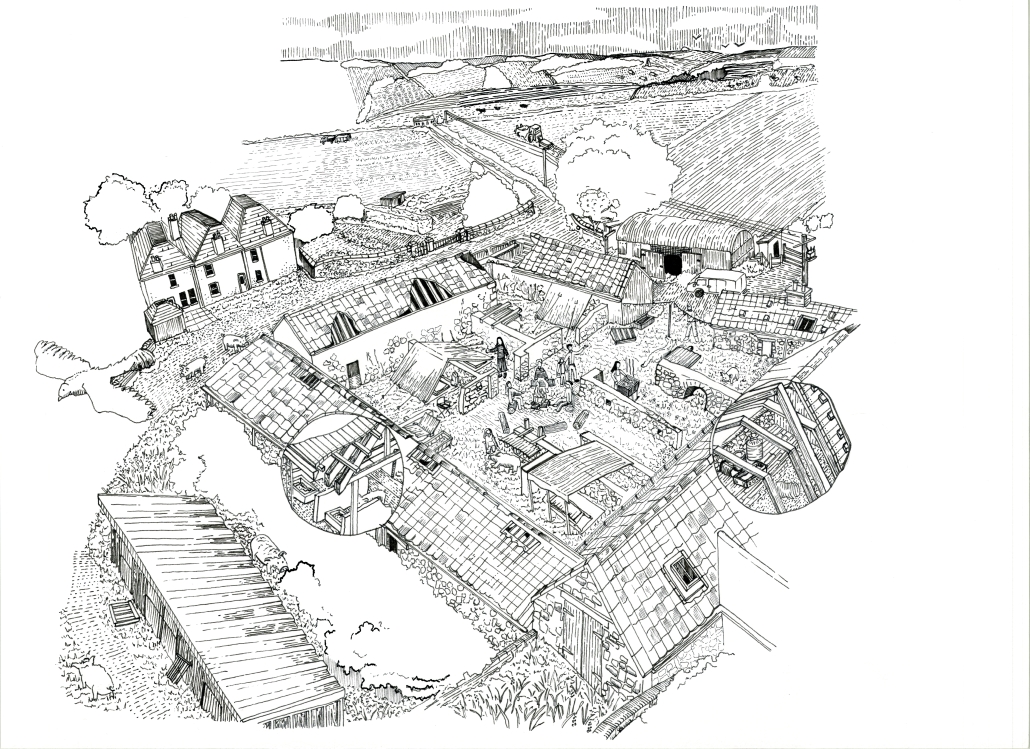
Central to the concept is the cohabitation of residents with Tamworth pigs, which serve both symbolic and ecological roles—facilitating intergenerational dialogue and promoting biodiversity through trophic rewilding.

Located at Kilgour, a Victorian farm steading on Scotland’s Falkland estate, the site carries historical significance and a past tied to pig-rearing and the celebration of endings. 

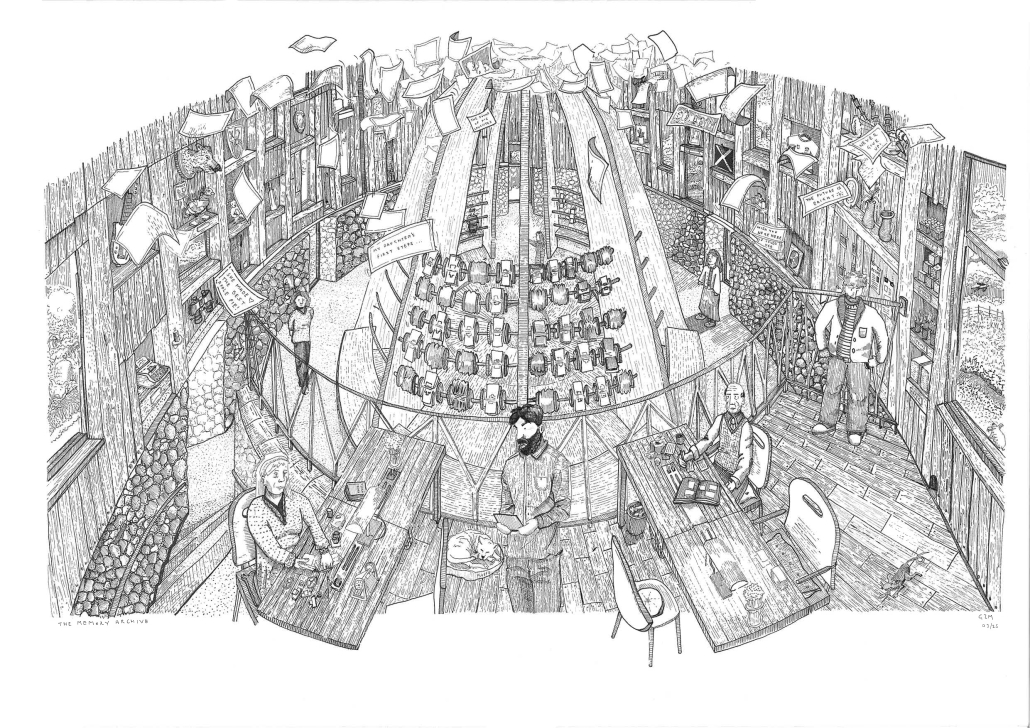
Accommodation includes accessible apartments, communal gardens, and a biodiversity-rich courtyard. Pigs will live in creatively built “Ad-Hog” styes using reclaimed materials. A chapel-like “Memory Archive” will hold personal stories of residents’ lives, offering a space for reflection and remembrance.

The project unfolds in three phases: first, clearing and revitalising the site with community involvement; second, welcoming the first residents and establishing the Memory Archive; and third, expanding the model across Scotland to transform abandoned steadings and boost natural regeneration.

Younger visitors, whom we have dubbed “biodiversity-backpackers,” can stay in on-site hostel lodgings, with the hope of fostering meaningful interaction between generations. Funding comes from elderly participants downsizing their homes, combined with national grants, giving them control over their later years.

Ultimately, this initiative responds to the growing issue of isolation among the elderly in Scotland. By embedding legacy, memory, and biocentric living into the design, it aims to help people see out their days with dignity whilst living with renewed purpose.

This project received the Ackroyd Lowrie Prize.

Instagram: @georgemannix, @ds3_obu
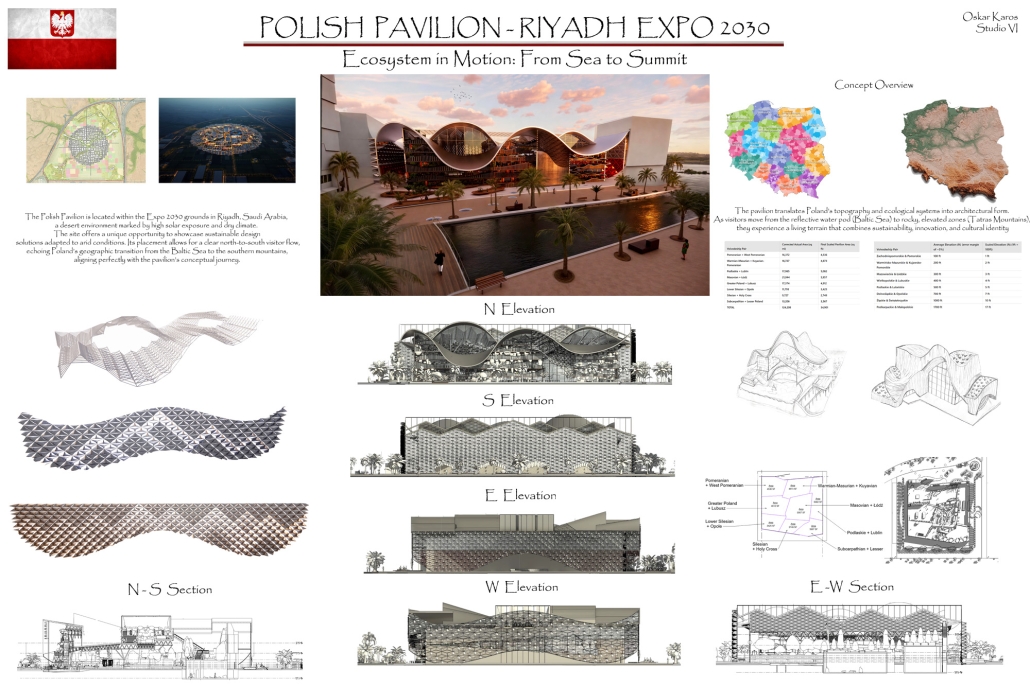
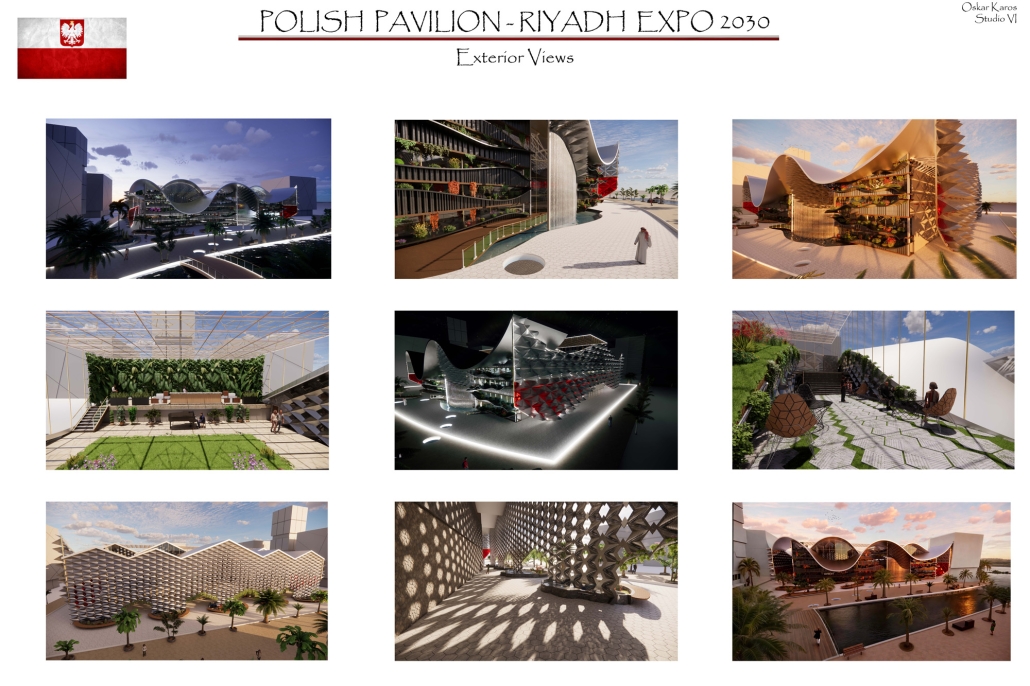
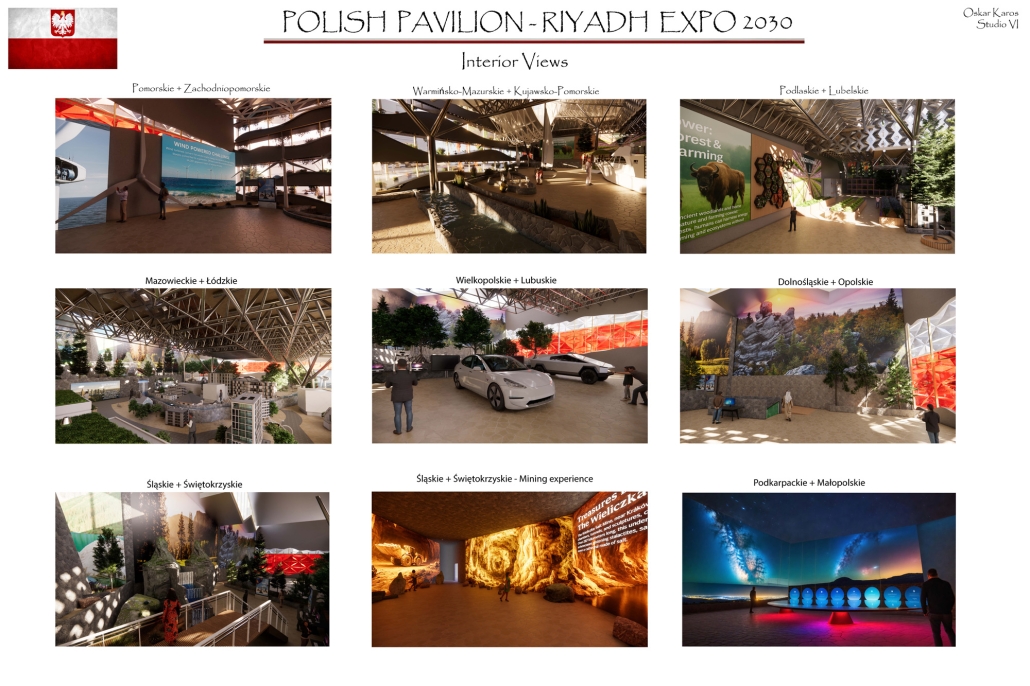
POLISH PAVILION – RIYADH EXPO 2030 by Oskar Karos, B.Sc. in Architecture ’25
University of the District of Columbia | Advisor: Golnar Ahmadi

Set in Riyadh for Expo 2030, the Polish Pavilion reinterprets the nation’s geography and ecological identity through architecture. Designed as a living map of Poland, the pavilion invites visitors to journey from the southern Tatra Mountains to the northern Baltic Sea, experiencing the country’s topography, climate, and innovation within one continuous landscape. The project explores how architecture can embody an entire nation’s ecosystem, transforming exhibition space into a self-sustaining organism.

Poland’s diverse terrain—from its rugged mountains to fertile plains and coastal winds—inspired a spatial narrative divided into eight regions. Each represents two neighboring voivodeships, blending their natural and technological identities: wind power in Pomorskie, hydropower in Warmińsko-Mazurskie, sustainable farming in Podlaskie, and smart urbanism in Mazowieckie, among others. 

Visitors move northward along a symbolic Vistula River, linking interactive installations that demonstrate Poland’s leadership in renewable energy, circular economy, and ecological stewardship. Constructed with steel, wood, stone, and glass, the pavilion merges material authenticity with sustainability. A closed water cycle system replicates natural evaporation and rainfall, powering greenery and regulating humidity. The accessible green roof offers shaded paths and aerial views of Poland’s “living topography,” blending innovation with environmental harmony.

Beyond a national exhibition, the pavilion is a statement of coexistence—between people and nature, culture and technology. It celebrates Poland not through static displays, but as a breathing ecosystem where every element, from water to wind, participates in a cycle of renewal.

Instagram: @Golnarahmadi

Stay tuned for Part XI!
2024 Study Architecture Student Showcase - Part XI

Architecture and design can serve as avenues for storytelling. Part XI of the 2024 Study Architecture Student Showcase includes designs that express emotions, experiences, and concepts. From garments and cinema to a building that serves as the main character – each project tells a story.

The presented narratives convey the experiences of displacement, highlight marginalized voices, share themes of life, and detail the connections between time and the built environment.

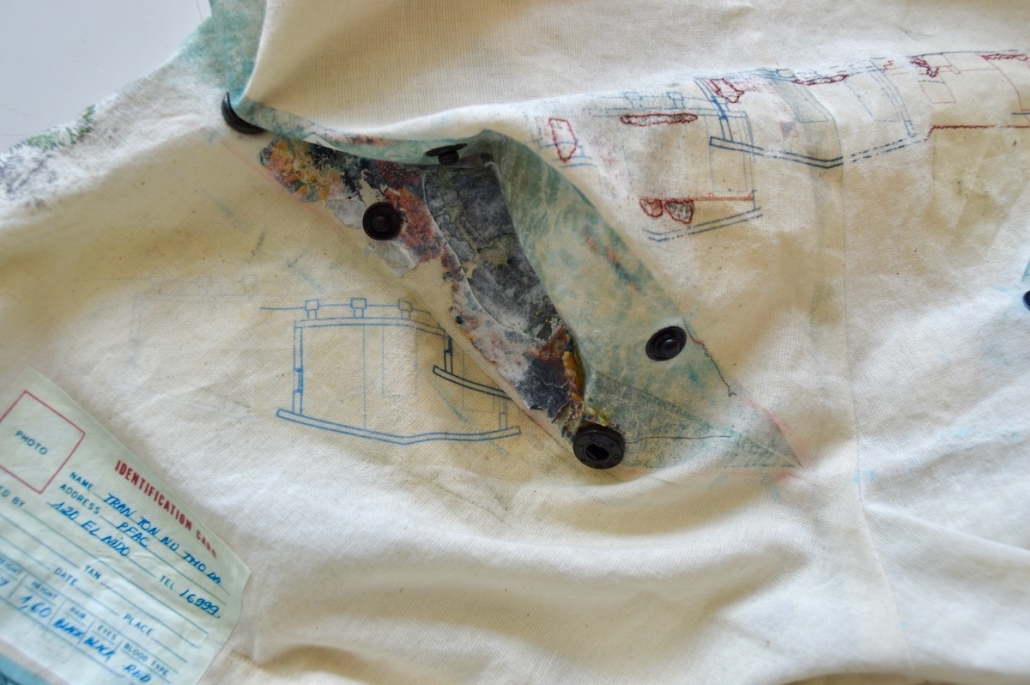
No Place Like (No) Home: Architecture and Displacement through Storytelling by Meena Chowdhury, M. Arch ‘24
University of British Columbia | Advisor: Rana Abughannam

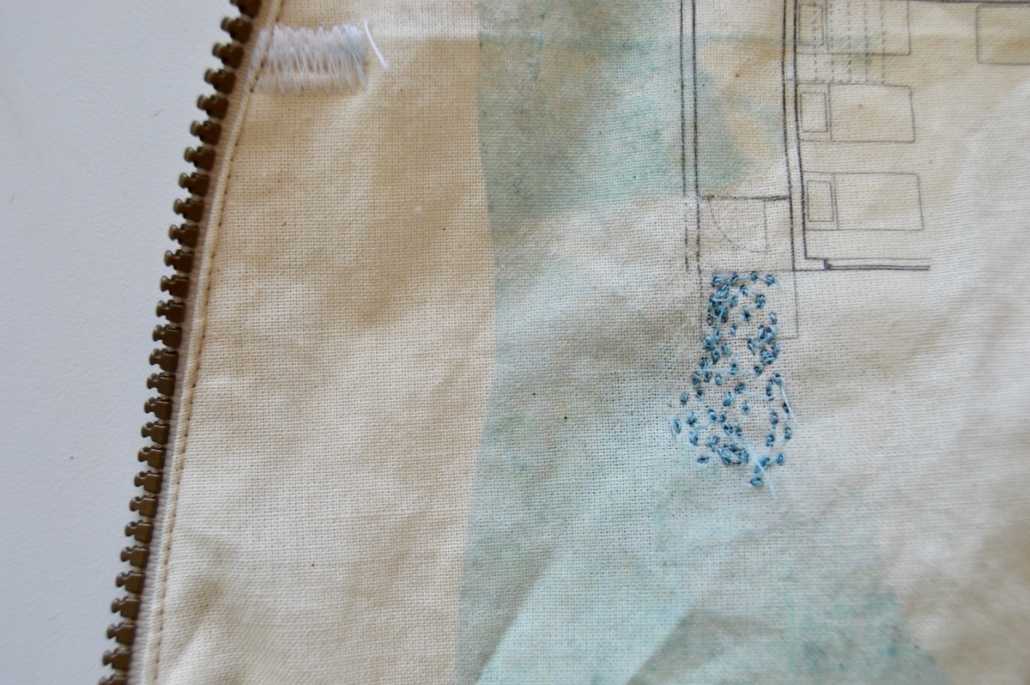
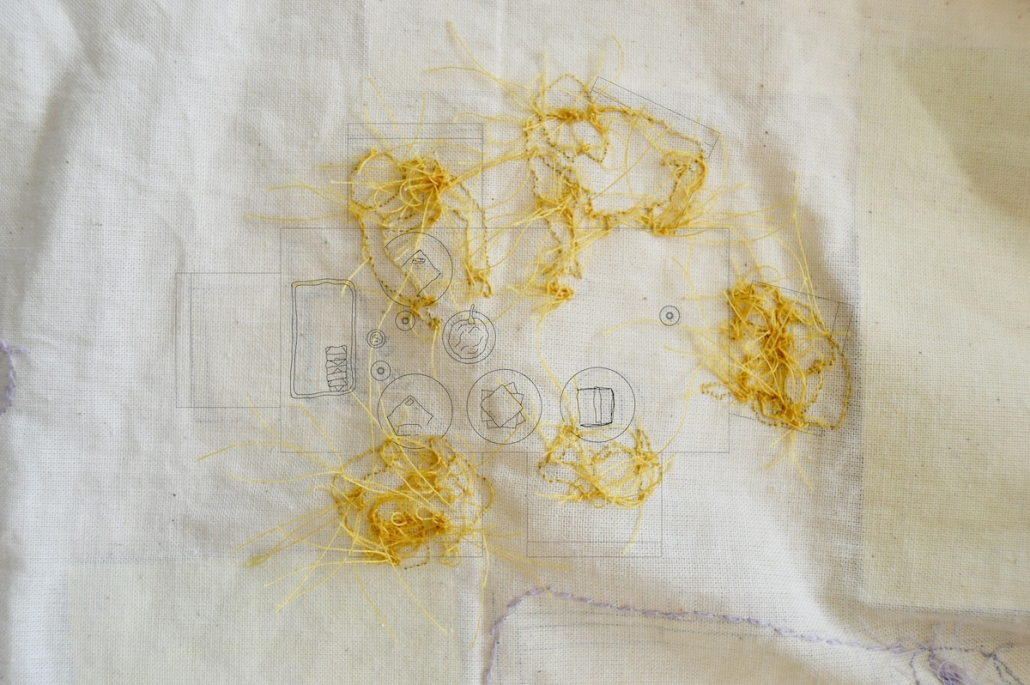
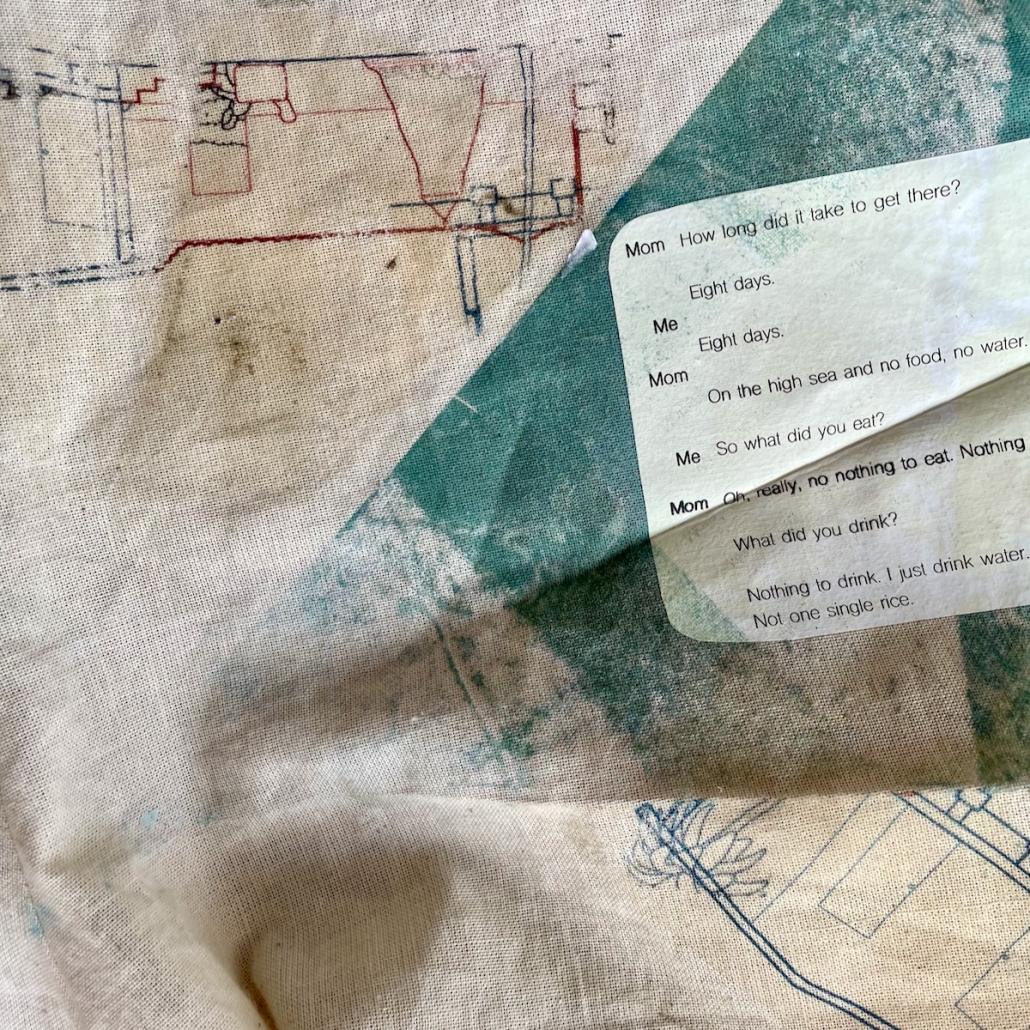
This thesis explored my mother’s story of displacement in an attempt to show that reconstructing architectural representation can help showcase underrepresented stories. While hearing my mother’s story, I realized that she had an interesting relationship with architecture and time. She was forcefully moved from place to place without ever knowing what was going to happen next, and she would always make changes to her space in order to adapt to her needs. The current way to represent architecture cannot capture this complex relationship between space and time. Architects need to develop new ways of representing the spaces that refugees live in and that highlight these temporal aspects.

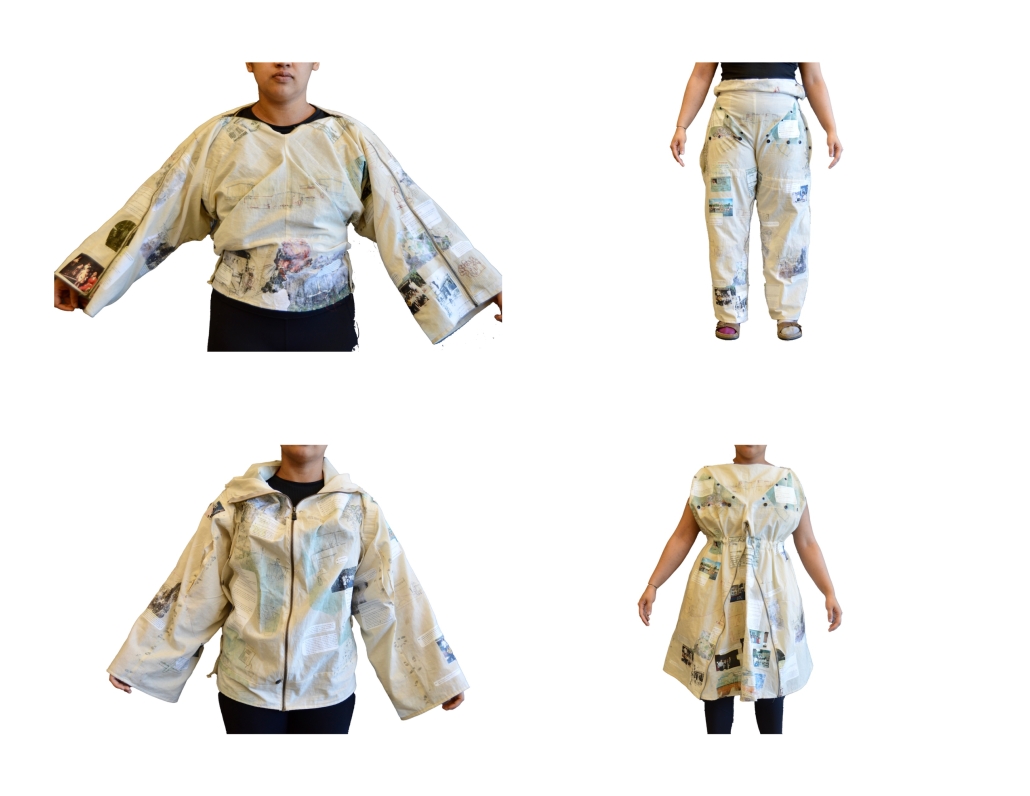
I created a garment that incorporates elements of my mother’s story as a refugee as she verbally reported them to me, as well as visual representations of multiple places where she lived as a refugee. Using the fabric allowed me to experiment with this notion of time. When the garment folds, rotates or transitions, it recontextualizes the drawings on the garment. The garment transitions to different articles of clothing based on my mother’s transition to different locations. It helps show that, for a lot of people who are displaced, architecture is not anchored by site. Most people who are displaced do not know the context of the location they are currently in, and that is what happened to my mom. She didn’t go through the locations, rather the locations went through her. This garment rethinks architectural representation, as self is the site. Hopefully, this creation will open new doors on how to think about representation in architecture.

This project won the Abraham Rogatnick Book Prize.

Instagram: @chowdhury.projects, @ubcsala

When Words Become Worlds by Catherine Chattergoon & Angelina Widjaja, B. Arch ’24
Pratt Institute | Advisors: Cathryn Dwyre, Evan Tribus & Pierre Alexandre de Looz

“When Words Become Worlds” is a project that speaks to the potential for us to bring our interior lives into public space and center marginalized people and voices in shaping new futures, realities, and worlds through storytelling and language. We see a framework of learning and unlearning as the ways we reconnect to and understand our diasporic identities, ancestral knowledges, and (mother)land(s). Through this framework, public space becomes a living archive, both a place and a process that allows us to record ourselves and create spaces that are receptive to change, constructed from new forms of building and community, and begin to move us toward transformative possibilities for the future.

The capitalist society that we live in is embedded in privatization and reflects the vision and voice of those who are already in a position of power and privilege. Infecting our public spaces and educational institutions, the pervasiveness of privatization forces us to consume and conform to top-down knowledge and “truths,” becoming an obstacle to self-expression, creativity, and, ultimately, our ability to shape our own worlds. Given that the built environment has historically maintained privilege by censoring, surveilling, and policing to perpetuate the immobilization of the oppressed, how can storytelling and language become means through which people access design and architecture to transform their own environments and create a future shaped by love and community?

Our project is cyclical and intergenerational. It is a space to gather, to be entangled with the land and with each other, and to learn about ourselves and the world within our world and with others. It is a space to learn and unlearn, to touch and be touched, to perform and to listen, to be dirty and to be wet, to engrave and endure, and to be free and to love, to build upon and honor our untold histories. This project is a model and manifestation for the creation of public space and the built environment to be shaped by community members and collective values, where design becomes the means for people to have agency in making change.

This project won the Top Honors: 2023/2024 Degree Project Award.

Instagram: @angie.9800, @angiegmbr, @cchatter13, @pneumastudio, @pneumacat

joy! [as an act of resistance] by Harrison Lane, M. Arch ‘24
Carleton University | Advisor: Piper Bernbaum

The concept of joy, the feeling of joy and the experiences of it are something I am deeply interested in and I have this feeling that you all might be, too. I also have this feeling that as we are wading through it all [the wake of the pandemic, major social injustices, the world is on fire, my dog peed on the carpet, am I killing all the bees by not having wildflower gardens? Oh no, is there lactose in this?], it has become difficult to remain, or even want to be joy-full. Joy, fun, play, or even laughter are almost punk rock in their defiance of the weight of all other issues we collectively and individually shoulder. For thousands of years, joy has been dissected and interpreted, it has even had its existence denied, but joy is kind of like a morphing confusing cryptid, impossible to pin down and where every time you think you’ve really got a handle on it and attempt to capture its likeness, only a blurry photo akin to Sasquatch remains. 

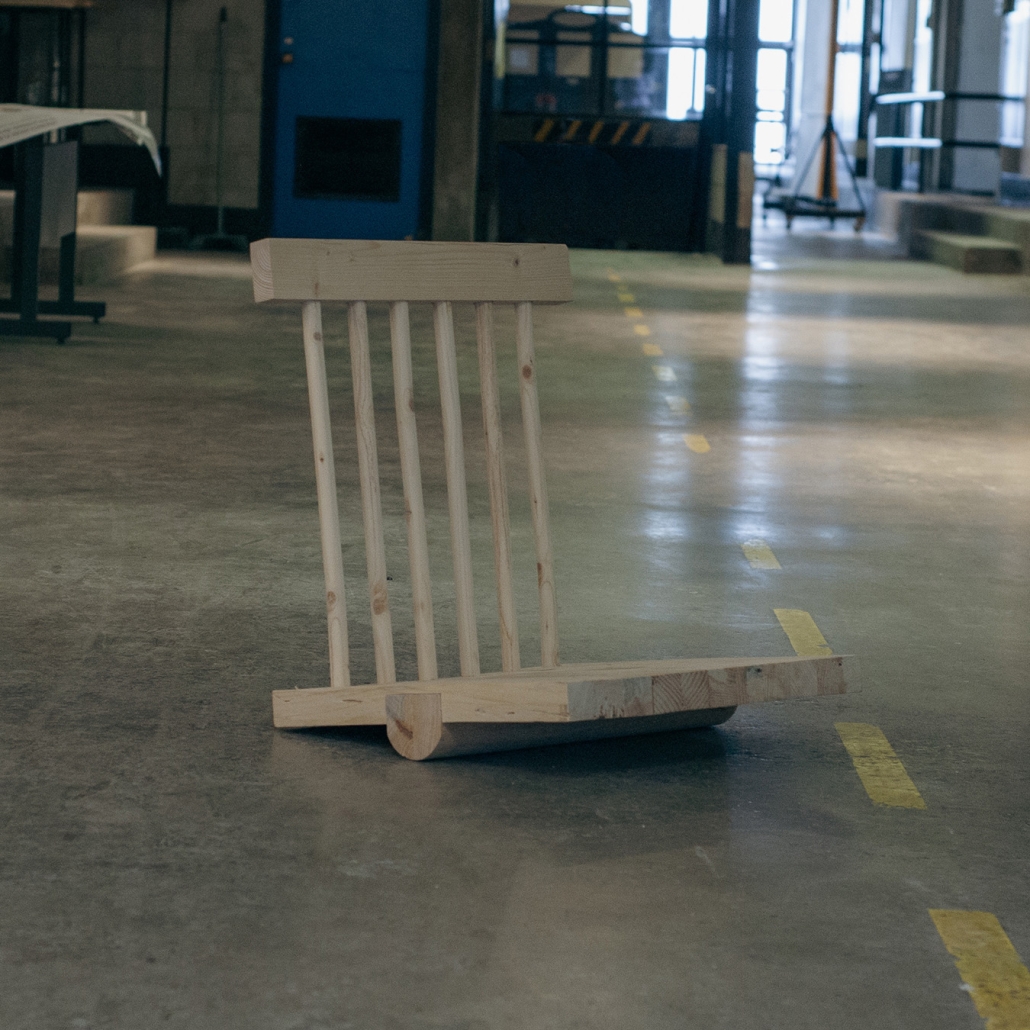
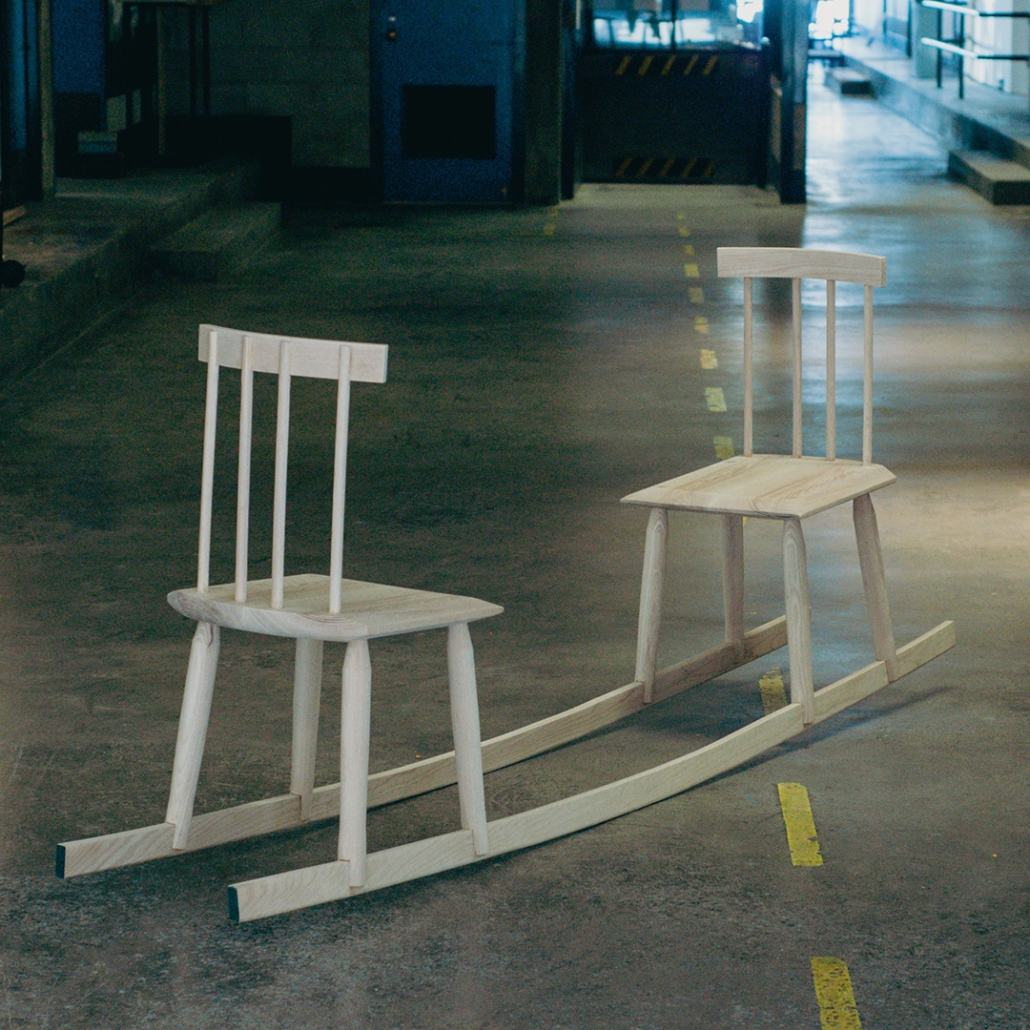
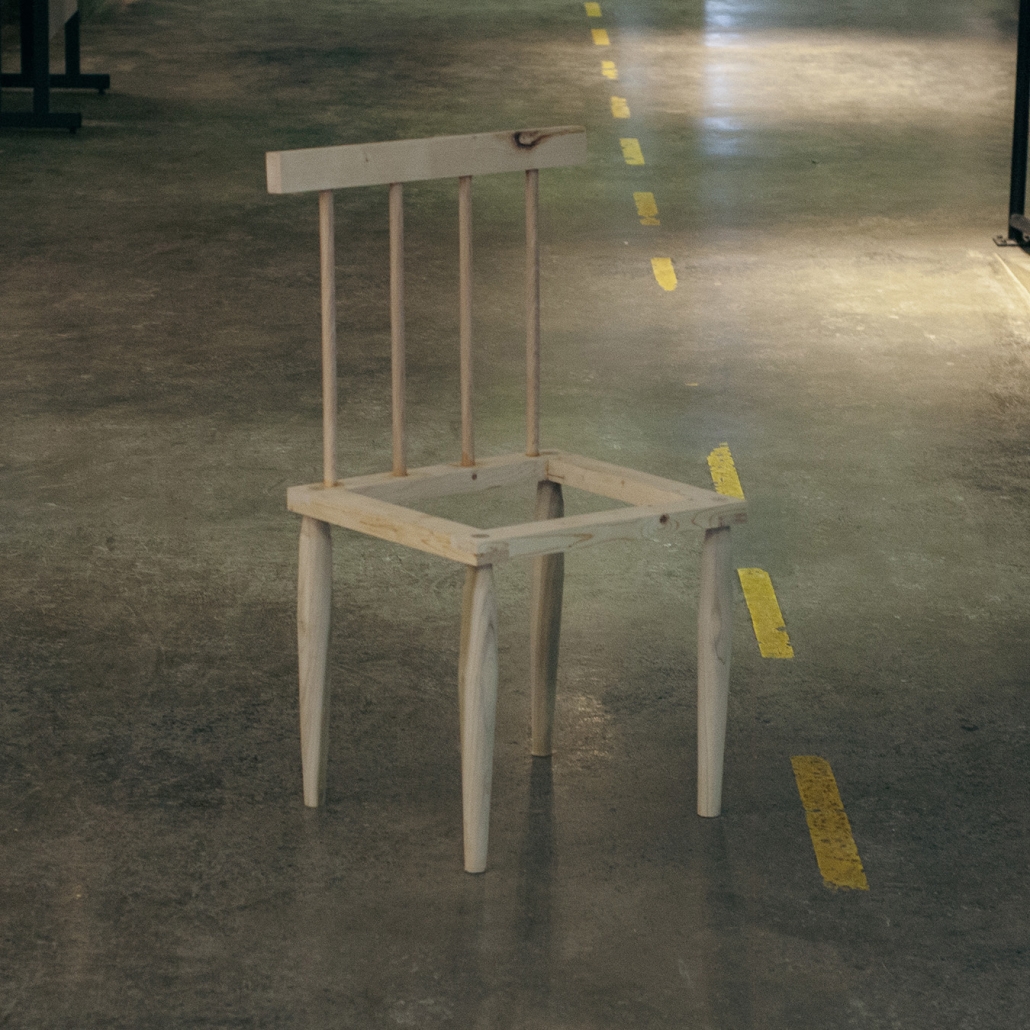
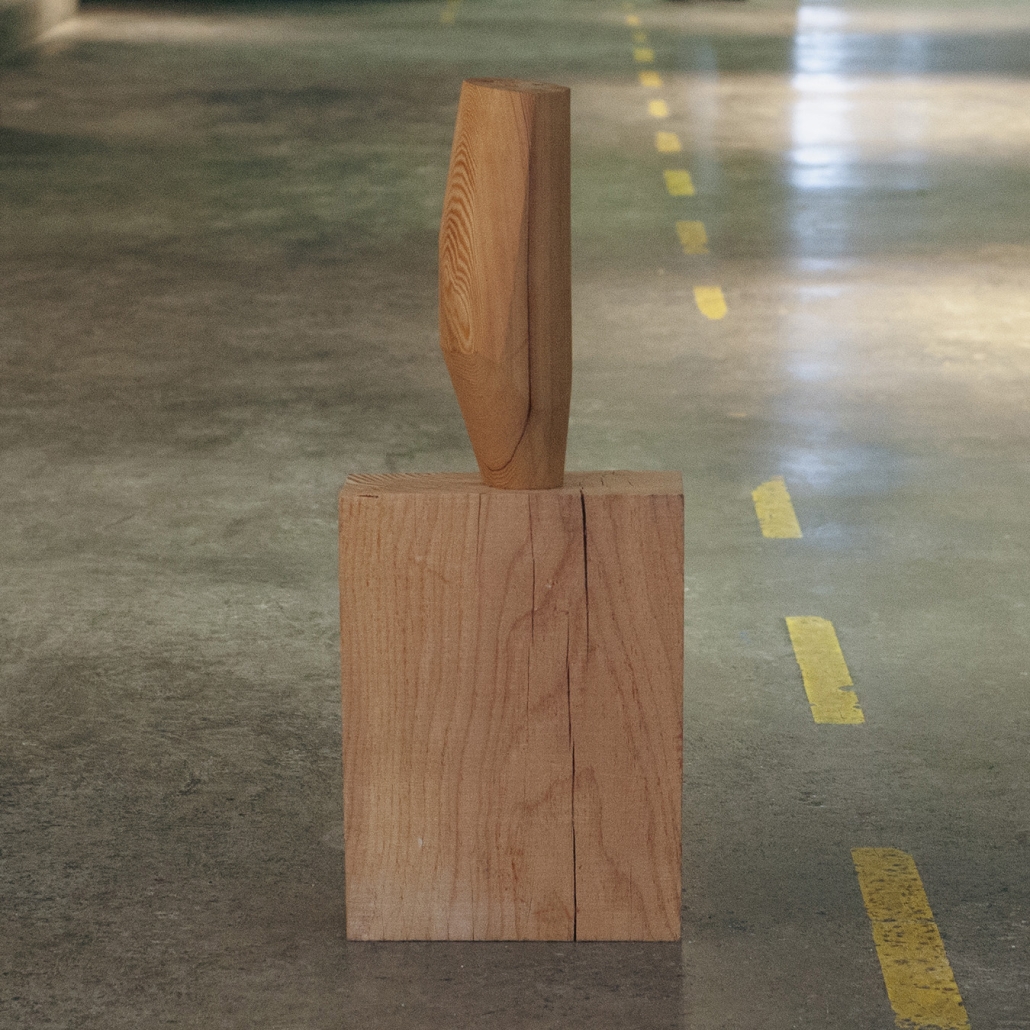
So, my leather jacket-metal stud-teenage angst-loud music-sweeping bangs-esque response to this feeling is as such: What does joy look like while it resists? When it defies convention, plays with archetypes, and has fun with an idea? So I tried to answer that. I interpreted theories of joy as furniture, and made sure to feel joy as I built them. And then built a curriculum with the joy of learning and teaching at its core. 

My thesis is a reflection through a series of pointed questions about what joy truly and deeply means. It also examines joy through the conduit of resistance to show how it can manifest as furniture, a pedagogy, or maybe even a way of life. I wanted the culmination of my architectural education to be fun, to offer insights into big questions about seemingly simple things, and most of all, I wanted anyone who stumbles across it later to be so deeply moved that they have no choice but to inject joy as vigorously and recklessly into all that they do, just as I have.

Instagram: @hdslane, @piperb, @carleton_architecture

METAMORPHOSIS by Shaikha Al-Khazim, M. Arch ’24
Lawrence Technological University | Advisor: Masataka Yoshikawa

In selecting “The Epic of Gilgamesh” for this piece, I was drawn to its exploration of fundamental life themes, including mortality, friendship, and the intricate dynamics of the human-divine relationship. The narrative unfolds as a man ventures beyond the confines of his town in pursuit of profound insights into life and the inevitability of mortality. Throughout his odyssey, he grapples with a spectrum of emotions, ranging from the depths of loss and grief to the heights of happiness and victory.

Upon his return to the town, a transformative metamorphosis has occurred within him. The beliefs that once anchored him have undergone a profound shift. In essence, the epic serves as a poignant reflection on the inherent human struggle with mortality, underscoring the pivotal role of companionship in fostering personal growth and prompting contemplation on the nuanced boundaries that exist between mortals and the divine.

In translating these themes into visual art, I opted for abstract shapes to symbolize the complexity of emotions encountered throughout the journey. The careful selection of colors serves to visually articulate the intricate interplay between these nuanced emotions, thereby encapsulating the rich essence of Gilgamesh’s narrative.

This project received the Lawrence Technological University Dean’s Award.

Instagram: @shaikha.alkhazim, @masataka.yoshikawa

Other Time Land by Leming (Michael) Jin, B.S in Architecture ’24
Washington University in St. Louis | Advisor: Zahra Safaverdi

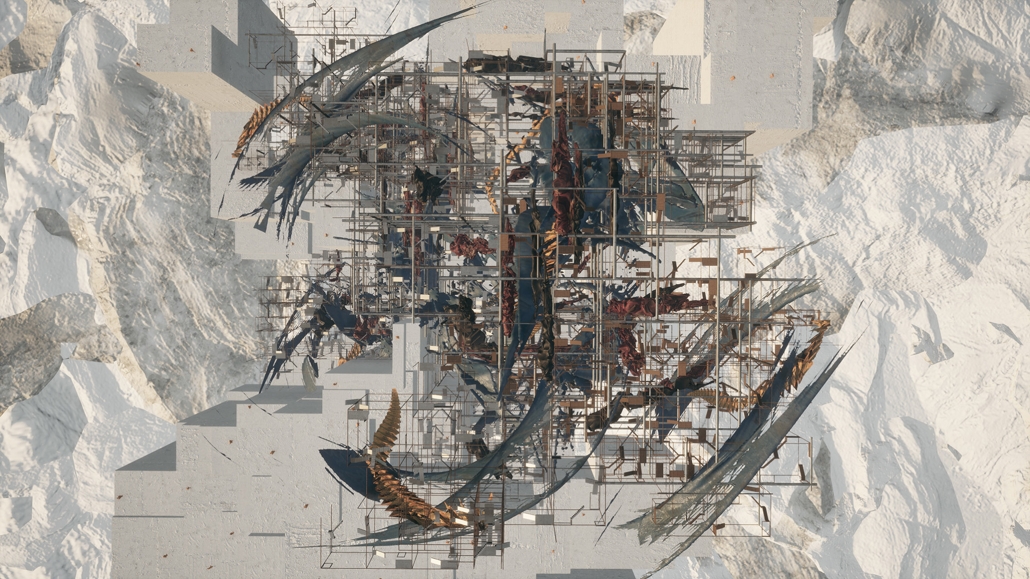
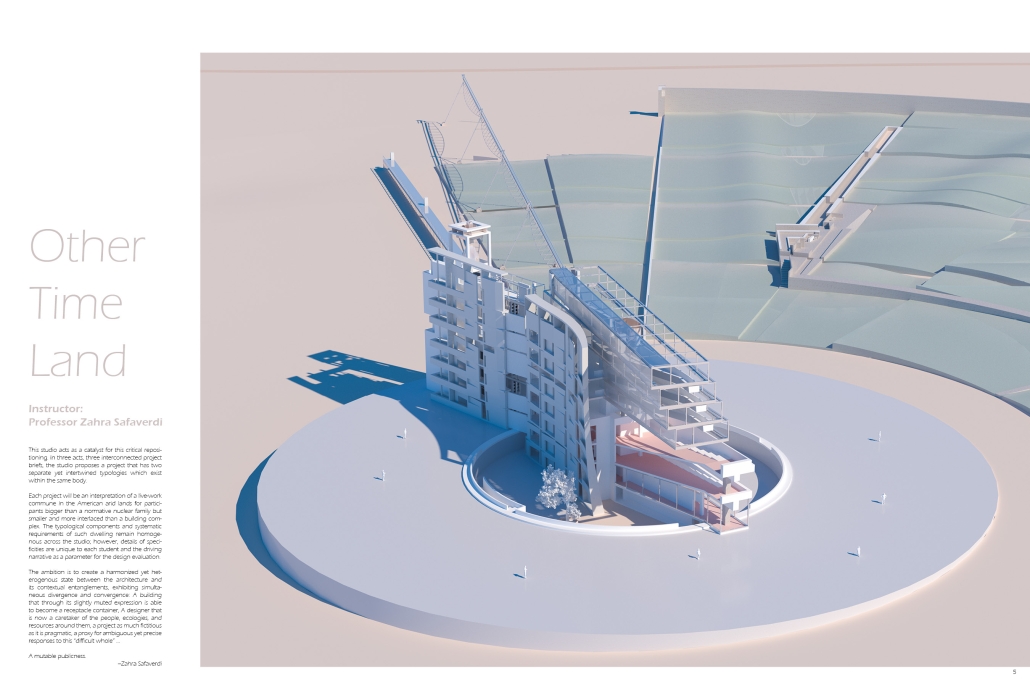
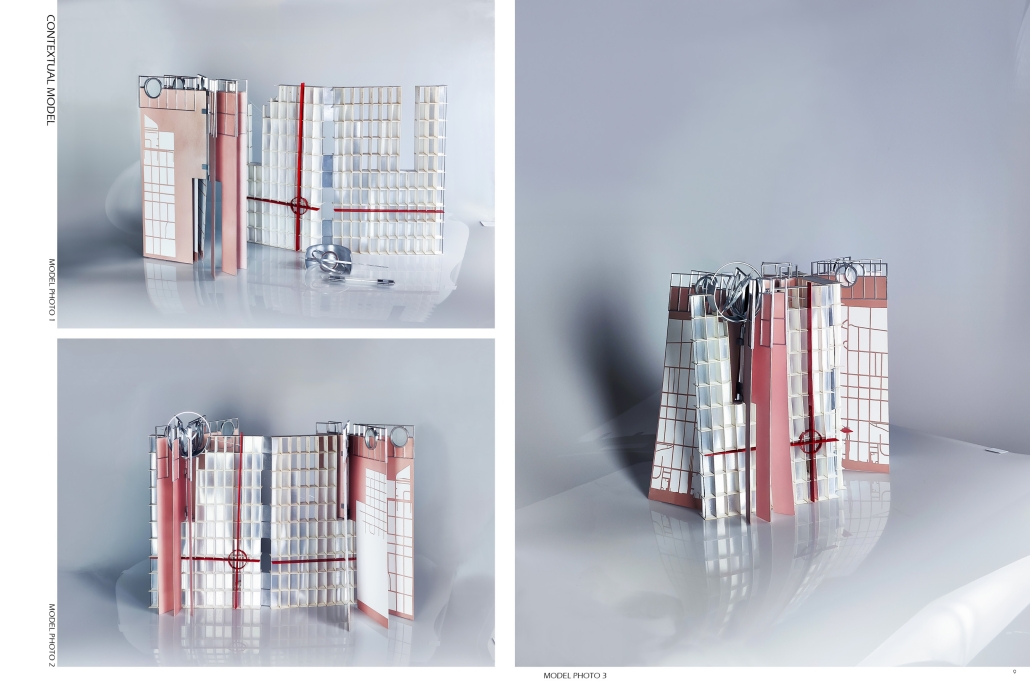
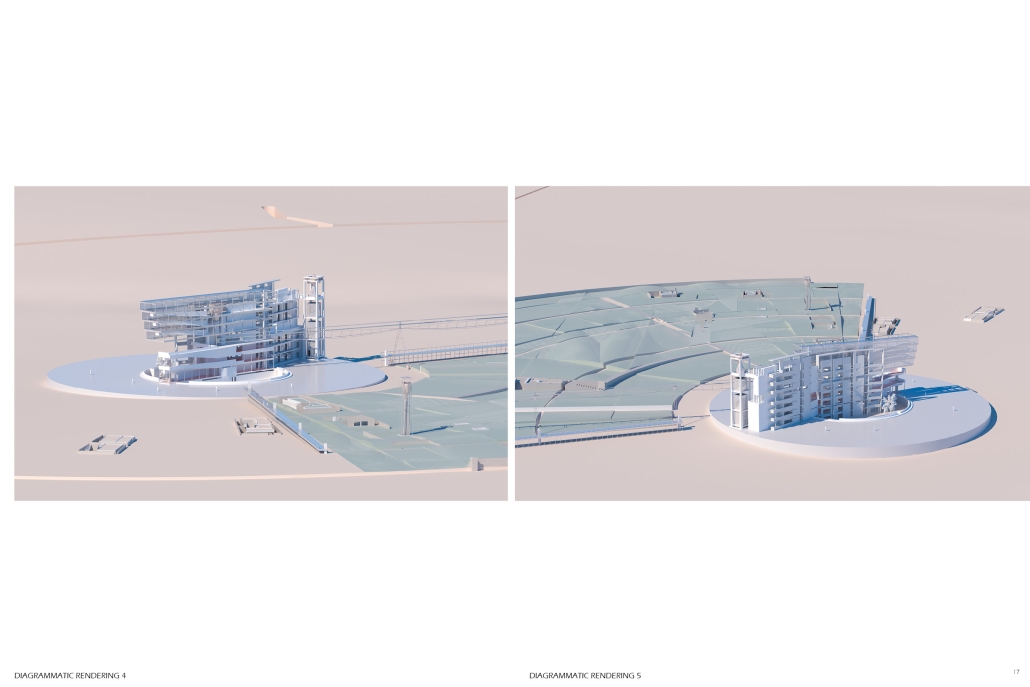
The project “Other Time Land” unfolds in a remote Texhoma crop circle, housing seven characters in a microcosm detached from conventional time and space. Their lives center on agricultural and architectural production, intertwined with individual roles and diverse perceptions. Through the contextual model, the narrative explores collective understanding amid subjective interpretations. It delves into the complexities of human existence, navigating the realms of history, culture, and the meaning of collective life. Over three distinct eras, from functionality to formalism and nostalgia, the project reflects on human interaction with the environment, culminating in a monument to the enduring struggle between humanity and nature.

This project was featured in the YES Show at Washington University in St. Louis.

Prosthetic Mountain by David Paraschiv & Oriol Grana Garriga, B. Arch ’24
Pratt Institute | Advisors: Jonathan Scelsa & Jason Vigneri-Beane

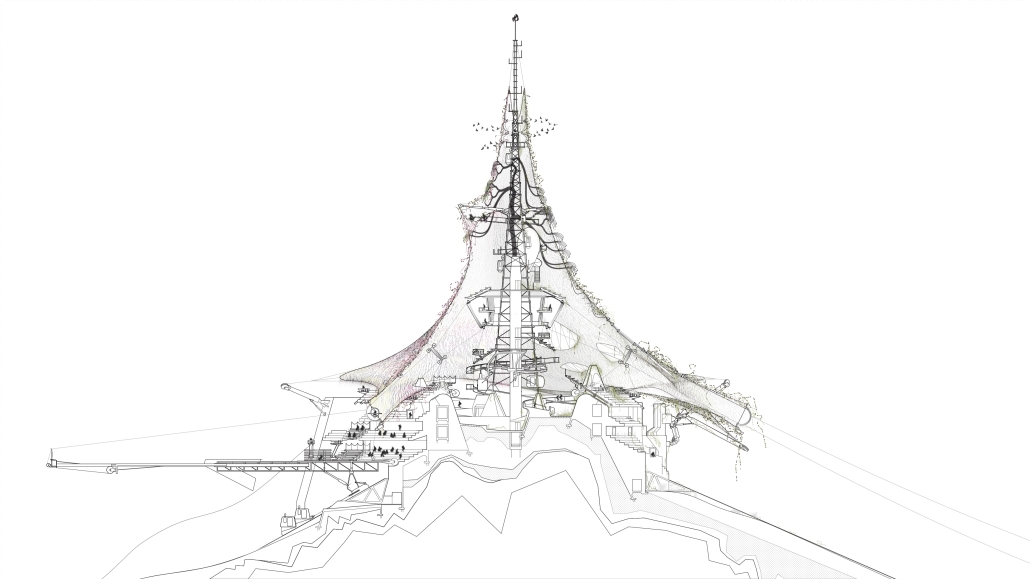
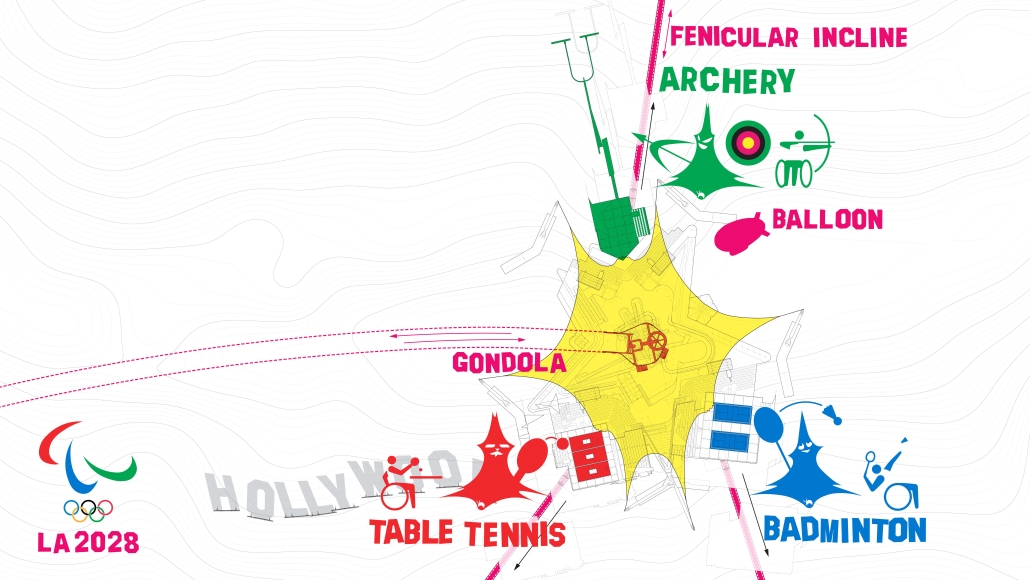
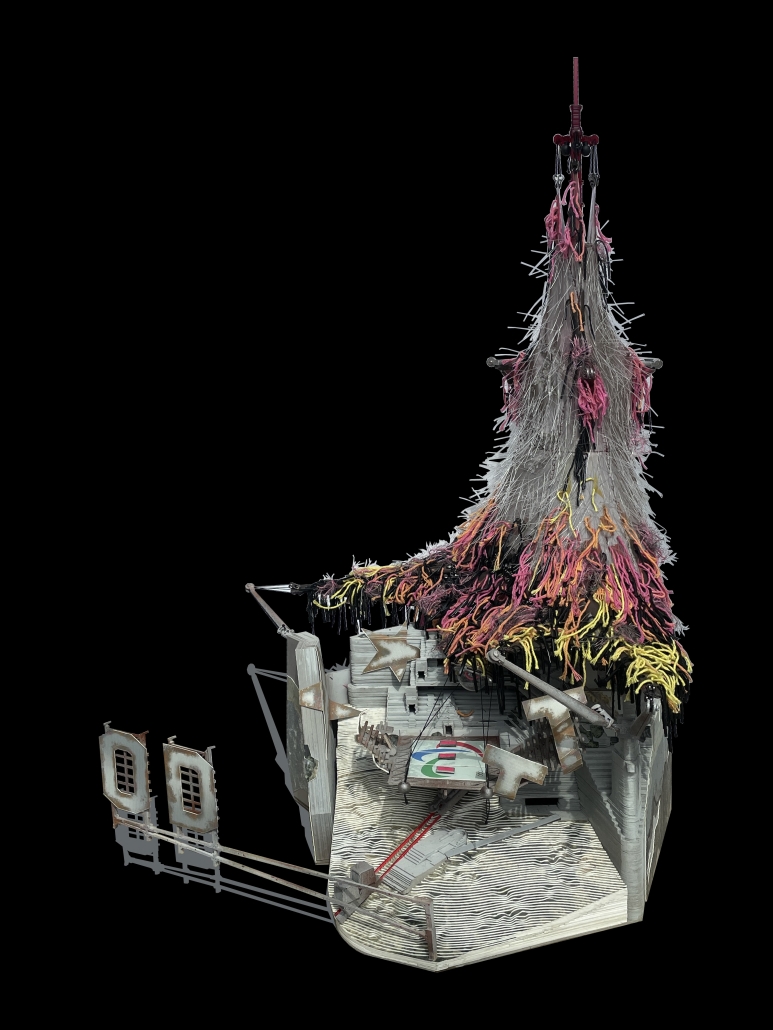
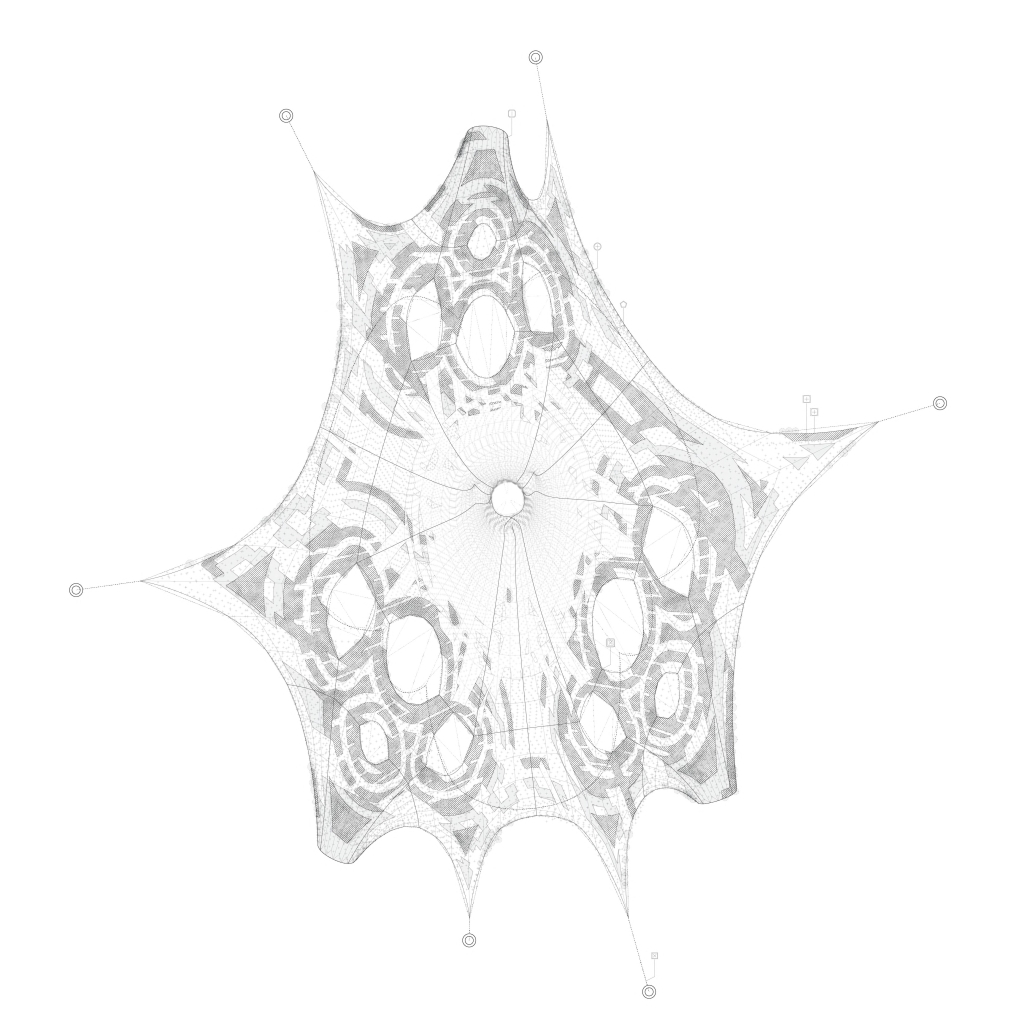
Meet Trevor, the Olympic infrastructure that knows he won’t always be the star. Unlike the previous models of Olympic development, which attempted to redefine the city but ended up only reusing existing infrastructure, Trevor performs an architectural photobomb. Through association with the Hollywood sign, he casts himself as a character into LA’s catalog of landmarks. Trevor is many things: mascot, stadium, tower, mountain, monument, icon, landmark, camera, torch, cat, bat, owl, spider, octopus, and monster. As Trevor’s tensile tent shifts to shade one of three events on the mountain, pistons morph his tent body into the mascot for that event.

        Over a century ago, Mt. Lee’s peak was shaved off to construct Los Angeles’ first television broadcast tower. We propose to restore the peak with this prosthetic infrastructure. As a prosthetic, Trevor not only restores the peak but also serves as an opportunity to create a landscape that accommodates both non-standard bodies and wildlife. For this reason, Trevor has been designed with the Paralympics having priority over the standard event. Access is not just enabled but maximized through funiculars, gondolas, ramps, elevators, and cherry pickers. These infrastructural elements become the very means of Trevor’s ultimate performance, his retirement. Sports courts are released and sent rolling down the funicular tracks, eventually becoming public infrastructure for the neighborhoods below. During this act of pulling, Trevor’s skin is torn open, allowing the elements into the stadium. At this point, Trevor’s hyper-artificial hot pink and electric yellow skin begins to reveal its true nature, with its dust-collecting tendrils starting to build material on the surface. As the seasons pass, this material is fertilized by the fauna of Mt. Lee’s subnature, eventually camouflaging the structure with the mountain. In this act, Trevor becomes a new kind of monument, one that isn’t afraid to embrace fragility as a means of new life.

This project received Degree Project Top Honors, the Michael Hollander Drawing Award (section), and the ModelMaker Prize Second Place.

Instagram: @otterfruit, @ori6g, @oparchland, @jcvb_split

Narrative Architecture: Framing a Fleeting World by Sam Sabzevari, M. Arch ’24
Toronto Metropolitan University | Advisor: Marco L. Polo

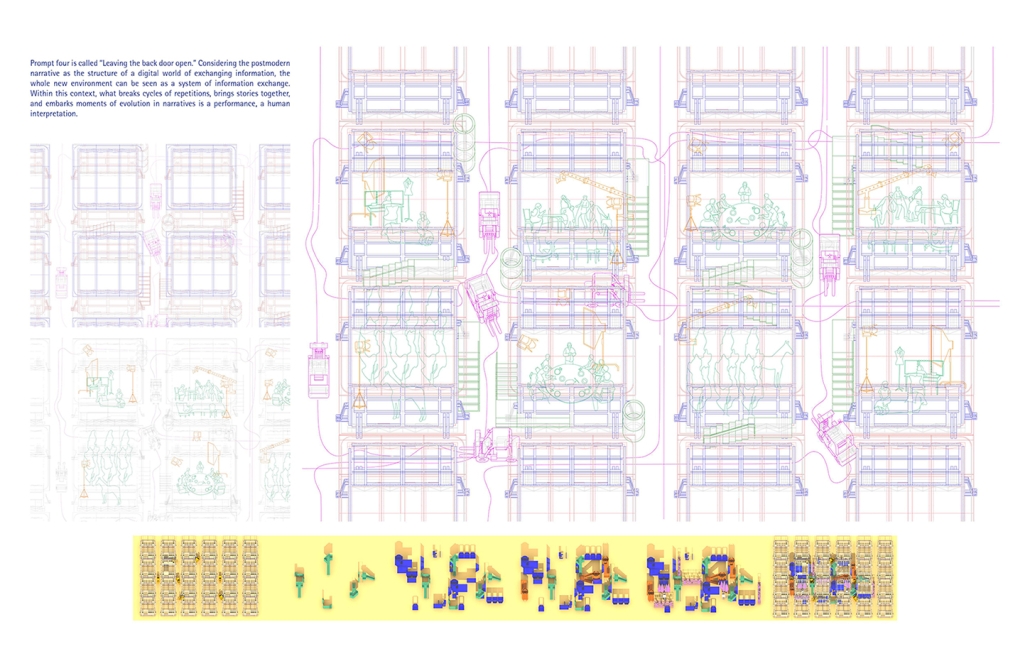
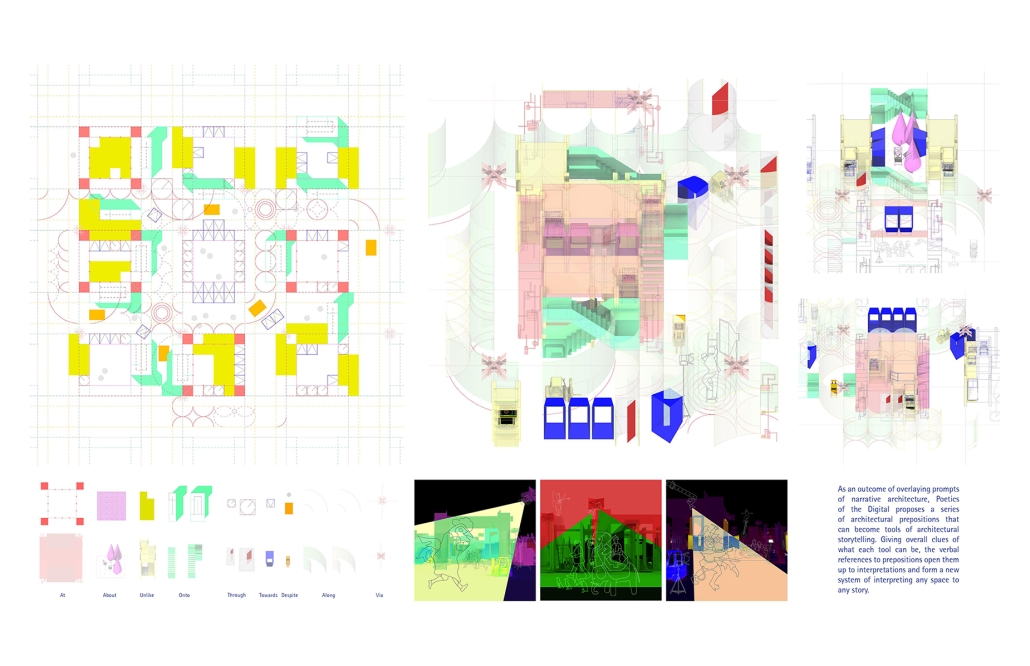
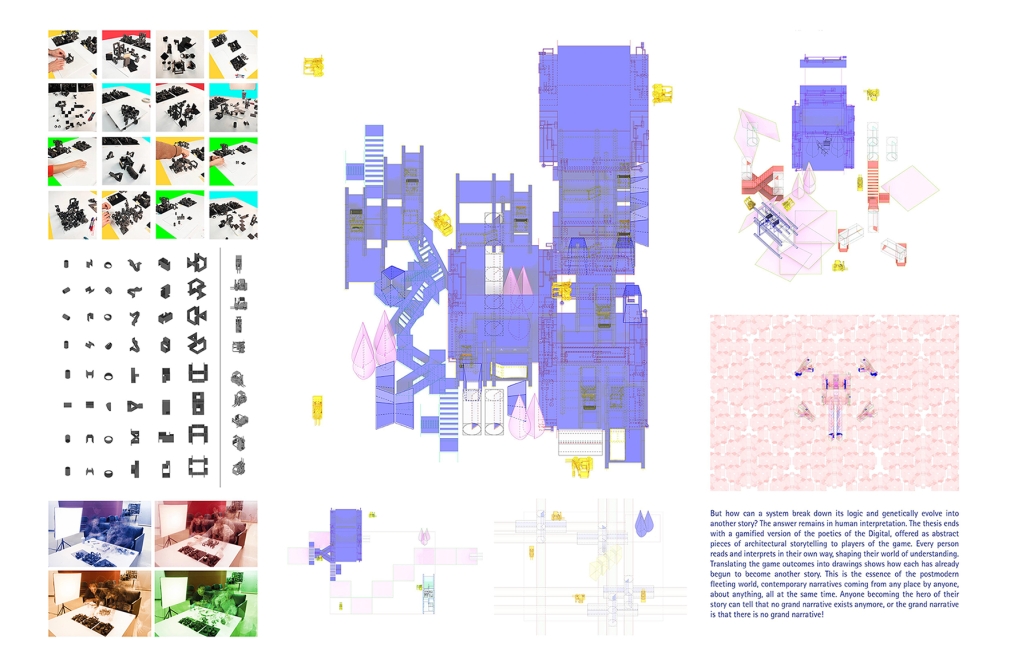
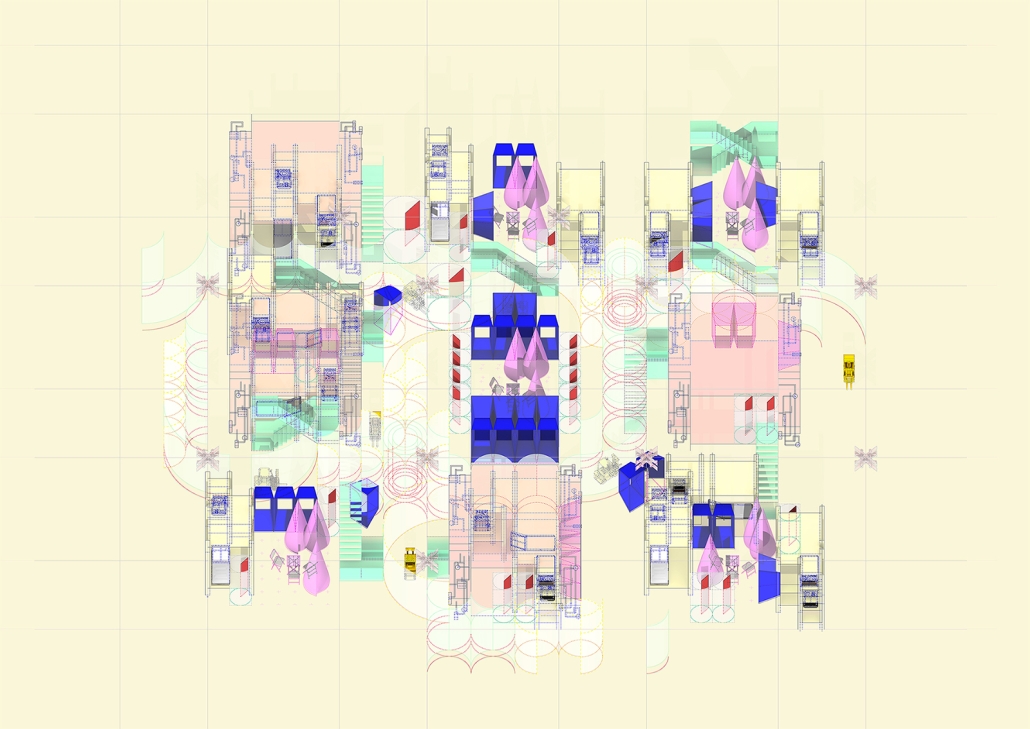
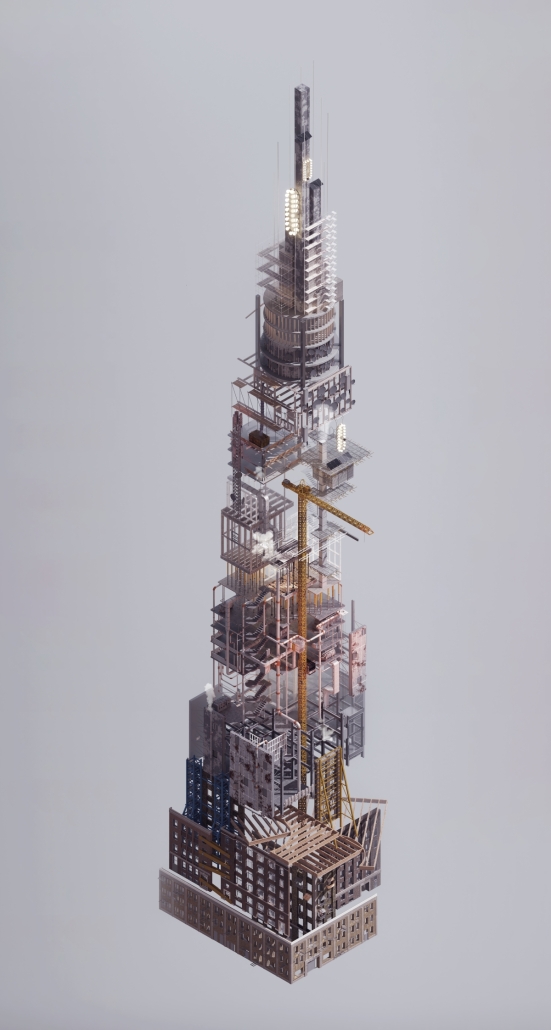
Narrative-making is the human ability to imagine, modify, and question myths, dreams, and desires; evolving cyclical journeys of challenging the present to draw a future. For a fleeting world, every creative production of an era responds to its grand narrative until it escalates to a time where the exchange of ideas moves faster than those who produce them. Landing on the age of the circuit, this thesis looks at a narrative shaped around incalculable reproductions mediating the world of human performative modes of operation and the algorithmic atmosphere of digital exchange. The Caravanserai, introduced as a narrative architecture typology from the age of the wheel, forms the architectural basis of a contemporary reading that can be applied to the age of the circuit. Established on experimental prompts of developing a narrative architecture, the new reading of the environment is described as a vessel among a place of exchange, a home, and an archive meant to be interpreted as open threads of making spatial scenarios. Appearing in sequences of experimental investigations on architectural scenarios throughout this document, prompts of a narrative architecture are explored and as an outcome of overlaying prompts of narrative architecture, Poetics of the Digital proposes a series of architectural prepositions that can become tools of architectural storytelling. Giving overall clues of what each tool can be, the verbal references to prepositions open them up to interpretations and form a new system of interpreting any space to any story. But how can a system break down its logic and genetically evolve into another story? The answer remains in human interpretation. 

The thesis ends with a gamified version of the poetics of the Digital, offered as abstract pieces of architectural storytelling to players of the game. Every person reads and interprets in their own way, shaping their world of understanding. Translating the game outcomes into drawings shows how each has already begun to become another story. This is the essence of the postmodern fleeting world, contemporary narratives coming from any place by anyone, about anything, all at the same time. 

Instagram: @sami_sabz, @dastorontomet

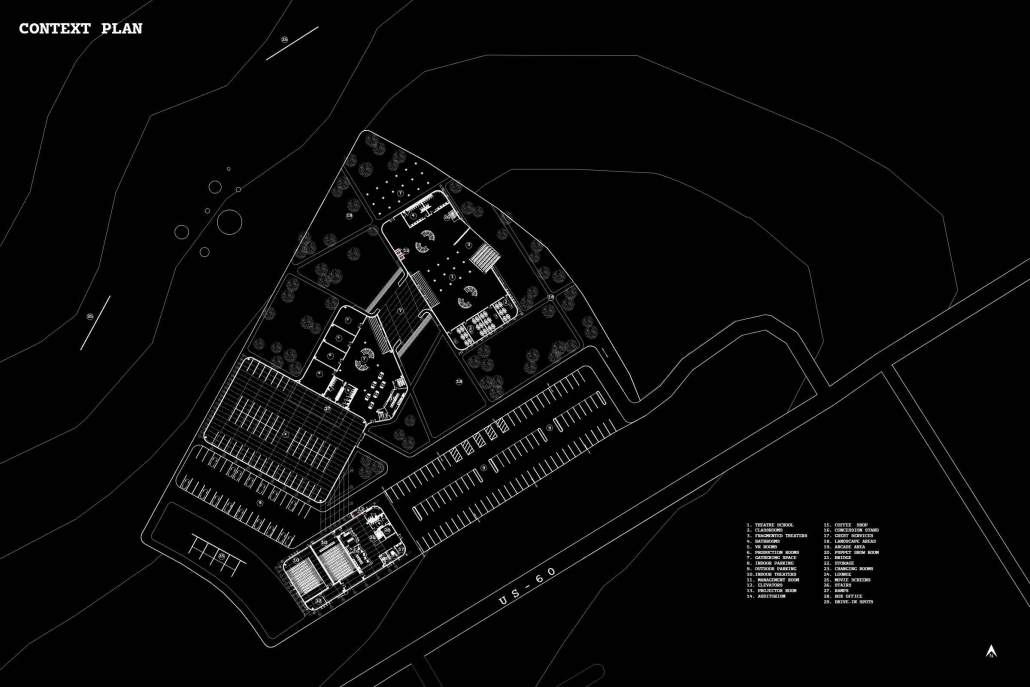
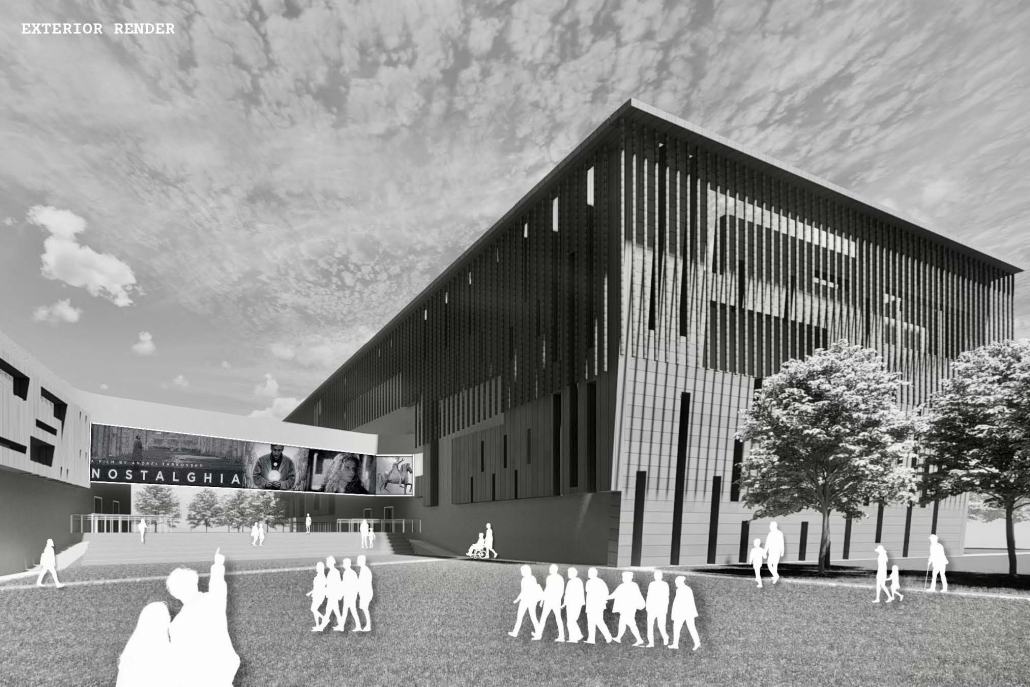
NOSTALGHIA DRIVE-IN: RESURRECTING MEMORIES by Elvis Castaneda, Jesus Nava & Opec Hynds, B. Arch ’24
Arizona State University | Advisor: Julia Lopez

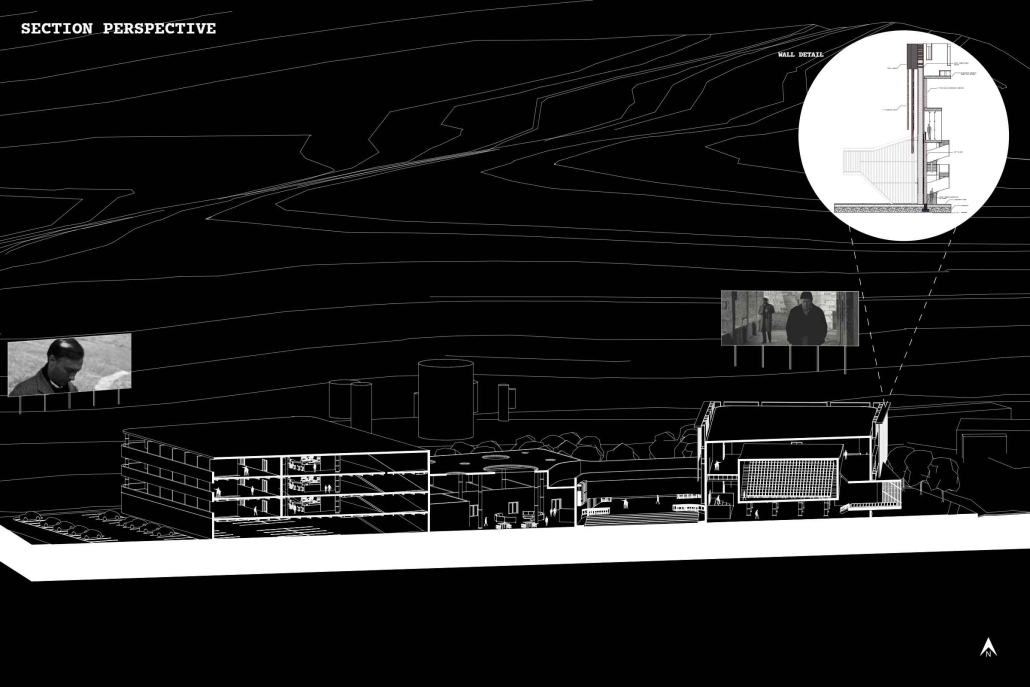
Our journey into the heart of Andrei Tarkovsky’s “Nostalghia” has been transformative, resonating deeply with its exploration of nostalgia, isolation, and spiritual yearning. Through meticulous analysis of Tarkovsky’s cinematography, set design, and narrative techniques, we have unearthed profound inspiration for our architectural endeavor.

Tarkovsky’s masterful use of camera movements—his sweeping panoramas capturing the vast Italian landscapes and intimate interiors bathed in soft light—has guided our design philosophy. Just as Tarkovsky’s camera delicately navigates the emotional terrain of his characters, our architectural concept embraces the poetic essence of “Nostalghia.”

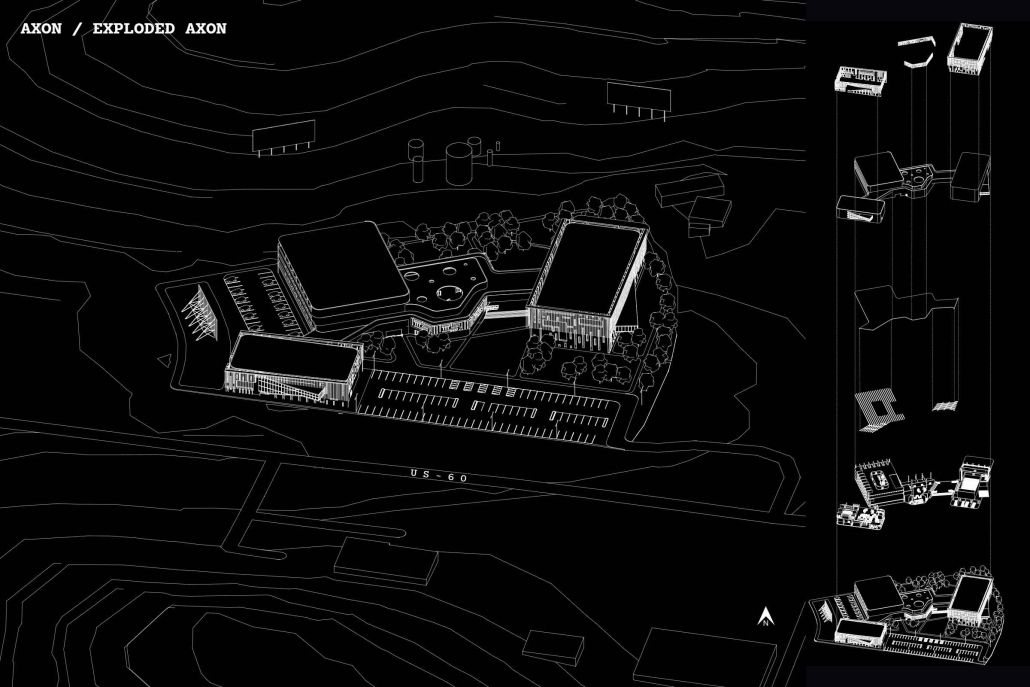
The film’s portrayal of dilapidated structures amidst timeless landscapes has become the cornerstone of our vision for revitalization. By reimagining a historic drive-in theater, we honor its cultural legacy while invigorating it as a vibrant community hub. Inspired by Tarkovsky’s subdued color palettes and symbolic imagery, our choice of materials and spatial compositions embodies a narrative that resonates with both the past and the future.

Our project is more than mere architectural intervention; it is a testament to the enduring power of storytelling through built environments. It seeks to foster not only physical renewal but also a profound sense of connection, belonging, and renewal among community members. Like Gorchakov in Tarkovsky’s narrative, we embark on a journey of exploration and discovery, guided by the spirit of nostalgia and the quest for meaning in a fragmented world.

In embracing “Nostalghia” as our muse, we endeavor to create spaces that transcend functionality, resonating deeply with the human condition and offering a sanctuary for reflection and contemplation. This is not just architecture; it is a testament to the timeless dialogue between cinema and built form, where each brick and beam tells a story of longing and hope.

This project won the TDS Design Excellence award.

Instagram: @ec.garcia6, @_opec_

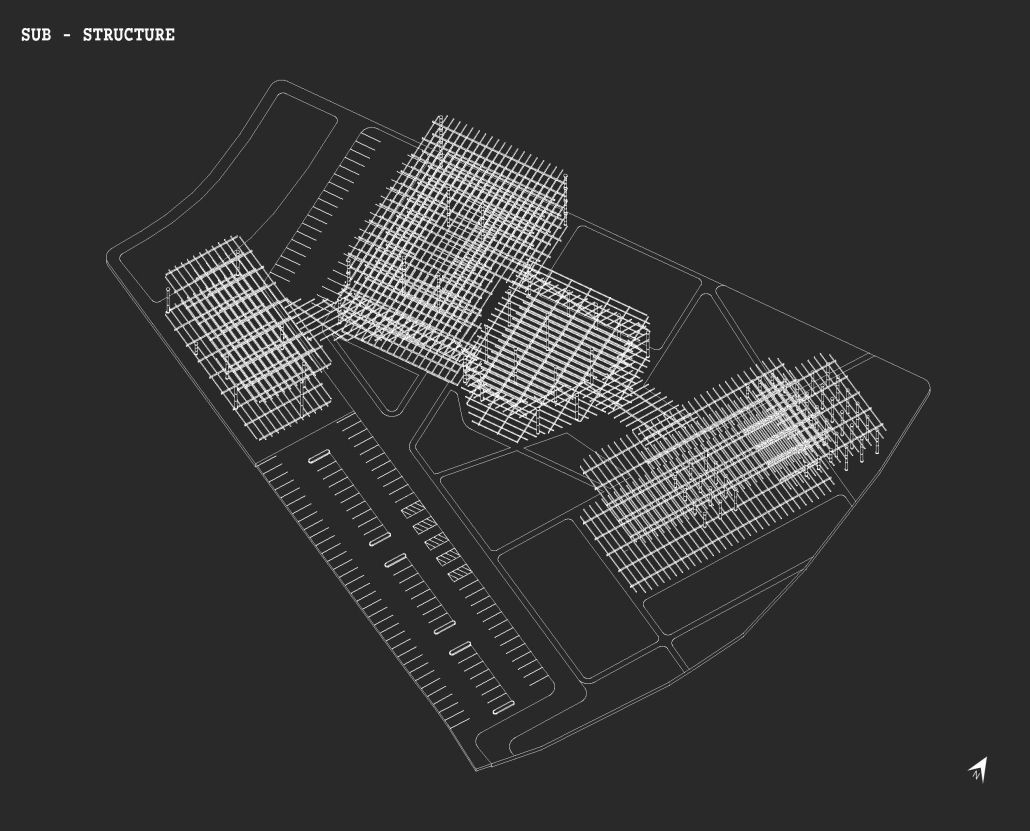
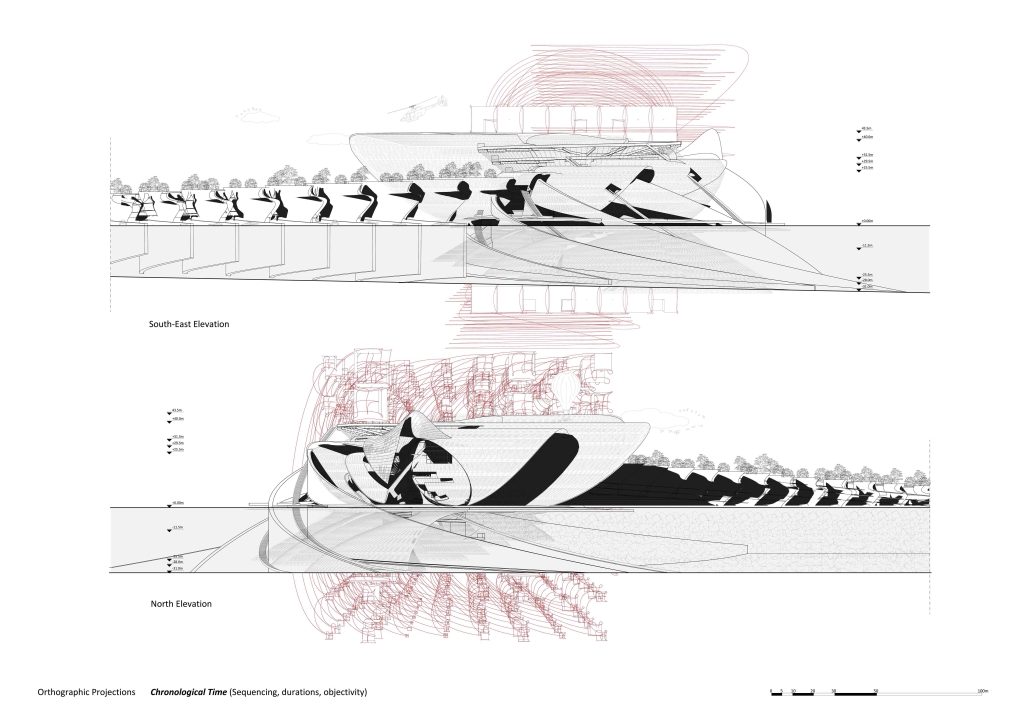
The Production of Time: An Architectural Time Machine by Naim Zgheib, B. Arch ’24
American University of Beirut | Advisor: Sinan Hassan

How can one design an architectural time machine or one that deliberately produces time in its multiplicity?

  1. What are the dimensions of time as related to a built construct and their implications on the latter?
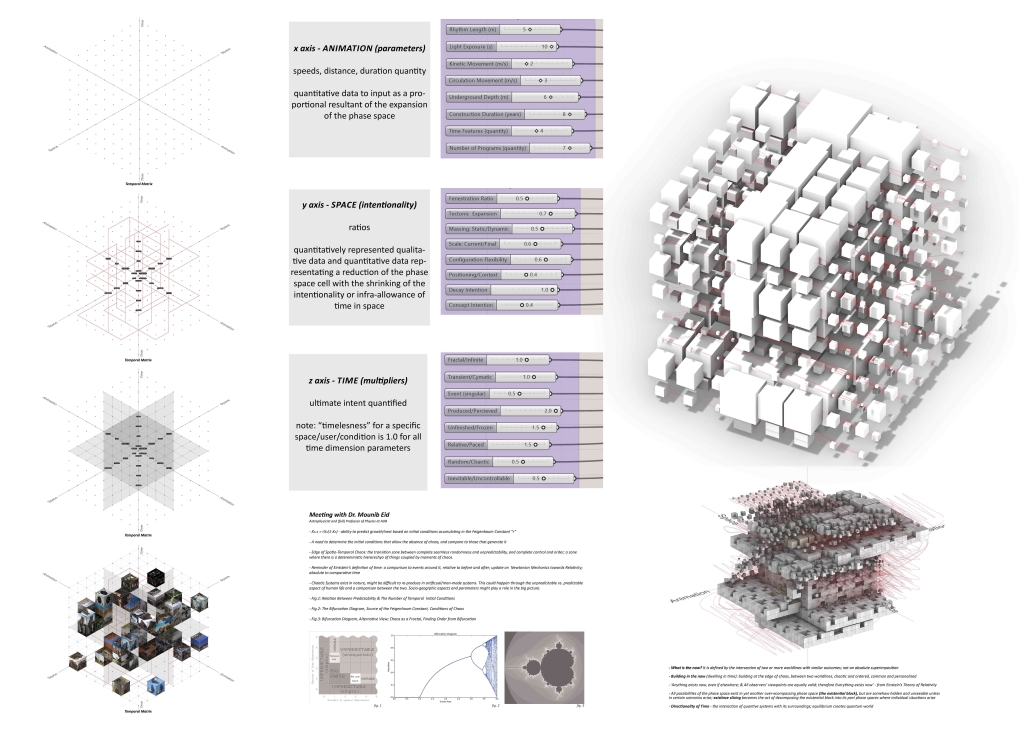
  2. How can one quantify, represent, visualize, and design the time-space?
  3. What architectural elements, languages and/or tectonics could best serve this discourse?

This architectural research delves into the captivating relationship between time and architecture. Drawing from theories such as Einstein’s relativity and Rovelli’s “The Order of Time”, it aims to explore the intricate connections between time and the built environment.

The study begins by investigating various theories of time, from ancient philosophies to contemporary scientific understandings, establishing a comprehensive foundation. By examining time as both a subjective experience and a measurable entity, this project seeks to merge the abstract and tangible. The research explores the application of phase space equations and algorithms in architectural design (which represent dynamic systems mathematically). By analyzing the temporal dynamics of spaces, it seeks novel temporal experiences within the built environment. The 8-dimensional phase space becomes the new representation of time in architecture.

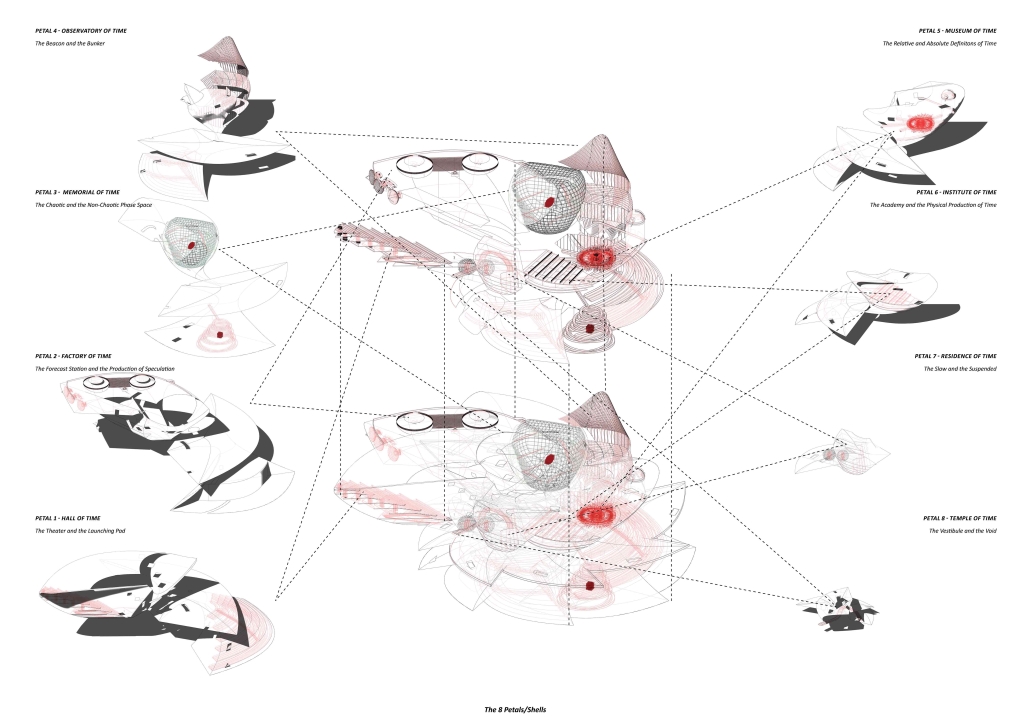
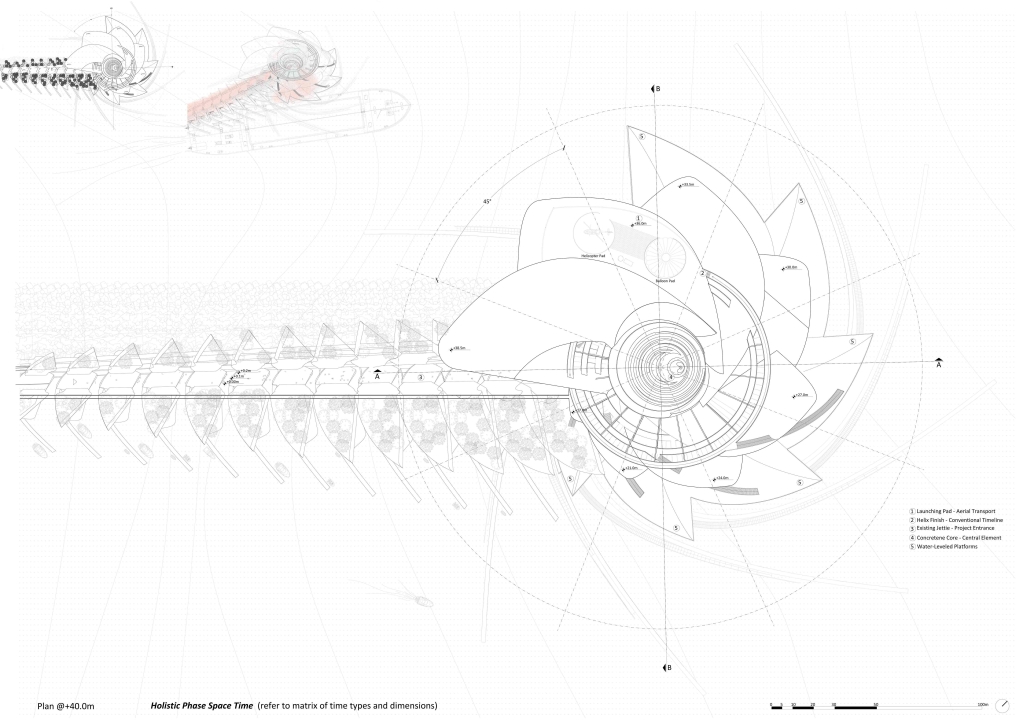
The intent is to hypothesize an architecture that deliberately produces time to achieve ultimate timefulness, thus timelessness, engulfing the entire phase space. The design phase serves as the practical manifestation of the research, proposing architectural interventions that embody the theories, equations, and concepts explored. Through innovative design strategies, such as temporal layering and dynamic spatial configurations, this project seeks to redefine the relationship between architecture and time.

“The Production of Time” aims to build on the architectural implications of time, inspiring architects to reconsider the temporal dimensions of their creations deliberately and intentionally. In this eternal dance between architecture and time, let us leave an indelible mark upon the world—a beacon of our profound understanding of the temporal, and our unwavering dedication to the art of sculpting time as matter.

This project was the 3rd Place Winner of the Areen Projects Award for Excellence in Architecture. 

Instagram: @ard_aub

{in}Visible Maintenance by Daniel Wong, M. Arch ’24
University of Toronto | Advisor: Carol Moukheiber

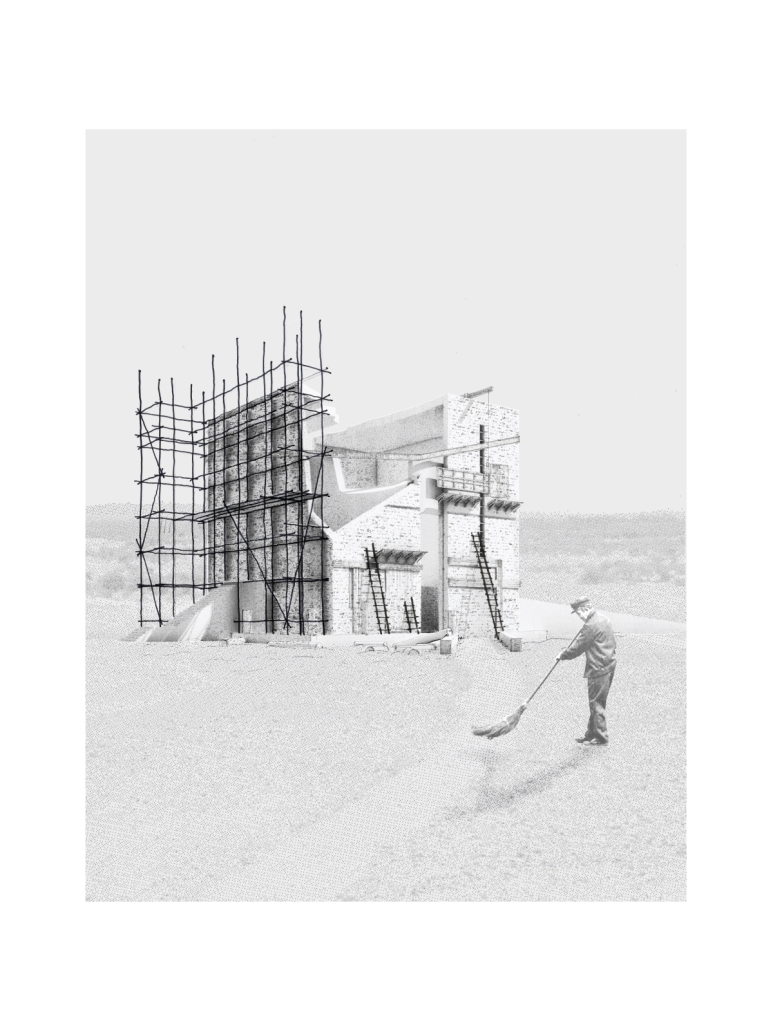
Nothing lasts nor endures; instead, trends come and quickly fall into obsolescence. We pursue objects that offer immediate satisfaction, producing more and more to fuel a system that trends toward overconsumption and boredom. {in}Visible Maintenance provides an alternative vision somewhere in between the speculative, the surreal, and the plausible—a resistance to our valuation of existing buildings. Drawing is used to unravel the everyday maintenance, cleaning, and repair of buildings, highlighting their palimpsest history of time, age, and care work.

{in}Visible Maintenance poses the question: What if the durability of a building could be chronographed as a fundamental element of everyday design? Imagine a shift where we prioritize celebrating the natural process of decay, favouring robustness and heightened flexibility over the current economic model of superficial environmental posturing.

Through a speculative collection of drawings, a series of building parts, components, and systems—when assembled—creates a radical eclecticism around the buildings we maintain. These drawings are bound to the imaginary and convey a polemic reality based on the everyday, memory, age, place, change, and the virtues we associate with the buildings we inhabit. The shifting drawings and methods of representation are used to reframe, shift, and provoke a new paradigm and aesthetic that celebrates and accepts our existing aging built environment. Finding pleasure and discovery through the dilapidated, the strange, and the ordinary.

Instagram: @Danielw.dwg, @uoftdaniels

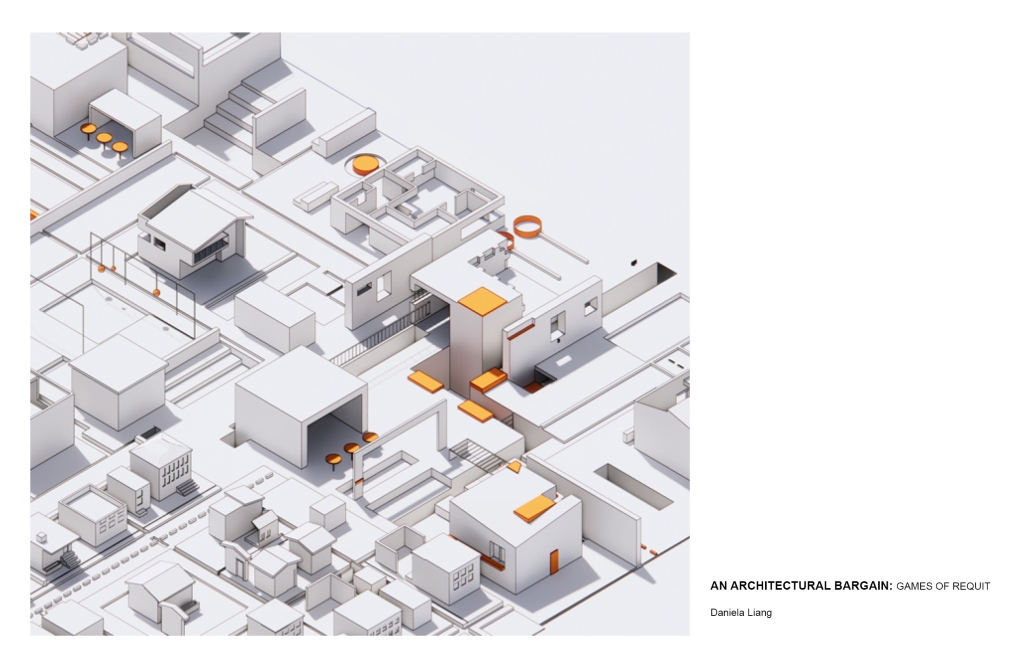
An Architectural Bargain: Games of Requit by Daniela Liang, B. Arch ’24
University of Southern California | Advisor: Eric Haas

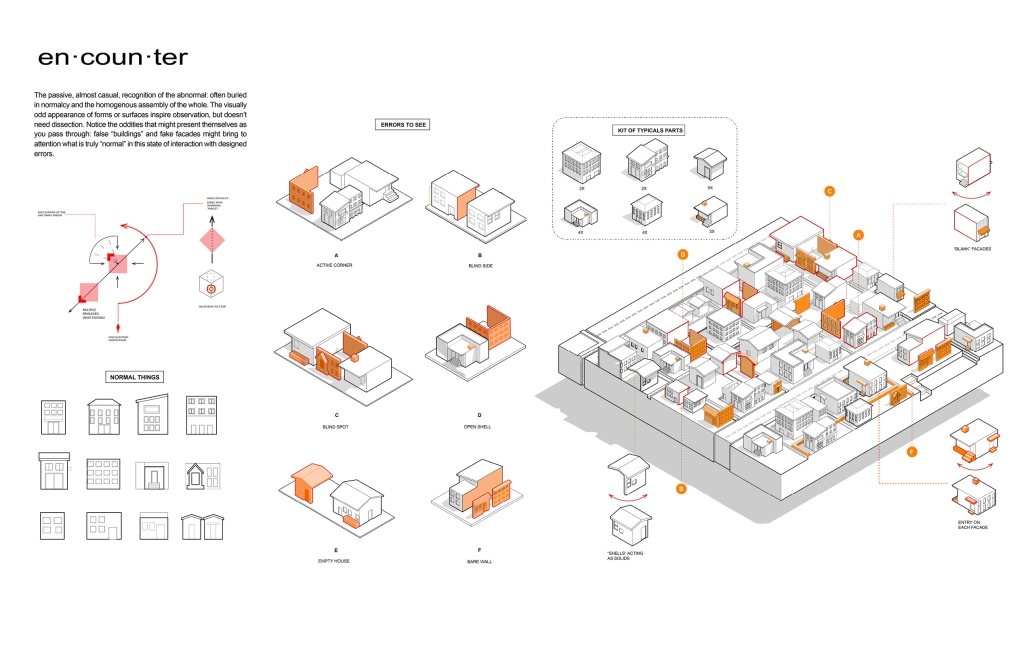
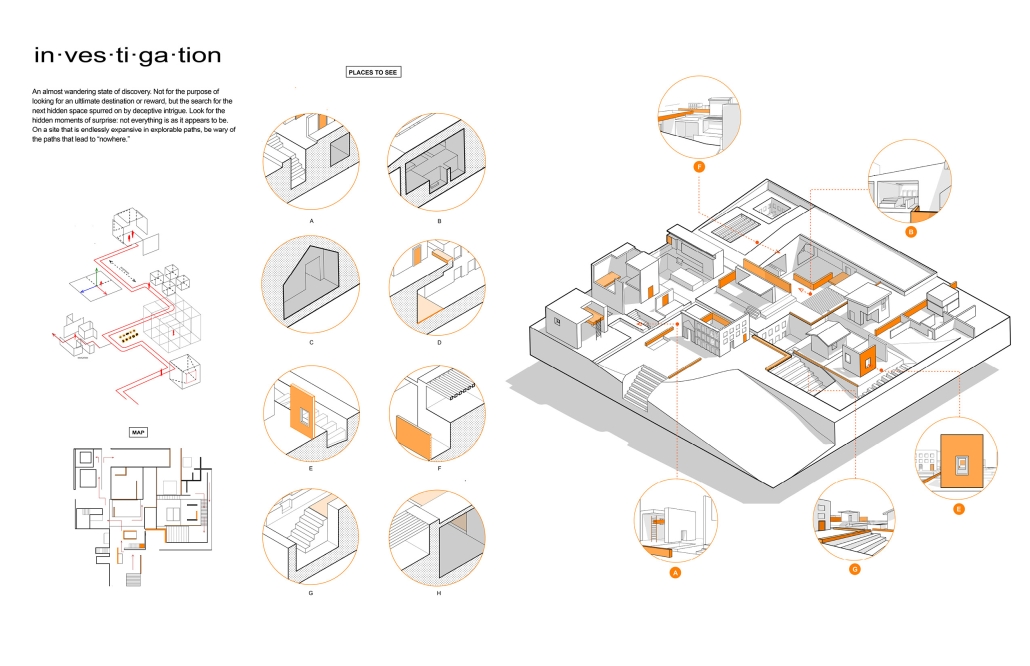
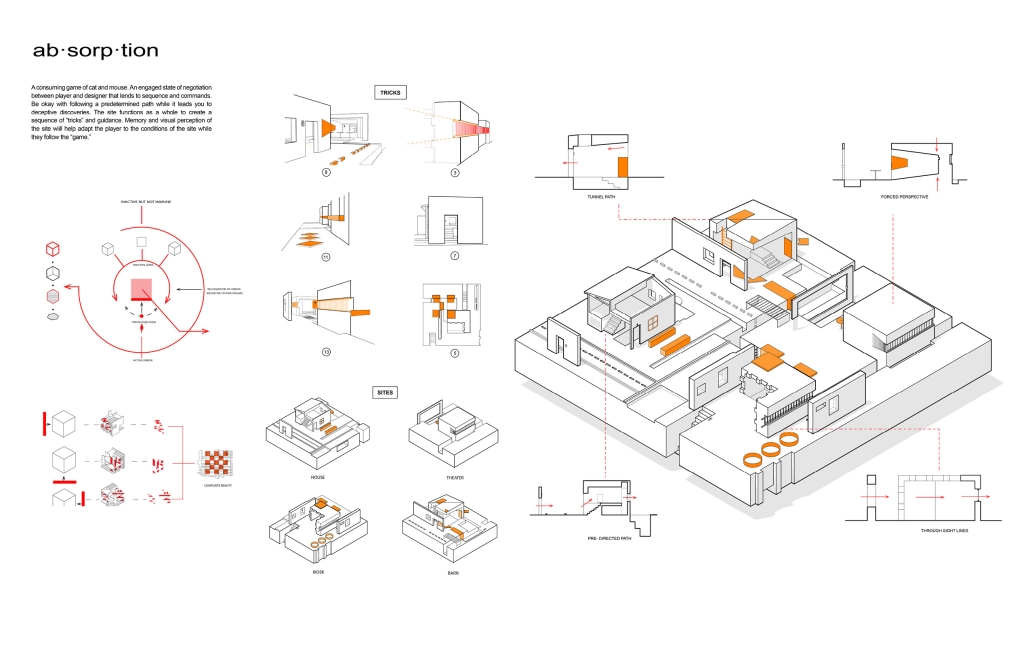
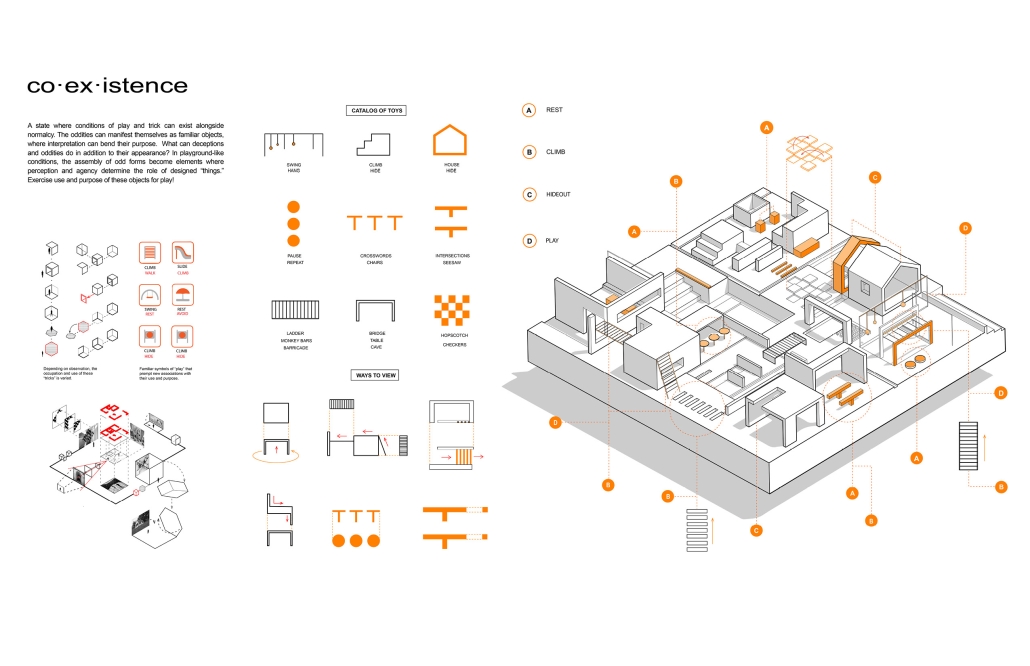
The incorporation of intentional error is not novel. From the works of Borromini to those of MVRDV, linear perspective and visual perception of form and geometry have become tools for manipulating perceived reality. The intentional design of error, or the trick, is a productive language for exercising viewer agency. By creating an opportunity for the viewer to engage in an investigative experience, the trick becomes a game-like negotiation of reality within architecture. 

The result of these visual tricks creates privileged views and abstract reality where the uncovering of truth becomes enriching to the viewer’s understanding of the architecture. The project is the analysis of how these architectural deceptions can create different states of immersion between the viewer and the design. A game-like experience is proposed by the various ways “error” can be used as productive confrontation. Four self-contained sites of “error” immersion are created, displaying different applications of design deception: encounter, investigation, absorption, and co-existence. 

This project won the Raymond S. Kennedy Creative Innovation Award – Methodology

Instagram: @dandeliang

Front Veiled, Back Revealed by Sacha Azzi, B. Arch ’24
American University of Beirut | Advisors: Rana Haddad & Makram El Kadi

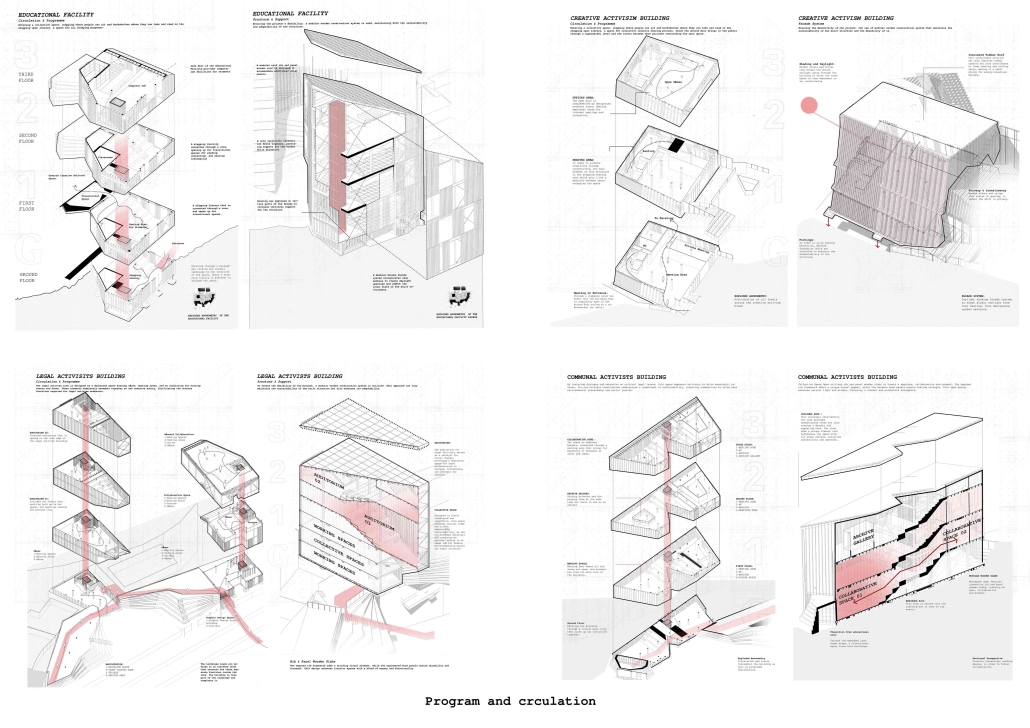
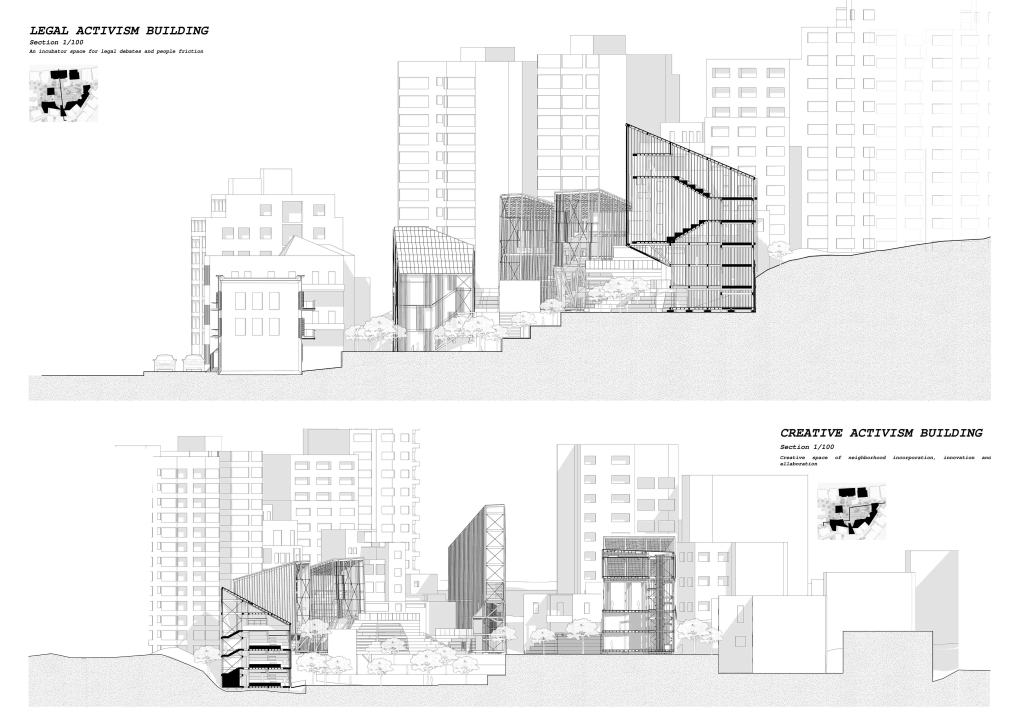
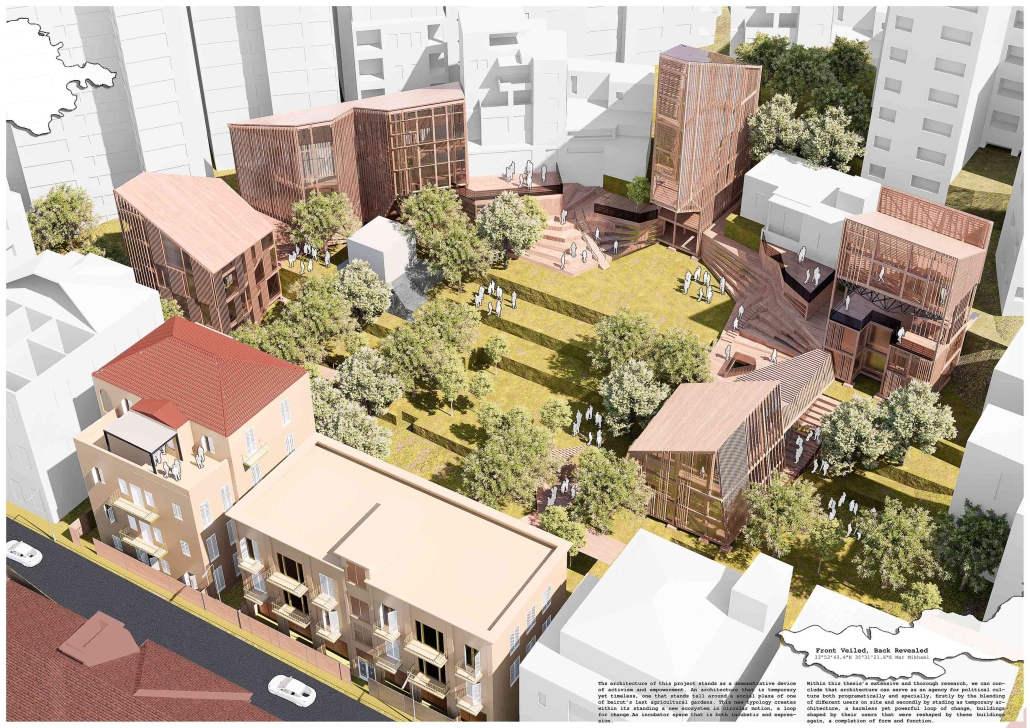
The architecture of this project stands as a demonstrative device of activism and empowerment. It is an architecture that is temporary yet timeless, standing tall around a social plaza of one of Beirut’s last agricultural gardens in the area of Mar Mikhael. This new typology creates a new ecosystem in a circular motion, a loop for change that aims to install an agency of political culture through the built form, a design for activists, an architecture of expression, a space of experimentation and a culture of democracy.

It is an incubator space that serves as both an incubator and an expression.

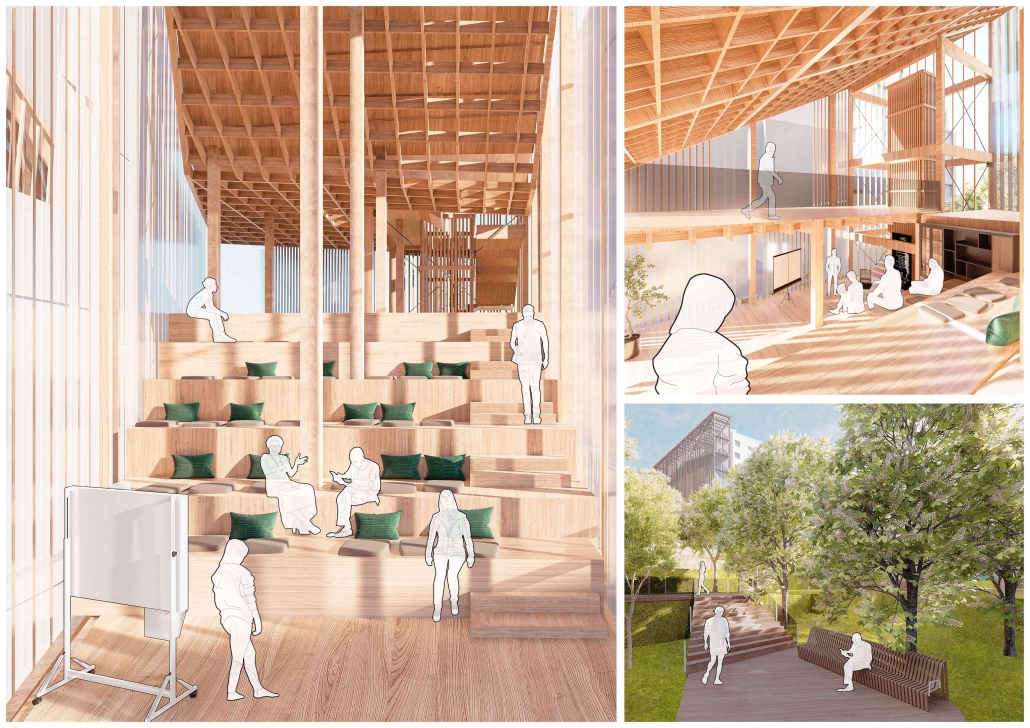
By integrating activism principles into its core the architecture evolves into an entity that educates, motivates and mobilizes individuals. It fosters conversations, encourages community involvement and raises awareness while serving as a supporter and facilitator of endeavors. The design features spatial arrangements and material selections, meticulously chosen to mirror and advance movements through methods of inclusivity efforts or by providing areas for protests and gatherings. This innovative architectural approach not only provides spaces for activists but also actively participates in activism through its design and purpose. It aims to challenge norms that incite thoughts and influence actions turning the built environment into a force for change. The structure serves as a tool that engages with people and the environment embodying activism motivating change and supporting change. This new approach highlights how buildings can play a role in advocating for social justice, equality and environmental conservation by enhancing the influence of activism, through their presence.

Within this thesis’s extensive and thorough research, we can conclude that architecture can serve as an agency for political culture, both programmatically and spatially. Firstly, by blending different users on site, and secondly, by standing as temporary architecture—a harmless yet powerful loop of change, with buildings shaped by their users and reshaped by these buildings again—a completion of form and function.

Instagram: @ard_aub

Stay tuned for Part XII!
The Animator: An Unexpected Journey

In a studio in New Zealand there lived an animator. Not a cold, lifeless studio void of creativity and laughter, nor a bland, boring studio with nothing to play with or draw on: it was an animator’s studio, and that meant excitement.

If you didn’t read The Hobbit: An Unexpected Journey, you might not recognize the passage above which is adapted from “Chapter 1: An Unexpected Party.” Today, we have the immense pleasure of emerging from the Hobbit hole with Eric Saindon. For those of whom don’t know his name, you definitely know his work. Eric is an animator for Weta Digital (the folks responsible for Lord of the Rings, The Hobbit, iRobot, Avatar, and many more). What a résumé, #amiright?

https-pmcdeadline2-files-wordpress-com2012111__121126214056-575x383-jpgw605h402

Eric Saindon and Peter Jackson on the set of The Hobbit

The moment our team learned that he graduated from architecture school at Washington State, we actually did a little dance around the office because that meant we had a reason to interview him! So our fearless writer emailed him an invitation to chat and 30 minutes later, he wrote back enthusiastically, “Sure! When are you free?”
That brings us to a sunny Thursday afternoon in Washington D.C. (and sixteen hours ahead in New Zealand) where we got to chat with Eric about his time in architecture school, post-grad life, why he chose to pursue animation, and everything in between.

Read more