Posts

2025 Study Architecture Student Showcase - Part X
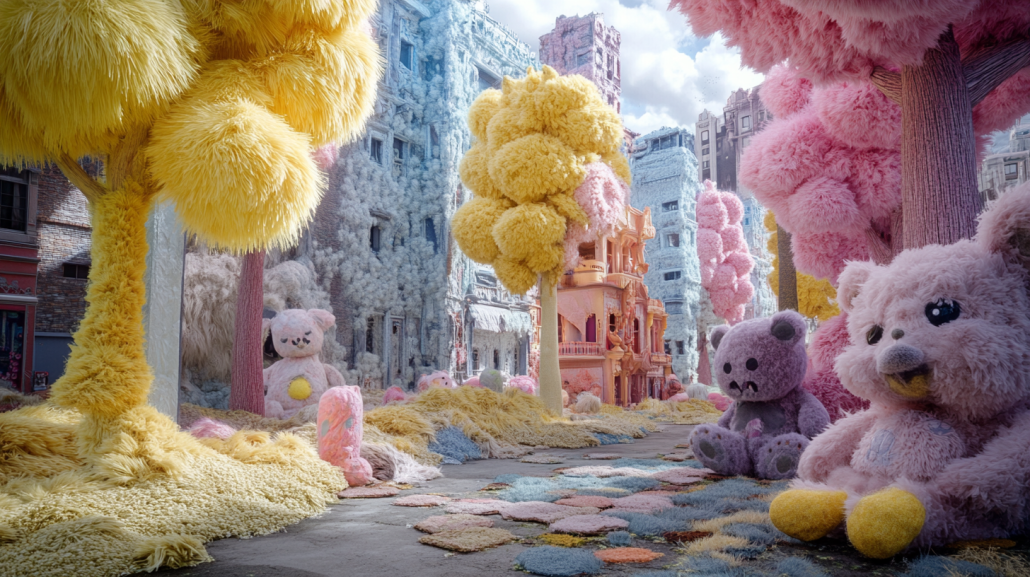

Architecture tells a story. The capstones and theses highlighted in Part X of the 2025 Study Architecture Student Showcase use texture, material, and spatial configuration as visual narratives. From short films to renderings, each project uses a unique medium of storytelling. The displayed work ranges from memorials inspired by speculative fiction and design interventions using augmented reality to exhibitions on womanhood and visualizations of poetry.
Scroll down for a closer look!

Thread by Thread by Emily Dross, B.Arch ’25
Ball State University | Advisor: James F. Kerestes

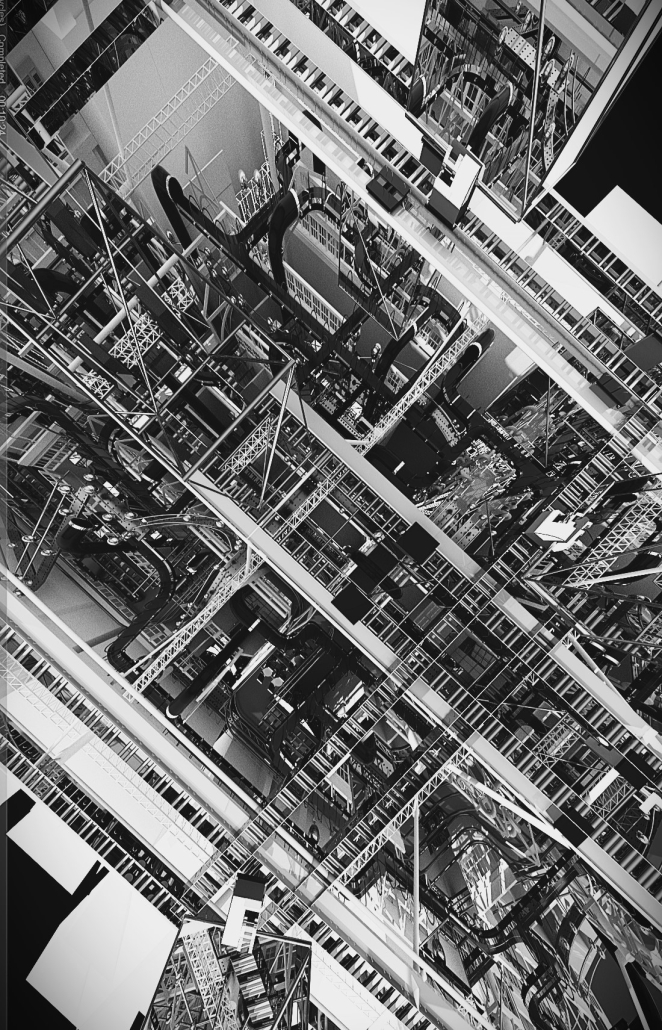
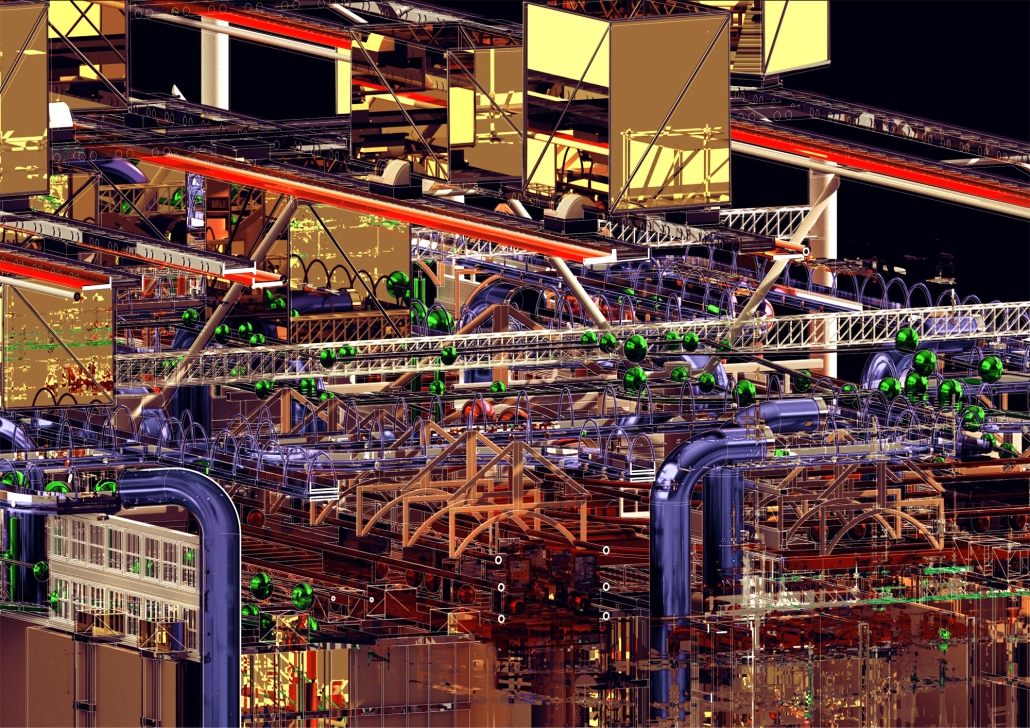
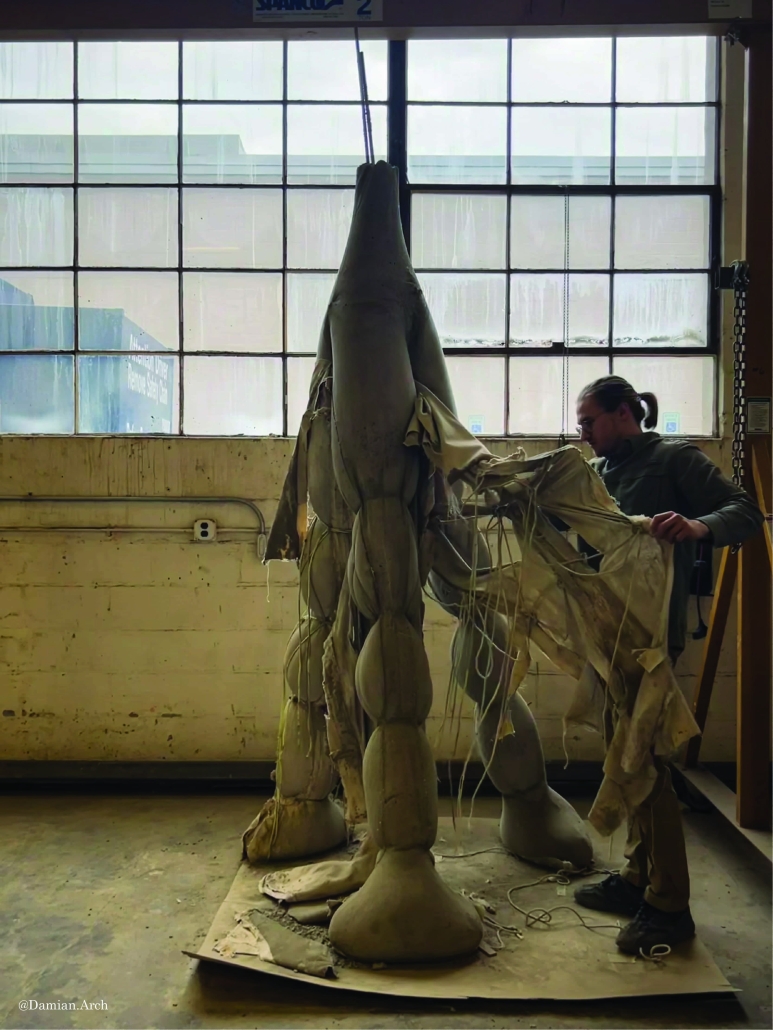
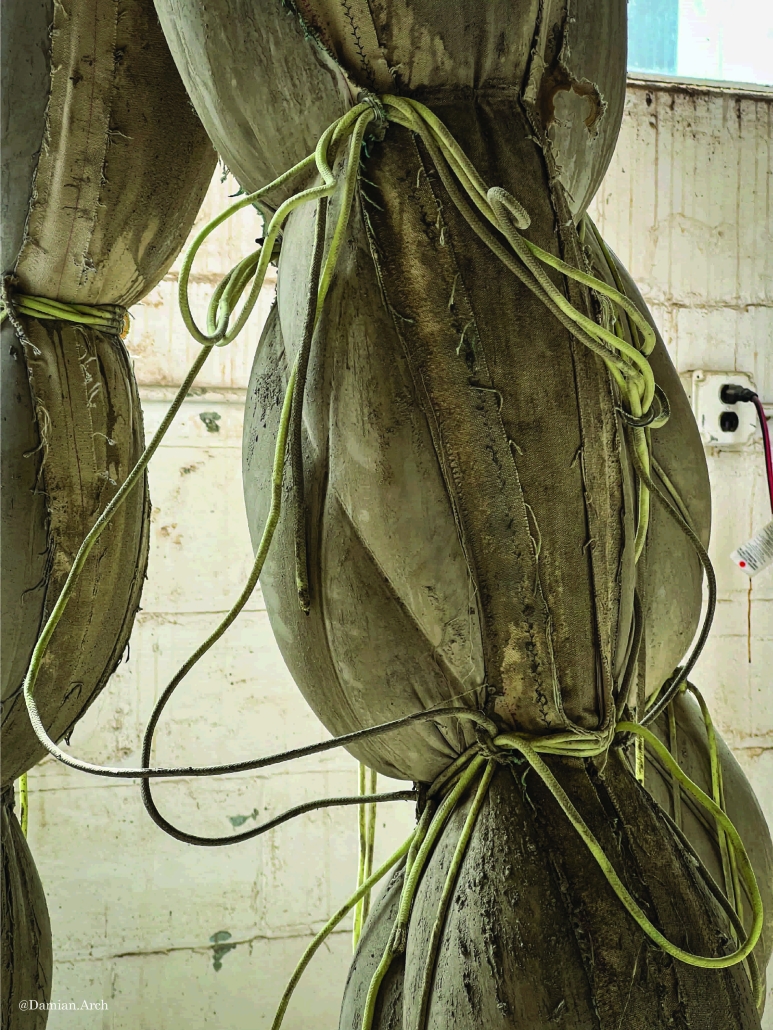
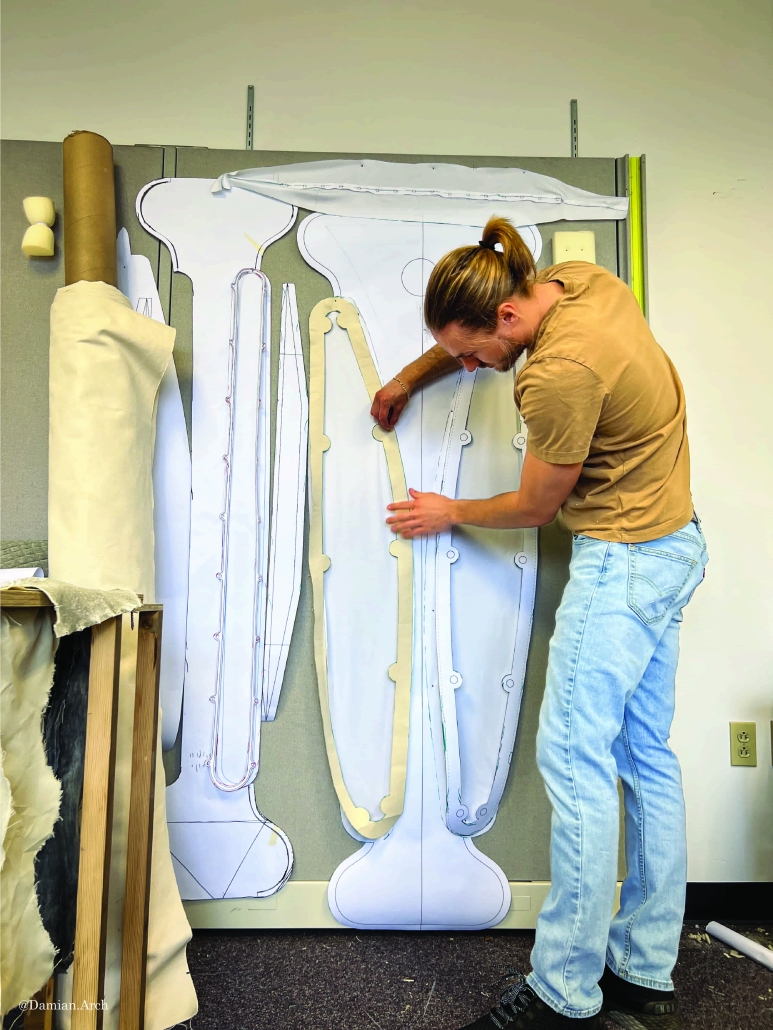
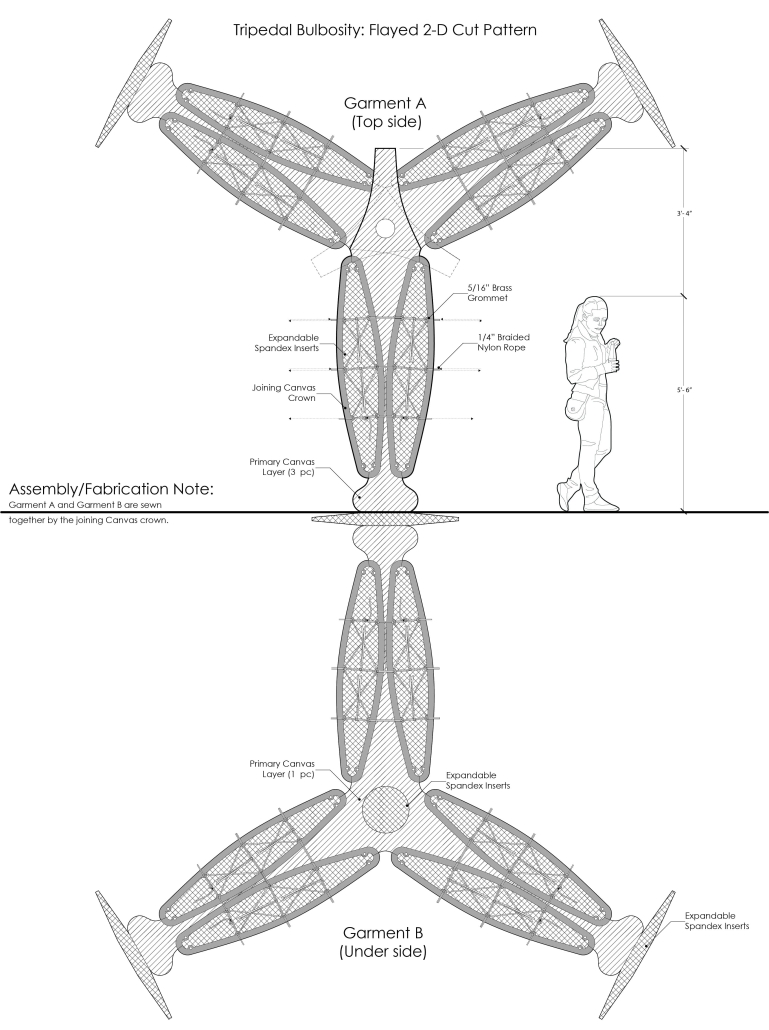
“Thread by Thread” is a short film, created as part of the course Cinematic Environments: Uncanny AI, explores hybridized architectural conditions through a speculative and surreal lens. Set in a richly imagined built environment, the narrative unfolds through the movements and interactions of fluffy, stuffed animal-like creatures—anthropomorphic figures that serve as both inhabitants and interpreters of the space. These soft-bodied protagonists navigate a world that oscillates between the familiar and the uncanny, offering a playful yet critical reflection on contemporary architectural and environmental issues.

The project operates within the “fuzzy space” between realism and speculation, where exaggerated materials, textures, and spatial configurations provoke questions about the future of the built environment. By merging whimsical imagery with architectural inquiry, the film engages themes of technological transformation and post-Anthropocene speculation. The soft, plush inhabitants stand in stark contrast to the often rigid, industrial aesthetic of traditional architectural spaces—suggesting alternative, more empathetic ways of occupying and designing environments.

Through visual storytelling, “Thread by Thread” reflects a critical position on how architecture might respond to pressing global concerns while embracing unconventional narratives and mediums. Ultimately, the film is a provocative gesture—one that reimagines the role of architecture in shaping not only physical space but also cultural and emotional landscapes. It invites viewers to question the boundaries of architectural representation and consider the value of softness, fantasy, and hybridity in the discourse of design.

Instagram: @em.dross, @jameskerestes
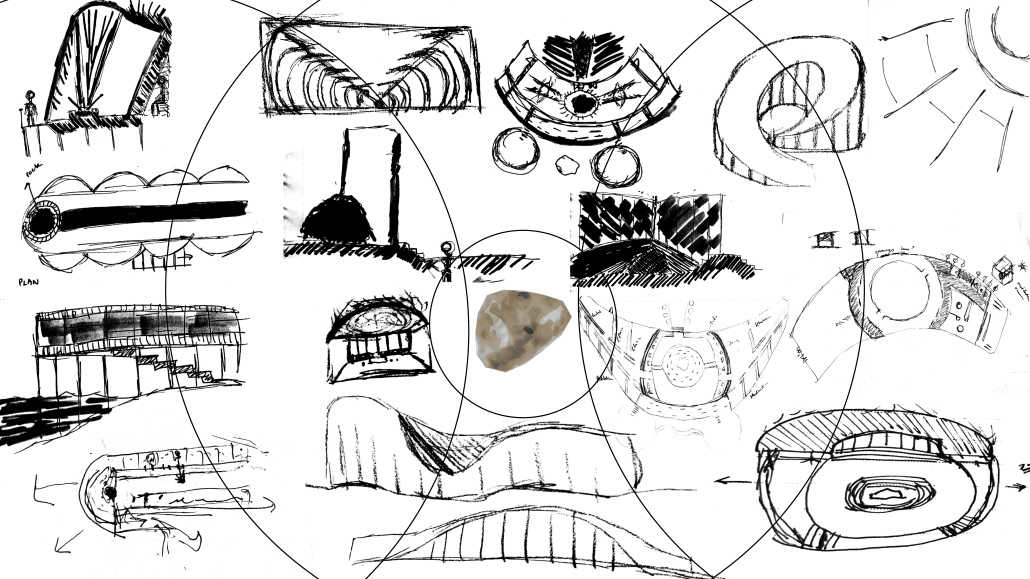
Echoes of the Land: A Pilgrimage of Wilderness and Spirit by Andrea Frank, M.Arch ‘25
North Dakota State University | Advisor: Stephen Wischer

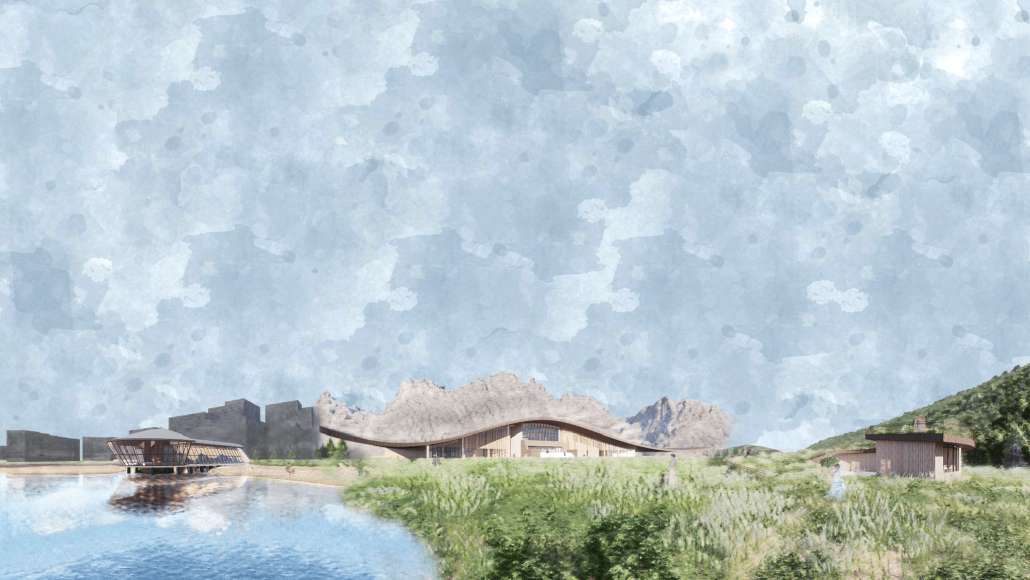
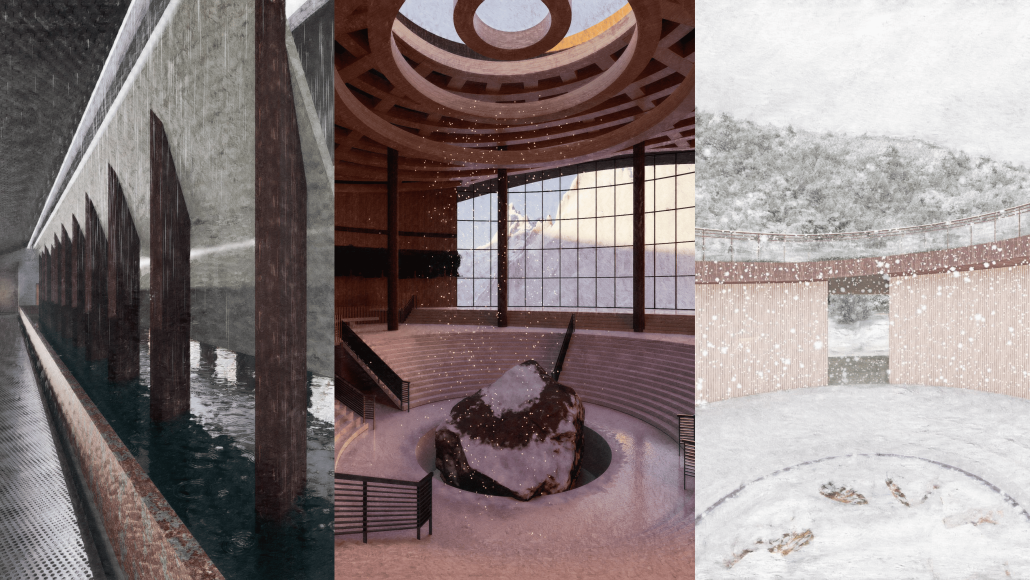
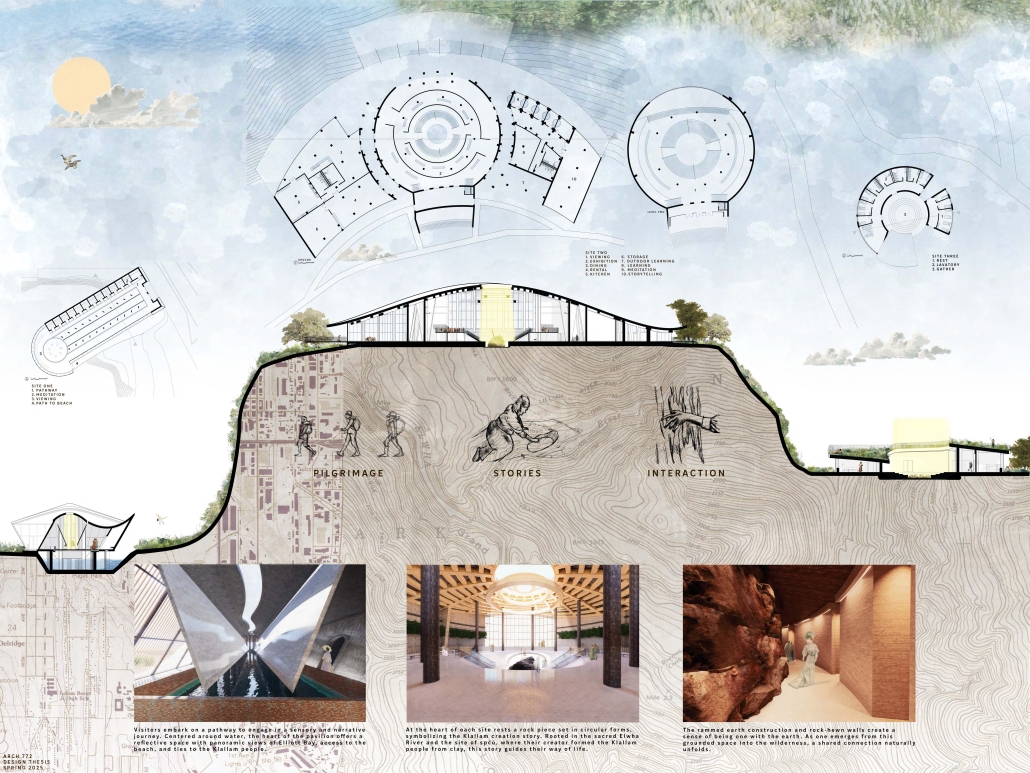
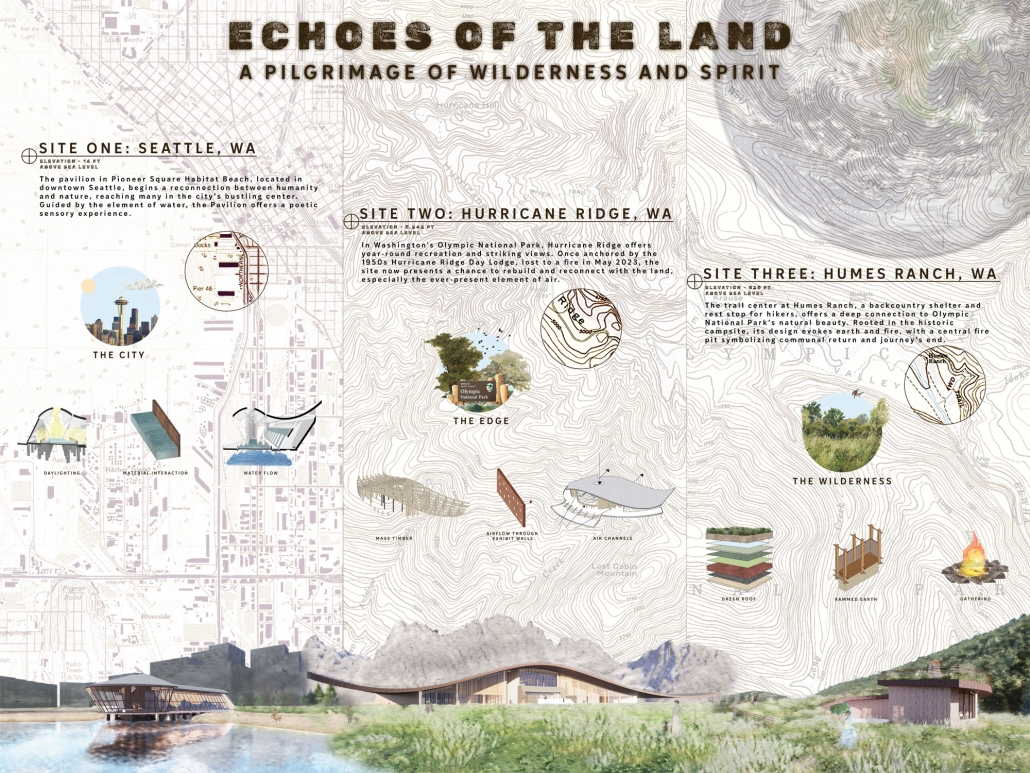
This thesis explores how architecture can bridge humanity and the natural world, restoring a connection eroded by technology, overconsumption, and distraction. While cities offer curated encounters with nature, they cannot replace the deep peace found in wilderness. This connection is essential to humanity’s survival. If humanity fails to understand its relationship with the environment and engage with it responsibly, it jeopardizes the ecological balance of the world and humanity’s own existence.

Architecture, once in dialogue with nature, now often serves function, spectacle, or profit. This work reimagines architecture as a mediator that fosters kinship with the earth through a threefold approach: a pilgrimage across city, edge, and wilderness; poetic uncovering of ancient site stories; and sensory engagement with the four classical elements. In doing so, architecture becomes a vessel for atmosphere, memory, and meaning, guiding individuals to a deeper awareness of themselves and their world.

This project received an AIA Medal for Academic Excellence.

Instagram: @andrea.frank10
A Place for Pilgrimage by Andy Packwood, B.S. in Architecture ’25
University of Virginia | Advisor: Peter Waldman

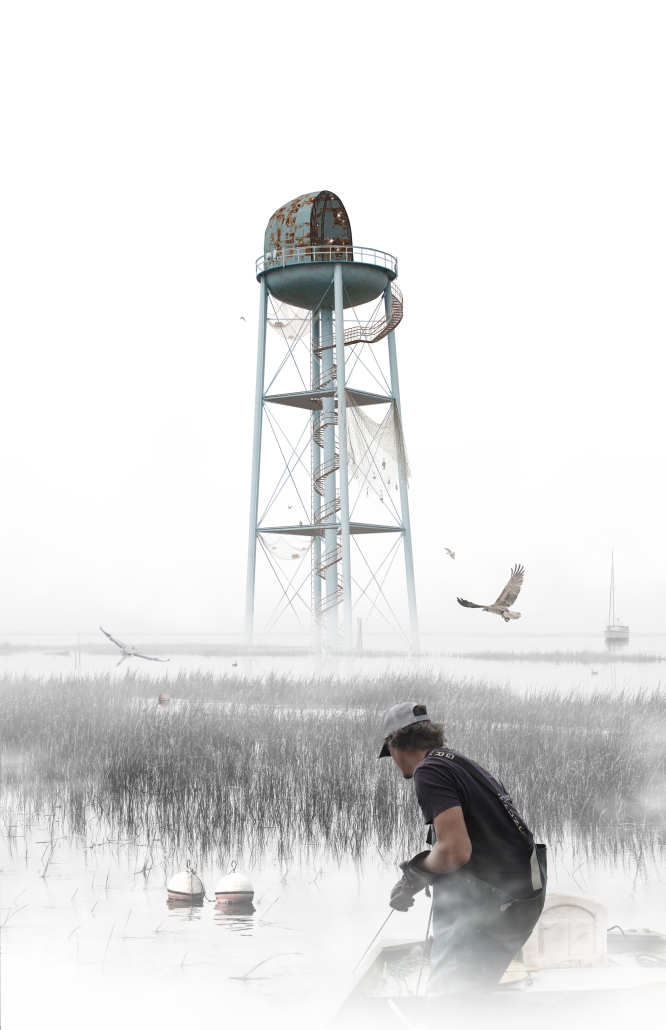
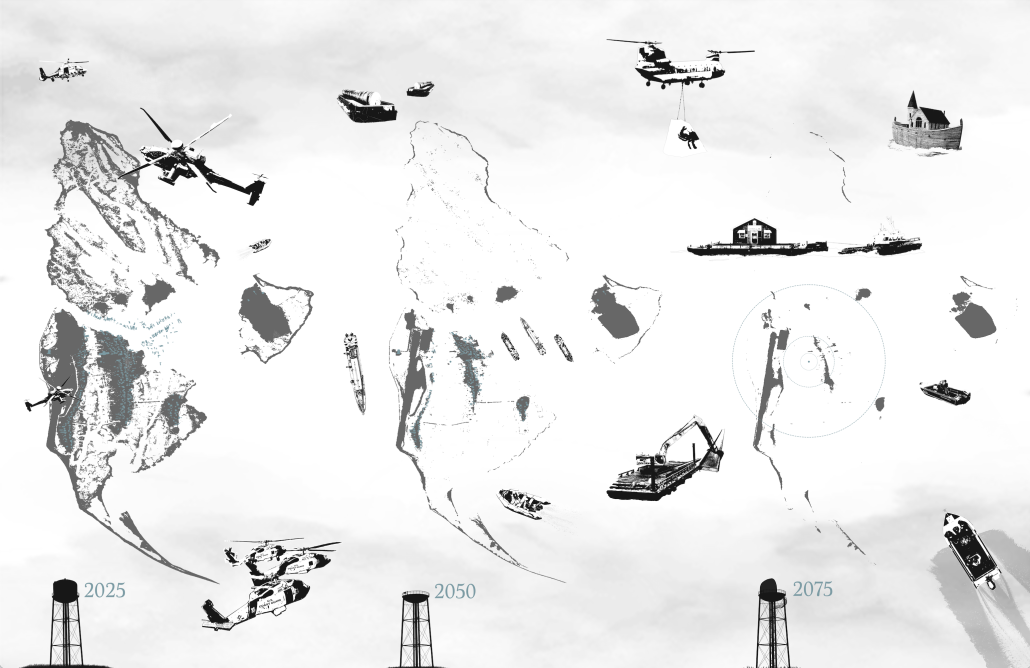
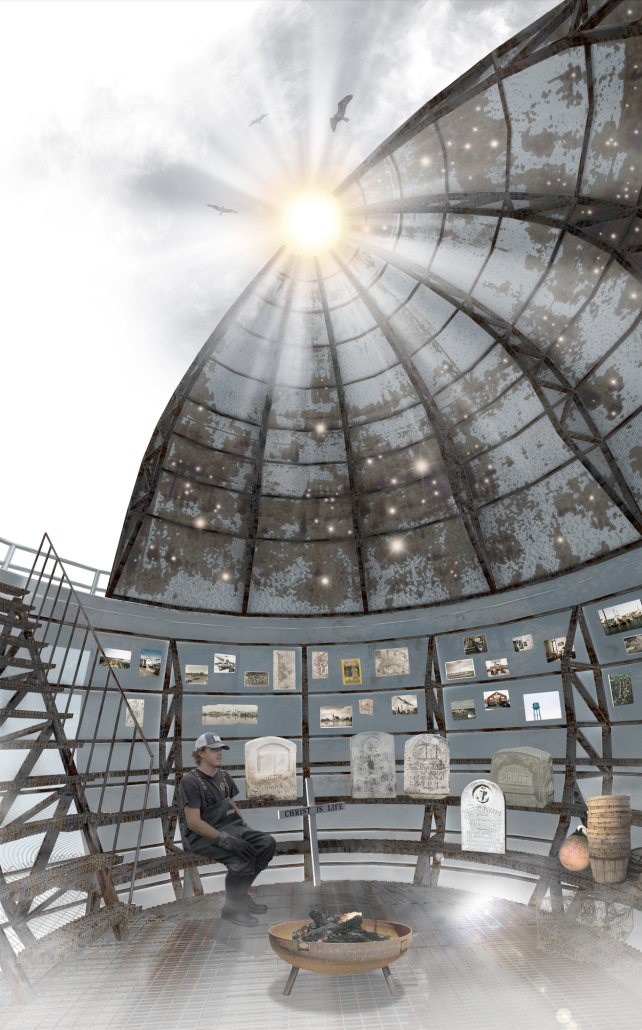
The project synthesizes two years of fascination for and research into the climate-threatened coastal community of Tangier, speculating as to what will ultimately happen to rural, low-income American communities in the wake of inevitable sea level rise. My interest lay not in the proposal of any sort of savior infrastructural solution, not in the proposal of a managed retreat plan, nor in the design of a mainland relocation for displaced refugee residents. I chose to develop a memorialized destination that could still exist on the island long after its ridges have turned to marsh, its homes have been barged away, and normally perceived connotations of inhabitability have all but vanished. I chose to create “A Place for Pilgrimage”, inspired by my own pilgrimage of El Camino de Santiago this past March.

Simply put, the proposal is an adaptive reuse of the tallest structure on Tangier: its water tower. Adding a spiraling staircase and pushing the structure fifty years into the unknown, the design creates a single space in the sky through the removal of half of the tower’s upper dome. The approach is incredibly important; much of the final pin-up focused on rendering this pilgrimage step by step. Starting from the dock of the mainland resettlement, looking out into the Chesapeake Bay, a line of buoys trails towards the horizon. A bird soars toward the tower in the distance, the vestiges of marsh poking out of the water. Cameron Evans, current vice mayor and young watermen of the Island, embarks as this future pilgrim by skiff. He carries with him a gravestone; many cemeteries on the Island are often inundated by tidal flooding, and residents must move these tombs to higher ground, again and again.

What I have proposed is a final resting place, safe from the heights of sea level rise. A place for generations to visit, to bring tokens of remembrance, to occupy overnight, or to even continue their trade as watermen. Up within the dome of the water tower is a cenotaph for the people, memories, culture, history, and beauty of Tangier. We will need one.

This project was awarded High Honors for Thesis.
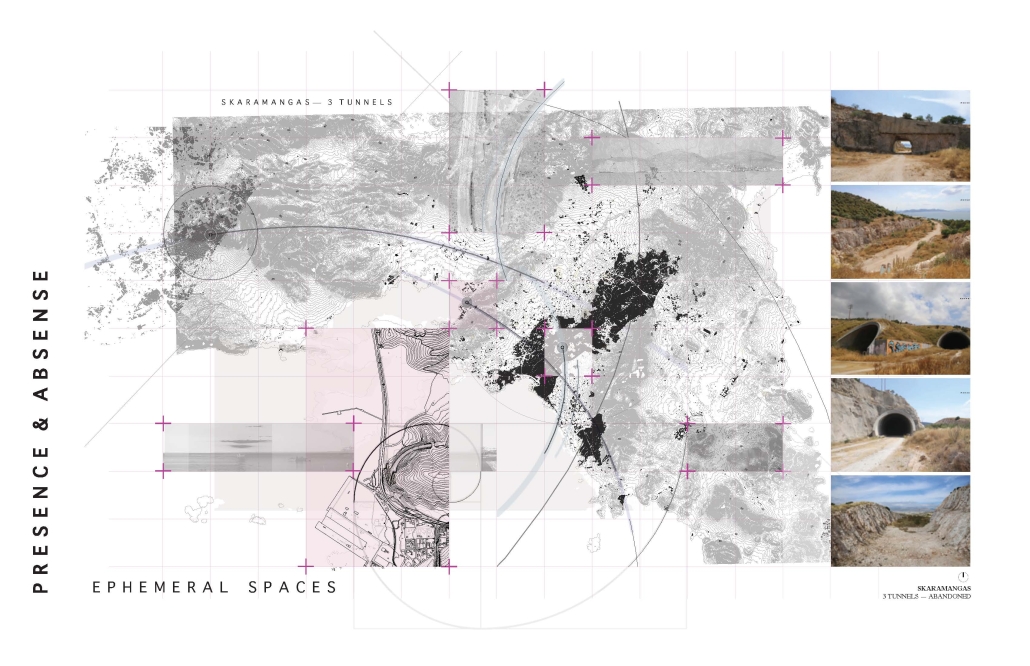
Ephemeral Spaces — Presence and Absence by Robin Xiao, B.S. in Architecture ’25
University of Virginia | Advisor: Peter Waldman

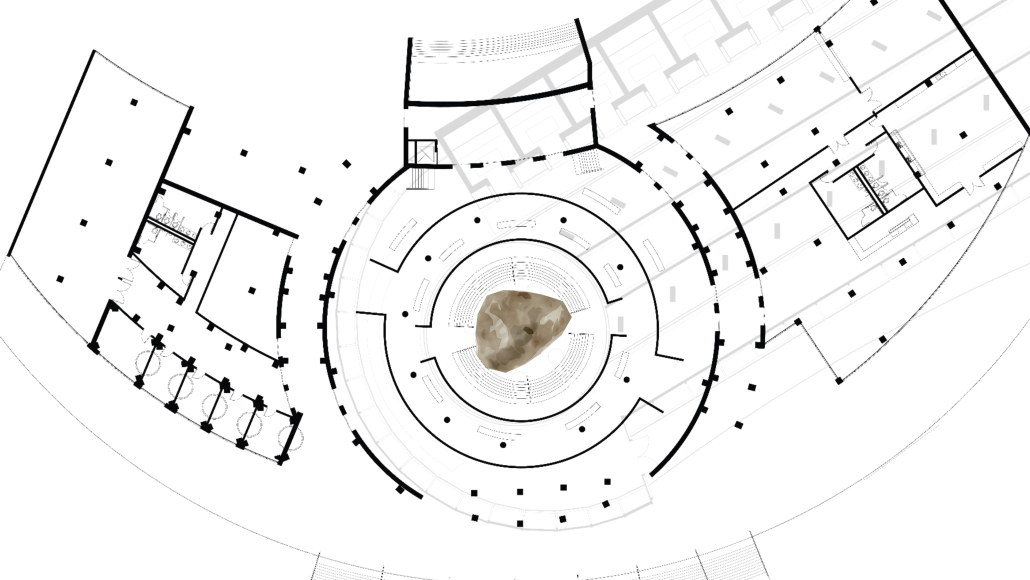
This thesis explores how architecture can emerge from the debris of the everyday to construct a space of ritual and transition—between life and death, presence and absence, memory and forgetting. 

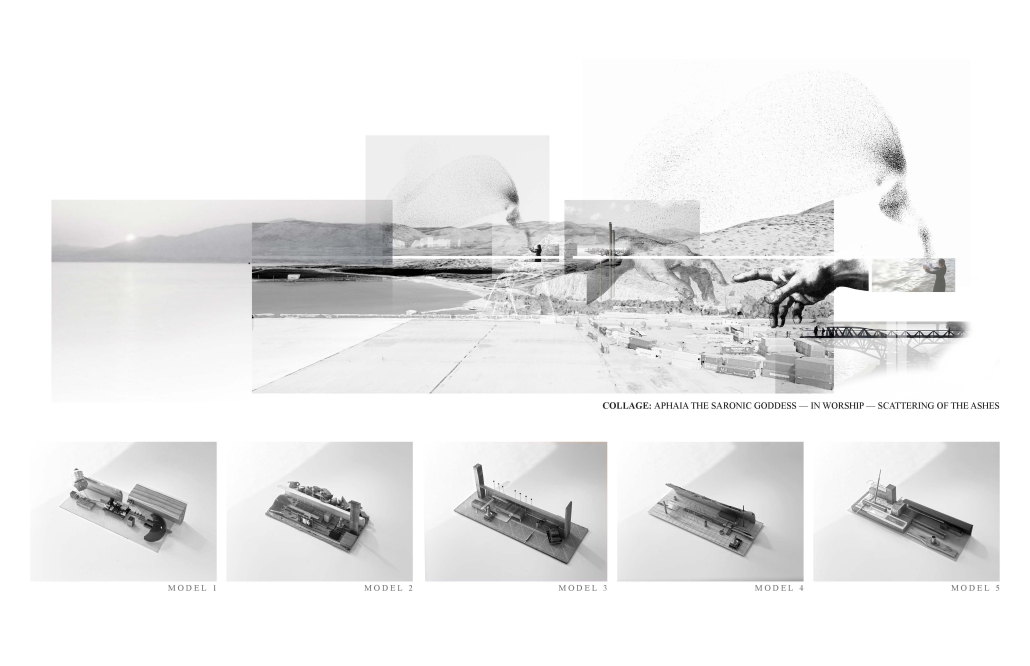
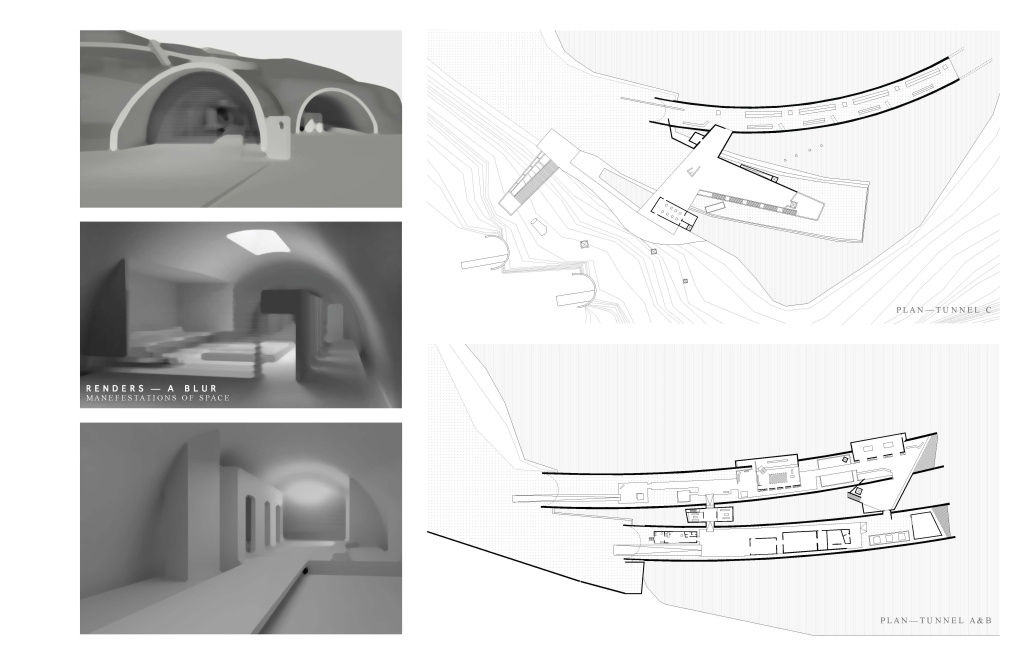
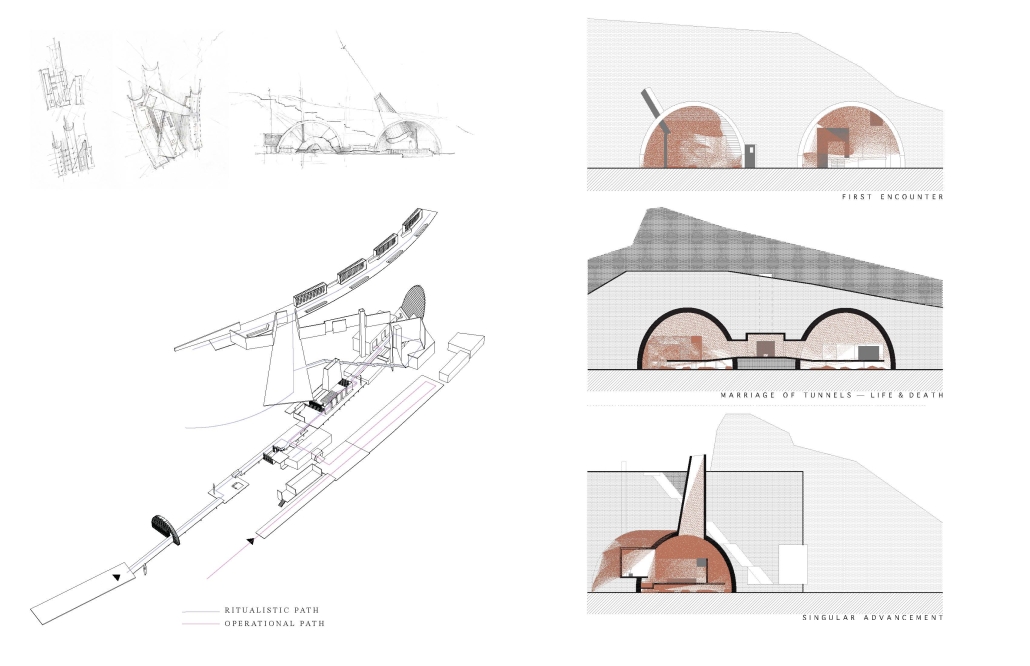
Situated in the post-industrial landscape of Skaramangas, Athens, the project transforms three abandoned military interchange tunnels into a procession of ephemeral architecture: a crematorium, a columbarium, and spaces for reflection, and spaces of pause/entry/exit. 

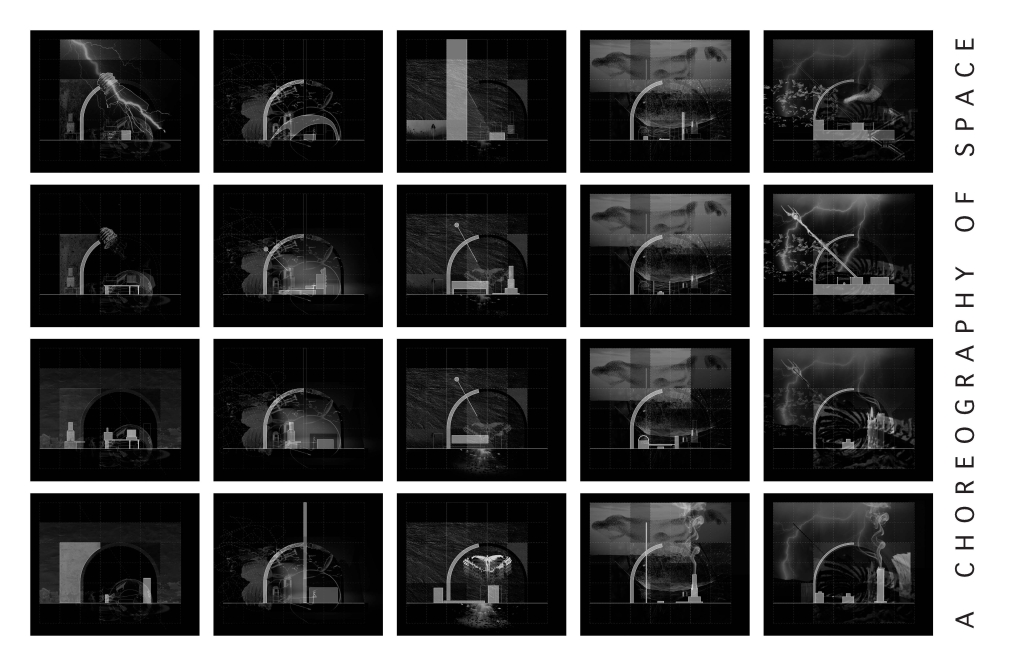
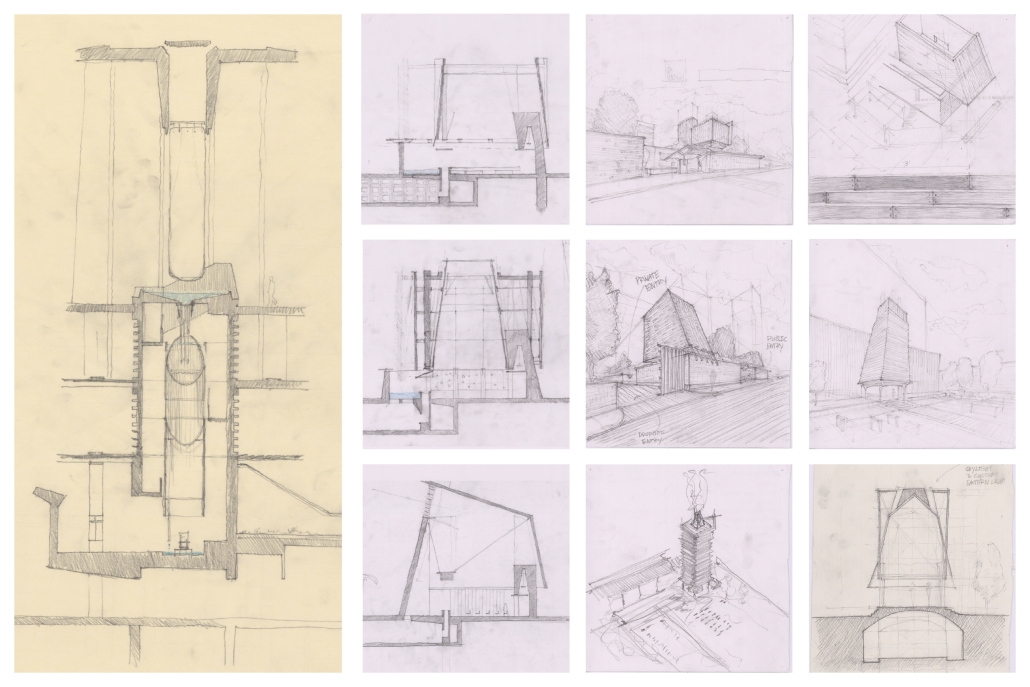
Through a series of five conceptual models, material fragments—broken light bulbs, candles, metal tubing, computer chips, wood scraps—become instruments of spatial inquiry, offering alternative ways to think about temporality, transformation, and the sacred. Each model gives rise to a set of sectional drawings, collaged with elemental forces—earth, fire, air, water—revealing a layered architecture of transition. 

The resulting proposal is not a fixed structure, but a choreography of spaces that invite the living to move with the dead, through tunnels repurposed as thresholds. This work situates ephemerality not as loss, but as an architectural condition of becoming—an act of spatial murmuration shaped by light, material residue, and memory in motion.

This project received High Honors for Undergraduate Thesis.

Instagram: @robinxiaostudio
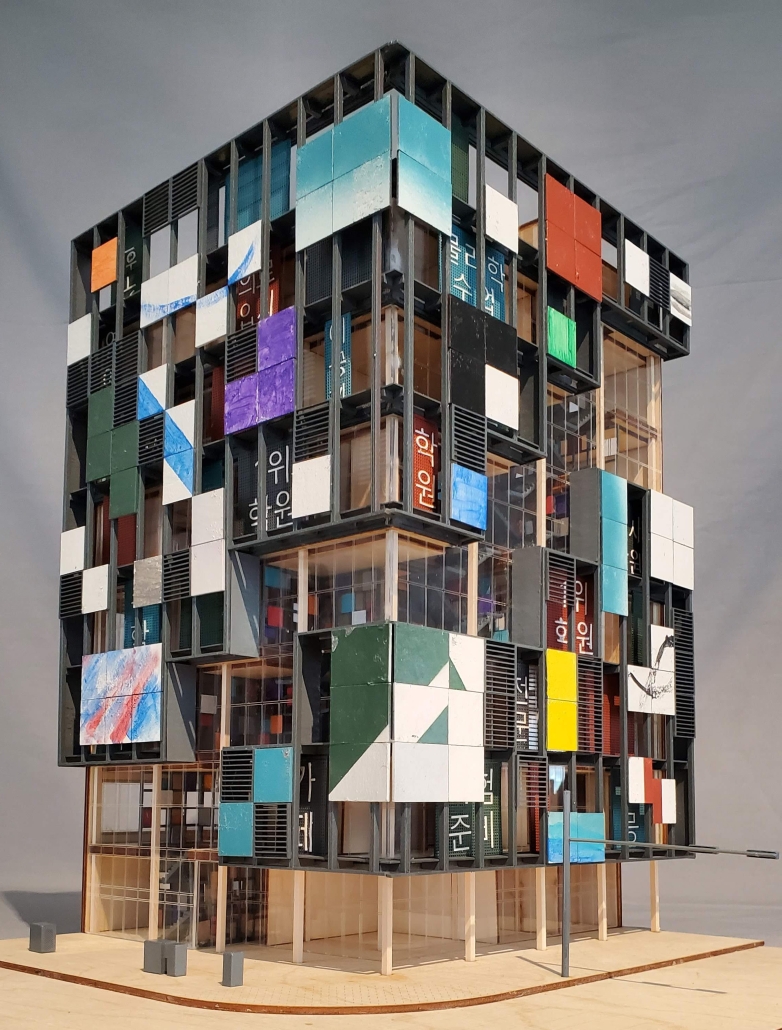
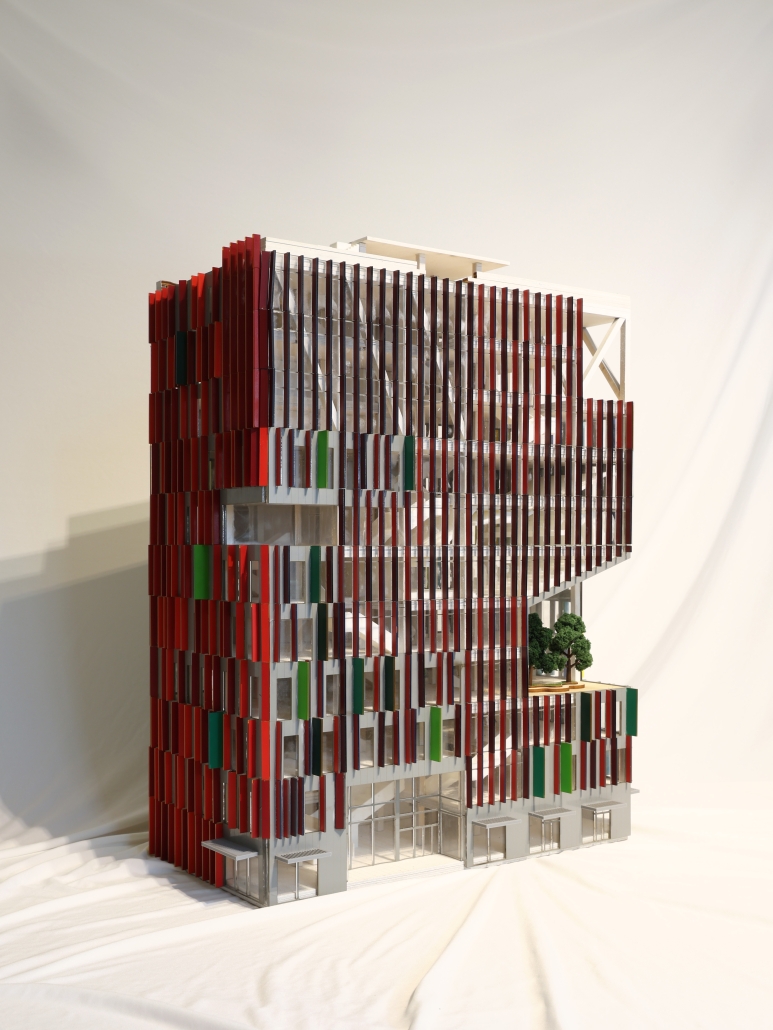
MOVING FUTURES VERTICAL SCHOOL by Alex Hoover & Zach Izzo, M.Arch ’25
University at Buffalo | Advisor: Jin Young Song

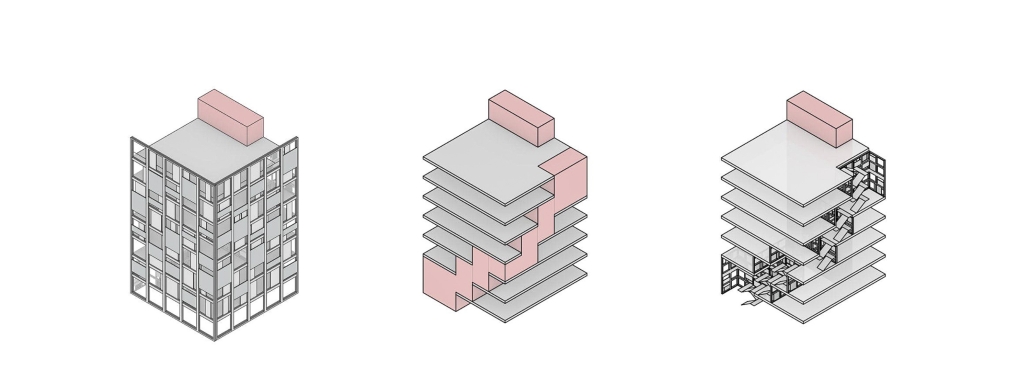
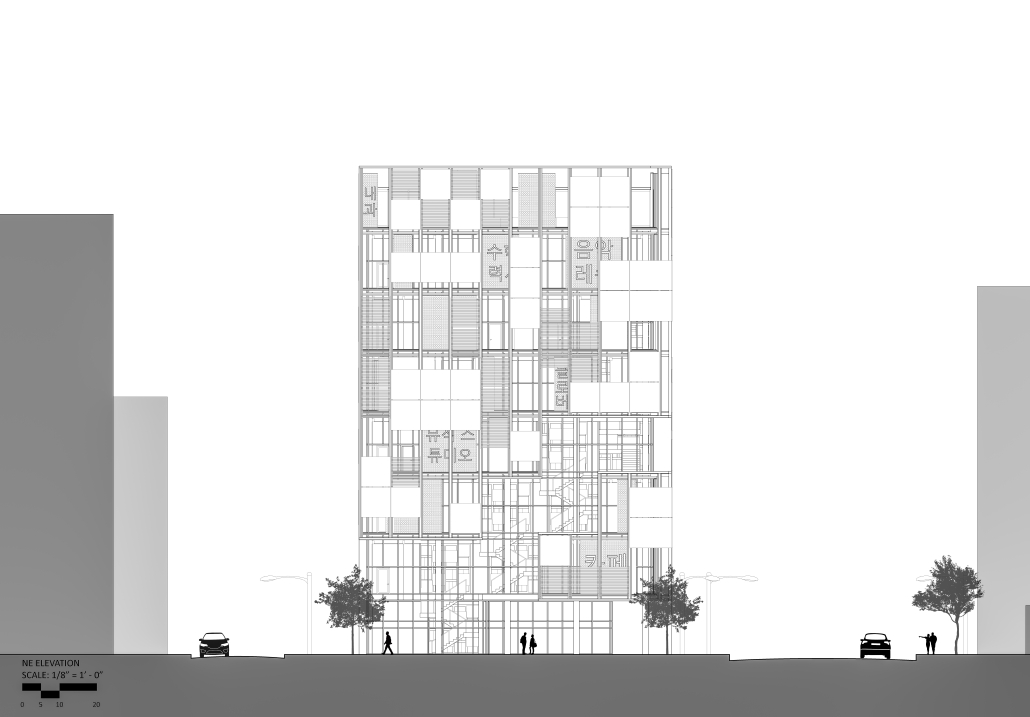
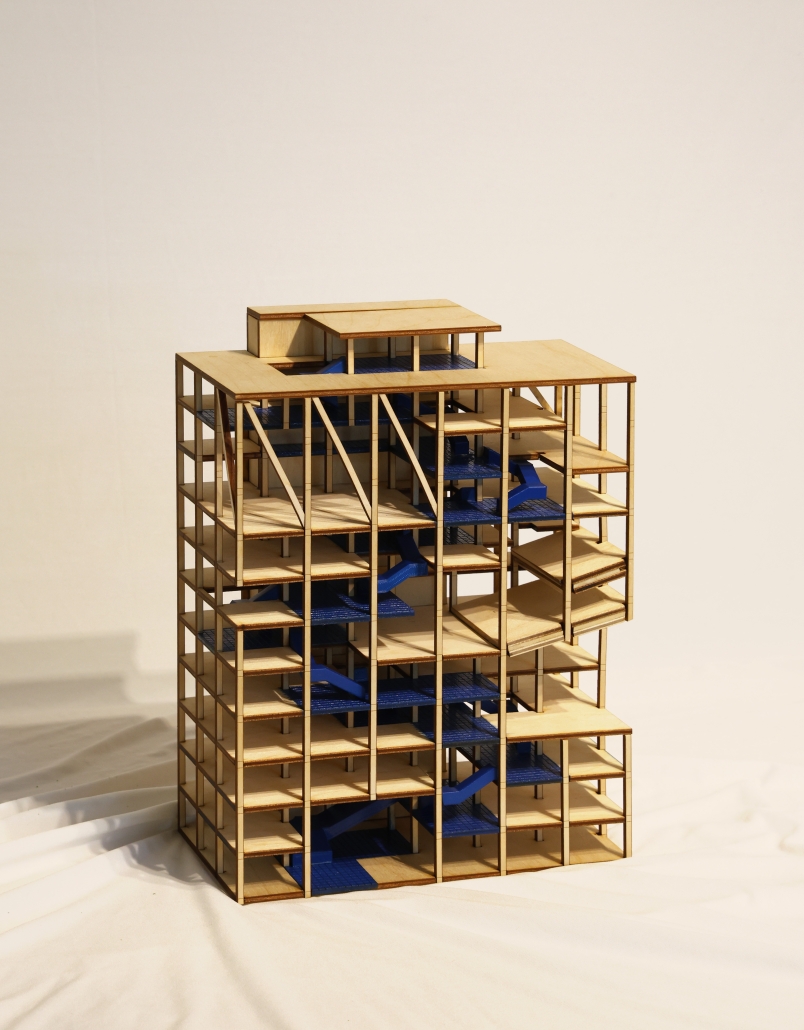
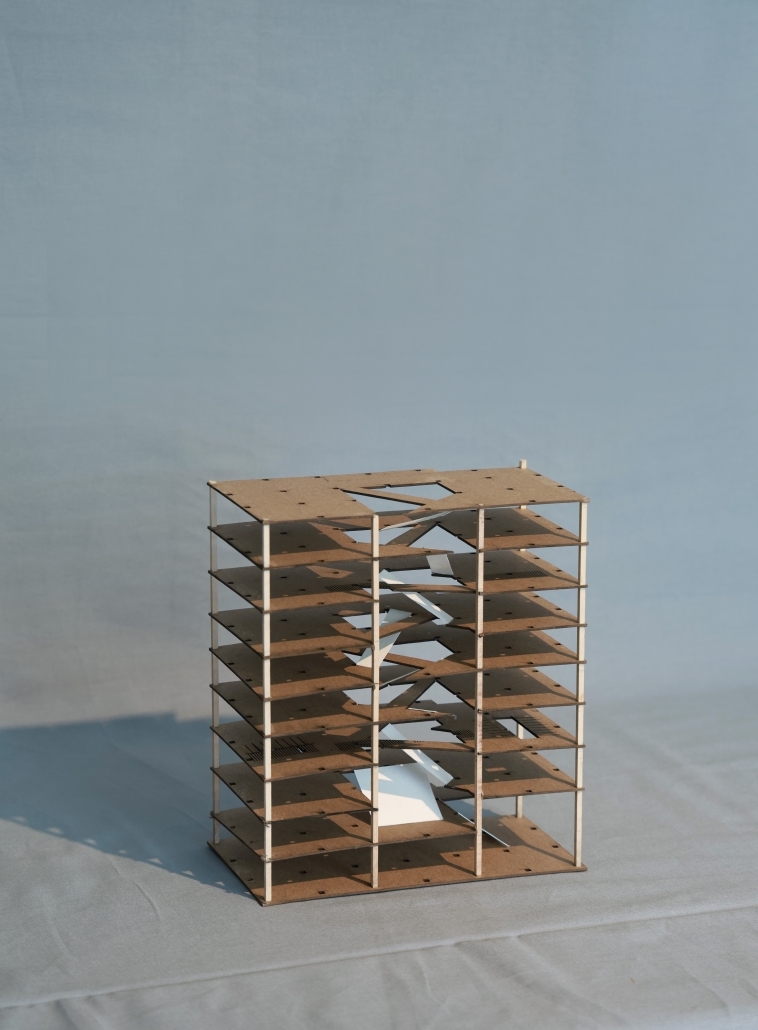
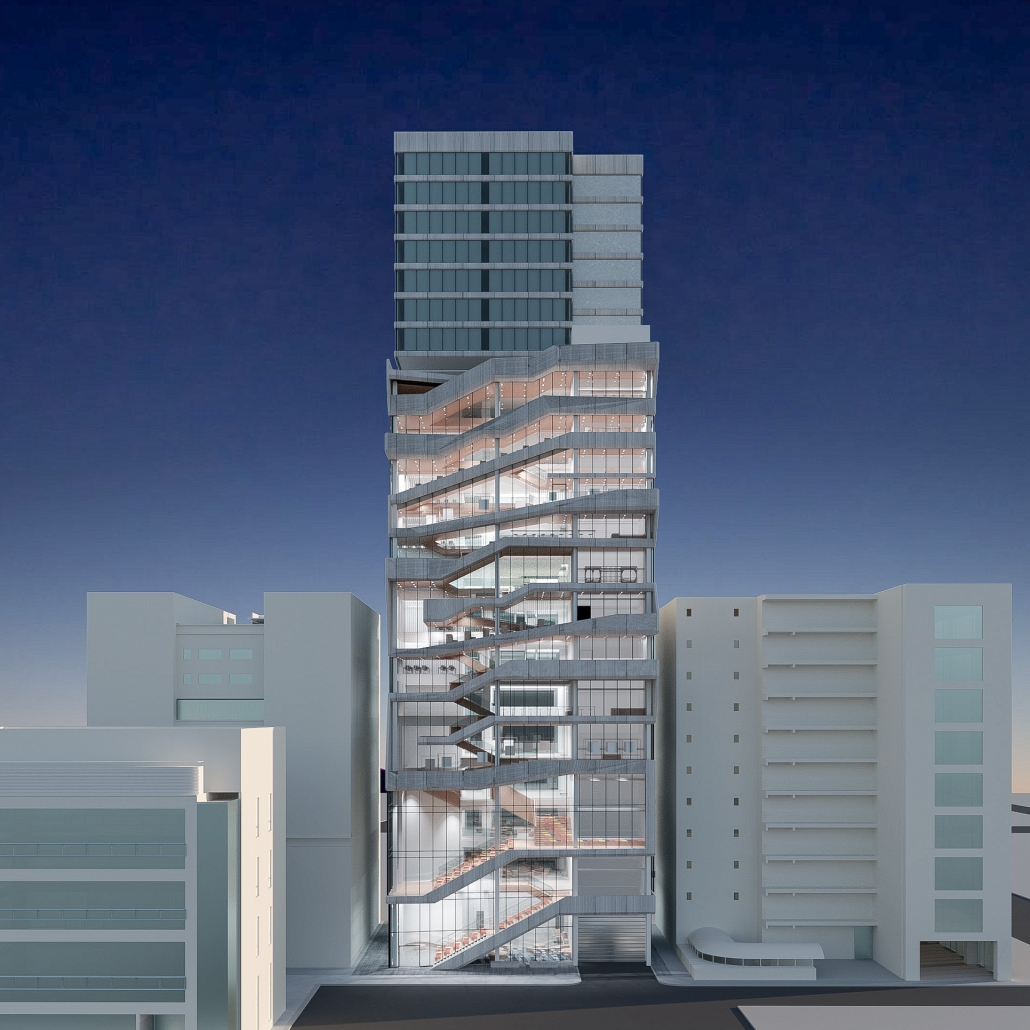
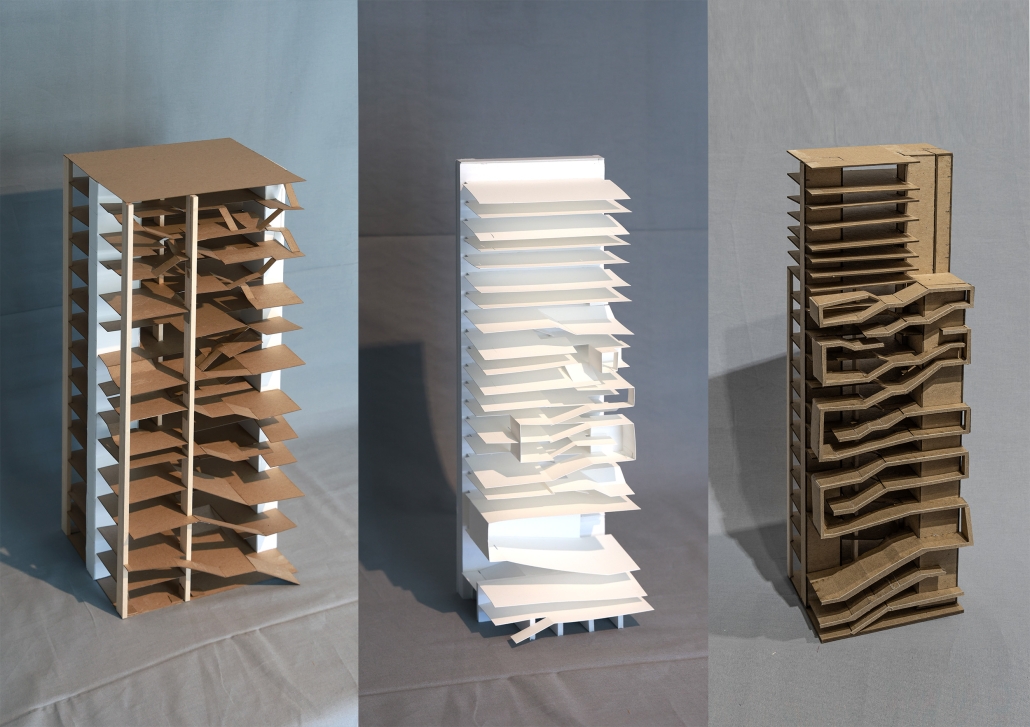
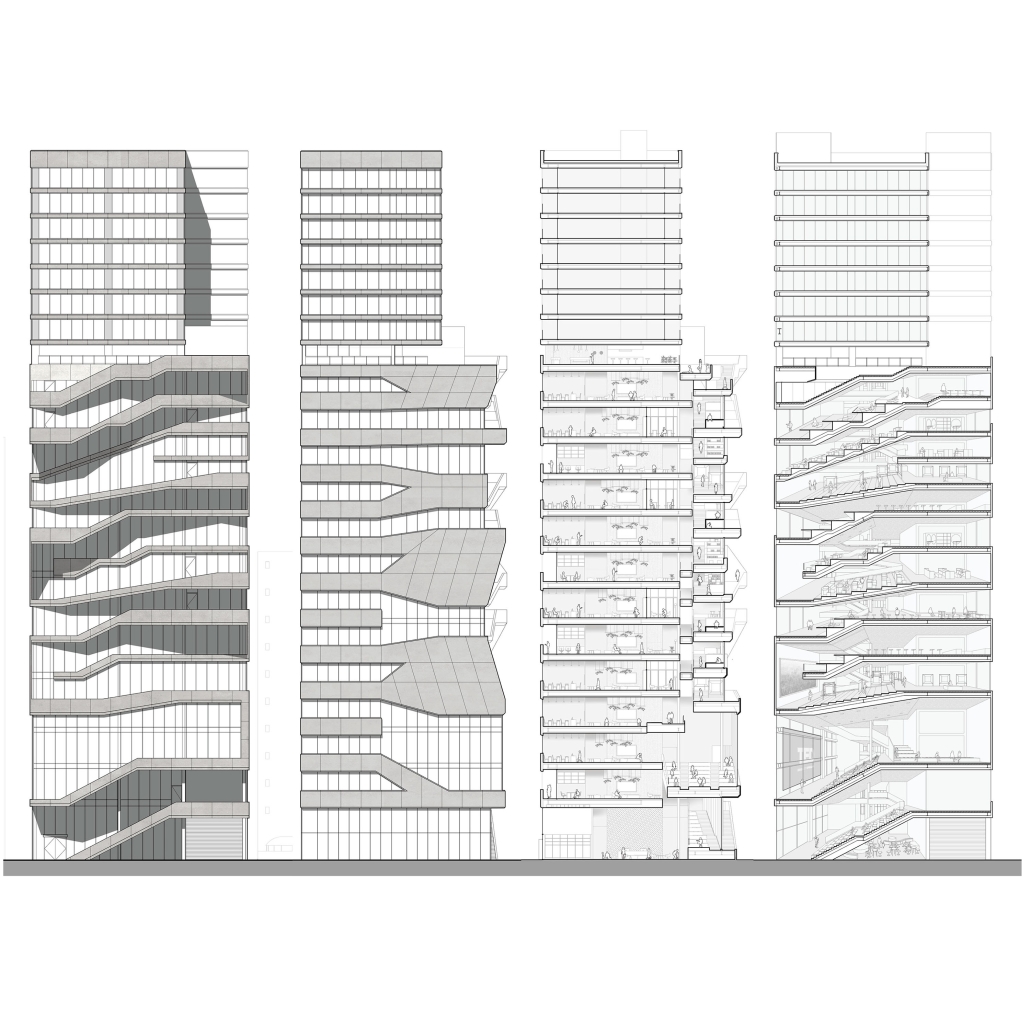
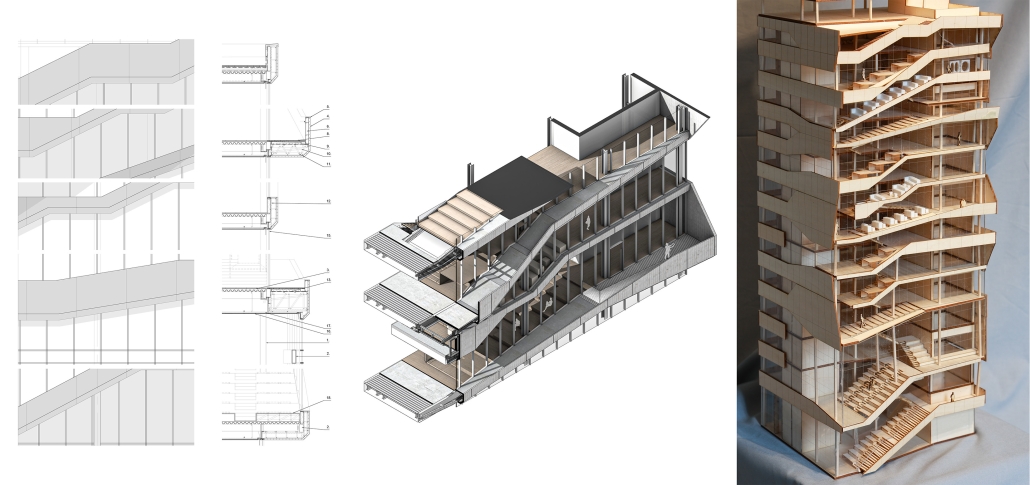
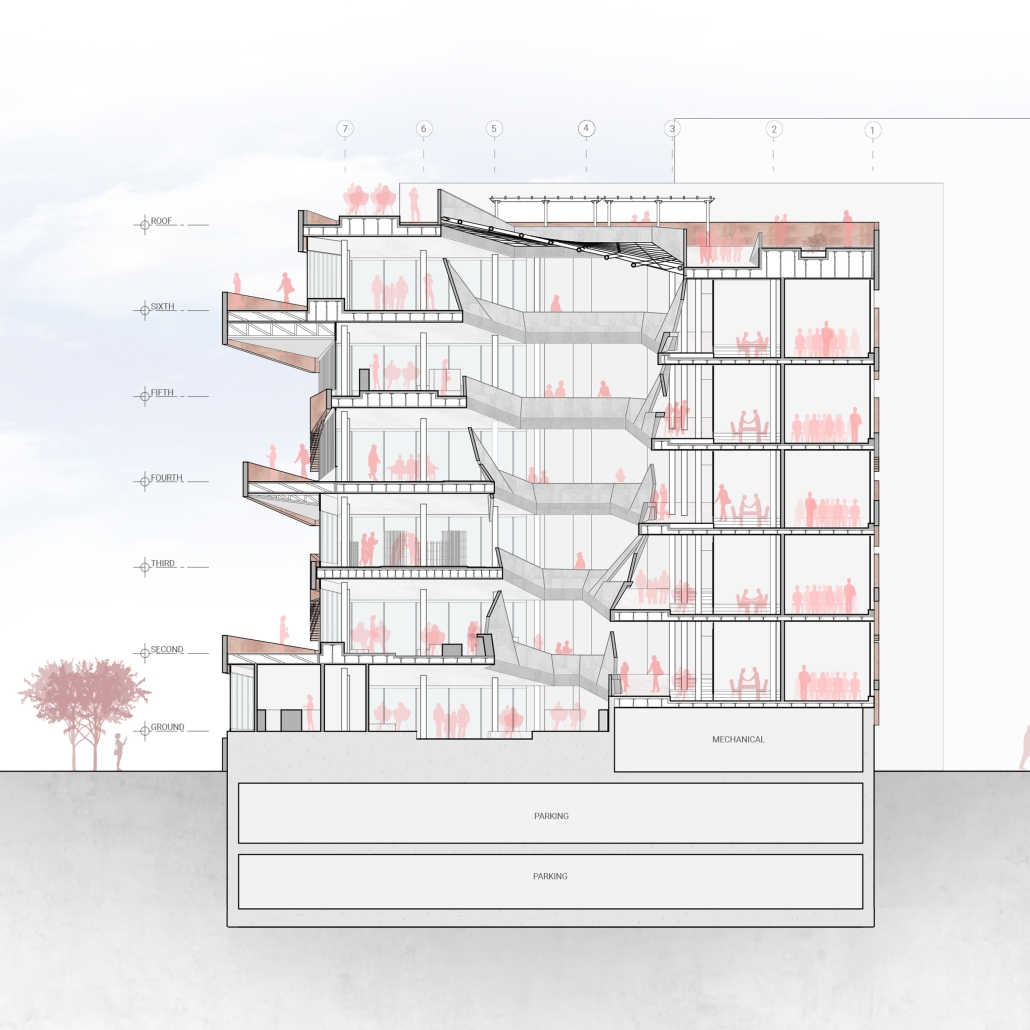
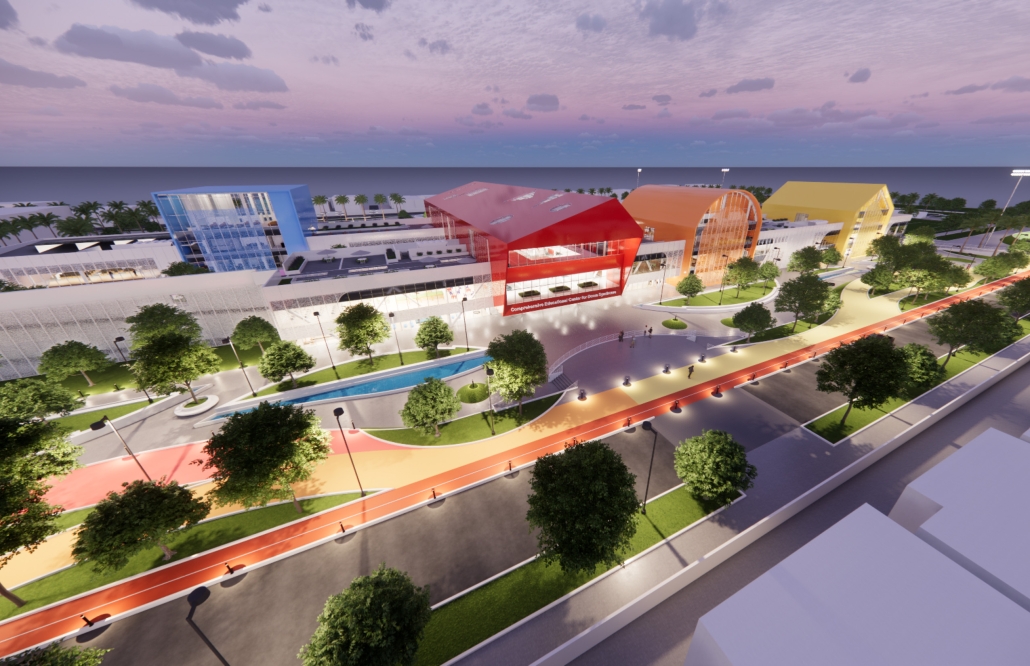
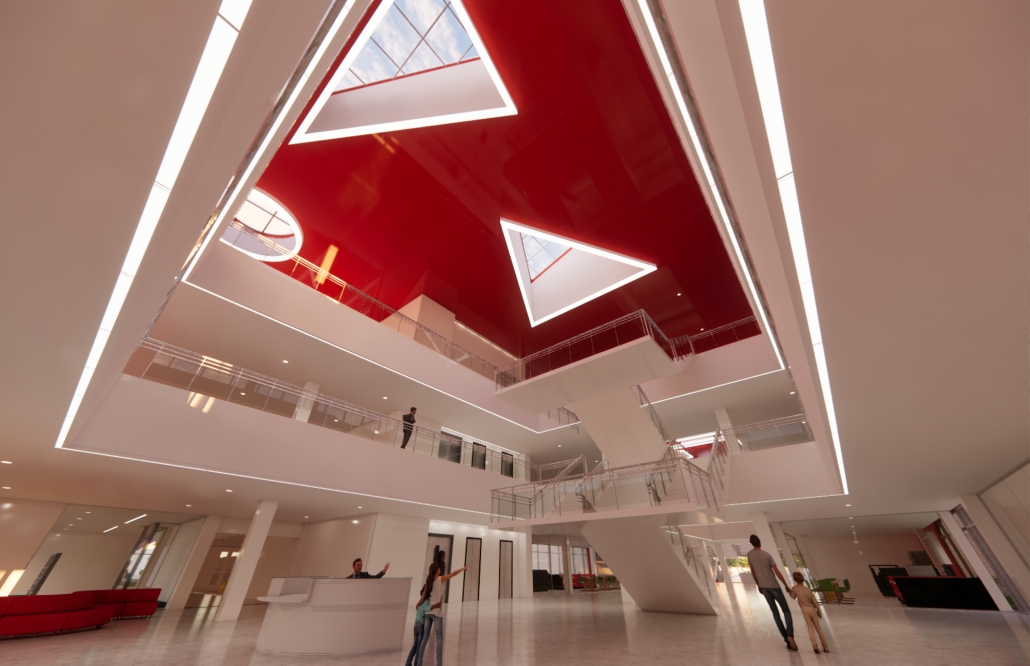
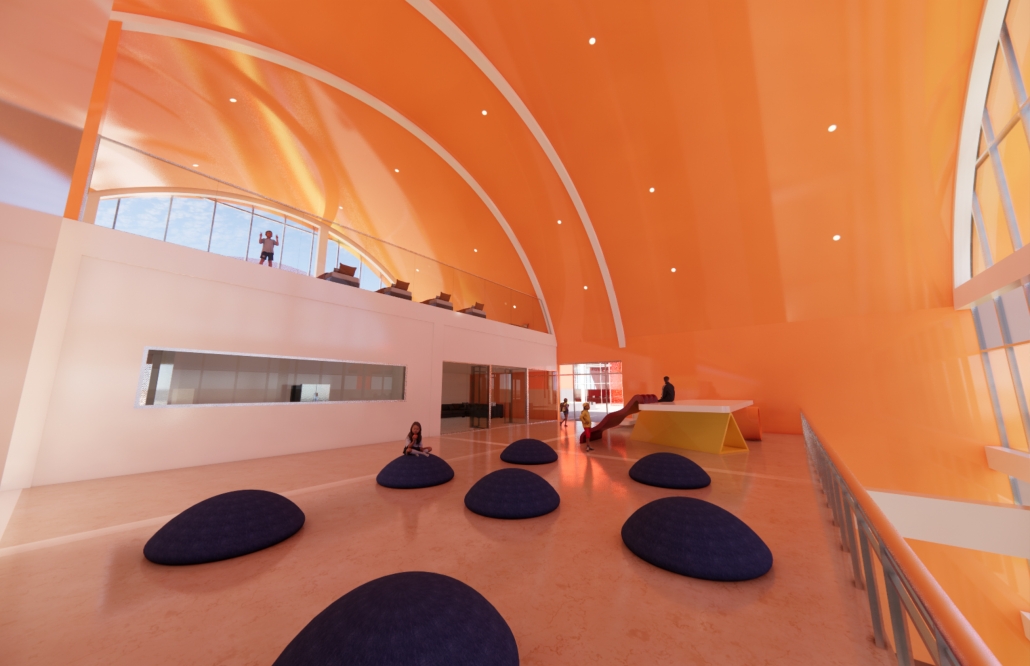
Located in Songdo, Seoul, our project reimagines the typical Korean private educational institutions, known as Hagwon, by prioritizing spatial flexibility and community engagement. Traditional Hagwons often feature cramped, efficiency-driven classrooms. However, research shows that children learn better in environments with diverse spatial qualities—high ceilings, minimal partitions, vibrant colors, and flexible layouts. To address this, we designed a highly adaptable building with movable interior and exterior components. Each main floor features partition walls on ceiling-mounted tracks, allowing spaces to transform easily—from small study rooms to large lecture halls or art galleries. This system ensures both spatial diversity for students and long-term adaptability for future tenants or programs. 

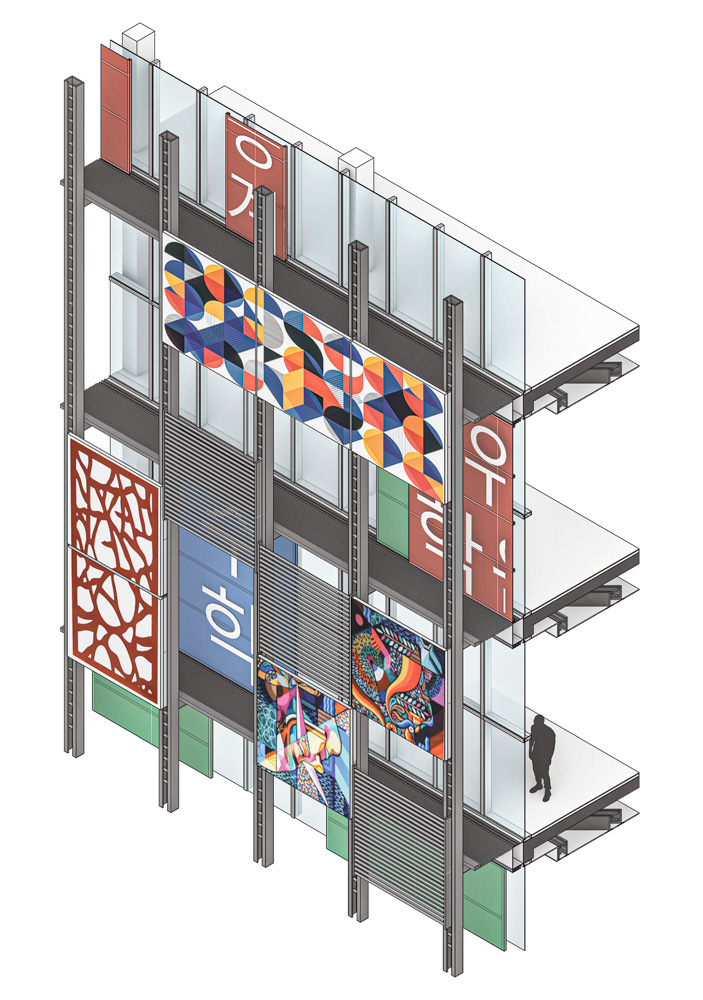
The facade similarly emphasizes flexibility, offering a reinterpretation of Korea’s dense, intrusive urban signage. The three-layer facade system integrates architecture, community identity, and student expression. The outer layer consists of LED media panels and sun-shading devices, configurable to display student artwork or community visuals, establishing the building as a neighborhood landmark. The second layer features sliding perforated metal signage panels, subtly blending information with the architecture rather than overwhelming it. The innermost layer wraps the social stair, visible from both adjacent streets, inviting public interaction and showcasing movement within the building. Smaller panels provide localized signage, such as floor numbers and bulletin boards. Together, the dynamic facade and transformable interior create a learning environment that fosters both community visibility and spatial flexibility, promoting a more engaging, human-centered educational experience.

The project was selected for the Cram Urbanism and Vertical Learning Space International symposium

Instagram: @_alex_hoover, @jinyoung___song  
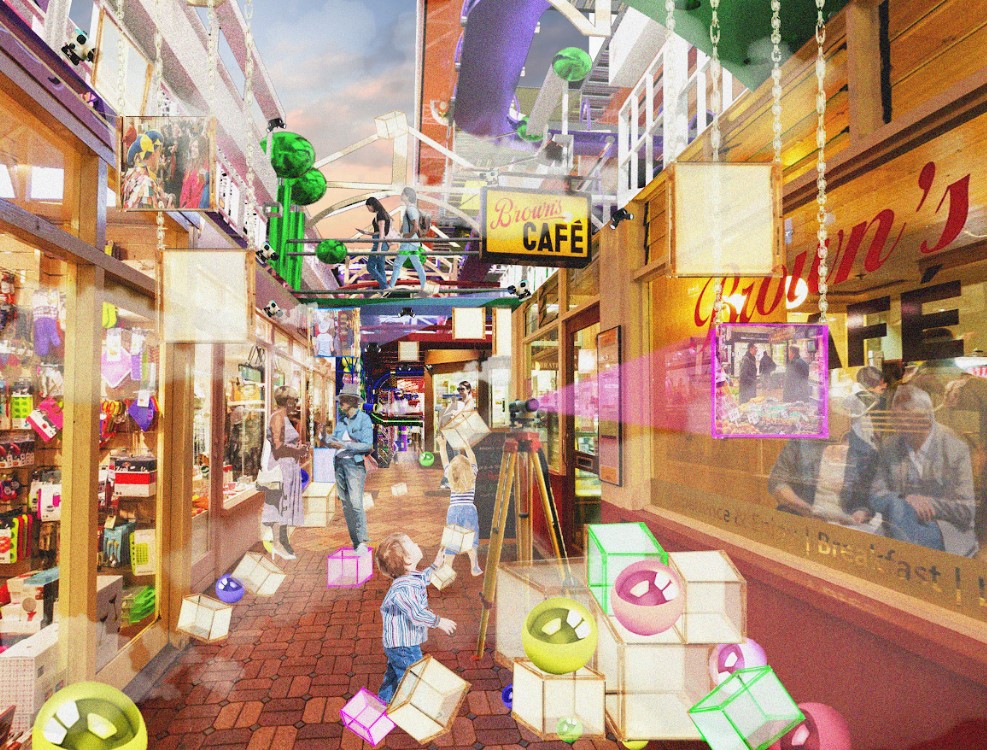
The Market of Joy by Shefa Quazi, M.ArchD ’25
Oxford Brookes University | Advisors: Toby Smith, Alexandra Lacatusu, Toby Shew, Charles Parrack

In a world dominated by seamless digital consumption, where screens dictate desires and algorithms predict movement, The Covered Market in Oxford becomes a site of rebellion—a place where reality is glitched, distorted, and reclaimed from commercial control. Instead of a polished, hyper-commercial spectacle designed to guide users into predictable behaviors, the proposed series of interventions hijack the mechanics of digital consumerism and turns them against themselves to exaggerate them into a physical, pseudo-reality. Attempting to readminister the loss currency of joy.

The market transforms into a disruptive, anti-brand arcade—a physical and augmented experience that interrupts, unsettles, and reawakens users to the absurdity of algorithm-driven life. Augmented Reality, typically a tool for corporate control (filters, tracking, gamified shopping), is instead repurposed to create moments of détournement, where the commercial is undermined, and participation leads not to consumption, but to adding weight to reality and human interaction. Overall revaluing the High Street as a whole. 

Instead of guiding users toward consumption, the market becomes a disobedient space, forcing engagement away from passive scrolling and toward critical awareness of spectacle itself. The interactions don’t feed an algorithm—they break it. The market is no longer a relic of pre-digital commerce but a living, evolving site of resistance against digital saturation and corporate control.

This project received the Oxford Brookes University Reginald W. Cave Award.
Instagram: @sheevz_q, @oxarch

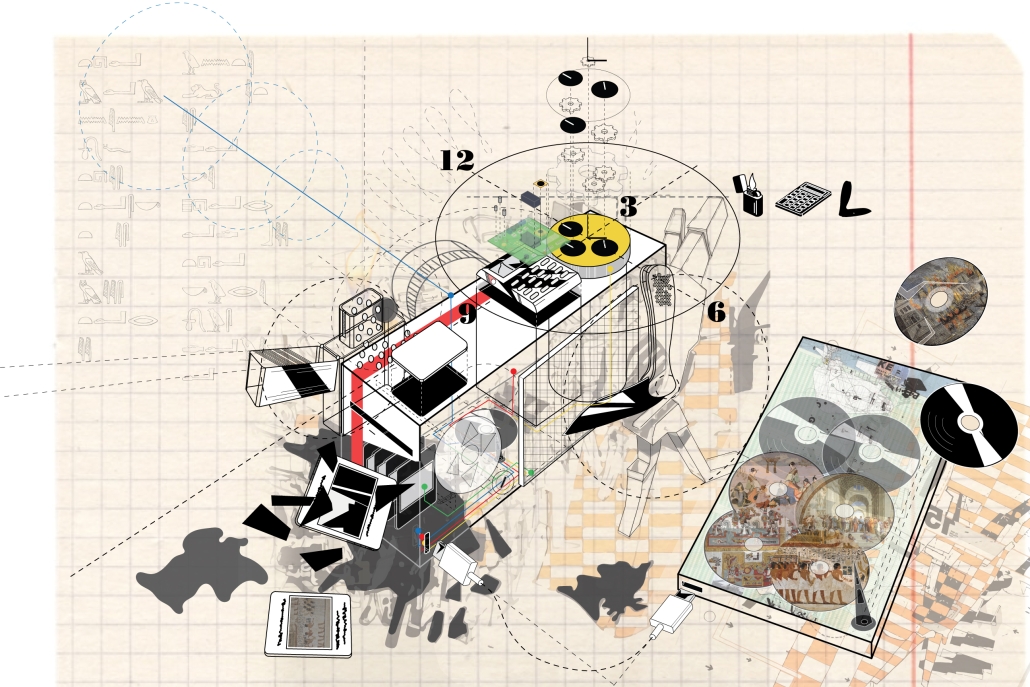
The Inner Mechanism by Jared Roberts, M.Arch ’25
Lawrence Technological University | Advisor: Masataka Yoshikawa

This project sees the physical model and 2D illustration of the hypothetical device abstracted to create architectural forms and spaces. The form derives itself from the concepts dealt with in the inner mechanisms and particularly information storage. The “nested” nature of digital information storage (i.e., nested file folders on a computer) translates to nested architectural forms that sometimes exist within or even overlap other parts of the model. Another concept was that of information’s changes and persistence over time. The form is constructed like a timeline that exists in all three dimensions, inspired by the flow map of Napoleon’s invasion of Russia, which charts various different variables including location, population, time, events and more about Napoleon’s Russian campaign. In the same way, the timeline is a two-dimensional visual representation of information gathered about events in history; this model is a three-dimensional representation of the information gathered and stored by the hypothetical device. 

Instagram: @masataka.yoshikawa
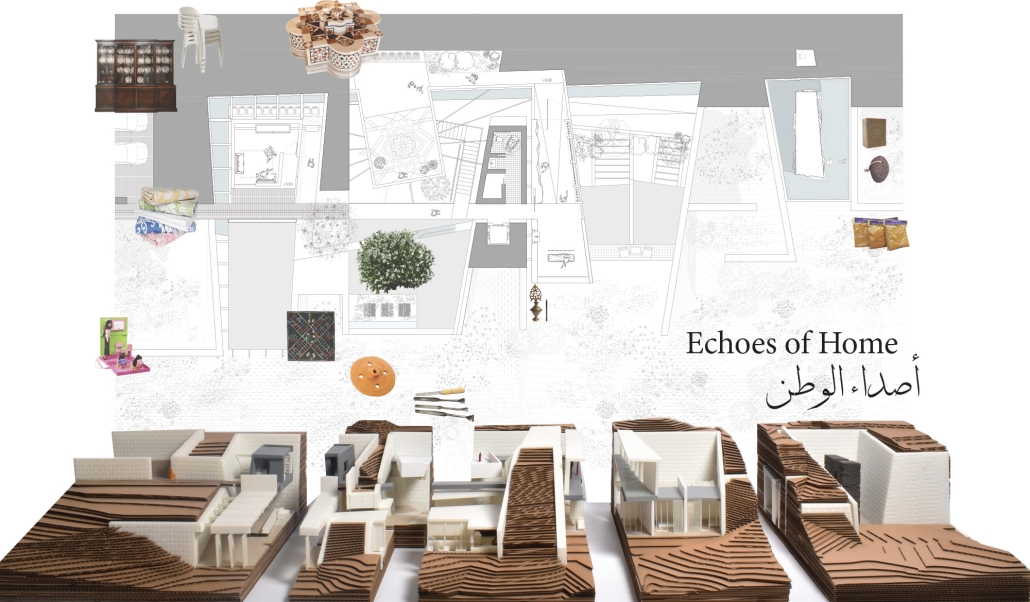
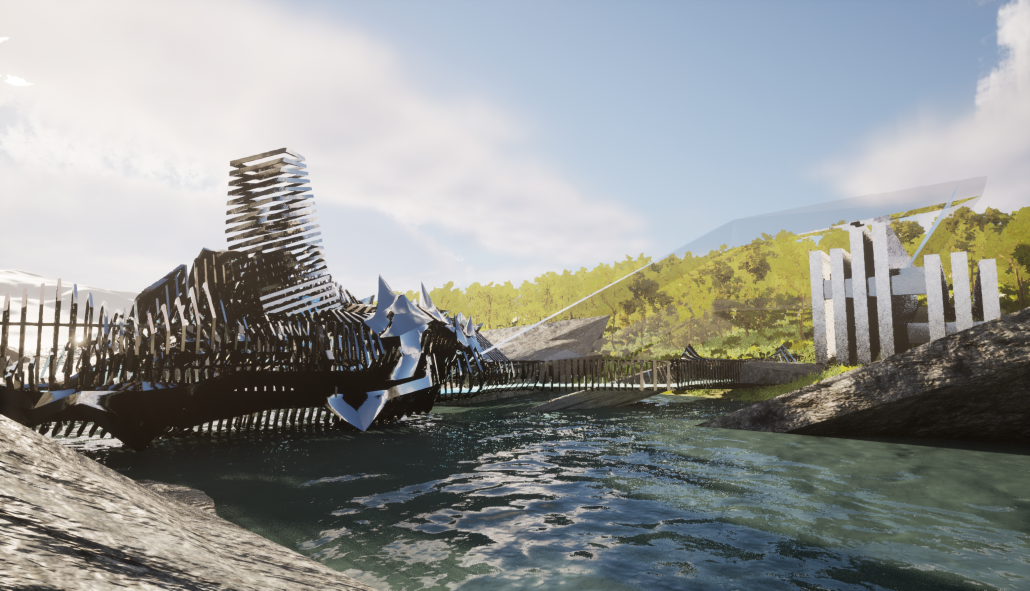
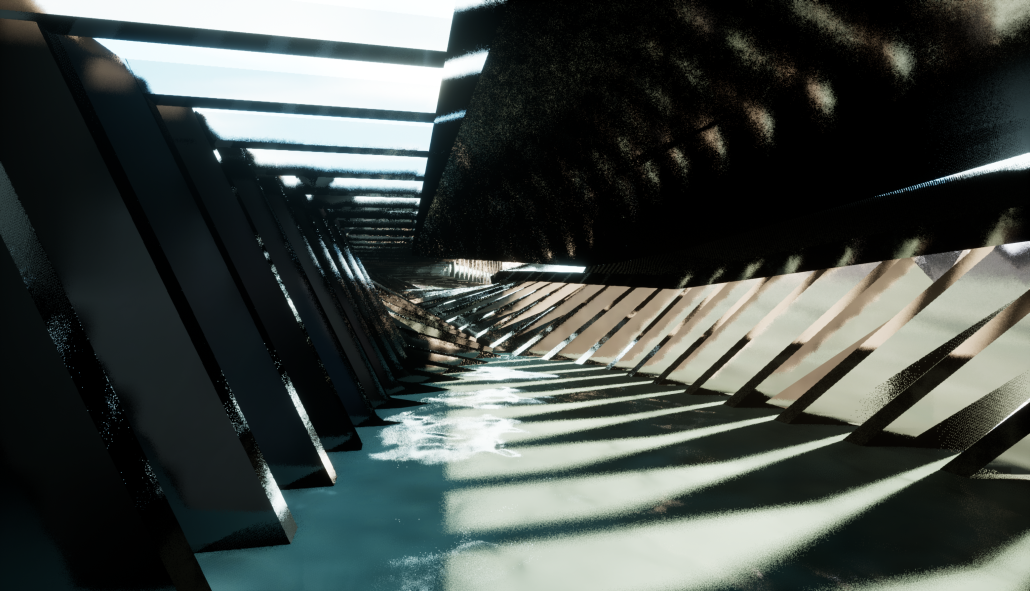
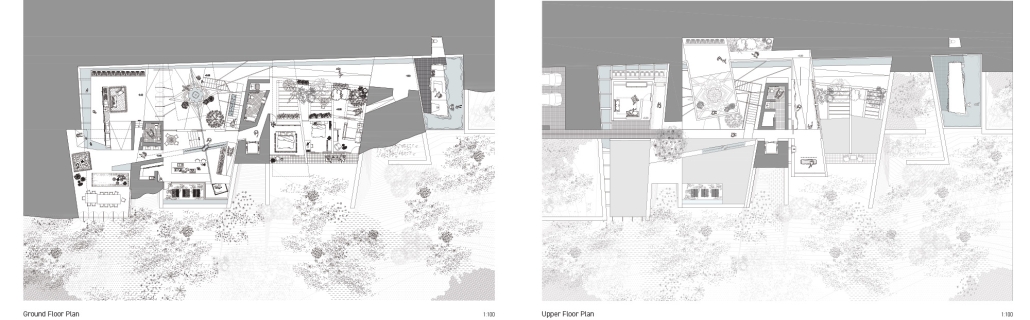
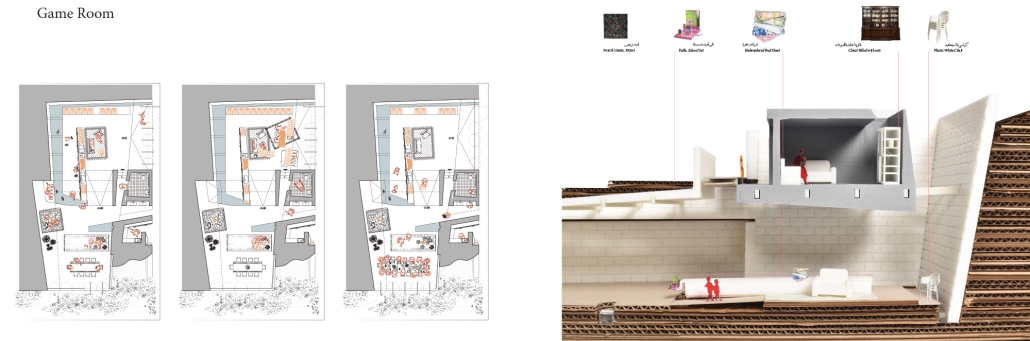
Echoes of Home by Zuha Arab Sabbagh & Rana Abdelhadi, B.Arch ’25
American University of Sharjah | Advisor: Gregory Thomas Spaw

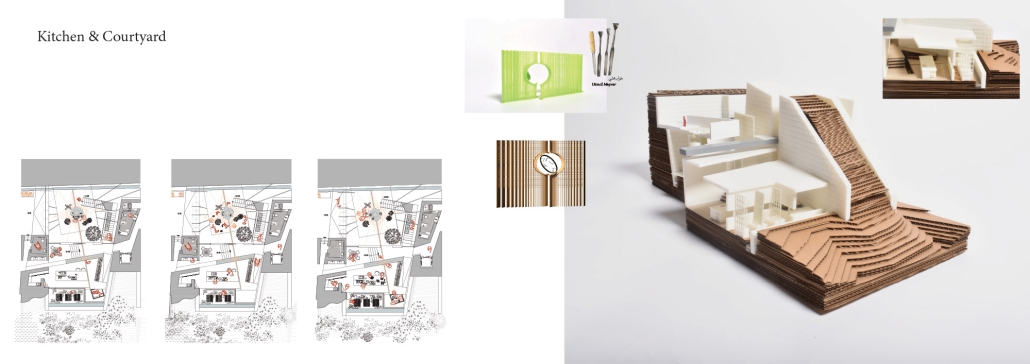
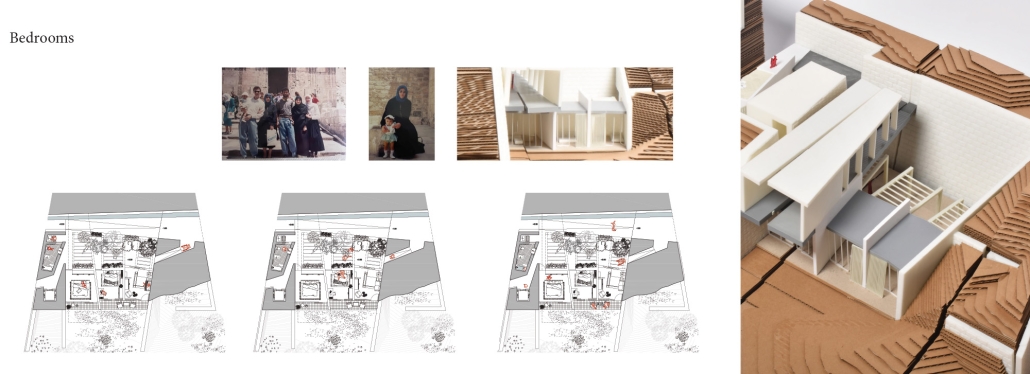
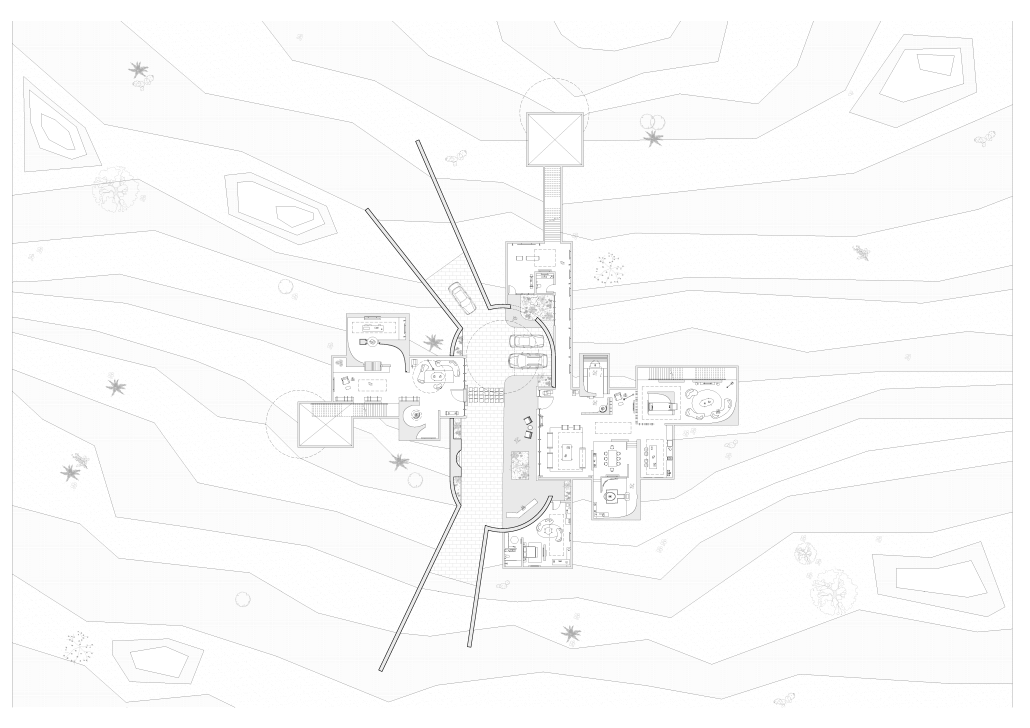
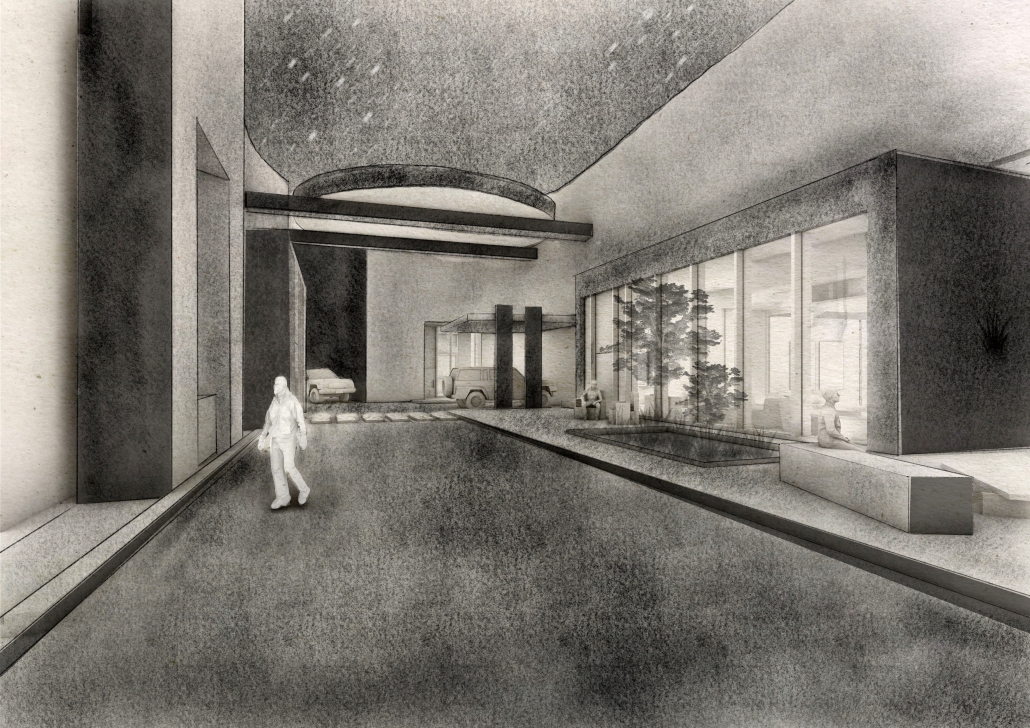
‘Echoes of Home’ responds broadly to displacement in our globalised world. Specifically, on the generational displacement of Syrians. Centralised on the intimate and underappreciated labour of homemaking, the project acts as a recognition and celebration of Womanhood as a discipline. It is designed to mark the story of displacement – building and rebuilding – into an inconstant world. The project tentatively approaches the need to capture the complicated ephemerality in our modern understanding of what ‘home’ is.

In designing a secondary residence-exhibition, the studio deployed the renaissance phenomenon of the cabinet of curiosities to challenge us to create spatially charged architecture focused on the exhibition of artifacts. We selected fictitious clients, curated a selection of curiosities to display, picked a suitable site, and decided the extent of distinction between the residence and the exhibition.

Designing a residence required an examination of the notion of ‘home’. Historically, ‘home’ has been explored as a vehicle for living and, with the rise of modernism, critiqued as performative. The programs selected recognise the labour of homemaking and extend to capture the performance of hosting and the pleasure of gathering. ‘Home’ has consistently been placed in women’s domain. The practice of homemaking falls under the discipline of Womanhood. The project adheres to the practice and rejects criticism, accommodating for it spatially. The kitchen, game room, bathing space, bedrooms, bathrooms, and guest room all double as exhibition spaces. The integrated spaces create opportunities for gathering and hakawayti (storytelling). Homes tell a story of past, present and future, and the project acts as a natural extension.

Encouraged to design spaces from the inside out, the client and narrative guided design decisions. The Characters: a mother, daughter and grandmother, based on Syrian women in our vicinity, emphasise the generational distinctions in modes of displacement: immigrant, diaspora and refugee. The clients’ stories resemble those of many diasporas. 

Instagram: @gregoryspaw

An Anchor in Time: A Dwelling Reflecting the Interplay of Time and Space by Salma Hani Mubarak Ali, B.Arch ’25
American University of Sharjah | Advisor: Gregory Thomas Spaw

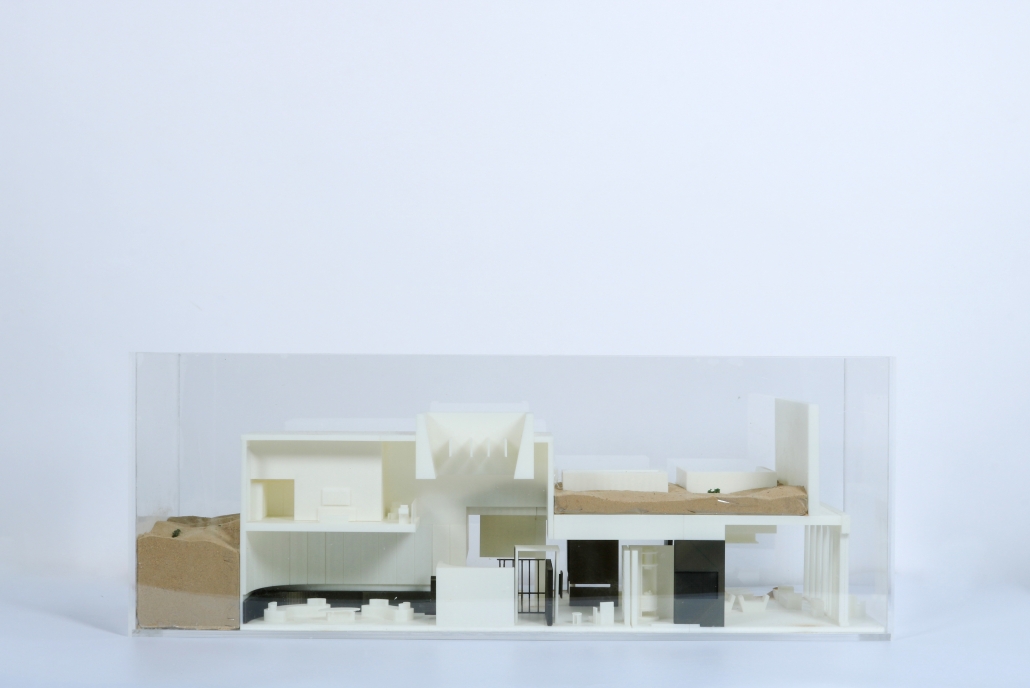
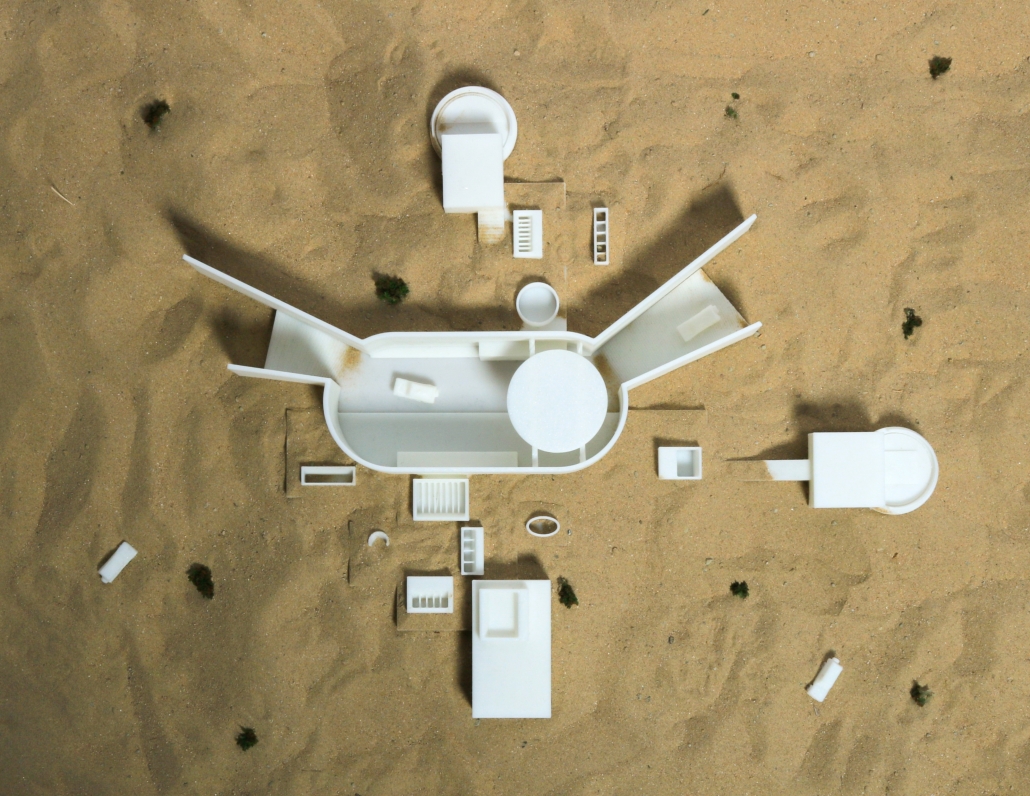
In the vast stillness of the desert, this residence becomes a compass of time—a place where shifting sands echo the dance of the stars, grounding life within the endless drift of the cosmos. The design emerges from the client’s collection of astrological instruments, shaping spatial arrangements that enhance functionality and interaction. Objects inform the layout, with dedicated areas that invite exploration and observation. Strategic openings frame views of the night sky and desert, enriching the experience of celestial observation. This residence serves as both a home and an observatory, fostering a profound connection to the cosmos while celebrating the beauty of time and change. (Text: Salma Hani Mubarak Ali)

Cabinet of Curiosities: Exploring the Ensemble (aka, house of the collector) is an option studio utilizing the 16th-century-18th-century phenomenon of the Cabinet of Curiosities or Wunderkammers (wonder-rooms) as a point of departure to explore the exhibition of ensembles of artifacts with the goal of creating spatially charged architecture.

Working as individuals or in pairs, students had the opportunity to curate their own collection of curiosities and develop a novel architectural language to facilitate the display of the exquisite objects. Associated with the collection was a real or imagined client that served to further drive a generated domestic program. With the scale of the overall proposals being purposely manageable, students had the opportunity to focus on developing architectural assemblies that directly engage with issues of materiality, connections, and details. As such, physical and digital models were heavily employed as tools to study the interplay of elements at a series of scales

This project won the RIBA Gulf: Future Architects 2024 Overall Best Model Award.

Click here to learn more.

 Instagram: @salma.hani.ali, @gregoryspaw
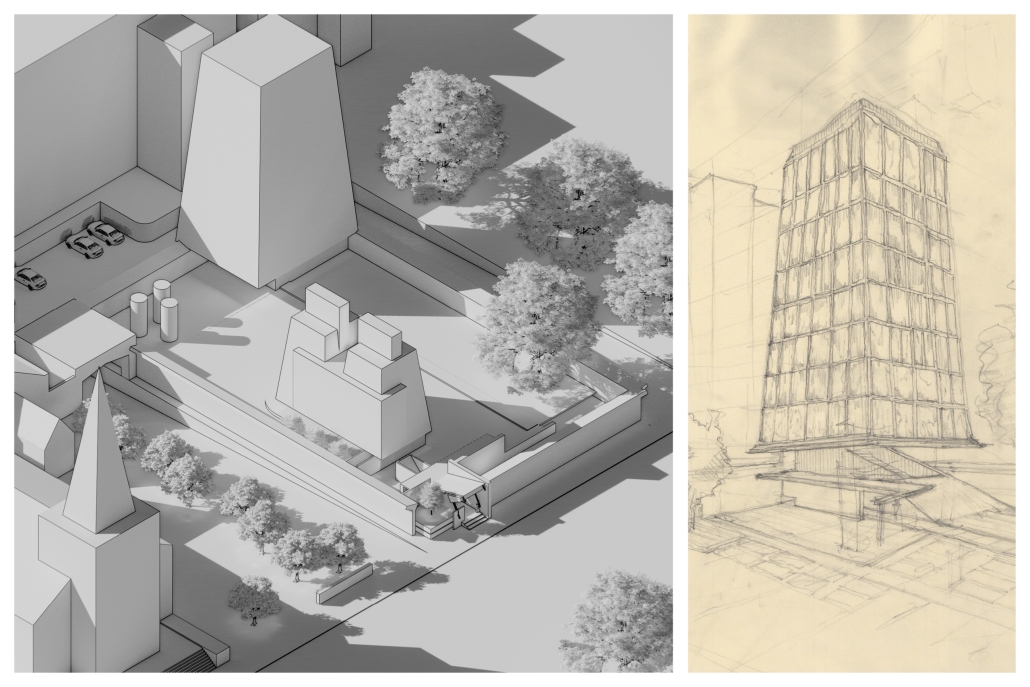
Evermore: A Cemetery For The City by Mo Karnes, B.Arch ’25
Mississippi State University | Advisors: Jassen Callender, David Buege, Aaron White, Mark Vaughan & David Perkes

My uncle died less than two years before I was born. I never met him, but his death is only an obstacle in my ability to know him. Chris was an artist and poet who left behind many things for me to know him by, including a poem entitled Evermore, written during his struggle with AIDS. The meditation is: 

I will walk unlonely,

Holding me up

As I begin to fall,

You Lead the way

And sometimes follow.

Our passage now is

Evermore.

(To be repeated, Unending).

To be ‘unlonely’ is a profound response to the impending, seeming loneliness that is death. Loneliness for those dying and those left behind. Chris’s poem is not just a meditation for himself, but for those struggling with loss. As a dying man, Chris places himself shoulder to shoulder with the reader; their journey is one and the same.

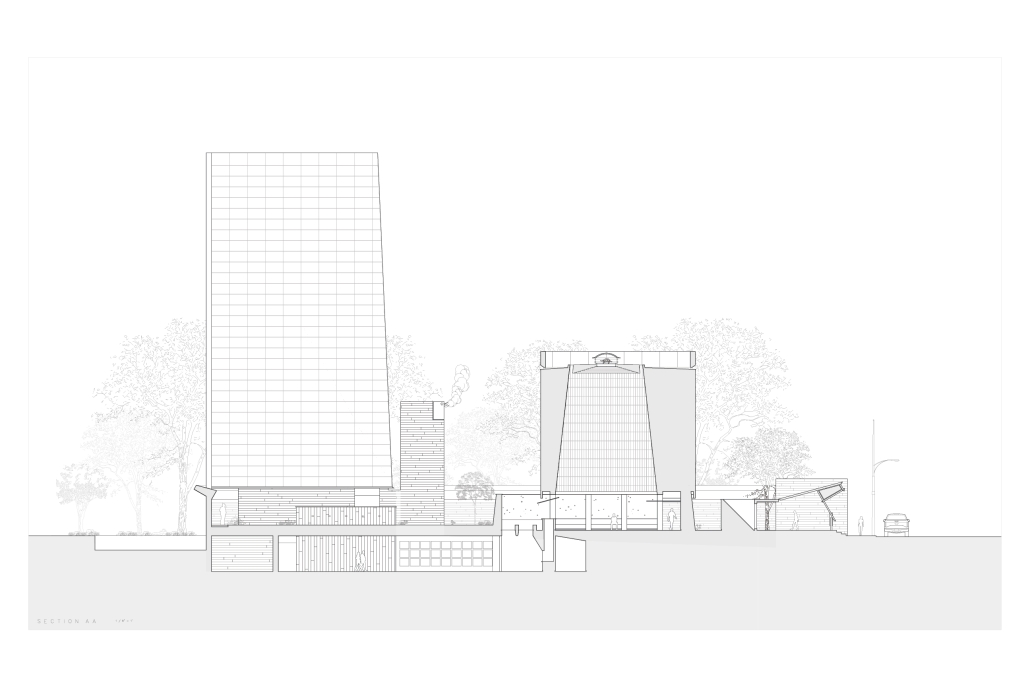
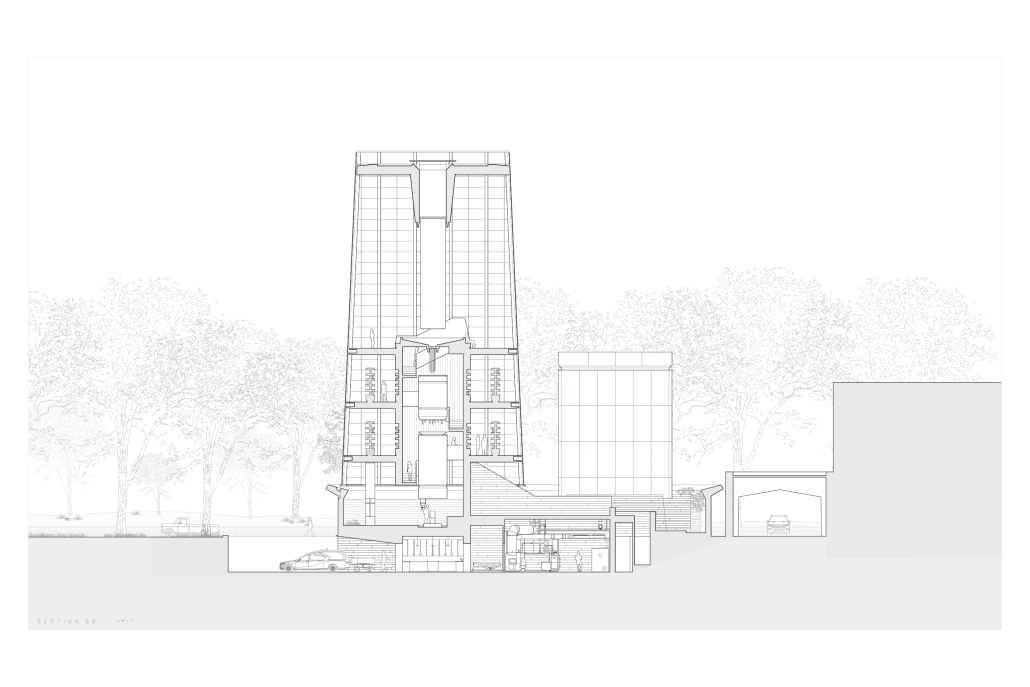
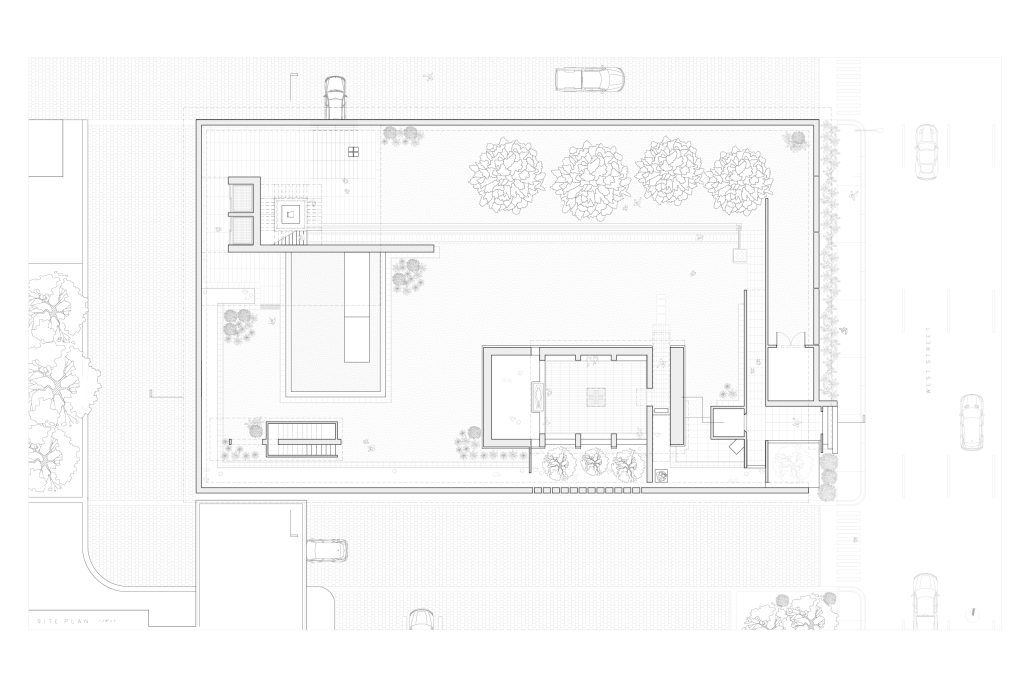
“Evermore: A Cemetery For The City” is a small cemetery complex adjacent to the Cathedral of St. Peter the Apostle in Downtown Jackson, Mississippi. The complex comprises a crematorium, vertical columbarium, and chapel. The site is rectangular, bound on all sides by concrete walls with only one threshold for entry. Two masses seemingly float behind the concrete boundary walls that veil them, the smaller chapel and the larger columbarium. Both stoic in form, they disguise the intricacies hidden in the interiors of their masses.  

The ambition of this project is to integrate the awareness of mortality into the city, while supplying architectural means to confront it. This awareness is not a means of oppression, but an attempt to convey the gift that is life. This cemetery is intended to be a public space where inhabitants can experience the city with citizens who came before them, inducing a relationship with the past, generating an appreciation of those who came before, and propelling the city forward with the intent to befriend and mentor the future.  

This project received the CDFL Capstone Studio Travel Award. 

Instagram: @mo.karnes, @jassencallender
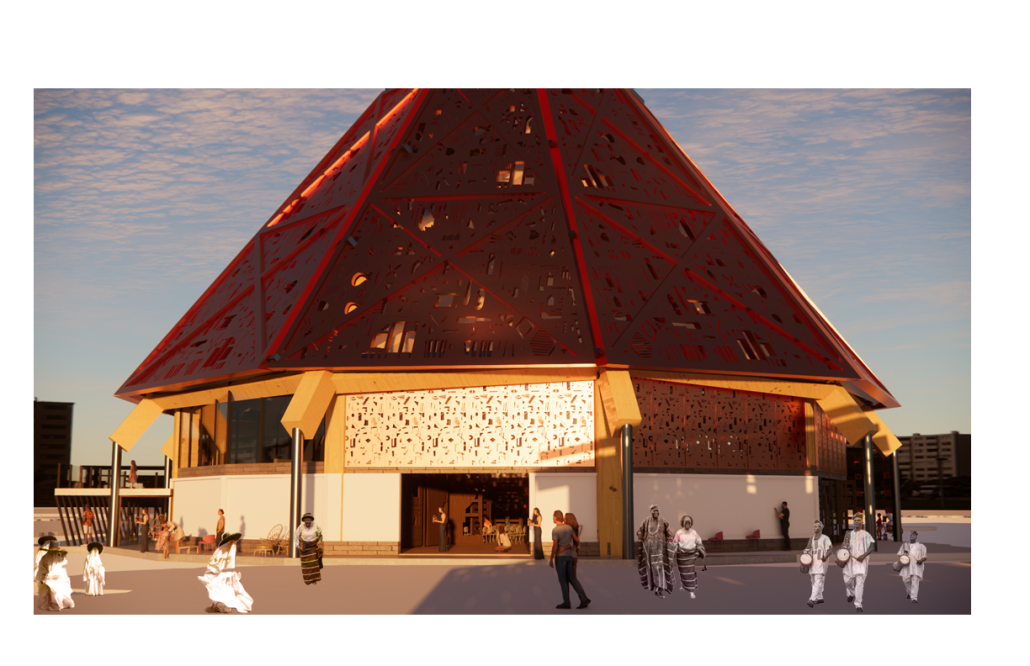
IMAGINATIVE REALITY: INVENTION OF SYNERGISTIC NARRATIVES by Chey Isiguzo, M.Arch ’25
Toronto Metropolitan University | Advisor: Lisa Landrum

Imagination is both an act and a familiar, safe space, evoking nostalgic feelings rooted in our reality. 

This space can become unfamiliar when cultural expressions changes, leading to multifaceted identities and undeveloped narratives. This dynamic contributes to cultural conflict and highlights the juxtaposition of traditional and contemporary African architectural narratives. As a space, imagination can generate narrative 

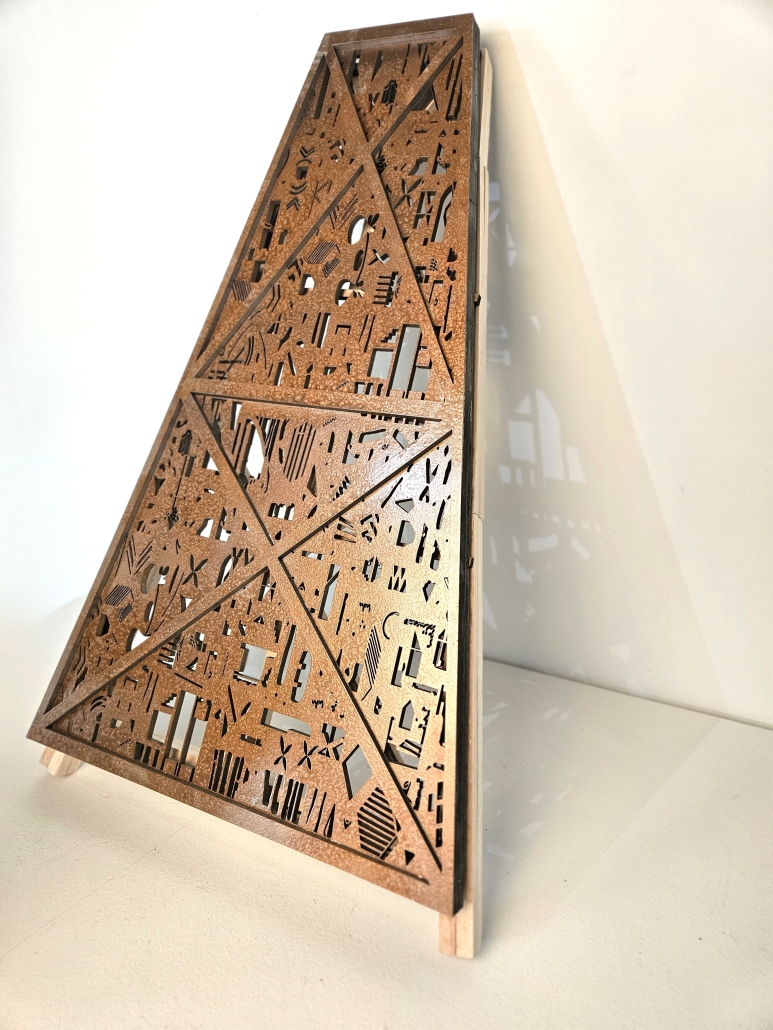
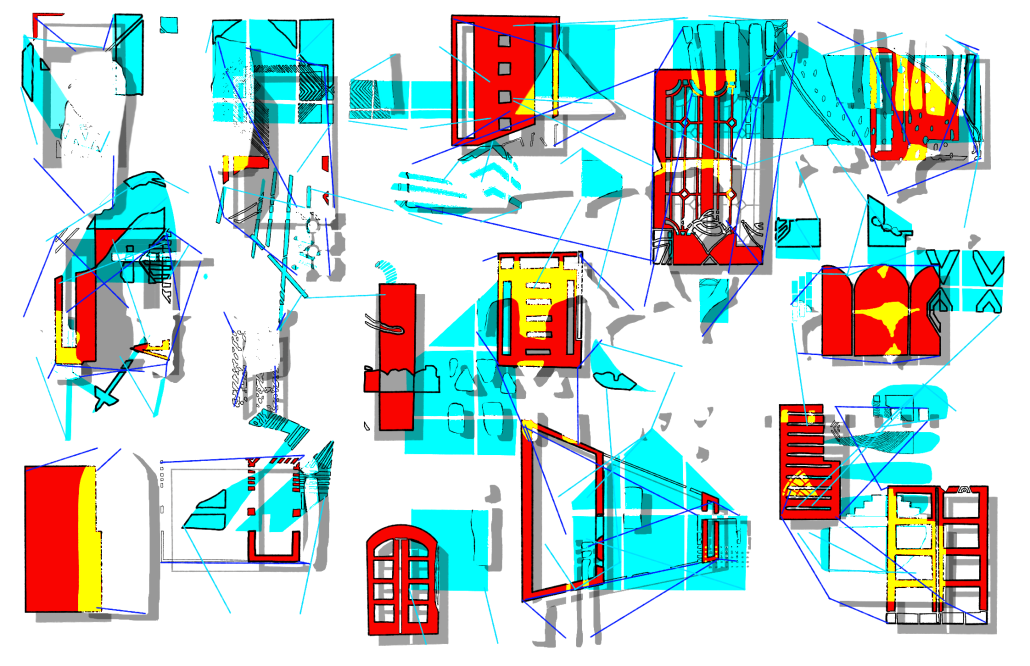
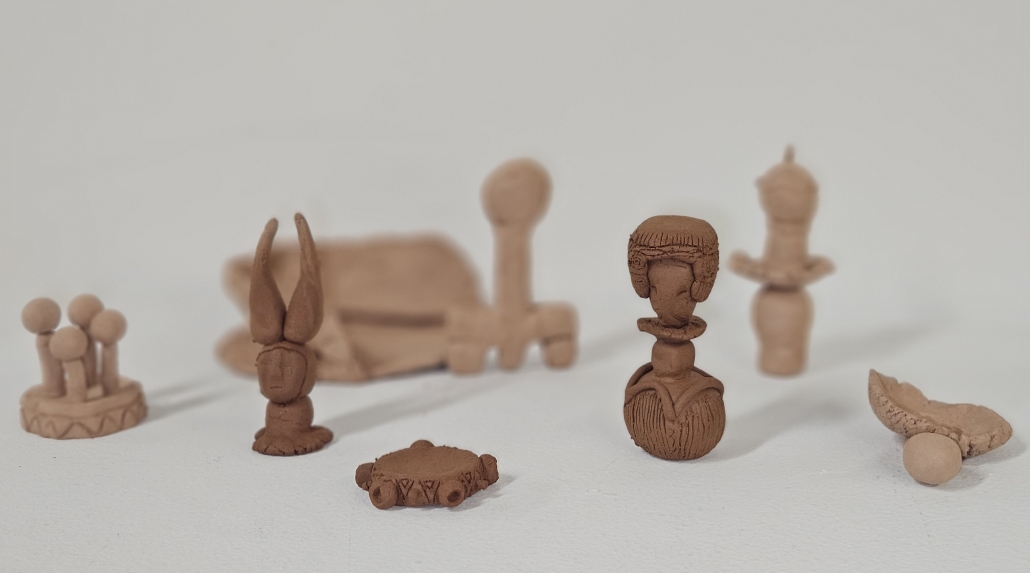
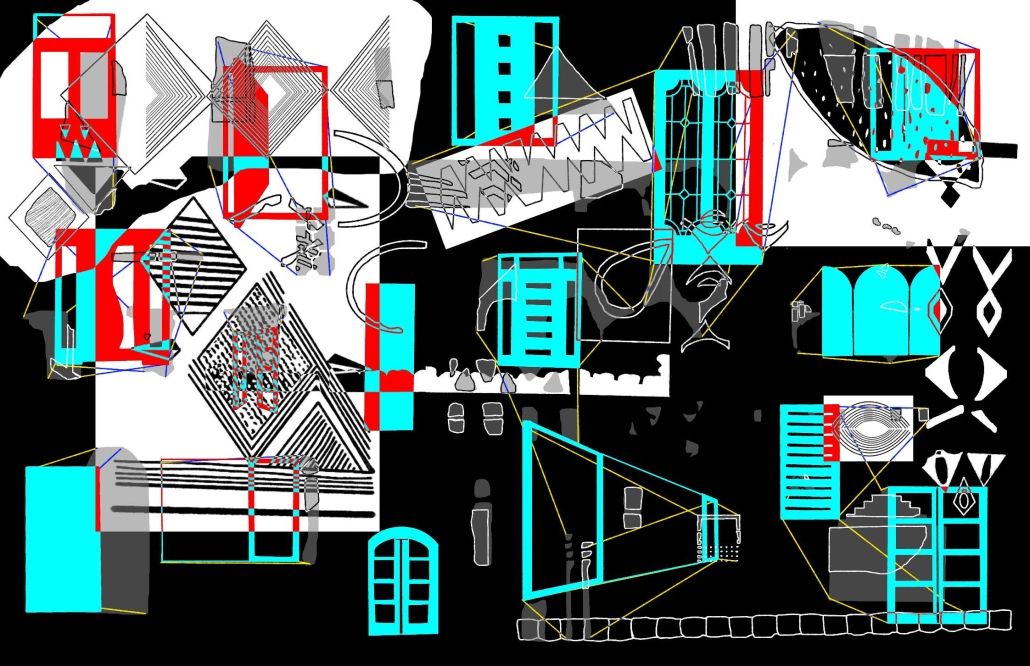
characters and elements by creating synergistic stories that incorporate traditional craftsmanship into contemporary African architecture. The imaginative process consists of three components. Imagining while thinking is an act that uses mental images from memories, dreams, fantasies, or visions to create one’s reality. Imagining while making is the act of craftsmanship used to speculate the distinction between traditional and contemporary architectural narratives through the lens of cultural expressions. Imagining while drawing is an act of translation by utilizing narrative characters—building elements like windows and doors—to dissect fragments of both traditional and contemporary architecture to find new narratives. 

These narrative characters work alongside structural elements, such as walls, roofs, layouts, courtyards, and compounds, to convey new stories that showcase materials and design techniques rooted in Igbo craftsmanship. To develop synergistic narratives, one can explore the evolution of traditional African craftsmanship, particularly within Igbo culture, across ancestral, post-colonial, and contemporary contexts. This exploration reveals how the architectural narratives of traditional and contemporary styles are increasingly distinct. Consequently, this imaginative space becomes a reality that examines the relationship between what is real and what is envisioned through architectural craftsmanship.

Instagram: @sumisi000, @ucisi_studios, @tmu_archgrad
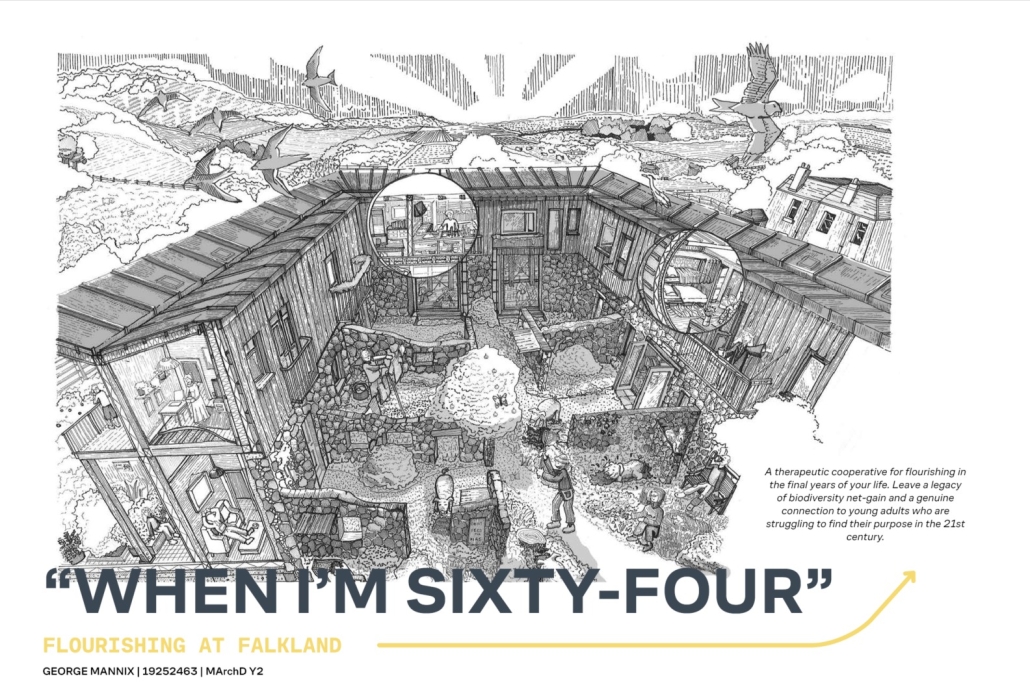
When I’m Sixty-Four: Flourishing at Falkland by George Mannix, M.ArchD ’25
Oxford Brookes School of Architecture | Advisors: Melissa Kinnear & Alex Towler

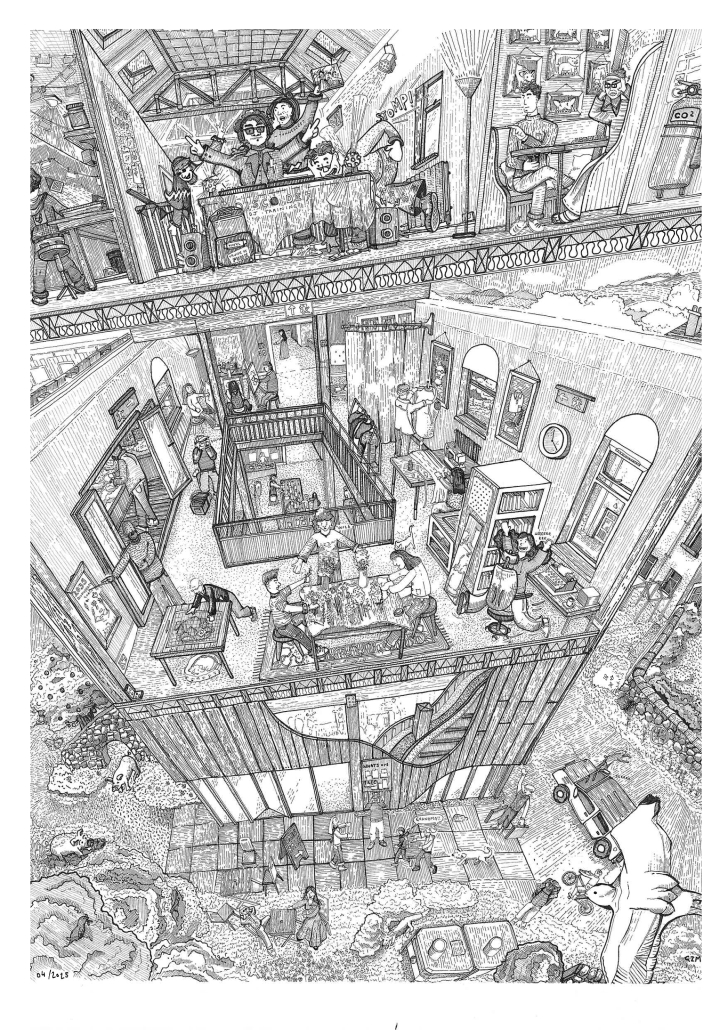
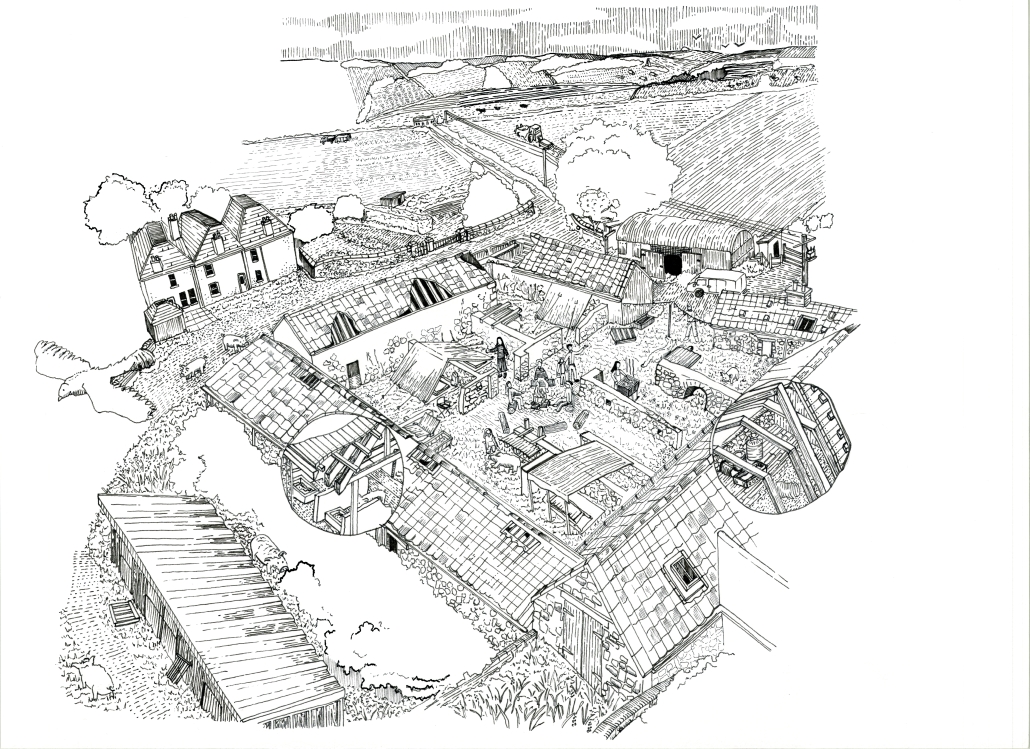
This project proposes a “therapeutic cooperative” that reimagines later life as a time for purpose, legacy, and connection. Designed for people aged 64 and over, the initiative creates a living environment where older adults can flourish by sharing life experiences with younger visitors while contributing to environmental and social regeneration. 

Central to the concept is the cohabitation of residents with Tamworth pigs, which serve both symbolic and ecological roles—facilitating intergenerational dialogue and promoting biodiversity through trophic rewilding.

Located at Kilgour, a Victorian farm steading on Scotland’s Falkland estate, the site carries historical significance and a past tied to pig-rearing and the celebration of endings. 

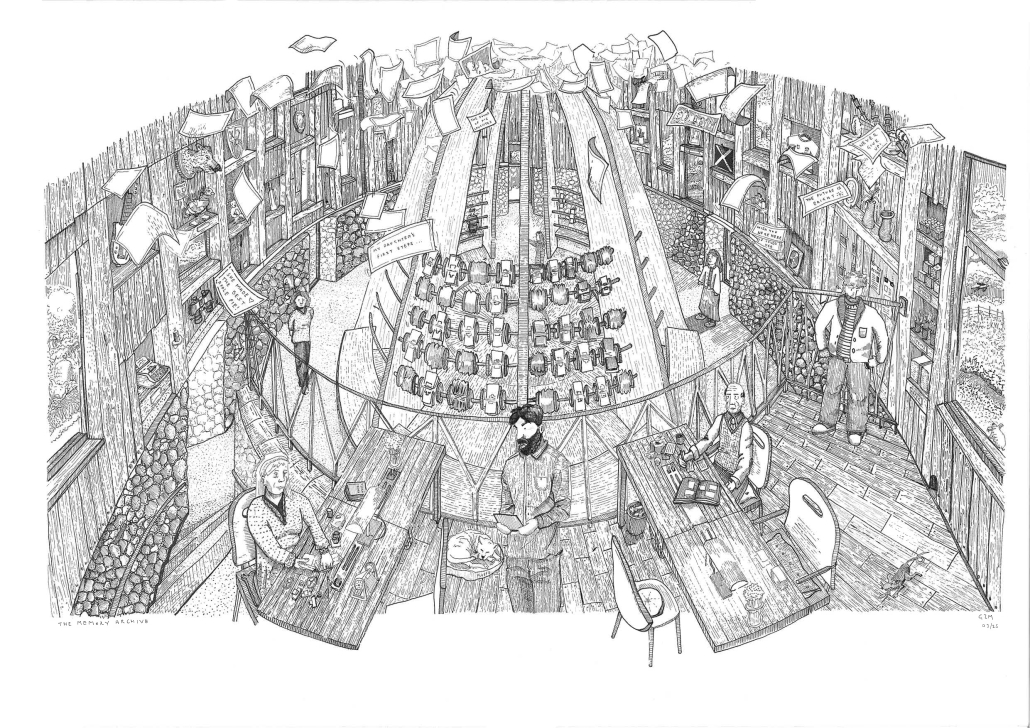
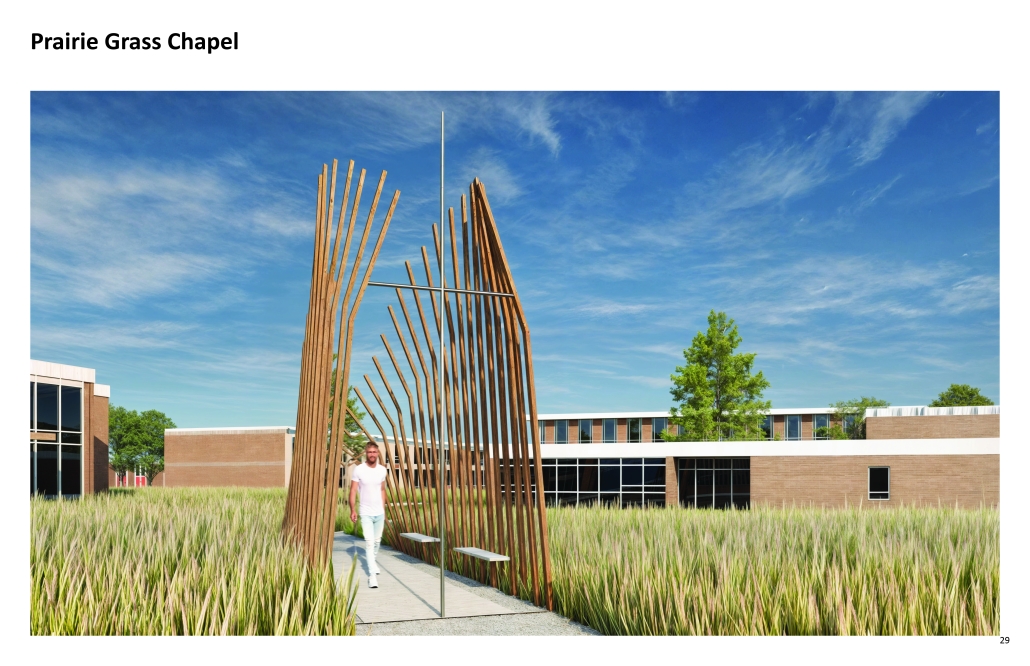
Accommodation includes accessible apartments, communal gardens, and a biodiversity-rich courtyard. Pigs will live in creatively built “Ad-Hog” styes using reclaimed materials. A chapel-like “Memory Archive” will hold personal stories of residents’ lives, offering a space for reflection and remembrance.

The project unfolds in three phases: first, clearing and revitalising the site with community involvement; second, welcoming the first residents and establishing the Memory Archive; and third, expanding the model across Scotland to transform abandoned steadings and boost natural regeneration.

Younger visitors, whom we have dubbed “biodiversity-backpackers,” can stay in on-site hostel lodgings, with the hope of fostering meaningful interaction between generations. Funding comes from elderly participants downsizing their homes, combined with national grants, giving them control over their later years.

Ultimately, this initiative responds to the growing issue of isolation among the elderly in Scotland. By embedding legacy, memory, and biocentric living into the design, it aims to help people see out their days with dignity whilst living with renewed purpose.

This project received the Ackroyd Lowrie Prize.

Instagram: @georgemannix, @ds3_obu
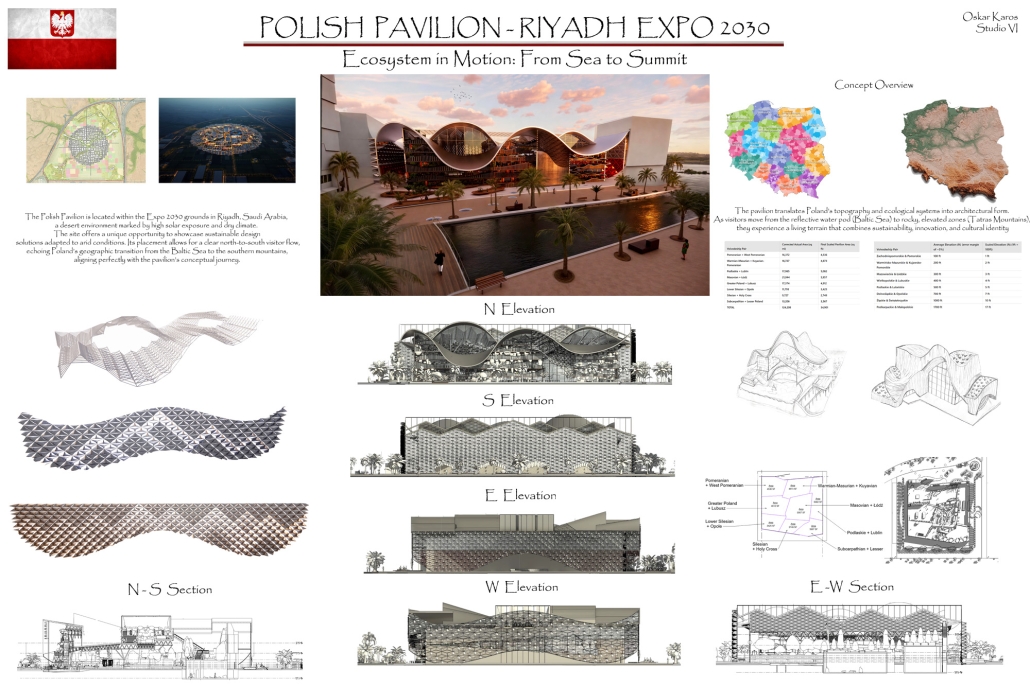
POLISH PAVILION – RIYADH EXPO 2030 by Oskar Karos, B.Sc. in Architecture ’25
University of the District of Columbia | Advisor: Golnar Ahmadi

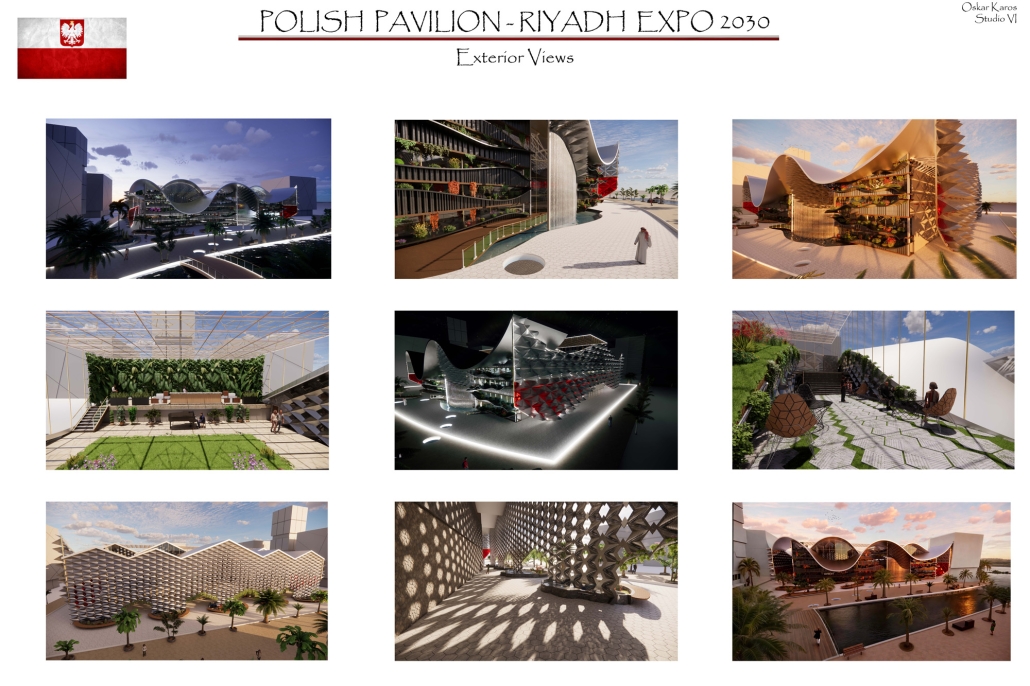
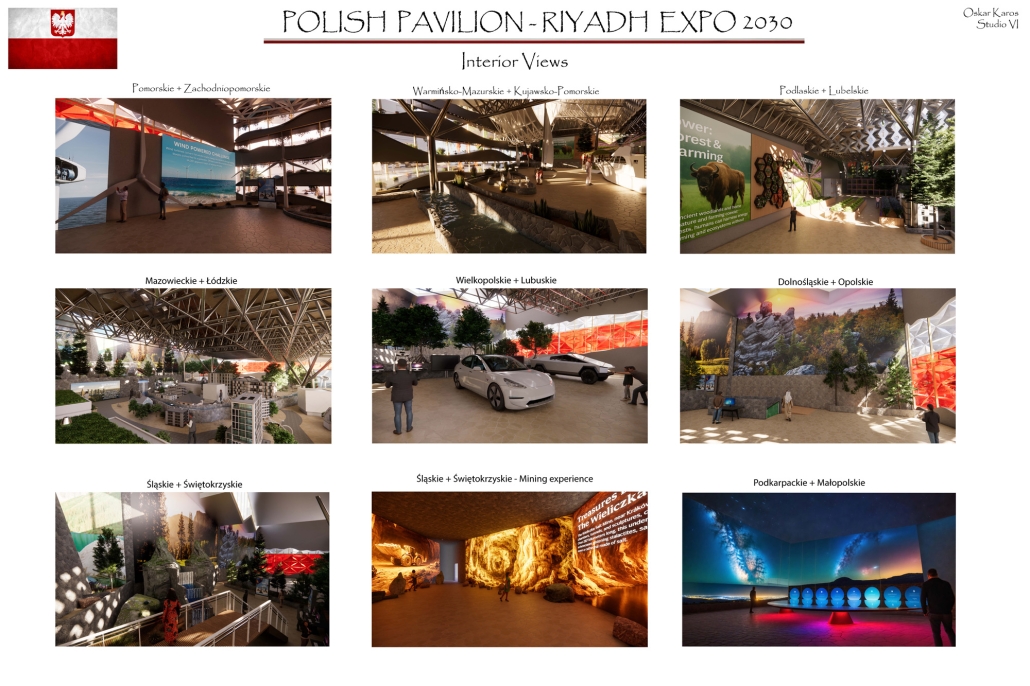
Set in Riyadh for Expo 2030, the Polish Pavilion reinterprets the nation’s geography and ecological identity through architecture. Designed as a living map of Poland, the pavilion invites visitors to journey from the southern Tatra Mountains to the northern Baltic Sea, experiencing the country’s topography, climate, and innovation within one continuous landscape. The project explores how architecture can embody an entire nation’s ecosystem, transforming exhibition space into a self-sustaining organism.

Poland’s diverse terrain—from its rugged mountains to fertile plains and coastal winds—inspired a spatial narrative divided into eight regions. Each represents two neighboring voivodeships, blending their natural and technological identities: wind power in Pomorskie, hydropower in Warmińsko-Mazurskie, sustainable farming in Podlaskie, and smart urbanism in Mazowieckie, among others. 

Visitors move northward along a symbolic Vistula River, linking interactive installations that demonstrate Poland’s leadership in renewable energy, circular economy, and ecological stewardship. Constructed with steel, wood, stone, and glass, the pavilion merges material authenticity with sustainability. A closed water cycle system replicates natural evaporation and rainfall, powering greenery and regulating humidity. The accessible green roof offers shaded paths and aerial views of Poland’s “living topography,” blending innovation with environmental harmony.

Beyond a national exhibition, the pavilion is a statement of coexistence—between people and nature, culture and technology. It celebrates Poland not through static displays, but as a breathing ecosystem where every element, from water to wind, participates in a cycle of renewal.

Instagram: @Golnarahmadi

Stay tuned for Part XI!
2025 Study Architecture Student Showcase - Part I

Welcome to the 2025 Study Architecture Student Showcase!
Over the summer, we asked architecture faculty around the world to celebrate graduating students whose work embodies excellence in architectural education. The submitted theses, projects, and capstones reflect the various skills and concepts that are taught in architecture schools. With the Fall semester in full swing, we are excited to share these outstanding projects with you over the next few weeks.
With topics ranging from Infrastructure and Equity to Sustainability and Housing, each project has the power to inspire current and future architecture students. Tune in every Tuesday and Thursday to browse a collection of outstanding student work.
Today’s showcase features projects that explore different elements of education. From Pre-K through 8th-grade Montessori schools to university campuses and vocational schools, these designs capture the variety of educational venues. Each project provides design solutions that address diverse student needs, community well-being, safety, learning conditions, and more.

Transforming Trios: Typologies for Adaptive Education, Safety, and Community by Sheen Wang,  BS Architecture ‘25
University of Virginia | Advisor: Mona El Khafif

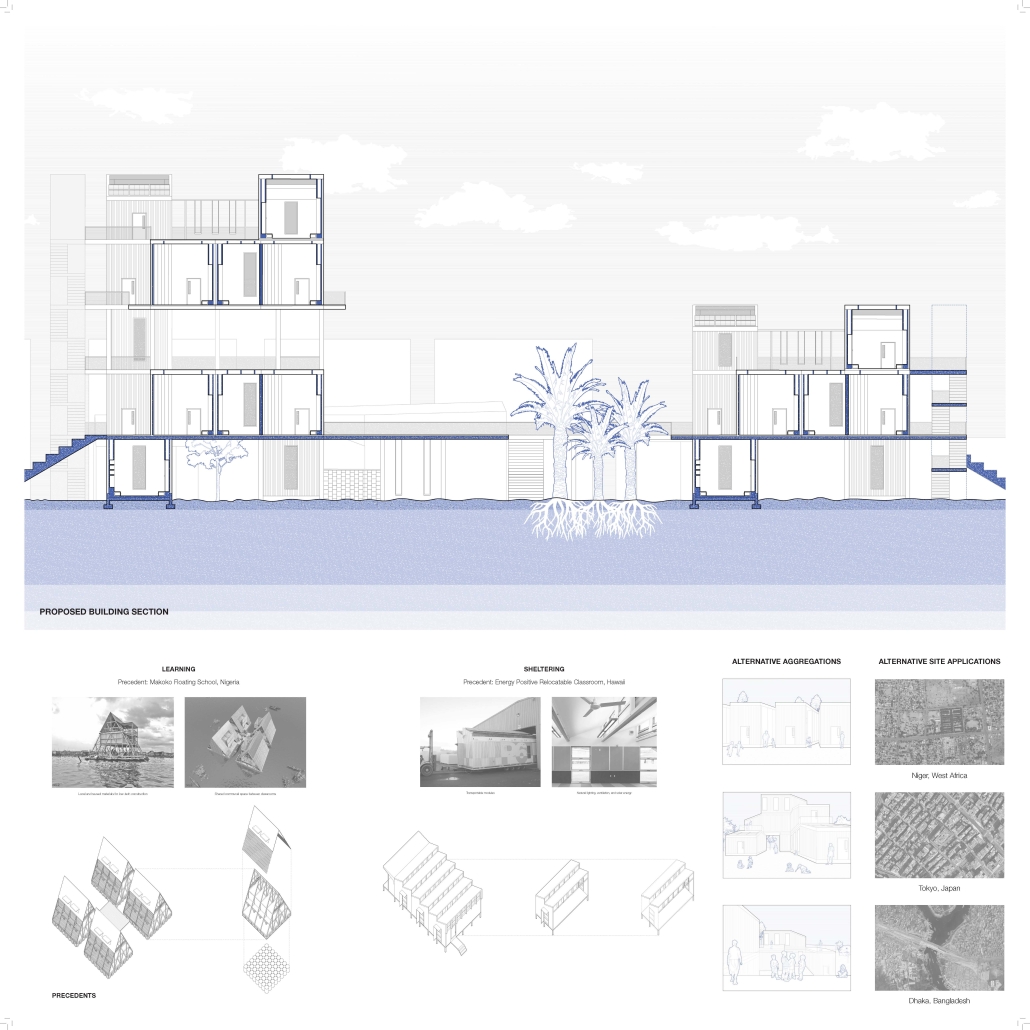
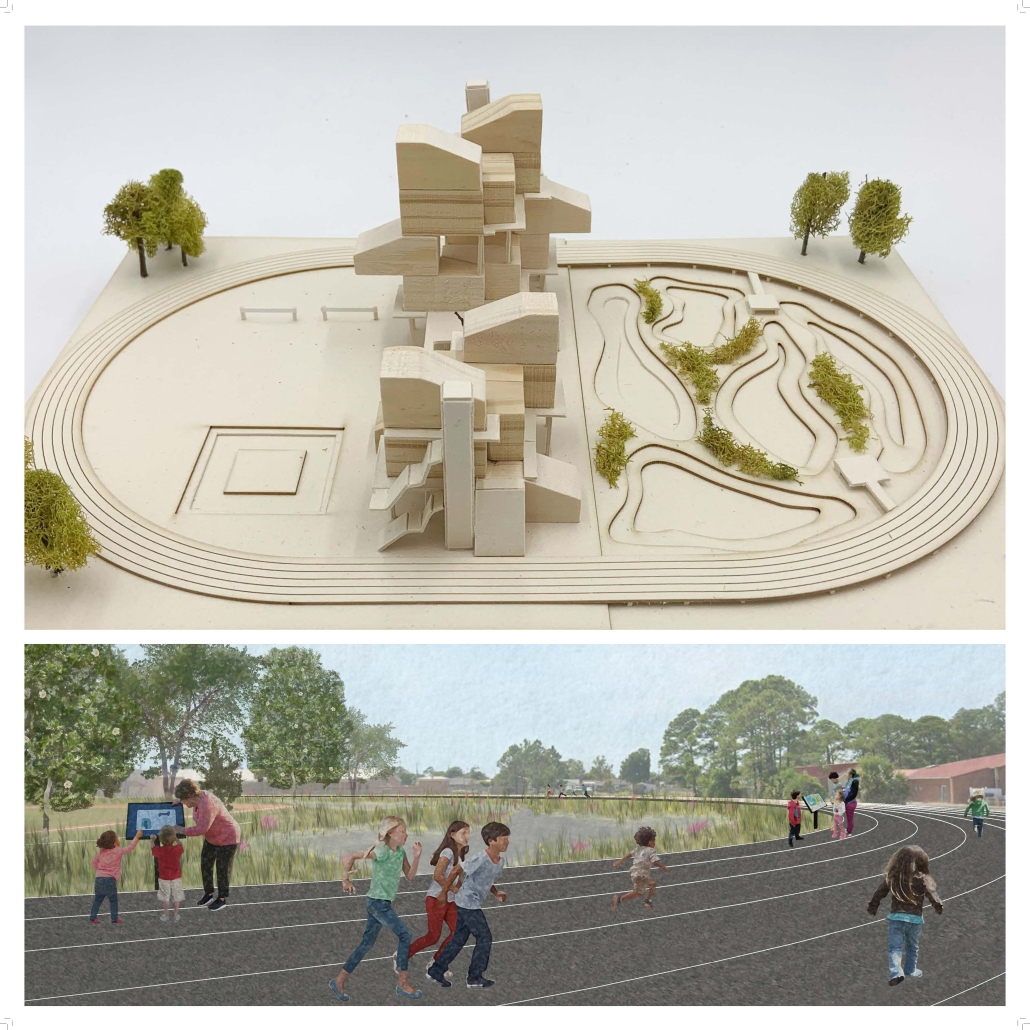
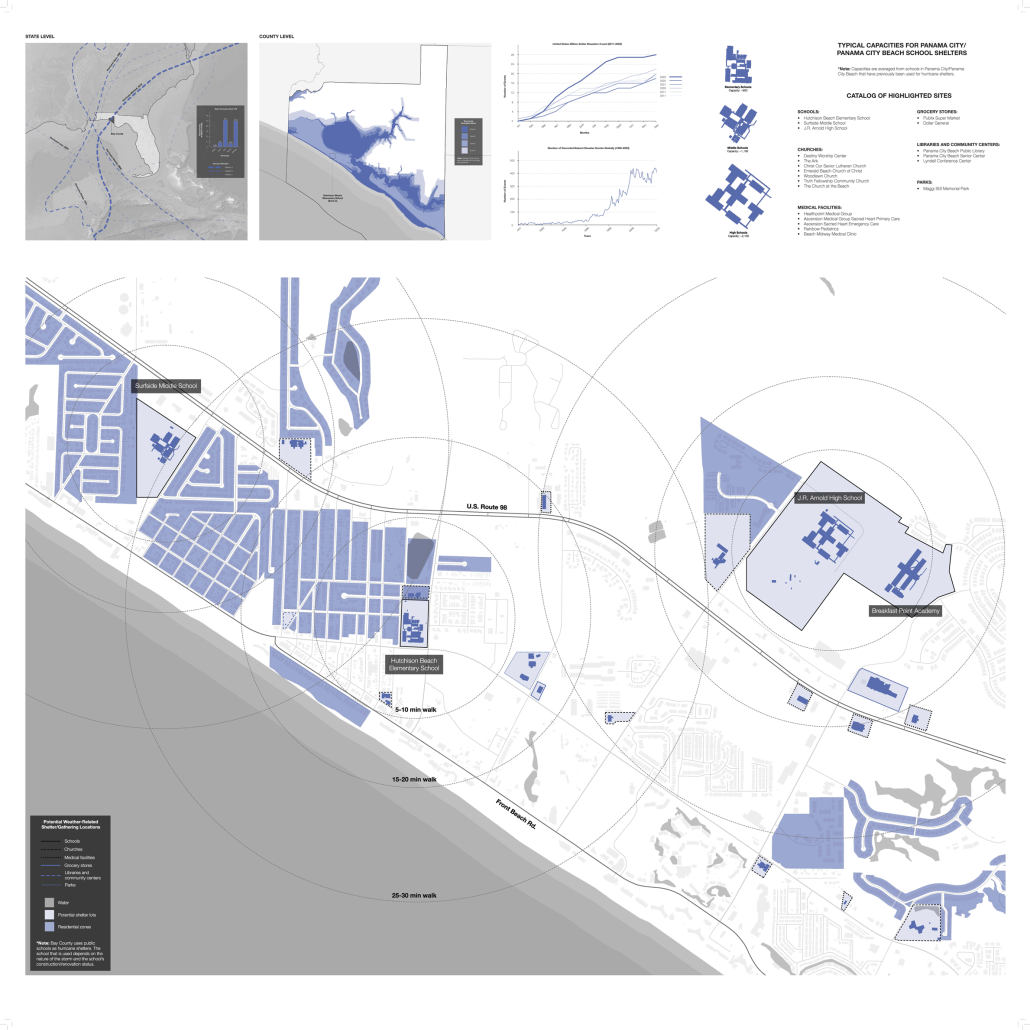
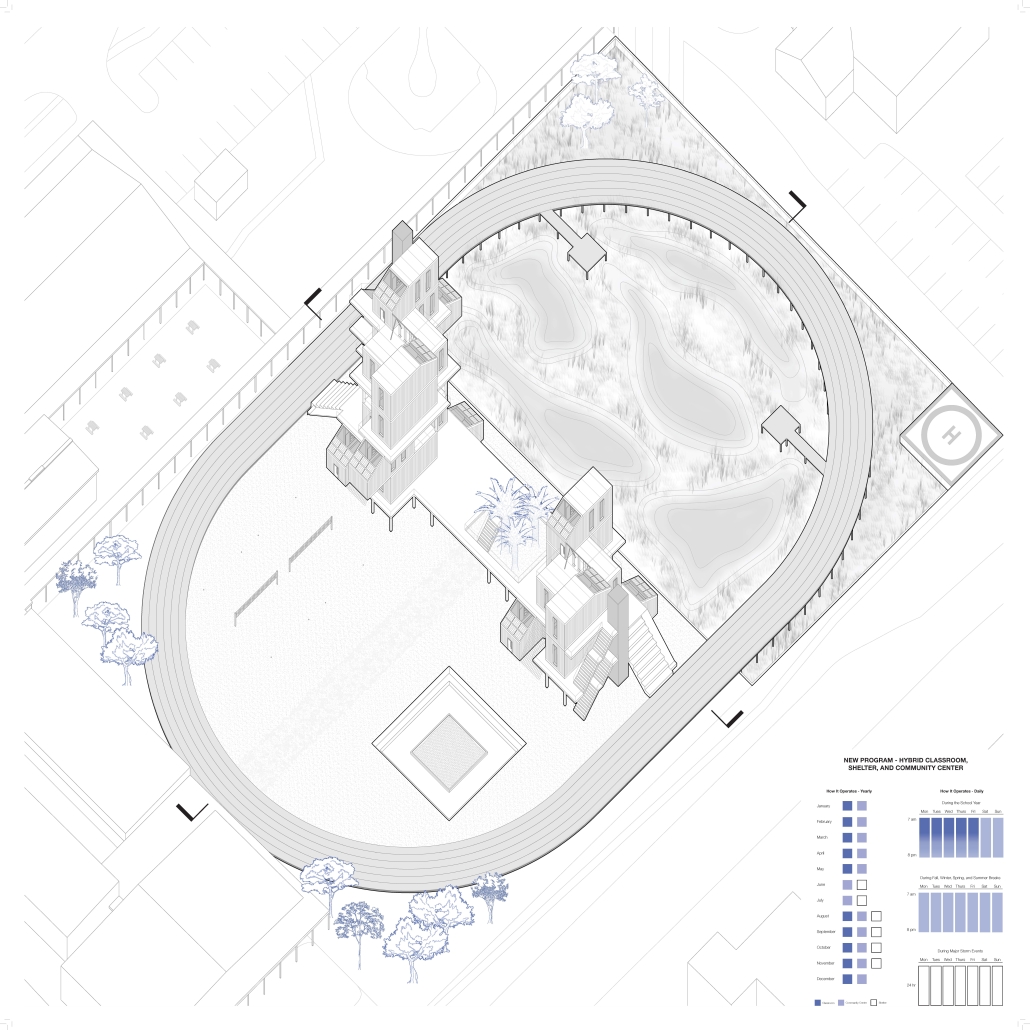
At Hutchison Beach Elementary in Panama City Beach, Florida, students adapt how they learn in response to their changing environment. Situated in a coastal, tourist-centered community along the Gulf of Mexico, the school frequently endures hurricanes and severe storms. With no dedicated community centers, schools here serve as storm shelters—often without enough space to meet demand.

This presents a unique design opportunity. The school’s campus includes numerous portable classrooms, originally meant as temporary solutions to overcrowding. Typically built at minimal cost, these structures are often uncomfortable and unsafe. But at Beach Elementary, there’s a shift: these portables are being reimagined as flexible, collaborative spaces where students and teachers co-create their learning environments to foster joy and exploration.

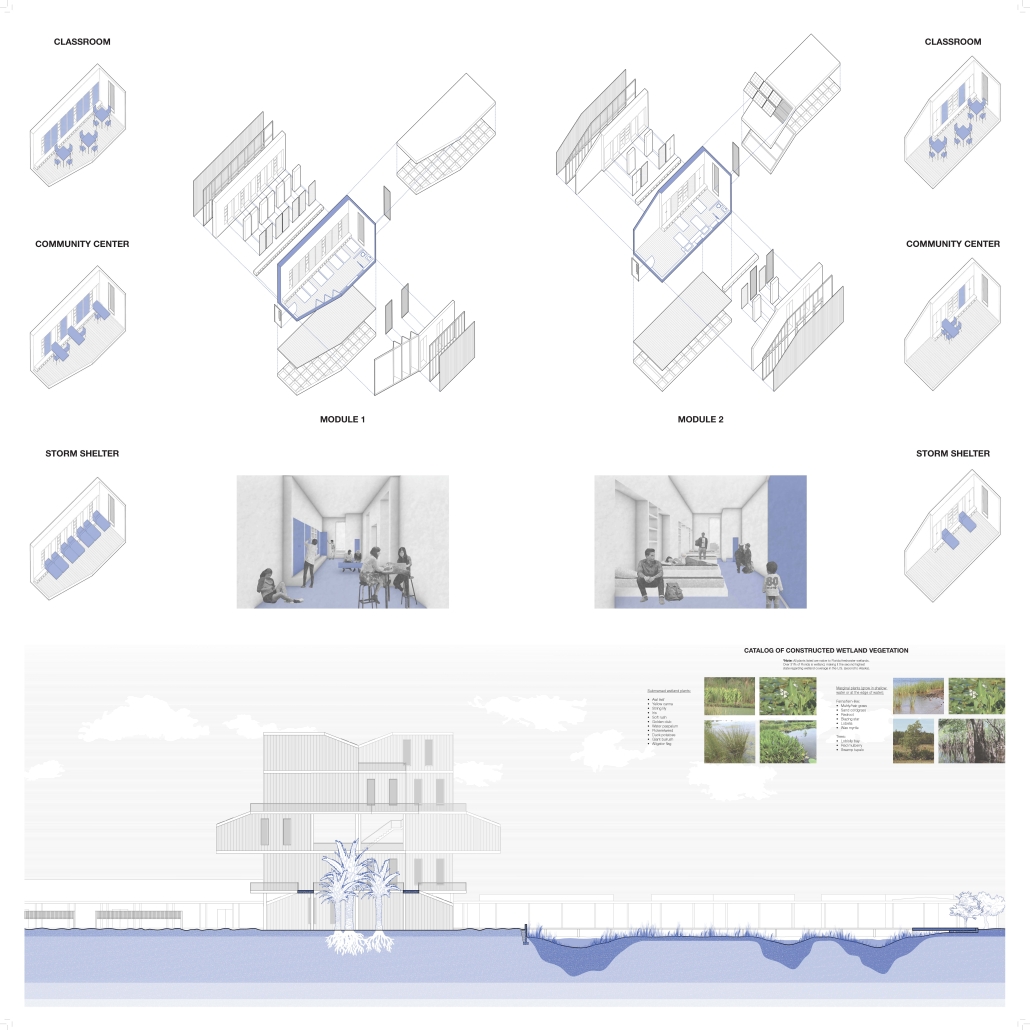
In a place defined by constant change, this thesis asks: How can a new, adaptive typology for portable classrooms support education, shelter, and community in one modular space? How can it integrate with existing school structures while engaging the surrounding landscape? How might these units aggregate both horizontally and vertically to form larger spaces?

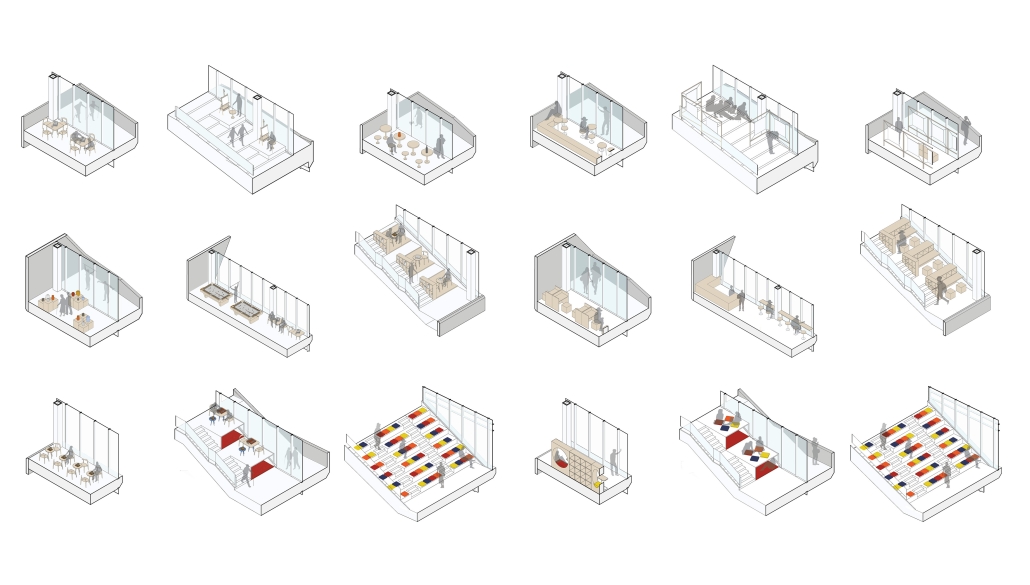
This thesis proposes modular, adaptive structures that meet programmatic needs—education, safety, and community—while responding to the site’s outdoor uses, from wetlands to playgrounds to sports fields. The architectural skin of each module supports both interior and exterior use, enabling hybrid, temporary programming that flexes with the rhythms of the school and environment.

Instagram: @sheen.w_, @monaelkhafif

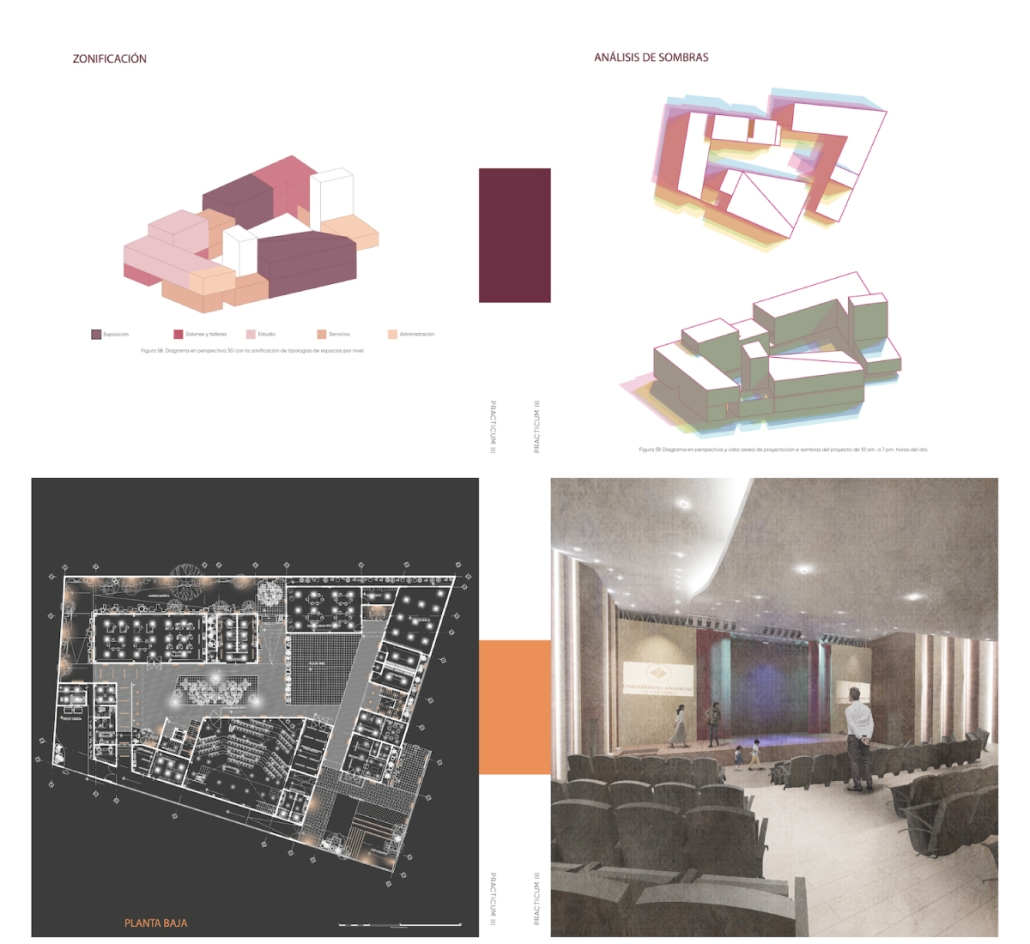
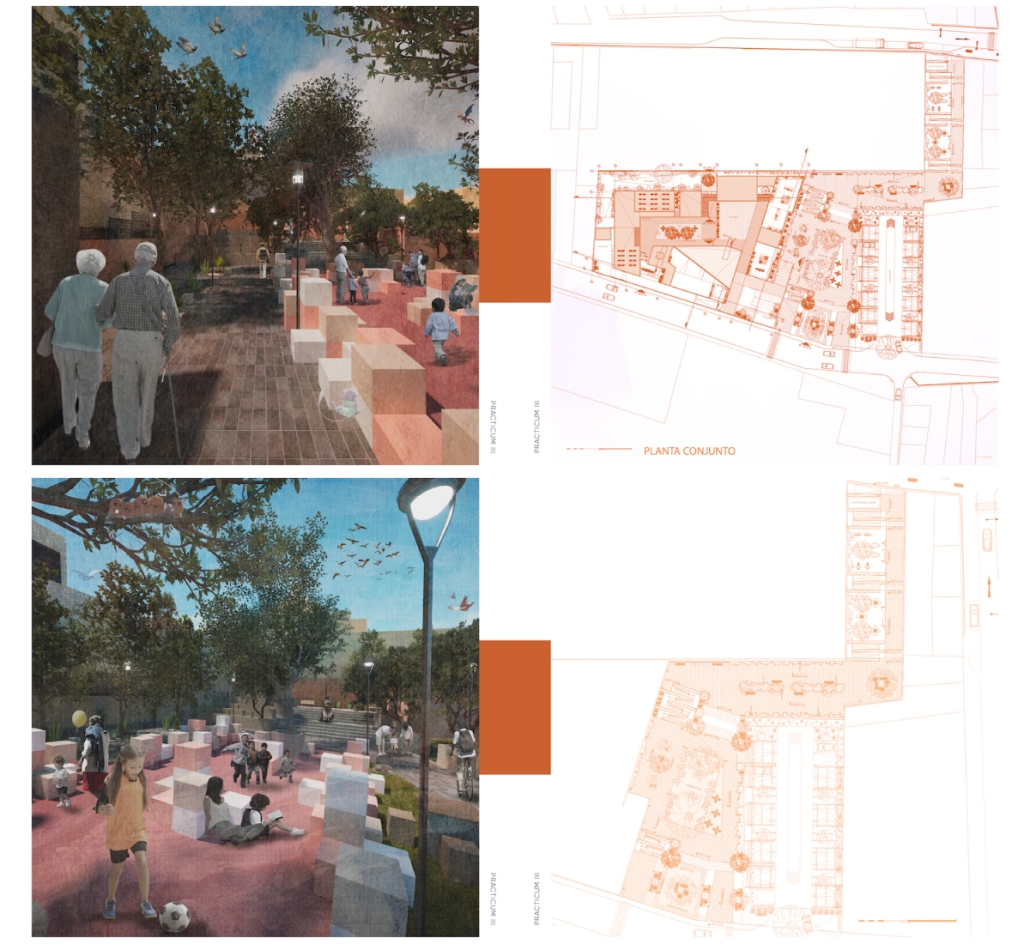
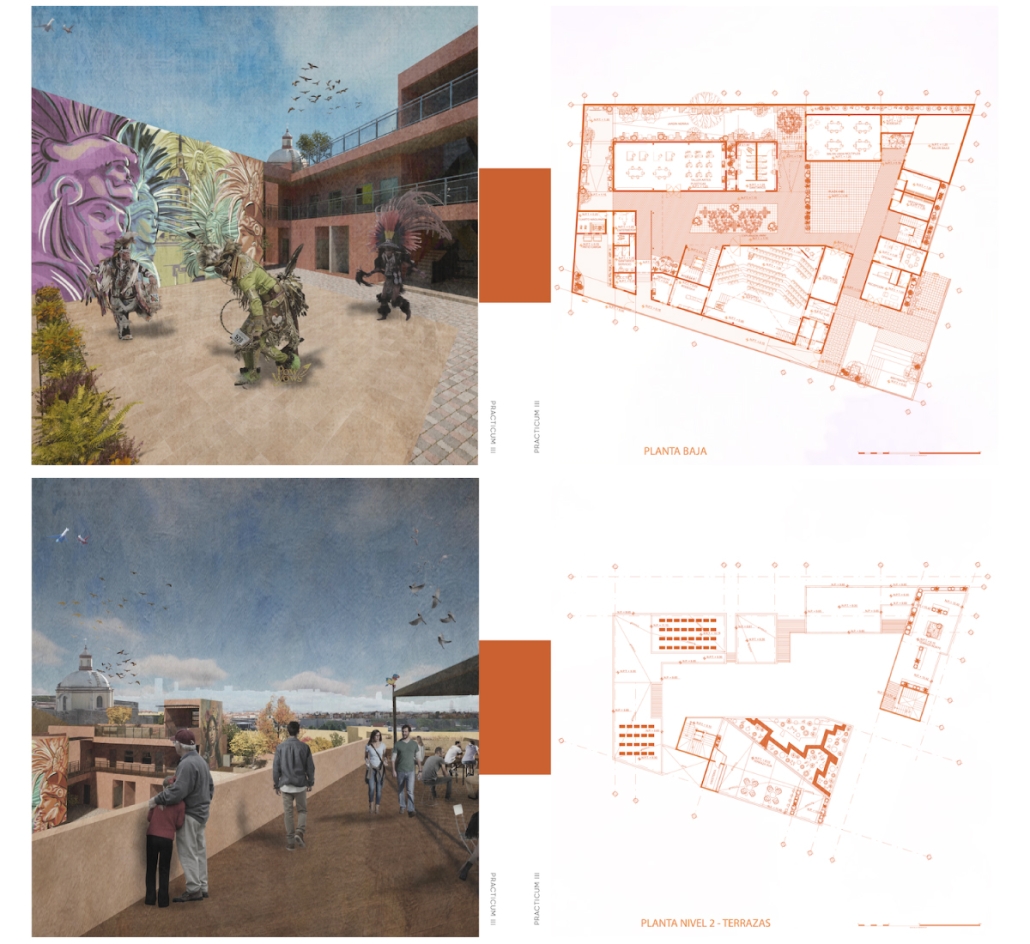
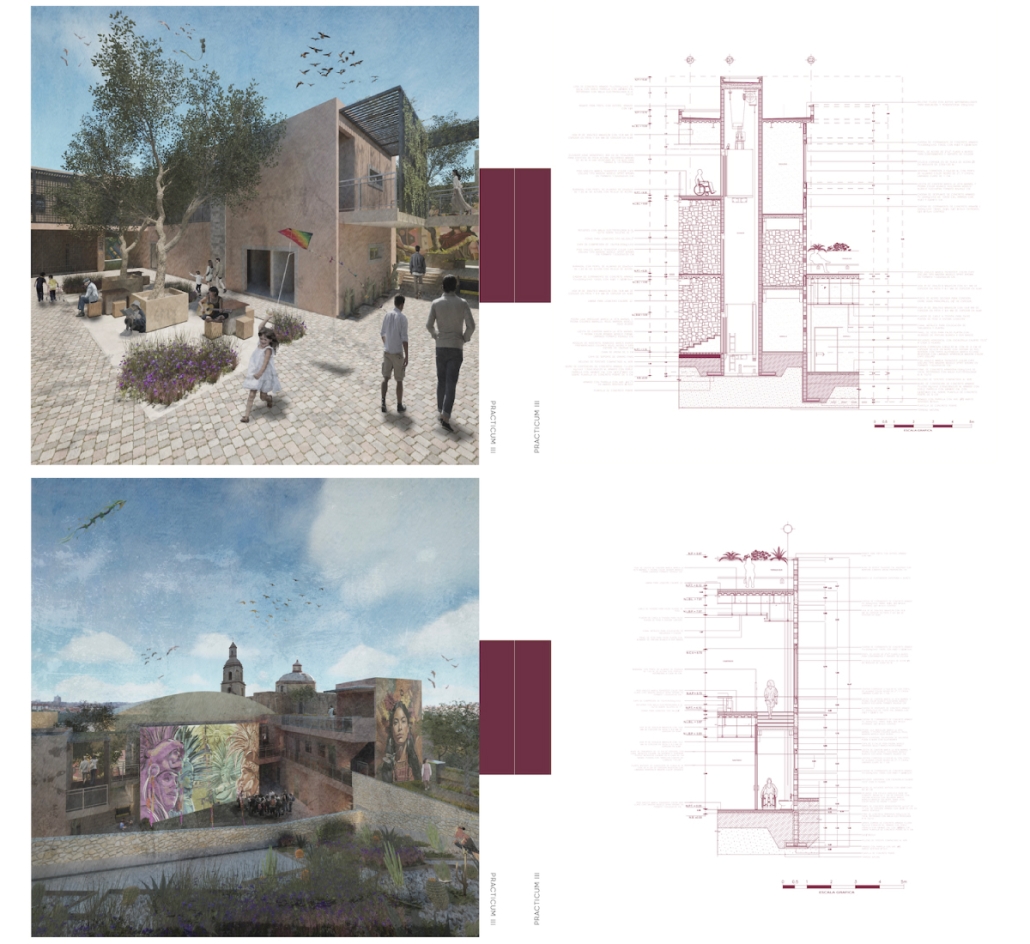
Descubre Cultural Academy by  Leonardo Sánchez Jiménez, B.Arch ’25
Universidad Anáhuac Querétaro | Advisors: Guillermo Márquez, Patricia Cutiño & Jorge Javier

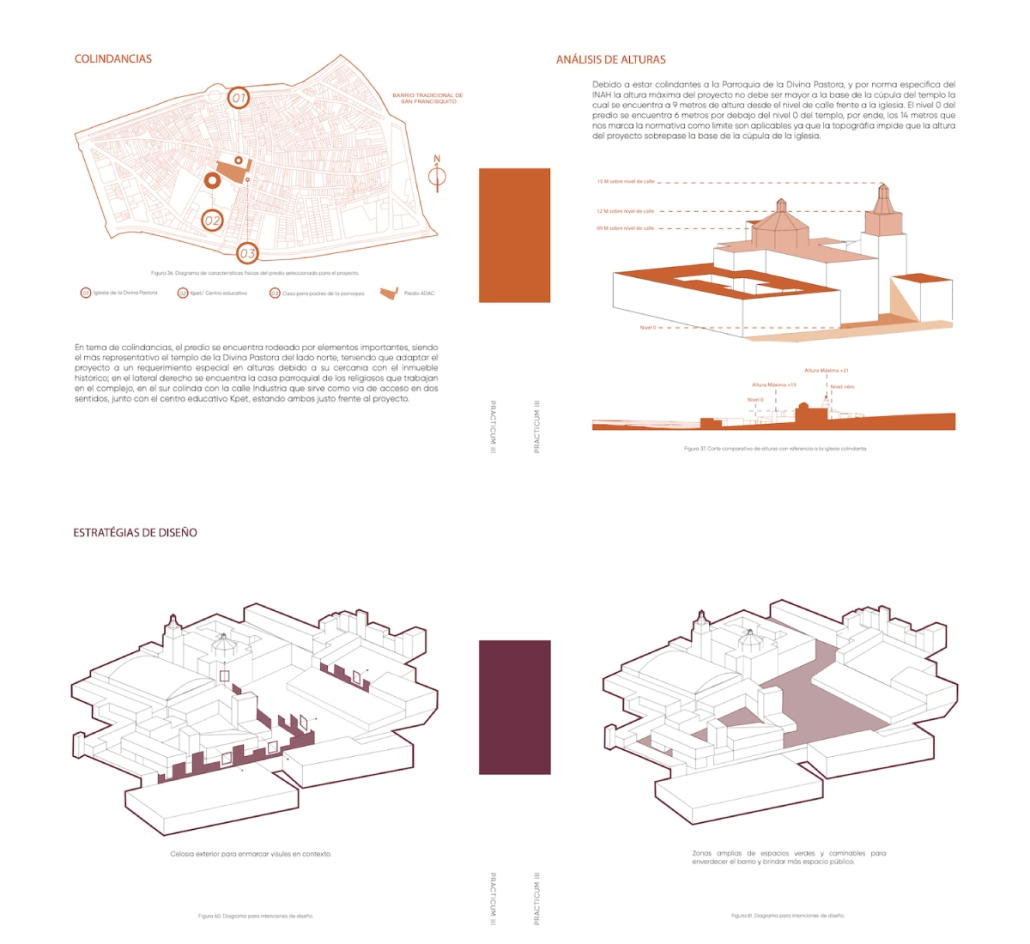
This architectural project is part of the development of cultural spaces as a tool for strengthening the social fabric and preserving intangible heritage in historic urban contexts. The proposal seeks to contribute to the access and dissemination of artistic expression, fostering community participation and dialogue between tradition and contemporaneity. This type of intervention is essential in areas with heritage value, as it promotes the sustainable use of the built environment, activates cultural and social dynamics, and strengthens local identity, all in alignment with urban development and cultural conservation policies.

Through an analysis of the project’s intentions for the community, a concept was developed that seeks to encompass the actions, artistic expression, and experiences that the project is expected to generate and provide to its users. The words discovery and rediscovery are defined as the act of finding, identifying, or exploring something that was ignored or went unnoticed; in the case of rediscovery, it is the same, but something that was thought to be forgotten, hidden, or undervalued. These terms imply not only the revelation of unknown or rediscovered aspects but also a new appreciation or perspective on what has been rediscovered. It is a process that combines memory and innovation, inviting us to reinterpret and value elements of the past in a contemporary context. It goes hand in hand with the type of user who experiences it, whether local or outside the neighborhood.

However, it is possible to create a route that allows both locals and outsiders to gain an insight into these spaces, with the aim of awakening curiosity and passion for the neighborhood’s identity and tradition, thanks to elements that frame specific spaces in the context, as well as plays of heights, levels, and terraces that allow for distinct views that perhaps is not commonly appreciated as they should be.

Instagram: @leosanj05, @asili.arq, @arquitectura_anahuac, @arqwave

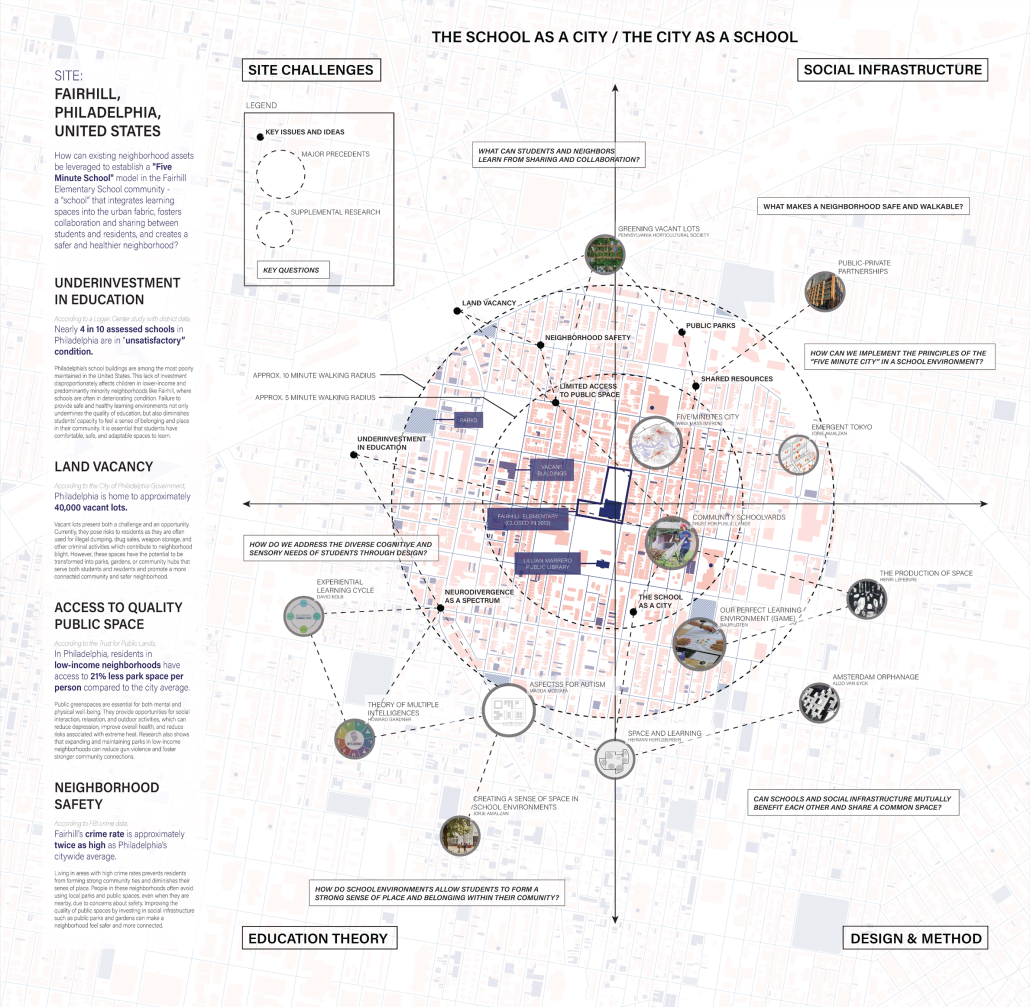
The 5-Minute School by Anoushka Sarkar, BS Architecture ‘25
University of Virginia | Advisor: Mona El Khafif

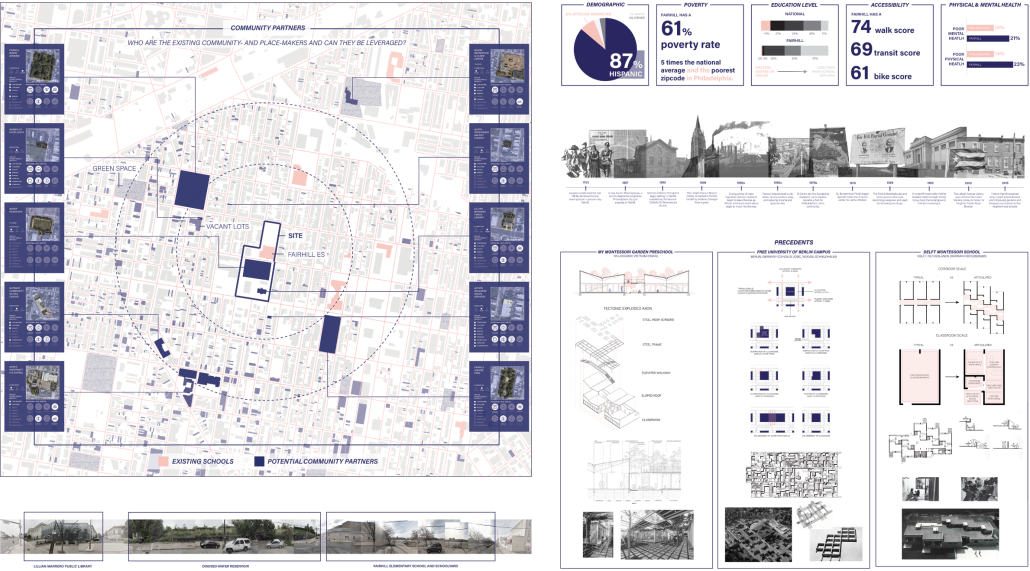
Set in Fairhill, Philadelphia – a neighborhood affected by historic disinvestment in education, high vacancy rates, and limited public infrastructure, “The 5-Minute School” explores how education can be embedded into the everyday fabric of the city. Rather than designing a single school building, the project proposes a network of public learning spaces within a 5 to 10 minute walking and biking radius, transforming vacant urban lots into active, community-driven educational sites.

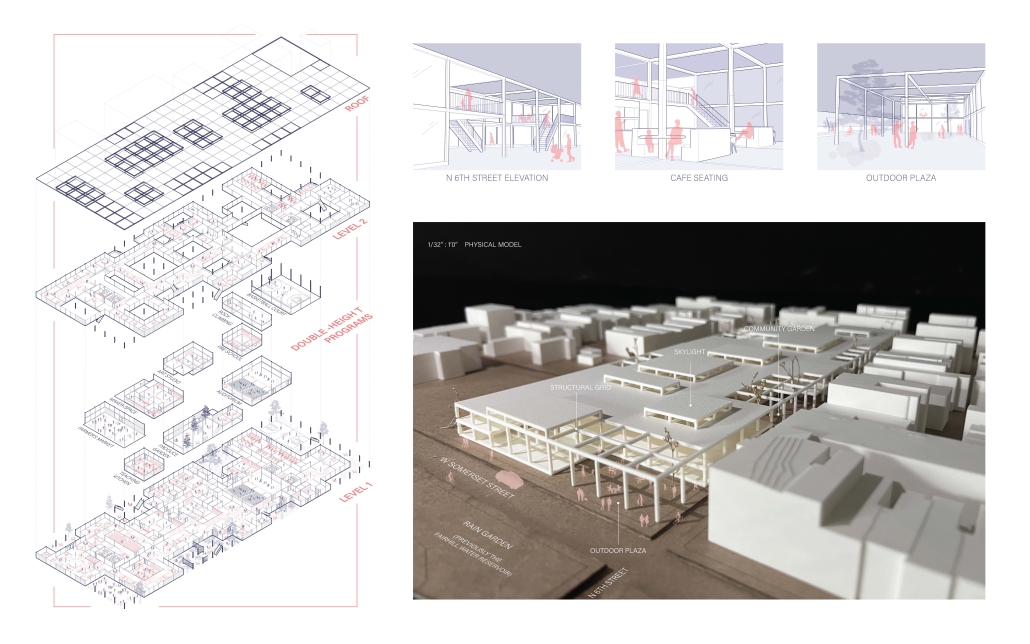
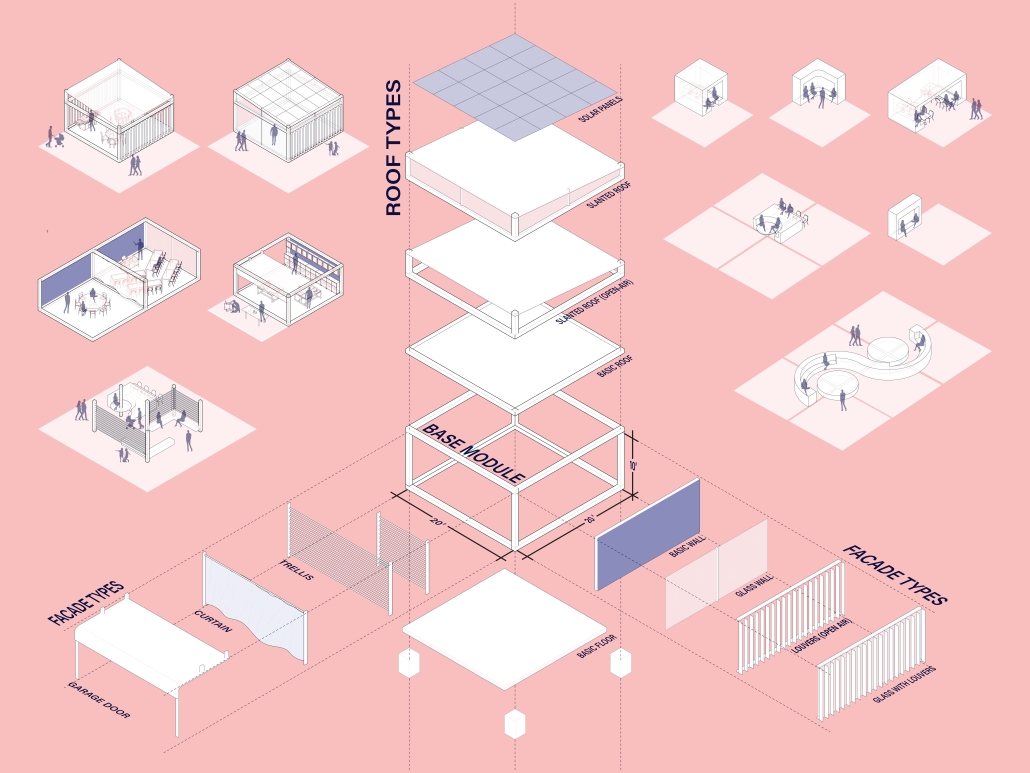
At the center of the proposal is the site of the former Fairhill Elementary School, closed since 2013, reimagined as a multi-generational learning center with wings dedicated to food and ecology, the arts, technology, fitness, and early childhood education. The design is structured on a 20’x20′ modular grid system with interchangeable roof and façade components, allowing for flexibility, sensory variation, and user autonomy.

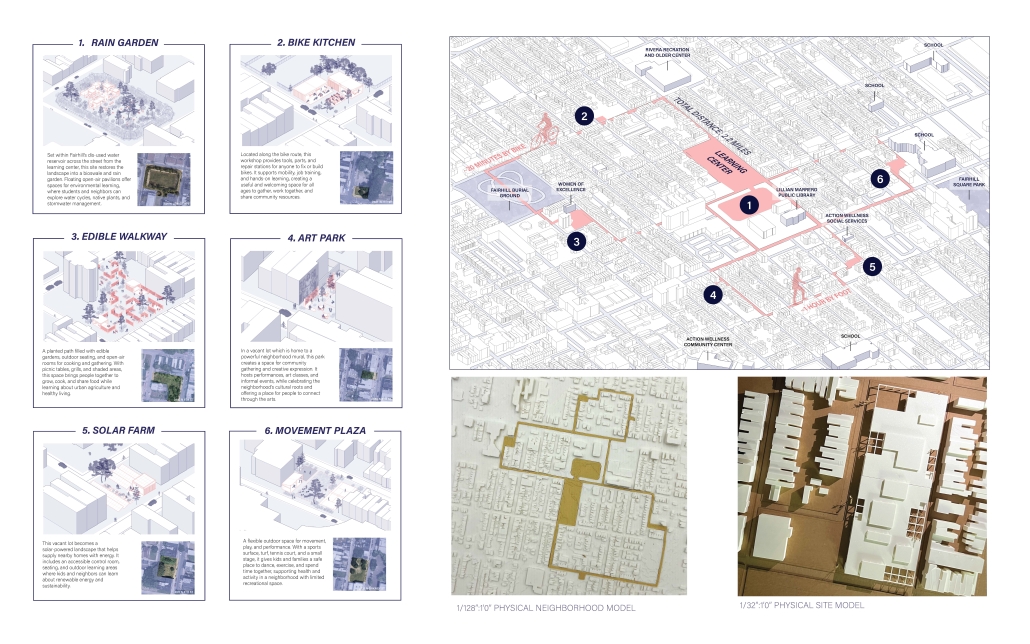
Radiating from the main hub are six “satellite” sites, including a rain pavilion, art park, solar garden, edible walkway, bike kitchen, and outdoor movement plaza. Each [site] offers hands-on, multi-generational, and place-specific educational opportunities. These sites are connected by a walkable and bikeable loop, which weaves through the neighborhood and links together existing community assets like libraries, rec centers, and social service organizations.

“The 5-Minute School” reimagines education as something lifelong, all around us, and capable of transforming neighborhoods into more vibrant, walkable, and healthy communities.

Anoushka received the Faculty of Architecture Award for Design Excellence for her yearlong work, including this thesis project. 

Instagram: @anoushkasarkar, @monaelkhafif

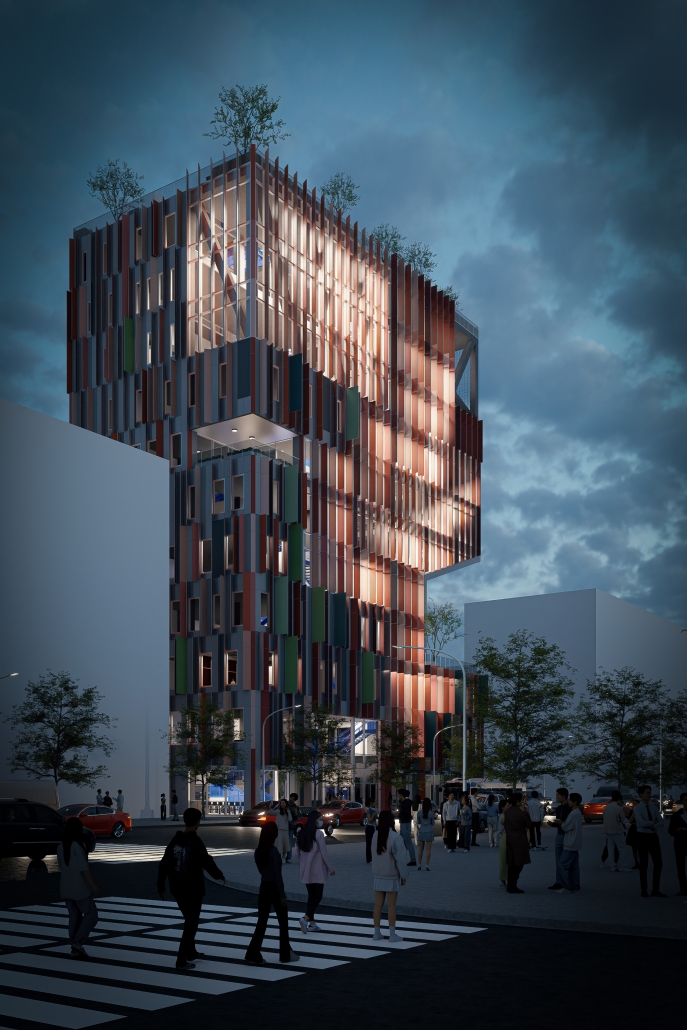
AMUSEMENT PARK by James Herlihy, Jack McGowan & Anthony Meli, M.Arch ’25
University at Buffalo | Advisor: Jin Young Song

South Korea faces the growing challenge of vertical schools, where even children as young as 2 to 5 years old attend regular classes followed by up to four additional hours at private institutions. These facilities often keep students until the late evening, intensifying stress for families and fueling social inequalities. Private educational institutions have become symbols of South Korea’s hyper-competitive educational culture, also affecting real estate markets and the urban landscape. In response, this project reimagines the vertical school as a socially engaging and visually vibrant space. Inspired by theme parks, the building emphasizes circulation and spontaneous social interactions across all floors. The façade design directly relates to both the building’s interior spaces and the vivid colors of the surrounding urban signage. Using a unitized curtain wall system, the façade incorporates angled fins, expansive windows, and transparent glass walls. A variety of fin typologies encourages playful engagement from both inside and outside the building, creating dynamic focal points. On the front elevation, glass and fins are strategically arranged to emphasize circulation routes, program elements, and to transform the building’s appearance between day and night.

This project was featured in “Cram Urbanism And Vertical Learning Space,” an international symposium and exhibition in Seoul, South Korea. 

Instagram: @arcmeli02, @jinyoung___song

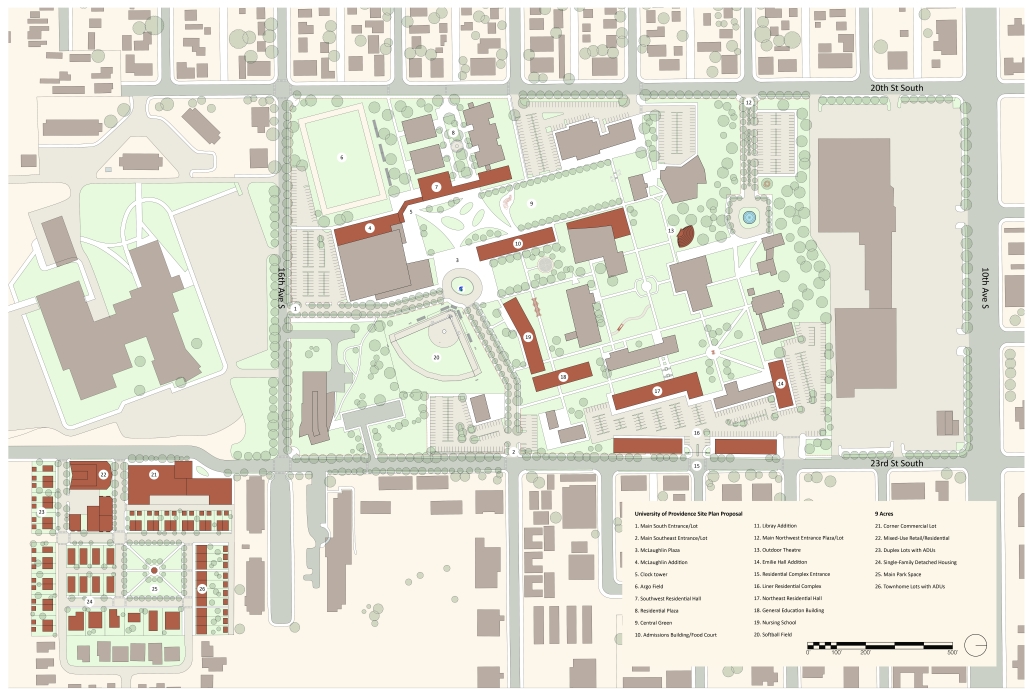
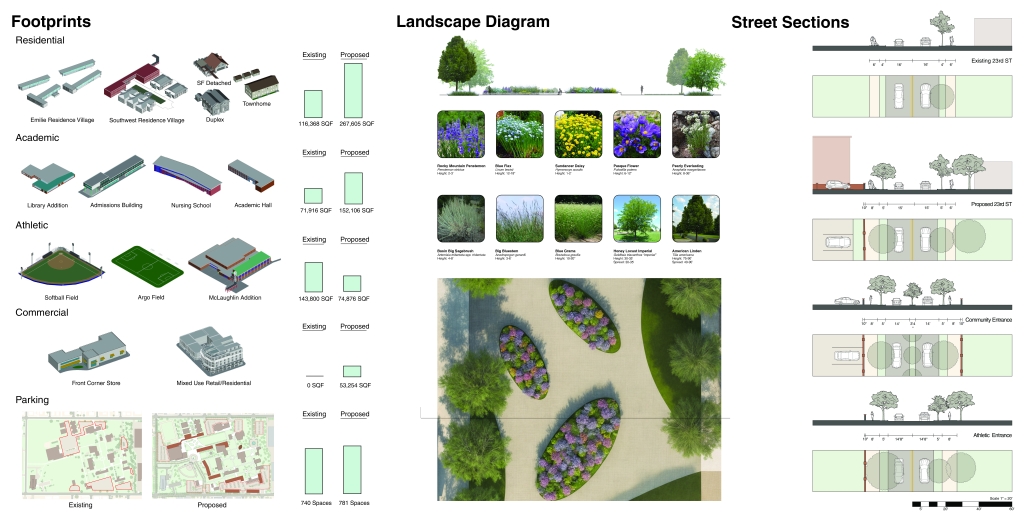
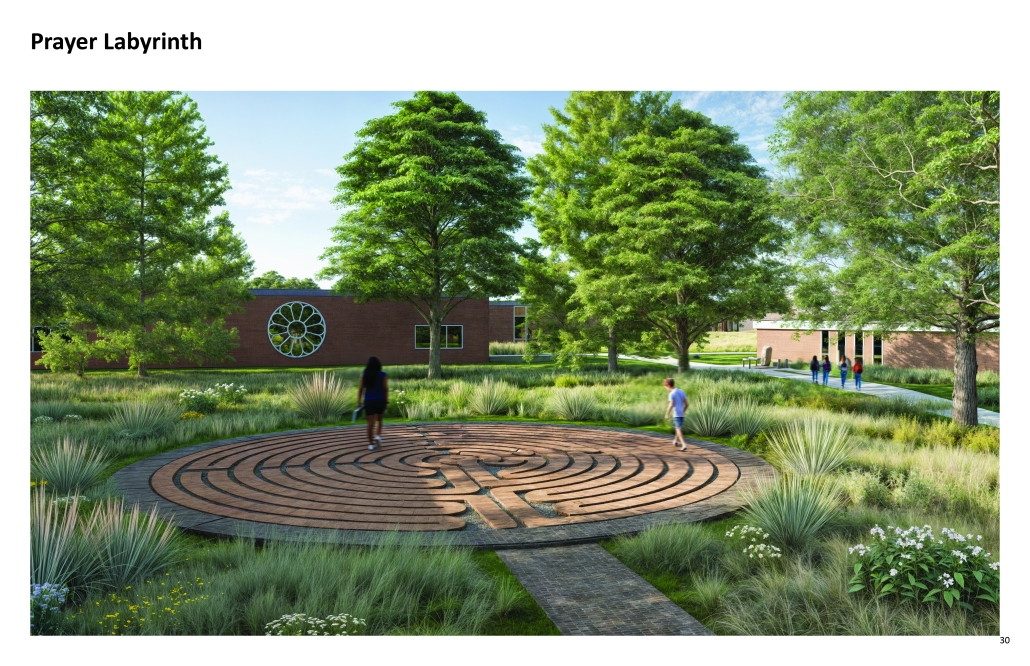
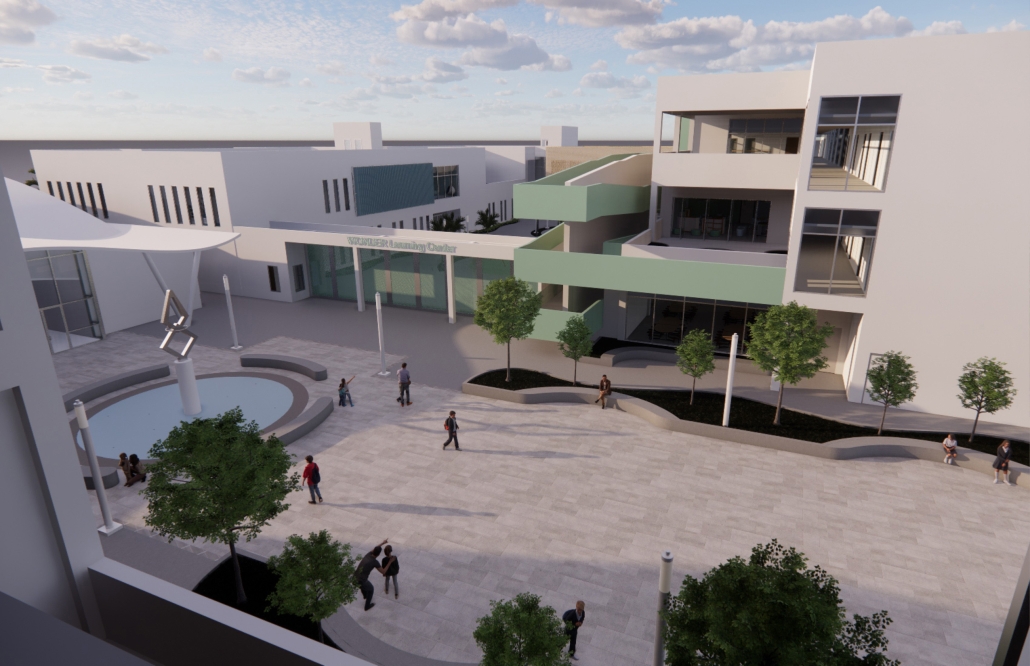
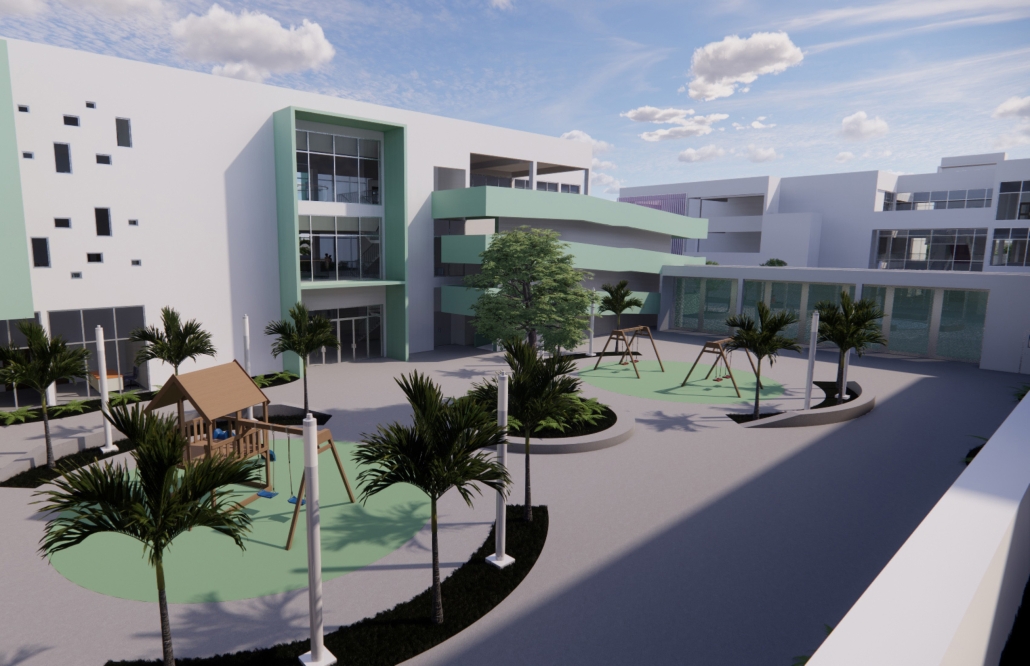
University of Providence Campus and Community Visioning by Harrison Bluestein, Andrew Rosenberg, Kiki Simmons & Nick Tournour, M.Urban Design & B.Arch. ’25
University of Miami | Advisor: Joanna Lombard

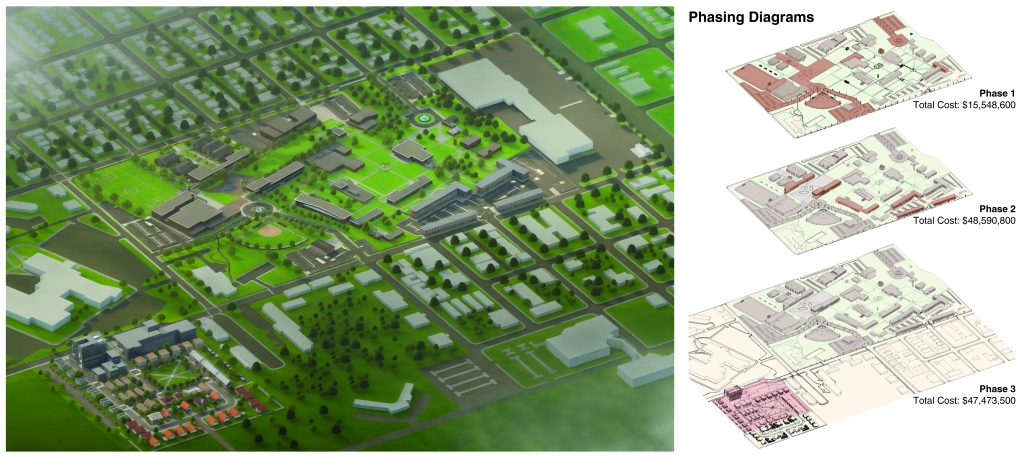
Nearly 100 years ago, the Sisters of Providence, the Ursuline Sisters, the Catholic Bishop of Great Falls and the Great Falls community began to integrate their educational vision with the unique ministries that had developed from the earliest years of the Sisters of Providence’s founding of a hospital and school in 1892 and 1894, respectively. Building on this early relationship of shared commitment to an academic and community-based education, the University of Miami Urban Design studio opened with analysis of the current form, historic architecture, as well as the social and physical context of the campus and Great Falls community to explore the potential for the physical campus to plan for a future that expresses the founding mission of integration and advancement and contributes to the future flourishing of university and the community of Great Falls. The student teams worked in collaboration with University of Providence leadership, faculty and students to develop prototypes for how the physical environment could most effectively frame and support the campus and community in the coming decades.

Studio-based multidisciplinary investigations and collaborations with leading professionals and a continuity of communication throughout the semester enabled rapid response as ideas were proposed, analyzed, developed and refined. This dynamic exploration was conducted with the Providence St. Joseph Health and University of Providence team members, as well as Great Falls advisers, resulting in a penultimate presentation at the end of the semester, after which the work was organized into a slide presentation that can be utilized by the University of Providence.

Instagram: @hb23_, @andrewrosenberg7, @u_soa

Pathways to Possibilities: Montessori, re-imagined and expanded for every path in life by Melanie Nin, B.Arch ’25
Kennesaw State University | Advisor: Robin Puttock

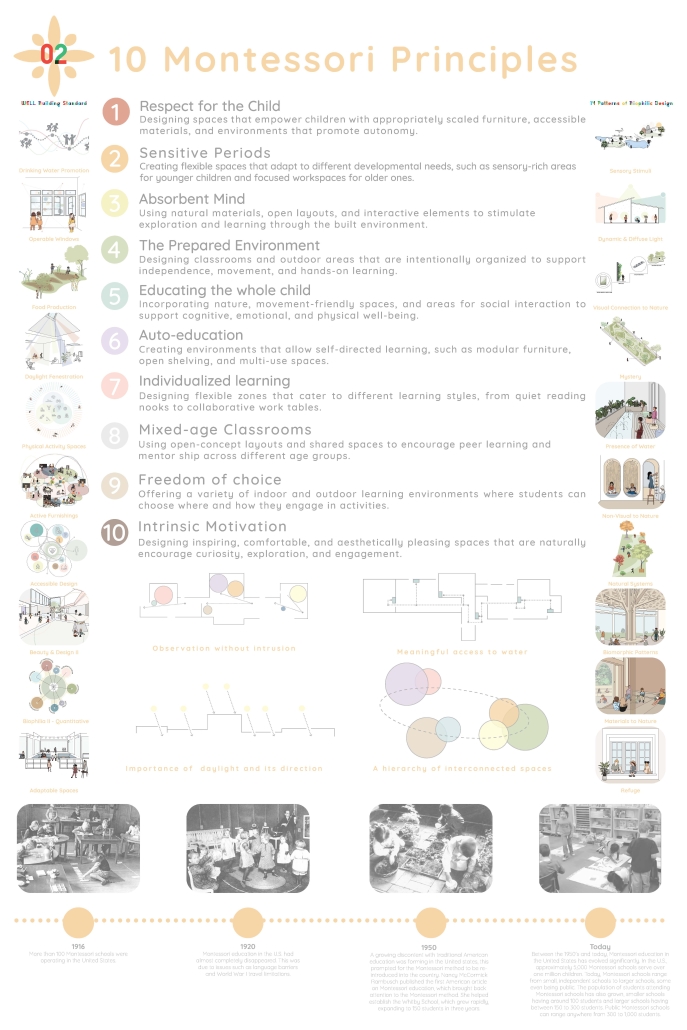
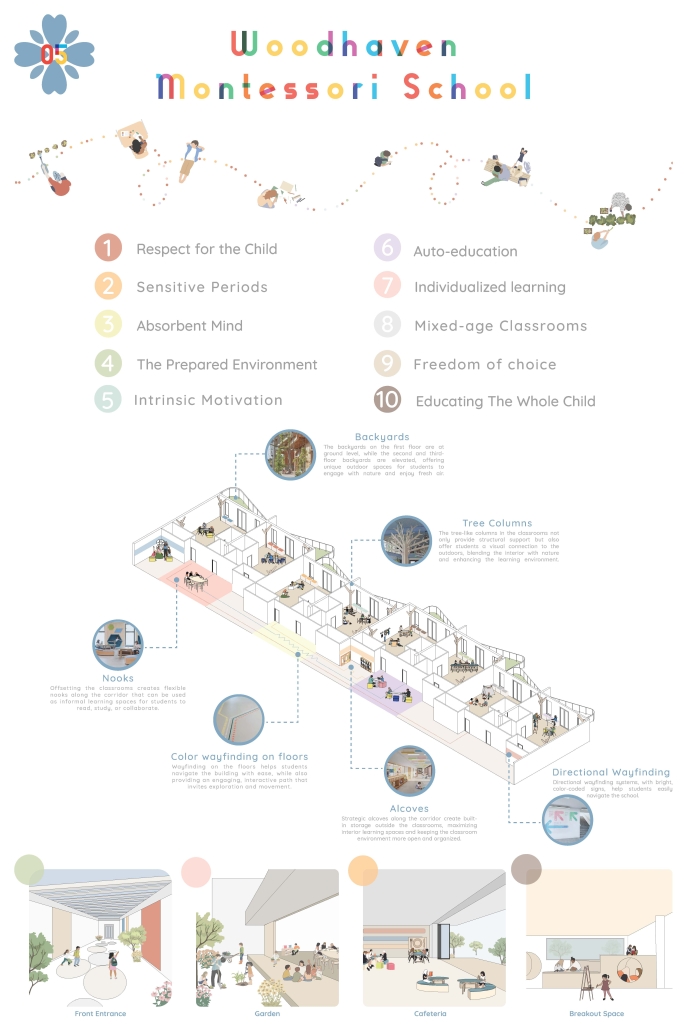
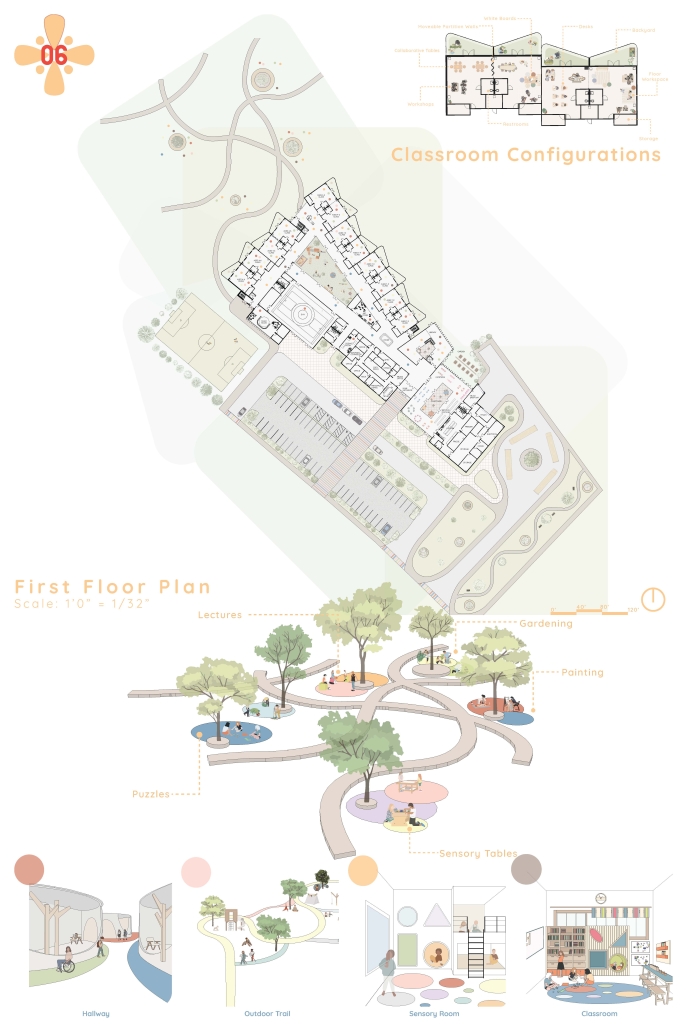
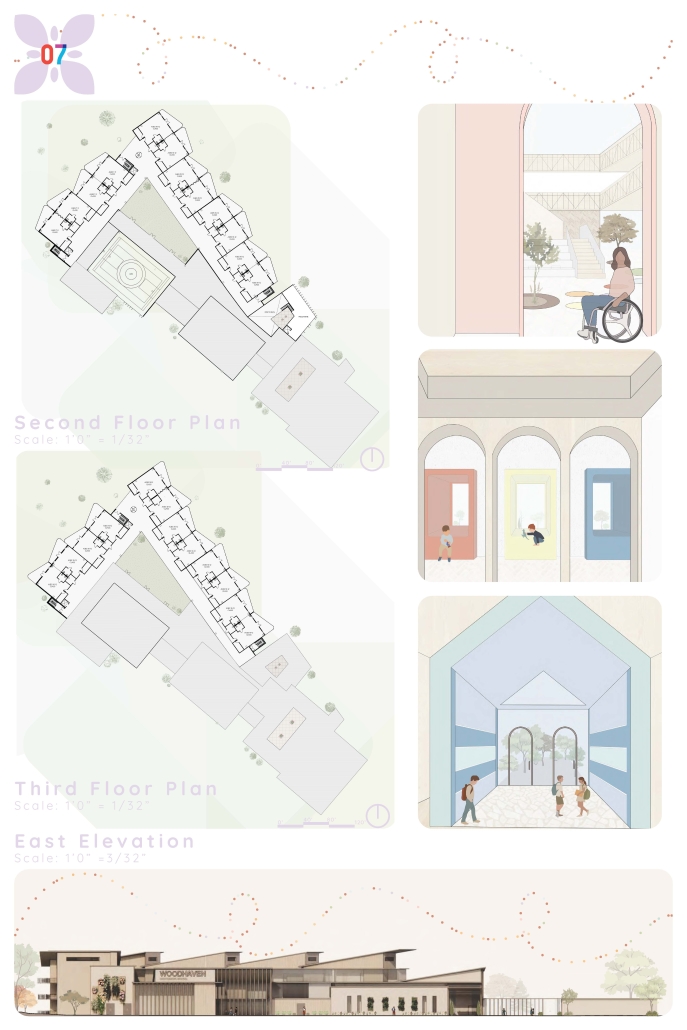
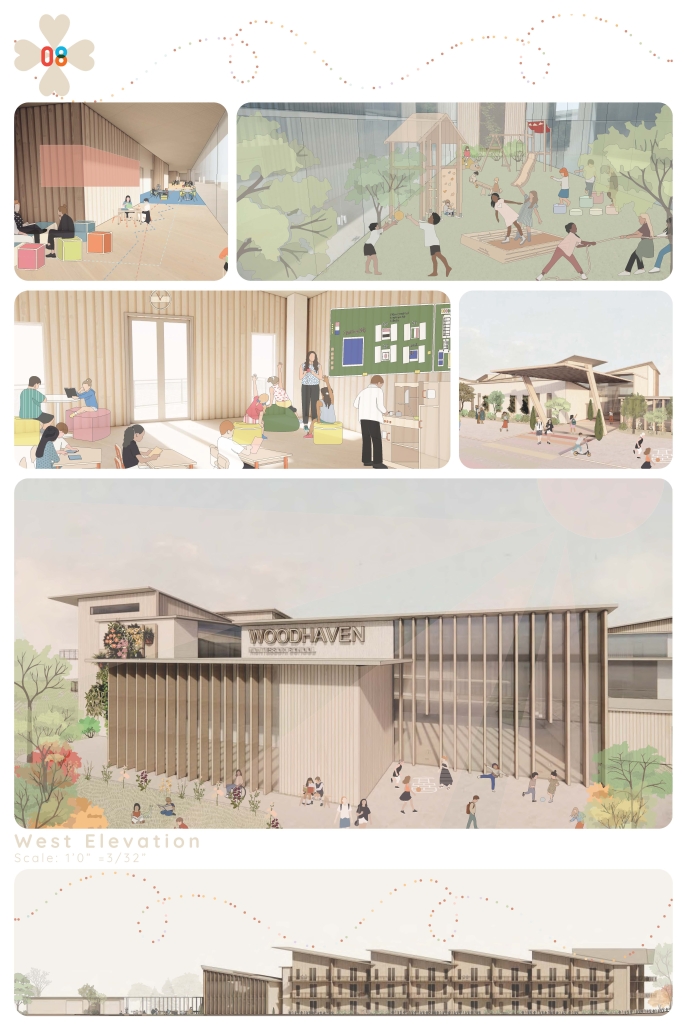
“Pathways to Possibilities” explores the importance of establishing a Montessori Pre-K through 8th-grade school for a large population of children, highlighting the unique challenges they face in accessing an education that meets their fundamental needs. By incorporating Montessori design principles and learning theories, the proposed school aims to create an inclusive, supportive environment that fosters self-directed learning, creativity, and social engagement. It advocates expanding the Montessori model to a larger school that fosters an inclusive environment that supports diverse students’ needs.

Thesis Question:

How can Montessori learning theory and design principles be implemented in a large-scale public school to provide an innovative school in Norcross, GA, that expands the accessibility of Montessori education to a larger community?

Problem:

Students face several challenges when trying to attend Montessori schools, including cost, lack of information, cultural and language barriers, and limited access.

Solution:

To expand the current Montessori model into a vibrant, inclusive learning community where every child can grow and thrive.

Hypothesis:

Designing flexible learning spaces that follow the 10 Montessori Principles while optimizing space efficiency.

Click here to learn more.

This project was selected as a Thesis Semi-finalist (Top 20 of 90+).

Instagram: @melaniespov, @robinzputtock

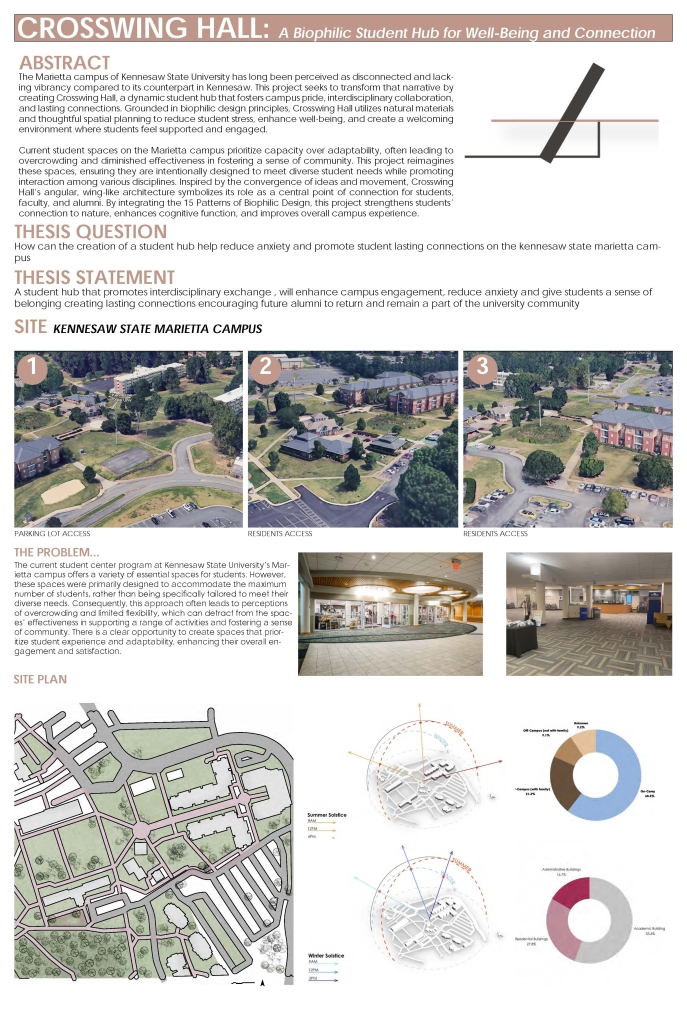
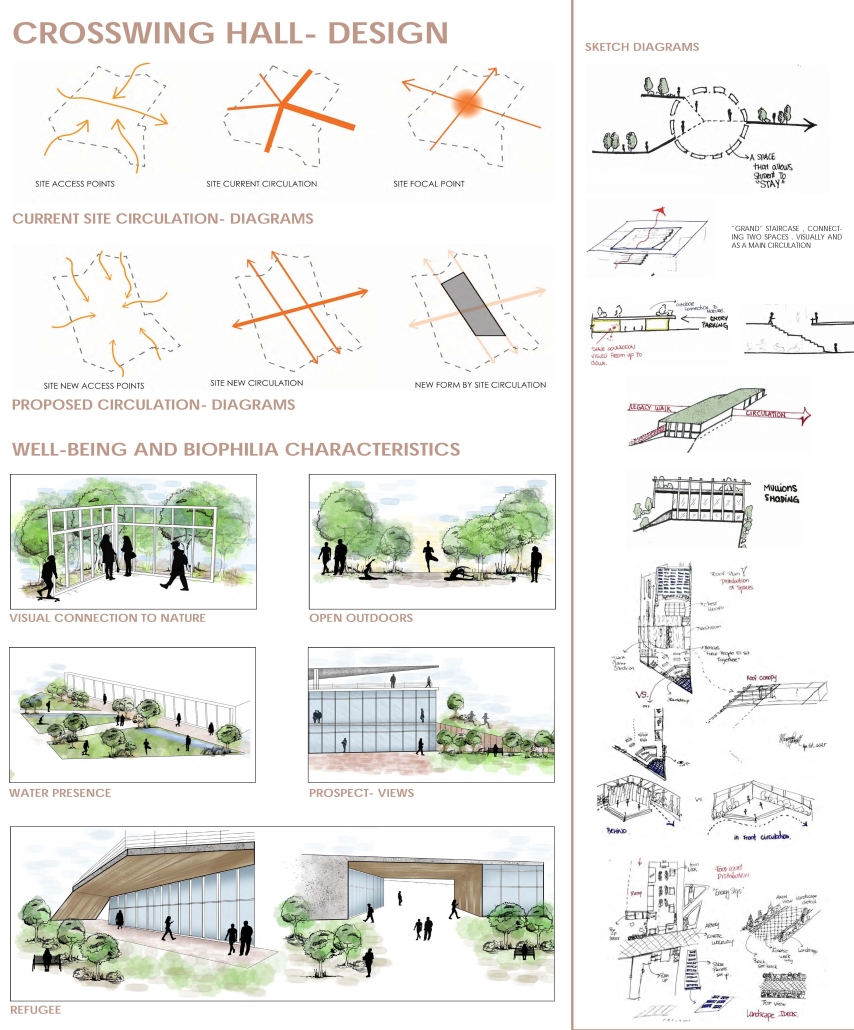
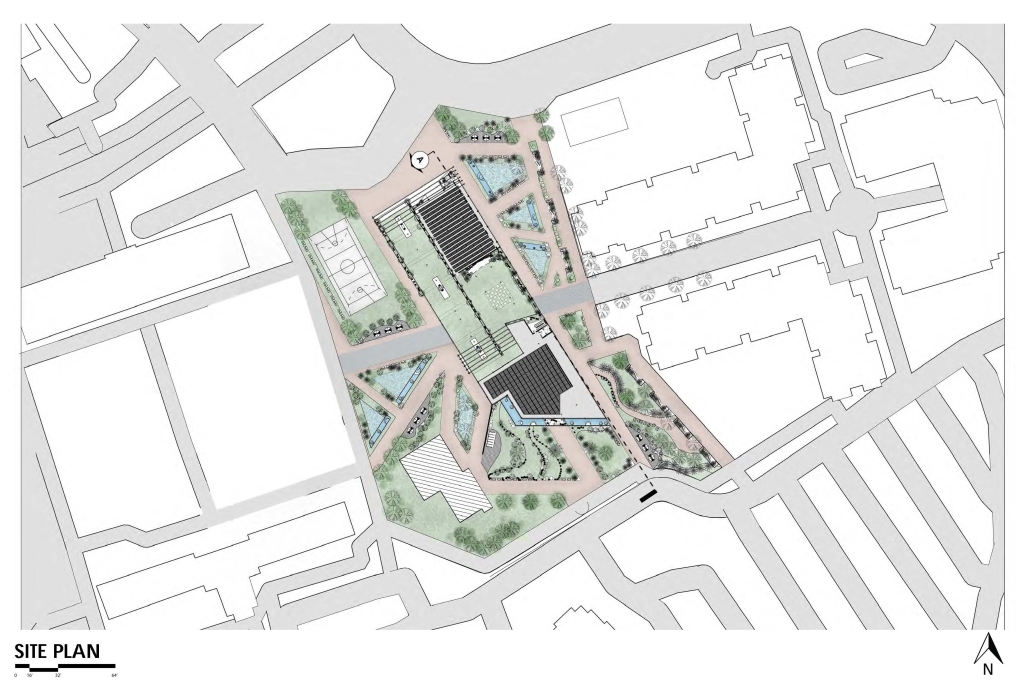
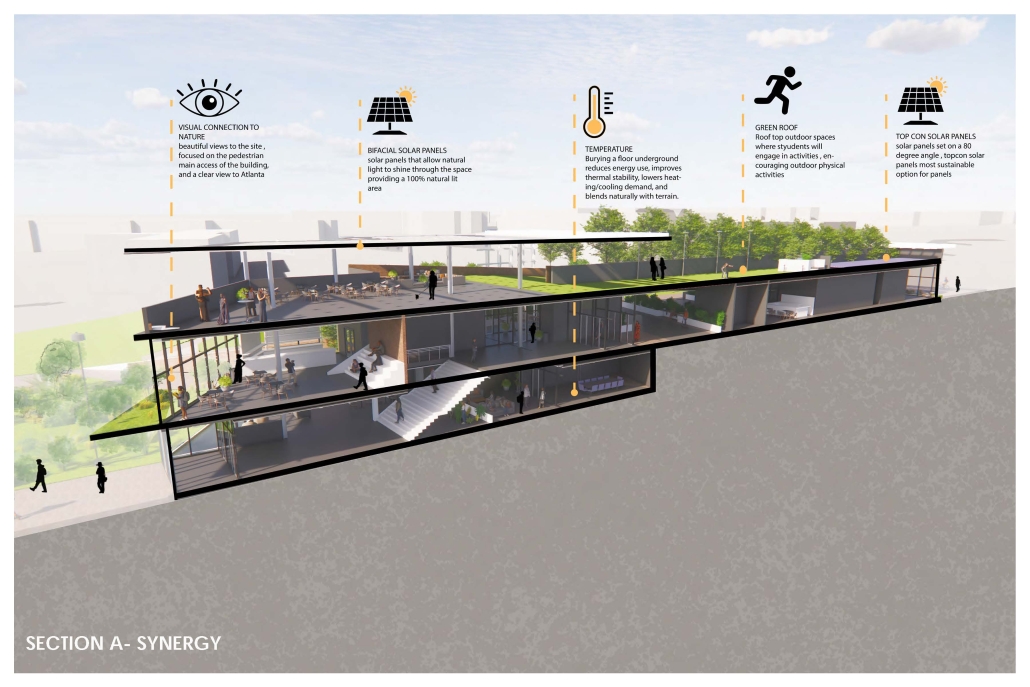
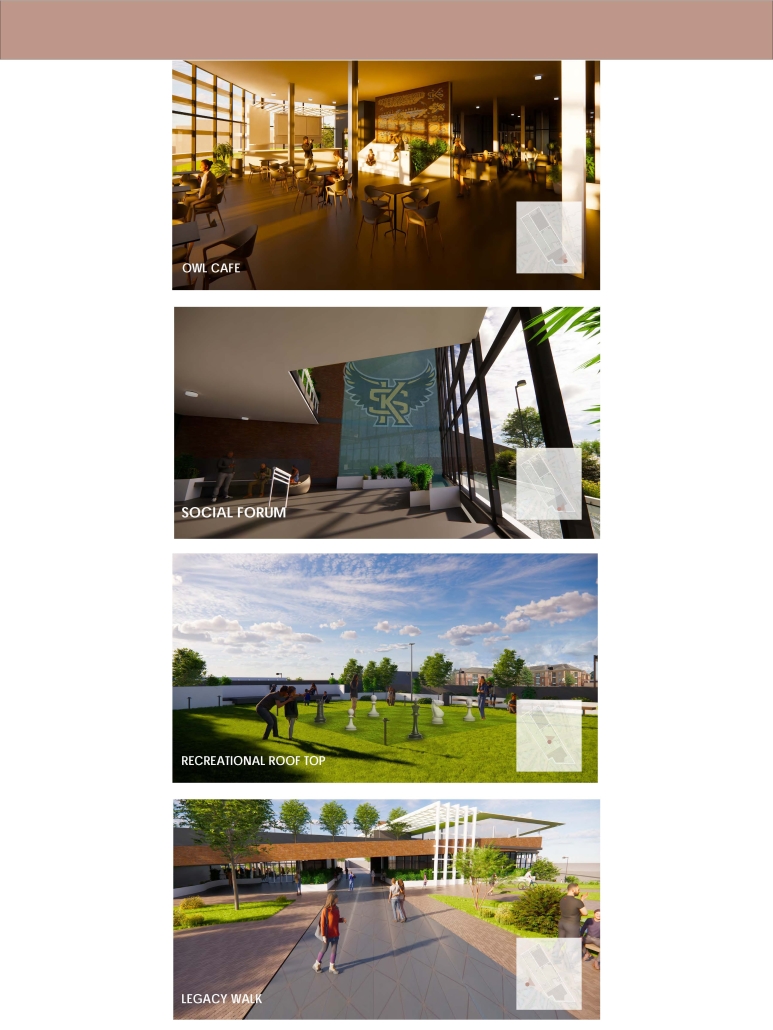
Crosswing Hall: a Biophilic Student Hub for Well-Being and Connection by Marianna Sanchez, B.Arch ’25
Kennesaw State University | Advisor: Robin Puttock

Crosswing Hall stands as a vibrant intersection of connection, community, and growth at Kennesaw State University’s Marietta campus. Inspired by the convergence of diverse paths and ideas, the name symbolizes both the physical design of the building—marked by angular, wing-like forms—and its purpose as a space where students and alumni come together. As a central hub, Crosswing Hall fosters interdisciplinary exchange, reduces anxiety through thoughtful design and natural elements, and cultivates lasting connections that extend beyond graduation. By providing an environment where students feel supported, engaged, and at home, Crosswing Hall strengthens campus pride, encourages meaningful relationships, and ensures that every visitor—whether a first-year student or returning alum—feels part of the university’s ongoing story.

Click here to learn more.

This project was selected as a Thesis Semi-finalist (Top 20 of 90+).

Instagram: @msg2002, @robinzputtock

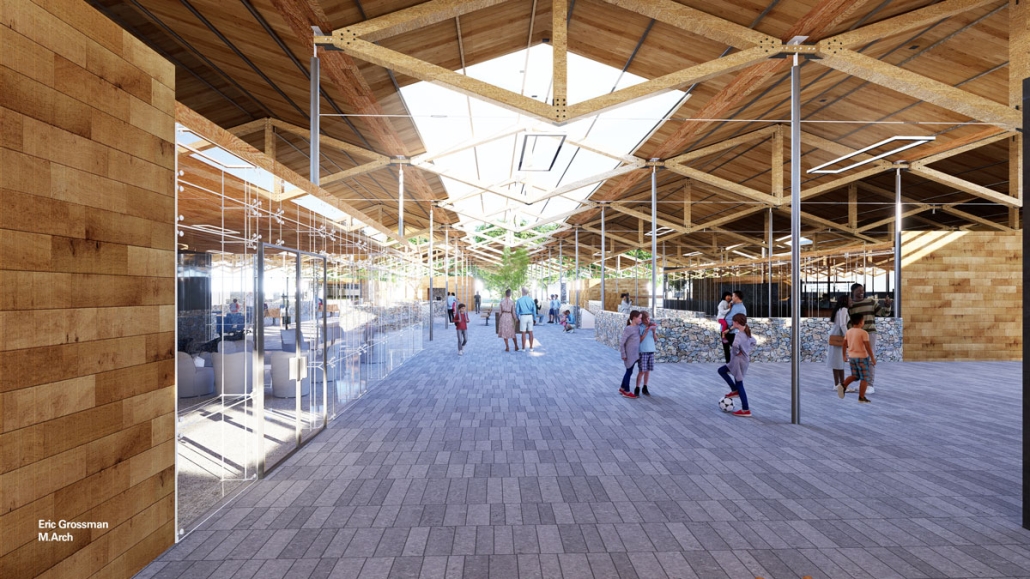
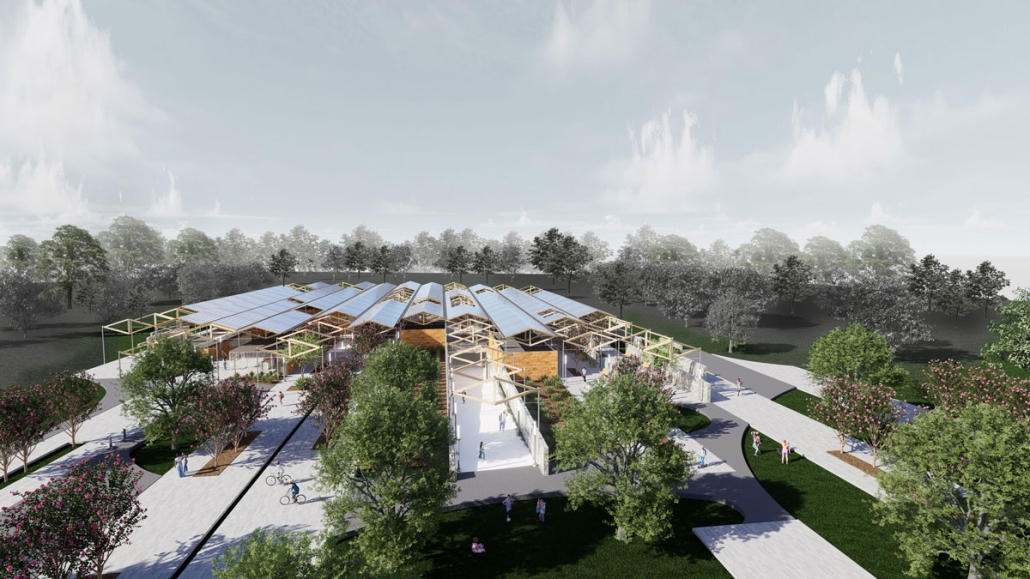
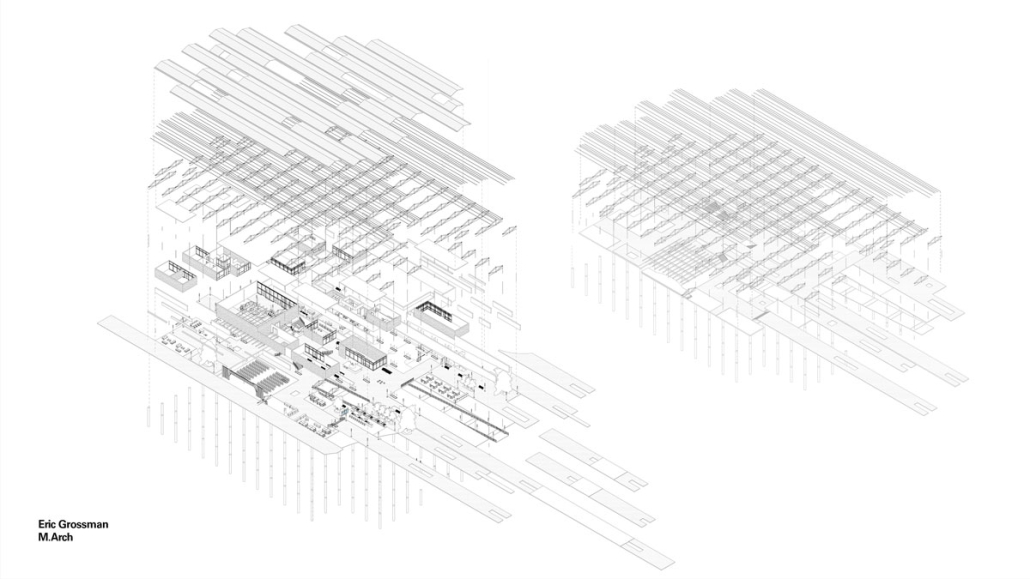
Uvalde Strong: Youth and Community Center by Eric Grossman, M.Arch ’25
Academy of Art University | Advisor: Eric Reeder

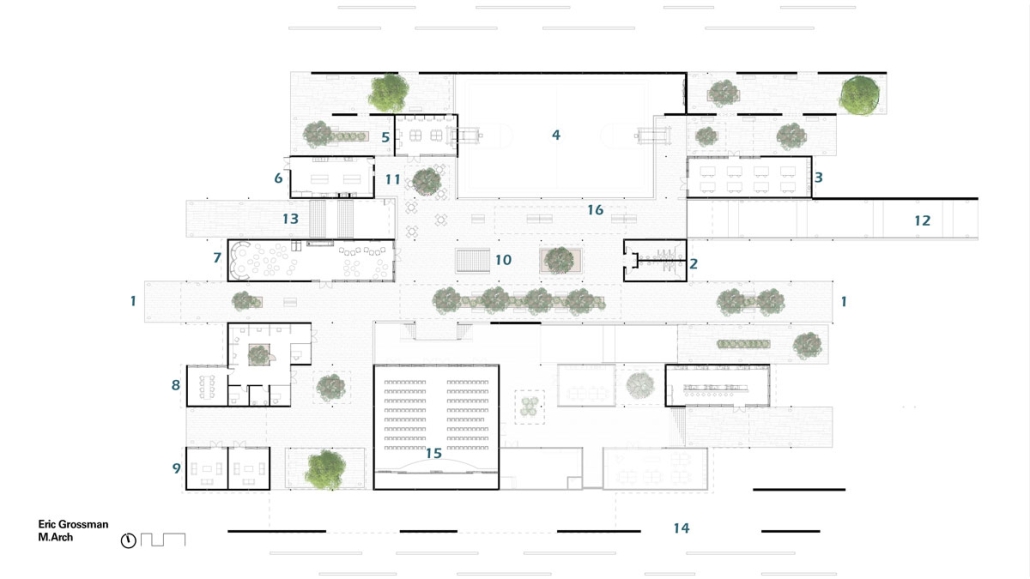
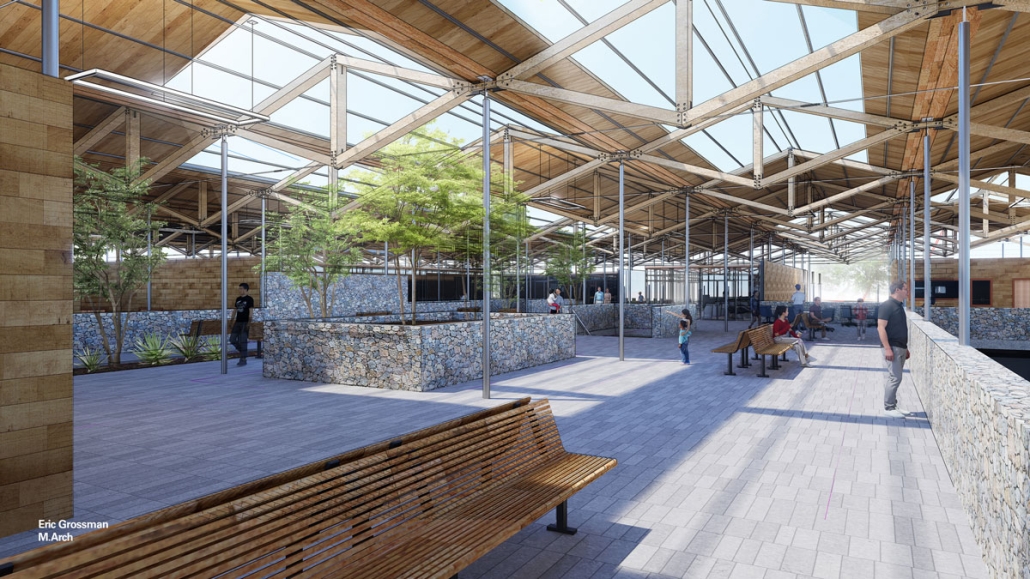
The proposed Youth and Community Center in Uvalde, Texas, aims to address two tragic questions: the nature of social isolation and its ties to violence, and the nature of community healing.

On May 24th, 2022, 19 elementary school students and 2 teachers were murdered by an 18-year-old active shooter at the Robb Elementary School. The shooting directly affected 21 families and indirectly several more. Uvalde is a small town where people know each other. An uncle of one of the victims stated, “If the shooter was involved and was able to be active and play, maybe this wouldn’t have happened.” A few months later, on September 9th, 2022, two teenagers of 16 and 18 years were shot in an alleged drug deal at the same site.

Drugs and gang affiliations may also be causing increased youth gun violence, in addition to social isolation. Currently, the Uvalde area hosts few mental health resources and facilities. According to US News, “The only mental health center in the area — just blocks from Robb Elementary — was seldom used or discussed, raising worries about the lack of awareness regarding signs and symptoms of mental illness and the stigma surrounding seeking help.”

Grieving together through recreation and community has helped Uvalde begin to heal. The parents of one victim started an organization that hosts wilderness retreats for victims’ families and survivors. Residents also come together in social media groups where they can share mental health resources and express their grief. 

By bringing in places to gather as families and as a community along with being able to play, we may be able to foster more inclusion in school environments. A recreation center, community center, and place to gather can give these kids an opportunity to engage in play and change their direction. A chance to compete in sports and be a part of a team can lead children through self-discovery. Through play, children can interact with others in a positive environment. Social interaction and civic engagement can trigger some of the solutions for these issues through organized activities. The proposal is a Youth and Community Center that can facilitate these activities.

Click here to learn more. 

This proposal received the Graduate School of Architecture Prize for Outstanding Thesis Project.

Instagram: @ericreeder.architect

School of Roots by Eva Shaw, M.Arch ’25
Academy of Art University | Advisor: Eric Reeder

Sustainability must lead our educational efforts to address the planet’s pressing challenges. While complex, the issue can be met with intention and thoughtful design. This elementary school teaches sustainability through direct exposure and lived experience. Targeting elementary-aged students is intentional—Piaget’s Concrete Operational Stage marks a critical period when children form logical ideas from concrete experiences. At this stage, space and time are vital in shaping thought, making the built environment especially influential. 

“School of Roots” embraces this developmental window to cultivate future stewards of the land. Designed with a rotating visiting schedule, it serves as a learning model for other schools and opens to the public when not in use, broadening its educational impact. Located in a dense urban area in Berkeley, California, the site minimizes sprawl and transportation needs, with direct access to public transit. This ensures both environmental responsibility and community accessibility. The building includes flexible workspaces, demonstration labs, and dining areas. Its strong emphasis is on outdoor learning, which reconnects users with nature. School of Roots is a foundational effort to align education with planetary health. Engaging children at their most formative stage offers a hopeful path toward a sustainable future.

Click here to learn more. 

This design was awarded the 2025 Spring Show Prize for Outstanding M.Arch Thesis Project.

Instagram: @evashaw_architecture, @ericreeder.architect

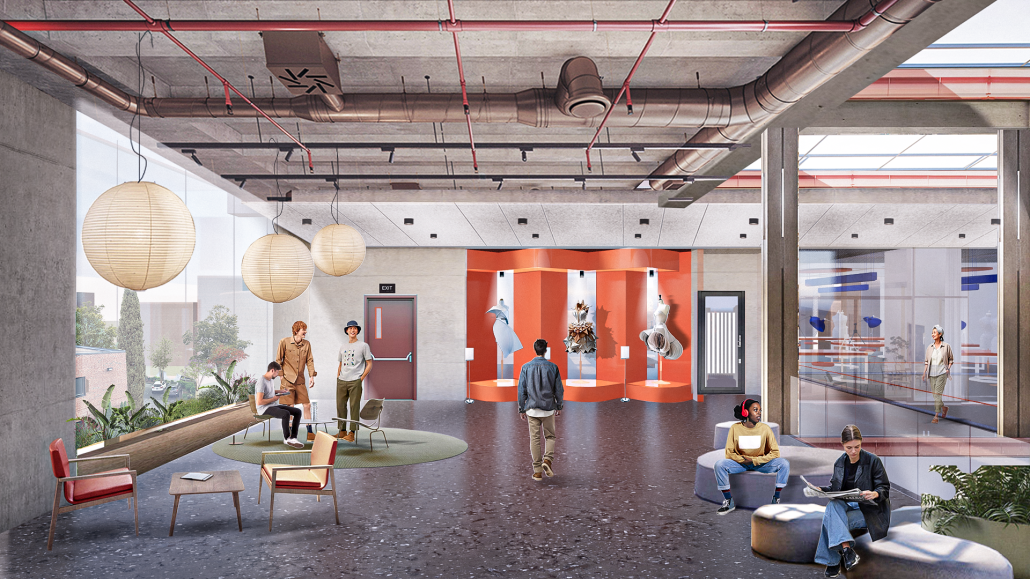
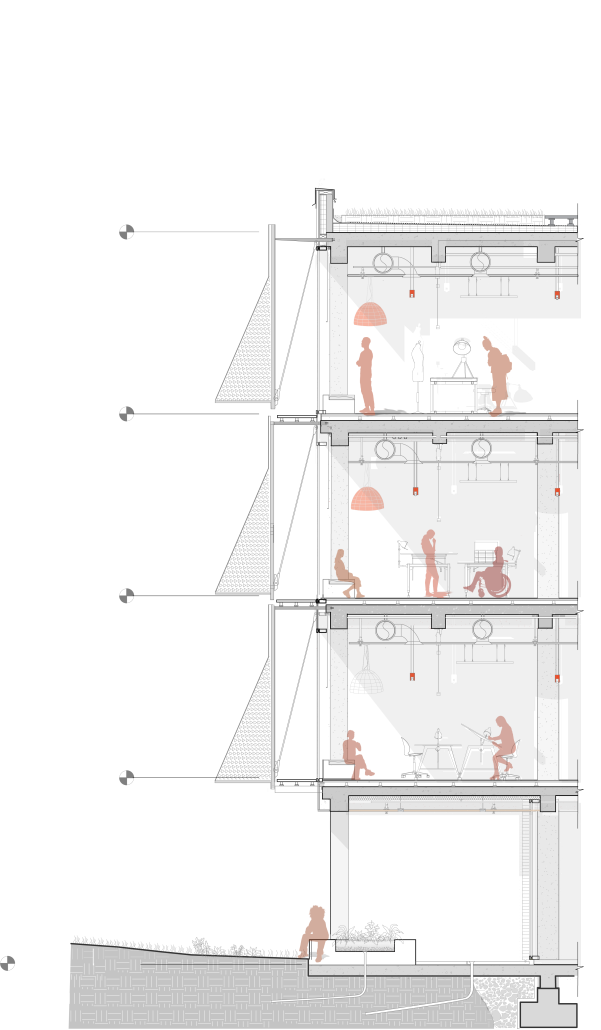
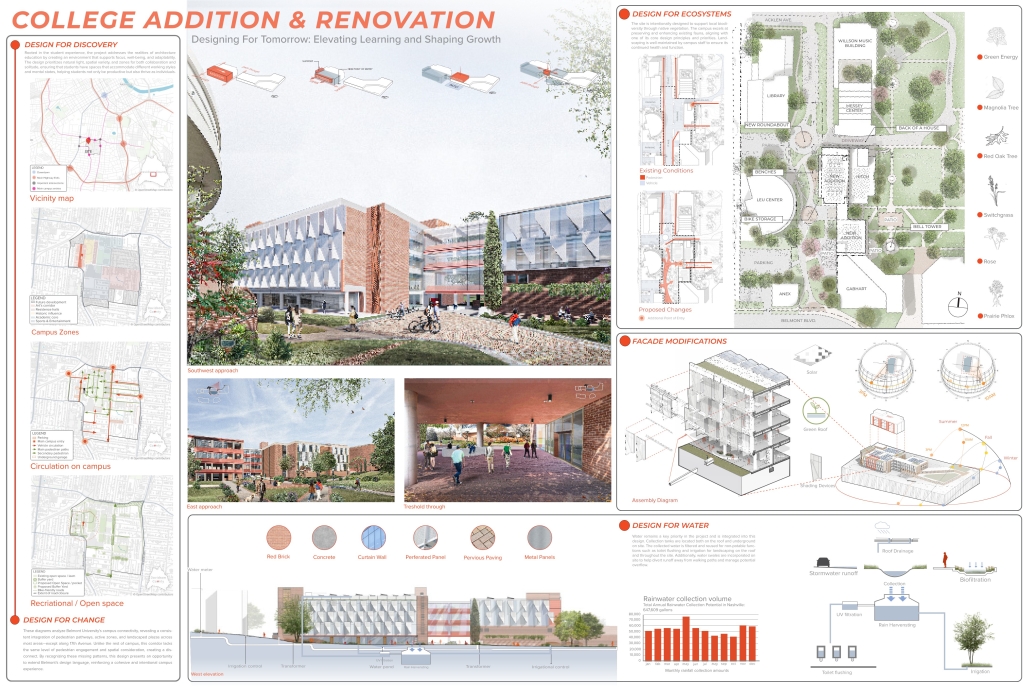
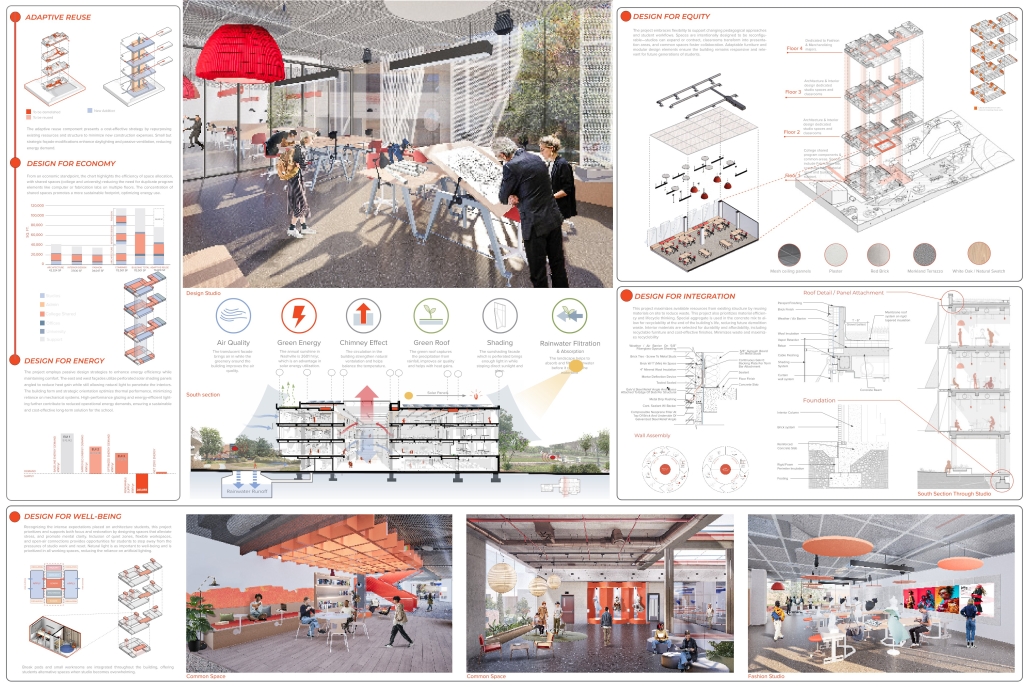
Designing for Tomorrow: Elevating Learning and Shaping Growth by Vira Grace Williams, B.Arch ’25
Belmont University | Advisors: Tom Lowing & Dennis Daniels

As I considered my approach to this project, I reflected on O’More College’s place within Belmont University. Though it has been part of Belmont for only seven years—and its architecture program for just five—it stands as the only architecture school in Middle Tennessee. While O’More has already been shaped by Belmont’s broader vision, the university now has a unique opportunity to define a design school that sets itself apart—not just regionally, but nationally. One of the key ways O’More differentiates itself is through its mission-driven approach to design education. The question this proposal is trying to answer is: how can this renovation and expansion strengthen that identity and help position the program as a leader in design education?

One of Belmont’s 2030 initiatives is a commitment to whole-person formation—a strategic focus on academic, emotional, social, and spiritual development. This idea resonates deeply with me as I reflect on my own education. The question, then, is how the building itself can reinforce this vision while strengthening O’More’s institutional identity.

 At its core, this project is about the student experience. Design fields—whether architecture, interior design, or fashion—are often defined by long hours, intense deadlines, and constant pressure. The existing O’More building, while rich in history and character, has reached a point where expansion is not just an opportunity but a necessity. Through analyzing the Hitch building and drawing from personal experience, it was clear that the lack of spatial variety, accessibility, and common areas limited interaction between cohorts, while poor daylighting and ventilation increased energy demands. These challenges helped shape the design approach: addressing the gaps in the current spaces while creating a healthier, more supportive learning environment—one where students want to stay, work, and grow.

Architecturally, this vision takes shape through quiet areas, collaborative commons, or breakout pods. This allows the building to support social interaction and individual well-being—both essential to whole-person formation. While the project provides the necessary studios, classrooms, and presentation spaces, its true priority is ensuring that students have spaces that accommodate different working styles. By aligning the physical environment with the values of care, well-being, and connection, this addition ensures that O’More is a place where students are supported not only as designers, but as whole people.

Instagram: @vira_semkiv_design, @omore.architecture

Village for Children by Zake Bjontegard, B.Arch ’25
University of Texas at Austin | Advisor: Nichole Wiedemann

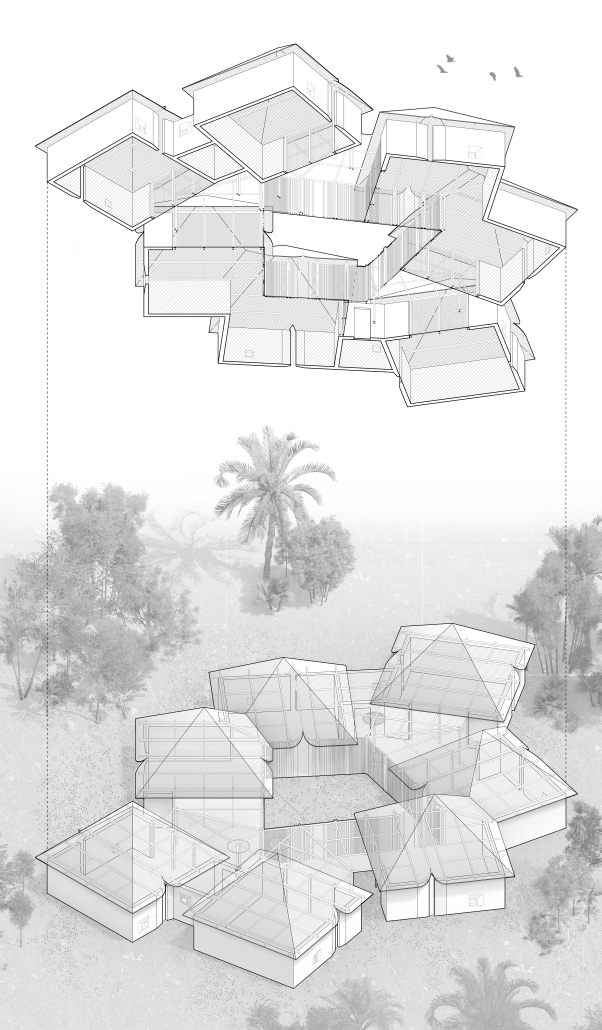
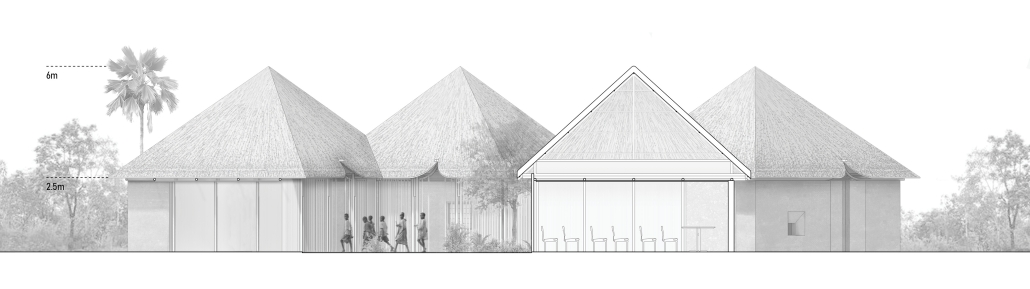
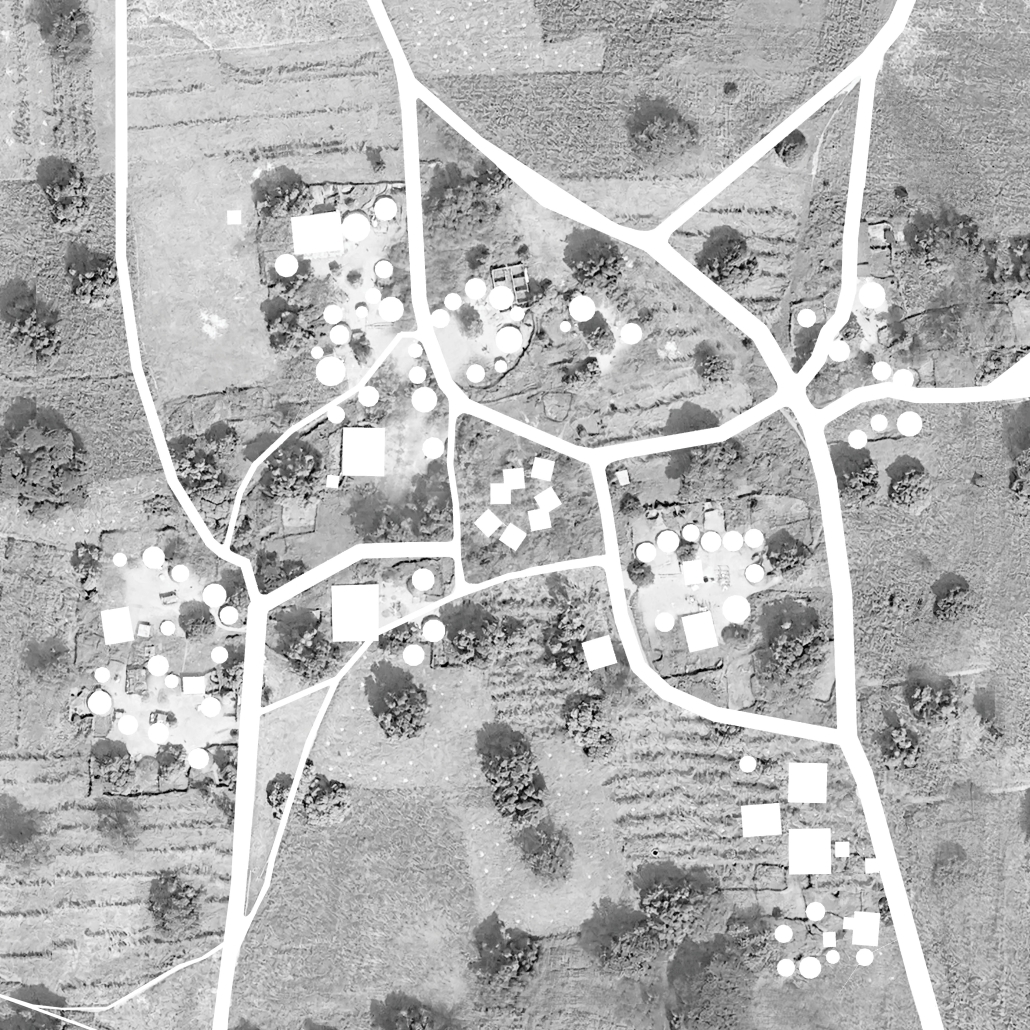
Situated near the southern border of Senegal, the Nursery School repositions early childhood education toward a community-oriented model that leverages the resilience of local materials and techniques. The school mimics vernacular village structures through careful positioning, aggregation, and a focus on interstitial space. 

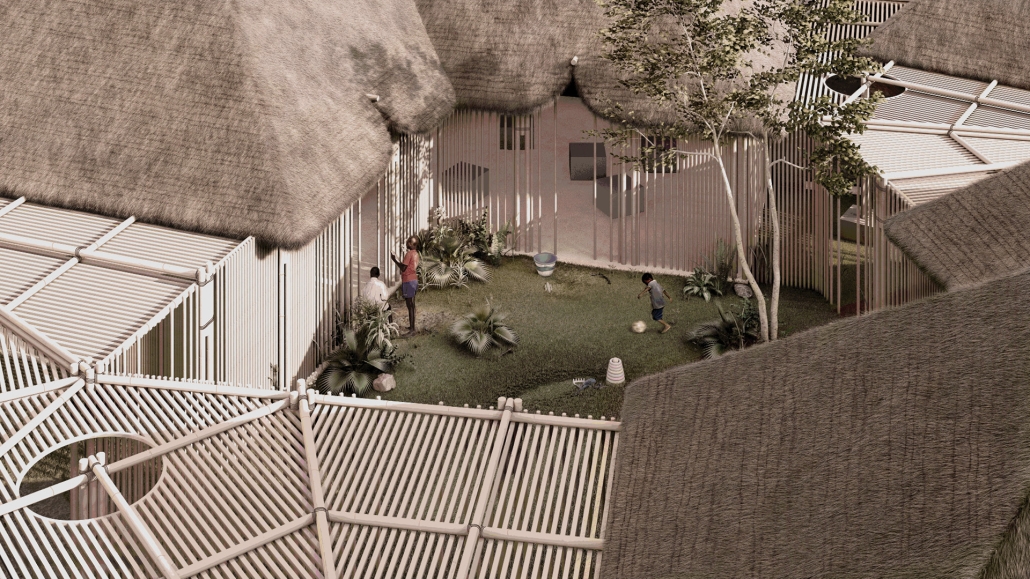
In turn, the grounds form a child-centered micro-village where young children can explore a sense of freedom and agency within a managed system. The askew masses showcase a necklace of indistinguishable “hut-like” classrooms positioned around a central courtyard encased in bamboo. Each classroom shares an educational play space with a neighboring classroom, as well as direct access to the free-play courtyard. 

The model of learning emphasizes flexibility, allowing the school to adjust connections and spaces depending upon the needs of local youth. Upon approach, the profile of the complex resembles a neighborly system of material and assembly—diffusing into the surrounding context of thatch and earth. Children are encouraged to feel a sense of familiarity with the shapes, forms, and textures of the complex, embracing conservation in the pursuit of innovation. 

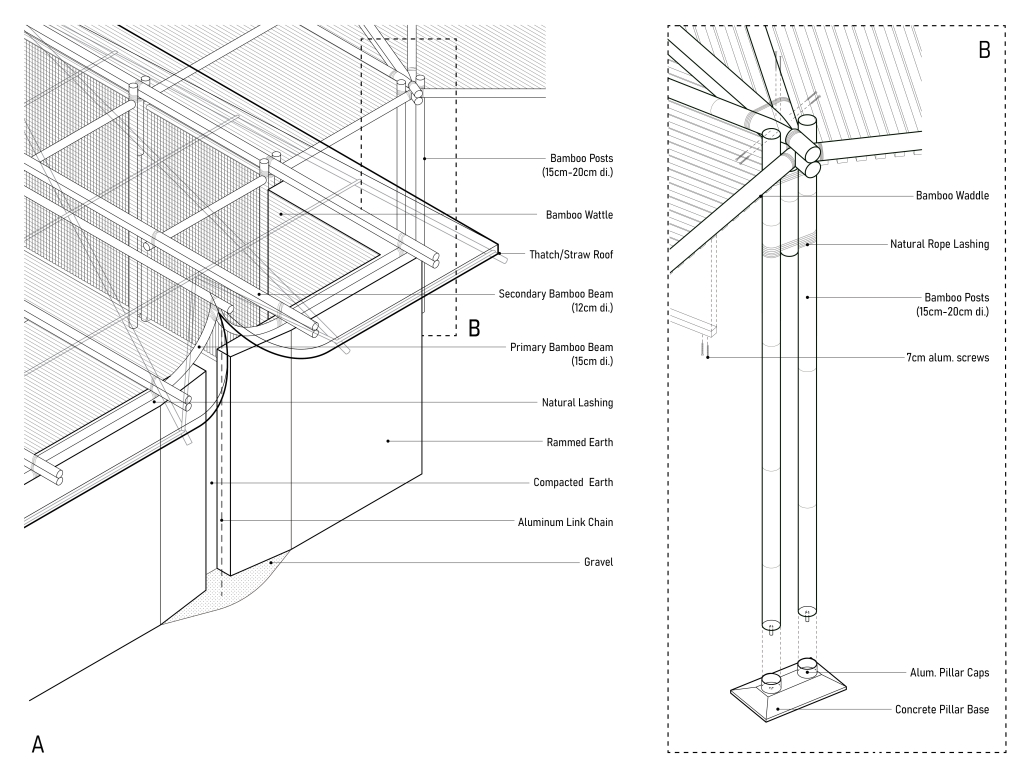
The project utilizes two major local materials: rammed earth and bamboo. The rammed earth wraps the perimeter of the complex, presenting itself outwardly as a depiction of privacy and strength. In contrast, a softer bamboo inner membrane gives way to looser, more permissive thresholds between classes and age groups. The construction and building of these materials are possible through local techniques—not significantly different from the construction of the traditional Senegalese home. 

In all, the Nursery School works to preserve the sensitive traditions of rural Senegal while capitalizing on the potential for subtle modifications—both in architecture and within the broader early childhood education system.

This project was submitted to the Kaira Loora Competition.

Instagram: @zakebjontegard, @nicholewiedemann

Inside Out – Outside In by Nguyen Thanh Minh, D.Arch ’25
University of Hawaiʻi at Mānoa | Advisor: Yasushi Ishida

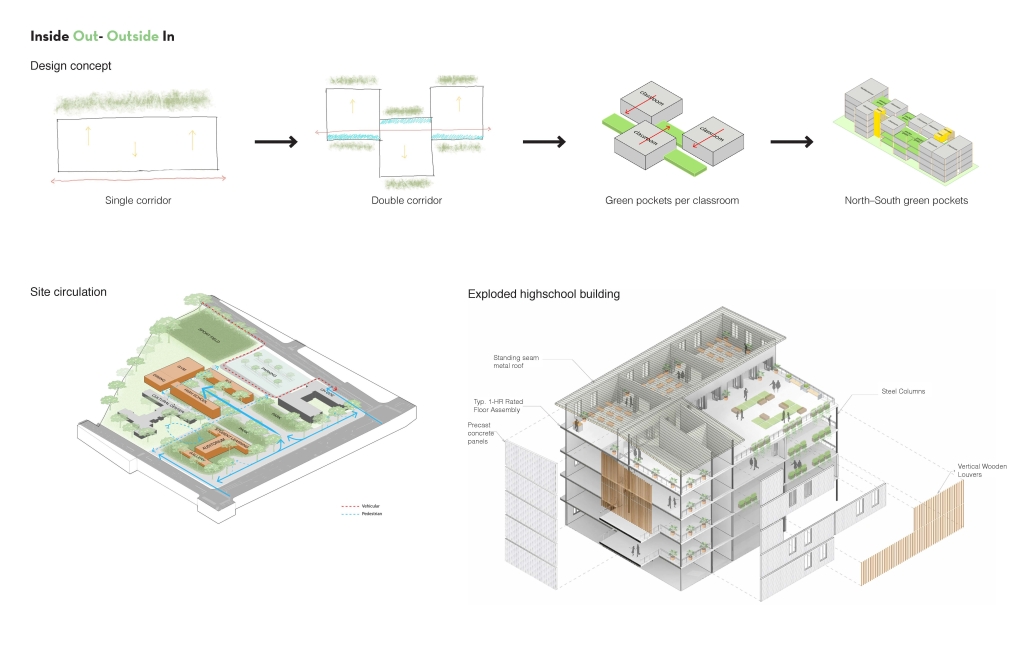
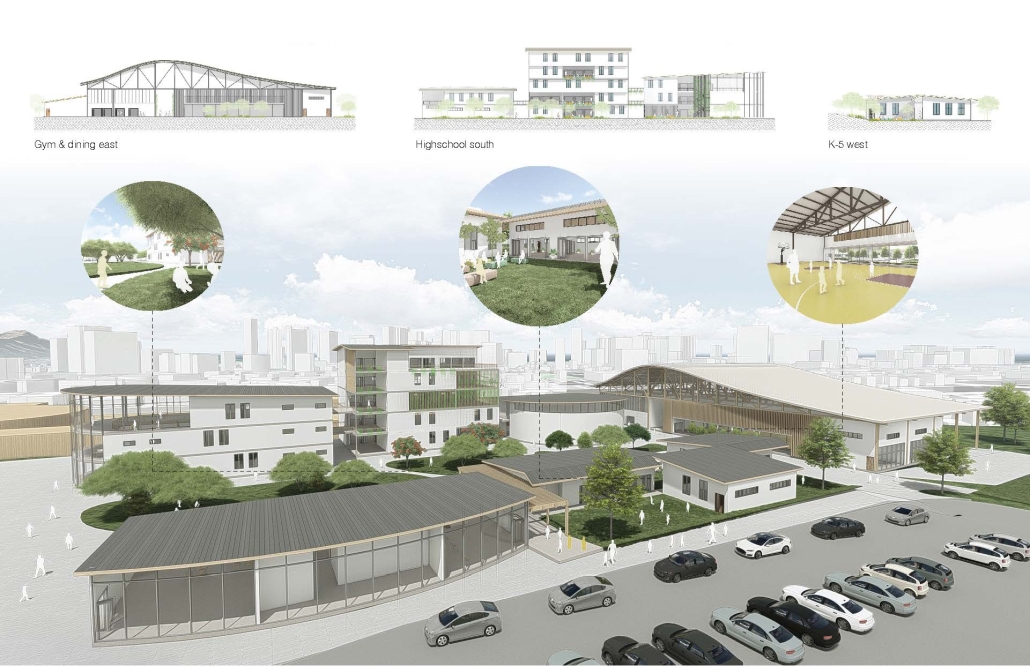
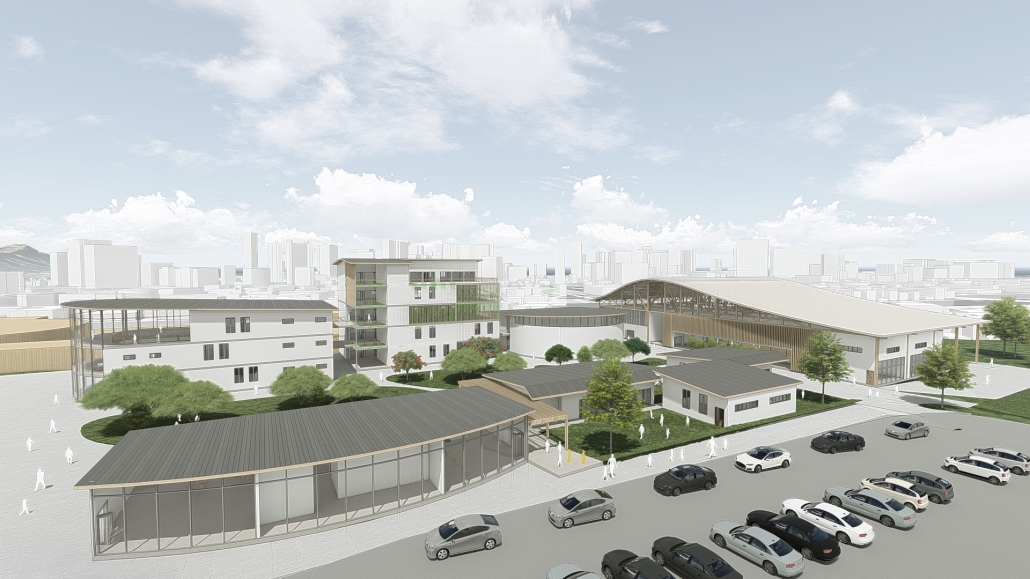
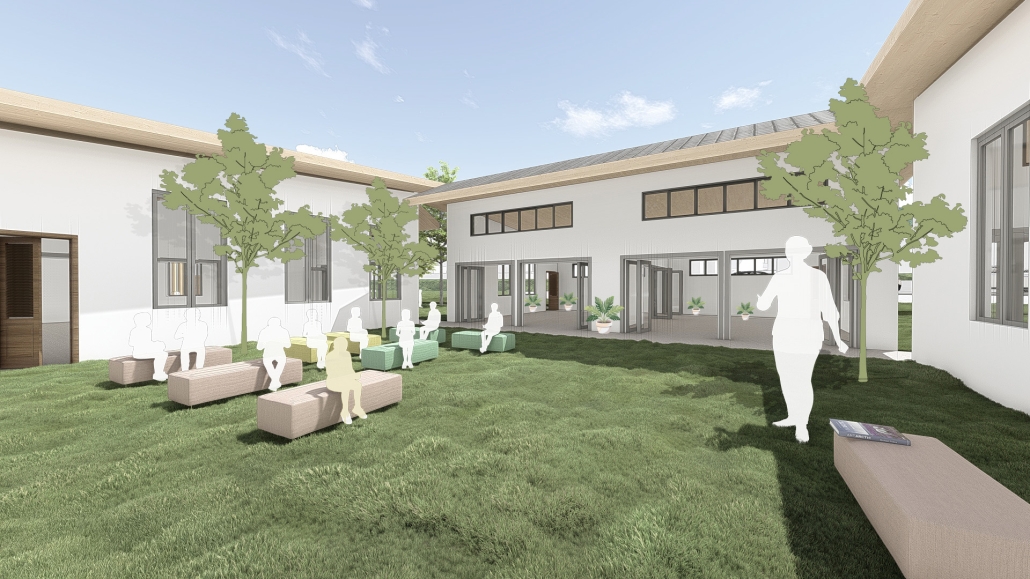
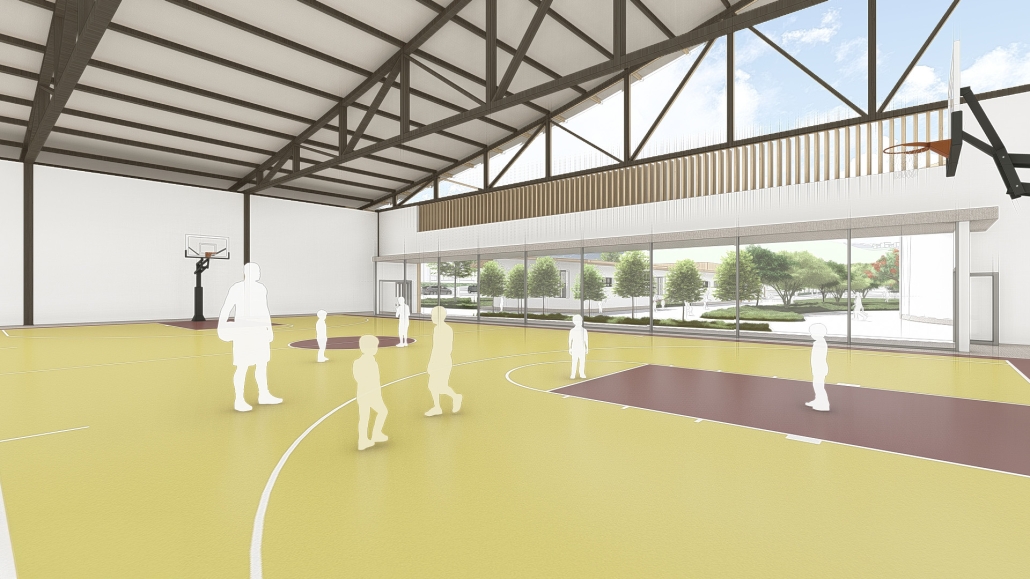
“Inside Out – Outside In” is a K-12 vertical school design that creates a biophilic learning environment through modular classroom spaces that support faster construction and easy adaptability to meet future education needs. The blending of interior and exterior allows the design to get a natural flow that helps the students learn, grow, and live in harmony with the environment. 

The green pockets are located throughout different levels of the buildings to welcome natural elements such as sunlight, fresh air, and greenery, which allows students to feel the presence of nature in every part of their learning experience. The green pockets can also become areas for relaxation, exploration, and social interaction. 

“Inside Out–Outside In” reimagines the vertical K–12 typology within urban Honolulu. It challenges the traditional single-corridor model by creating dynamic, layered learning environments organized around the extended open-air green pockets. These green zones act as continuous outdoor extensions of each classroom cluster, creating additional outdoor space for learning activities.

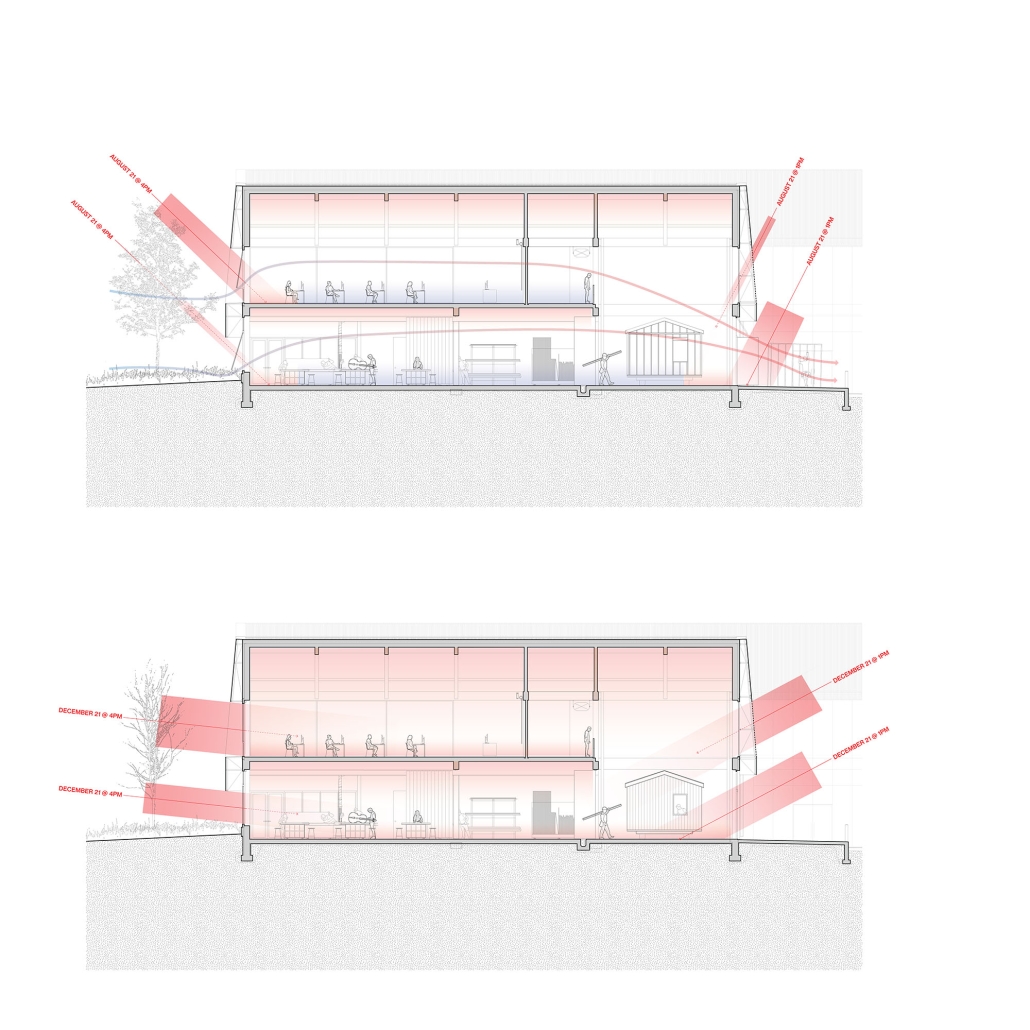
The first principle of the design is “Design for Well-being.” The project was developed to support students’ physical, mental, and emotional health. Brise soleil manages sunlight and glare, while open corridors and operable walls promote natural ventilation. The landscape in the center becomes learning gardens, and soft vegetative buffers attract students to gather under shades, fostering calm, comfort, and sensory richness.

The second principle is “Design for Change”. It is evident in the modular classroom configuration and flexible partitions. As education evolves, the building can accommodate new changes, enrollment fluctuations, or even entirely different age group needs without major structural intervention.

The school is designed to serve all students of different ages, from elementary to high school, with tailored experiences. Ensuring that it’s secure, and has playful outdoor areas for younger children and flexible zones for older students. Together, these spaces create a vertical learning landscape that nurtures collaboration, and connection to the natural world.

This project was nominated for the AIA Honolulu People’s Choice Awards 2025. 

Instagram: @archawaii

Restoring Vocation by Mason Burress, M.Arch ’25
Washington University in St. Louis | Advisor: Donald N. Koster, AIA

“Restoring Vocation” is a response to the self-initiated research and design proposal fulfilling the degree project requirements for the first-professional Master’s degree program in the Graduate School of Architecture & Urban Design at Washington University in St. Louis. [This studio’s work] is the architectural response to the intentional, programmatic, and situational project brief developed through in-depth research into a specific transect of the St. Louis Region conducted during the previous semester. 

Once a center for hands-on learning, North St. Louis was home to several vocational schools that equipped students with practical skills in woodworking, metalworking, welding, fashion, auto mechanics, and the MEP (mechanical, electrical, and plumbing) trades, among others. However, since the mid-1960s, these institutions have steadily disappeared. Restoring Vocation seeks to bring the spirit of vocational education back — by establishing a new affiliate school designed to work in concert with the four major high schools in the surrounding area as a celebration of the trades. 

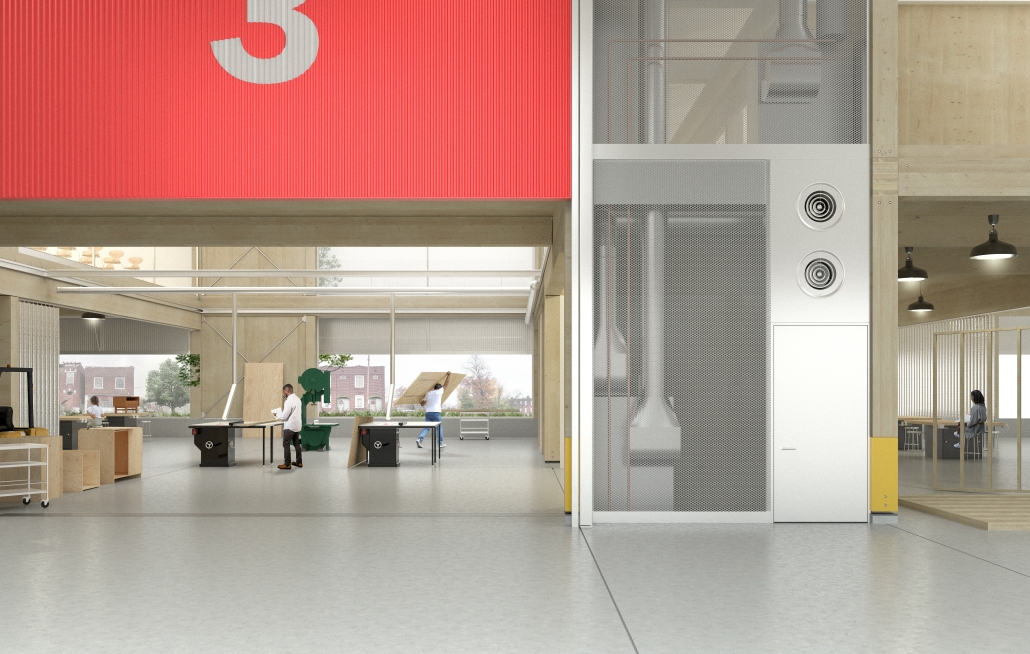
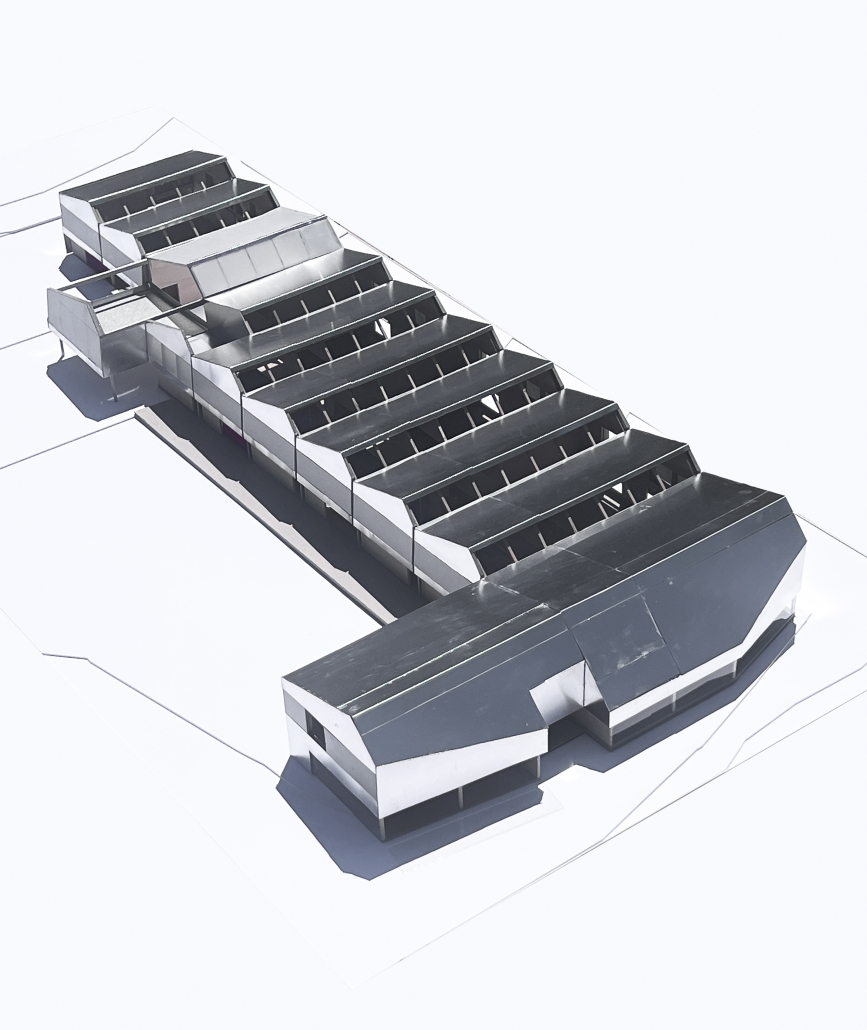
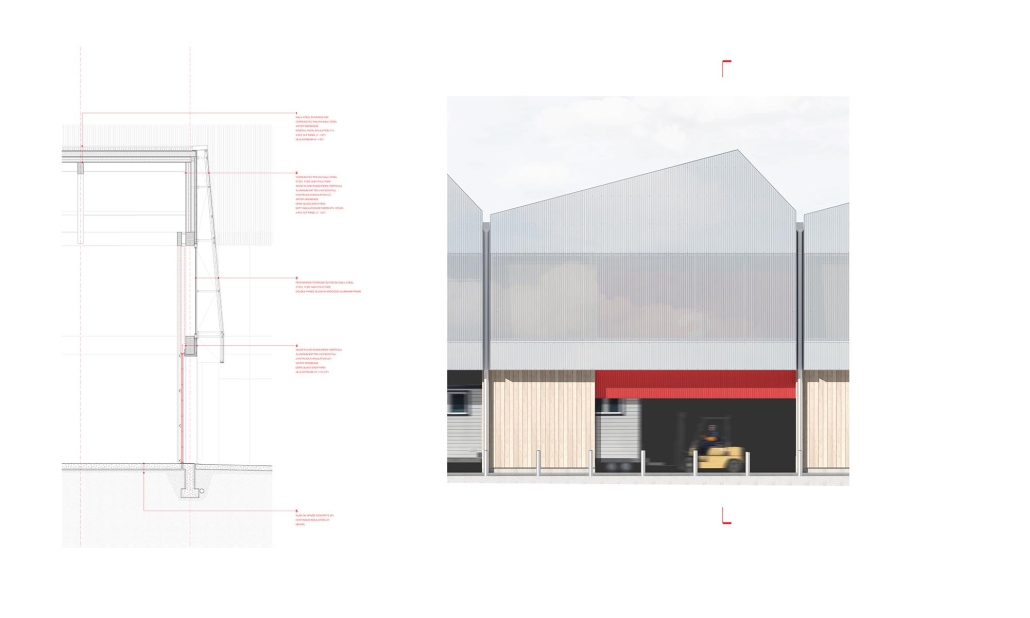
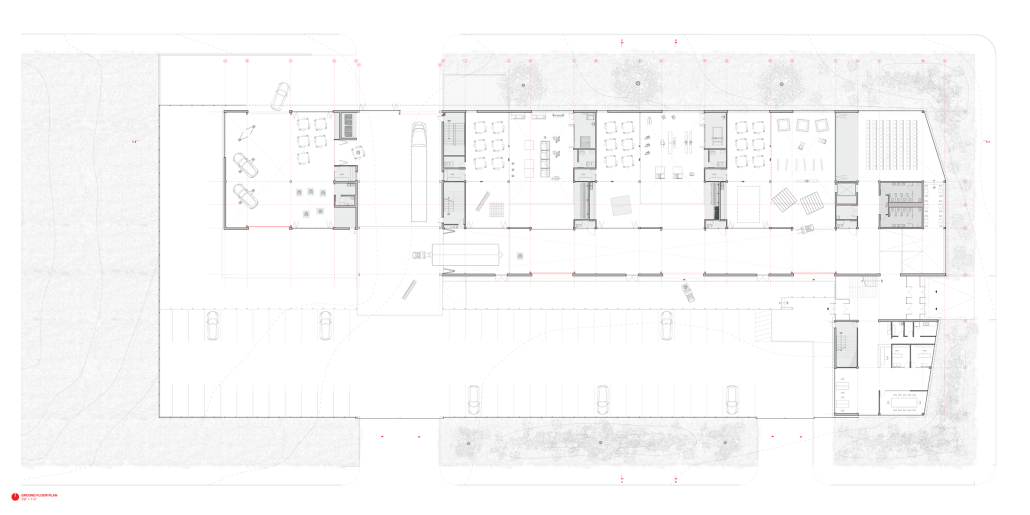
The new educational facility expresses its practical mission by honoring familiar industrial typologies. The structure is mass timber and the building’s north-facing sawtooth skylights are designed to maximize natural light within the vocational classroom spaces and shops. Adaptable workshops are organized along a linear spine that doubles as a collaborative large project working space and primary circulation. The building’s structure and systems are intentionally exposed to serve as an instructive tool for learning. 

This project received the 2025 Graduate School of Architecture & Urban Design Degree Project Award.

Instagram: @masonburress.arch

Convergence – DAS Transformed by Evelyn Foster & Marko Jovanovic, B.ArchSc ’25
Toronto Metropolitan University | Advisor: John Cirka

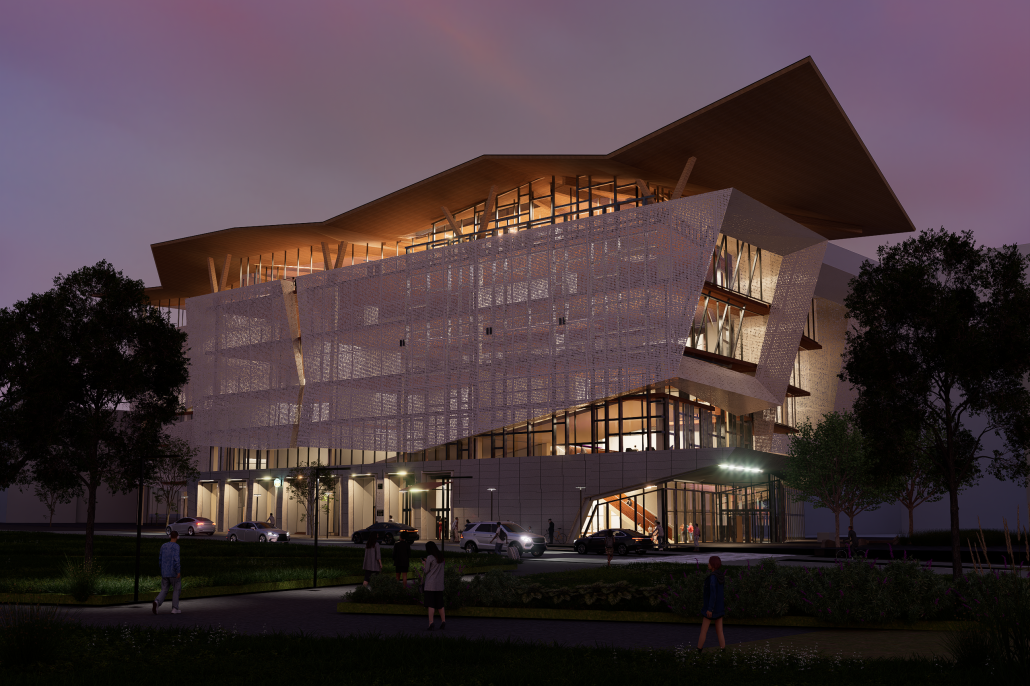
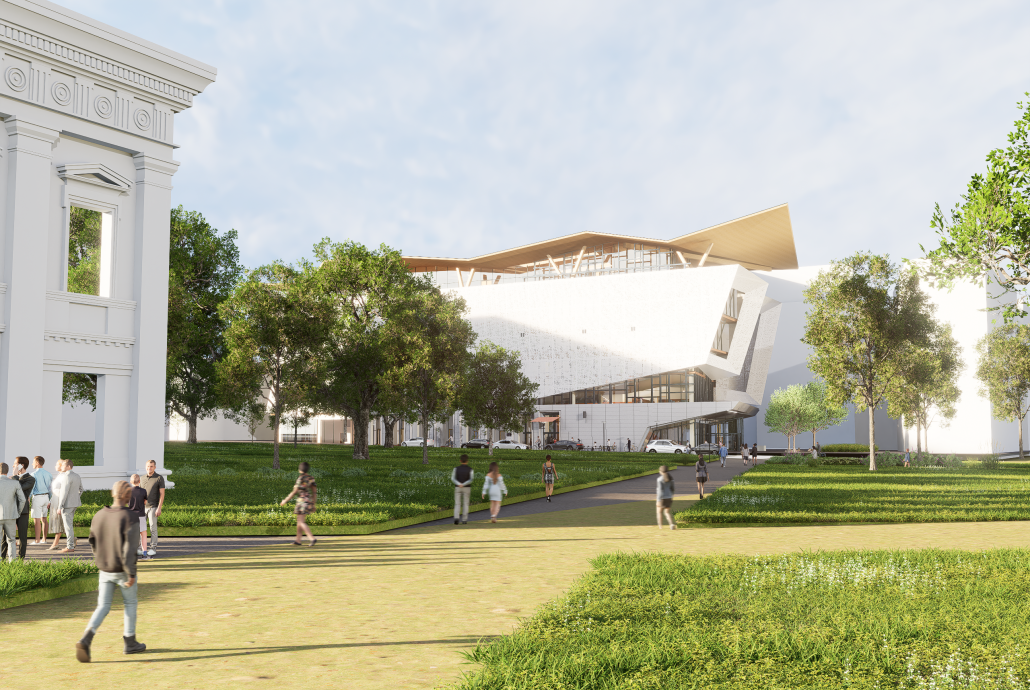
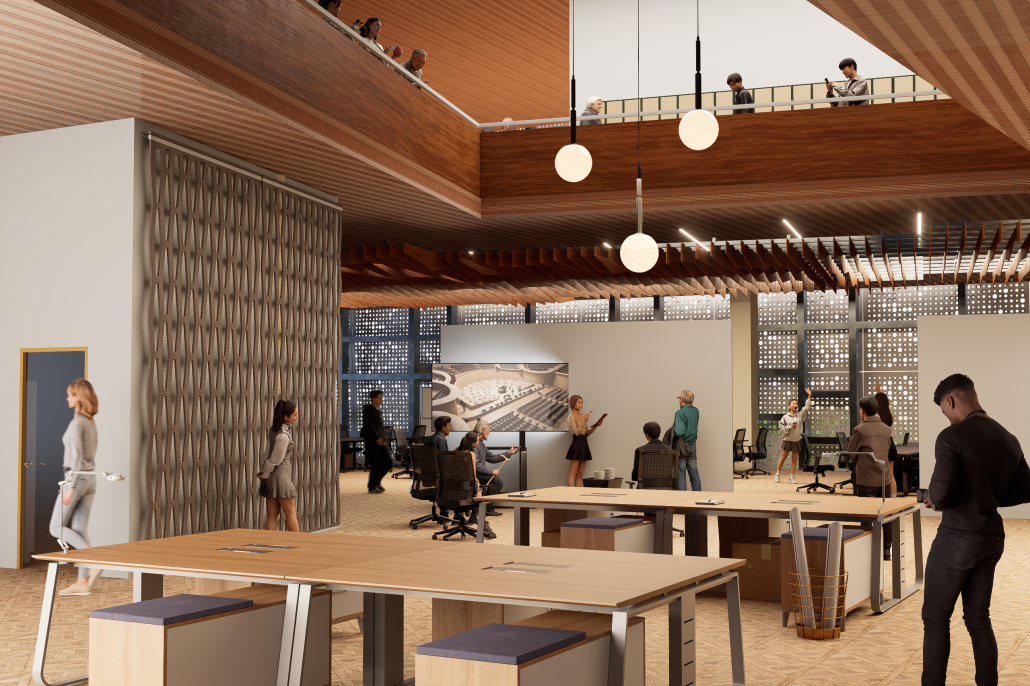
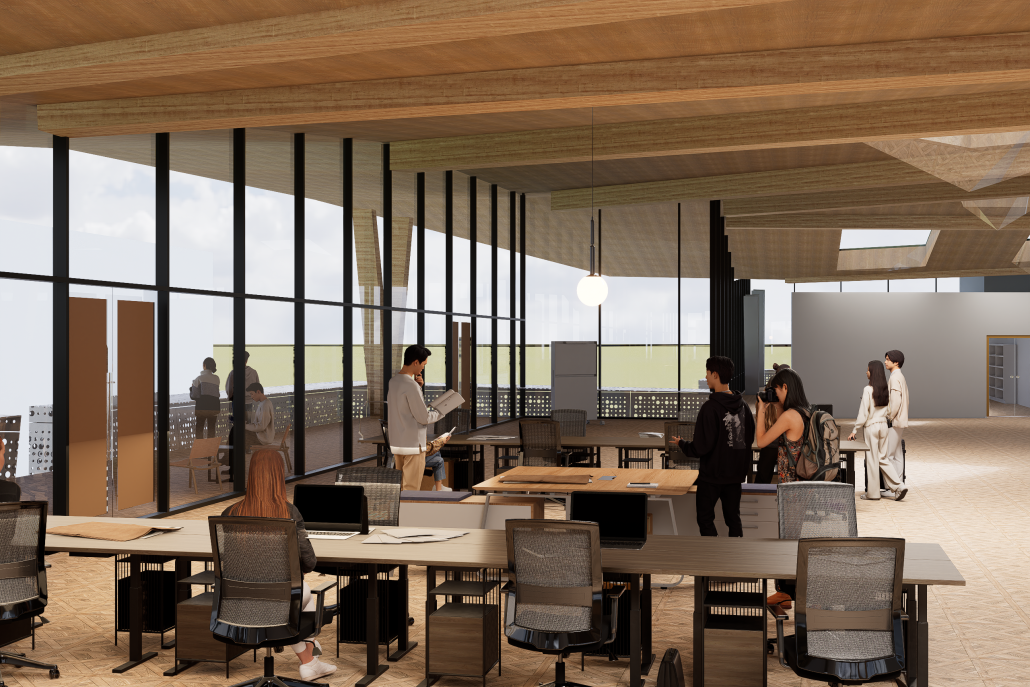
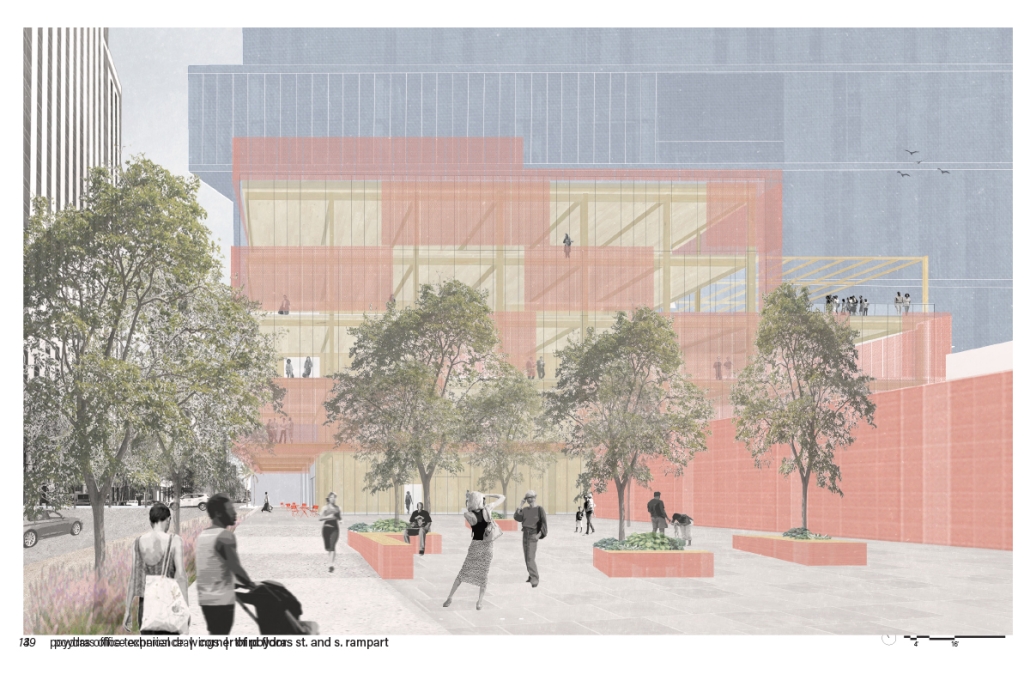
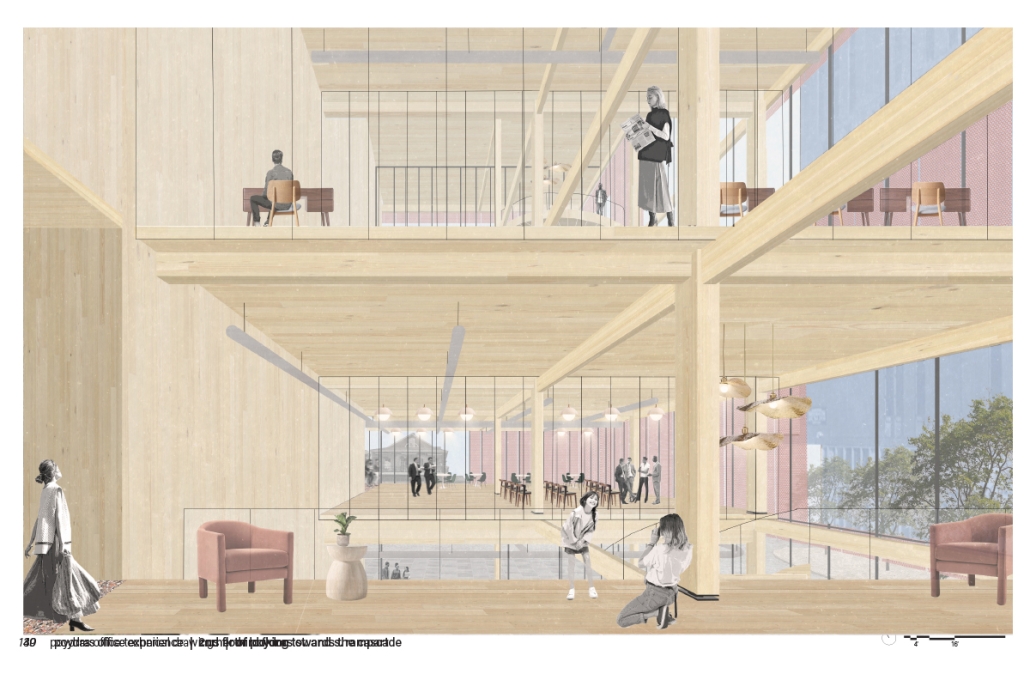
The TMU campus is currently a space to pass through, not to inhabit. “Convergence” aims to reimagine this by proposing more than just a new Architecture Building; it is a vision for a lively public realm. At its core is the transformation of Kerr Hall into a vibrant central square, with the new building framing a key path from Dundas Square. Human-scaled programming and public space activate Church Street, drawing visitors into a generous social area at the south entrance. This space leads to “The Square,” a multi-purpose atrium for lectures, presentations, and casual interaction, anchoring the building’s layout. Circulating through the building concludes with the sixth-floor space, a celebratory space under a CLT roof, flooding with natural light. At this point, the visitors have reached the pinnacle of the new Architecture building, and are invited to look out over the campus and city beyond.

Click here to learn more. 

This project was selected as an Honourable Mention – Bold Visions Transforming Futures.

Instagram: @ev.shoob, @marko.jovanovic.29, @lisalandrum.arch

It Takes a Village by Evan Cage, M.Arch ’25
Morgan State University| Advisors: Carlos Reimers & Howard Mack

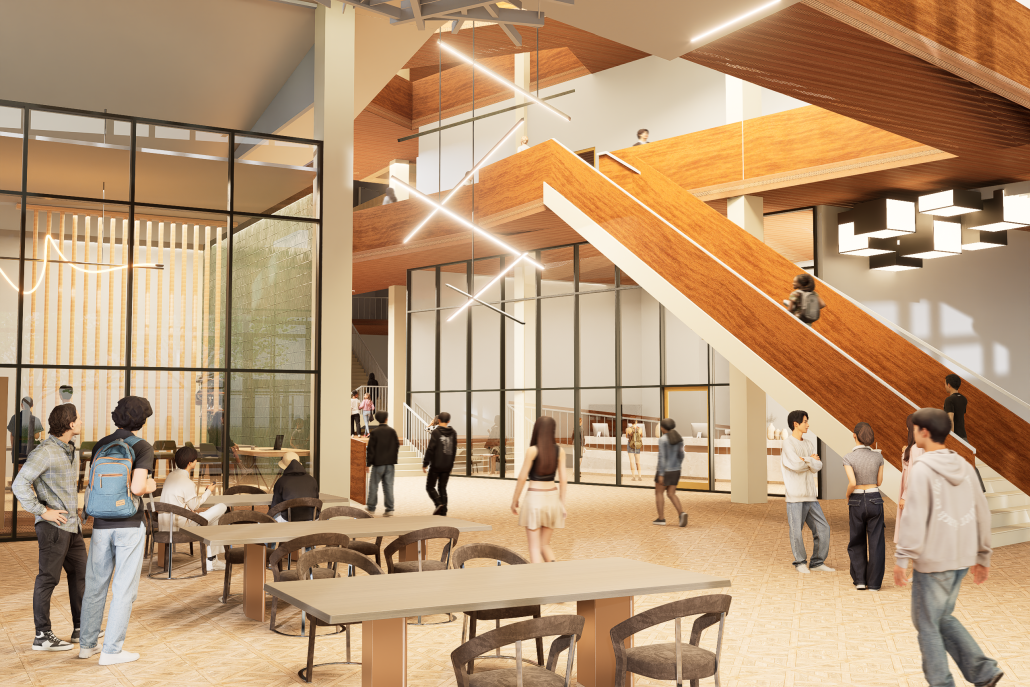
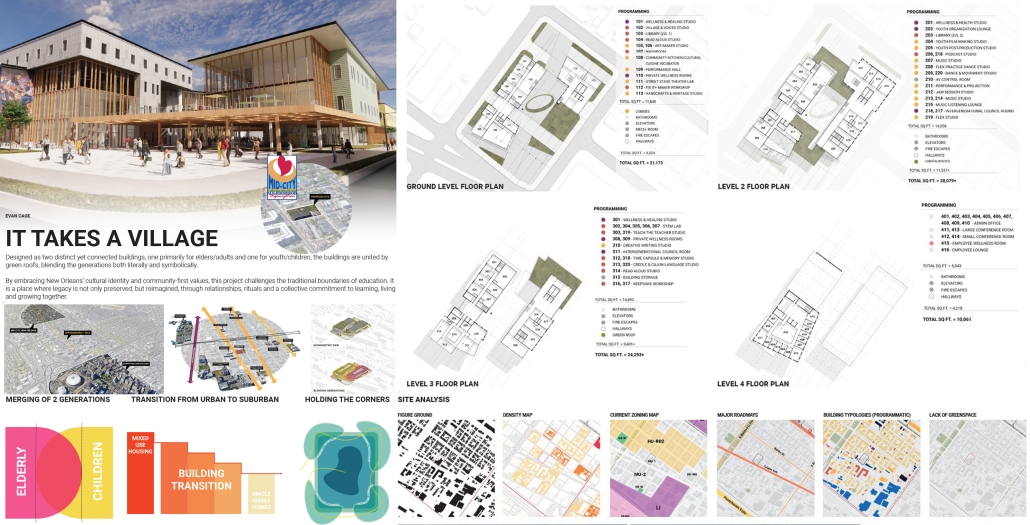
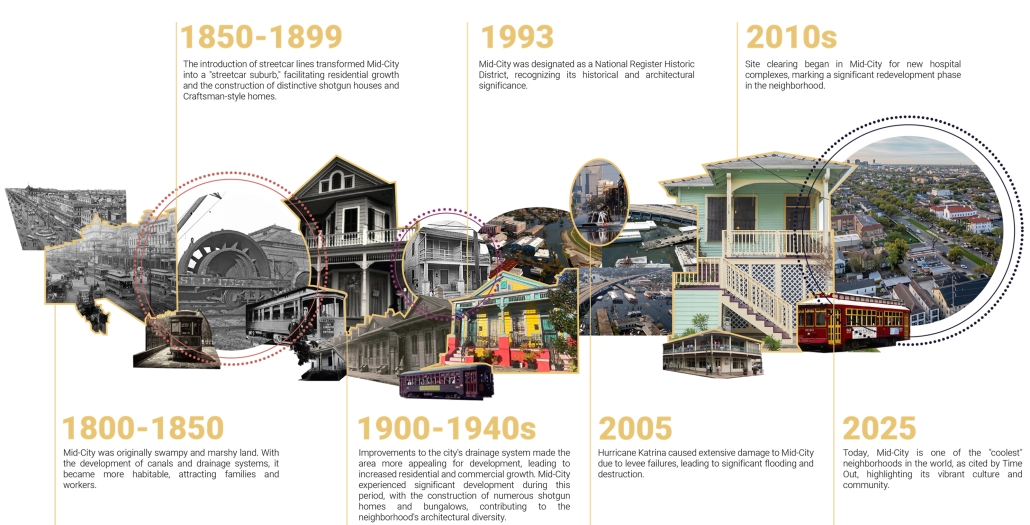
“It Takes a Village” investigates the role of architecture in fostering intergenerational learning and cultural continuity, especially within historically rich, yet systemically underserved, communities like Mid-City, New Orleans. Research into social sustainability, community-based education, and the spatial marginalization of elders and youth reveals a critical need: the environments where we learn, grow, and gather often fail to reflect the full richness of our identities or support the passing down of lived wisdom. This project responds to that need by proposing a new model for educational and community spaces—one that elevates legacy-building through shared experience, cultural exchange, and intentional spatial design. By connecting elders and youth in a four-story, dual-building community center organized around arts, storytelling, culinary traditions, language, and civic engagement, It Takes a Village challenges conventional notions of schooling and reclaims education as a lifelong, communal journey.

This project received the Outstanding Architectural Design Award. 

Instagram: @sosmoov3, @reimerscarlos, @h_mack

Stay tuned for Part II!
Metropolis Selects Two University at Buffalo, SUNY Architecture Students for Future100 Class of 2025

Two students in the University at Buffalo School of Architecture and Planning – Kimia Ghaderian (MArch ’25) and Ying Wang (BS Arch ’25) – have been selected for the prestigious METROPOLIS Future100 class of 2025.

For more than 40 years, METROPOLIS magazine has featured projects, published insights, created resources, and organized events to keep its readers connected to the future of design. The METROPOLIS Future100 is an elite cohort of 500 emerging leaders who are poised to reshape the industries of architecture and interior design. Their outstanding work represents a bright and promising future defined by innovation, sustainability, inclusivity, and thoughtful design.

The application process is straightforward. On top of maintaining a stellar academic record, each applicant must provide a portfolio of their work and testimonials from faculty nominators.

Elaine Chow, clinical assistant professor in the Department of Architecture, played a crucial role in making both students aware of this opportunity. Her guidance brought the Future100 to Ghaderian’s attention early on, but she knew she wouldn’t be eligible to apply until her final year in the MArch program.

The following years were not without their difficulties. As an international student from Iran, Ghaderian struggled early on with the language barrier on top of her coursework. “In my first semester here, I had some challenges with my English,” she reflected. “So, I didn’t have much confidence in myself, but Joyce Hwang (professor, Department of Architecture) saw my potential and helped me believe in myself. She helped me see that while I’m coming from another country, I have knowledge to offer here.”

METROPOLIS Future100 remained a goal for Ghaderian, and in the fall 2024 semester, when Chow observed that her portfolio had the potential to be selected, she knew she had to proceed with an application.

Hwang, along with Adjunct Instructor Greg Serwata, provided nomination letters for Ghaderian’s application. “Kimia is an exceptional student,” Hwang shared. “In my graduate core studio, she stood out among her peers due to the high degree of curiosity, intensity, and rigor that she demonstrated through her work…She is an excellent spatial thinker who developed a uniquely experiential building design.”


Kimia Ghaderian (MArch ’25)


“Reflectique Art Museum” by Kimia Ghaderian

Ghaderian continued to refine her portfolio but unexpectedly found herself hospitalized just before the deadline. While she could have understandably bowed out, Ghaderian stuck with it and completed her application from her hospital room. “If I didn’t do that, I would have really regretted it,” she concluded.

Now that she’s completing her master’s, Ghaderian plans to put academia aside for a while to gain more first-hand industry experience — discovering what she truly enjoys by immersing herself in the work. “I want to go into the industry and understand how my ideas could be built and how I can continue to improve. After a few years, I’ll make a decision about whether I want to continue with my PhD or not, but I need a bit of time for that.”

Wang was nominated by adjunct instructor Jon Spielman as well as Chow, with whom she worked closely through her junior-year studio and undergraduate portfolio seminar, as well as her involvement with the American Institute of Architecture Students (AIAS). Wang recognized and appreciated Chow’s support — “She really encouraged us to not just focus on studio but also on our overall career developments.”

Chow enthusiastically provided her nomination letter for Wang. “Ying is an enthusiastic student with high academic rigor, a responsible collaborator with creative problem-solving abilities and adept organizational skills,” she noted. “Her innate skill of spatial awareness enhances her individual capacity for innovative design solutions…Beyond her technical abilities, Ying is also a thoughtful and strategic designer. She embraces concept development and enthusiastically iterates on her ideas.”


Ying Wang (BS Arch ’25)


“Urban Sponge” by Ying Wang

As she finishes up her bachelor’s this spring, Wang is looking forward to continuing her education in a new setting through the MArch program at the University of Pennsylvania. “The work and experiences that I gained from UB prepared me with a solid background in architecture,” she reflected. “I would like to use that foundation to explore more of the world.

Both Ghaderian and Wang credit the strong community at the school for bolstering their academic growth. Wang shared, “UB provides great opportunities for people like me, first-generation students without experience in the field. All the professors I have met are really supportive, and UB builds a really inclusive environment for students coming from different backgrounds.”

Ghaderian, in particular, cited faculty support as an important part of her experience. “I always knew there were people here for me—whether I needed feedback on my portfolio or help with course materials. The faculty were always supportive and willing to guide me.”

As members of the METROPOLIS Future100 class of 2025, both students are honored in that publication and will also receive abundant networking opportunities with fellow members, industry leaders, and future employers. The opportunity has also provided a well-earned boost of confidence at an opportune time.  “This success helped me believe in myself and fueled my energy for moving forward,” Ghaderian expressed. “Sometimes opportunities don’t work out, but sometimes they actually do – METROPOLIS did!”

Wang agrees. “It encourages me to keep pushing into the future. I also hope to be an inspiration for people in future UB classes to apply for this opportunity.”

Click here to learn more about the 2025 METROPOLIS Future100!
2024 Study Architecture Student Showcase - Part II

In Part II of the 2024 Study Architecture Student Showcase, we take a look at projects that focus on education. From supporting the social integration of neurodivergent students to designing a Makerspace for a university, the featured student work addresses education in various capacities.  

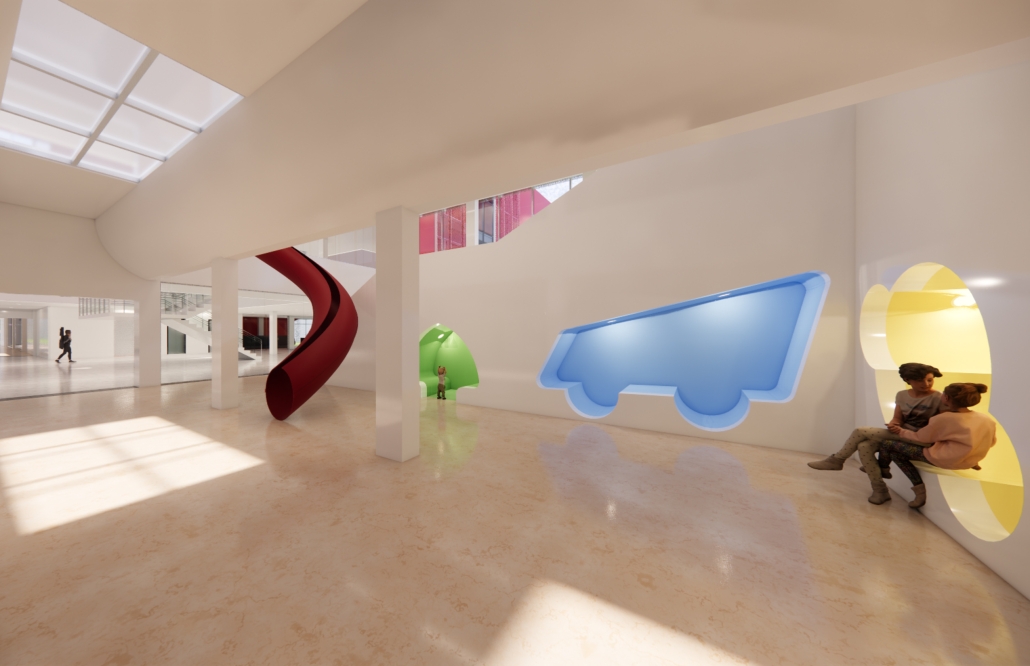
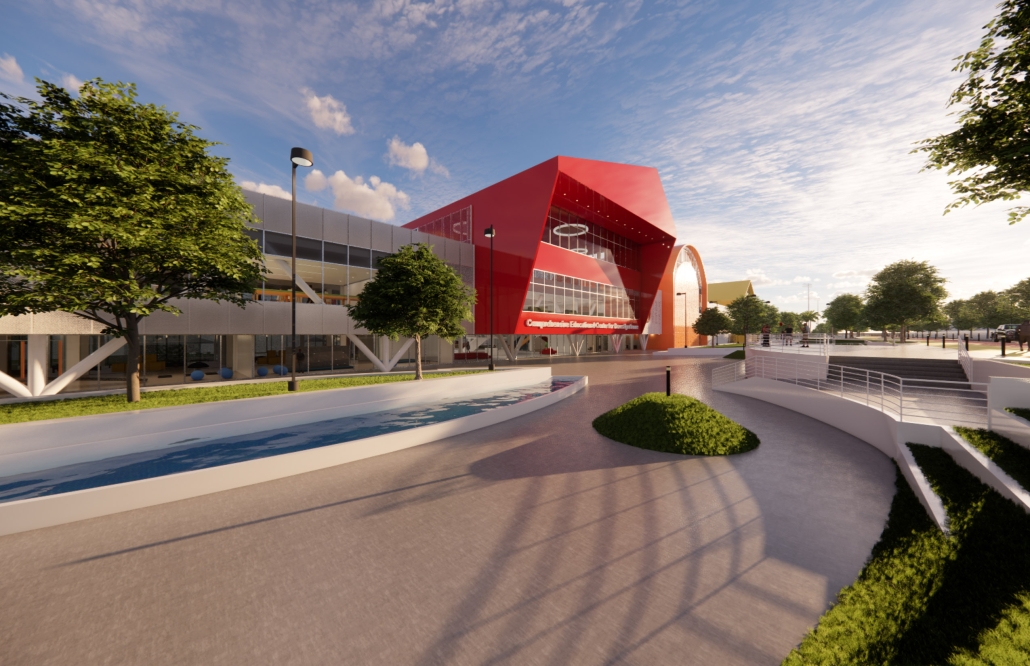
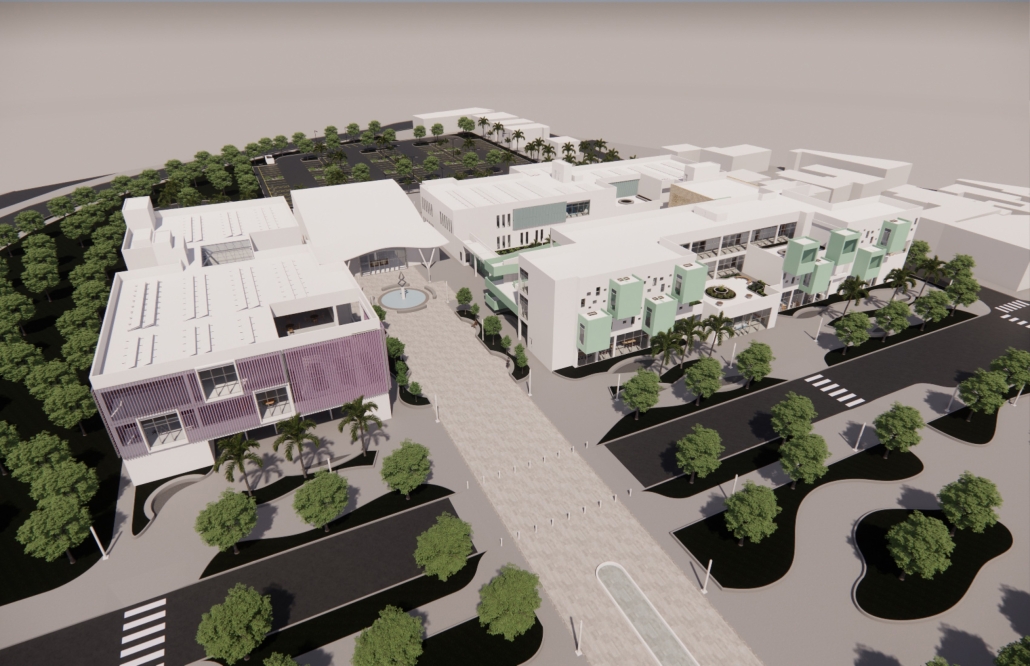
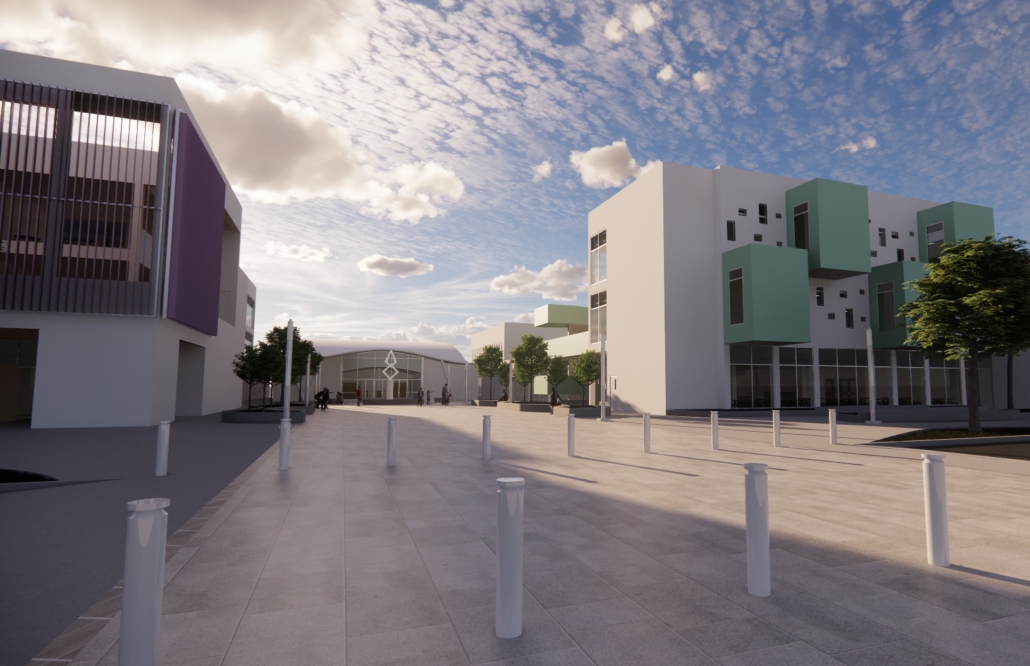
Today’s installment includes proposals to build schools and increase the accessibility of education in underserved communities, designs for South Korean Hagwons, and more!

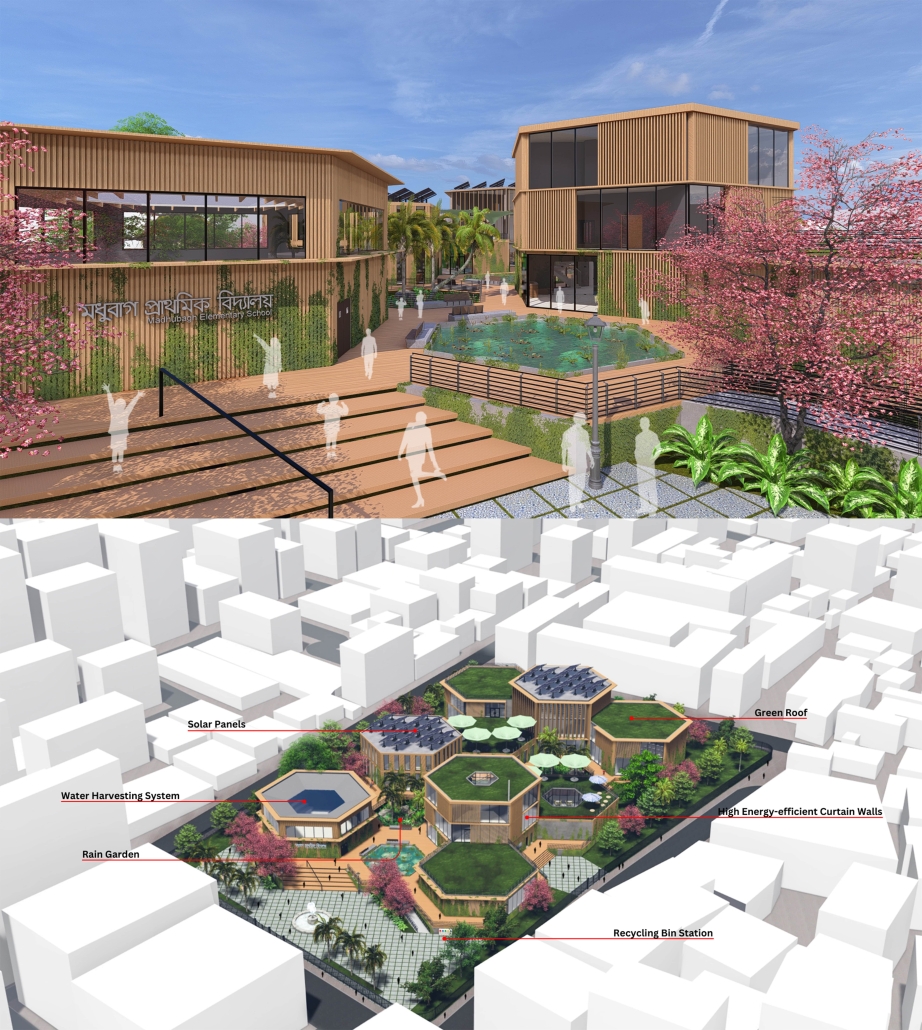
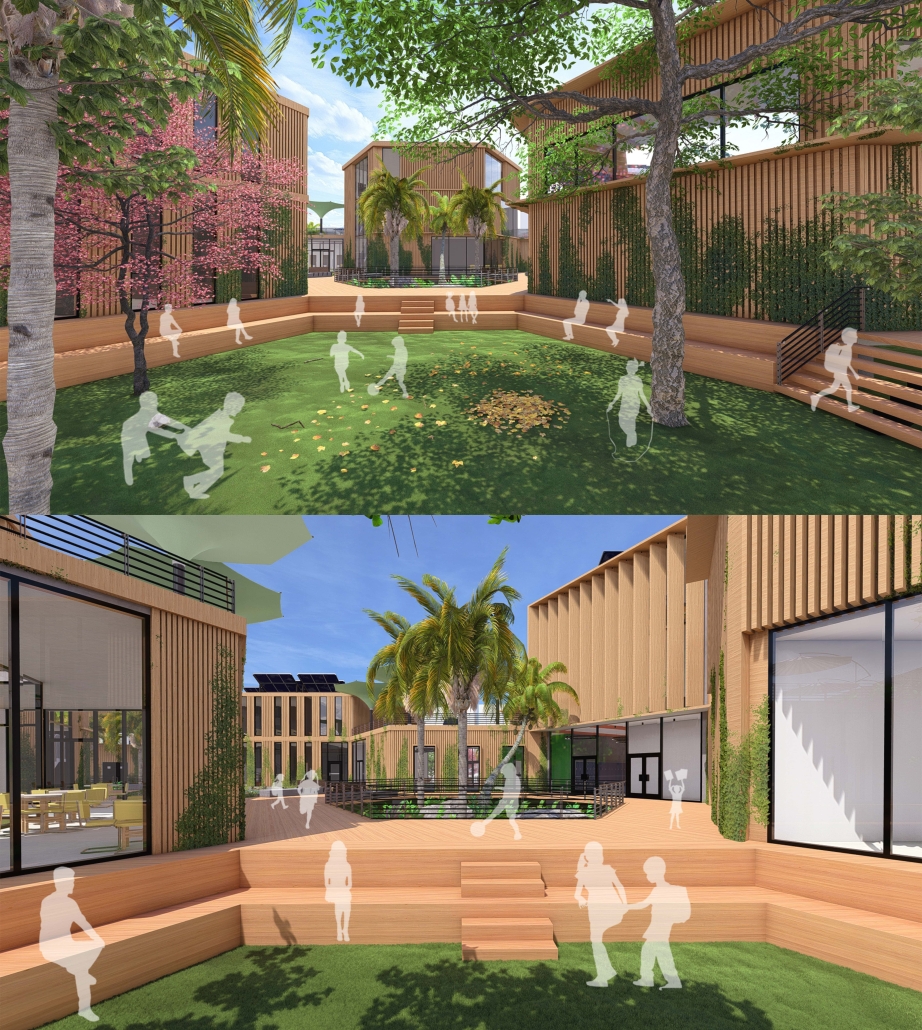
Sustainable School in Bangladesh by Cesar Augusto Borges dos Santos, B.Sc in Architecture ’24
University of District of Columbia | Advisor: Dr. Golnar Ahmadi

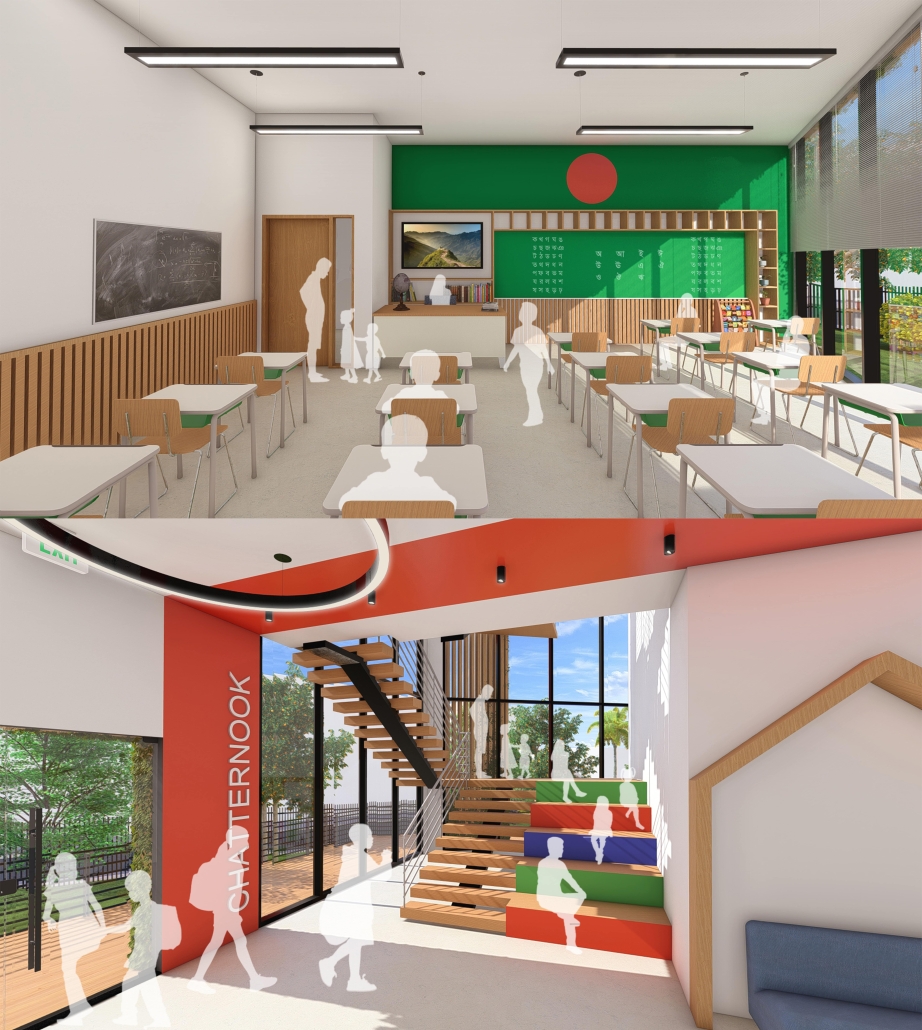
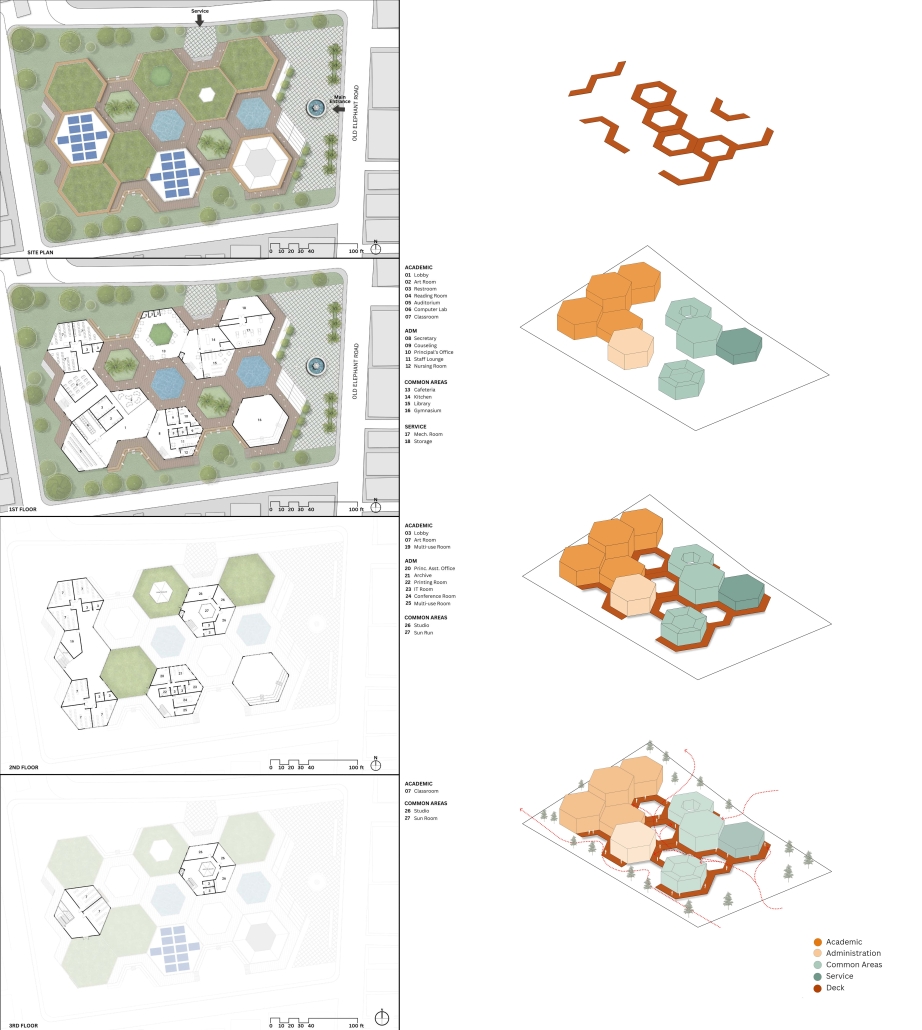
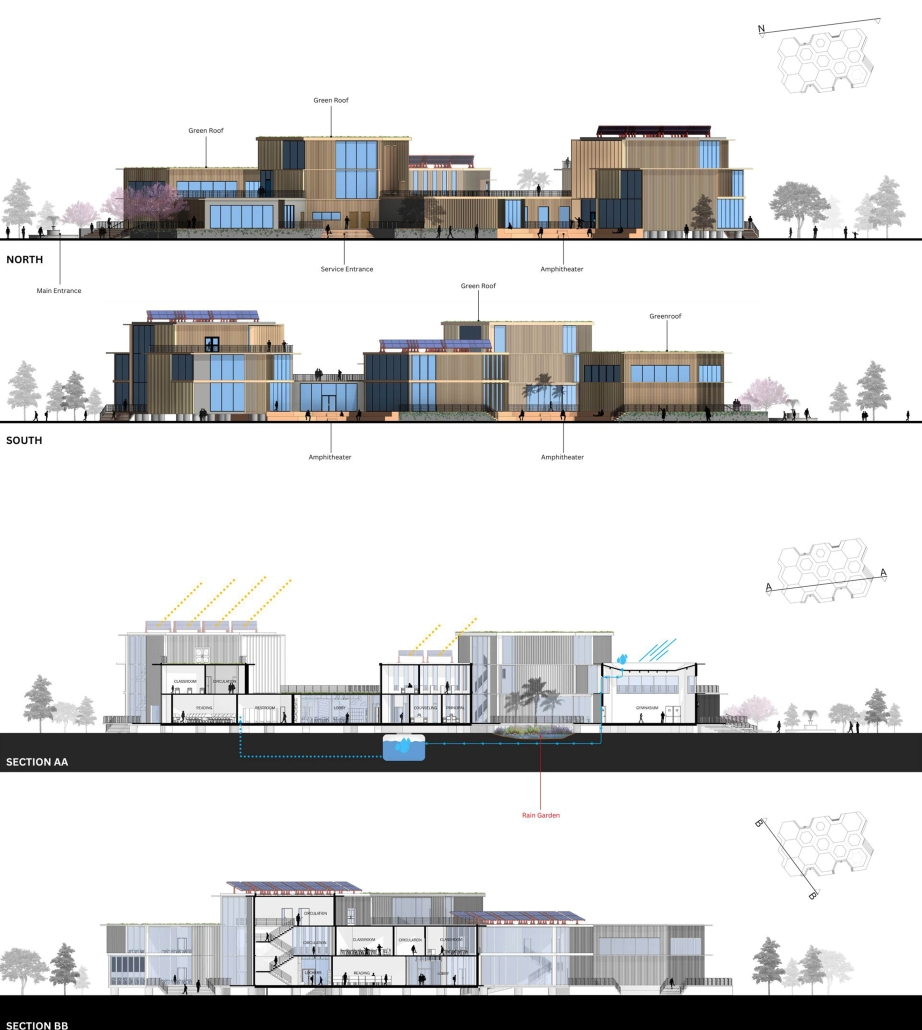
Elin Nordegren once said, “Education is one thing no one can take away from you.” This powerful statement underscores the importance of establishing an elementary school in Modhubagh, a densely populated and predominantly low-income area in Dhaka. Currently, the absence of a local elementary school forces children to embark on long and arduous journeys to reach distant educational institutions. This situation not only hinders their academic progress but also exacerbates the cycle of poverty that grips the community.

According to UNICEF, only 19% of children aged 3-5 in Bangladesh attend an early childhood education program. This alarming statistic highlights the urgent need for more accessible educational facilities. By constructing a new elementary school in Modhubagh, we can ensure that children have better access to quality education, thereby laying a strong foundation for their future.

The proposed school will serve as a beacon of hope, providing a safe and nurturing environment for the children of Modhubagh. It will offer a comprehensive curriculum designed to foster cognitive, social, and emotional development. Moreover, the establishment of this school will create job opportunities for local residents, further uplifting the community.

In summary, building an elementary school in Modhubagh is a transformative step towards breaking the cycle of poverty and empowering the next generation. This project is not just about constructing a building; it is about building a brighter future for the children and the community as a whole.

Instagram: @Golnarahmadi

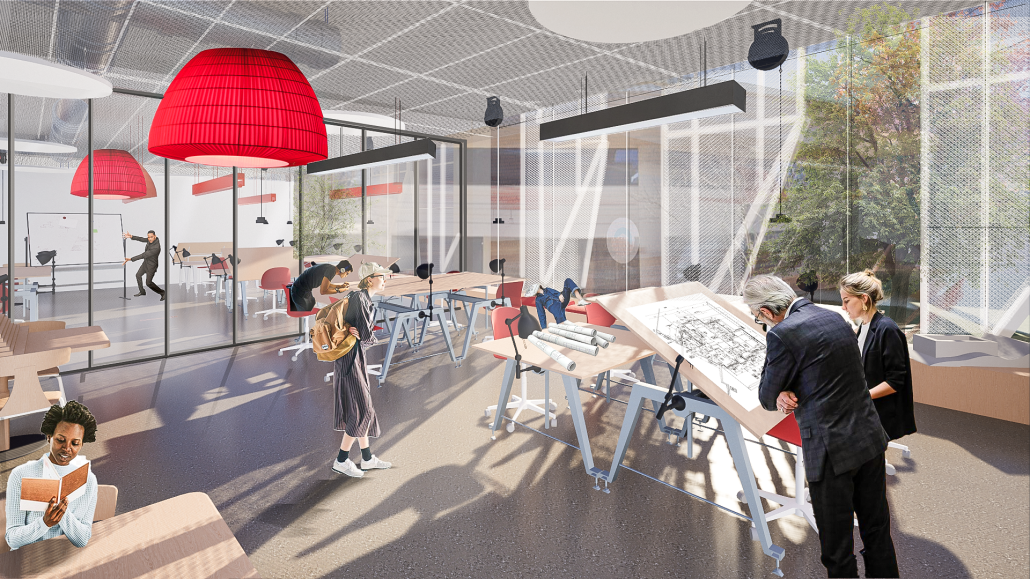
SNAPD by Baraa Abdolkarim, Yusuf Abdul-Rakib, Lauren Cepeda, Alondra Egure, Angel Estrada, Aneida Flores, Luis Flores, Marianne Friedel, Lorena Gonzalez, Brianna Guerra, Douglas Long, Isabel Vera Lopez, Simran Maredia, Kawa Ojo, Bylasan Shalabi, Jesus Sifuentes & Kyndal Thompson, B. Arch ’24
The University of Texas at San Antonio | Advisor: Armando Araiza

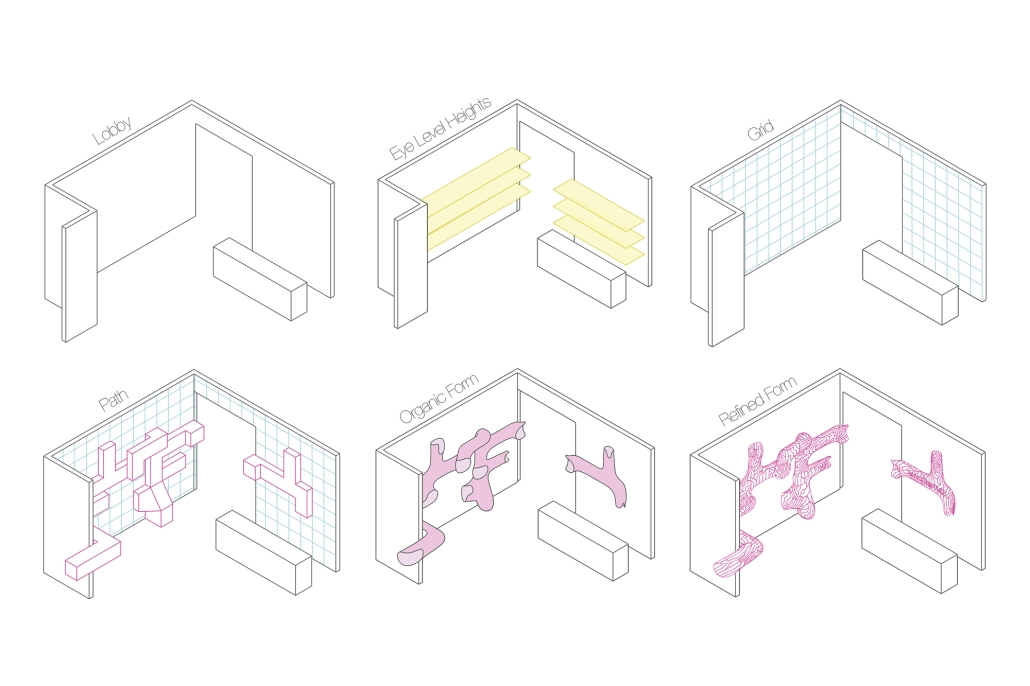
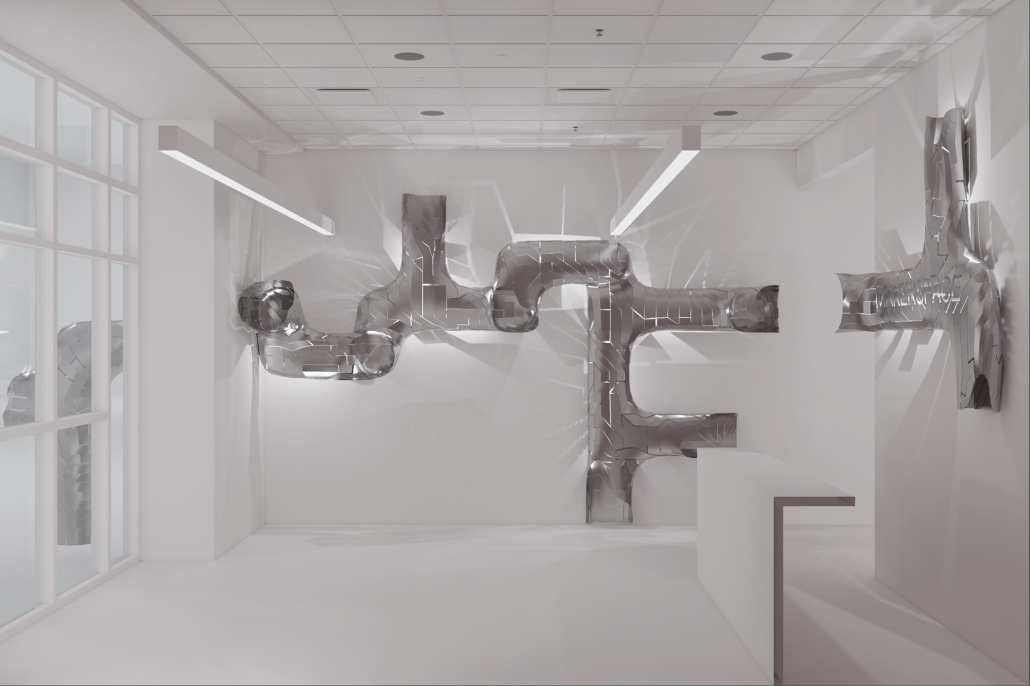
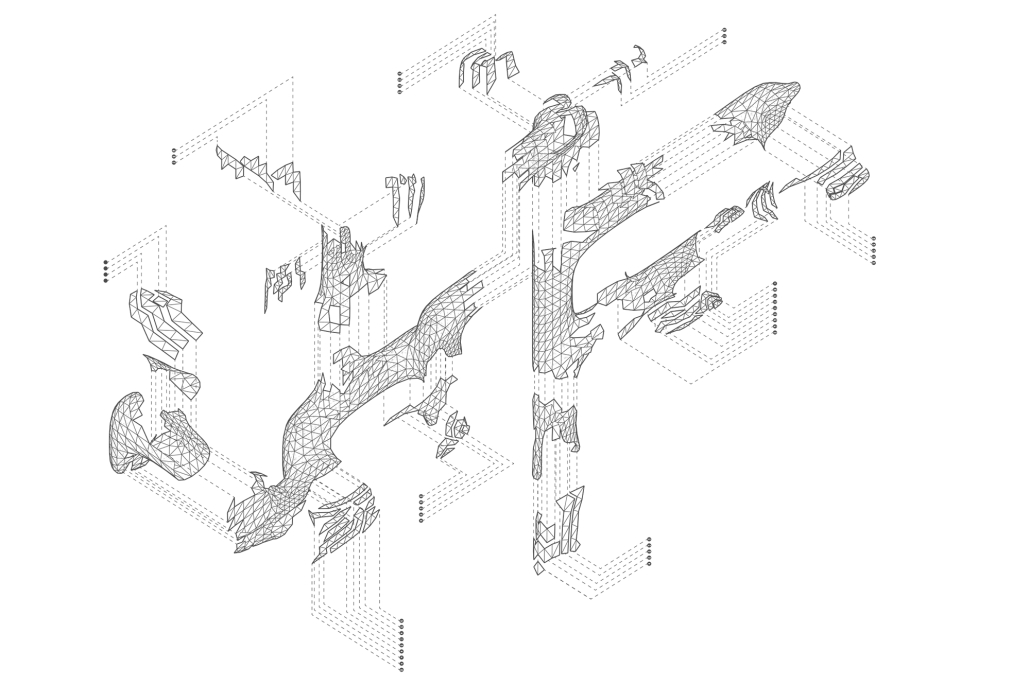
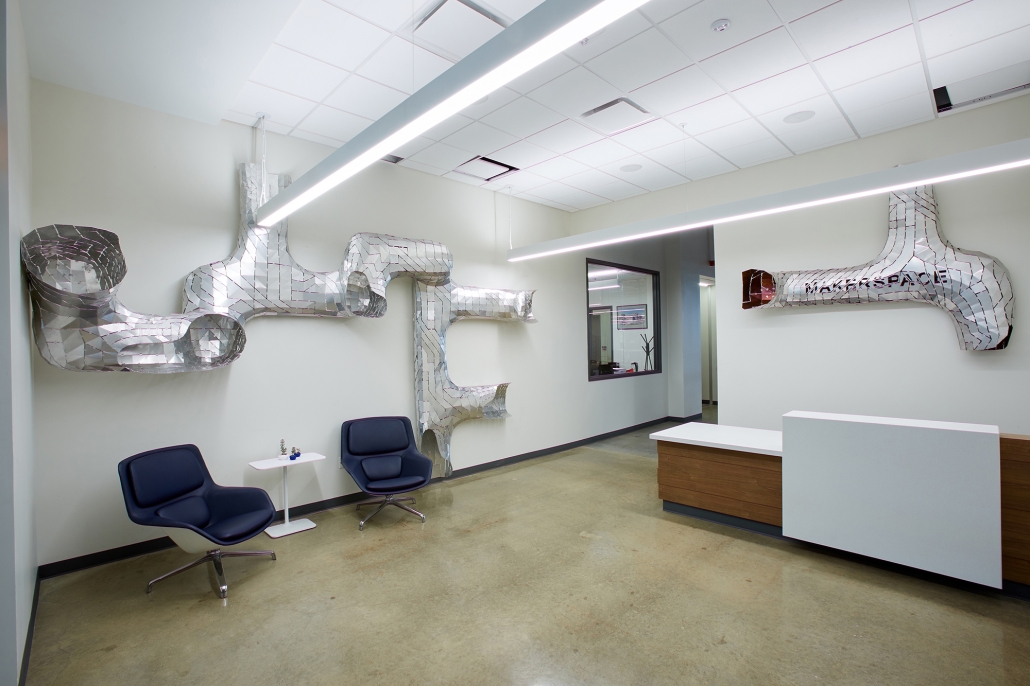
The project was designed for the entrance of the new Makerspace in the newly finished Science and Engineering Building at the UTSA Main Campus. The design allows students from all majors to showcase projects made in the Makerspace as well as welcome students to work on new projects. The studio explored the concept of folding, while transforming 2-dimensional surfaces into 3-dimensional volumes. The volumes organically flow throughout the Makerspace Lobby, displaying the concept of growth and transformation. Color and lights were incorporated into the design in order to illuminate the project and make it feel like an immersive and interactive experience for those entering the Makerspace Lobby.

Field Station: A Land Based Elementary School by Huê Bùi, M. Arch ‘24
University of California, Berkeley | Advisors: Neyran Turan (Primary Advisor) & Liz Gálvez

Field Station proposes a land-based elementary school as a response to the growing disconnect between people and land in industrializing rural Vietnam.

Land is big and school is small. Field Station is situated in Bac Giang, Vietnam, and centered around the lychee tree, the region’s key agricultural export. The school is located on an existing field to foster direct, place-based knowledge. The school is realized as a trail, integrating local land maintenance practices into both its pedagogy and architecture.

In the flat topography of the site, lychee trees are grown on mounds to help the roots stay above flood level and protect them from weeds. Field Station comprises interventions around these lychee mounds, organized like an almanac that suggests how architecture can adapt seasonally to facilitate different programs and spatial organizations during different planting stages throughout the year. The scroll drawing experiments with depicting both time and space in a two-dimensional medium. Read from right to left, the drawing aims to depict Field Station at four points of activation: Spring school during flower development, Summer school during harvest, Autumn school during ground preparation, and Winter school during canopy development. 

Land time is long and school time is short. Yet both are cyclical, rooted in repetition and resulting in growth. Field Station explores time across scales: the time of a human, a tree, a school year, an annual crop; the time of growth and decay. Using primarily bamboo and lychee bi-products (branches, leaves, fruits), the interventions aim to promote regenerative agriculture through various composting strategies, proposing the restoration of land depleted by mono-crop as an essential component of land education.

Instagram: @nemestudio, @office.for.example, @ucberkeleyarch

Social Ribbon by Brandon Rosas, Eddie Lam & Huiying Tan, M. Arch ’24
University at Buffalo | Advisor: Jin Young Song

The competitive college entrance process in South Korea has led to the proliferation of Hagwons, after-school private learning institutions. We also observe an emerging trend of commercialized “Study Cafes” in most Hagwon districts. A Study Cafe is a hybrid space between a cafe and a reading room in a library. This project explores a novel integration of Study Cafes into a “vertical school,” maximizing the performance of the cafe space in the context of classroom spaces in Hagwons.

The Study Cafe spaces are all connected as a flow of socialization, like a ribbon. The “social ribbon” is a new vertical school typology featuring vertical and diagonal circulation to encourage social interaction, relaxation, and other diverse activities. This ribbon transforms the Hagwon spaces, creating versatile, programmatic areas that blend the boundaries between levels, including Study Cafes, mini libraries, lounges, and galleries. Accessible from the ground to all levels, the ribbon offers students the freedom to engage in collaborative or private activities, easing the stress of their daily routines. The verticality is designed to provide efficient and diverse behaviors, not only as places but also as means of circulation.

Additionally, the ribbon incorporates a series of angled and protruding balconies that provide outdoor space and shade, enhancing the building’s performance. This design gesture is highlighted on the north façade, serving as a prominent feature that activates both the building’s interior and exterior.

Instagram: @ubuffaloarchplan

Hagwon On The Move by Toni Vargas, Omar Ibrahim & Staci Tubiolo, M. Arch ’24
University at Buffalo | Advisor: Jin Young Song

Hagwon On The Move proposes a transformative intervention in the heart of South Korea’s Hagwon (private institutions) culture. We understand that young students have the most interactive, meaningful, and enjoyable social activities ‘before and after’ classes. While the current Hagwon culture focuses on efficient learning, the architecture lacks the sense of a ‘place’ to linger. We aim to extend this particular ‘before and after’ class time as much as possible. Through an extended walking experience within the building, the project redefines the traditional private cram school experience, creating a vibrant, inclusive learning environment for students of all ages.

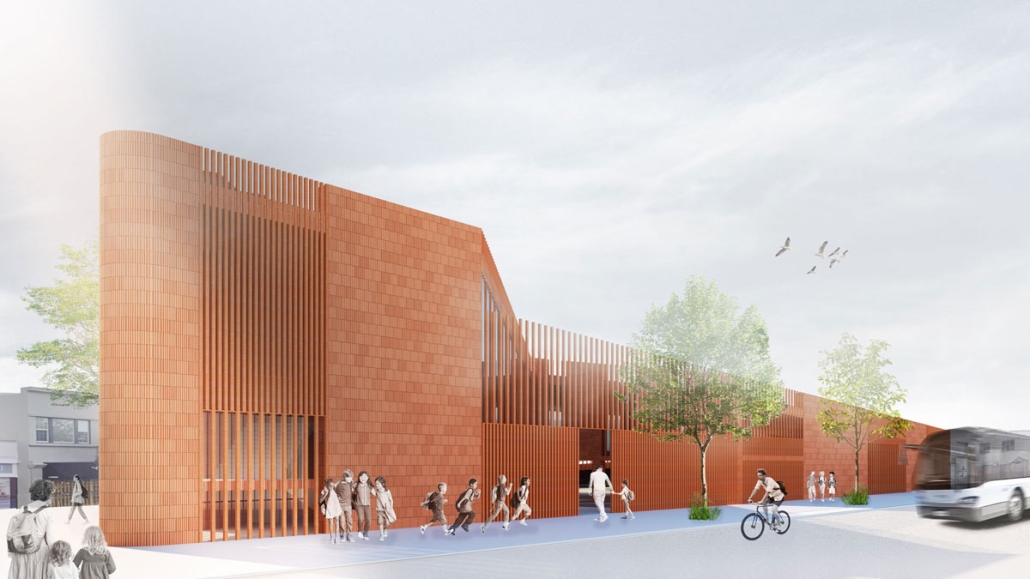
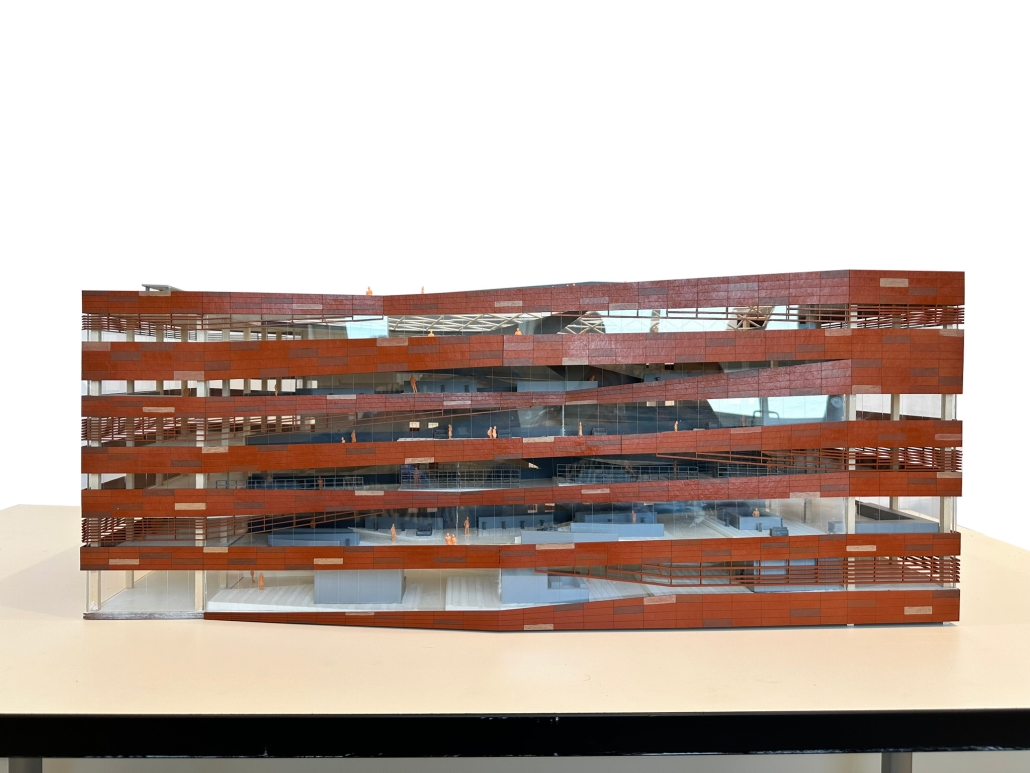
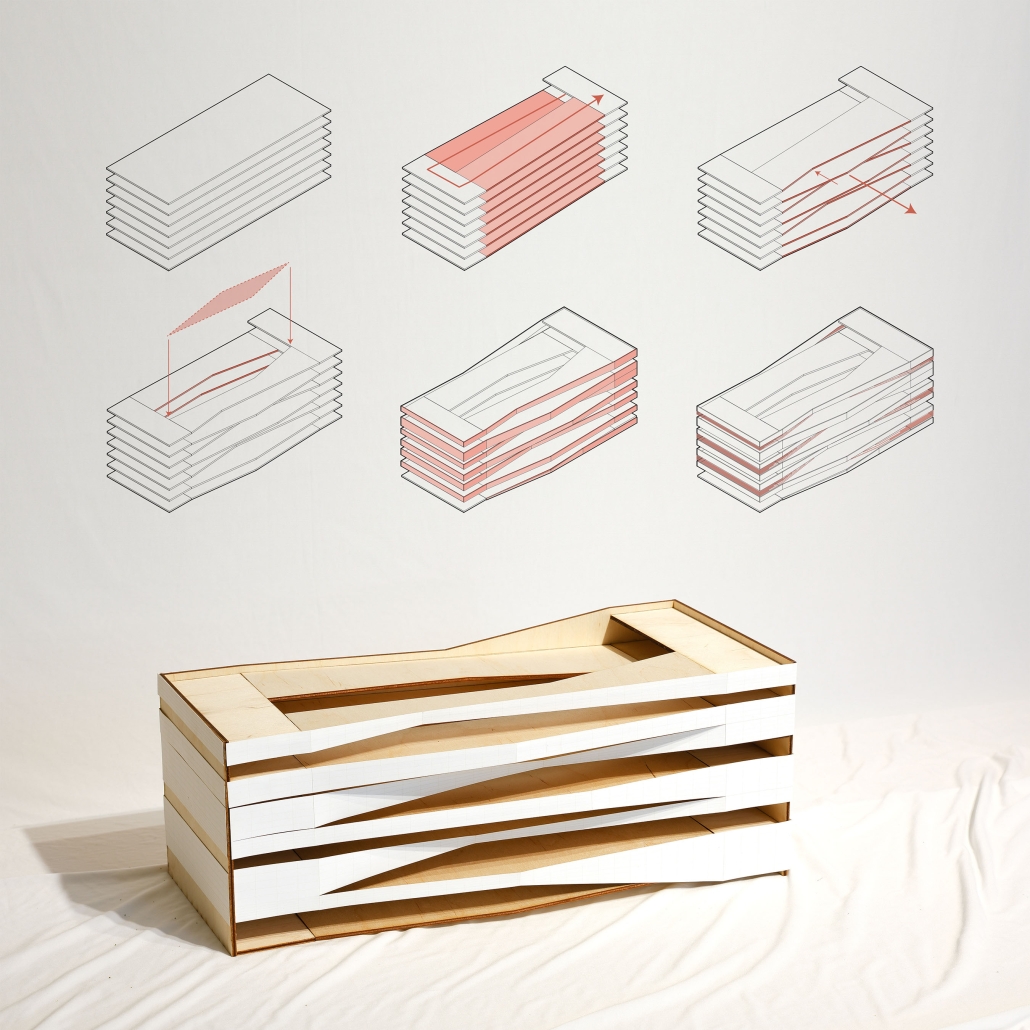
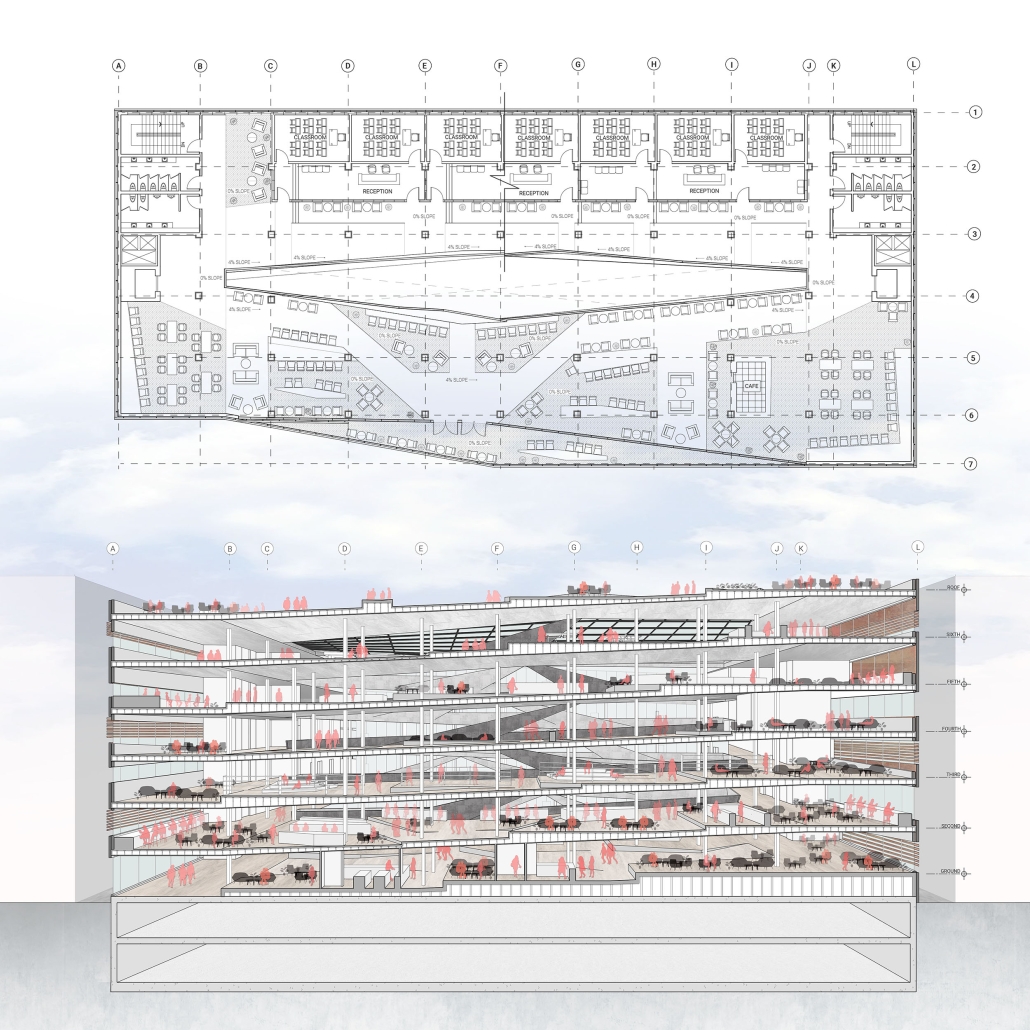
The building emphasizes the social and physical benefits of walking, inviting users to explore its 7-story structure via a moderate 1:25 continuous ramp. While the north-facing side of the building is reserved for efficient learning spaces, the south-facing side is highly dynamic, accommodating various programs including flexible studying spaces, a library, and activity lounges.

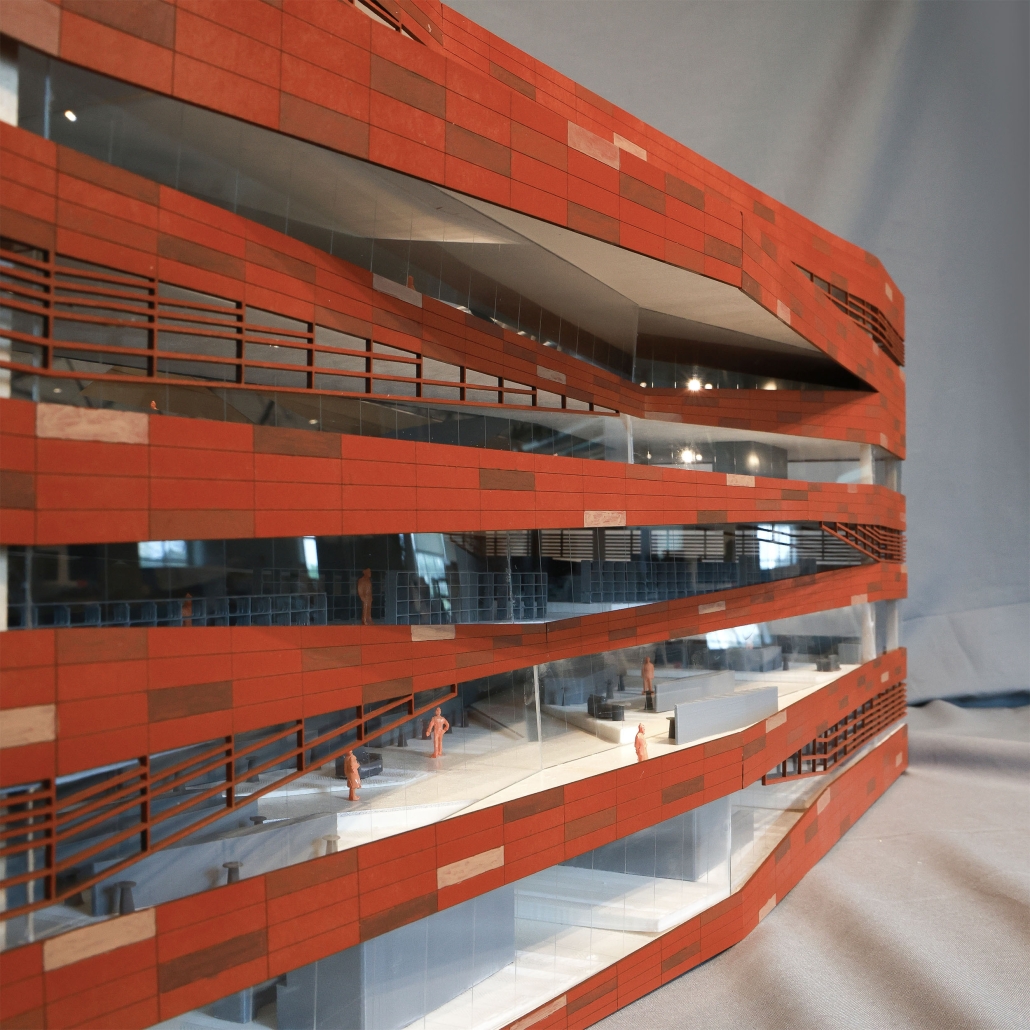
Ascending to the open roof, users are treated to engaging views across the building through a central atrium, transforming the walking experience into a spectacle. The constant change in the angle at which the floor slabs meet the façade introduces double-height balcony spaces, reconnecting users with nature. This shifting, angular design is clad in terracotta panels that mirror the fluidity of the ramp behind and provide shade and thermal comfort. Additionally, terracotta baguettes extend underneath the panels to provide extra shading where needed.

Hagwon on the Move offers students the opportunity to engage with their peers and surroundings in a dynamic setting that contrasts with traditional education spaces. Embracing innovation and community, the project is poised to re-evaluate the learning experience in vertical spaces.

Instagram: @ubuffaloarchplan

Down Syndrome: A Path to Independence by Luis D. Maldonado-Albertorio, B. Arch ’24
Pontifical Catholic University of Puerto Rico | Advisors: Pedro A. Rosario-Torres, Juan C. Santiago-Colón & Manuel De Lemos-Zuazaga

Down Syndrome is a condition observed in different parts of the world, and people with this condition are often perceived as incapable of doing what a neurotypical person would do. However, in many cases, these individuals do not achieve independence because appropriate approaches for their integration into society are not adopted. There is a mistaken belief that a simple program will solve their problems. People with Down Syndrome may have intellectual disabilities, motor difficulties, and some distinctive features in their bodies, but this does not mean they cannot improve and advance toward a successful life. It is crucial to work with them from an early age to achieve great results in adulthood.

The project proposes an idea where architecture performs a central role in creating a space specifically designed for people with Down Syndrome to learn and progress towards an independent life.

The architectural proposal is located in Puerto Rico, in the city of Ponce, at a site that is currently an incomplete and abandoned sports complex. This represents an opportunity not only to improve and develop a master plan for the complex but also to implement an educational proposal for children with Down Syndrome. Being located in an existing sports area, the project will help improve the users’ motor skills and allow for the “Special Olympics” to take place for this community, fostering an exchange of experiences and learning between neurotypical individuals and children with Down Syndrome.

From an architectural perspective, the idea is to implement ludic areas that will make learning efficient and enjoyable, helping to improve both mental and motor aspects. Additionally, various programs specifically designed for these users are implemented, such as the simulation of a home, located in volumes of geometric shapes. These colorful geometric shapes aim to help the users clearly identify different spaces.

Instagram: @daniel_albertorio30

Architecture for Autism Spectrum Disorder: In Search of Social Integration for People with ASD by Jorelma Alfaro-Padilla, B. Arch ’24
Pontifical Catholic University of Puerto Rico |Advisors: Pedro A. Rosario-Torres, Juan C. Santiago-Colón & Manuel De Lemos-Zuazaga

Over the years, statistical studies have demonstrated the exponential increase in diagnoses and prevalence of Autism Spectrum Disorder (ASD) globally. This is a lifelong condition implying that each diagnosed individual receives personalized treatment, and it is primarily characterized by its impact on individuals’ communication skills. With the growth of this community, the need for spaces that foster the social integration of the autistic community with the neurotypical population has become more apparent. Although the autistic community must be fully attended to, early diagnosis and care allow for the identification of strategies and the insertion of individuals with the condition into environments that enable full development adjusted to their abilities. In this context, architecture becomes a tool for designing spaces that meet the needs of autistic users, such as through the use of sensory design theory, allowing for spaces that promote the social integration of these users.

This architectural proposal is located in the town of Caguas, Puerto Rico, on a lot adjacent to a cluster of existing schools. The proposal comprises a set of structures subdivided according to their use: education, treatment, and integration; leading to the creation of five structures: an amphitheater, a treatment center, a K-12 school, a gymnasium, and a school of fine arts. The placement of these structures seeks the social integration of the autistic community through the creation of a connecting axis that facilitates the creation of spaces for interaction between school communities through urban spaces, as well as the interaction of neurotypical and autistic school communities in the fine arts program. As part of the educational program, the implementation of retreat spaces in classrooms for autistic students was considered, so that in the event of overstimulation or lack of stimuli, they can take a moment to recompose themselves and use a space that, in addition to being designed for their needs, becomes an element for the façade design of the K-12 school. Additionally, the structures feature sensory gardens which, together with the vegetation, provide an outdoor retreat space and an area for social interaction. Architecture, in these respects, becomes a mediator for the social integration of autistic users, enabling interactions among users.

Instagram: @jorelma_a

Stay tuned for Part III!
2023 Study Architecture Student Showcase - Part XXVIII

In Part XXVIII of the 2023 Study Architecture Student Showcase, each project focuses on the construction and architecture fields’ roles in climate change. The presented student theses and designs present a tangible solution to address climate change with proposals ranging from using materials including mass timber and “Hempbrick” to systematic changes such as incorporating decay into the designs and introducing sustainable product life cycles. Overall, the projects advocate for reducing waste to support long-term sustainable practices.

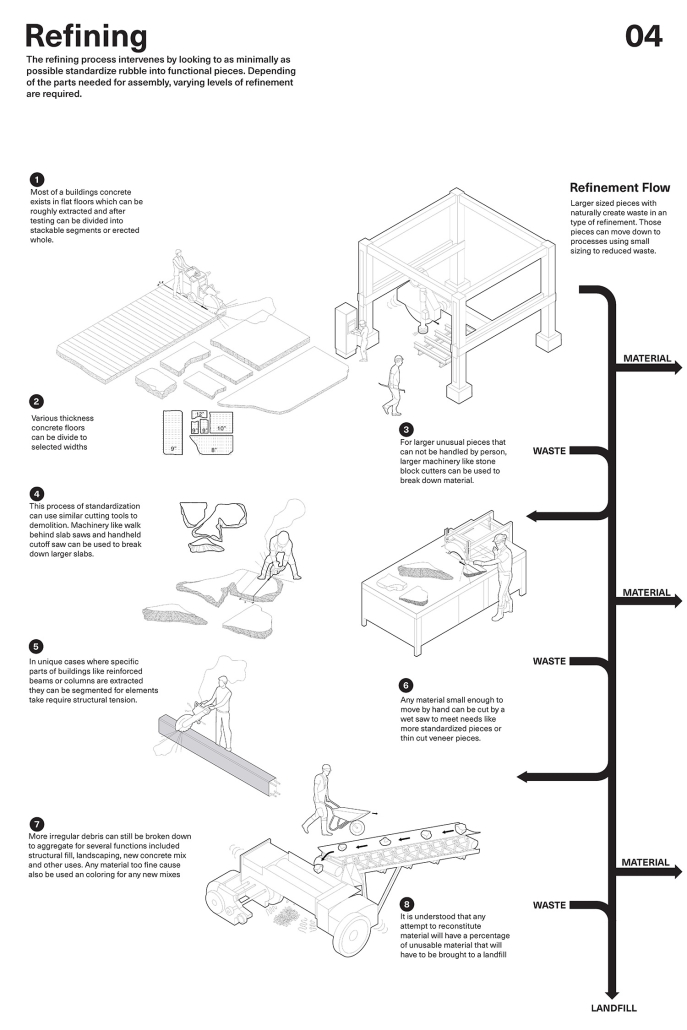
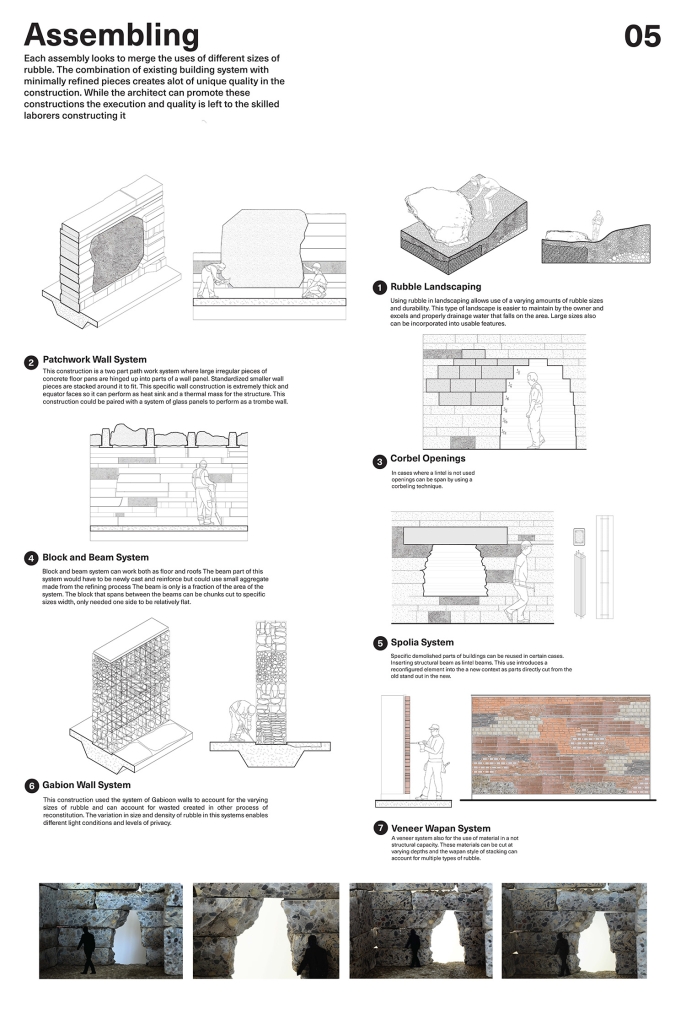
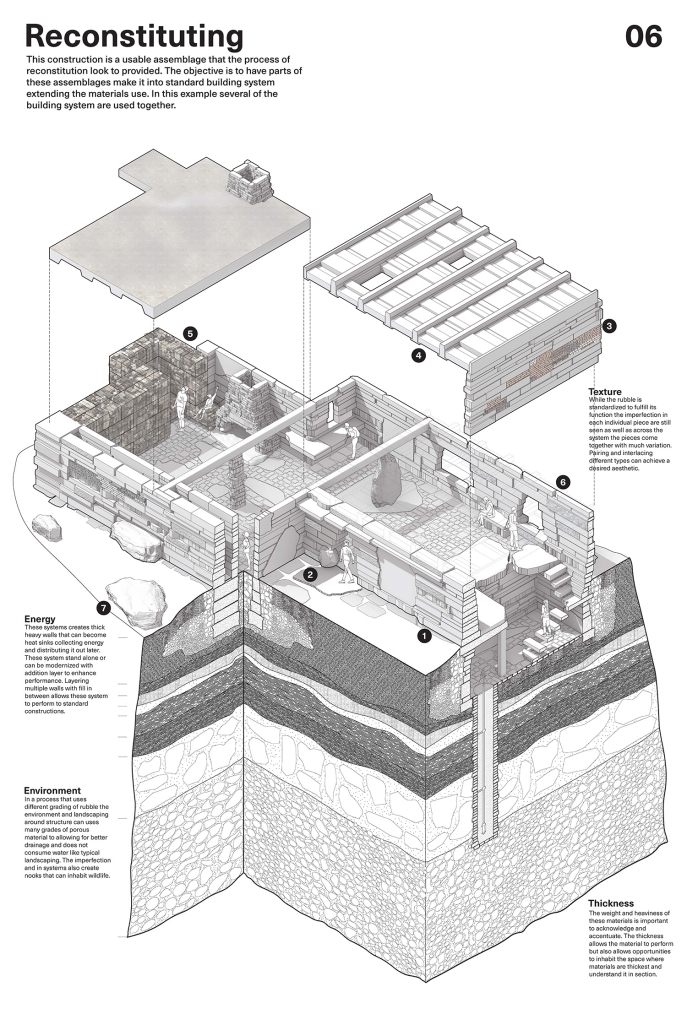
Reconstituting Rubble by Andrew Griffin, M.Arch ‘23
University at Buffalo | Advisors: Christopher Romano & Miguel Guitart

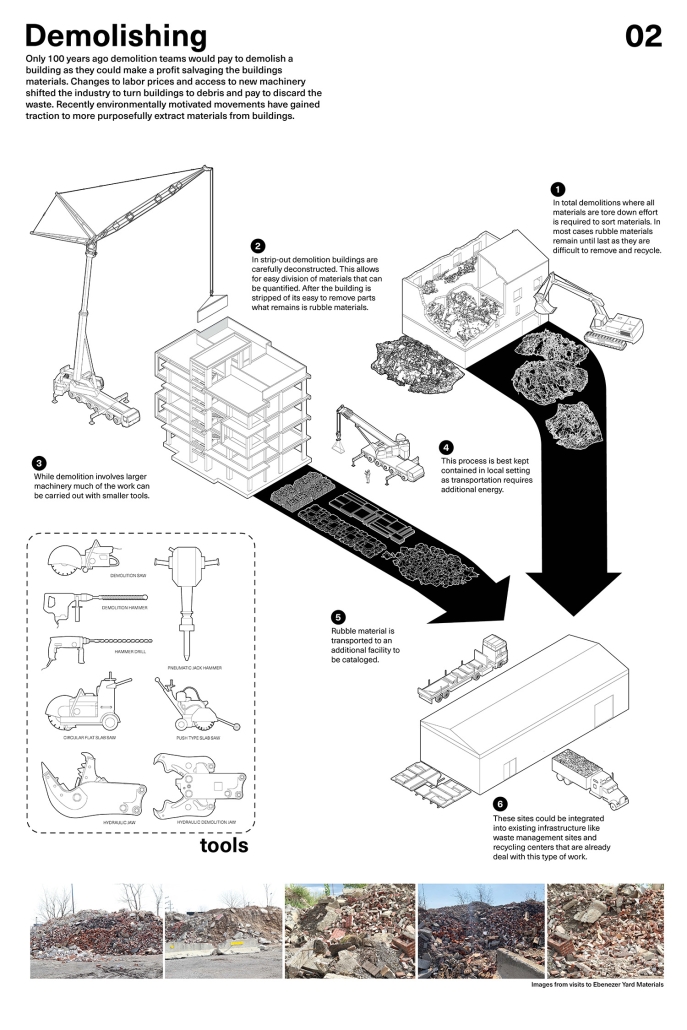
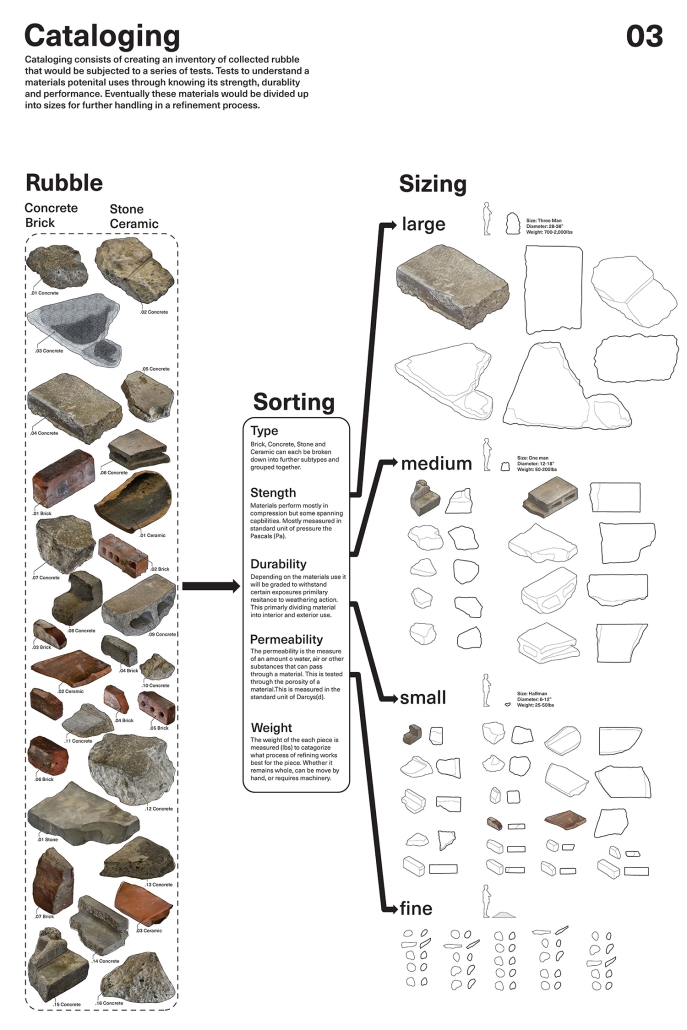
Five hundred and thirty-four million tons of construction and demolition debris are generated by the United States every year. This debris is anonymously moved away, invisible to most, to distant landfills far removed from its origin to lie dormant at the presumed end of its life. This demolition is a natural and necessary part of our current economic cycle, the permanence of the buildings we design is too often overstated. In a time when environmental issues plague the industry, simply discarding material is no longer a reasonable long-term option. Perhaps the scope of an architect’s involvement should extend into a building’s afterlife. Reconstituting Rubble proposes an adjustment to the material flow of building debris after demolition, advocating ways of transforming architectural rubble to develop building procedures that integrate waste-bound materials into new architecture. Drawing from new innovations and old technology, the project strives to lay out building end-of-life processes to divert would-be discarded material into new building assemblies.

This research looks at demolition rubble as a continuous stream of usable material in need of transformation. The proposed process steps involve demolishing, cataloging, refining, assembling, and reconstituting. The eventual result of this process examines the qualities of rubble, the roughness, the irregularity of its texture, shape and size. These are all traces of its past and show the immense effort it took to become reconfigured remains. 

Instagram: @arc_andrewgriffin

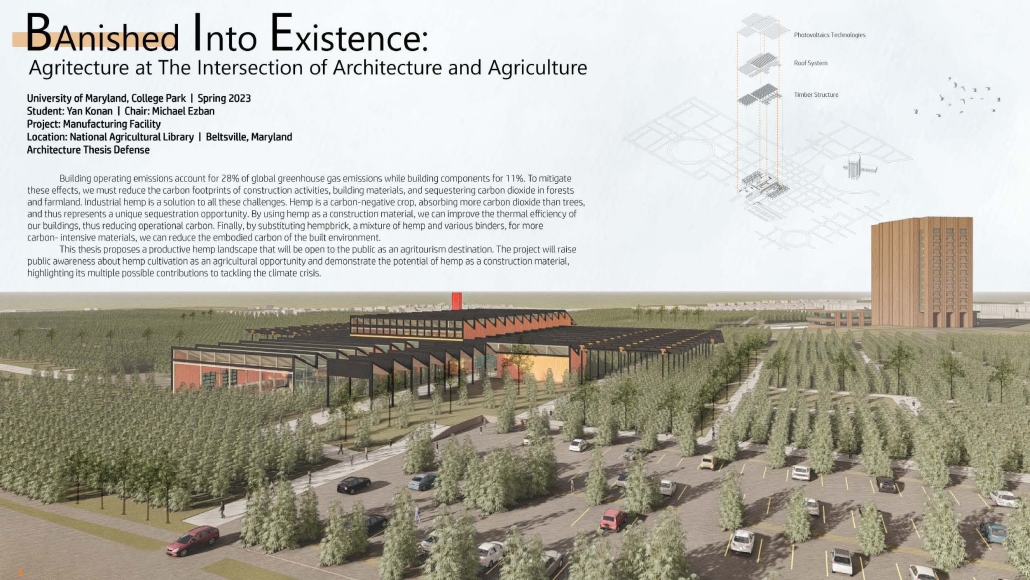
Banished Into Existence: Agritecture at The Intersection of Architecture and Agriculture by Yan Ferris Konan, M.Arch & M.Red ‘23
University of Maryland, College Park | Advisor: Michael T. Ezban

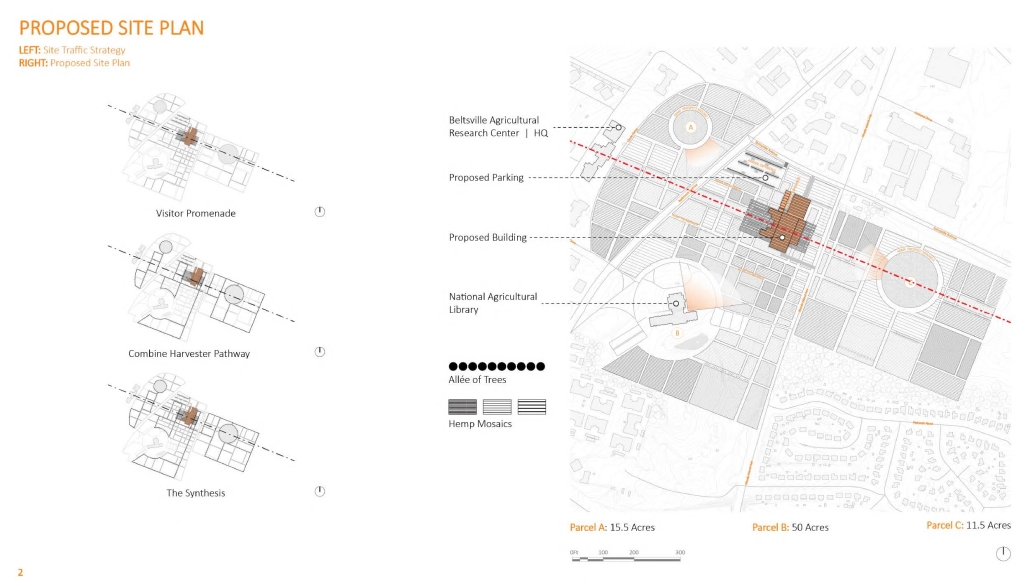
Building operating emissions account for 28% of global greenhouse gas emissions while building components account for 11%. To mitigate these effects, we must reduce the carbon footprints of construction activities, building materials, and sequestering carbon dioxide in forests and farmland. Industrial hemp is a solution to all these challenges. Hemp is a carbon-negative crop, absorbing more carbon dioxide than trees, and thus represents a unique sequestration opportunity. By using hemp as a construction material, we can improve the thermal efficiency of our buildings, therefore reducing operational carbon. Finally, by substituting Hempbrick, a mixture of hemp and various binders, for more carbon-intensive materials, we can reduce the embodied carbon of the built environment. This thesis proposes a productive hemp landscape that will be open to the public as an agritourism destination. The project will raise public awareness about hemp cultivation as an agricultural opportunity and demonstrate the potential of hemp as a construction material, highlighting its multiple possible contributions to tackling the climate crisis.

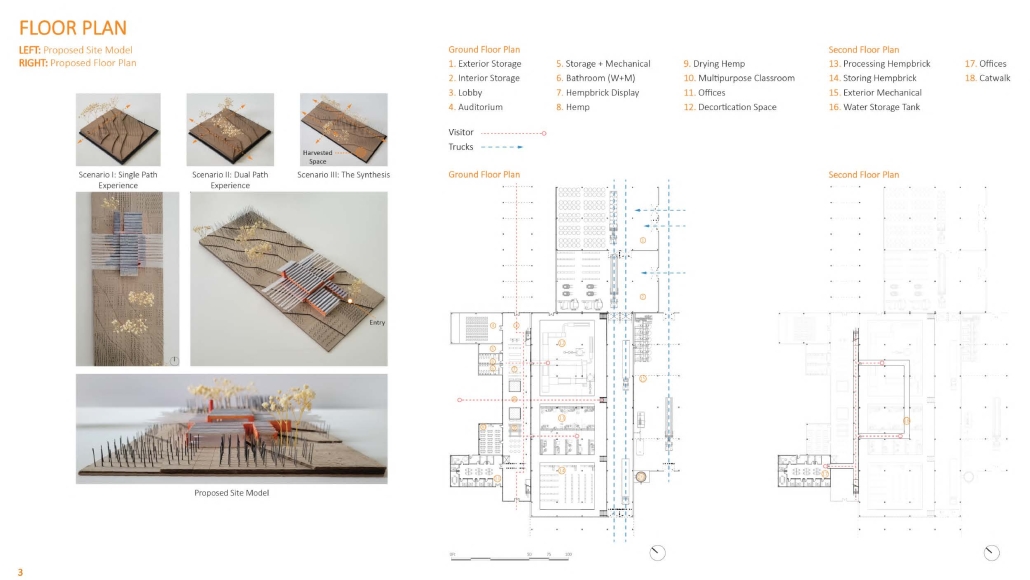
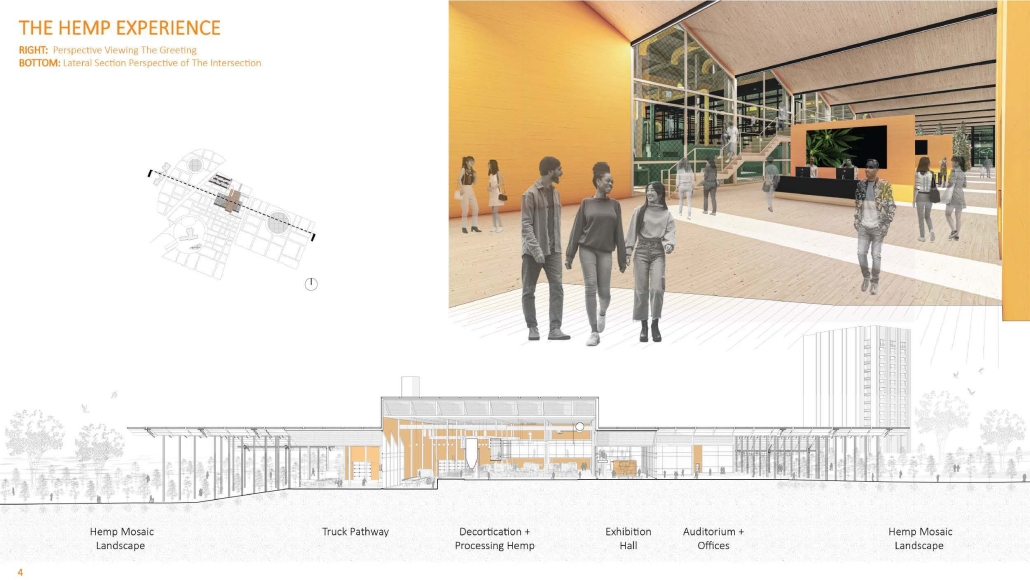
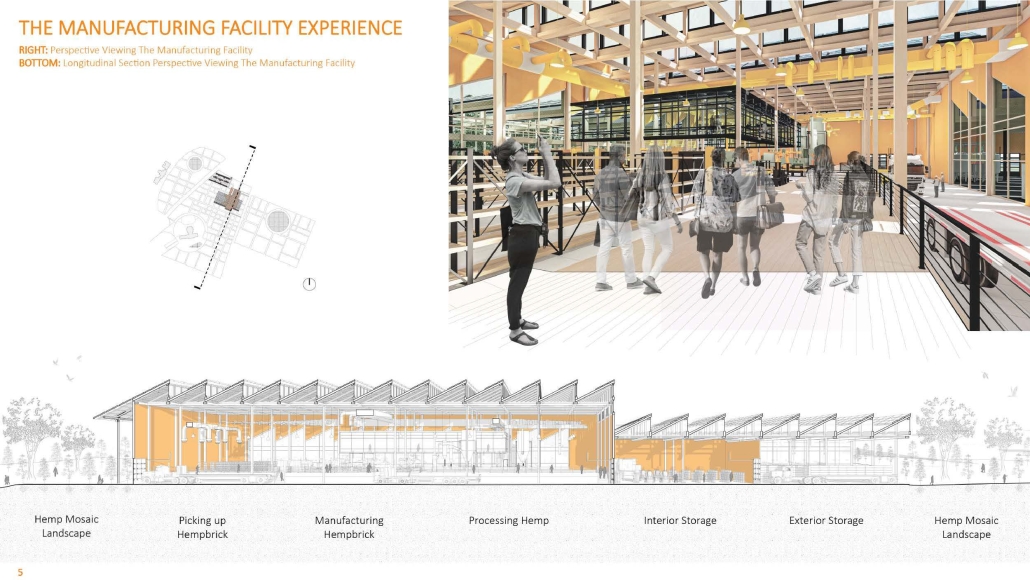
The Intersection, located in Beltsville, Maryland, is a Productive Hybrid Hemp Farm with a visitor center, a manufacturing facility, a multipurpose Classroom, and office seating on two floors to serve as a demonstration and educational hub for Prince George’s County. This proposal aims to educate the public on the opportunities of this insulating material known as “Hempbrick.”

The site is divided into Three Parcels totaling 77 Acres. Parcel 1: Baltimore Avenue (15.5 Acres). Parcel 2: Baltimore Avenue (50 Acres). Parcel 3: Rhode Island Avenue (11.5 Acres). The Farm’s primary goal is cultivating and harvesting Hemp for industrial applications. There will also be a manufacturing facility where the hemp will be decorticated into bast and hurd fibers required to produce Hempbrick. In addition, there will be a Visitor Center where the public will learn about the benefits and processes of hemp. Tenants from The University of Maryland extensions have already expressed an interest in leasing office spaces to further their research on hemp and its advantages.

This project received The Architecture Thesis Award – 2023 University of Maryland, College Park 

Forest to Framework by Eleanor Selzer, M.Arch ‘23
University of Southern California | Advisor: Sascha Delz

With the construction industry accounting for roughly 40% of all global carbon emissions, a clear and vast opportunity exists within the Architectural and Construction industry to enact real change in fighting the climate crisis. This change, as seen from a top-down perspective within the supply chain, could include material substitutions, technology innovation and implementation, and independence from non-renewable energy sources. These initiatives geared up in practice in recent years, but the industry is lagging behind if we are to make any real impact on our emissions and meet global climate goals. 

The UN projects that there will be roughly 2.3 billion new urban dwellers by 2050. All of these new residents will require an enormous amount of infrastructure to sustain this influx, most importantly housing. Most low-to-medium-rise housing buildings are constructed using timber products, and so there is a profound opportunity to exploit this demand for new development as a means to mitigate the climate crisis and create a carbon sink within our cities. 

When designers consider viable substitutions that are readily available, mass timber products are the top contenders. The opportunity to sequester carbon from the atmosphere while also providing a structurally sound, lightweight, and aesthetic material makes wood a clear solution for fighting climate change. 

It is vital for timber products used in the construction industry to be sourced from sustainable-certified forest lands to ensure that deforestation of green reserves is mitigated and there is a guarantee of a true renewable resource. The existing supply chain, however, is not vertically integrated, and it follows the cradle-to-grave pipeline, where building materials will most likely end up in landfills following demolition. As a solution to climate impacts, the industry must introduce a closed-loop product life cycle system following the cradle-to-cradle ideology. 

This sustainable wood products cycle requires all players across the supply chain to redefine how they purchase, distribute, design and use mass timber products. The main priorities within this sustainability product cycle are ensuring the increase in sustainable land management practices, growing the demand for sustainably harvested and produced mass timber products, updates to the building codes to mandate the use of these products and creation of deconstruction and reusable toolkits that can be adopted into standard design and construction practices.   

This project seeks to re-frame the framework of sustainably harvested mass timber products and show how they can be utilized in design practices to maximize flexibility, incremental growth, reuse and adaptability. Specifically this framework is applied to an affordable housing cooperative model located in Venice Beach, Los Angeles, comprising of flexible and deconstructable mass timber modules. 

This project received the USC Master of Architecture Social & Environmental Dimensions in Directed Design Research Award – In recognition of the most outstanding graduate final degree project exploring social, cultural, and environmental concerns.

Instagram: @ellie_selzer, @coop_urbanism

Heteromorph by Grégoire Gaudreault, M.Arch ‘23
University of Montreal | Advisor: Andrei Nejur

On a global scale, more than one billion people live in precarious housing situations, many construction materials are regularly sent to landfill sites or, worse, burned. However, these rejected materials represent a richness whose reallocation would lead to a significant economy of resources. Therefore, reusing materials from the construction industry could be part of the solution. This thesis project attempts to establish an architectural response to these challenges. Specifically, the proposed solution involves a constructive system for assembling temporary shelters using a diverse range of reclaimed and heterogeneous materials. The research focus of this thesis primarily revolves around utilizing digital technologies to discover new solutions to social and urban problems, while promoting the development of innovative construction methods that aim to reduce the environmental impact of architecture.

In a conventional architectural project, the materials used are directly linked to the envisioned form conceived during the design process and are typically integrated toward the end of the project. The proposed workflow seeks to invert this logic: reclaimed materials are used as inputs to imagine the shape of a shelter. Available resources dictate the morphology and composition of the projected form. More specifically, the proposed digital solution is based on an algorithm created using visual programming software, which enables the revalorization of materials recovered from waste in the construction industry. Any shape obtained through this method is composed of a configuration of 10 typical triangles, resulting from a combination of three specific edge lengths. These triangles can be constructed using either three linear elements or a single planar element, thereby expanding the range of possible materials. Low-tech metal nodes are utilized to connect these elements, facilitating the assembly and disassembly of the system. This flexibility allows for several variations or even partial or complete reconfiguration of the initial shape. In addition, the proposed system’s evolutive character encourages its components’ re-employment to limit its environmental impact.

This project received “Prix de l’Observatoire Ivanhoé Cambridge Nomination au Prix d’excellence pour étudiants Canadian Architect”

Instagram: @greg_g, @fac_ame_umontreal, @architecture.udem

An Architecture of Decay: Addressing Building Waste Through Biologically Integrated Architecture by Carson Stickney, M.Arch ‘23
Lawrence Technological University | Advisors: Scott Shall (Chair), Dan Faoro (Member) & Sara Codarin (Member)

There is a dissonance within architectural practice between buildings designed to be permanent, and the inevitability of building impermanence. This produces unusable waste at the end of a building’s life cycle. Materials are designed to become obsolete and replaced over time, leading to additional waste during a building’s inhabitance. Construction conventions value the low-cost consumption of resources such as concrete and metals over their effect on the environment (McDonough, Braungart, 2002). The current model of construction, maintenance, and demolition that most buildings go through ignores the resources and materials that are used and discarded, creating by-products that can never be used again by humans or the natural environment.

In order to align programmatic lifecycles with building creation and material decay, architects must incorporate decay in design, allowing building materials to continuously support human and biological use when a building is abandoned or demolished (figure 0.1). All buildings must die, but their material by-products do not need to be wasted. Incorporating decay is an opportunity for the future growth of architectural spaces and realigns the buildings that we make with the natural cycles that affect them. Therefore, to explore this potential, and minimize the waste associated with a building’s decay or demolition, architects need to design buildings and urban landscapes with the eventual decay of products in mind, to eliminate wasted resources, and reinforce the existing natural cycles impacting our work.

To investigate this claim, this project will design a 2-story mixed-use structure, using fully biodegradable materials. This development type has a legacy in architectural practice and is a staple construction type of most major U.S. cities. It also acts as an advantageous operating system relative to this thesis due to its cyclical resiliency to programmatic cycles, and its need for continual replacement and maintenance of materials. This investigation is intended to relink human spaces with natural ones, fostering the perpetual growth and balance of both systems with each other.

Instagram: @cstickney02, @scott_shall

Passing Permanence: Reversible Building Practices in the U.S. by Aaron Baldwin, M.Arch ‘23
Lawrence Technological University | Advisors: Scott Shall, M.Arch/RA, Sara Cordarin, Ph.D & Daniel Faoro March/UD, RA

The construction and demolition industries generate abhorrent amounts of waste through the inefficient generation and unplanned removal of permanently intentioned buildings that cannot last forever. Current strategies of material construction often consume, permanently alter or degrade materials being used, resulting in the inability to wholly reuse valuable building components. As a result, existing unused structures will often become waste, or require resource-intensive recycling or remanufacturing to salvage portions of material (USEPA 2018).

Buildings are not permanent. The current lack of life-cycle design and expectation for buildings to last indefinitely leads to a loss of “technical nutrient” potential (Braungart 2002). The reduction of waste, the continued reuse of materials and designing for component longevity can achieve a fundamental level of sustainability, as the concept of waste is antithetical to the ability to maintain a process over time. To recapture the potential of a building and remove the ecologically harmful effects of permanence that occur after the building is no longer needed, the production, construction, use and demolition of architecture should ‘leave minimal trace’ on its building materials and site.

A current lack of reversible and circular practice in the U.S. exists due to many existing social, cultural and economic factors. The focus on tradition, risk aversion and bountiful space for new development allows the country to remain stagnant and reliant on existing building methodologies without the push for change. Initial reversible architecture located in the U.S. will not be made out of newly developed components, but primarily of existing standardized materials joined in newly reversible methods.

Architecture should not be destructive. An architecture that leaves minimal trace does not have to employ highly engineered componentry and new modular solutions that restrict design outcomes but rather can modify existing techniques and tectonic understandings to remove wasteful practices that intentionally degrade or destroy material resources. Minimal trace architecture simultaneously upholds the health of its materiality through the redefinition of connection types while supporting its site and larger context through the removal of systemic inefficiencies and unnecessary permanently intended change.

See you in the next installment of the Student Showcase!